CARTA seeks to create CARTA research hubs at our partner institutions as we progress through the third phase of the CARTA strategy (2021-2025) dubbed CARTA2025.
CARTA2025 aims to strengthen our proven CARTA approach to research capacity strengthening by establishing research hubs aimed at providing research knowledge, training and expertise in specific thematic areas. From the existing network of CARTA scientists, we seek to identify areas of expertise that will lay the foundation for research in areas of strategic interest for CARTA partners and the countries where they sit in line with regional and continental development agendas. The research hubs will build on and consolidate the research expertise existing in the CARTA network and will bring in new collaborators as needed to strengthen a research hub.
CARTA will provide small-scale support for the initial conceptualization and to facilitate the establishment of the research hubs. A core objective of the hubs is to attain their own long-term sustainability.
Selection process
The selection will take place in two steps: 1) Expression of Interest, and 2) submission of Extended Concept for the establishment of a research hub. Submission of the Expression of Interest is open to all CARTA African partner institutions while submission of the Extended Concept is by invitation only after positive evaluation of the EoI. For more details on the evaluation process see the document “How the CARTA Research Hubs will be evaluated”. This is the Call for Expressions of Interest (EoI).
Eligibility
The lead applicant must be academic research staff of a CARTA African partner university.
The team must include at least one other CARTA African partner institution and one CARTA non-African partner institution.
The teams can include external collaborators to bring in expertise and skills not available within the Consortium.
The team must include and build on the expertise of CARTA graduates.
The work must include elements of the CARTA interventions to strengthen research, research training, and research management capacities.
How to apply
Submissions will be submitted via e-mail to carta@aphrc.org with CC to mvicente-crespo@aphrc.org with subject SUBMISSION OF EoI FOR CARTA RESEARCH HUB before February 28, 2023 at 5pm EAT.
Teams must submit:
ONE pdf document with a maximum of 6 pages (Times New Roman size 11; page size “Letter”; Margins “Normal”) including:
A short 2-page concept describing the research area that the hub will focus on and why this area, ie link it to existing expertise and national and regional needs;
The strengths of the collaborating team (lead and collaborators) proposed (up to 1000 words) including details of at least one academic per institution involved (full name, position, department, school if applicable, institution, e-mail and phone number);
Under this section the team may describe capacities that they wish to add onto the team through new partnerships, whether a suitable partner has been identified or not (up to 500 words);
Strategy to incorporate CARTA graduates and provide opportunities for ECRs’ career growth (up to 500 words);
A plan for sustainable research capacity strengthening and (up to 500 words);
A research grant management plan (up to 500 words); and
A plan to engage stakeholders (up to 500 words). And
ONE pdf document with the 2-page CV’s of the PI and key co-investigators (at least one per partner institution)
It is important to note that not all the concepts need to include the CARTA focal persons, rather experts in the research area who will be involved in the implementation of the research should be the priority, but integrating the focal persons will be important to work towards the sustainable incorporation of the CARTA interventions within the hub. However, hubs must include CARTA graduates at their core.
The Wellcome Sanger Institute is seeking exceptional early career stage scientists to join the Institute as an International Fellow, contributing to the Institute’s scientific portfolio. Up to six fellowships available.
The Institute is an internationally outstanding genomic research centre with over 30 core faculty teams and 1,300 employees based south of Cambridge, UK.
Fellowship Eligibility:
You are typically an early-mid career group leader/faculty usually up to nine years post PhD, based at a research organisation in a low- or middle-income country (LMIC). You may hold a faculty or equivalent position and are seeking to establish or strengthen your research team to develop an internationally recognised research portfolio. We also welcome applicants with equivalent experience, including those who have taken career breaks or followed non-traditional paths
Your main research aims should be focused on your local country and research priorities which contributes to or complements the Institute’s scientific strategy through their expertise.
Makerere University has launched a knowledge-sharing platform designed to bridge research, education, and community outreach, with the aim of accelerating innovation and economic development in Uganda.
The platform is the outcome of a project led by Prof. Edward Bbaale, which examined how universities can translate research, innovations, and institutional capabilities into tangible impact for communities, businesses, and national economic growth, in line with the government’s tenfold growth agenda. The project was funded by the Government of Uganda through the Makerere UniversityResearch and Innovations Fund (Mak-RIF).
The study also explored how university-based research and innovation can be better aligned with Uganda’s development priorities in agriculture, tourism, mineral-based industrialization, and science and technology, as outlined in the Fourth National Development Plan (NDP IV).
Speaking at the launch, the First Deputy Vice-Chancellor for Academic Affairs, Prof. Sarah Ssali, said the platform would strengthen the link between academic research and societal transformation. She also noted that knowledge production and utilization is a political matter and urged researchers to meaningfully engage and participate in such converstaions.
Dr. Stephen Wandera, representing the Chairperson of the Mak-RIF Grants Management Committee, described the platform as timely and relevant, noting that it comes at a period when Makerere University is positioning itself as a research-led institution with measurable impact on communities and systems.
“The knowledge-sharing platform will enable researchers to disseminate their work to relevant audiences,” Dr. Wandera said. He added that dissemination workshops are among several avenues available for sharing research findings and urged the project team to explore additional channels, including policy briefs, academic publications, and online dialogue platforms.
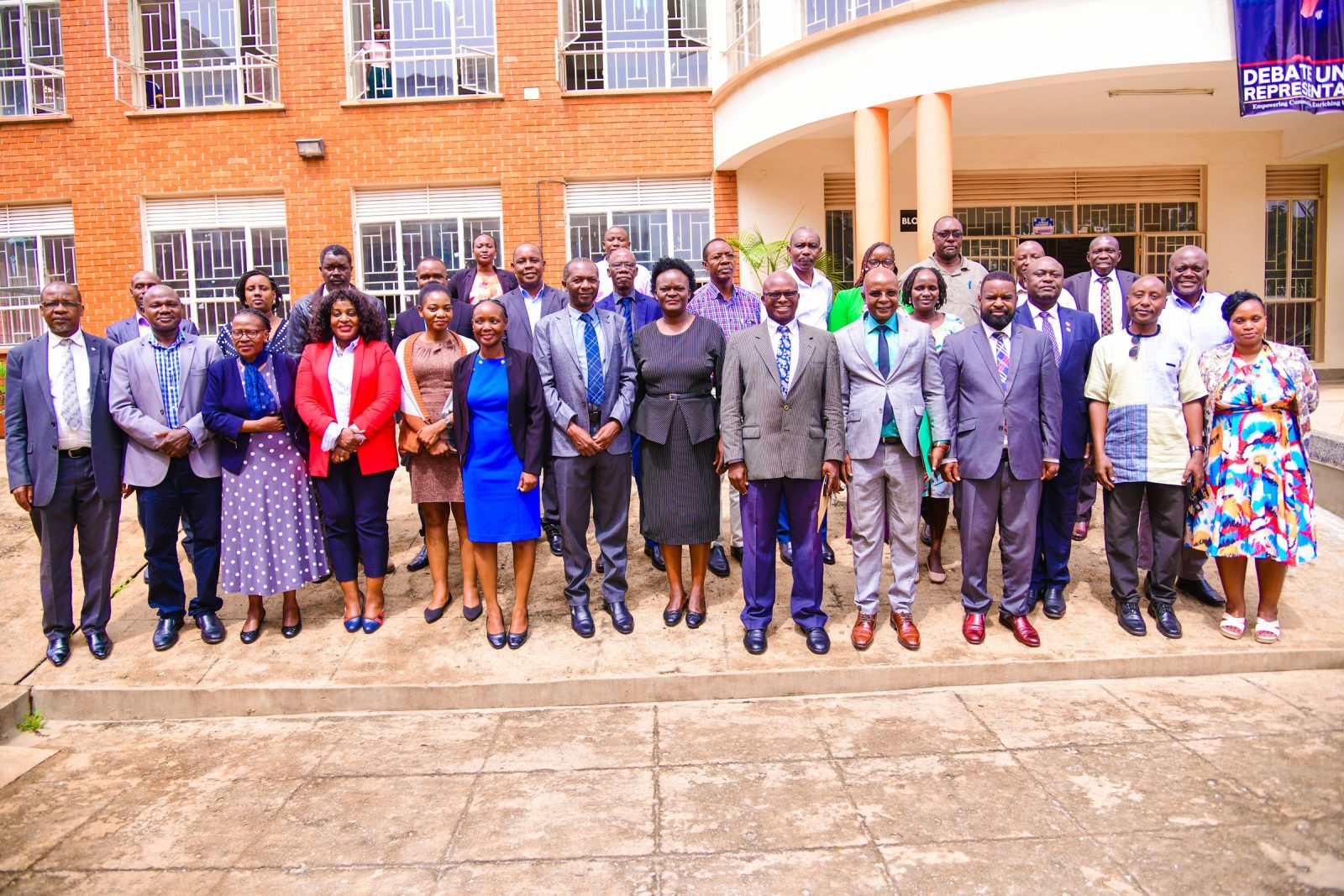
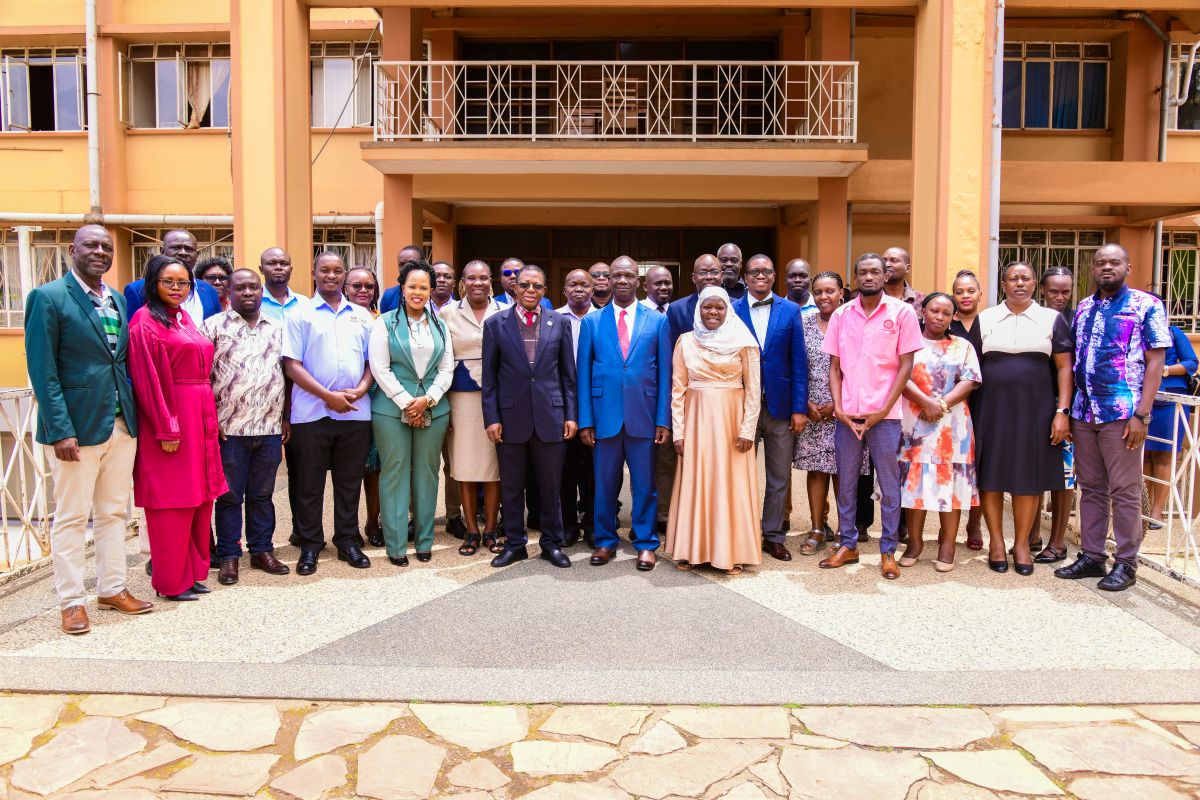
Stakeholders from Makerere and other Universities pose for a group photo at the event.
The Director of Research, Innovation, and Partnerships, Prof. Robert Wamala, said the dissemination workshop reflects Makerere University’s long-standing commitment to generating knowledge that responds to national priorities, advances innovation, and contributes to Uganda’s socio-economic transformation.
He added that the Directorate supports initiatives that move research beyond academic boundaries into practical application, policy influence, enterprise development, and community impact.
Dr. Peter Babyenda, the project’s Co-Principal Investigator, said the initiative combined research, outreach, and capacity-building activities, drawing lessons from global models where universities play a direct role in community development by supporting agriculture, industry, and the growth of Small and Medium Enterprises (SMEs) and Micro, Small, and Medium Enterprises (MSMEs).
Dean of the School of Economics, Prof. Ibrahim Michael Okumu, observed that while Uganda’s universities have produced substantial research, its translation into practical outcomes has remained slow. He cautioned that Makerere University’s relevance will ultimately be measured by the extent to which its work contributes to national development.
Dr. Babyenda noted that the platform will support the development of sustainable research, education, and outreach systems, helping to bridge the gap between university research and real-world application.
“As we launch this platform, I encourage academics, students, industry players, policymakers, and communities to actively engage with it,” Prof. Wamala said. “Let it serve as a living space for dialogue, learning, co-creation, and innovation.”
The knowledge-sharing platform is accessible to the public at www.dissemination.ug. Its launch took place at Sheraton Hotel in Kampala and was attended by officials from Makerere University, Kyambogo University, Gulu University, Mbarara University of Science and Technology (MUST), Busitema University, and Soroti University.
Makerere University has taken a significant step toward strengthening global research collaboration following a high-level meeting between Vice Chancellor Prof. Barnabas Nawangwe and a delegation from Tsinghua University’s Hefei Institute for Public Safety Research, one of China’s leading centres of excellence in disaster prevention, public safety, and emergency management. The engagement marked a renewed commitment to advancing scientific cooperation between the two institutions, particularly in addressing complex environmental and public health challenges that continue to shape national and global development.
A Partnership Anchored in Shared Challenges and Global Priorities
In his remarks, Prof. Nawangwe emphasized that the concept of comprehensive public safety, spanning natural disasters, epidemics, infrastructure failures, and social risks, is increasingly relevant to all colleges and disciplines at Makerere. Uganda’s experience with epidemics such as Ebola, cholera, and COVID-19; frequent landslides in mountainous regions; flooding events; and rising traffic-related incidents place the University in a unique position to contribute applied research, community-based insights, and local knowledge to a global scientific dialogue.
He noted that the Tsinghua presentation revealed new areas of alignment, particularly in epidemic modelling, early-warning systems, and integrated emergency management, areas where Makerere’s public health scientists, medical researchers, and social scientists have extensive expertise.
“This collaboration offers meaningful opportunities for nearly every college at Makerere,” he noted. “Public safety touches the environment, public health, engineering, social sciences, ICT, humanities, and urban planning. The challenges we face as a country make this partnership both timely and essential.” Prof. Barnabas Nawangwe noted.
Tsinghua University: A Global Leader in Comprehensive Public Safety.
The delegation from Tsinghua University outlined China’s national investment in Public safety over the past two decades, an effort driven by the recognition that life and security are the foundation of sustainable development. Tsinghua’s Hefei Institute for Public Safety Research has developed nationally recognised research platforms and large-scale simulation facilities dedicated to Natural disaster modelling (earthquakes, landslides, floods, typhoons, Infrastructure and urban systems safety, Public health emergencies and epidemic preparedness, Early-warning, monitoring, and emergency communication, Traffic and transportation safety, Post-disaster reconstruction and resilience planning.
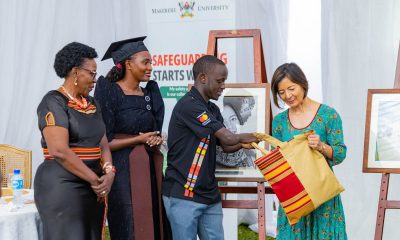
Prof. Barnabas Nawangwe hands over the Makerere University Centennial Coffee table pictorial booklet to Prof. Huan HongYong, Dean, Hefei Institute for Public Safety Research, Tsinghua University.
Their systems currently support over 100 provincial and municipal emergency management centres in China, underscoring their global leadership in practical, scalable solutions for disaster risk management. The delegation reaffirmed that Uganda’s lived experience with multiple hazards presents opportunities for meaningful knowledge exchange. They expressed particular interest in learning from Makerere’s work on epidemic response, community health systems, and the social dimensions of disaster management.
Emerging Areas of Partnership
The meeting identified several promising pathways for long-term collaboration:
1. Joint Research in Disaster Risk Reduction and Climate-Related Hazards
Both institutions expressed readiness to co-develop research projects on landslides, floods, urban resilience, and multi-hazard modelling, drawing on Tsinghua’s advanced simulation technologies and Makerere’s environmental expertise and geographic field realities.
2. Public Health Emergency Preparedness and Epidemic Response
Makerere’s renowned public health schools and research centres will collaborate with Tsinghua on epidemic prediction, early-warning systems, and integrated preparedness frameworks, leveraging Uganda’s decades of experience managing high-risk disease outbreaks.
Prof. ZHANG Xiaole, Director of the International Development Department, Hefei Institute for Public Safety Research making a presentation during the meeting.
3. Infrastructure and Urban Safety, Including Traffic Systems
With Uganda experiencing rapid urbanisation and high rates of motorcycle-related road incidents, Tsinghua shared insights from China’s own transformation, including infrastructure redesign, transport modelling, and public transit innovations. Collaborative work in this area would support city planning and road safety interventions in Kampala and other urban centres.
4. Academic Exchange and Capacity Building
Both sides expressed interest in student exchanges, staff mobility, co-supervision of postgraduate research, and specialised training programmes hosted at Tsinghua’s world-class safety research facilities.
5. Development of a Joint Public Safety Laboratory at Makerere
The institutions are exploring the establishment of a collaborative safety research platform in Uganda. This initiative could serve as a regional hub for innovation in emergency management, environmental safety, and technology-driven risk assessment.
Towards a Long-Term, Impactful Collaboration
The meeting concluded with a shared commitment to develop a structured partnership framework in the coming months, supported by both universities and aligned with Uganda–China cooperation priorities. Both teams acknowledged that the partnership must yield tangible results that enhance community resilience, bolster national preparedness systems, and foster scientific capacity for future generations.
Prof. Nawangwe commended Tsinghua University for its willingness to co-invest in research and capacity building, noting that such collaborations position Makerere not only as a leading research institution in Africa but as an active contributor to global scientific progress.
From Left to right: Prof. Liang Guanghua, Prof. Huan HongYong and Prof. Barnabas Nawangwe during the meeting on Friday 12th December 2025.
“This partnership has the potential to transform our understanding of the science of public safety to deliver solutions that safeguard lives.” Prof. Barnabas Nawangwe noted.
“It aligns perfectly with Makerere’s mission to be a research-led, innovation-driven university responding to the world’s most urgent challenges.” He added.
As part of this strategic partnership engagement, Makerere University will, on Wednesday, 17th December, co-host the Makerere University–Tsinghua University Symposium on Public Safety and Natural Disaster Management. The symposium will run from 8:00 AM to 2:00 PM in the University Main Hall, Main Building.
This symposium represents a deepening of collaboration not only between Makerere University and Tsinghua University, but also a broader strategic partnership between Uganda and the People’s Republic of China.
During the event, H.E. Zhang Lizhong, Ambassador of the People’s Republic of China to Uganda, together with the State Minister for Higher Education, Government of Uganda, will officially launch the China–Uganda Belt and Road Joint Laboratory on Natural Disaster Monitoring and Early Warning. The Laboratory will be hosted at Makerere University, positioning the University to play a central role in strengthening Uganda’s and the region’s capacity for natural disaster preparedness, public safety, and emergency management research.
Caroline Kainomugisha is the Communications Officer, Advancement Office, Makerere University.