
Sports
Makerere and National Council of Sports sign MoU to Build a World-Class Stadium

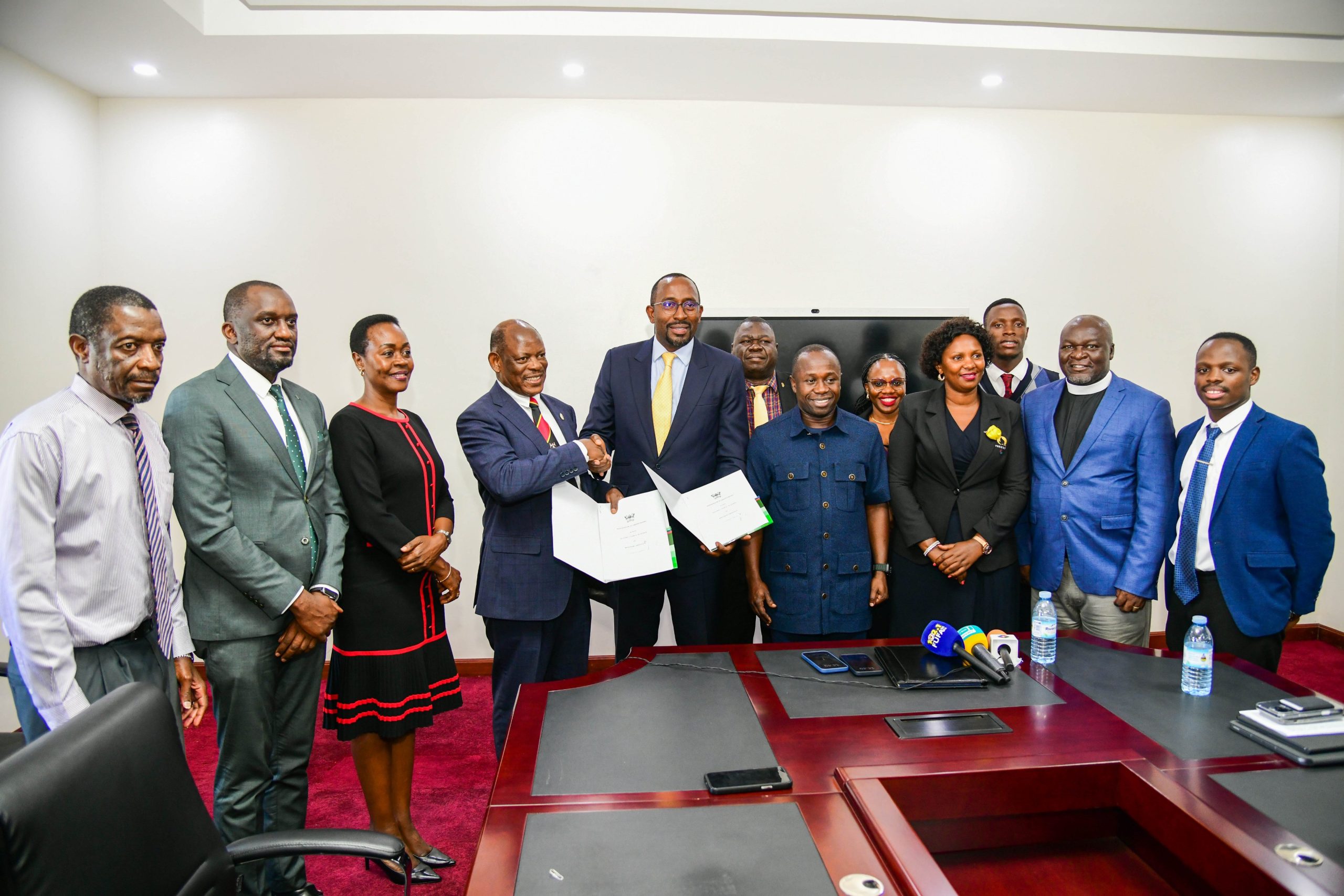
In a landmark agreement signed on March 26, 2025, Makerere University’s Vice Chancellor, Prof. Barnabas Nawangwe, inked a Memorandum of Understanding (MoU) with the National Council of Sports (NCS) for the construction of a state-of-the-art sports stadium at the University’s Main Sports Grounds. The MoU was witnessed by Hon. Peter Ogwang, Minister of State for Sports, while Mr. Ambrose Tashobya, Chairman of NCS, signed on behalf of the council.
The new facility is set to break ground in the next financial year (2025/2026) and will be financed by the Government of Uganda through the Ministry of Education and Sports. Designed to meet international standards, the stadium will feature a full-size football pitch, an 8-lane running track, and a modern pavilion—capable of hosting high-profile sporting events.
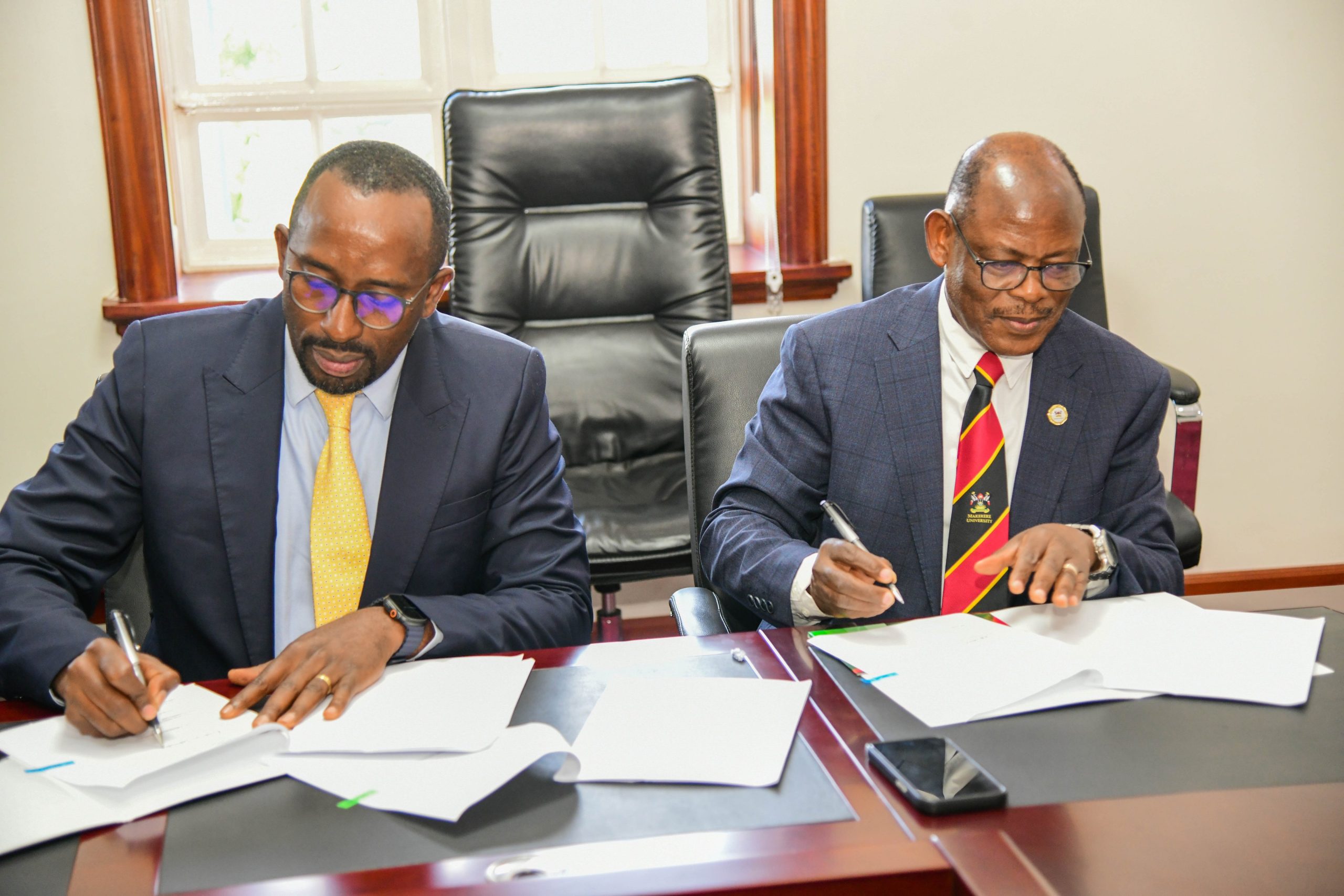
During the signing ceremony at Makerere University, Hon. Ogwang outlined the strategic importance of the project. “This development is a vital step in our preparations for Uganda hosting the AFCON Cup in 2027,” he remarked. He further revealed that the Ministry has allocated Shs21 billion to jump-start the Makerere project as part of an overall investment of 1.5 trillion shillings to upgrade multiple stadiums nationwide, including those in Namboole, Akibua, and Hoima. The Ministry emphasized that the stadium’s construction would adhere to Makerere University’s innovative structural designs.
Vice Chancellor Prof. Nawangwe expressed his excitement about the project, stating, “This is a dream come true for Makerere University. We have long sought funding for a modern stadium, and I am delighted that the Ministry has chosen us as the site for this transformative development.” He underscored the facility’s potential to uplift student talent, foster community engagement, and serve as a hub for national sports development.
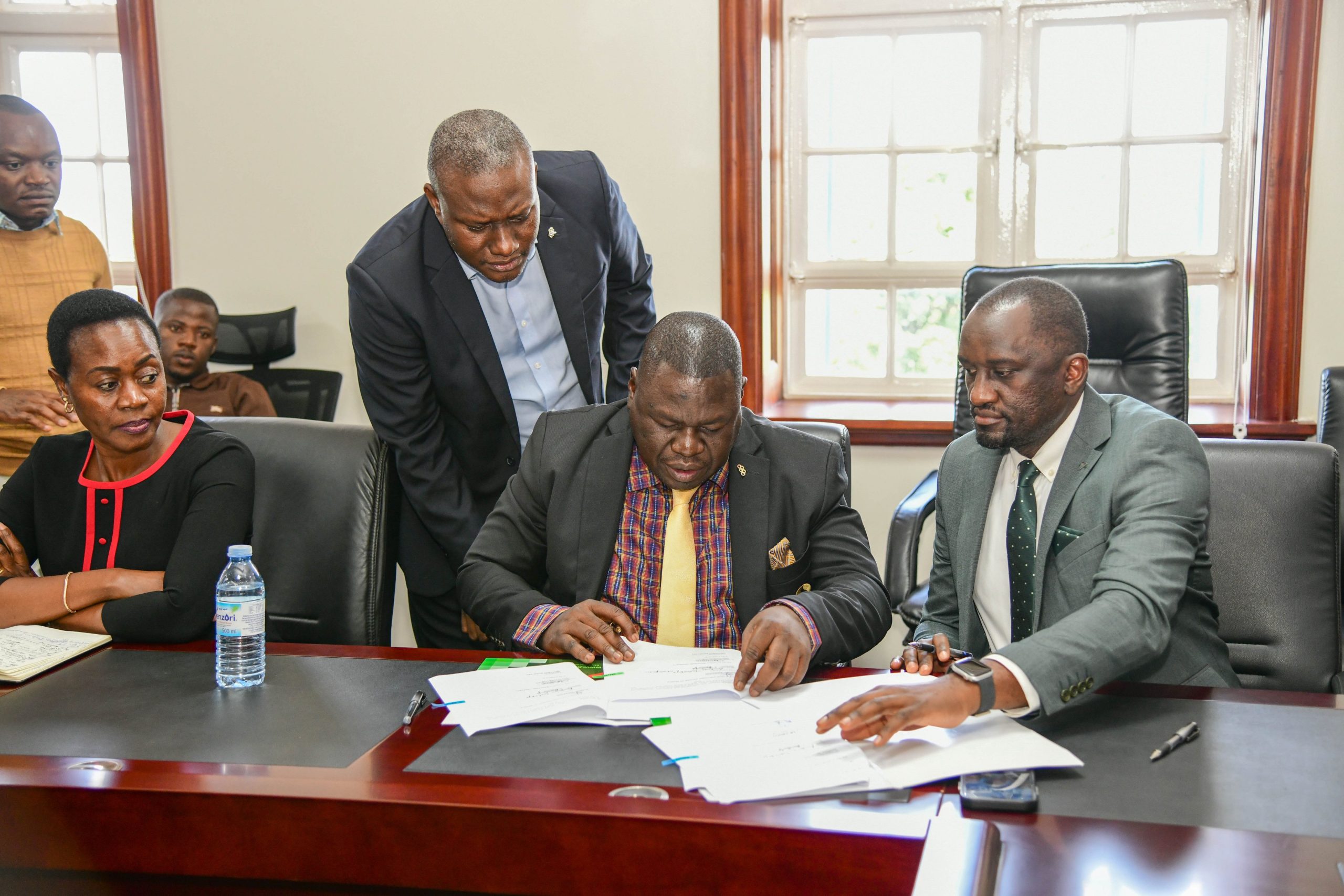
The project will be co-supervised by the Ministry of Works and Transport, NCS, and Makerere University, ensuring rigorous standards and timely completion. Notably, the UPDF Engineering Brigade has been appointed as the contractor, guaranteeing a robust and secure build.
Mr. Tashobya added, “We are thrilled to collaborate with Makerere University and other government entities to create an enabling environment for sports across Africa. We look forward to the university harnessing this facility, and we are committed to achieving CAF’s requirements so that the stadium can host games both day and night.” He also encouraged Makerere to identify students for training in the management and operation of the new facility, highlighting the project’s role in capacity building.
This groundbreaking partnership marks a significant milestone in Uganda’s sporting and infrastructural landscape, promising to deliver a facility that not only meets international standards but also nurtures the next generation of sporting talent.







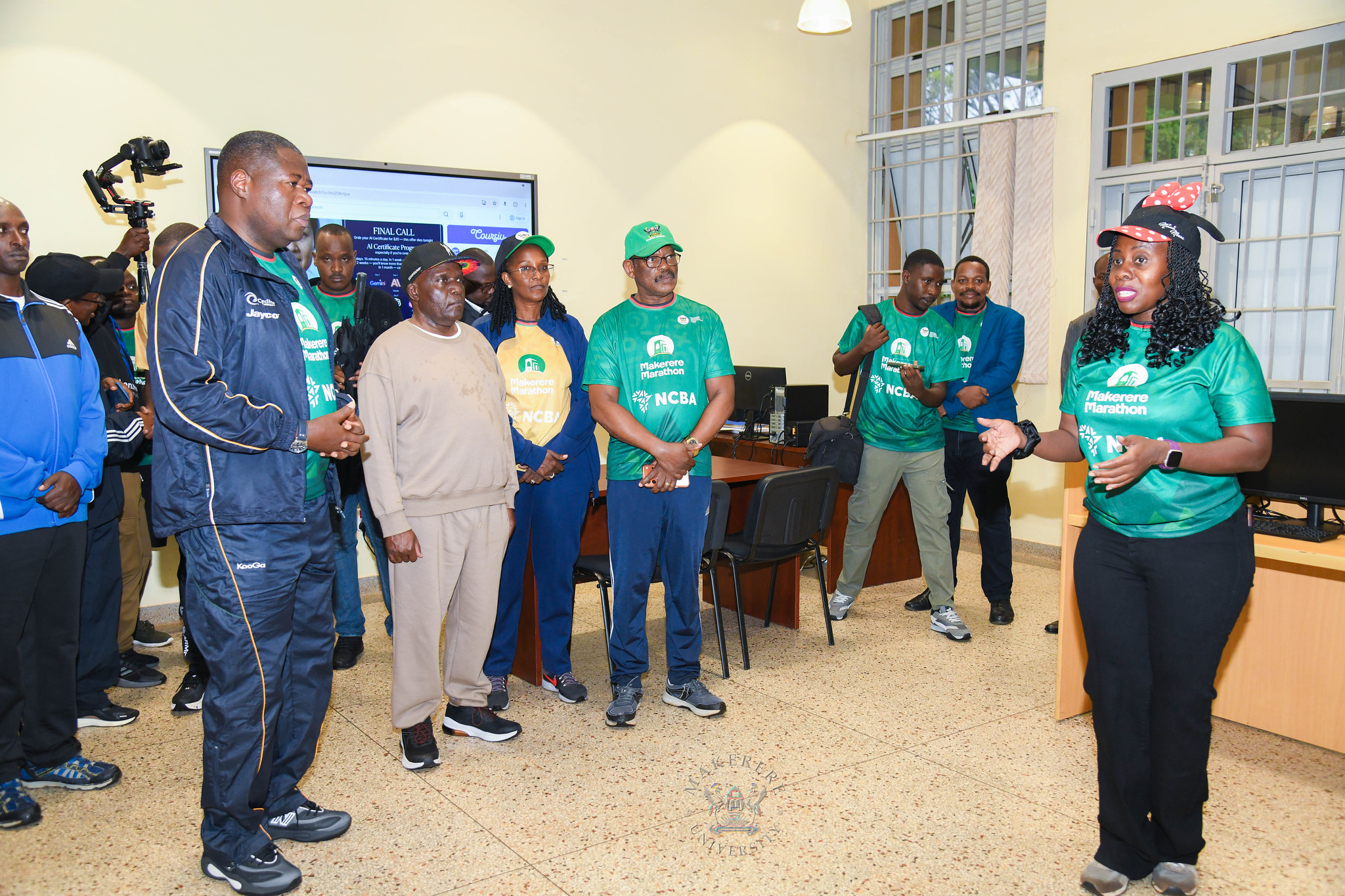

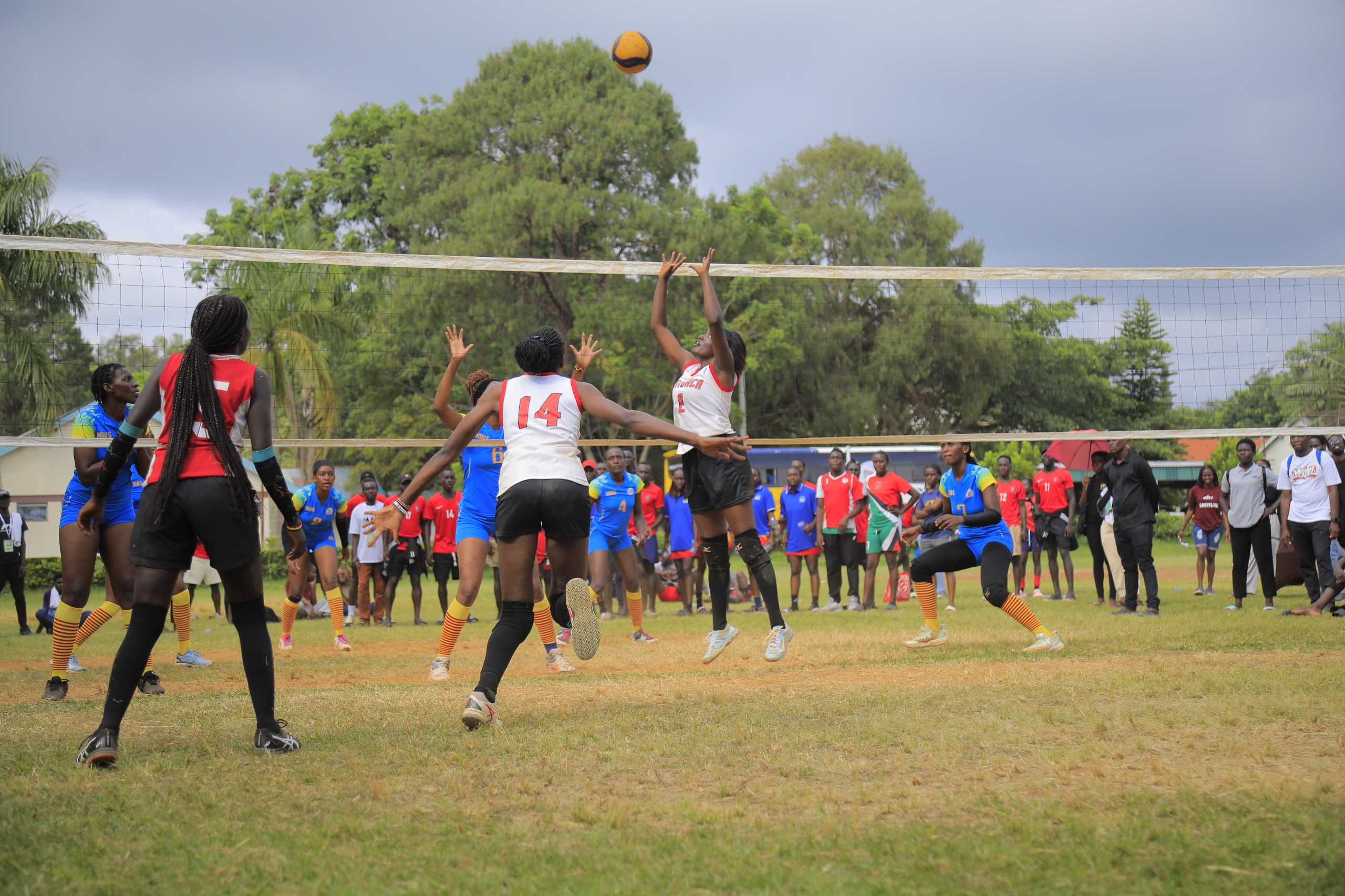
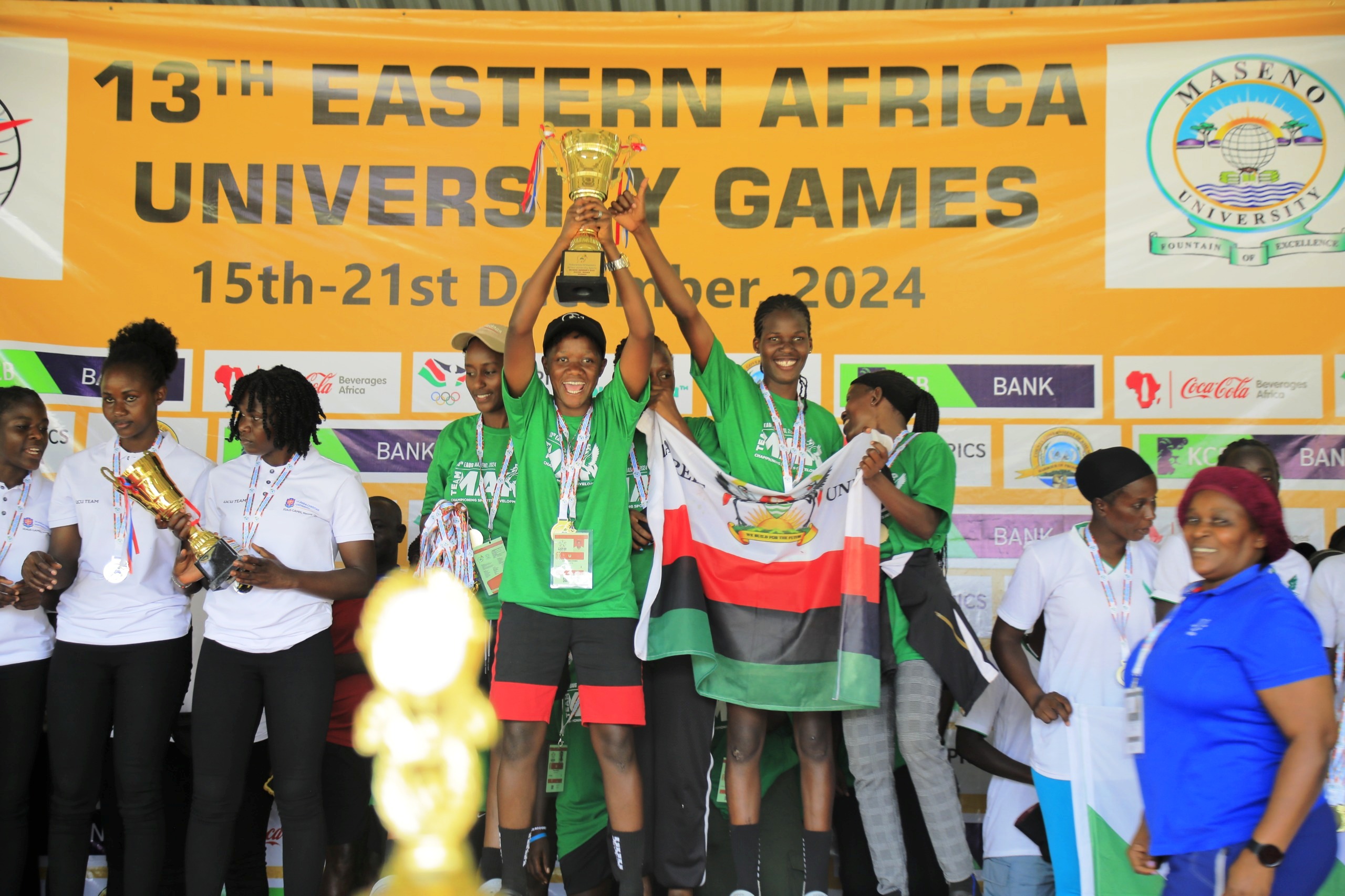
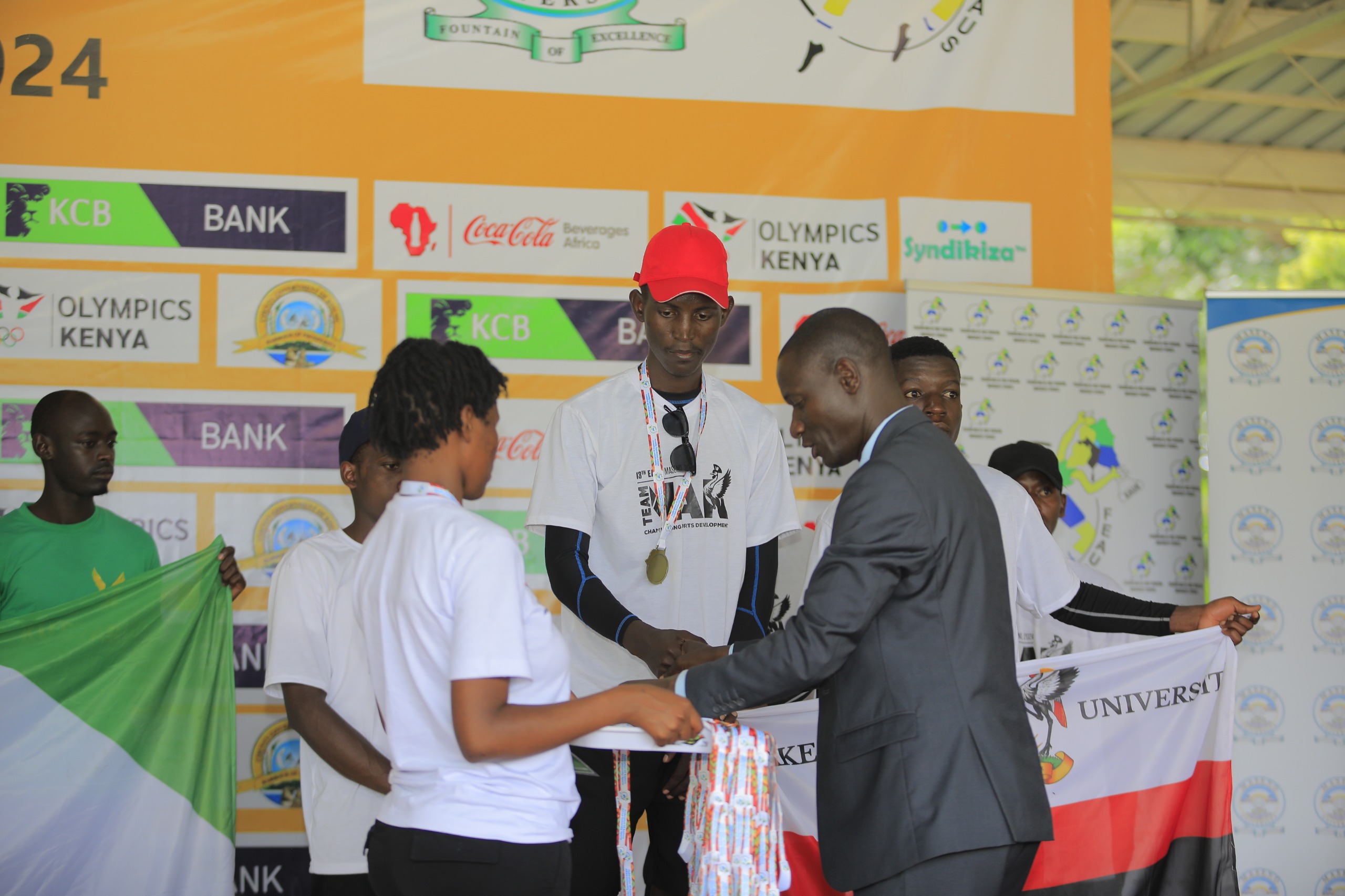
Makerere University has been confirmed as the official host of the 2026 East African University Games, a regional sporting spectacle organized under the Federation of East African University Sports (FEAUS). The Games, scheduled to run from the fifteenth to the twentieth of December 2026, will bring together thousands of student athletes from universities across the East African region for six days of competition, culture and camaraderie on the historic Hill.
For an institution that has long positioned itself as the intellectual and cultural heartbeat of the region, hosting the East African University Games is more than a sporting assignment. It is a statement. Makerere, the oldest and arguably most storied university in East Africa, will once again open its gates, fields, courts and pools to the youth of a region bound together by geography, history and an increasingly shared vision for higher education and sport.
A Regional Showcase Under FEAUS
The Federation of East African University Sports exists to promote unity, excellence and healthy competition among universities in the East African Community. Through its biennial Games, FEAUS has steadily grown into one of the most anticipated calendar events for university sport administrators, coaches and athletes across the region. The 2026 edition, hosted by Makerere, is expected to be the largest in the competition’s history, both in terms of the number of disciplines contested and the scale of participation.
University sport in East Africa has, over the years, served as a quiet but powerful pipeline for national and even continental representation. Many athletes who have gone on to wear their national colors first tested themselves on university tracks, courts and pitches. The East African University Games have become a proving ground where talent is discovered, friendships across borders are formed and the spirit of regional integration is nurtured through sport rather than diplomacy alone.

Twenty Disciplines, One Hill
The scale of the 2026 Games is reflected clearly in the breadth of disciplines on offer. Athletes will compete across twenty different sporting disciplines for both men and women, an ambitious lineup that speaks to how far university sport in the region has come.
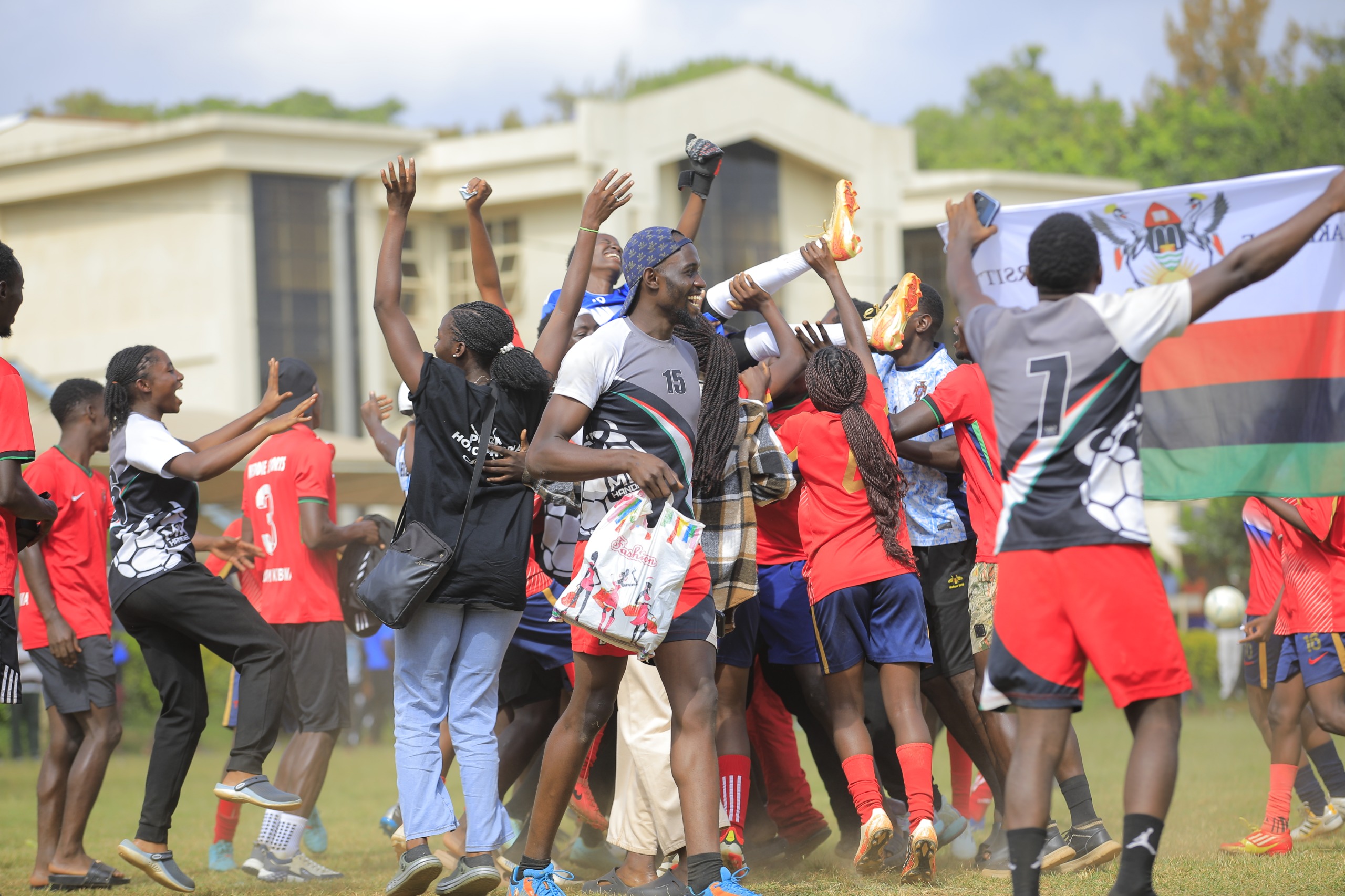
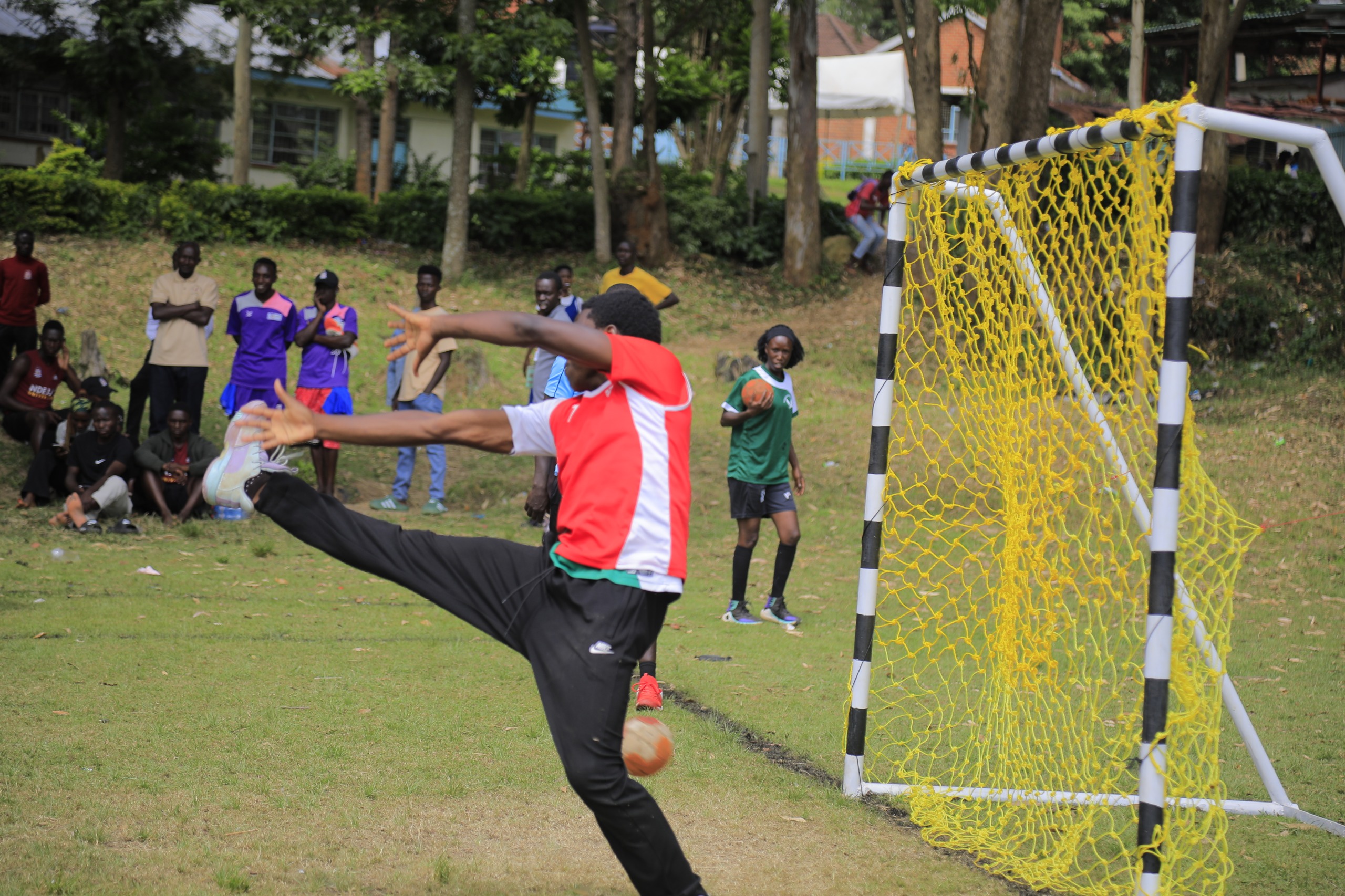
The full list of disciplines includes Athletics in the form of Track and Field, Badminton, Basketball, Chess, Darts, Handball, Hockey, Karate, Netball, Rugby Sevens, Scrabble, Soccer, Swimming, Table Tennis, Tae Kwon Do, Tennis, Volleyball, Woodball, Goalball and Sitting Volleyball.
The inclusion of Goalball and Sitting Volleyball alongside the more familiar disciplines is particularly notable. Both are sports developed specifically for athletes with disabilities, and their presence on the program signals a deliberate and welcome commitment by FEAUS and the host institution to inclusivity within university sport. It is a reminder that the Games are not simply about who can run fastest or jump highest, but about creating a platform broad enough for every kind of athlete to belong.
The presence of mind sports such as Chess and Scrabble alongside traditional physical disciplines also reflects a growing appreciation, across university sporting federations, of the fact that competition is not confined to muscle and stamina. Sharpness of mind deserves its own stage, and Makerere, a university built on scholarship, seems a fitting place for that stage to stand.
For Makerere specifically, several of these disciplines carry personal significance. The university’s swimming program, anchored by the Mak Sharks Swim Club, has built a reputation for producing competitive swimmers who consistently perform well on regional and national stages. Woodball, a discipline that Makerere athletes have represented with distinction at international competitions, will also feature prominently. The Mak Scrabble team, fresh off notable tournament success, will be looking to translate that form onto home turf. Rugby, through the Makerere Impis Rugby Club’s ongoing campaign in the Uganda Rugby Premier League, adds another layer of anticipation, as Makerere‘s rugby program has been building steady momentum in recent seasons.
A Games of Considerable Scale
Organizers project that the 2026 East African University Games will attract between four thousand and six thousand athletes, a figure that places the event among the largest university sporting gatherings the region has ever seen. When one factors in coaches, technical officials, university delegations, medical teams and support staff, the total number of people converging on Makerere for the six days of competition could comfortably exceed that range.
This scale presents both an extraordinary opportunity and a significant logistical undertaking. Accommodation, transport, catering, medical readiness, security and venue management across twenty disciplines are not small matters, and the university administration, alongside FEAUS and government partners, has already begun the work of preparing Makerere‘s sporting and residential infrastructure to receive delegations from across the East African Community.
Makerere‘s campus, with its sprawling grounds, well established sports facilities and central location within Kampala, offers a natural advantage as host. The university’s swimming pool, athletics track, courts and playing fields, many of which have hosted national and regional competitions before, will be put through what is likely to be their most demanding test yet.
What Hosting Means for Makerere
Beyond the logistics and the medal count, there is something deeper at stake for Makerere in hosting these Games. The university has, for over a century, positioned itself as a place where East Africa’s brightest minds converge. The East African University Games extend that identity into the realm of sport, offering Makerere a chance to demonstrate that its excellence is not confined to lecture halls and research laboratories.
Hosting also carries symbolic weight for regional cooperation. At a time when East African nations continue to explore deeper integration through trade, infrastructure and mobility, the Games offer a softer but no less meaningful form of unity. Young people from Kenya, Tanzania, Rwanda, Burundi, South Sudan and Uganda, among others, will share dormitories, dining halls and playing fields for nearly a week. Rivalries formed on the pitch are likely to dissolve into friendships formed off it, the kind of quiet diplomacy that sport has always been uniquely good at producing.
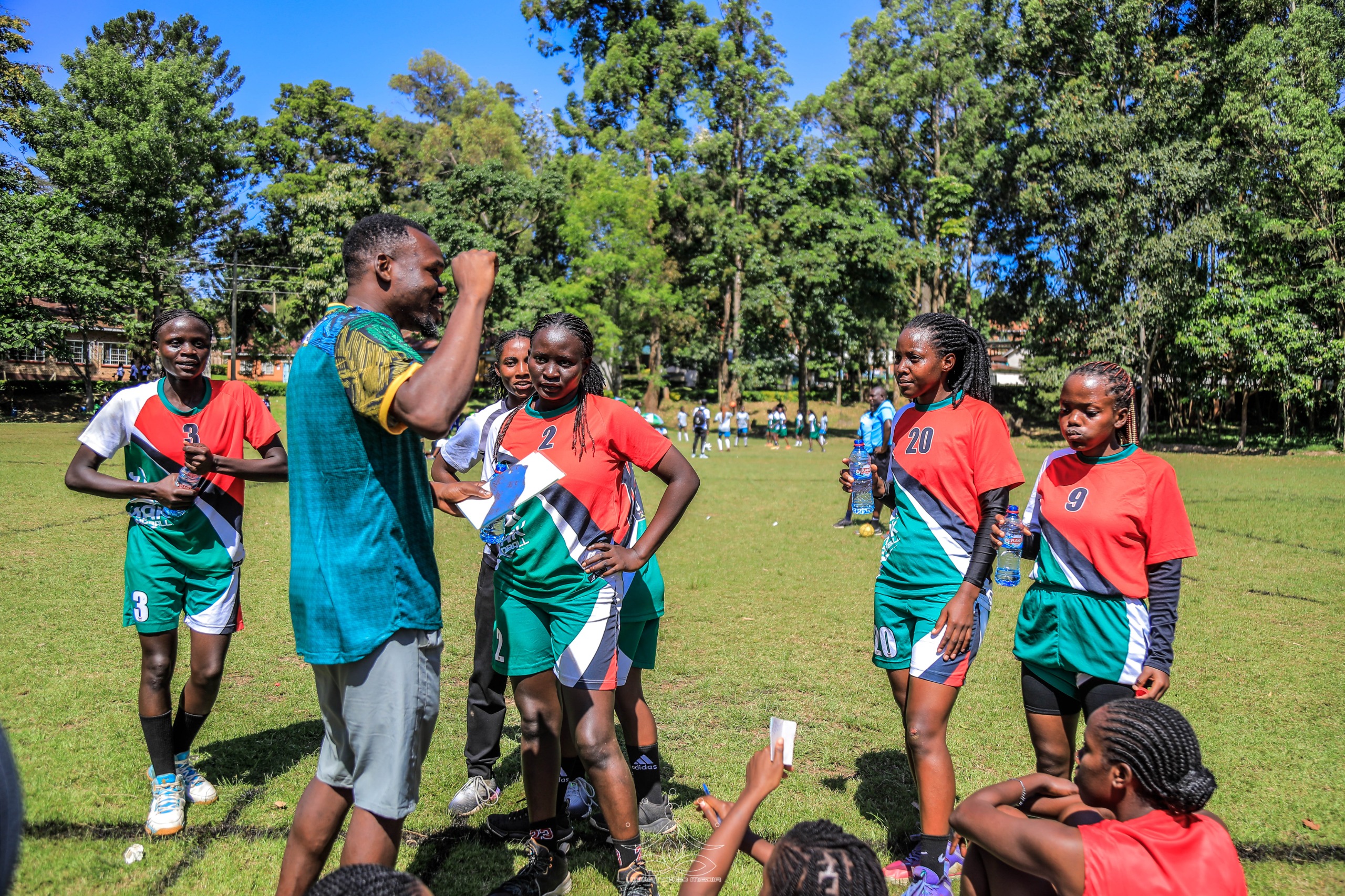
For Makerere‘s own athletes, competing on home soil brings both privilege and pressure. Home advantage in terms of familiar terrain, local support and reduced travel fatigue is real, but so is the expectation that comes with being the host nation’s flagship university. Makerere‘s various sports clubs, from the Sharks in the pool to the Impis on the rugby pitch to the university’s netball, basketball and athletics teams, will be under considerable pressure to perform in front of a home crowd.
Preparations Underway
With the Games still several months away, preparations across the university are already gathering pace. Facility assessments, athlete registration frameworks and coordination structures between Makerere‘s sports department and the FEAUS secretariat are among the early steps being taken to ensure the event runs smoothly.
University leadership has emphasized that hosting an event of this magnitude requires not just the sports department but the entire institution to pull together. Departments handling accommodation, catering, medical services, transport and security will all play a part in the months leading up to December. Student volunteers, a resource Makerere has never lacked, are also expected to be mobilized in large numbers to support the smooth running of the Games.
There is also an academic calendar consideration. With the Games scheduled for mid to late December, they fall conveniently close to the end of the university’s academic year, a timing that should minimize disruption to coursework while still allowing student athletes ample time to prepare and compete without the added burden of examinations.
Looking Ahead to December
Beyond the athletes themselves, the Games are expected to draw considerable public interest. Alumni scattered across East Africa, many of whom passed through Makerere‘s own sports clubs during their student years, are likely to return to the Hill to witness the spectacle. Local businesses around Kampala, from hospitality to transport, stand to benefit from the influx of visitors, and the university’s own reputation as a destination capable of hosting large scale regional events will be reinforced.
Media coverage of the Games is also expected to be extensive. Regional broadcasters, university publications such as this one, and independent sports journalists are all likely to descend on Makerere to document six days that promise drama, upsets, personal bests and, for some athletes, career defining performances. For a university with a long tradition of storytelling and scholarship, there could hardly be a more fitting stage on which to write the next chapter of East African university sport.
As the countdown to the fifteenth of December 2026 begins, anticipation is already building across Makerere‘s various sports clubs and among the wider student body. For six days, the Hill will transform into a regional sporting capital, hosting athletes from across East Africa in a celebration that spans twenty disciplines and, by extension, twenty different stories of dedication, discipline and dreams.
Makerere University has hosted many significant regional and continental gatherings over its long history, from academic conferences to cultural festivals. The 2026 East African University Games, however, will be among the most ambitious in scale and reach. It is an opportunity for the university to reaffirm, once again, why it remains a name synonymous with excellence across East Africa, not only in scholarship but now, resoundingly, in sport.
As preparations continue, the university community awaits further details on venue allocations, ticketing arrangements and the full competition schedule. What is certain, however, is that come December, all eyes in East African university sport will be fixed firmly on Makerere.
As a new chapter of university life begins at Makerere University, the excitement of lectures, new friendships, halls of residence and the freedom that comes with being a university student can easily take centre stage. Yet, life at the Mighty Hill is designed to be much bigger than the classroom. For freshers arriving for the 2026/2027 Academic Year, Makerere University offers a wide range of games and sporting opportunities through which students can discover talent, maintain an active lifestyle, build friendships, develop leadership skills and, for the most competitive, earn the opportunity to represent the University at national, regional and international competitions.
The University’s Sports and Recreation Department describes sport as an important part of creating an all-round student. Through organized and informal sporting activities, students are given opportunities to participate, compete and contribute to the spirit of the institution. The Games Union coordinates the student sports programme, while coaches and sports tutors support the development of athletes across the different disciplines. Freshers are therefore encouraged not to wait until they have completely settled into university life before exploring sport. The first weeks on campus may be the perfect time to find a team and make the sports ground another home.
Makerere’s sporting programme is broad enough to accommodate different interests, abilities and levels of experience. The University currently offers opportunities in athletics, badminton, basketball, chess, football, handball, hockey, martial arts, netball, rugby, scrabble, squash, swimming, table tennis, tennis, volleyball, woodball and other sporting activities. The official Sports and Recreation Department also lists adapted sports, giving students with disabilities opportunities to participate and compete.
For freshers, this diversity is important because university sport is not reserved for students who arrive on campus already known as national champions. Some students come with years of competitive experience, while others simply have a passion for a particular game and want to improve. What matters is the willingness to train, learn, work with others and commit to the demands of being part of a team. Makerere’s sports environment provides a platform where talent can be identified and nurtured, and where a student can grow from participating in a hall competition to wearing the University colours at a major championship.
Football remains one of the most popular sporting activities on campus with its training ground profoundly known as the Tear Gas Arena by the students , and Makerere provides opportunities for both men’s and women’s football. Students who have played competitively in secondary school, community clubs or academies can bring their experience to the University teams, while those who are still developing their game can also seek opportunities to train and improve. The University’s football programme offers freshers more than a chance to play the beautiful game; it offers an opportunity to compete for the badge and contribute to Makerere’s sporting identity.
Basketball is another major part of Makerere’s sporting culture. With the pace, physicality and tactical intelligence required by the game, basketball attracts students who enjoy competition and teamwork. Freshers with experience in school basketball, club basketball or informal community games are encouraged to seek out the team and attend training. For students who have always wanted to take basketball more seriously, university may be the place where that ambition begins to take shape.
Volleyball and netball also provide important pathways for students who enjoy team-based competition. Both sports demand communication, discipline, fitness and an understanding of team systems. Netball, in particular, continues to provide an important platform for female student athletes, while volleyball offers opportunities for both men and women to develop their skills and represent Makerere. Students should not underestimate the value of simply showing up for training and allowing coaches to assess their ability.
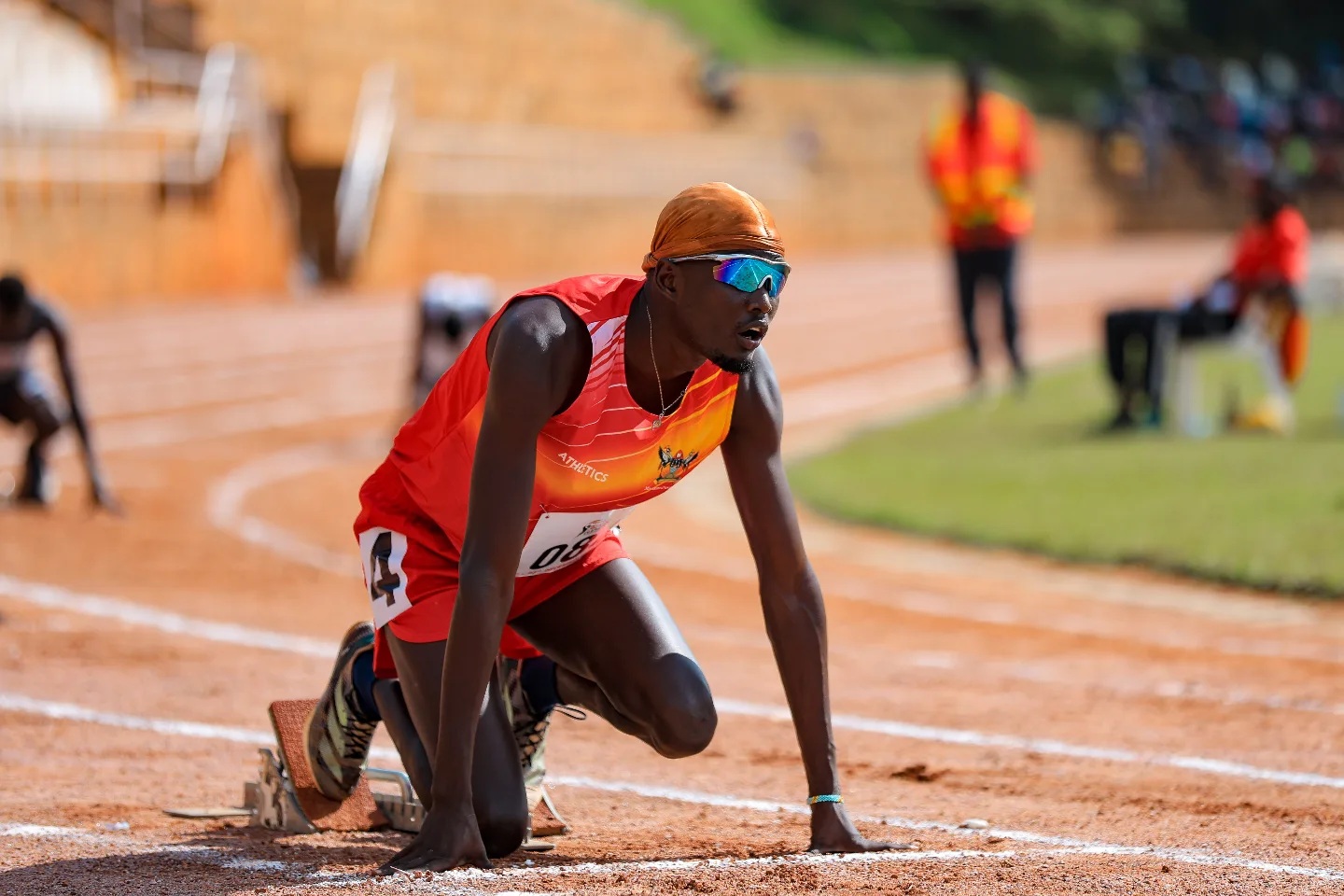
For those who prefer speed, endurance and individual competition, athletics offers a different route into university sport. Track and field athletes can compete in events that test sprinting, middle-distance and long-distance ability, among other disciplines. Makerere has a history of producing and supporting athletes who have gone on to compete beyond the University. Freshers who ran competitively in school, participated in athletics clubs or simply believe they have the endurance and discipline required for the sport should consider making themselves known to the athletics programme.
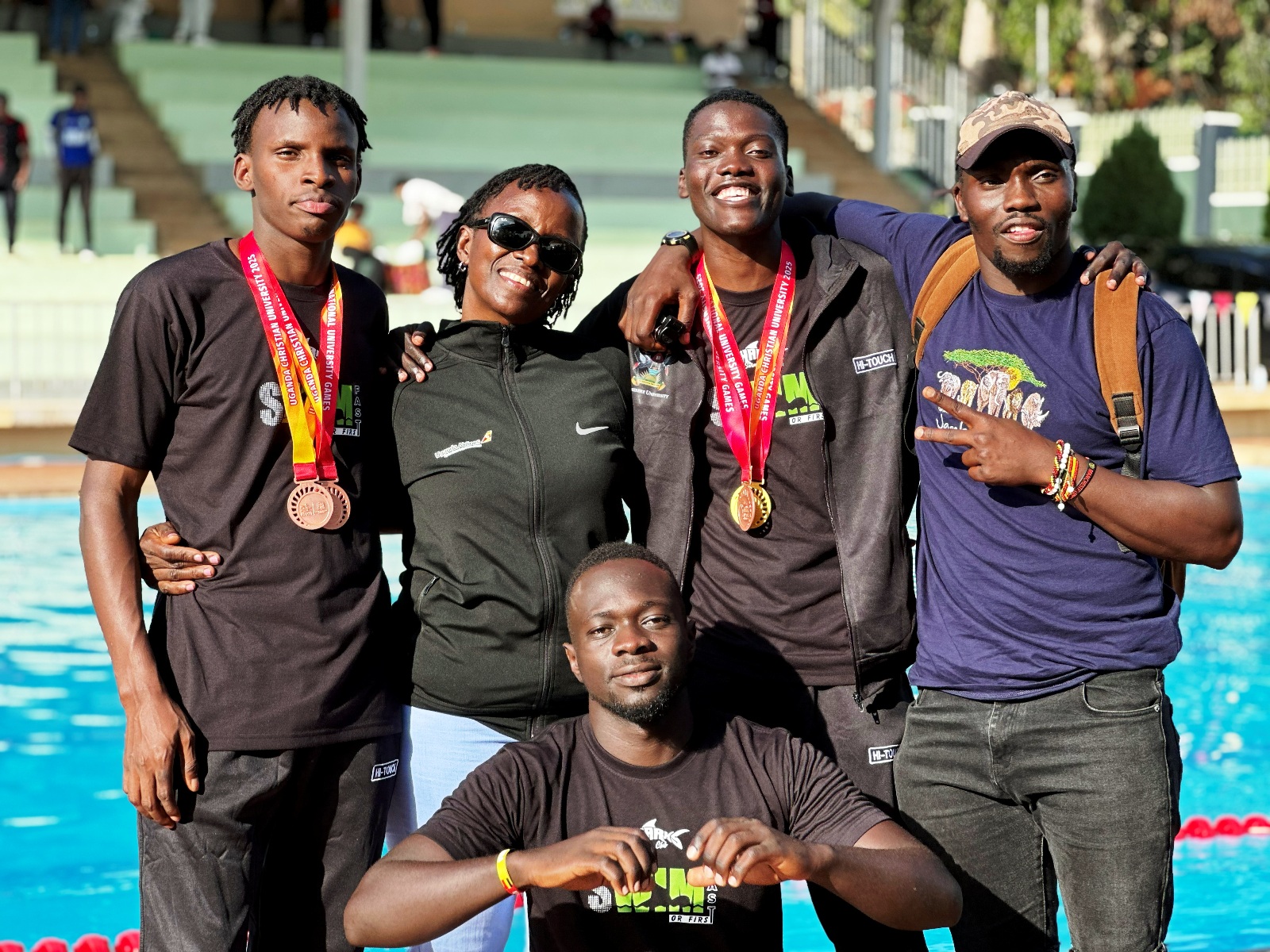
Swimming is another distinctive part of Makerere’s sporting identity. The University’s swimming pool, which dates back to the late 1950s, has witnessed generations of students take to the water. Today, the Mak Sharks, the competitive swimming club that doubles as the Makerere University Swim Team, continue to carry the University’s aquatic tradition forward. The team has competed at national, regional, continental and international levels, and has built a strong reputation in university swimming and water polo. For a fresher who is already a swimmer, or one who has a serious interest in competitive swimming, the pool could become one of the most important places on campus.
Makerere’s aquatic programme is also a reminder that university sport can take students far beyond the campus gates. The Games Union is affiliated to national and international university sports structures, including the Association of Uganda University Sports, the Federation of East Africa University Sports, the Federation of Africa University Sports and the Federation of International University Sports. Makerere students therefore have opportunities to compete at East African, African and world university competitions when selected to represent the University.
Rugby offers another competitive pathway for freshers who enjoy physicality, speed, tactical play and teamwork. Makerere Impis Rugby Club has a long association with the University and has continued to compete on the national scene. In 2026, the club made a notable return to the Premier League and reached the Main Cup semi-finals in its first season back at that level. Students with rugby backgrounds, as well as those interested in learning the sport, are encouraged to find out when the team trains and present themselves for assessment.
Handball and hockey add further dimensions to Makerere’s team-sport culture. Handball demands speed, strength, coordination and tactical awareness, while hockey combines fitness, technical skill and teamwork. Students who have represented their schools or clubs in either sport should consider continuing their journey at university. Freshers who are new to either game but have the interest and physical ability to learn should also not be afraid to step forward.
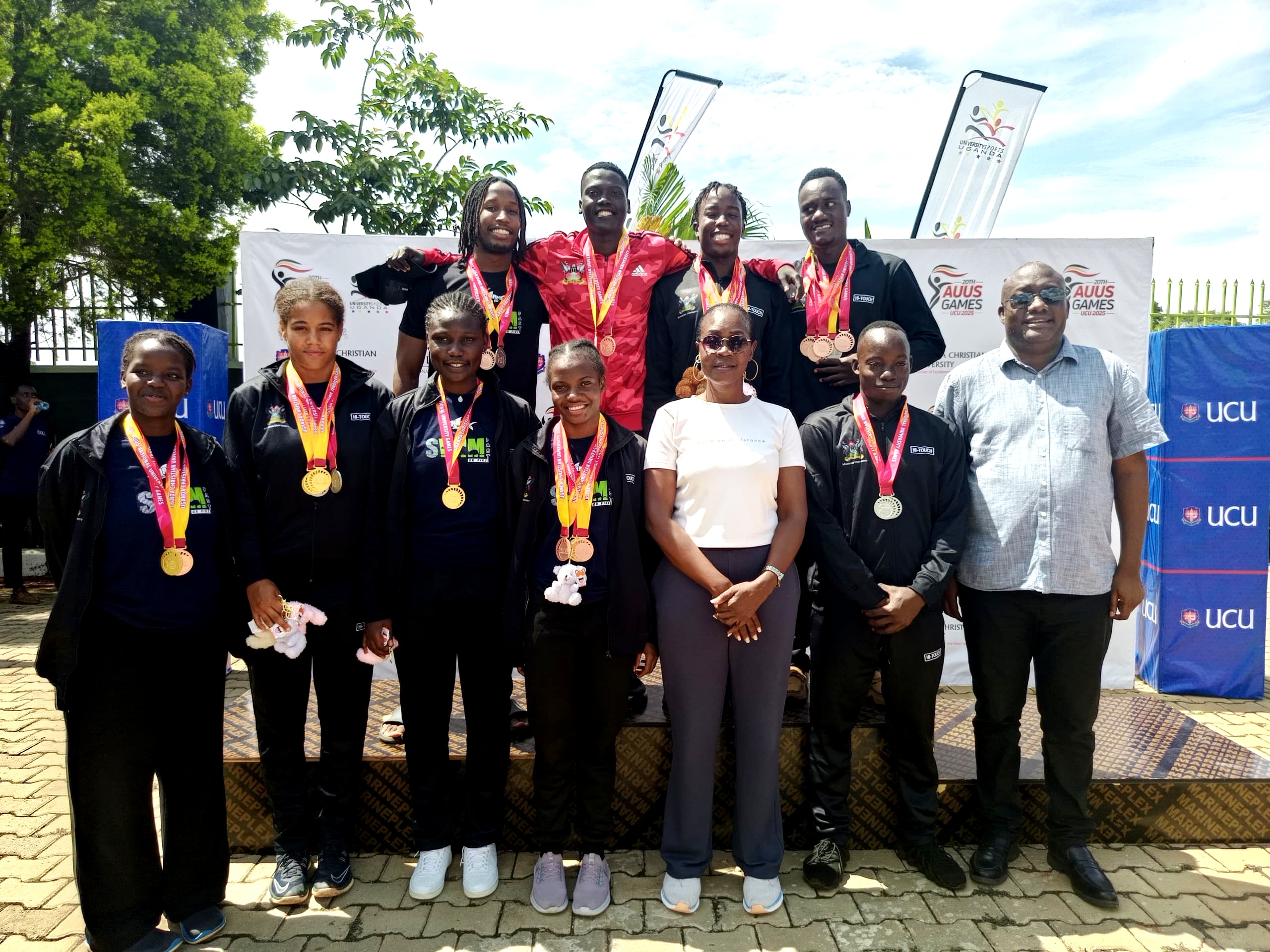
For students who enjoy individual and racket sports, Makerere offers badminton, tennis, squash and table tennis. These sports require concentration, coordination, movement and consistency, often placing a strong emphasis on technical skill and mental resilience. They can be particularly attractive to students who prefer competition that combines individual responsibility with opportunities to train alongside others. Whether you are an experienced player or someone looking to take a sport more seriously for the first time, these disciplines offer room for development.
The University also recognizes the importance of mind sports. Chess and scrabble provide opportunities for students whose strengths lie in strategy, concentration, memory, calculation and decision-making rather than physical speed. Chess players, in particular, can develop their competitive skills through structured practice and competition. For the fresher who may not see themselves as a conventional athlete, mind sports are a reminder that being part of Makerere’s sports community does not necessarily mean running, jumping or tackling.
Woodball and martial arts further expand the range of sporting opportunities available to students. Martial arts require discipline, technique and self-control, while woodball combines precision, concentration and physical activity. Students should explore the sports that match their interests rather than assuming that only the most popular games are worth pursuing. Sometimes the sport that becomes your greatest university experience is the one you never expected to try.
Makerere also provides adapted sports opportunities, reflecting the University’s commitment to making participation more inclusive. Students with disabilities are encouraged to explore the opportunities available through the Sports and Recreation Department and the Games Union. University sport should be a space where students can discover what they are capable of, irrespective of physical circumstances, and where talent is given an opportunity to grow.
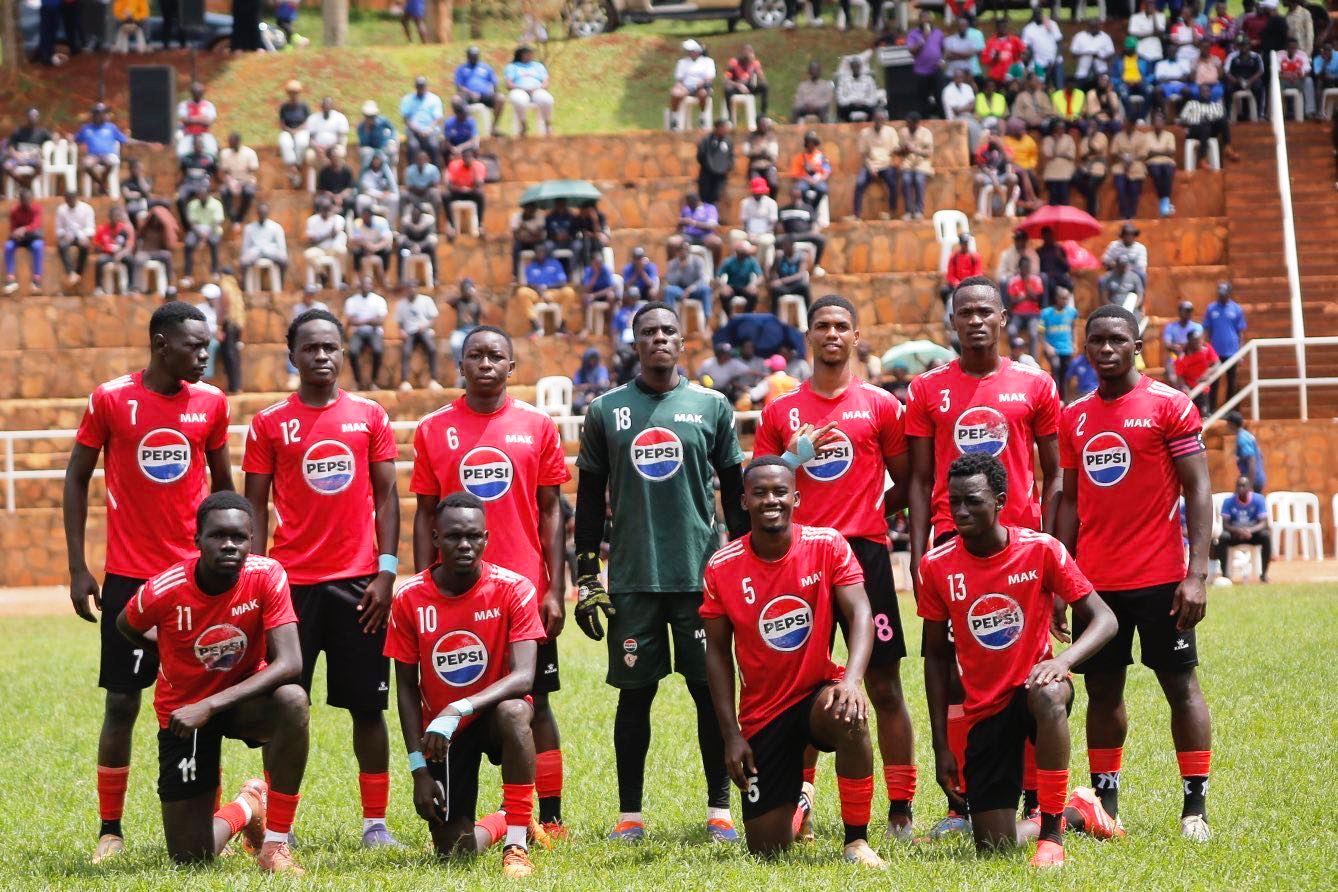
Beyond the major University teams, freshers should pay attention to intra-mural competitions. Makerere organizes activities such as inter-hall and inter-college competitions, which can provide an important entry point for students who want to experience competitive sport before seeking a place on a University team. These competitions can also help coaches and team officials identify emerging talent. A fresher who performs well for a hall may eventually attract the attention of a University coach and be invited to train at a higher level.
This pathway has existed at Makerere for generations. The University’s sporting history contains examples of students who arrived with talent, took part in different activities and eventually represented Makerere and Uganda at major competitions. The story of sports at the University is therefore not only about trophies. It is also about the relationships, confidence, discipline, leadership and opportunities that students gain along the way.
The benefits of joining a sports team extend well beyond winning medals. According to the Sports and Recreation Department, participation can support healthy living and fitness, talent development, self-esteem, stress reduction, social networking, leadership and team-building skills. Sport can also contribute to a student’s wider profile by demonstrating commitment, discipline and the ability to work with others. For a fresher trying to understand how to make the most of university life, joining a sports team can therefore be an investment in both personal development and student experience.
Freshers should, however, understand that making a University team requires commitment. Talent may open the door, but training, discipline, punctuality, fitness, teamwork and consistency are what keep an athlete in the room. Students joining a team should be prepared to balance their sporting commitments with academic responsibilities. The goal is not to choose between academics and sport, but to develop the discipline required to succeed in both.
The University’s Sports and Recreation Department encourages students to take part in at least one sport and to represent their halls and the University. Students can register for sports and activities and seek guidance from coaches, sports tutors, team captains and the Games Union. Freshers who are uncertain about where to begin should simply start by asking. Find out where your sport trains, introduce yourself to the coach or captain, attend a session and allow your ability and commitment to speak for you.
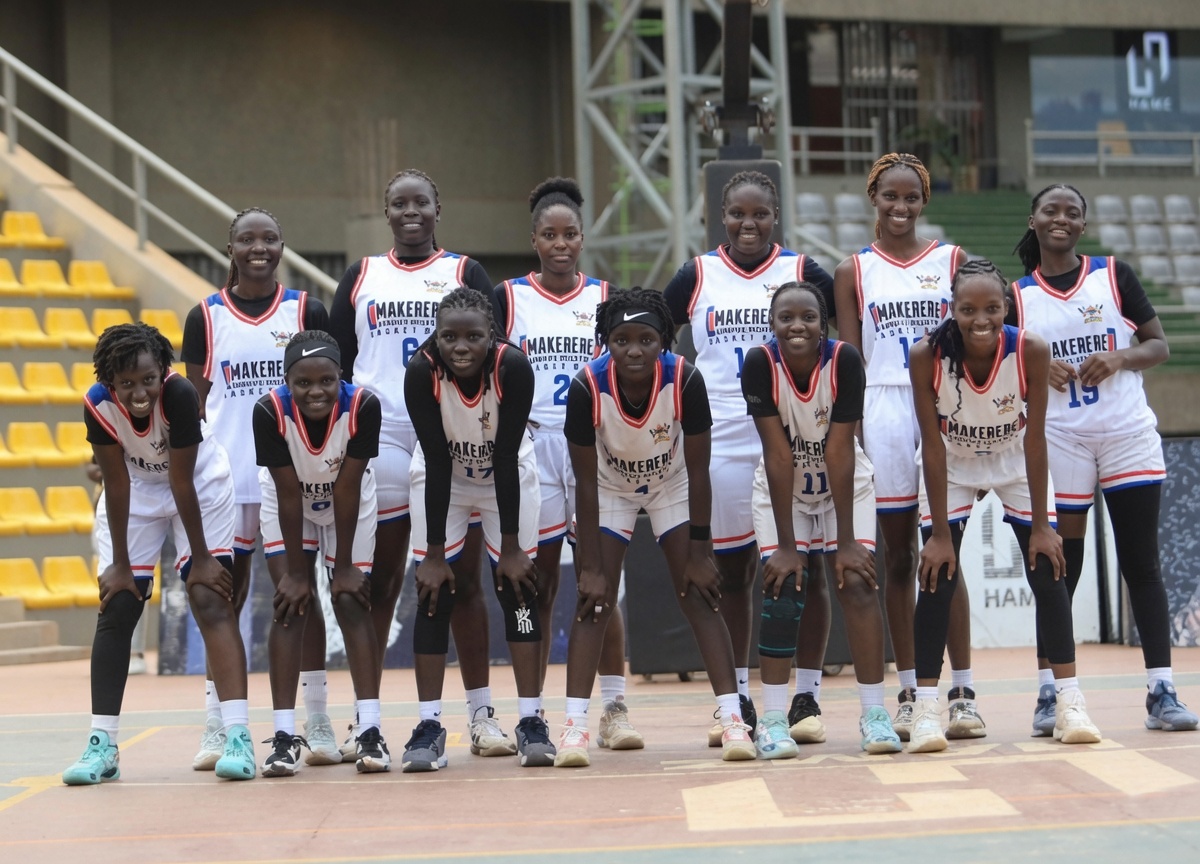
For those wondering whether they are good enough, the answer is simple: give yourself the opportunity to find out. You may arrive at Makerere believing that your sporting days ended with secondary school. You may discover a sport you have never played before. You may come to campus already carrying medals and expectations. Whatever your starting point is, the University offers a sporting environment in which you can test yourself, meet people, develop your abilities and perhaps earn the opportunity to represent one of Uganda’s oldest and most prestigious universities.
As the 2026/2027 Academic Year begins, freshers are therefore invited to look beyond lecture rooms and explore the sporting opportunities around the Mighty Hill. Whether your strength is in football, basketball, volleyball, netball, rugby, swimming, athletics, hockey, handball, tennis, badminton, squash, table tennis, chess, woodball, martial arts, scrabble or adapted sports, there is a place to begin. You do not have to wait to be discovered. Step onto the court, field, pool, track or training space and introduce yourself.
Makerere University is not only a place where students earn degrees. It is a place where identities are built, talents are sharpened and memories are made. For some students, the defining moments of their university journey will happen in lecture theatres. For others, they may happen under the floodlights, on the track, across the net, on the rugby pitch, over a chessboard or in the water. For a new fresher, the next chapter could begin with something as simple as joining a team.
So, to every fresher with a passion for sport, a hidden talent, a competitive spirit or simply a desire to stay active: do not watch from the sidelines. Find your sport. Find your team. Train. Compete. Grow. And when the opportunity comes, wear the Makerere colours with pride and represent the Mighty Hill.
For more info about the sports and games union, go to https://mak.ac.ug/students/sports-recreation
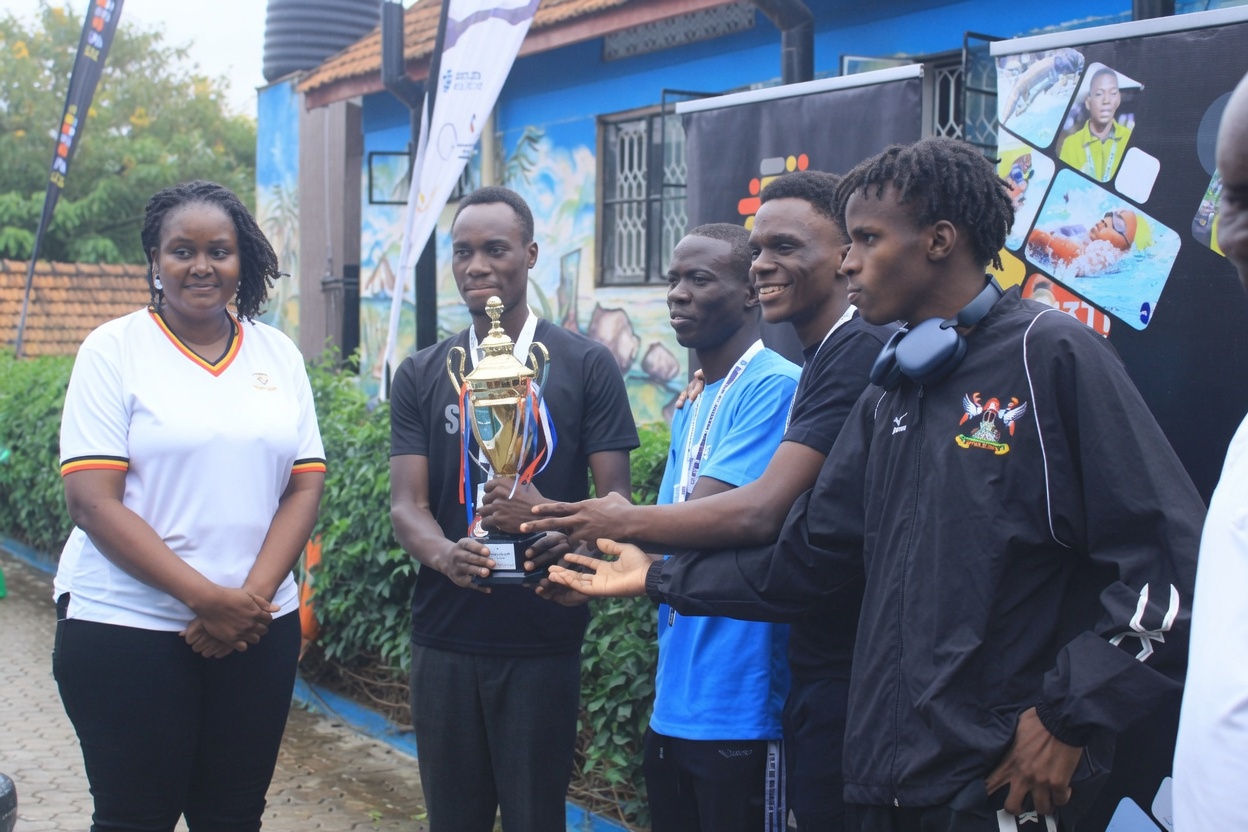
The Makerere swimming, basketball, and Scrabble teams all delivered championship moments for Makerere University this season, a reminder that the university’s sporting depth runs well beyond the football pitch.
Swimming: Mak Sharks crowned inaugural inter-university champions
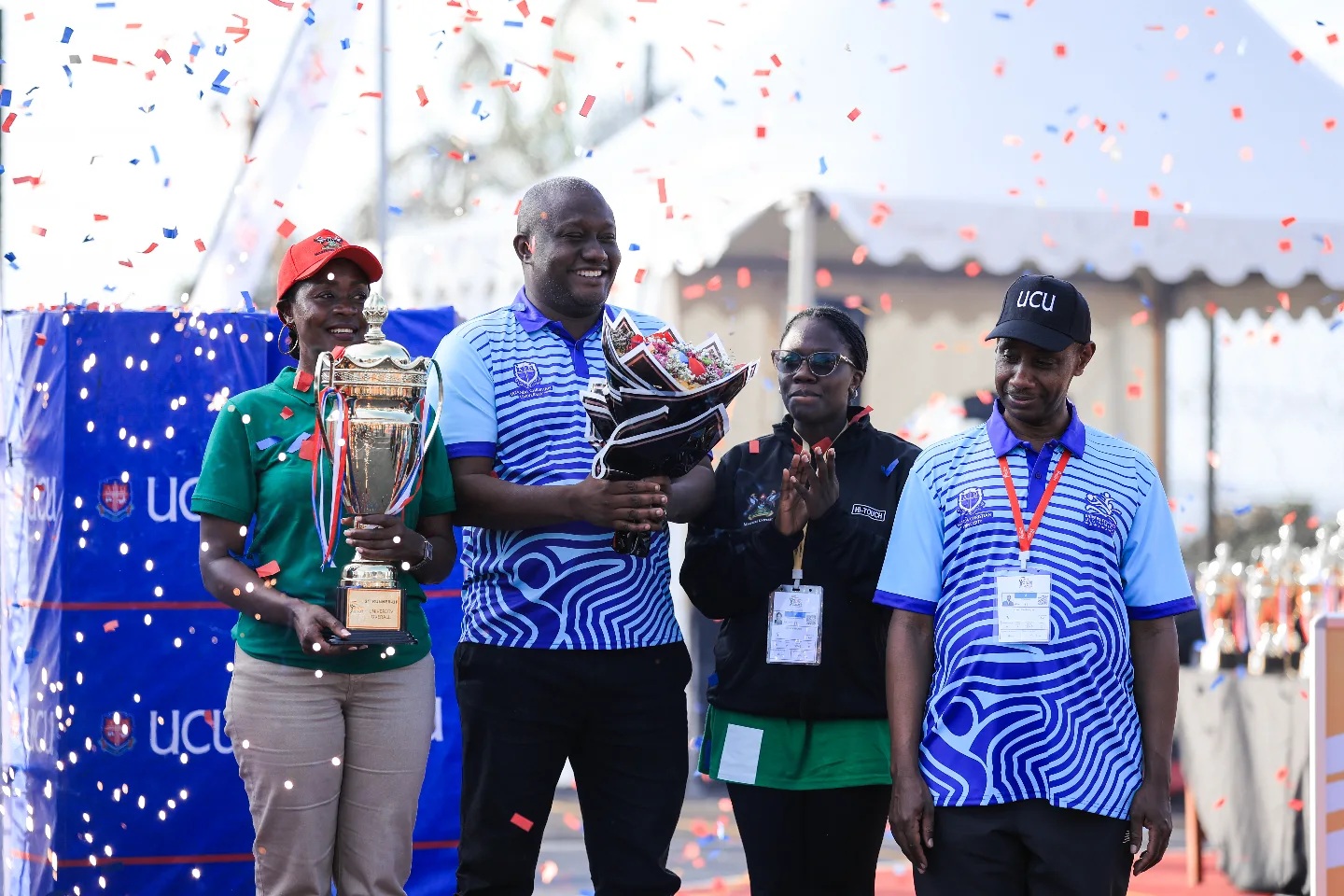
The Mak Sharks, Makerere University‘s Swim club, won the first-ever Uganda Aquatics (UA) Inter-University Swimming Championships, held at the British School of Kampala on 25th April 2026. The gala brought together swimmers from universities across the country, and it was Makerere’s men who emerged on top in a competition that organisers hope will become a permanent fixture on the national swimming calendar. The Club also holds the titles of defending champions in Ugandan Water Polo and the Association of Ugandan University Sports Games. Their performance is paying off from their rigorous training sessions under head coach Mr Tamale Thomas.
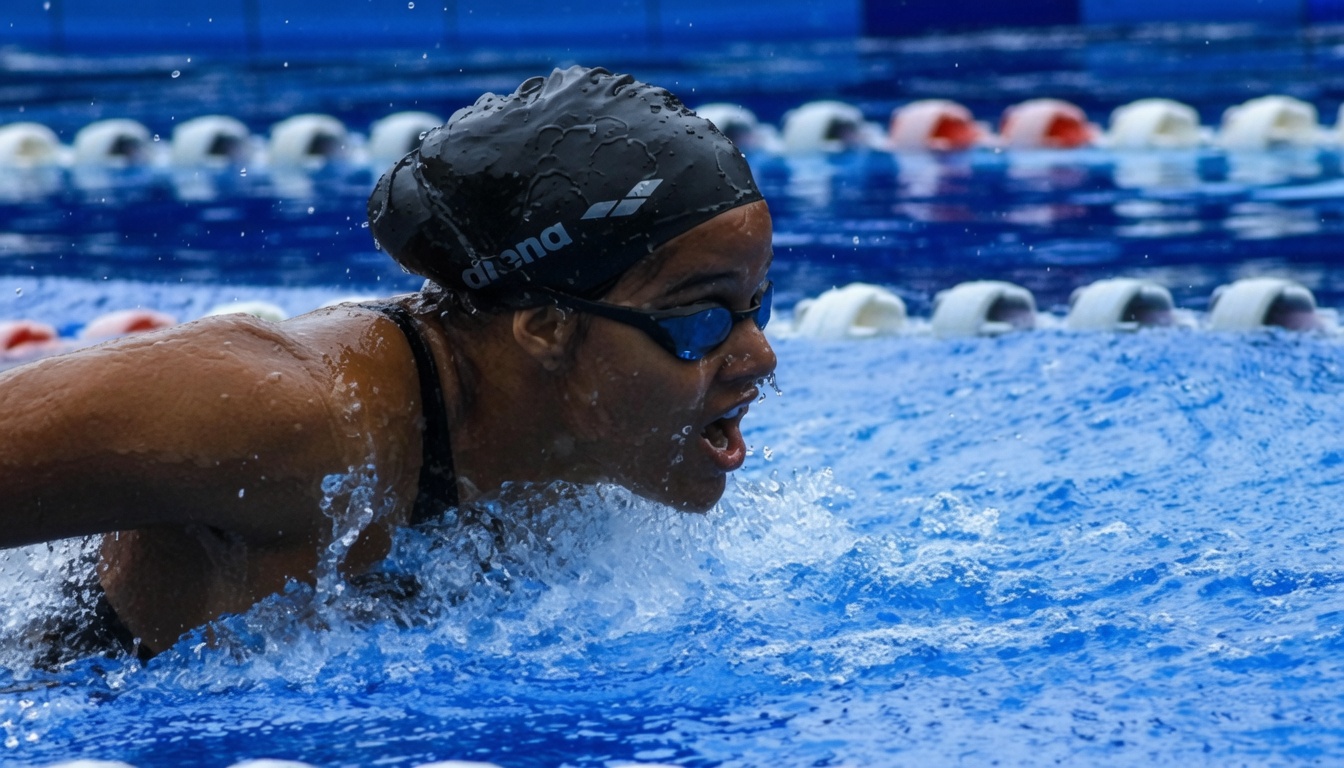
Their hard work and competitive mentality have in the past carried the club to the 2025 World University FISU Games in Rhine Ruhr, Germany; the 2024 All Africa FASU Games in Lagos, Nigeria, and the British School of Kampala in April 2026.
A first edition of any tournament carries its own pressure, since there is no previous result to defend and no established benchmark to chase, only the standard a team sets for itself. Makerere’s men met that challenge directly and, in doing so, gave the new inter-university championship its first champion.
Scrabble: Makerere Claims the Titans Tournament
Makerere University‘s Scrabble team won the Titans Scrabble Tournament, organised by the Scrabble Association of Uganda, with three players in the top five. The university was represented by a four man team of Musinguzi Simon, Lalobo Norbert, Atugonza Shawn, and Mawanda Malcom.
The tournament brought together four universities, Makerere University, Mbarara University of Science and Technology, Kyambogo University, and Uganda Christian University, alongside competitors from several technical institutes. The Titans Tournament is designed to expose university players to stronger competition from outside their own institutions ahead of the inter-university championships later in the season.

Lalobo Norbert topped the field with seven wins and one loss, finishing on a spread of +889. Musinguzi Simon was close behind, also recording seven wins and one loss with a spread of +422. Atugonza Shawn rounded out Makerere’s top three finishers with five wins and three losses on a spread of +465, while Mawanda Malcom closed out the squad’s campaign with three wins and five losses on a spread of 279.
With three of its four players finishing inside the top five, Makerere University‘s overall performance was enough to secure the tournament title, giving the university’s Scrabble programme a strong marker of form heading into the rest of the competitive calendar.
Women’s Basketball: Makerere Sparks Sail Through Round One Unbeaten
Makerere University‘s women’s basketball side, the Sparks, is making a statement in the 2026 FUBA Division One season. They wrapped up the first round without dropping a single game, going 11 for 11 and doing so in convincing fashion.
The turnaround comes after a tough finish in 2025, when the Sparks fell 3-1 to the Victoria She Crocs in the semi-finals. Determined to close those gaps, the team retooled heading into 2026, and the results are already showing on both ends of the court.
Offensively, no one in the division has matched them. Makerere leads all teams with 643 points scored, 46 clear of second-placed Nkumba Lady Marines. Their defense has been just as dominant, holding opponents to an average of 35 points a game. That two-way dominance has them tipped as one of the sides likely to earn promotion to the NBL.
Mercy Ageno picked up the best defensive player award and a spot on the 2025 team of the season, despite an early injury that ruled her out for the rest of round one. Afua Nabawanga ranks inside the division’s top 10 for scoring, assists, and steals, joined by a deep supporting cast — Faridah Nakyanzi, Denize Nabugasha, Sora Mary Deng, and Apuk Dium. They are all anchored by team captain Narot Harriet and her vice-captain Nalwoga Jovia.
Woodball: Makerere’s Little-known Powerhouse on the World Stage
While woodball rarely draws the same attention as other dominant sports, Makerere University has quietly built one of the strongest woodball contingents in the country, with three of its players representing both the university and the Uganda National Team on the international stage.
Namutebi Rhonah Majoline, captain of Makerere, was selected to represent Uganda at the 2025 Beach Woodball World Cup in Rayong, Thailand. Her recent honours include a Gold Medal in women’s doubles alongside Agatha Joy Auma at the 2024 Inter-University Woodball Championship, and a Silver Medal in mixed doubles at the 7th Uganda Woodball Federation President’s Cup, held at Lugogo Cricket Oval.
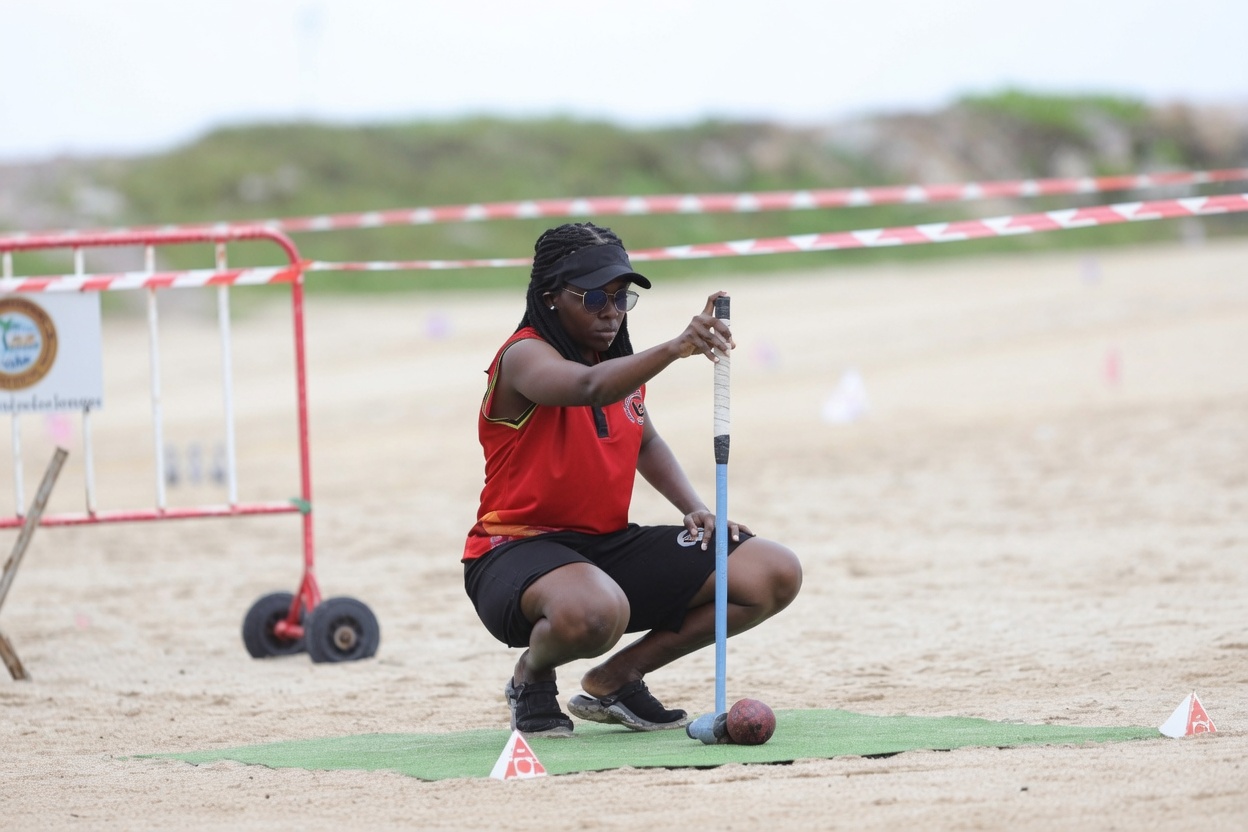
George Guma was also named to the national squad that travelled to Thailand for the Beach Woodball World Cup. On the domestic circuit, he has been a regular winner, taking gold in the men’s double stroke competition at the Kyambogo Open, and has represented several university and club banners across Uganda’s collegiate and national circuits.
Akram Matovu completes the trio, having earned his own call-up to the national team for the Beach Woodball World Cup in Thailand. Matovu has been a consistent presence at the President’s Cup, where he won silver in men’s doubles, and previously claimed the singles title on Makerere’s own grounds. He has also posted some of the strongest scores on the national Beach Woodball Circuit, including a standout round of 37 strokes, and is known for a memorable win over defending champions Uganda Prisons in the Buganda Land Board Woodball League.
Between them, Namutebi, Guma, and Matovu give Makerere a presence at nearly every major woodball event on the Ugandan calendar, from university championships to the President’s Cup to the national team itself, and their continued success keeps building the case for woodball as one of the university’s most underrated sporting disciplines.
End
-
 General1 week ago
Call for Applications: RLRH Graduate Traineeship Programme
-
 General2 weeks ago
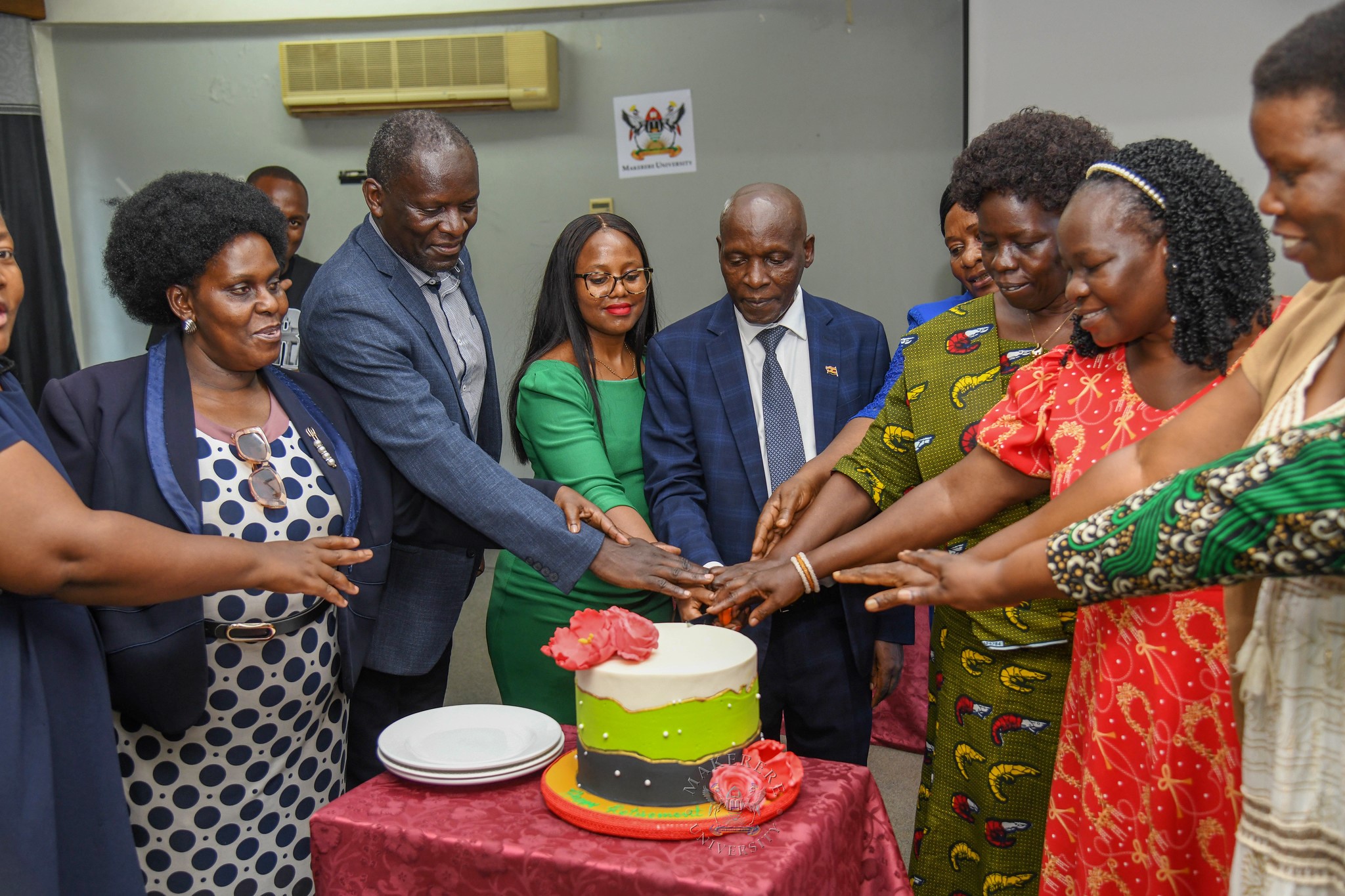
AR Department Bids Farewell to Mr. Ssentongo and Ms. Akoli
-
 Research2 weeks ago
Science Minister Challenges Makerere to Move Research into Use at Scale
-
 Natural Sciences1 week ago
From World’s Worst Water Weed to Worth: Makerere Researchers Turn Water Hyacinth into Valuable Products
-

 Veterinary & Biosecurity2 weeks ago
Innovation at Makerere: Minister Applauds CoVAB’s Breakthrough Research