
Education
Strengthening Early Childhood Care Education: MakCEES earmarked to host daycare facility

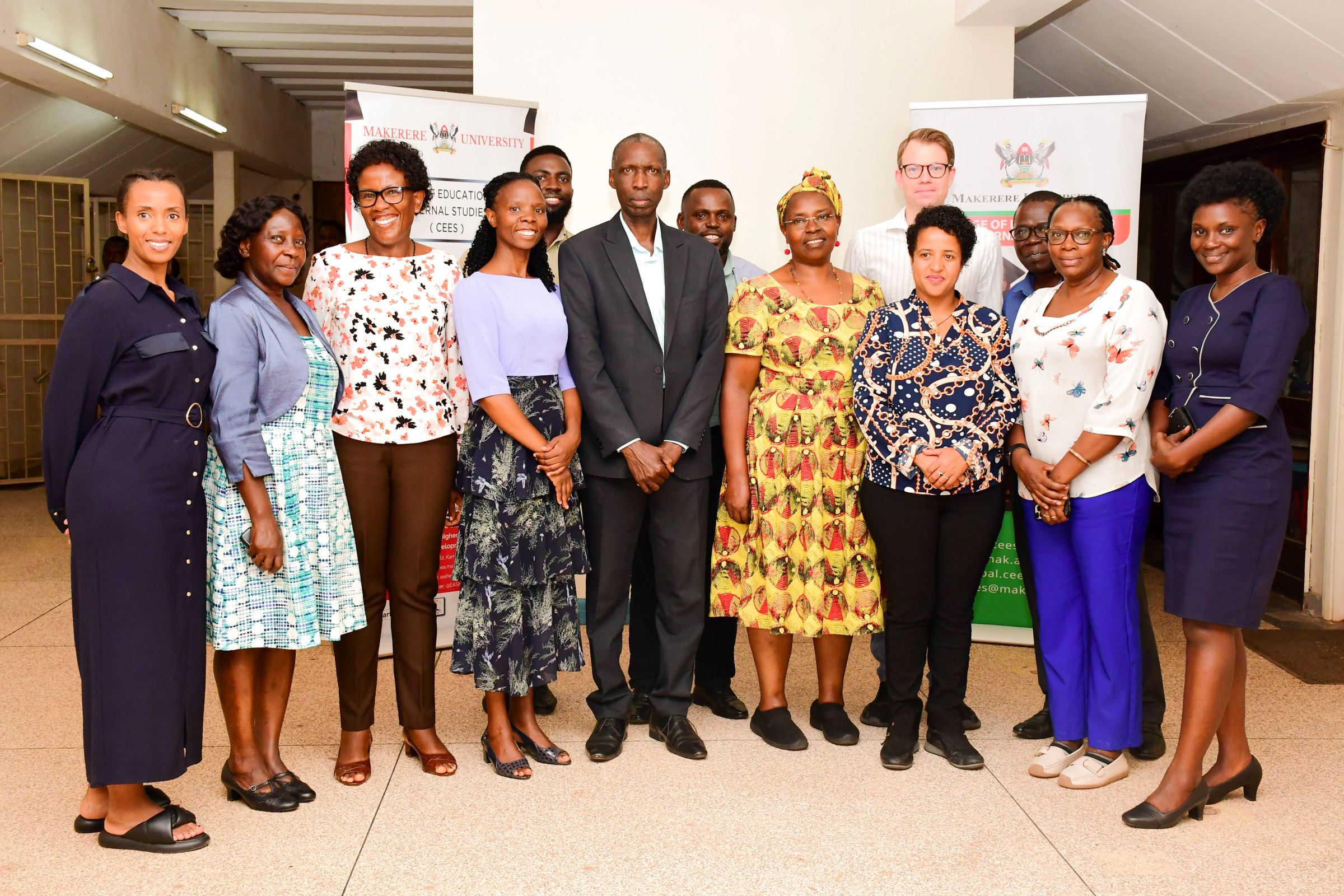
On 5th November 2025, the Principal of the College of Education and External Studies, Professor Anthony Muwagga Mugagga, hosted an inception meeting to discuss the modalities of setting up a daycare facility anchored within the Early Childhood Care Education strategy and the Competence Based Education trends.
Early Childhood Care and Development is the foundation of the education sector. Therefore, initiatives such as the daycare facility, are testimony to Makerere University’s commitment to the implementation of programmes aimed at strengthening early childhood care education. The facility will also serve as a demonstration centre for students and staff engaged in Early Childhood Care Education programmes.
The daycare facility to be hosted at the College of Education and External Studies will be enriched by best practices from Uganda, Norway and Ethiopia
The inception meeting brought onboard Early Childhood Care Education specialists from both the College of Education and External Studies and the Partnership for Change in Norway, staff from Makerere University Gender Mainstreaming Directorate, and the Office of the Dean of Students.
The Partnership for Change is a Norwegian Organization that supports aspiring countries to develop a thriving Early Childhood Care and Education (ECCE) sector and women’s economic empowerment in several countries. The delegates from Partnership for Change in Norway included: Oscar Haugejorden, Birikit Terefe, and Nasanet Hailemariam.
Welcoming the delegation from Norway and the respective internal stakeholders, the Principal expressed the readiness of the College of Education and External Studies (CEES) to host the daycare facility that will be utilized by both staff and students.
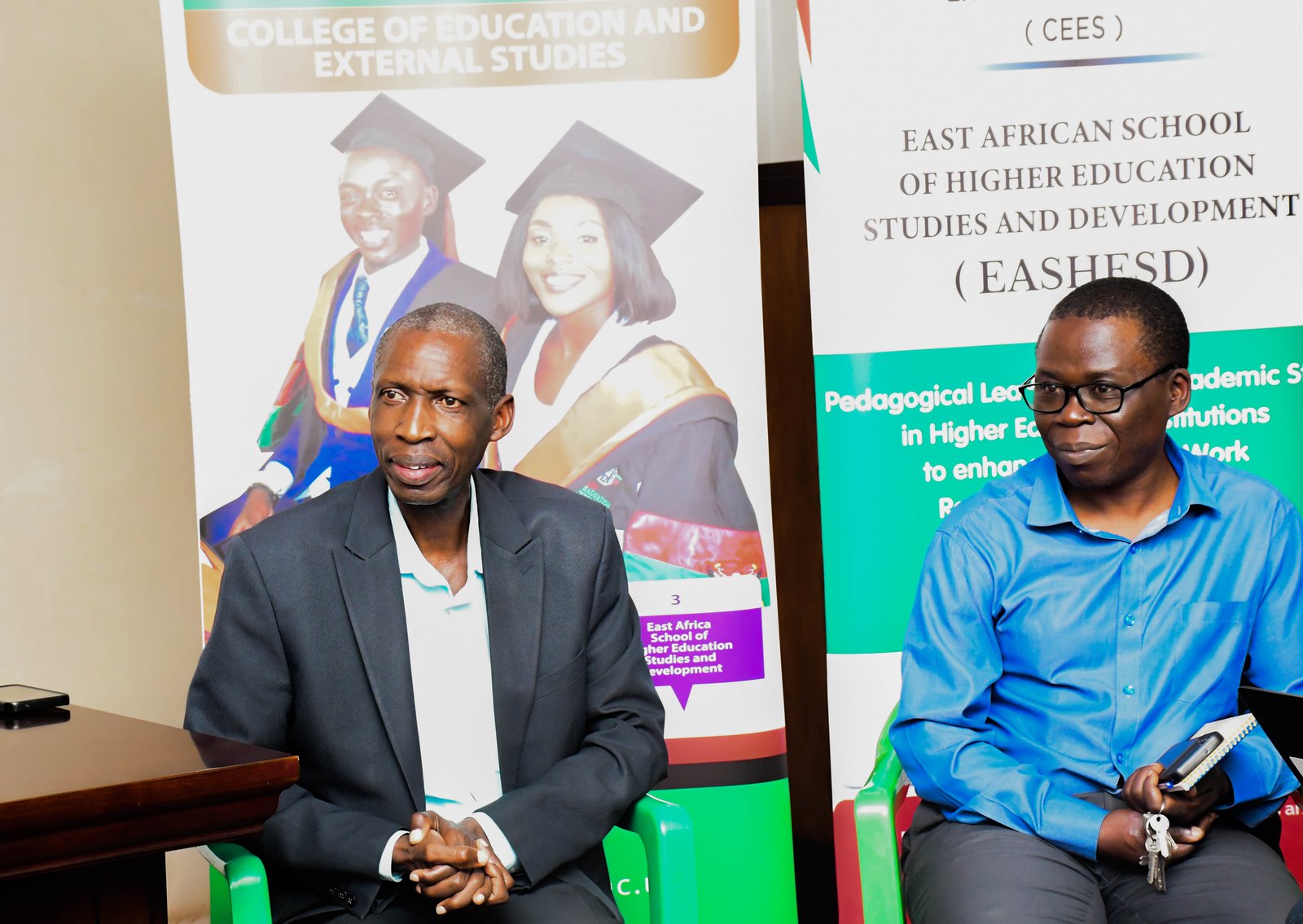
Professor Mugagga flanked by Dr. Peter Ssenkusu, both specialists in early childhood care education, highlighted that the College conducts a Bachelor’s degree, Masters’ degree, and PhD in early childhood care education and development. The CEES leadership reported that there is an increasing demand for early childhood care education programmes at Makerere University.
“Whereas Makerere University through the College of Education and External Studies had expected applicants from Diploma Holders, the realities proved that students who had completed the Advanced level of education (Senior Six) were interested in the academic programmes, and consequently applied,” said Professor Mugagga. He disclosed that the first advert to the (Bachelor of Early Childhood Development) attracted 500 applicants from Advanced level, Makerere University could only admit 110. He stated that the second advert, attracted 1,000 applicants, but they could take on, only 120.
Commenting on the gender (female to male) enrollment into Early Childhood Care Education (ECCE) at Makerere University, he said: “I am delighted to note that this year, Makerere University admitted 30 male students into the ECCE academic programme. This is an interesting trend that the boy child is also joining the ECCE programmes, that initially had attracted mostly female students.”
Partnership for Change underscores working with local partners and experts
Appreciating the warm reception at the College of Education and External Studies, the delegation expressed readiness to partner with Makerere University to contribute to the advancement of Early Childhood Education in Uganda. “Through this inception meeting at the College of Education and External Studies, history is being made. Makerere University and the Partnership for Change will contribute to strengthening of the early childhood care education sector in Uganda and beyond.”
The Head of the Delegation, Oscar Haugejorden, underscored the value of partnerships at all levels of their work and operation. “Partnerships are very important to us. We do not work alone. We work with local partners,” emphasized Oscar Haugejorden, the Managing Director, Partnership for Change.
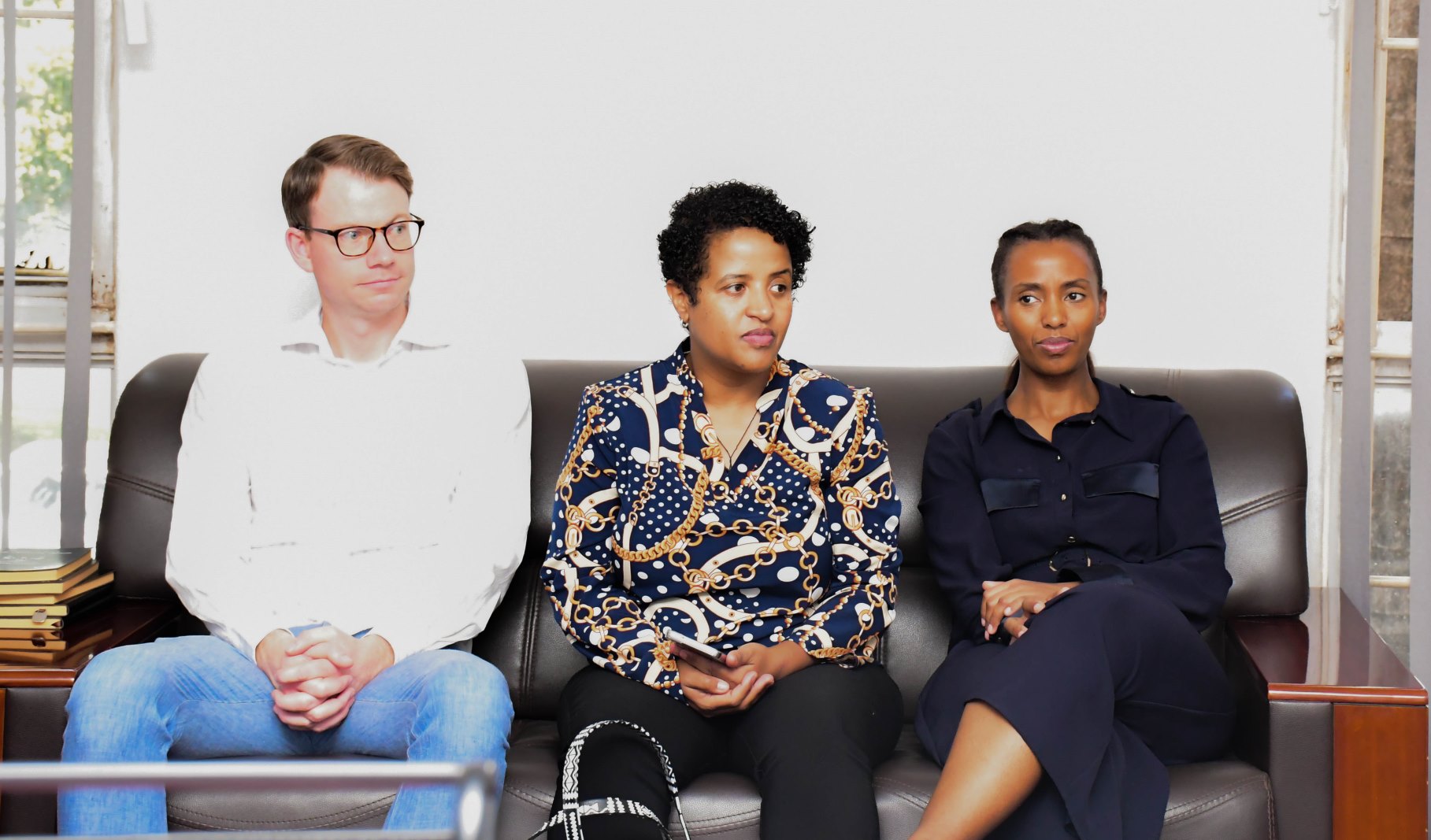
In pursuit of this partnership, the delegation expressed readiness to work with the leadership at Makerere University-the Vice Chancellor, Deputy Vice Chancellors, Dean of Students, Gender Mainstreaming Directorate, the College of Education and External Studies, and the government of Uganda through the Ministry of Gender, Labour and Social Development.
The delegation committed to following standards and regulations that govern daycare centres and working with nationals who are experts in the different fields/disciplines such as certified local engineers.
The discussion revealed that the success of the Partnership for Change Early Childhood Care Education programmes is built on experience, trust, stakeholder engagements, involvement of the local partners and experts, and a great deal of advocacy.
The daycare facility to be hosted at the College of Education and External Studies will be enriched by best practices from Uganda, Norway and Ethiopia.
Success stories of ECCE in Ethiopia
In Ethiopia, The Partnership for Change, promotes social and economic development, with a focus on childcare and healthcare.
The delegation informed the Makerere University officials about the success of the ECCE programme built on partnerships with the government, schools, stakeholder engagements and involvement of citizens in Ethiopia. “Through partnerships and advocacy, Early Childhood Care Education has been institutionalized in Ethiopia. In addition, the government established 750 daycare centres.”
According to the Partnership for Change team, the government and citizens of Ethiopia, understood and appreciated the cardinal duty to nurture and care for the young ones, as parents joined the workforce. “Early childhood care education, and daycare centres, contributed to the economic transformation of Ethiopia. Parents could concentrate on their work or service to the nation without worrying about their babies or children. Parents entrusted their babies/children to the professional teams in parenting and early childhood care education, who are managing the daycare facilities.”
Gender Mainstreaming Directorate inspired by positive attitude towards ECCE
Dr. Euzobia Mugisha Baine, the Chief of Gender Mainstreaming at Makerere University, articulated that prioritization of early childhood care education, and its essential components such as daycare centres, would significantly contribute to the transformation of the education sector.
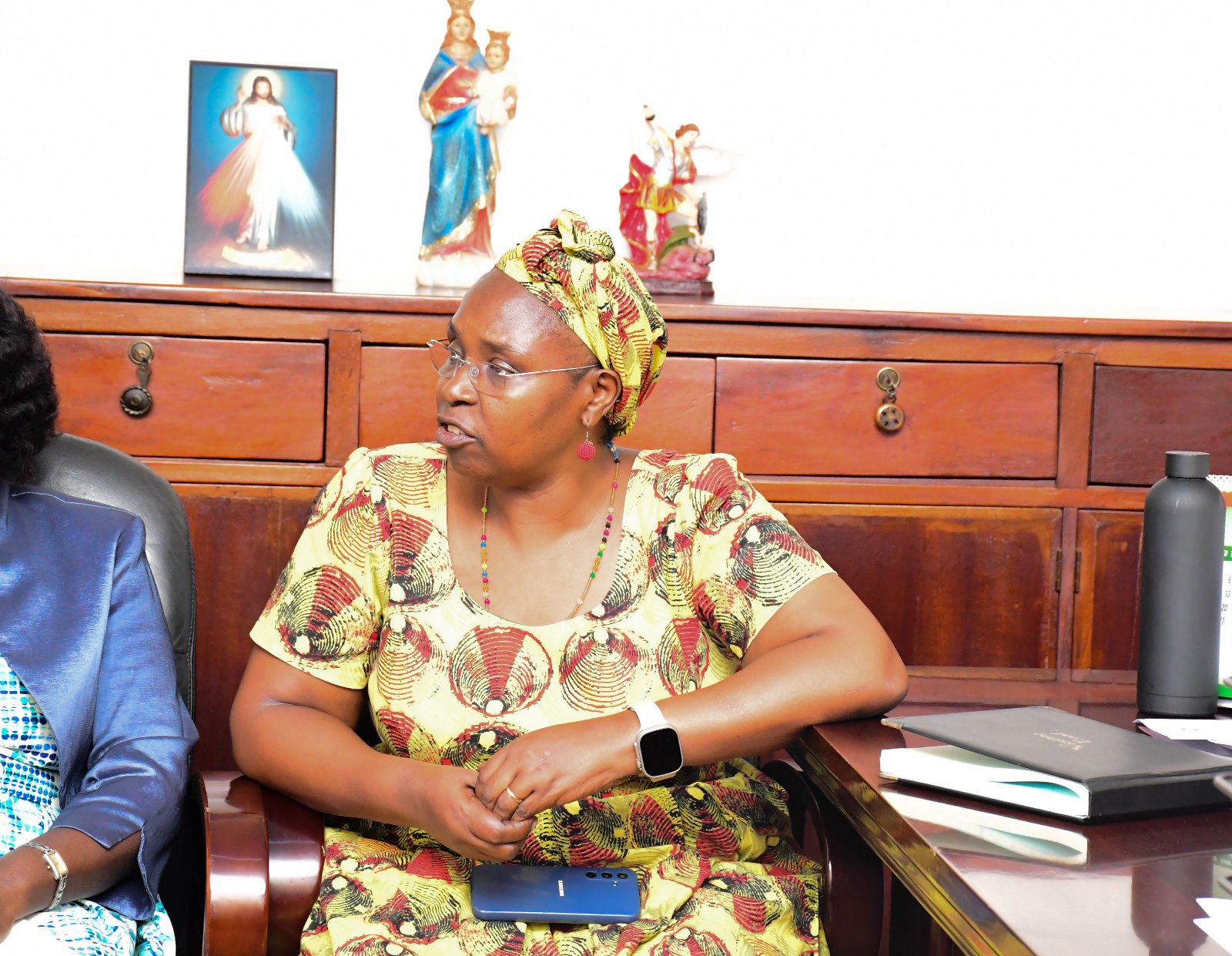
Providing the Ugandan context, Dr. Mugisha Baine, noted that for decades, early childhood care education, had been left to the private sector. Reflecting on the last five years, she observed that the government, universities and a number of stakeholders, have developed keen interest in the early childhood care education field including its operationalization, management, and its delivery. Dr. Mugisha Baine, is optimistic that with the change in attitude, early childhood care education will continue to grow, evolve and impact the learners, teachers and providers. She reiterated the need for Universities to have fully fledged daycare facilities. She expressed her readiness to learn new knowledge and skills as the daycare facility is rolled out at the College of Education and External Studies.
Office of the Dean of Students commends the timely intervention
The Dean of Students-Dr. Winifred Kabumbuli, represented by the Warden of Mary Stuart Hall, Ms. Norah Nalubowa, commended the ongoing efforts to refurbish and remodel a daycare facility at the College of Education and External Studies.
Ms. Nalubowa notified the meeting that during the examination period, some students who come with their babies and/or children, have been experiencing challenges, because they could not enter with them in the examination venues.
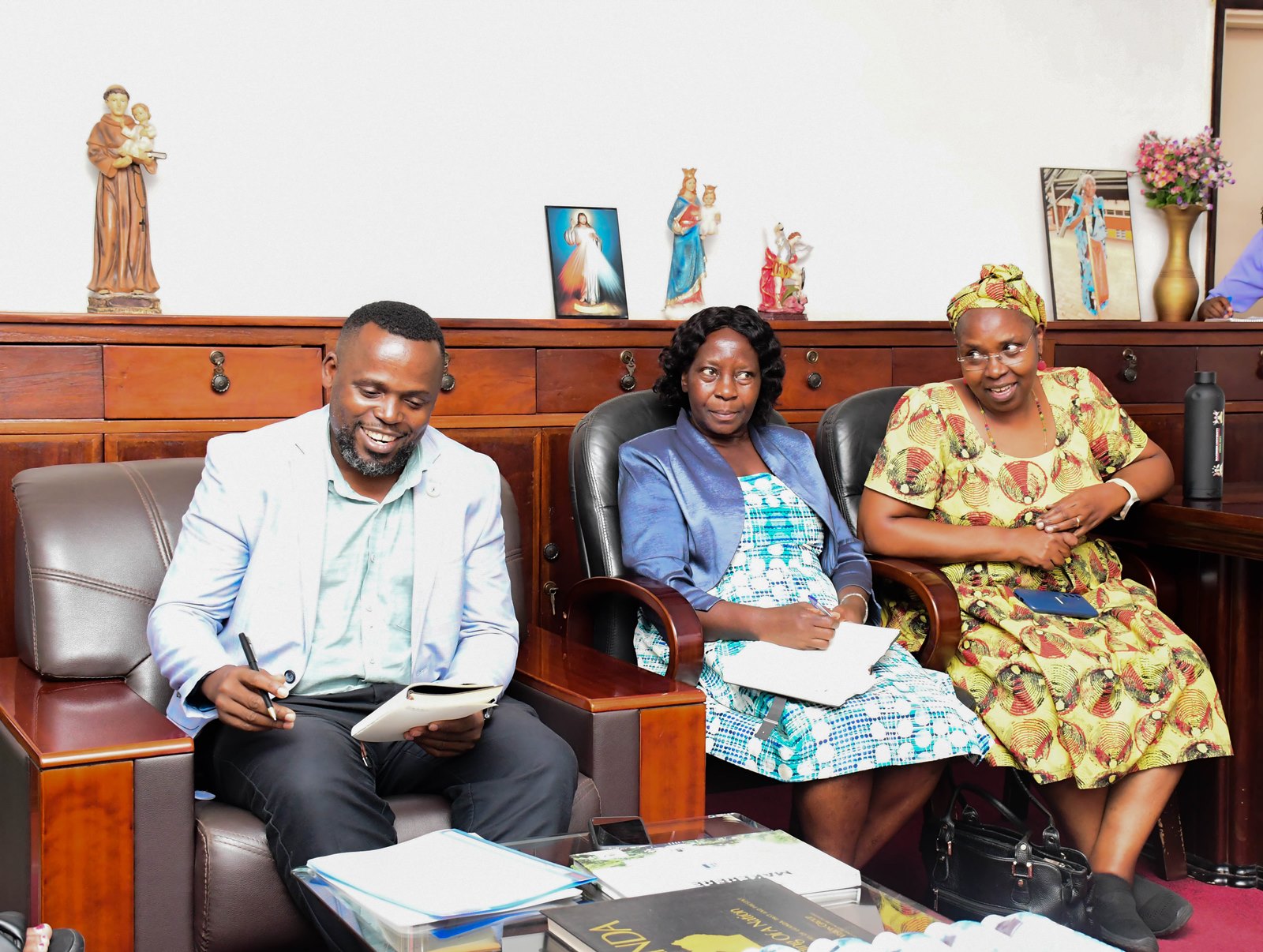
Drawing from the aforementioned experiences, Ms. Nalubowa explained that the daycare facility is a timely intervention, that will enable such students, to entrust their babies and/or children to the professional team managing the facility.
Way Forward
The proceedings of the inception meeting at the College of Education and External Studies were a precursor to other stakeholder engagements on integration of early childhood care education facilities into the education sector. The team is scheduled to meet officials in the Ministry of Gender, Labour and Social Development in Uganda. Specific to Makerere University, the team is expected to meet the Vice Chancellor-Professor Barnabas Nawangwe, and the Deputy Vice Chancellor (Academic Affairs)-Professor Sarah Ssali, on Friday 7th November 2025.
Participants
The following Makerere University staff members participated in the inception meeting: Ms. Norah Nalubowa-representing the Dean of Students, CEES staff including – Professor Anthony Muwagga Mugagga, Dr. Peter Ssenkusu, Ms. Ritah Namisango, Mr. Emmanuel Lubega, Mr. Moses Kibirango, and Gender Mainstreaming Staff including – Dr. Euzobia Mugisha Baine, Ms. Susan Mbabazi, Mr. Eric Tumwesigye, Ms. Lillian Tukahirwa and Ms. Cynthia Komakech Ayaa.
Writer: Ritah Namisango, is a Principal Communication Officer at Makerere University







Education
School Stakeholders’ Exhibition: Graduate Students partner with schools to simplify the new Competence Based Curriculum
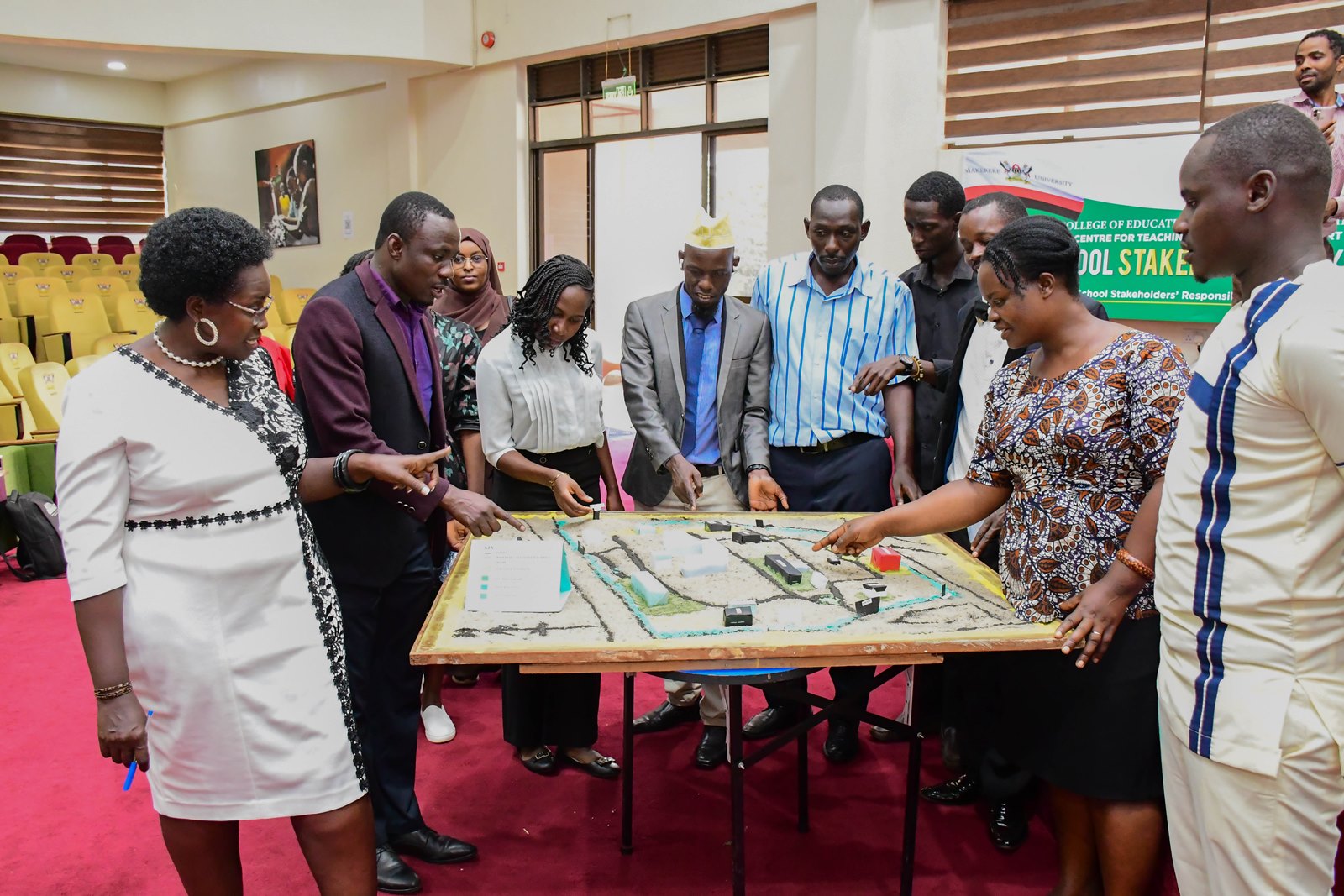
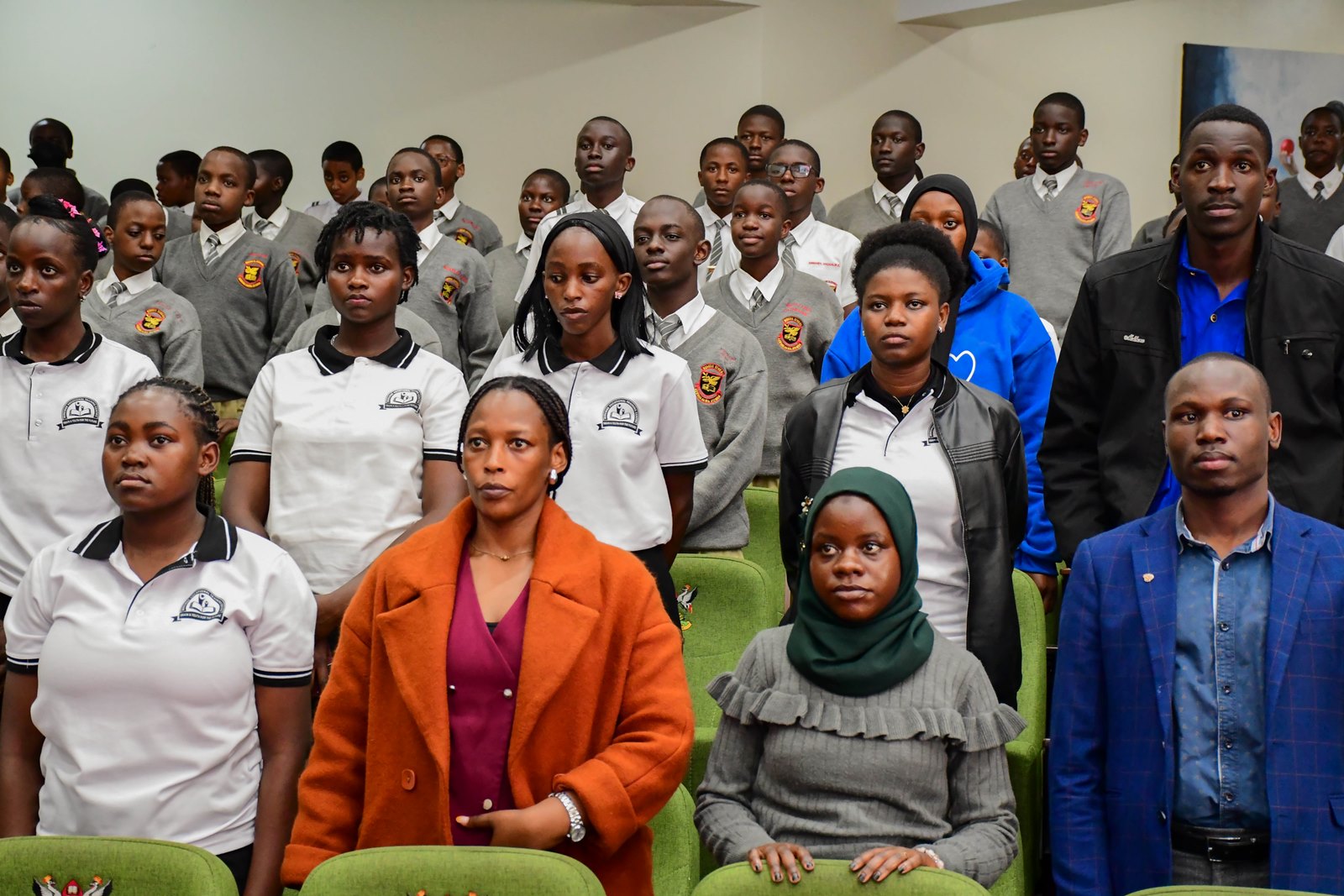
Makerere University, on Thursday 26th March 2026, hosted the School Stakeholders’ Exhibition, bringing together learners, teachers, researchers, and education policymakers to demonstrate how Uganda’s Competence Based Curriculum (CBC) can be implemented through experiential learning and real-life situations.
The Exhibition was championed by graduate students from the College of Education and External Studies (CEES) and the College of Humanities and Social Sciences (CHUSS) guided by Dr. Anne Ampaire, a Lecturer of Educational Psychology at Makerere University.
With Dr. Anne Ampaire’s close supervision, the graduate students studying the Master of Early Childhood Education, Postgraduate Diploma in Education, and the Master of Education-Educational Psychology, teamed up with various schools and learners, to showcase the possibilities of taking classroom content into real-life situations.
For instance, at the pre-primary level, students in kindergaten and nursery schools (Two to Eight years) participated in the Early Childhood Development (ECD) sessions guided by their teachers, and graduate students pursuing the Master of Early Childhood Education at Makerere University.
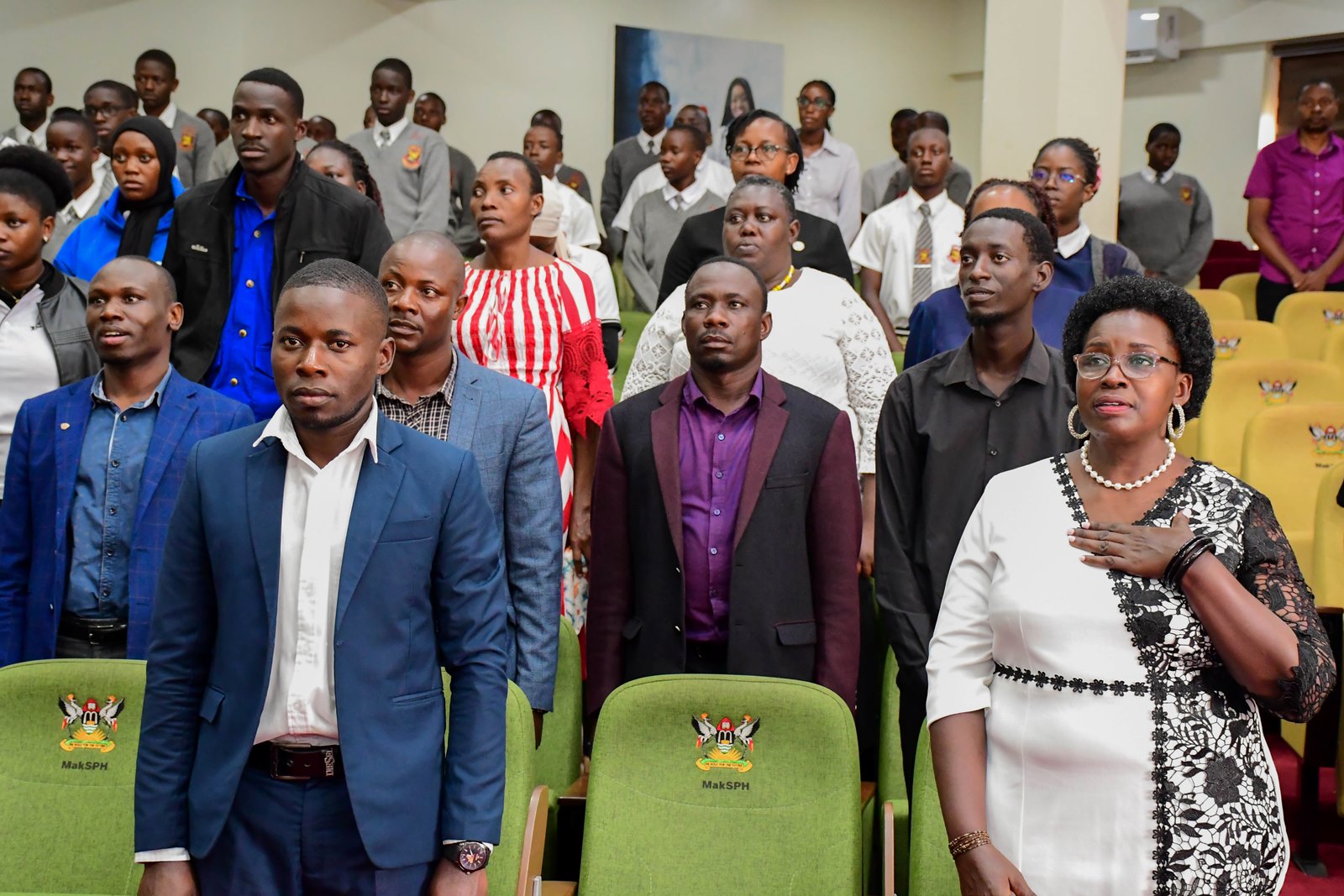
Themed, School Stakeholders’ Responsibilities in Shaping Minds for Productive Life, the exhibition attracted pre-primary, primary and secondary school learners, university students, educators and stakeholders in the education sector.
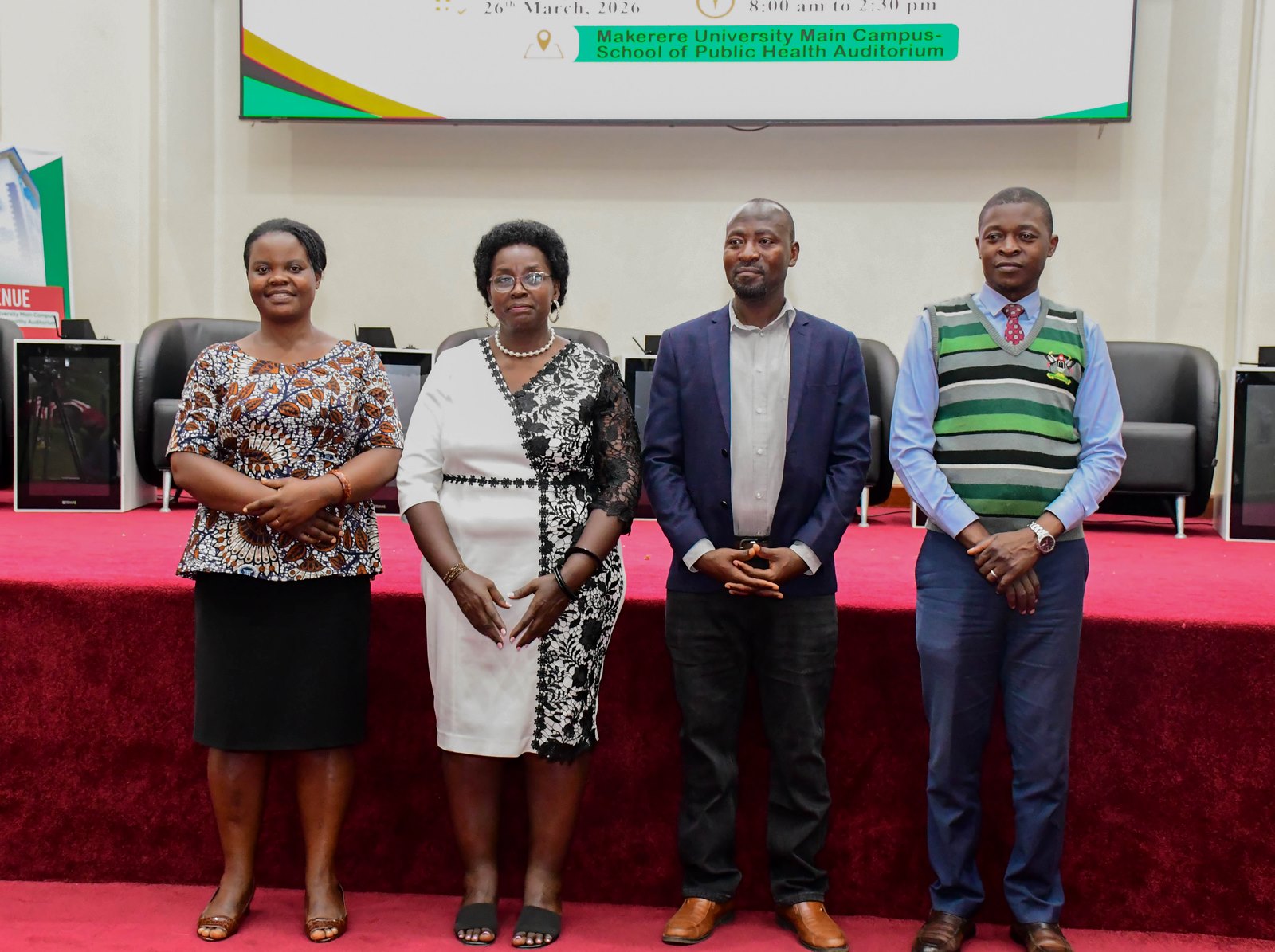
The following university officials graced the School Stakeholders’ Exhibition: The Principal of CEES-Prof. Anthony Mugagga, the Dean, School of Psychology-Dr. Martin Baluku, and the Head of the Department of Educational, Social and Organisational Psychology-Dr. Richard Balikoowa, Dr. Naomi Namanya-School of Psychology, and Ms. Ritah Namisango-Public Relations and Communication Specialist, who moderated the proceedings.
Education is no longer confined within classroom walls
Dr. Anne Ampaire, a Lecturer of Educational Psychology, welcomed the participants to the Exhibition, an initiative designed to connect theory with practice through stakeholder collaboration.
“Why is it important for Makerere University academic staff and students, to engage with headteachers, teachers, administrators, and learners from pre-primary, primary, and secondary levels? The answer lies in collaboration and shared responsibility, to effectively implement the Competence Based Curriculum,” she emphasised.
Dr. Ampaire explained that the Competence Based Curriculum represents a major shift in education delivery. “Education today is no longer confined to classrooms, not even the transmission of knowledge from teacher to the learners is adequate. The new Competence Based Curriculum focuses on developing competencies that prepare learners for a rapidly changing world,” she stated.
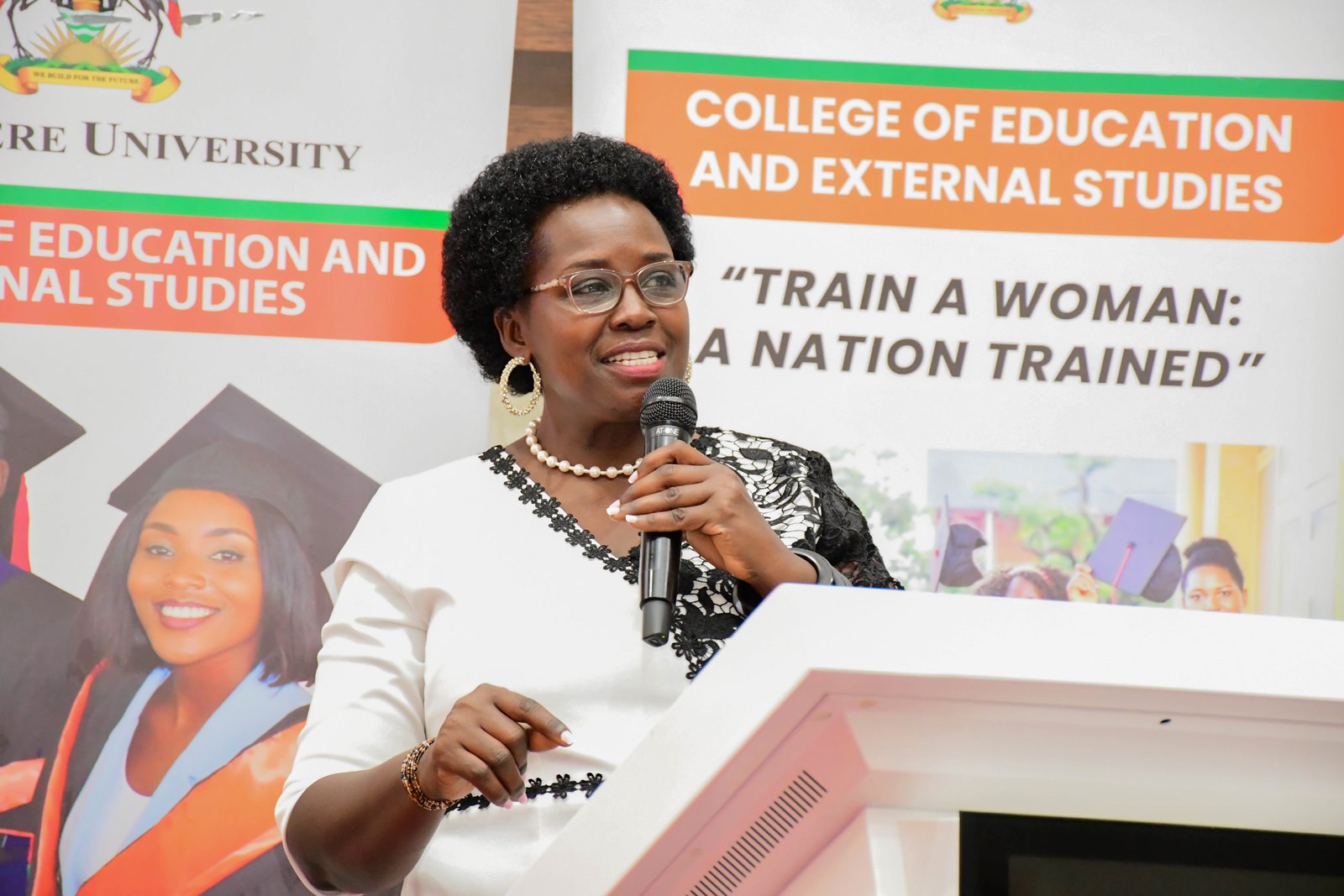
She highlighted the key competencies promoted under Competence Based Curriculum (CBC), including critical thinking, creativity, communication, and problem-solving. “With CBC, the learner is at the centre of this transformation, actively engaged in a learner-centred learning environment,” she added.
CBC grounded in psychology and experiential learning
Dr. Ampaire explained that the exhibition is rooted in educational psychology and field-based research conducted by Makerere University graduate students. “This work is grounded in early childhood education, psychology of learning, human development, and instructional science,” she said.
According to Dr. Ampaire, the School Stakeholders’ Exhibition re-affirms that learning is shaped by the environment and interaction. “The environment continuously shapes learning,” she stressed.
She emphasised that modern education is collaborative. “What I know, what you know, and what others know-when combined-form a stronger system. That is the direction education is taking,” she said.
Dr. Ampaire challenged traditional teaching models. “Gone are the days of teacher-centred learning where the teacher is the sole authority. Today’s learning model recognises that none of us knows it all,” she said.
Roleplays, drama, and cultural performances
A major highlight of the exhibition was a series of interactive performances by learners from different schools, who used drama, storytelling, and traditional dances to demonstrate CBC principles in action.
Pre-primary and primary learners guided by teachers and graduate students, staged roleplays reflecting everyday life situations, including family interactions, classroom discipline, peer pressure, and decision-making. The performances illustrated both positive and negative behaviours, with learners demonstrating how better choices could be made in real-life situations.
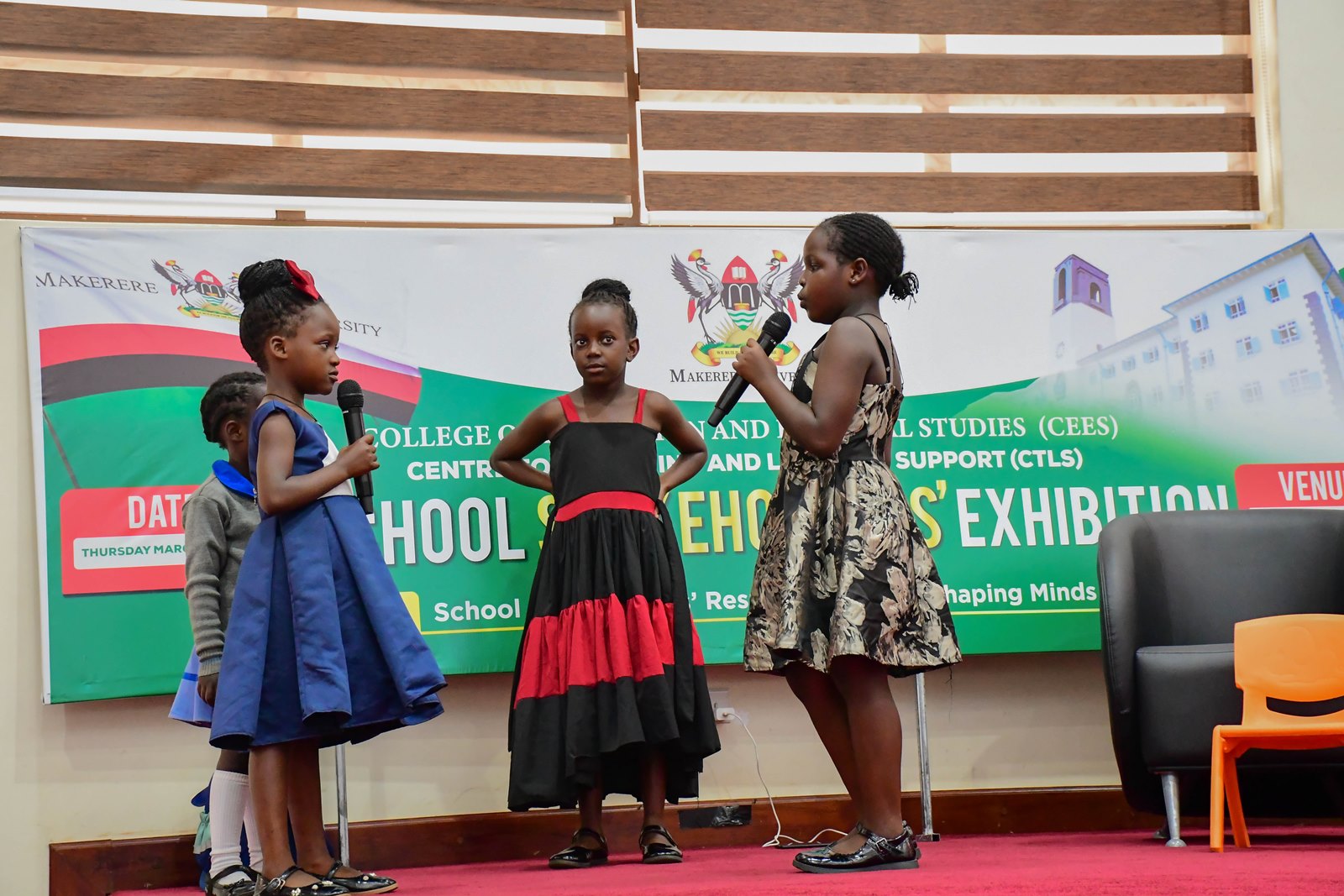
In one roleplay, a home setting illustrated the importance of parental attention and emotional bonding, showing how children respond better when given quality time and encouragement.
Another skit focused on classroom discipline, where learners acted out cases of dishonesty and conflict, later resolving them through dialogue, counselling, and cooperation between teachers and parents.
A nutrition-based performance demonstrated how diet affects learning outcomes, contrasting healthy meals such as fruits, eggs, and yoghurt with unhealthy options such as soda and processed snacks.
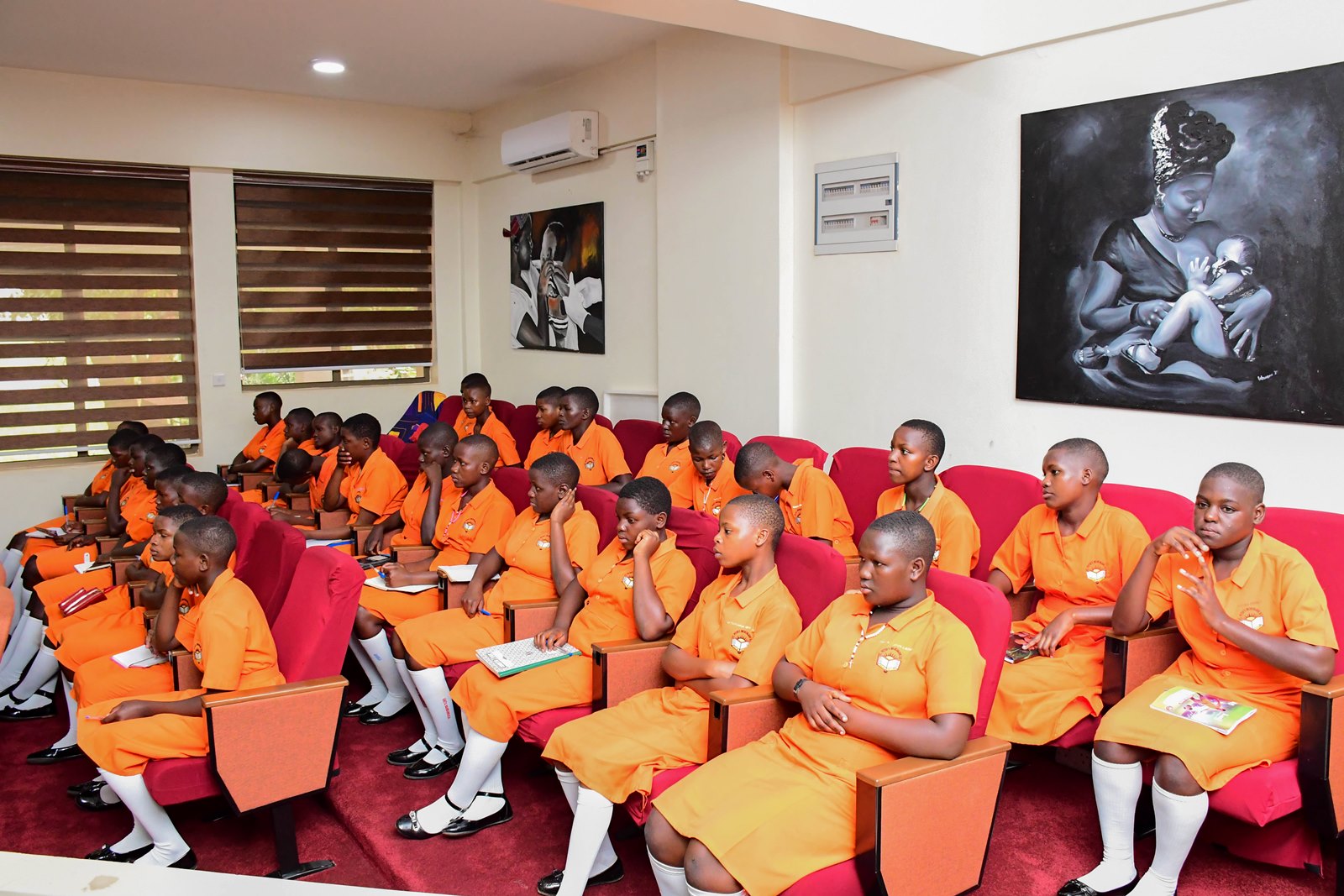
The exhibition also featured vibrant traditional dances performed by learners to cultural songs. The performances showcased unity in diversity and reinforced messages of identity, discipline, and teamwork.
We must be our brother’s keeper
Dr. Richard Balikoowa, the Head, Department of Educational, Social and Organisational Psychology, emphasised the importance of positive psychology in child development. “Human beings are dynamic and grow through stages of confusion, chaos, compromise, and change,” he said.
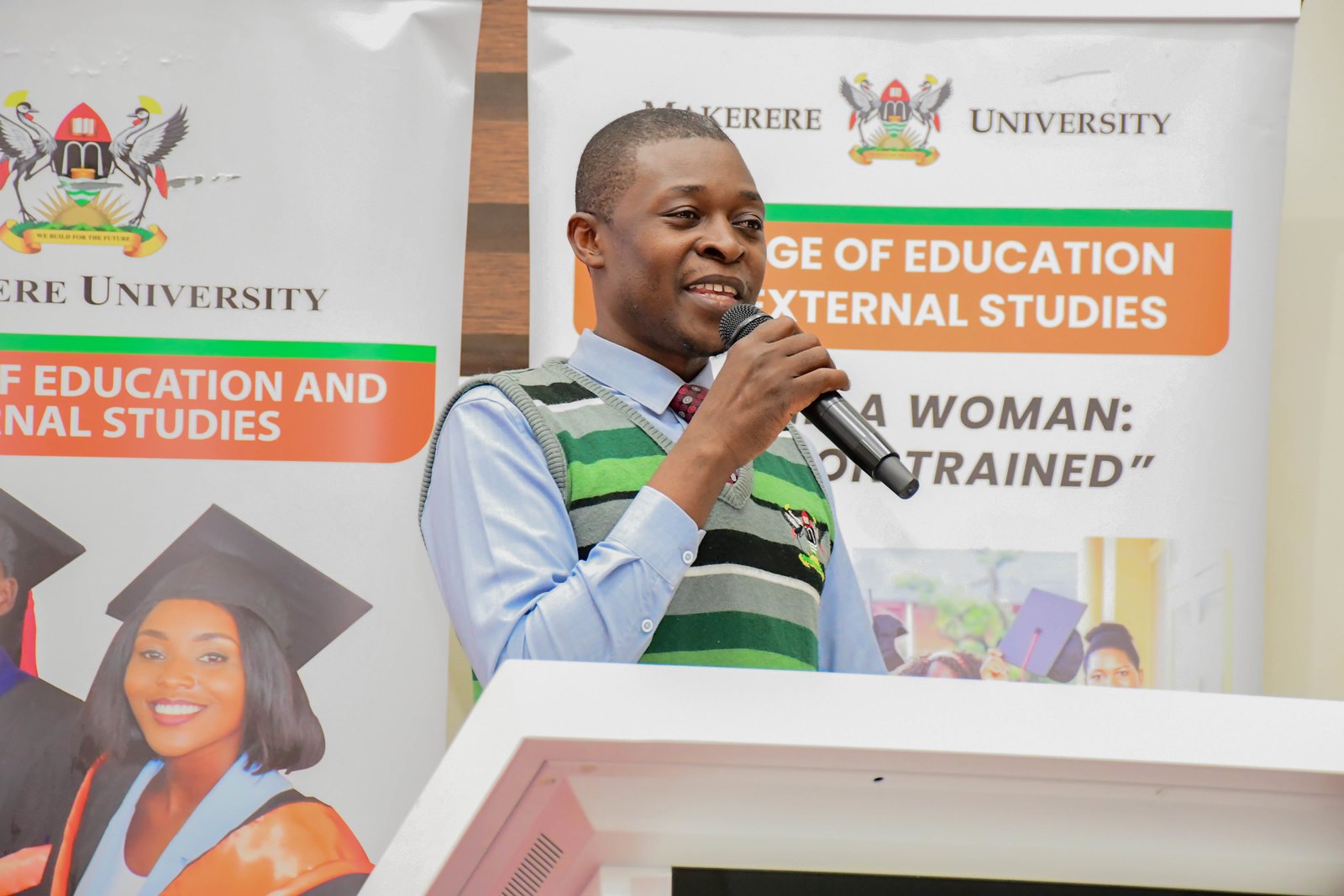
He urged educators to focus on constructive discipline approaches. “We should strengthen desired behaviour through positive reinforcement and carefully guide correction without harming the child’s wellbeing,” he said.
Identify formation and long-term development
The Dean of the School of Psychology, Dr. Martin M. Baluku, emphasised identity formation and long-term development. He stressed the role of both teachers and learners in shaping future outcomes. “As teachers, we have a responsibility to shape minds and identities. At the same time, learners must actively shape themselves,” he said.
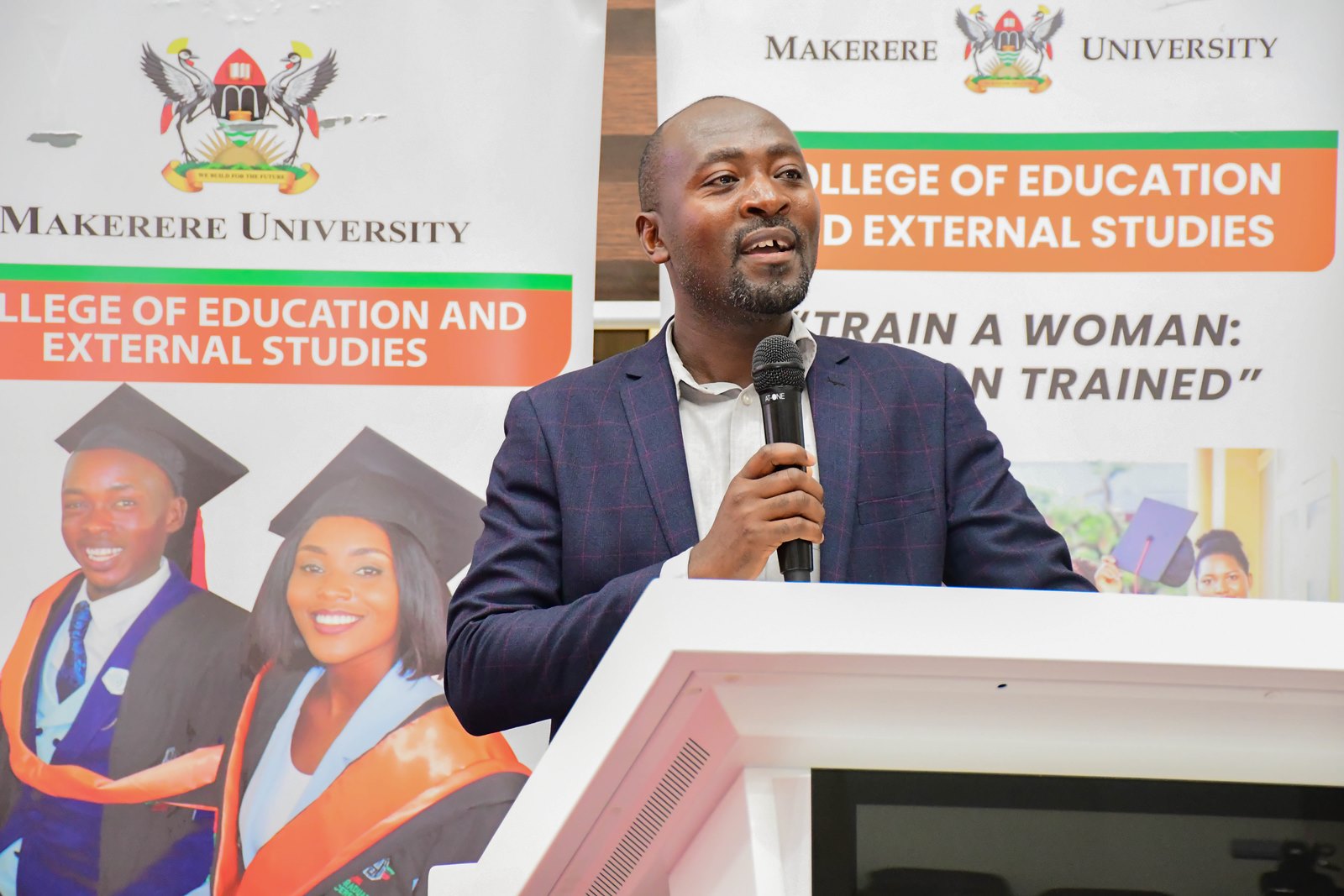
He called upon students to remain focused on their aspirations. “If you want to join Makerere University in future, you must work hard and take your studies seriously,” he said.
CBC is a bold and necessary reform
Dr. Ampaire described the Competence Based Curriculum (CBC) as a major transformation in Uganda’s education system. “CBC is a bold and necessary step. Education is no longer confined within classroom walls. Learning is everywhere. We should prioritize project-based learning and contextual education. A banana plantation is a laboratory. A craft workshop is a laboratory. Learners must connect classroom knowledge to real-life experiences,” she said.
Schools must embrace practical learning
The Principal of CEES, Prof. Anthony Mugagga, praised the initiative and urged schools to fully adopt CBC approaches. “Many schools are still struggling with how to implement the Competence Based Curriculum,” he stated.
He emphasised that learning must be practical and reflective of real life. “When a child observes behaviour, they may internalise it. That is why learning experiences must be carefully guided,” he said.
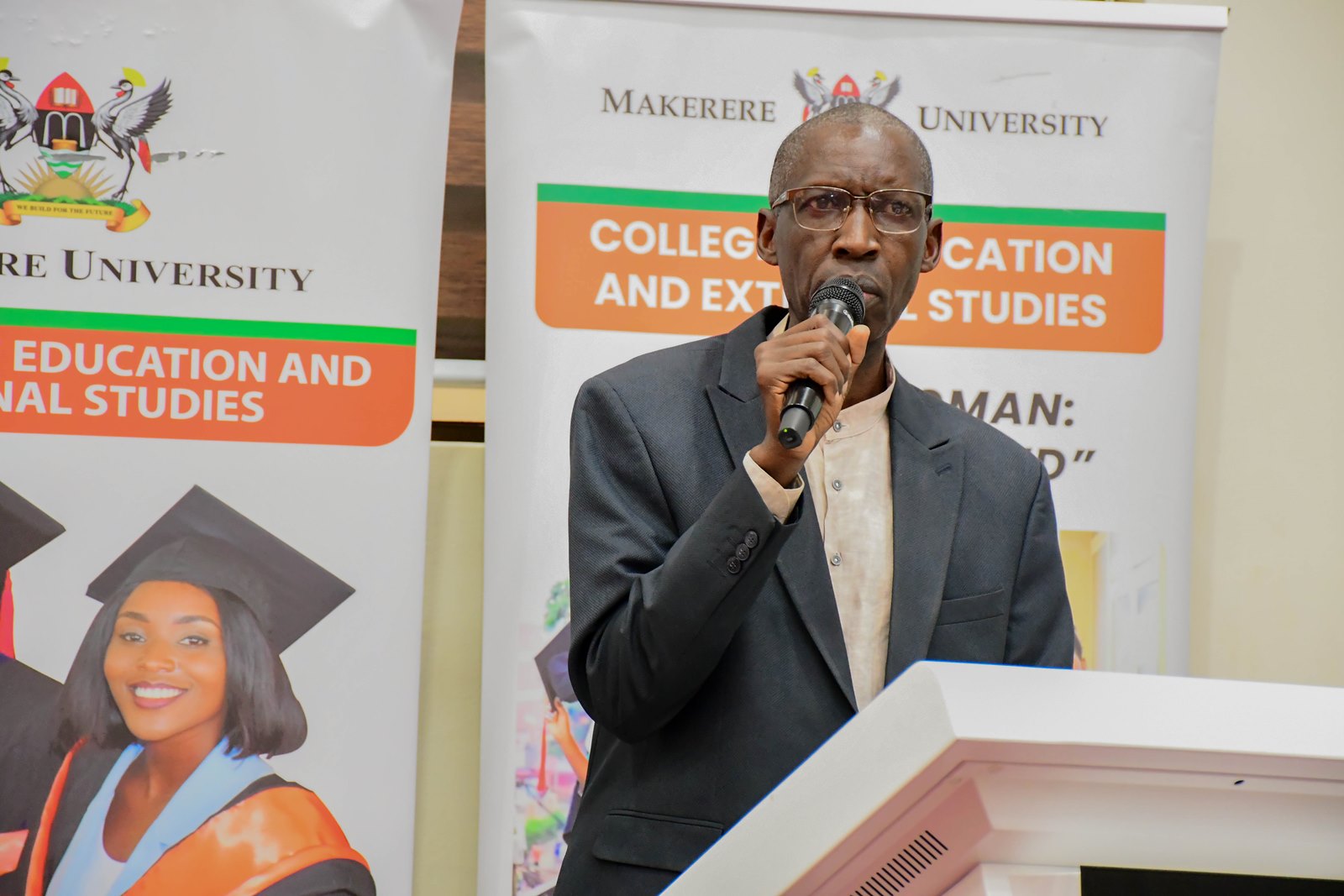
Prof. Mugagga urged learners to value time and education. “When faced with challenges at school and you feel like giving up, remember those other Ugandans who wish to be at school, but they are not able, due to lack of school fees,” he advised.
“Being at school is a golden opportunity that you need to utilize to become a better person. I encourage you to be hard-working, focused,disciplined and resilient as you pursue your studies,” he added.
Sharing his experience, Prof. Mugagga disclosed that he was once a student, who faced challenges, but he did not give up.
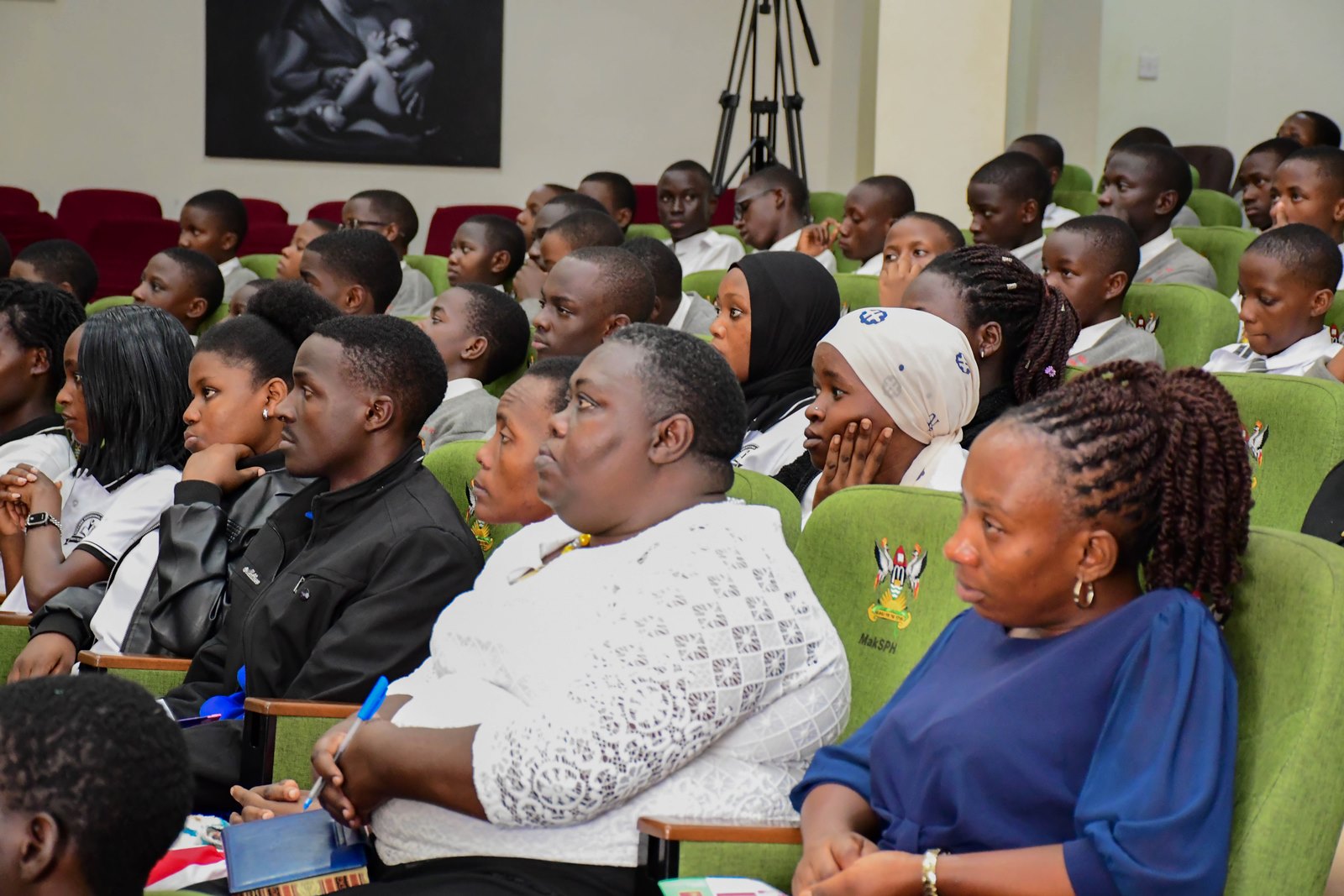
Prof. Mugagga informed the participants that he was a seminarian, and when his chances of becoming a priest did not materialize, he focused on other career paths within the education sector, rising up to the rank of Professor at Makerere University, and with ability to stand in front of the learners, to share words of wisdom and inspiration.
Stakeholders encouraged to support learner centred education
The exhibition concluded with a strong call for collaboration among parents, teachers, policymakers, and communities to support learner-centred education. Stakeholders agreed that the Competence Based Curriculum can only succeed if all actors work together to create supportive, practical, and inclusive learning environments that prepare learners for real-life challenges.
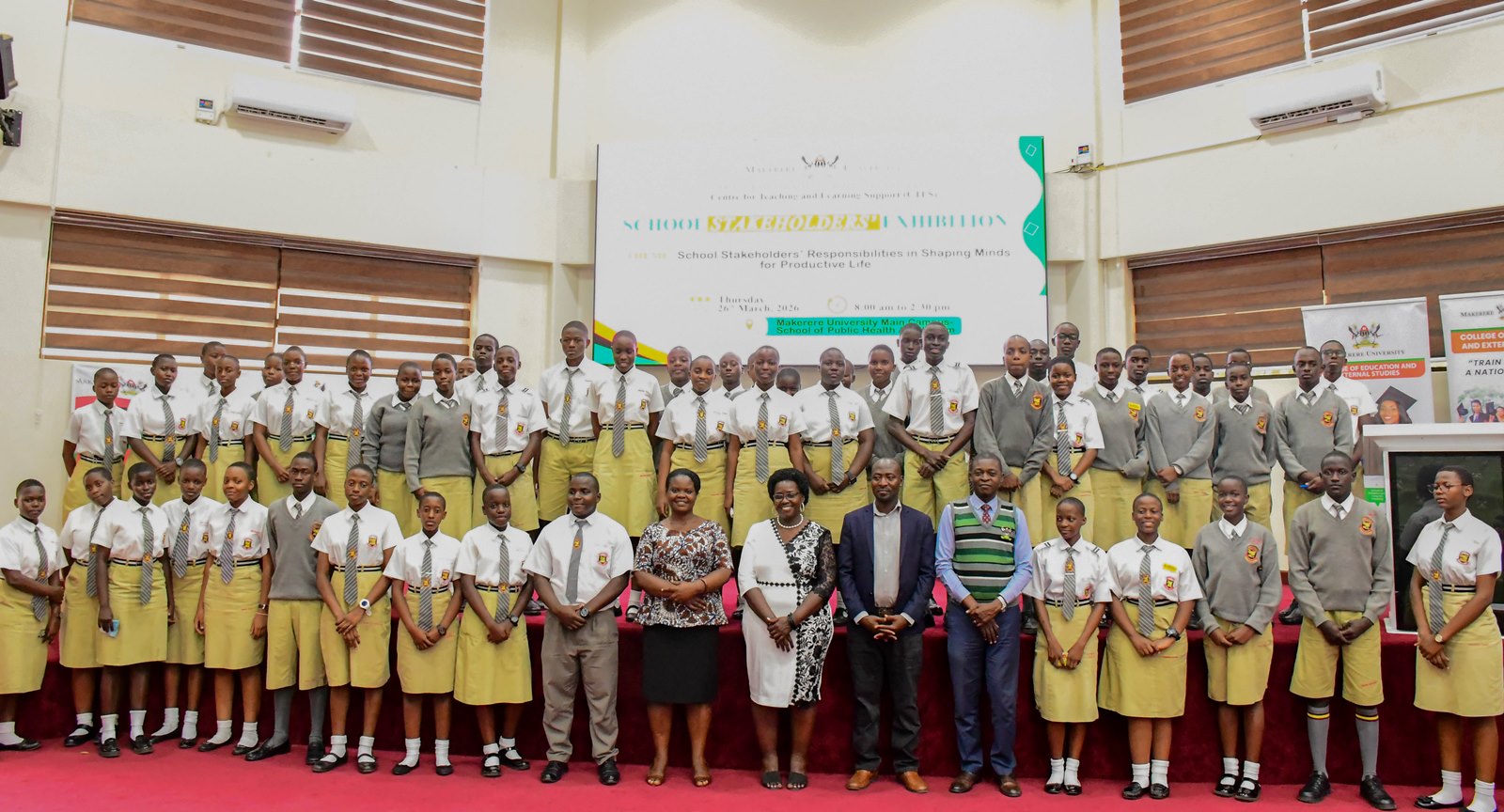
Schools that participated in the exhibition
Some of the schools that participated in the exhibition include: Mengo Senior Secondary School, Mirembe G. Vocational Training Centre-Zana, Garfield Nursery and Primary School-Gayaza, Tephies Kindergarten School Nagalabi-Budo, Raayat Islamic Primary School.
Education
DACE Launches Research Seminar Series to Strengthen Co-Authorship and Scholarly Engagement
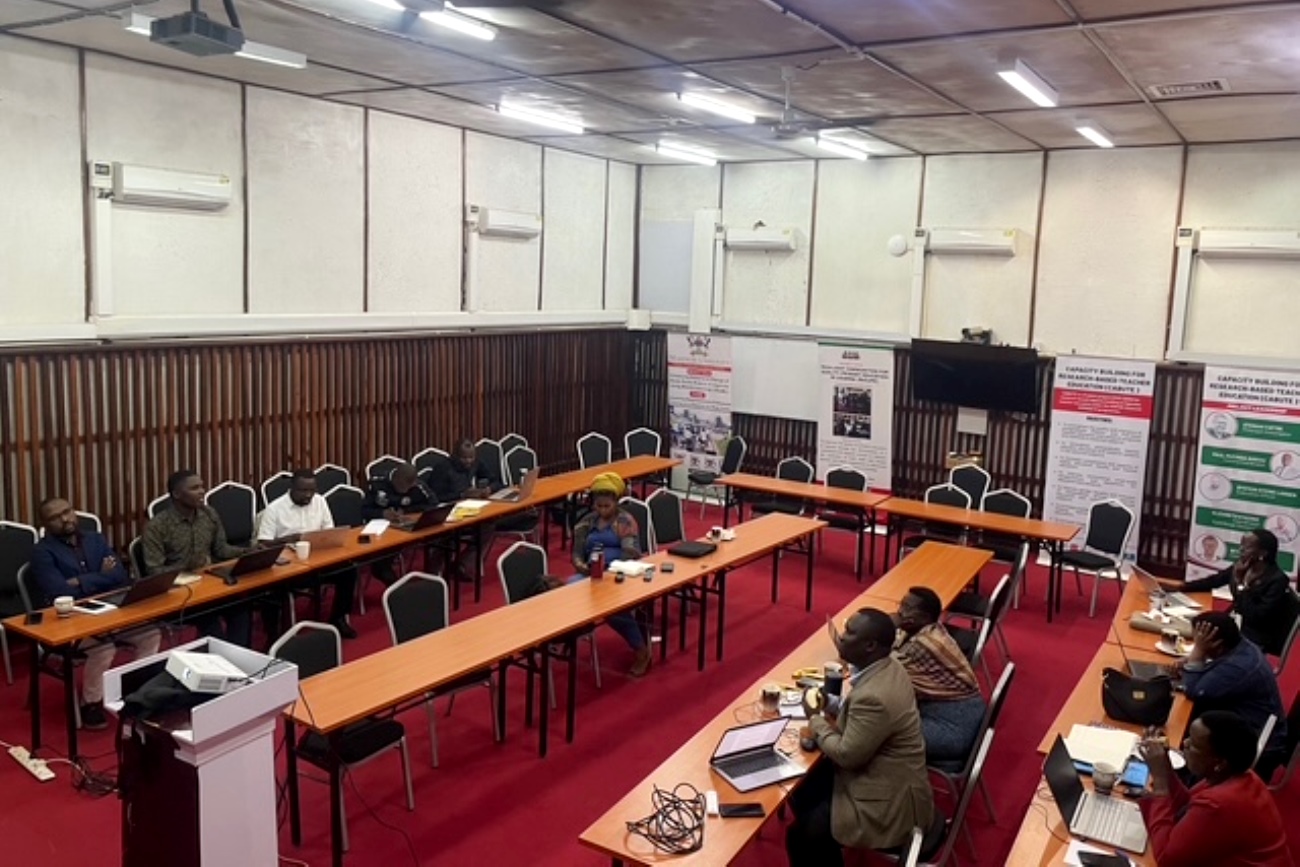
The Department of Adult and Community Education (DACE), under the School of Distance and Lifelong Learning at the College of Education and External Studies (CEES), Makerere University, has launched a bi-weekly research seminar series aimed at strengthening scholarly engagement and promoting co-authorship among staff and students.
The initiative forms part of the Department’s broader strategy to develop and operationalise its research agenda, with the goal of repositioning Adult and Community Education within national and global academic discourse.
According to the Head of Department and staff members, limited public understanding of Adult and Community Education continues to constrain its visibility and impact, particularly in relation to its contribution to lifelong learning, community transformation, and national development. The research seminar series is therefore intended to enhance knowledge production, increase publications, and promote evidence-based engagement in the field.
The seminars, held every Tuesday, are coordinated by Dr. Karembe Ahimbibisibwe and Dr. Kellen Aganyira, following their nomination by the Departmental Academic Board.
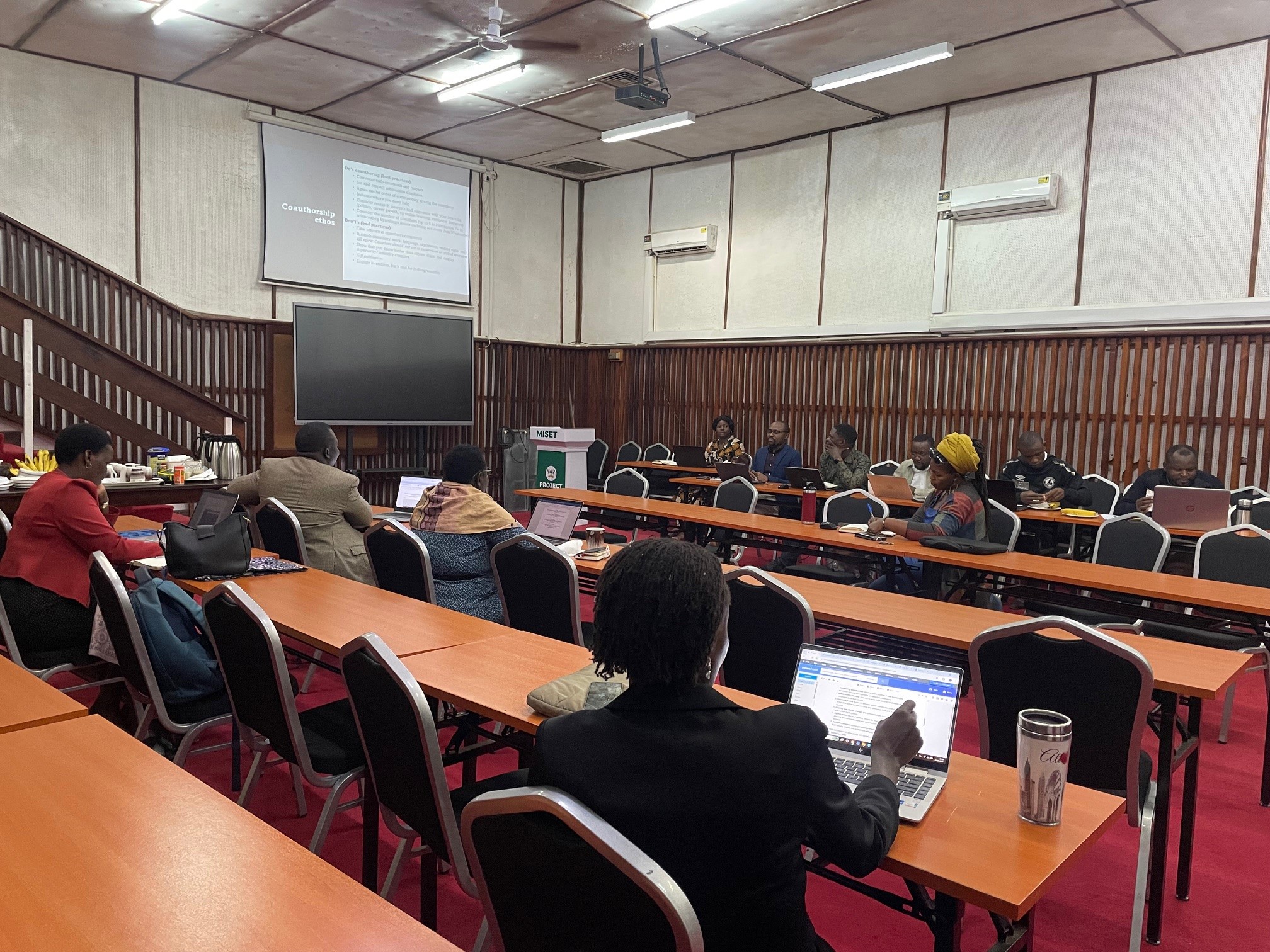
The inaugural session, held on Tuesday, 24th March 2026, focused on the theme: “Understanding Co-Authorship in Academic Practice.”
The seminar brought together academic staff, PhD students, and recent graduates of the Master of Adult and Community Education (MACE) programme to reflect on collaborative research and scholarly writing.
Participants engaged with key aspects of co-authorship, including contribution, collaboration processes, and the role of joint writing in enhancing academic productivity and mentorship.
“Co-authorship is not just about writing together—it is about building shared thinking, mentorship, and a collective scholarly identity,” noted one of the facilitators during the session.
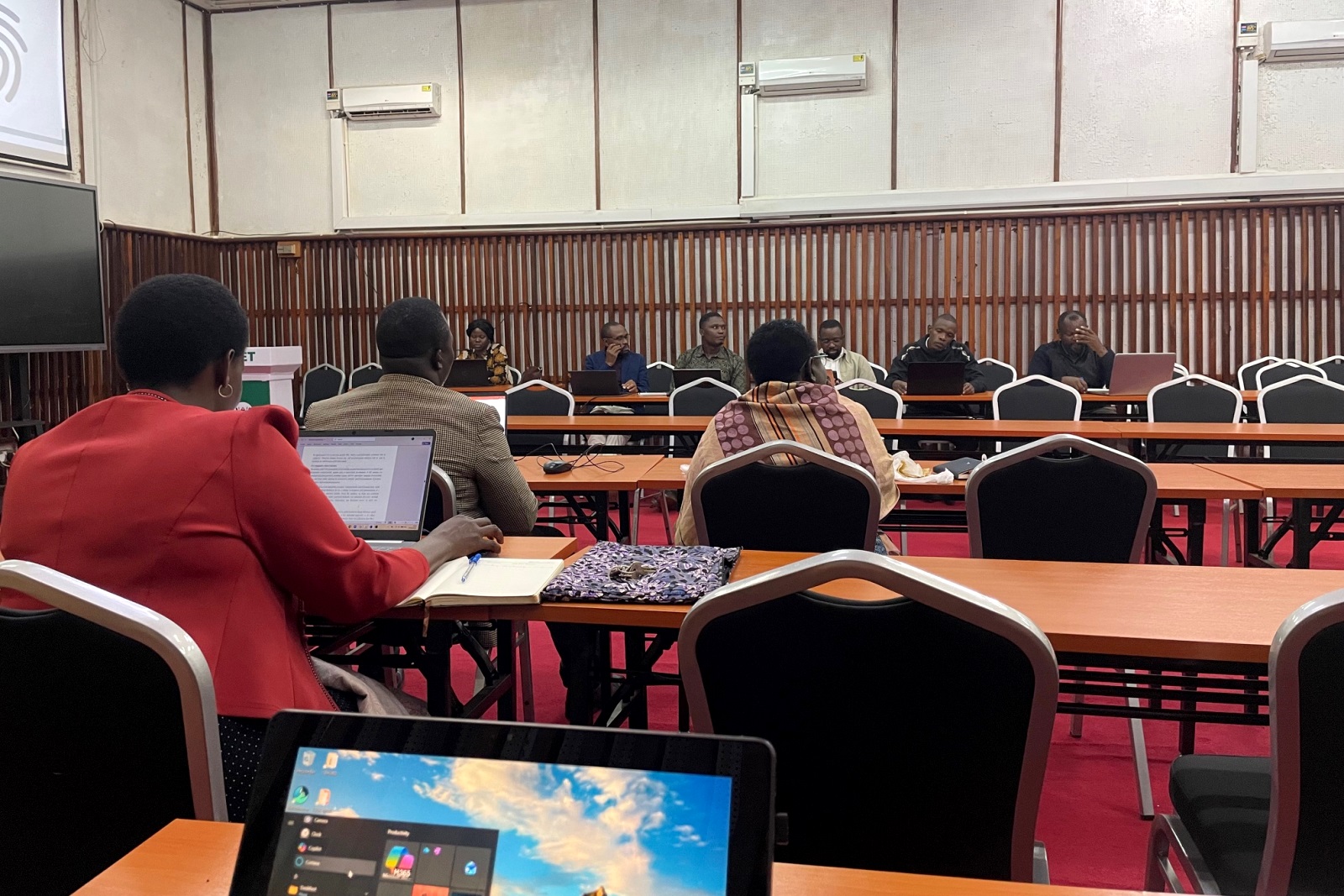
As part of the seminar, participants were required to prepare structured abstracts outlining their research focus, theoretical grounding, methodology, and anticipated contribution to scholarship or policy. The session included presentations of draft ideas, followed by peer feedback.
This practical approach enabled participants to move beyond conceptual discussions and actively engage in the process of developing publishable work.
A participant described the experience as transformative. “The seminar has helped me refine my research idea and think more clearly about collaboration. The feedback from colleagues is both constructive and motivating.”
The Department has prioritised inclusive participation by involving graduate students and recent alumni, with plans to expand the initiative to all postgraduate learners in order to strengthen research capacity across academic levels.
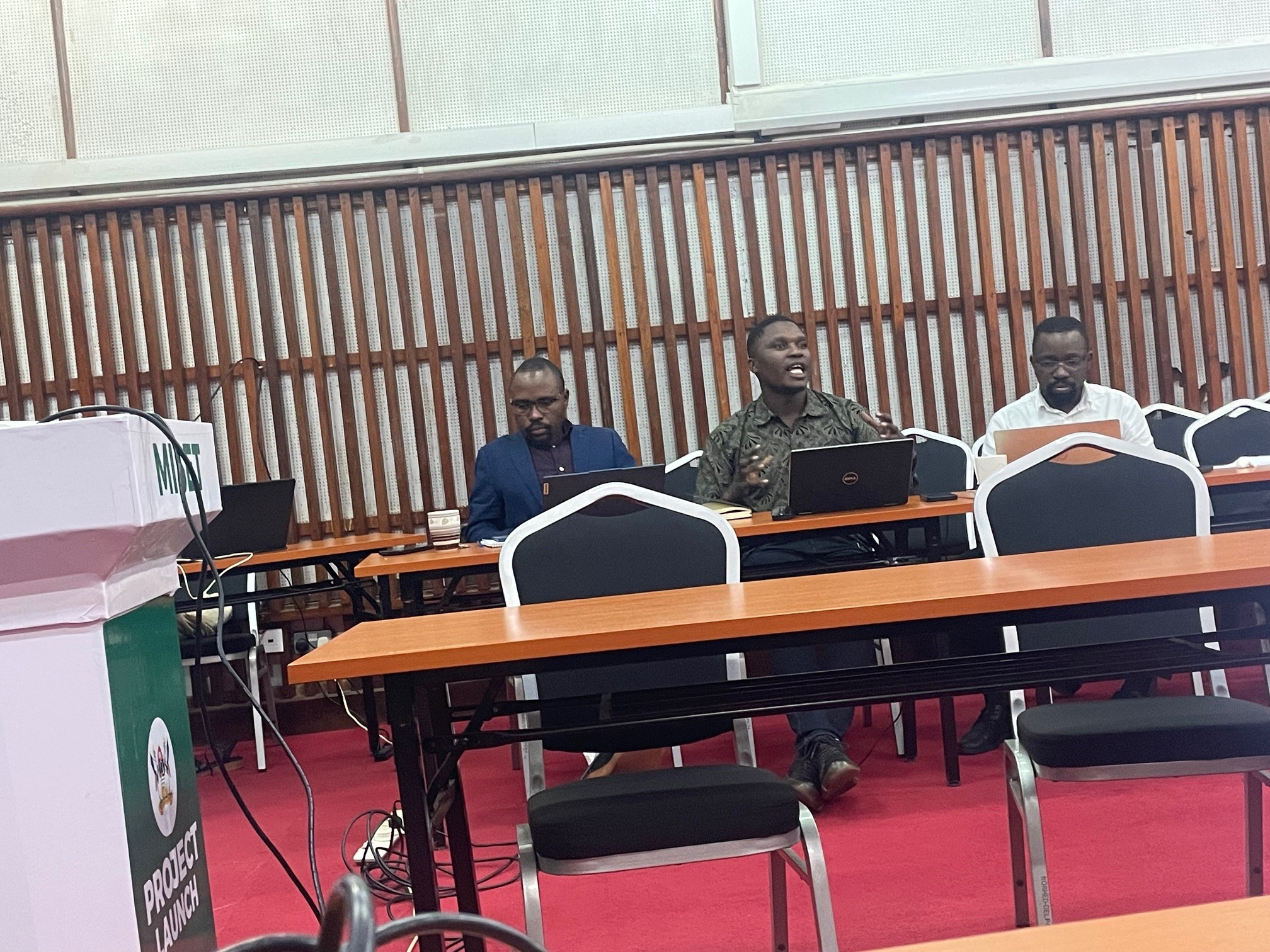
Speaking during the seminar, the Acting Head of Department, Dr. Joseph Watuleke, commended staff and students for embracing the initiative and called for sustained commitment to building a research culture. “This seminar series represents a deliberate step toward strengthening our research culture and increasing our contribution to knowledge and development,” said Dr. Watuleke.
Dr. Watuleke noted that the initiative aligns with the strategic direction of the Principal, CEES, Prof. Anthony Muwagga Mugagga, who has consistently emphasized the importance of research in repositioning academic units within the University.
“The Principal has continually guided us to reclaim our intellectual space and strengthen our contribution to Adult and Community Education. This initiative is part of that broader vision of enhancing research visibility and academic leadership.”
The Department envisions the seminar series as a platform for fostering collaborative research, increasing scholarly publications, and building a vibrant academic community within the College of Education and External Studies (CEES).
Education
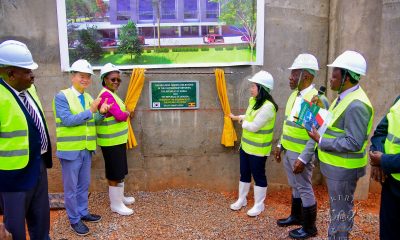
Makerere University Charts New Future with the unveiling of the Open, Distance and E‑Learning Building and Strategic Plan

By Harriet Musinguzi, CEDAT
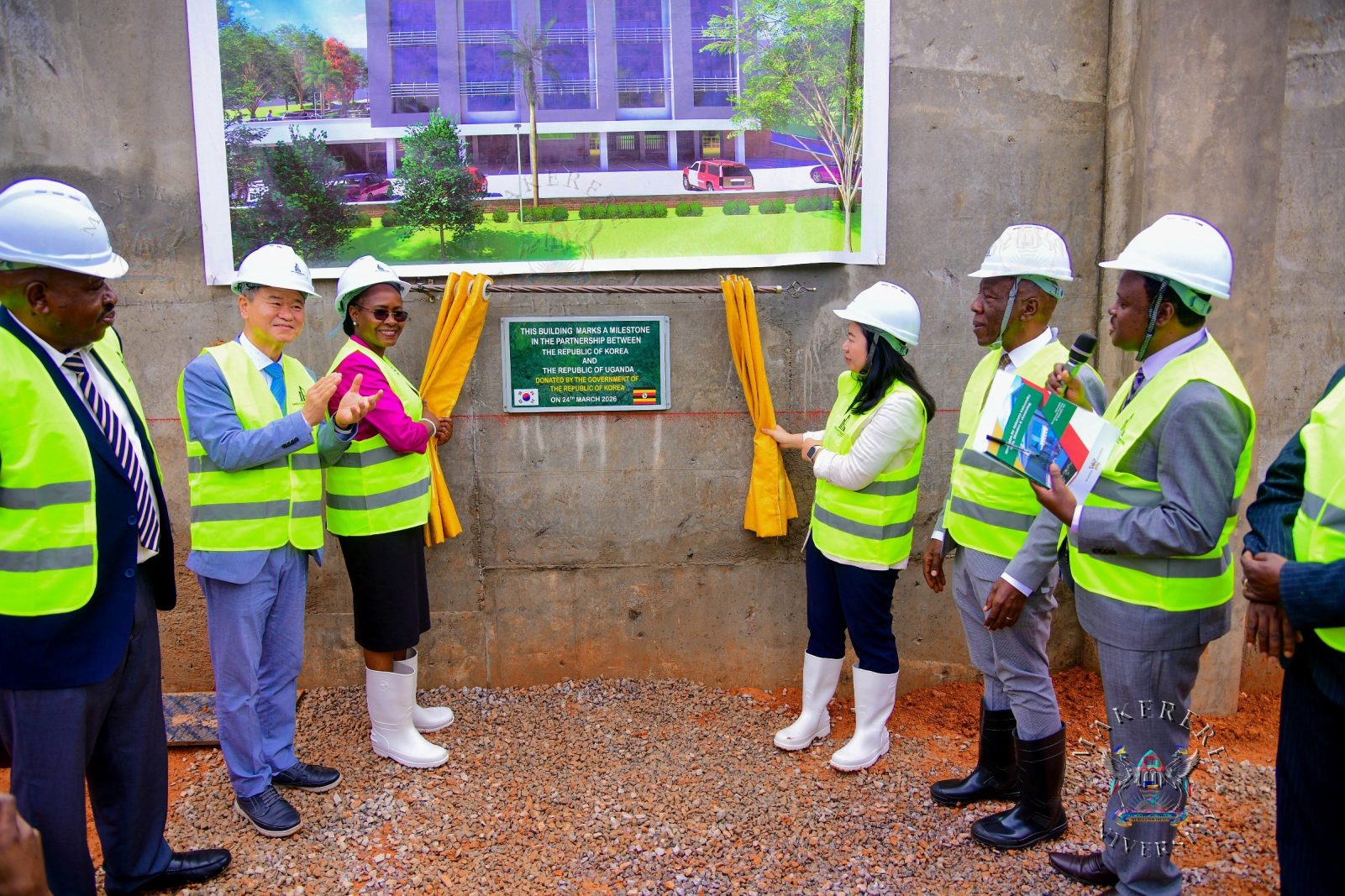
Makerere University has embarked on a transformative journey in higher education with the official launch of its Open, Distance and E‑Learning (ODeL) Strategic Plan and the laying of the foundation stone for a new ODeL facility at the College of Engineering, Design, Art and Technology (CEDAT). The event, attended by dignitaries, university leaders, and international partners, marked a milestone in Uganda’s quest to harness digital technology for accessible, innovative, and inclusive education.
Presiding over the ceremony, Ms. Jihee Ahn, Country Director of the Korea International Cooperation Agency (KOICA), underscored the spirit of collaboration that has defined the project. She praised the collective efforts of Korean partners, Makerere’s project management team, and the construction and consulting teams.
Quoting an African proverb, she reminded the audience that “a single stick cannot make fire”, emphasizing that the success of the initiative lies in shared purpose and unity. Drawing from Korean wisdom, she added, “a journey of a thousand miles begins with a single step,” noting that this launch is the first step toward positioning Makerere as a leader in open and distance education across Africa.
“This new building will not be just a physical structure but a driving force that advances our shared vision,” Ms. Ahn said. “KOICA looks forward to continued cooperation with Makerere University and all partners as we move forward together.” she added.
Representing the University Council Chairperson Dr. Lorna Magara, Dr. Silas Ngabirano highlighted the broader significance of the ODeL project. He described it as a turning point in bridging the gap between traditional teaching methods and modern learning needs. “This project is more than just providing technology,” he said. “It’s about enhancing capacity for our students, faculty, and staff. It’s about making education more accessible and affordable, fostering innovation, creativity, and lifelong learning.” He urged staff and students to embrace the opportunities offered by online distance learning, reaffirming the Council’s commitment to supporting initiatives that expand access to higher education.
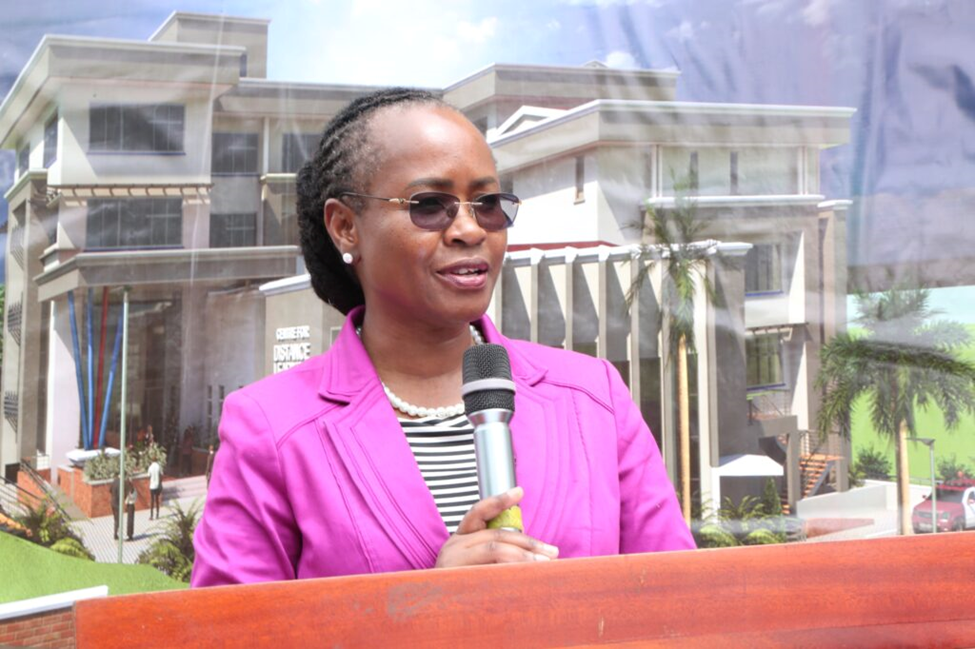
The Vice Chancellor, Prof. Barnabas Nawangwe, represented by Deputy Vice Chancellor for Academic Affairs Prof. Sarah Ssali, emphasized that e‑learning is a central pillar in Makerere’s Strategic Plan (2026–2030). She noted that the initiative aligns with Uganda’s National Development Plan IV, which prioritizes digital transformation by 2030.
“ODeL provides opportunities for students inside and outside Uganda to engage in learning, access cutting-edge research, and participate in innovation and entrepreneurship,” he said. “Now that ODeL is getting a home, there is no excuse for not delivering.”
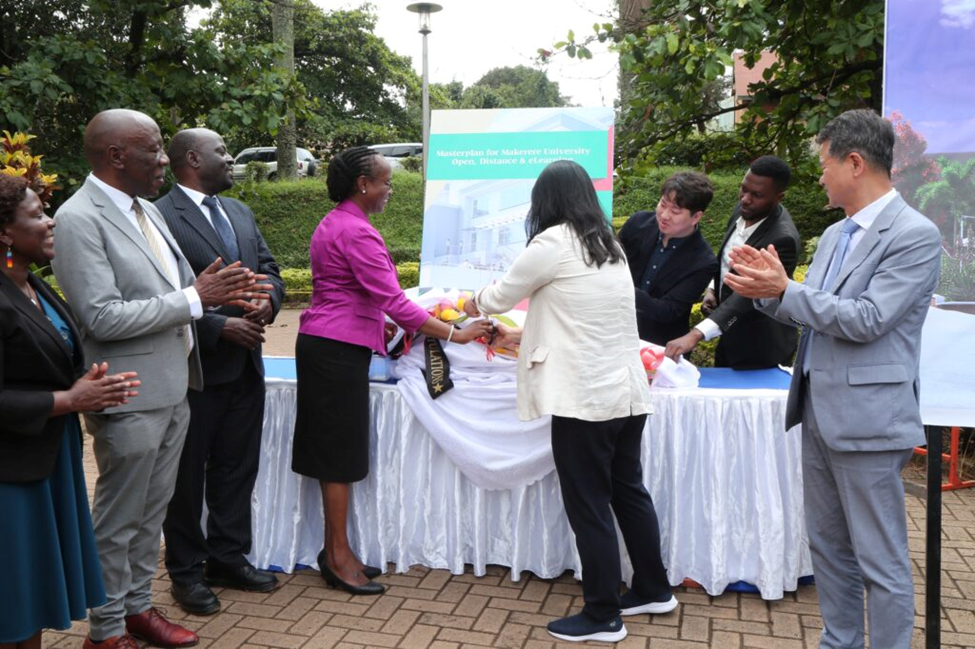
Prof. Nawangwe expressed gratitude to KOICA and the people of Korea for the US$12.2 milliongrant, describing it as a testament to Makerere’s reputation as a center of academic excellence and innovation. He also acknowledged the support of Uganda’s Ministry of Education and Sports and the Ministry of Finance, Planning and Economic Development.
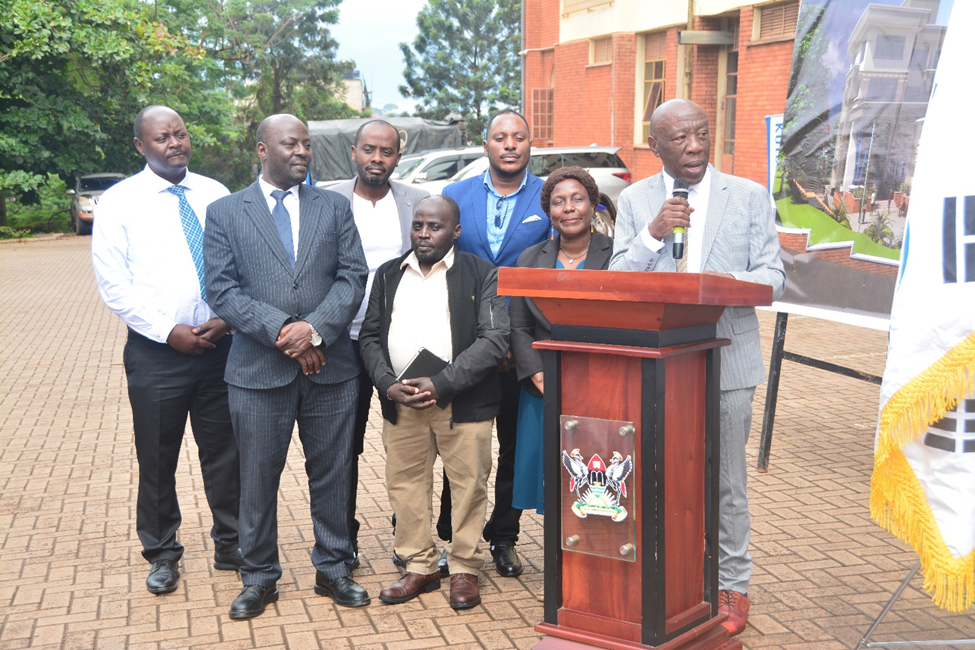
The Principal Investigator, Prof. Henry Alinaitwe, outlined three core components of the project: the development of the ODeL Masterplan, the enhancement of e‑learning infrastructure through a state‑of‑the‑art facility and modern equipment, and capacity building to equip staff with the skills needed to create high‑quality digital content. He explained that the construction, valued at USD 3.7 million, is being undertaken by SMS Construction Ltd, with designs developed by ArchForum Consultants Ltd, and is scheduled for completion by September 29, 2027.
Prof. Henry Alinaitwe explained that the ODeL Masterplan was developed through a highly consultative process, engaging numerous Makerere University staff and working closely with project consultants to ensure inclusivity and relevance. He expressed deep appreciation to the implementing partners, the Korea National Open University (KNOU) and the Korea Institute ofDevelopment Strategy (KDS) for their invaluable support in making the initiative a success.
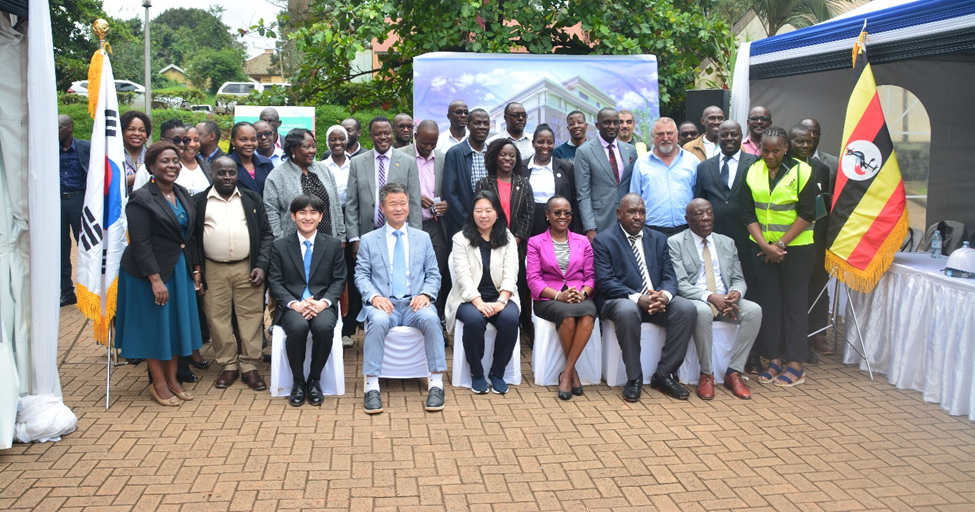
Prof. Alinaitwe also commended the Makerere University Council for approving the allocation of space and committing to maintain the building and systems once operational. He recognized the dedication of the project implementation team, which includes Dr. Venny Nakazibwe(Co‑PI), Prof. Paul Muyinda, Dr. Godfrey Mayende, Mr. Samuel Mugabi, Mr. Alex Mwebaze, Dr. Kenneth Ssemwogerere, and Dr. Lydia Mazzi Ndandiko, for their tireless efforts in managing the project. He further acknowledged KOICA Country Director Ms. Jihee Ahn for expanding the scope of the project beyond the College of Engineering, Design, Art and Technology (CEDAT) to encompass
Written by Musinguzi Harriet, Principal Communication Officer, College of Engineering, Design, Art and Technology.
-
 Law2 weeks ago
Pre-Entry Examination for Admission to the Bachelor of Laws for 2026/2027 AY
-

 General3 days ago
Application for Admission to Graduate Programmes 2026/27
-
 Education1 week ago
Makerere University Charts New Future with the unveiling of the Open, Distance and E‑Learning Building and Strategic Plan
-
 General1 week ago
Custodians and Wardens trained on Fire prevention in Halls of Residence
-
 Education2 weeks ago
Mak CEES Hosts Kiswahili Primary School Orientation Workshop to Boost Language Teaching Quality