Connect with us

General

University of Groningen Summer Schools 2015

Published

on

The University of Groningen (1614) is hosting a wide range of summer schools. Summer schools are a wonderful way to bring bright students and inspired researchers together to work intensively on important topics. Groningen summer schools are research-driven, and many of them are multidisciplinary, offering you a varied range of perspectives. The University’s priority research themes: Energy, Healthy Ageing and Sustainable Society will especially be highlighted.

Registration is now open. The current offer includes

  • Diversity & Divergence: The Challenges of Multiculturalism in Canada
  • Beyond Horizons. Transmitting and Writing New Identities. Strategies and Empowerment of Minorities and Migrants in Europe
  • Things that Matter. Material Culture in Historical Studies
  • Solidarity and Togetherness. Concepts and Practices of Sustainable Citizenship
  • Mysticism and Esotericism in Pluralistic Perspective: Conflicting Claims of Knowledge and the Power of Individualism
  • Transformations of Religion and Culture in Contemporary India
  • Epistemology and Cognition. Historical and Contemporary Approaches
  • Design Dialogues for Bridging Controversies: Contested Projects
  • Society, Environment, Transportation and Space
  • Groningen Energy Summer School – Smart Grids from a global perspective: bridging old and new energy systems
  • Political Economics
  • Microfinance Experiments: Methods and Applications
  • Transitional Justice and the Politics of Memory
  • Medical Sciences Summer School Transplantation Medicine
  • Medical Sciences Summer School Healthy Ageing
  • Medical Sciences Summer School Global Health
  • Medical Sciences Summer School Ageing Brain
  • Medical Sciences Summer School Translational Pediatrics
  • Medical Sciences Summer School Oncology
  • Medical Sciences Summer School Biobanking

Please see Downloads for more details

Application deadline: between 15 March and 1 June 2014

Contact details: summerschools@rug.nl
Website: www.rug.nl/summerschools

Mark Wamai

Continue Reading

General

Makerere University Leaders Call for Excellence in Research and Supervision as Academic Staff and PhD Students Receive Certificates

Published

on

Prof. Sarah Ssali (Centre) flanked by Prof. Julius Kikooma (Left) and Dr. Dorothy Sebbowa Kyagaba (Right) at the certificate award ceremony on 15th December 2025. Graduate Supervision and Mentorship Course and PhD Students who successfully undertook the University’s compulsory cross-cutting doctoral courses Certificate Award Ceremony, Yusuf Lule Central Teaching Facility Auditorium, 15 December, 2025, Makerere University, Kampala Uganda, East Africa.

By Moses Lutaaya

Kampala, 15 December 2025Makerere University on Monday held a reflective and inspiring Certificate Award Ceremony at the CTF 2 Auditorium , Yusuf Lule to award academic staff who completed the Graduate Supervision and Mentorship Course and PhD Students who successfully undertook the University’s compulsory cross-cutting doctoral courses. The event was presided over by the Deputy Vice Chancellor – Academic Affairs, Prof. Sarah Ssali.

The ceremony honored the efforts and achievements of 58 academic staff members, 39 men and 19 women from various colleges including CEDAT, CAES, CEES, COVAB and COBAMS, who completed a rigorous three-week Graduate Supervision and Mentorship programme.

Additionally, PhD students were recognized for completing cross-cutting courses in Philosophy of Methods, Scholarly Writing and Communication, and Advanced Research Methods.

Left to Right: Prof. Julius Kikooma, Prof. Sarah Ssali and Dr. Dorothy Sebbowa Kyagaba follow proceedings. Graduate Supervision and Mentorship Course and PhD Students who successfully undertook the University’s compulsory cross-cutting doctoral courses Certificate Award Ceremony, Yusuf Lule Central Teaching Facility Auditorium, 15 December, 2025, Makerere University, Kampala Uganda, East Africa.
Left to Right: Prof. Julius Kikooma, Prof. Sarah Ssali and Dr. Dorothy Sebbowa Kyagaba follow proceedings.

In her keynote remarks, Prof. Sarah Ssali, the Deputy Vice Chancellor–Academic Affairs, delivered a message of encouragement and renewed commitment to research excellence at Makerere University.

“It is both an honor and a privilege to be here today to celebrate a significant academic milestone, the completion of the PhD Cross-Cutting Courses by our students and the award of Supervision Certificates to our academic staff.”

“Your completion of this course is not just a personal achievement, but a critical contribution to strengthening the research and mentoring capacity of Makerere University.”

To the PhD students, Prof. Ssali offered warm congratulations and encouragement. “These courses have equipped you with essential tools to conduct high-quality, ethical research and to engage with complex academic questions. This achievement reflects your hard work, intellectual growth, and commitment to excellence.”

She reaffirmed Makerere University’s commitment to research advancement. “As a University, we remain deeply committed to fostering a culture of research excellence. We will continue to invest in both our students and our staff, ensuring that we uphold the highest standards in research and academic supervision.”

The Director of Graduate Training, Prof. Julius Kikooma, challenged the PhD students to approach research with urgency, intentionality, and a clear sense of purpose.

Prof. Julius Kikooma, Director of Graduate Training. Graduate Supervision and Mentorship Course and PhD Students who successfully undertook the University’s compulsory cross-cutting doctoral courses Certificate Award Ceremony, Yusuf Lule Central Teaching Facility Auditorium, 15 December, 2025, Makerere University, Kampala Uganda, East Africa.
Prof. Julius Kikooma, the Director of Graduate Training.

 “Completing the crosscutting courses in Philosophy of Methods, Advanced Research Methods, and Scholarly Writing and Communication has not been an easy task. However, the certificate alone is not the end goal. Don’t simply compile these certificates. Make them meaningful.”

Prof. Kikooma emphasized that the value of the courses lies in applying the knowledge gained. “These certificates give you the foundation knowledge. The question now is: Can we see the application of that knowledge in your different fields?”

He further urged doctoral students to begin producing serious academic work now, not at the end of their studies. “If you are becoming someone to be listened to, start now. It means the course is becoming useful. Write about issues that speak to societal challenges. Produce thinking pieces. Produce better outputs. “Look for low-lying fruits that can make your PhD journey more exciting and impactful.”

 Prof. Kikooma also reminded students that while the PhD journey is shared by the academic community, its weight is uniquely felt by the candidates. “Your PhD journey is ours as a group. But you feel the heat. Speak to us so we understand your challenges. “You cannot be here for more than three years. Why are some of you still here? Is the journey heavy? How can we support you to complete it?” He asked.

He encouraged students to build thought leadership through the PhD Forum, adding that the forum is a strong voice for the students. A PhD is automatic leadership in the knowledge domain. Why doesn’t the PhD Forum come up with periodic writings that reflect what communities are experiencing? Start now so that by the time you finish the course, you hit the ground running.”

The Ag. Director of the Centre for Teaching and Learning Support (CTLS), Dr. Dorothy Ssebowa Kyagaba, gave a message to the academic staff who completed the Graduate Supervision and Mentorship Course, speaking with admiration for their dedication and high level of engagement.

Dr. Dorothy Sebbowa Kyagaba, the Ag. Director of the Center for Teaching and Learning Support (CTLS). Graduate Supervision and Mentorship Course and PhD Students who successfully undertook the University’s compulsory cross-cutting doctoral courses Certificate Award Ceremony, Yusuf Lule Central Teaching Facility Auditorium, 15 December, 2025, Makerere University, Kampala Uganda, East Africa.
Dr. Dorothy Sebbowa Kyagaba, the Ag. Director of the Center for Teaching and Learning Support (CTLS).

 “I congratulate all the academic staff who have completed the three-week Graduate Supervision and Mentorship Course. Your commitment, hard work, and enthusiasm have been evident throughout the training.”

She described the course as a cornerstone of Makerere’s commitment to strengthening graduate supervision. “This course is a key component in Makerere University’s drive to strengthen the quality of graduate training, research supervision, innovation, and strategic partnerships.”

She highlighted the thematic richness of the training; covering Knowledge Production Perspectives, Supervisory styles, Supervisory meetings and conversation skills, Research Ethics, Intercultural supervision and diversity, Scholarly writing and feedback as well as Examination processes and Doctoral Viva. She expressed gratitude to the Directorate of Graduate Training led by Prof. Kikooma, and to Prof. Ssali for providing leadership that advances graduate training across Makerere University.

Mak Editor

Continue Reading

General

From Knowledge to Impact: Empowering Youth Leaders and Young Women with Transformative Leadership Skills

Published

on

Dr. Nansozi K. Muwanga, Executive Director of JNLC makes her remarks. Makerere University, Julius Nyerere Leadership Centre (JNLC) in partnership with the United Nations Development Programme (UNDP), three-day comprehensive leadership training targeting youth, young women, and local council leaders for more than 70 participants starting 4th December 2025 at Mountains of the Moon University (MMU) in Fort Portal City Uganda, East Africa.

By JNLC Team

On 4th December 2025, more than 70 participants gathered at Mountains of the Moon University (MMU) in Fort Portal for a three-day comprehensive leadership training targeting youth, young women, and local council leaders.

Organised by the Julius Nyerere Leadership Centre (JNLC) in partnership with the United Nations Development Programme (UNDP), the training aimed to strengthen practical leadership skills and nurture a new generation of community-centered, ethical, and solution-oriented leaders.

The first day introduced participants to foundational themes such as servant leadership, the meaning of power in leadership, self-leadership, emotional intelligence, mental well-being, and effective communication. Through these sessions, participants gained practical tools to engage and influence communities responsibly, mobilize resources, and contribute effectively to sustainable development.

Honouring Nyerere’s Legacy of Transformative Leadership

In her remarks, Dr. Nansozi K. Muwanga, Executive Director of JNLC, urged young leaders from higher education institutions across Uganda to embrace their central role in shaping the country’s future. She stressed that Uganda’s developmental trajectory—and that of the wider East African region—will be determined by empowered, ethical, and visionary youth.

Dr. Muwanga reminded participants that the Julius Nyerere Leadership Centre draws inspiration from the leadership values of Mwalimu Julius Kambarage Nyerere, who championed youth as drivers of Africa’s development. Established in 2018 by H.E. President Yoweri Kaguta Museveni as a Presidential Initiative hosted by Makerere University and the Uganda Management Institute, JNLC continues this legacy by equipping young Africans with the intellectual, moral, and practical leadership skills required in a fast-changing world.

Expanding Impact Through the JNLC–UNDP Youth Leadership Programme

Dr. Muwanga highlighted that since 2021, the JNLC–UNDP Leadership Training Programme has empowered more than 700 youth leaders from Uganda and beyond. The programme cultivates a growing network of community-centered changemakers capable of influencing governance and driving sustainable development.

To address challenges faced by alumni—such as limited visibility, resource constraints, and weak mentorship—JNLC launched the Alumni Impact Activation Strategy. The initiative supports alumni-led projects aligned with UNDP’s G4D priorities through mentorship, empowerment, and visibility. This approach amplifies our investment in Uganda’s youth and ensures that leadership development translates into sustainable solutions in climate resilience, women’s economic empowerment, and digital innovation,” she noted.

Youth at the Heart of Africa’s Development

Reflecting on Africa’s demographic landscape, Dr. Muwanga noted that a youthful population presents both immense opportunity and profound responsibility. Realising this potential requires intentional nurturing of leaders who value justice, unity, ethical conduct, and collaborative governance.

“This is the aspiration that guides our work at JNLC,” she affirmed. “We aim to equip young people with the skills to think critically, lead responsibly, and contribute meaningfully to Uganda’s development and Africa’s broader ambitions.”

Ms. Roselyne Ssali, Dean of Students, representing Vice Chancellor Prof. Pius Coxwell Achanga of @MMU_Uganda, expressed gratitude to @TheJNLCand @UNDPUgandafor choosing @MMU_Ugandato host the Comprehensive Youth, Young Women and Local Councillor’s Leadership Training. Makerere University, Julius Nyerere Leadership Centre (JNLC) in partnership with the United Nations Development Programme (UNDP), three-day comprehensive leadership training targeting youth, young women, and local council leaders for more than 70 participants starting 4th December 2025 at Mountains of the Moon University (MMU) in Fort Portal City Uganda, East Africa.
Ms. Roselyne Ssali, Dean of Students, representing Vice Chancellor Prof. Pius Coxwell Achanga of @MMU_Uganda, expressed gratitude to @TheJNLCand @UNDPUgandafor choosing @MMU_Ugandato host the Comprehensive Youth, Young Women and Local Councillor’s Leadership Training.

“You Are Today’s Leaders” — Message from Mountains of the Moon University

Representing the Vice Chancellor, Prof. Pius Coxwell Achanga, Mrs. Roselyne Ssali—the Dean of Students—affirmed the university’s strong commitment to cultivating ethical, capable, and community-oriented leaders.

She emphasized the value of inter-institutional collaboration, noting that leadership thrives on shared learning and collective growth. She encouraged participants to engage actively, exchange ideas, and learn from one another.

Addressing the youth directly, Mrs. Ssali underscored that leadership is not a distant possibility but a present responsibility.

“You are not here by mistake,” she said. “The saying that you are ‘tomorrow’s leaders’ does not apply. You are today’s leaders, and that is something we cannot take for granted.”

She commended the JNLC–UNDP collaboration for expanding leadership opportunities and equipping young people with practical, real-world skills.

Ms. Asuman Nasike, Resident City Commissioner (RCC) Fort Portal City, officially opened the UNDP/JNLC Comprehensive Youth, Young Women and Local Councillor’s Leadership Training. Makerere University, Julius Nyerere Leadership Centre (JNLC) in partnership with the United Nations Development Programme (UNDP), three-day comprehensive leadership training targeting youth, young women, and local council leaders for more than 70 participants starting 4th December 2025 at Mountains of the Moon University (MMU) in Fort Portal City Uganda, East Africa.
Ms. Asuman Nasike, Resident City Commissioner (RCC) Fort Portal City, officially opened the UNDP/JNLC Comprehensive Youth, Young Women and Local Councillor’s Leadership Training.

Leadership, Intellect, Capacity, Health, and Safety — Insights from the RCC

Officially opening the training, Ms. Asuman Nasike, Resident City Commissioner of Fort Portal City, shared her inspiring journey from Youth Councillor to RCC. She encouraged participants to treat every leadership role as a “nursery bed” for growth and reminded them that leadership is driven by intellect and capacity—not age or physical size.

“In your roles as local, youth, and women leaders, remember that leadership is defined by capacity, not size. It is about the mind, not the stature. I may be small in size, yet I lead this city. Let my example prove to you that young people can lead and make a difference,” she said.

Participants listen to Ms. Asuman Nasike, Resident City Commissioner (RCC) Fort Portal City. Makerere University, Julius Nyerere Leadership Centre (JNLC) in partnership with the United Nations Development Programme (UNDP), three-day comprehensive leadership training targeting youth, young women, and local council leaders for more than 70 participants starting 4th December 2025 at Mountains of the Moon University (MMU) in Fort Portal City Uganda, East Africa.

She highlighted essential leadership qualities: integrity to earn trust, effective communication through feedback, leading by example, decisiveness in difficult moments, and resilience in the face of setbacks. She also emphasized personal well-being, responsible health practices, and surrounding oneself with mentors and peers who inspire growth.

Mr. Ivan Ssegawa Sebastian, former EAC Youth Ambassador to Uganda. Makerere University, Julius Nyerere Leadership Centre (JNLC) in partnership with the United Nations Development Programme (UNDP), three-day comprehensive leadership training targeting youth, young women, and local council leaders for more than 70 participants starting 4th December 2025 at Mountains of the Moon University (MMU) in Fort Portal City Uganda, East Africa.
Mr. Ivan Ssegawa Sebastian, former EAC Youth Ambassador to Uganda.

Learning from Nyerere’s Leadership Ideals

Drawing from the life and leadership of Mwalimu Julius Nyerere, Mr. Ivan Ssegawa Sebastian, former EAC Youth Ambassador to Uganda, outlined enduring values that shaped Nyerere’s leadership: human dignity, collective responsibility, unity and cultural identity, and service above self.

These ideals, he noted, remain essential foundations for ethical and people-centered leadership today.

Leadership trainer and clinical psychologist Mr. Ronald Ssaazi. Makerere University, Julius Nyerere Leadership Centre (JNLC) in partnership with the United Nations Development Programme (UNDP), three-day comprehensive leadership training targeting youth, young women, and local council leaders for more than 70 participants starting 4th December 2025 at Mountains of the Moon University (MMU) in Fort Portal City Uganda, East Africa.
Leadership trainer and clinical psychologist Mr. Ronald Ssaazi.

Principles of Servant Leadership

Leadership trainer and clinical psychologist Mr. Ronald Ssaazi guided participants through the principles of servant leadership, drawing insights from leaders like Nyerere, Nelson Mandela, Martin Luther King Jr., and Gamal Abdel Nasser.

He emphasized that leadership begins with self-leadership—self-reflection, self-regulation, and deliberate goal-setting. Quoting John Maxwell’s famous line, “Leadership is influence—nothing more, nothing less,” he reminded participants that they must influence themselves before they can influence others. “You cannot claim to be a leader if no one wants to follow you. Leadership begins when you influence people through your direction, ideas, and example—and that influence must start with self-leadership,” he stressed.

Mr. Ssaazi highlighted that servant leadership is rooted in service—lifting others, meeting them where they are, and helping them grow. He underscored the importance of character, emotional intelligence, meaningful relationships, and consistent action.

He also shared the “Three R’s” framework—Requirements, Returns, and Rewards—encouraging participants to focus on high-impact actions and remain motivated as they pursue purposeful leadership.

Emotional Intelligence & Mental Wellness for Effective Leadership

Dr. Gardner Herbert Rwakiseta, Programme Coordinator at JNLC. Makerere University, Julius Nyerere Leadership Centre (JNLC) in partnership with the United Nations Development Programme (UNDP), three-day comprehensive leadership training targeting youth, young women, and local council leaders for more than 70 participants starting 4th December 2025 at Mountains of the Moon University (MMU) in Fort Portal City Uganda, East Africa.

Dr. Gardner Herbert Rwakiseta, Programme Coordinator at JNLC, underscored that effective leadership is impossible without mental and emotional balance. He explained that clarity, creativity, and inner peace form the foundation of impactful leadership.

Using a powerful analogy, he noted:

“A smartphone may look perfect on the outside, but without a functioning battery, it cannot operate.” He likened mental health to a leader’s battery—indispensable to performance. Dr. Gardner explained that mental wellness is more than the absence of illness; it determines how leaders think, relate, and make decisions. He outlined common mental health challenges and their symptoms and provided practical tools for maintaining emotional balance, including exercise, sleep hygiene, healthy relationships, journaling, and setting digital boundaries.

On digital discipline he advised:

“The small screens were not designed to control you. Manage distractions by limiting unnecessary notifications and practicing intentional use of technology.”

Mr. Henry Kasacca, Director of Dialogue and Democracy. Makerere University, Julius Nyerere Leadership Centre (JNLC) in partnership with the United Nations Development Programme (UNDP), three-day comprehensive leadership training targeting youth, young women, and local council leaders for more than 70 participants starting 4th December 2025 at Mountains of the Moon University (MMU) in Fort Portal City Uganda, East Africa.

The Power of Effective Communication

Mr. Henry Kasacca, Director of Dialogue and Democracy, emphasized that communication is at the heart of leadership. His session equipped participants with public-speaking skills, active listening, strategies for giving and receiving feedback, and tips for crafting impactful elevator pitches.

He reminded participants that public speaking is not merely addressing a crowd—it is connecting with people, informing them, and motivating them to act. “Preparation, positive non-verbal communication, and confidence are key. Knowing your audience, understanding the purpose of your speech, and structuring your message ensure that it resonates,” he explained.

He noted that leaders often have only a minute to capture attention, stressing the importance of clarity, relatability, and confidence. He also emphasized constructive feedback as an essential tool for growth.

The Meaning of Power in Leadership

Mr. David Nyaribi, Leadership and Governance Specialist at ActionAid International. Makerere University, Julius Nyerere Leadership Centre (JNLC) in partnership with the United Nations Development Programme (UNDP), three-day comprehensive leadership training targeting youth, young women, and local council leaders for more than 70 participants starting 4th December 2025 at Mountains of the Moon University (MMU) in Fort Portal City Uganda, East Africa.

Mr. David Nyaribi, Leadership and Governance Specialist at ActionAid International, emphasized that leadership is not defined by position but by the ability to influence, mobilize, and transform communities.

He distinguished authority from power, noting that while authority is granted, power—knowledge, confidence, action—is accessible to everyone.

He outlined four essential types of power:

  • Power Over – traditional authority
  • Power To – capacity to act and implement
  • Power Within – inner confidence and resilience
  • Power With – collective strength through collaboration

Mr. Nyaribi urged participants to use power responsibly and be mindful of who they grant influence over them. He also explained the different spaces, levels, and sources of power, from households to global diplomacy, and highlighted the difference between mobilizing (short-term energy) and organizing (long-term structure). “Mobilizing gets people to the table; organizing makes the table productive,” he noted.

Youth Voices: Picking Up the Droplets of Leadership

Mr. Ivan Hurira, Speaker of the Regional Youth Parliament. Makerere University, Julius Nyerere Leadership Centre (JNLC) in partnership with the United Nations Development Programme (UNDP), three-day comprehensive leadership training targeting youth, young women, and local council leaders for more than 70 participants starting 4th December 2025 at Mountains of the Moon University (MMU) in Fort Portal City Uganda, East Africa.

Bringing a youth perspective, Mr. Ivan Hurira, Speaker of the Regional Youth Parliament, shared the story of a brave hummingbird dropping water on a burning forest, insisting, “I am doing the little I can.” He likened this to the role of young Ugandans—small but consistent actions can spark meaningful change.


“When the forest of Uganda is burning, we, the young people, can do the little we can,” he said.

He encouraged participants to treat the knowledge and skills gained during the training as droplets of leadership—resources they should carry back to their communities to contribute to transformation.

Mak Editor

Continue Reading

General

Mak Staff equipped in Disability-Inclusion

Published

on

Dr. Winifred Kabumbuli (2nd Left) with Left to Right: Dr. Rodney Rugyema, Mr. Ambrose Murangira, and Ms. Donna Keirungi at the event on 12th December 2025. Capacity building session on inclusion for Students and Staff with Disabilities organized by the Office of the Dean of Students on Friday December 12, 2025, Makerere University School of Public Health Auditorium, Kampala Uganda, East Africa.

In a move to promote a safe, supportive and inclusive environment at Makerere University, the Office of the Dean of Students has empowered staff members from various colleges, departments and administrative units to champion disability-inclusive education.

Speaking during the capacity building session on inclusion for Students and Staff with Disabilities held at the School of Public Health Auditorium on Friday December 12, 2025, Dr Winfred Kabumbuli, the Dean of Students, noted that her office has decided to train staff to be able to have a campus where every student and staff member feels safe, respected, valued and empowered to thrive.

“Inclusion is not achieved by policy documents alone, it is achieved through everyday actions when a lecturer adapts teaching materials, when departments provide accessible formats, when buildings are designed with universal access in mind and when we intentionally create belonging for students and staff with disabilities,” Dr Kabumbuli, said.

Dr. Winifred Kabumbuli. Capacity building session on inclusion for Students and Staff with Disabilities organized by the Office of the Dean of Students on Friday December 12, 2025, Makerere University School of Public Health Auditorium, Kampala Uganda, East Africa.
Dr. Winifred Kabumbuli.

The University has made significant strides in promoting disability inclusion. There is a policy on Persons with Disabilities and also a Disability support center, enabling students with disabilities to acquire assistive devices to enable them integrate in the learning and social environment.

While addressing participants, Prof. Winston Tumps Ireeta, the Acting Deputy Vice Chancellor (Finance and Administration) who represented the Vice Chancellor Prof. Barnabas Nawangwe, urged all university leaders to ensure that lecture rooms, offices and shared spaces fully reflect the principles of accessibility and universal design.

“My office is committed to improving physical access and ensuring that our infrastructure developments embrace inclusive standards. During the session, let us identify gaps, share insights, and commit to concrete actions. Makerere University’s pursuit of excellence rests on the foundation of safety, dignity, equality, and inclusion,” Prof, Ireeta, said.

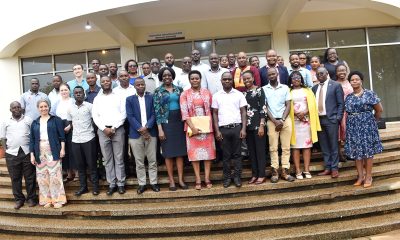
Participants in the training pose for a group photo. Capacity building session on inclusion for Students and Staff with Disabilities organized by the Office of the Dean of Students on Friday December 12, 2025, Makerere University School of Public Health Auditorium, Kampala Uganda, East Africa.
Participants in the training pose for a group photo.

The University is a place of learning but also has policies on safeguarding and policy on Persons with Disabilities to ensure that safety, dignity and inclusion form the foundation upon which teaching, learning and research occur.

Prof Ireeta extended appreciation to the Dean of Students and the Mastercard Foundation Scholars Program at Makerere University for the consistent leadership provided in driving safeguarding and inclusion agenda.

Speaking at the event, Prof. Justine Namaalwa Jjumba, Director of the Mastercard Foundation Scholars Program, highlighted the transformative partnership between Makerere University and the Mastercard Foundation, which began in 2013.

Prof. Justine Namaalwa. Makerere University student and staff Safeguarding Champions celebration of Semester One achievements, 28th November 2025, Makerere Institute of Social Research (MISR) Gardens, Kampala Uganda, East Africa.
Prof. Justine Namaalwa.

“Through this collaboration, the University has rolled out three key Educational initiatives: the Mastercard Foundation Scholars Program, offering 1,000 undergraduate scholarships (10% reserved for students with disabilities); the Africa Climate Collaborative, providing 250 MSc, 40 PhD, and 30 postdoctoral scholarships, with 10% dedicated to learners with disabilities; and e-Learning Initiatives, which allow students to pursue courses of their choice online, enhancing access and flexibility in education,” Prof Namaalwa, said.

During the session, different staff members highlighted that although the University, has made efforts to improve physical accessibility and strengthen the academic and non-academic environment, challenges including inadequate support and inaccessible facilities still exist.

Representing staff living with disabilities on the University Council, Mr. Amon Muteganda appealed to the Government to increase the number of students with disabilities admitted on government sponsorship and also stop choosing academic courses for them.

Mr. Amon Muteganda. Capacity building session on inclusion for Students and Staff with Disabilities organized by the Office of the Dean of Students on Friday December 12, 2025, Makerere University School of Public Health Auditorium, Kampala Uganda, East Africa.
Mr. Amon Muteganda.

“I want to thank the Mastercard Foundation Scholars Program at Makerere University for ensuring that 10% of their scholarship slots are reserved for students with disabilities. As a University, we need to increase our enrolment of students with disabilities beyond the current 2%. We should also develop a policy that supports students across all academic programs. If a student without hands wants to study architecture, we must support them rather than discourage them, it is the mind that matters, not the physical,” he emphasized.

Mr. Mutenganda also called upon the University to revise its disability policy, with a particular focus on strengthening accommodation and support for persons with disabilities when they are employed.

Speaking at the event, Mr. Marvin Galiwango, a lecturer at the College of Computing and Information Sciences (CoCIS), emphasized that instead of continually relying on imported wheelchairs and technologies, engineers at the College of Engineering, Design, Art and Technology (CEDAT) should take the initiative to develop technologies and wheelchairs for persons with Disabilities.

“Most persons with disabilities rely on imported technology, which they often cannot afford, leaving them with no choice but to beg. We have engineers at CEDAT who can design and produce these technologies locally, making them accessible and affordable for our people,” he noted,”

Mr. Ambrose Murangira. Capacity building session on inclusion for Students and Staff with Disabilities organized by the Office of the Dean of Students on Friday December 12, 2025, Makerere University School of Public Health Auditorium, Kampala Uganda, East Africa.
Mr. Ambrose Murangira.

In his keynote address, Mr. Ambrose Murangira, a senior expert in disability inclusion at Light for the World, outlined the basic principles of accessible lecture rooms, including a preference for ground-floor rooms or those reachable via a functioning elevator, wide doors, corridors and clear passable pathways between tables and rows.

Students with disabilities should be provided with accessible seats at the front that offer clear sight-lines, tables with extra legroom, and adequate lighting around the presenter and board. Regarding facilities, signposts should indicate the nearest accessible washrooms and emergency exits, which must be both physically and visually accessible.” Mr Murangira, said.

On 1st December, the University joined the world to celebrate the International Day of Persons Disabilities. Students, staff and Members of Parliament with visual, hearing and physical disabilities filled the Main Hall with the aim to promote inclusion, raise awareness on disability rights, and encourage a supportive learning environment for everyone to thrive.

Carol Kasujja
Carol Kasujja Adii

Continue Reading

Trending