An aerial shot of the Main Building, as taken by a drone over the Freedom Square with Left to Right: CHUSS, St. Francis, St. Augustine and CAES Buildings and the Kikoni area (Background) in view.
Makerere University is governed by the Universities and Other Tertiary Institutions Act, Cap 262. The University is seeking applications from suitably qualified applicants for the position of Second Deputy Vice-Chancellor. The Second Deputy Vice Chancellor holds a pivotal role in financial governance, institutional planning, and administrative leadership.

The Second Deputy Vice-Chancellor will report to the Vice–Chancellor and shall:
Assist the Vice Chancellor in performance of his or her functions and in that regard shall oversee the finances and administration of the University;
Be responsible for the Planning and Development of the University and,
Perform such other functions that may be delegated to him or her by the Vice Chancellor or assigned by the University Council.
5. PURPOSE OF THE JOB
To provide strategic leadership and ensure efficient and sound financial, human and fiscal resources management in the University.
6. DUTIES AND RESPONSIBILITIES
Provide leadership in Strategic planning and governance, leadership and administrative experience, Human resource and performance Management, Stakeholder engagement and collaboration.
Provide leadership in preparation and implementation of the University’s recurrent and capital budgets.
Monitor the development and implementation of the University’s accounting procedures, manuals and other documents relating to financial control and Management as per approved financial regulations.
Oversee income and expenditure of all income generating units of the University.
Coordinate the production of the University-wide Financial Reports by Colleges and Units.
Management of human resources in the University.
Oversee the management of University Estates and Assets.
7.CANDIDATE SPECIFICATION
Hold a PhD or any other academic doctorate.
Be at the rank of associate or full professor level in an institution whose academic ranking is comparable with that of Makerere University as accepted by Senate.
Be a Ugandan citizen within the age bracket of 40 to 65 years at the time of application.
7.1 Academic Qualifications
Earned a Ph.D. or equivalent doctorate should be acceptable by Senate.
At least five years of financial or administrative leadership experience at the level of school dean/director or higher in a higher education institution, public service, or corporate institutions.
Supervised at least ten (10) postgraduate students (Master’s and Ph.D.) to completion. At least three of the students must be at the PhD level.
7.2 Strategic Planning and Governance
Experience in leading large administrative teams at the level of dean or higher, demonstrating efficiency and productivity.
Proven record in developing and executing strategic plans, aligning financial and administrative objectives with institutional goals.
Evidence of developing and implementing financial policies that have improved financial efficiency, transparency, and risk management.
Evidence of implementing organisational restructuring or process improvements to ensure operational efficiency.
Ability to develop and implement institutional policies, ensuring compliance with national higher education and financial regulations.
7.3 Leadership & Administrative Experience
Minimum 5 years of senior academic leadership in a recognized institution comparable with that of Makerere University, as accepted by Senate.
Demonstrated experience in managing budgets exceeding UGX 500,000,000=, ensuring financial sustainability and accountability.
Proven ability to mobilize resources, secure grants, and attract external funding to support institutional growth.
Experience in conducting financial forecasting, cost control measures, and investment strategies to optimize institutional resources.
Track record of leading financial audits and compliance assessments in alignment with national and international financial regulations.
Experience in handling procurement, asset management, and infrastructure development, ensuring transparency and value for money.
7.4 Human Resource and Performance Management
Track record of leading workforce planning, recruitment, and talent development strategies, ensuring a high-performance institutional culture.
Experience in implementing performance-based appraisal systems, leading to improved staff efficiency and accountability.
Proven ability to foster industrial harmony, resolving labour disputes and improving employer-employee relations.
7.5 Infrastructure Development and Resource Optimization
Experience in overseeing capital development projects, ensuring timely delivery and cost efficiency.
Track record of overseeing the maintenance and expansion of university facilities, enhancing institutional infrastructure.
Proven ability to negotiate and manage contracts for outsourced services, ensuring cost-effectiveness and quality standards.
7.6 Digital Transformation and ICT Integration
Experience in integrating ICT solutions in financial and administrative operations, improving service delivery and efficiency.
Evidence steering the automation of financial, procurement, and HR systems, reducing paperwork and improving real-time decision making.
Proven ability to implement cybersecurity measures that safeguard institutional financial and administrative data.
7.7 Stakeholder Engagement & Collaboration
Demonstrated experience in building partnerships with government agencies, donors, private sector investors, and international organizations to enhance institutional funding.
Proven ability to engage faculty, students, and staff in financial decision-making, ensuring transparency and inclusivity.
Experience in negotiating contracts, partnerships, and collaborations that have led to financial and administrative growth.
7.8 Personal Attributes
High level of integrity, transparency, and ethical leadership, with a record of financial prudence.
Strong analytical, problem-solving, and decision-making skills, backed by evidence of successfully managing complex financial and administrative challenges.
Excellent communication, negotiation, and interpersonal skills, ensuring effective stakeholder engagement.
A visionary leader with the ability to drive financial sustainability. administrative efficiency, and institutional growth.
8. REMUNERATION
An attractive remuneration package that is in accordance with Makerere University terms and conditions of service.
9. TENURE
The Second Deputy Vice Chancellor shall hold office for a period of five years and shall be eligible for re-appointment for one more term.
10. METHOD OF APPLICATION
Interested applicants are invited to submit their application letters. The following documents shall comprise a complete application:
A signed letter of application;
A vision statement;
Curriculum Vitae with contact details signed and dated by the applicant;
Copies of required minimum number of publications;
Certified copies of academic transcripts and certificates;
Three (3) letters of recommendation;
Copies of letters of appointment to leadership positions at the level of Dean of a School in a national accredited university or other academic institution;
A copy of the applicant’s National Identity Card or passport;
A copy of the last clearance from the Inspector General of Government or other equivalent national body;
Referees should be advised to send confidential reference letters, addressed to the Chairperson Search Committee for the Position of Second Deputy Vice Chancellor and delivered directly to the address below by 5:00 pm on Friday 13th February, 2026;

The references should cover the following areas: the applicant’s academic credential, experience, leadership, managerial and administrative skills and personal integrity.
Both Hardcopy and Electronic (Email) applications shall be accepted.
Hardcopy applications: Both confidential letters and sealed applications marked “CONFIDENTIAL: POSITION OF SECOND DEPUTY VICE CHANCELLOR” should be addressed to:
SECRETARY SEARCH COMMITTEE
THE ACADEMIC REGISTRAR
MAKERERE UNIVERSITY
6TH Floor, ROOM 602, SENATE BUILDING
P.O.BOX 7062, KAMPALA, UGANDA
Electronic media (e-mail) applications should have all the above documents scanned and emailed to search.dvcfa@mak.ac.ug by 5.00 pm East African Standard Time on Friday 13th February, 2026.
Please note that:
Incomplete applications or applications received after the closing date and time will not be considered.
Only shortlisted applicants shall be contacted.
Applicants who responded to the advertisements published on 31st December 2025 (The New Vision) and 2nd January 2026 (The Daily Monitor) do not need to re-apply.
For more Information and inquiries:
Visit our website https://mak.ac.ug/search-for-dvcs OR email us on search.dvcfa@mak.ac.ug OR Call Telephone number: +256-414-532634 during working hours (between 8:00 am to 5:00 pm Monday to Friday).
MAKERERE UNIVERSITY IS AN EQUAL OPPORTUNITY EMPLOYER
Update 31st March 2026: Application Deadline Extended to Thursday 30th April 2026
The Academic Registrar, Makerere University invites applications for admission to Graduate Programmes (Postgraduate Diplomas, Masters and Doctoral Degree Programmes) for the 2026/2027 Academic Year.
Applicants should have obtained at least a first or second class degree (or its equivalent) from a Chartered University at the time of completion. Applicants should also possess a Uganda Certificate of Education (or its equivalent) and a Uganda Advanced Certificate of Education (or its equivalent).
Sponsorship: All Graduate Programmes are PRIVATELY-SPONSORED. Therefore, applicants seeking sponsorship should have their applications endorsed by their respective sponsors where applicable. Applicants should note that the various fees payable to the University indicated for the various programmes EXCLUDE functional fees, accommodation, books, research and other expenses.
The available programmes including the tuition fees applicable can be found in the following document:
Sign up using full name, e-mail and Mobile No. Please note that your name must be similar to the one on your supporting academic documents for your application to be considered valid.
A password will be sent to both your e-mail and mobile number.
The system will prompt you to change the password to the one you can easily remember.
To fill a form (all form sections must be filled) the applicant clicks on the APPLY NOW button (for first time applicants) or MY PORTAL button (for renewal of application) displayed on the appropriate scheme i.e. Taught PhDs, Masters & Postgrad Diplomas OR PhD by Research.
All academic transcripts/certificates and passport photos should be scanned and uploaded on the system.
Obtain a payment reference number [PRN] by clicking on “Pay for Form” button
Make the following payments at any of the banks used by URA i) Application fee = UGX 50,000 (East African applicants) or UGX 151,500 (International Applicants) Account Name: UGANDA REVENUE AUTHORITY COLLECTIONS Account No: 003410158000002 For INTERNATIONAL APPLICANTS, application fees can be transferred either by EFT or any other means in UGX to a designated URA collection account in Bank of Uganda as follows: Swift Code: UGBAUGKAU Bank Name: BANK OF UGANDA Bank Address: KAMPALA, UGANDA Currency: UGANDA SHILLINGS
Strictly observe the closing date on 30th April 2026.
All Applicants for Master of Laws (LLM) will do a Graduate Admission Test (GAT) consisting of an oral Interview and written test on dates and other requirements to be communicated by the School.
All Applicants for Master of Business Administration (College of Business and Management Sciences and Makerere University Business School) will do a GMAT test on dates to be communicated by College of Business and Management Sciences and Makerere University Business School respectively.
For further information regarding admission requirements for the specific programmes, visit our website https://dgt.mak.ac.ug.
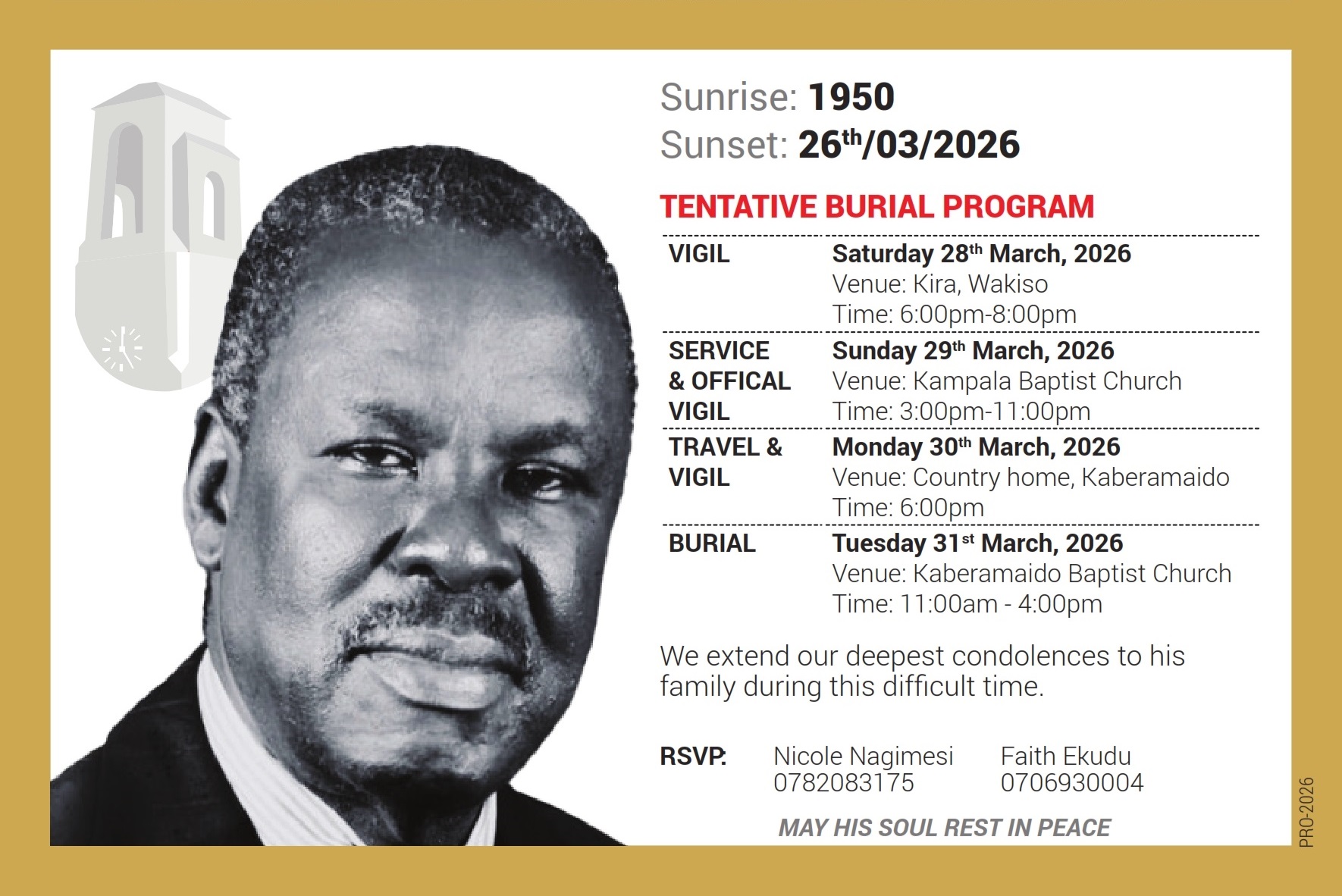
The Makerere University community has with great sadness received the news of the passing on of our long serving Dean of Students, Father figure and Mentor to thousands of our alumni, Pastor John Ekudu. Please accept our sincerest condolences.
If loyal and distinguished service had a face, that face would be Pastor John Ekudu. A concurrent graduate of the Bachelor of Science (Botany/Zoology) and Diploma of Education of Makerere University in 1974, he, like many in that turbulent era, could have chosen to flee, but he didn’t.
Instead, he chose to stay, and along with many fresh graduates and senior staff, graciously accepted the title of “economic war lecturers/professors”, whose selflessness kept Makerere’s gates open during unpredictable times. In 1982 he was appointed Warden of Kabanyolo Hostel and thereafter Warden of University Hall in 1989, where he was promoted to the rank of Senior Warden.
In 1995 he was promoted to Dean of Students and whereas this would marked the beginning of a time to seat back and relax, it turned out to be a baptism of fire. The introduction of private sponsorship and cost-sharing which dealt away with “boom” incensed students. And then came the nightmare serial killings of students in 1996 and 1997. Dealing with strikes became his daily bread but still he chose to stay.
But he did more than stay. He thrived, improving students’ meals with the introduction of much-needed animal protein, not to mention the daily dose of bread and rice. Pastor Ekudu was the true embodiment of taking the stumbling blocks that life throws at you and trusting God to help you turn them into stepping stones.
We therefore stand with the family during this trying time and pray that the God Almighty, who knows the plans He has for each and every one of us will continue to comfort and strengthen you.
May Pastor John M. Ekudu-Adoku’s soul rest in eternal peace.
Kampala, Uganda — 27th March 2026: Makerere University has intensified its push toward digital transformation in graduate education with the implementation of the Research Information Management System (RIMS), a platform expected to end supervision delays, enhance transparency, close long-standing gaps, and boost research excellence.
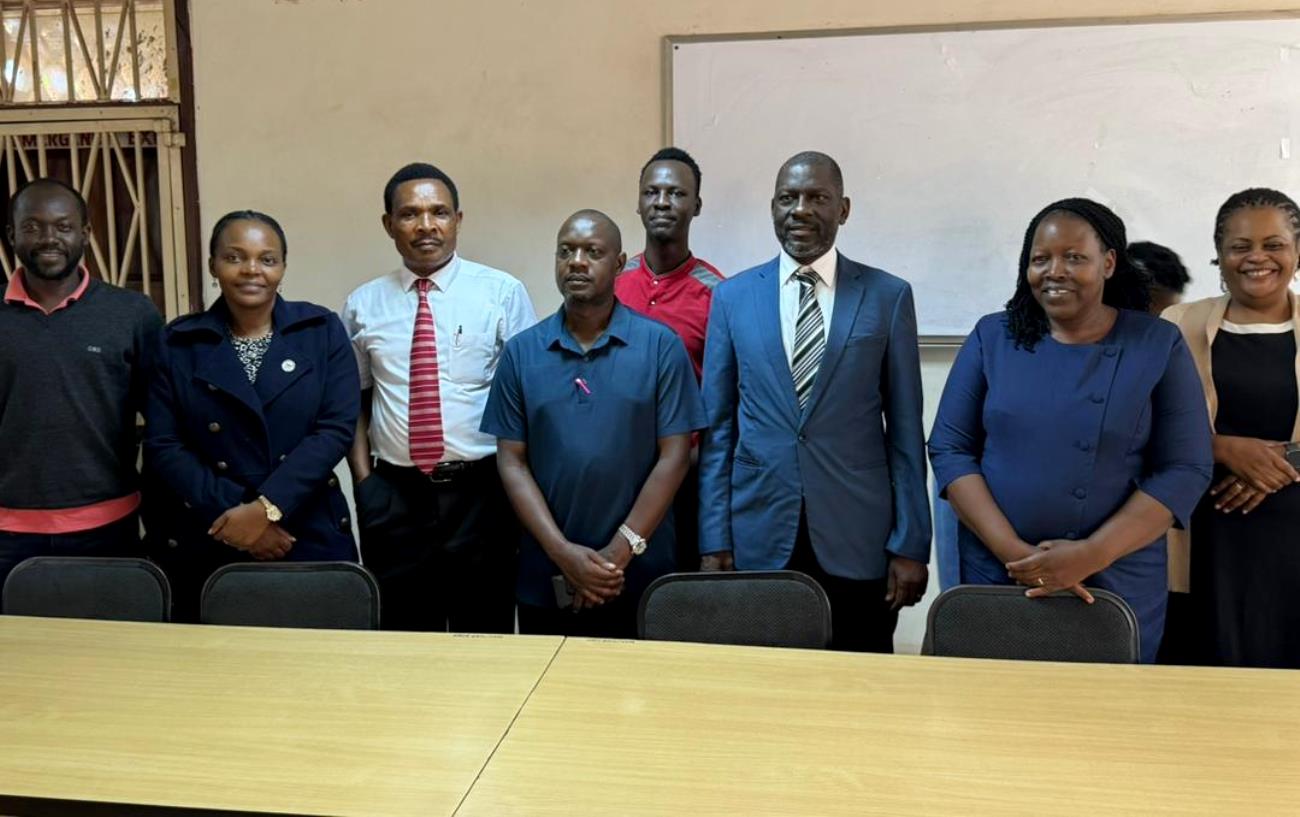
Leading this shift, the Director of Graduate Training at Makerere University, Prof. Julius Kikooma, emphasized that the initiative is part of ongoing collaboration with academic units.
“Our visit to the Institute of Gender and Development Studies is part of continuous engagement to strengthen graduate training,” Prof. Kikooma said. “RIMS is not just about technology—it is about improving how students and supervisors work together, how progress is tracked, and how the university ensures quality and timely completion.”
He noted that the university is already making strides in graduate output, citing a recent milestone of over 200 PhD graduates, with 40 percent female representation—an indicator of progress toward gender equity.
“We want to push that to 50 percent,” he said. “RIMS will help us get there by providing data, improving coordination, and addressing inefficiencies in supervision and monitoring.”
Prof. Kikooma emphasized that the system will also support the university’s broader goals, including internationalization and improved research productivity, by streamlining application, supervision, and reporting processes.
“With digitization now fully underway, we cannot go back,” he said. “RIMS will allow supervisors to track student performance in real time, and management will be able to access accurate reports at the click of a button.”
He added that adoption of the system is mandatory for all academic staff, noting that it will become a key tool for measuring performance and institutional accountability.
Building on this vision, Prof. Ruth Nsibirano, Director of the Institute of Gender and Development Studies, highlighted how RIMS will directly address supervision gaps that have historically affected graduate completion.
“I’m very certain RIMS is going to bridge the gap between supervisors and supervisees,” she said. “It will ensure constant updates, structured engagement, and clear records of progress for every student.”
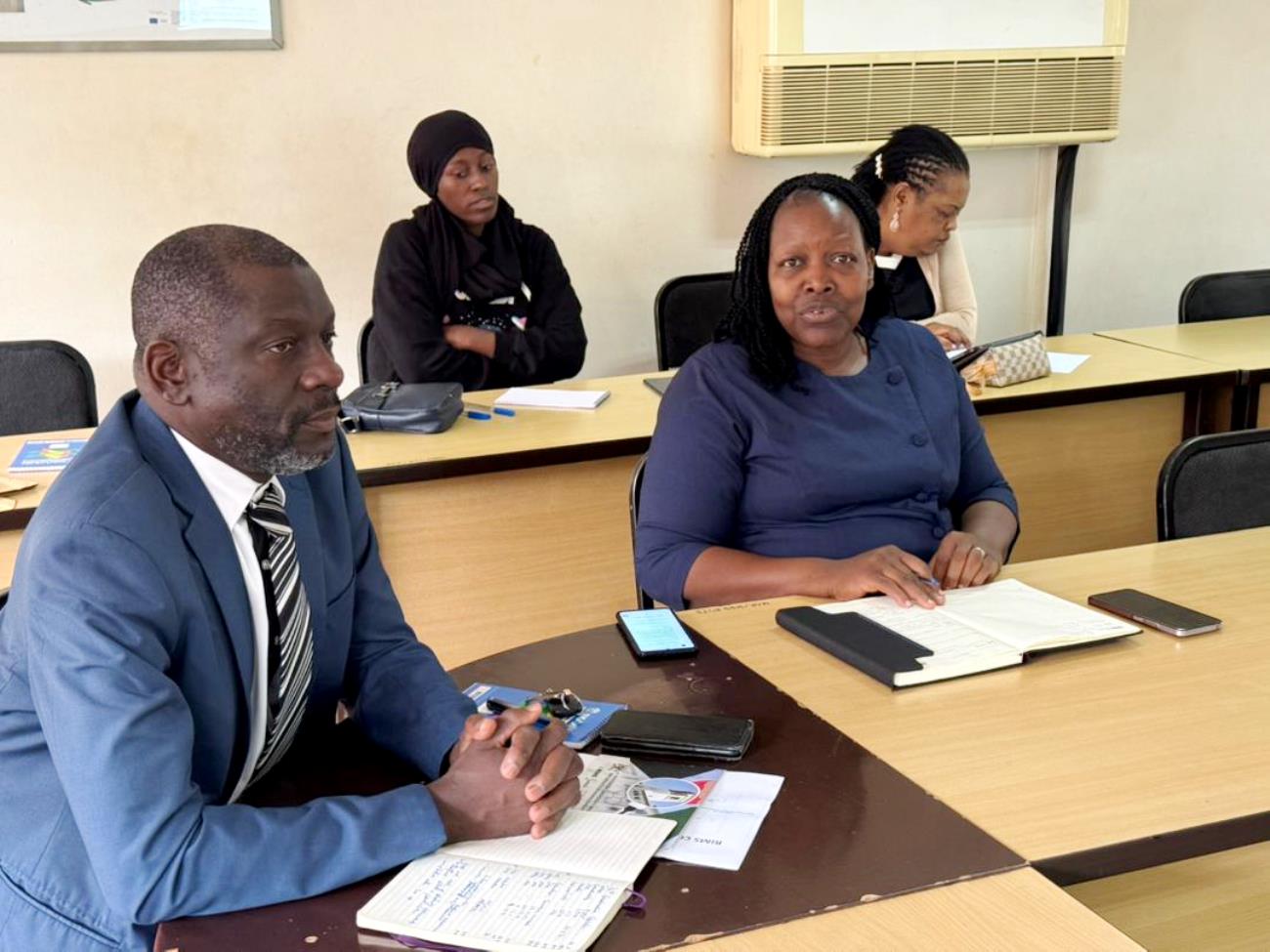
Prof. Julius Kikooma (L) and Prof. Ruth Nsibirano (R).
Prof. Nsibirano explained that one of the major challenges in the past has been the lack of visibility in supervision, where both students and supervisors operated without clear documentation of their interactions.
“Knowledge of what was happening was often missing because supervisors and students remained distant,” she said. “Now, there will be records showing when supervision took place, what was discussed, and who has not been responsive.”
She noted that this transparency will significantly improve efficiency and reduce delays on both sides.
“Both students and supervisors will know that their work is being tracked,” she said. “This awareness alone will improve accountability and reduce unnecessary delays.”
However, she cautioned that while RIMS will strengthen supervision systems, financial challenges facing graduate students remain a critical issue.
“We must also address the reality of limited financial support,” she said. “Even with strong systems, students still need resources to complete their studies.”
Prof. Nsibirano expressed confidence that both staff and students are ready to adopt the digital platform, noting that familiarity with technology is no longer a major barrier.
At the operational level, Dr. Julius Mugisa, Coordinator of Graduate Studies at the Institute, underscored the practical impact RIMS will have on day-to-day supervision.
“In fact, it is a very good system. It will facilitate easy supervision,” Dr. Mugisa said. “Previously, you could send comments to a student and wait five weeks without a response. Now, the system will clearly show who is delaying and who is not.”
He emphasized that the transparency of RIMS will eliminate guesswork and misunderstandings by ensuring that all supervision activities are recorded and accessible.
“There will be clear evidence of engagement—comments, timelines, and responses,” he said. “This removes the blame game and helps everyone focus on progress.”
Dr. Mugisa dismissed concerns that increased monitoring might intimidate supervisors, instead framing it as a positive step toward professionalism.
“We are here to do our work for the university,” he said. “The system is not about punishment—it is about improving efficiency and ensuring that responsibilities are fulfilled.”
He added that the accountability introduced by RIMS will encourage timely feedback and active participation from both supervisors and students.
“When you know the system is tracking progress, it helps you stay on course,” he said. “Monitoring is important, and it benefits everyone.”
Dr. Mugisa also noted that improved supervision and faster feedback could enhance Makerere University’s attractiveness to prospective graduate students.
“Students want assurance that their work will be reviewed on time,” he said. “With RIMS, that confidence will increase, and more students will be encouraged to enroll.”
As Makerere University continues to implement RIMS across its academic units, leaders believe the system will mark a turning point in graduate education—driving efficiency, strengthening accountability, closing supervision gaps, and positioning the institution as a leader in research excellence in Africa.