Connect with us

Agriculture & Environment

Mak Launches Book on Agriculture and Ecosystem Resilience in Sub-Saharan Africa

Published

on

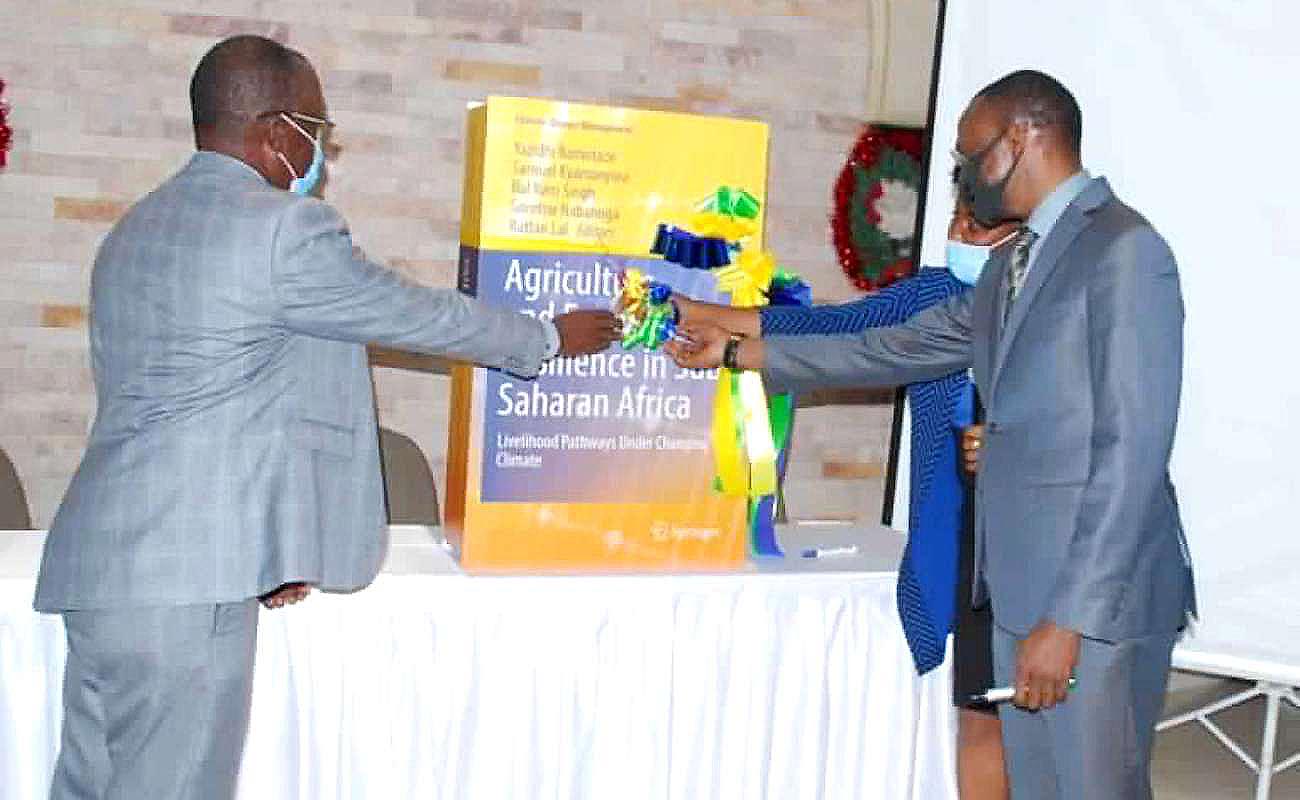
Makerere University on 4th December 2020, launched a book titled, “Agriculture and Ecosystem Resilience in Sub Saharan Africa”. The book is one of the outputs of the project titled “Regional Capacity Building for Sustainable Natural Resource Management and Agricultural Productivity under Changing Climate” (CAPSNAC).

CAPSNAC is Collaborative Project involving four institutions, one in the North and three in the South. These included: Makerere University-Uganda, Addis Ababa University-Ethiopia; University of Juba-South Sudan, Norwegian University of Life Sciences-Norway.

Makerere University is the lead institution of the project based in CAES, with Prof. Samuel Kyamanywa, as the Principal Investigator (PI). It was funded by NORAD through the NORHED program to a tune of NOK 20 million.

The book was edited by Assoc. Prof. Yazidhi Bamutaze as the Lead editor, and had Prof. Samuel Kyamanywa and Assoc. Prof. Gorettie Nabanoga as Co-editors. Others from partnering institutions were Prof. Bal Ram Singh and Rattan Lal.

Giving the citation the lead editor Assoc. Prof. Yazidhi Bamutaze said the volume discusses emerging contexts of agricultural and ecosystem resilience in Sub Saharan Africa, as well as contemporary technological advances that have influenced African Livelihoods.

In six sections, he said the book addresses the sustainable development goals to mitigate the negative impacts on agricultural productivity brought about by climate change in Africa while some of the challenges assessed include soil degradation, land use changes, natural resource mismanagement, declining crop productivity, and economic stagnation.

The book, Dr. Bamutaze said, will be of interest to researchers, NGOs, and development organizations. Section 1 focuses on climate risk management in tropical Africa. Section 2 addresses the water-ecosystem-agriculture nexus, and identifies the best strategies for sustainable water use.

Read more

Mark Wamai

Agriculture & Environment

From Campus to Community: Universities Lead Teso in Fight Against Greenhouse Gas Emissions

Published

on

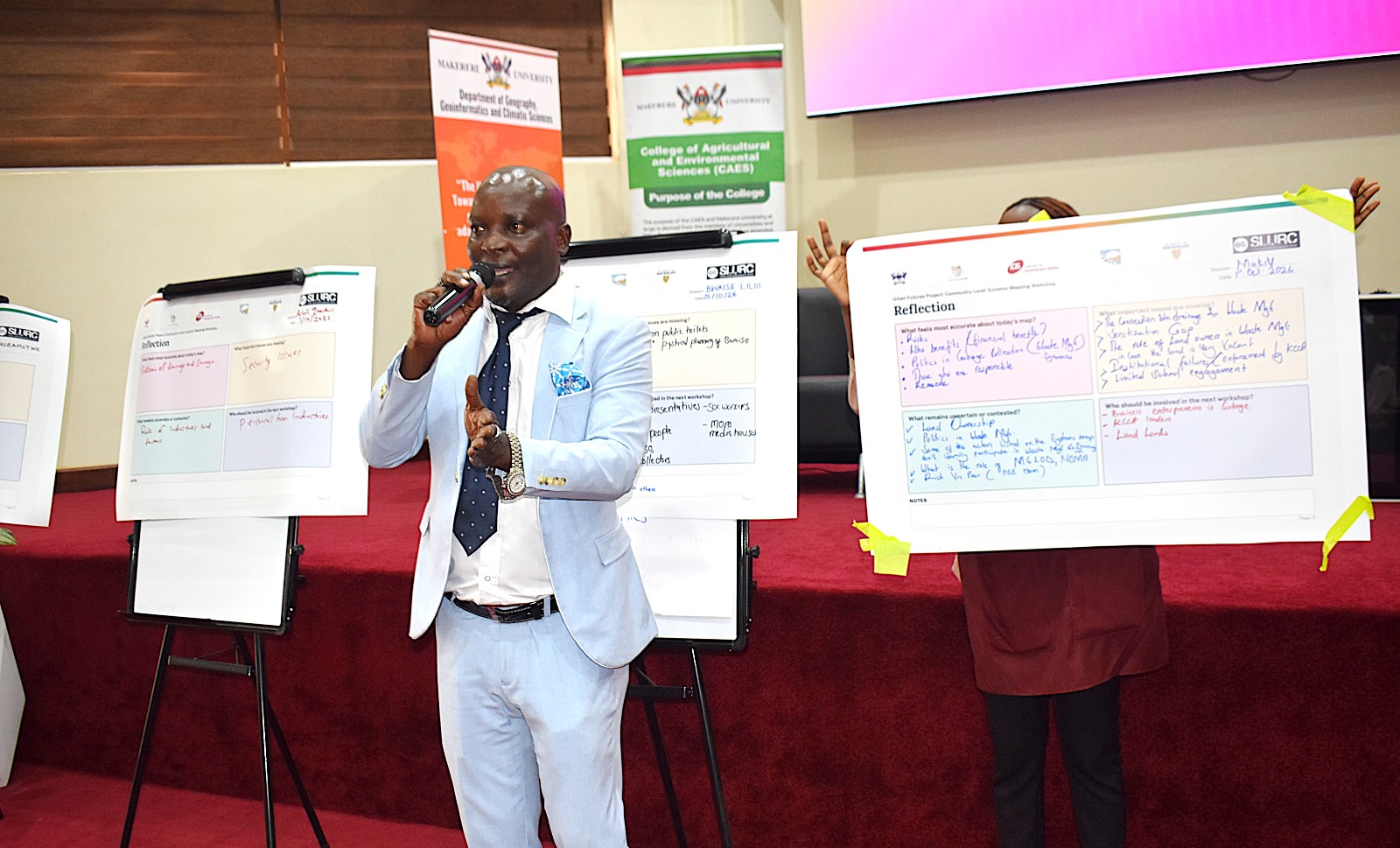
The living lab team at Mr. Achom's home during a meeting organized by Makerere and Busitema Universities. TORCH Project, a multi-university initiative involving Makerere University, Busitema University, Kabale University, and the University of Juba to reduce greenhouse gas emissions and promote sustainable practices at the community level emphasizing direct engagement with local communities, March 2026, Immaculate Acom’s home, Aten Village, Odudui Parish, Arapai Sub-county, Soroti District, Uganda, East Africa.

By John Omoding

When Immaculate Acom inhaled smoke from traditional firewood stoves, it was a daily struggle. Her eyes watered, her lungs ached, and cooking became a source of illness rather than nourishment.

Today, Acom’s home in Aten Village, Odudui Parish, Arapai Sub-county, Soroti District, has transformed into a living laboratory for green energy solutions, a hub where university researchers, students, and local farmers collaborate on practical strategies to combat climate change.

“I used to cough every time I cooked. Now, with a biogas digester built by my husband, I can cook and light our home safely,” she says, pointing to the small green dome beside her house. “This is a relief for all the mothers in the community.”

Dr Patrick Musinguzi, PI of the TORCH Projec evaluates the progress of the installed biogas at Mr Achom's home in Arapai, Soroti as a way of cutting down emissions from cowdung deposits and overuse of wood fuel. TORCH Project, a multi-university initiative involving Makerere University, Busitema University, Kabale University, and the University of Juba to reduce greenhouse gas emissions and promote sustainable practices at the community level emphasizing direct engagement with local communities, March 2026, Immaculate Acom’s home, Aten Village, Odudui Parish, Arapai Sub-county, Soroti District, Uganda, East Africa.
Dr Patrick Musinguzi, PI of the TORCH Projec evaluates the progress of the installed biogas at Mr Achom’s home in Arapai, Soroti as a way of cutting down emissions from cowdung deposits and overuse of wood fuel.

Bringing Academia to the Grassroots

Acom’s story is part of the TORCH Project, a multi-university initiative involving Makerere University, Busitema University, Kabale University, and the University of Juba. The project seeks to reduce greenhouse gas emissions and promote sustainable practices at the community level.

Unlike conventional environmental campaigns, the TORCH Project emphasizes direct engagement with local communities. Role models within villages are identified and trained in modern agricultural practices, clean energy use, and environmentally friendly living standards.

Dr. Jolly Akullo Oder, TORCH Project Coordinator at Busitema University, explains:

“Our mandate is to go to the community, share knowledge, listen to their challenges, and co-create solutions. This is not about lecturing – it’s about learning together.”

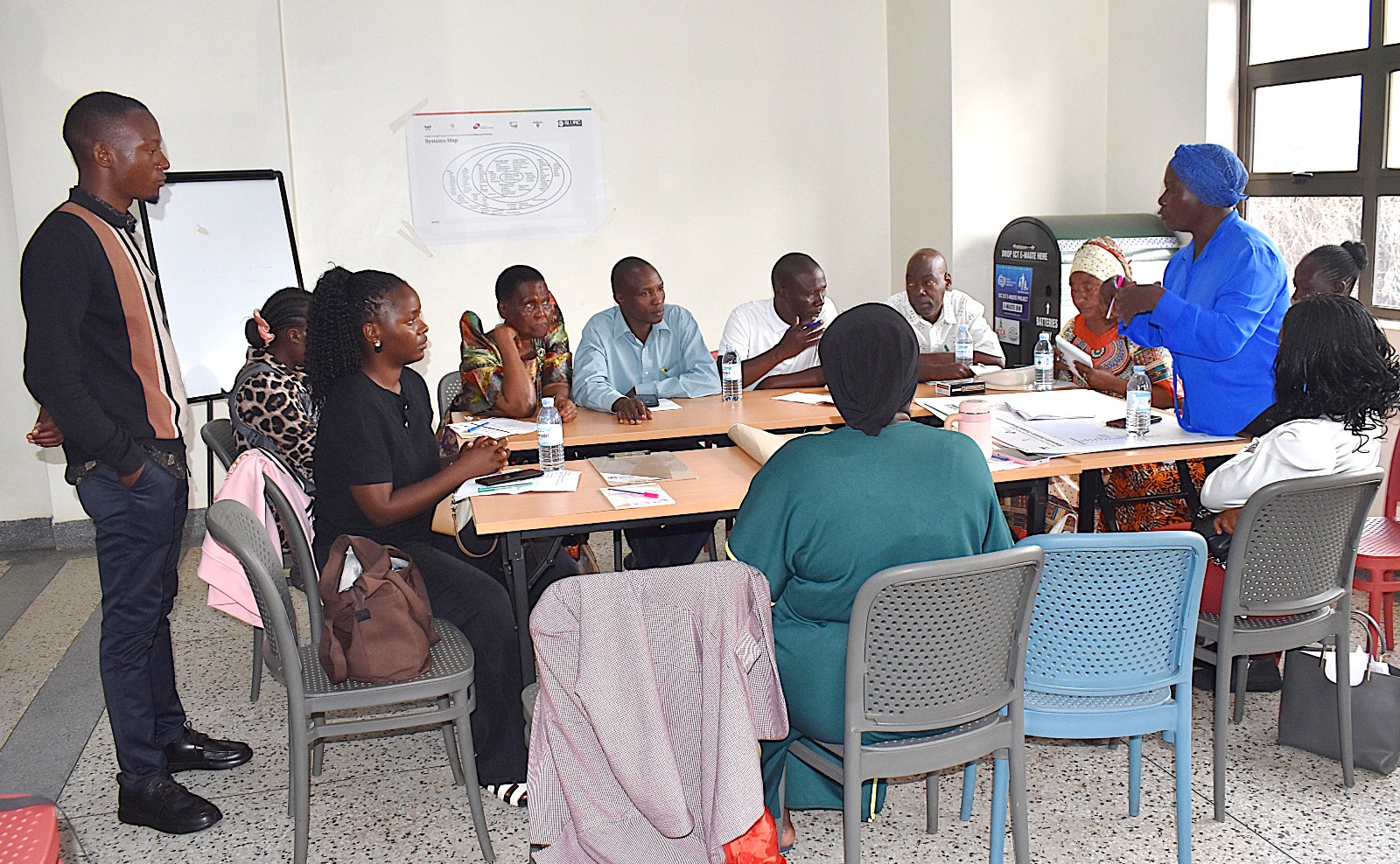
The living lab team discussing the progress at Mr. Achom's home in Arapai, Soroti. TORCH Project, a multi-university initiative involving Makerere University, Busitema University, Kabale University, and the University of Juba to reduce greenhouse gas emissions and promote sustainable practices at the community level emphasizing direct engagement with local communities, March 2026, Immaculate Acom’s home, Aten Village, Odudui Parish, Arapai Sub-county, Soroti District, Uganda, East Africa.
The living lab team discussing the progress at Mr. Achom’s home in Arapai, Soroti.

The project’s operational area spans a ten-square-kilometer zone around Busitema University’s Arapai campus, where researchers, students, and community members meet regularly to exchange ideas and implement practical solutions.

A Living Lab for Green Growth

The initiative, branded as a living lab, aims to achieve green growth, rural carbon credits, and the adoption of affordable green technologies.

Dr. Patrick Musinguzi, Principal Investigator from Makerere University, emphasizes the community-centric approach: “We are here to sit at the table with the community, discuss the challenges of global warming and greenhouse gas emissions, and chart a path forward together. Awareness is the first step to action.”

The project focuses on tangible interventions, including biogas digesters, sustainable tree planting, and energy-efficient farming methods, to reduce carbon emissions at the household and community level.

TThe TORCH Project implementing team with the Ag. Dean, Faculty of Agriculture and Animal Sciences, Busitema University. TORCH Project, a multi-university initiative involving Makerere University, Busitema University, Kabale University, and the University of Juba to reduce greenhouse gas emissions and promote sustainable practices at the community level emphasizing direct engagement with local communities, March 2026, Immaculate Acom’s home, Aten Village, Odudui Parish, Arapai Sub-county, Soroti District, Uganda, East Africa.
The TORCH Project implementing team with the Ag. Dean, Faculty of Agriculture and Animal Sciences, Busitema University.

Community Voices: From Awareness to Action

For local farmers like John Michael Elebu, the university outreach is both eye-opening and practical. “I’ve never seen academics come to the community and engage with us so openly. I hope they can provide free improved tree seedlings to support our farming and fight climate change,” Elebu said.

Acom urges men in the community to take an active role in adopting clean energy technologies. Her husband, David Okwi, is among those championing the integration of green technologies into everyday agricultural practices.

“Promoting renewable energy and sustainable farming isn’t just about protecting the environment,” Okwi says. “It also improves health, saves money, and strengthens the resilience of our families.”

Universities as Catalysts for Environmental Change

The TORCH Project represents a unique model of academic-community collaboration, where research and practical application intersect.

One of the living labs established under the TORCH Project. TORCH Project, a multi-university initiative involving Makerere University, Busitema University, Kabale University, and the University of Juba to reduce greenhouse gas emissions and promote sustainable practices at the community level emphasizing direct engagement with local communities, March 2026, Immaculate Acom’s home, Aten Village, Odudui Parish, Arapai Sub-county, Soroti District, Uganda, East Africa.
One of the living labs established under the TORCH Project.

Universities provide expertise, training, and access to modern technologies.

Community members contribute local knowledge, labor, and willingness to adopt change.

Together, they tackle climate change, energy poverty, and environmental degradation at the grassroots.

Dr. Akullo notes that the initiative will expand its activities continuously, monitoring outcomes, adapting approaches, and scaling up best practices across Teso and neighboring regions.

Way forward

By turning households into living laboratories, the TORCH Project aims to bridge the gap between knowledge and action.

For residents like Acom and Okwi, the benefits are immediate: cleaner air, reduced health risks, and practical solutions for everyday life. For Teso, the project could serve as a blueprint for climate-smart rural development across East Africa.

“Change begins at home,” Dr. Musinguzi says. “When communities understand the challenges of green gas emissions and know how to respond, the impact spreads far beyond one village or household.” In Aten Village, the hum of a biogas stove and the sight of thriving tree seedlings offer a glimpse of what is possible when universities partner with communities, creating hope for a cleaner, healthier, and more sustainable future.

Mak Editor

Continue Reading

Agriculture & Environment

Makerere University Launches Short Course to Strengthen Climate Change Reporting

Published

on

Some of the media practitioners with the British High Commissioner to Uganda Lisa Chesney; the DVCAA, Prof. Sarah Ssali; and the Principal of CAES, Prof. Gorettie Nabanoga at the launch ceremony held on 5th March 2026. Launch of specialized short training course developed by Makerere University Centre for Climate Change Research and Innovation (MUCCRI) aimed at equipping media practitioners and digital content creators with knowledge and skills to effectively report on climate change and related environmental issues by British High Commissioner to Uganda, H.E. Lisa Chesney, 5th March 2026, Senior Common Room, Main Building, Kampala Uganda, East Africa.

By Hasifa Kabejja & Ritah Namisango

Makerere University, in partnership with the British High Commission in Uganda, has launched a specialized short training course aimed at equipping media practitioners and digital content creators with the knowledge and skills needed to effectively report on climate change and related environmental issues.

The course was officially launched on 5th March 2026 by the British High Commissioner to Uganda, Her Excellency Lisa Chesney. The ceremony was graced by the First Deputy Vice Chancellor in charge of Academic Affairs (DVCAA), Prof. Sarah Ssali, who represented the Vice Chancellor, Prof. Barnabas Nawangwe. It was attended by the Principal of the College of Agricultural and Environmental Sciences (CAES), Prof. Gorettie Nabanoga, and representatives from Climate Smart Jobs (CSJ), the Editors Guild, and media practitioners and content creators focused on climate-related issues.

The British High Commissioner Lisa Chesney launching the climate change training course for media practitioners. Launch of specialized short training course developed by Makerere University Centre for Climate Change Research and Innovation (MUCCRI) aimed at equipping media practitioners and digital content creators with knowledge and skills to effectively report on climate change and related environmental issues by British High Commissioner to Uganda, H.E. Lisa Chesney, 5th March 2026, Senior Common Room, Main Building, Kampala Uganda, East Africa.
The British High Commissioner Lisa Chesney launching the climate change training course for media practitioners.

About the short course on climate change reporting

Developed by the Makerere University Centre for Climate Change Research and Innovation (MUCCRI) under the leadership of Prof. Revocatus Twinomuhangi, the course was designed to improve climate science reporting. Through the training, media practitioners will gain a deeper understanding of climate science, climate finance mechanisms, policy frameworks, and local climate solutions and innovations. The programme also aims to empower journalists to tell impactful and meaningful climate stories.

“As the coordinating team at MUCCRI, we worked with climate scientists, policy experts, and media practitioners to develop a programme that is accessible, practical, and engaging,” Prof. Twinomuhangi explained.

The British High Commissioner to Uganda, H.E. Lisa Chesney addressing participants at the launch ceremony. Launch of specialized short training course developed by Makerere University Centre for Climate Change Research and Innovation (MUCCRI) aimed at equipping media practitioners and digital content creators with knowledge and skills to effectively report on climate change and related environmental issues by British High Commissioner to Uganda, H.E. Lisa Chesney, 5th March 2026, Senior Common Room, Main Building, Kampala Uganda, East Africa.
The British High Commissioner to Uganda, H.E. Lisa Chesney addressing participants at the launch ceremony.

According to Prof. Twinomuhangi, the training will be delivered entirely online, making it accessible to participants across Uganda and beyond. It is self-paced, allowing participants to learn at their convenience while continuing with their professional responsibilities. At the same time, it has been designed to remain interactive and engaging through multimedia lectures, real-world case studies, and practical exercises.

The course consists of eight modules that together provide a comprehensive introduction to climate change reporting. These modules cover climate science, climate governance and policy, climate finance, nature-based solutions, inclusive climate reporting, and solutions-oriented journalism. Participants will also gain practical skills in interpreting data, asking critical questions, and crafting compelling climate stories.

Prof. Revocatus Twinomuhangi, Director of MUCCRI briefing participants about the course. Launch of specialized short training course developed by Makerere University Centre for Climate Change Research and Innovation (MUCCRI) aimed at equipping media practitioners and digital content creators with knowledge and skills to effectively report on climate change and related environmental issues by British High Commissioner to Uganda, H.E. Lisa Chesney, 5th March 2026, Senior Common Room, Main Building, Kampala Uganda, East Africa.
Prof. Revocatus Twinomuhangi, Director of MUCCRI briefing participants about the course.

“Our goal is not only to build knowledge but also to empower media professionals to report on climate change with confidence, depth, and accuracy,” Prof. Twinomuhangi explained.

 He expressed gratitude to the UK Government, through the Climate Smart Jobs Programme, for supporting climate resilience initiatives in Uganda. He also thanked the Palladium Group, the implementer of the CSJ programme, for selecting MUCCRI to design and deliver this training under the Media Training and Mentorship initiative.  

Some of the media practitioners at the launch ceremony. Launch of specialized short training course developed by Makerere University Centre for Climate Change Research and Innovation (MUCCRI) aimed at equipping media practitioners and digital content creators with knowledge and skills to effectively report on climate change and related environmental issues by British High Commissioner to Uganda, H.E. Lisa Chesney, 5th March 2026, Senior Common Room, Main Building, Kampala Uganda, East Africa.
Some of the media practitioners at the launch ceremony.

Remarks by H.E the British High Commissioner to Uganda

In her remarks, Her Excellency, the British High Commissioner to Uganda Lisa Chesney, described the initiative as both timely and essential, emphasizing the critical role the media plays in shaping public understanding of climate change.

She noted that climate change impacts communities differently, with women often bearing the greatest burden because they are heavily involved in agricultural production and ensuring food security for their families.

H.E Lisa Chesney underscored the importance of clear and accurate reporting on climate change related issues. Launch of specialized short training course developed by Makerere University Centre for Climate Change Research and Innovation (MUCCRI) aimed at equipping media practitioners and digital content creators with knowledge and skills to effectively report on climate change and related environmental issues by British High Commissioner to Uganda, H.E. Lisa Chesney, 5th March 2026, Senior Common Room, Main Building, Kampala Uganda, East Africa.
H.E Lisa Chesney underscored the importance of clear and accurate reporting on climate change related issues.

“Clear and accurate reporting on climate change is crucial in helping communities understand the risks and the solutions,” she said.

Relevance of the course to Makerere University

On behalf of the Vice Chancellor, Prof. Sarah Ssali, DVCAA, praised the programme as a reflection of Makerere University’s multidisciplinary, research-led approach to addressing national and global challenges. She highlighted the vital role of the media in translating complex scientific knowledge and policy into accessible information for the public.

“The short course we launch today is both timely and important. It draws on Makerere University’s research expertise and translates that knowledge into practical skills for media practitioners. It provides journalists with tools to better understand climate science, climate finance, carbon markets, adaptation strategies, and issues of equity and inclusion in climate action. By doing so, it strengthens the media’s ability to inform public dialogue and support evidence-based decision-making.”

Prof. Sarah Ssali represented the Vice Chancellor at the launch ceremony. Launch of specialized short training course developed by Makerere University Centre for Climate Change Research and Innovation (MUCCRI) aimed at equipping media practitioners and digital content creators with knowledge and skills to effectively report on climate change and related environmental issues by British High Commissioner to Uganda, H.E. Lisa Chesney, 5th March 2026, Senior Common Room, Main Building, Kampala Uganda, East Africa.
Prof. Sarah Ssali represented the Vice Chancellor at the launch ceremony.

She equally appreciated the UK Government for supporting the initiative. “We are grateful for the confidence placed in the College of Agricultural and Environmental Sciences and in particular, the Makerere University Centre for Climate Change Research and Innovations to design and deliver this training. Such partnerships enable universities to translate research into real-world impact.”

Remarks by the Principal of CAES

Highlighting the challenges posed by climate change and the complexities in reporting climate-related issues, the Principal of CAES, Prof. Gorettie Nabanoga, reiterated the critical role of journalists in raising public awareness, translating scientific findings, and fostering informed dialogue that can drive effective climate action.

The Principal of CAES, Prof. Gorettie Nabanoga appreciated the UK Government for the support extended to the project. Launch of specialized short training course developed by Makerere University Centre for Climate Change Research and Innovation (MUCCRI) aimed at equipping media practitioners and digital content creators with knowledge and skills to effectively report on climate change and related environmental issues by British High Commissioner to Uganda, H.E. Lisa Chesney, 5th March 2026, Senior Common Room, Main Building, Kampala Uganda, East Africa.
The Principal of CAES, Prof. Gorettie Nabanoga appreciated the UK Government for the support extended to the project.

“The short course was therefore designed with a clear purpose: to equip media practitioners with the knowledge, tools, and confidence needed to report on climate change accurately and responsibly,” Prof. Nabanoga said, emphasizing CAES’s commitment to advancing climate solutions through research in sustainable agriculture, environmental governance, forest restoration, and nature-based interventions.

Appreciation from the Editors Guild

On behalf of the Editors Guild, Mr. Alex Atuhaire applauded the funders for supporting quality journalism, noting that the course will strengthen storytelling skills and improve climate reporting across Uganda’s media landscape.

Mr. Alex Atuhaire represented the Editors Guild at the launch. Launch of specialized short training course developed by Makerere University Centre for Climate Change Research and Innovation (MUCCRI) aimed at equipping media practitioners and digital content creators with knowledge and skills to effectively report on climate change and related environmental issues by British High Commissioner to Uganda, H.E. Lisa Chesney, 5th March 2026, Senior Common Room, Main Building, Kampala Uganda, East Africa.
Mr. Alex Atuhaire represented the Editors Guild at the launch.

“The launch comes at a pivotal moment as the media navigates the opportunities and challenges of an increasingly digital landscape. The retooling course will breathe life into impactful, skilled, and authentic storytelling on climate change in our newsrooms,” Mr Atuhaire said. The Editors Guild pledged continued support in improving the quality of climate reporting across media platforms in the country.

Relevance of the programme to media practitioners

Sharing her experience, media practitioner Leonard Namukasa highlighted the complexities of reporting on climate change, describing it as scientific, investigative, and inherently challenging. She explained that limited access to reliable scientific data complicates coverage, noting that many people mistakenly equate climate change reporting with general environmental journalism. She welcomed the course, saying it will greatly address some of these challenges.

Ms. Leonard Namukasa from InfoNile sharing her experience about climate change reporting. Launch of specialized short training course developed by Makerere University Centre for Climate Change Research and Innovation (MUCCRI) aimed at equipping media practitioners and digital content creators with knowledge and skills to effectively report on climate change and related environmental issues by British High Commissioner to Uganda, H.E. Lisa Chesney, 5th March 2026, Senior Common Room, Main Building, Kampala Uganda, East Africa.
Ms. Leonard Namukasa from InfoNile sharing her experience about climate change reporting.

About MUCCRI

 The Makerere University Centre for Climate Research and Innovation (MUCCRI) was established in 2014 within the College of Agricultural and Environmental Sciences to strengthen climate knowledge generation, knowledge management, and policy engagement. Over the years, MUCCRI has contributed to a wide range of initiatives, including climate knowledge management platforms such as the Climate Adaptation Knowledge Base (CCKB), the SDSN Uganda Chapter, research on climate-induced migration, and programmes that promote sustainable agriculture, nature-based solutions, climate-smart cities, climate finance, locally led adaptation, and community resilience.

Mr. Mathew Rupanga from Climate Smart Jobs addressing participants during the launch. Launch of specialized short training course developed by Makerere University Centre for Climate Change Research and Innovation (MUCCRI) aimed at equipping media practitioners and digital content creators with knowledge and skills to effectively report on climate change and related environmental issues by British High Commissioner to Uganda, H.E. Lisa Chesney, 5th March 2026, Senior Common Room, Main Building, Kampala Uganda, East Africa.
Mr. Mathew Rupanga from Climate Smart Jobs addressing participants during the launch.

MUCCRI is a member of the Least Developed Countries Universities Consortium on Climate Change (LUCCC), a global network of universities working together to advance climate research, knowledge exchange, and capacity building in least developed countries. Through these efforts, the Centre aims to bridge the gap between climate science, policy, and society.

More photos from the launch

Prof. Sarah Ssali appends her signature on the plaque after the launch of the climate change training course for media practitioners. Launch of specialized short training course developed by Makerere University Centre for Climate Change Research and Innovation (MUCCRI) aimed at equipping media practitioners and digital content creators with knowledge and skills to effectively report on climate change and related environmental issues by British High Commissioner to Uganda, H.E. Lisa Chesney, 5th March 2026, Senior Common Room, Main Building, Kampala Uganda, East Africa.
Prof. Sarah Ssali appends her signature on the plaque after the launch of the climate change training course for media practitioners.

Prof. Sarah Ssali presenting a gift from MUCCRI to H.E. Lisa Chesney. Launch of specialized short training course developed by Makerere University Centre for Climate Change Research and Innovation (MUCCRI) aimed at equipping media practitioners and digital content creators with knowledge and skills to effectively report on climate change and related environmental issues by British High Commissioner to Uganda, H.E. Lisa Chesney, 5th March 2026, Senior Common Room, Main Building, Kampala Uganda, East Africa.
Prof. Sarah Ssali presenting a gift from MUCCRI to H.E. Lisa Chesney.

Prof. Gorettie Nabanoga presenting a gift from MUCCRI from Prof. Sarah Ssali. Launch of specialized short training course developed by Makerere University Centre for Climate Change Research and Innovation (MUCCRI) aimed at equipping media practitioners and digital content creators with knowledge and skills to effectively report on climate change and related environmental issues by British High Commissioner to Uganda, H.E. Lisa Chesney, 5th March 2026, Senior Common Room, Main Building, Kampala Uganda, East Africa.
Prof. Gorettie Nabanoga presenting a gift from MUCCRI from Prof. Sarah Ssali.

Hasifa Kabejja

Continue Reading

Agriculture & Environment

CAES Presents Overall Best Performing Student in the Sciences & a Record 28 PhDs at the 76th Graduation Ceremony

Published

on

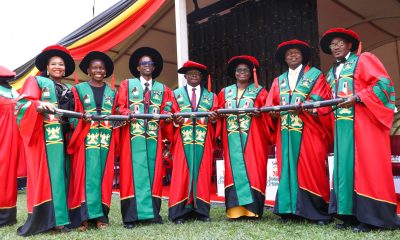
Some of the 28 PhD graduates from CAES. 76th Graduation Ceremony, Day 1, College of Agricultural and Environmental Sciences (CAES). Commencement Speaker-Prof. Nicholas Ozor, the Executive Director of the African Technology Policy Studies Network, Nairobi, Kenya. 24th February 202, Freedom Square, Makerere University, Kampala Uganda, East Africa.

The College of Agricultural and Environmental Sciences (CAES) presented the best performing student in the Sciences at the 76th Graduation Ceremony of Makerere University. Ms. Esther Ziribaggwa graduated with a CGPA of 4.77 in the Bachelor of Agricultural and Rural Innovation. She credits her success to resilience and hard work, despite the financial challenges she faced during her studies.

The four-day 76th graduation ceremony commenced on 24th February 2026 with the CAES, the College of Computing and Information Sciences (CoCIS), the College of Education and External Studies (CEES), and the School of Law presenting graduands for the award of degrees and diplomas of Makerere University.

Best Overall Student in the Sciences-Esther Ziribaggwa accompanied by her parents and the Chairperson Convocation-Mr. George Turyamureeba receives a cheque from the Chancellor. 76th Graduation Ceremony, Day 1, CAES, CoCIS, CEES and School of Law. Commencement Speaker-Prof. Nicholas Ozor, the Executive Director of the African Technology Policy Studies Network, Nairobi, Kenya. 24th February 202, Freedom Square, Makerere University, Kampala Uganda, East Africa.
Best Overall Student in the Sciences-Esther Ziribaggwa accompanied by her parents and the Chairperson Convocation-Mr. George Turyamureeba receives a cheque from the Chancellor.

CAES Graduation Statistics

CAES presented a total of 561 students (238 female and 323 male). Of these 28 (10 female and 18 male) graduated with PhD, 144 (68 female and 76 male) with Masters, 380 (157 female and 223 male) with Bachelor’s degrees, and 9 with Post graduate diplomas (3 female and 6 male). The PhD graduates included; Mr. Ainebyona Ronald Rwambuka, Ms. Amongi Winnyfred, Ms. Apil Jenifer, Mr. Asizua Denis, Mr. Astatke Dejene Kebede, Ms. Atuhairwe Privah, Ms. Ayesiga Stella Bigirwa, Mr. Biryomumaisho Dickson, Ms. Cherotich Harriet, Mr. Kalimunjaye Samuel, Ms. Kesiime Vasiter Eunice, Ms. Khakasa Elizabeth, Mr. Kimbowa George, Mr. Komi Gentle Wilson, Mr. Kusiima Kaheesi Samuel, Mr. Mathe Lukanda Musondolya, Mr. Mukama Innocent Hope Tinka, Mr. Mukengere Bagula Espoir, Mr. Nakhokho Evans Martin, Ms. Faridah Nalwanga Sendagire, Ms. Nalweyiso Amina, Ms. Nampijja Zainah, Ms. Njenga Peninah Wambui, Mr. Nkurunziza Gelase, Ms. Ojera Alal Ato Gertrude Miriam, Mr. Sebuliba Richard Mutumba, Mr. Shimali Fred, and Mr. Ssubi Allan Johnson.

Esther Ziribaggwa being congratulated by the Principal of CAES, Prof. Gorettie Nabanoga, and the Deputy Principal, Prof. Yazidhi Bamutaze. 76th Graduation Ceremony, Day 1, College of Agricultural and Environmental Sciences (CAES). Commencement Speaker-Prof. Nicholas Ozor, the Executive Director of the African Technology Policy Studies Network, Nairobi, Kenya. 24th February 202, Freedom Square, Makerere University, Kampala Uganda, East Africa.
Esther Ziribaggwa being congratulated by the Principal of CAES, Prof. Gorettie Nabanoga, and the Deputy Principal, Prof. Yazidhi Bamutaze.

Overall graduation Statistics

During the course of the 76th graduation ceremony, a total of 9,295 students will graduate with degrees and diplomas of Makerere University. Of these, 4,262 (46%) are female and 5,033 (54%) are male.  A total of 213 students will graduate with PhDs, the highest number in the history of the University; 2,503 with Masters degrees; 6,343 with Bachelor’s degrees; 206 with postgraduate diplomas, and 30 with Diplomas.

Postgraduates constituted 31.4% of the total number of graduands. 

Remarks by the Vice Chancellor

Addressing the congregation, the Vice Chancellor of Makerere University, Prof. Barnabas Nawangwe, congratulated the graduates on reaching this significant milestone. “You graduate today from one of the finest universities in the world,” he said. “You have distinguished yourselves through discipline, integrity, and academic excellence, and we are immensely proud of you. The qualifications you carry are vital to society. We have equipped you with the knowledge and skills to secure employment or to create enterprises that will, in turn, employ others. Should you not find immediate employment, do not despair, instead, reflect on the vast opportunities around you and rise to the challenge as entrepreneurs. Do not despise humble beginnings. To our PhD graduands, you now join the global community of scholars. Africa looks to you with great expectation. Use your expertise to transform our continent.”

The Vice Chancellor, Prof. Barnabas Nawangwe delivering his remarks. 76th Graduation Ceremony, Day 1, College of Agricultural and Environmental Sciences (CAES). Commencement Speaker-Prof. Nicholas Ozor, the Executive Director of the African Technology Policy Studies Network, Nairobi, Kenya. 24th February 202, Freedom Square, Makerere University, Kampala Uganda, East Africa.
The Vice Chancellor, Prof. Barnabas Nawangwe delivering his remarks.

He appreciated the parents and guardians for the sacrifices they made to support their children’s education.

New Research Excellence Recognition Plans

The Vice Chancellor informed the congregation that beginning with the 76th graduation ceremony, the University will recognize outstanding PhD students who are members of staff. He congratulated those who completed their doctoral studies in record time while continuing to serve without study leave, commending their resilience and leadership. “These will receive the Makerere PhD Resilience Award”.

Similarly, the University will henceforth honour the best PhD and Master’s theses, as selected by the Higher Degrees Committee of Senate. The students with the top 10 theses at the 76th graduation are: Kawesi Paul – MA Law (School of Law), Katende Stephen – MSc Quantitative Economics (COBAMS), Najjinda Shamirah – PhD Management (COBAMS), Turyahabwe Irene – MSc Molecular Biology (COVAB), Tayebwa Dickson – PhD (COVAB), Batte Herbert – PhD Mathematics (CONAS), Ssekago Arnold – MSc Mathematics (CONAS), Namiyingo Julian – PhD Literature (CHUSS), Namata Brenda – MSCO (CHUSS), and Tayebwa Asaph Kamau – MBA (MUBS).

Dr Zaina Nampijja being congratulated by her mother. 76th Graduation Ceremony, Day 1, College of Agricultural and Environmental Sciences (CAES). Commencement Speaker-Prof. Nicholas Ozor, the Executive Director of the African Technology Policy Studies Network, Nairobi, Kenya. 24th February 202, Freedom Square, Makerere University, Kampala Uganda, East Africa.
Dr Zaina Nampijja being congratulated by her mother.

Recognition of the CAES Research Output

In his remarks, the Vice Chancellor commended the College of Agricultural and Environmental Sciences for spearheading transformative research aimed at strengthening Africa’s food systems. Among the initiatives he highlighted was the Healthy Soy Project, funded by the Danish Ministry of Foreign Affairs, which seeks to develop sustainable, affordable, and nutritious soy-based foods to combat child stunting in Uganda and other climate-affected regions. He also cited a project focused on enhancing value addition in cocoa production through the development and scaling of a single fermentation box technology, now adopted by more than 70% of farmers in major cocoa-producing districts.

Dr Ojera Alal Ato Gertrude Miriam studied the chemical components of Malakwang leaves and how they are influenced by processing. 76th Graduation Ceremony, Day 1, College of Agricultural and Environmental Sciences (CAES). Commencement Speaker-Prof. Nicholas Ozor, the Executive Director of the African Technology Policy Studies Network, Nairobi, Kenya. 24th February 202, Freedom Square, Makerere University, Kampala Uganda, East Africa.
Dr Ojera Alal Ato Gertrude Miriam studied the chemical components of Malakwang leaves and how they are influenced by processing.

Efforts to Transform Makerere into a Research-led University

The Vice Chancellor noted that Makerere University continues to advance steadily toward becoming a truly research-led institution – one that generates knowledge to empower communities, strengthen industries, and drive national transformation.

He expressed gratitude to the Government of Uganda for entrusting the University with resources to support more than 1,400 high-impact research and innovation projects under the Makerere University Research and Innovations Fund (Mak-RIF). The Fund has enabled researchers to provide practical, evidence-based solutions in sectors including agriculture, land management, energy and minerals, peace and security, and education. Through Mak-RIF, over 200 PhD students have received support to pursue their research, many of whom are graduating at the 76th graduation ceremony.

Dr Faridah Nalwanga Sendagire (R) and Dr Zainah Nampijja (L), both lecturers at CAES graduated with PhDs. 76th Graduation Ceremony, Day 1, College of Agricultural and Environmental Sciences (CAES). Commencement Speaker-Prof. Nicholas Ozor, the Executive Director of the African Technology Policy Studies Network, Nairobi, Kenya. 24th February 202, Freedom Square, Makerere University, Kampala Uganda, East Africa.
Dr Faridah Nalwanga Sendagire (R) and Dr Zainah Nampijja (L), both lecturers at CAES graduated with PhDs.

The Vice Chancellor further highlighted the pivotal role of the Makerere University Technology and Innovations Centre (MUTIC) in advancing incubation and commercialization. “The Centre offers mentorship, business development training, intellectual property support, and industry linkages to help transform research outputs into viable enterprises. To date, eleven spin-off companies have been established by students and staff, while the University’s Innovation Pod (UniPod) has incubated more than 100 projects in the past year. The short-term target is to establish 50 spin-off companies annually, with plans to double that number in the long term.”

In partnership with the Science, Technology and Innovation Secretariat in the Office of the President, the University has also introduced awards to recognize outstanding researchers and innovators. “The Innovation Commercialization Award underscores the institution’s commitment to translating research into practical products, services, and technologies that address real-world challenges and support national development,” the Vice Chancellor noted.

The Chancellor conferring a PhD on to one of the CAES graduates. 76th Graduation Ceremony, Day 1, College of Agricultural and Environmental Sciences (CAES). Commencement Speaker-Prof. Nicholas Ozor, the Executive Director of the African Technology Policy Studies Network, Nairobi, Kenya. 24th February 202, Freedom Square, Makerere University, Kampala Uganda, East Africa.
The Chancellor conferring a PhD on to one of the CAES graduates.

Prof. Nawangwe appreciated the Government of Uganda for securing a USD 162 million loan from the Korea Exim Bank to support critical infrastructure development at the University. The funding will facilitate the construction of new facilities for the School of Medicine, School of Dentistry, School of Engineering, the Science and Technology Centre, and the completion of the School of Computing and Information Sciences- an unprecedented development in the University’s history.

He also thanked development partners who provide research grants and scholarships, including the MasterCard Foundation, European Union, Norwegian Agency for Development Cooperation, Swedish International Development Cooperation Agency, International Development Research Centre, Korea International Cooperation Agency, German Academic Exchange Service, National Institutes of Health, Centers for Disease Control and Prevention, United States Agency for International Development, Wellcome Trust, KfW, Inter-University Council for East Africa, Regional Universities Forum for Capacity Building in Agriculture, African Research Universities Alliance, the PLUS Alliance, the Worldwide Universities Network, the Association of African Universities, the Alliance for African Partnership, the Madhvani Foundation, and the Government of Uganda through the Higher Education Students Financing Board.

Hon. Dr. Joyce Moriku Kaducu. 76th Graduation Ceremony, Day 1, CAES, CoCIS, CEES and School of Law. Commencement Speaker-Prof. Nicholas Ozor, the Executive Director of the African Technology Policy Studies Network, Nairobi, Kenya. 24th February 202, Freedom Square, Makerere University, Kampala Uganda, East Africa.
Hon. Dr. Joyce Moriku Kaducu.

He further acknowledged the Embassy of China, the Chinese Chamber of Commerce, various government ministries, State House, and private sector partners – including Stanbic, Absa, NCBA, DFCU, and Centenary Bank-for their continued support.

Remarks by the Chancellor

In his remarks, the Chancellor, Hon. Dr. Crispus Kiyonga, appreciated the parents, guardians, and sponsors whose unwavering support enabled the students to succeed.

“At the heart of the graduands’ accomplishments are the professors, lecturers, and administrators of the University, ably supported by the University Council. It is only fitting that we acknowledge and commend them for a job well done,” he noted.

Some of the undergraduate students at the College premises shortly before the ceremony. 76th Graduation Ceremony, Day 1, College of Agricultural and Environmental Sciences (CAES). Commencement Speaker-Prof. Nicholas Ozor, the Executive Director of the African Technology Policy Studies Network, Nairobi, Kenya. 24th February 202, Freedom Square, Makerere University, Kampala Uganda, East Africa.
Some of the undergraduate students at the College premises shortly before the ceremony.

He further extended profound gratitude to H.E. Yoweri Kaguta Museveni and the NRM Government for the invaluable financial and other support extended to the University.

Going forward, he encouraged the University Administration to strengthen research funding, forge stronger partnerships with the private sector to commercialize innovations, deepen structured engagement with communities, and fully leverage the abundant technological resources available to the institution.

Message from the Minister of Education and Sports

The Minister of Education and Sports, also First Lady, Hon. Janet Kataaha Museveni, represented by Hon. Dr. Joyce Moriku Kaducu – Minister of State for Primary Education, commended the Vice Chancellor and the leadership of Makerere University for upholding the standards that continue to distinguish the University across Africa and beyond.

Some of the CAES staff. 76th Graduation Ceremony, Day 1, College of Agricultural and Environmental Sciences (CAES). Commencement Speaker-Prof. Nicholas Ozor, the Executive Director of the African Technology Policy Studies Network, Nairobi, Kenya. 24th February 202, Freedom Square, Makerere University, Kampala Uganda, East Africa.
Some of the CAES staff.

She expressed gratitude for the spirit of constructive collaboration among management, staff, students, and development partners, noting that such cooperation is vital for institutional growth and academic excellence. She paid special tribute to the University Council, particularly the Chairperson and its members, for their dedicated oversight and stewardship. Their commitment to transparency and good governance, she observed, has strengthened public confidence in this historic institution.

A major milestone highlighted by the Minister was the establishment of the Makerere University Research and Innovation Fund (RIF), which supports high-impact research aligned with national priorities and development goals. Through this initiative, thousands of researchers and innovators have developed practical, scalable solutions that are transforming communities and key sectors across Uganda.

Left to Right: Prof. Barnabas Nawangwe,Prof. Nicholas Ozor, Rt. Hon. Daniel Kidega, Dr. Lorna Magara, Hon. Dr. Joyce Moriku Kaducu, Ms. Anthea Ampaire and Hon. Dr. Crispus Kiyonga in the academic procession. 76th Graduation Ceremony, Day 1, CAES, CoCIS, CEES and School of Law. Commencement Speaker-Prof. Nicholas Ozor, the Executive Director of the African Technology Policy Studies Network, Nairobi, Kenya. 24th February 202, Freedom Square, Makerere University, Kampala Uganda, East Africa.
Left to Right: Prof. Barnabas Nawangwe,Prof. Nicholas Ozor, Rt. Hon. Daniel Kidega, Dr. Lorna Magara, Hon. Dr. Joyce Moriku Kaducu, Ms. Anthea Ampaire and Hon. Dr. Crispus Kiyonga in the academic procession.

She reaffirmed the Ministry’s commitment to strengthening higher education through expanded research funding, digital transformation, cultural reform, and stronger collaboration between academia and industry. “The vision is clear: universities must not only produce graduates, but also solution-makers and job creators”.

Implementing the Competence-based Education and Training

Reiterating a key directive from the Ministry of Education and Sports, she emphasized that all institutions of higher learning must prepare for the full implementation of Competence-Based Education and Training by July 2027. “This reform represents more than a policy shift. It signals a fundamental transformation in how graduates are prepared, with greater emphasis on practical skills, innovation, and problem-solving.”

Dr Ephrahim Nuwamanya from SAS was one of the Innovation Commercialization Award recipients. 76th Graduation Ceremony, Day 1, College of Agricultural and Environmental Sciences (CAES). Commencement Speaker-Prof. Nicholas Ozor, the Executive Director of the African Technology Policy Studies Network, Nairobi, Kenya. 24th February 202, Freedom Square, Makerere University, Kampala Uganda, East Africa.
Dr Ephrahim Nuwamanya from SAS was one of the Innovation Commercialization Award recipients.

She urged the Vice Chancellor and his team to lead in curriculum reform, staff development, and infrastructure enhancement to ensure the successful rollout of competence-based education.

The Minister further urged university management to ensure that all satellite campuses are fully accredited and that their programmes meet the same high standards of quality and relevance as those offered at the main campus. This, she stressed, is essential to safeguarding the integrity of the University’s degrees and effectively serving students nationwide.

Prof Phinehas Tukamuhabwa from the Department of Crop Science and Horticulture received the Innovation Commercialization Award. 76th Graduation Ceremony, Day 1, College of Agricultural and Environmental Sciences (CAES). Commencement Speaker-Prof. Nicholas Ozor, the Executive Director of the African Technology Policy Studies Network, Nairobi, Kenya. 24th February 202, Freedom Square, Makerere University, Kampala Uganda, East Africa.
Prof Phinehas Tukamuhabwa from the Department of Crop Science and Horticulture received the Innovation Commercialization Award.

Addressing the graduates, she noted that Uganda and Africa need innovators to modernize agriculture, engineers to build quality infrastructure, healthcare professionals to strengthen health systems, and educators to inspire future generations. “The world you are entering is dynamic, interconnected, and technologically driven. Artificial Intelligence is reshaping industries; climate change is redefining agriculture and urban planning; and global markets are transforming employment patterns. In this rapidly evolving landscape, you must remain adaptable, creative, and committed to lifelong learning.” 

Address by the Commencement Speaker, Prof. Nicholas Ozor

In his address titled Knowledge with Purpose and Service with Integrity, the Commencement Speaker, Prof. Nicholas Ozor, Executive Director of the African Technology Policy Studies Network, urged the graduates to embrace lifelong learning, prioritize purpose over comfort, build character before career, and serve something greater than themselves. He encouraged them to believe in Africa and take action, rather than waiting for solutions from elsewhere.

Dr. Nalwanga Sendagire Faridah received the Best Early Career Researcher Award. 76th Graduation Ceremony, Day 1, College of Agricultural and Environmental Sciences (CAES). Commencement Speaker-Prof. Nicholas Ozor, the Executive Director of the African Technology Policy Studies Network, Nairobi, Kenya. 24th February 202, Freedom Square, Makerere University, Kampala Uganda, East Africa.
Dr. Nalwanga Sendagire Faridah received the Best Early Career Researcher Award.

Addressing the graduates of CAES, he emphasized that they stand at the intersection of survival and sustainability. “In a world confronting climate change, food insecurity, and environmental degradation, your knowledge is vital. You will work with farmers, ecosystems, land, water, and policy. You will shape food systems and livelihoods. Respect indigenous knowledge, embrace scientific innovation, and champion sustainability. The future of Africa depends on how well we feed our people and protect our land.”

Prof. Yazidhi Bamutaze got the Senior Career Research Award. 76th Graduation Ceremony, Day 1, College of Agricultural and Environmental Sciences (CAES). Commencement Speaker-Prof. Nicholas Ozor, the Executive Director of the African Technology Policy Studies Network, Nairobi, Kenya. 24th February 202, Freedom Square, Makerere University, Kampala Uganda, East Africa.
Prof. Yazidhi Bamutaze got the Senior Career Research Award.

Research Excellence and Innovation Commercialization Awards

During the graduation ceremony, Makerere University recognized the top researchers and innovators from the 10 Colleges. At CAES, Dr Mugabi Robert from the School of Food Technology and Nutrition received the Overall Top Researchers Award, 2026; Dr. Nalwanga Sendagire Faridah received the Best Early Career Researcher Award, Dr Mugabi Robert scooped the Mid-Career Research Award whereas Prof. Yazidhi Bamutaze got the Senior Career Research Award. Prof. Phinehas Tukamuhabwa, Dr Ephrahim Nuwamanya, Assoc. Prof. Ahamada Zziwa, and Dr Ssempijja John Edson were recognized among the best innovators.

Dr Mugabi Robert scooped the Mid-Career Research Award. 76th Graduation Ceremony, Day 1, College of Agricultural and Environmental Sciences (CAES). Commencement Speaker-Prof. Nicholas Ozor, the Executive Director of the African Technology Policy Studies Network, Nairobi, Kenya. 24th February 202, Freedom Square, Makerere University, Kampala Uganda, East Africa.
Dr Mugabi Robert scooped the Mid-Career Research Award.

More about Esther Ziribaggwa, the overall best performing student in the sciences:

https://news.mak.ac.ug/2026/02/from-adversity-to-excellence-the-inspiring-journey-of-makereres-best-science-student-esther-ziribaggwa/

Hasifa Kabejja

Continue Reading

Trending