
General
5th Mak Self-Assessment Advocates for Diversification

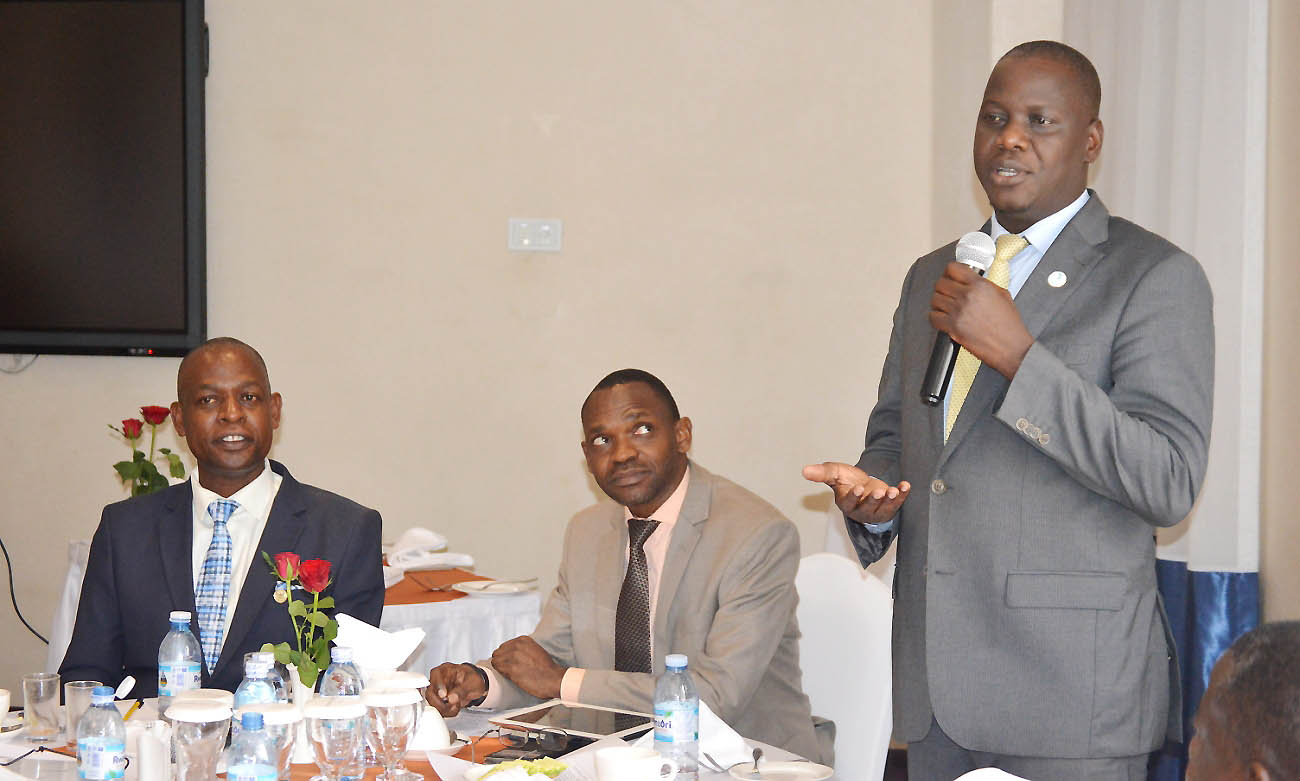
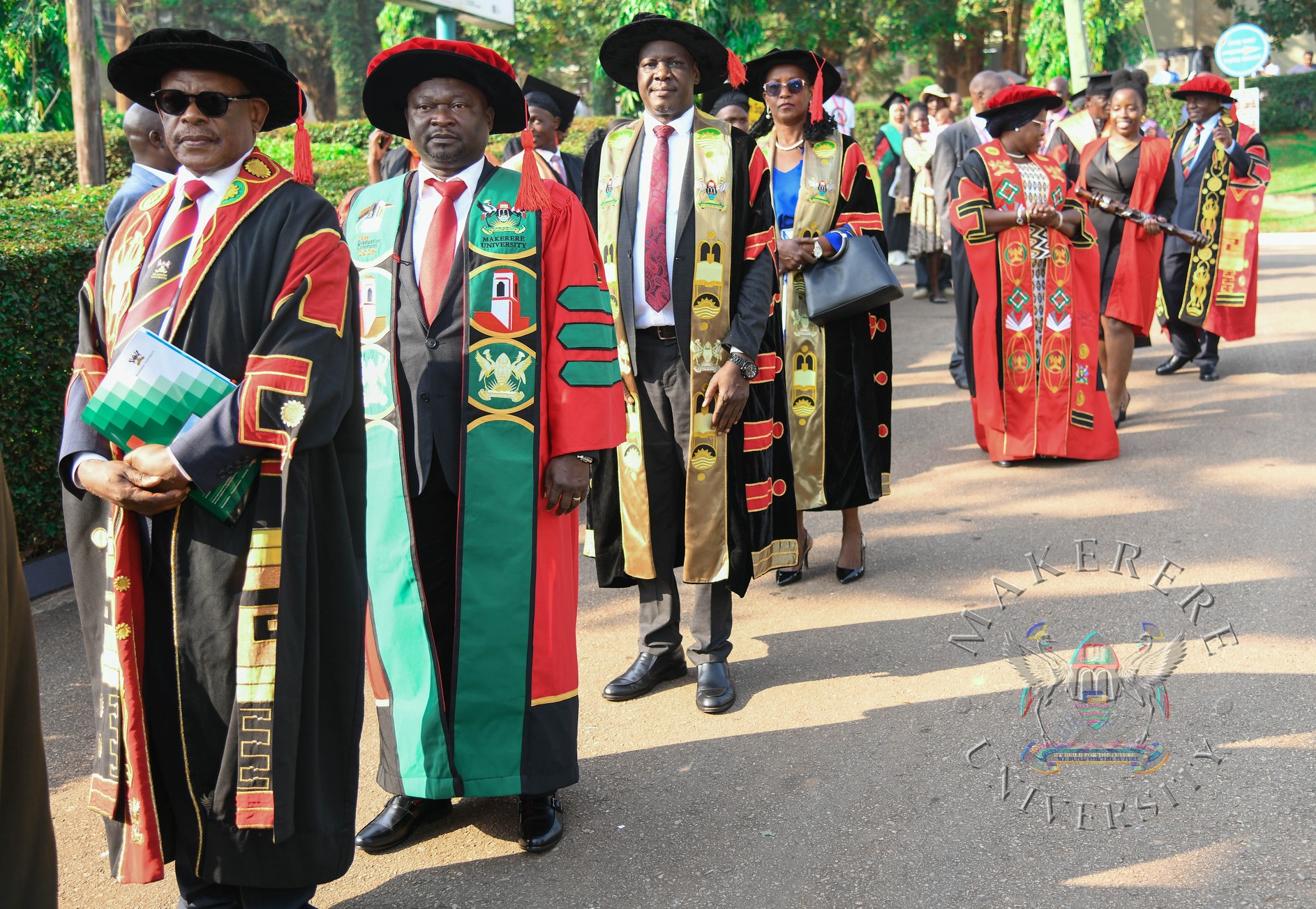
The Quality Assurance Directorate (QAD) on Thursday, 9th May 2019 held a breakfast meeting to update Members of the University Council and Management on the latest findings of the 5th Makerere University Self-Assessment exercise. Held at the Golden Tulip Hotel, the meeting was presided over by the Chairperson of Council Mrs. Lorna Magara, represented by the Vice Chairperson Rt. Hon. Daniel Fred Kidega. It was attended by the Vice Chancellor Prof. Barnabas Nawangwe, Deputy Vice Chancellor (Academic Affairs)-DVCAA Dr. Umar Kakumba, Deputy Vice Chancellor (Finance and Administration)-DVCFA Prof. William Bazeyo as well as Members of Management, Principals, Directors and Members of the University Administration. The breakfast was also graced by the Guild President, H.E. Kateregga Julius, Vice Guild President H.E. Judith Nalukwago and Hon. Ahmed Abdirahman the Academic Affairs Minister.
Addressing the meeting, the Director QAD Dr. Vincent Ssembatya shared that Self-Assessment is an important measure of institutional progress and a good precursor for future planning. “Self-Assessment is one of the exercises that the National Council for Higher Education (NCHE) expects Universities in Uganda to undertake and I am happy to report that Makerere has taken the lead.”

Some of the firsts in this year’s assessment include results from; Employer Expectation Surveys covering 100 institutions and corporate companies, Student Evaluation of Courses and Teaching (SECAT) obtained from over 300 class representatives and the proposal to adopt institutional performance targets in the run-up to the 100year celebrations in 2022.
In line with Internationalisation, Dr. Ssembatya pointed out the need to diversify conversion systems for International Applicants’ Qualifications to the Ugandan A-Level, Diploma and Mature Entry equivalents. This, he noted, would help attract more scholars; especially from countries that no longer offer the Advanced Level Education (S.5 and S.6), to Makerere. He also put forward the need to consider the resident tuition option as an incentive to attract short term students from leading universities worldwide.
Additionally, the presentation called for the need to strengthen the policy and support environments in line with institutional Internationalisation aspirations. Furthermore, the proposal to offer honorary professorships to academics from long-term partnering institutions was tabled as a way of further diversifying the composition of teaching staff.

On the teaching front, Dr. Ssembatya was happy to report that the University had with the construction of Central Teaching Facilities 1 and 2 met all its teaching space needs. He also called for the need to diversify the current offering of professional courses.
“It is on record that we are producing a large number of Bachelor of Commerce graduates. Makerere should now consider introducing the Master of Commerce in addition to the Master of Business Administration as an alternative for our professionals,” explained Dr. Ssembatya.
Responding to the presentation, the Vice Chancellor, Prof. Barnabas Nawangwe observed that Self-Assessment is an important activity undertaken by QAD to help keep University operations on course. He therefore thanked the Directorate of the great job done and Vice Chairperson of Council-Rt. Hon. Daniel Fred Kidega for making the breakfast a priority on his schedule.

“We however need to extract the data for each college and share it with the respective leadership,” observed the Vice Chancellor in his reaction. “The assessment should also incorporate a comparison of Makerere’s colleges with peers in the region and Africa, so that we can rank our various disciplines” he added.
“Global trends reveal that research and publication is directly proportional to economic development of any nation. Therefore as we work towards increasing our population of graduate students, we shall improve our research and publications output, and thereby ably contribute to economic development of our nation. In this regard, we thank the Government for allocating UGX30billion in the next financial year to fund research at Makerere.”
In his remarks, the DVCAA Dr. Umar Kakumba thanked QAD for providing snapshot of institution’s health. “Institutions are living organisms; they need to be well nourished and taken care of otherwise they will get bedridden and eventually die. This is therefore a very important exercise.”

In line with improving enrolment especially at graduate level, the DVCAA urged colleges to submit proposals to the University Senate that allow them to run programmes on weekends and other periods that are more favourable for the working class.
“The College of Business and Management Sciences (CoBAMS) was the first unit to offer the block week modular release arrangement for the Master of Arts in Public Administration and Management (MAPAM). This can be emulated and adopted by other units” advised the DVCAA.
Dr. Kakumba further urged colleges to take advantage of their respective Centres of Excellence. “Our Centres of Excellence are of diverse origin and give the University strong latitude on Internationalisation, especially with regard to recruitment of staff and students.”

The DVCFA Prof. William Bazeyo on his part lauded Dr. Ssembatya for emphasising the need for diversification, adding that this should also be extended to finances, “because colleges have a huge potential to partner with corporate companies and other agencies to fund their initiatives.”
He urged Principals to work with their staff to quantify all their research, outreach as well as knowledge translation and transfer activities. Quantification, he said, would enable Makerere to meaningfully engage with all prospective partners.
“As leaders, we should also increase our physical engagement with the industry and other partners. Regular engagement opens more doors for our students to undertake internships in these organisations and keeps our graduates relevant to market demands” summed up Prof. Bazeyo.

“As Vice Chairperson of Council and Chair of the Quality Assurance, Gender and ICT Committee, I am immensely proud that this intense Self-Assessment exercise has been undertaken by the small team at the Quality Assurance Directorate. Thank you very much and congratulations!” remarked Rt. Hon. Kidega as he commenced the concluding address.
He noted that quality assurance is a very important aspect of any institution and thanked the Management, Staff and Student Leadership present for their contributions to the self-assessment discussion. “It was so refreshing to hear Makerere University’s contribution to National Development and I believe that the story of our research conversations and concern for country needs to be told more often!”
Rt. Hon. Kidega reiterated that research need not just be scholarly but ought to positively touch the population. He therefore urged the university leadership and researchers to always correlate their activities with the National Planning Agenda and Uganda Vision 2040.

He paid tribute to the outgoing 84th Guild led by H.E. Papa Were Salim for promoting a peaceful environment as the Council transitioned from the old to the current leadership. He thanked the 85th Guild President, H.E. Kateregga Julius and Members of his Cabinet for attending the Self-Assessment exercise despite the busy exam period, adding that he looked forward to a special engagement with the new Guild leadership.
“We come with a lot of humility to work with you. All the solutions to challenges faced by this University reside within us. On behalf of the University Council, I pledge to work with the University Management so that together, we make Makerere a better University” concluded Rt. Hon. Kidega.
Article by Public Relations Office


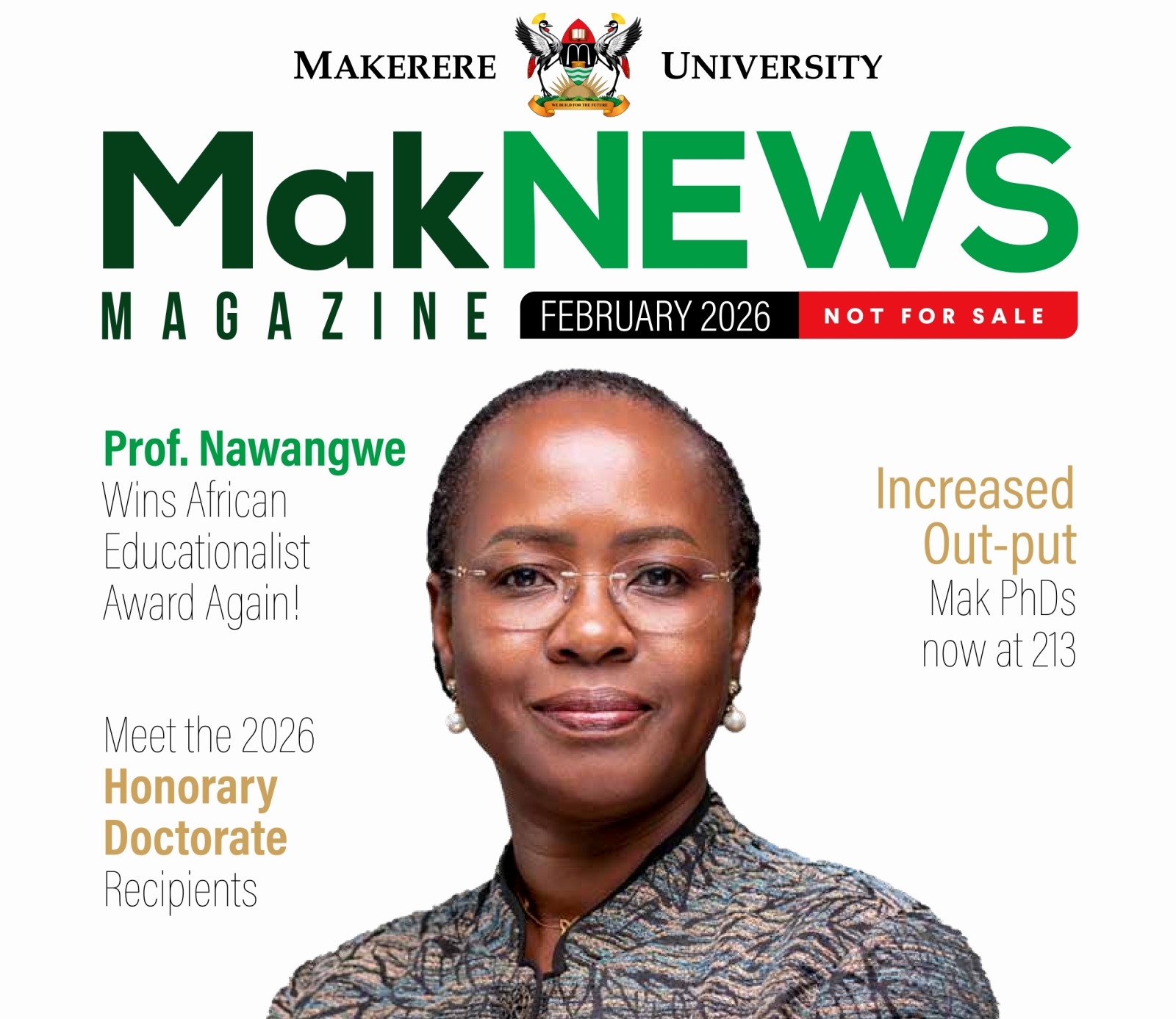

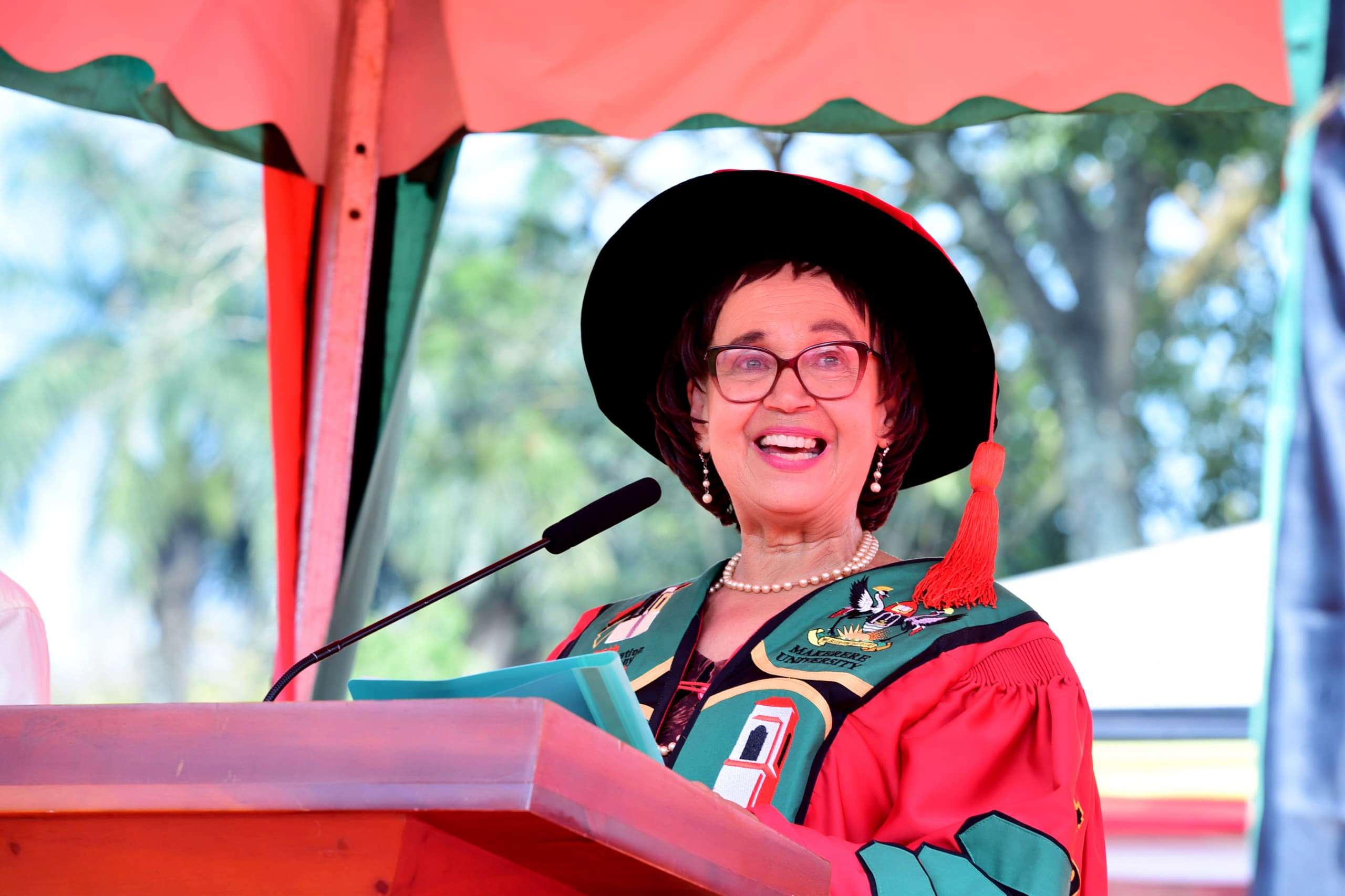
The Board Chairperson of the Makerere University Endowment Fund (MakEF), Dr. Margaret Blick Kigozi, has urged graduands in Health and Life Sciences to uphold professional ethics and serve humanity with diligence and compassion.
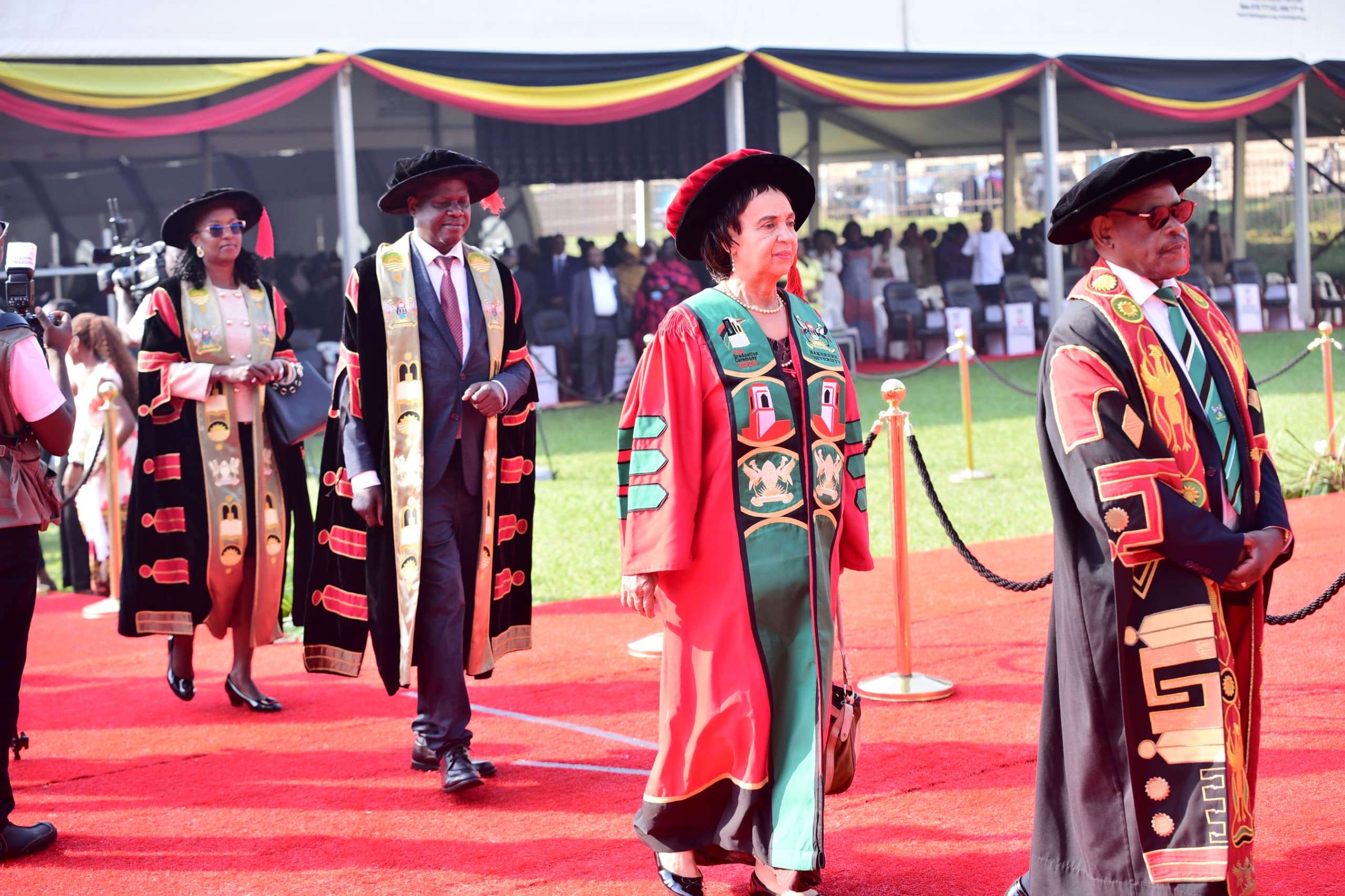
Her appeal came during the passing out of graduates from the College of Natural Sciences (CoNAS), the College of Veterinary Medicine, Animal Resources and Bio-Security (CoVAB), the College of Health Sciences (CHS) and the School of Public Health (SPH) on Day Two of the 76th Graduation Ceremony of Makerere University.
“Class of 2026, you are now part of the Makerere legacy. Wherever you go clinics, laboratories, farms, boardrooms, or classrooms, you carry this institution with you. Serve your patients with skill and compassion. Care for animals and communities responsibly. Question boldly and keep learning,” Dr Kigozi, said.
Delivering the commencement address, Dr. Kigozi lauded the graduates for their dedication to careers that directly impact lives and communities. She encouraged them to use their knowledge generously and exercise their power gently.
“Your education has trained you to ask better questions. Your humanity must guide the answers. Never forget that behind every chart, every case, every animal, every experiment, there is life. And life deserves care, patience, and dignity. Give every person you come in contact with care, patience and dignity,” Dr Kigozi, noted.
As the graduates embark on their professional journeys, Dr. Kigozi emphasized the importance of cultivating basic business acumen and financial literacy to ensure sustainability in their work.
“You do not need to become accountants but you must be able to read the essentials: understand simple financial statements, budgets and key metrics so you can judge whether a clinic, lab, or program is sustainable. You are encouraged to start your business. There are numerous investment opportunities in your areas of training. You can provide services to our people and create jobs,” Dr Kigozi, said.
She shared candidly how, when she first stepped into leadership, she realised she did not understand balance sheets or budgets well enough. So, she returned to Makerere for short courses to strengthen herself.
“A well-run Hospital, clinic or lab delivers better outcomes, attracts staff, and secures funding. Business savvy is not only about profit, it’s about sustainability and the freedom to serve ethically and effectively. Carry clinical skill with business sense so your work endures and grows,” Dr. Kigozi, noted.
Quoting renowned writer and producer Shonda Rhimes, creator of Grey’s Anatomy, who once reflected that succeeding in one area of life can sometimes mean falling short in another, Dr. Kigozi encouraged women graduates to intentionally balance professional ambition with family responsibilities.
“When one area thrives, another is often under strain. When Navio was graduating from school I had to manage the Presidential Investor Round Table on the same day as Executive Director Uganda Investment Authority. I chose my job and delegated his siblings to attend Navios graduation. I learnt from this. I choose family always after that thing you achieve once and keep forever,” Dr Kigozi, said.
In his speech, the Prof Barnabas Nawangwe, the Vice Chancellor, informed the congregation that Makerere’s ranking on all university ranking platforms has remained stable, placing Makerere among the top 10 African universities and within the top 4.5% globally.
“In the Times Higher Education global ranking, Makerere University made a formidable jump from the 1200-1500 bracket to the 800-1000 bracket. This was no mean achievement and I congratulate all members of the Makerere Community on this stellar performance,” Prof Nawangwe, said.
-
 Humanities & Social Sciences5 days ago
Meet Najjuka Whitney, The Girl Who Missed Law and Found Her Voice
-
 Health1 week ago
Uganda has until 2030 to end Open Defecation as Ntaro’s PhD Examines Kabale’s Progress
-
 Agriculture & Environment1 week ago
Uganda Martyrs Namugongo Students Turn Organic Waste into Soap in an Innovative School Project on Sustainable Waste Management
-
 General4 days ago
76th Graduation Highlights
-
 General1 week ago
Mastercard Foundation Scholars embrace and honour their rich cultural diversity