
General
Mak female staff trained on gender and leadership

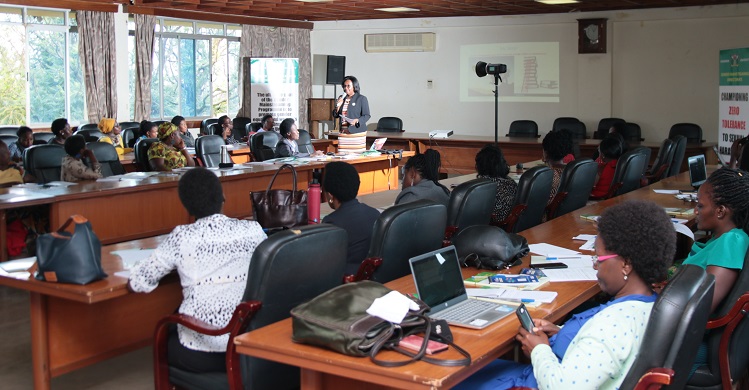
Makerere University female staff have been urged to actively participate in the leadership activities of the institution. This was at the Gender and Leadership training; held on 7th May 2019, in the Upper Senate Conference Hall, Makerere University. According to Dr. Rhoda Wanyenze, the Dean School of Public Health- Makerere University, there is need for both female Administrative and Academic staff to access and actively participate in the decision-making processes if they are to realize gender equity at Makerere University.
“We cannot blame the University leadership for making decisions that are not gender responsive when we have failed to take up the mantle and be part of the leadership team and processes. It is high time we left our comfortable zones and became active leaders. We don’t need to wait until we hold positons to exercise our leadership roles. We are potential and true leaders already,” she said.

In a presentation on Women and leadership of Makerere university: challenges and opportunities, Dr. Wanyenze called for the development of a collaborative framework that will enable female Administrative and Academic staff understand their leadership rights, build their leadership potential and support their leadership journey.
“We need to join efforts in this struggle, have one voice and prepare ourselves for the big role. We must learn to overcome the challenges, understand how to balance both the family roles and professional roles. Above all, we need to be ready, acquire the necessary skills, have support and this can be achieved through a collaborative measure,” she said.
The leadership training on Gender and Leadership was organized by Makerere University Gender Mainstreaming Directorate. Sponsored by School of Women and Gender Studies under the SIDA 2391 Gender Mainstreaming Project, the training aimed at generating a critical mass of female Administrative and Academic staff as potential leaders in Makerere University by enhancing their academic, administrative and leadership skills.

According to the Director of Gender and Mainstreaming Dr. Euzobia Mugisha M. Baine, despite the fact that Makerere University has a well-established School of Women and Gender Studies and the Gender Mainstreaming Directorate, the institution is still finding it hard to bridge the ever widening gender gap in leadership. Dr. Baine noted that there is poor representation of female Administrative and Academic staff in the institution’s top leadership and this has equally affected their interests when it comes to decision-making.
The Deputy Director of Gender and Mainstreaming Ms. Frances Nyachwo, presented the current gendered leadership statistics at Makerere University. “Currently the proportion of female teaching Staff University-wide is 29%, and men 71%. Out of the 16 Central Management position women occupy only 3 positions, in the Top Management positions women occupy 3 positions out of 26, and for the position of School Deans, 3 out of 29 are women” she said.

In 2004, Makerere University Commissioned a study on the Situation Analysis on the Gender Terrain at Makerere University. This study established that female Administrative and Academic staff were underrepresented in top leadership and decision making of the academic and administrative levels. The main reason was that female Administrative and Academic staff lacked requisite academic qualifications to compete for these positions. In addition, the study also confirmed that challenges of balancing family and work responsibilities, within a patriarchal institution hindered women’s career progression.
The training on gender and leadership was attended by Makerere University senior female staff. The one-day non-residential training equipped participants with various skills and techniques on leadership development Makerere University.
Discussing the need to change the leadership terrain of Makerere University, Associate Professor Consolota Kabonesa, the Principal Investigator of SIDA 2391 Gender Mainstreaming Project at School of Women and Gender Studies highlighted the need to change the gender profile in leadership especially in top leadership positions to reflect equity.

“We should transform our lives and society if we are to create a gender-fair Makerere. We have to be activity oriented and differentiate leadership from authority and have a sense of developing others” said Dr. Kabonesa.
During the interactive session that was chaired by Mr. Eric Tumwesigye a Senior Gender Officer and Ms. Suzan Mbabazi a Principal Gender Officer, participants developed the action points. Among the points included;
• Strengthen the Affirmative Action Programmes
• Recognise women as an essential resource-base at the University
• Create a gender advocacy group to lobby for the increase of more women in leadership at the University
• Establish a colloquium to discuss gender and leadership topics
• Create a Makerere University women empowerment platform.
Article by Nabatte Proscovia, Mak Public Relations office



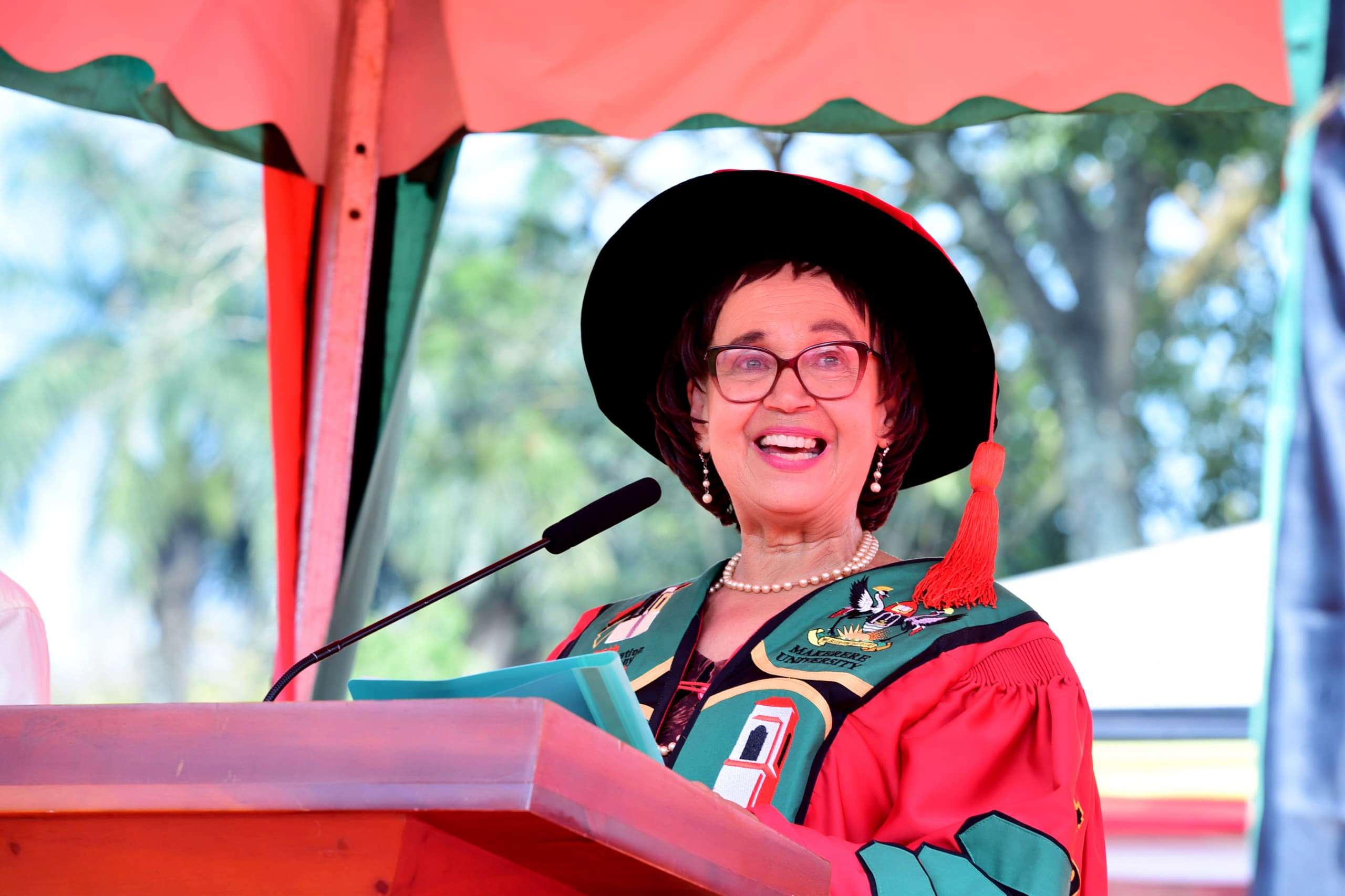
The Board Chairperson of the Makerere University Endowment Fund (MakEF), Dr. Margaret Blick Kigozi, has urged graduands in Health and Life Sciences to uphold professional ethics and serve humanity with diligence and compassion.
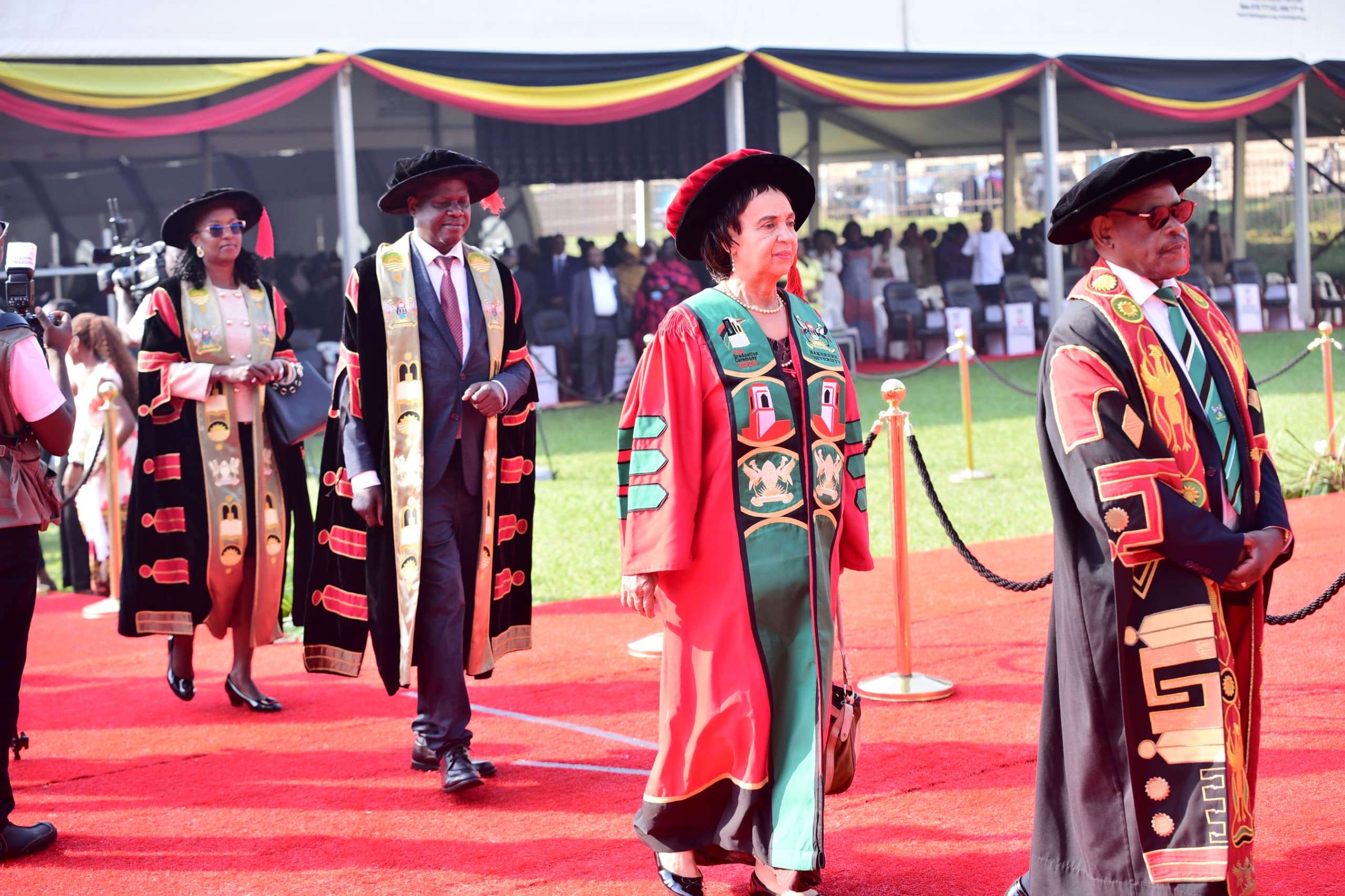
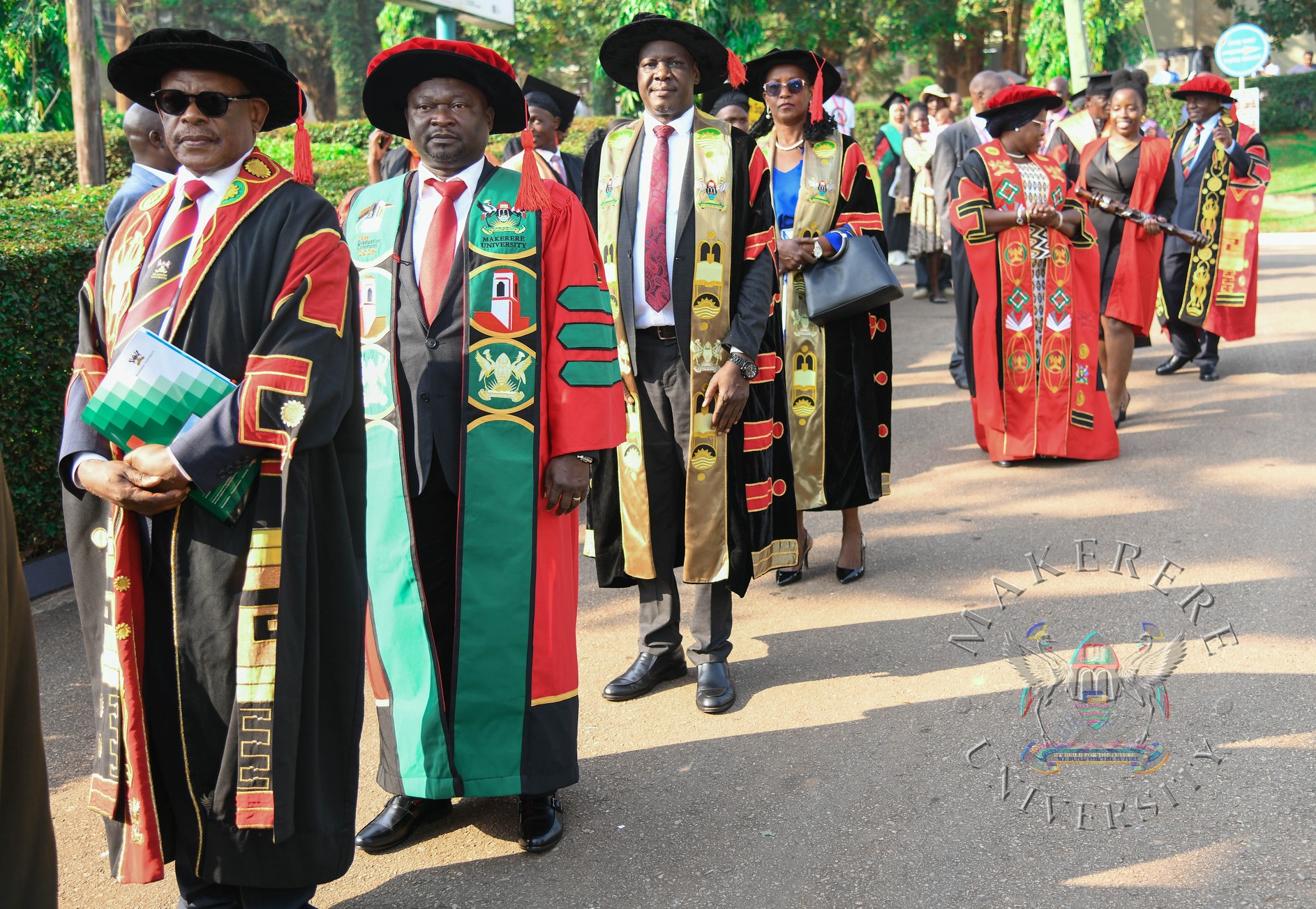
Her appeal came during the passing out of graduates from the College of Natural Sciences (CoNAS), the College of Veterinary Medicine, Animal Resources and Bio-Security (CoVAB), the College of Health Sciences (CHS) and the School of Public Health (SPH) on Day Two of the 76th Graduation Ceremony of Makerere University.
“Class of 2026, you are now part of the Makerere legacy. Wherever you go clinics, laboratories, farms, boardrooms, or classrooms, you carry this institution with you. Serve your patients with skill and compassion. Care for animals and communities responsibly. Question boldly and keep learning,” Dr Kigozi, said.
Delivering the commencement address, Dr. Kigozi lauded the graduates for their dedication to careers that directly impact lives and communities. She encouraged them to use their knowledge generously and exercise their power gently.
“Your education has trained you to ask better questions. Your humanity must guide the answers. Never forget that behind every chart, every case, every animal, every experiment, there is life. And life deserves care, patience, and dignity. Give every person you come in contact with care, patience and dignity,” Dr Kigozi, noted.
As the graduates embark on their professional journeys, Dr. Kigozi emphasized the importance of cultivating basic business acumen and financial literacy to ensure sustainability in their work.
“You do not need to become accountants but you must be able to read the essentials: understand simple financial statements, budgets and key metrics so you can judge whether a clinic, lab, or program is sustainable. You are encouraged to start your business. There are numerous investment opportunities in your areas of training. You can provide services to our people and create jobs,” Dr Kigozi, said.
She shared candidly how, when she first stepped into leadership, she realised she did not understand balance sheets or budgets well enough. So, she returned to Makerere for short courses to strengthen herself.
“A well-run Hospital, clinic or lab delivers better outcomes, attracts staff, and secures funding. Business savvy is not only about profit, it’s about sustainability and the freedom to serve ethically and effectively. Carry clinical skill with business sense so your work endures and grows,” Dr. Kigozi, noted.
Quoting renowned writer and producer Shonda Rhimes, creator of Grey’s Anatomy, who once reflected that succeeding in one area of life can sometimes mean falling short in another, Dr. Kigozi encouraged women graduates to intentionally balance professional ambition with family responsibilities.
“When one area thrives, another is often under strain. When Navio was graduating from school I had to manage the Presidential Investor Round Table on the same day as Executive Director Uganda Investment Authority. I chose my job and delegated his siblings to attend Navios graduation. I learnt from this. I choose family always after that thing you achieve once and keep forever,” Dr Kigozi, said.
In his speech, the Prof Barnabas Nawangwe, the Vice Chancellor, informed the congregation that Makerere’s ranking on all university ranking platforms has remained stable, placing Makerere among the top 10 African universities and within the top 4.5% globally.
“In the Times Higher Education global ranking, Makerere University made a formidable jump from the 1200-1500 bracket to the 800-1000 bracket. This was no mean achievement and I congratulate all members of the Makerere Community on this stellar performance,” Prof Nawangwe, said.
-
 Humanities & Social Sciences5 days ago
Meet Najjuka Whitney, The Girl Who Missed Law and Found Her Voice
-

 Health1 week ago
Uganda has until 2030 to end Open Defecation as Ntaro’s PhD Examines Kabale’s Progress
-
 Agriculture & Environment1 week ago
Uganda Martyrs Namugongo Students Turn Organic Waste into Soap in an Innovative School Project on Sustainable Waste Management
-
 General4 days ago
76th Graduation Highlights
-

 General1 week ago
Mastercard Foundation Scholars embrace and honour their rich cultural diversity