Connect with us

General

Directorate of Graduate Training concludes 9-day Phd Cross Cutting Training

Published

on

By: Moses Lutaaya

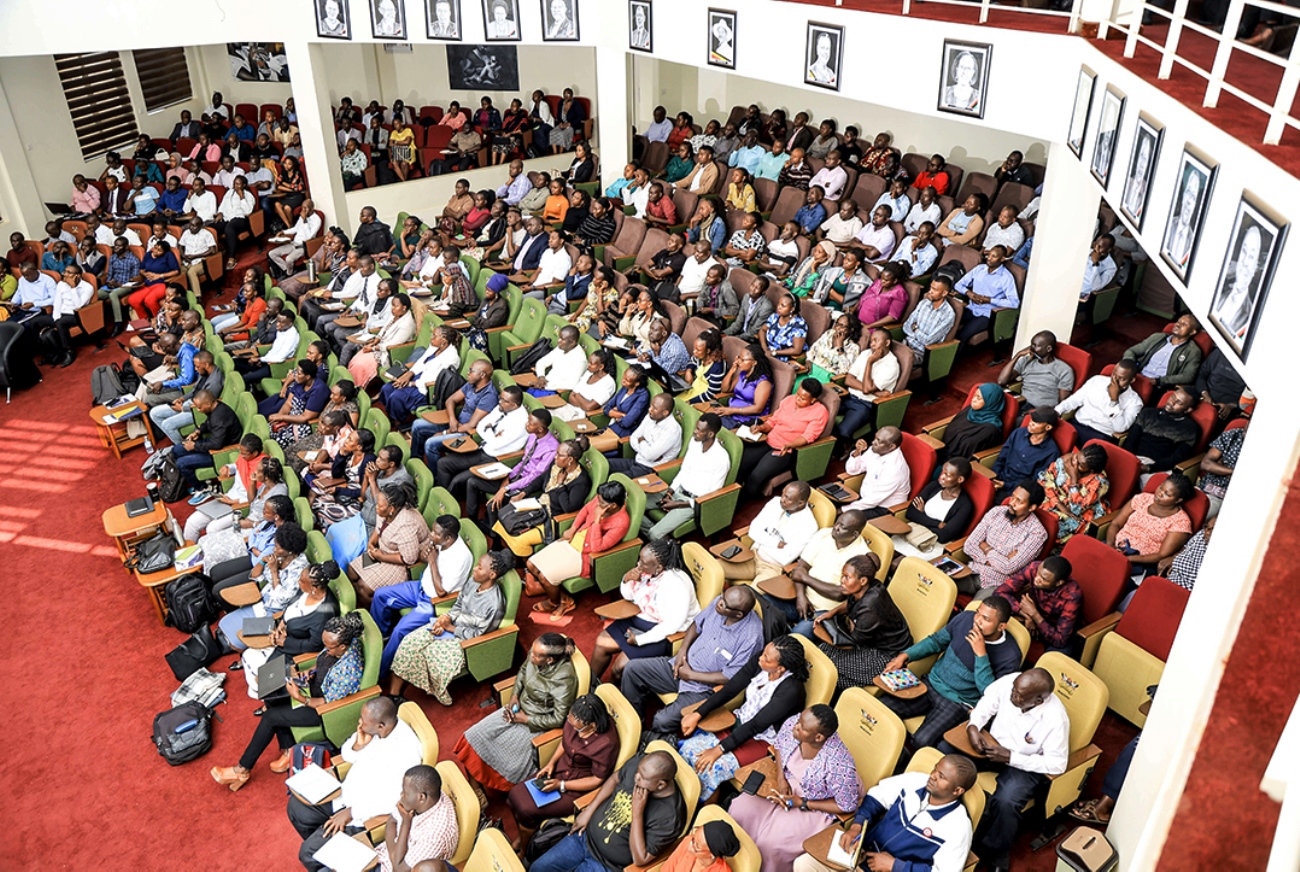
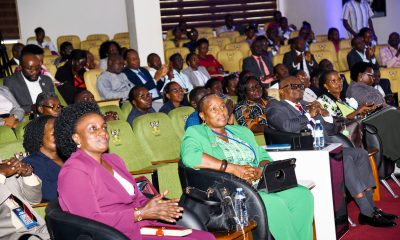
The Directorate of Graduate Training has completed a 9- day PhD crosscutting training course, inducting three groups of PhD students. The groups of students included those in Cohort 1, Cohort 2 and the Non Cohort PhD students. The number of PhD student participants were over 300 students learning via both face to face and online.

The training that started on Monday 2nd June 2025, took place in the New Library Building.

In his closing remarks, the Director of Graduate Training Prof. Julius Kikooma encouraged the PhD students to put up a spirited fight that would see them remain in the cohort up to the end of the three years of their doctoral studies.

“Get organized, show seriousness in your doctoral pursuit, stay together, make use of your supervisors as and when you need them. We will fully support you in your Doctoral academic journey.” Prof. Kikooma said.

Prof. Kikooma emphasized the need for PhD graduate training saying, “We need more research for the University and Country. This cannot be achieved without increasing the number of graduate students especially PhDs.”

At their different stages of PhD doctoral training, Prof. Kikooma encouraged the students to give feedback to the Directorate and the supervisors so that they are served seamlessly.

Prof. Kikooma further informed the students that going forward, they must cover all the three mandatory cross cutting courses meant to be taught under the three-year program of their doctoral studies.

“All three foundation courses including Scholarly Writing, Advanced Research Methods and Philosophy of Methods will be covered. Tighten your belts. We want to ensure that all these structured programs prepare you for the foundations you need for next two years of research. Success becomes easy when you undertake foundations.”

He challenged the students to use the program in guiding their research directions, making informed decision, improving their critical thinking and consumption of knowledge.

Dr. Dixon Knanakulya, one of the trainers of the doctoral students said, “At PhD level, it is no longer a normal research. It is at a level of knowledge production. The students must understand the main philosophical assumption behind the research methods they use and they must consider the ethical implications of their research. Philosophy of Methods enables them to go through that.”

“PhD students must be creative, innovative and start at the level of researching in the mind. This challenges them to think differently.” He added.

He further said that Philosophy of Methods helps in researches done at the different aspects of the national development plan. “Usually, the students question how the National plans are come up with and support improvement of government policies.”

Dr. Kanakulya added that the research output can be used by government for improvement because it is done by highly skilled researchers. Adding, “They come with very good insights which can be taken on to improve implementation of government programs such as Emyoga and Parish Development Model (PDM).”

He further said that policies are not enough without the social conditions and mindset of the people, saying that PhD scholars can help government know the social conditions and apply policies better.

The Cohort 1 PhD students’ president Mr. Wanyakoko Ebiru Moses said, “This training is extremely important for each student under taking doctoral studies and without it, they cannot acquire the fundamental skills they need to become independent researchers.”

He added that with the knowledge acquired in the Philosophy of Methods training, they will focus on research that aims to resolve societal and community problems.

Dr. Robert Kakuru, the President of Makerere University Academic Staff Association said that Philosophy of Methods is an important pillar in the doctoral journey of every PhD student.

“The Course, Philosophy of Method provides a critical foundation and Philosophical grounding for research methods that doctoral students use to undertake their respective studies. The course further underlines other critical issues that graduate students ought to know, integrate, adopt or adapt in their doctoral journeys.” He said.

Dr. Jim Spire Ssentongo, a senior lecturer and coordinator of the training said, “Philosophy of Methods builds a mass of critical researchers who are able to look at the world not from a narrow point of view but a holistic and broad based sense of understanding reality.”

He added, “Students understand how they can imagine the world to be. They take into account assumptions which inform the methods of research used, how they conduct themselves during research and how they approach respondents during the research process. Such assumptions are laid bear in this training and it helps participants to understand the things they have always held at the back of their minds without deliberately knowing that these are the assumptions they hold and this is how they affect and influence studies.”  

Dr. Ssentongo further said that once PhD students are engaged in reality in its broadness with right assumptions, they are then better placed as researchers to investigate such realities and that whatever they investigate, be it related to the National Development Plan and National Development Initiatives like Emyoga and Parish Development Model. This training positions, them at a more critical level as researchers not only in terms of assumptions but also being thinkers.

The Philosophy of Methods training was supported by the ICARTA – Institutionalization of Advanced Research Training in Africa, a NORHED II Project at Makerere University.

Mak Editor

Continue Reading

General

National Merit Scholarship Undergraduate Admission List 2026/2027

Published

on

University Road. Photo taken on 1st April 2026.

The Office of the Academic Registrar, Makerere University has released admission lists for Government sponsored students for the Academic Year 2025/2026. The Office has also released Cut Off Points for Government Admissions.

Below are lists of candidates admitted to the respective courses tenable at Makerere University and Makerere University Business School:

Mak Editor

Continue Reading

General

Makerere University Inaugurates 2nd Health User Committee

Published

on

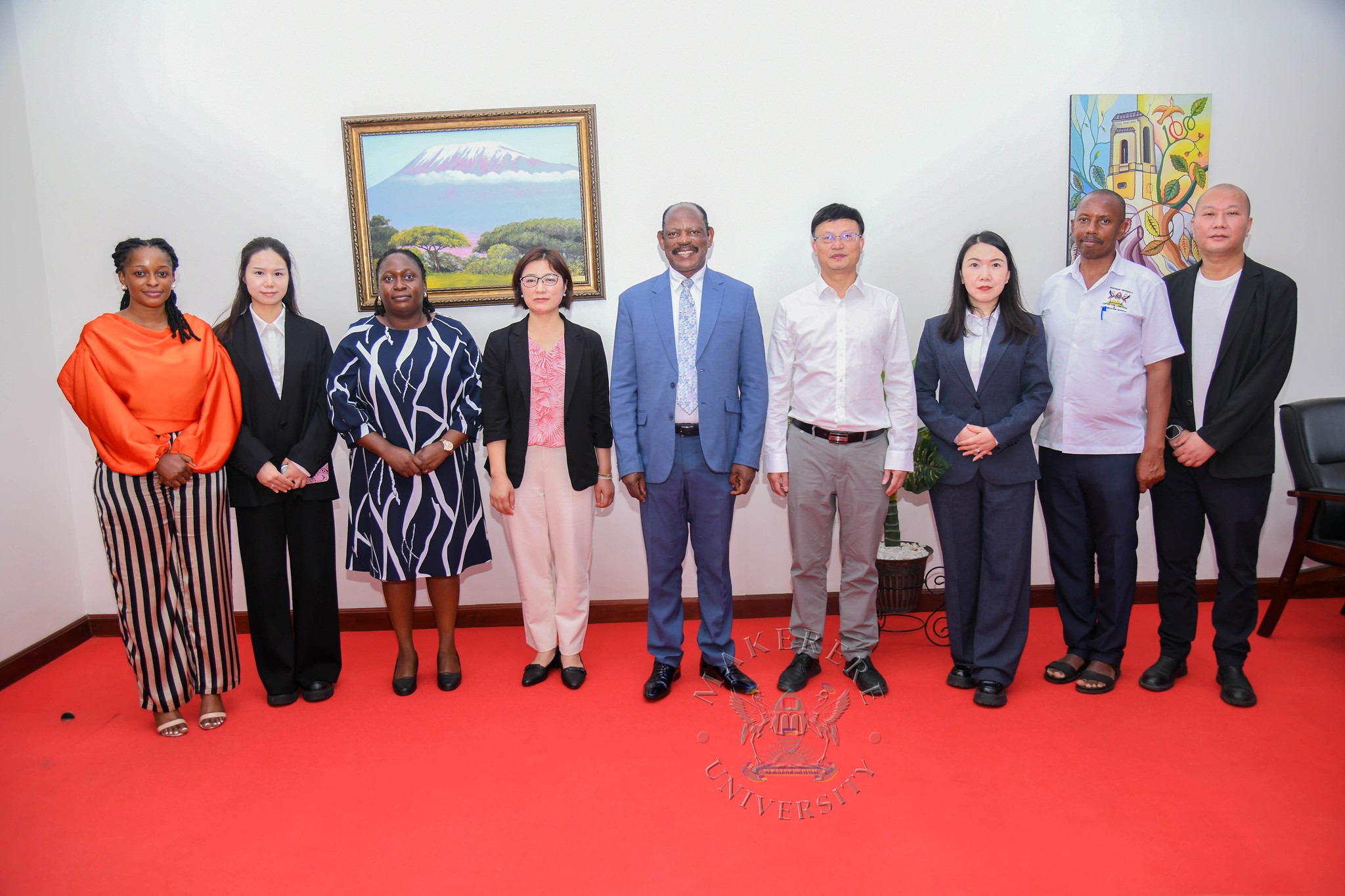
Prof. Barnabas Nawangwe (C) with L-R: Ms. Kevin Nabiryo, Mr. Godfrey Othieno, Dr. Allen Kabagenyi, Dr. Daniel Ruhweza, Dr. Lillian Tukahirwa and Prof. Josaphat Byamugisha after the inauguration on 20th April 2026. Vice Chancellor, Prof. Barnabas Nawangwe inaugurates Second Makerere University Health User Committee (Mak-HUC) chaired by Dr. Allen Kabagenyi, 20th April 2026, Main Building, Kampala Uganda, East Africa.

The Vice Chancellor, Prof. Barnabas Nawangwe on 20th April 2026 inaugurated the Second Makerere University Health User Committee (Mak-HUC). The Committee was established by the Vice Chancellor in 2022 as part of his strategic mandate to strengthen and oversee the University Hospital services delivery.

Chaired by Dr. Allen Kabagenyi from the College of Business and Management Sciences (CoBAMS), Mak-HUC has as its members; Prof. Josaphat K. Byamugisha-Director Makerere University Health Services (MakHS) and Dr. Daniel Ronald Ruhweza-Department of Law and Jurisprudence, School of Law.

Other members include; Dr. Arthur Kwizera-Department of Anaesthesia and Critical Care, College of Health Sciences (CHS) and Makerere University Academic Staff Association (MUASA) Representative, Dr. Lillian Tukahirwa-Makerere University Administrative Staff Association (MASA) Representative, Mr. Godfrey Othieno- National Union of Educational Institutions (NUEI) Representative, and as Secretariat, Ms. Kevin M. Nabiryo-Directorate of Human Resources.

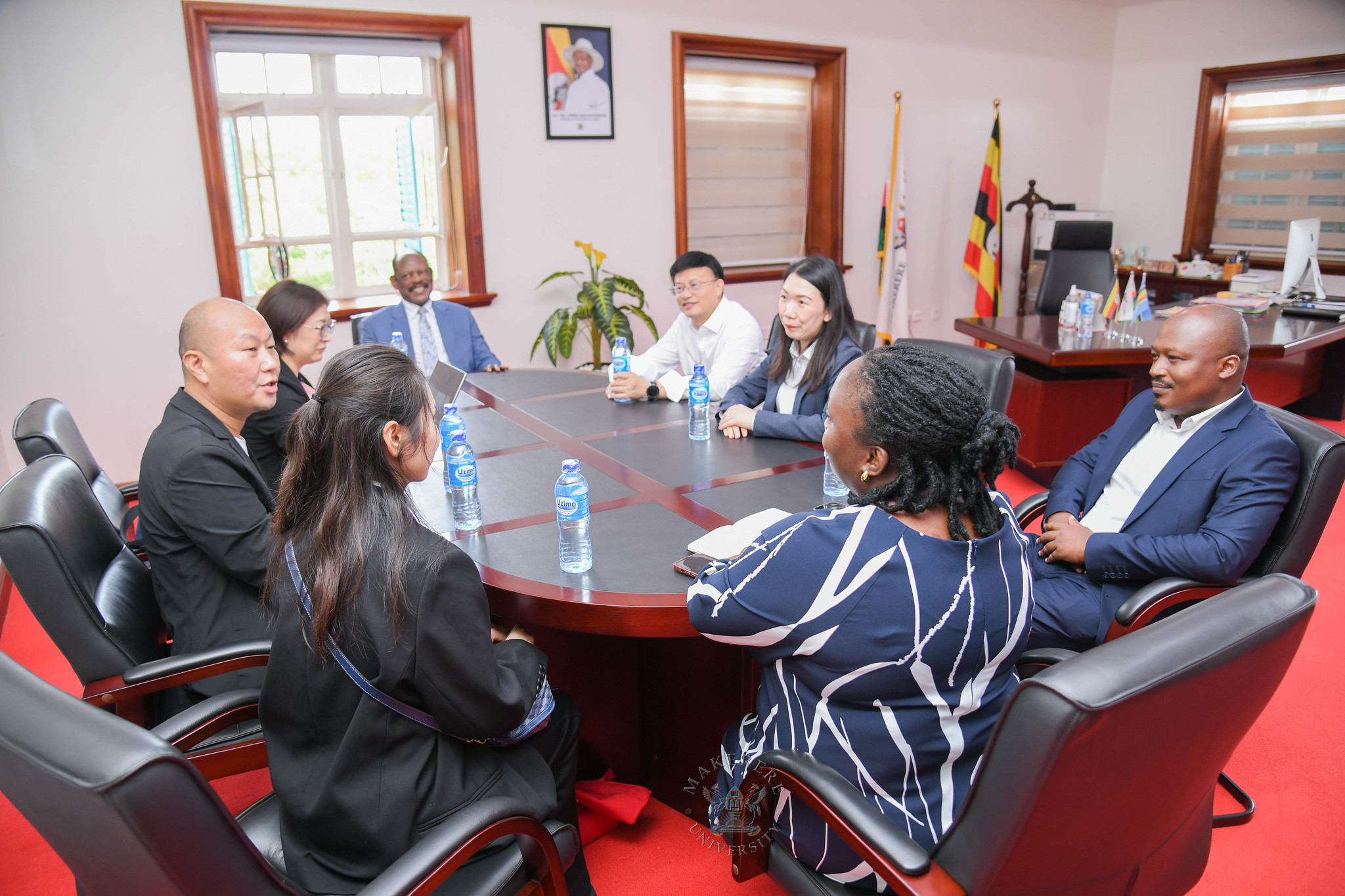
Vice Chancellor, Prof. Barnabas Nawangwe inaugurates Second Makerere University Health User Committee (Mak-HUC) chaired by Dr. Allen Kabagenyi, 20th April 2026, Main Building, Kampala Uganda, East Africa.
Prof. Barnabas Nawangwe (C) interacts with members of the 2nd Mak-HUC.

The 2nd Mak-HUC has been appointed for a period of four years effective 1st January 2026 with a mandate to: Guide, monitor and oversee delivery of health services by MakHS; Represent the interests and concerns of staff and students that use MakHS; Advise on alignment with sustainable health financing and insurance models; Strengthen systems for fraud prevention, digital transformation and access to specialized treatment, among other responsibilities.

The 1st Mak-HUC was chaired by Dr. Allen Kabagenyi and had as members; Prof. Josaphat Byamugisha, Dr. Fred Mayambala, Dr. Zahara Nampewo, Mr. Othieno Godfrey, Mr. Apunyo Paul Okiria and Ms. Ikiriza Racheal. Milestones during the first era included; Outpatient Department visits growth from 4,802 (2022) to 7,388 (Nov 2025) for staff and 14,641 (2022) to 19,069 (Nov 2025) for students.

Others milestones included; Commissioning of a fully equipped Operating Theatre, Establishment of a modern Imaging Hub, Development of a fully functional Audiology Unit, Expansion of the Temporal Bone Laboratory, Launch of the Olink Proteomics Platform and Enhancement of the Dental Unit with 32 dental chairs and experienced personnel.

Related article: https://news.mak.ac.ug/2025/12/three-years-of-impact-makerere-university-health-user-committee-presents-status-report/

Mak Editor

Continue Reading

General

Makerere University Employment Opportunities: Academic, Administrative and Support Staff

Published

on

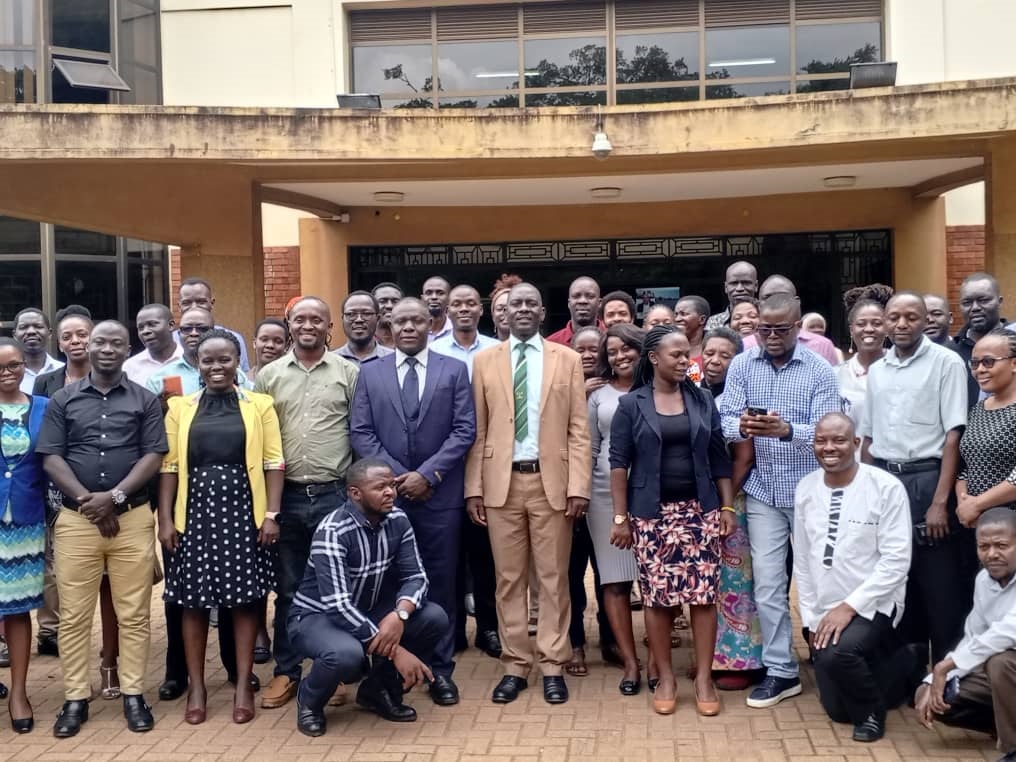
Participants pose for a group photo on Day Two of the staff induction ceremony for new recruits on 16th May 2025. Makerere University day two of induction exercise spearheaded by the Directorate of Human Resources for newly appointed staff, whose tenures commenced in the 2024/2025 financial year, 16th May 2025, School of Public Health (MakSPH) Auditorium, Kampala Uganda, East Africa.

Makerere University invites applications from suitably qualified candidates for various academic, administrative, and support staff positions.

Detailed job profiles and the application link can be found at:
http://ehrms.mak.ac.ug/recruitment/jobs.

All applications must be submitted electronically via the Makerere University Electronic Human
Resource Management System through the above link (ehrms). Applicants will be required to
provide the necessary information on the ehrms and attach the following documents:

  1. An application letter clearly stating the job applied for and duly signed by the applicant.
  2. An up-to-date curriculum vitae. The curriculum must also state the names and addresses of
    at least three referees.
  3. Copies of academic certificates and transcripts.
  4. A minimum of three recommendation letters duly signed by the referees.

The application should be addressed to:

The Chief Human Resource Officer
Makerere University
P.O. Box 7062
Kampala

Closing Date: 04th May 2026, 17:00HRS E.A.T

Mak Editor

Continue Reading

Trending