
General
Makerere University officially commences implementation of its Mentorship Policy

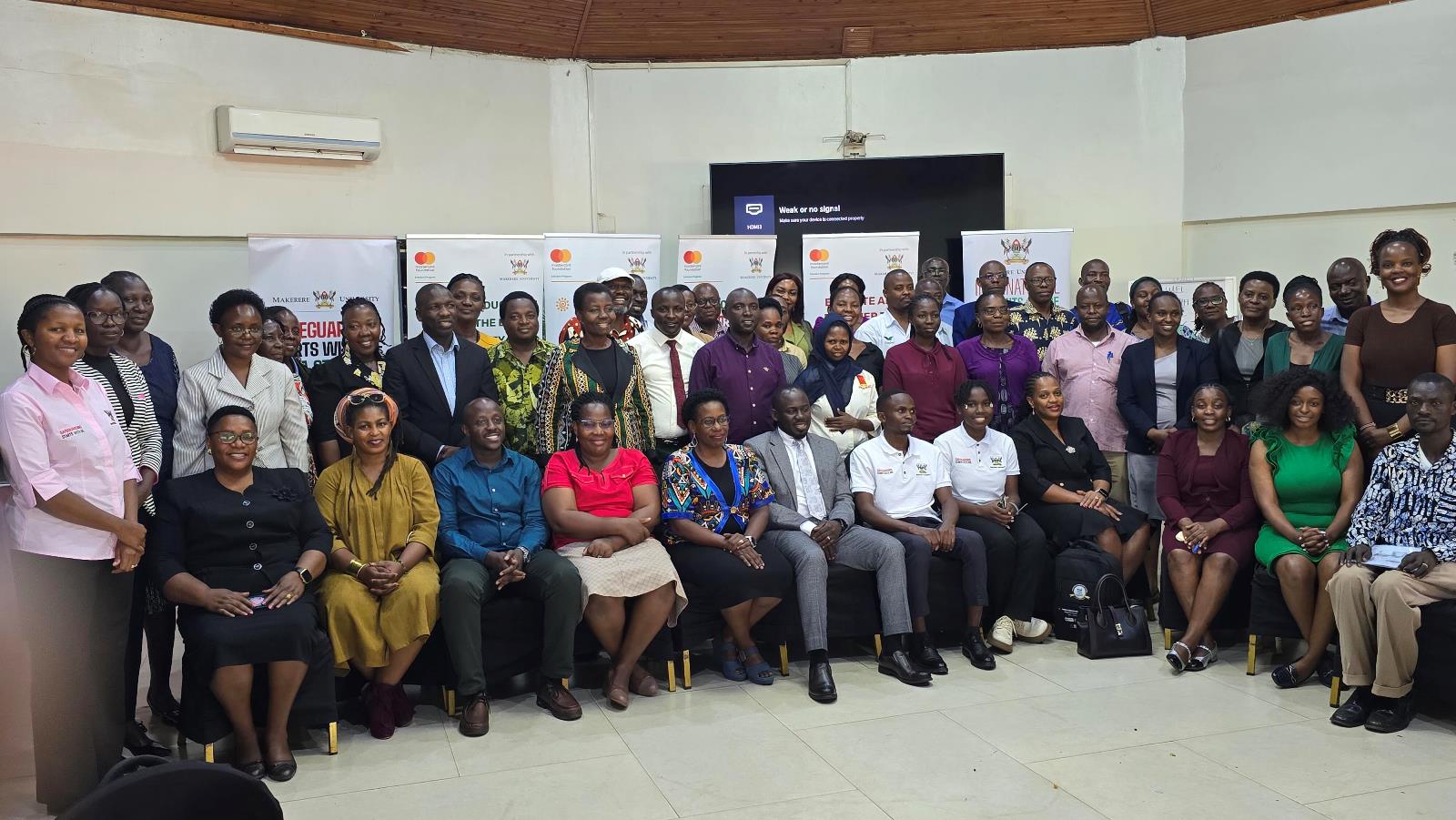
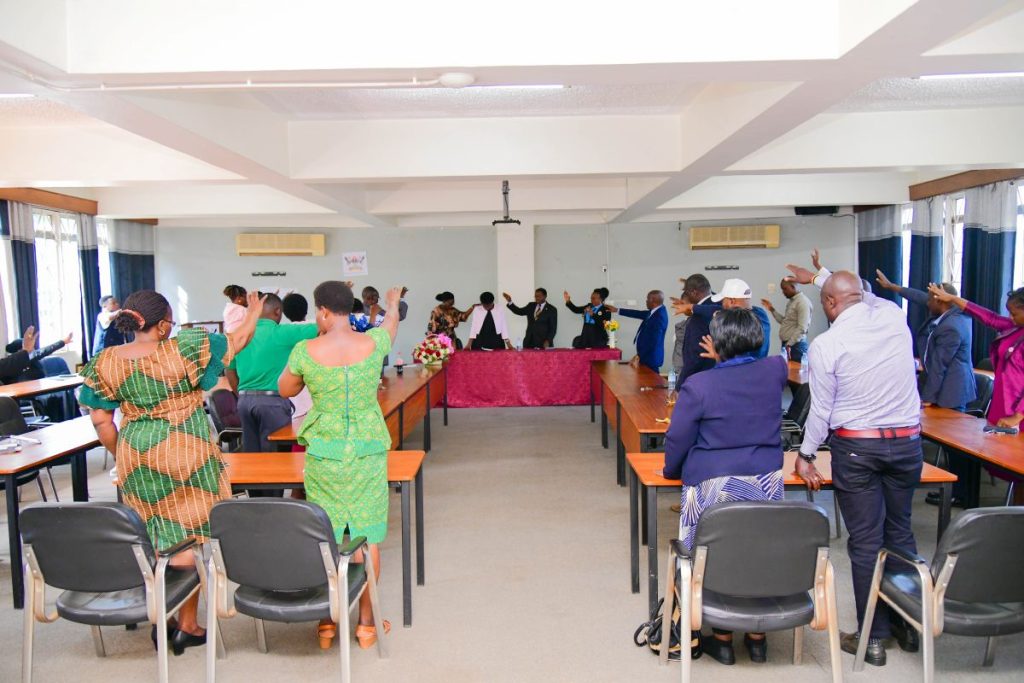
Makerere University has made a notable advance by officially launching the implementation of its Mentorship Policy. This initiative aims to strengthen support and guidance for students, fostering personal and academic growth within the university community. This was announced on Thursday, 13 November 2025, by Prof. Sarah Ssali, the Deputy Vice-Chancellor of Academic Affairs, in her remarks delivered by the Dean of Students, Dr. Winfred Kabumbuli, during the annual workshop for mentors of the Mastercard Foundation Scholars Program, held at the Fairway Hotel.
Prof. Ssali praised the university’s mentors for their outstanding work in supporting students.
“I am pleased to join my fellow mentors at this crucial capacity-building workshop organised under the Mastercard Foundation Scholars Program at Makerere University. It is important to recognise and commend your unwavering dedication to the holistic development of our Scholars. Your roles in mentorship, safeguarding, and fostering inclusion are essential, and together, we must continue to advance these efforts for the benefit of our Scholars,” asserted Prof. Ssali.
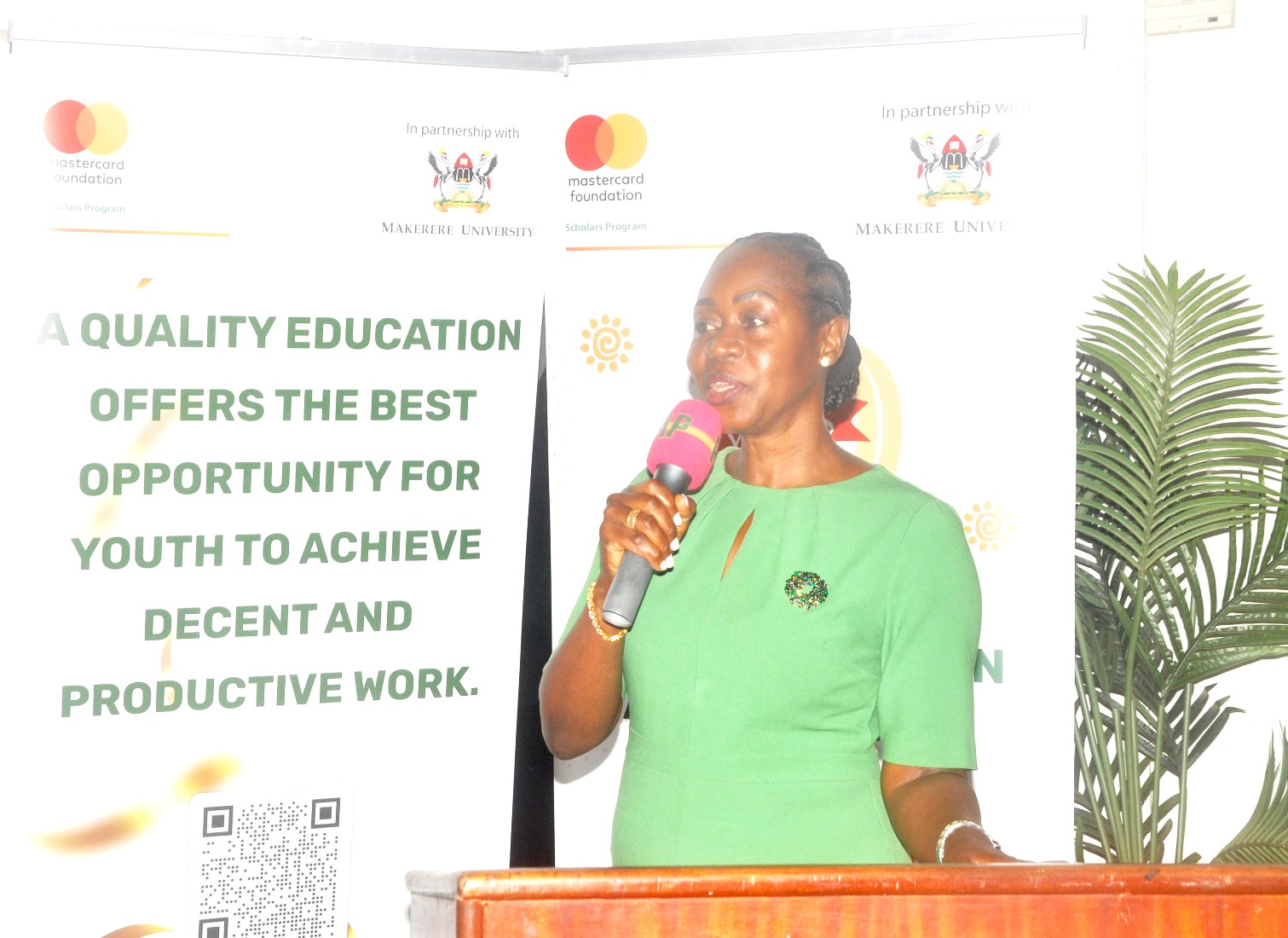
Prof. Ssali expressed her enthusiasm, noting that mentorship closely aligns with the shared mission: ensuring that all Makerere University students feel safe, thrive, and achieve their academic and personal goals.
“Our efforts in student affairs are incomplete unless we provide our students with the mentorship, guidance, and support they need to develop into responsible global citizens. Safeguarding, mentorship, and inclusion are not just programmatic themes; they are values that define the Makerere University community we seek to build,” Prof. Ssali remarked.
Prof. Ssali further praised the University Council and Management for adopting key policies, the Mentorship Policy 2025 and the Safeguarding Policy 2024, which are essential for the well-being of students and staff at Makerere University.
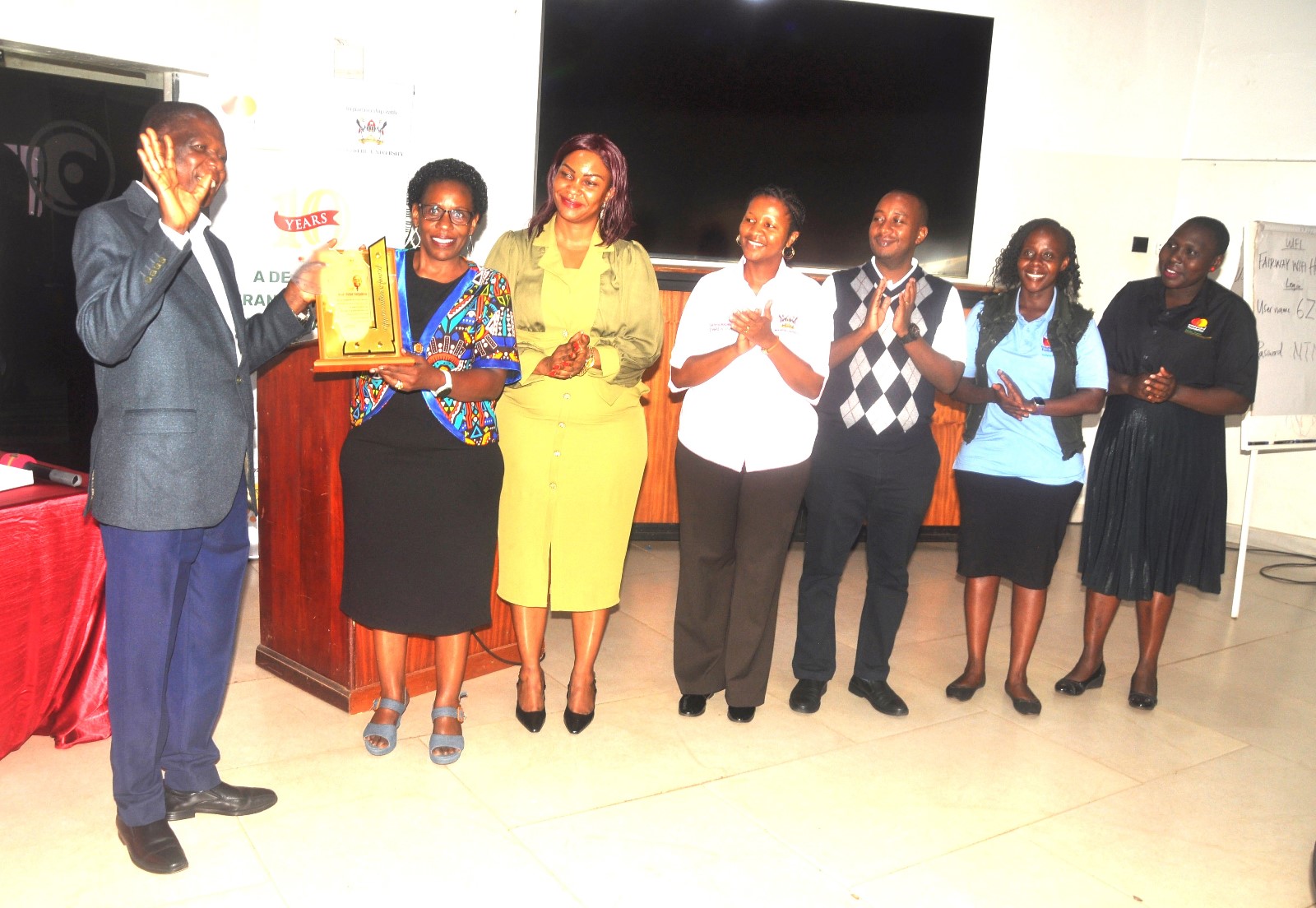
“I wish to commend the University Council and Management for approving and implementing the Makerere University Career Guidance and Mentorship Policy (2025) and the Safeguarding Policy (2024). These policies provide structure and accountability to our work, helping us strengthen systems that protect and support our students and staff,” Prof. Ssali noted.
Speaking in her role as the Dean of Students, Dr. Kabumbuli highlighted the importance of Mentorship, inclusion, and safeguarding as the critical areas in managing student affairs at Makerere University.
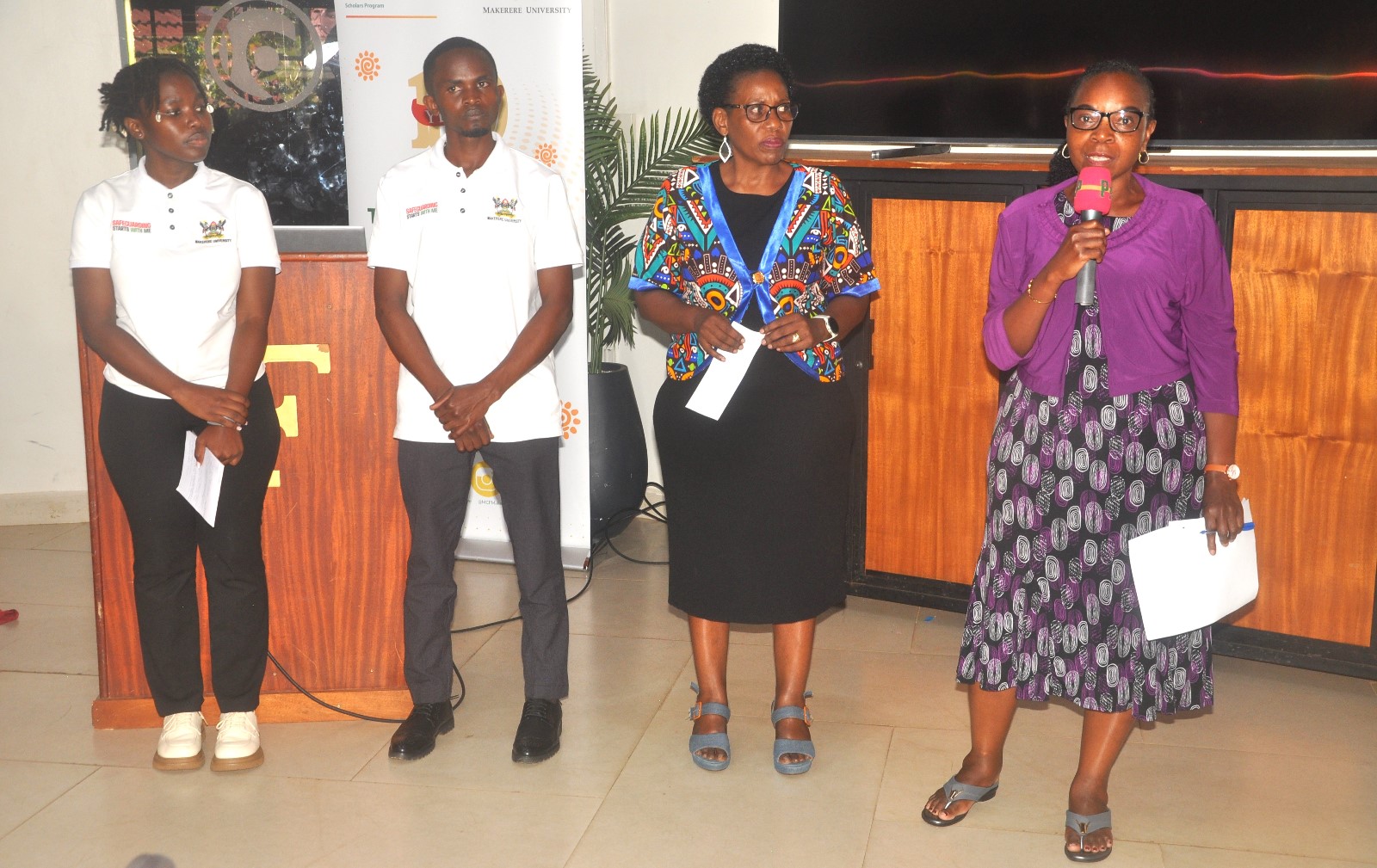
“Safeguarding reminds us of our duty to create and maintain a learning environment where every student feels safe, respected, and valued. Career guidance and mentorship remind us that academic excellence must go hand in hand with personal growth, discipline, and preparation for life after university. Inclusive mentorship compels us to extend our support to every learner, including those with disabilities, those from refugee backgrounds, young mothers, and international students, ensuring that no one is left behind,” Dr. Kabumbuli asserted.
Dr. Kabumbuli urged the mentors to reaffirm their shared commitment to a student-centred approach, one that recognises the human dignity, potential, and diversity of every Scholar. She encouraged the mentors to continue exemplifying the values of integrity, professionalism, and compassion that embody the spirit of Makerere.

On behalf of the Mastercard Foundation Scholars Program and the Africa Climate Collaborative, Program Director Prof. Justine Namaalwa shared exciting news with the Program mentors about the recent recruitment of 191 undergraduate scholars and 41 graduate students. She highlighted the importance of providing mentorship and guidance to these scholars, who come from diverse backgrounds and possess various strengths and challenges. Prof. Namaalwa encouraged everyone to actively support these students as they embark on their academic journeys.
“We were excited to welcome 191 undergraduate and 41 master’s Scholars to the Programme this academic year. These talented individuals hail from diverse backgrounds and bring immense potential, and they need your active support and mentorship,” Prof. Namaalwa remarked.
Prof. Namaalwa further requested that, as the University continues to recruit more mentors, it’s essential to recognise that effective mentorship goes beyond mere knowledge sharing. It involves actively listening, empathizing with the mentees, and empowering them to forge their own unique paths.
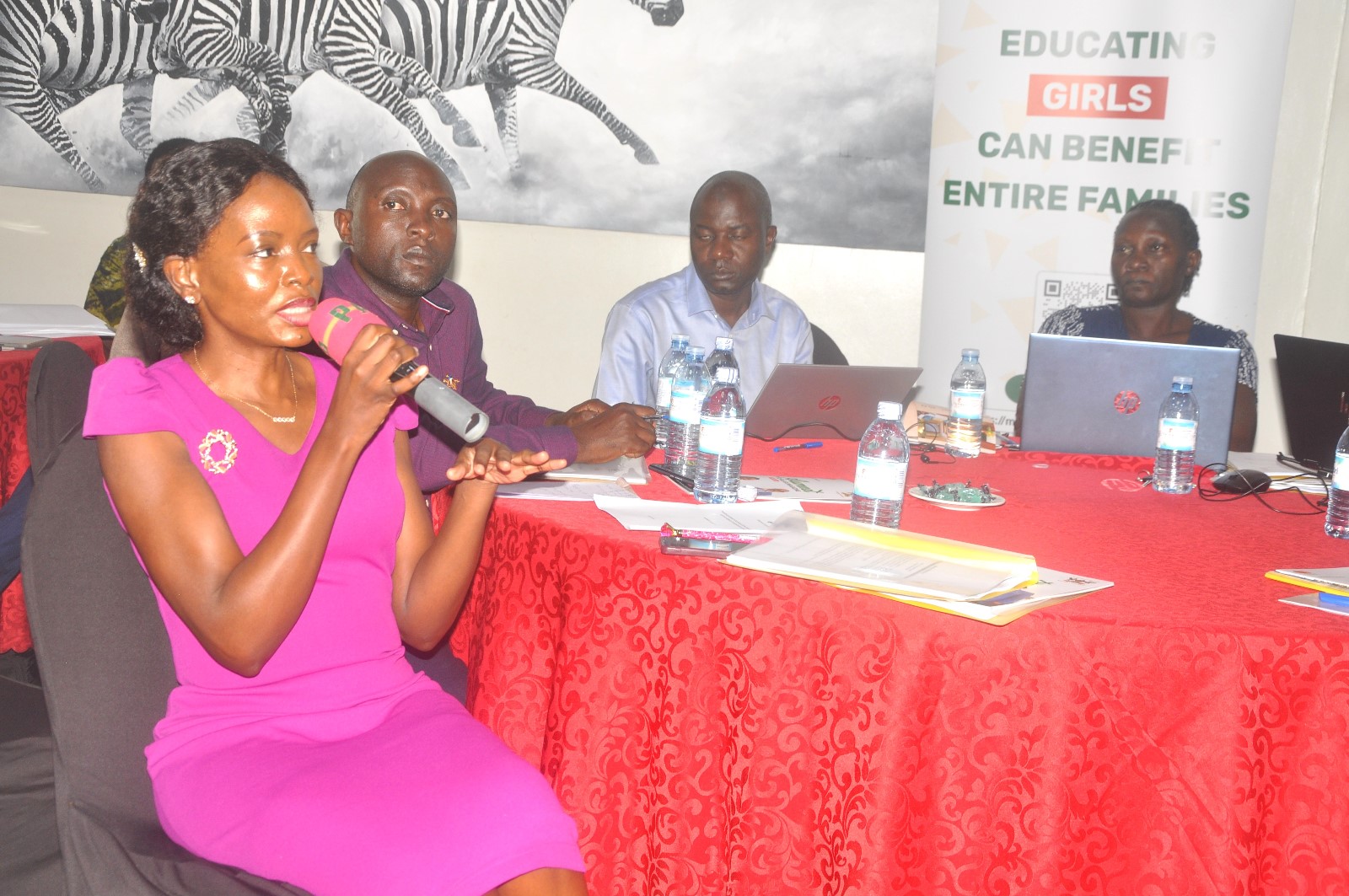
”Together, we can create a supportive environment that fosters growth and success for all our Scholars and students of Makerere University.” Prof. Namaalwa pointed.
The Annual Mentors’ Workshop, which was attended by over 70 mentors from different units of the University and others from other organisations, featured a range of activities designed to enhance mentors’ skills and understanding. Mr. Musa Mwambu from Light for the World, a partner of the Mastercard Foundation, led a valuable training session focused on inclusion, equipping participants with essential insights. Additionally, Mr Apollo Mulondo from the Refugee Law Project provided an in-depth training session designed to empower mentors to support students with refugee status effectively. The workshop also included opportunities for mentors to hear firsthand from young individuals, including a student with disabilities and two safeguarding champions, enriching their understanding and commitment to inclusive mentorship.
The writer is the Principal Communications Officer for the Mastercard Foundation Scholars Program at Makerere University.








General
CHS Registrars, Heads of Departments Embrace RIMS as Makerere Deepens Digital Shift in Graduate Supervision

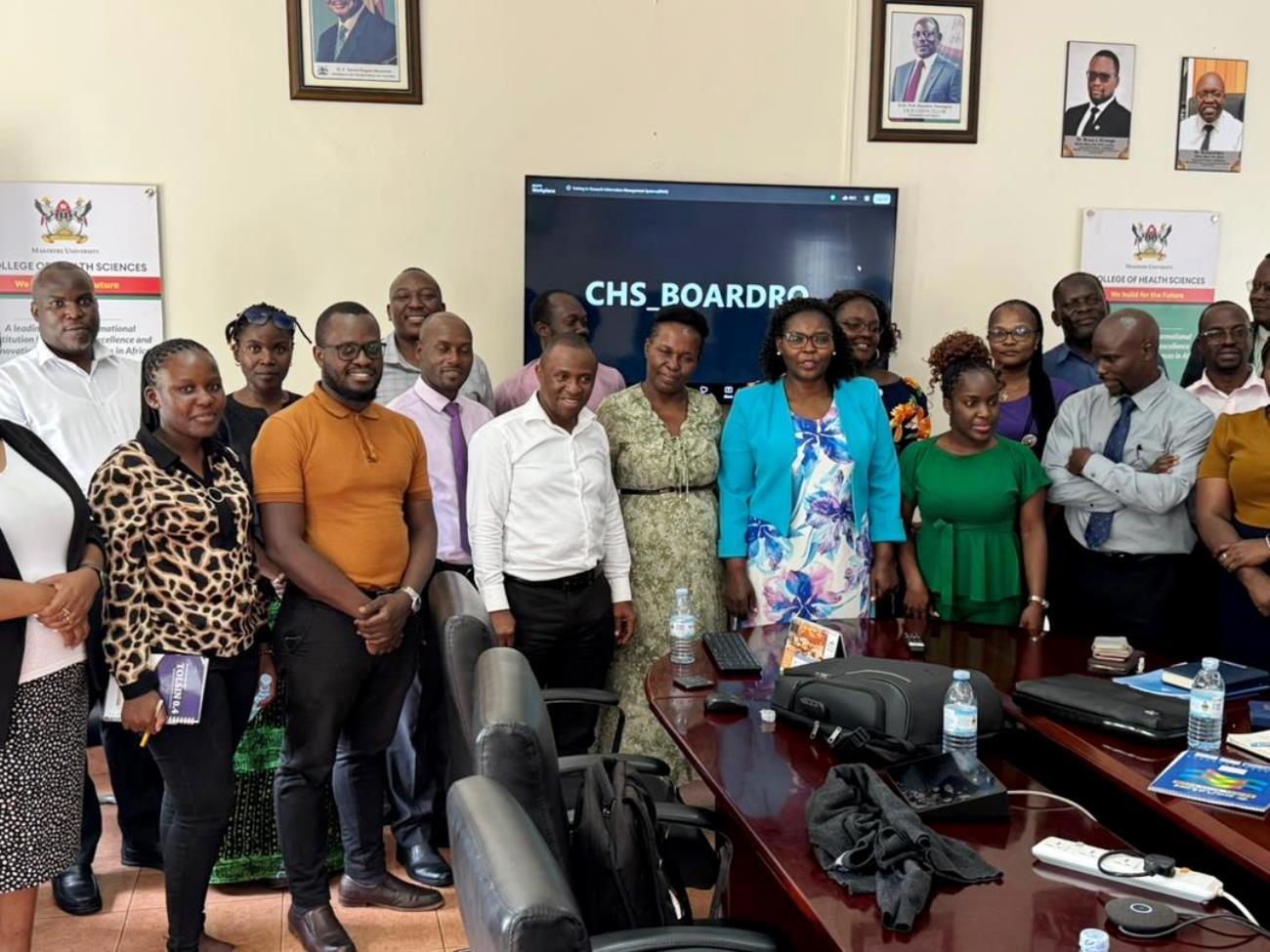
By Moses Lutaaya
The College of Health Sciences (CHS) at Makerere University has taken a significant step toward strengthening graduate training and research oversight following a hands-on training in the Research Information Management System (RIMS) held on Wednesday, April 15, 2026, at the CHS premises.
The training brought together over 25 Heads of Departments and College Registrars from the School of Medicine, School of Biomedical Sciences, School of Health Sciences, School of Dentistry, and School of Public Health, in a strategic push to digitize and streamline graduate supervision.
Leading the CHS team, Associate Professor Annettee Olivia Nakimuli, Dean of the School of Medicine, described RIMS as a transformative tool that will redefine how graduate students are tracked and supported.
“RIMS is definitely the way to go. It will help us track students in real time,” she said. “We have struggled to know how well students are progressing, and sometimes we are not even sure who needs help along the way.”
Prof. Nakimuli emphasized that the system will enhance accountability on both sides of the supervision divide.
“It will facilitate supervision for both the supervisor and the student. Supervisors will be more accountable, but students too will be more accountable. At any one time, we shall know exactly what is happening between student-supervisor pairs.”
Addressing concerns about possible resistance or tension arising from increased transparency, she noted that RIMS would instead clarify longstanding challenges affecting completion rates.
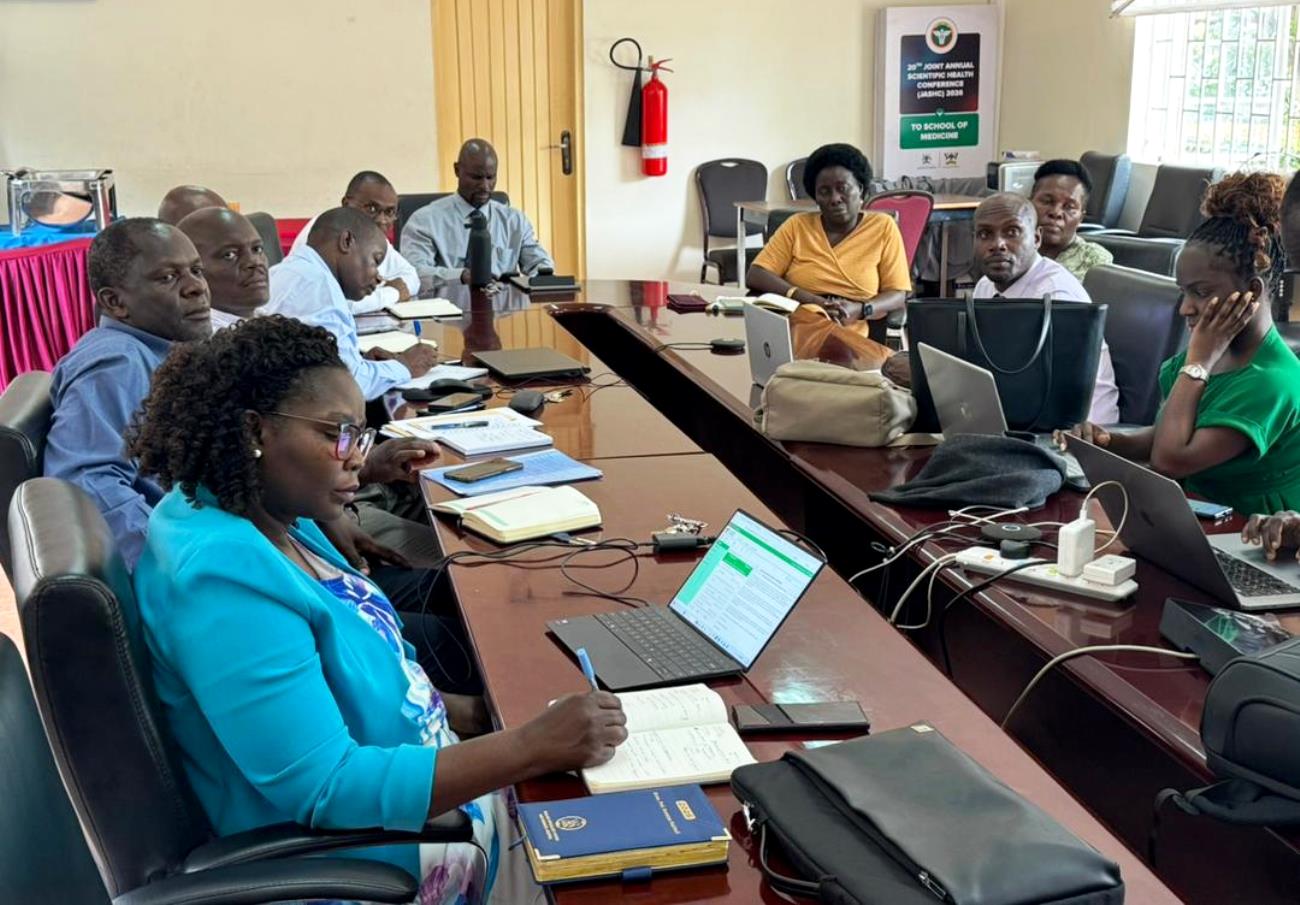
“Completion challenges are multifactorial—sometimes it is the supervisor, sometimes the student, and sometimes both. This system will make it clear where the problem is so it can be addressed,” she explained, adding that mindset change—not technical ability—remains the biggest hurdle for some staff transitioning from analog systems.
She further aligned RIMS with Makerere University’s broader agenda of becoming a research-led, graduate-focused institution.
“This is how we begin to walk the talk of being a graduate training university,” she added.
Representing the Director of Graduate Training, Mr. Nestor Mugabe underscored that RIMS is part of a larger, evolving digital ecosystem aimed at strengthening research management across the university.
“RIMS is a comprehensive system that captures the entire research process, but today we are focusing on the e-supervision component,” he said.
He noted that the system has been rolled out progressively across colleges, with CHS engagements tailored to accommodate the demanding schedules of health professionals.
“A student cannot progress if their supervisor is not on the system. That is why we are bringing everyone on board—supervisors, administrators, and students—so that the system works seamlessly,” Mugabe emphasized.
To ensure sustainability, he revealed that dedicated technical personnel have been deployed to provide on-site support.
“We now have resident technical staff who can support you directly in your offices, ensuring that no one is left behind in this transition.”
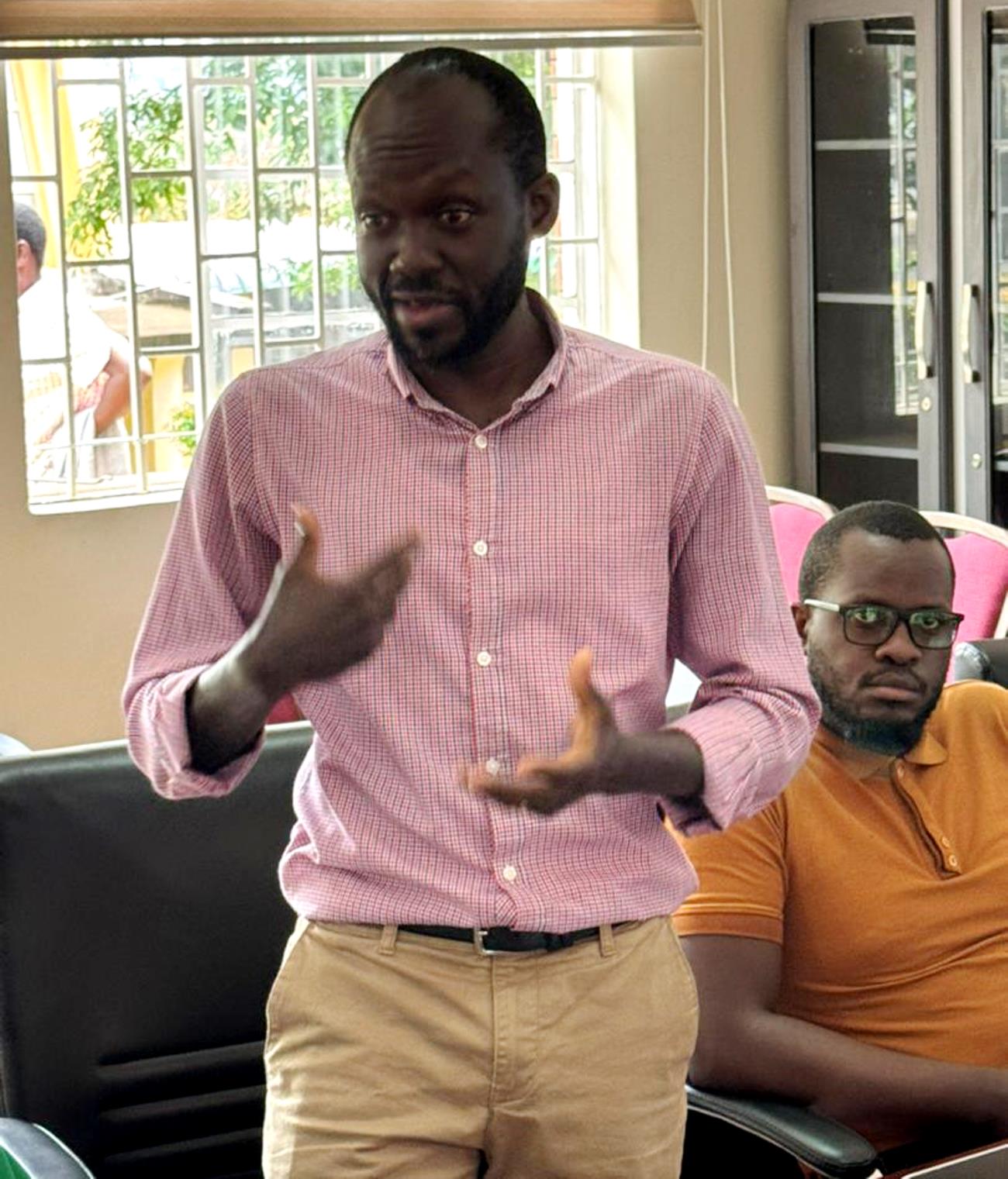
From a technical standpoint, Arthur Moses Opio of the Directorate for ICT Support (DICTS) highlighted RIMS as a critical pillar in Makerere’s digital transformation journey.
“This system is about bridging the gap between supervisors and students,” he said. “It logs activities, tracks feedback, and ensures that no academic guidance is lost or disputed.”
He explained that RIMS allows students to upload research milestones—from concept notes to final theses—while enabling supervisors and examiners to engage within a transparent, traceable system.
“Before, a student could get lost in the process. Now, every comment, every revision, every step is recorded. It brings clarity and accountability.”
Opio also noted that RIMS is integrated with key university systems, including the Human Resource Management System and the Academic Management Information System (ACMIS), ensuring data consistency and institutional oversight.
CHS College Registrar Mr. Herbert Batamye welcomed the initiative, describing it as a timely intervention in addressing inefficiencies in graduate supervision.

“RIMS is going to be a wonderful addition to our academic processes. It will accelerate supervision and improve efficiency if fully adopted,” he said.
He observed that the system had already received strong buy-in from participants.
“We brought together over 25 Heads of Departments and registrars, and the response has been very positive. Staff appreciate its potential.”
Mr. Batamye pointed out that one of the key strengths of RIMS is its ability to synchronize multiple supervisors on a single student’s progress.
“If a candidate has several supervisors, each will clearly see what the other is doing. It ensures that everyone is accountable and that delays are minimized.”
As Makerere University continues to digitize its academic and research processes, the CHS RIMS training signals a growing institutional commitment to improving graduate completion rates, enhancing supervision quality, and positioning research at the heart of its mission.

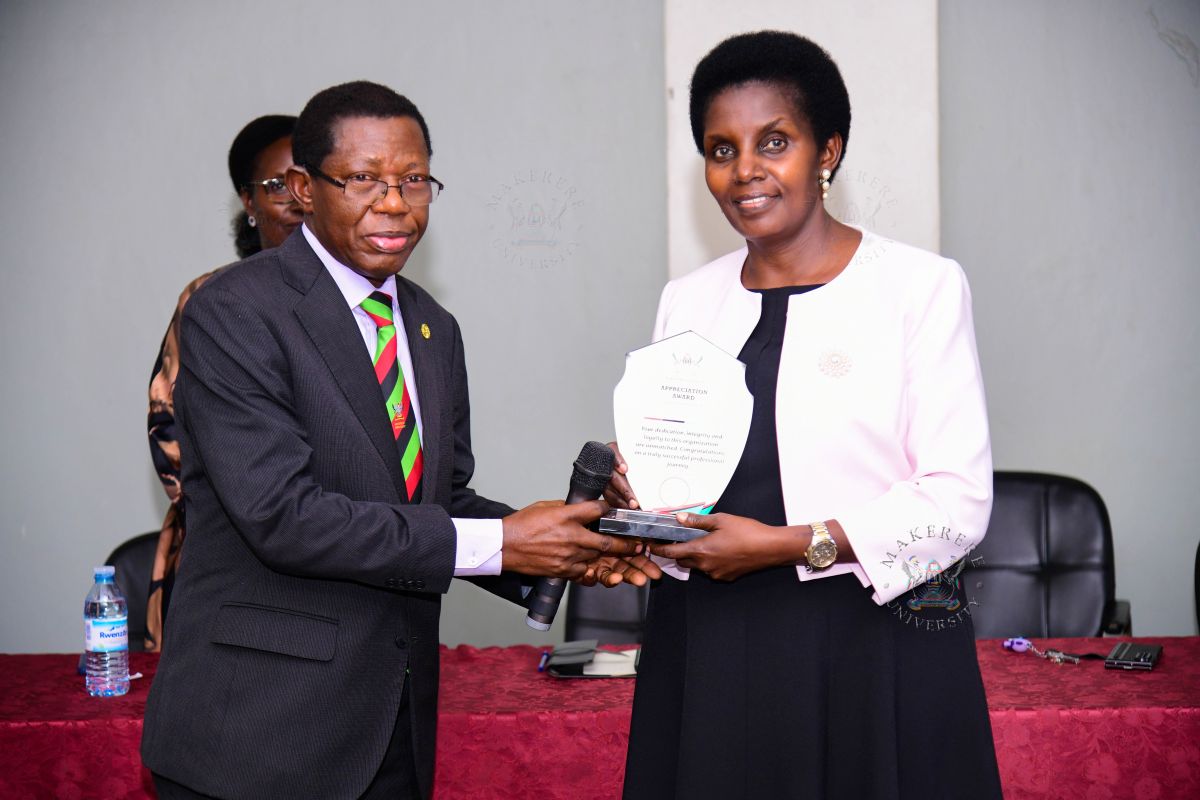
There are farewells that pass quietly and then there are those that leave a lasting imprint on the hearts of all who attend. The retirement luncheon of Patience Mushengyezi held at the Senate Building University was unmistakably the latter.
Held in an atmosphere filled with warmth, gratitude, and reflection, the event brought together colleagues, friends, and family to celebrate a woman whose 26-year journey at the University has been defined by diligence, humility, and quiet impact.
From the moment she rose to speak, Patience set the tone, not with grandeur, but with gratitude.
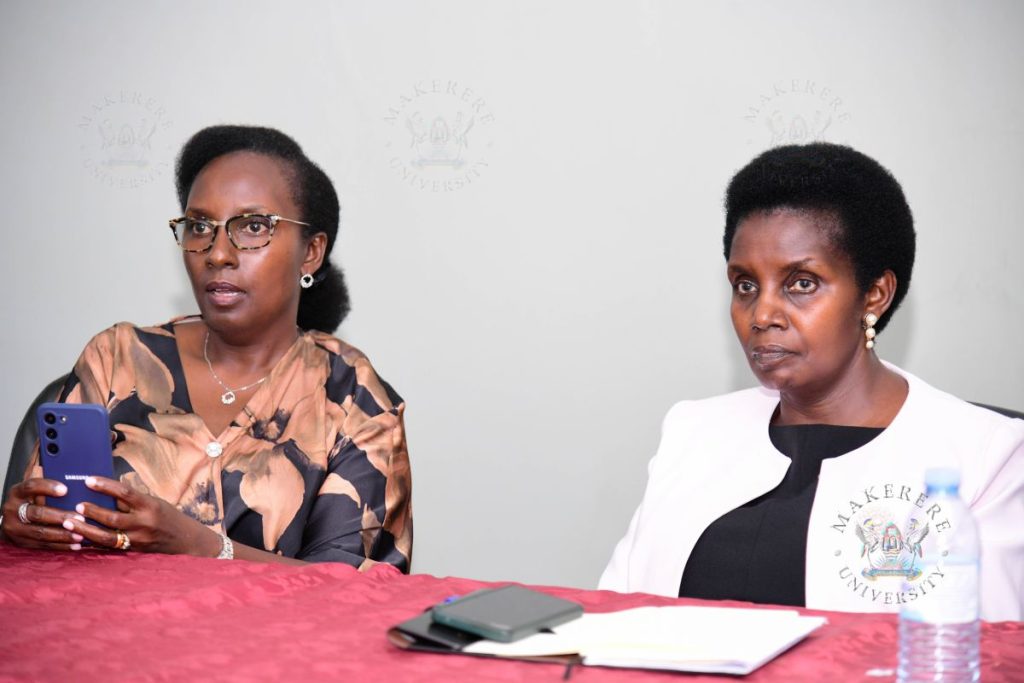
“I thank God for the opportunity He gave me to serve,” she said, her voice steady but reflective. “Everything I have achieved has not been by my own strength.”
Her career began in the Transcripts Office as an Assistant Registrar, a role that would become the foundation of her legacy. Over the years, she rose through the ranks to Senior Assistant Registrar and later Deputy Registrar, serving in various units including the Senate. Along the way, she became not only a custodian of records but also a steward of institutional memory.
Colleagues recalled how, in earlier years, obtaining a transcript in a single day was nearly impossible. Today, that process has been streamlined, thanks in part to Patience’s innovation and persistence. Patience initiated the Digitalization of Academic Records and Processes (DARP) project to ease the storage, retrieval and acquisition of academic documents by stakeholders. What began as a simple concern about poorly kept records evolved into a transformative records management initiative that has since improved efficiency and safeguarded academic history.
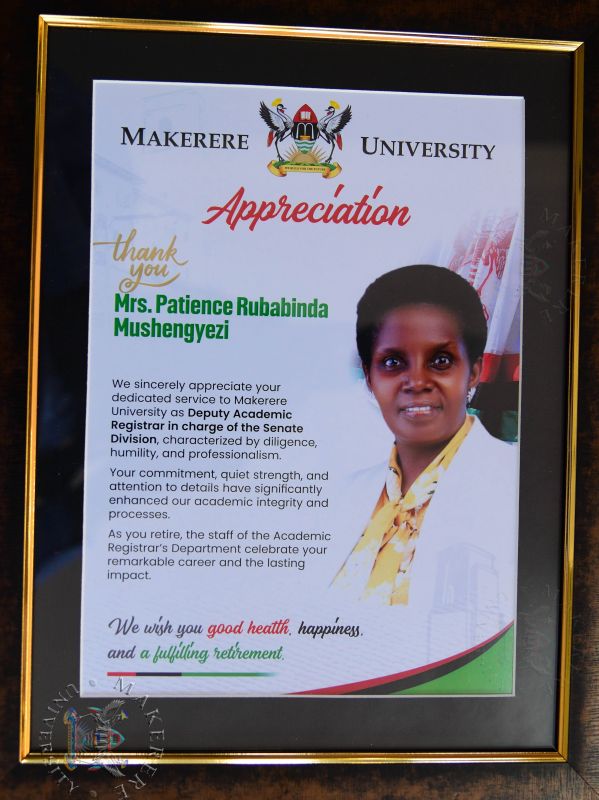
“She is like a moving encyclopedia,” one colleague remarked, highlighting her deep knowledge of university policies, many of which, he noted, exist as much in her mind as they do on paper.
The luncheon was not just a celebration of professional achievement, but also of character. Speaker after speaker described Patience as calm, dependable, and deeply empathetic “a friend you can trust,” as her supervisor, Prof. Buyinza Mukadasi, put it.
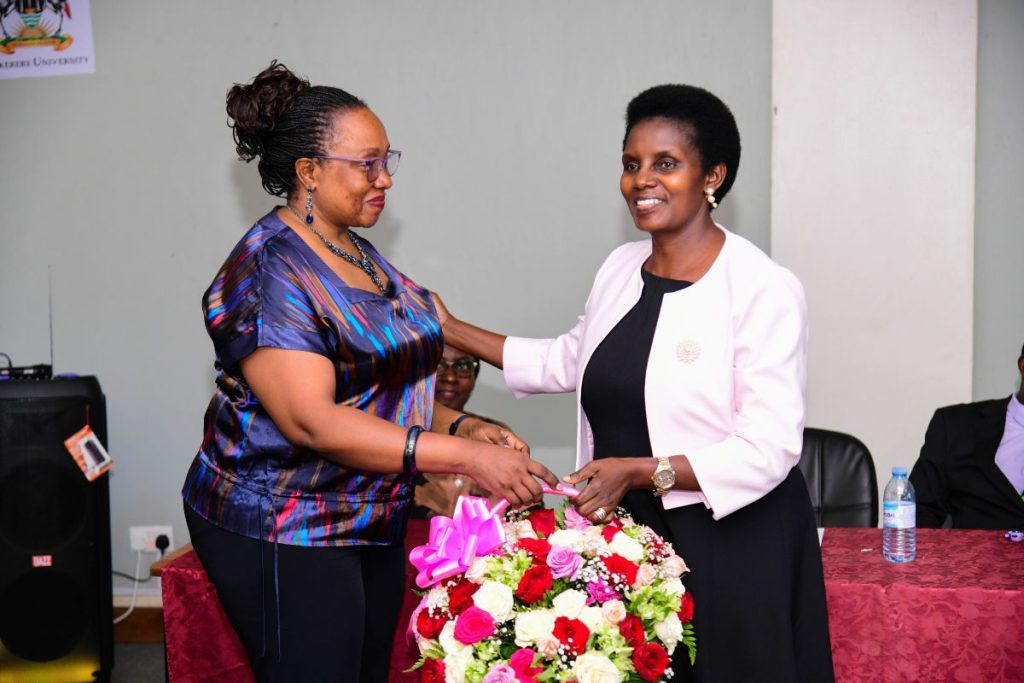
In his tribute, he reflected on his own transition from academia into administration, crediting Patience for guiding and mentoring him. “It is through her willingness to teach and support me that I became the administrator I am today,” he said.
Beyond the office, Patience’s impact extended into personal lives. Rev. Dr. Lydia Kitayimbwa – Chaplain, St. Francis Chapel spoke fondly of their friendship, describing her as a confidant and prayer partner. “She brings a sense of peace,” she said. “She listens, she prays, and she walks with people.”
Her sister, Alexandra Kalemera, offered an emotional reflection that captured the essence of the day. “It is a beautiful thing to serve in one place for 26 years and not simply disappear,” she said. “Today, we see the impact of a life well lived.”
Indeed, that impact was evident not only in speeches, but in the collective emotion in the room. There was laughter and moments of quiet introspection as colleagues reflected on their own journeys.
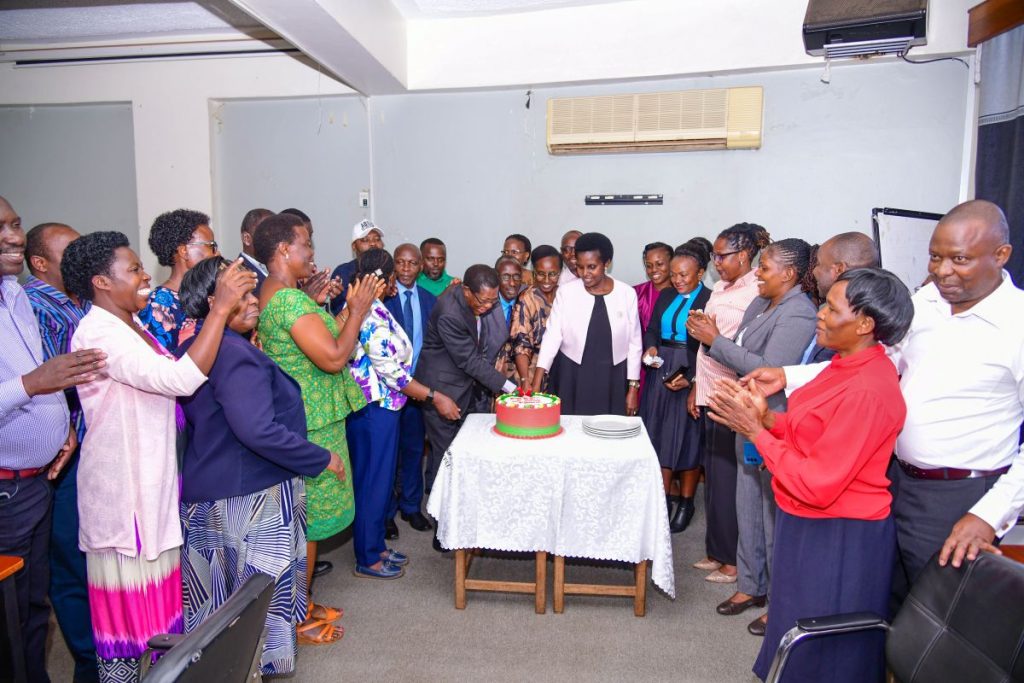
At the heart of Patience’s message was a call to action: to serve with integrity, to embrace small but meaningful change, and to value people above titles.
“Do not sit comfortably when things are not working,” she advised. “Do something.”
She also reminded colleagues of the importance of balance and self-care, urging them to find satisfaction in their work while recognizing the limits of their control.
As she steps into retirement, Patience is far from slowing down. She looks forward to pursuing personal ventures, including producing organic dairy products, and expanding her passion for mentoring young people, a calling she believes has already transformed lives.
“This is not the end,” Rev. Kitayimbwa noted. “It is the beginning of a new chapter.”
Perhaps the most profound reflection of the afternoon came from Prof. Buyinza, who posed a question to those gathered: When your time comes, will people come for you like this?
It was a moment that lingered, a reminder that legacy is not built on titles, but on relationships, integrity, and service.
As the luncheon drew to a close, one thing was clear: Patience Mushengyezi may be retiring from office, but her influence will remain deeply woven into the fabric of the Department of Academic Registry.

And in the words echoed throughout the room—this was not goodbye.
It was simply the beginning of another journey.
General
Congratulations St. Augustine Chapel, My Spiritual and genuine lover, upon celebrating 85 years!

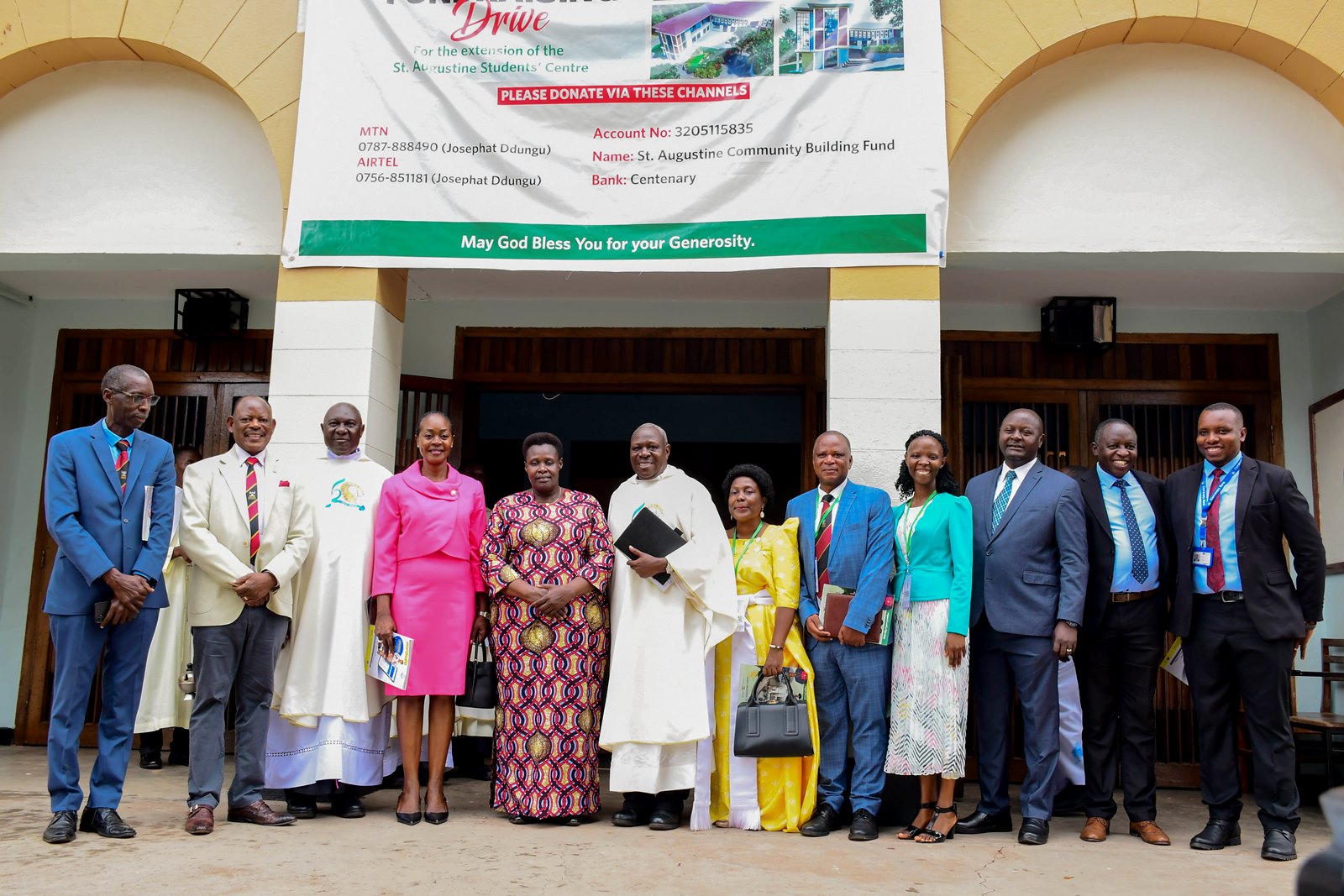
I wish to proclaim that you, St. Augustine Chapel, occupy a special place in my life, and that the bond built over the years, will surpass generations! Whereas some people respect you for grounding them in the Catholic faith, I uphold you for being a parent figure – stretching to a counsellor, mental health expert, confidant, stress manager and reliever, and community development specialist.
I vividly recall the sessions on being a responsible Catholic, remaining safe and healthy, identifying the right friends, and tips on excelling in academics.
St. Augustine Chapel, you are a safe space for communion. You have grounded God’s people in the Catholic faith, and blended in well with activities to ignite a great sense of responsibility, leadership, community empowerment and service to humanity.
As we celebrate your 85 years of existence, I am glad that you have continued to grow. As we visualize your Centennial celebrations in the near future, you are presenting to us a golden opportunity to contribute to the expansion of St. Augustine Students’ Centre.
I am pleased to testify that I am a proud member of the St. Augustine Catholic Community at Makerere University, with a great sense of belonging, and an attachment destined to last forever.
My encounter with St. Augustine Chapel and Students’ Centre commenced in 2001, when I joined Makerere University for a Bachelor’s degree in Mass Communication. I was blessed to do my ‘A’ levels at a vibrant Catholic school – St. Joseph’s S.S. Naggalama – and upon completion, I kept on wondering whether I would find such a place at Makerere University.
Little did I know that St. Augustine Chapel was destined to be my spiritual and genuine lover! The Chaplaincy and the Students Executive Committee coordinated special programmes that would bind us together in love. Both the Chapel and Students’ Centre became safe spaces to inculcate a high sense of responsibility, discipline, leadership, talent development, friendship, socialization and networking.
During the Freshers’ Orientation Week, the Chaplaincy and Students’ Executive Committee did engage us fully to optimal levels. Every evening, the new students would convene at St. Augustine Students’ Centre where the then Chaplain (Rev. Fr. Dr. Lawrence Kanyike) lined up a series of activities on balancing academics with other aspects of life, talent identification, counselling, career guidance, and socialization. We enjoyed the engagements that shaped a great sense of responsibility and calling to serve humanity.
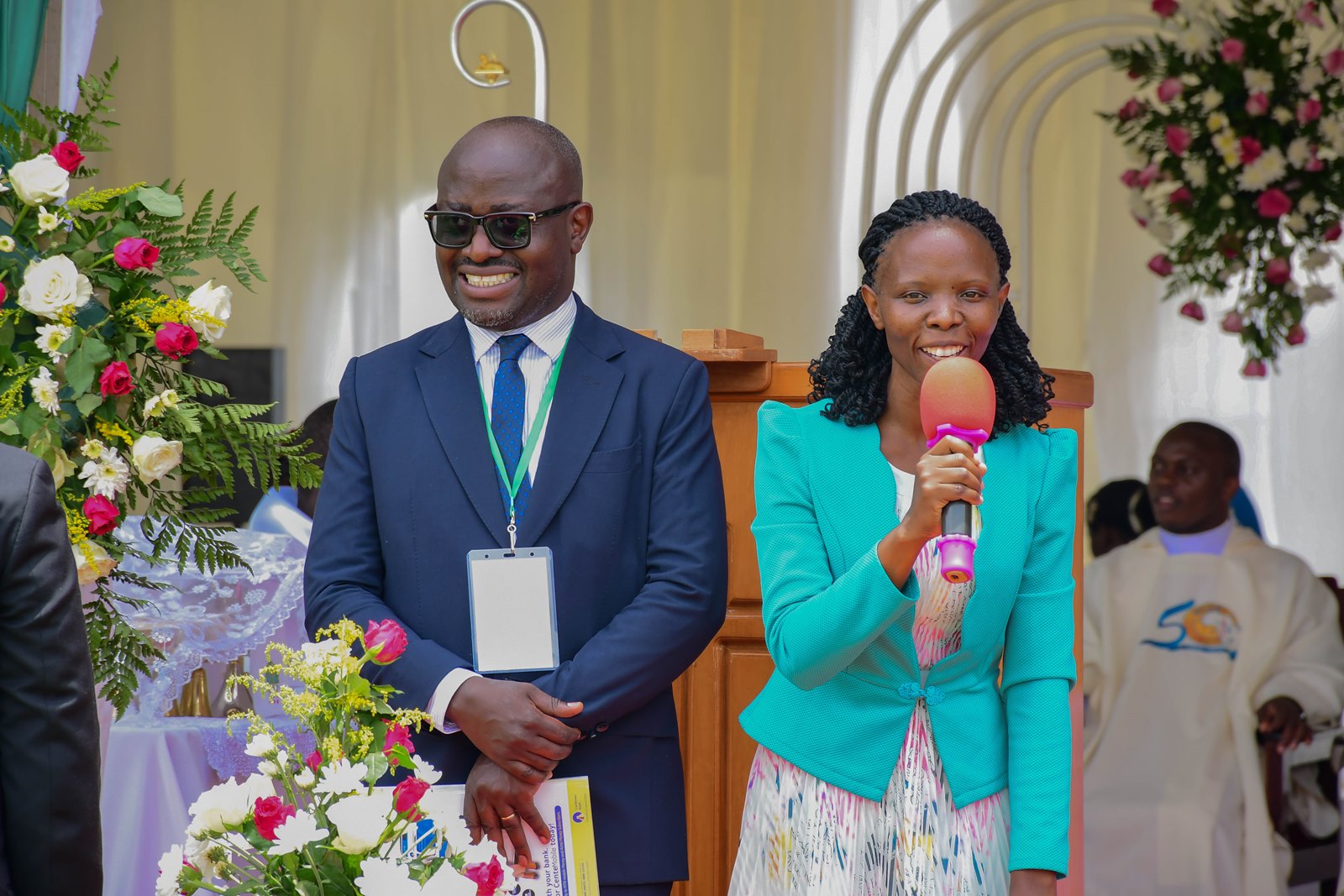
To the Chaplaincy (Rev. Fr. Dr. Lawrence Kanyike and Rev. Fr. Josephat Ddungu), for the sessions where you identified professionals such as counsellors, mental health experts and coaches, to guide the students on balancing academics, spirituality and other demands of life, we will remain eternally grateful.
For talent identification, we were introduced to the different platforms such as the Choir, Music, Dance and Drama, Concerts, Catholic student clubs, and leadership opportunities within the Catholic community.
For friendship and socialization, the Chaplaincy would organize picnics, trips to Catholic sites, and beach bashes. The most popular ones were at Nabinoonya Beach, off Entebbe Road. The interaction would start with prayers, and thereafter, activities that re-kindled our youth such as enjoying breeze, listening to music, walking and playing in the sand, dancing, participating in games, and dining together. I believe that these activities also impacted our mental health, cognitive abilities and relaxation.
The Solidarity Masses in the Halls of Residence were memorable. The most vibrant one was the Lumbox solidarity mass, bringing onboard Catholic students from Lumumba and Mary Stuart Halls. At the end of the Mass, we would interact as we enjoyed snacks and soft drinks courtesy of the Chaplaincy. Though intended for Catholics, the solidarity Masses also attracted students from other denominations. At some point, the Chaplain, fondly referred to as ‘Fr. Larry’ by the students, observed that the snacks and soft drinks were less compared to the turn up. The Chaplain requested students from other denominations who wished to be part of the solidarity Mass to register a week in advance, the numbers soared, but given his generosity, we continued to enjoy the snacks and soft drinks.
A number of socialization and networking events would be announced in the Chapel, and hosted at the Students’ Centre.
It is my prayer that we contribute generously to the expansion of this facility. Within this space, many lives have been touched, shaped and inspired.
Long live St. Augustine Catholic Community! Looking forward to the Centennial Celebrations!
Ritah Namisango, Public Relations and Communication Specialist
-

 Law4 days ago
Pre-Entry Examination for Admission to the Bachelor of Laws for 2026/2027 AY
-
 Health3 days ago
Course Announcement: Certificate in Water, Sanitation and Hygiene (CWASH) – 2026
-

 General1 week ago
Call for Participants: 2026 Hainan International Youth Cultural Exchange Program
-

 General1 week ago
New Classroom Block brings Relief to Bwera Primary School
-
 Research1 week ago
“Start with Ethics”: Makerere Webinar Rallies Researchers to Prioritize Ethical Approval from Day One