
Health
Makerere’s Quiet Case for Investment in Public Health Infrastructure

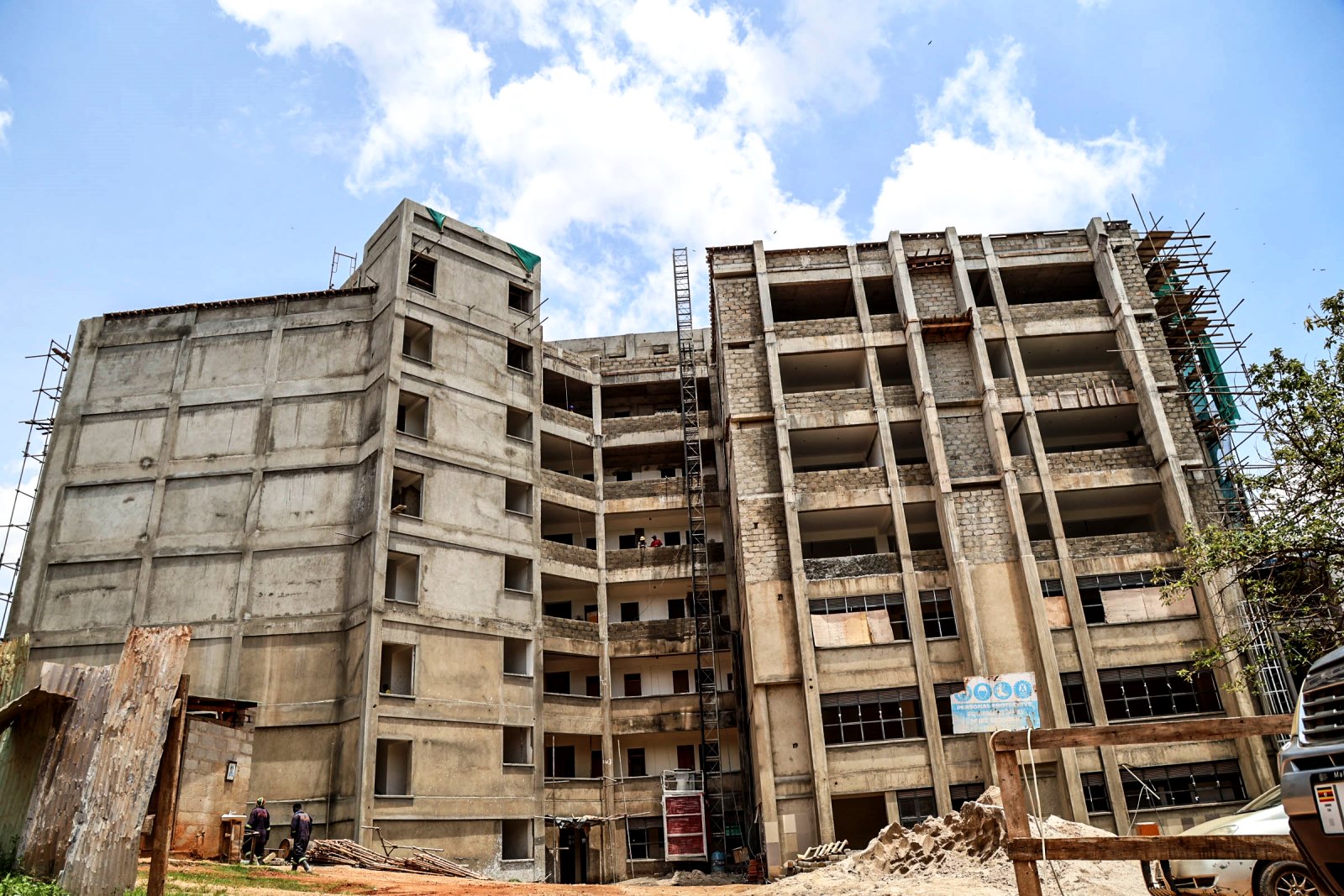
Makerere’s School of Public Health (MakSPH) is expanding faster than it can house itself. It now hosts more than 1,000 students, runs programmes across multiple countries, and anchors a large share of the University’s research output. Yet parts of its operation still spill into rented space, costing over $113,000 a year, because the infrastructure has not kept pace with its growth.
That constraint sits uneasily with the School’s economic weight. Health research accounts for more than half of Makerere University’s academic output, making it one of the University’s most productive engines. As Vice Chancellor Barnabas Nawangwe put it, “An educated population is a healthy population, and an educated and healthy population is a prosperous population.”
Beyond the university, health is not just a social outcome but a driver of economic performance. Healthier populations are more productive, more resilient, and less costly to sustain. Investments in public health, whether in prevention, systems, or infrastructure, raise an economy’s productive capacity, not just improve outcomes.
Institutions that generate public health knowledge and train professionals are not peripheral to growth; they are part of its foundation.
It is this logic that is shaping how Makerere’s School of Public Health is positioning itself. At its centre is a new, unfinished complex on the University’s main campus, intended to anchor the School’s next phase as a regional hub for research, training, and policy support. But like much of the system it supports, it is being built gradually, in a “build-as-you-go” approach constrained as much by funding realities as by design.
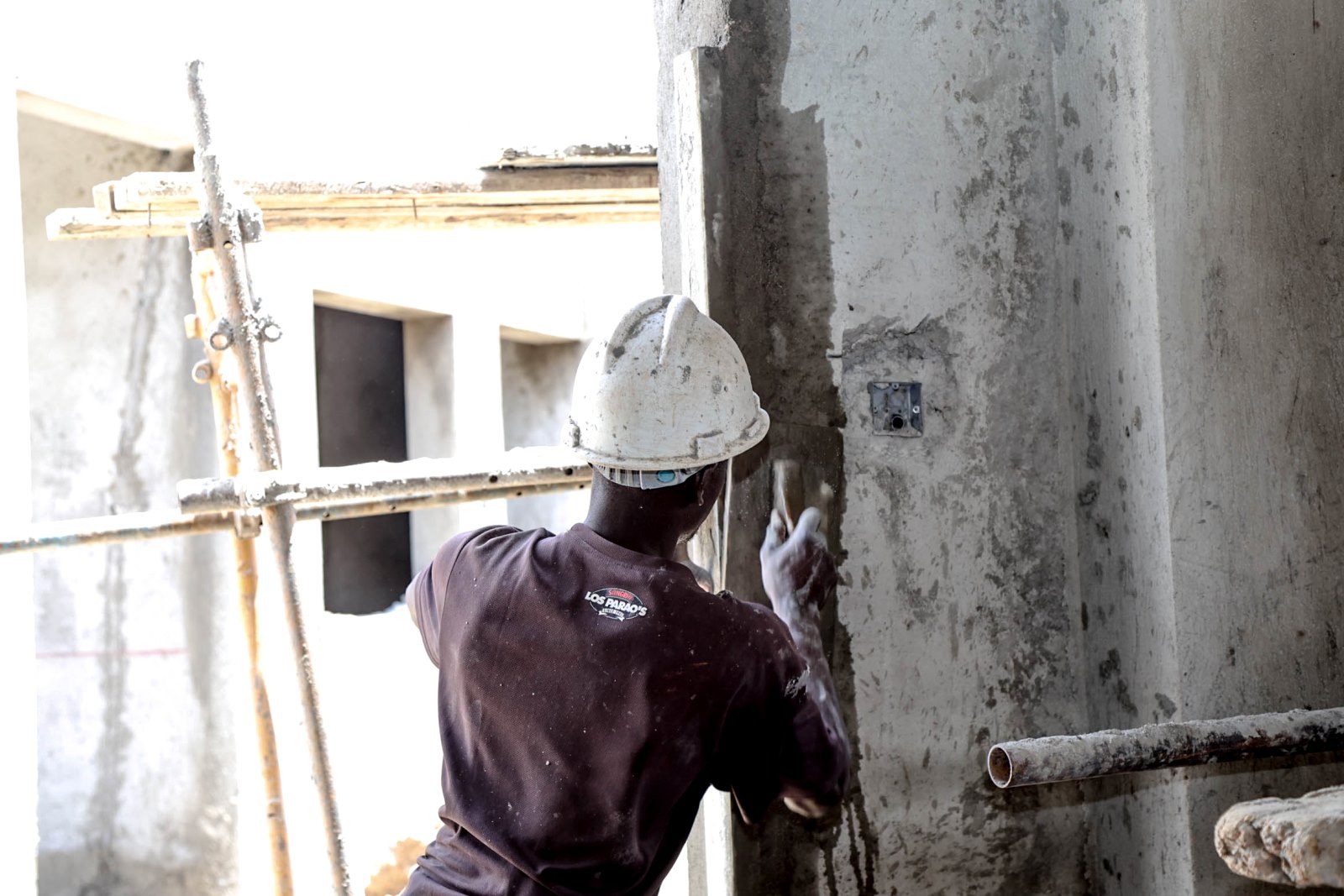
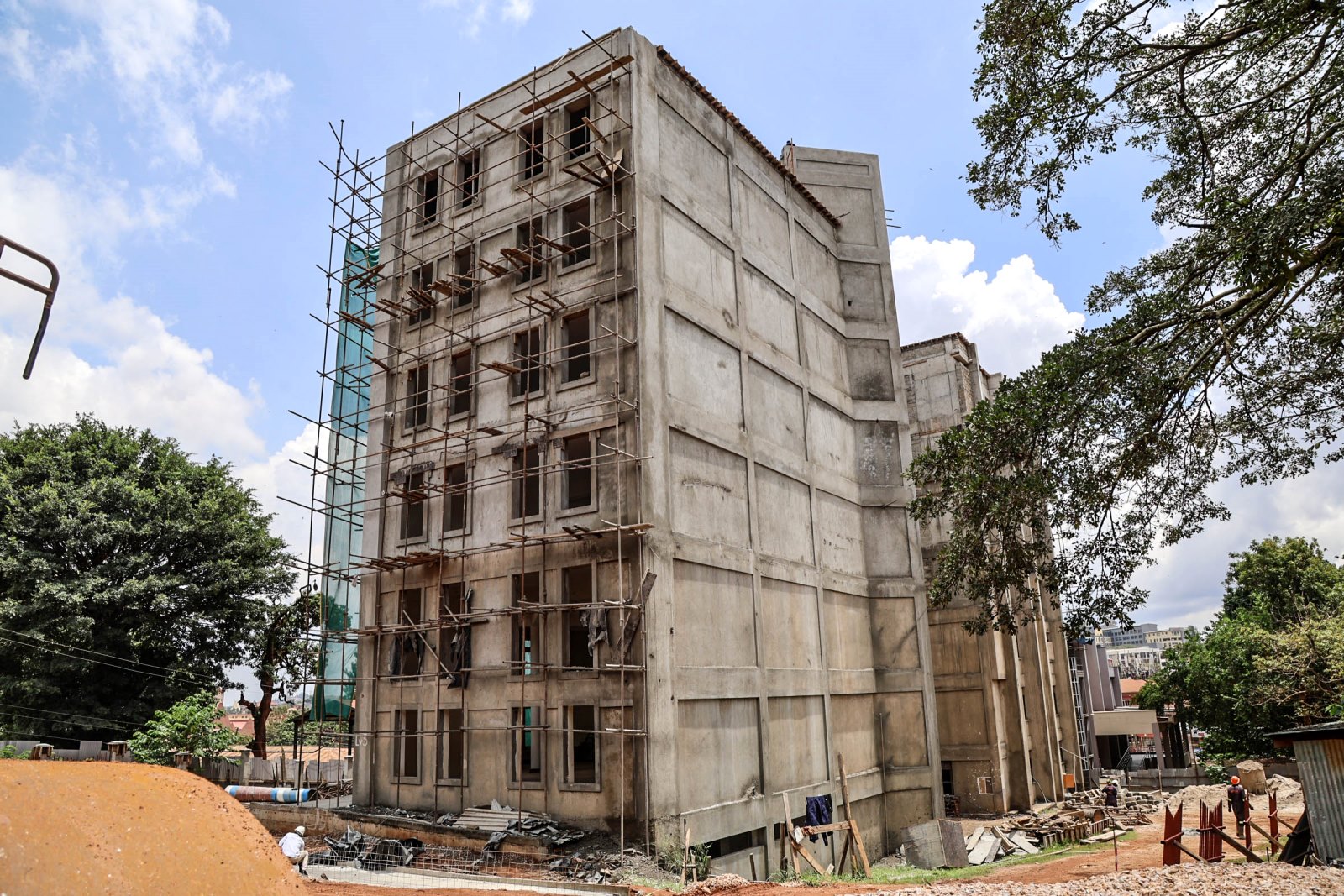
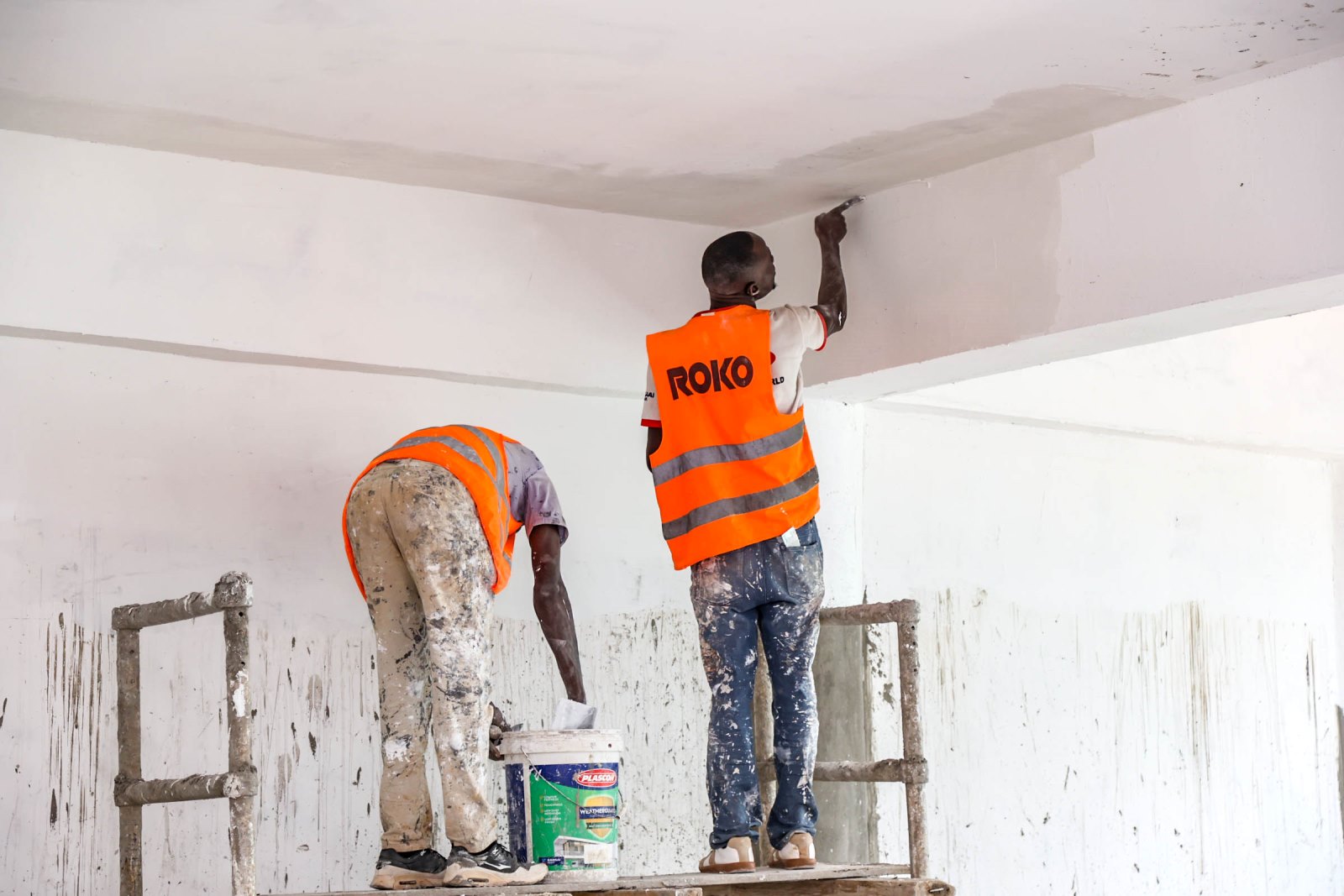
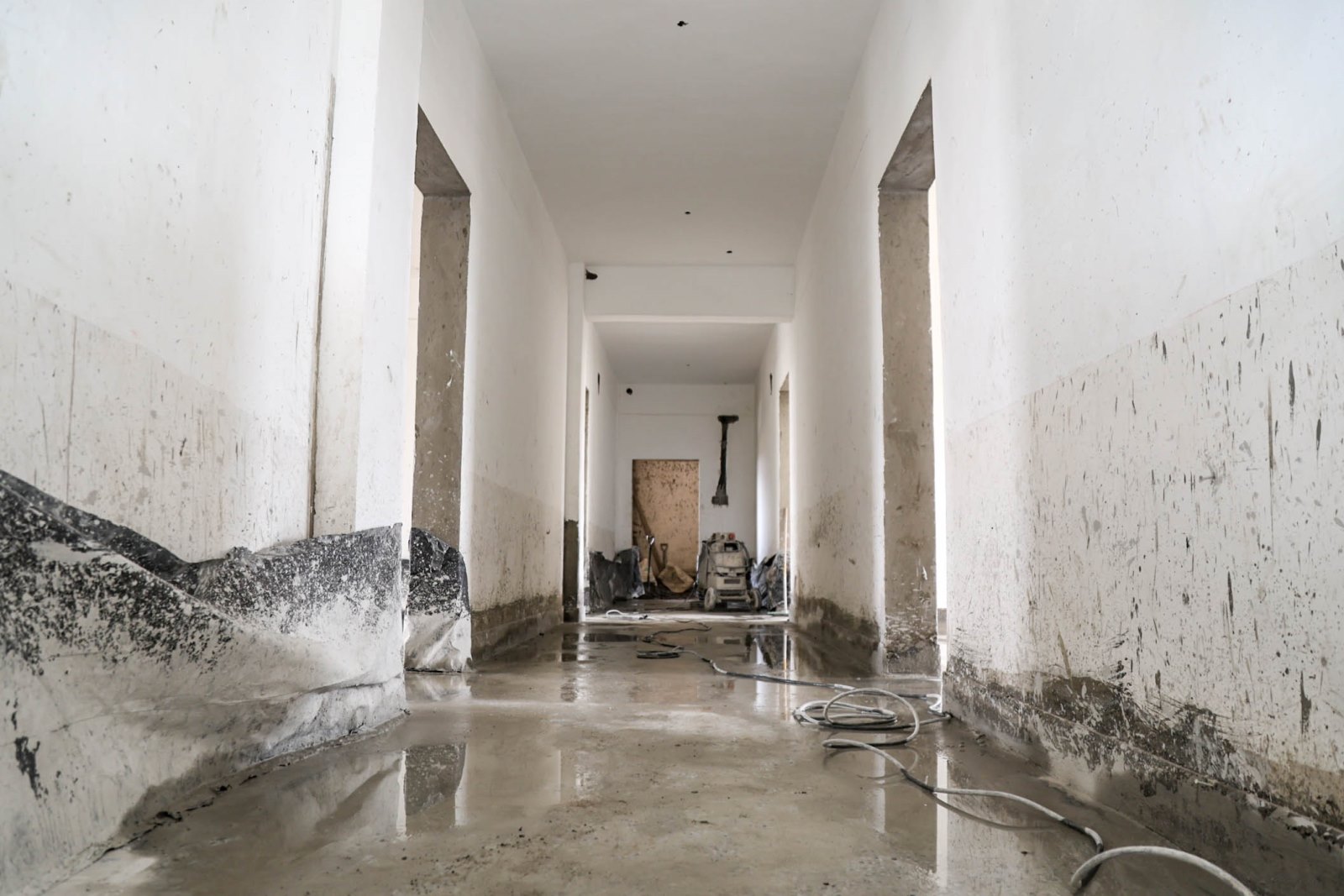
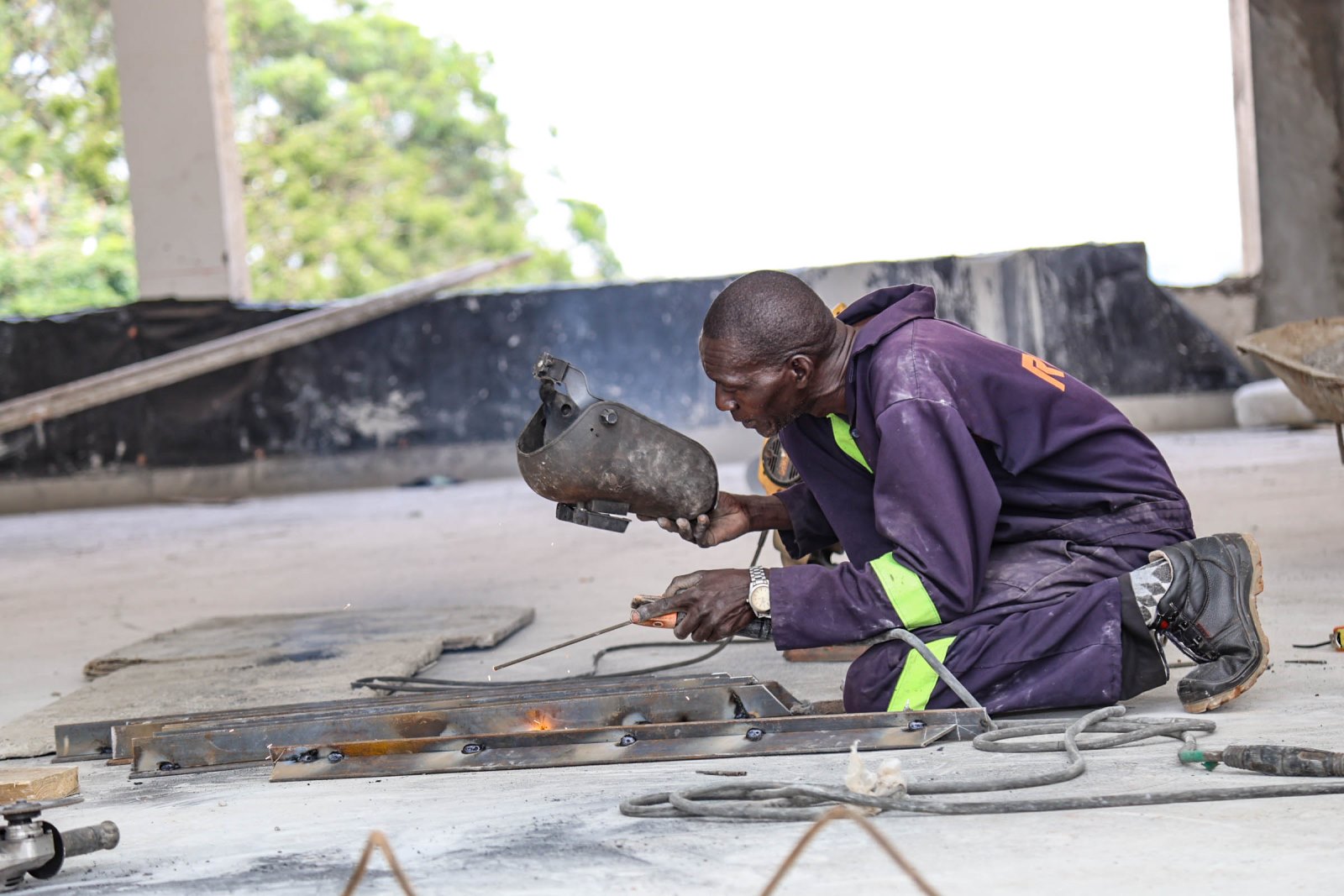
Construction of Phase II of the MakSPH complex is now at an advanced stage, with progress recorded across all sections of the site. As of March 2026, Phase 2B is nearing completion at 98%, while Phase 2A stands at 89%, and Phase 2C at 69%, each tracking close to or slightly ahead of planned targets. Current works are concentrated on interior finishes—including tiling, terrazzo installation, and external rendering—as well as preparations for lift installation, signaling a transition from structural works to final detailing. The project team is working toward a practical completion date of August 31, 2026, with timelines calibrated to align with broader resource flows and implementation considerations.
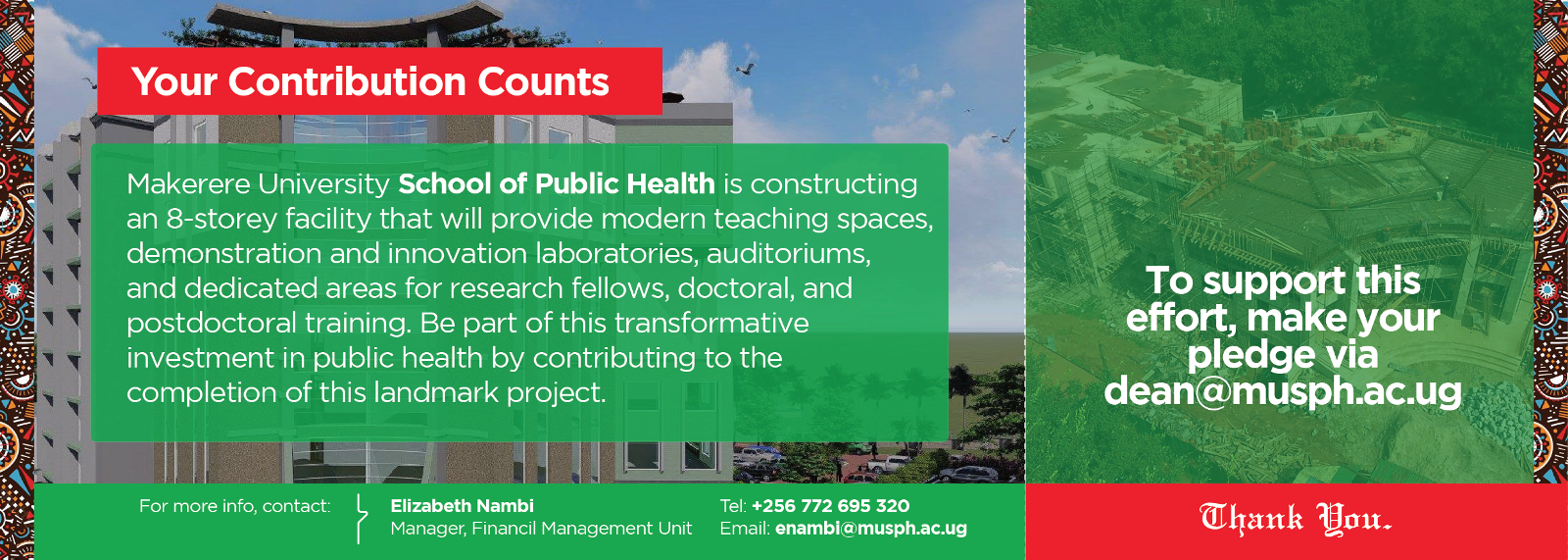
Six years ago, in February 2020, construction began on what will be the new home of the School of Public Health. The building, a permanent, purpose-built public health facility on Makerere’s main campus, will accommodate a growing student body, provide space for doctoral and postdoctoral fellows, and strengthen the University’s ability to respond to Africa’s most pressing public health challenges.
Professor David Serwadda, Professor Emeritus at Makerere University and Chair of the MakSPH Infrastructure Fundraising Committee, said the construction journey reflects the School’s “ambition, intent, and courage”—a bold step despite limited resources. He was speaking at a public lecture on health financing held at Makerere University on April 9, 2026.
But the ambition behind the project is not modest. “We are not building for today—we are building for the future,” said Professor David Serwadda, reflecting on a decision that shaped the entire construction effort. “We need to build for the next 100 years.”
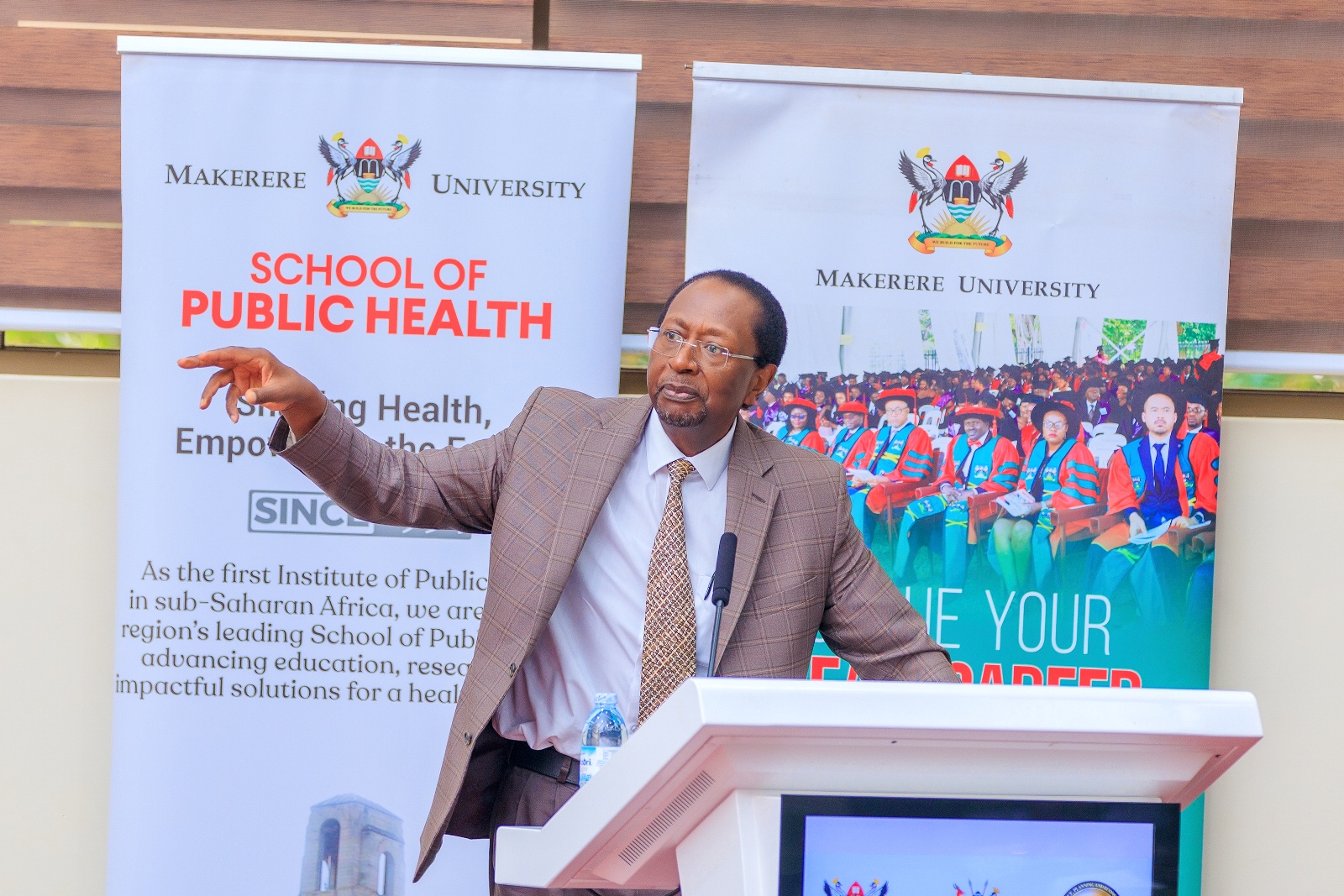
That long view helps explain both the scale of the project and the risks taken to start it. When construction began, the School did not have the full funding. “We started with about a third of the required budget,” Serwadda said.
The approach was not without setbacks. A major grant from USAID, worth over a million dollars, was later withdrawn, midway through the construction, due to the closure of USAID. “We received what is called a ‘Dear John letter,’” he recalled. “At that moment, we felt the situation was a major blow, almost terminal for the project.”
But the project did not stop. It adjusted. “We said, let us continue, piecemeal,’” he said. “Finish the auditorium first, use it, and keep building the rest.”
“We have come a long way as the School of Public Health,” said Professor Rhoda Wanyenze, the Dean. “We are proud of that history, but we also recognize that it comes with responsibility.”
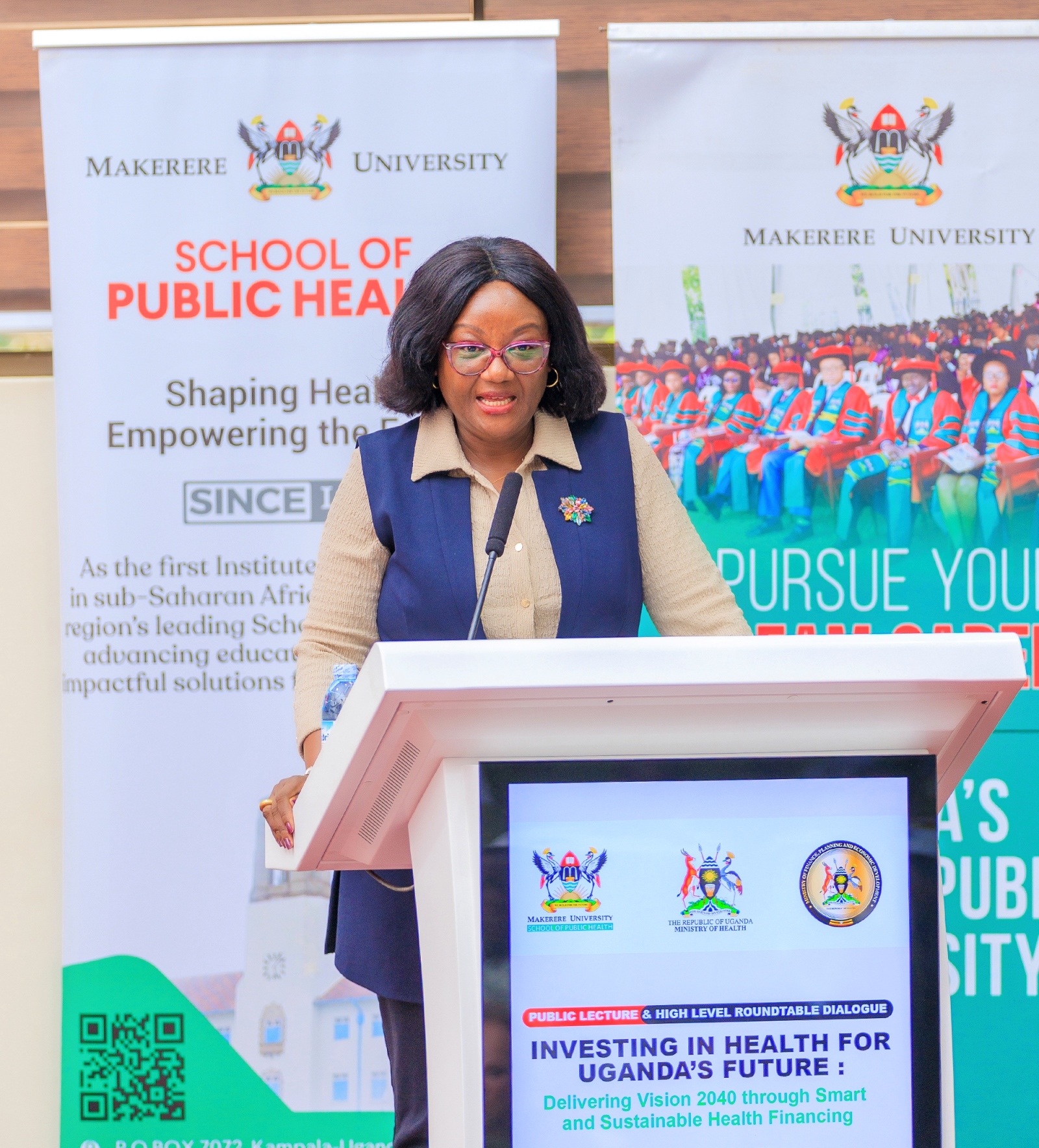
She argued that responsibility is no longer confined to Uganda. With ongoing collaborative work in more than 25 African countries currently, the Dean says this is “a responsibility to provide leadership in public health not only in Uganda but across the continent.”
The scale of that growth has been visible from what was once a small training unit in the Faculty of Medicine in the 1950s, which has expanded into 12 academic programmes and more than 1,000 students.
“When I came back for my public health training, we were about 40 students,” she said. “Now, we have more than 1,000.” “Public health is growing and evolving,” Wanyenze said. “And we are doing our best to develop the skills needed for this changing landscape.”
That includes new areas such as health informatics and data science, driven by the digitisation of health systems and the growing role of data in decision-making and AI. The School is already coordinating regional platforms on digital health, linking multiple countries in shared learning and practice.
But this growth has outpaced the physical systems needed to sustain it. For the University leadership, the implications extend beyond infrastructure.
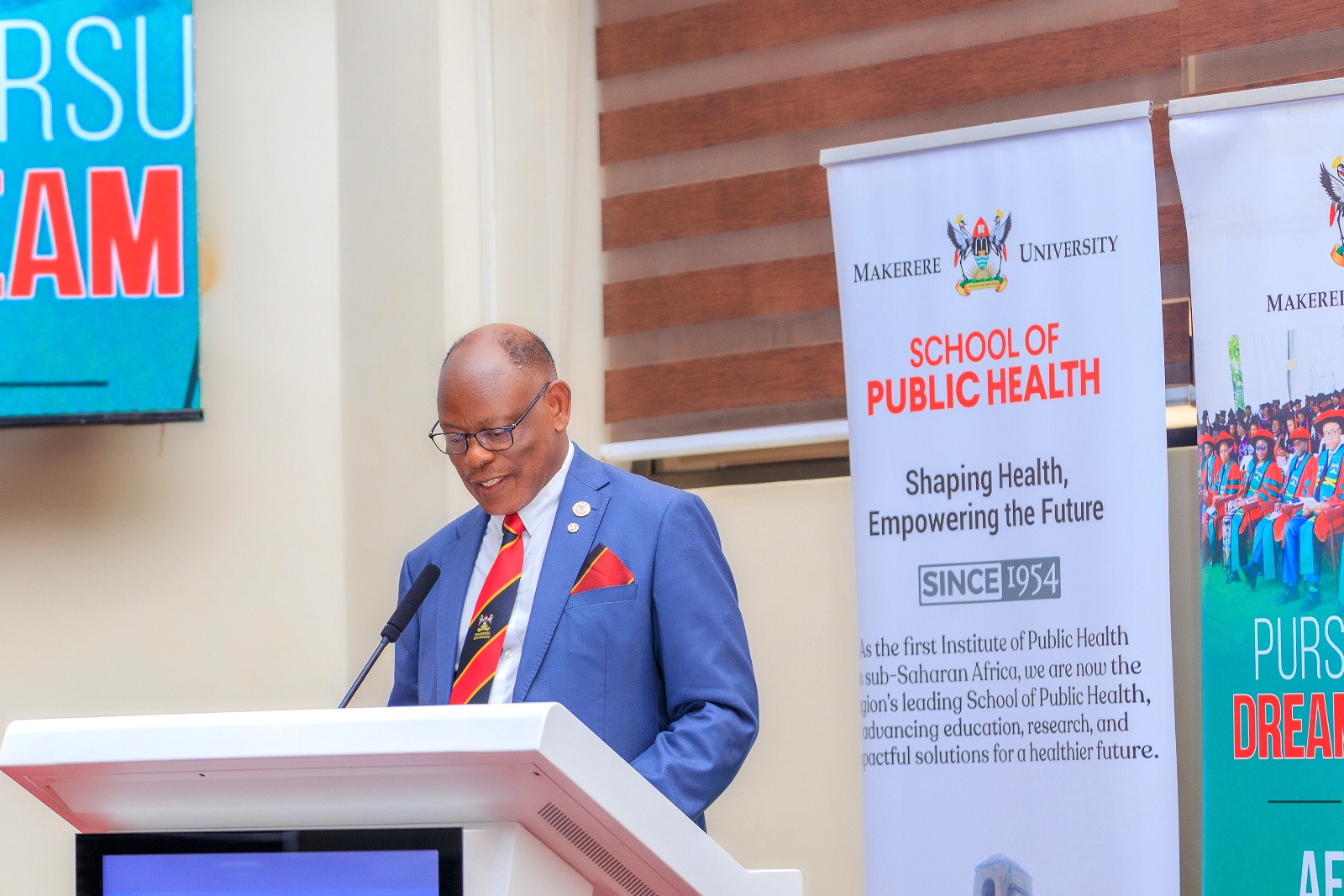
“One of the most effective ways to invest in health in Uganda is to invest properly in Makerere University,” said Vice Chancellor Barnabas Nawangwe. “We must recognize Makerere as a research-led university with a special national role—not fund it like any other institution or department. Makerere is one of the government’s greatest assets. Invest in her, and the returns will exceed expectations.”
Professor Nawangwe hailed Dr. Ramathan Ggoobi, the Permanent Secretary to the Treasury, who delivered a keynote on investing in health for Uganda’s future in view of Vision 2040. “I wish to thank Dr. Ramathan Ggoobi and his team for their personal intervention in allocating resources in next year’s budget to complete the new School of Public Health building. That support is deeply appreciated,” he said.
Uganda’s progress in health outcomes is evident, but uneven. Life expectancy has risen significantly from about 50 years in 2000 to roughly 68.8 years in 2024, according to the Permanent Secretary to the Treasury, Ramathan Ggoobi. Yet the gains sit alongside persistent financial strain on households. About 4% of Ugandans still spend more than a quarter of their consumption on healthcare, pushing many into poverty as a result of illness.
For Ggoobi, this points to a structural gap that recurrent government spending alone cannot close. “We must mobilise long-term domestic capital without adding fiscal risk,” he argued, pointing to the need for more sustainable financing mechanisms. Central to this is the gradual design and rollout of a national health insurance scheme. Evidence from countries such as Rwanda, Kenya, and Ghana suggests that well-structured contributory models can expand coverage while reducing catastrophic out-of-pocket spending.
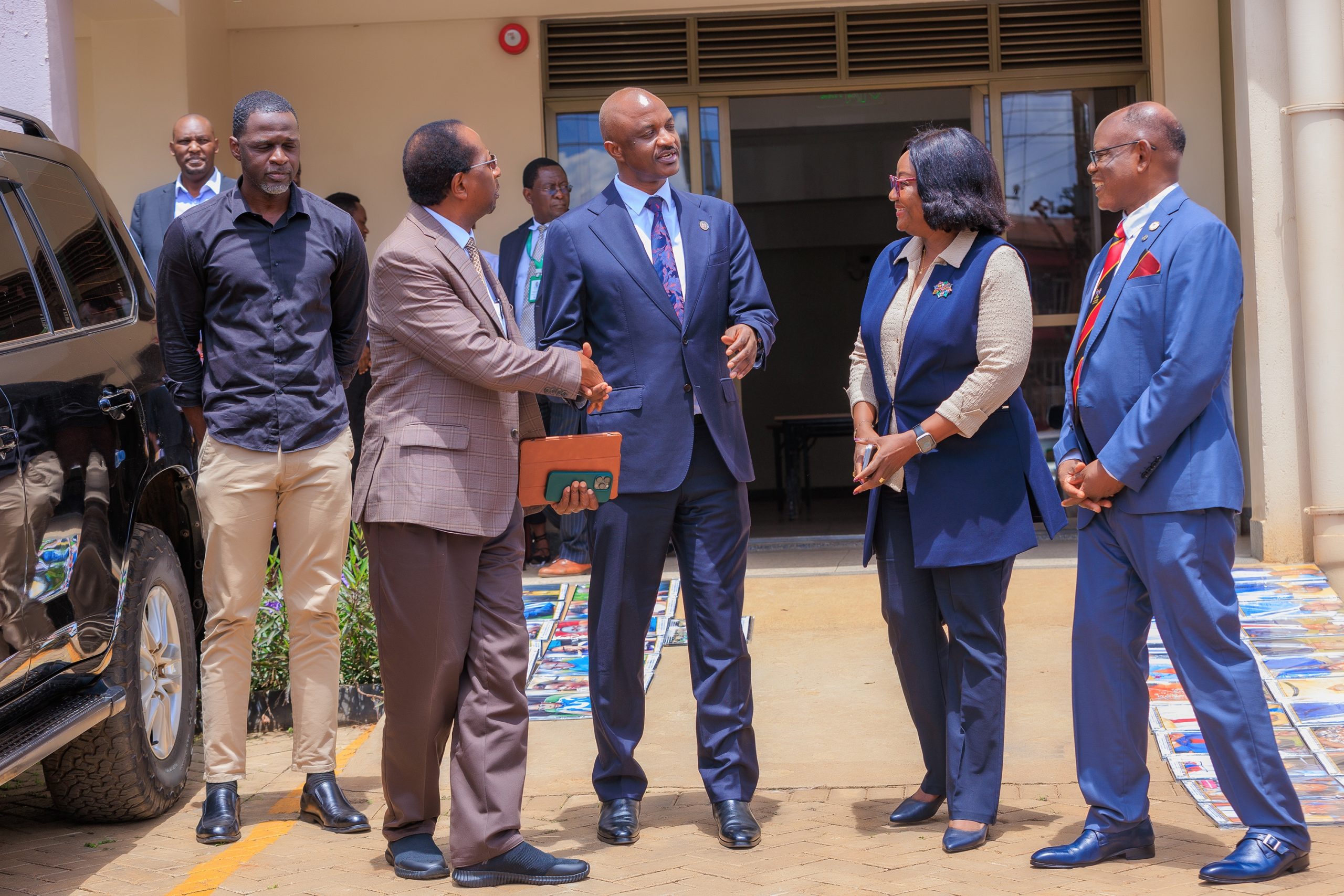
“My Ministry and the School of Public Health must be partners. … Evidence framed in fiscal terms drives policy,” said Ggoobi, stressing the need for locally grounded solutions. “What works in Ghana might not work here. We need a model that fits Uganda.”
Uganda’s current macroeconomic conditions, relatively low inflation, currency stability, and expanding private credit may provide a window to move in that direction.











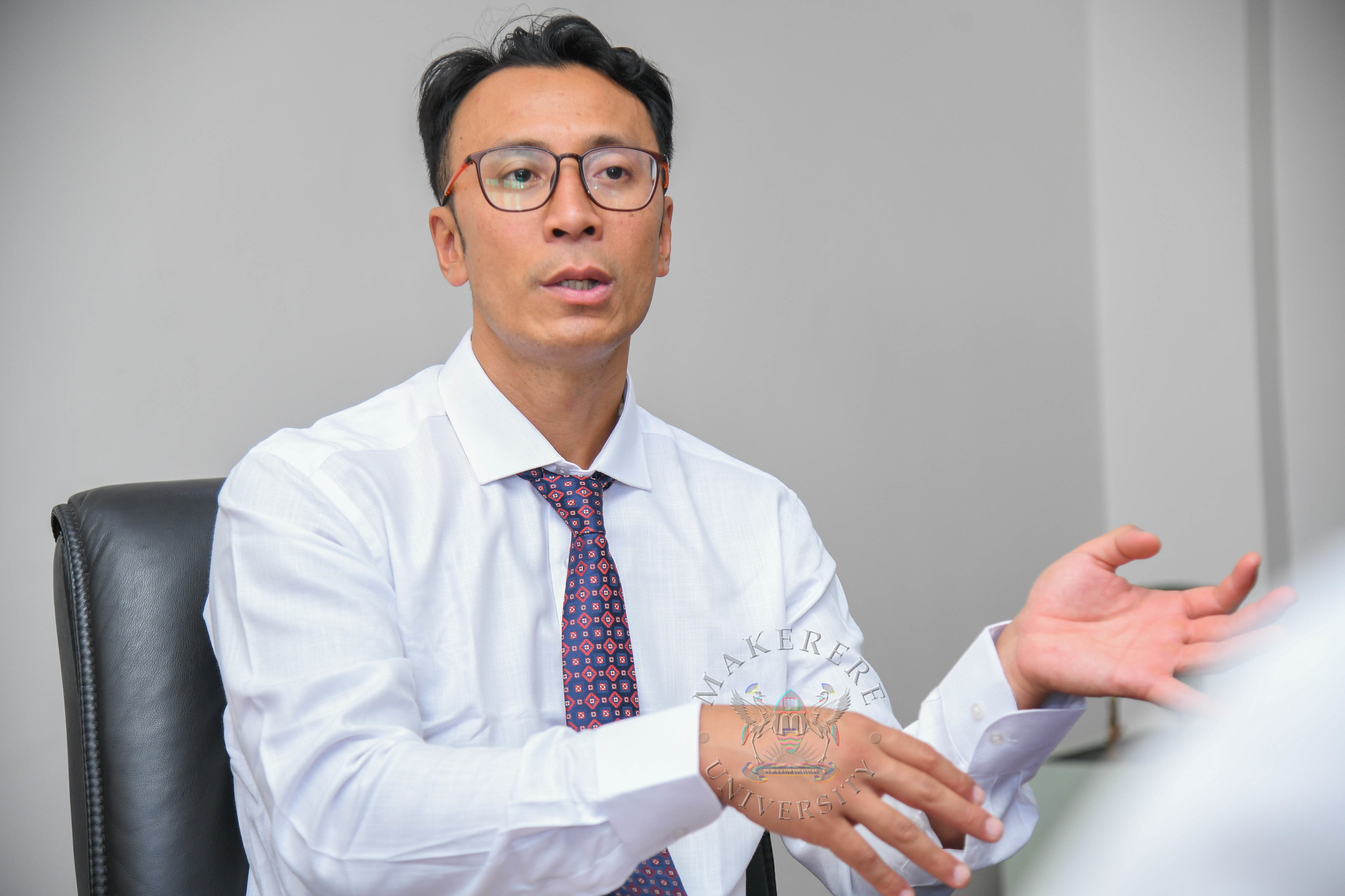
Through a European Union (EU) funded initiative, Makerere University and Mulago Hospital are hosting a German oncology reconstruction specialist Professor Dr. Thiha AUNG. AUNG is a surgeon, trainer at the Deggendorf Institute of Technology (THD), and researcher on cancer from the Deggendorf Institute of Technology (DIT), Germany.
With his international expertise in oncology and medical management roles at his home institution, his visit is a valuable addition to Uganda’s capacity building efforts in medical advancement.
Prof. Aung who arrived in Uganda in late September 2026 and has since then conducted free identified patient specialised surgeries and training for locals. These are expected to span two weeks. For the period, his service intersects medical expertise and humanitarian efforts.
This is not Prof. Aung’s first time in the country; his first major visit was in 2023, when he performed life-changing free surgeries on early patients. He then made medical history in June 2024 when he arrived to perform Africa’s first-ever lymph node transplant at Mulago Hospital.
It was against this background that the Makerere Public Relations Office engaged him in an exclusive interview to share his philosophy on medical service, his experiences in oncology reconstruction, and his unwavering belief that passion and dedication rather than just resources are the true drivers of sustainable medical progress.
Transforming Lives Through Oncology Reconstruction
At the heart of his mission through the ERASMUS – Oncology/Lymphedema project, is the treatment of lymphedema, a condition often referred to as elephantiasis.
In Europe, such surgeries can cost between 80,000 and 100,000 euros, making them inaccessible to many.
Thankfully, Professor and his team, including some of his post graduate students like Anna Friedrich (B.Sc) and Sophia Waser (B.Sc., PA) from the Institute of Medical Science and Engineering, have once again brought this specialised care to Uganda pro bono.
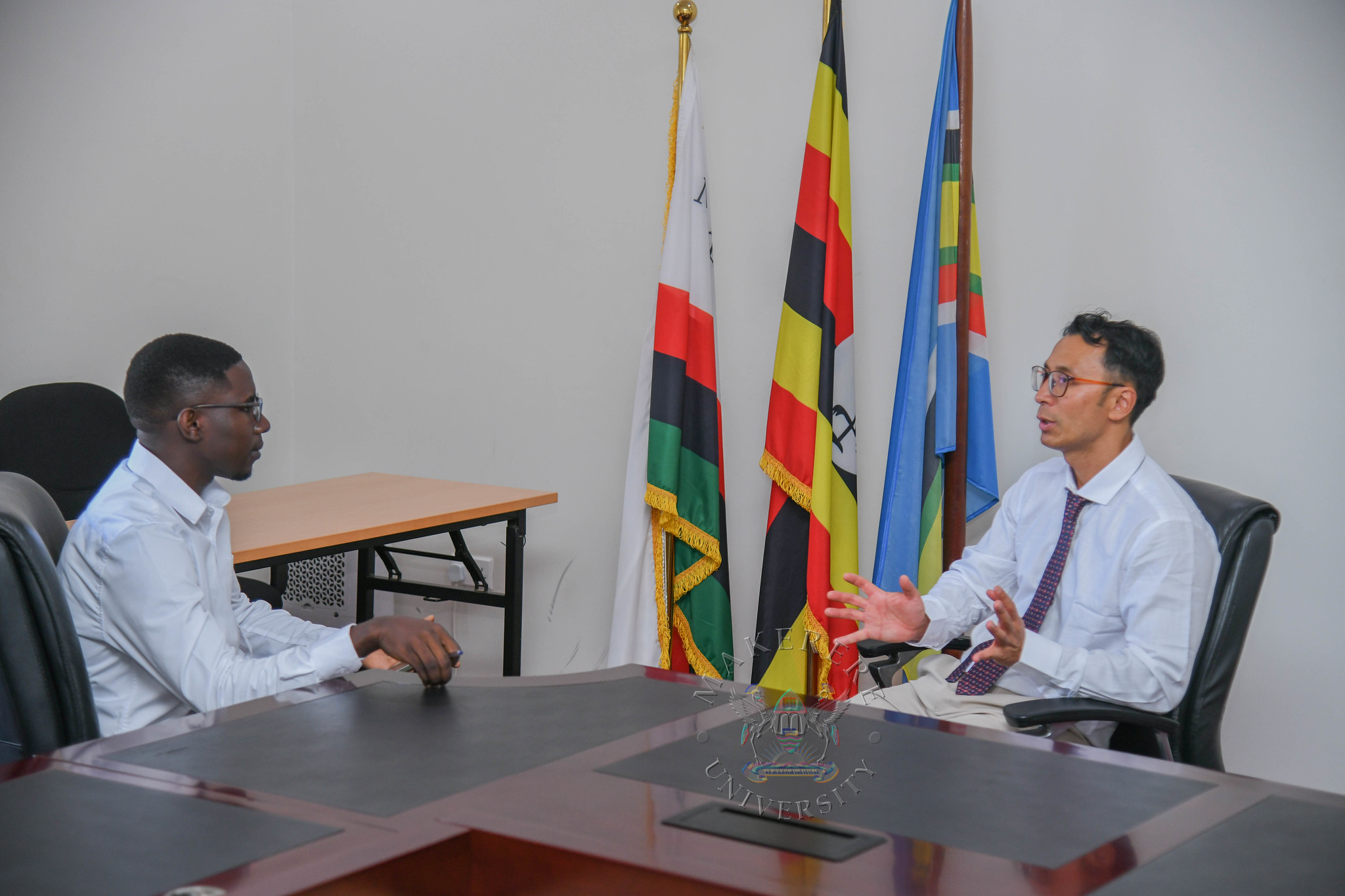
He highlights the story of a teacher who, after receiving surgery, regained her quality of life and returned to the classroom. For him, the impact is exponential. “You change one life, but this person changes a lot in the community.”
This shift from individual surgery to the long-term wellbeing of the community, reinforces the local impact of these services.
Professor AUNG’s Personal Conviction
The professor confessed that inherently, he commands himself that beyond knowledge, true progress is driven by passion and will rather than resources.
He does not agree with those that think money and resources are the sole prerequisite for change in the medical world, stating, “you cannot change with money only.” Rather, he upholds the importance of personal decision and commitment.
When discussing the challenges of working in resource-limited settings, he maintains a simple, direct explanation “it’s always beyond the money.”
Ultimately, the Professor believes that if he can provide the spark, his students and patients can carry through with the same flame for significant change.
Motivation to Serve in Uganda
When asked about his inspiration for entering the field and now volunteering to work in Uganda, he explained that his primary goal was always to serve others. “That’s why I finished my medical school to help as many people as possible with my skills.”
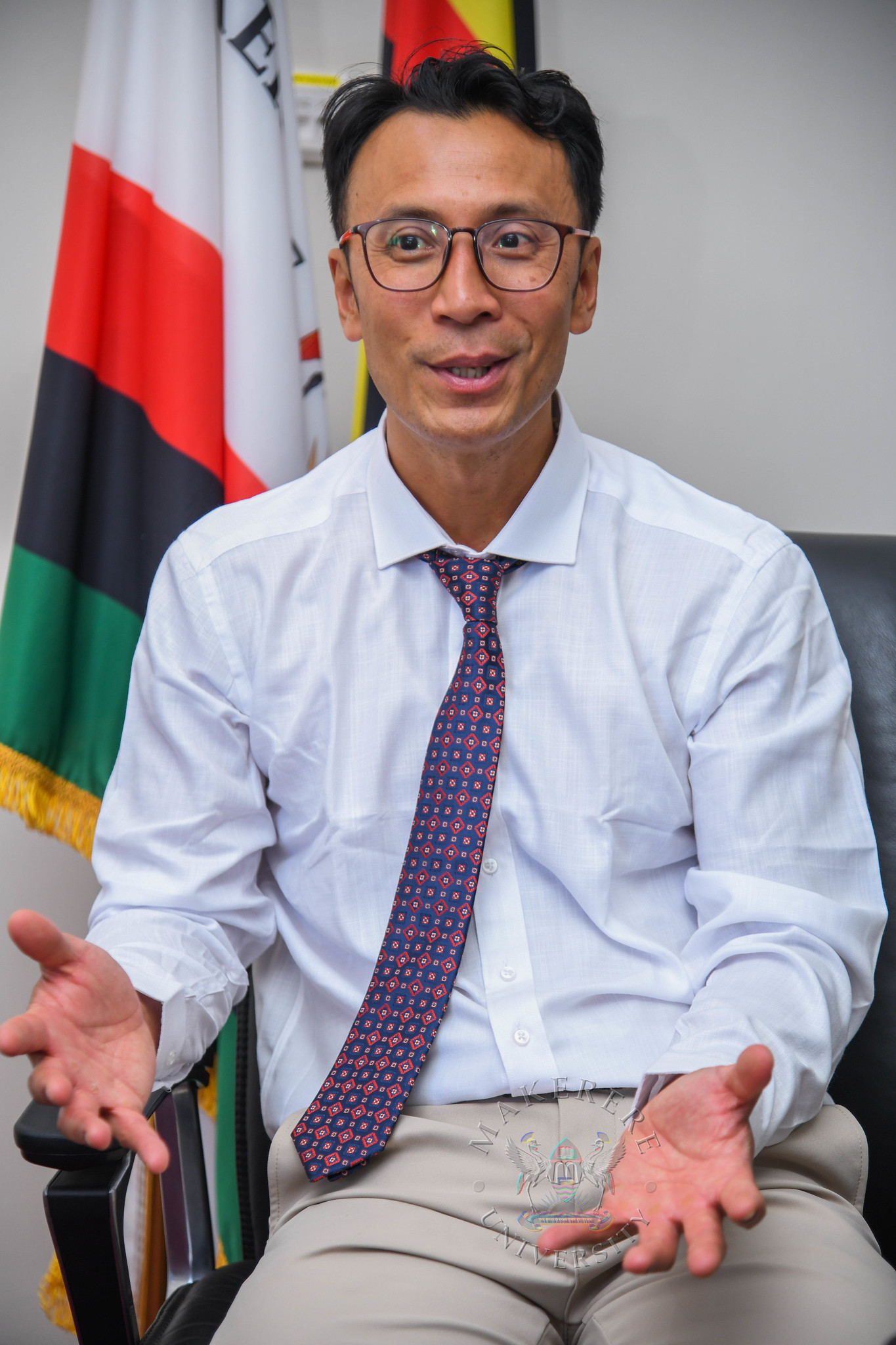
He views his medical expertise not as a tool for the privileged, but as a universal resource., “People are all the same, their anatomy is the same. So, I can help all these people pretty well,” Prof AUNG remarked.
His approach is motivated by a pay it forward dogma where treating a single patient creates a broader societal benefit. He illustrates this through his work with patients who, after surgery, are able to return to their professions like the teacher earlier mentioned.
Tips for Medical Professionals working in Uganda
As a foundation for professional growth, the Professor advised medical professionals working in Uganda to prioritise genuine interest in their work because he believes it is “the most important…” for “if you are interested, you will go far in the profession.”
He further reinforced the human capacity point, noting, “no matter what kind of equipment you have… it all depends on the people operating them and the patient.”
Professor AUNG concluded by encouraging doctors to overcome resource fears through action, stating, “If you want to create impact or change, you do.”
Dr. AUNG is part of the Lymphoedema Warriors Association (LWAU) in Uganda. He describes it as a grassroots organisation and commends them for “leveling the grond”. He reiterated his commitment to work with the organisation in reviewing patient reports to determine the best course of treatment.

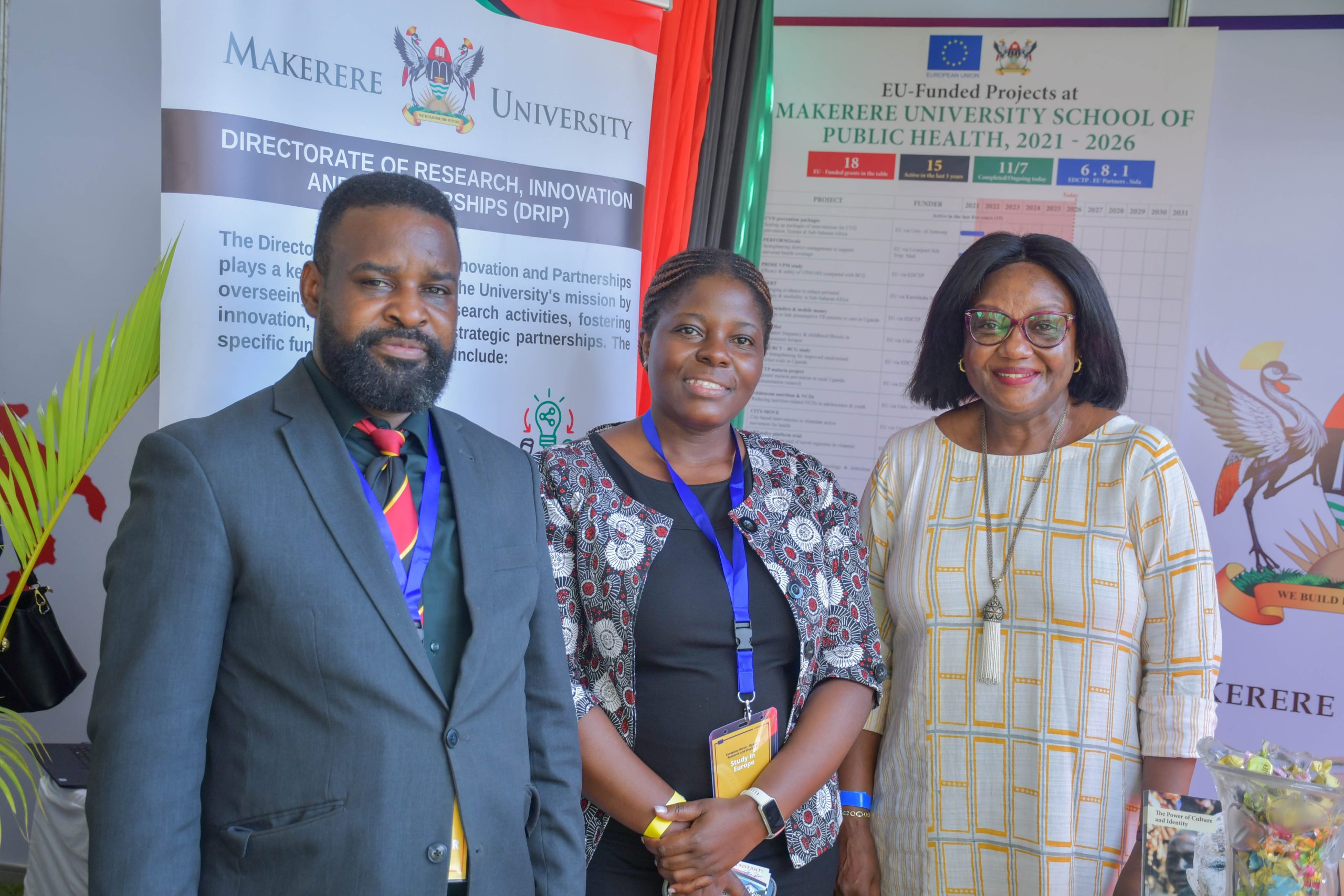
Makerere University’s School of Public Health (MakSPH) showcased research, training and international partnerships supported through European Union funding during the EU Uganda Research and Study Fair 2026 held at Makerere University.
The fair brought together students, researchers, academics, government representatives and development partners to explore opportunities in education, research, innovation and international collaboration, while celebrating 50 years of partnership between Uganda and the European Union.
Through its exhibition, MakSPH highlighted research and capacity building initiatives addressing public health challenges including infectious diseases, non communicable diseases, health systems, climate change and pandemic preparedness.
18 EU funded projects supported at MakSPH
Prof. Rhoda Wanyenze, Dean of Students, School of Public Health, said the School has benefited from 18 EU funded projects over the past five years, supporting research and training across several areas of public health.
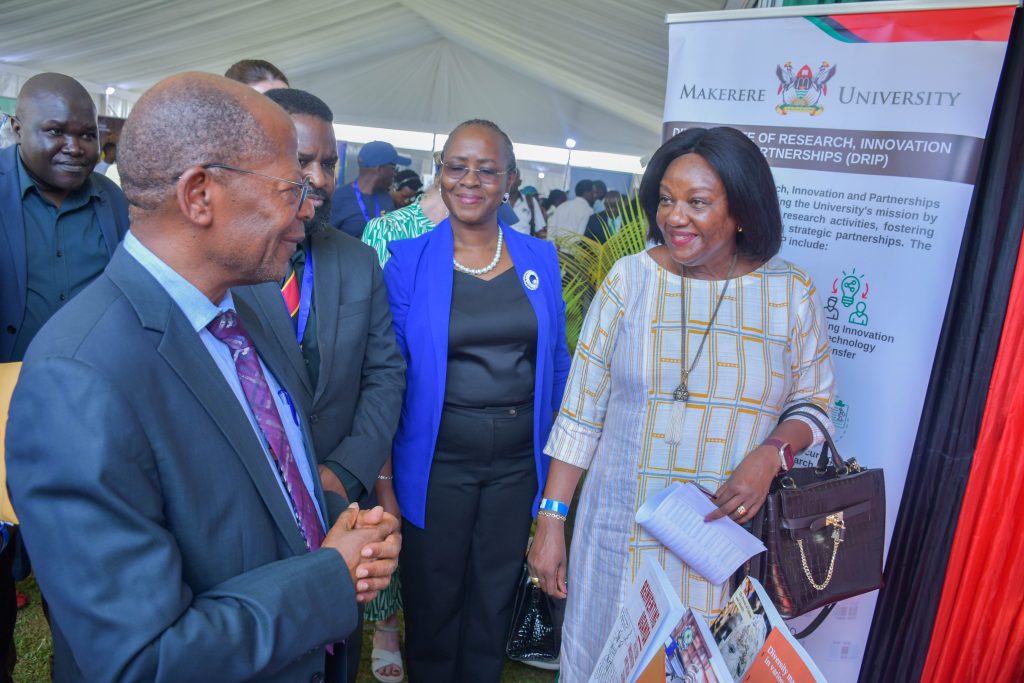
She said the projects have contributed to the training of PhD researchers and the development of research addressing infectious diseases and prevention, non communicable diseases, health systems, climate change and health.
Prof. Wanyenze also highlighted a new five year programme which started in 2021 that is aiming at strengthening capacity for research on pandemic preparedness and response, including outbreaks such as Ebola.
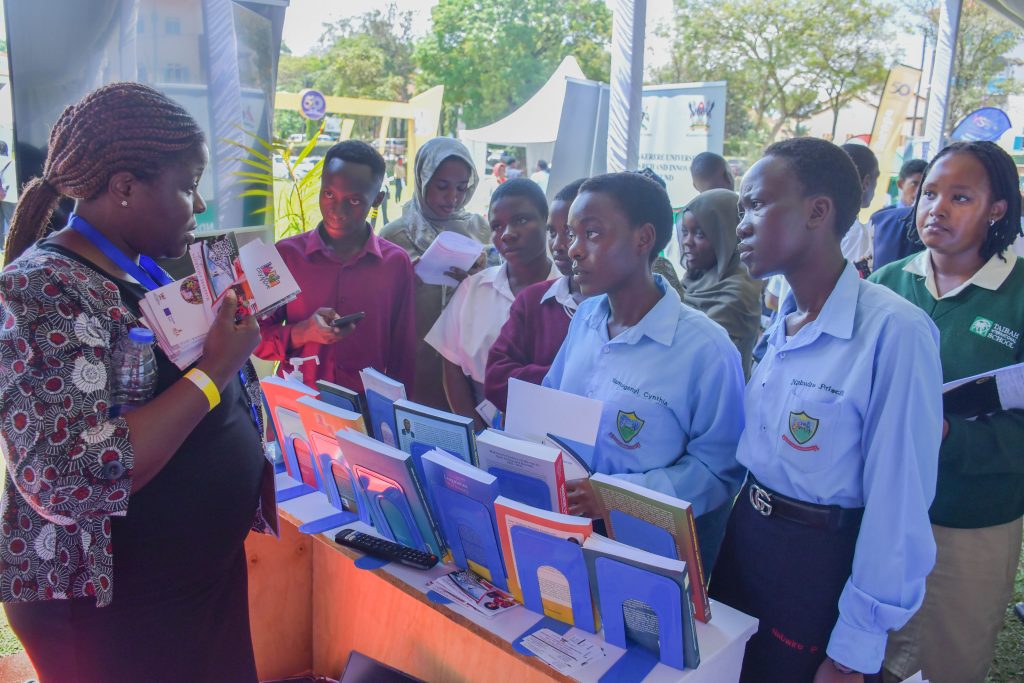
Another programme being undertaken with the Ministry of Health and Karolinska Institute focuses on improving maternal health while also addressing adolescent pregnancy and the health of mothers and children.
She described partnerships as critical to advancing science and innovation, noting that collaboration allows researchers in Africa and Europe to share knowledge and strengthen the impact of research on communities.
Research partnerships strengthen innovation
Prof. Robert Wamala, Director of the Directorate of Research, Innovation and Partnerships at Makerere University, said the exhibition provided an opportunity to showcase EU funded projects across the University.
He noted that the School of Public Health alone has more than 18 such projects, while other colleges also have several EU supported initiatives.
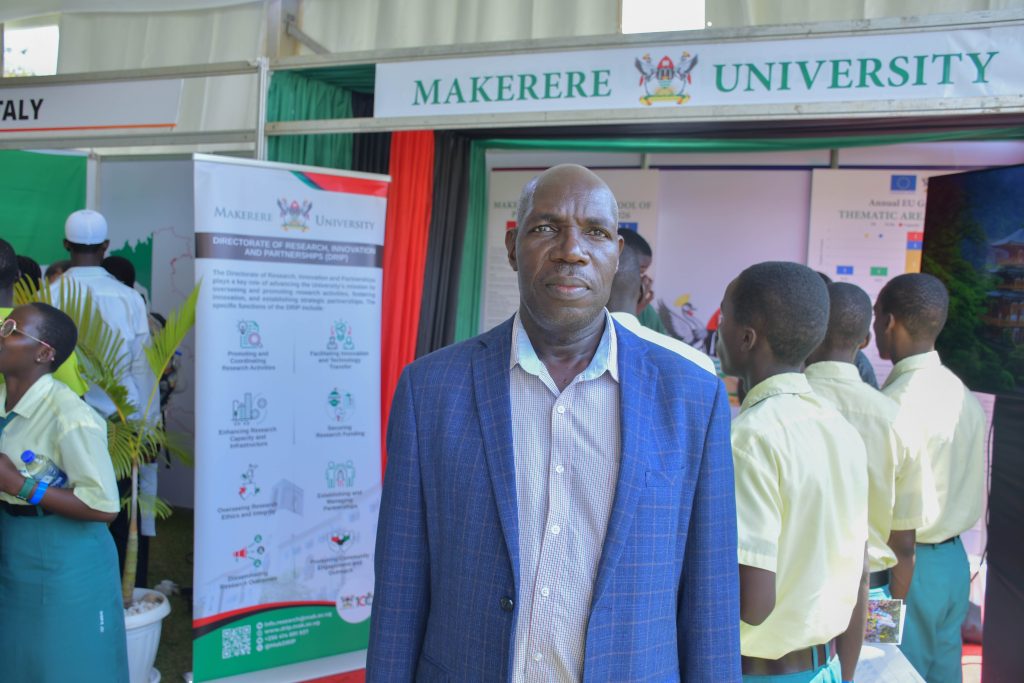
One of the projects showcased was PREPARE TID, a partnership aimed at developing rapid diagnostic technologies for emerging and re emerging infectious diseases.
Prof. Julius Okuni, Associate Professor of Veterinary Pathobiology and Molecular Diagnostics at Makerere University, said the project brings together universities, industries and other organisations from Africa and Europe.
The project is working to develop technologies that can quickly identify pathogens responsible for outbreaks such as Ebola, Rift Valley fever and Crimean Congo haemorrhagic fever.
According to Prof. Okuni, Makerere is involved in field and laboratory work to test and refine the technologies before they can be delivered to end users.
Fair provides platform for research visibility
For researchers at MakSPH, the fair also provided an opportunity to increase the visibility of ongoing research and create new connections with researchers, policymakers and potential funders.
Dr. Raymond Tweheyo, Honorary Lecturer and Senior Research Fellow in the Department of Health Policy, Planning and Management, said such exhibitions allow researchers to share their work and identify others working on related challenges.
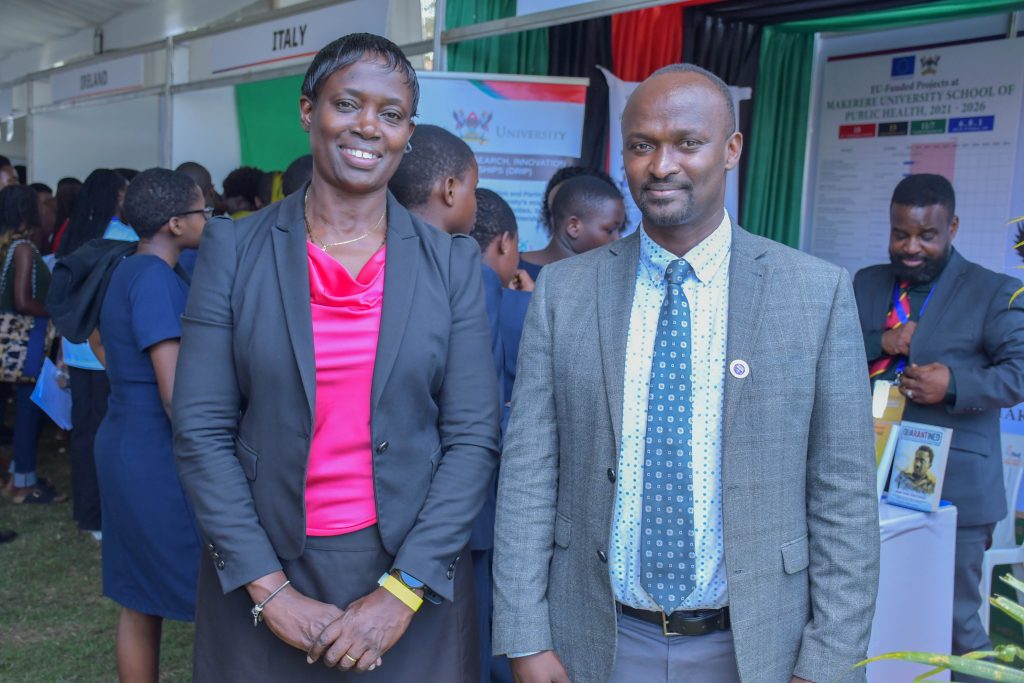
He cited the CONNECT for Health project, which focuses on transforming non-communicable disease care in Uganda through collaboration with partners across several countries.
Dr. Tweheyo said exhibitions can help researchers connect with policymakers, civil society organisations and other partners who can contribute to translating research into practical solutions.
Assoc. Prof. Angelina Kakooza Mwesigye, Associate Professor and Child Neurologist at Makerere University College of Health Sciences, also emphasised the importance of exposing young people to international research opportunities.
She said the long standing Uganda Europe partnership provides opportunities for the next generation of researchers to learn, build networks and prepare for future research collaborations.
The School of Public Health’s participation highlighted the role of international partnerships in strengthening research capacity, supporting innovation and developing evidence based responses to Uganda’s public health challenges.
-
 General2 weeks ago
Statement on Concerns Circulating Regarding a Member of Academic Staff
-
 General2 weeks ago
Beyond Map Size: Africa’s Agency Should Not Be Funded by Other People
-
 General6 days ago
Timothy Khabusi: From Barefoot Walks to shaping Uganda’s Eye health Future
-
 General2 weeks ago
Press Statement: Incident Involving Death of a Student at Makerere University
-
 Health1 week ago
Uganda’s HIV Treatment Gains Bring the Youth Gap into Focus