
General
Transform Ivory Tower into Impact Tower – First-ever CEOs’ Summit


Makerere University, through the Makerere University Convocation (MUC), has hosted the first-ever CEOs/Investors’ Round Table Summit on Tuesday, 2nd September 2025. The historic event brought together alumni, Chief Executive Officers (CEOs), and stakeholders in a distinguished assembly aimed at re-imagining the university’s role in national and continental transformation.
The Convocation, which serves as a critical forum for foresight and life-transformational dialogue, unveiled five transformative points carefully crafted to transform Makerere from a symbolic “ivory tower” into an “impact tower” that influences the country and the world more than ever before.
Government Endorsement and Call to Action
The Chief Guest, Prime Minister Rt. Hon. Robinah Nabbanja, was represented at the event by the 3rd Deputy Prime Minister, Rt. Hon. Rukia Nakadama Isanga. She conveyed warm greetings from H.E. the President of Uganda, Gen. Yoweri Kaguta Museveni, and the Rt. Hon. Prime Minister.
She commended the Convocation for convening under the summit under a significant and timely theme: “Exploring the Opportunities for Entrepreneurship, Innovation and Value Creation for Accelerated Socio-Economic Integration and Development of Sub-Saharan Africa.”
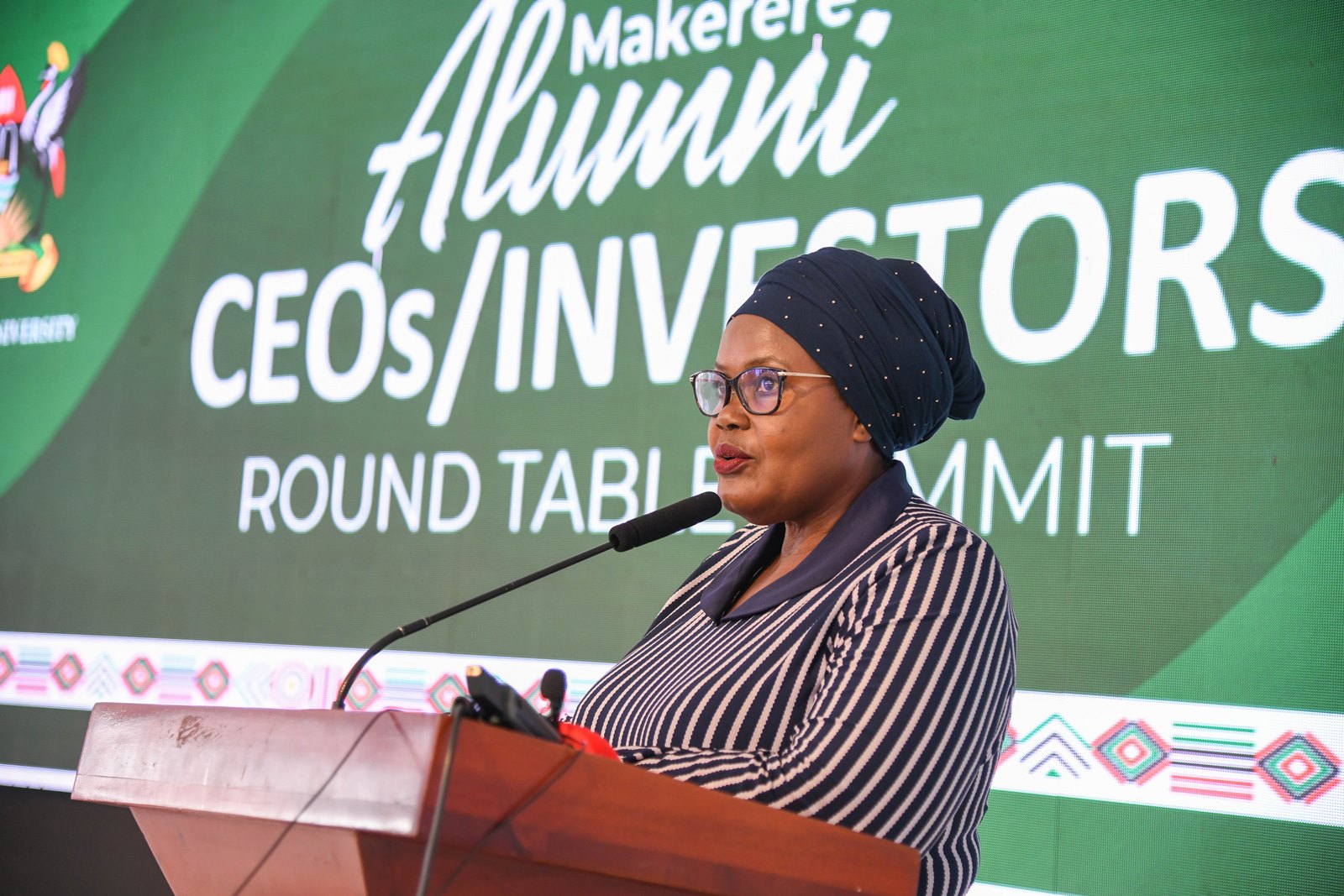
She described the summit as not just a gathering but a journey and a call to action, urging academia, industry, and government to align efforts with Uganda’s and Africa’s transformation priorities.
Framing her remarks around the World Bank’s guiding principles—Trust, Humility, Inclusion, Collaboration, and Knowledge—she explained:
- “Trust must be built between government, academia, and business… the gathering reflects the trust in CEOs and investors to walk this journey together.”
- “Humility requires listening and learning, recognizing that no single institution has all the answers.”
- “Inclusion reminds us that no youth, woman, or marginalized group should be left behind in transformation.”
- “Collaboration is the currency of progress, necessary for solving complex challenges across sectors.”
- “Knowledge remains our greatest asset, with Makerere University demonstrating its importance in moving from ivory towers to communities to transform lives.”
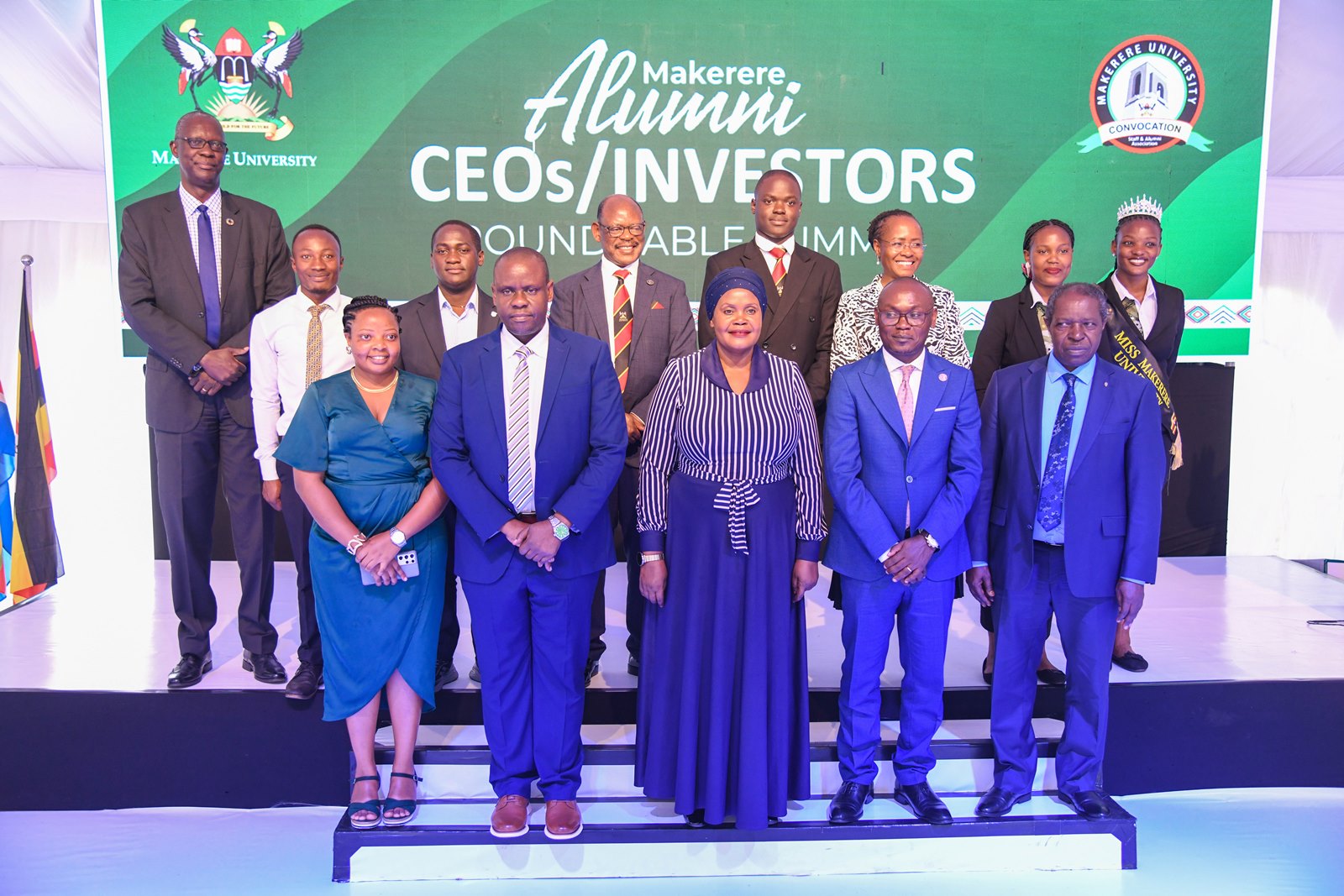
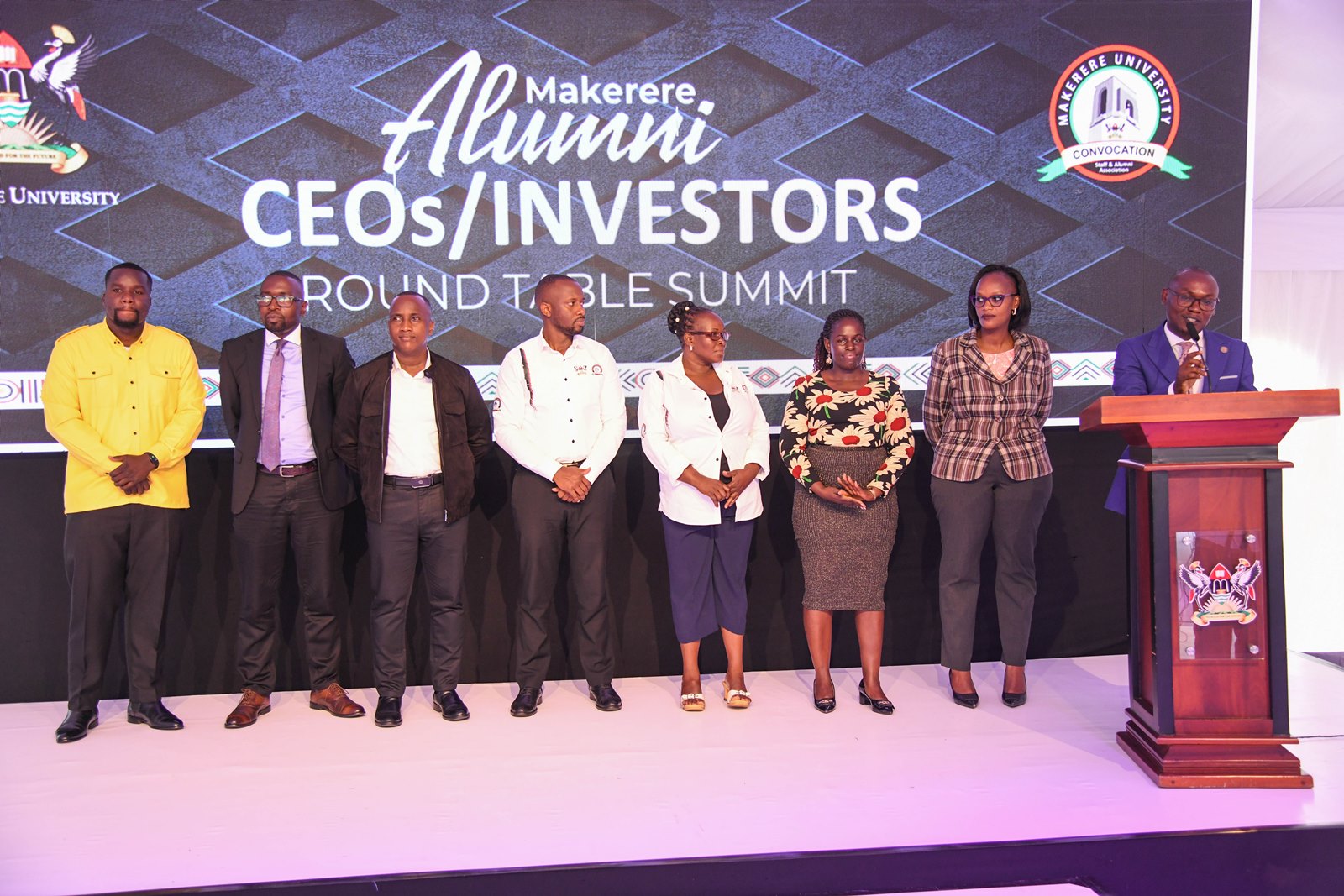
She then unveiled a “massive transformation purpose”, commissioning five working teams led by CEOs and investors. The teams, nominated lead persons, and their respective objectives included:
- From Ivory Tower to Impact Tower – Dr. Patricia Ojangole (UDB) with Patrick Ayota (NSSF), translating research into market-ready innovations.
- Diaspora Dividend vs Brain Drain – Jennifer Bamuturaki (Uganda Airlines) with Michael Mugabi (Housing Finance Bank), harnessing diaspora capital, skills, and mentorship.
- Intergenerational Knowledge Bridges – Fabian Kasi (Centenary Bank) with Ajay Kumar (Quality Chemicals), institutionalizing mentorship and reverse mentorship.
- Climate and Infrastructure Leadership – Proscovia Nabbanja (UNOC) with Silver Mugisha (NWSC), anchoring research in energy security, green transition, and infrastructure.
- Pan-African Digital and AI Advantage – Sylvia Mulinge (MTN Uganda) with Mumba Kalifungwa (Stanbic Bank), positioning Makerere as Africa’s digital and AI hub.
She pledged full government support, noting that the teams would convene in the Office of the President. “This summit is not ceremonial but a covenant,” she stressed.
The Minister’s Reflection
Hon. Balaam Barugahara, State Minister for Gender, Labour and Social Development in charge of Children and Youth Affairs, emphasized that the summit was not a party but a process of transformation.
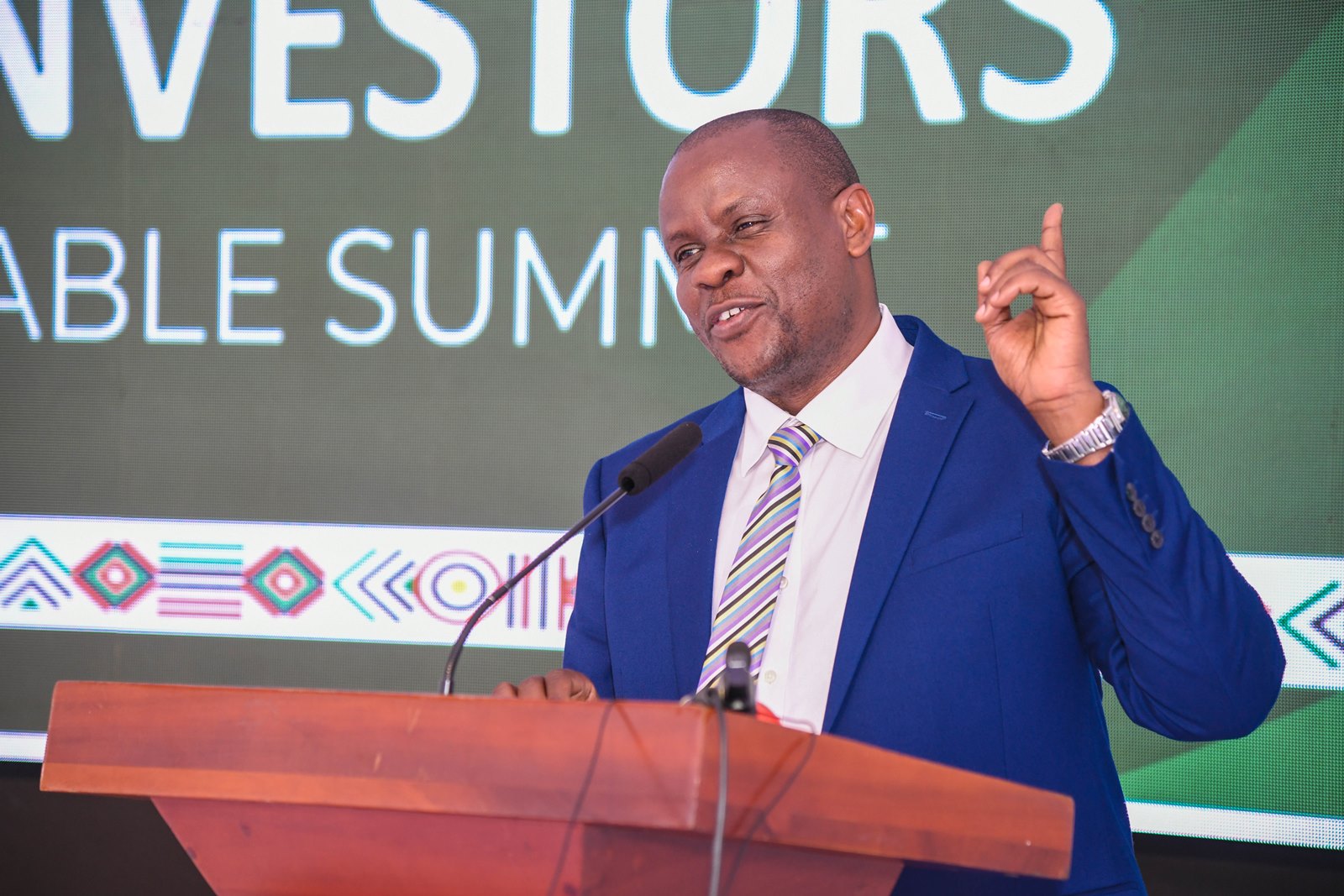
Drawing from personal experience, he recalled joining Makerere in 2000 and completing his degree in seven years due to balancing work, hustling for fees, and studying. He praised the university’s role in shaping his success and highlighted recent developments such as the renovation of Mary Stuart Hall and revamping the Main and Western gates, as milestones that have enhanced Makerere’s image. He equally applauded the curbing of staff and student unrest.
He noted that the summit aimed to facilitate networking, mentorship, career opportunities, and university development, signalling collective commitment to Uganda’s transformation.
Council’s Vision: A Legacy Re-imagined
Representing Makerere University Council Chairperson Ms. Lorna Magara, Prof. Sarah Ssali described the summit as a “historic alumni CEO investor round table” and a reaffirmation of Makerere’s role in Africa’s development. She described the university as a “cradle of leadership, innovation and resilience”, noting that the gathering’s objectives included fostering partnerships, showcasing research, launching a fundraising drive, and strengthening alumni engagement. Prof. Ssali emphasized that alumni relations must go beyond occasional financial contributions during events, to continuous communication and genuine relationships. “This summit marks the start of a journey, not just an isolated event,” she reechoed.
Vice Chancellor on Unlocking Makerere’s Potential
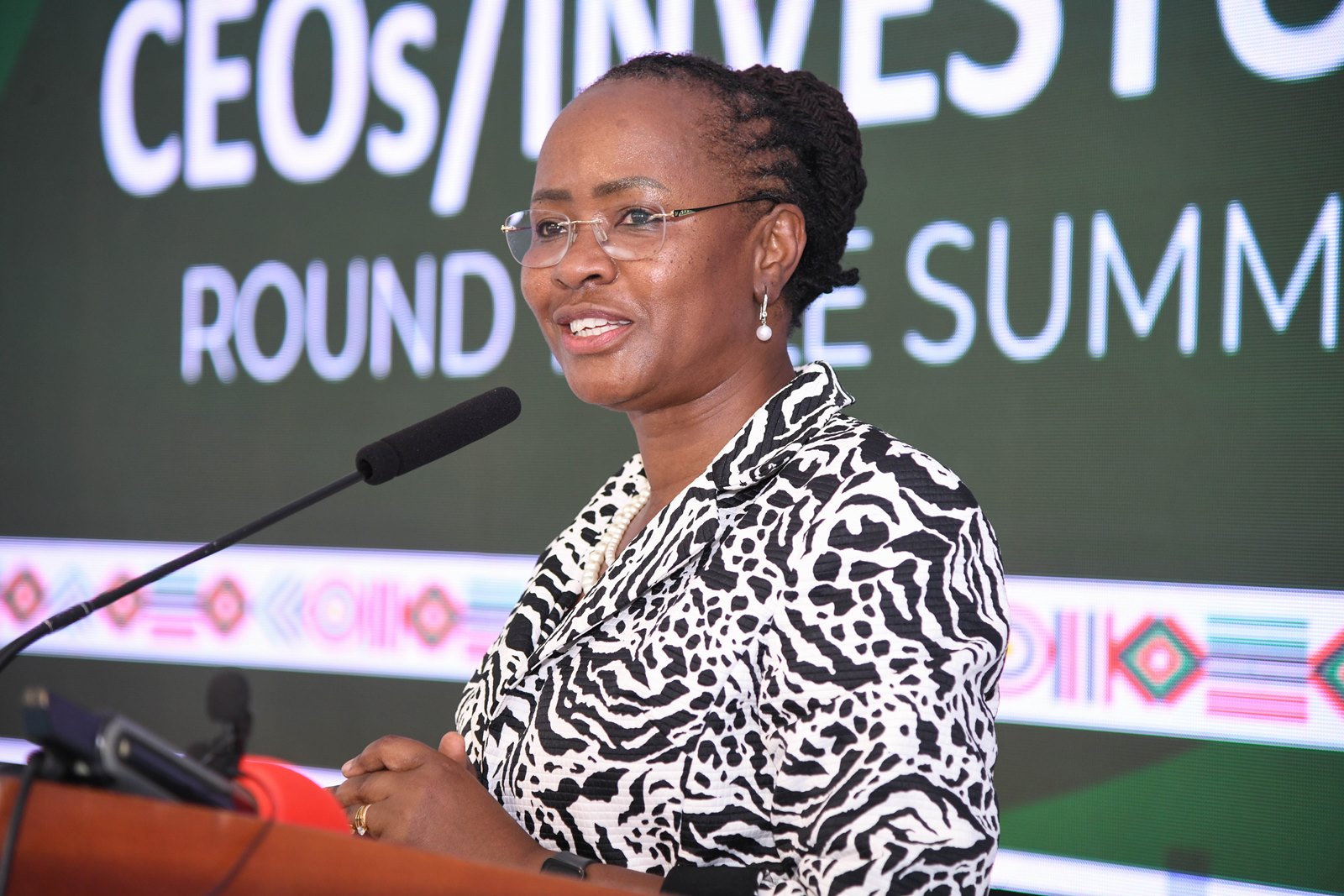
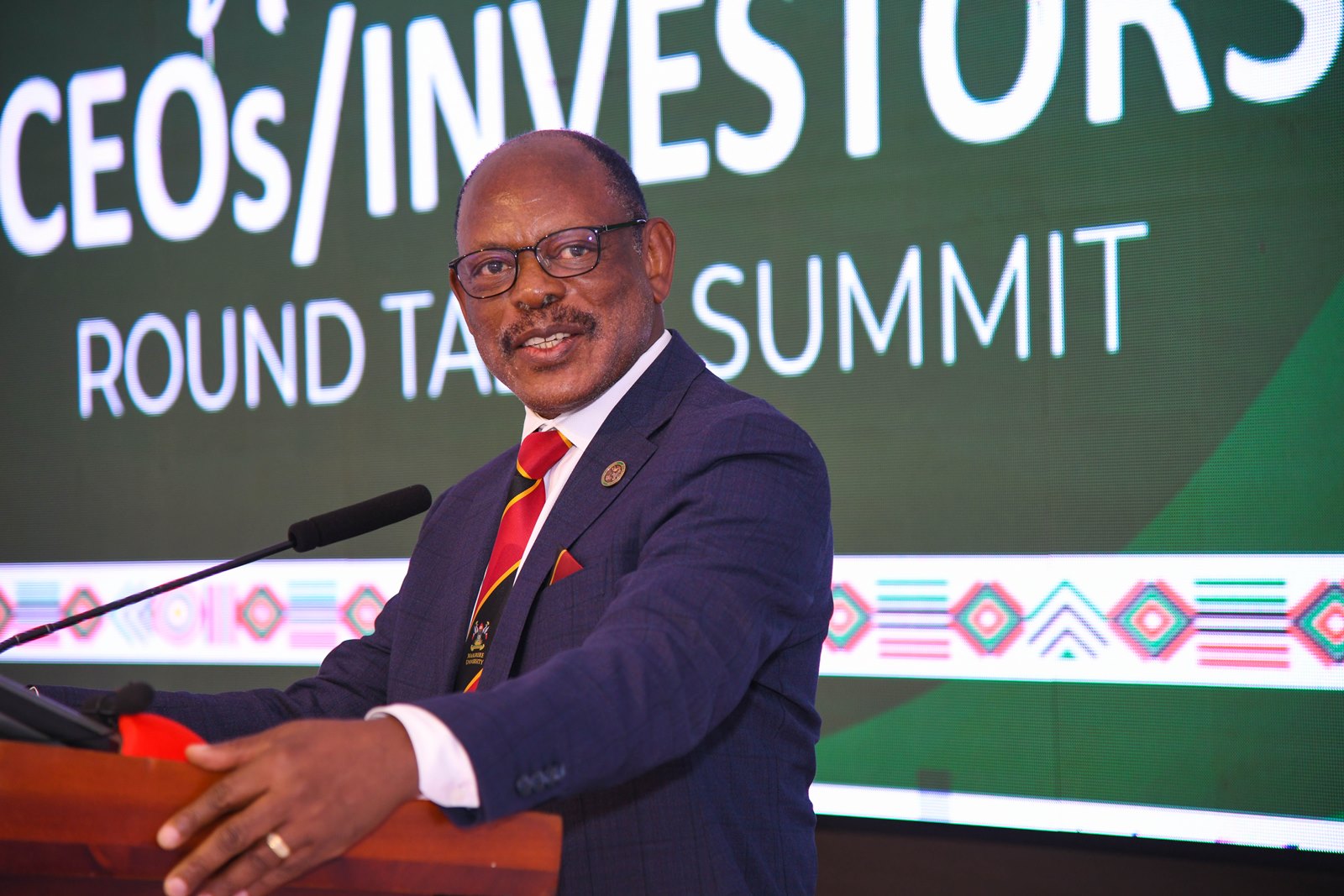
Reflecting on the theme of his bid for the Office of Vice Chancellor, “Unlocking the Potential of Makerere University,” Prof. Barnabas Nawangwe noted that while many only celebrate the absence of strikes, behind the calmness is a vibrant transformation.
He highlighted Makerere’s alumni strength, with over 20,000 CEOs globally, and underscored their contributions to Uganda’s economy, governance, health, sports, and research. “What would Uganda do without Makerere?” he pondered. Prof. Nawangwe quickly added that the moment was ripe for Makerere to collaborate more with diaspora alumni so as to tap into fast-evolving niches such as blockchain.
Convocation’s Strategic Role
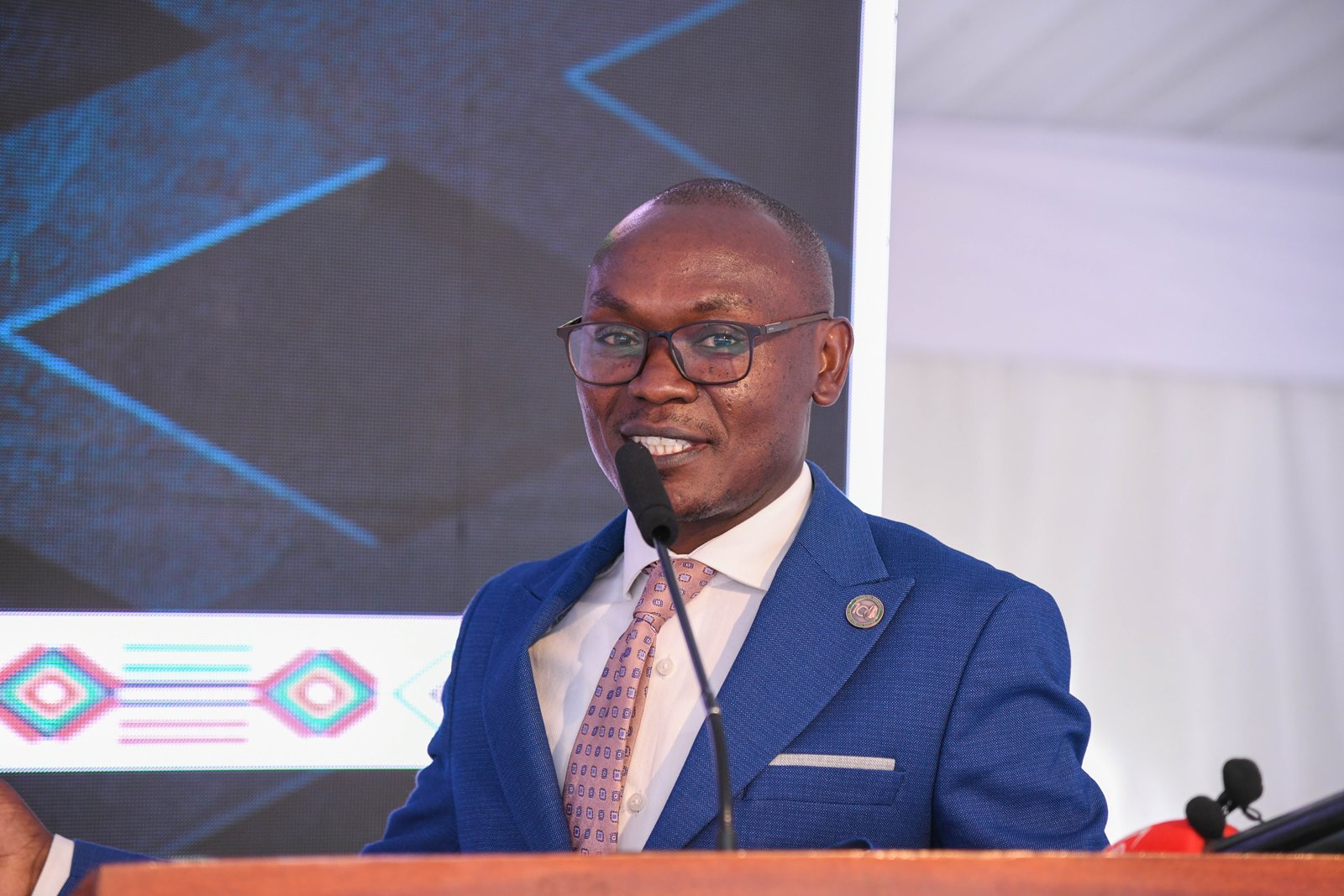
MUC Chairperson CPA George Mugabi Turyamureeba outlined the Convocation’s mission to support the university’s growth and well-being. He highlighted innovations such as the Convocation House, the annual luncheon for first-class graduates and their parents, mentorship programs, and the MUC SACCO as initiatives that his team had established and promoted during the term so far. The Chairperson nevertheless urged the CEOs present to enable the Convocation have greater impact collaborating on existing as well as envisaged projects such as the Convocation Innovation Centre.
Adding her voice, Vice Chairperson Ms. Grace Cherotich Ruto urged participants—described as “movers and shakers” of Uganda’s economy—to ensure that their decisions today would be celebrated by future generations.
Keynote Address: The Journey’s Just Began
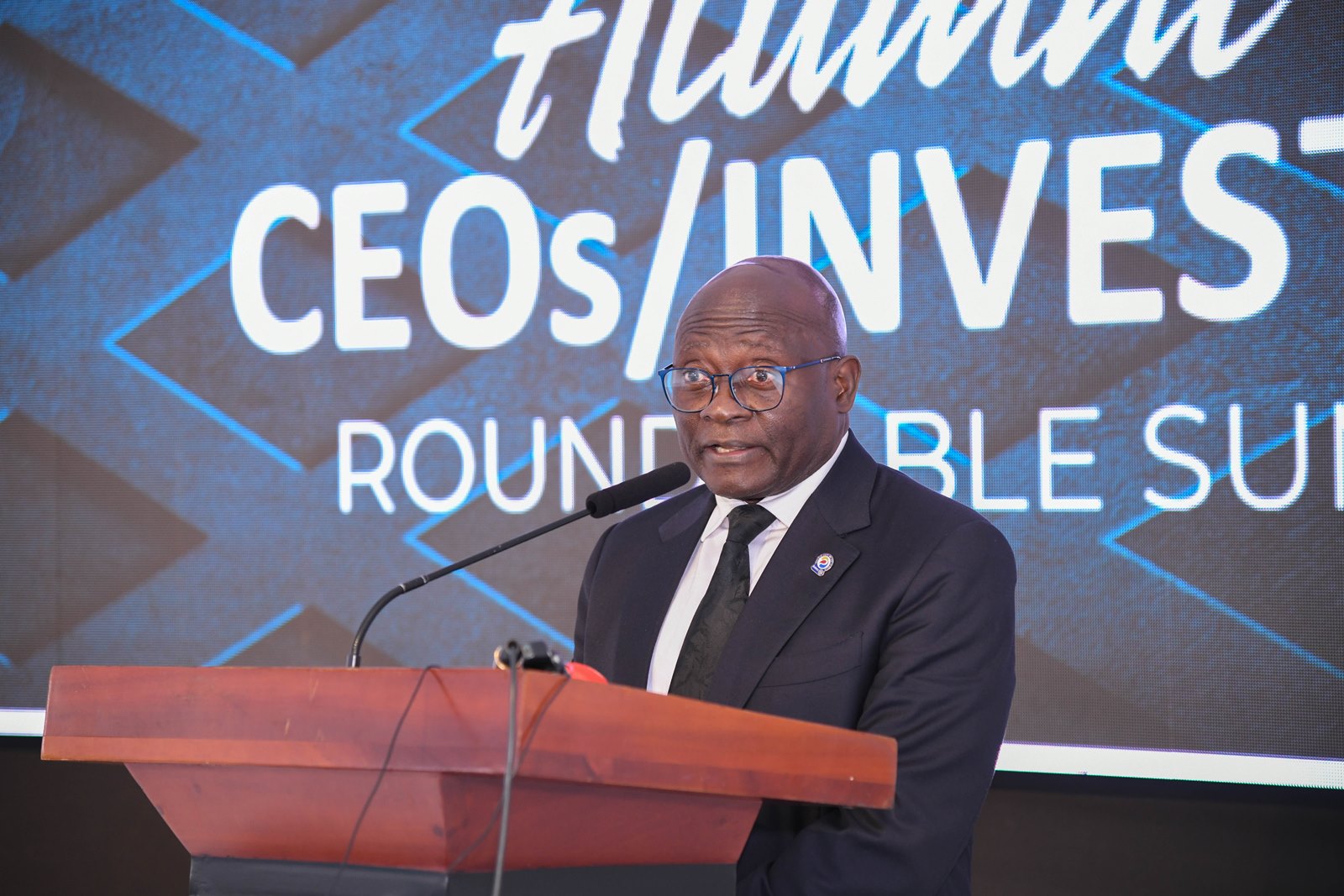
In his keynote, Dr. Peter Kimbowa, Founder and Board Chair of the CEO Summit and Makerere alumnus, congratulated his alma mater on the initiative and reaffirmed the Convocation’s strategic role.
He emphasized that the Round Table Summit should not be seen as a one-time event but as an ongoing journey, echoing American Football Player Jalen Hurts’ mantra: “There’s no arrival. Only the journey.” Dr. Kimbowa defined the Convocation as a community of leaders, alumni, and faculty united by heritage and vision. He described it as a bridge connecting:
- The past to the future,
- Business and industry to academia, and
- Learning to market needs.
He stressed that the Convocation’s ultimate goal was to transform Makerere into a self-sustaining engine of innovation, opportunity, and national transformation. Drawing on corporate insights, he challenged participants to always ask “what is the next opportunity?” and warned against complacency. He unpacked the massive transformation purpose structured around five working teams which MUC has developed, whereby corporate chief executives from Uganda are called upon to lead collaboration with the university. He highlighted the importance of mobilizing talent to connect with successful Ugandan alumni, underscoring the need for local CEOs to harness talent in the diaspora. He emphasized deliberate action, mobilization of global alumni talent, and collaboration between CEOs and the university to sustain transformation
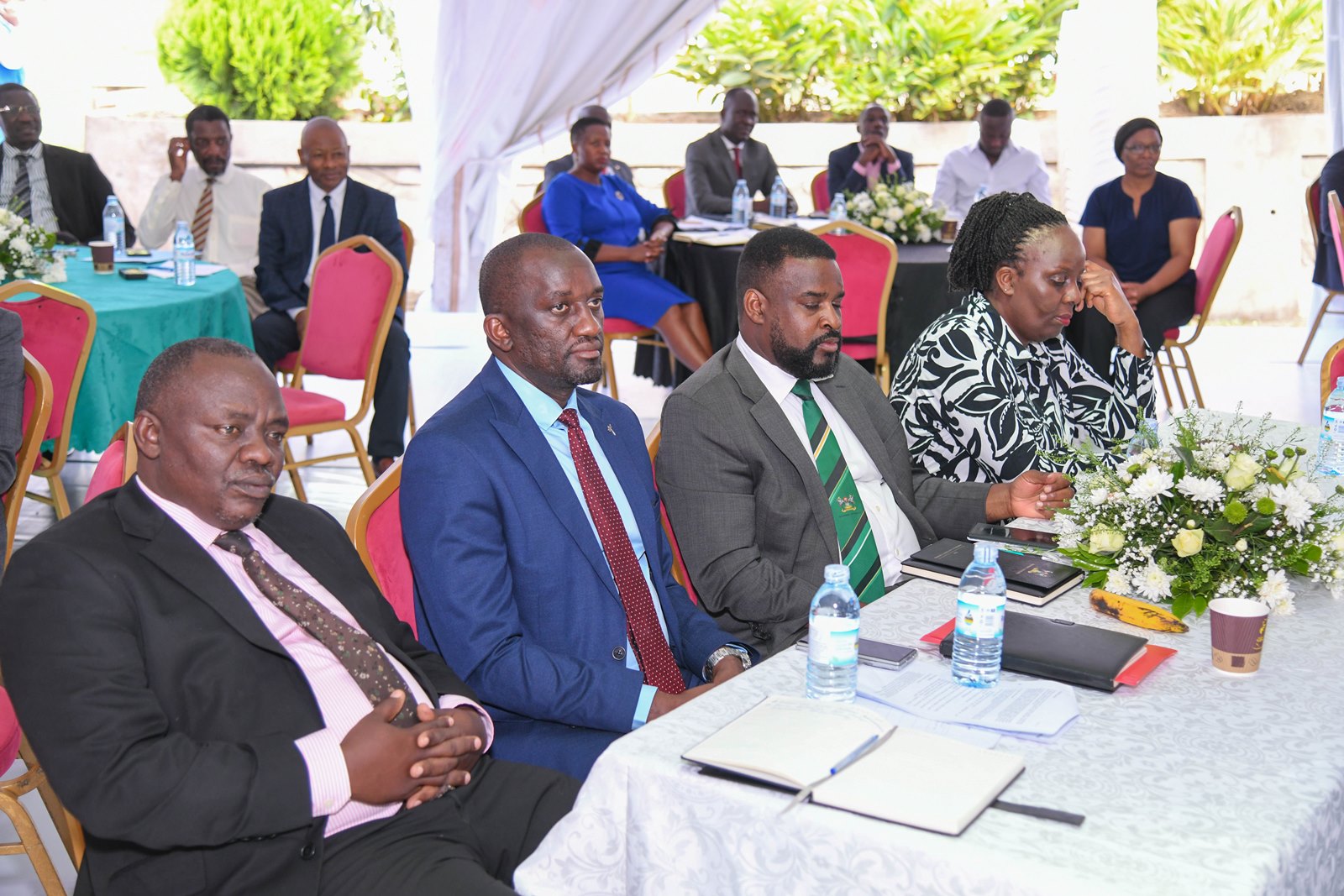
Panel Discussions and Triple Helix Framework
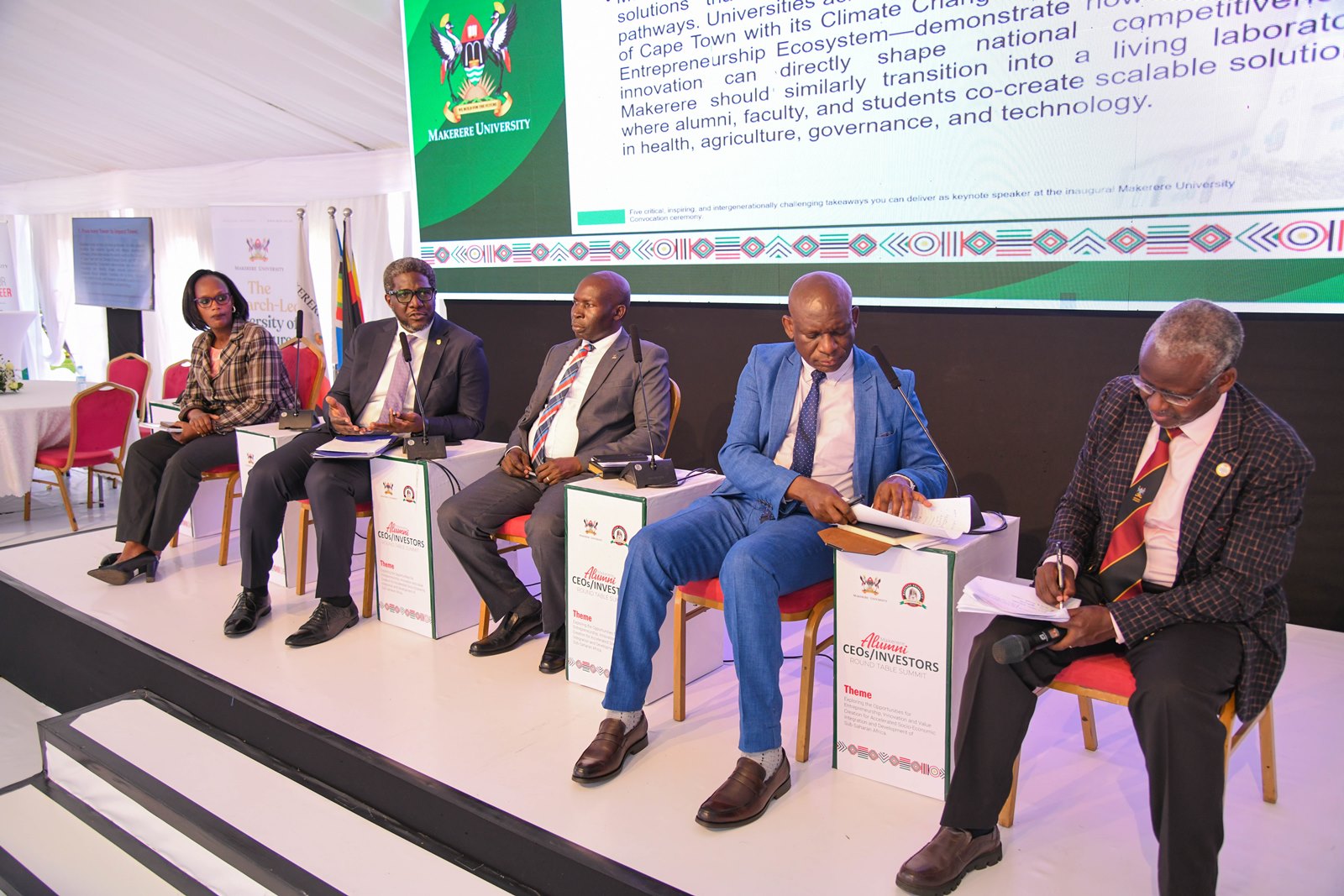
The day’s panel discussion featured Mr. Samuel Mwogeza (Executive Director, Stanbic Bank), Mr. Peter Sibukule (Headmaster, Busoga College Mwiri), Mr. Clovice Bright Irumba (Petroleum Authority of Uganda), and Ms. Grace Cherotich.
Mr. Mwogeza stressed the need to commercialize university prototypes and ideas. He explained that banks like Stanbic use their networks to strengthen innovators’ business cases, preparing them for market entry. Mr. Sibukule on the other hand called for transformation of mindsets right from secondary school level so that students are well primed to communicate, collaborate, uphold integrity and good work attitudes over qualifications in the marketplace. Mr. Irumba highlighted efforts by the PAU to create more opportunities for Ugandan entities to get involved in the oil and gas sector thanks to gaps highlighted by a study undertaken by the Economic Policy Research Centre (EPRC). Ms. Cherotich on the other hand invited CEOs to take interest in research outputs of the Makerere University Research and Innovations Fund (Mak-RIF) and reassured the audience of the Convocation’s readiness to provide a trusted platform for engagement with industry.
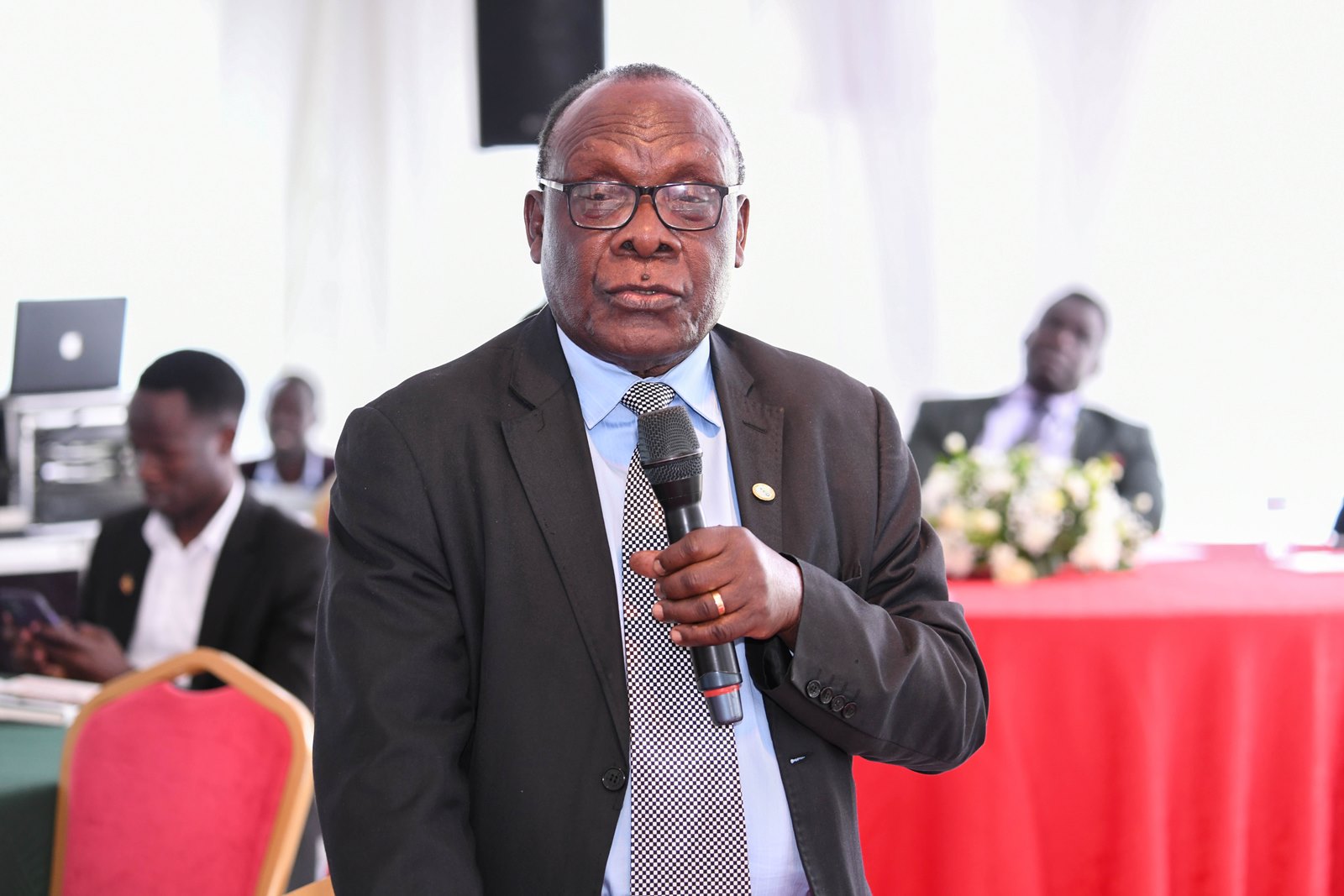
Contributing to the day’s discussion, Prof. Eriabu Lugujjo, Executive Director of the Uganda Vice Chancellors’ Forum (UVF), reminded the audience of the “Triple Helix” model and it’s underlying policy frameworks that in the recent past guided collaboration between universities, government, and the private sector. He observed Uganda’s lack of a robust framework, and called for policies that tie tax incentives to university support by corporations and other business entities.
Proceedings
The inaugural edition of the summit was moderated by Dr. Tayeebwa William from the Department of Journalism and Communication who doubles as Managing Editor Makerere University Press and Dr. Viola Karungi from the Department of Performing Arts and Film (PAF).
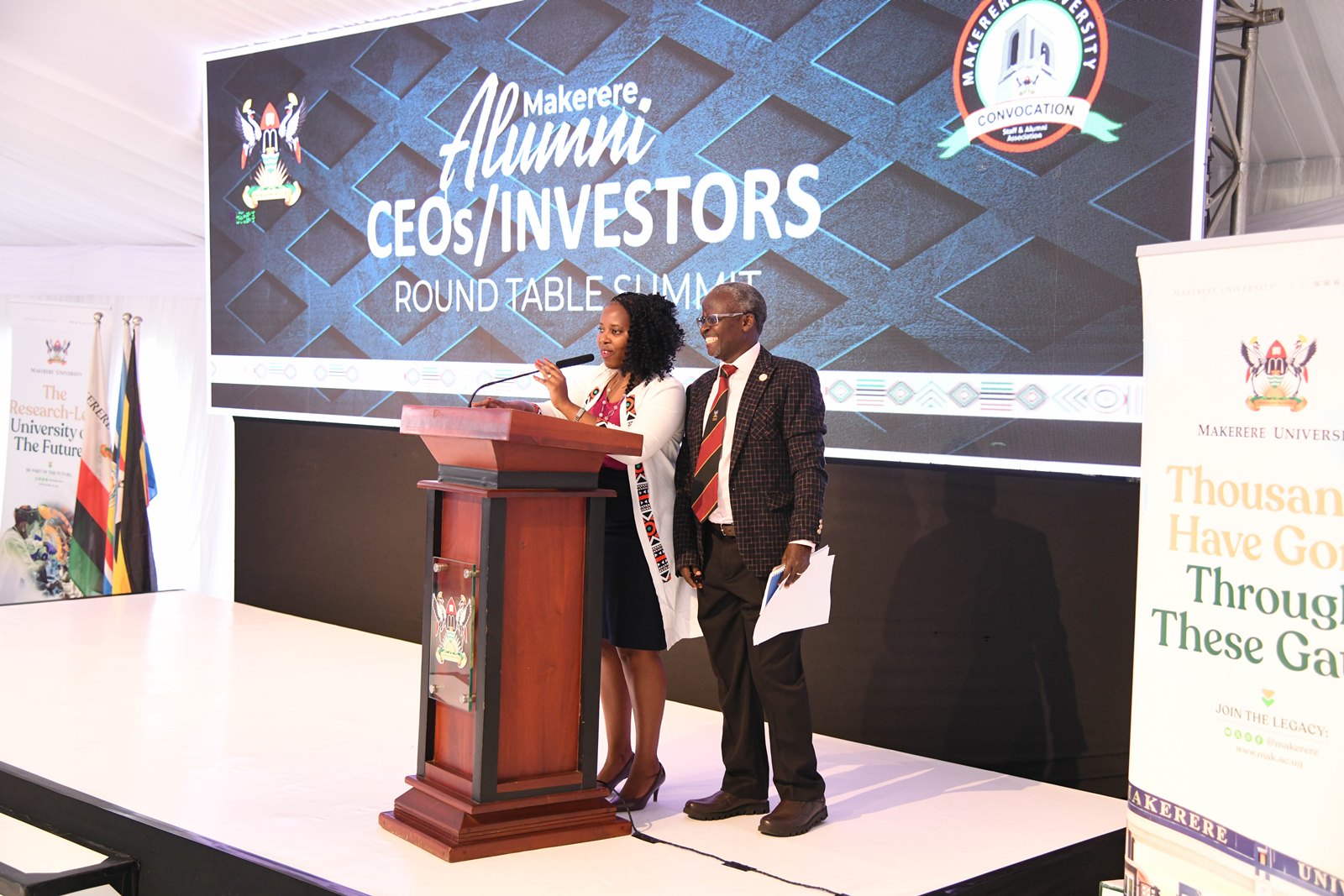
The PAF team took charge of the leading the anthems and day’s entertainment, which included a poetic presentation of the Makerere University Anthem.










The Makerere University School of Public Health (MakSPH) has honored Ms. Gladys Khamili for her 12 years of service as Registrar, as she transitions to a senior role in the Senate Division of Makerere University.
During the School’s 239th Management Meeting, colleagues recognized her contribution to academic administration and formally handed over the office.
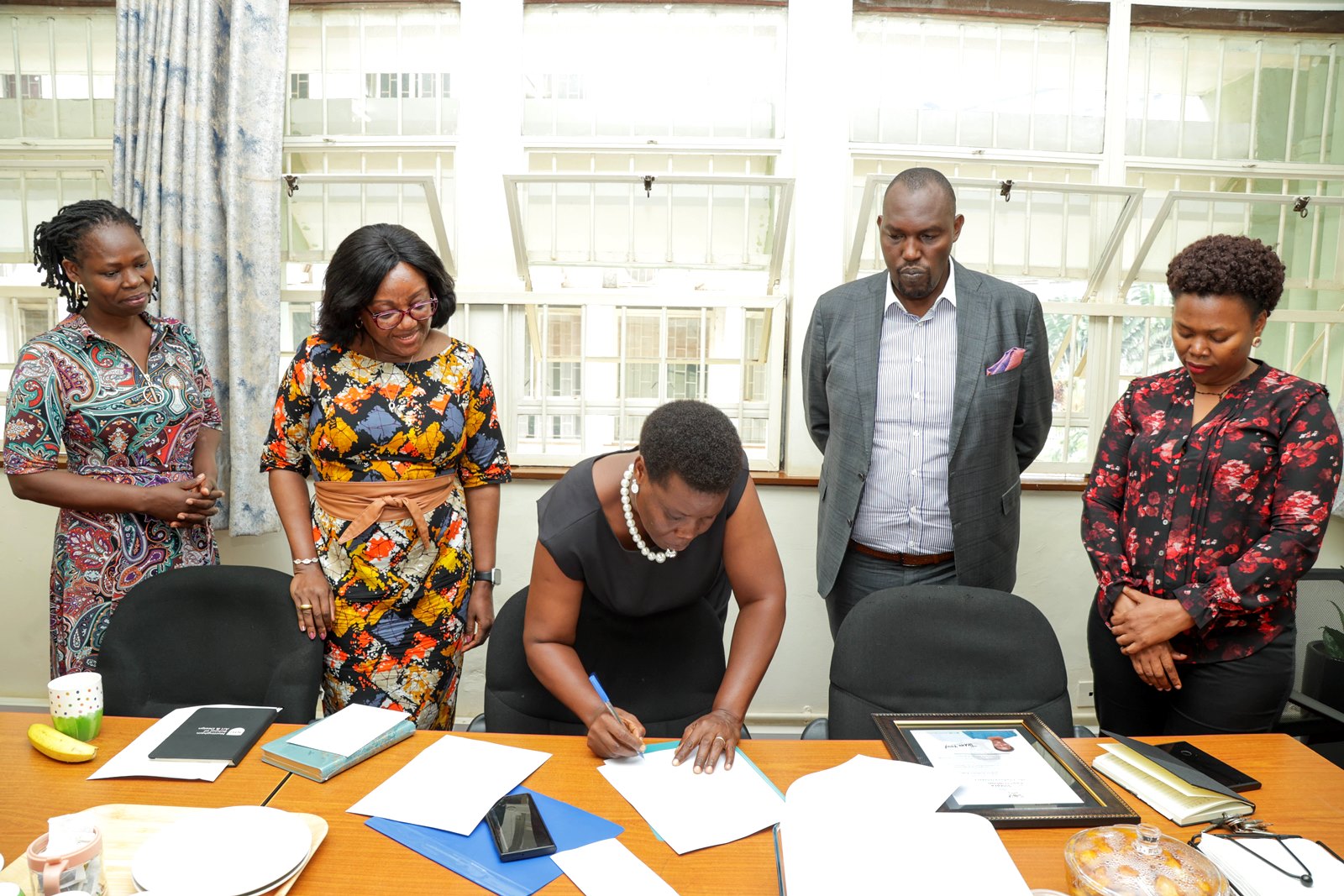
Ms. Khamili assumes the role of Deputy Academic Registrar in charge of the Senate Division, where she will oversee academic standards, policy, and governance at the University. She replaces Mrs. Patience Rubabinda Mushengyezi, who officially retires after 26 years of dedicated service.
At the ceremony, Dr. Rhoda Wanyenze, Professor and Dean, together with members of MakSPH management, presented Ms. Khamili with a plaque in recognition of her service, noting that she “served the School of Public Health with distinction, demonstrating exceptional dedication, professionalism, and commitment to excellence,” and that her contribution strengthened academic administration at the School.
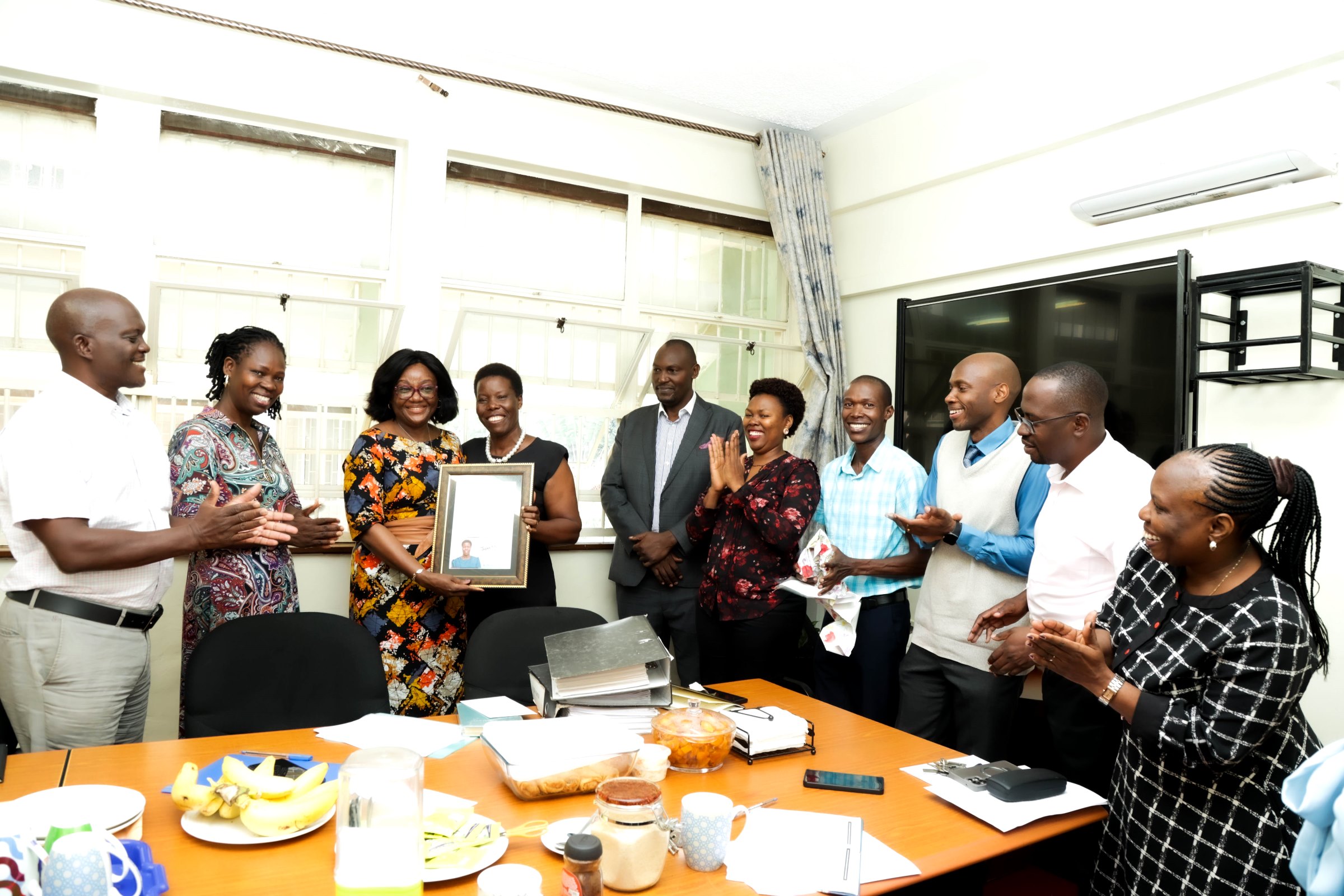
Dr. Wanyenze described Ms. Khamili as a steady and dependable presence. “She’s been with us and supported us in many ways. We thought we should meet here together to see her off. And I wish her the very best… we shall continue to work with her. She will continue to serve us in a different capacity,” she said.
Ms. Khamili joined the School of Public Health on March 15, 2012, from the College of Computing and Information Sciences, where she served as an Assistant Registrar.

Over the years, she has been central to the School’s academic operations—coordinating student admissions, managing records, overseeing examinations, and serving as secretariat to key governance structures, including the Academic Board, Examinations and Results Committee, and Appointments and Promotions Committee. Her role also involved handling student matters and ensuring compliance with University policies and Senate decisions.
Reflecting on her tenure, Ms. Khamili pointed to improvements in registration systems, records management, and examination processes. “In my tenure, I have had some achievements that have improved efficiency in the students’ registration processes and strengthened records management and data accuracy… and coordinated successful university graduation ceremonies,” she said.
She also highlighted areas for further strengthening, including improving documentation and follow-up of pending tasks, enhancing coordination across departments, and decentralising selected services, including transcript issuance.
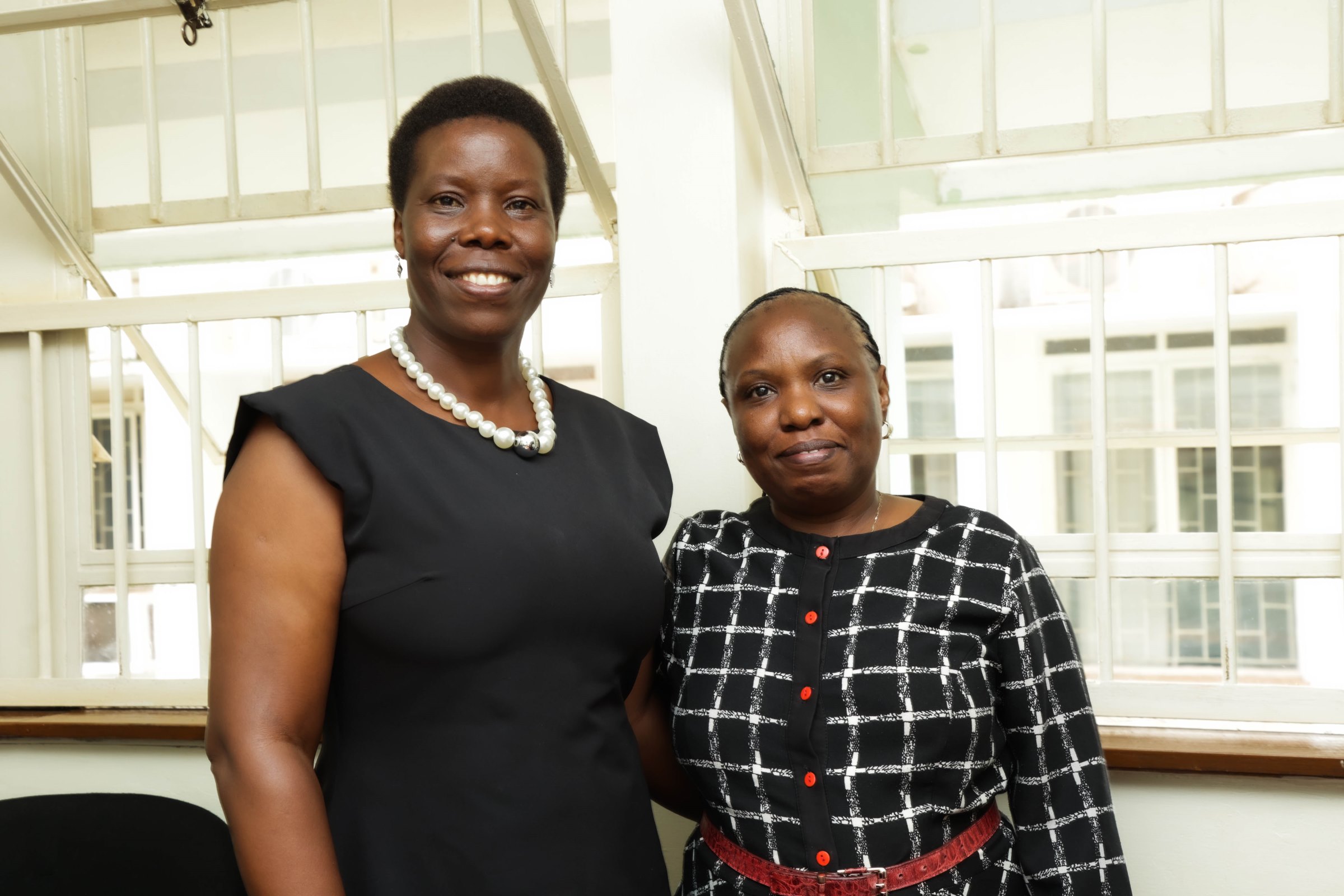
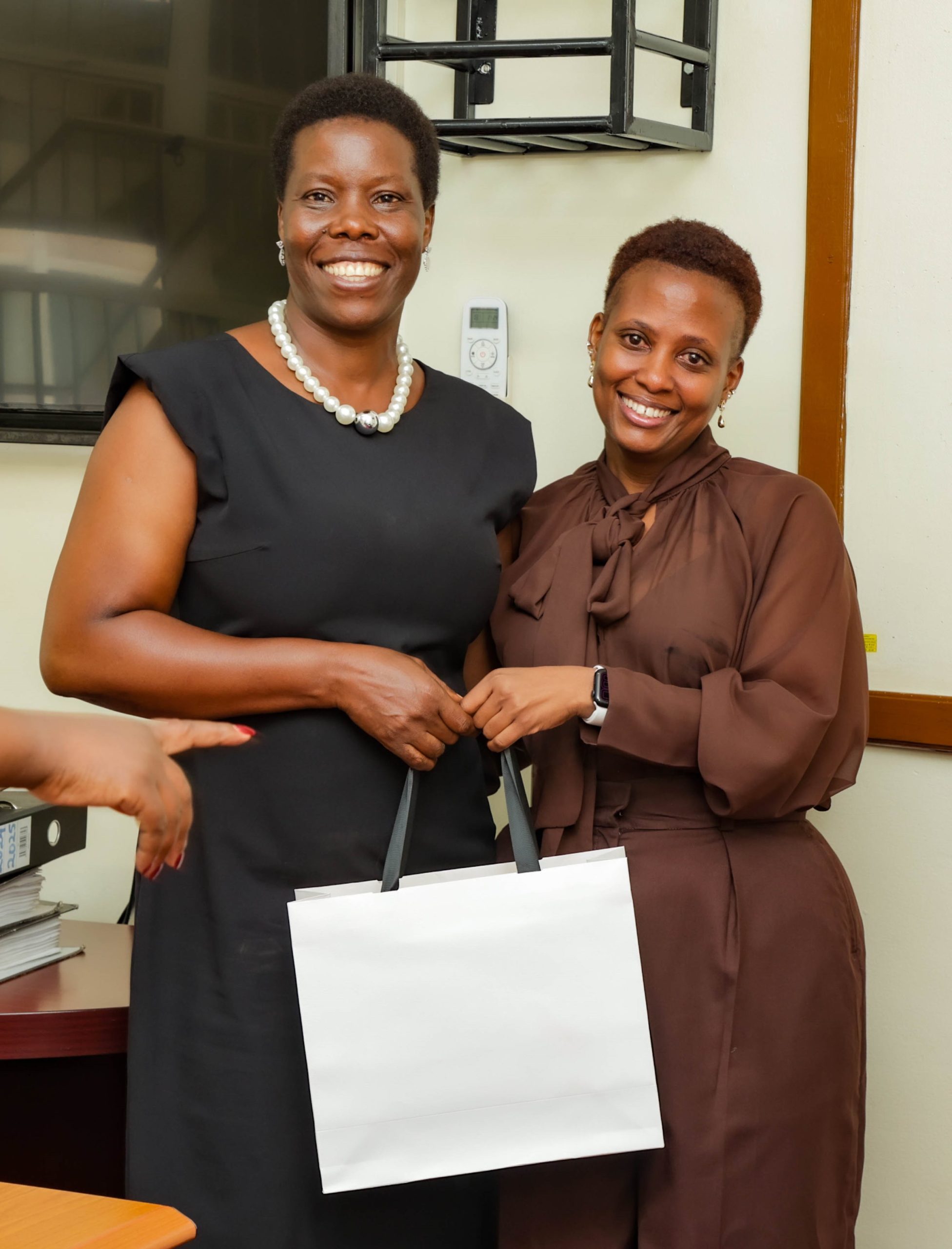
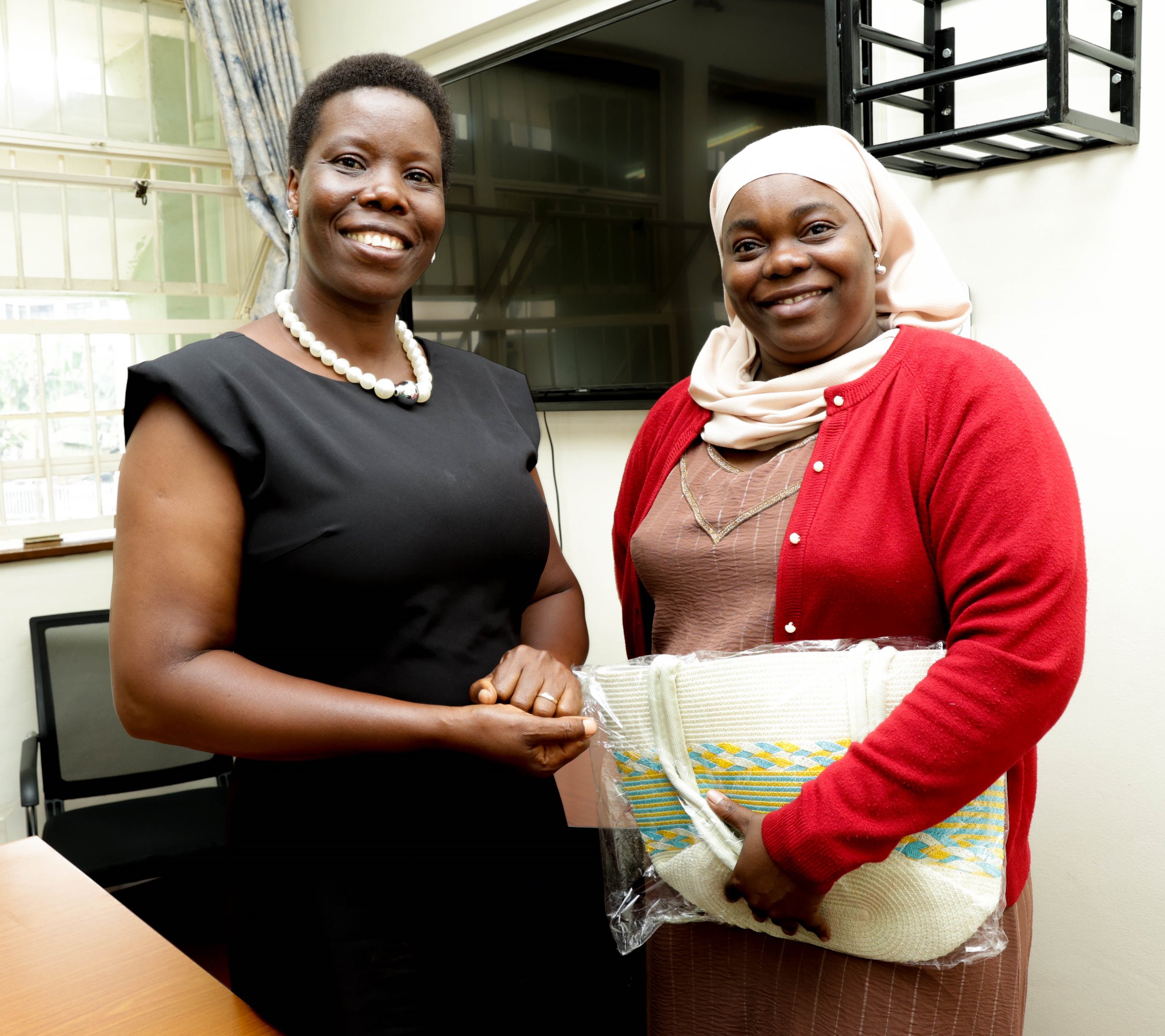
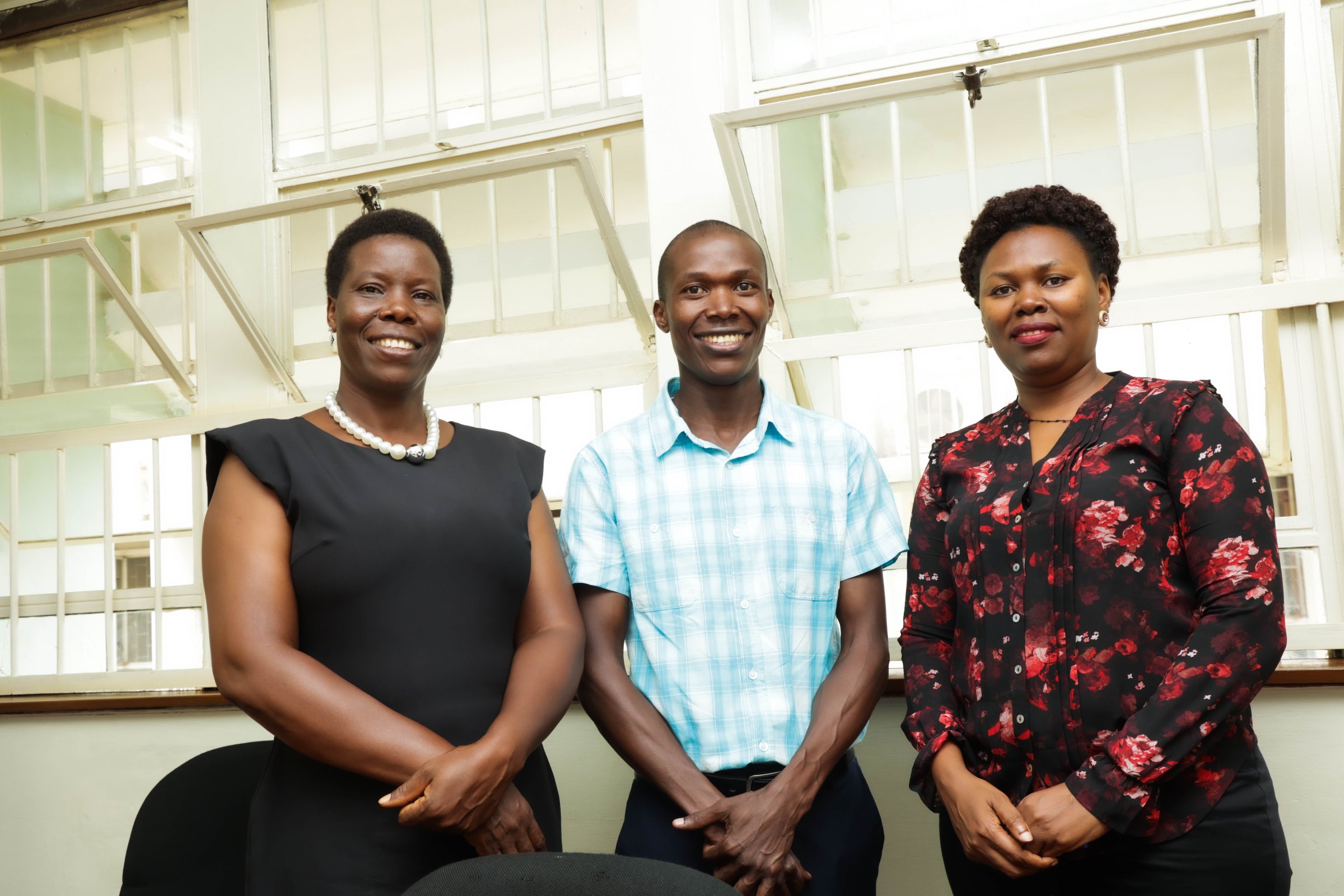

The handover process was overseen by Internal Auditor Amos Dembe, who emphasized the importance of continuity in such a critical office. “The office of the registrar is very sensitive… It is at the core of what we do and what we stand for as a school. It calls for integrity and professionalism,” he said, adding that Ms. Khamili’s handover report provides “a strong body of knowledge for Ms. Annet Khabuya to build on and to hit the ground running.”
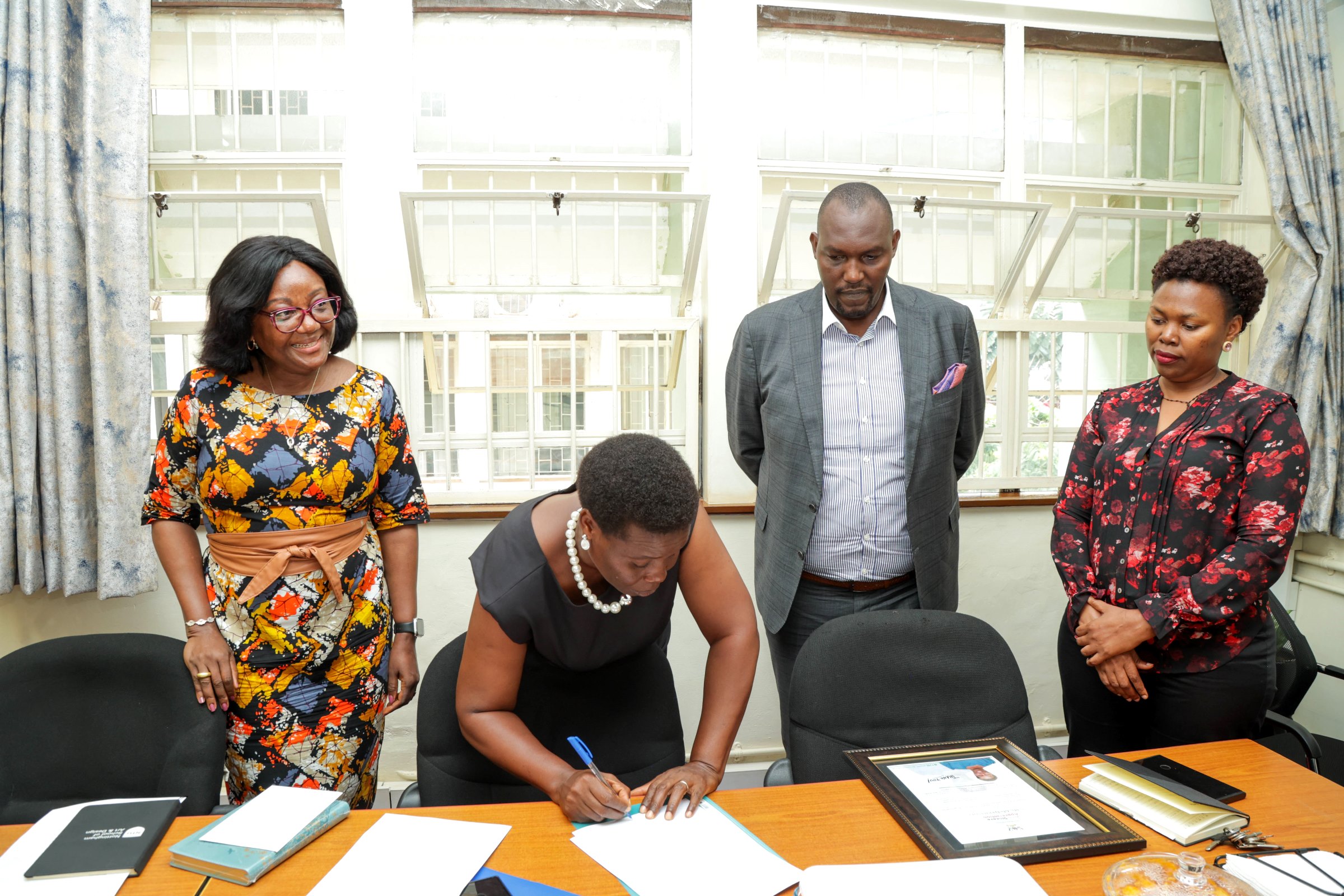
Mr. Dembe also commended Ms. Khamili’s professional and ethical record. “We have not had student issues of marks, money, or related concerns as a School… Thank you for making my work easier. That is not always the case. Some people make it hard for us, but this has not been the case here,” he noted.
Colleagues described her as thorough and dependable in a role that often operates behind the scenes. Dr. Joan Mutyoba, Head of the Department of Epidemiology and Biostatistics, said the incoming Registrar would be stepping into a demanding position. “The shoes you are stepping into are really big. I have seen her work… She is extremely professional, one of the most professional people I have worked with. She takes her work very seriously and goes beyond the line,” she said.
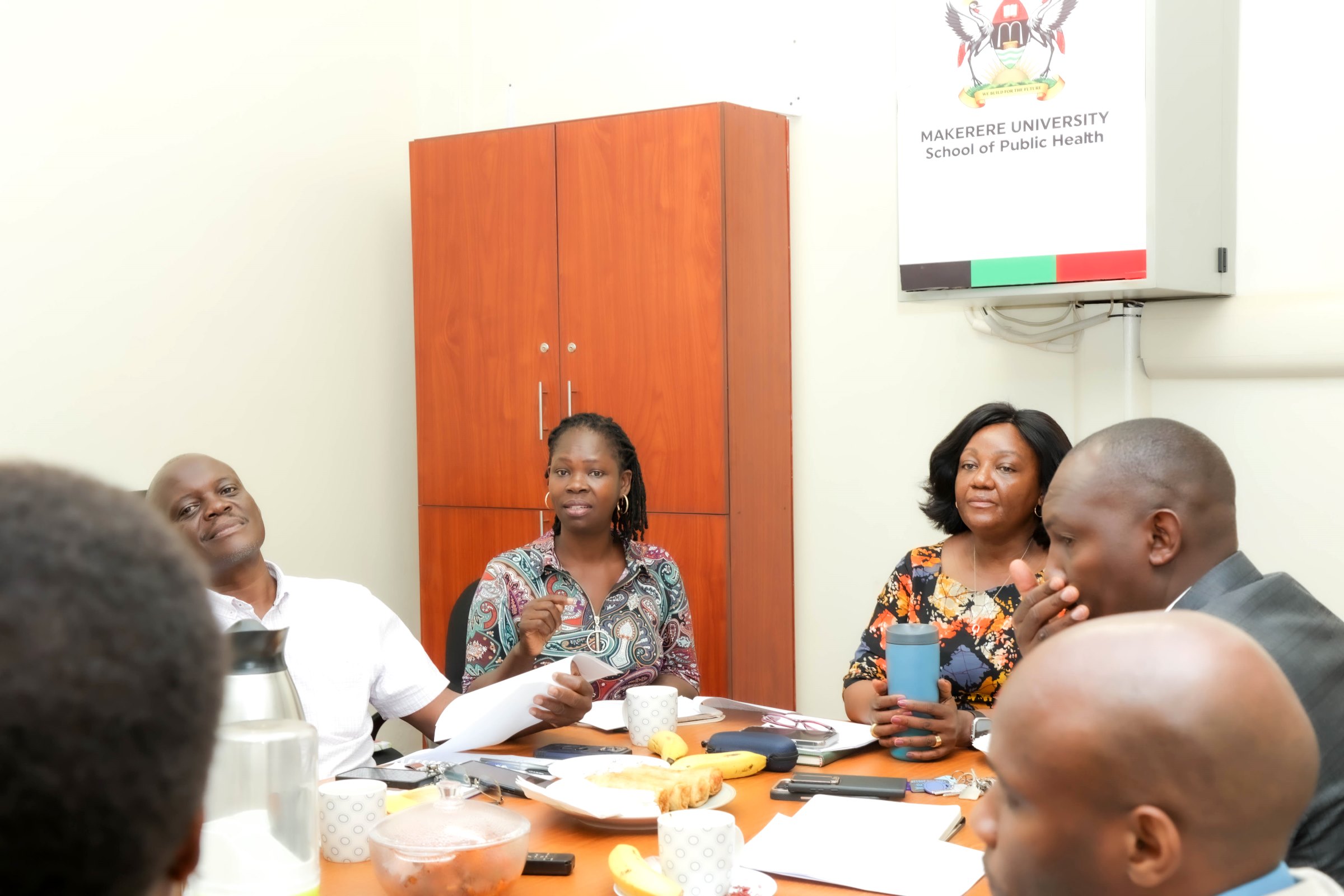
In her farewell remarks, Ms. Khamili spoke candidly about her experience at the School. “My work has been with everybody… everything here is different—the people, the work culture—it has been very, very worthwhile,” she said, thanking colleagues for their support.
“If I had a choice, I would stay… but I don’t have that choice. Thank you so much for the support and for the love,” she added, acknowledging the demands of her role. “In my line of work, like in any space where you work with people, you certainly step on some toes… I ask that you find it in your heart to forgive and forget where necessary.”
The meeting also marked the official handover to Ms. Annet Khabuya, who takes over as Registrar. She commended the School’s approach to transition and organization.
“I have seen the systems, I have seen the organization, and I can confidently say there is continuity. I look forward to building on this work and working with all of you,” she said.

Ms. Khabuya joins MakSPH from the Examinations and Transcripts Division of the Senate and brings experience from the College of Natural Sciences and the School of Statistics and Planning.
Ms. Khamili’s transition marks a shift from School-level administration to University-wide academic governance, extending her impact beyond MakSPH to the broader Makerere system.
General
Makerere’s CHUSS Embraces Digital Future as RIMS Training Sparks Push for Faster Graduate Completion

By Moses Lutaaya
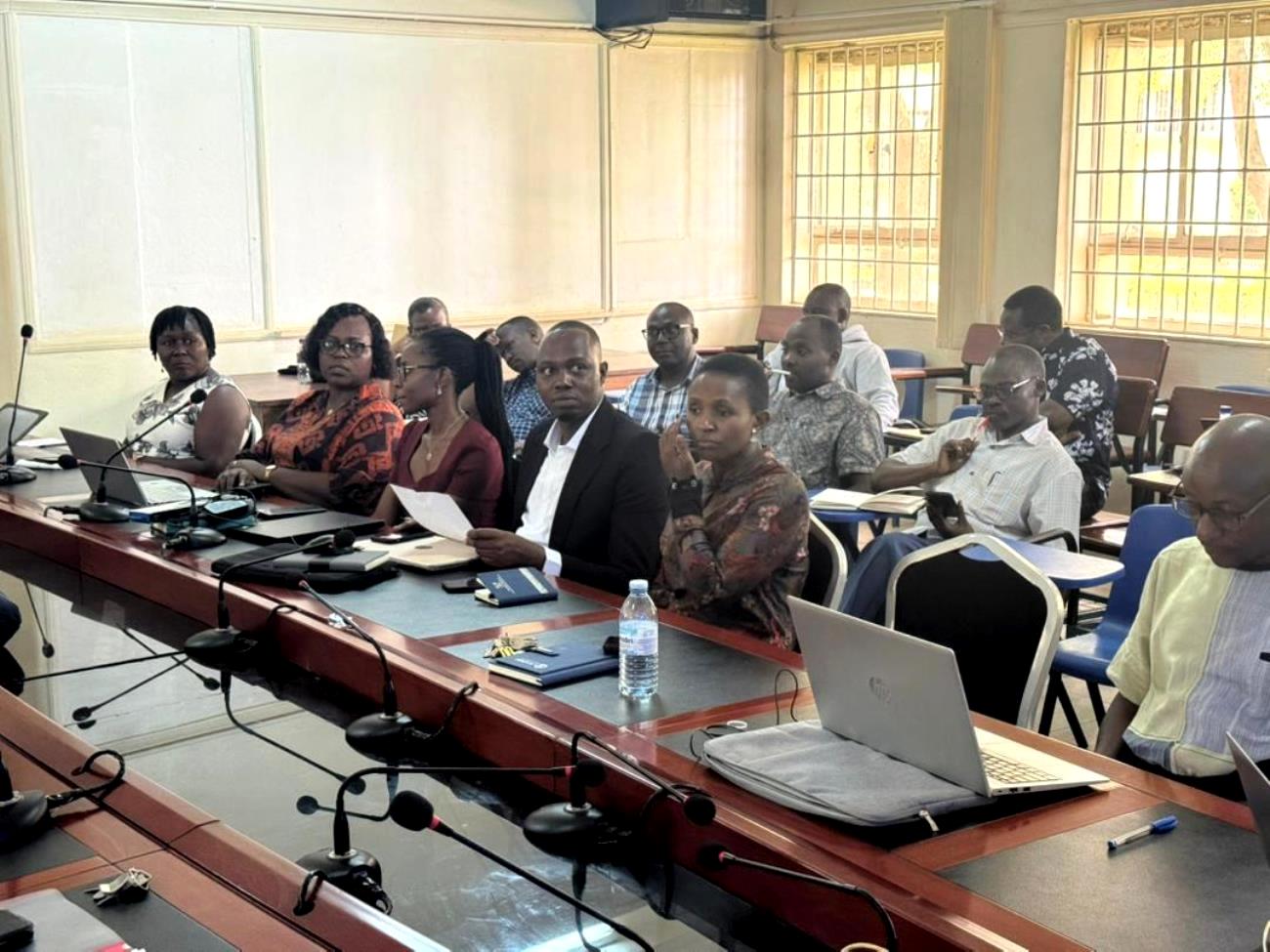
KAMPALA, April 17, 2026 — The College of Humanities and Social Sciences (CHUSS) at Makerere University has taken a decisive step toward strengthening graduate training and accountability following a comprehensive hands-on Research Information Management System (RIMS) training by a team from the Directorate of Graduate Training (DGT) and Directorate for ICT Support (DICTS) held yesterday, April 16, in the CHUSS Smart Room.
Opening the session, the Director of Graduate Training, Prof. Julius Kikooma, underscored CHUSS’s central role in producing graduate students and contributing to Uganda’s development agenda. He cautioned that the college’s leading position could easily be overtaken if vigilance wanes.
“I’m glad we are back here to focus on something that can propel CHUSS to its rightful position,” Prof. Kikooma said. “Your contribution to graduate student production is highly envied across the university, but if you sleep even briefly, that position can be taken.”
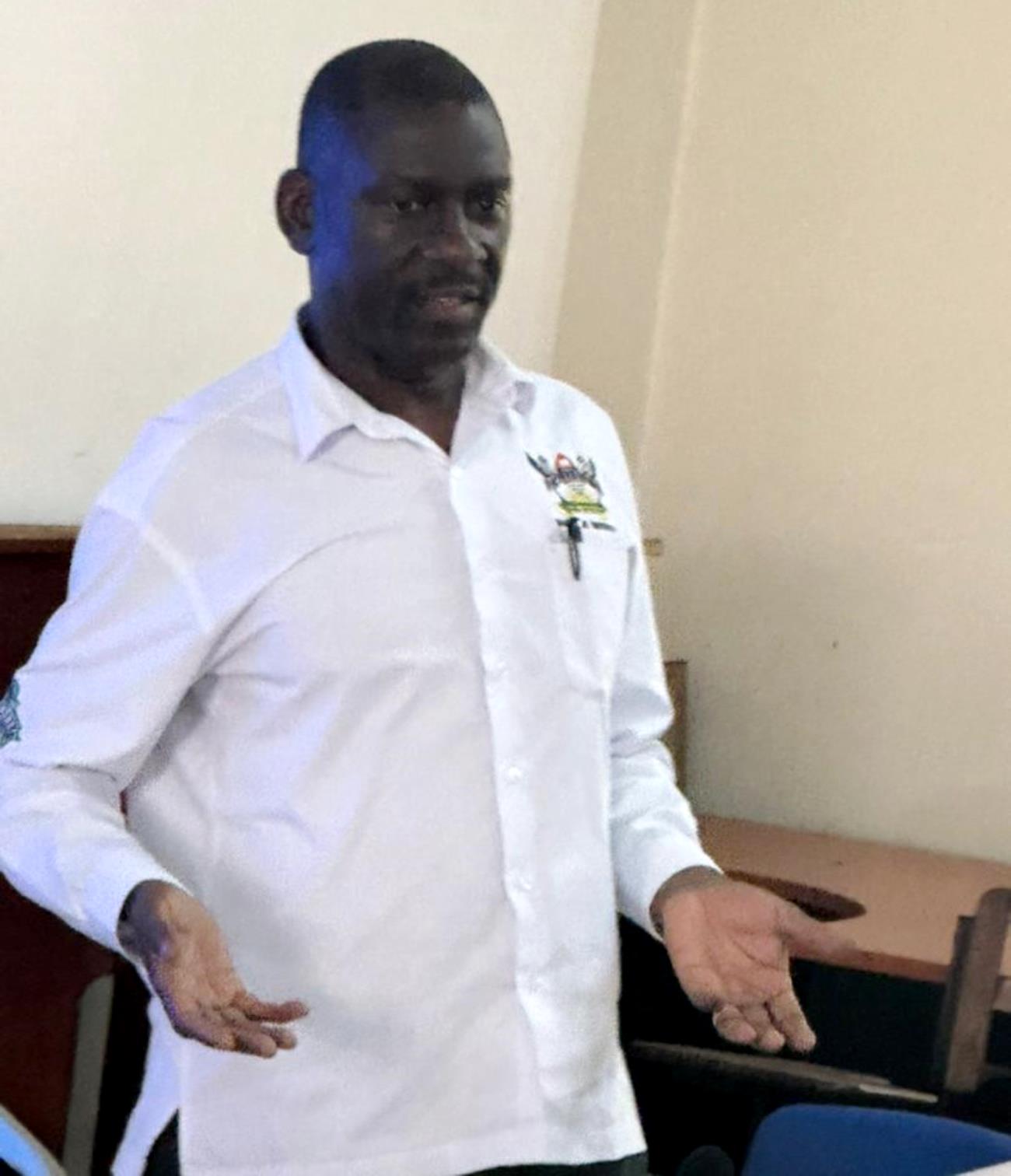
He emphasized that beyond competition, the real goal is national transformation. According to Prof. Kikooma, increased graduate output directly supports Uganda’s Fourth National Development Plan (NDP IV), which prioritizes building relevant human capital.
“More than ever before, the country needs human resources from the humanities and social sciences,” he noted.
Prof. Kikooma explained that the RIMS platform builds on CHUSS’ pioneering cohort-based PhD model by introducing a digital solution to track student progress, enhance supervision, and improve completion rates. The system, developed in collaboration with the Directorate for ICT Support, allows both supervisors and students to log and monitor academic activities in real time.
“This is not optional,” he stressed. “By the end of this month, we must report on who is using the system. It is a strategic priority of the University Council.”
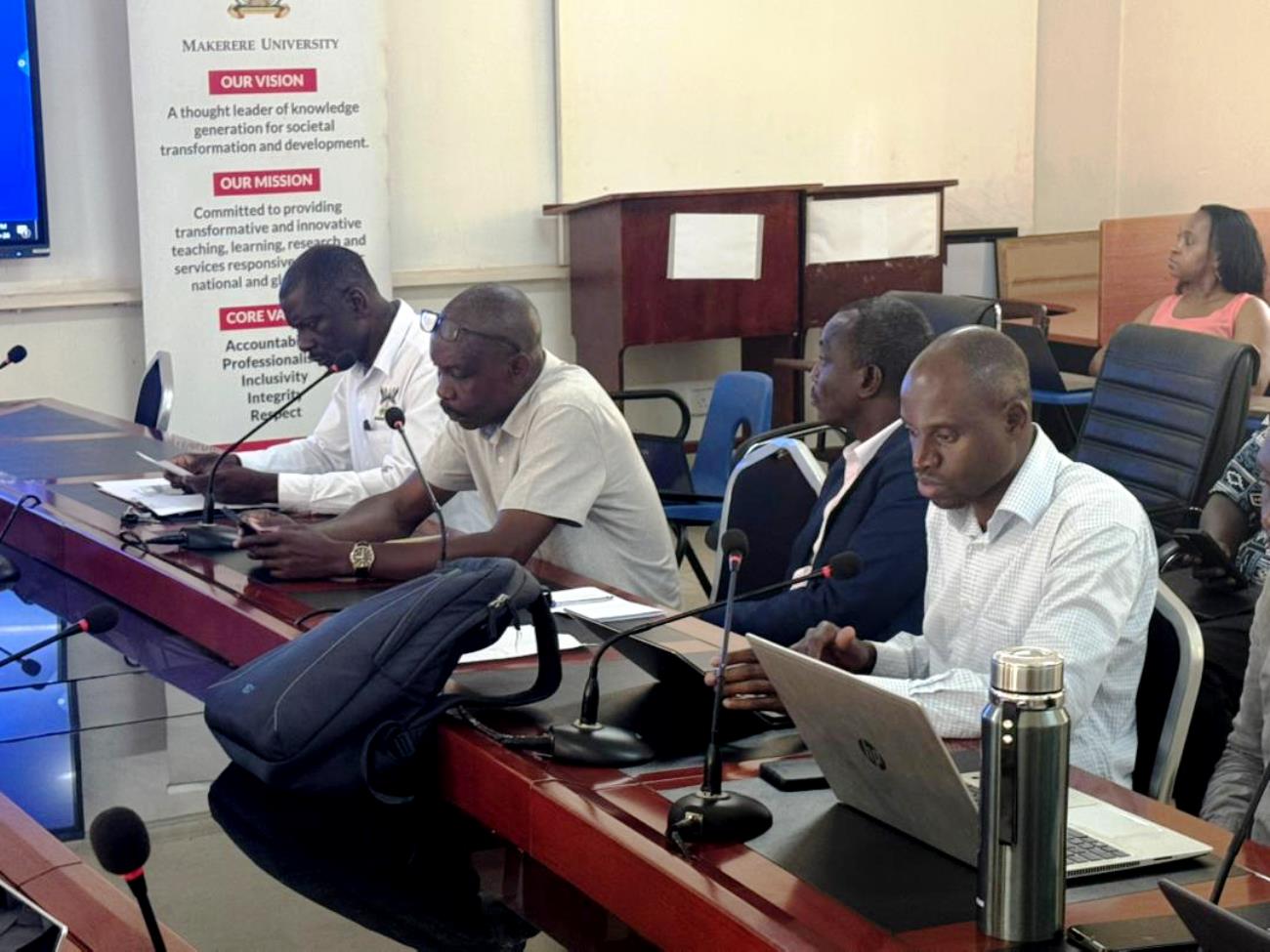
Welcoming participants, the Deputy Principal of CHUSS, Assoc. Prof. Eric Awich Ochen, described the training as timely and necessary in a rapidly digitizing academic environment.
“Makerere today is very different from the Makerere of 15 or 20 years ago,” he said. “We are moving from an analogue past to a digital future.”
He noted that while the college has improved its graduate output in recent years, gaps in tracking student progress remain a concern.
“We celebrate the numbers we graduate, but we may still have many students in the pipeline whom we cannot fully account for,” he said. “This system will help us track supervision and improve accountability.”
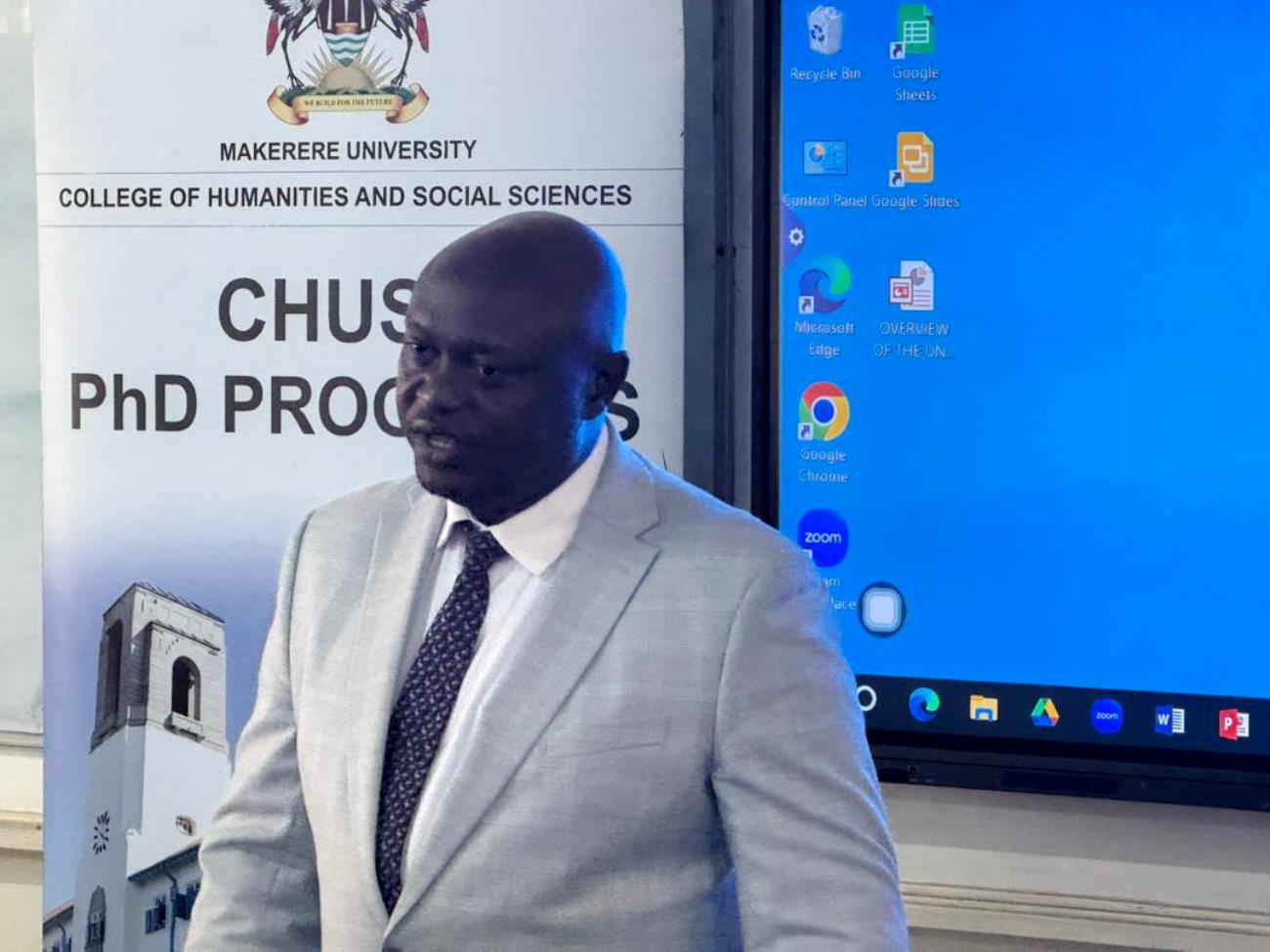
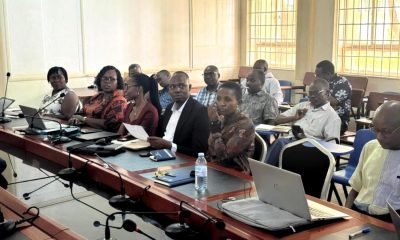
The training drew participation from the CHUSS Principal and Deputy Principal, senior lecturers, lecturers, and registrars from the School of Psychology, School of Social Sciences, School of Liberal and Performing Arts, and the School of Languages, Literature and Communication.
In an interview after the session, Dr. Jim Spire Ssentongo offered a more reflective perspective, welcoming RIMS as a timely innovation while highlighting key realities in graduate training.
“I think RIMS is a good idea with strong potential,” he said, noting that the system could help address long-standing supervision gaps by ensuring that interactions between students and supervisors are tracked and visible.
However, he pointed out that delays in graduate completion are not solely the fault of supervisors. According to him, student-related factors—particularly lack of consistency and self-discipline during the research phase—play a significant role.
“At the coursework level, students are guided by timetables and structured assessments, which keeps them active,” he explained. “But once they transition to research, much depends on their own discipline. Some students simply become unresponsive.”
Dr. Ssentongo observed that RIMS could help counter this by introducing a level of accountability on both sides. If properly used, the platform would enable students to track feedback from supervisors while also making it clear when they themselves have delayed progress.
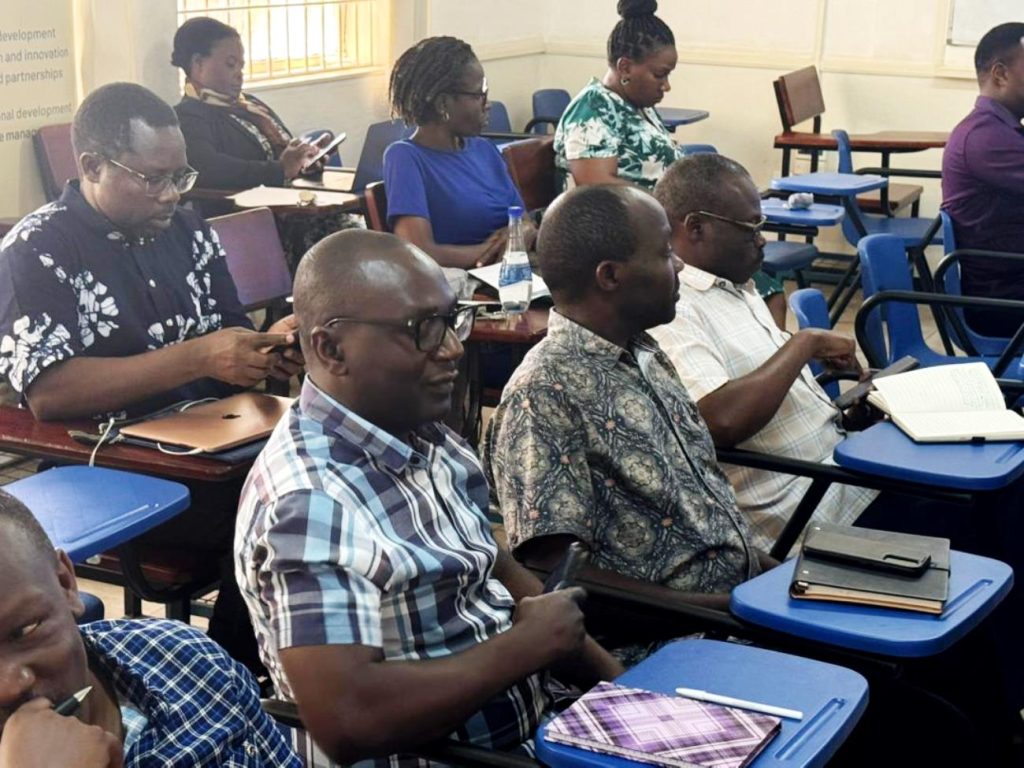
He also noted that the system’s monitoring aspect could encourage improved completion rates, as both supervisors and students become more conscious of timelines and expectations.
At the same time, he cautioned that implementation would be key. He explained that while systems that enhance accountability are beneficial, they must be introduced in a way that supports rather than intimidates users.
“There is an element of monitoring, which is good,” he said, “but it should be balanced so that it does not create an environment where people feel over-policed.”
Dr. Ssentongo further emphasized that RIMS should be seen as part of a broader strategy to strengthen research culture at the university. Beyond improving completion rates, he said, there is need to encourage publication, collaboration between students and supervisors, and greater visibility of research outputs.
“If it is implemented well and supported by other initiatives, it can contribute not just to completion, but also to improving research productivity and impact,” he added.
The RIMS training marks a significant step in Makerere University’s efforts to modernize graduate education, improve accountability, and align academic output with national development priorities.
-

 Law4 days ago
Pre-Entry Examination for Admission to the Bachelor of Laws for 2026/2027 AY
-
 Health3 days ago
Course Announcement: Certificate in Water, Sanitation and Hygiene (CWASH) – 2026
-

 General1 week ago
Call for Participants: 2026 Hainan International Youth Cultural Exchange Program
-

 General1 week ago
New Classroom Block brings Relief to Bwera Primary School
-
 Research1 week ago
“Start with Ethics”: Makerere Webinar Rallies Researchers to Prioritize Ethical Approval from Day One