
Business & Management
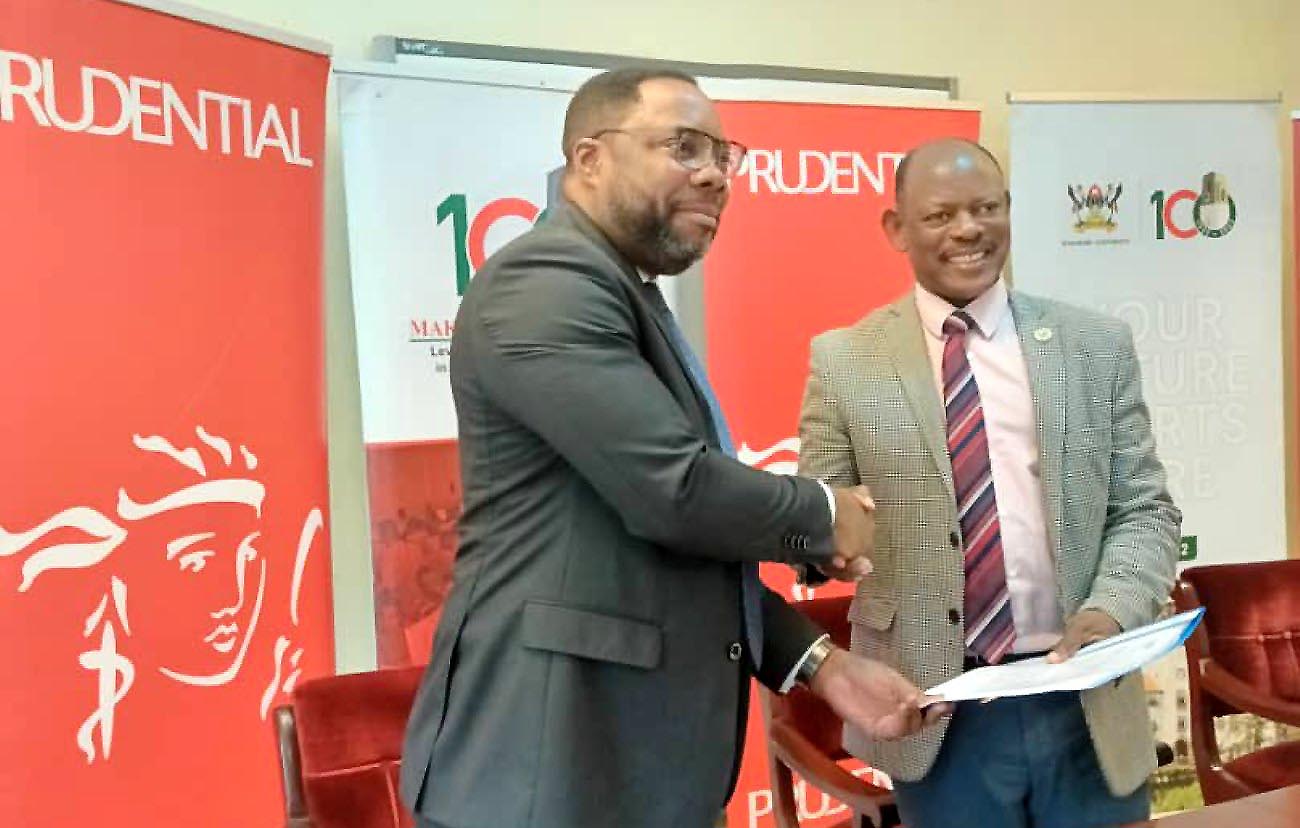
Makerere University-Prudential Assurance sign MoU







The two-week training programme aims to equip government officers with practical skills to assess project viability, manage investment risks and ensure public resources deliver value for money.
The Public Investment Management Centre of Excellence (PIM CoE) is strengthening the capacity of government officers to undertake financial appraisal and risk analysis of public investment projects through a two-week training programme designed to improve the quality of project preparation, appraisal and decision-making in Uganda.
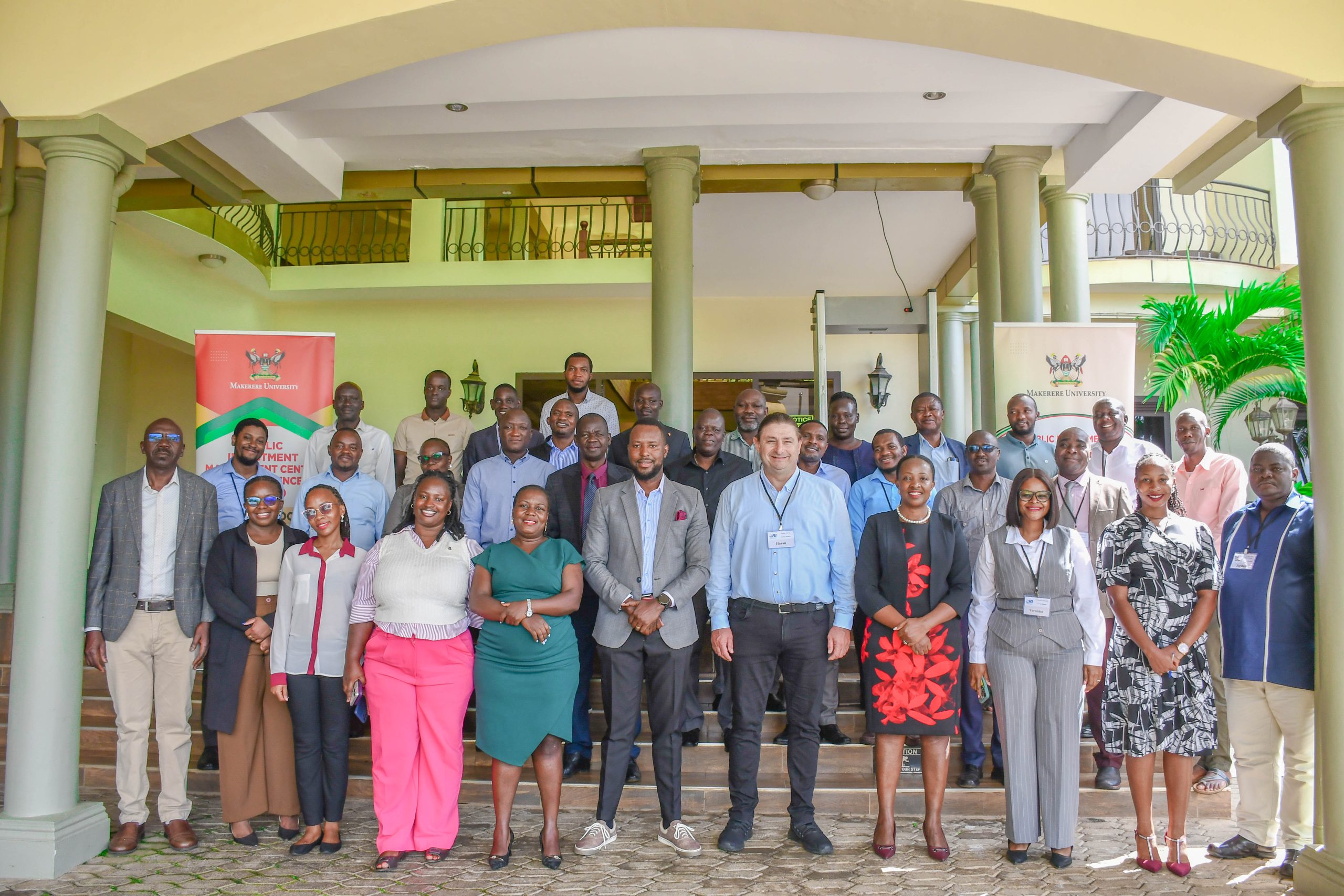
The training, which started in Fort Portal on October 19, 2026, brought together participants from various government ministries, departments and agencies (MDAs), alongside facilitators from Makerere University, the Ministry of Finance, Planning and Economic Development, Cambridge Resources International (CRI), the National Planning Authority and the Uganda Development Bank.
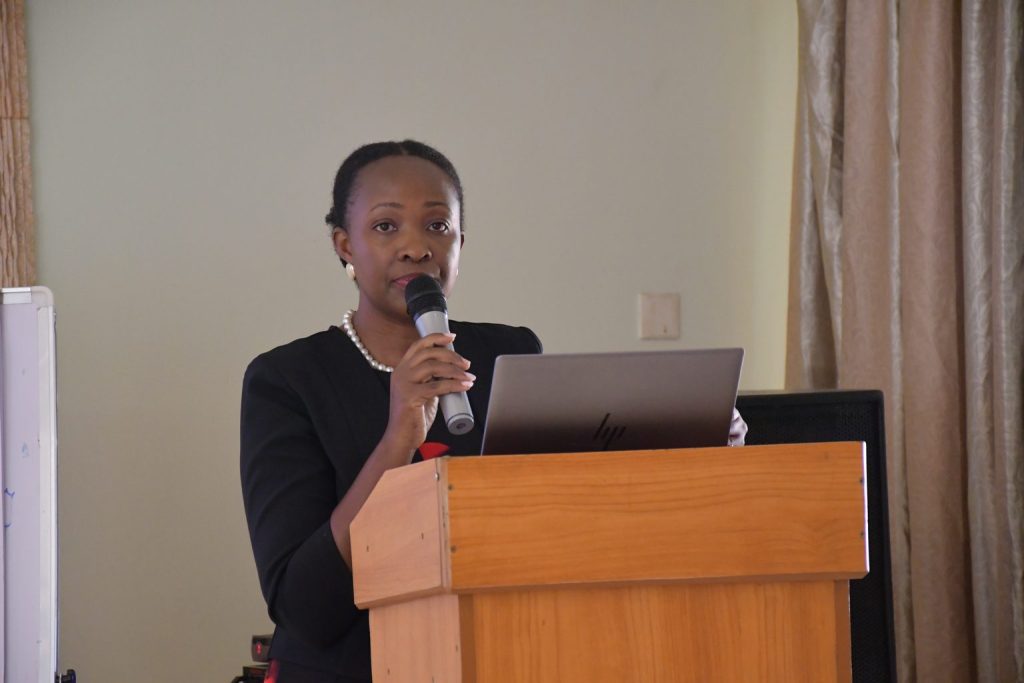
Officially opening the training on behalf of the Permanent Secretary/Secretary to the Treasury, Ms Esther Ayebare, Acting Assistant Commissioner in the Project Analysis and Public Investment Department of the Ministry of Finance, Planning and Economic Development, emphasised the importance of rigorous project appraisal in strengthening Uganda’s public investment management system.
She noted that projects admitted into the public investment plan must be aligned with national priorities, technically sound, financially viable and capable of delivering value for money.
“Government must be able to compare investment alternatives and ensure that only viable projects proceed through the public investment process,” she emphasised.
Ms Ayebare explained that sound appraisal enables government to make informed investment decisions, maximise returns on public expenditure and ensure that limited public resources are directed towards projects with the greatest potential to deliver development outcomes.
Building practical skills for better investment decisions
The training builds on the Public Investment Management course conducted in June, which introduced participants to Uganda’s public investment management framework, including project conceptualisation, stakeholder analysis, project costing, implementation action plans, the Integrated Bank of Projects, and monitoring and evaluation of public investment reforms.
The current programme advances this foundation by equipping participants with technical competencies in financial appraisal, financial modelling and risk analysis.
Participants will explore integrated investment appraisal, alternative investment criteria, cash-flow statements, inflation and exchange-rate movements, asset valuation, project financing, project scale and timing, risk-sharing arrangements and cost-effectiveness analysis.
Through practical exercises and case studies, participants will apply these concepts to investment scenarios in sectors such as roads, health, education and water. The programme will also examine how climate change, social considerations and other risks can be integrated into project preparation and appraisal.
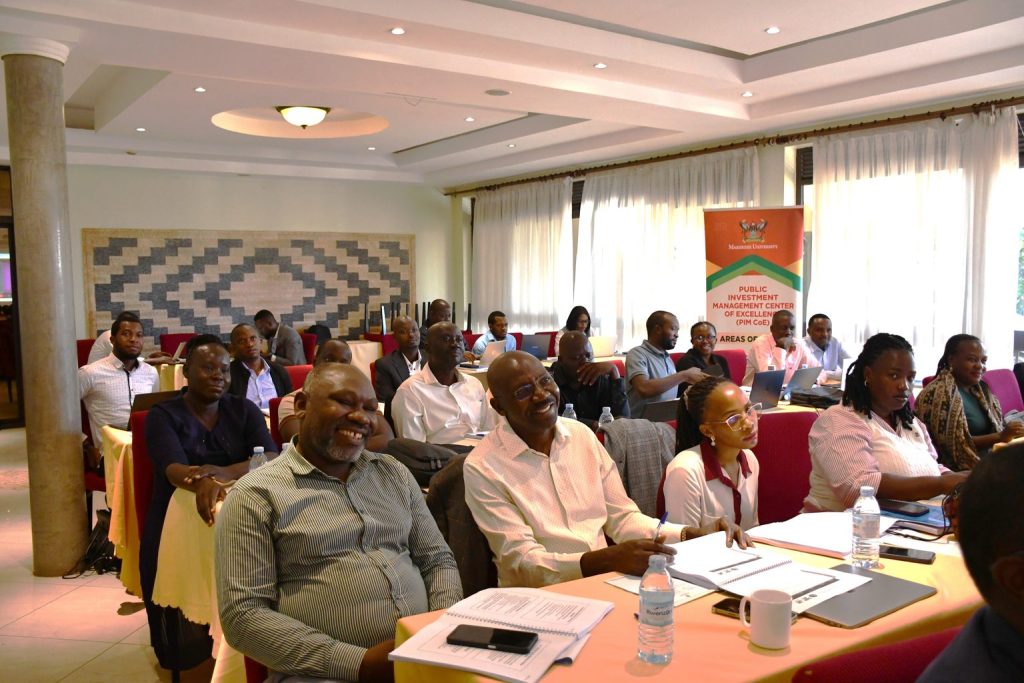
Ms Ayebare encouraged participants to engage actively with the facilitators, question the practical application of the tools and consider how the skills acquired could improve investment decisions within their respective institutions.
She also reminded participants that the programme includes an examination and that certification requires more than attendance. Participants are expected to demonstrate an understanding of the concepts and acquire practical skills that they can apply in their work.
Reducing dependence on externally prepared studies
A key objective of the training is to strengthen the ability of government institutions to undertake high-quality project appraisal studies using their own technical teams.
Ms Ayebare observed that many studies submitted to the Development Committee have traditionally been prepared by external consultants, often at considerable cost. Building the capacity of public officers to conduct these studies independently can help institutions strengthen their technical expertise and improve the quality of project proposals presented for consideration.
She urged participants to take full advantage of the facilitators’ expertise and return to their institutions equipped to undertake sound financial appraisals and provide evidence-based advice to decision-makers.
She further emphasised that project approval requires thorough preparation, analysis and justification, rather than simply identifying available funding and proposing a project to utilise it.
Strengthening public investment management through capacity development
In his remarks, Prof. Edward Bbaale, Director of the PIM CoE, thanked the Ministry of Finance for its financial support and for identifying participants from government institutions. He also recognised the contributions of the facilitators and partner institutions in delivering the programme.
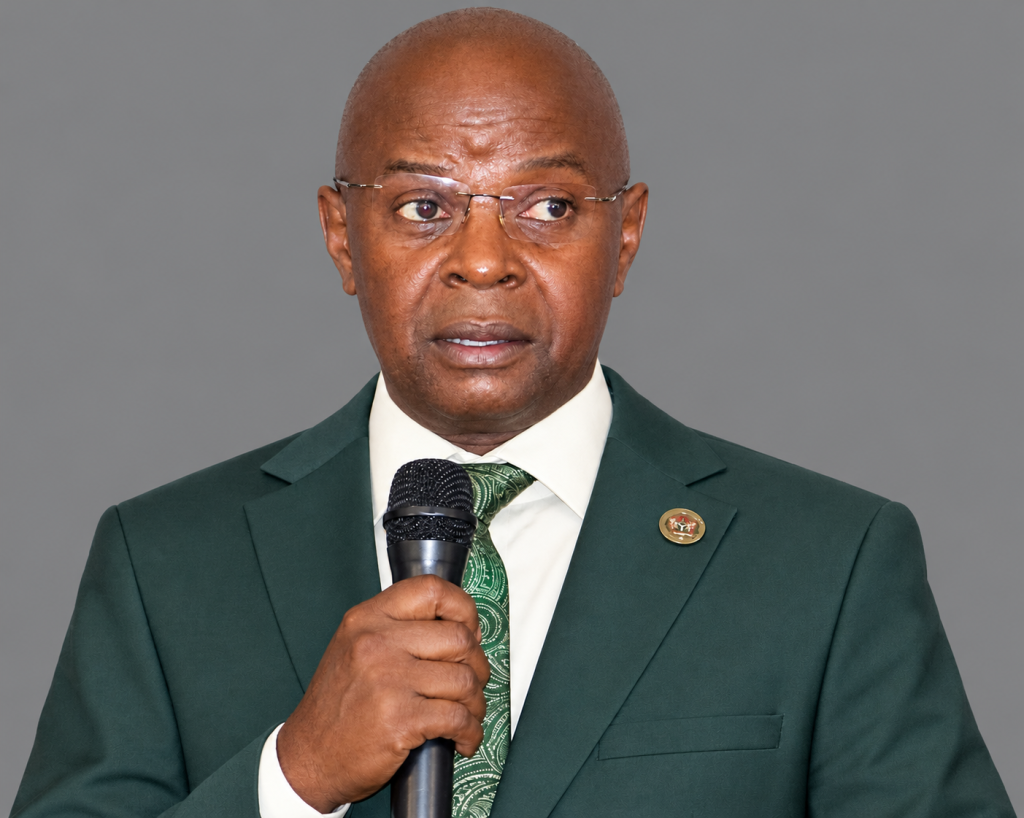
Prof. Bbaale noted that the Centre’s work extends beyond training to include research and advisory services aimed at improving public investment management practices. He encouraged continued collaboration with government institutions and other partners to advance research, knowledge sharing and capacity development.
Speaking during the training, Dr John Sseruyange, Manager of the PIM CoE, highlighted the importance of commitment, active participation and punctuality throughout the programme. He encouraged participants to engage with the facilitators, ask questions and apply the knowledge gained to the projects they support.
Dr Sseruyange also acknowledged the Government of Uganda, through the Ministry of Finance, Planning and Economic Development, for financing the training, and appreciated Cambridge Resources International for its continued support towards improving public investment preparation and analysis in Uganda.
The training reflects ongoing efforts to strengthen Uganda’s public investment management system by equipping public officers with the knowledge and practical competencies needed to assess projects rigorously, identify potential risks and make informed investment decisions.
By developing in-house expertise across government institutions, the programme seeks to contribute to better-prepared projects, more efficient use of public resources and improved delivery of Uganda’s development priorities.
Business & Management
Makerere University Signs MoU with World Association of Noonomy: Sets pace for the African Centre of Excellence

By Ritah Namisango and Monica Meeme
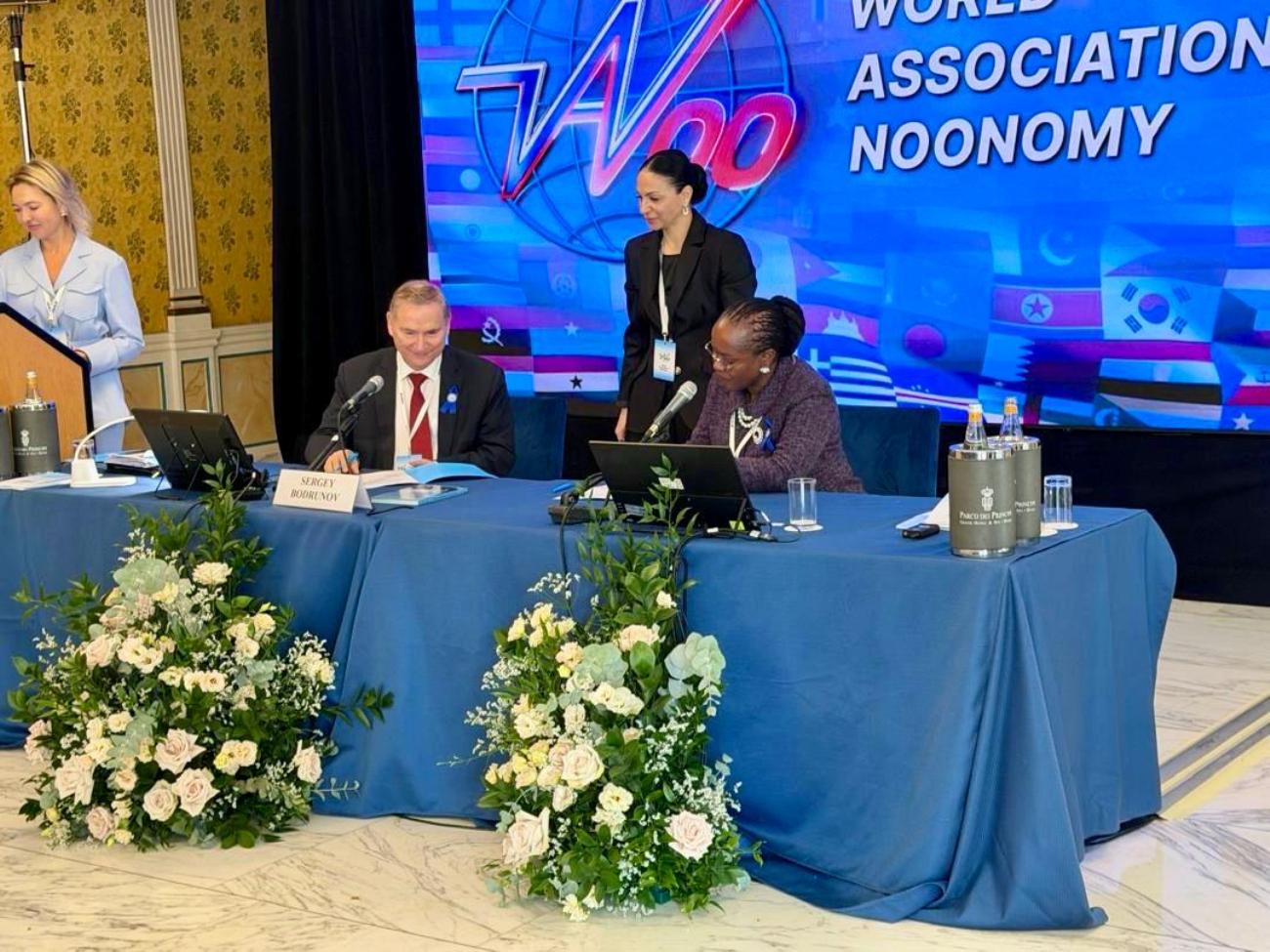
Makerere University has signed a Memorandum of Understanding (MoU) with the World Association of Noonomy, setting the pace for academic collaboration, research and the establishment of a Centre of Excellence for Noonomy in Africa.
On behalf of Makerere University, the MoU was signed by Professor Sarah Ssali, Deputy Vice Chancellor (Academic Affairs), during the World Congress on Noonomy held in Rome, Italy, from 16th-19th September 2026, paving the way for the establishment of a dedicated institute of Excellence for Noonomy at College of Business and Management Sciences (CoBAMS).
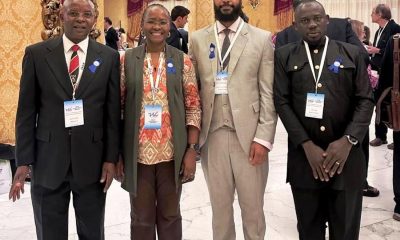
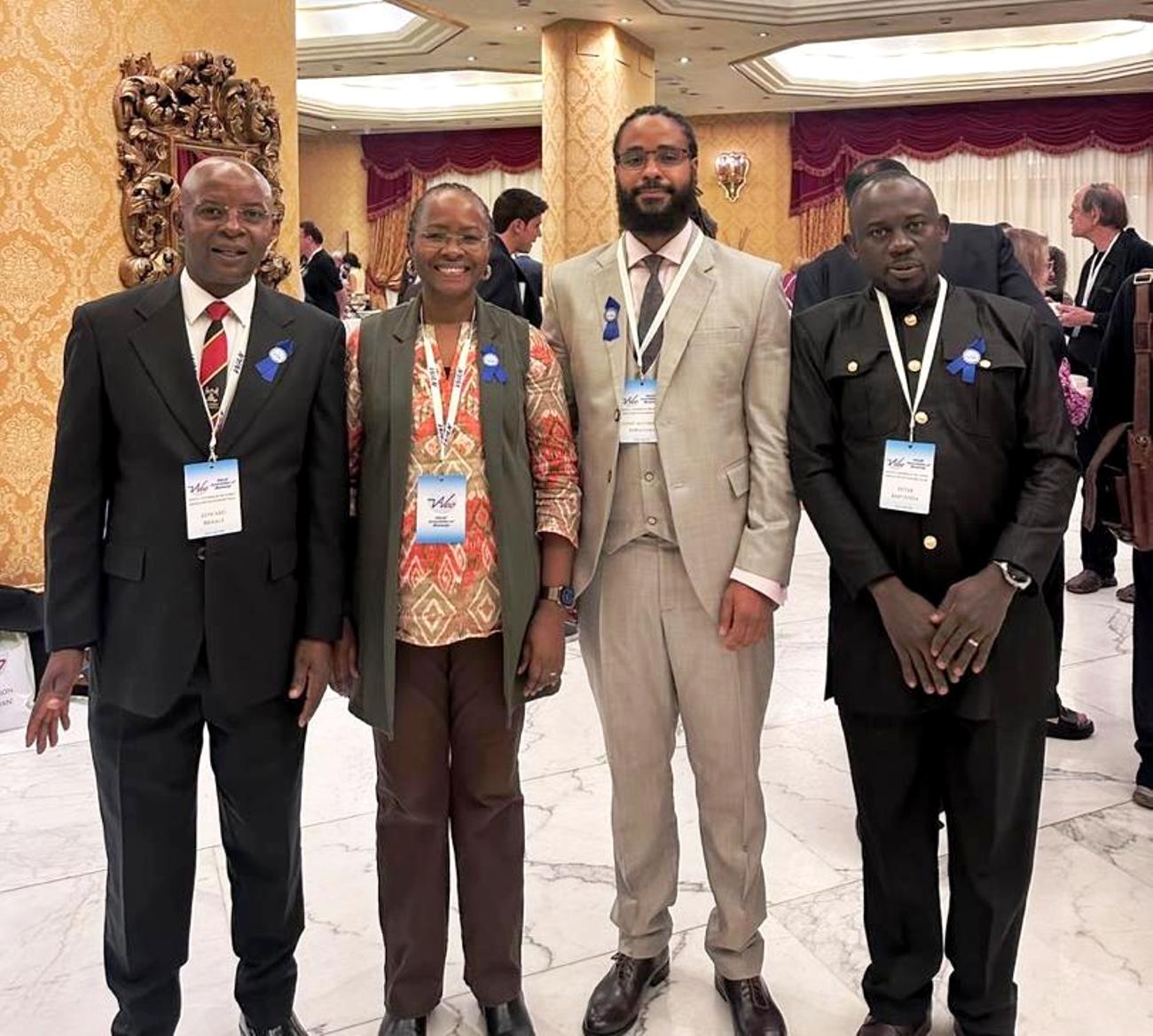
Uganda was the only African country represented at the World Congress on Noonomy, with a Makerere University delegation including Prof. Sarah Ssali-Deputy Vice Chancellor (Academic Affairs), Prof. Edward Bbaale-Principal College of Business and Management Sciences (CoBAMS), Dr Peter Babyenda-Lecturer at the School of Economics and Policy Engagement Coordinator, College of Business and Management Sciences (CoBAMS), and Mr. Tonny Mayambala Sebbaggala, a Ugandan Economist based in Russia.
Commenting on the development, the Vice Chancellor, Professor Barnabas Nawangwe said, “By signing this MoU, the African Centre for Noonomy has been established at Makerere University. This adds to the growing number of African continental research centres that are coordinated by Makerere University. Makerere is clearly a leader on the Continent.”
The MoU signed on 19th September 2026 in Rome-Italy, builds on the inaugural conference on Noonomy, held in Uganda on 20th August 2026 at Makerere University under the theme, “The Theory of Noonomy and its Role in Resolving Modernity Issues: Pathways to Sustainable Social and Economic Transformation.”
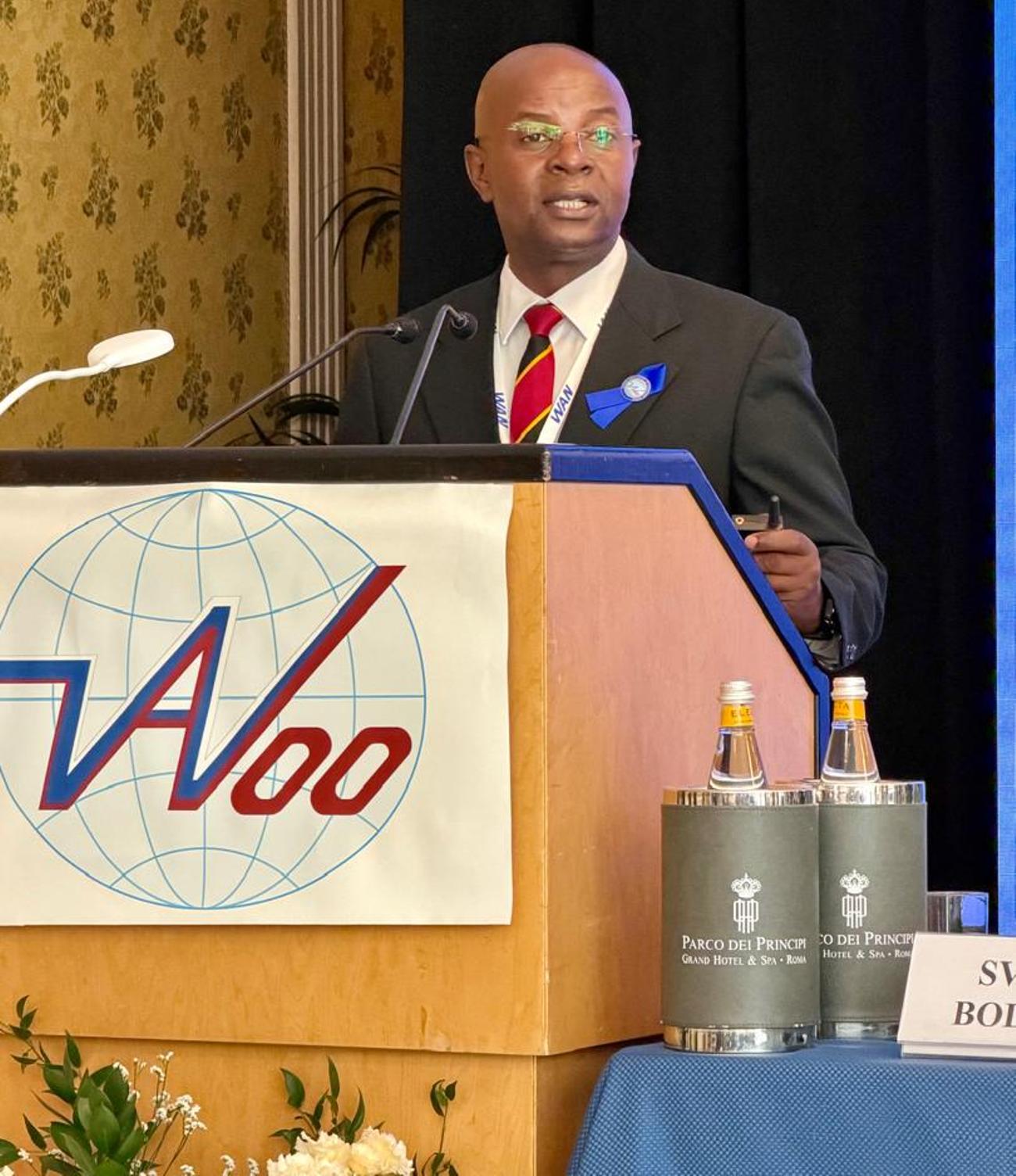
At the Global Congress of the World Association of Noonomy, the scholars from Makerere University delivered three (3) presentations focusing on Noonomy and development challenges in East Africa, the transition from informal to formal employment, and the role of universities in advancing Noonomy.
About the Theory
The Theory of Noonomy is an emerging theoretical approach developed by Professor Sergey Bodrunov, Director of the S.Y. Witte Institute, which examines the changing relationship between knowledge, technology, production and human development. The theory places emphasis on knowledge and human potential as important drivers of development, while highlighting humanistic values and solidarity in shaping economic and social progress.
Advancing Alternative Economic Thought in Africa
Speaking at the Annual gathering in Rome, Prof. Sarah Ssali described Makerere University’s partnership as a great honour, highlighting the importance of creating space for broader theoretical perspectives on political economy and the global economy.
Reflecting on the evolution of political science and political economy studies, Prof. Ssali noted that following the era of Glasnost and Perestroika, free-market ideology and neoliberalism became increasingly dominant in global economic thinking.
“This dominance created a need for scholars to critically examine both the opportunities and limitations of market-based approaches,” she said.
She welcomed the opportunity to explore alternative ways of understanding the world, including not only the material relations of production, but also the material relations of consumption.
Prof. Ssali also acknowledged the Witte Institute for initiating the initiative and for choosing Makerere University as a key partner on the African continent.
She said Makerere University plans to establish a dedicated centre focused on the emerging area of study, with the institution aiming to launch the centre in February 2027.
“We hope the centre will become a leading African platform for research, teaching and dialogue on these issues,” she asserted.
Prof. Ssali noted that the ideas emerging from the Kampala meeting (held on 20th August 2026) are already being incorporated into Makerere University’s theoretical classes, with plans to substantially expand the initiative following the establishment of the centre of excellence.
She reaffirmed Makerere University’s commitment to the partnership and to expanding scholarly engagement on alternative approaches to political economy.
Call for Growth that Advances Social Welfare
Delivering the presentation titled: “The Role of Noonomy in Addressing Development Challenges in East Africa,” Prof. Edward Bbaale, Principal of the Makerere University College of Business and Management Sciences (CoBAMS), explored the potential of Noonomy as an alternative framework for understanding and addressing persistent development challenges in East Africa.
Prof. Bbaale noted that the approach contributes to emerging academic discussions on how economic systems can better connect economic growth with social wellbeing and inclusive development outcomes in the region.
“The study contributes to emerging academic discussions on how economic systems can better link economic growth with social wellbeing and inclusive development outcomes in the region,” he said.
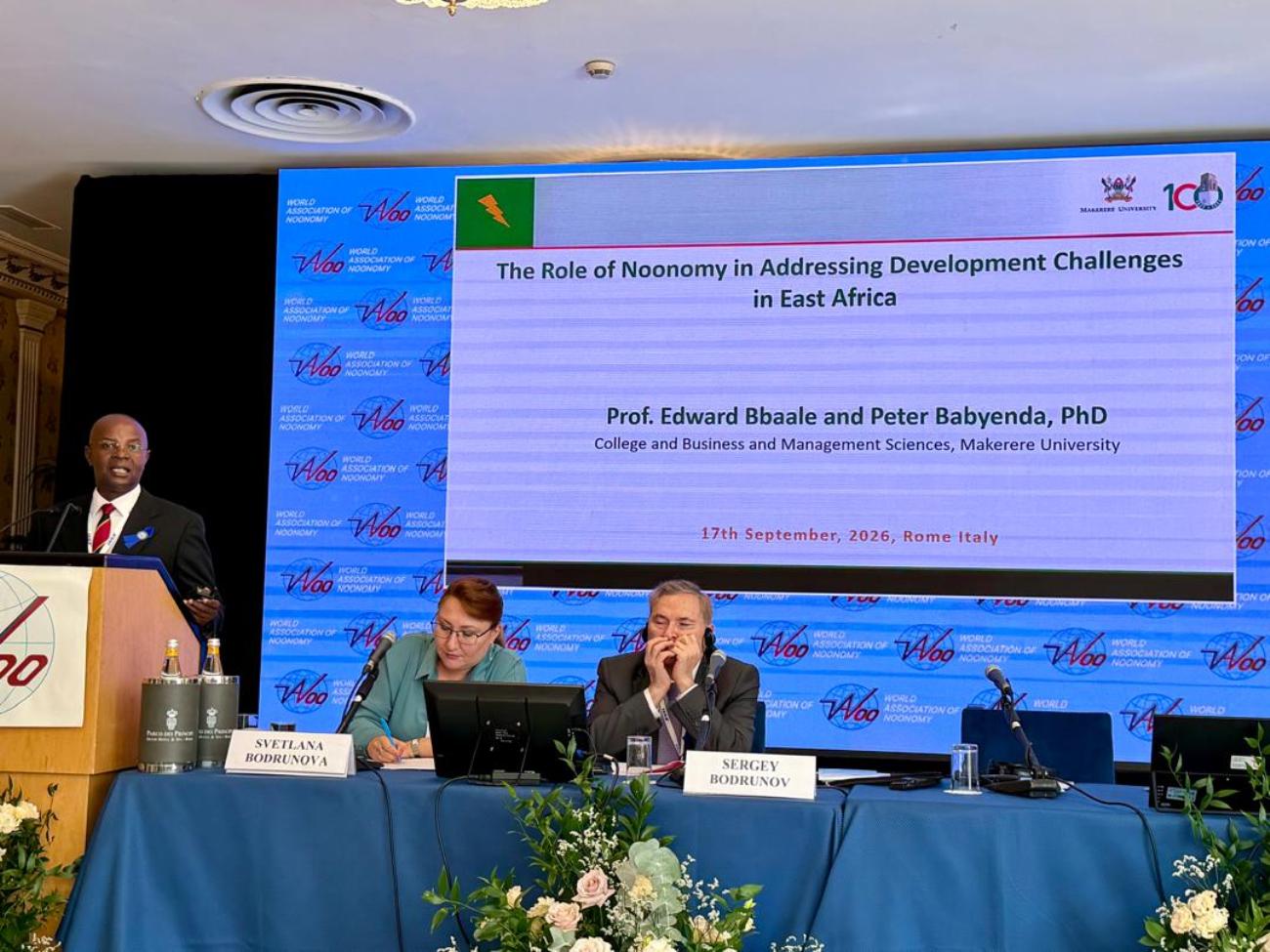
The paper was co-authored with Dr Peter Babyenda and formed part of the scholarly contributions presented at the World Congress on Noonomy in Rome, Italy.
Prioritizing Human-Centred Development
Dr Peter Babyenda said Makerere University’s participation in the World Congress on Noonomy in Rome marked an important step in the University’s international engagement with the Theory of Noonomy.
“The engagement paves the way for establishing a Centre of Excellence for Noonomy at the School of Economics, under the College of Business and Management Sciences (CoBAMS),” he stated.
Dr Babyenda explained that the Theory of Noonomy places human welfare at the centre of development, arguing that development should be assessed not only through productivity and infrastructure, but also by how it improves people’s wellbeing.
He said consumption, knowledge transfer and solidarity are important considerations, including in the application of emerging technologies such as Artificial Intelligence.
Dr Babyenda revealed that Uganda has been offered an opportunity to host an upcoming World Congress on Noonomy, which he said could bring together participants from more than 55 countries and create opportunities for academic exchange, industry engagement and international visibility for Uganda.
He called upon the academia and industry to collaborate with Makerere University in advancing its engagement with the emerging field.
The Signing of the MoU at the Global Congress of the World Association of Noonomy marks a milestone in Makerere University’s efforts to contribute to international scholarly discussions on alternative approaches to understanding economic systems and development.

-
 Humanities & Social Sciences2 weeks ago
French Embassy Presents Four Makerere Scholars with Academic Palms
-
 General2 weeks ago
Job Opportunities: NETOMA Study
-
 General2 weeks ago
Makerere University and Xiangtan University Advance Strategic Partnership in Chemical Engineering
-

 Health2 weeks ago
Makerere-Mulago Host Oncology Specialist – Professor Dr. Thiha AUNG
-
 Health2 weeks ago
PhD Fellowship Opportunity: NETOMA Study