
Business & Management
EfD Hosts Policy Dialogue on Energy Efficiency and Reduced Emissions: Hoima Residents Call for Expanded Access to Clean Energy

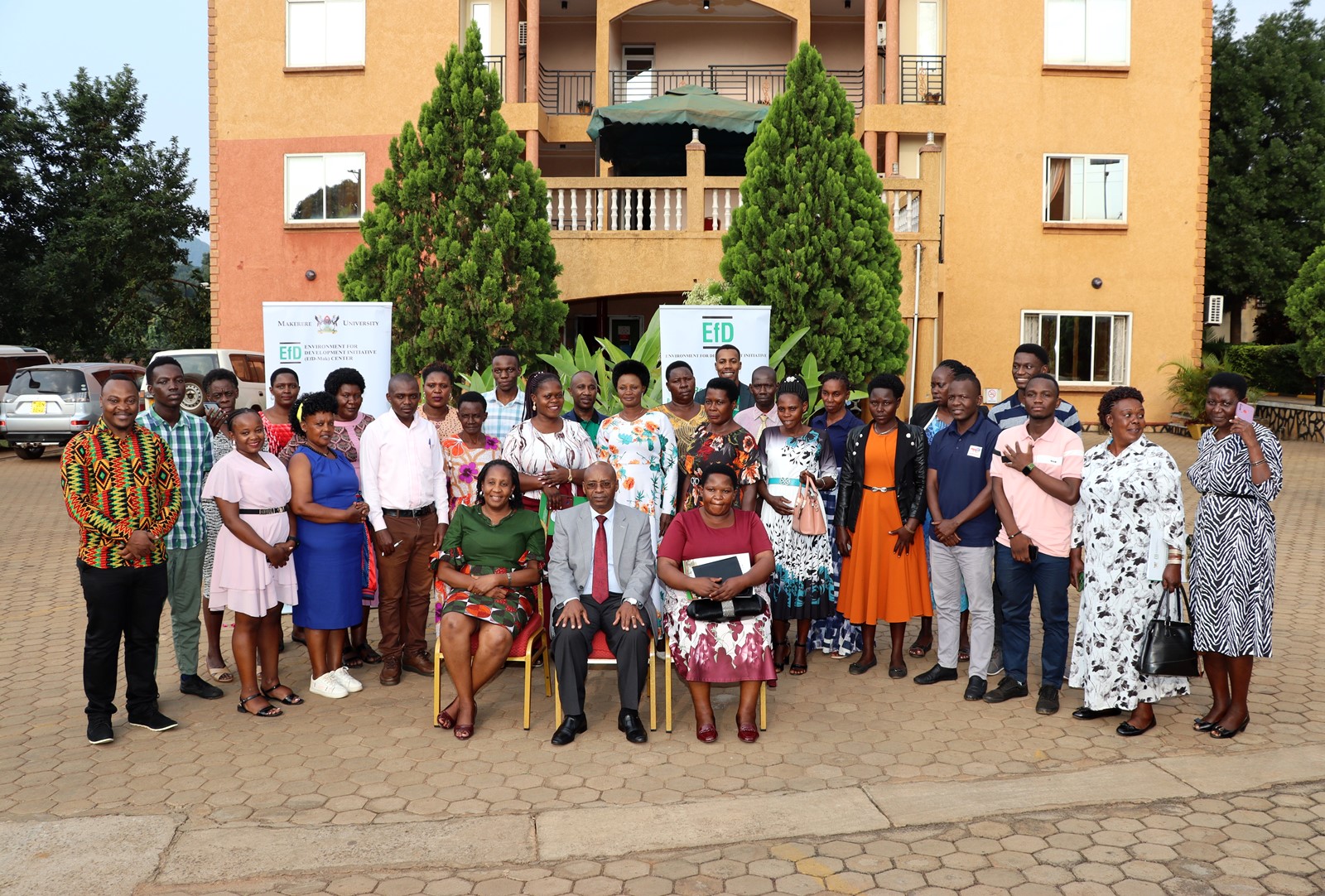
Hoima, July 18, 2024 – Stakeholders from Hoima’s local government, private sector, and civil society organizations have urged the government to expand access to clean energy sources like electricity and LPGs to facilitate the country’s transition from biomass and achieve its green growth strategy. Despite Uganda’s capacity to generate and export electricity to neighboring countries, access and affordability remain significant challenges for rural areas and a large portion of the population.
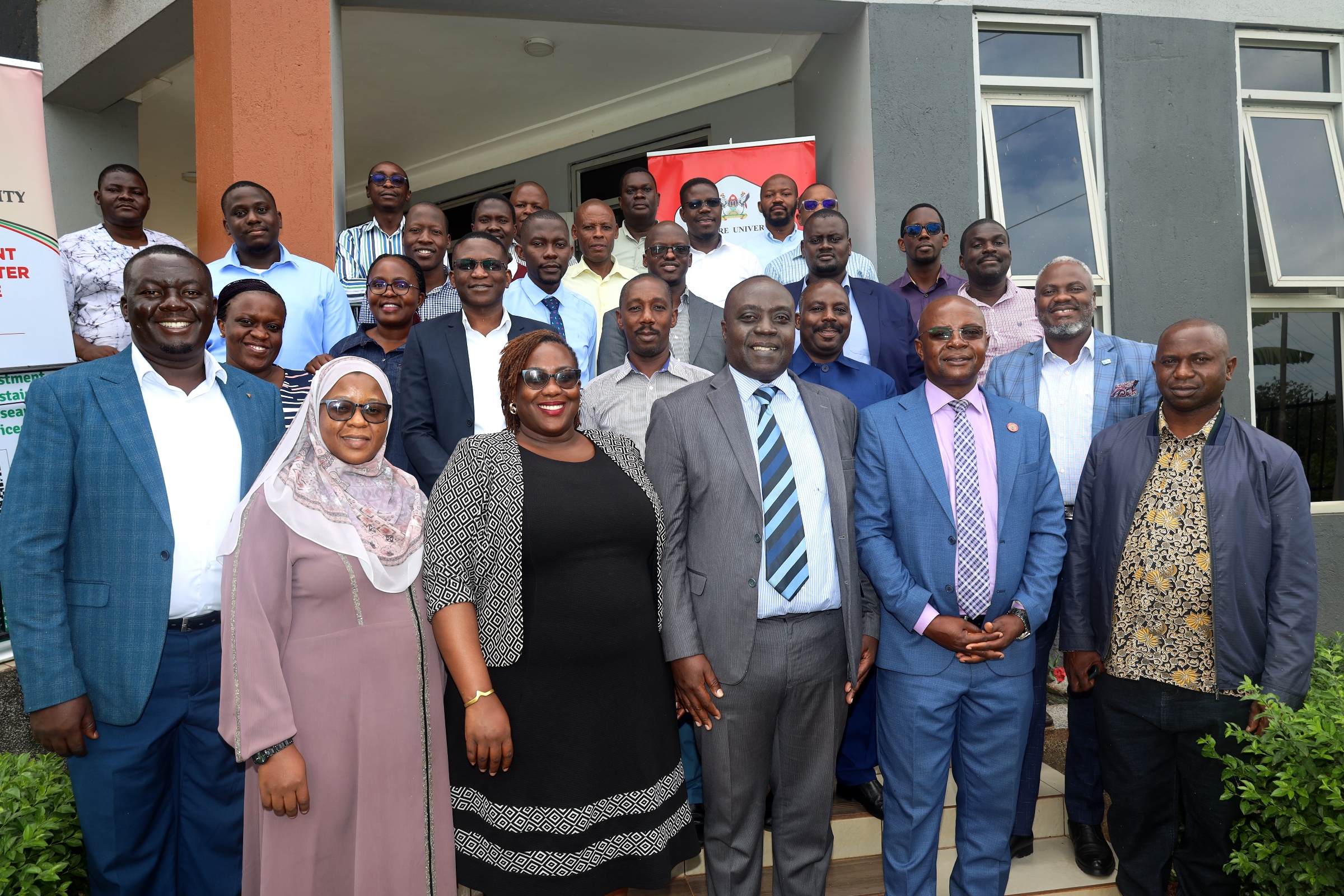
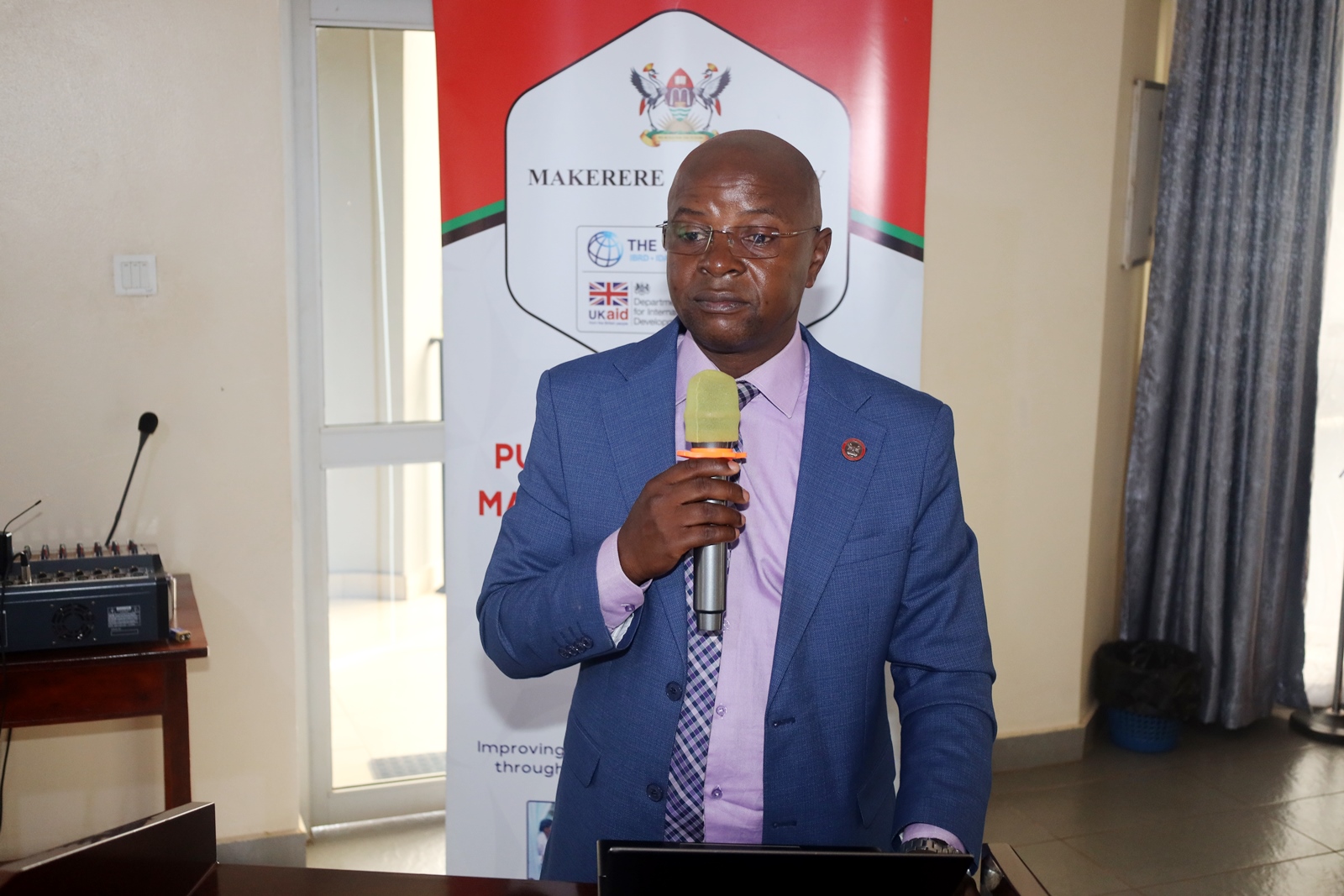
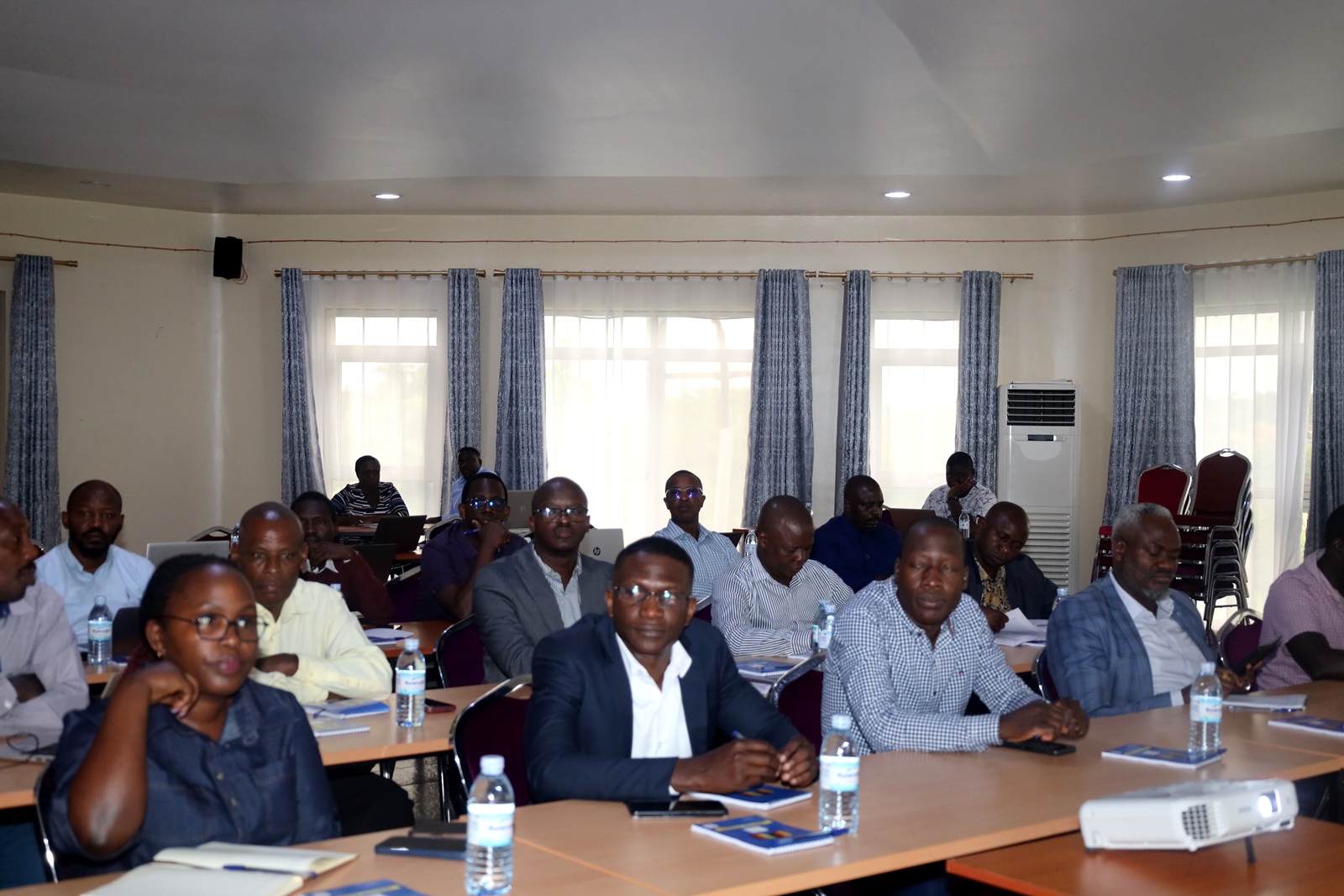
During a policy dialogue hosted by the EfD-Mak Center in Hoima, themed “Energy Efficiency and Reduced Emissions in Uganda: Facts and Prospects,” stakeholders highlighted the necessity of addressing these challenges. The event, part of the EfD Annual Meeting, gathered district local government officials, both technical and political, as well as academia, youth, and members of the private and civil society organizations.
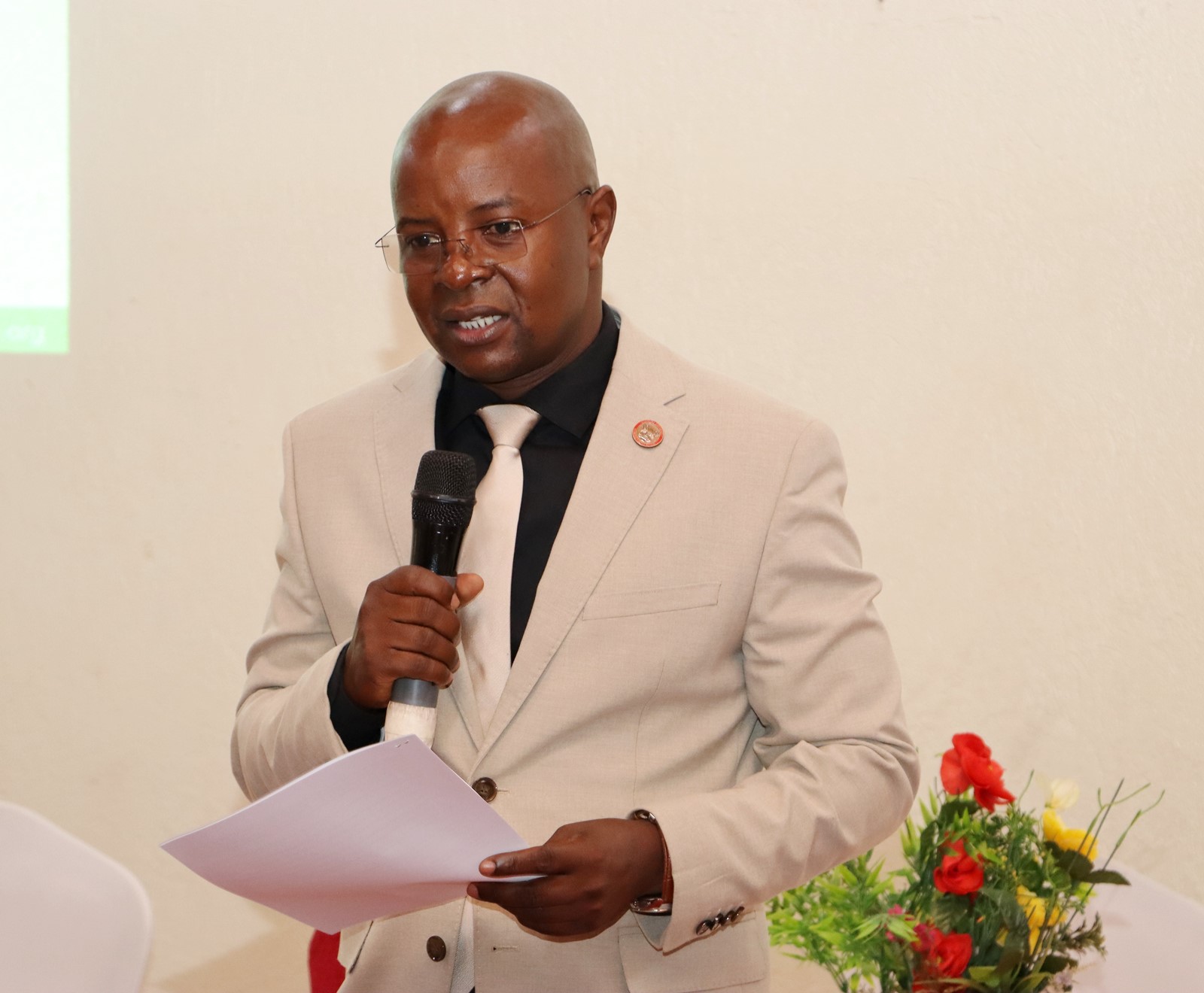
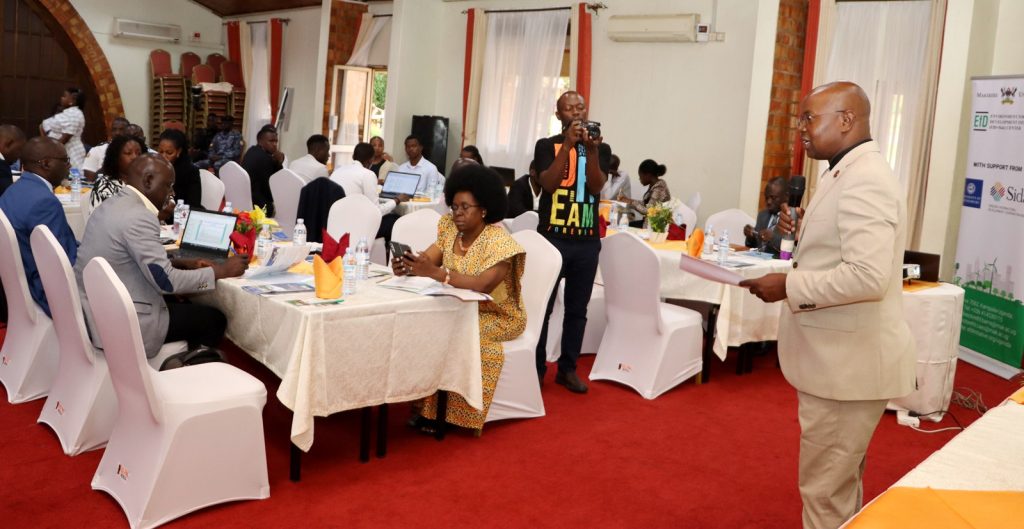
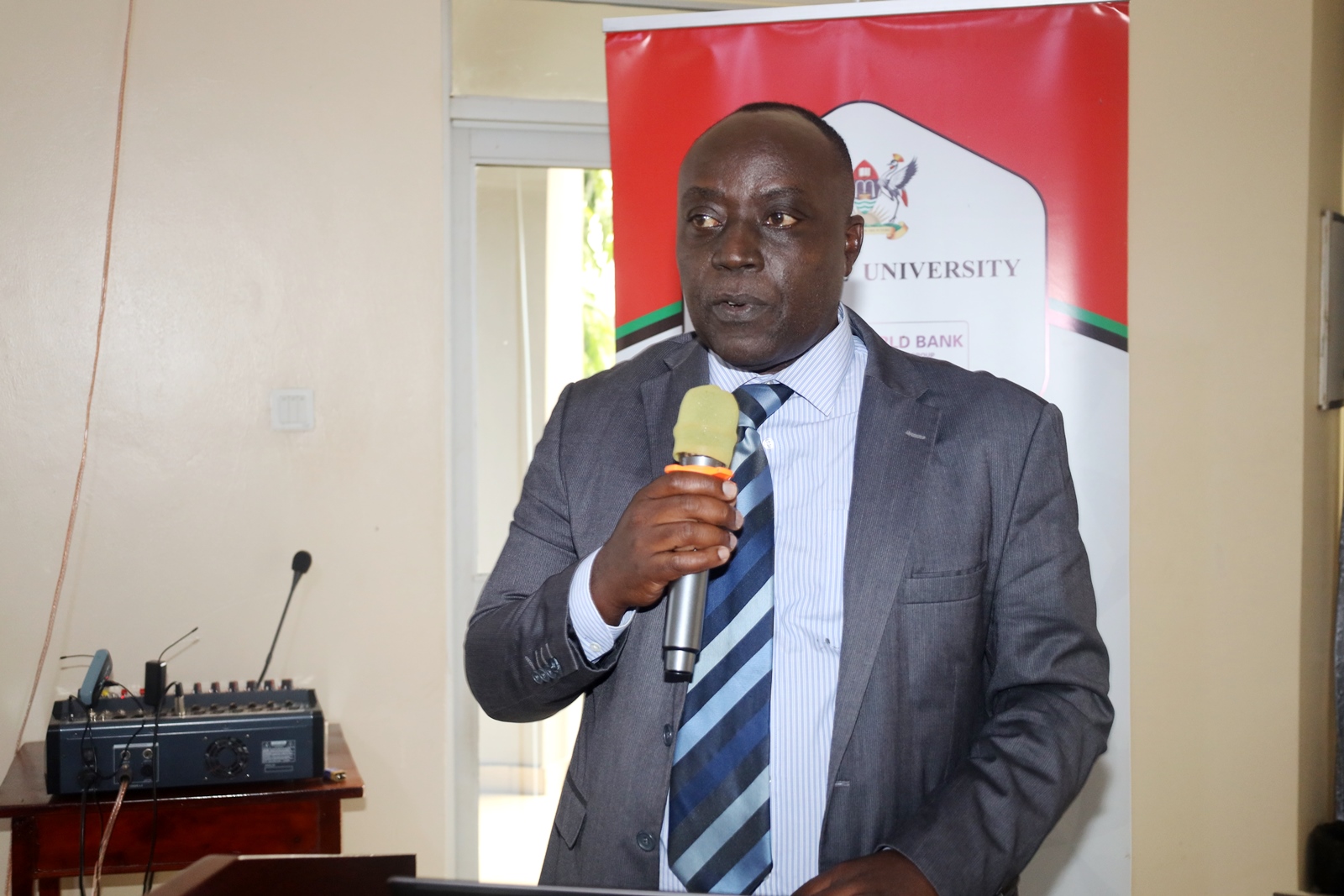
In his opening remarks, Prof. Johnny Mugisha, Deputy Director of the EfD-Mak Center, emphasized the importance of holding the dialogue in Hoima due to the region’s developments in energy. “The energy we are talking about includes firewood, charcoal, petroleum, electricity, and many others. We deliberately chose Hoima because of the energy developments here, and we are looking forward to petroleum-sourced energy,” Mugisha explained.
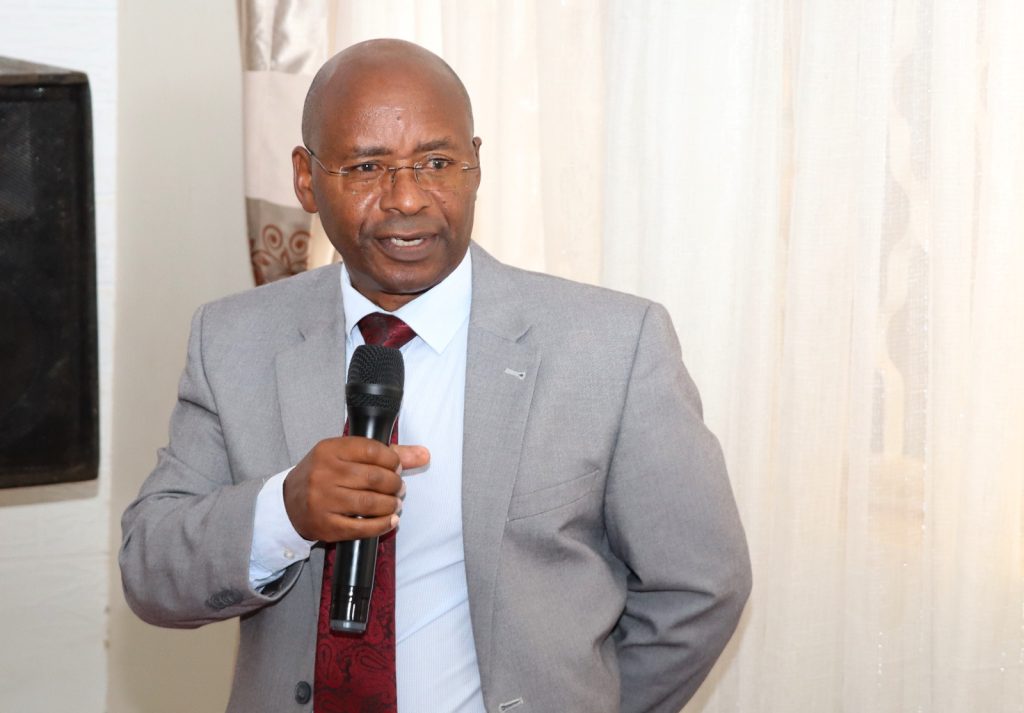
He noted the slow and long-term transition from biomass to cleaner energy sources, underscoring the need for discussions around biomass and clean energy. “Energy efficiency means how much you get from the energy you use to achieve a result, for example, how much electricity you use when cooking matooke,” he said. “This dialogue is a roundtable discussion for us all to give our input on what is causing what and how best to sustainably use the environment as we transition to clean energy sources.”
Prof. Mugisha stressed the university’s commitment to promoting such dialogues across the country. “Our intention is to get the root causes right from the grassroots communities so that together we can propose solutions to inform policymakers for decision-making and implementation,” he concluded.
Uganda’s Path to Energy Efficiency and Reduced Emissions: Key Insights from Dr. John Sseruyange
In his presentation Dr. John Sseruyange highlighted the critical role of energy efficiency and emission reduction in transforming Uganda from a peasant society to a modern, prosperous nation, as envisioned under Vision 2040.
“Energy acts as a catalyst that drives all other sectors,” stated Dr. Sseruyange. With agriculture contributing to 71.7% of employment, the mechanization of Uganda’s economy and the expanding transport sector are significantly increasing fossil fuel and biomass usage, leading to heightened carbon emissions and deforestation.
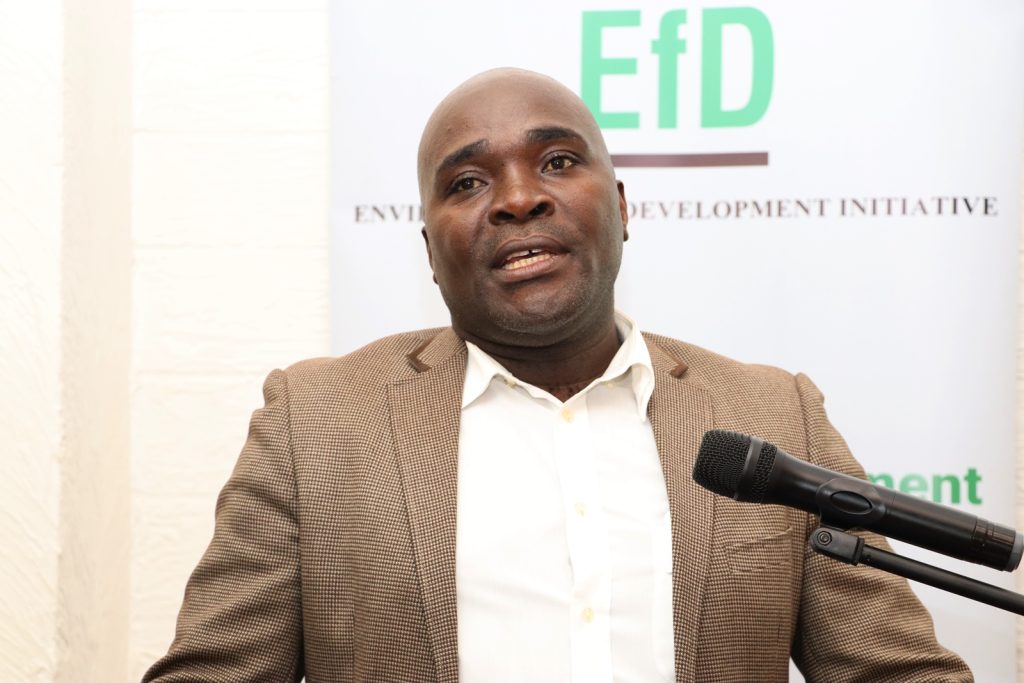
Dr. Sseruyange warned of the dangers of biomass reliance, noting that Uganda’s forest cover has decreased from 24% in 1990 to 9% in 2015 due to tree cutting for firewood and charcoal. “The rapid rate of forest depletion is alarming,” he said, emphasizing the health and environmental impacts of biomass fuels, including air pollution and associated diseases.
The presentation highlighted that women and children, especially girls, are disproportionately affected by biomass fuel collection, which hampers productive activities and schooling. “The burden of wood fuel collection falls heavily on women and children,” noted Dr. Sseruyange.
Dr. Sseruyange identified several barriers to energy transition in Uganda, including weak implementation capacity, cultural preferences, and limited accessibility to affordable and reliable clean energy. He pointed out that only 42% of the population had access to hydropower by 2021, and many clean energy systems, such as LPG, remain unaffordable for small businesses.
Addressing governance, Dr. Sseruyange explained the complex interplay of institutions involved in promoting efficient energy systems, ranging from the Ministry of Energy and Mineral Development to international organizations like the World Bank. He stressed the importance of household and industrial capacity in adopting new technologies.
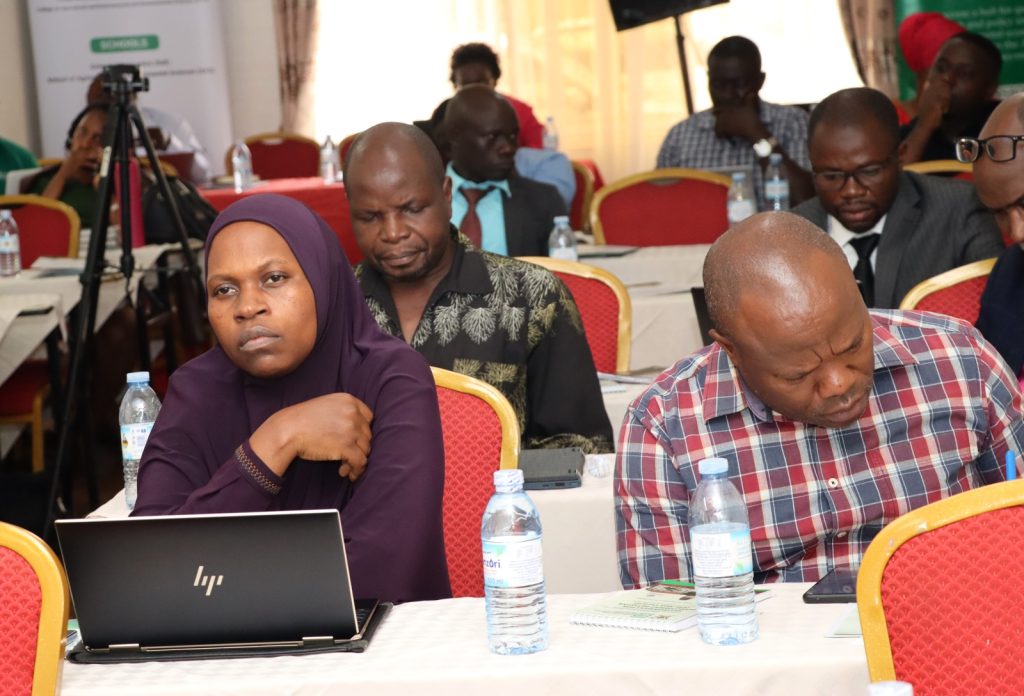
Despite these challenges, Dr. Sseruyange outlined several promising initiatives aimed at enhancing energy efficiency and reducing emissions. Vision 2040 focuses on upgrading industrial technologies to less energy-consuming alternatives. The National Development Plans aim to increase clean energy accessibility and promote efficient cooking technologies. The Uganda Green Growth Development Strategy emphasizes low carbon development and solar energy installation.
Additionally, Uganda’s hydropower capacity has increased from 1278.6 MW in 2019/20 to 1370.8 MW in 2021/22, demonstrating improved energy generation capacity. Solar energy expansion efforts have resulted in off-grid solar installations reaching 30,000 households, with several solar PV plants contributing over 65 MW. The Clean Cooking Supply Chain Expansion Project has sold 72,535 energy-saving stoves by 2020. Furthermore, the government is aiming to distribute 1 million subsidized LPG cylinders to promote cleaner cooking technologies.
Dr. Sseruyange also highlighted the establishment of Kiira Motors to produce electric vehicles and the development of highways and non-motorized transport systems to reduce urban traffic congestion and emissions. “The government is taking significant steps towards a sustainable energy future,” he concluded.
In closing, Dr. Sseruyange called for policy and regulatory reforms, public awareness campaigns, and rigorous assessments to promote energy transitions. “How can we, as a nation, collaboratively promote energy transitions?” he posed to the audience, urging collective action from government, NGOs, and the general public.
Participants React
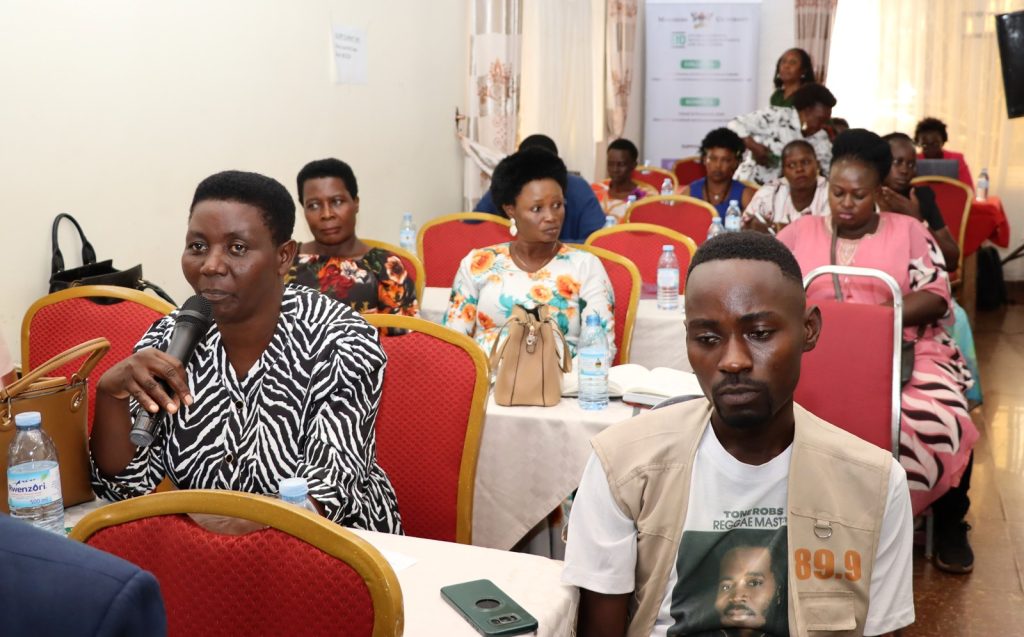
During the plenary discussions, several interventions were proposed to enhance the transition to green technologies. Highlighting the negative environmental impacts of high school dropout rates.
Participants noted that many youths turn to activities like bricklaying, charcoal burning, and sand mining for survival, which harms the environment. They called for public education and awareness programs to address fears and cultural biases against new energy technologies. “Education on the benefits of using these technologies is crucial,” said Harriet the district natural resources officer.
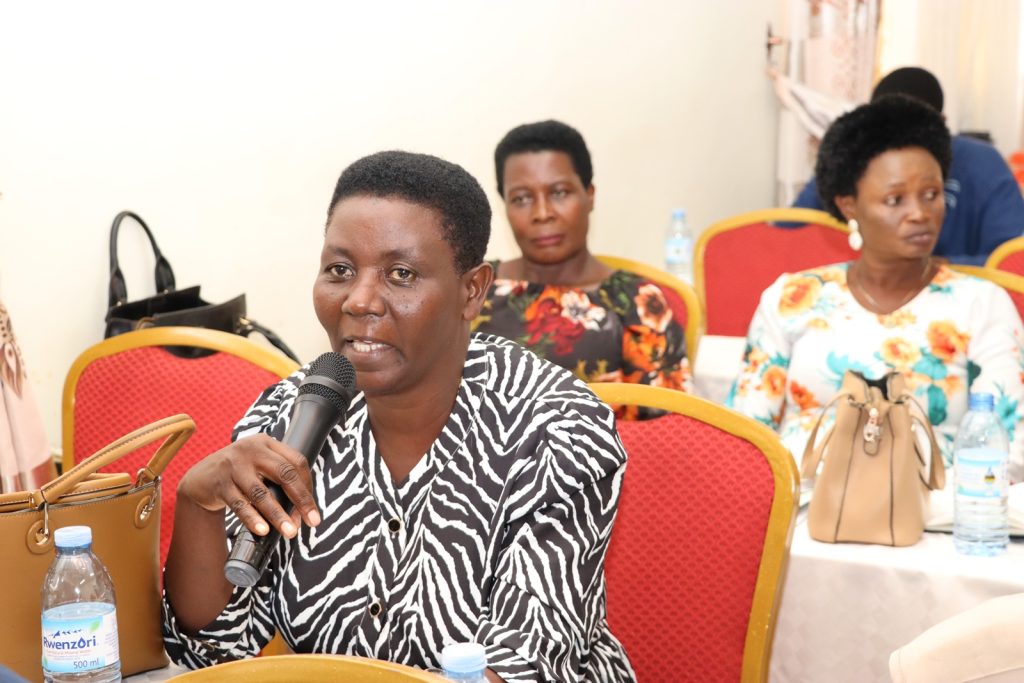
Affordability of new energy sources was another major concern, with high initial costs and refilling expenses for LPGs making them inaccessible for many rural poor.
Participants also highlighted the problem of low-quality counterfeits sabotaging payment schemes for acquiring new technologies, calling for regulation to address quality standards.
Cultural perceptions that clean cooking energies are for the rich and lazy further hinder the transition, underscoring the need for continuous public sensitization, which they stressed should be physical.
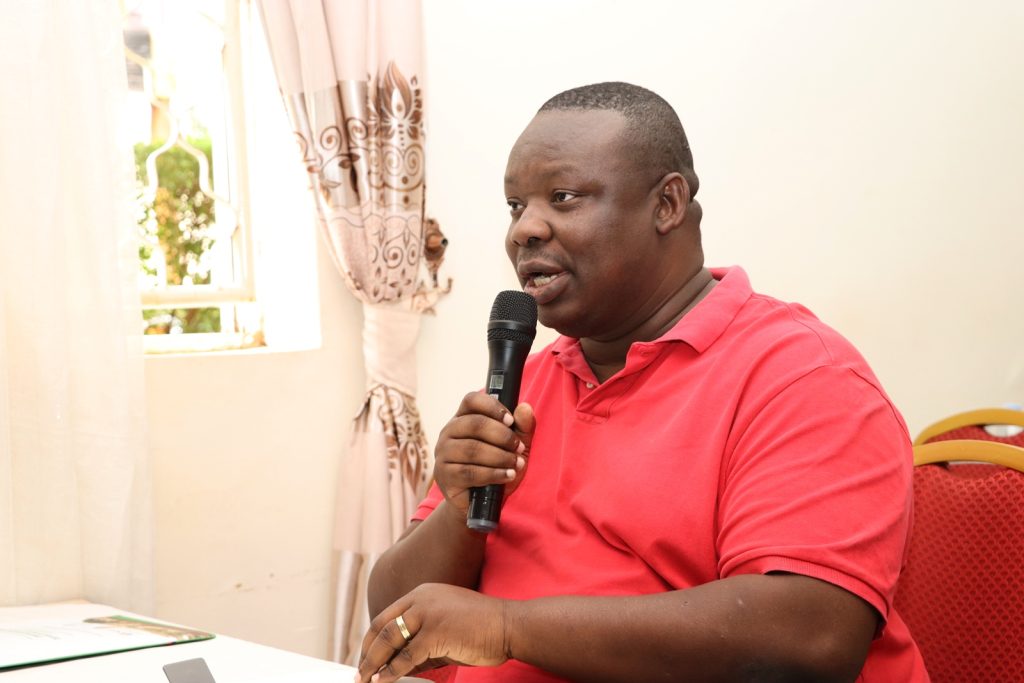
Limited budgets for local governments and weak enforcement mechanisms were also cited as barriers to implementing clean energy programs. Participants proposed subsidies for manufacturers and consumers of clean energy sources, expanding access to electricity and LPGs in rural areas, and ensuring widespread availability and awareness of green technologies.
Hoima District Leadership Decries Effects of Indoor Pollution
The Vice Chairperson of Hoima District, Hellen Namulumba, raised concerns about the severe effects of indoor pollution on the community’s health.
Closing the policy dialogue, Namulumba appreciated the organizers for addressing these critical issues, noting that many lives have been lost due to ignorance about the dangers of indoor pollution.
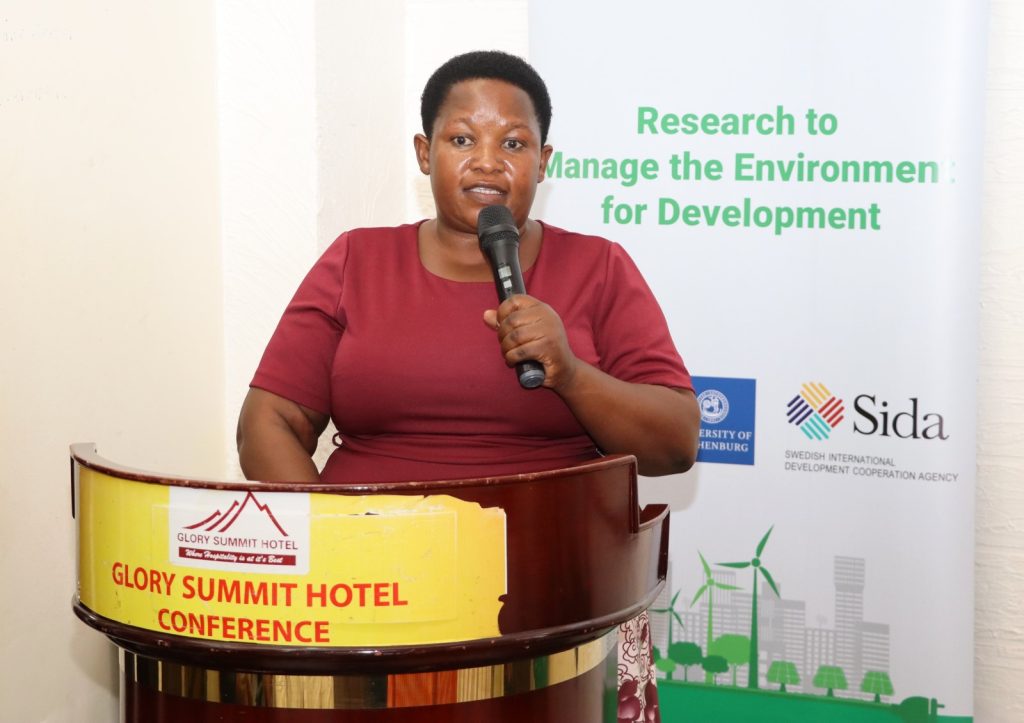
“There is no single woman in the village who would wish to continue cooking on firewood but they are incapacitated. They can adopt to other energy sources like electric and gas cockers”, she stressed
Namulumba highlighted the increasing cases of cancer, associating the disease to the use of biomass. “It is my prayer that we conduct many of these engagements at the grassroots level, bringing on board sub-county political leaders,” she said.
She called for government intervention to reduce indoor pollution by extending power coverage to rural areas beyond 50%, reducing power unit costs for domestic users, and ensuring consistent power supply. “If government can intervene, indoor pollution can reduce. If government can extend power coverage to rural areas beyond 50% and reduce the cost of power units for domestic users and ensure there is consistency in power supply, I think our people can enjoy this country,” Namulumba stated.
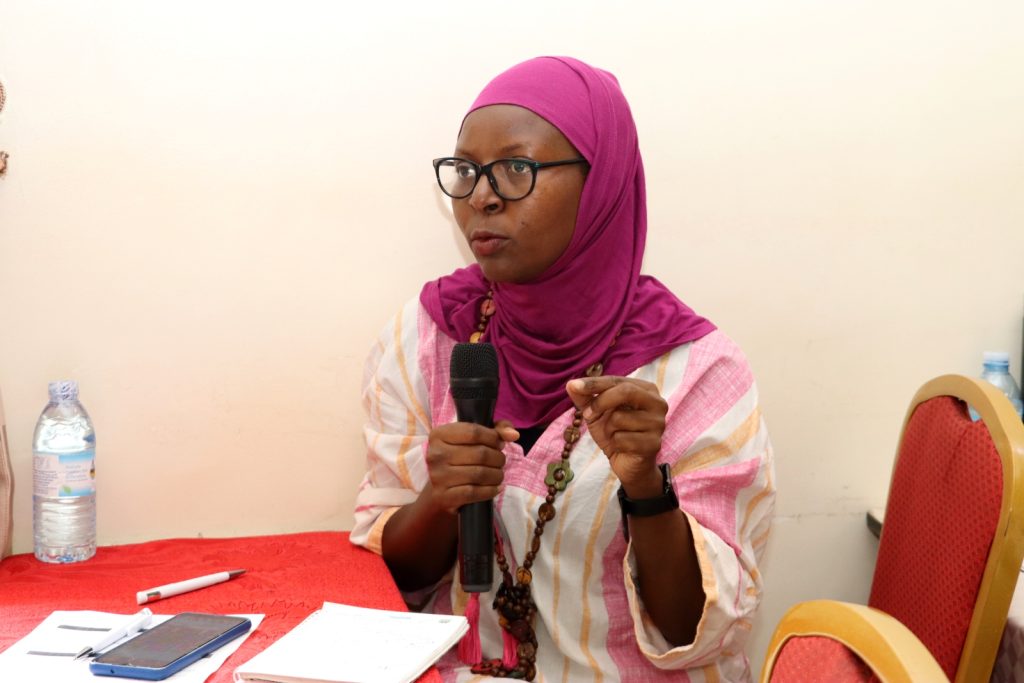
She also emphasized the need to support small-scale innovators, such as those manufacturing briquettes and improved cooking stoves, to reduce indoor pollution. Additionally, she called for strengthened policies for emission control systems in automobiles to reduce cancer and other disease rates.
“If at all government can boost small-scale innovators like assisting briquette manufacturers in marketing their products through sensitization, boost those making improved cooking stoves, we can reduce indoor pollution,” she said. “And if government can strengthen policies for emission control systems in automobiles that can greatly make an impact in reducing the rate of people dying of cancers and other diseases.” she proposed.
Namulumba thanked the participants for their attendance and pledged the district’s commitment to support them in these initiatives, appealing to them to come up with budgets to support those engaged in making alternative energy sources.
Jane Anyango is the Communication Officer EfD Uganda









By Monica Meeme and Jane Anyango
Kampala, July 2, 2025
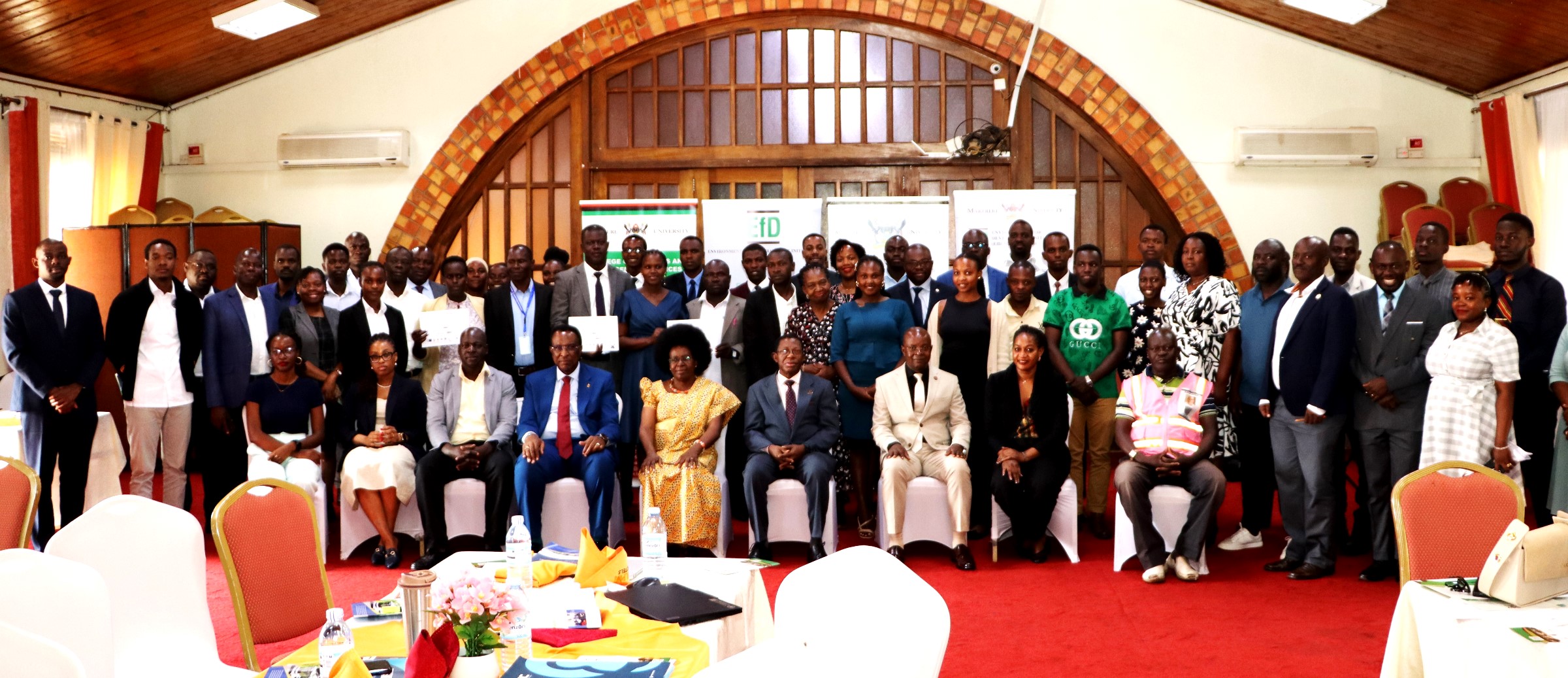
The 4th Cohort of the Inclusive Green Economy (IGE) Fellows 2024–2025 has graduated with certificates at a colorful ceremony held at the Kampala Kolping Hotel. The new IGE cohort 2025–2026 was also introduced during the event. The fellows—senior public servants from five key government institutions—completed a year-long training on green economic transformation, focusing on reducing emissions in Uganda’s transport sector. The participating institutions included the Ministry of Finance, Planning and Economic Development (specifically the new Climate Finance Unit), Ministry of Energy and Mineral Development, Ministry of Water and Environment, the National Planning Authority, and the Kampala Capital City Authority (KCCA).
The IGE Fellowship, funded by the Swedish International Development Cooperation Agency (Sida), is a capacity-building initiative coordinated by the University of Gothenburg in collaboration with Uganda’s Makerere University. This year’s program brought together senior officials from Uganda’s public sector to address policy and practical challenges in promoting e-mobility and reducing transport emissions.
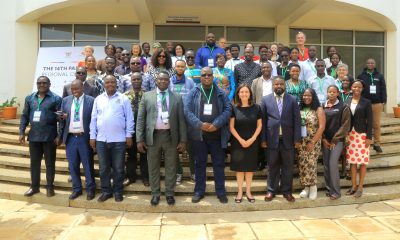
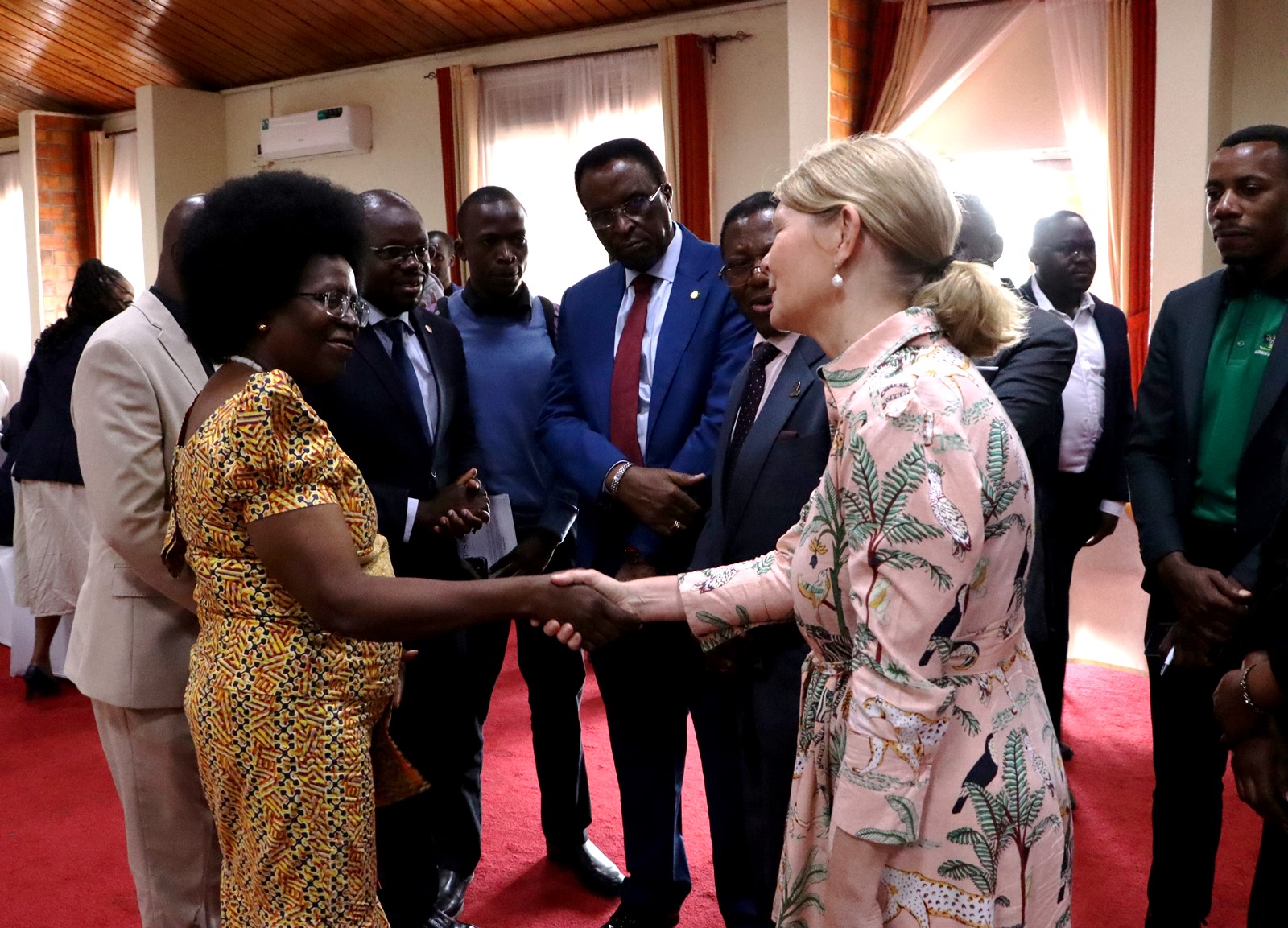
The graduation ceremony attracted over 120 participants from Uganda’s ministries and agencies in water, minerals, and energy, as well as private sector players, academia, and civil society organizations. Dignitaries from Makerere University, including Vice-Chancellor Prof. Mukadasi Buyinza, several deans, and commissioners were present. Also in attendance were representatives from Kira Motors, UETCL, and other stakeholders in Uganda’s emerging e-mobility sector. The event was presided over by the Swedish Ambassador to Uganda, H.E. Maria Håkansson, as Chief Guest. Other dignitaries included the Minister for Science, Technology and Innovation, Hon. Dr. Monica Musenero; the Vice-Chancellor’s representative, Prof. Buyinza Mukadasi (also Academic Registrar and Acting Deputy Vice Chancellor in charge of Academic Affairs); and the Principal of the College of Business and Management Sciences, who also leads the Uganda IGE program.
Sweden’s Call to Action
H.E. Maria Håkansson commended Uganda’s efforts to transition to a green economy and urged the country to lead Africa’s e-mobility revolution. Speaking at the ceremony, Ambassador Håkansson emphasized the importance of clean transport solutions for achieving climate goals and driving national development.
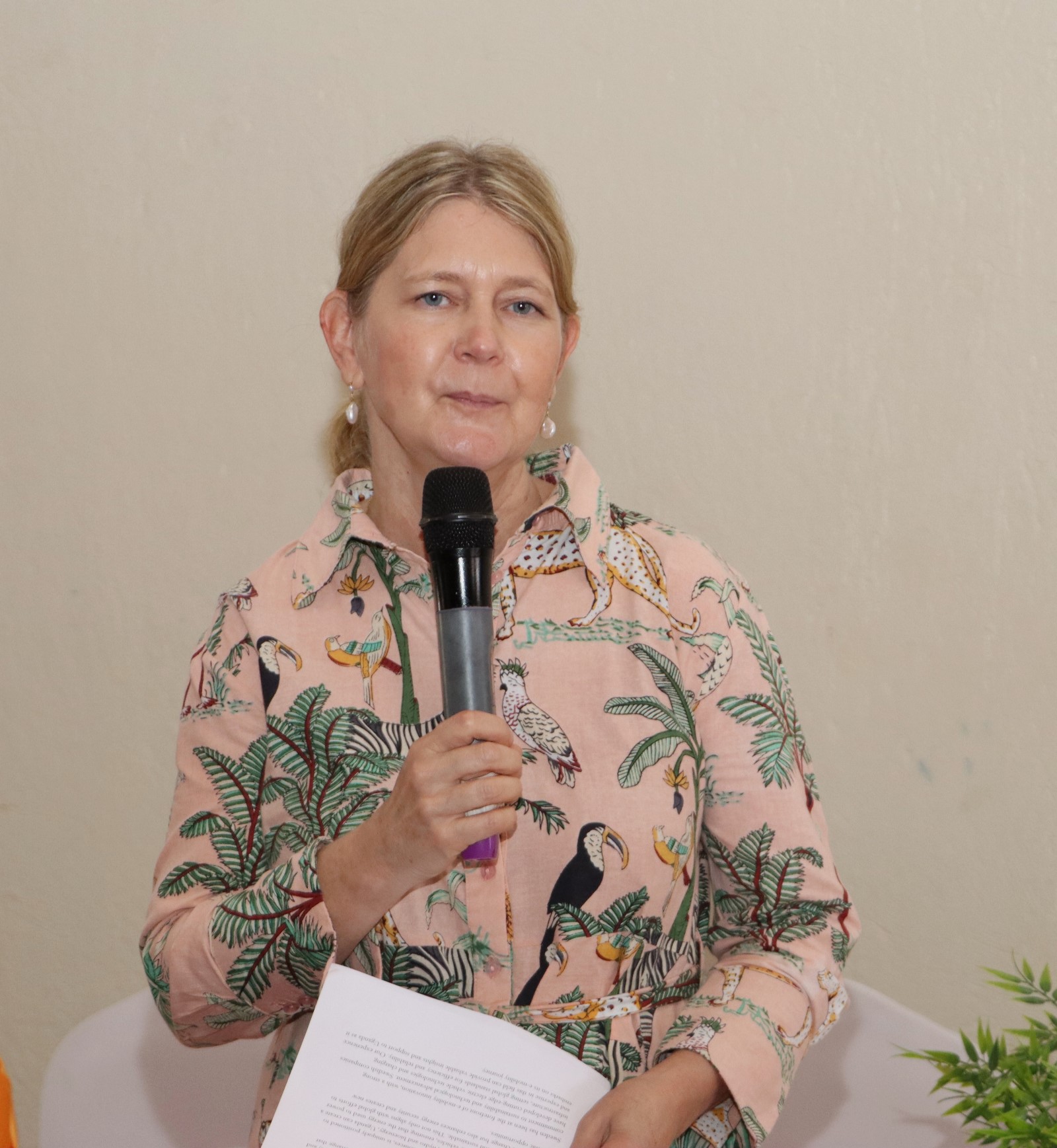
“It is a pleasure and honor to celebrate a cohort of professionals now better equipped to shape Uganda’s green economy,” she said. “This year’s focus on e-mobility is not just timely—it’s essential.”
She stressed that transitioning to electric mobility is more than a technological shift—it’s a paradigm change with broad social, economic, and environmental implications.
“Uganda, with its abundant renewable energy resources—solar, hydro, and bioenergy—is uniquely positioned to lead this transition,” she noted. “Clean energy must power clean transport.”
Drawing on Sweden’s experience, Håkansson said Swedish companies have set global benchmarks in electric vehicle technologies and infrastructure. She reaffirmed Sweden’s readiness to support Uganda in building a sustainable e-mobility ecosystem.
“Investment in charging infrastructure, incentives for EV production and use, and public awareness campaigns are essential to making this work,” she said.
She also called for a whole-of-society approach, urging collaboration between government, academia, the private sector, and civil society.
“It’s inspiring to see multi-sectoral representation here. This is exactly what’s needed to move from policy to impact,” she added.
A Message to the Graduates: Be the Pioneers
Addressing the 2024 IGE Fellows directly, Ambassador Håkansson described them as pioneers of Uganda’s green transformation.
“You have the knowledge, the skills, and the platform to influence policy, drive innovation, and lead by example,” she said. “Embrace that responsibility with passion and determination. Uganda’s future is in your hands.”
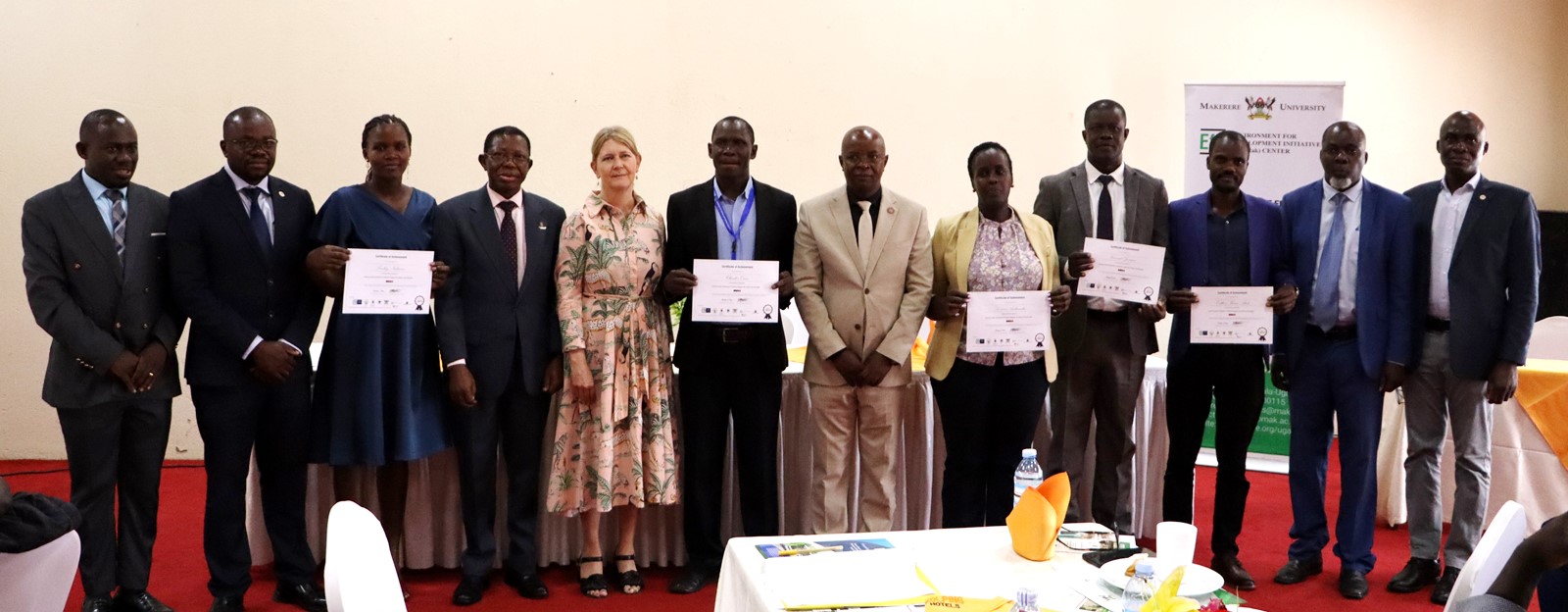
She concluded by congratulating the fellows and reaffirming Sweden’s commitment to supporting Uganda’s green economy agenda.
“Your achievements are not just personal milestones; they are part of a broader mission to ensure a better, cleaner, and more sustainable future for all.”
Minister Musenero Urges Integration of STI and Economic Policy
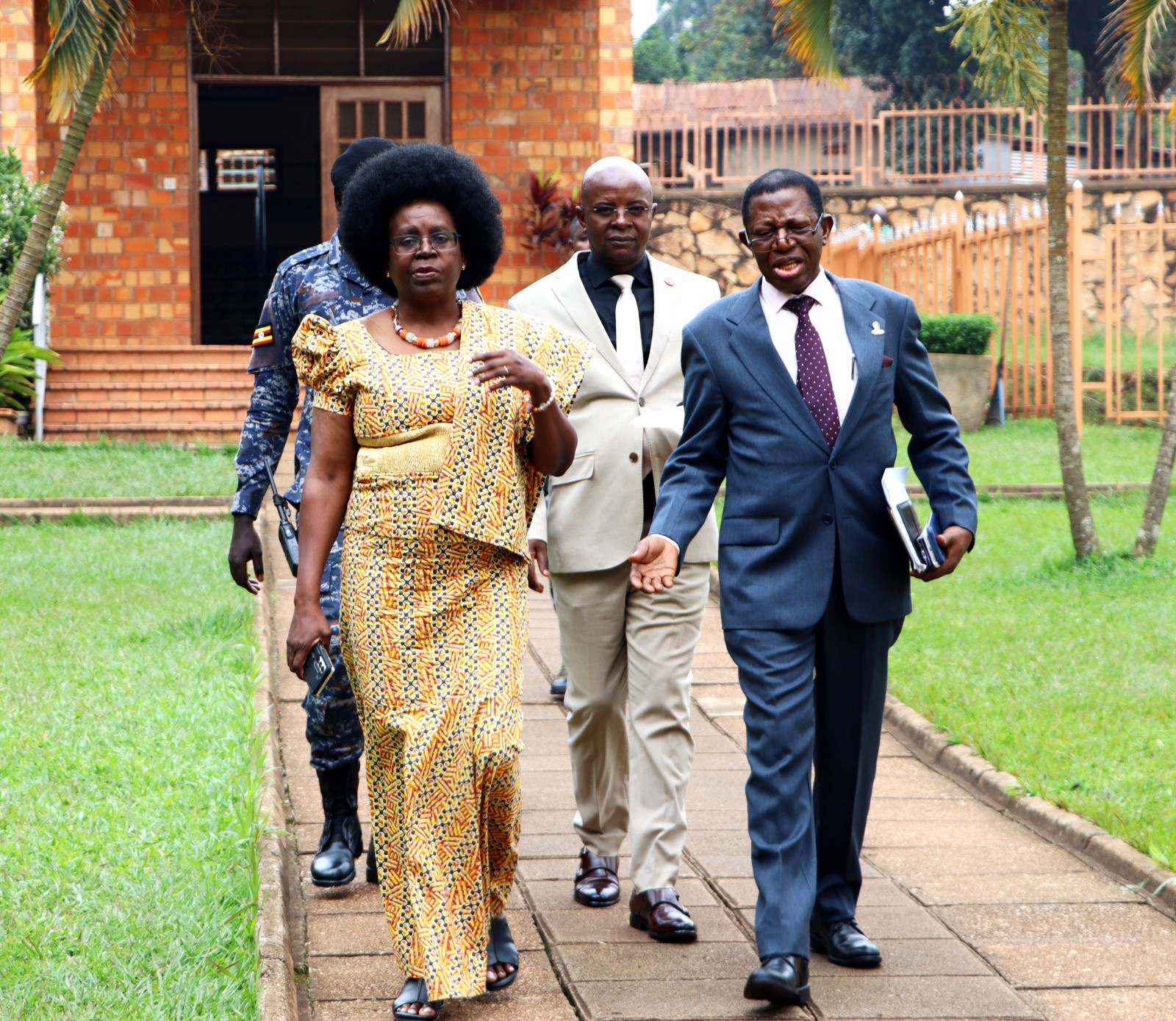
Minister for Science, Technology and Innovation, Dr. Monica Musenero, called for urgent alignment of science, technology, and innovation (STI) with economic policy to transition Uganda into a sustainable green economy.
She emphasized the role of public sector leadership in combating climate change through e-mobility, energy efficiency, and adaptive economic strategies.
“This cohort has shown what’s possible when we equip our civil service with tools and knowledge beyond traditional silos,” she said. “STI alone cannot transform our economy. Without the right incentives and economic policies, even the best innovations may not scale.”
E-mobility was central to the fellows’ training. From motorcycles to buses, Uganda’s electric vehicle transition was presented as both an environmental necessity and an economic opportunity. Kira Motors Corporation was highlighted as a standout example that has inspired regional interest.
“Our transport sector is a major emitter,” said one program coordinator. “But through e-mobility and better planning, we can make real progress. That’s why we brought together not only policymakers but also private sector players, utility providers, and boda-boda operators.”
The IGE Program operates in Uganda, Kenya, Tanzania, Rwanda, and Ethiopia. It combines technical training, peer learning, and national policy engagement.
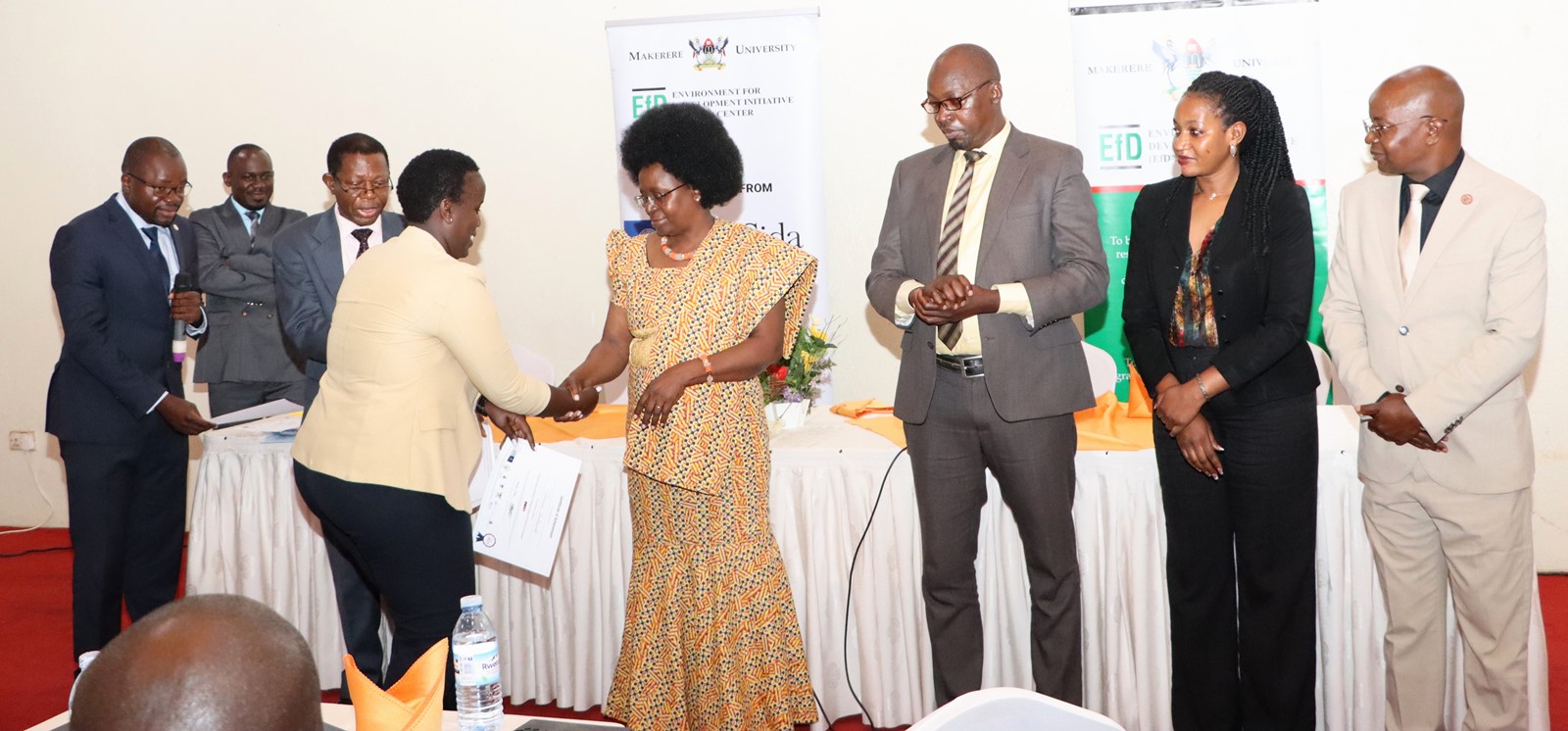
Fellows visited institutions in Rwanda, Kenya, and Ethiopia to exchange experiences and showcase Uganda’s successes—particularly the Kira EV initiative, which has become a regional benchmark.
Dr. Musenero emphasized Uganda’s commitment to using STI to meet its climate goals but cautioned against fragmented efforts.
“Africa may contribute less than 4% of global emissions, but we suffer disproportionately,” she said. “This is our moment to lead—not just through innovation, but by creating the right environment for innovation to flourish.”
Musenero Warns Against Passive Technology Adoption
Dr. Musenero urged African nations to stop passively receiving technology and instead harness it for economic sovereignty and relevance.
She argued that unless African countries take control of their role in the Fourth Industrial Revolution, they risk falling into cycles of dependency.
“We now have enough PhDs, institutions, and qualified leaders,” she said. “So it’s unacceptable that Africa receives this revolution as it did the last—awed by foreign inventions but unable to replicate them.”
While e-mobility is often framed as a climate solution, she urged fellows to focus on wealth creation, job generation, and manufacturing.
“Thriving means growing despite challenges. Harnessing is using innovation as a launchpad for prosperity. That’s the mindset we need.”
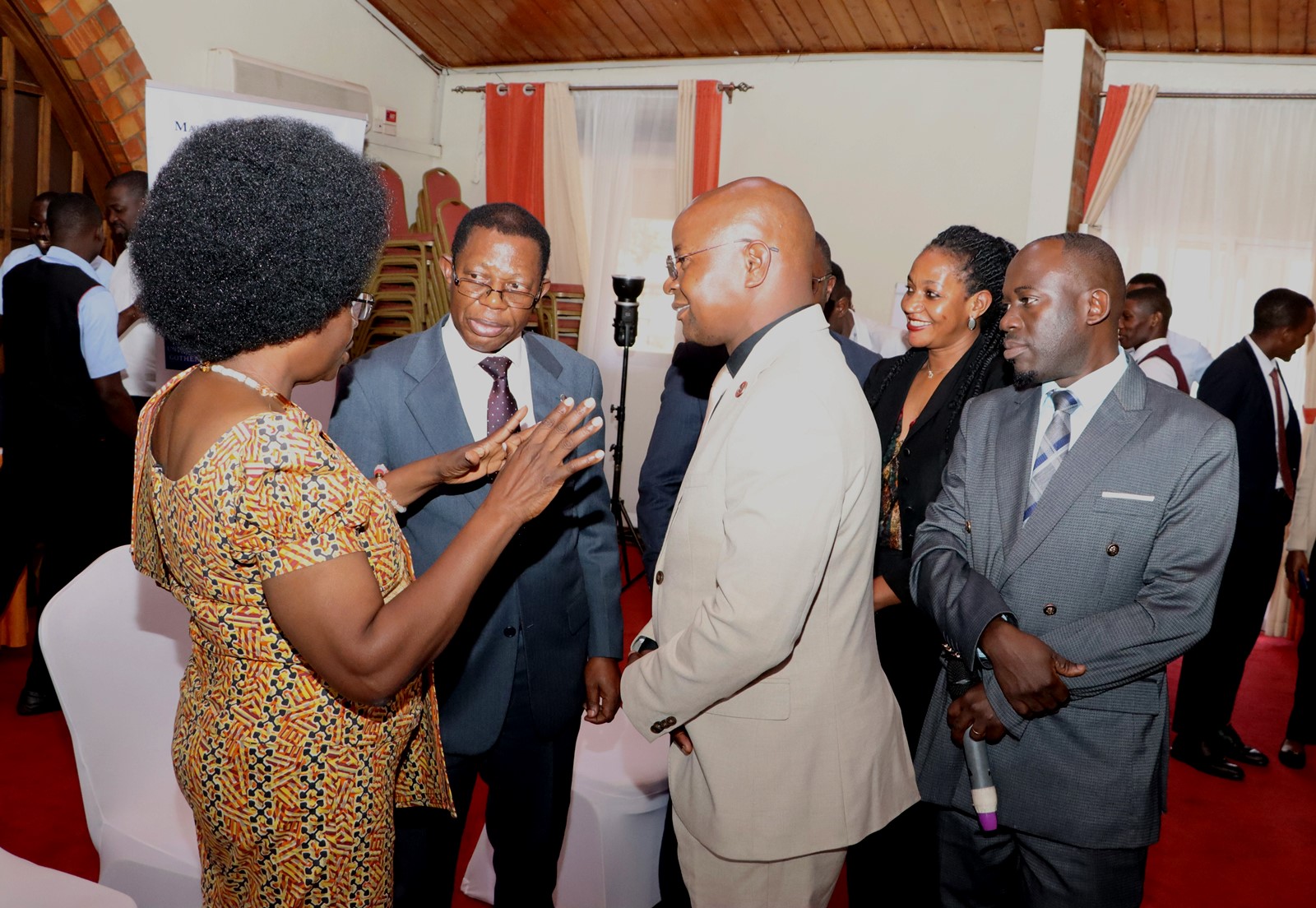
She warned that Uganda’s green transition must go beyond emissions reduction to address economic transformation.
Dr. Musenero offered a historical account of how past industrial revolutions left Africa behind—not due to lack of technology, but due to lack of understanding.
“The first industrial revolution didn’t start with a master plan—it started small and grew. But countries that embraced it changed forever. Africa, meanwhile, was herding cattle,” she said.
Now, with digital technology, AI, biotechnology, and green energy, Africa must act decisively.
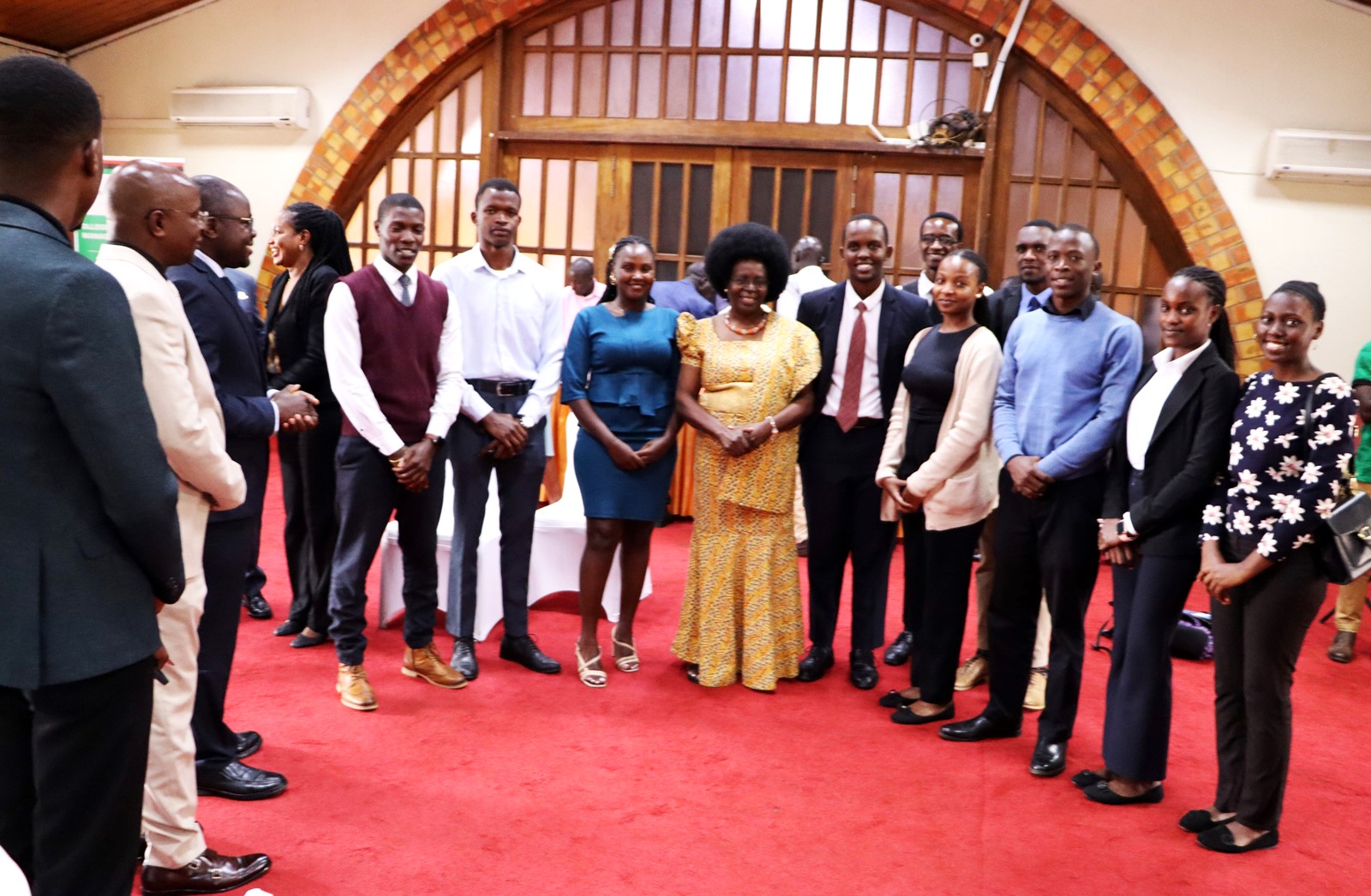
“We were unprepared then. But now we have the tools, the minds, and the responsibility.”
She concluded with a call for internships and deeper policy engagement, suggesting that all IGE Fellows be seconded to her ministry.
“We need you to think—not just about policies, but about the why. Why e-mobility? Why now? What does it mean beyond emissions?”
Makerere University Urges Fellows to Champion Uganda’s Green Future
Prof. Mukadasi Buyinza, representing the Vice-Chancellor, urged the graduates to become ambassadors of the green economy, leading transformative change.
He praised the year-long training as timely and vital for addressing regional environmental and economic challenges.
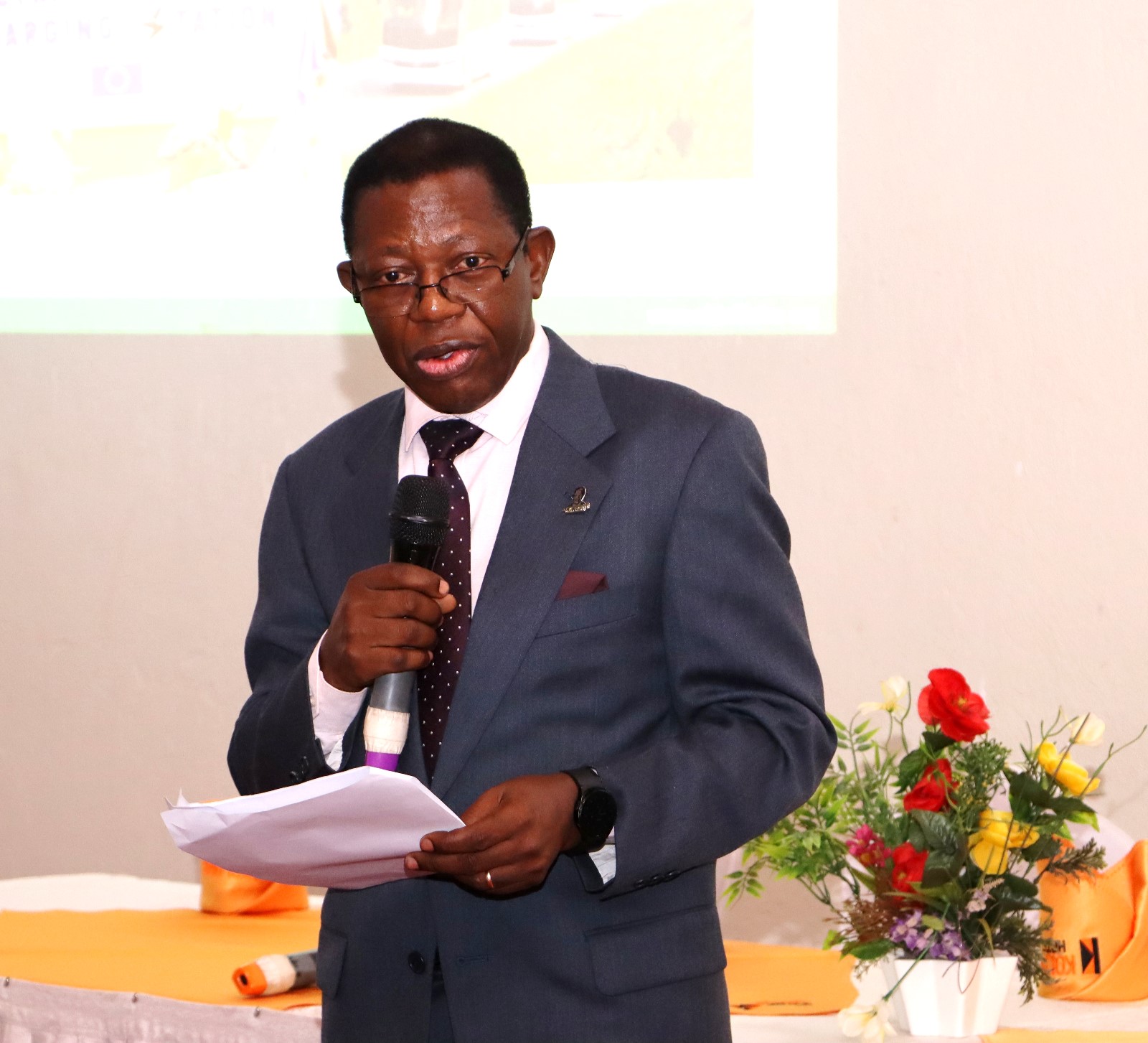
“Technology never solves problems without creating others,” he said. “As we develop, we must manage the disruptions that come with it.”
The program, supported by Sida and hosted by Makerere University, equips senior government officials with tools for green policy-making. This year’s fellows came from finance, energy, environment, and planning sectors—central to Uganda’s development.
Prof. Buyinza highlighted the inclusion of climate finance officers, planners, and engineers, noting that cross-sector collaboration is key.
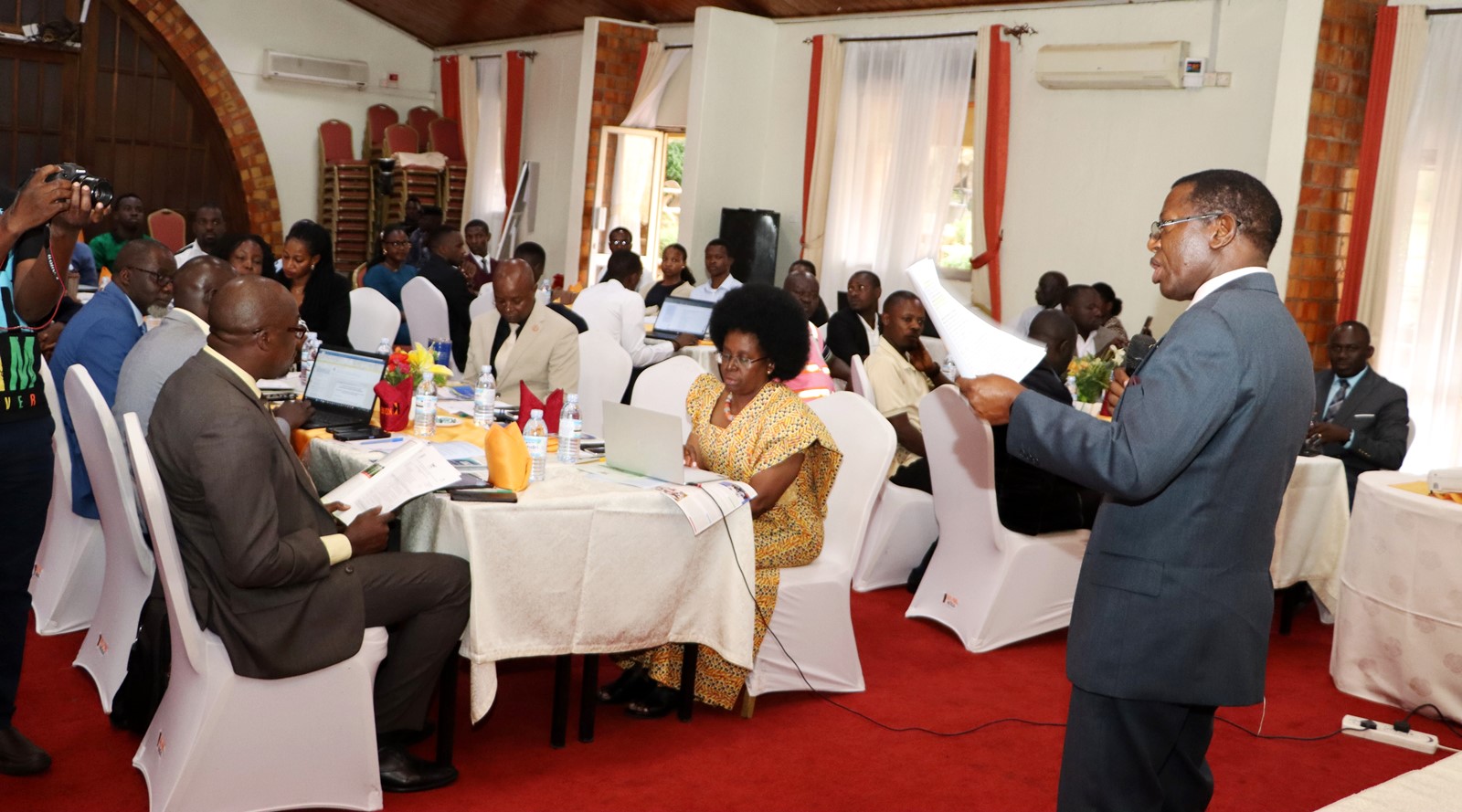
“This is how we build a green industrial economy,” he said. “Green skills, green jobs—that’s the call of the time.”
He celebrated the program’s regional scope, involving fellows from Uganda, Rwanda, Tanzania, and Ethiopia, and stressed knowledge-sharing across borders.
“This transition from diesel to electric vehicles offers real opportunities to improve air quality, reduce emissions, and modernize transport.”
He concluded by reminding graduates of their duty:
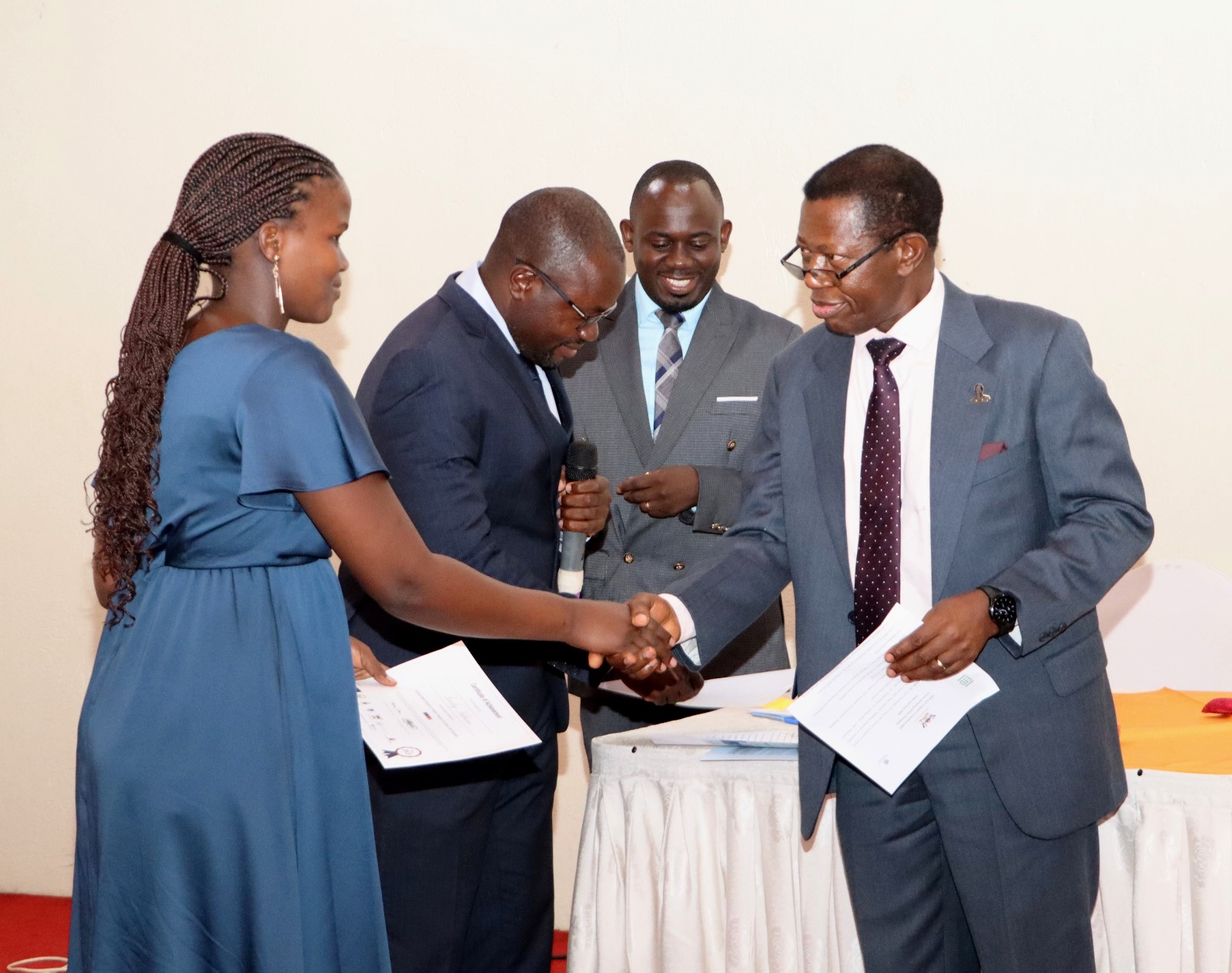
“You are our ambassadors. We count on you to deliver transformative, scalable programs that shape Uganda’s future.”
Prof. Edward Bbaale: “Seeds of Transformation”
Prof. Edward Bbaale, Director of the IGE Programme, described the initiative as a model of interdisciplinary excellence.
“You are seeds of transformation,” he said. “You’ve not just completed a course—you’re now champions of Uganda’s green transition.”
Fellows were drawn from five key institutions and focused on reducing transport emissions through energy efficiency and e-mobility.
Prof. Bbaale emphasized the need for cross-sector dialogue and noted that e-mobility is not just about technology—it’s also about infrastructure, incentives, and economics.
“Scientific breakthroughs must be matched by sound economic policy,” he said. “Without the right tools—taxes, subsidies, regulation—green initiatives may stall.”
He pointed out that Africa, though contributing less than 4% of global emissions, suffers disproportionately, demanding urgent and pragmatic responses.
He lauded the regional scope of the program and Uganda’s leadership, particularly the Kira EV model, which has drawn admiration across East Africa.
Prof. Bbaale credited Sida, the University of Gothenburg, Makerere leadership, and Dr. Musenero for bridging the gap between science and economics.
“Be the voice of change. Let your work reduce emissions, create jobs, and improve lives,” he urged the graduates.
The Journey of the 2024 IGE Fellows
When the 2024 IGE Cohort began in April, few anticipated the scale of transformation—both professionally and personally.
One fellow, Charles Ochen from the Ministry of Water and Environment, described it as “a lived experience in real policy transformation.”
Fellows engaged in immersive workshops, field visits, and practical sessions grounded in Uganda’s development context. A solar-powered facility visit early in the program emphasized the feasibility of renewables.
The cohort’s focus—“Energy Efficiency and Reduced Emissions in Uganda’s Transport Sector”—was timely. They studied everything from electric motorcycles to EV infrastructure.
Doreen Ankunda identified key barriers:
- Unpredictable tax exemptions
- Lack of standards for charging infrastructure
- Limited fiscal incentives
- Low public awareness
Their policy proposal included:
- National charging infrastructure guidelines
- Stable EV-related tax policies
- Incentives for local assembly
- Public education campaigns
Fellows also participated in peer learning across the region. Uganda’s Kira Motors was praised, while insights from Kenya and Rwanda enriched their understanding.
Charles Ochen emphasized: “You can’t bring policy without bringing stakeholders.”
Panel Discussion and Closing Remarks
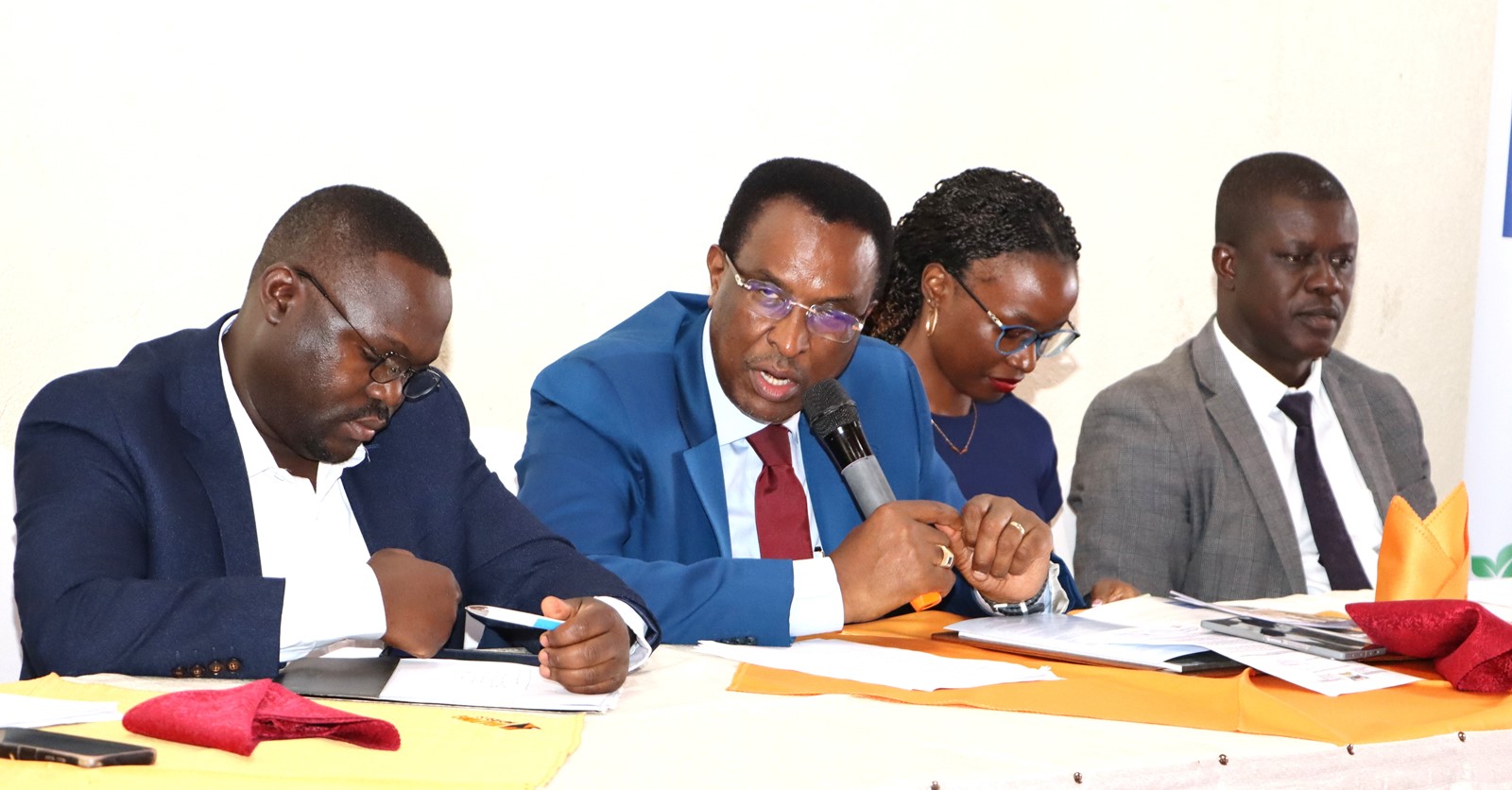
Panelists highlighted both opportunities and challenges in Uganda’s e-mobility sector.
Kira Motors, Uganda’s flagship EV manufacturer, reported progress: nine electric buses in operation, over 300 operators trained, and expansion plans underway.
However, challenges persist:
- Low rural awareness and misinformation
- Shortage of trained EV technicians
- Limited charging infrastructure
- High EV costs for ordinary users
Policy gaps also remain. Drafts on EV standards and battery recycling await approval.
Commissioner Dr. Brian Isabirye stressed institutional alignment: “If Parliament can fund fuel cars, why not electric buses?”
Sweden’s ambassadorial team praised the IGE platform for uniting voices across sectors.
“Too often, we work in silos. This forum proves that dialogue leads to action.”
Monica Meeme is an Internee and Jane Anyango is the Communication Officer EfD Uganda
Business & Management
Uganda Deepens Economic Governance with Training on Regulatory Cost-Benefit Analysis

The Ministry of Finance, Planning and Economic Development (MoFPED), in collaboration with the Public Investment Management Centre of Excellence at Makerere University, has commenced a two-week Integrated Regulatory Cost-Benefit Analysis (IRCBA) training in Jinja. The training, which runs from June 30 to July 11, brings together economists and policy analysts from Ministries, Departments, and Agencies (MDAs) across government.
The training was officially opened by Mr. Paul Mwanja, Commissioner for Infrastructure and Social Services at MoFPED, who represented the Permanent Secretary/Secretary to the Treasury. He was joined by Prof. Edward Bbaale, Principal of the College of Business and Management Sciences at Makerere University and head of the PIM Centre of Excellence.
In his remarks, Mr. Mwanja emphasized that the training marks a pivotal step in the operationalization of the Revised Guidelines for Financial Clearance (CFI), launched on June 20, 2025. “These guidelines are more than procedural. They are a critical instrument for ensuring that government policies and legislation are fiscally sound, inclusive, and developmentally aligned,” he said.
Prof. Bbaale echoed these sentiments, highlighting the strategic timing of the training. “This is the first opportunity for many participants to engage practically with the new guidelines. It is part of a long-term agenda to institutionalize a culture of evidence-based decision-making within government,” he noted.
The IRCBA training is structured to build technical capacity in appraising the fiscal, economic, distributional, and risk implications of public policy and legislation. Participants will be introduced to tools such as Net Present Value (NPV), Benefit-Cost Ratios, and Sensitivity Analysis to ensure that all policy proposals are well-justified and deliver value for money.
According to the Revised CFI Guidelines, all requests for financial clearance submitted to MoFPED from July 1, 2025, must now include comprehensive assessments aligned with Uganda’s national development agenda and medium-term expenditure frameworks. The guidelines aim to promote transparency, strengthen fiscal governance, and improve the quality of public expenditure.
“Through this partnership with the PIM Centre of Excellence, we are not only training individuals—we are building a critical mass of professionals capable of shaping sound public policies,” Mr. Mwanja stated.
The Centre of Excellence will continue to roll out similar trainings throughout the financial year, reinforcing MoFPED’s broader reform efforts under the Fourth National Development Plan (NDP IV) and the 10-Fold Growth Strategy.
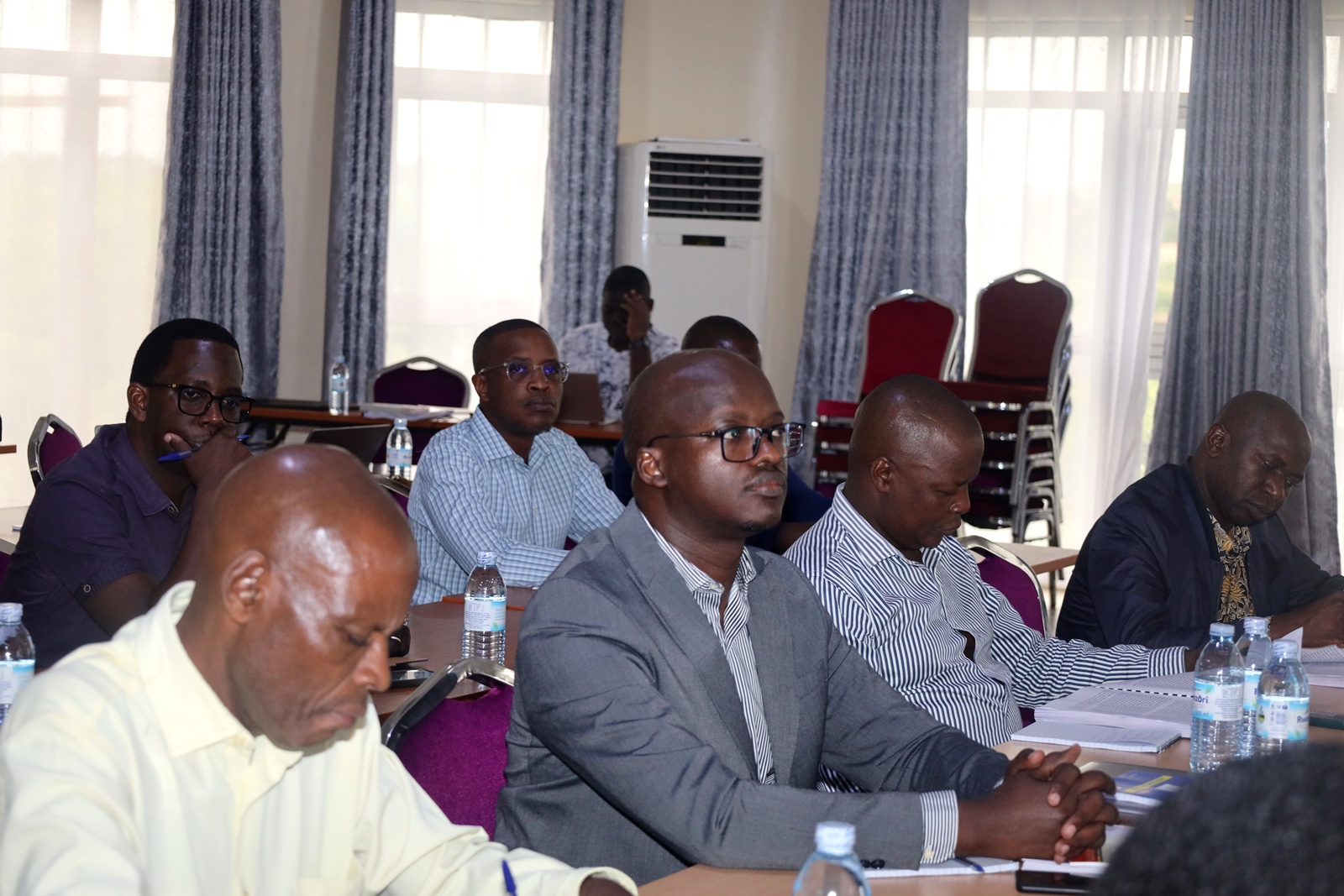
Participants were urged to fully immerse themselves in the training and emerge as champions of high-quality, evidence-based policymaking. “This is how we ensure that every shilling spent by government reflects our national priorities and brings meaningful impact to citizens,” Prof. Bbaale said.
The training reflects the Government of Uganda’s commitment to professionalizing public policy formulation and ensuring that regulatory and legislative proposals are not only visionary but also fiscally responsible and socially inclusive.
Business & Management
Strengthening Europe-Africa Higher Education Collaboration through the NEAR-ER Project

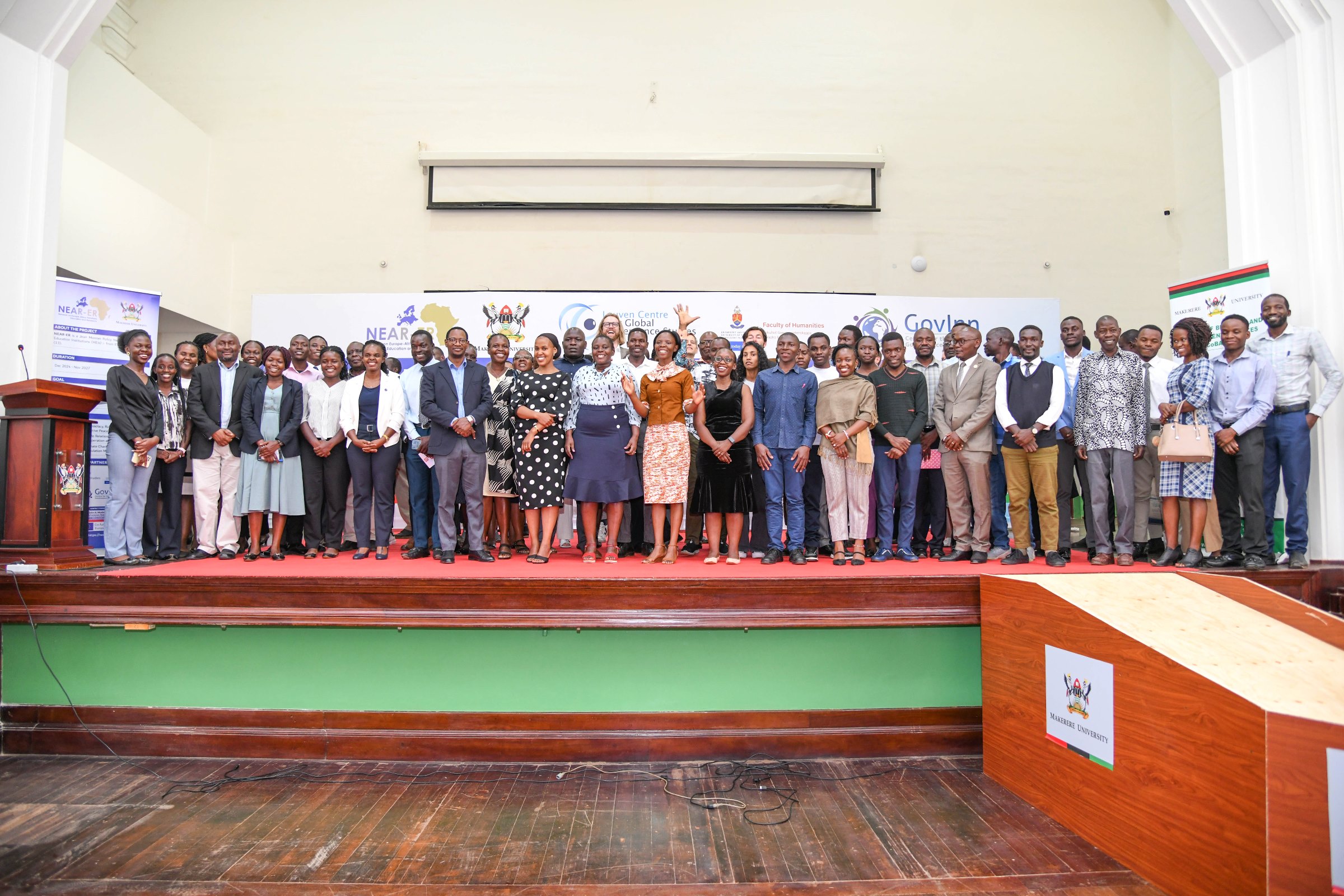
Makerere University in Uganda, is implementing the Network on Europe and Africa Relations-Education and Research (NEAR-ER) project, which seeks to strengthen collaboration in higher education through dialogue, events, scholarly debates, exchange of best practices, and dissemination of research and techniques.
The NEAR-ER is a Jean Monnet policy network of 20 higher education institutions; 7 in Europe and 13 in Africa. The thematic areas include: Shared Peace, Shared Prosperity and Shared Spaces as expounded below:
Shared Peace-Democracy, Rule of Law, Justice and Positive Peace Initiatives; Shared Prosperity-Trade Relations, Development Cooperation and Sustainability; and Shared Spaces-Climate Change, Energy Cooperation and Population Movement
The implementation of the three year (December 2024 to November 2027), NEAR-ER project co-funded by the European Union, follows a successful response, to a call for proposals by researchers based at the School of Statistics and Planning under the College of Business and Management Sciences (CoBAMS). The NEAR-ER research team consists of the following: Dr. John M. Mushomi – Principal Investigator, Dr. Patricia Ndugga, Dr. Elizabeth Nansubuga, Dr. Olivia Nankinga, Dr. Nicholas Tunanukye and Dr. Fred Maniragaba.
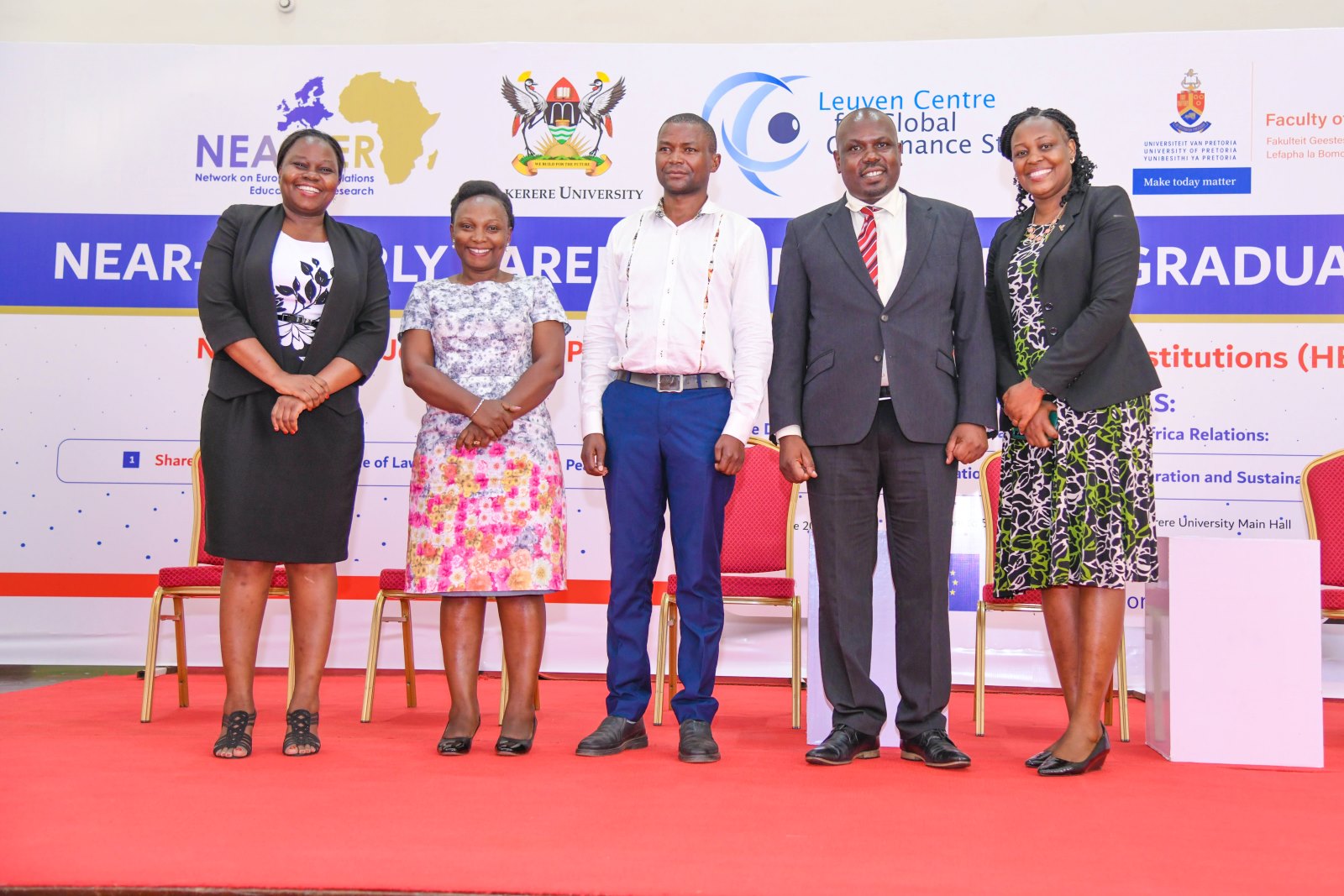
Early Career Researchers and Graduate Students’ Dialogue
On 16th June 2025, Makerere University hosted the NEAR-ER dialogue targeting early career researchers and graduate students from higher education institutions in Uganda.
Featuring remarks from Makerere University officials, an overview of the NEAR-ER project, a panel discussion on the career prospects in the EU, and an interactive question and answer session, the dialogue presented an opportunity to participants to engage with leading scholars in Europe-Africa relations, network with academics across continents, explore research and career prospects in EU-Africa partnerships, contribute to meaningful discussions on contemporary challenges affecting both continents, and gain insights into current trends and future directions in Europe-Africa cooperation.
The following members of the NEAR-ER project tipped early career researchers and graduate students on Africa and Europe relations including research, partnerships, academics, access to scholarships, mobility, networking, and among other important aspects: Prof. Muller Gustavo-the Overall Principal Investigator from KU Lueveni, Prof. Chris Nshimbi-Africa Principal Investigator from University of Pretoria, and Dr. John A. Mushomi-Principal Investigator at Makerere University.
Tour of Makerere University Innovation Pod
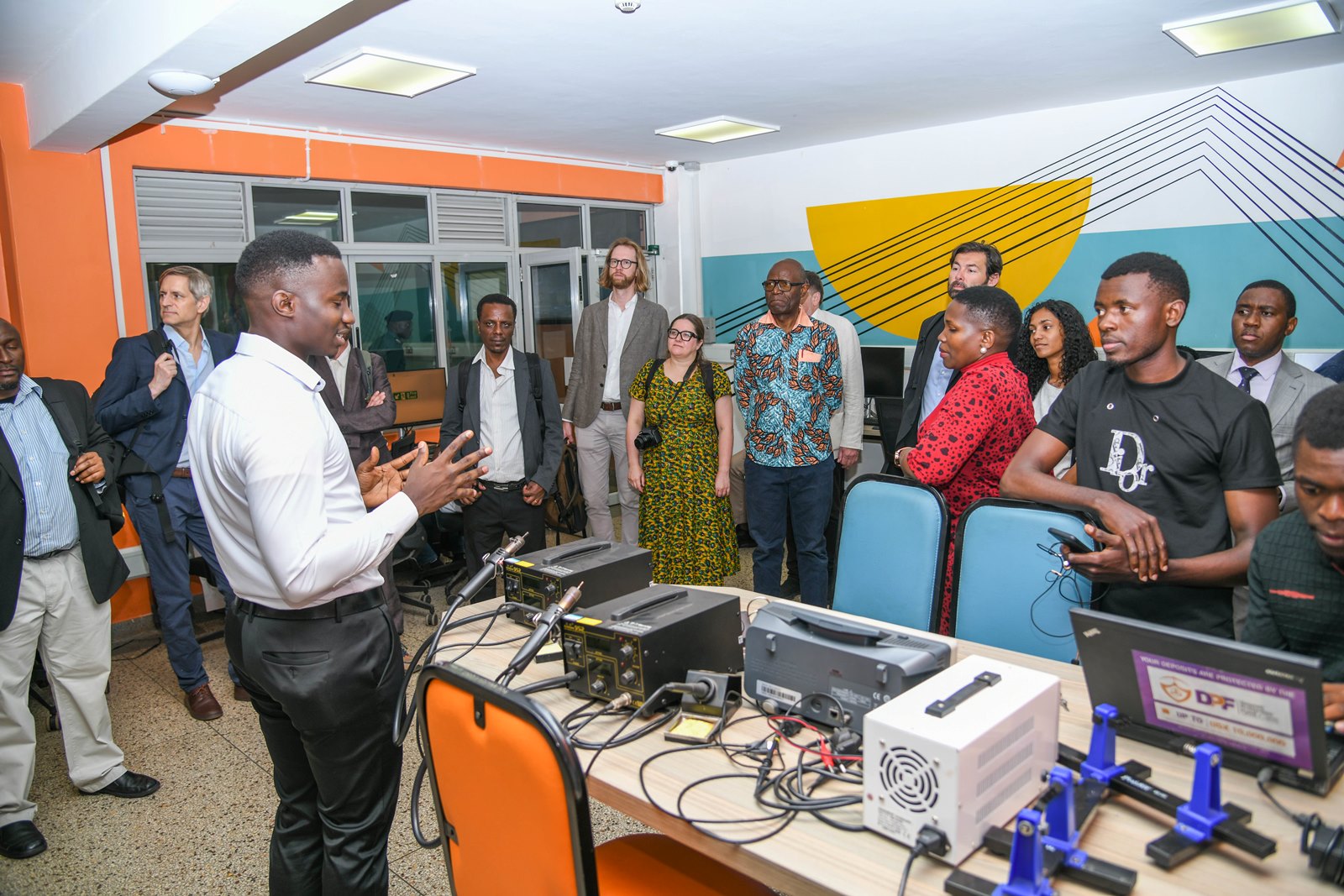
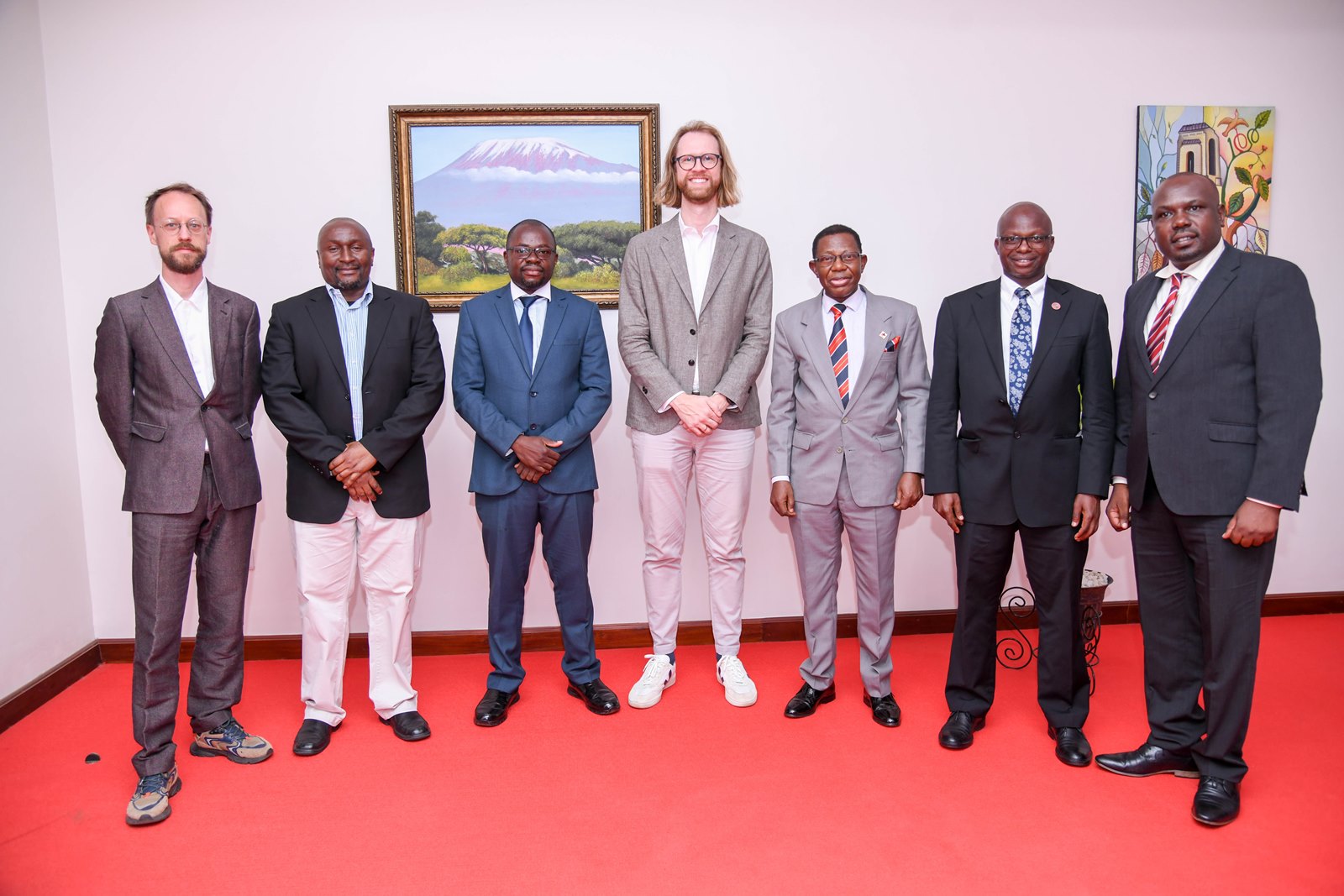
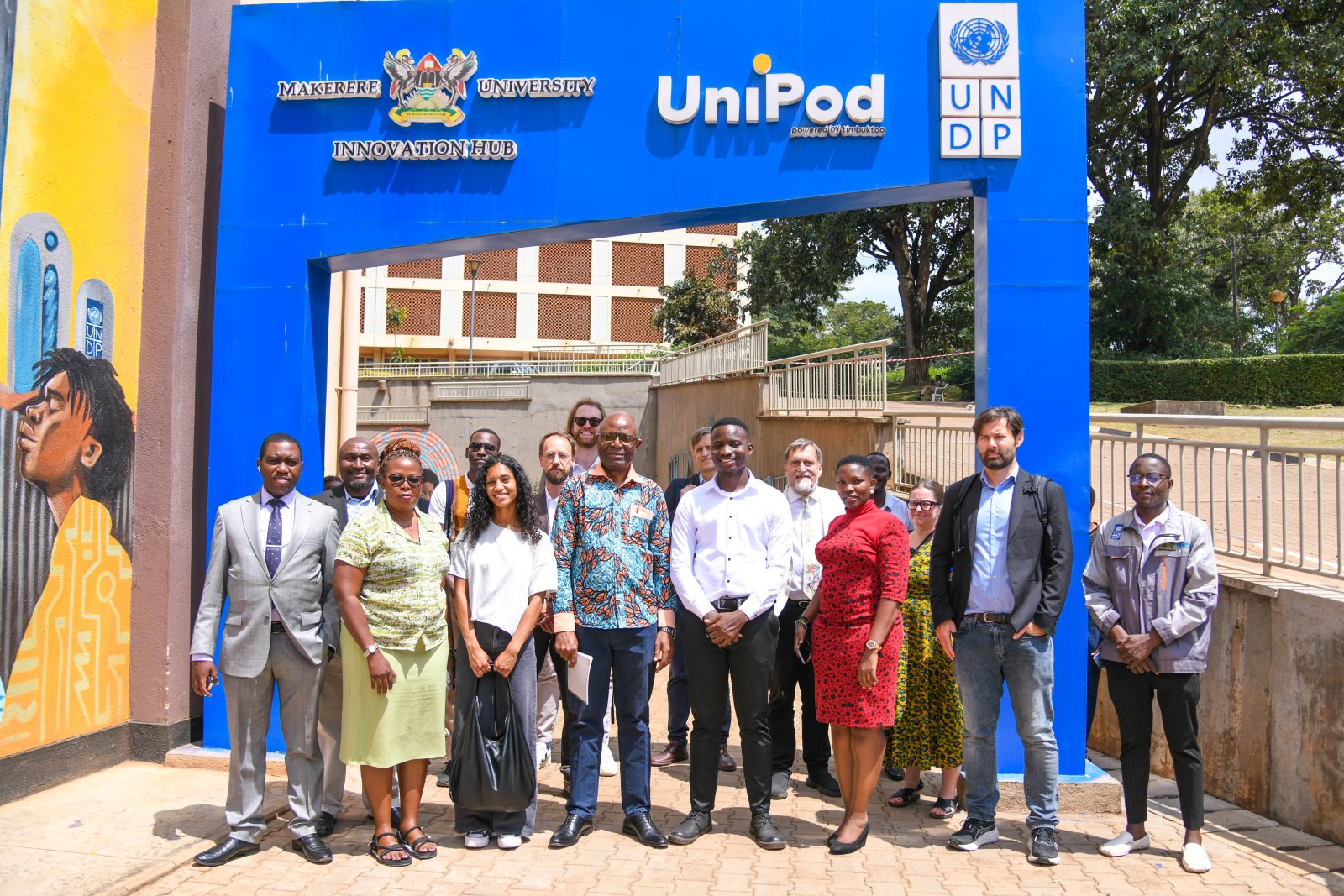
Prior to the dialogue, the NEAR-ER delegation toured the Makerere University Innovation Pod (Mak Unipod). Reflecting on the tour, Prof. Muller Gustavo lauded the level of innovation, describing it as a promising space for African-centered academic advancement.
NEAR-ER delegation Courtesy meeting with the Vice Chancellor
The delegation participated in a courtesy meeting with the Vice Chancellor, Prof. Barnabas Nawangwe, who was represented by the Acting Deputy Vice Chancellor (Academic Affairs), Prof. Buyinza Mukadasi. The following University officials participated in the courtesy meeting held in the Vice Chancellor’s Board Room: Associate Prof. James Wokadala-Deputy Principal-College of Business and Management Sciences, Associate Prof. Ibrahim Mike Okumu-Dean, School of Economics, Dr. Margaret Banga-Dean, School of Statistics and Planning, and Dr. John A. Mushomi-Principal Investigator of the NEAR-Project at Makerere University.
Official Opening of the NEAR-ER dialogue
Opening the NEAR-ER Dialogue on behalf of the Vice Chancellor, Prof. Barnabas Nawangwe, the Acting Deputy Vice Chancellor for Academic Affairs-Prof. Buyinza Mukadasi, underscored the significance of the event, as a defining moment in research collaboration in Africa and Europe. He emphasized that the academic convening provided a strategic platform for deep reflection, meaningful reconnection, and a renewed commitment to joint scholarship that promotes peace, shared prosperity, and inclusive development.
Prof. Buyinza Mukadasi noted that the activities of the NEAR-ER project were aligned with Makerere University’s strategic vision as well as Uganda’s national development agenda. He expressed optimism that the deliberations would spark innovative thinking, strengthen solidarity between Africa and Europe, and help shape a future rooted in shared values, mutual respect, and purposeful collaboration.
He encouraged the participants in the NEAR-ER dialogue to ensure that Africa embraces the Fourth Industrial Revolution through optimizing digitalization systems and processes. He challenged the participants to view the dialogue, as a call to action, and a catalyst for cultivating transformational African leaders equipped with relevant digital skills and employable knowledge. He stressed that the continent’s future hinged on preparing the next generation to confidently navigate and address the demands of the digital age.
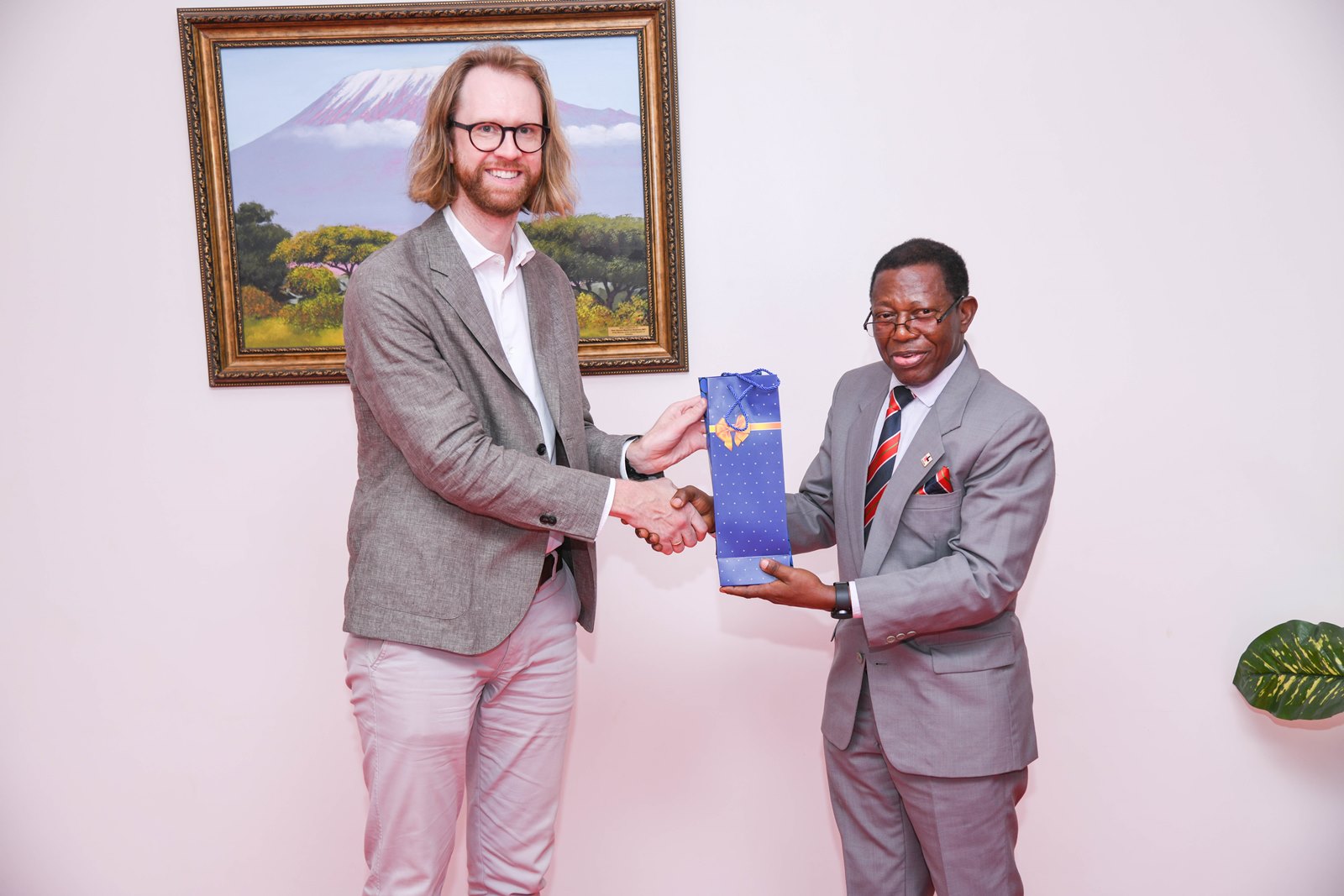
Putting across a strong case for African institutions to take on leadership in the co-production of knowledge, Prof. Buyinza Mukadasi said: “Africa’s development trajectory depends on homegrown ideas, African-led innovation, and the strategic harnessing of global partnerships to address local and global challenges.”
Highlights by the College Principal
The Principal, Prof. Edward Bbaale represented by the Deputy Principal, Associate Prof. James Wokadala, described the NEAR-ER project as a foundational moment in the redefinition of global academic cooperation from the heart of Africa. The Principal called upon the participants to utilize the dialogue to form enduring partnerships.
He underscored the College’s central role in advancing global academic collaboration, within the framework of EU-Africa partnerships in education and research. He noted that the dialogue marked a significant milestone through positioning CoBAMS as a vital conduit for strengthening cross-continental partnerships. He highlighted that the NEAR-ER network’s emphasis on education and research strongly aligned with the College’s mission to foster robust academic linkages between the Global North and South.
The Deputy Principal acknowledged CoBAMS’ unwavering dedication to advancing Makerere University’s agenda of becoming a global academic e-hub, particularly within the evolving landscape of EU-Africa relations. He reported that the College was actively undertaking strategic initiatives to deepen international engagement—initiatives designed to foster mutual learning, catalyze collaborative research, and create meaningful career development pathways.
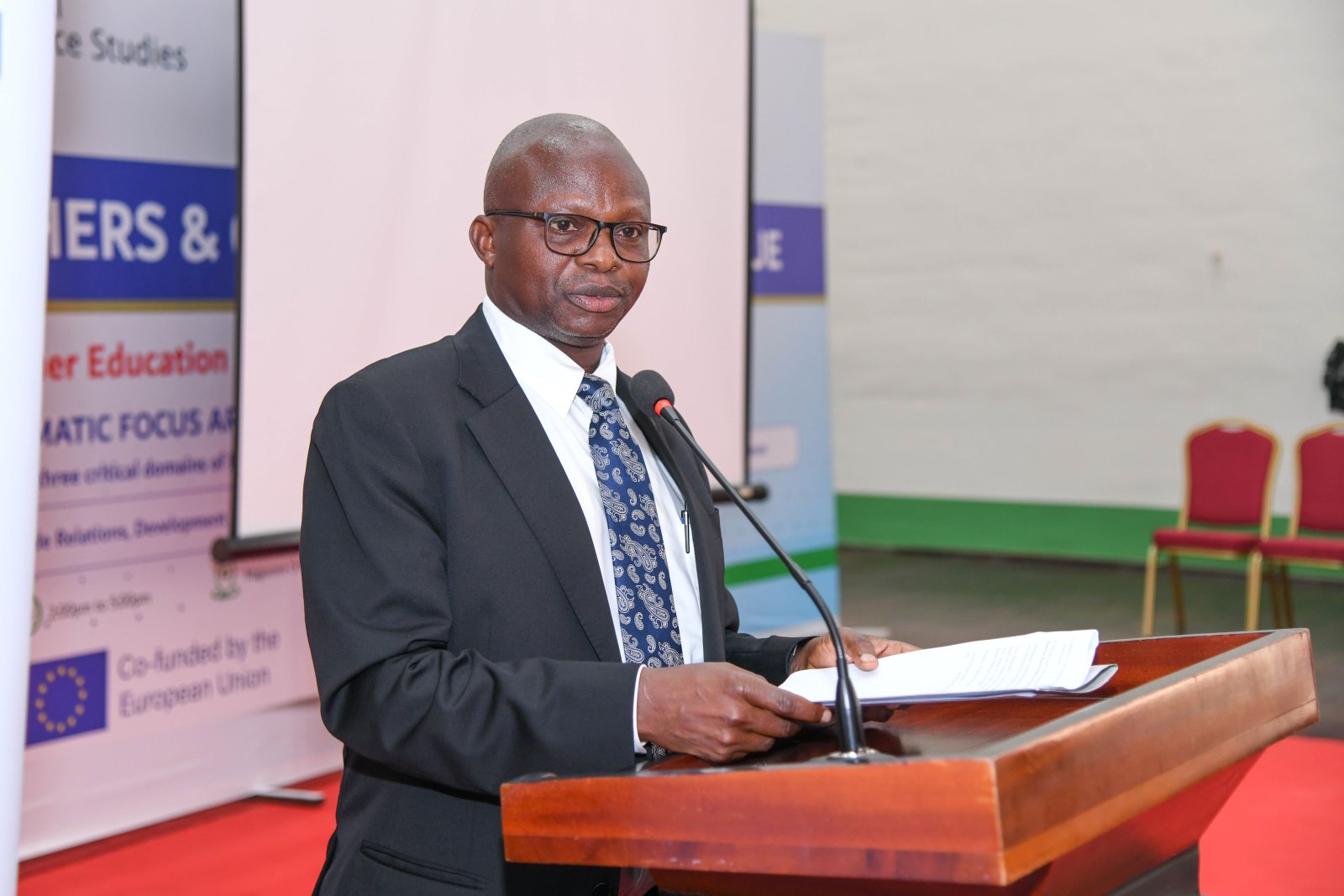
“The College leadership has prioritized supporting young researchers and postgraduate students, thus empowering the next generation of scholars to thrive in an increasingly interconnected academic ecosystem,” he said.
Highlights from the Principal Investigator
Focusing on the critical role of students in academic institutions, Dr. John A. Mushomi, the Principal Investigator of the NEAR-ER project at Makerere University, said: “Our students are our main customers. We should therefore nurture and empower our learners through global research and engagements.”
Dr. Mushomi highlighted the importance of providing a “safe engagement space” for students and researchers. Reflecting on his academic journey, and postdoctoral fellowship, he acknowledged the relevance of seeking mentorship, citing it as an instrumental step in his path to the NEAR-ER network.
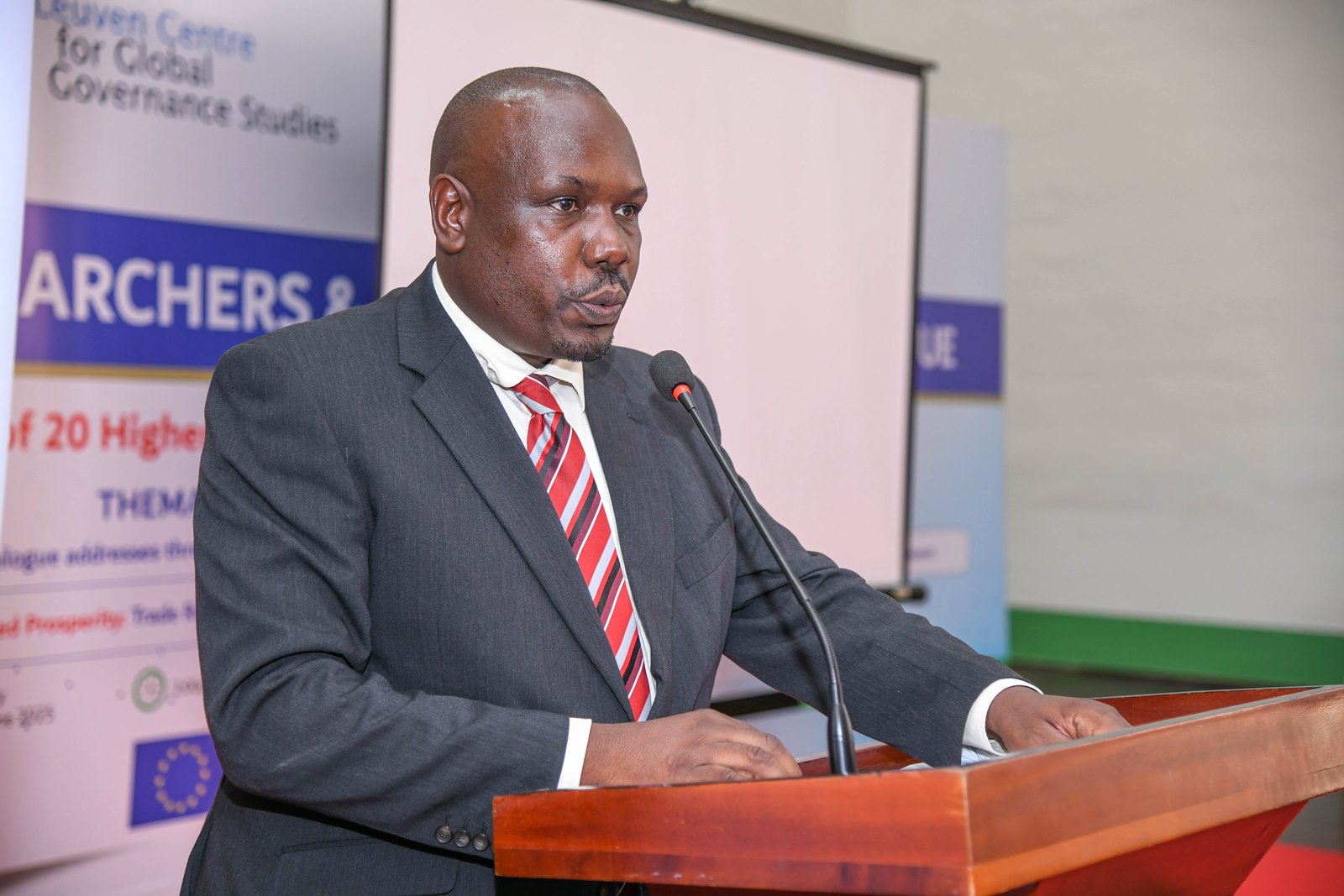
He also acknowledged the long-term collaborative efforts that led to the successful NEAR-ER grant proposal, notably involving both Makerere University and Kyambogo University.
Overview of the NEAR-ER project
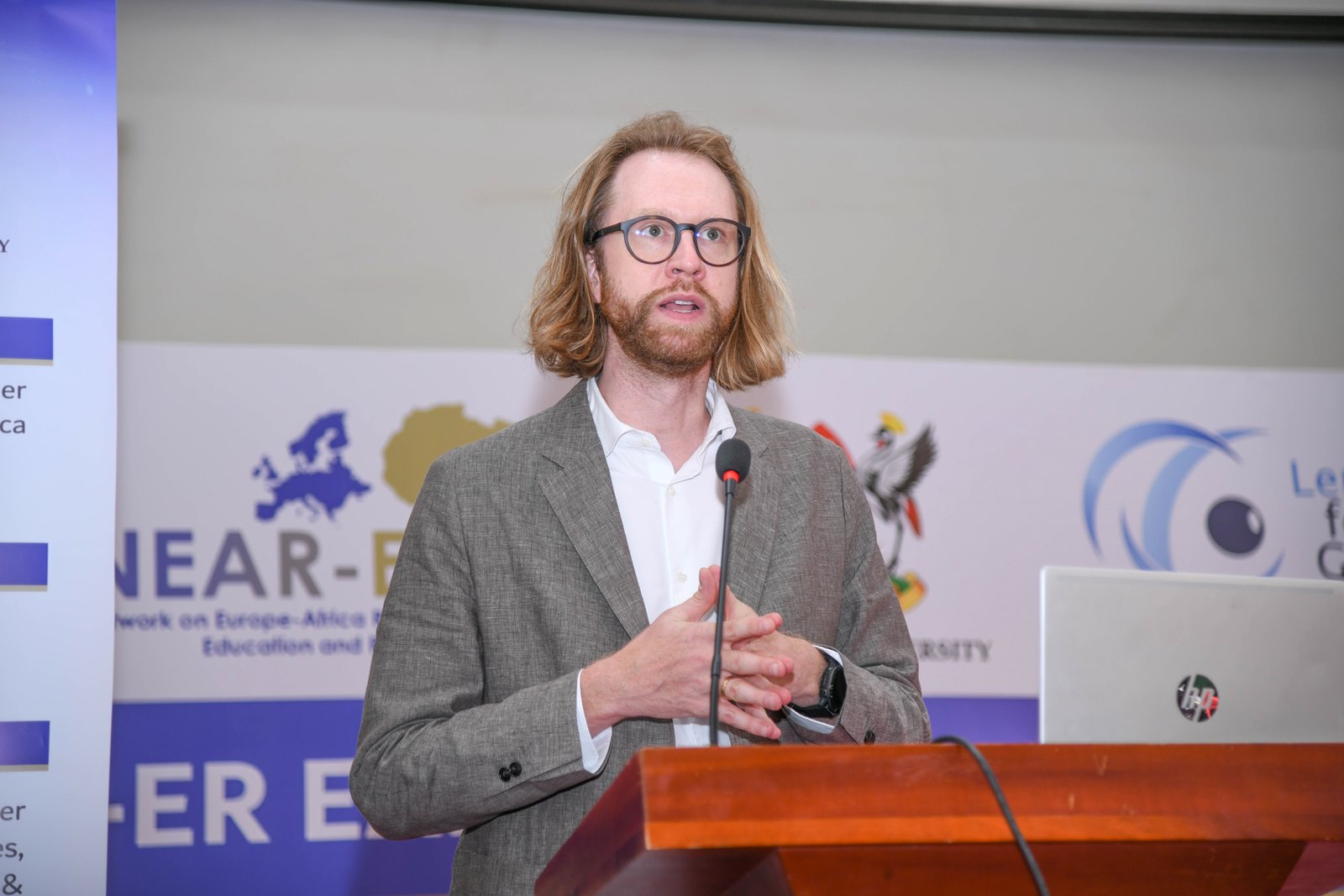
Presenting the Overview of the NEAR-ER project, Prof. Muller Gustavo, a Senior Researcher at the London Centre for Global Government Studies underscored the critical importance of collaborative research and education between Europe and Africa. He noted that holding the first African convening/dialogue at Makerere University was both strategic and symbolic of the growing academic ties between the two continents.
Delving into the origins of the project, Prof. Gustavo revealed that the idea for the network was conceived approximately three years prior, where they envisioned a platform that would encourage dialogue, research, and exchange on topics central to Europe–Africa relations. They rallied scholars from diverse institutions, forming a vibrant and interdisciplinary consortium.
“Over the last three years, we put together a group of universities to foster and facilitate research and communication on relationships between Africa and Europe. The goal of the consortium is to disseminate the research and education practices, the best practices of education in Africa, in Europe, but also worldwide,” he said.
Prof. Gustavo highlighted that the NEAR-ER project will serve as a vehicle to foster best practices in education, research dissemination, and policy-relevant collaboration. He noted that the network intentionally included universities and institutions representing diverse linguistic and cultural contexts, affirming their commitment to inclusivity and comprehensive regional representation. According to Prof. Gustavo, this diversity strengthens the network’s mission to bridge educational and research gaps between the global north and south.
Beyond institutional collaboration, Prof. Gustavo emphasized the network’s commitment to public engagement and knowledge dissemination. He detailed a range of outputs already in motion, including research blogs, podcasts, newsletters, webinars, policy surveys, and country-specific forecasts.
Prof. Gustavo urged the students and young scholars to become active contributors to the NEAR-ER platform. He explained that the network is open to ideas from emerging voices—whether through blogs, podcasts, or other digital formats—and provides a unique opportunity for students to share perspectives and shape global discourse.
“There might be opportunities here for some of you that are interested in further increasing your knowledge on European integration, African integration, and the relationship between those two processes. You may be a student who has an idea on how to improve the relationship and looking at a particular aspect to get that idea out to the world, we can offer that destination platform for you as well,” Prof. Gustavo mentioned.
Remarks by the Dean, School of Statistics and Planning
Dr. Margaret Banga, the Dean of the School of Statistics and Planning, informed the participants, that the dialogue was a space to unite the varied disciplines and backgrounds present, all in pursuit of a shared vision for the future.
“The NEAR-ER initiative is more than a research collaboration. It is a bridge of solidarity between Europe and Africa—a platform where shared learning leads to shared solutions. It is not about the North teaching the south, but it is about learning from one another,” Dr. Banga said.
Standing as a firm believer in the transformative power of research, innovation, and youthful curiosity, Dr. Banga, underscored the importance of structure and strategy in translating ideas into impact. She encouraged the audience to treat planning as the bridge between possibility and progress. She stressed that without a clear methodology, timeline, partners, and budget, even the most brilliant ideas can fade into obscurity, but with a solid plan, those same ideas can evolve into funded projects, published policy briefs, and life-changing solutions.
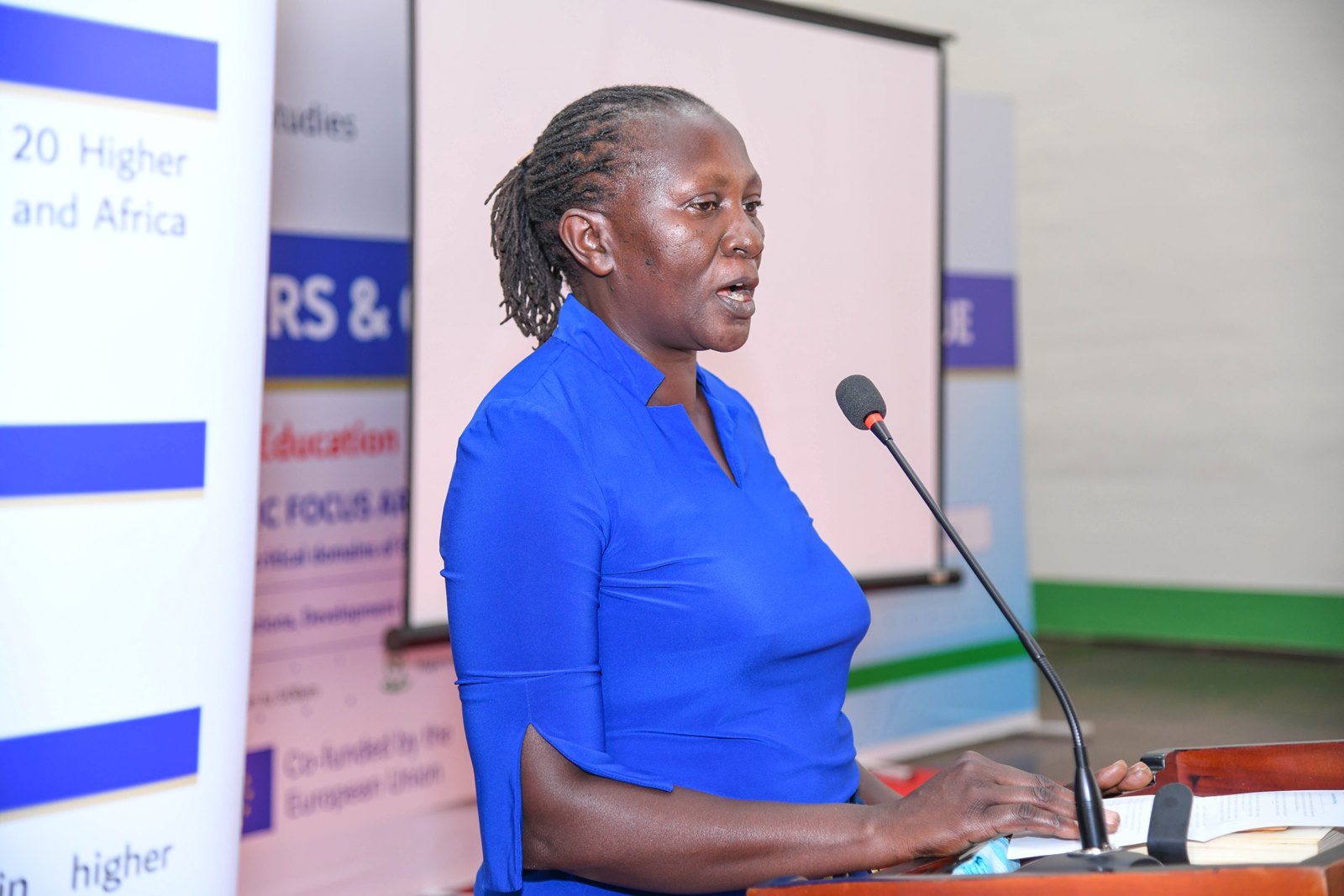
To the young scholars, Dr. Banga issued a powerful call to action. “You are the thinkers who will unlock Africa’s economy,” she said. “You are the innovators who will shape climate resilience. You are the analysts and planners who will rethink development—not as something done for us, but as something shaped by us.”
With conviction and hope, Dr. Banga reminded the young scholars that they were not mere students, but emerging leaders, and agents of change. She urged them not to wait for some future moment of “expertise” before stepping up. She offered a critical reminder that every question they pose, every network they build, and every inquiry they pursue is already shaping the world, “Your research is not small because you are just starting out, your work has the power even now to improve lives and influence generations. Don’t just study the world. Change it.”
A voice from the PhD Students
Ms. Claire Cheremoi, President of the PhD Fellows at Makerere University, expressed her appreciation for the spirit of unity and collaboration fostered by the NEAR-ER dialogue. “Our voices matter. Coming together as students is powerful,” she said.
Ms. Cheremoi emphasized the value of collective engagement, stressing that such platforms were essential in facilitating the sharing of knowledge, fostering meaningful networks, and sparking critical discussions on the issues that matter most to young scholars. She stated their commitment to engaging in conversations on research funding, interdisciplinary collaboration, and broader academic partnerships.
A statement from the representative of undergraduate students
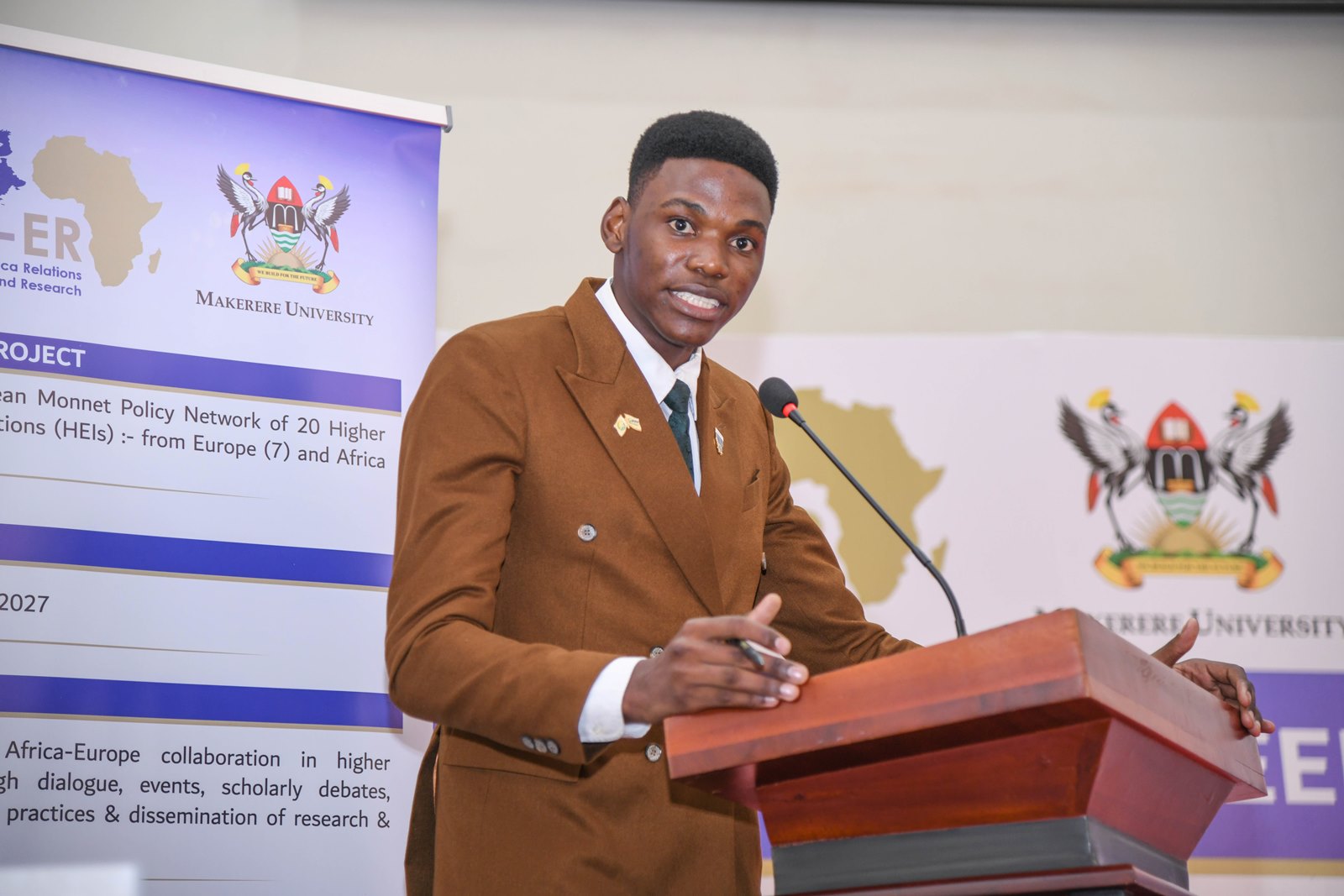
Mr. Ssozi Fahad Batte, Chairperson, Students Guild Council, College of Business and Management Sciences acknowledged the students had the zeal to learn, grow, and contribute meaningfully. In his view, the most significant outcome of such dialogues was the ability to extract value—something “to take home.”
He stated the critical role of documentation, urging fellow participants to write down their ideas, strategies, and action points in order to share them beyond the event. He also highlighted the importance of networking, stressing that connections and collaborations were central to growth in academia and beyond.
Panel discussion on Career Prospects in the EU
In a panel discussion moderated by Dr. Robert Ojambo from Kyambogo University, several international scholars shared invaluable insights on navigating academic and professional opportunities abroad—particularly for students and researchers from the Global South.
The panel discussion offered a wealth of practical insights for young scholars seeking academic and professional opportunities across borders. The panelists emphasized the importance of building trust-based networks, as well as, going beyond emails to form genuine relationships with professors, peers, and institutions.
Strategic planning emerged as a recurring theme during the panel discussion—highlighting the need to research language requirements, living costs, and cultural differences when selecting destinations. Participants encouraged scholars from the Global South to view their unique backgrounds as assets that contribute to valuable perspectives to global discourse.
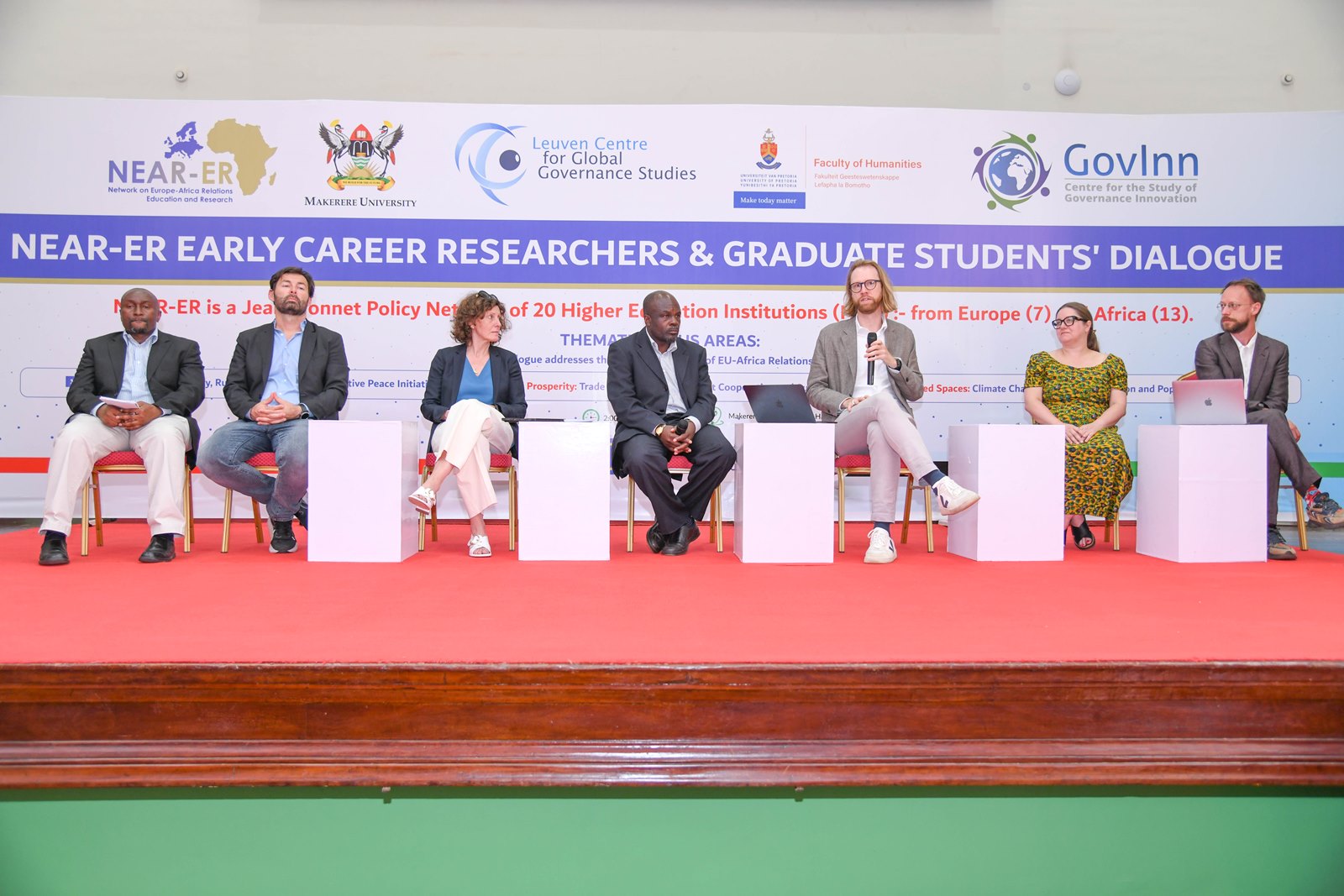
Opportunities such as Intra-Africa Academic Mobility programs, and summer schools were also presented as transformative pathways that combine education, exposure, and networking. The discussion also stressed the power of initiative—actively reaching out, applying, volunteering, and making oneself visible in digital academic spaces. Importantly, career success was linked not just to passion, but to aligning one’s skills with institutional needs and being open to unpaid roles such as voluntary service that build experience and credibility. The overall message was clear: international academic success requires preparation, adaptability, and the courage to take the first step.
As participants engaged across these thematic areas, the NEAR-ER dialogue underscored the central role of universities in bridging regions, amplifying diverse voices, and generating research-driven responses to global emergencies. The NEAR-ER dialogue held at Makerere University was not just a reflection of academic solidarity—it was a declaration of shared purpose and a call to action in re-imagining a more just, peaceful, and sustainable future across continents.
-

 Education1 day ago
Admission List to Bachelor of Education External (BED) 2025/26 -Private Sponsorship
-
 General1 week ago
Mature Age Scheme Exam Results for 2025/2026
-
 General2 weeks ago
Freshers’ Joining Instructions 2025/2026
-

 General4 days ago
Undergraduate Admission List Self Sponsorship Scheme 2025/2026
-
 General2 weeks ago
Mastercard Foundation Board pays its inaugural visit to Makerere University