
General
Makerere starts training in soft skills among Uganda police officers

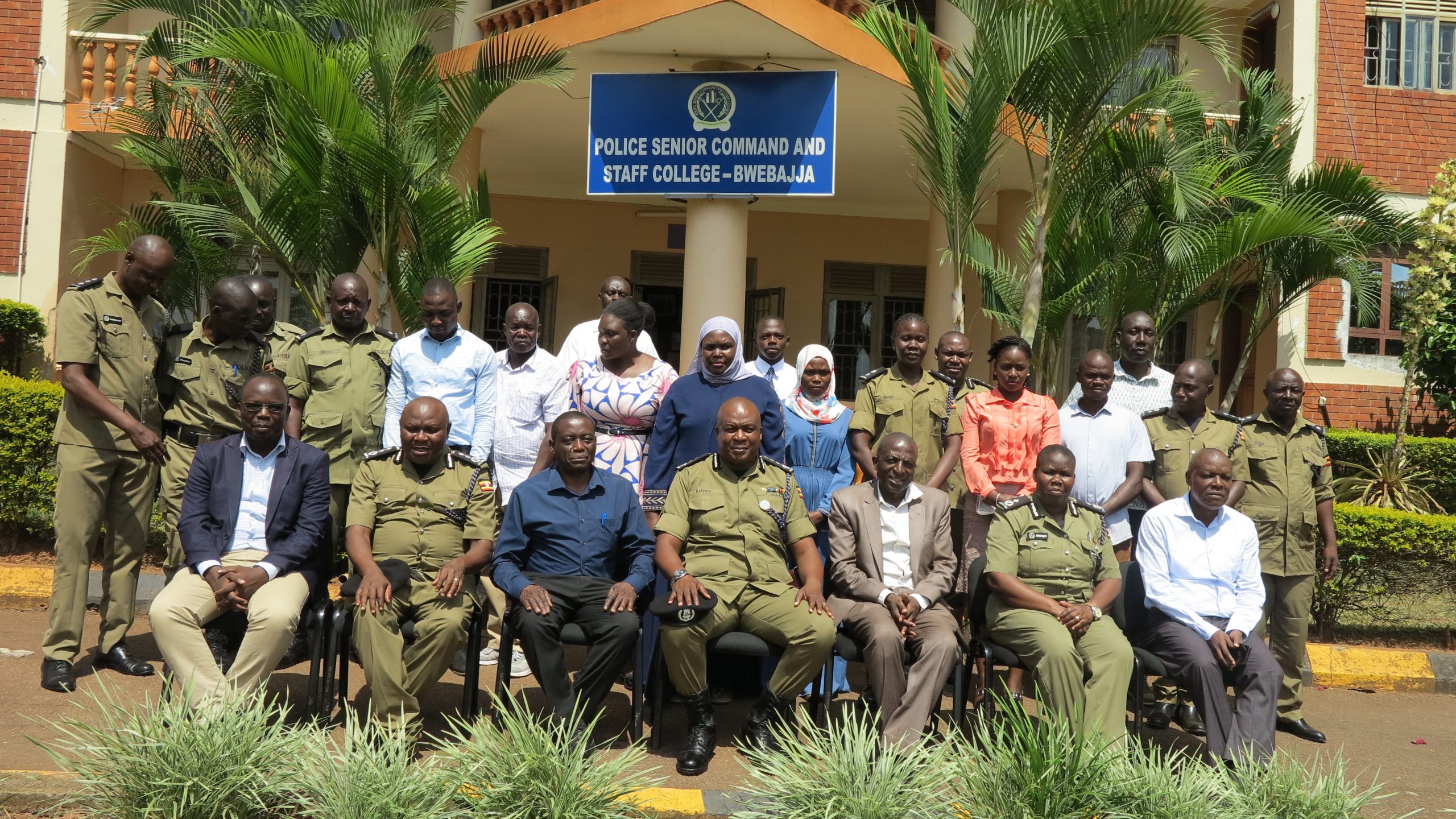
Participants posing for a group photo after the workshop Makerere stats training in soft skills among Uganda police officers Makerere University through the Makerere University Research and Innovation Fund (Mak-RIF) is set to impart soft skills in all Police Officers in Uganda. The idea is in a bid to strike a balance between the hard skills and soft skills in their police work.
While presiding over a training workshop in Bwebajja last week, Dr. Badru Musisi, the Principal Investigator in this project dubbed, “soft skilling initiative for effective community policing” said, the project came in the wake of the public outcry concerning surging police brutality which was manifested in form of news and torture pictures which went viral on social media. The project he revealed, is expected to be rolled out next year.
“There was a growing disconnect between the police and the Wanainchi. The idea of community policing is for police to work hand in hand with the community to keep law and order.” He said, during a Police officers’ training workshop held at the Senior Police Command College in Bwebajja.
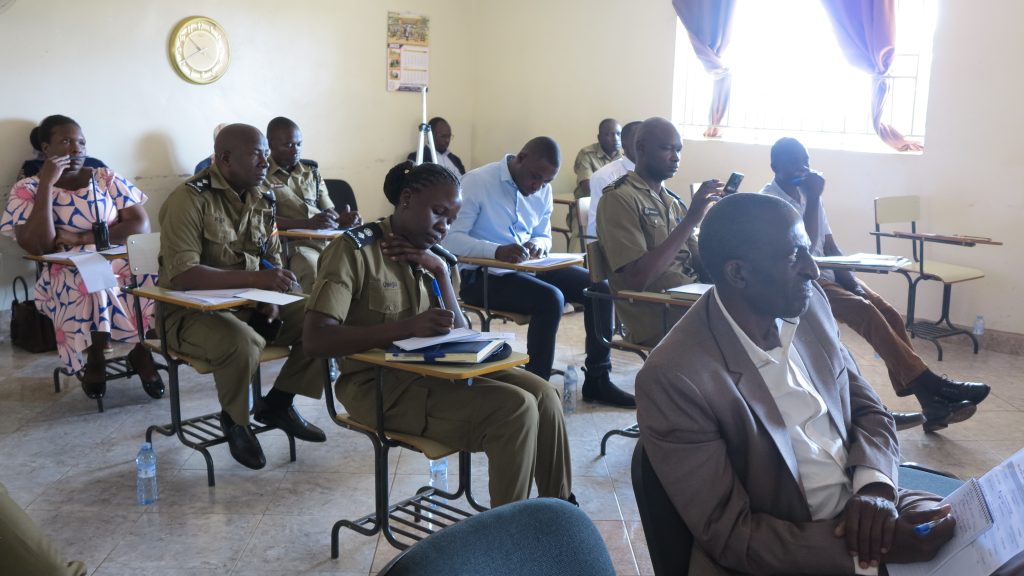
He said when Makerere University tasked him to write projects that fall under the government priority areas, one of the priority areas was about defense, security and peace.
“We expect to have community-friendly, wanainchi-friendly and people-friendly police officers in the country. It is going to improve the image of Uganda police and the cooperation between the police force and the communities,” Dr. Musisi added.
Dr. Musisi said they will be training police officers in the training schools and colleges, who will then pass on the skills to the cadets across the country. He revealed that the whole project will cost more than Shs.700m to traverse all the stakeholders needed.
Senior Superintendent of Police (SSP) Grace Mutono, Director staff at the Senior Police Command College, Bwebajja said the soft skills will help to establish a good relationship between police and the public.
“We hope for a free flow of information. There will be handling of criminality with a lot of ease. Where a police officer does not use soft skills, it becomes hard because they will use a hard lined approach only,” he noted.
Prof. Christopher B. Mugimu, CO-Principal Investigator of the project said this will change the mindset of people and bring them closer to the police. And it will ease handling of sensitive issues with a lot of professionalism.

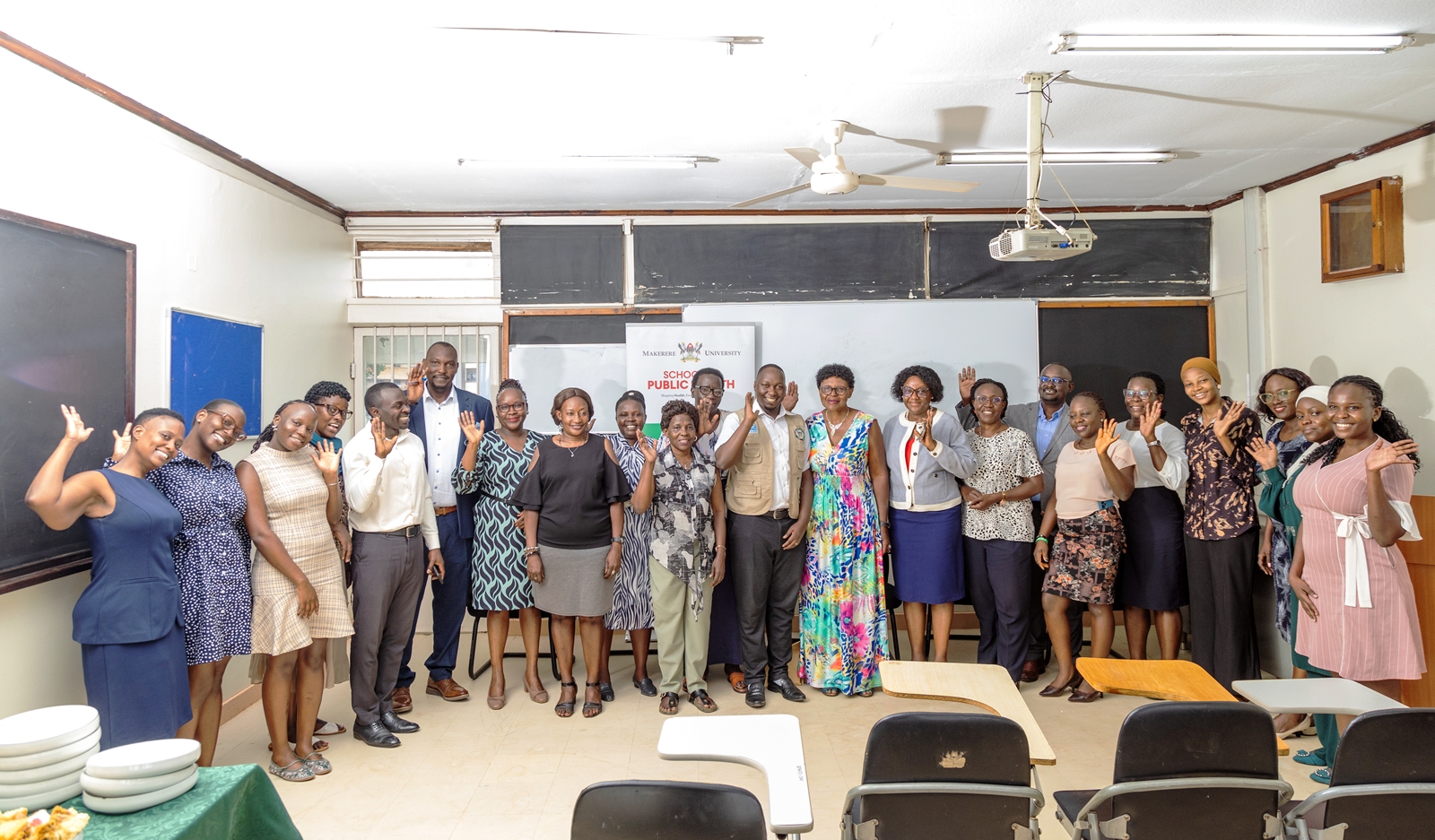
After 14 years of dedicated service, Claire Nakayizi, a familiar face and trusted custodian at the School of Public Health (SPH), has retired, leaving behind a legacy of hard work, commitment, kindness and service to the School community.
For many people at the School of Public Health, the sight of Claire arriving early in the morning, opening up the building and ensuring that everything was in order was simply part of the daily rhythm of life at the School.
For 14 years, Claire has been a constant presence at SPH. She has witnessed generations of staff, students, researchers and visitors walk through the School’s doors. She has seen colleagues join, grow and eventually move on, while she remained a dependable presence, quietly carrying out her responsibilities and ensuring that the School was ready to welcome everyone each day.
Her retirement was therefore more than a routine farewell. It was an opportunity for colleagues to celebrate a woman whose contribution, though often carried out behind the scenes, touched many lives and contributed significantly to the smooth running of the School.
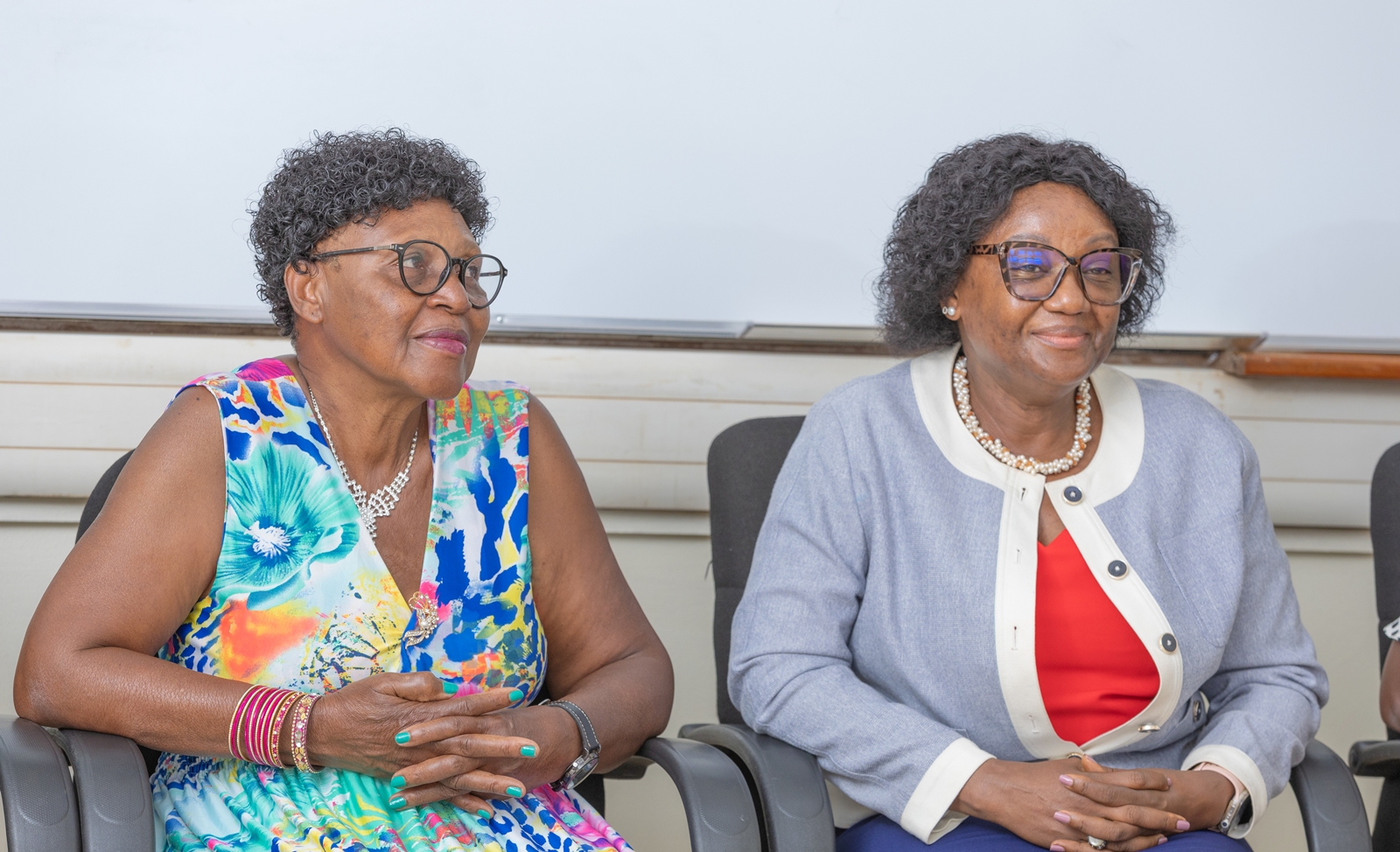
At a farewell brunch organised by the Dean, School of Public Health, Prof. Rhoda Wanyenze, colleagues and friends described Claire in glowing terms. Words such as hardworking, kind, patient, resilient, dependable and caring repeatedly featured in the tributes.
For many, Claire was much more than a custodian. She was described as a mother figure, a counsellor and someone people could approach whenever they needed a listening ear, encouragement or simply a warm smile.
A commitment that went beyond the call of duty
One of the strongest themes to emerge during the farewell was Claire’s extraordinary commitment to her work.
Colleagues recalled how she would routinely open the School building as early as 6:00 a.m., ensuring that staff and students arriving for the day found the premises ready. Her working day could stretch well into the evening, with some days requiring her to remain at the School until 8:00 p.m. or even 10:00 p.m.
Despite the long hours and demanding nature of her responsibilities, colleagues said Claire rarely complained. Instead, she approached her work with patience and resilience, always focused on ensuring that the School was secure and that its operations could continue smoothly.
Her dedication was particularly evident in her contribution to improving the security of the School building. Over the years, Claire became a trusted custodian of the premises, helping to ensure that the building was opened and closed responsibly and that the environment remained secure for those who worked and studied there.
Speaking at the farewell, Prof. Wanyenze described Claire as someone who consistently worked beyond the call of duty.
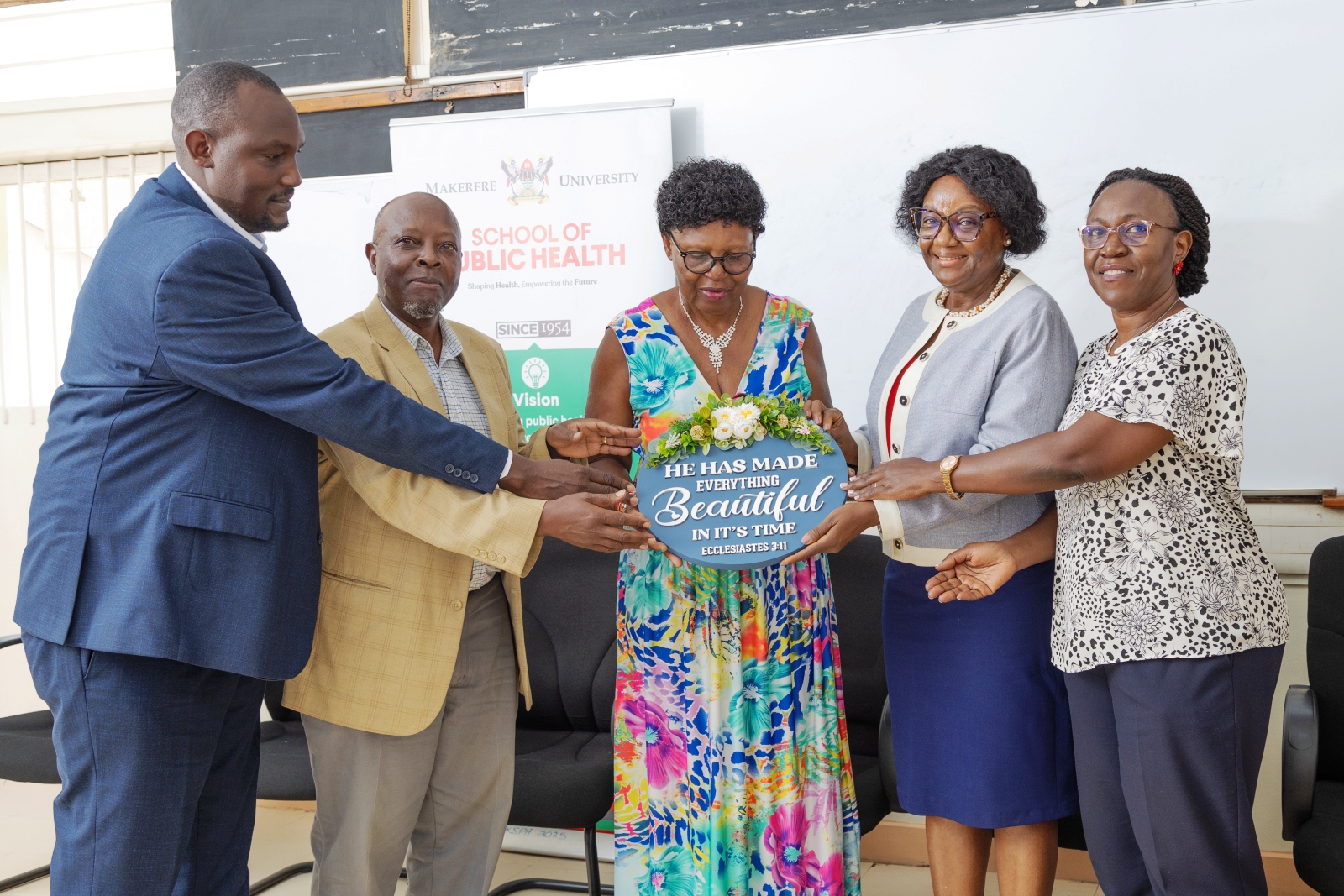
The Dean acknowledged that saying goodbye to Claire was an emotional moment, given the many years she had spent serving the School and the relationships she had built along the way.
However, Prof. Wanyenze said she had spoken to Claire and was assured that she was ready to embrace the next phase of her life.
She joined colleagues in wishing Claire good health, happiness and prosperity as she begins her retirement journey.
More than a custodian
Claire’s impact at SPH was not limited to the physical responsibilities associated with her job. To those who interacted with her regularly, her greatest contribution was perhaps the warmth and humanity she brought to the workplace.
Amos Ddembe, the Internal Auditor, described Claire as a joy to watch as she went about her work.
He particularly remembered her interactions with people when she was stationed at the reception area. Claire, he noted, was almost always smiling and welcoming to staff and visitors.
Her ability to make people feel comfortable, regardless of their position or role at the School, earned her the affection and respect of many colleagues.
Claire’s colleagues also remembered her as someone who was willing to listen and offer guidance. Her patience and calm demeanour meant that people could approach her with their concerns, knowing they would receive a sympathetic ear.
Over the years, these seemingly small interactions accumulated into meaningful relationships, helping to make Claire one of the most recognisable and trusted members of the SPH community.
A legacy of service
Fourteen years is a significant period in the life of any institution. During that time, Claire witnessed changes in leadership, staff, students, programmes and the physical environment of the School.
She remained a constant through these transitions.
Her service represents the important contribution made by members of the support staff whose work often happens quietly but is essential to the functioning of an institution.
From opening the building before sunrise to securing it late in the evening, welcoming people at reception, supporting the day-to-day operations of the School and contributing to the security of the premises, Claire’s work helped create an environment in which others could perform their own responsibilities.
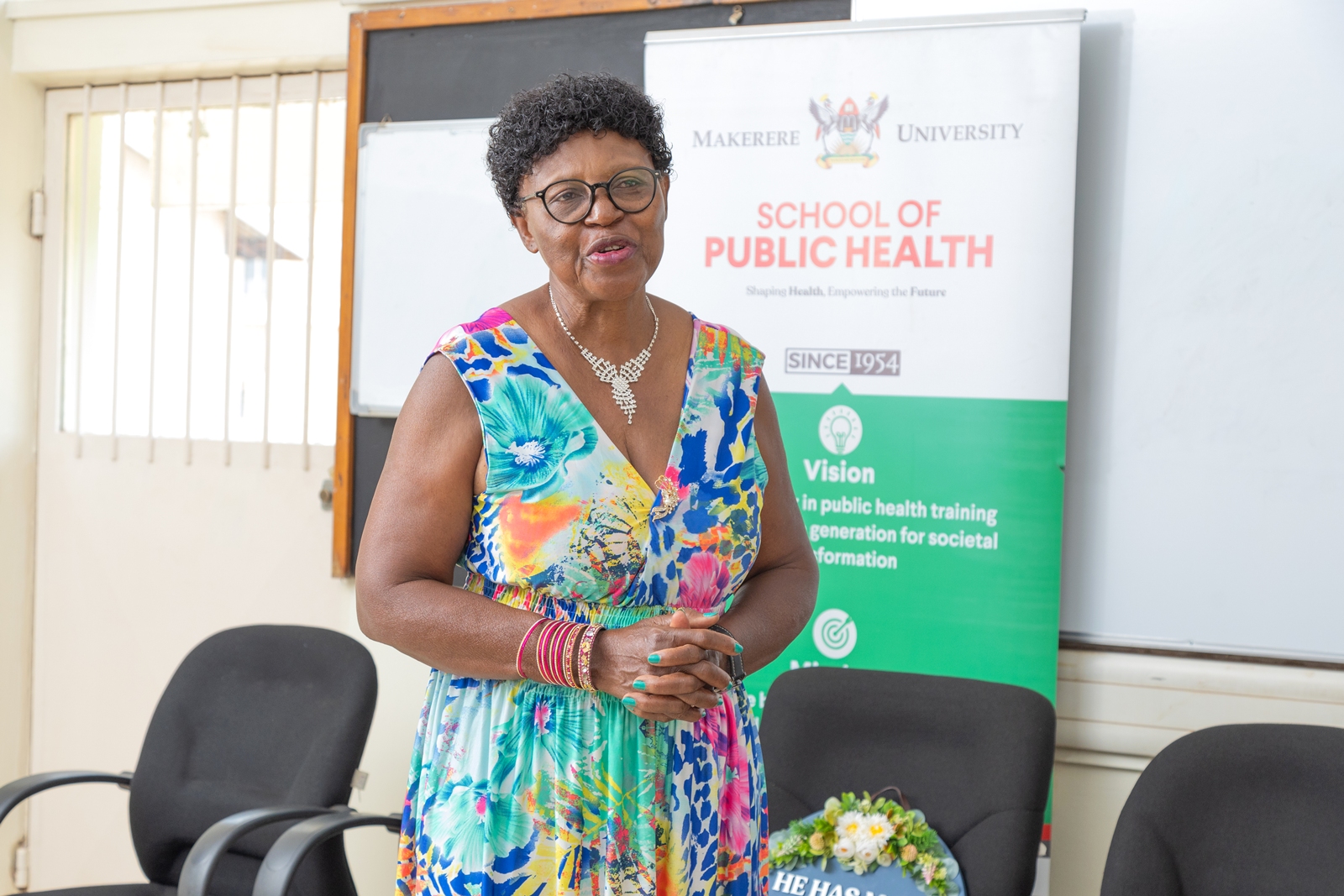
Her story is a reminder that the success of an institution is built not only through high-profile academic and research achievements, but also through the dedication of people who ensure that the institution functions every day.
A gesture of appreciation
As part of the farewell, the Department of Community Health and Behavioral Sciences also expressed its appreciation for Claire’s years of service.
Representing the Department, Dr. Christine Nalwadda presented Claire with a cash envelope on behalf of the staff as a token of appreciation for her commitment and contribution to the School.
A new chapter begins
As Claire leaves the School of Public Health, she takes with her the memories of 14 years of service and the goodwill of the many people she encountered along the way.
For the colleagues who gathered to celebrate her, the farewell was not simply about marking the end of employment. It was about celebrating a colleague who had become part of the fabric of the School.
As she begins this new chapter, the School of Public Health joins together in saying:
“Thank you, Claire, for 14 years of dedicated service. Thank you for the early mornings, the long evenings, the smiles, the patience and the unwavering commitment.
May retirement bring you the good health, peace, happiness and prosperity you so richly deserve.”
General
50 Master’s Students Awarded Scholarships Under the Africa Climate Collaborative at Makerere University

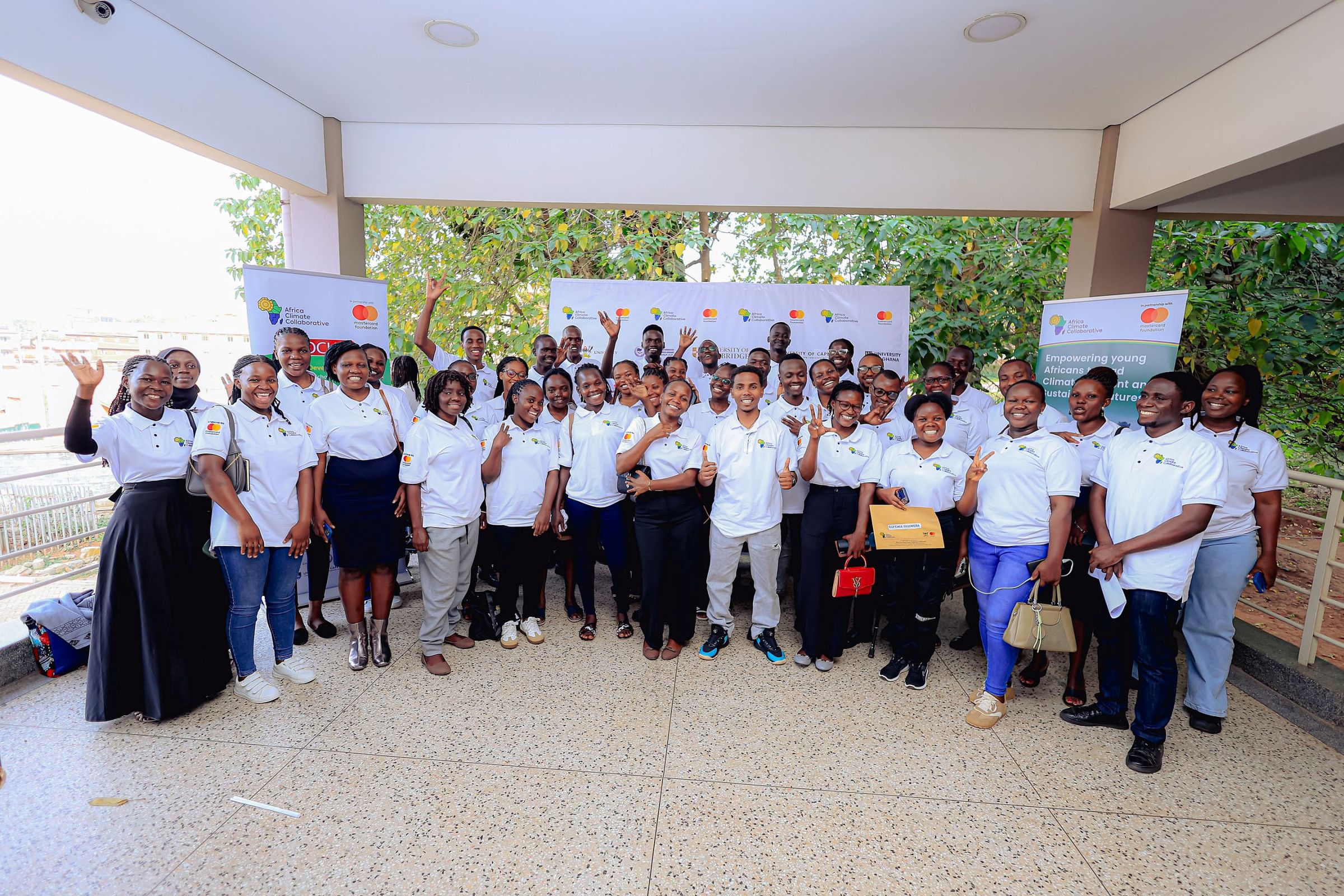
By Damali Mukhaye
The Africa Climate Collaborative at Makerere University, an initiative supported by the Mastercard Foundation, has awarded scholarships to 50 young people to pursue master’s studies as part of its continued investment in developing the next generation of African climate leaders, researchers, and innovators.
After a competitive process that attracted 483 applications, 50 scholars who make up the second cohort of master’s scholars under the Africa Climate Collaborative were formally presented with their scholarship award letters by the Vice chancellor at a joint scholarships award ceremony for Mastercard Foundation initiatives at Makerere University held on 20th August, 2026, at the School of Public Health Auditorium.
Of the 483 applicants received, 182 were female and 301 were male, while 64 were international applicants.
Prof. Claire Mack Mugasa, the Chairperson of the Africa Climate Collaborative Selection Sub-Committee, said that the selection process was undertaken by an 11-member committee mandated to identify 50 master’s scholars and 12 PhD scholars for the academic year 2026/2027.
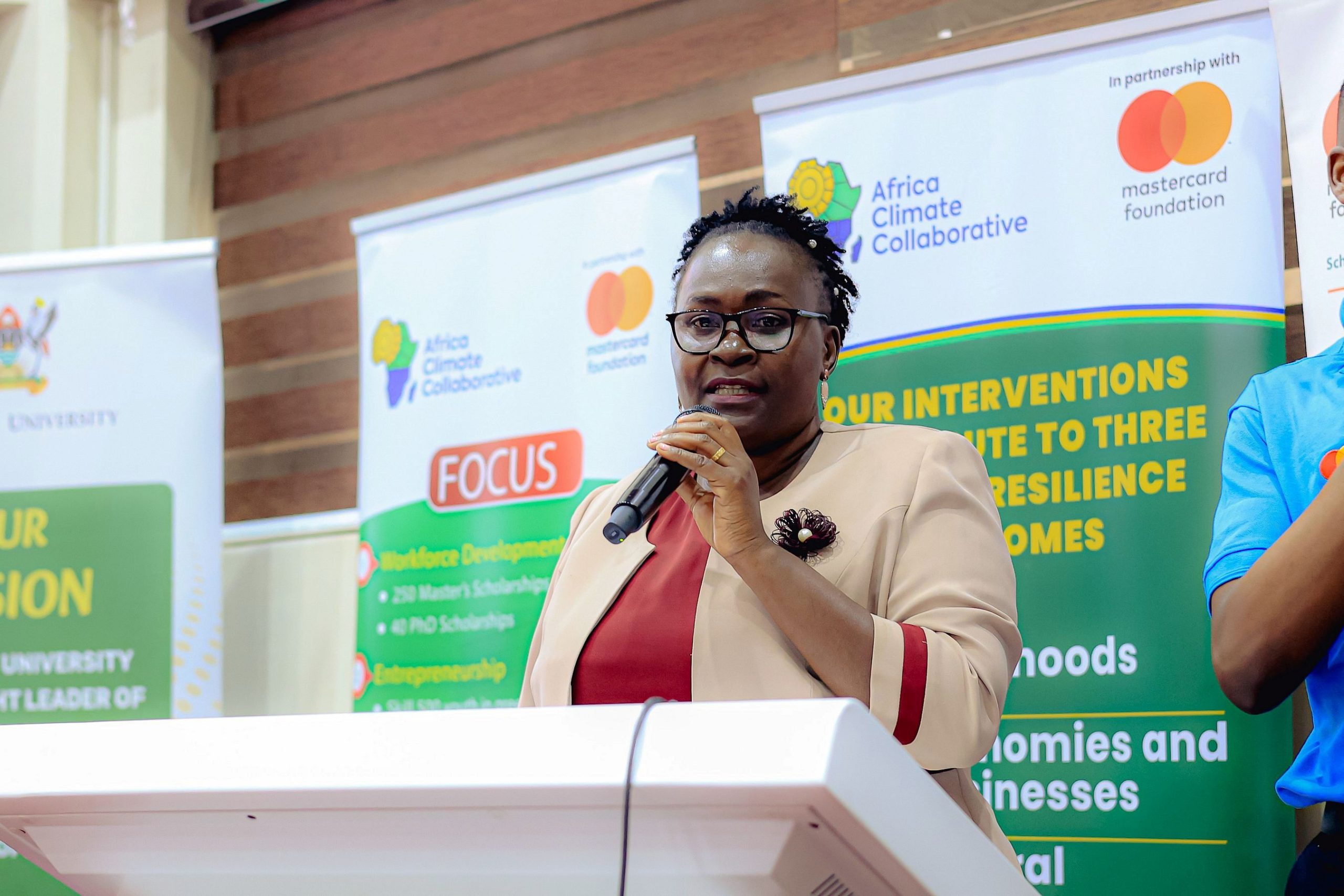
Following the initial assessment, 307 applicants were admitted to Makerere University, including 119 females, 188 males, and 14 of those admitted were international students. The selection process then proceeded to further shortlisting, with 150 candidates identified for interviews and 100 subjected to status validation before the final 50 scholars were selected.
Prof. Mugasa said the final selection reflected the program’s commitment to inclusion and equitable access to educational opportunities. She commended the Selection Sub-Committee for its commitment to ensuring a fair and transparent process.
“Today, I present to you the 50 scholars, Cohort Two of the Africa Climate Collaborative,” she said while presenting the scholars to Prof. Ibrahim Okumu, the Dean, School of Economics, who represented the Vice Chancellor.
Of the 50 successful scholars, 34, representing 68 per cent, are female and 16, representing 32 per cent, are male. The cohort also includes four international students, five persons with disabilities, four refugees and internally displaced persons, and four young people from refugee-hosting communities and minority tribes of Uganda, while the remaining 33 scholars are from other categories of Ugandan nationals.
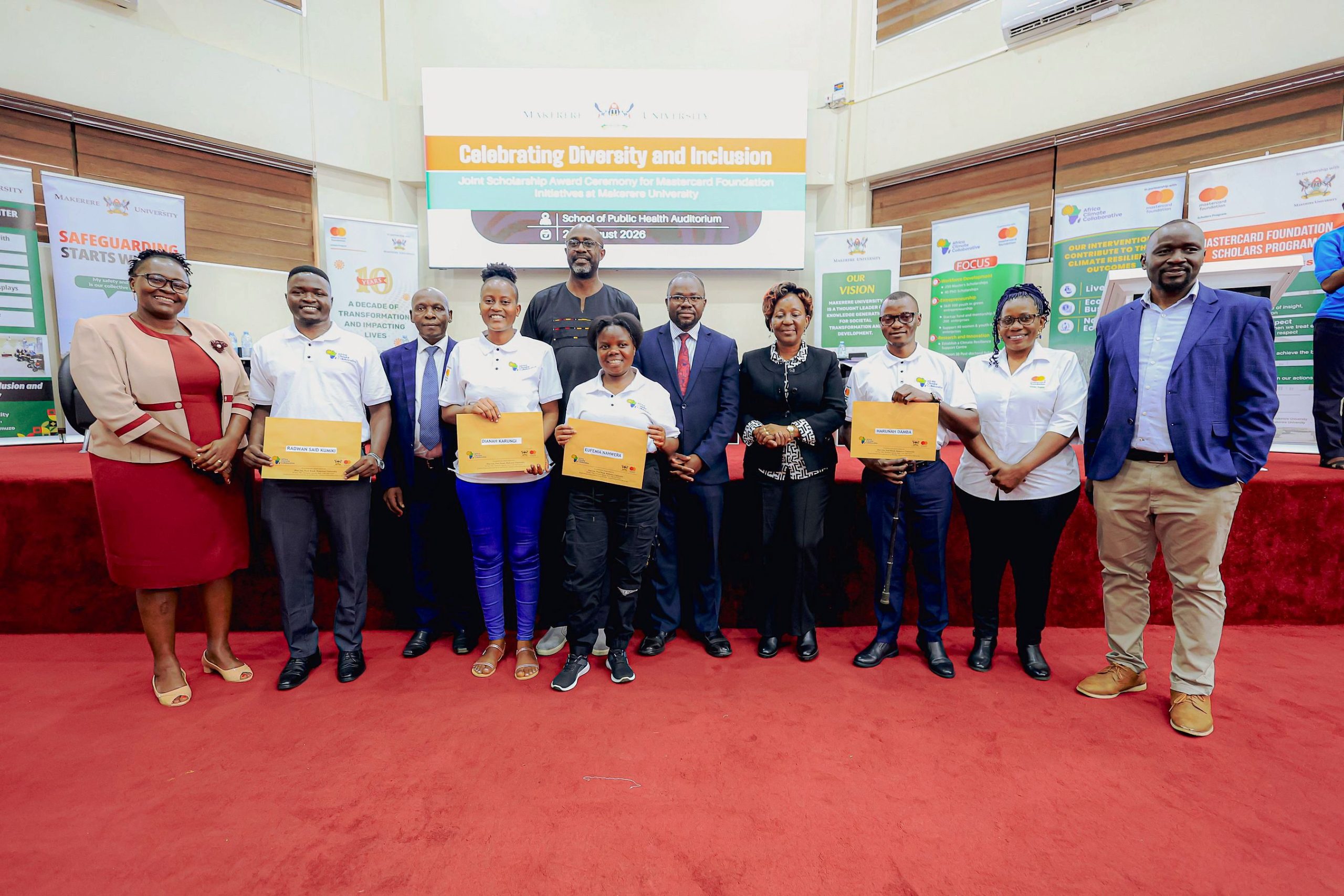
The new cohort brings the total number of Master’s scholars supported by the Africa Climate Collaborative to 85, out of the 250 Master’s scholarships planned over the eight-year implementation period.
The programme has also awarded scholarships to 18 PhD scholars, out of the 40 PhD scholarships expected to be awarded during the programme period.
Representing the Vice Chancellor, Prof. Ibrahim Okumu, Dean of the School of Economics, welcomed the new scholars to Makerere University and congratulated them upon receiving the scholarships.
He described the occasion as a celebration of diversity, inclusion, education, and the strong partnership between Makerere University and the Mastercard Foundation.
Prof. Okumu noted that the scholarships provide academically talented young people with opportunities to pursue their education regardless of their background or circumstances. He encouraged the scholars to view the scholarship not only as an award but also as a responsibility to lead, innovate, and serve their communities.
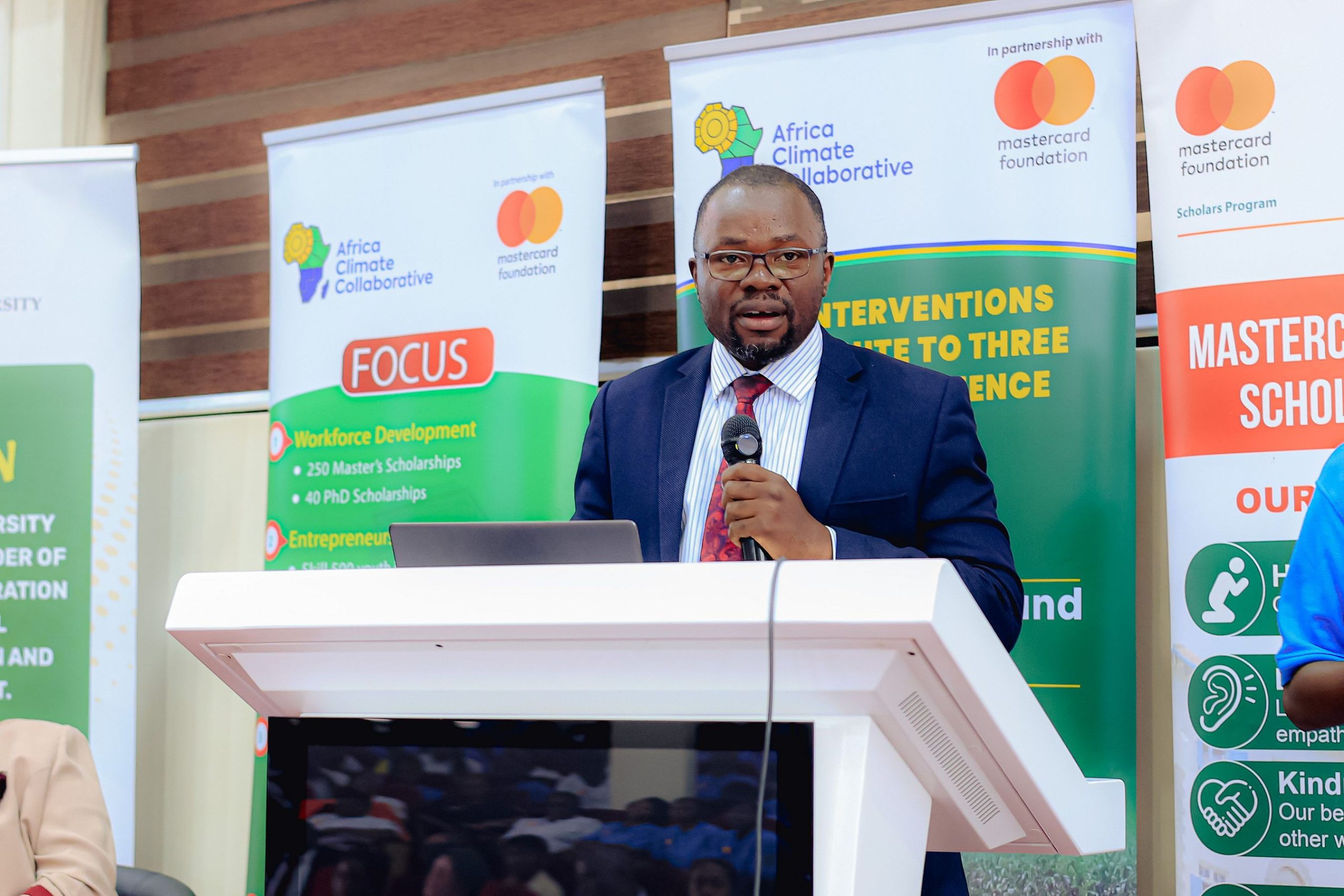
He urged them to make full use of Makerere’s academic resources, mentorship, and networks while maintaining discipline, integrity, and a clear vision for their future.
He also appreciated the Mastercard Foundation, programme teams, university leadership, and staff for supporting the initiatives and creating opportunities for young people to contribute to Uganda and Africa’s development.
Mr. Adrian Bukenya, Country Director of the Mastercard Foundation in Uganda, challenged scholars to view their opportunity not simply as an academic award but as a platform to become transformative leaders capable of creating solutions for their communities and Africa.
Bukenya encouraged the scholars to take full advantage of their experience at Makerere University, build meaningful relationships, and apply the knowledge and skills they acquire to address challenges around them. He emphasised that the responsibility of a scholar extends beyond personal success to creating positive change for families, communities and society.
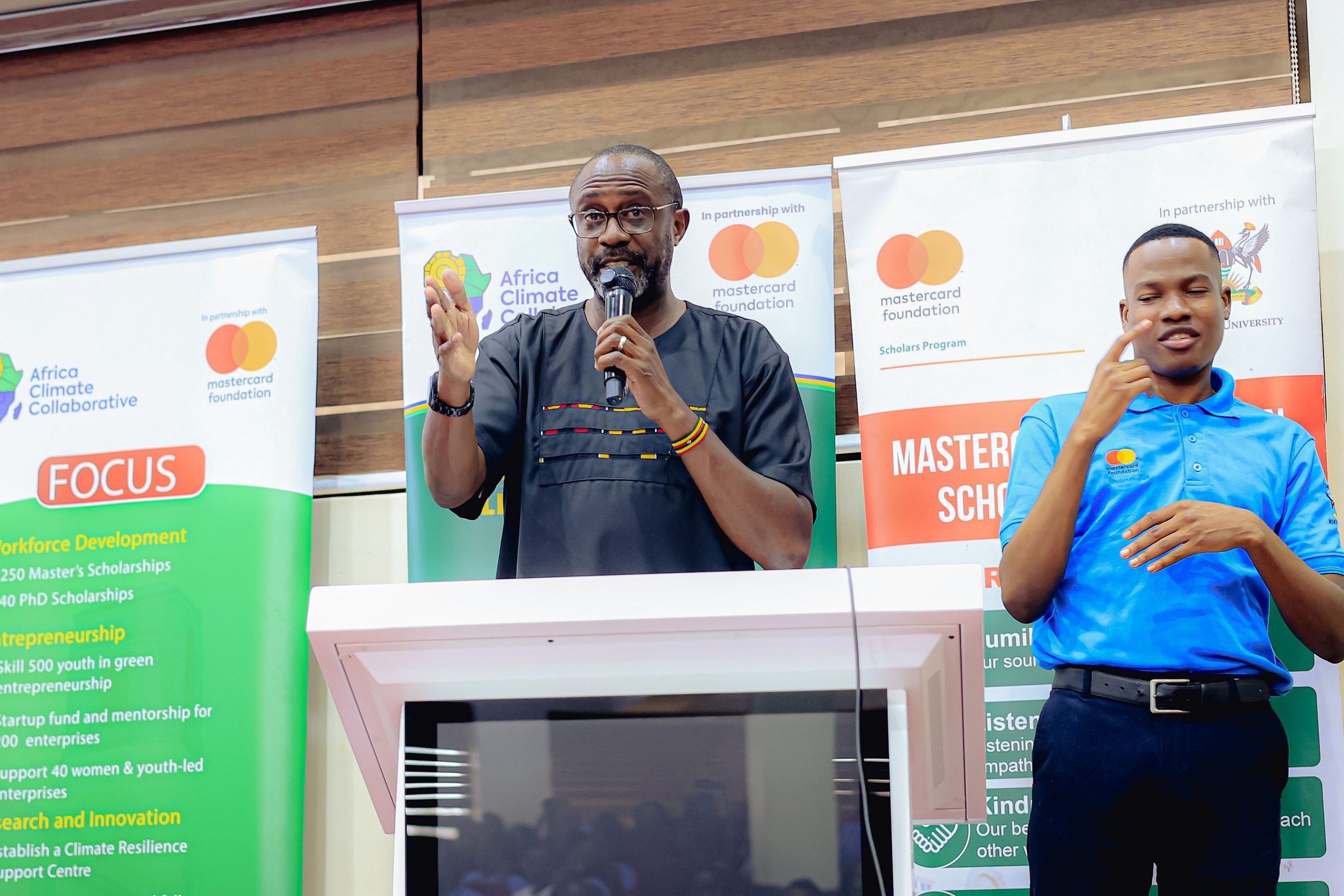
He urged the scholars, particularly those joining the Africa Climate Collaborative, to see themselves as part of a wider effort to address Africa’s development challenges through innovation, leadership, and practical solutions. Africa Climate Collaborative seeks to equip young Africans with knowledge, skills, and resources to respond to climate change while promoting sustainable solutions, innovation, entrepreneurship, and green jobs.
“You need to solve problems. Remember, you’re not here to be part of the problem,” Mr. Bukenya told scholars before reminding them that their success carries a responsibility to give back and contribute to transforming their communities and the continent.
The Africa Climate Collaborative Programme Director, Prof. Gorettie Nabanoga, described the scholarship award as more than an opportunity for young people to obtain university education. She said the scholarships represent a strategic investment in Africa’s human capital at a time when communities across the continent are increasingly experiencing the effects of climate change.
“Climate change is no longer a distant challenge. Communities are already experiencing changing rainfall patterns, prolonged droughts, floods, declining agricultural productivity, environmental degradation, and other challenges affecting livelihoods, economies, and ecosystems,” Prof. Nabanoga said.
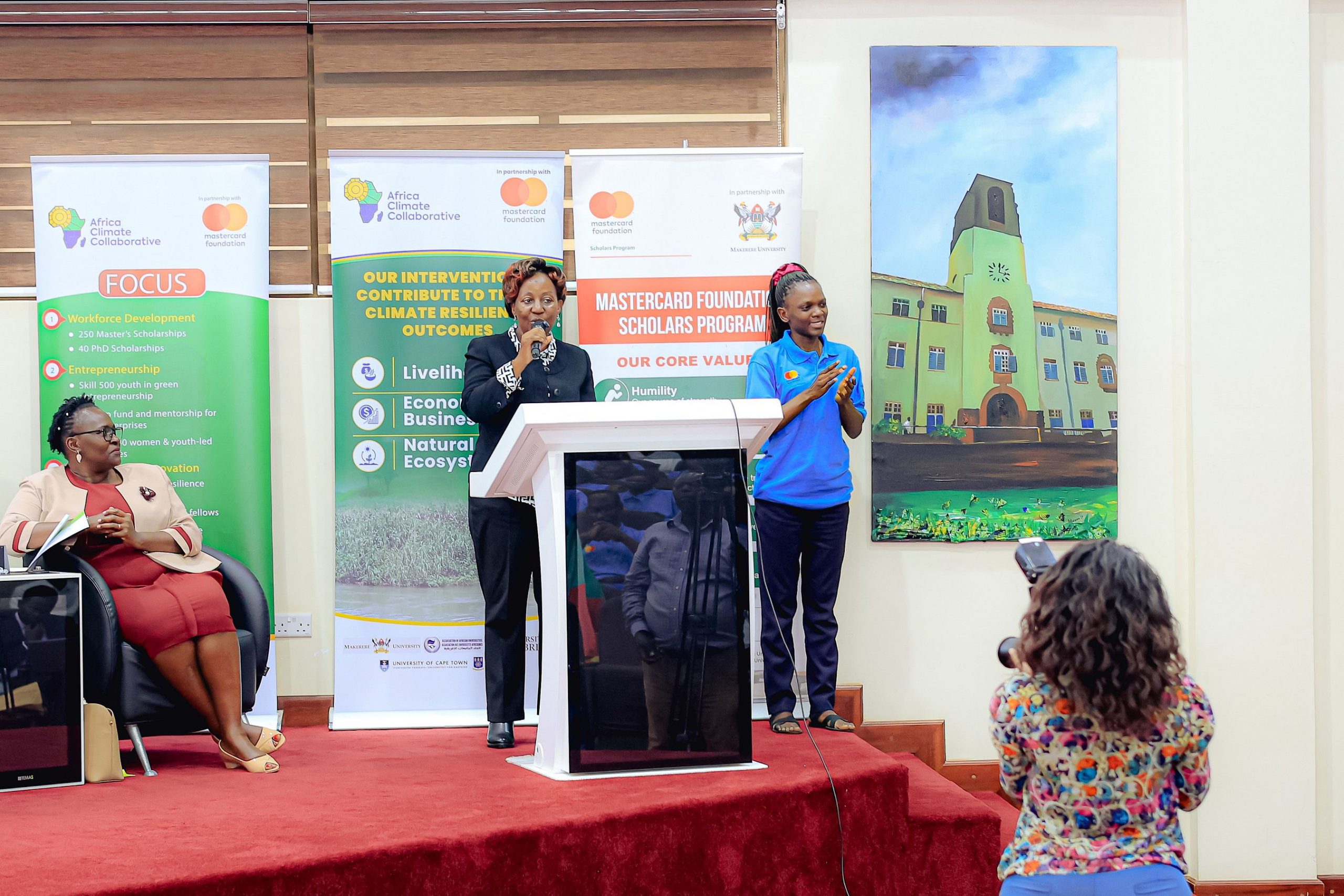
She encouraged the scholars to take full advantage of their time at Makerere University by engaging with lecturers and mentors, participating in research and innovation activities, collaborating across disciplines, and learning from communities before challenging them to go beyond obtaining academic qualifications and develop the ability to identify problems, ask relevant questions, and generate solutions that can contribute to a more resilient and sustainable Africa.
Mercy Malende, one of the scholarship beneficiaries pursuing a Master of Science in Agricultural Engineering, expressed excitement about being among the 50 young people selected for the Africa Climate Collaborative scholarship.
She said the scholarship has given her an opportunity to pursue her academic goals while gaining knowledge and skills that will enable her to contribute to addressing climate change challenges in Uganda. She appreciated the Africa Climate Collaborative and its partners for investing in young people and creating opportunities for them to advance their education. She said she looks forward to making the most of the opportunity and using her knowledge to contribute to sustainable agricultural development.

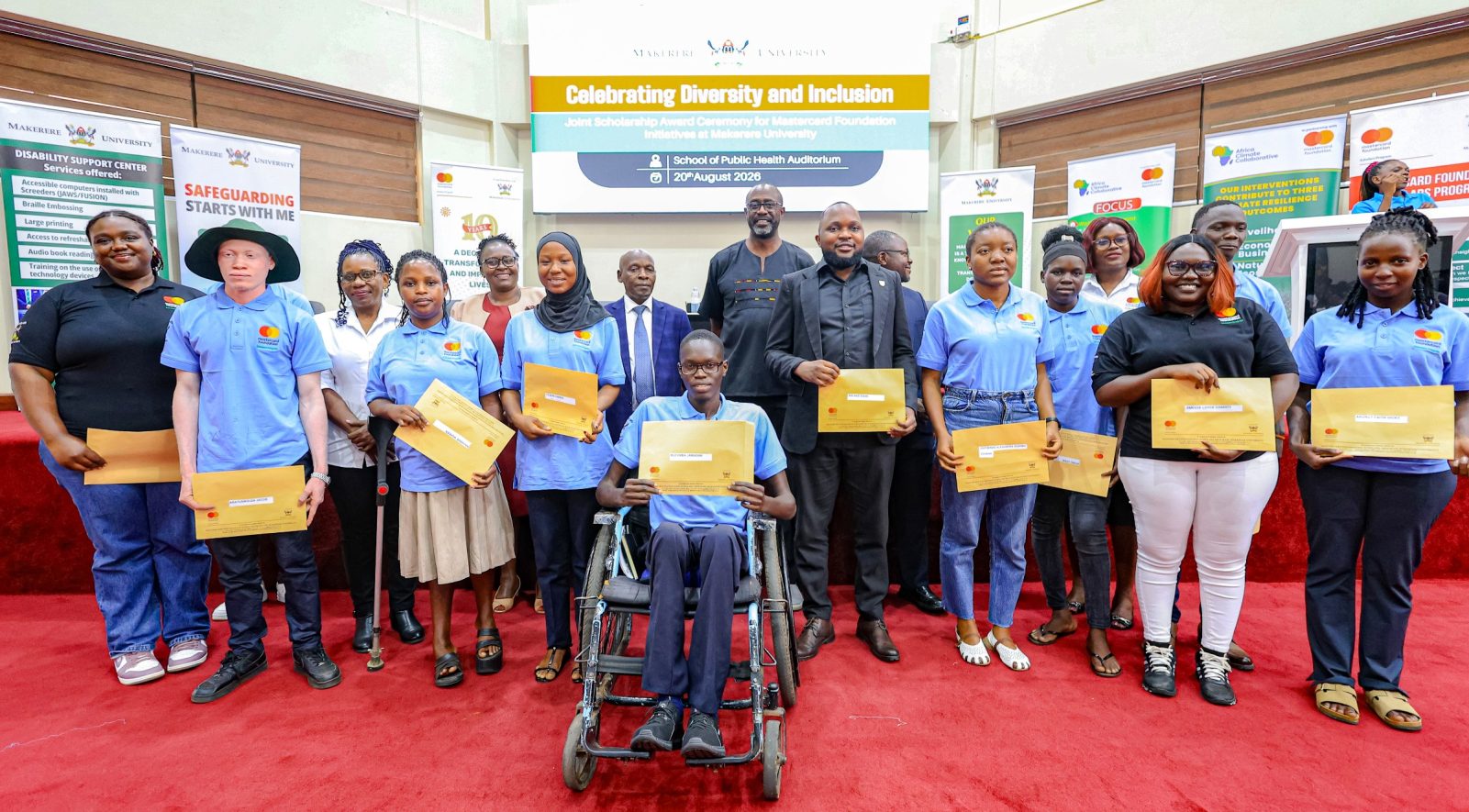
On 20th August 2026, Makerere University welcomed another cohort of 258 recipients of the prestigious Mastercard Foundation scholarship for the 2026/2027 academic year with pomp and fanfare. The colourful Scholarship Award Ceremony was presided over by the Vice Chancellor, Prof. Barnabas Nawangwe, who was represented by Prof. Ibrahim Mike Okumu, the Dean of the School of Economics and the Chairperson of the Scholars Selection sub-committee of the Mastercard Foundation Scholars Program at Makerere University.
While addressing the gathering, Prof. Nawangwe reminded the Scholars that the scholarship was both an honour and a responsibility, and that they ought to make the most of it to improve their lives and communities.
“Now that you have stepped through the gates of Makerere University, remember that a scholarship is both an award and a responsibility. You have been chosen because we believe in your potential to lead, innovate, and serve. Makerere University offers you world-class academic resources, mentorship, and networks—but the impact you make with these resources will depend on your discipline, integrity, and vision,” Prof. Nawangwe remarked.
A Call for Responsible Living
The Vice Chancellor further urged the new recruits to embrace university life responsibly and form lasting bonds that will support future networks.
“I encourage you to engage fully and responsibly in University life, build lasting bonds with your peers, and, equally important, keep your home communities close to your heart. Let the knowledge and skills you gain here become the seed for innovative solutions to the challenges facing your communities, our country, Uganda, and the African continent.” Prof Nawangwe emphasised.
Prof. Nawangwe further expressed his gratitude to the Mastercard Foundation for recognising Makerere University as a worthy partner and pledged to continue supporting all the Mastercard Foundation’s initiatives at Makerere University.
Leadership starts with self
Mr. Adrian Bukenya, the Senior Director of the Mastercard Foundation Scholars Program globally and the Country Director for Uganda, urged Scholars to embrace leadership, particularly through self-leadership. He emphasised that the Scholars Program is fundamentally a leadership development program.
“The Scholars Program offers more than just a scholarship; it is a leadership development Program. I encourage you, Scholars, to embrace leadership, and leadership starts with leading yourself, then your community, your country and the continent,” Mr. Bukenya emphasised.
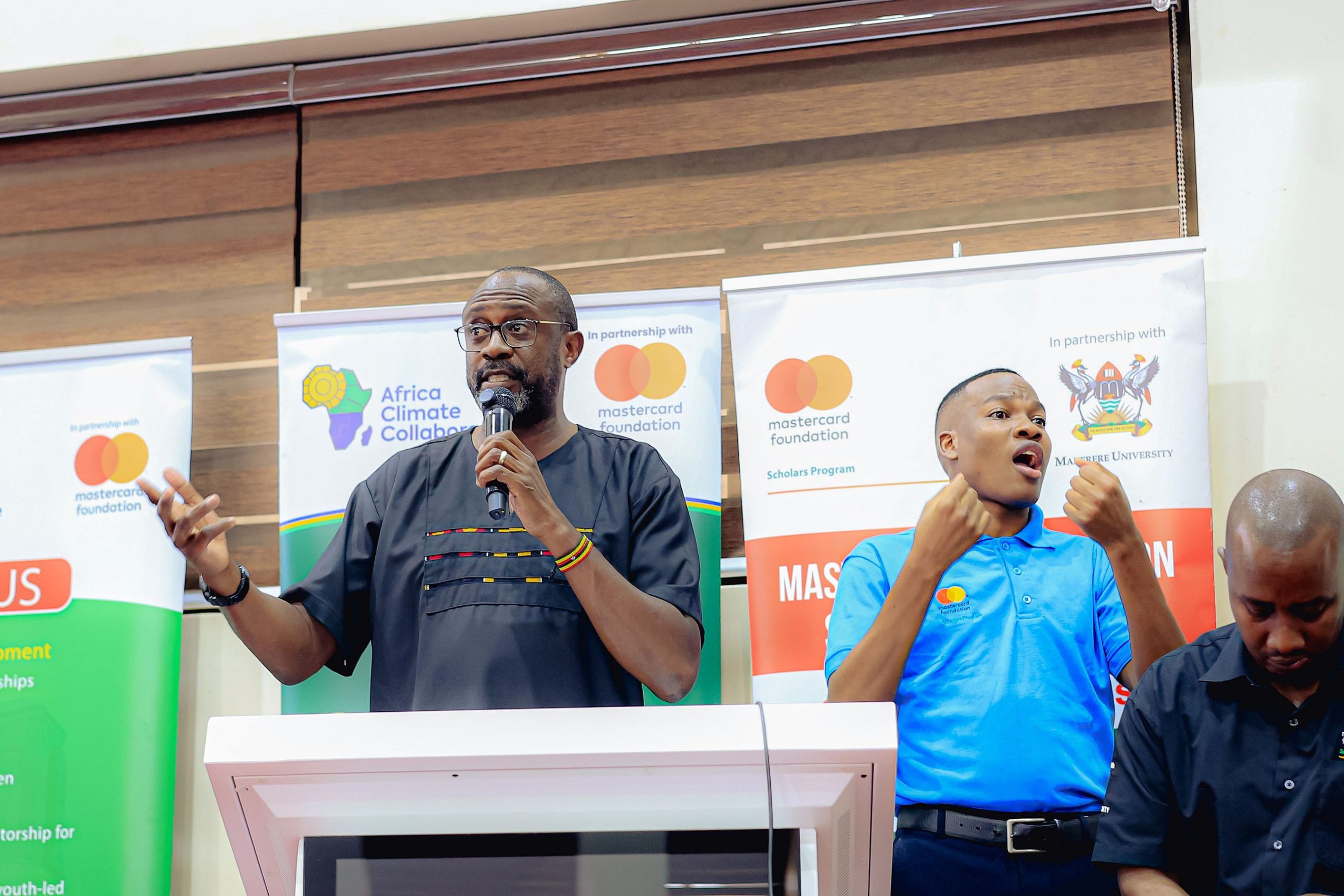
Mr. Bukenya expressed his gratitude to the Management of Makerere University for partnering with the Mastercard Foundation on various initiatives. He emphasised that the Foundation is committed to continuing this partnership to educate young people and nurture the next generation of leaders on the African continent.
Selection Process Highlights
On his part, the Chairperson of the Scholars Selection Committee, represented by Mr Charles Ssentongo, the Deputy Academic Registrar responsible for Undergraduate admissions, congratulated all the Scholars who had made it through a very competitive and watertight selection process. To illustrate how tight the selection process had been, he shared compelling statistics that clearly demonstrated its competitiveness.
“We received 3,664 Applications for the Scholarship; 2,904 Undergraduates and 760 master’s students. Of these scholarship applicants, 1,440 Undergraduates and 280 Master’s students were admitted to Makerere University on private sponsorship, and they were all eligible for the Scholarship,” Mr Ssentongo pointed out.
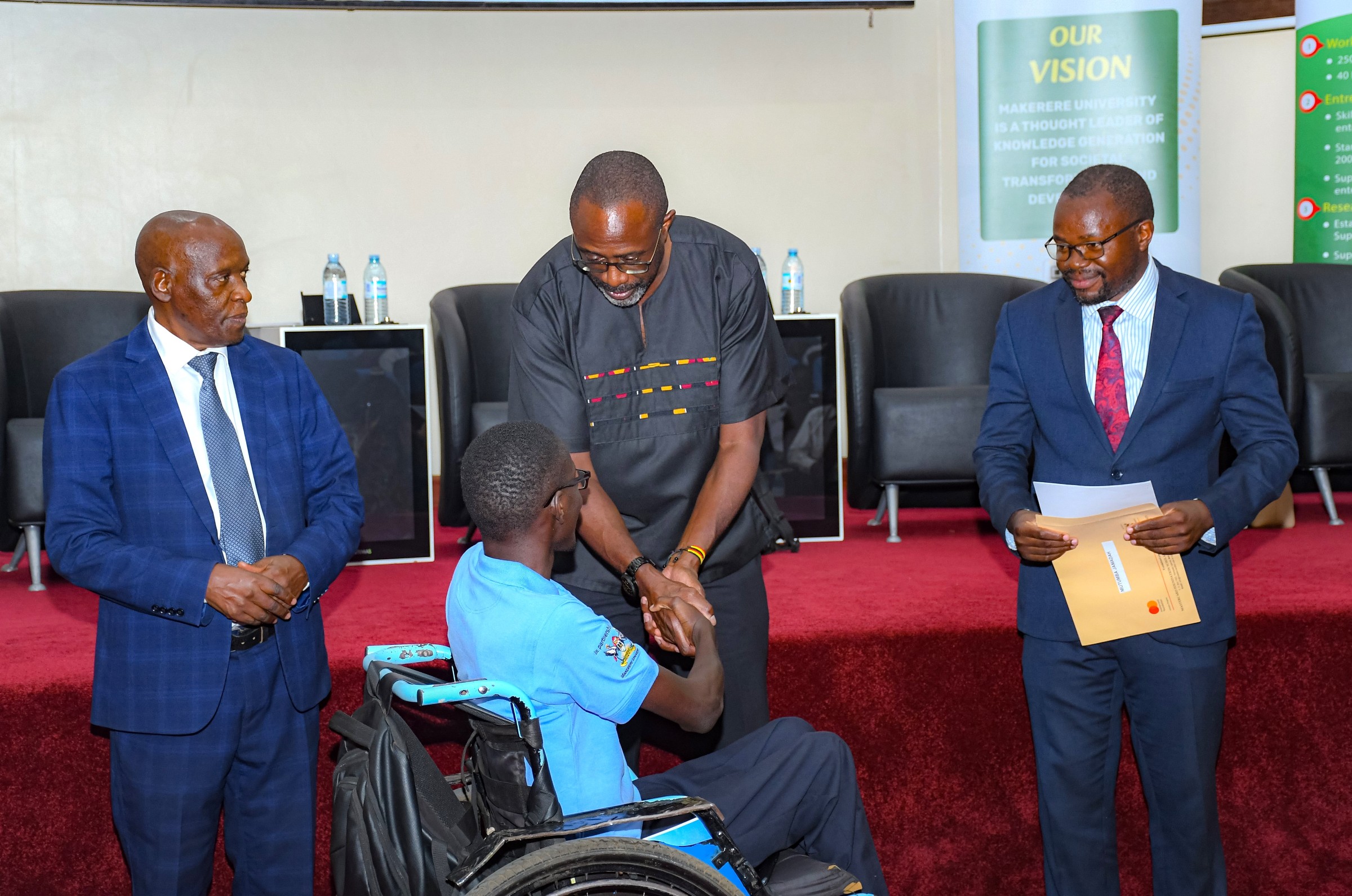
Mr Ssentongo informed the attentive audience that one of the biggest challenges the Committee faced was the very high number of applicants, while the number of scholarships available was always very small. Mr Ssentongo then highlighted further statistics that characterised the tedious selection process.
“For the Undergraduates, 650 applicants were shortlisted for interviews, while 58 Master’s applicants were also shortlisted. Of these, 245 undergraduates and 13 Master’s students were selected for the final award,” Mr Ssentongo highlighted.
Celebrating A Diverse Cohort
The Program Director of the Mastercard Foundation Scholars Program at Makerere, Prof. Justine Namaalwa, used the occasion to highlight achievements made in the years gone by.
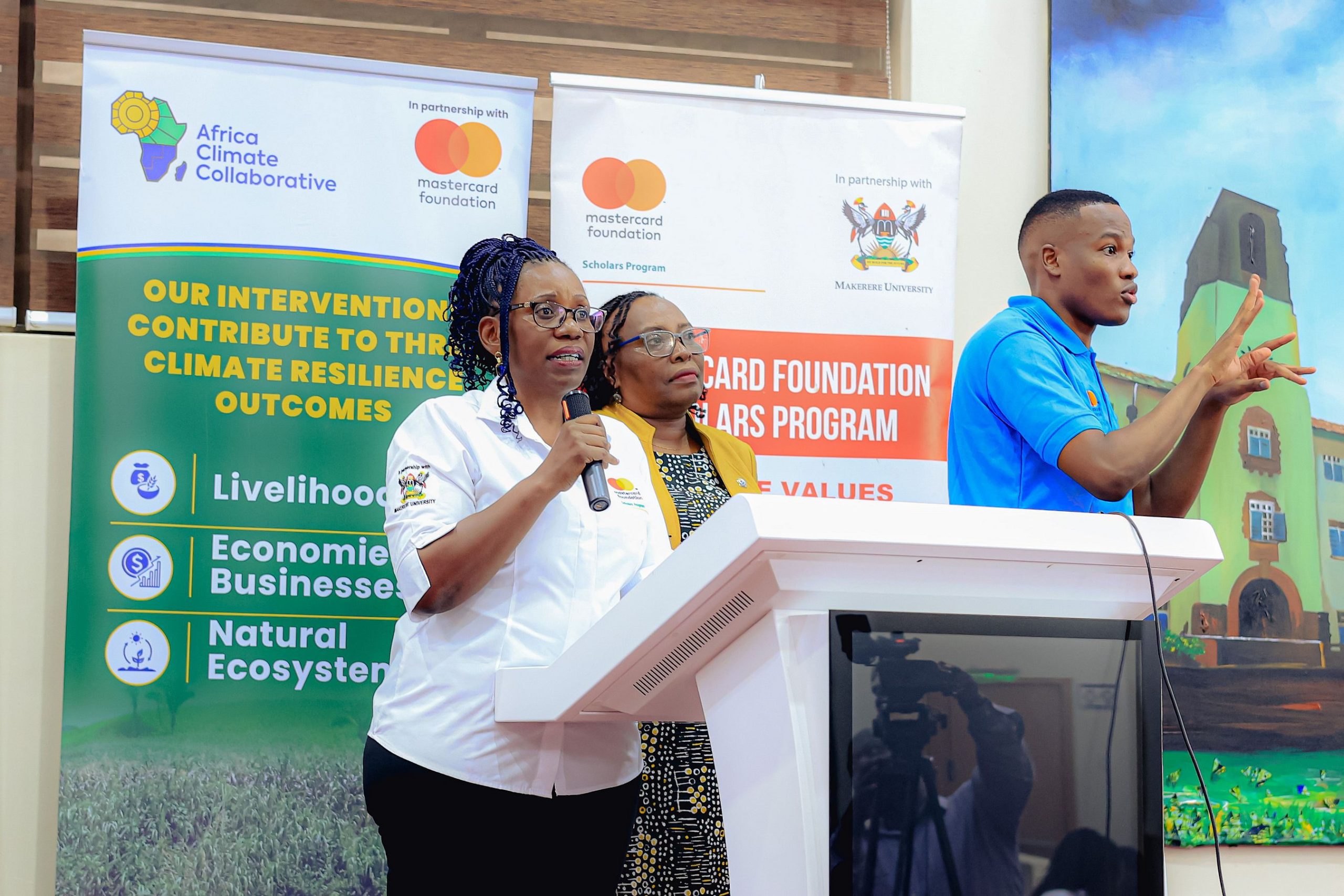
“Today, we are overjoyed to have successfully recruited 258 Cohort 9 Scholars—bringing us to the mark of 546 Scholars, 54.6% of the target recruitment of 1,000 Scholars under Phase II of the Program. To date, a total of 1,596 Scholars have been recruited since 2013, when the Scholars Program started at Makerere University,” Prof. Namaalwa announced.
Prof. Namaalwa showcased the diversity created by the Scholars Program, highlighting the arrival of international students from across the African continent at Makerere University through the Mastercard Foundation Scholars Program.
“For Cohort 9 Scholars, it’s time to celebrate our diversity in the Program. Let me call out the nationalities represented in the room: Lesotho (1 Scholar), Malawi (1 Scholar), Ghana (1 Scholar), D.R. Congo (13 Scholars), Cameroon (7 Scholars), Burundi (3 Scholars), Rwanda (10 Scholars), South Sudan (40 Scholars) and Tanzania (1 Scholar).” Prof. Namaalwa revealed.
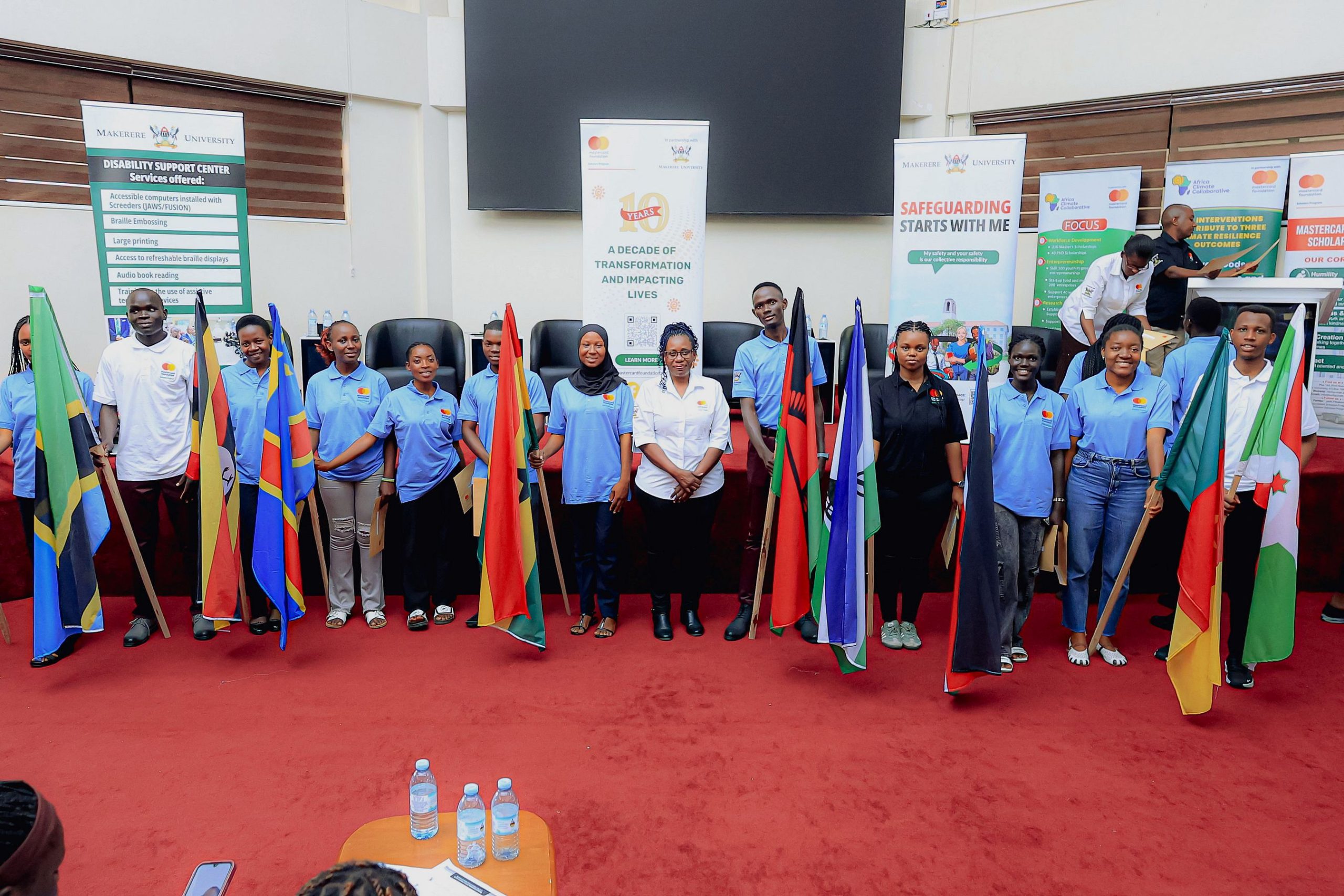
Scholars Speak Out
Nathan Tamba, an international student from Cameroon, conveyed his enthusiasm regarding the opportunities afforded by the scholarship, particularly the prospect of pursuing his studies at Makerere University, recognised as one of the leading institutions on the continent.
“On behalf of my fellow scholars, I would like to express our gratitude to Makerere University and the Mastercard Foundation for awarding us this scholarship. It has given me the opportunity to study at this prestigious university and to experience Uganda for the first time.” Tamba remarked.
Tamba, clearly delighted like his fellow scholars, committed to using the scholarship opportunity to gain knowledge and skills he will use to benefit himself and his community.
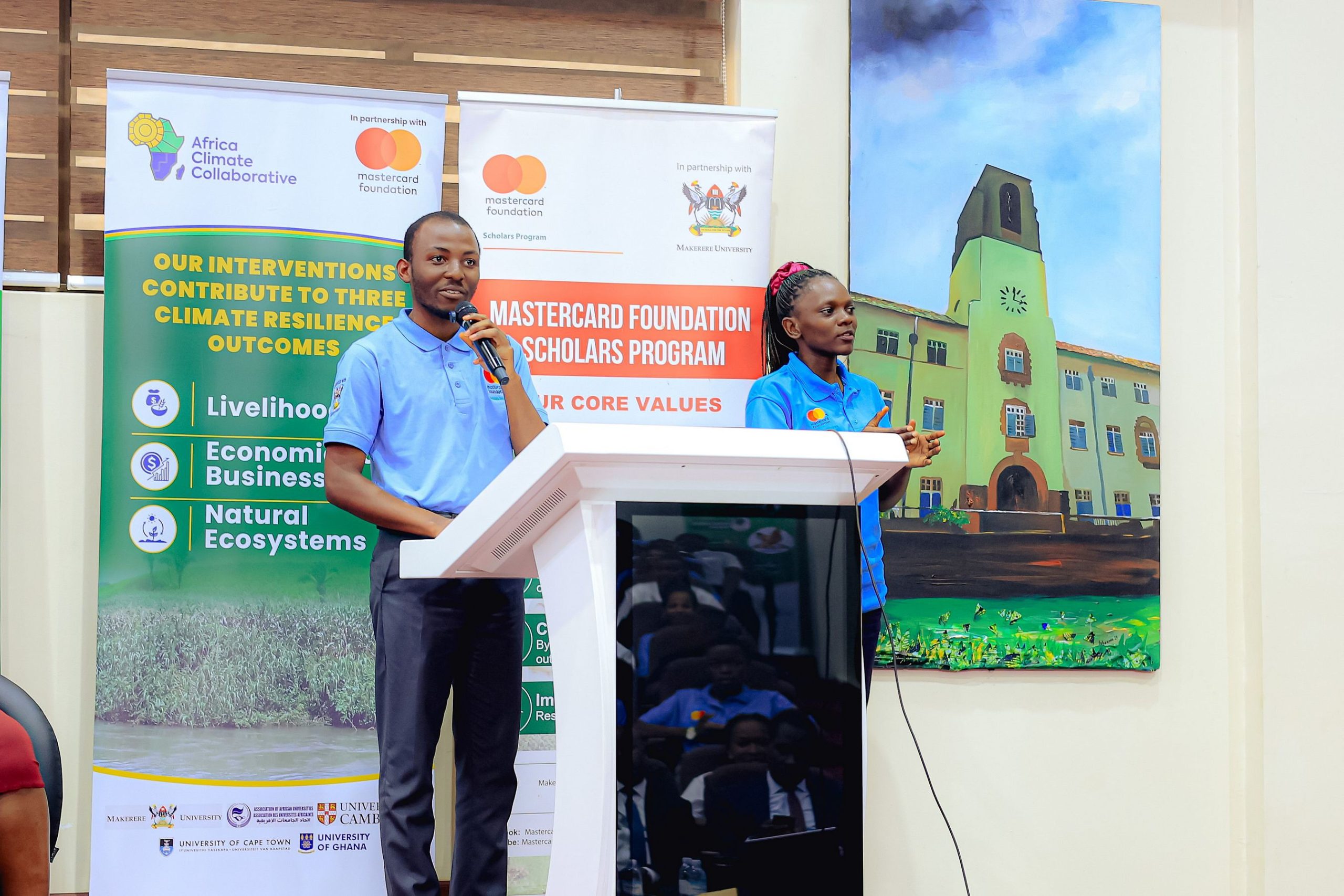
The function was punctuated by entertainment from the Makerere University Choir, networking, and plenty of joyous celebration.
Bernard Buteera is Principal Communications Officer for the Scholars Program at Makerere University.
-
 General5 days ago
Undergraduate Admission Lists 2026/2027
-
 General2 weeks ago
Call For Applications: ACT-PREP 15 PhD and 10 Postdoctoral Research Fellowships
-

 General1 week ago
72 Makerere University Students Admitted to 2026 Millennium Fellowship
-
 General1 week ago
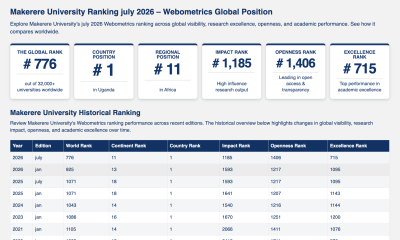
Makerere jumps 200 positions in latest global rankings
-
 Computing & IS1 week ago
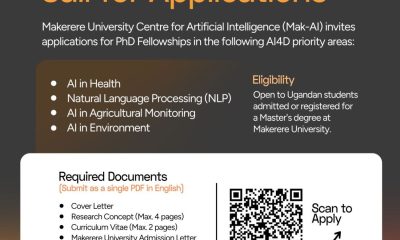
Call For Applications: Mak-AI PhD Fellowship