Connect with us

Business & Management

76th Graduation Ceremony: CoBAMS Staff and Graduates Win Excellence Awards

Published

on

26th February 2026-During the 76th Graduation Ceremony (24th to 27th February 2026), Makerere University invoked its tradition of recognizing outstanding performance and excellence in academics, research, teaching, knowledge transfer, publication and authorship.

The College of Business and Management Sciences (CoBAMS) presented students for graduation on the third day of the 76th graduation ceremony. Consequently, on 26th February 2026, entities within the University namely the Office of the Vice Chancellor, Makerere University Press, the  Directorate of Research, Innovations and Partnerships, Directorate of Graduate Training, and partners including the Economic Policy and Research Centre (EPRC), Association of Chartered Certified Accountants (ACCA Uganda), Prudential Uganda, lined up awards, to celebrate achievements and excellence.
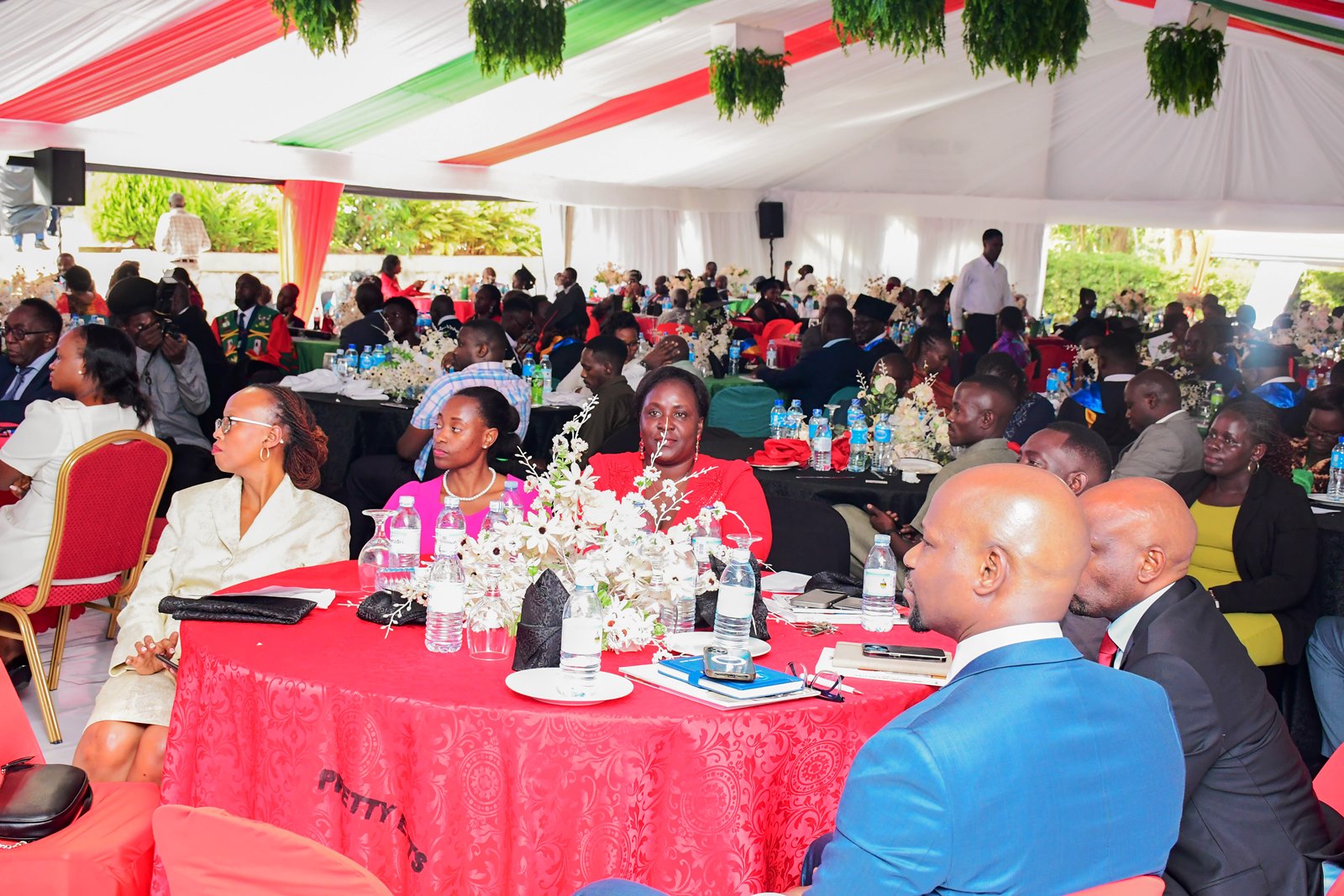
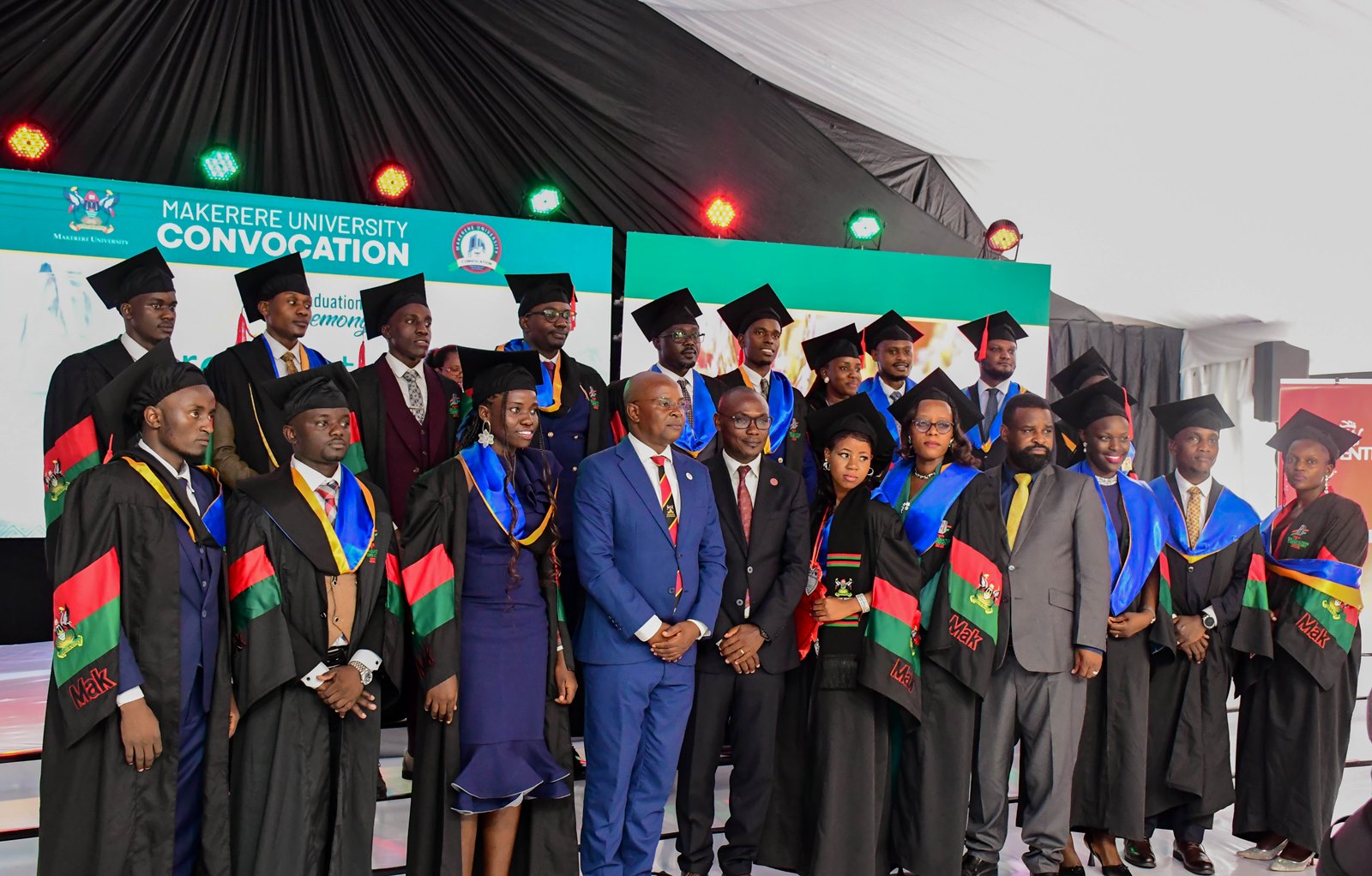
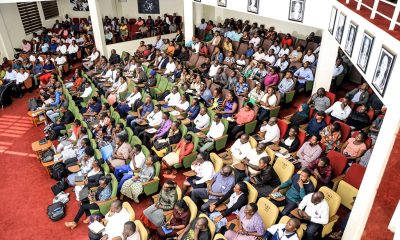
A cross-section of distinguished guests attending the Makerere University Convocation Graduation Luncheon. The event successfully brought together a diverse group of stakeholders, including:Public and Private Sector Leaders,Academic Leadership,The University Community and Strategic Partners. 76th Graduation Ceremony, Day 3, College of Business and Management Sciences (CoBAMS) Vice Chancellors Research Excellence Awards at Convocation House, Edge Road. 26th February 2026, Makerere University, Kampala Uganda, East Africa.
A cross-section of distinguished guests attending the Makerere University Convocation Graduation Luncheon. The event successfully brought together a diverse group of stakeholders, including:Public and Private Sector Leaders,Academic Leadership,The University Community and Strategic Partners.

The award ceremony brought onboard invited guests from public and private sectors, the business community, Makerere University officials, faculty members, alumni, industry partners and graduating students. The awards were presented during the Makerere University Convocation Graduation Luncheon.

The ceremony provided a platform for celebrating academic excellence, strengthening alumni engagement, and reinforcing collaboration between the University and its professional and industry partners.

2026 Research Excellence Awards
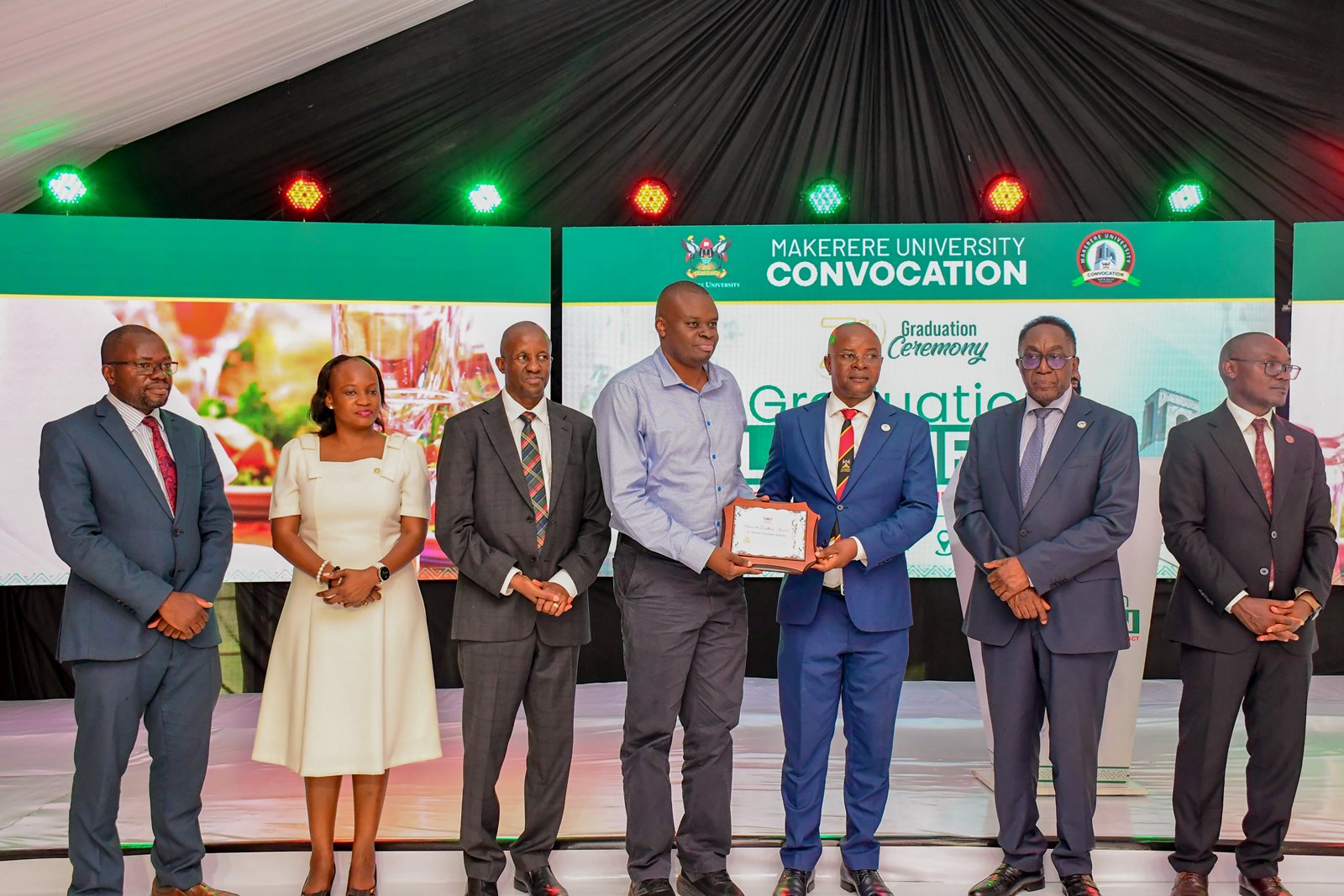
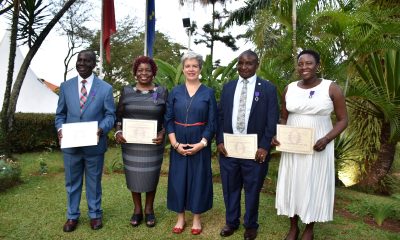
At the Convocation Luncheon, the central highlight of the occasion was the presentation of the Vice Chancellor’s Research Excellence Awards, which honored faculty members for scholarly contributions that have significantly elevated the university’s academic and research profile. 76th Graduation Ceremony, Day 3, College of Business and Management Sciences (CoBAMS) Vice Chancellors Research Excellence Awards at Convocation House, Edge Road. 26th February 2026, Makerere University, Kampala Uganda, East Africa.
At the Convocation Luncheon, the central highlight of the occasion was the presentation of the Vice Chancellor’s Research Excellence Awards, which honored faculty members for scholarly contributions that have significantly elevated the university’s academic and research profile.

The Vice Chancellor’s Research Excellence Awards were presented to college members whose research output and scholarly contributions have significantly advanced knowledge and strengthened the College’s academic profile.

At CoBAMS, the recipients of the Vice Chancellor’s Research Excellence Awards in the various categories included the following:

  • Associate Professor Faisal Buyinza, Overall top research award
  • Associate Professor Faisal Buyinza, Senior-Career Research award
  • Stephen Ojiambo Wandera, Mid-Career Research award
  • Ruth Mpirirwe and Richard Ssempala, Early-Career Research award

The awardees were honored for their exceptional research productivity, impactful publications, and contribution to building a vibrant research culture.

The awards underscore Makerere University’s emphasis on high-quality research that addresses national and global development challenges.

Recognition of Book Author
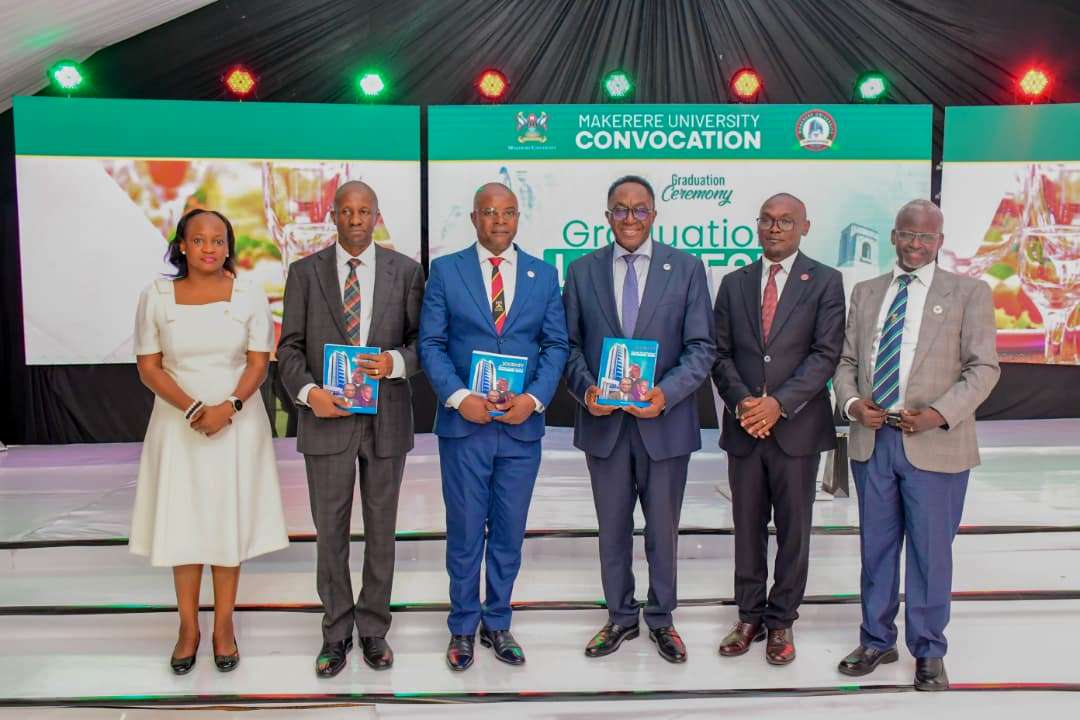
Former Vice Chancellor of Makerere University, Prof. John Ddumba-Ssentamu being honoured for his distinguished contribution to scholarship and knowledge transfer through authorship. 76th Graduation Ceremony, Day 3, College of Business and Management Sciences (CoBAMS) Vice Chancellors Research Excellence Awards at Convocation House, Edge Road. 26th February 2026, Makerere University, Kampala Uganda, East Africa.
Former Vice Chancellor of Makerere University, Prof. John Ddumba-Ssentamu being honoured for his distinguished contribution to scholarship and knowledge transfer through authorship.

Prof. John Ddumba-Ssentamu, a renowned economist, administrator, former Vice Chancellor of Makerere University, and the pioneer Principal of the College of Business and Management Sciences, was honoured for his contribution to scholarship and knowledge transfer through authorship.

Published by Makerere University Press, Prof. Ddumba-Ssentamu’s book titled, The Journey: Beginnings, Trials and Triumphs of Centenary Bank, highlights the evolution, resilience, and growth of Centenary Bank and reflects his continued contribution to academic literature and thought leadership in the fields of economics and financial development.

Prof. Ddumba-Ssentamu’s recognition reflects the University’s appreciation of distinguished scholars whose published works contribute to intellectual discourse, policy engagement, and the advancement ofscholarship.

Reputable partners recognize excelling graduates

ACCA Uganda- Best Accounting Student
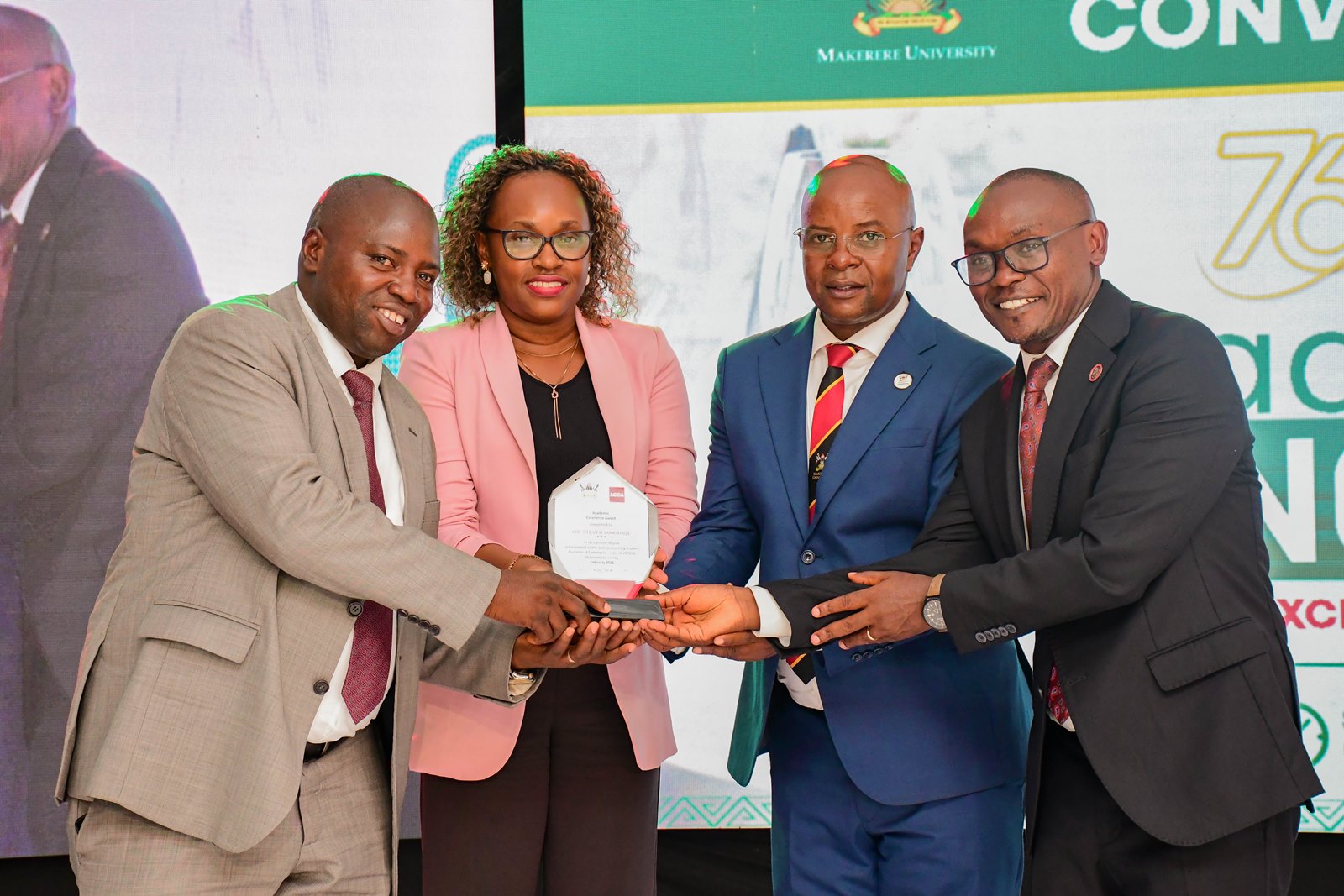
ACCA-Uganda presents an award to the best student in Accounting. Steven Makande graduated with a Bachelor of Commerce (Accounting). His award was received by Dr. Eric Nzibonera, Head-Dept of Accounting & Finance. 76th Graduation Ceremony, Day 3, College of Business and Management Sciences (CoBAMS) Vice Chancellors Research Excellence Awards at Convocation House, Edge Road. 26th February 2026, Makerere University, Kampala Uganda, East Africa.
ACCA-Uganda presents an award to the best student in Accounting. Steven Makande graduated with a Bachelor of Commerce (Accounting). His award was received by Dr. Eric Nzibonera, Head-Dept of Accounting & Finance.

Prudential Uganda-Actuarial Science Award
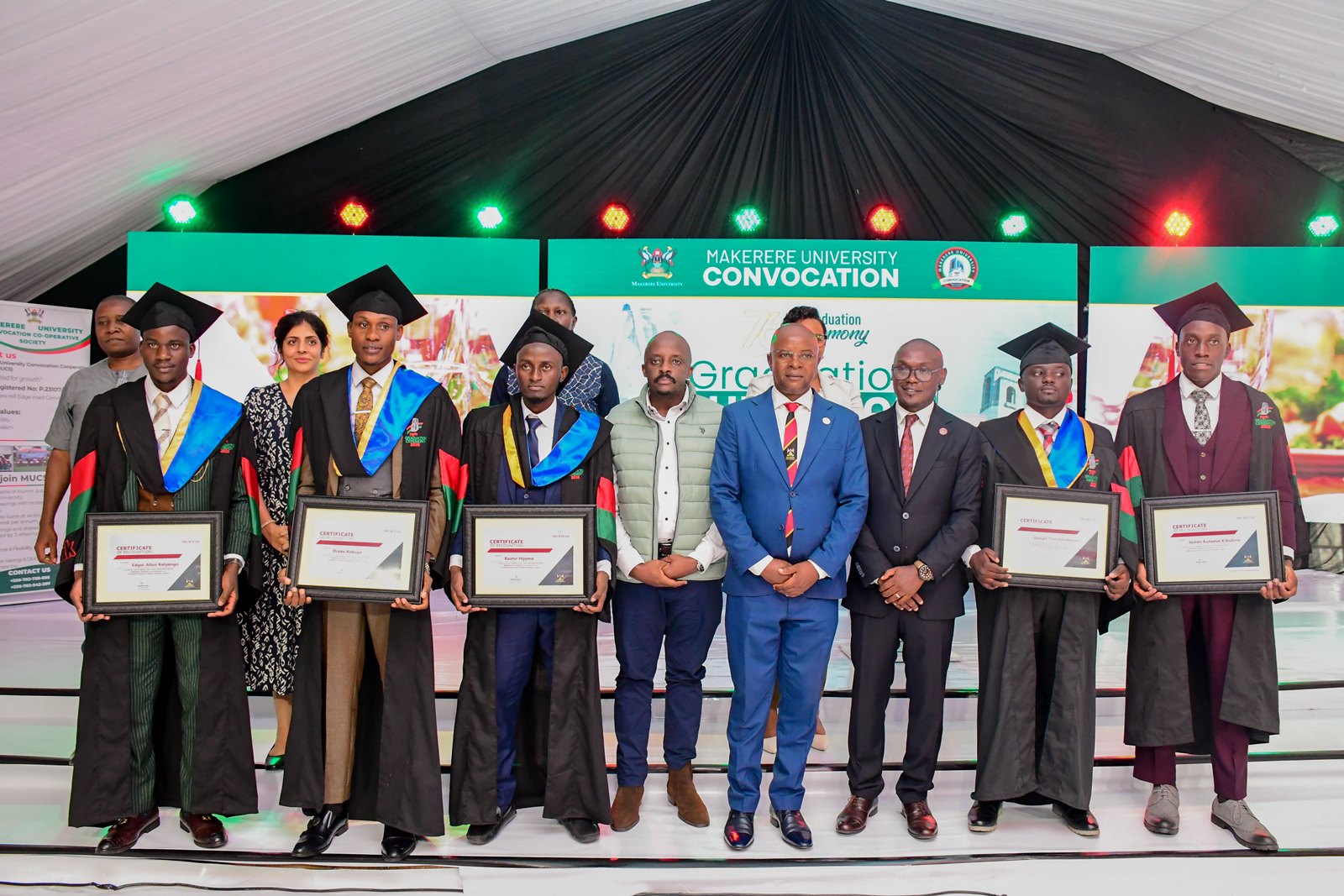
The top five Bachelor of Science in Actuarial Science graduates—Drake Kabuye, Edgar Allan Kalyango, Kuteesa Kikubira James, Tumutendereze Joseph, and Bashir Hijoma-received the PASS Awards for academic excellence, with mentorship and career support from Prudential Uganda. 76th Graduation Ceremony, Day 3, College of Business and Management Sciences (CoBAMS) Vice Chancellors Research Excellence Awards at Convocation House, Edge Road. 26th February 2026, Makerere University, Kampala Uganda, East Africa.
The top five Bachelor of Science in Actuarial Science graduates—Drake Kabuye, Edgar Allan Kalyango, Kuteesa Kikubira James, Tumutendereze Joseph, and Bashir Hijoma-received the PASS Awards for academic excellence, with mentorship and career support from Prudential Uganda.

Celebrating academic excellence, Prudential Uganda recognized the fourth cohort of outstanding actuarial science graduates under the Prudential Actuarial Science Support Scheme (PASS). The initiative reflects Prudential’s long-term commitment to building local actuarial expertise and strengthening Uganda’s financial services sector for generations to come.

The top five graduates of Bachelor of Science in Actuarial Science who received the PASS awards included: Drake Kabuye, Edgar Allan Kalyango, Kuteesa Kikubira James, Tumutendereze Joseph, and Bashir Hijoma. These were honored for their outstanding academic performance and commitment to actuarial career. Through PASS, Prudential Uganda provides high-potential graduates with mentorship, internship opportunities, and guidance toward globally recognized actuarial qualifications.

Commenting on the milestone, Tetteh Ayitevie, CEO of Prudential Uganda, said that investing in actuarial talent is critical to building a resilient and sustainable financial services industry. He noted that actuaries play a central role in risk management, pricing, product development, and long-term financial planning, making their contribution vital to the growth of Uganda’s insurance sector.

Prof. Edward Bbaale, the Principal, College of Business and Management Sciences, applauded Prudential Uganda for its ongoing support, highlighting that programmes such as PASS inspire students to excel academically while preparing them for the realities and demands of the actuarial profession.

EPRC Young Professional Award
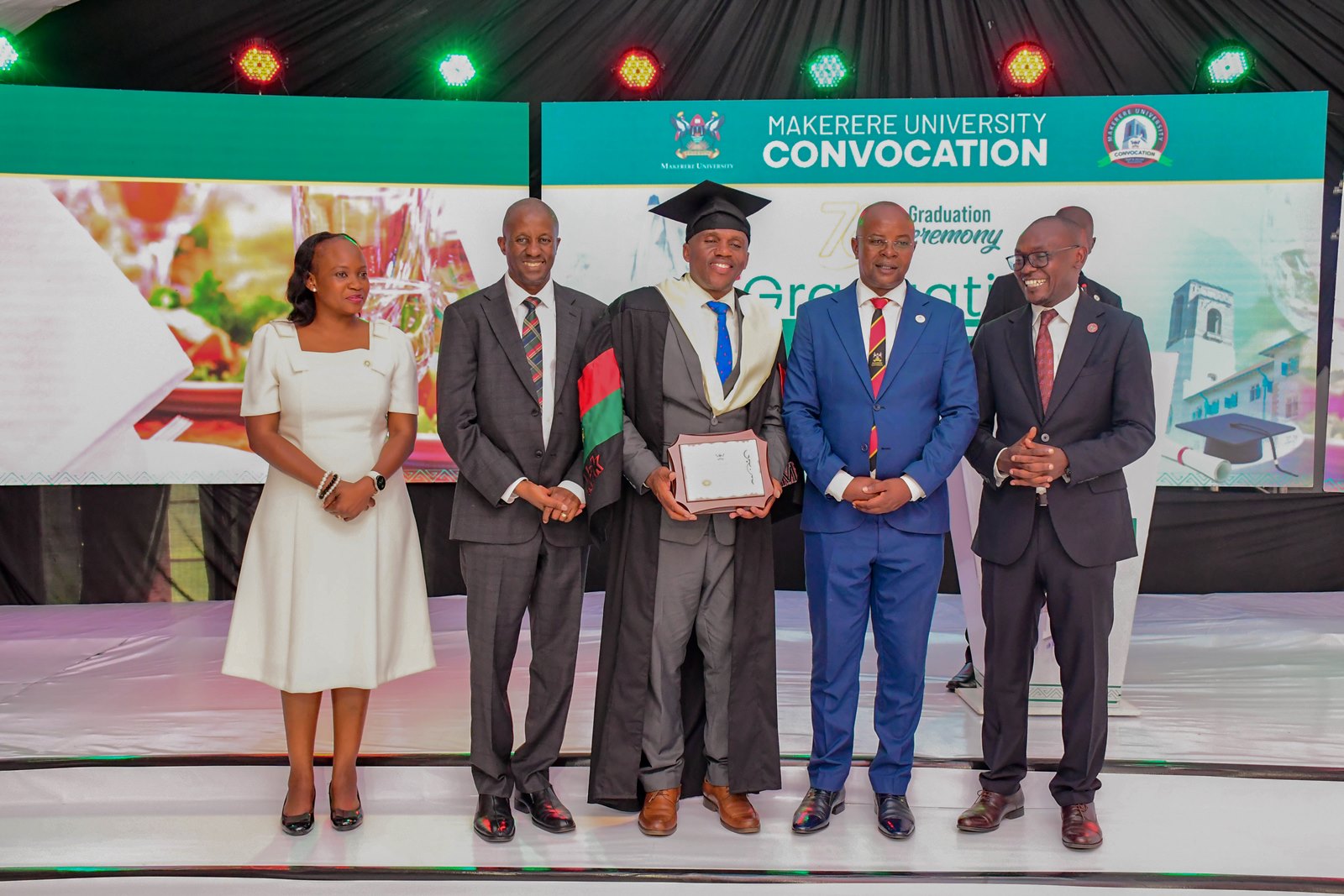
Recognizing excellence: EPRC presented the Young Professional Award to Mr.Emmanuel Menya, the best Master of Arts in Economics graduate. 76th Graduation Ceremony, Day 3, College of Business and Management Sciences (CoBAMS) Vice Chancellors Research Excellence Awards at Convocation House, Edge Road. 26th February 2026, Makerere University, Kampala Uganda, East Africa.
Recognizing excellence: EPRC presented the Young Professional Award to Mr.Emmanuel Menya, the best Master of Arts in Economics graduate.

Recognizing excellence, EPRC presented the Young Professional award to Emmanuel Menya, the best Master of Arts in Economics graduate. The award includes a two-year employment contract.  Ibrahim Kasirye, the Director of Research at EPRC presented the award on behalf of Dr. Sarah Ssewanyana, the Executive Director.

The EPRC Young Professional Award, recognizes and celebrates exemplary performance. The award underscores the importance of nurturing young professionals who exhibit excellence, innovation, and a strong commitment to national development.

Significance of the Award ceremony
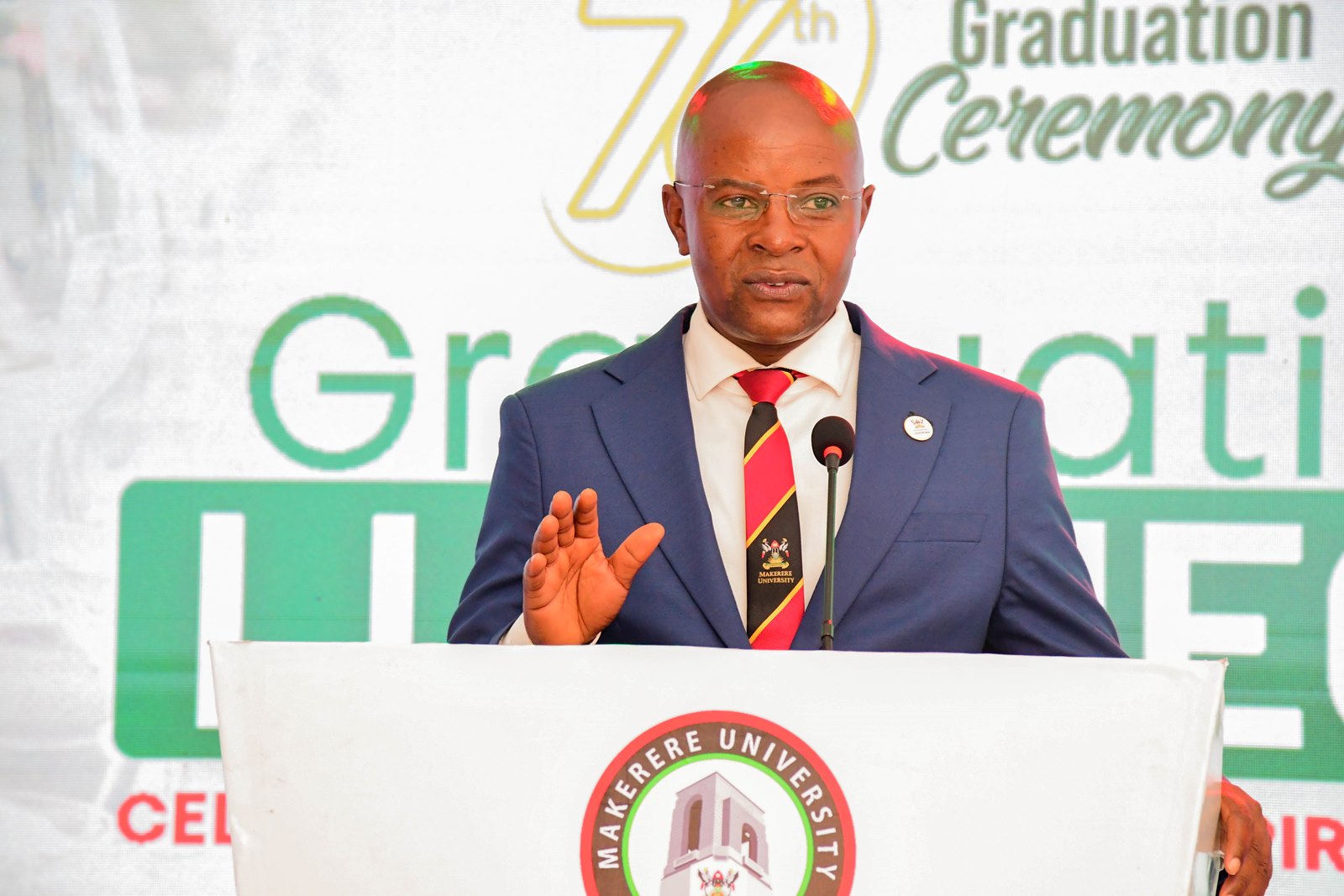
A Celebration of Excellence: Prof. Edward Bbaale emphasizing that the ceremony celebrated student excellence, faculty achievement, and Prof. John Ddumba-Ssentamu’s contribution to scholarship. 76th Graduation Ceremony, Day 3, College of Business and Management Sciences (CoBAMS) Vice Chancellors Research Excellence Awards at Convocation House, Edge Road. 26th February 2026, Makerere University, Kampala Uganda, East Africa.
A Celebration of Excellence: Prof. Edward Bbaale emphasizing that the ceremony celebrated student excellence, faculty achievement, and Prof. John Ddumba-Ssentamu’s contribution to scholarship.

Prof. Edward Bbaale, Principal of College of Business and Management Sciences (CoBAMS), underscored the significance of the ceremony, noting that it served three key purposes: to recognize academic excellence among students, to honor faculty members excelling in teaching, research, and service, and to celebrate Prof. John Ddumba-Ssentamu, former Vice-Chancellor of Makerere University, for his continued contribution to scholarship through authorship.

Prof. Bbaale described Prof. Ddumba-Ssentamu’s ongoing scholarly work as inspirational, stating that it demonstrates a steadfast commitment to knowledge creation beyond leadership roles. He commended both students and staff for their hard work and discipline, emphasizing that university success is a shared achievement.

Collaboration, Responsibility, and Excellence
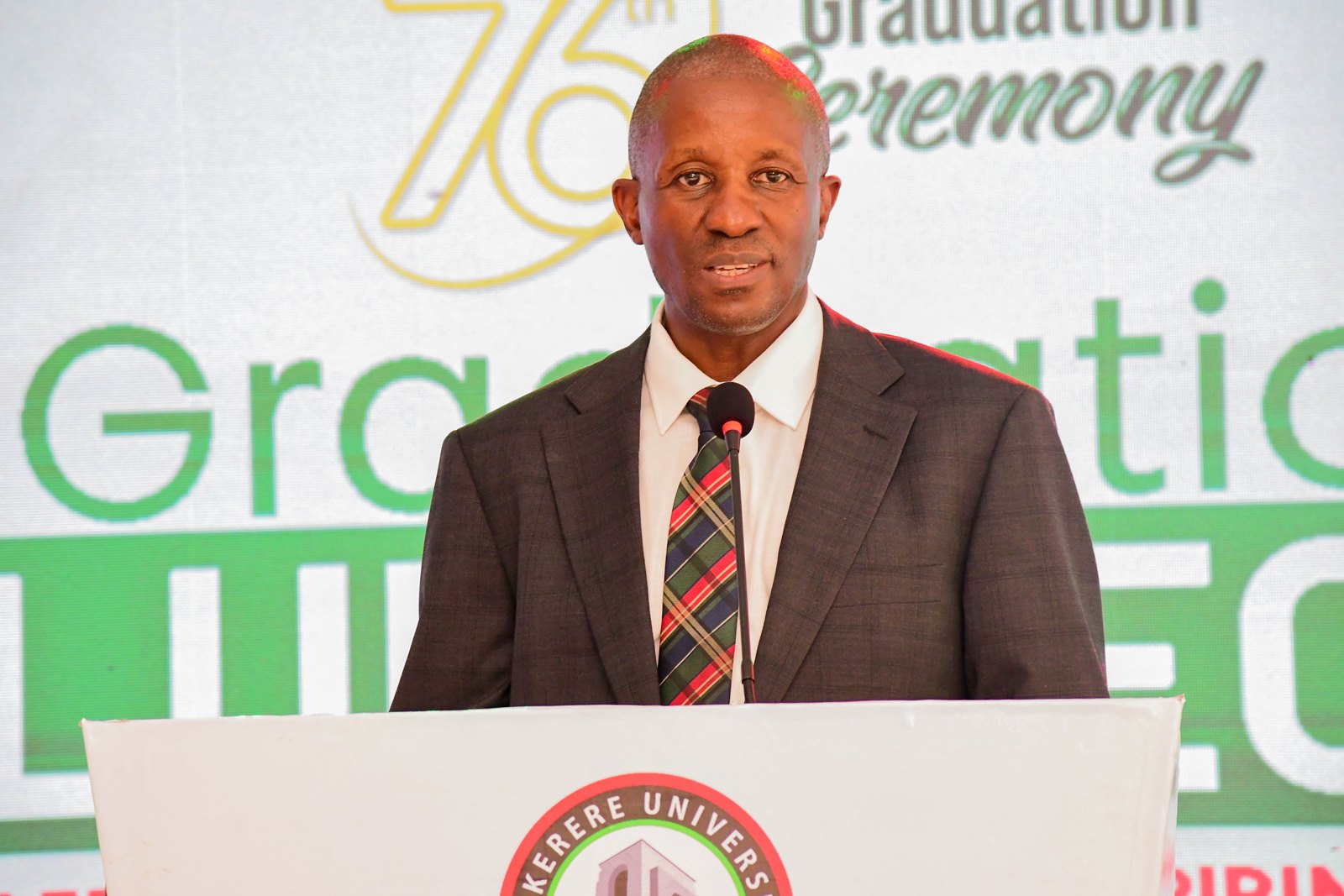
Prof. Moses Muhwezi congratulated the awardees and reminded them that graduating from Makerere University carries both privilege and responsibility. 76th Graduation Ceremony, Day 3, College of Business and Management Sciences (CoBAMS) Vice Chancellors Research Excellence Awards at Convocation House, Edge Road. 26th February 2026, Makerere University, Kampala Uganda, East Africa.
Prof. Moses Muhwezi congratulated the awardees and reminded them that graduating from Makerere University carries both privilege and responsibility.

Congratulating the awardees, the Principal of Makerere University Business School (MUBS), Prof. Moses Muhwezi, reminded graduates that being a product of Makerere University is both a privilege and a responsibility.

“Uphold the university’s internationally respected brand, defend it, and take pride in it, while maintaining unity and avoiding internal conflicts that could harm its reputation,” he urged. The Principal of MUBS encouraged graduates to remain committed, diligent, and focused in their pursuit of excellence.

 Highlights about Makerere University Convocation

CPA George Mugabi Turyamureeba, Chairperson of the Makerere University Convocation, informed the audience, that the Convocation is a legally established and influential platform for alumni and staff.

Rallying alumni and staff to join Makerere University Convocation, CPA Turyamureeba outlined the achievements and ongoing activities. He reported that during his tenure, the Convocation Executive, had expanded and beautified the permanent home for the Convocation. Some of the ongoing activities include: strengthening alumni engagement, introduction of a cross-generational mentorship program, and the formation of a cooperative society (SACCO) aimed at providing affordable loans and potentially establishing a bank.

He tipped the fresh graduates on resilience, continuous self-improvement, and lifelong learning, stressing the importance of staying connected to their alma mater and the Makerere University Convocation community.

He cautioned the graduates on emerging fraud risks, including digital scams, and fraudulent job offers. He urged them to safeguard their personal information, uphold integrity, and avoid becoming either victims or perpetrators of fraud.

View on CoBAMS

Ritah Namisango
Ritah Namisango

Business & Management

Driving Sustainable Growth: Eco-Efficiency and Cleaner Production are vital in shaping the future of Micro, Small and Medium Enterprises

Published

on

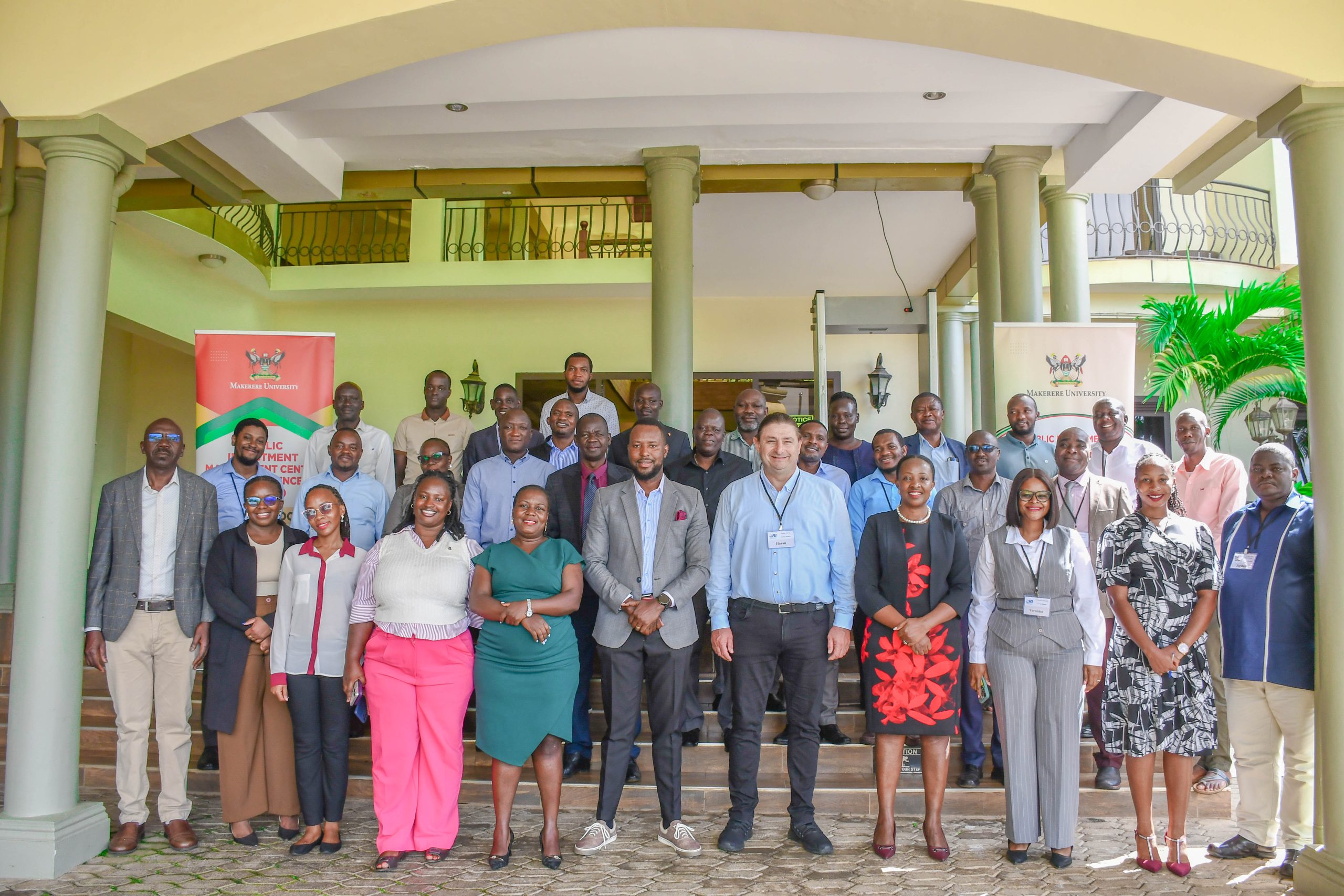
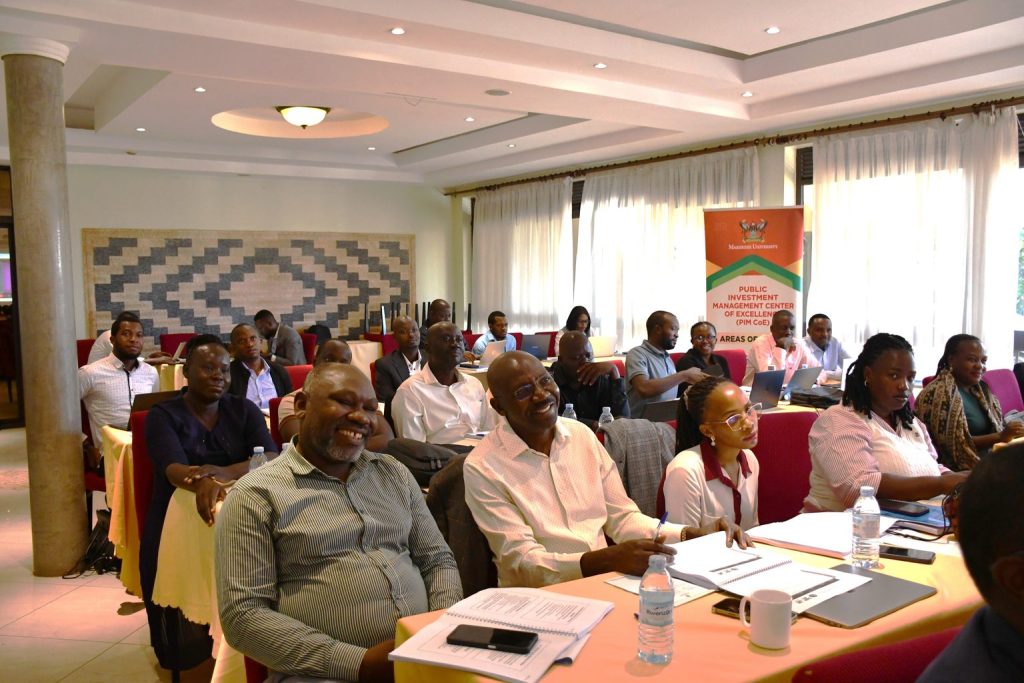
A cross-section of participants pose for a group photo after the project dissemination workshop held at Makerere University. Promoting Eco-Efficiency (EE) and Cleaner Production (CP) for sustainable development of Micro, Small and Medium Enterprises (MSMEs) in Uganda Project dissemination workshop by School of Business, College of Business and Management Sciences (CoBAMS), 15th April 2026, Makerere University, Kampala Uganda, East Africa.

By Ritah Namisango and Christopher Kaahwa

On Wednesday, 15th April 2026, the School of Business under the College of Business and Management Sciences (CoBAMS) at Makerere University hosted a project dissemination workshop that brought together researchers, practitioners, policymakers and faculty members.

The workshop focused on the presentation of findings and policy recommendations from the research project titled: Promoting Eco-Efficiency (EE) and Cleaner Production (CP) for sustainable development of Micro, Small and Medium Enterprises (MSMEs) in Uganda.

Opening the workshop, Associate Professor Godfrey Akileng, the Dean, School of Business represented by Dr. Anthony Tibaingana, the Head, Department of Marketing and Management welcomed participants and highlighted the role of research in connecting Makerere University to the wider community.

He noted that MSMEs form the backbone of Uganda’s economy making up the largest share of businesses across sectors and because of this, any meaningful research must speak directly to their realities.

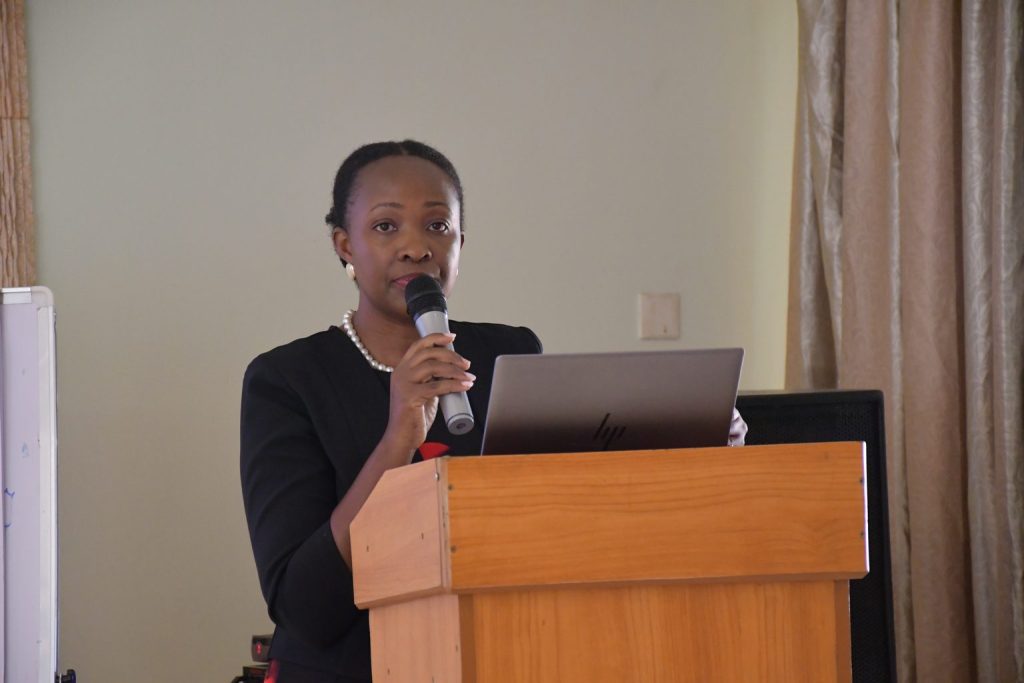
Dr. Anthony Tibaingana delivers opening remarks at the workshop. Promoting Eco-Efficiency (EE) and Cleaner Production (CP) for sustainable development of Micro, Small and Medium Enterprises (MSMEs) in Uganda Project dissemination workshop by School of Business, College of Business and Management Sciences (CoBAMS), 15th April 2026, Makerere University, Kampala Uganda, East Africa.
Dr. Anthony Tibaingana delivers opening remarks at the workshop.

The Dean of the School of Business commended the project team namely Dr. Marion Nanyanzi, Dr. Kasim Sendawula, and Associate Professor Peter K. Turyakira, for positively contributing to the university’s goal of being a research-led institution.

He explained that Eco-Efficiency (EE) is about using available resources wisely not just for today, but for tomorrow and generations to come. “In a country where most businesses operate on a small scale, understanding how to produce more with less is essential,” he said.

Dr. Tibaingana acknowledged the government of Uganda through the Makerere University Research and Innovation Fund (MakRIF) for funding the research project titled, Promoting Eco-Efficiency (EE) and Cleaner Production (CP) for sustainable development of Micro, Small and Medium Enterprises (MSMEs) in Uganda. He recognized Professor Fred Masagazi Masaazi, Chairperson of the Mak RIF Grants Management Committee (GMC) and thanked him, for gracing the dissemination workshop with his personal presence.

Achieving sustainable growth through eco-efficiency and cleaner production

The main presentation led by Dr. Marion Nanyanzi, the Principal Investigator (P.I.) unpacked the research project in a detailed and practical way. At its core, the study explored how MSMEs, particularly in the Food and Beverage (F&B) Service sector in Uganda can achieve sustainable growth by balancing three key areas: economic performance, environmental responsibility and social contribution.

From a social perspective, Dr. Nanyanzi stated that businesses were found to be playing an important role in creating jobs, supporting local suppliers, and contributing to community activities. She added that the study was also focused on reducing environmental harmful practices such as reliance on charcoal and firewood and adopting cleaner energy sources that would economically yield increased profits for enterprises.

Dr. Marion Nanyanzi, the Principal Investigator (P.I.) presents the project findings during the workshop. Promoting Eco-Efficiency (EE) and Cleaner Production (CP) for sustainable development of Micro, Small and Medium Enterprises (MSMEs) in Uganda Project dissemination workshop by School of Business, College of Business and Management Sciences (CoBAMS), 15th April 2026, Makerere University, Kampala Uganda, East Africa.
Dr. Marion Nanyanzi, the Principal Investigator (P.I.) presents the project findings during the workshop.

The study revealed that while these enterprises significantly contribute to employment and government revenue, they face serious constraints pointing out that high operational costs especially electricity remain a major challenge. “ So, many businesses are forced to turn to cheaper alternatives that are harmful to both health and environment creating a difficult balance between survival and sustainability,” she said.

Amidst these challenges, the study highlighted the resilience and creativity of entrepreneurs. It was found out that many business owners have developed coping strategies to remain operational with some of them adjusting production depending on customer flow especially in areas such as Kampala where demand fluctuates with academic calendars. Dr. Nanyanzi noted that other entrepreneurs have found ways to manage resources more carefully for instance through switching on refrigerators at night when electricity tariffs are lower or re-using water to reduce costs.

Makerere University Guest House highlights its cleaner production strategy

Adding a practical perspective to the study, Mr. Patrick Ojiambo Lwande, the manager of Makerere University Guest House shared how cleaner production is being implemented by the facility in its everyday operations. He mentioned that the facility undertakes waste segregation, recycling and proper waste management as key practices. “Organic waste is separated and repurposed, recyclable materials are re-used and hazardous waste is carefully handled to avoid environmental pollution,” he stated.

Mr. Patrick Ojiambo Lwande, Manager of Makerere University Guest House, shares highlights on its cleaner production strategy. Promoting Eco-Efficiency (EE) and Cleaner Production (CP) for sustainable development of Micro, Small and Medium Enterprises (MSMEs) in Uganda Project dissemination workshop by School of Business, College of Business and Management Sciences (CoBAMS), 15th April 2026, Makerere University, Kampala Uganda, East Africa.
Mr. Patrick Ojiambo Lwande, Manager of Makerere University Guest House, shares highlights on its cleaner production strategy.

Appreciation of eco-efficiency and cleaner production measures

These practices reflect an emerging understanding of eco-efficiency by business owners who are beginning to recognize that reducing waste and conserving resources can directly improve their production line.

The study also found out that many enterprises are making efforts towards cleaner production. Hygiene standards are being improved, waste is better managed and emissions are controlled through simple measures such as chimneys and ventilation system. In some cases, food waste is used as animal feed while other organic materials are re-used in farming. However, the progress to transition towards more sustainable practices is slowed down by various obstacles including limited financial capacity, lack of technical skills and low awareness among business owners.

Key recommendations

To address these gaps, the project team proposed the following practical recommendations:

  • Increasing access to affordable financing by government and financial institutions through introducing subsidies, grants, or low-interest green financing schemes to support investment in cleaner production technologies,
  • Promoting  public-private partnerships to lower the cost of eco-efficient equipment and infrastructure,
  • Undertaking capacity building and training programmes, awareness and sensitization campaigns,
  • Strengthening institutional and regulatory frameworks, research and innovation support,
  • Providing support for small and informal businesses by designing tailored interventions for micro and small enterprises, and
  • Encouraging business clustering and cooperative models to enable shared access to eco-efficient technologies and resources.

MakRIF supports research that addresses national priorities

Professor Fred Masagazi Masaazi, Chairperson of Mak-RIF Grants Management Committee (GMC) emphasized the importance of research that addresses national priorities, noting that government support for research is meant to generate practical solutions.

Professor Fred Masagazi Masaazi, Chairperson of Mak-RIF Grants Management Committee (GMC) addresses participants. Promoting Eco-Efficiency (EE) and Cleaner Production (CP) for sustainable development of Micro, Small and Medium Enterprises (MSMEs) in Uganda Project dissemination workshop by School of Business, College of Business and Management Sciences (CoBAMS), 15th April 2026, Makerere University, Kampala Uganda, East Africa.
Professor Fred Masagazi Masaazi, Chairperson of Mak-RIF Grants Management Committee (GMC) addresses participants.

Professor Masagazi Masaazi highlighted the critical role of micro, small, and medium enterprises (MSMEs) in Uganda’s economy, describing the research presented as both timely and relevant. “This is exactly the kind of research Uganda needs — research that directly impacts society and supports economic transformation,” he said.

He encouraged researchers to explore collaborations across disciplines. “Bringing together expertise from different fields can lead to stronger and more impact-oriented solutions that respond to the country’s development needs,” he added. He also called for greater engagement with policymakers and industry players during dissemination.

Research and Industry pathways

The Dean, School of Business, Associate Professor Godfrey Akileng urged researchers, faculty and participants at the dissemination workshop to rethink how research translates into real economic value, emphasizing stronger research to industry pathways at Makerere University and beyond.

Associate Professor Godfrey Akileng, the Dean, School of Business. Promoting Eco-Efficiency (EE) and Cleaner Production (CP) for sustainable development of Micro, Small and Medium Enterprises (MSMEs) in Uganda Project dissemination workshop by School of Business, College of Business and Management Sciences (CoBAMS), 15th April 2026, Makerere University, Kampala Uganda, East Africa.
Associate Professor Godfrey Akileng, the Dean, School of Business.

Promoting environmental compliance

Mr. Peter Ssekajja, Senior Environmental Officer (Cleaner Production), National Environment Management Authority (NEMA) informed participants about the ongoing efforts to promote environmental compliance, referencing the establishment of a Compliance Assistance Unit and the introduction of the National Environment Sustainability Awards as some of the supporting measures.

He stated that these initiatives aim to support businesses in adopting sustainable practices while recognizing those that are leading the way. “Environment is no longer just about enforcement, but also about guidance, innovation and collaboration,” he emphasized.

Mr. Peter Ssekajja, Senior Environmental Officer (Cleaner Production) from NEMA delivers his remarks during the workshop. Promoting Eco-Efficiency (EE) and Cleaner Production (CP) for sustainable development of Micro, Small and Medium Enterprises (MSMEs) in Uganda Project dissemination workshop by School of Business, College of Business and Management Sciences (CoBAMS), 15th April 2026, Makerere University, Kampala Uganda, East Africa.
Mr. Peter Ssekajja, Senior Environmental Officer (Cleaner Production) from NEMA delivers his remarks during the workshop.

Mr. Ssekajja reflected on the changing nature of environmental challenges as populations grow and resources becoming more strained. He appealed for efficient and responsible use of resources by business owners. He implored the business owners to consider sustainability not as a burden, but as an opportunity.

Participants enlightened on eco-efficiency and cleaner production

Dr. Jude Mugarura, the Head, Department of Marketing and Management, appreciated the dissemination workshop which presented them with an opportunity to listen to both the research project team and two practitioners namely Makerere University Guest House, and the National Management Environment Authority (NEMA). “We are therefore able to bridge the academia and the field of practice,” said Dr. Mugarura.

Dr. Jude Mugarura, the Head, Department of Marketing and Management at CoBAMS. Promoting Eco-Efficiency (EE) and Cleaner Production (CP) for sustainable development of Micro, Small and Medium Enterprises (MSMEs) in Uganda Project dissemination workshop by School of Business, College of Business and Management Sciences (CoBAMS), 15th April 2026, Makerere University, Kampala Uganda, East Africa.
Dr. Jude Mugarura, the Head, Department of Marketing and Management at CoBAMS.

Dr. Seperia Bwadene Wanyama, from the School of Business, thanked Mr. Peter Ssekajja from NEMA for his presentation on cleaner production and eco-efficiency, which demonstrated to the participants some of the day-to-day wasteful practices with respect to resources, that they were engaged in, without knowing the implications. A key highlight focused on the usage of water in toilets which indicates the button to press after a short call, and the one to press after a long call, which would greatly save water consumption. “Learning is a continuous process. I have learned from the presentations of the findings by the research project team, as well as, Mr. Peter Ssekajja, who provided an informative presentation on real life practices on eco-efficiency and cleaner production.”

Conclusion: Toward a Clean and Resilient Economy

The workshop concluded with a strong call for collective action to support MSMEs in adopting eco-efficient practices. With the right support, small businesses can become engines of sustainable development.  “This study provides practical insights that, if implemented, can transform MSMEs into drivers of sustainable development,” Dr. Sendawula emphasized.

Some of the participants in the project dissemination workshop. Promoting Eco-Efficiency (EE) and Cleaner Production (CP) for sustainable development of Micro, Small and Medium Enterprises (MSMEs) in Uganda Project dissemination workshop by School of Business, College of Business and Management Sciences (CoBAMS), 15th April 2026, Makerere University, Kampala Uganda, East Africa.
Some of the participants in the project dissemination workshop.

Overall, the research outlines a clear pathway toward a greener, more resilient Ugandan economy—where MSMEs thrive while contributing to environmental sustainability and social well-being.

Ritah Namisango
Ritah Namisango

Continue Reading

Business & Management

Academia Urged to Probe Donor Behaviour as Aid Cuts Threaten Service Delivery

Published

on

Environment for Development (EfD) Initiative Seminar Series, Public Lecture by French economist Nathalie Ferriere, titled “Donor Cooperation or Competition: What Do We Know from Economics Research and What Should We Investigate.” 16th April 2026, Yusuf Lule Central Teaching Facility, Makerere University, Kampala Uganda, East Africa.

Academics, researchers and students at Makerere University have been urged to deepen research into whether international donors cooperate or compete in the provision of aid, amid growing concerns that shifts by major funders could significantly affect service delivery in developing countries.

The call was made during a public lecture delivered on April 16, 2026, by French economist Nathalie Ferriere, titled “Donor Cooperation or Competition: What Do We Know from Economics Research and What Should We Investigate.” The lecture, part of the Environment for Development Initiative seminar series, attracted faculty, researchers and students .

A section of participants attending the seminar. Environment for Development (EfD) Initiative Seminar Series, Public Lecture by French economist Nathalie Ferriere, titled “Donor Cooperation or Competition: What Do We Know from Economics Research and What Should We Investigate.” 16th April 2026, Yusuf Lule Central Teaching Facility, Makerere University, Kampala Uganda, East Africa.
A section of participants attending the seminar.

Ferriere, an Associate  Professor at Sciences Po Aix affiliated with the Aix-Marseille School of Economics, is in Uganda for a two-week research engagement involving consultations with government institutions including the Ministries of Finance and Health as well as local governments.

Study Donor Reactions to Aid Withdrawals

Ferriere said her research focuses on how donors respond when a major funder withdraws support particularly in sensitive sectors such as family planning.

“My research here is about the interaction between family planning providers’ aid. I look at how the withdrawal of US aid in given years affects the spending of other donors,” she explained.

She noted that her findings show a delayed but concerning pattern.

Nathalie Ferriere explaining the study findings. Environment for Development (EfD) Initiative Seminar Series, Public Lecture by French economist Nathalie Ferriere, titled “Donor Cooperation or Competition: What Do We Know from Economics Research and What Should We Investigate.” 16th April 2026, Yusuf Lule Central Teaching Facility, Makerere University, Kampala Uganda, East Africa.
Nathalie Ferriere explaining the study findings.

“Once the US stops giving family planning aid, other donors at the beginning do not react for one or two years but after, they also start to reduce funding,” she said.

Ferriere warned that such trends could have direct implications for countries like Uganda, where a significant portion of health services relies on foreign aid.

Dr. Wakida during the question and answer session. Environment for Development (EfD) Initiative Seminar Series, Public Lecture by French economist Nathalie Ferriere, titled “Donor Cooperation or Competition: What Do We Know from Economics Research and What Should We Investigate.” 16th April 2026, Yusuf Lule Central Teaching Facility, Makerere University, Kampala Uganda, East Africa.
Dr. Wakida during the question and answer session.

“If you have a decrease in this aid, you will have a decrease in family planning provision,” she said adding that governments must anticipate such shifts.

“If you want to keep the same level of services, the government should increase its own expenditure. My next research will be to understand how governments respond in such situations,” she added.

Nathalie Ferriere responding to questions. Environment for Development (EfD) Initiative Seminar Series, Public Lecture by French economist Nathalie Ferriere, titled “Donor Cooperation or Competition: What Do We Know from Economics Research and What Should We Investigate.” 16th April 2026, Yusuf Lule Central Teaching Facility, Makerere University, Kampala Uganda, East Africa.
Nathalie Ferriere responding to questions.

Lecture Opens New Research Frontiers

College Principal and EfD centre Director  Edward Bbaale described the lecture as timely and aligned with the university’s strategic direction to strengthen research and international collaboration.

“The topic speaks a lot to me because it opens up research frontiers. What should we really take on as researchers? How else can we look at cooperation or competition in terms of aid?” Bbaale said.

Prof. Edward Bbaale making his welcome and opening remarks. Environment for Development (EfD) Initiative Seminar Series, Public Lecture by French economist Nathalie Ferriere, titled “Donor Cooperation or Competition: What Do We Know from Economics Research and What Should We Investigate.” 16th April 2026, Yusuf Lule Central Teaching Facility, Makerere University, Kampala Uganda, East Africa.
Prof. Edward Bbaale making his welcome and opening remarks.

He commended Ferriere for partnering with Makerere researchers on aid-related studies, noting that such collaborations are critical for building a research-driven institution.

“We are excited that of all universities in Africa, you chose to work with researchers from Makerere University,” he said.

Some of the attendees. Environment for Development (EfD) Initiative Seminar Series, Public Lecture by French economist Nathalie Ferriere, titled “Donor Cooperation or Competition: What Do We Know from Economics Research and What Should We Investigate.” 16th April 2026, Yusuf Lule Central Teaching Facility, Makerere University, Kampala Uganda, East Africa.
Some of the attendees.

Bbaale emphasized that the university is positioning itself as a research-led institution, with internationalization and partnerships at its core.

“A research university is not only about teaching. It is about meetings like this to exchange ideas, to understand where we are and where we are going,” he added.

Donor Behaviour Key to Development Outcomes

Lecturer John Bosco Oryema said the lecture underscored the importance of understanding donor dynamics for countries dependent on external funding.

Dr. John Bosco Oryema reacts to the study findings. Environment for Development (EfD) Initiative Seminar Series, Public Lecture by French economist Nathalie Ferriere, titled “Donor Cooperation or Competition: What Do We Know from Economics Research and What Should We Investigate.” 16th April 2026, Yusuf Lule Central Teaching Facility, Makerere University, Kampala Uganda, East Africa.
Dr. John Bosco Oryema reacts to the study findings.

“When a big donor behaves in a specific way, other donors will follow in the same way,” Oryema noted.

“For developing countries that depend on aid, we need to study the behaviour of our donors. When one reduces, others may also reduce, and our development interventions may fail,” he warned.

Alice Nalweera during the discussion session. Environment for Development (EfD) Initiative Seminar Series, Public Lecture by French economist Nathalie Ferriere, titled “Donor Cooperation or Competition: What Do We Know from Economics Research and What Should We Investigate.” 16th April 2026, Yusuf Lule Central Teaching Facility, Makerere University, Kampala Uganda, East Africa.
Alice Nalweera during the discussion session.

Researcher Alice Nalwera highlighted the tendency of donors to align their decisions based on actions taken by leading funders.

“Most donors tend to cooperate and follow what others are doing. There is an aspect of information sharing,” she said.

Female students interact during the seminar. Environment for Development (EfD) Initiative Seminar Series, Public Lecture by French economist Nathalie Ferriere, titled “Donor Cooperation or Competition: What Do We Know from Economics Research and What Should We Investigate.” 16th April 2026, Yusuf Lule Central Teaching Facility, Makerere University, Kampala Uganda, East Africa.
Female students interact during the seminar.

“What the US is doing will greatly influence what other donors do in terms of disbursement,” she added..

Evelyn Nizame, a third-year economics student said cooperation among donors is essential.

Some of the students attending the seminar. Environment for Development (EfD) Initiative Seminar Series, Public Lecture by French economist Nathalie Ferriere, titled “Donor Cooperation or Competition: What Do We Know from Economics Research and What Should We Investigate.” 16th April 2026, Yusuf Lule Central Teaching Facility, Makerere University, Kampala Uganda, East Africa.
Some of the students attending the seminar.

“It is very important for donors to cooperate on key projects to deliver quality services to the people,” she said.

Another student, Nabakoza Joan, emphasized the risks of fragmented aid.  “When there is a lot of competition, there is fragmentation of funds. But if donors cooperate under one policy, it leads to better outcomes for developing countries,” she explained.

Participants in a group photo with the visiting professor after the seminar. Environment for Development (EfD) Initiative Seminar Series, Public Lecture by French economist Nathalie Ferriere, titled “Donor Cooperation or Competition: What Do We Know from Economics Research and What Should We Investigate.” 16th April 2026, Yusuf Lule Central Teaching Facility, Makerere University, Kampala Uganda, East Africa.
Participants in a group photo with the visiting professor after the seminar.

Jane Anyango

Continue Reading

Business & Management

EfD Uganda sends off internee Ruth Asiimwe to African Development Bank, prides in strong mentorship

Published

on

Ruth Asiimwe (in Red dress) cuts the cake in honor of her departure on 16th April 2026. Environment for Development (EfD) Centre bids farewell to third intern, Ruth Asiimwe, who secured a position with the African Development Bank in Juba South Sudan, 16th April 2026, Yusuf Lule Central Teaching Facility, Makerere University, Kampala Uganda, East Africa.

Environment for Development (EfD) Centre at Makerere University on 16th April 2026  bid farewell to its third intern, Ruth Asiimwe, who has secured a position with the African Development Bank in Juba South Sudan, with staff and alumni hailing the programme’s growing record of nurturing top talent.

Asiimwe’s departure adds to a list of successful transitions by EfD interns into key national and international institutions. The centre’s first intern, Alice Nalweera, joined the Economic Policy Research Centre (EPRC) before becoming an assistant lecturer at Makerere University’s School of Economics, while the second, Lean Ankunda, was recruited by the Bank of Uganda.

Speaking at the farewell, Policy Engagement Specialist Peter Babyenda said Asiimwe’s achievement reflects the strength of EfD’s mentorship model.

Dr. Peter Babyenda speaking during the function. Environment for Development (EfD) Centre bids farewell to third intern, Ruth Asiimwe, who secured a position with the African Development Bank in Juba South Sudan, 16th April 2026, Yusuf Lule Central Teaching Facility, Makerere University, Kampala Uganda, East Africa.
Dr. Peter Babyenda speaking during the function.

“In the same way we bid farewell to Alice and Lean as they moved on to EPRC and Bank of Uganda respectively, today we are here again because of the mentorship we are providing,” Babyenda said. “Ruth is now joining the African Development Bank in Juba, and we are proud of her.”

Babyenda also credited the EfD leadership and partners, noting that the Sida-funded centre, established in 2019, has consistently invested in building research capacity among young scholars.

Centre core staff in a photo moment with outgoing intern Ruth Asiimwe (3rd Left). Environment for Development (EfD) Centre bids farewell to third intern, Ruth Asiimwe, who secured a position with the African Development Bank in Juba South Sudan, 16th April 2026, Yusuf Lule Central Teaching Facility, Makerere University, Kampala Uganda, East Africa.
Centre core staff in a photo moment with outgoing intern Ruth Asiimwe (3rd Left).

“We started this mentorship programme to help students learn from what we are doing and become researchers. Wherever you go, please represent us well,” he added.

“A nursery bed for young professionals”

The Director of the EfD Makerere Centre, Prof. Edward Bbaale, described the centre as a “nursery bed” for young professionals, emphasizing its role in shaping future leaders.

“EfD is a place where we nurture seedlings and later transplant them into the main garden. Ruth has been very diligent and professional, and I have no doubt she will represent us well,” Bbaale said.

Prof. Edward Bbaale appreciating Ms. Ruth Asiimwe as visiting Prof. Nathalie and colleague listen. Environment for Development (EfD) Centre bids farewell to third intern, Ruth Asiimwe, who secured a position with the African Development Bank in Juba South Sudan, 16th April 2026, Yusuf Lule Central Teaching Facility, Makerere University, Kampala Uganda, East Africa.
Prof. Edward Bbaale appreciating Ms. Ruth Asiimwe as visiting Prof. Nathalie and colleague listen.

He added that Asiimwe’s move extends the centre’s influence beyond Uganda. “She is not leaving the EfD network; rather, our footprint is expanding to the African Development Bank and to another country. This makes collaboration easier and strengthens our presence.”

Centre Manager and Supervisor Gyaviira Ssewankambo said the internship programme was introduced to strengthen internal capacity and has since evolved into a critical talent pipeline.

Asiimwe Ruth, Center Manger Gyaviira Ssewankambo and Kevin Apolot in a group photo. Environment for Development (EfD) Centre bids farewell to third intern, Ruth Asiimwe, who secured a position with the African Development Bank in Juba South Sudan, 16th April 2026, Yusuf Lule Central Teaching Facility, Makerere University, Kampala Uganda, East Africa.
Asiimwe Ruth, Center Manger Gyaviira Ssewankambo and Kevin Apolot in a group photo.

“Ruth has made us proud. She set a high benchmark, and we expect those coming in to build on that,” Ssewankambo said.

Research Fellow Dr. Nicholas Kilimani highlighted the importance of targeted mentorship and talent identification in building a strong team.

Dr. Nicholas Kilimani praising Asiimwe for discipline. Environment for Development (EfD) Centre bids farewell to third intern, Ruth Asiimwe, who secured a position with the African Development Bank in Juba South Sudan, 16th April 2026, Yusuf Lule Central Teaching Facility, Makerere University, Kampala Uganda, East Africa.
Dr. Nicholas Kilimani praising Asiimwe for discipline.

“We are dealing with highly specialised talent. The approach of identifying and nurturing dedicated young professionals has paid off, and Ruth is a clear example,” he said.

Staff members also praised Asiimwe’s character, describing her as humble, disciplined, and professional. Data Manager Fred Kasalirwe noted that beyond academic excellence, her soft skills set her apart.

Data Manager Fred Kasalirwe praising Asiimwe for humility and respect. Environment for Development (EfD) Centre bids farewell to third intern, Ruth Asiimwe, who secured a position with the African Development Bank in Juba South Sudan, 16th April 2026, Yusuf Lule Central Teaching Facility, Makerere University, Kampala Uganda, East Africa.
Data Manager Fred Kasalirwe praising Asiimwe for humility and respect.

“You may be academically strong, but without soft skills it is difficult to thrive. Ruth is extremely humble and will blend well in any environment,” he said.

Administrative Officer Hilda Makune echoed similar sentiments, saying Asiimwe’s positive attitude and interpersonal skills made her stand out.

Ms. Hilda Makune (Standing) appreciating Asiimwe for the social skills. Environment for Development (EfD) Centre bids farewell to third intern, Ruth Asiimwe, who secured a position with the African Development Bank in Juba South Sudan, 16th April 2026, Yusuf Lule Central Teaching Facility, Makerere University, Kampala Uganda, East Africa.
Ms. Hilda Makune (Standing) appreciating Asiimwe for the social skills.

“We will miss her. Her humility and teamwork have been exceptional, and we are confident she will represent us well,” Makune said.

Alice Nalwera, the pioneer intern, urged Asiimwe to uphold the centre’s reputation and inspire others.

Alice Nalweera was the first intern and set the pace. Environment for Development (EfD) Centre bids farewell to third intern, Ruth Asiimwe, who secured a position with the African Development Bank in Juba South Sudan, 16th April 2026, Yusuf Lule Central Teaching Facility, Makerere University, Kampala Uganda, East Africa.
Alice Nalweera was the first intern and set the pace.

“Wherever we go, we carry EfD with us. Talk good about the centre and inspire other young women to follow this path,” Nalwera said.

In her remarks, Asiimwe credited EfD for shaping her professional journey, emphasizing the importance of a supportive work environment.

Ms. Ruth Asimwe during the send off. Environment for Development (EfD) Centre bids farewell to third intern, Ruth Asiimwe, who secured a position with the African Development Bank in Juba South Sudan, 16th April 2026, Yusuf Lule Central Teaching Facility, Makerere University, Kampala Uganda, East Africa.
Ms. Ruth Asimwe during the send off.

“I have learned that working in a good environment with supportive leadership motivates you to do better. EfD has given me that foundation,” she said.

She also thanked her supervisors and colleagues for mentorship and guidance, noting that the experience had prepared her for the demands of her new role.

Asiimwe hands over to Kevin Apolot. Environment for Development (EfD) Centre bids farewell to third intern, Ruth Asiimwe, who secured a position with the African Development Bank in Juba South Sudan, 16th April 2026, Yusuf Lule Central Teaching Facility, Makerere University, Kampala Uganda, East Africa.
Asiimwe hands over to Kevin Apolot.

Asiimwe’s departure coincided with the introduction of a new intern, Kevin Apolot, who takes over as the centre continues its mentorship programme aimed at producing the next generation of researchers and policy professionals.

Incoming intern Kevin Apolot bidding farewell to her predecessor. Environment for Development (EfD) Centre bids farewell to third intern, Ruth Asiimwe, who secured a position with the African Development Bank in Juba South Sudan, 16th April 2026, Yusuf Lule Central Teaching Facility, Makerere University, Kampala Uganda, East Africa.
Incoming intern Kevin Apolot bidding farewell to her predecessor.

Jane Anyango

Continue Reading

Trending