
General
Health Innovations Conference Convenes Expats on Digital Technology

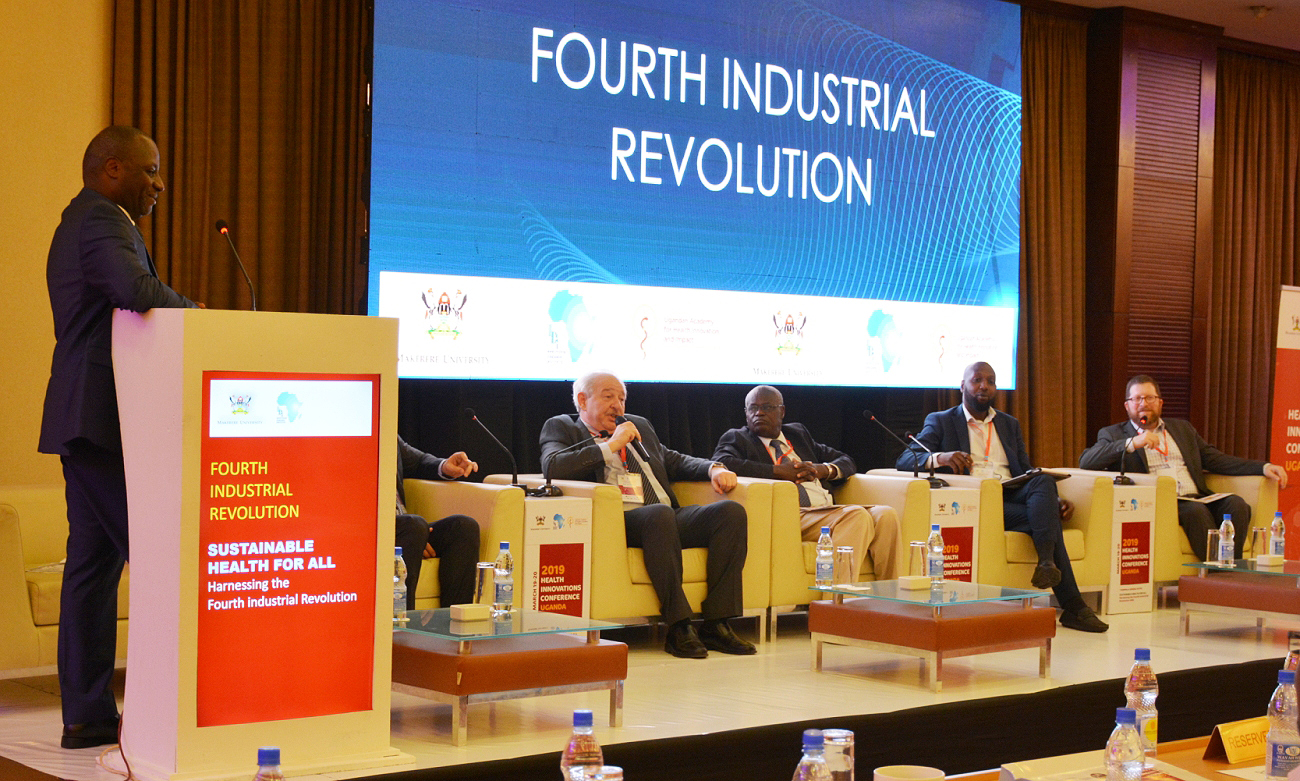
Today, healthcare organizations are facing unprecedented challenges to improve quality and access to health care service packages. As such, innovations in health have become a major focus once again with the goal to reduce health care disparities.
In order to address the above need, The Ugandan Academy for Health Innovations and Impact in March 2019, hosted a successful second edition of the Annual Health Innovations Conference at Serena Kampala hotel. The event was attended by 270 participants, an upsurge from last year’s 175 participants.
The two-day event was attended by implementing partners from The National Institute of Allergy and Infectious Diseases (NIAID), Clarke Group, Case Hospital, Centers for Diseases Control and Prevention (CDC), United States Agency for International Development (USAID), Andela Uganda, Innovation Village and Janssen, the Pharmaceutical Companies of Johnson and Johnson among others.

This year’s theme “Sustainable Health for all: Harnessing the fourth Industrial revolution” featured presentations and demonstrations aimed at bringing health innovations to the last mile and ensuring that scale up is achieved for start-up innovations.
During the opening ceremony which was led by the Deputy Vice Chancellor for Academic Affairs at Makerere University, Prof. Umar Kakumba appreciated the Ugandan Academy and the Infectious Diseases Institute (IDI) for working towards research and addressing healthcare service delivery needs in Uganda.
“I continue to thank the Infectious Diseases Institute, The Ugandan Academy, National Institutes of Health (NIH) and all the other partners who have been very generous with their support and in turn boosted the image of Makerere University,” he said.

The lineup of reputable speakers included Kwame Rugunda (the chief executive officer of Crypto Savannah and head of the Block chain Association of Uganda), a technology entrepreneur, Prof. Elly Katabira (founder of the first HIV clinic and The Ugandan Academy Board co-chair) and Brian Gitta, founder of Matibabu a non-invasive device that detects malaria in less than two minutes.
Also present was Solomon King, the founder of Fundi Bots, who called upon developers to always remember the end user when innovating – “The danger of being a techie, is your infatuation with your product, but you should always remember the end user has to be at the center of your thinking.”
Unique to this year’s conference was a 17-hour Hack-a-thon spearheaded by Andela Uganda – #AndelaIDIHealthHack. Culminating out of the hack-a-thon were three fan favorite groups which displayed applications to address, breast cancer and sexual reproductive health. Among the three, the overall champion of the health hack was team Cephor who designed a Breast Cancer Glove kit which can be used for breast cancer screening.

As a climax to the conference, David Blair the Chief Technology Officer of Andela handed over awards to the three winning teams with team Cephor receiving six months’ worth of technical support from the Innovation Village, to improve their idea and gauge feasibility. Other winners in the abstract presentations, both oral and poster, included Alpha Doctors, whose innovation revolves around tele-medicine, Mbabara University’s Neonatal resuscitator designed to reduce deaths in newborns due to failed breathing as well as William Wasswa also of Mbarara who presented on a pap smear automated analysis tool for diagnosis and classification of Cervical cancer from pap-smear Images. The awards included a Hisense television, cash prizes ranging from UGX500,000 to UGX2,000,000.
The conference also featured a live painter Rolands Tibirusya who visualized the proceedings through painting on a canvas. Lastly, for those that missed the HIV history exhibition which was displayed at the Uganda museum in partnership with The AIDS Support Organization (TASO) and Uganda AIDS Commission in December 2018 and January 2019, were able to view an abridged version of it at the conference.

The closing ceremony was presided over by, Prof. Elly Katabira, the Board Co-Chair of the Ugandan Academy who urged young innovators to take heart and continue to incessantly pursue their goals. “I might be skeptical to endorse your idea because am scared it may fail and people say that’s the professor who endorsed the failed project so I might discourage you, but I encourage you to politely tell me that am wrong and work hard to see that its completed.”
Article by Tracy Ahumuza, Communications Officer, The Uganda Academy for Health Innovation and Impact


General
Breaking the Silence on Digital and Gender-Based Violence: Male Changemakers Lead Makerere University’s Strides for Change


By Eric Tumwesigye and Cynthia Ayaa Komakec
Introduction
Gender-based violence (GBV) remains one of the most pervasive and entrenched human rights violations in Uganda. Within institutions of higher learning—spaces intended to cultivate intellectual rigor, ethical leadership, and civic responsibility—GBV persists in both visible and covert forms, often sustained by silence, stigma, and institutional inertia. As Uganda’s oldest and most influential public university, Makerere University bears a dual responsibility: to respond decisively to these challenges and to model transformative, ethical leadership for the nation.
It is within this context that the Strides for Change walk, led by 16 male changemakers during the global 16 Days of Activism against Gender-Based Violence, emerges as a strategic and symbolic intervention. The initiative addresses both digital and offline forms of violence against women and girls and aligns with the 2025 global theme, UNiTE to End Digital Violence Against All Women and Girls. It reflects a growing recognition that gendered harm increasingly transcends physical boundaries, manifesting in digital spaces in ways that exacerbate the vulnerabilities of female students, staff, and young women across Uganda.

Linking Digital Violence with Physical and Psychological Harm
As Uganda’s digital ecosystem continues to expand, emergent forms of violence have surfaced that intersect with, reinforce, and intensify established patterns of gender-based violence (GBV). Research undertaken by the Makerere University Institute of Gender and Development Studies (IGDS), in collaboration with the Women of Uganda Network (WOUGNET), documents the breadth and complexity of online GBV practices prevalent within the Ugandan context. Their study identifies a wide spectrum of digitally mediated abuses, including the non-consensual dissemination of intimate images (commonly referred to as revenge pornography), online sexual harassment, cyberbullying, stalking, hacking, doxing, digital surveillance, sexist and degrading commentary, trolling, impersonation, identity theft, and threats circulated through social media platforms (IGDS and WOUGNET, 2021, p. 18).

Crucially, these manifestations of digital violence are not confined to virtual environments. Rather, they produce tangible and often severe consequences that extend into survivors’ offline lives. Empirical evidence indicates that women are disproportionately targeted by online GBV compared to men, reflecting entrenched gendered power asymmetries that are reproduced and amplified within digital spaces (IGDS and WOUGWET, 2021, p. 34). Survivours frequently experience profound psychological harm, including heightened anxiety, depression, chronic fear, and diminished self-esteem (Monteagudo Martinez et al, 2020). In response to persistent victimisation, many withdraw from social, academic, and professional spheres as a protective strategy, while others face significant economic repercussions, such as job loss or reduced income, arising from stigma, reputational damage, and trauma.
Within university settings, the consequences of digital violence may escalate further, in some instances culminating in threats of, or exposure to, physical harm (Pew Research Center, 2014). Oksanen et al. (2022) demonstrate that online hostility and harassment within academic environments are associated with acute psychological distress and deteriorating social relations at work. As the authors observe, “victims experienced higher psychological distress and lower perceived social support at work—indicative of social isolation and disengagement in academic roles” (Oksanen et al., 2022, pp. 541–567). Such findings underscore the manner in which sustained online harassment undermines not only individual well-being but also academic participation and institutional belonging.

Similarly, Cassidy, Faucher, and Jackson’s (2017) examination of cyberbullying in higher education institutions highlights the pervasive sense of insecurity engendered by digitally mediated abuse. Their study reports that “victims reported stress, anxiety, and threats to safety, reinforcing that harassment in academic settings is not merely emotional but also threatens well-being” (Cassidy, et al, 2017, p. 888). These dynamics contribute to academic disengagement, social isolation, and long-term reputational damage, with potentially enduring implications for future employment and career trajectories. Taken together, this body of evidence illustrates that digital violence functions as an extension of physical and emotional abuse, forming part of a broader continuum of harm. By eroding women’s psychological health, social participation, academic engagement, and professional prospects, online GBV undermines women’s safety, dignity, and capacity to participate fully in public and academic life. Addressing digital violence, therefore, is not merely a matter of regulating online conduct but a critical component of broader efforts to combat gender-based violence in all its interconnected forms.
The Role of Male Changemakers: Transforming Culture and Accountability
The Strides for Change campaign strategically positions men as visible allies in gender equality advocacy—not to displace women’s lived experiences, but to confront and dismantle patriarchal norms from within. Male changemakers play a pivotal role in advancing cultural transformation and accountability through three interrelated contributions.
First, they reframe gender-based violence (GBV) as a structural and societal concern rather than a “women’s issue,” underscoring its profound implications for human rights, social justice, and national development. This perspective is exemplified by Dr. Jimmy Spire Ssentogo, one of the 16 male changemakers commemorated during the 16 Days of Activism Against Gender-Based Violence. Drawing on his experience as an active social media user, he highlights the increasing prevalence of body shaming, slut shaming, and other forms of online abuse that silence girls and women and undermine their meaningful digital participation. He calls on all social media users to recognise, challenge, and reject such harmful language, emphasising that the creation of safe and inclusive online spaces for women is a shared societal responsibility.


Second, male changemakers model positive and accountable masculinities by publicly rejecting norms that equate masculinity with dominance, entitlement, or complicity in abuse. Ugandan musician and producer Navio articulates this stance by acknowledging the cultural power of artistic expression, stating that his lyrics will not perpetuate harm and that consent represents “the rhythm of respect”—not only in creative spaces, but in everyday life. Such public commitments challenge harmful gender norms while offering alternative, ethical frameworks for masculine identity.
Third, male changemakers broaden the reach and effectiveness of advocacy by engaging other men in critical dialogue, often within spaces that women may be unable to access safely or strategically. This engagement is strengthened through intellectual and academic platforms, including presentations at the Makerere University Men’s Forum, where evolving scholarship on masculinity is examined and translated into practical strategies for social transformation. Through this combination of peer engagement, cultural influence, and scholarly reflection, male changemakers contribute meaningfully to the collective effort to prevent GBV and advance gender justice.
Institutional Commitments to Gender Equality and the Elimination of Sexual Harassment
Through the Gender Mainstreaming Directorate (GMD), Makerere University continues to demonstrate institutional leadership in advancing gender equality and addressing sexual harassment. The launch of the Strides for Change campaign reaffirmed the University’s commitment to the following priority areas:

Strengthening Reporting and Accountability Mechanisms
Makerere University has established confidential, survivour-centred reporting and redress systems to ensure the timely investigation and adjudication of GBV cases. These mechanisms enforce stringent sanctions, including disciplinary action, against individuals who engage in sexual exploitation, harassment, or the solicitation of sexual favours in exchange for academic or professional advancement. The GMD supports the continuous operationalisation and improvement of these accountability frameworks.
Expanding Psychosocial and Legal Support for Survivours
The University is committed to enhancing access to high-quality psychosocial care, legal aid, and referral services for survivours of GBV. The GMD coordinates capacity-building initiatives for service providers and strengthens partnerships with relevant institutions to ensure comprehensive and survivours-centred support.
Institutionalising Male Allyship and Transformative Engagement
Makerere University is advancing a structured approach to male allyship by formalising male and female champion networks that collaborate in dialogue, advocacy, and behavioural change initiatives. This includes integrating men into gender training programmes and encouraging visible public commitments, such as participation in the Strides for Change walk. The GMD leads the design, implementation, and evaluation of these transformative engagement strategies.
Conclusion
Makerere University’s Strides for Change walk and the male changemakers programme, implemented in partnership with the Embassy of Sweden and the United Nations Population Fund, represent a significant milestone in the fight against gender-based violence. By confronting the interconnected realities of digital and physical violence, addressing entrenched patterns of sexual harassment, and mobilising male allies as agents of change, the University sets a compelling precedent for institutional and national transformation.

Ending GBV is not solely a policy imperative; it is a cultural, structural, and ethical commitment. These initiatives align with Makerere University’s broader strategic commitment to inclusive excellence, ethical leadership, and safeguarding the well-being of its academic community.
When men stand in solidarity with women, when institutions centre survivours voices, and when society collectively rejects the normalisation of violence, Uganda moves closer to a future in which every woman and girl can pursue her aspirations free from fear, intimidation, and harm. The Strides for Change campaign is therefore more than a march—it is a call to conscience, a model for action, and a promise of a safer and more just society for generations to come.
Acknowledgement
The Gender Mainstreaming Directorate, Makerere University, extends its appreciation to the Embassy of Sweden in Uganda, the United Nations Population Fund (UNFPA), and all development partners who participated in the Strides for Change walk and the series of activities conducted during the 16 Days of Activism against Gender-Based Violence. Together, we reaffirm our commitment to a comprehensive, 360-degree approach towards achieving zero tolerance for gender-based violence.
References:-
- Cassidy Wanda, Faucher Chantal and Jackson Margaret (2017): Adversity in University: Cyberbullying and Its Impacts on Students, Faculty and Administrators, International Journal of Environmental Research and Public Health journal, Article 14(8) page 888
- Institute of Women and Development Studies and Women of Uganda Network (2021): Not Just a Trend: Assessing the Types, Spread and the Impact of Online Gender Based Violence in Uganda, Research Report.
- Monteagudo Martinez (2020): Cyberbullying in the University Setting. Relationship With Emotional Problems and Adaptation to the University, Frontiers in Psychology journal, Article: 10:3074
- Oksanen et al. (2022) — Hate and harassment in academia: the rising concern of the online environment, Vol. 84, pages 541 – 567
- Pew Research Center (2014): Part 4: The Aftermath of Online Harassment, Pew Research Center, Published on October 22, 2014
Eric Tumwesigye and Cynthia Ayaa Komakec are the Senior Gender Officer and Gender Officer respectively at the Gender Mainstreaming Directorate, Makerere University
General
UNDP and JNLC hold training in Fort Portal: Participants equipped with skills in Advocacy and Gender Equality, Team Building, Inclusive Leadership, and Financial Literacy
By Charles Iga
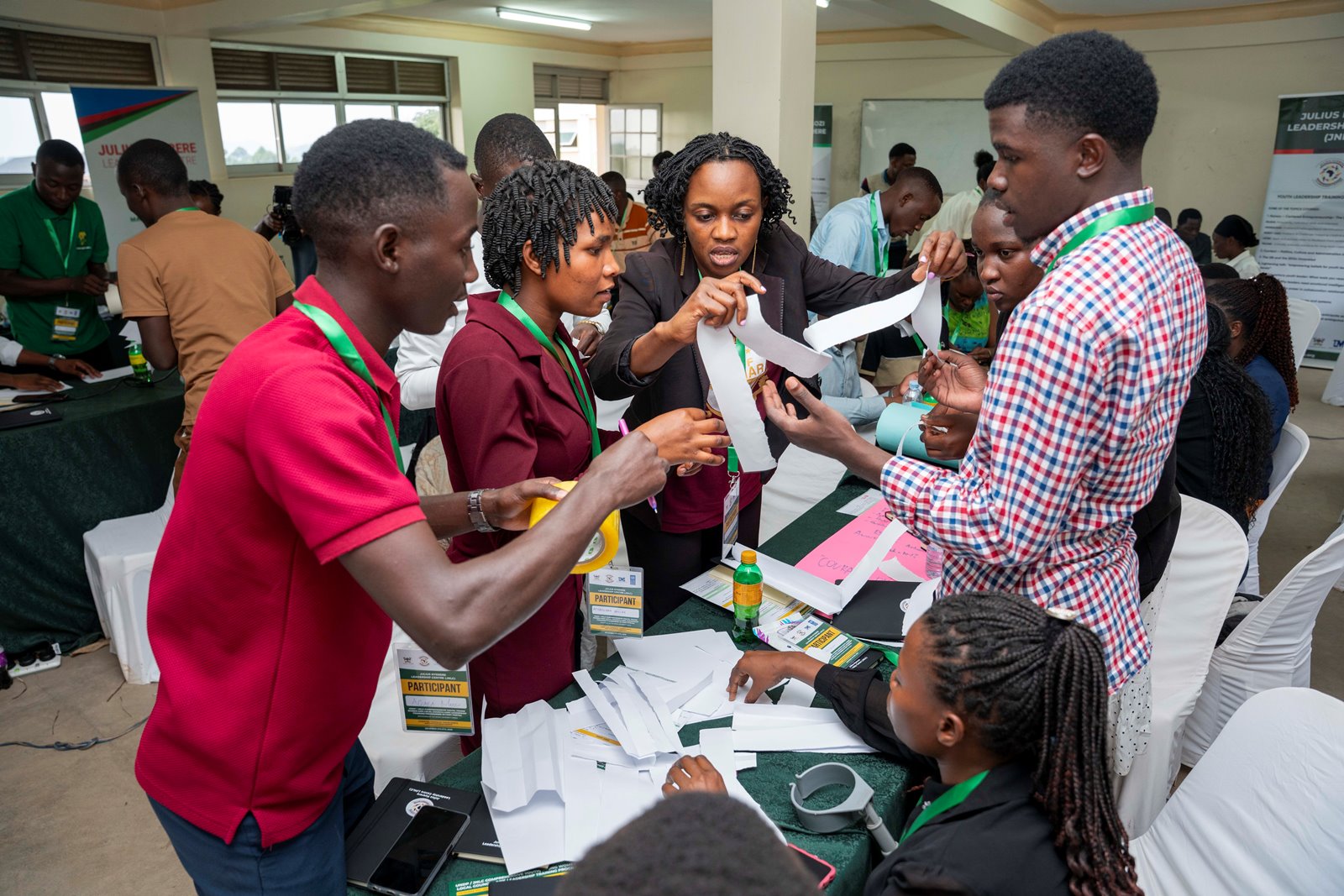
Fort Portal-Uganda: On 5th December 2025, more than 70 emerging leaders convened to participate in the second day of the United Nations Development Programme (UNDP) and the Julius Nyerere Leadership Centre (JNLC) comprehensive leadership training for youth, young women and local councilors.
Hosted at Mountains of the Moon University (MMU) in Fort Portal, the training focused on deepening the leadership skills of young leaders as they navigate the increasingly complex governance and development landscape.
Building on the knowledge acquired during the first day of the workshop, on the second day (5th December 2025), the participants engaged in interactive sessions covering problem-solving, team building, advocacy, gender equality, media literacy, self-marketing, and financial literacy in leadership.
The discussions challenged the young leaders to sharpen their mindsets, broaden their spheres of influence, and strengthen their capacity to champion inclusive and sustainable community development.
Advocacy and Gender Equality: Understanding gender dynamics and women acceptance in leadership
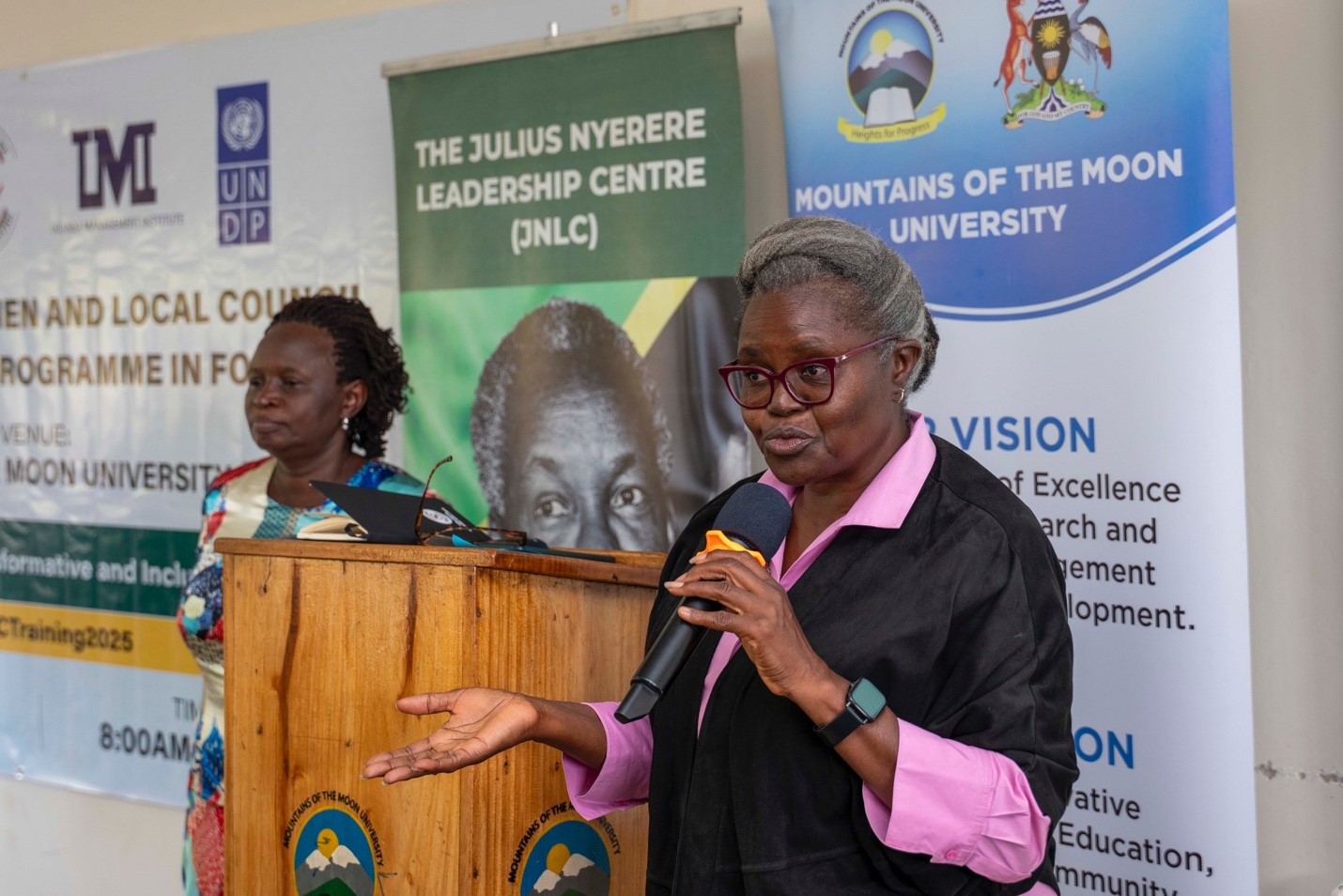
Delivering an informative presentation titled, Advocacy and Gender Equality: Understanding Gender Dynamics and Women’s Acceptance in Leadership, the Guest Speaker- Professor Consolata Kabonesa highlighted that women remain underrepresented in leadership due to entrenched power structures shaped by societal norms and cultural traditions.
Professor Kabonesa emphasized that leadership depends not only on individual ability, but also on the systems that determine who is recognized and legitimized as a leader.
“The roles of women in leadership remain under-represented because power is shaped and perpetuated by societal norms and traditions that socialize women and men differently. These norms influence how leadership roles are assumed and who is considered legitimate to lead,” she explained.
How Socialization Shapes Leadership Pathways of Boys and Girls
Professor Kabonesa highlighted that socialization shapes leadership opportunities, with boys typically encouraged to be assertive, while girls are guided towards empathy and collaboration. This unequal conditioning reinforces gender stereotypes, often undermining women’s authority and sustaining male-dominated leadership structures. She advocated for mentorship as a vital tool, illustrating how role models help girls balance assertiveness with empathy.
She noted that early participation in councils, debates, and leadership roles develops skills, challenges biases, and empowers girls to pursue leadership in traditionally male-dominated fields. She articulated that integrating discussions on gender dynamics into educational curricula equips young girls to recognize and challenge societal norms that limit their potential, while fostering resilience against the discouragements they may face.
Inclusive Leadership: Engaging both Women and Men
Professor Kabonesa articulated that achieving gender equality in leadership is not solely an issue for women, but a collective responsibility. She underscored that balancing participation between men and women fosters mutual understanding, shared accountability, and collaborative problem-solving. She pointed out that inclusive leadership models prevent the isolation of women’s perspectives, ensures all voices are heard, and ultimately contribute to stronger, more equitable, and sustainable leadership that reflects the diversity and potential of society.
“Balancing participation across genders is critical. It helps us understand gender issues collectively, prevents the isolation of women’s experiences, and encourages men and women to address biases together. This approach will ensure that women are not left behind and will foster inclusive leadership models that benefit society as a whole.”
Leading within the Existing Leadership Structures
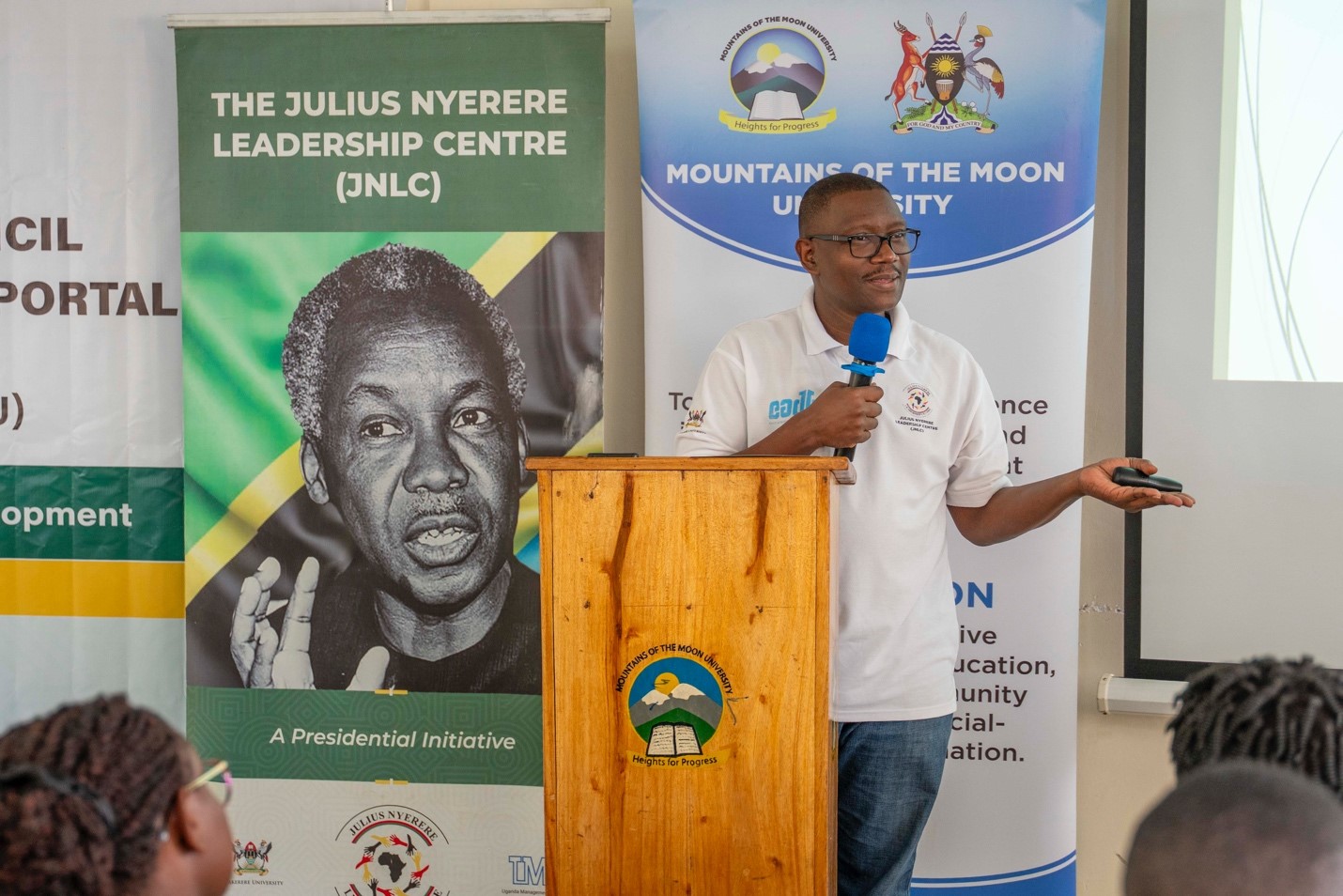
Expounding on the existing leadership structures and the power of relationships, Mr. Henry Kasacca, the Director of Dialogue and Democracy, explained that people support leaders not for their titles, but for the meaningful connections they build. He stated that effective leadership depends on listening, connecting, and collaborating across diverse spaces. “Leadership is not about the title you hold; it is about the relationships you build. There are people who will support you simply because you have invested time in connecting with them,” he said.
Mr. Kasacca stressed that leaders must navigate the organizational power structures by understanding where influence lies and how decisions are made. He noted that strategic thinking, long-term planning, and aligning ideas with action are key to effective leadership, while qualities such as listening, collaboration, kindness, and clarity of purpose are essential for achieving meaningful organizational and community impact.
He urged participants to maintain a clear vision, develop well-crafted plans addressing both immediate and long-term needs, and combine relationship-building with an understanding of power dynamics to become effective, and inclusive change-makers.
Strategic Thinking: Decision making and Problem Solving Techniques
Guiding participants on strategic thinking for decision-making and problem-solving techniques for effective leadership, Ms. Allen Baguma, a facilitator at JNLC and Founder of the Future Learning Centre (FLC) emphasized that strong leadership is anchored in intentional thinking, clear judgment, and the ability to translate vision into well-considered action.
“A strong team is built on clearly defined roles, an understanding of team dynamics, and psychological safety. When people feel safe to speak, contribute ideas, and make mistakes without fear, teams perform better,” she said.
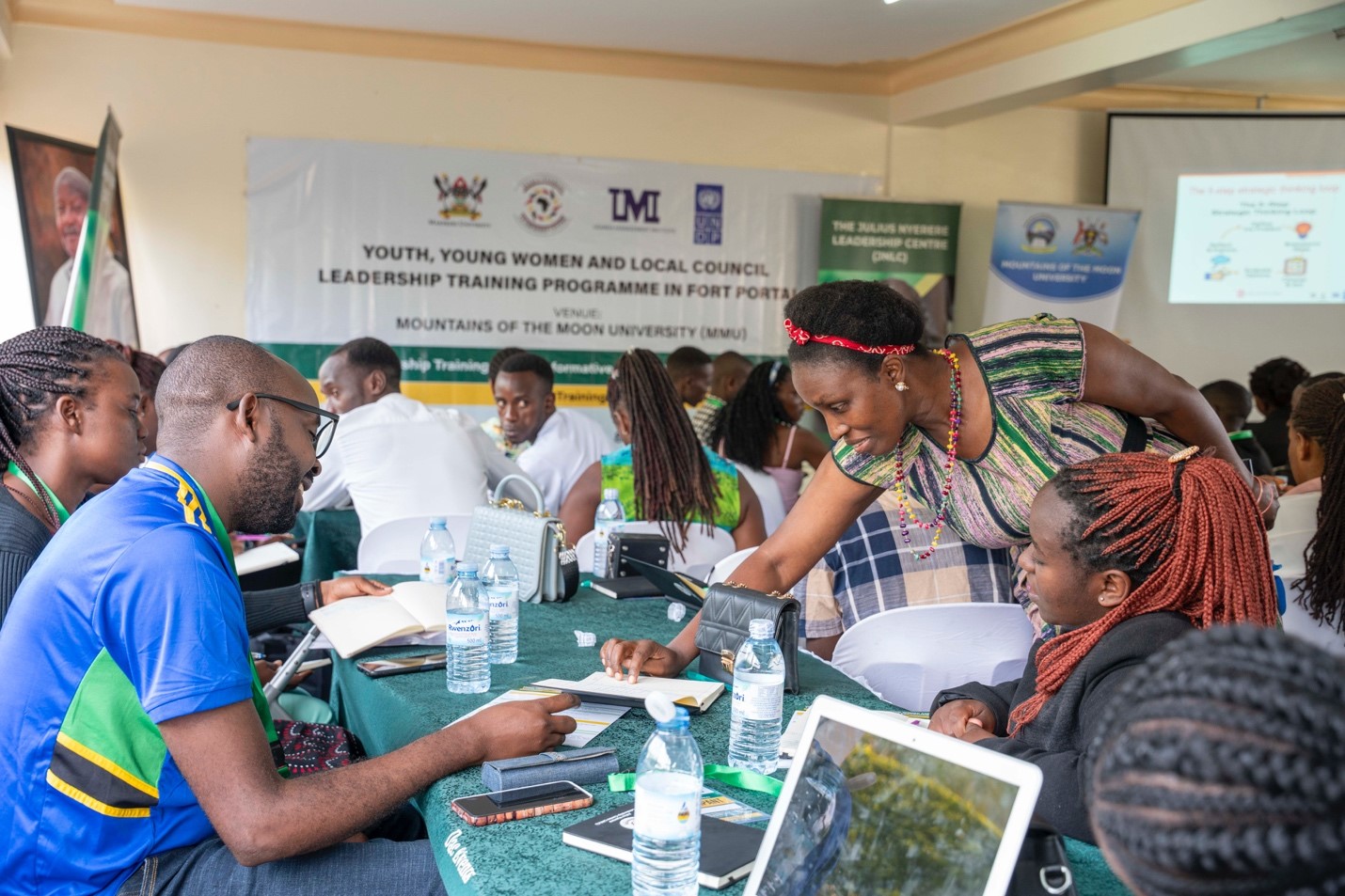
Building Strong Teams through Clarity and Trust
Ms. Baguma emphasized the importance of clearly defined roles within teams, explaining that role clarity enhances accountability, minimizes conflict, and boosts overall performance. She observed that effective leadership requires understanding of team dynamics and fostering psychological safety, where members feel valued, respected, and confident to share ideas without fear of judgment.
She added that effective team building fosters social interaction, a sense of belonging, and a shared pro-social purpose. She noted that teams perform best when individuals are united by common goals and mutual trust.
Leadership growth across the five (5) levels
Citing John Maxwell’s five levels of leadership namely position, permission, production, people development, and pinnacle, Ms. Baguma explained that leadership growth is a progressive journey, moving from reliance on position to influence built through relationships, results, people development, and ultimately, value-based leadership that inspires others beyond formal structures.
Applying Strategic Thinking to Real-Life Challenges
Ms. Baguma guided participants through a practical exercise on strategic thinking, tasking them to identify personal challenges, explore innovative solutions, and evaluate their feasibility and impact. The exercise highlighted the importance of strategic decision-making in enabling leaders to address both personal and community challenges effectively.
Team Building for Effective Leadership

Mr. Ronald Ssazi, a facilitator and leadership trainer revealed that leadership extends beyond authority and depends on creating genuine connections. He stressed that building a strong and committed team involves engagement of members, which emotionally sparks curiosity and draws people in.
Mr. Ssazi explained that storytelling bridges attention to understanding. He illustrated this with the story of the youngest king of the Toro Kingdom, crowned at the age of three and now navigating life as a father at 33. Such narratives, he observed, showcase growth, resilience, and cultural awareness, humanizing leaders and making leadership relatable. “Leadership is not merely a title, but a journey of responsibility and influence,” he said.
He emphasized that leadership thrives in communities. Effective leaders, he explained, consistently share updates, insights, and experiences with their teams. Strategic use of social media, for example, allows leaders to post short, regular updates capturing daily activities, which builds a loyal and engaged audience that evolves into a network supporting initiatives, sharing knowledge, and amplifying impact.
“Leadership is not solitary; it thrives in communities. Effective leaders consistently share updates, insights, and experiences with their teams and followers. When used strategically, social media becomes a powerful tool for team building,” he said.
Preserving Culture while embracing modernity and team building
Mr. Ssazi highlighted that modern leaders have unprecedented resources at their disposal. He explained that tools such as Artificial Intelligence (AI), social media analytics, and online platforms can be used to strengthen teams. AI, he noted, can help craft content that resonates with audiences and analyze engagement to refine communication strategies. He stressed that leaders who effectively harness these tools can expand their reach and influence while remaining authentic and true to their values.
Mr. Ssazi emphasized that effective leadership balances modern strategies with cultural preservation, using community history and traditions. “Team building and leadership are about values and vision, balancing modern strategies with cultural heritage to foster pride, cohesion, and inspired and well-rounded teams.”
He stated that whereas true leadership is demonstrated through action, effective team building requires creation of genuine opportunities for participation and contribution. “Leaders who share opportunities, invite collaboration, and encourage feedback, transform their teams into active contributors,” he said. He added that assessing engagement, adapting strategies, and celebrating achievements fosters a culture of involvement and accountability.
Media Literacy: Promoting and Marketing Leadership through Social Media
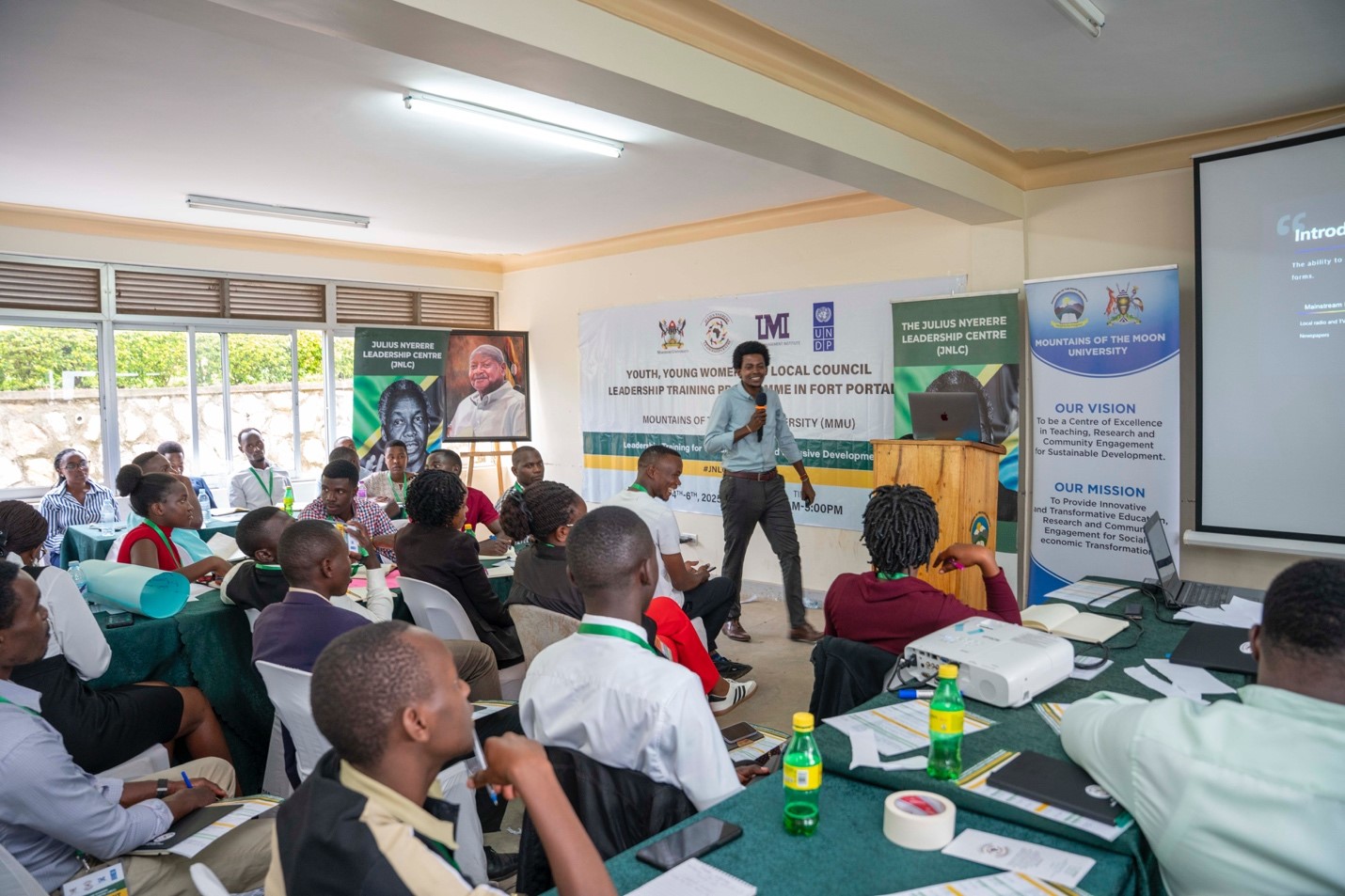
Describing digital competence as an essential leadership skill, Mr. Ivan Ssegawa Sebastian, rallied participants to effectively utilize social media to promote and market their leadership roles and activities. He observed that most of the participants had smartphones, and were using social media platforms such as Facebook, WhatsApp, LinkedIn, X, Instagram, and TikTok. Noting that the key challenge was not access, he challenged the participants on the intentional, responsible and strategic use of social media tools.
Mr. Ssegawa underscored the influence of social media, citing its vast global and national reach and its role in driving social and political movements. He described the Internet as a new battleground for leadership visibility, and provided guidance on the ethical use of artificial intelligence. He tipped the participants on authentic personal branding and effective content creation using emotion, story-telling, and a clear call to action.
Financial Literacy in Leadership: Managing financial resources for Effective leadership
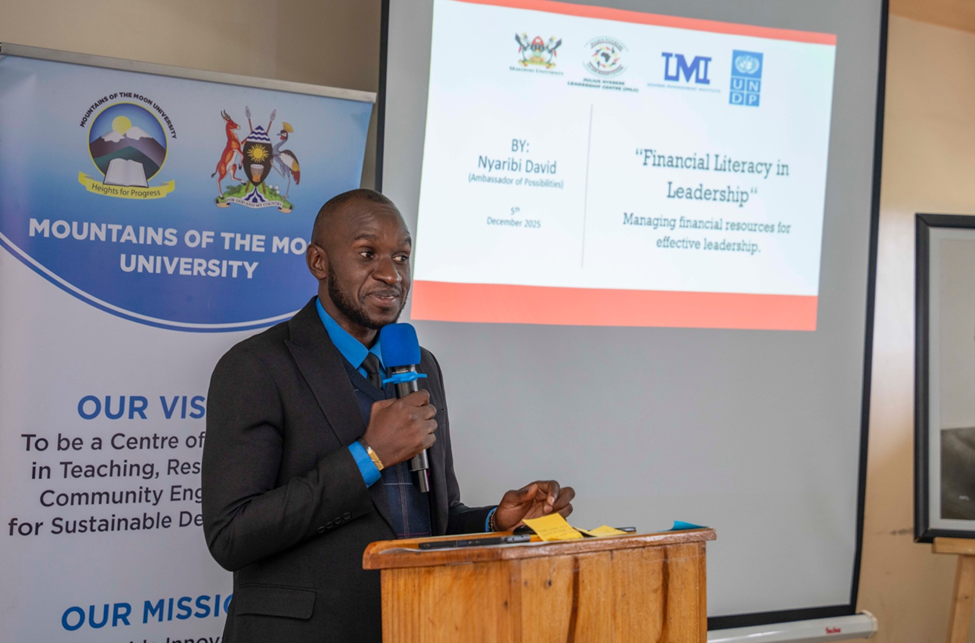
Mr. David Nyaribi, Specialist at ActionAid International, explored the vital connection between financial literacy and effective leadership. During this session, Mr. Nyaribi focused on equipping participants with essential skills to manage financial resources effectively, both at a personal level, and in leadership roles.
He reminded participants that every leader must navigate the reality of unlimited wants and limited resources—especially time and money. “You may acquire more possessions in life,” he cautioned, “but time once lost is gone forever.”
He described the four dimensions that every human being must manage namely physical, cognitive, spiritual, and socio-economic. He emphasized that the socio-economic aspect, which includes financial capacity, is inseparable from leadership. Quoting Tony Robbins, he reiterated: “You either master money, or money masters you.”
The Flight Analogy: How Financial Choices Shape Life Stages
Mr. Nyaribi used a flight analogy to indicate how financial decisions shape life’s stages. From Preparation (0–20 years), building values, skills, and education, to Take-off (20–30 years), where career choices and earnings begin. Stability (30–50 years) is for investing and building systems, Descent (50–60 years) for consolidating and planning succession, and Landing (70+ years) for reflection and enjoying the results.
Impressed that most of the participants in the UNDP-JNLC leadership training workshop were in the preparation or take-off stages, Mr. Nyaribi advised them to invest in education, skills, and self-development. “Many people struggle later because they wasted their take-off stage,” he revealed.
Pillars of Personal Finance every leader must master
Mr. Nyaribi reminded the participants that financial literacy is not just a personal asset, but a leadership necessity. Underscoring the power of discipline and mindset, he urged young leaders to focus on both earning money and building true wealth-assets that empower them to uplift their communities. Mr. Nyaribi highlighted five (5) core financial principles that are essential for responsible leadership:
- Earning through either services or products;
- Saving first as a disciplined priority rather than keeping what remains after spending;
- Investing to turn savings into income-generating assets;
- Spending wisely to avoid living beyond one’s means; and
- Protecting gains through careful planning and accountability.
-

 Research2 weeks ago
Makerere University Launches Knowledge-Sharing Platform to Drive Innovation and Economic Growth
-
 Business & Management2 weeks ago
EfD Uganda Marks 2025 Milestones, Sets Strategic Path for 2025–2029
-

 Health2 weeks ago
Makerere University and Tsinghua University Launch Landmark China–Uganda Joint Laboratory on Natural Disaster Monitoring and Early Warning
-
 Education2 weeks ago
Facilitating Access and Participation through Higher Education Access Programmes and Connected Education for Students with Refugee Backgrounds: A Global South Delphi Study
-

 Business & Management2 weeks ago
Makerere University CoBAMS Staff celebrate 2025 achievements