
General
Mak Delegation to Malaysia lays firm Foundation for Collaborations

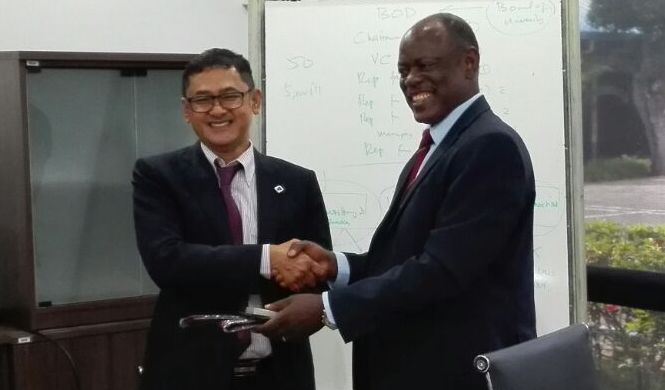
Makerere University is set to establish partnerships with universities in Malaysia to extend each other’s areas of interest.
This follows a benchmarking mission to the University of Kuala Lumpur, the University of Putra Malaysia Holdings and the University of Putra Malaysia, by a delegation of four members of Staff from Makerere University led by the Deputy Vice Chancellor Finance and Administration, Prof. Barnabas Nawangwe. The other members of the delegation were Prof. David Owiny Okello, Deputy Director, Directorate of Research and Graduate Training; Dr. Hussein Nsamba Kisiki, Lecturer, Department of Chemistry, CONAS; and Mr. Moses Nadiope, Ag. CEO, Makerere University Holdings Company Ltd.
The objectives of the bench-marking visit were to:
a. Strengthen capacity of University Management in management of innovations and commercialization of research;
b. Benchmark best practices in the area of research commercialization and innovation at universities in countries with identical socio-economic conditions to Uganda, which have recorded success in that area;
c. Explore opportunities for collaboration between Makerere University and the leading Malaysian universities, and between Makerere University Holdings Company Ltd. and similar entrepreneurial ventures at the Malaysian universities.
At Putra Malaysia Holdings (UPMHOLDINGS) the delegation was received by the Managing Director, Prof. Dr. Husaini Omar and the Chief Executive Officer, Dr. Mohd Kamil Yusoff. According to Prof. Nawangwe, “After this visit, the Mak delegation reaffirmed that a university holding company is a viable way of implementing university investments. Its success greatly depends on the initial support from the university in ensuring maximum independence of the Board in taking business decisions.” UPMHOLDINGS handles student accommodation, catering, events management, space rentals and laboratory services.
 At the University of Putra Malaysia (UPM), the delegation was received by and held discussions with the Deputy Vice Chancellor (Research and Innovation), Prof. Dato Dr. Mohd Azmi Mohd Lila, who was joined by Prof. Dato Mohd Yazid Manap, Director of Halal Products Research Institute, Prof. Dr. Taufiq Yap Yun Hin, Head of Laboratory for Sustainable Bioenergy and Chemicals Catalysis Science and Technology Research Centre, Ms Shahriah member, Head of Marketing and Branding section among others.
The discussions concentrated on the UPM experience in research and innovations, technology transfer between university and industry and commercialization of research. UPM, originally established as an agricultural institute, was later transformed into a multi-disciplinary university, mainly funded by Government. “From this visit, we appreciated that recognition of Research Productivity is a major incentive to researchers and a dedicated IP and research commercialization office is key to success,” explains Prof. Nawangwe. At the end of the meetings at UPM, the two factions agreed to sign a Memorandum of Understanding to enhance further collaboration between the two universities. This process has started.
The delegation then proceeded to the main campus/Chancellory and the Malaysian Institute of Chemical and Bioengineering Technology (MICET) of the University of Kuala Lumpur on 9th and 11th November respectively. At the main campus located in central Kuala Lumpur, the Mak delegation held discussions with the UniKL delegation led by Prof. Prof. Dato. HJ. Ahmad Zahir HJ. Mokhtar, Deputy President (International, Industrial and Institutional Partnership). “Here we learnt that Malaysia’s heavy investment in the education sector since independence is paying dividends. It was also evident that the collaboration between Government, private sector and universities is key to industrialization and development of the service industry,” said the Deputy Vice Chancellor.
Prof. Nawangwe further explains that these Universities were delighted to hear about the developments at Makerere University and the possible areas of collaboration especially in research/innovations and Staff/student exchanges. “We intend to move aggressively in ensuring that we sign an MoU and cement relationships with these universities. We shall be approaching the different colleges to see how to map out the route,” he asserted.
The benchmarking trip to Malaysian universities provided useful lessons for Makerere University’s current programme of diversification of revenue sources, especially the way in which commercialization is handled in conditions of a developing economy. The trip was sponsored by the Centre for Research in Transport and Transportation Technologies (CRTT).
Please see Downloads for detailed report
Article by Mak Public Relations Office


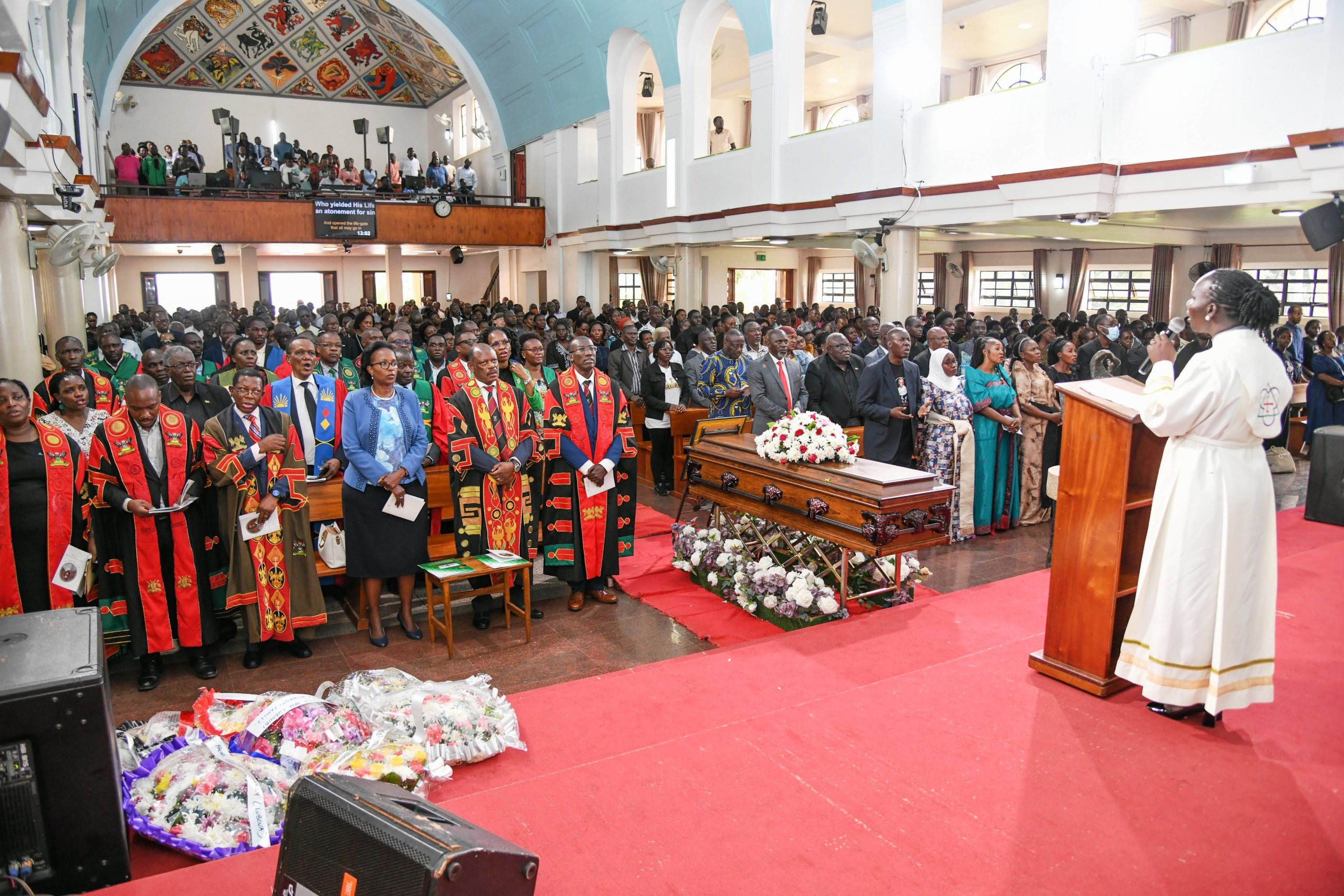
On Wednesday 16th July 2025, Makerere University lost one of its most cherished sons, Professor Livingstone Sserwadda Luboobi. Described as a mathematician, academic leader, and humble servant, Professor Luboobi devoted more than five decades to the university, rising through the ranks to become Vice Chancellor, and leaving a legacy defined by simplicity, service, and scholarship.
Born to Lameka Serwadda and Sanyu Serwadda on 25th December 1944 in Mitondo, Kalisizo, Kyotera District, Professor Luboobi’s academic career begun as a third-year student at Makerere and continued with unwavering loyalty until his passing. His life’s work reflected not only a commitment to mathematics but also nurturing generations of scholars and leaders across Uganda and beyond.
A funeral service was held in his honour at St. Francis Chapel, Makerere University on 18th July 2025. It was a moment of solemn remembrance and heartfelt tribute. Rev. Canon Dr. John Senyonyi delivered the sermon titled “Only God Knows,” reminding mourners of the mystery and grace of life’s journey. Rev. Canon Geoffrey Byarugaba represented the Kampala Diocese at the service, while former St. Francis Chaplain, Rev. Dr. Canon Johnson Ebong thanked Professor Luboobi for spearheading the Chapel’s expansion. Friends, colleagues, and family members filled the chapel, joined in mourning but also in gratitude for a life that had deeply touched theirs.
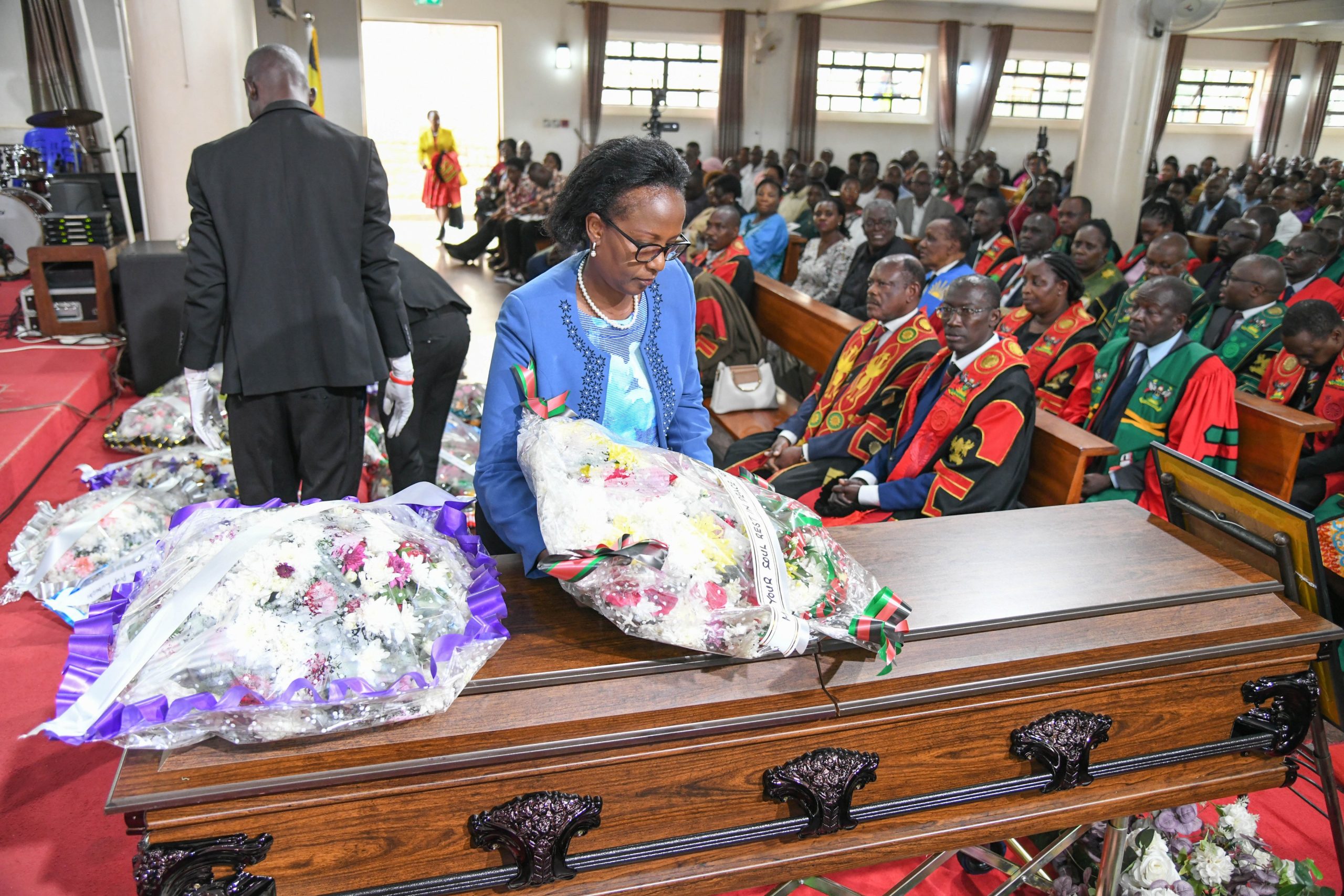
Mrs. Lorna Magara, Chairperson of the University Council, spoke movingly about Professor Luboobi’s faithfulness, likening his life to the biblical call in Mark 10:43, “Whoever wants to become great among you must be your servant.”
In his condolence message, the Vice Chancellor, Professor Barnabas Nawangwe, hailed Professor Luboobi as a visionary leader whose legacy is deeply woven into Makerere’s identity as a research-led institution. He credited Professor Luboobi with laying the groundwork for a culture of inquiry—championing graduate programmes, encouraging doctoral training, and fostering international collaborations that strengthened the university’s research profile. “He believed in building systems, not just structures,” noting that many of Makerere’s current research policies stem from his leadership. Even in retirement, Professor Luboobi remained a source of wisdom and guidance, quietly shaping the future of the university he so deeply loved.
Speaker after speaker painted a portrait of a man who led not by pomp, but by quiet strength and deep conviction. The Principal, Professor Winston Tumps Ireeta, speaking on behalf of the College of Natural Sciences (CoNAS), described Professor Luboobi as a foundational figure whose influence is deeply etched in the structures and spirit of the college. He spoke with emotion about Luboobi’s unwavering commitment to academic integrity and his belief in the power of mentorship.
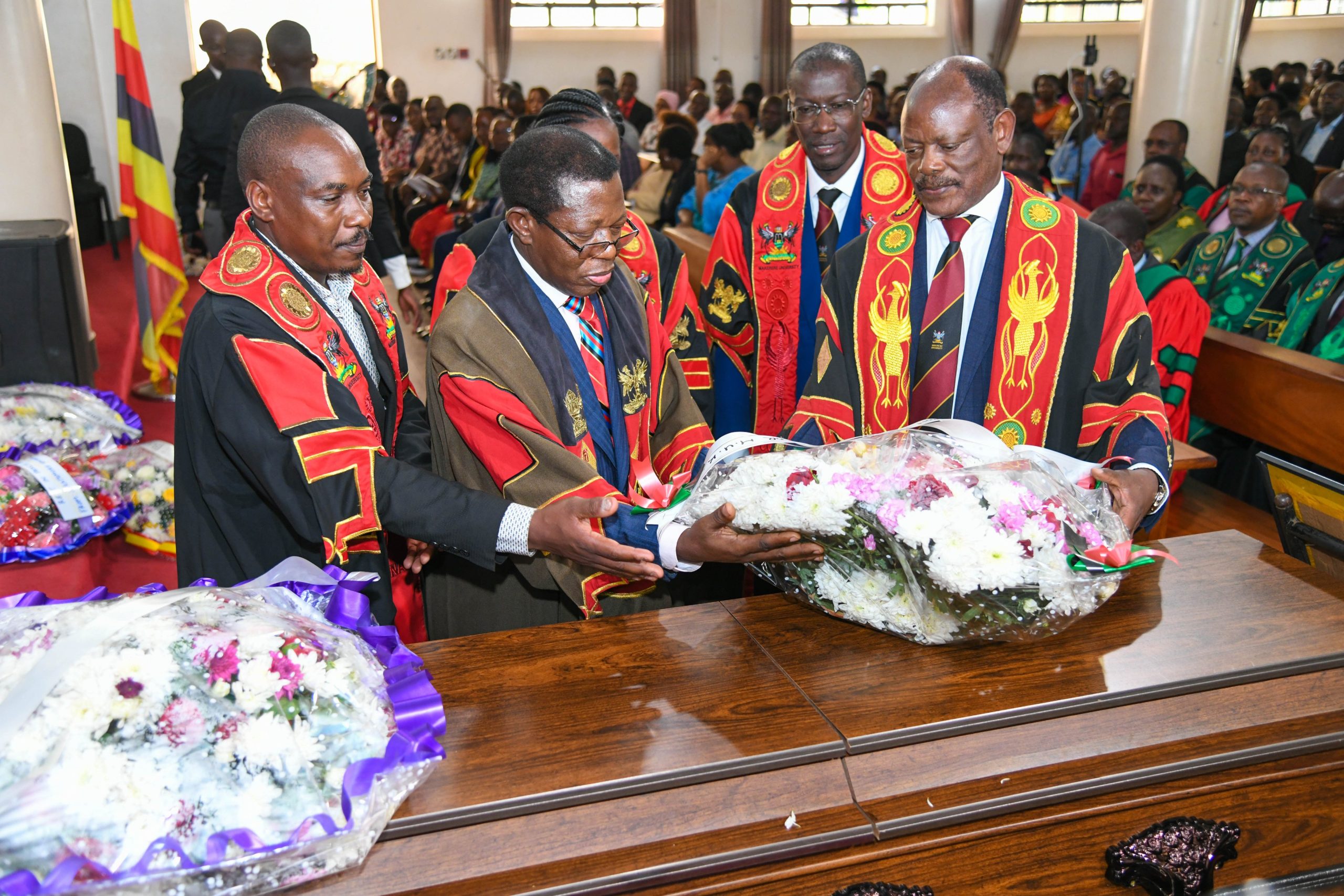
“He was not just a mathematician,” Professor Ireeta said, “he was a visionary who understood the soul of the university. Even in retirement, he remained an advisor, a guide, and a quiet force of wisdom.” He concluded by saying that the college would continue to draw from his example as it navigates the future of science and innovation in Uganda.
Professor Luboobi’s illustrious career at Makerere University included serving as Head, Department of Mathematics from 1990 to 1991. The current Head of Department, Dr. Ismail Mirumbe remembered him as a pillar in the teaching and development of mathematics in Uganda
Professor John Mango, who served as Head, Department of Mathematics during Professor Luboobi’s term as Vice Chancellor from 2004 to 2009 described him as a towering figure of integrity and principle, someone who not only upheld the highest standards of academic conduct but insisted that others around him do the same. “He was a pillar in the department,” Prof. Mango remarked, “and his moral compass was unwavering.”
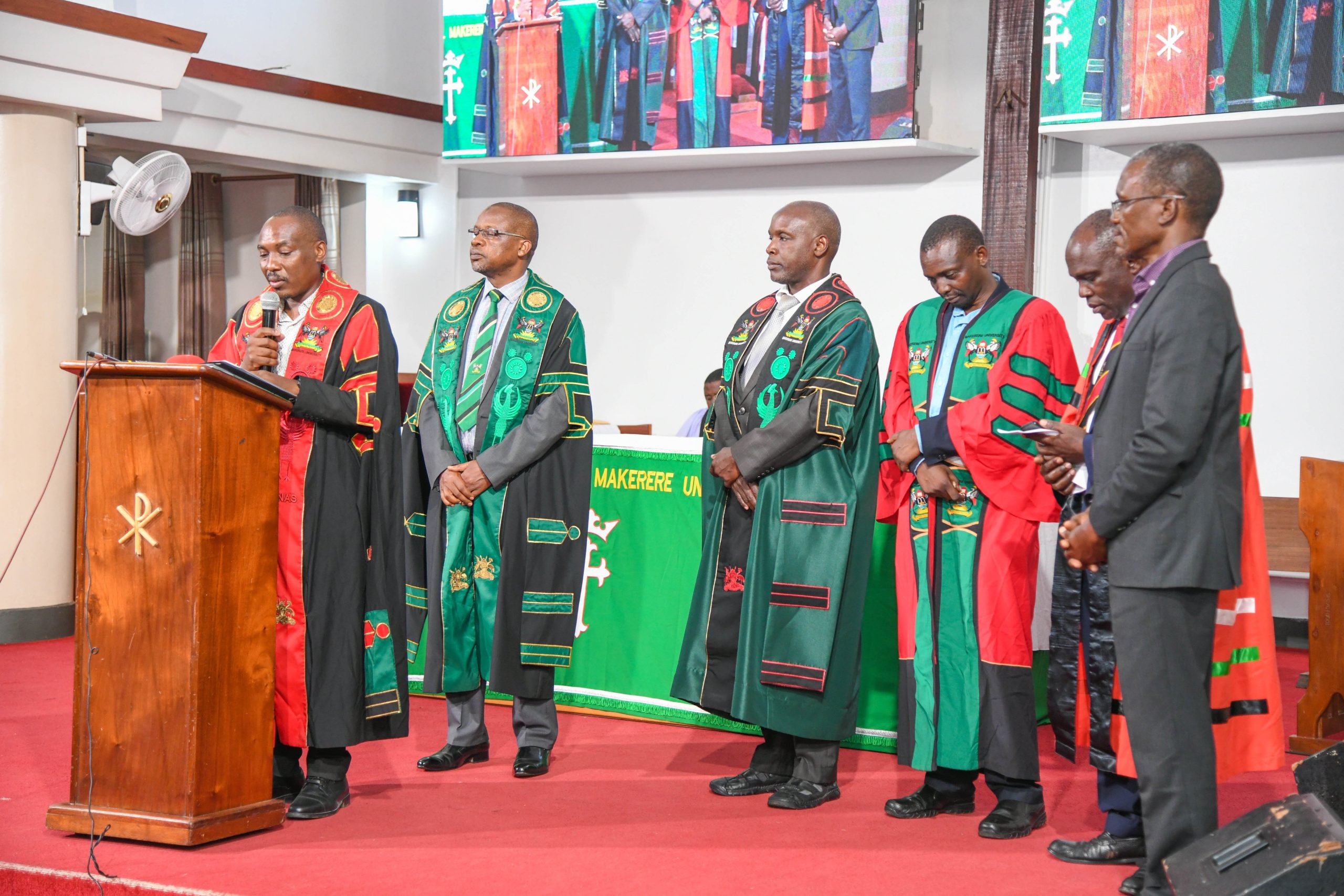
He recalled instances where Professor Luboobi made firm decisions, including terminating contracts when integrity was compromised, setting a tone that shaped the department’s reputation for honesty and excellence. Even as Vice Chancellor, he remained deeply involved in the department’s affairs, teaching, supervising students, all the while handling top administrative duties punctually. Prof. Mango spoke with great admiration of a man who led by example, mentored many, and whose contributions to mathematics education, research, and policy-making continue to shape the future of the discipline in Uganda and beyond.
According to an article from 1990 written by Dr. Vincent Ssembatya and Andrew Vince at the University of Florida, the Uganda Mathematical Society (UMS), which was formally established on 25th November, 1972 has since inception enjoyed major support from Makerere University and Kyambogo University in terms of infrastructure and leadership. Professor Paul Mugambi, who was also present at Professor Luboobi’s funeral service was elected first president of the UMS. Dr. Saul Nsubuga from the Department of Mathematics represented UMS at the service, honouring Professor Luboobi’s pioneering role in the discipline.
The service also featured tributes from close friends and family. Loved ones shared stories of a man who remained grounded no matter how high he rose, a man who valued relationships and walked closely with his faith. His children and grandchildren remembered him as a father who was ever-present, a listener, and a source of steady guidance.
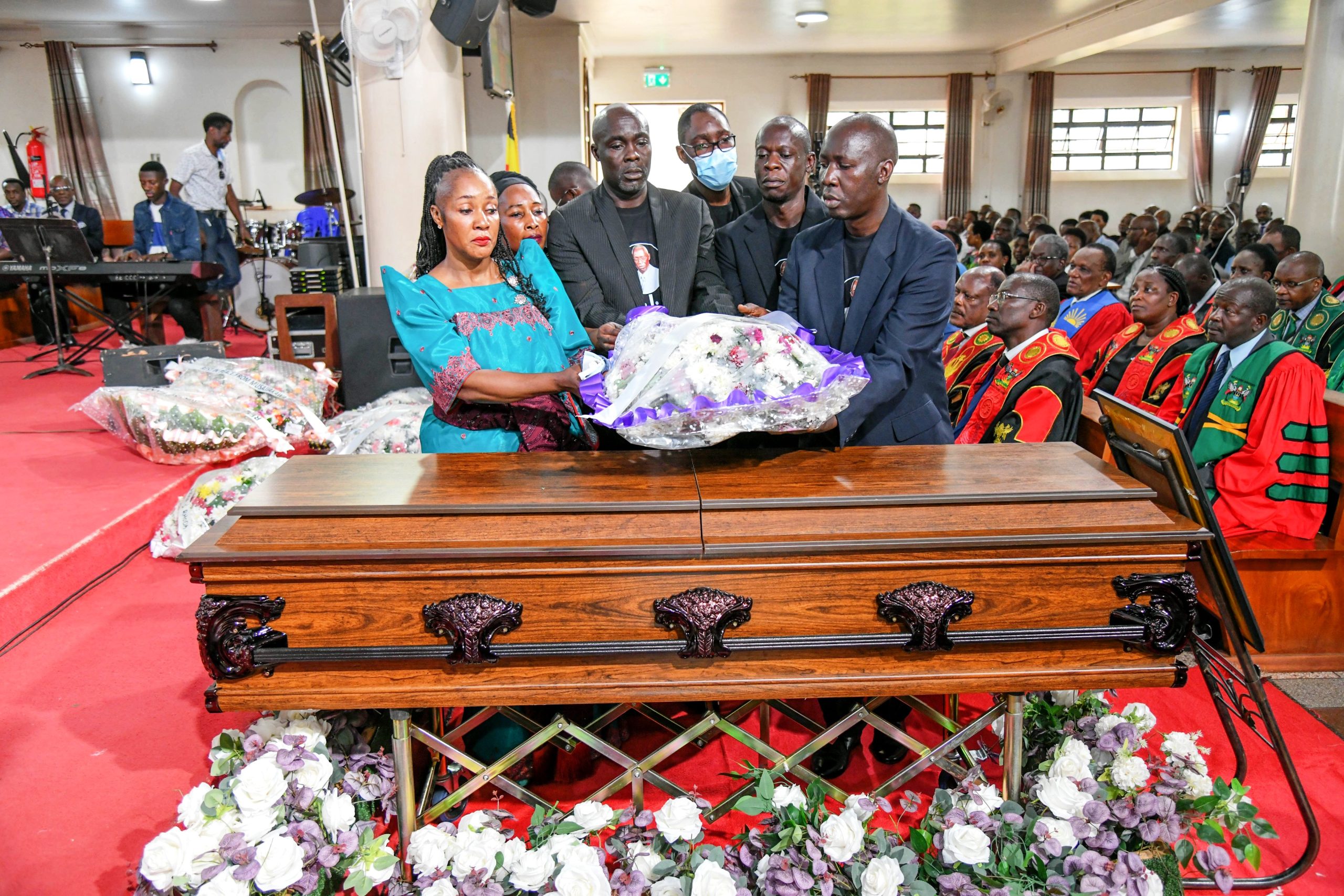
Professor Daniel Kibuule, son of the late Professor Luboobi and Dean, Faculty of Health Sciences at Busitema University, delivered a deeply personal tribute that painted a full portrait of his father’s life, values, and final days. He expressed gratitude to the University leadership, family, friends, and medical professionals who stood with them during a challenging period. He particularly thanked his siblings, Dr. David Kimera and Dr. Irene Nakiyimba for their unwavering role in caring for Professor Luboobi through illness.
He spoke of a man who, despite great academic accolades, remained deeply humble and committed to discipline, simplicity, and faith. From instilling punctuality and responsibility to ensuring his children charted their own paths, none bearing his surname “Luboobi”, Prof. Luboobi was intentional in every lesson he passed on. Kibuule recalled his father’s insistence on being at home even in his final moments, his strong connection to Christ, and his quiet strength despite his failing health.
Former students and mentees echoed the same sentiments, of a teacher who was generous with his time and invested deeply in others’ growth. The community that gathered was not only there to grieve but to celebrate the quiet legacy of a man whose example continues to live on.
Among the mourners were public figures and leaders, including Hon. Abed Bwanika, Member of Parliament for Kimanya-Kabonera, Hon. Nyombi Thembo, the Executive Director Uganda Communications Commission, and Hon. Dr. Ham-Mukasa Mulira, former Minister of ICT, among others.
In his passing, Makerere University has lost a pillar, but his life reminds us that greatness lies in consistency, in humility, and in service to others. Professor Luboobi’s memory will continue to live on in the minds he shaped, the systems he built, and the values he embodied. He ran his race with grace.
The Writer is a Volunteer in the Public Relations Office, Makerere University
Please click the embedded video below to view the service livestream
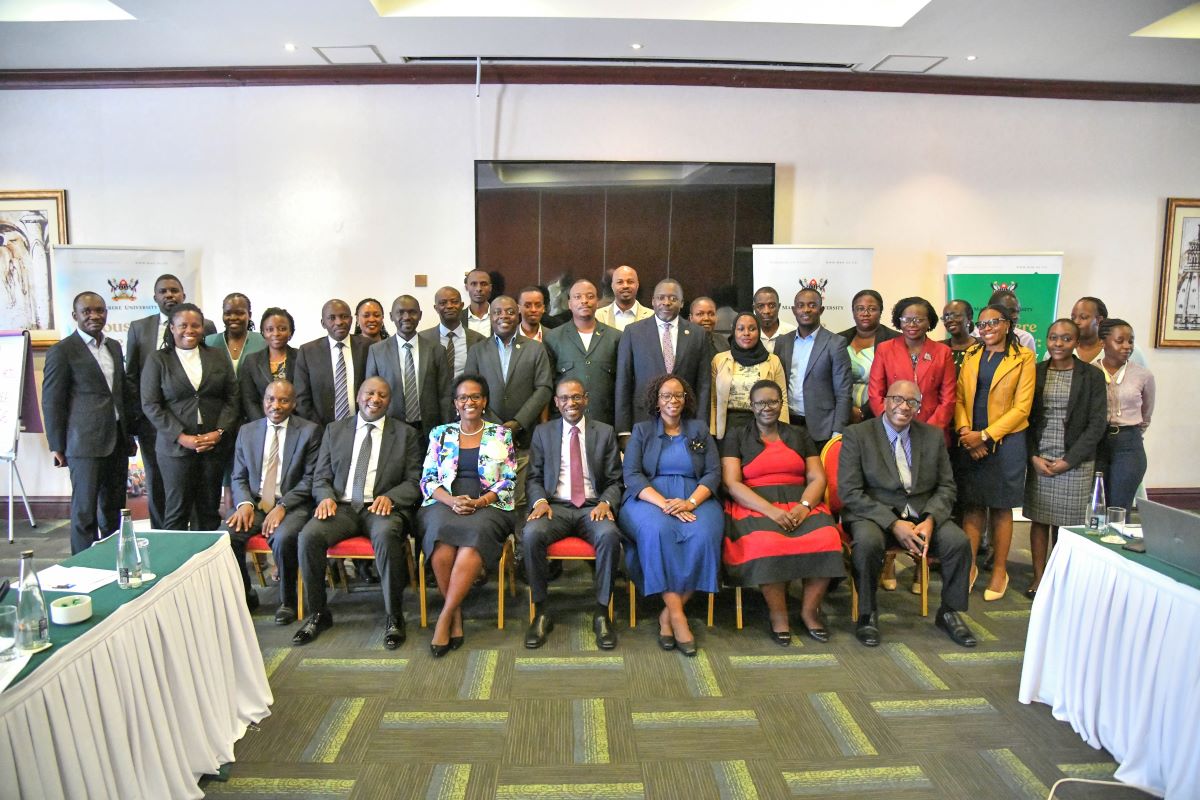
Legal and accounting officers from public universities across Uganda have convened, for a high-level training workshop organized by Makerere University. The three-day training, taking place from July 16th to 18th, 2025, is aimed at strengthening legal frameworks, improving institutional governance, and ensuring compliance with public finance and procurement laws within higher education institutions.
Ms. Lorna Magara, Chairperson of the Makerere University Council and Guest of Honour at the opening session, commended the initiative as timely and necessary. She addressed the growing backlog of court cases affecting Makerere and other public universities and outlined measures already taken to mitigate legal risks. These include the establishment of a Legal Rules and Privileges Committee and the Directorate of Legal Affairs, part of a broader strategy to improve legal compliance and foster good governance.
Representing the Vice Chancellor, Prof. Winston Tumps – Ag. Deputy Vice Chancellor (Finance and Administration), described the training as both strategic and practical. “It is imperative that we learn from each other, especially in how we handle employee litigation and institutional legal risks,” he remarked. He added that the program is designed to promote experience-sharing across universities and enhance collective institutional growth.
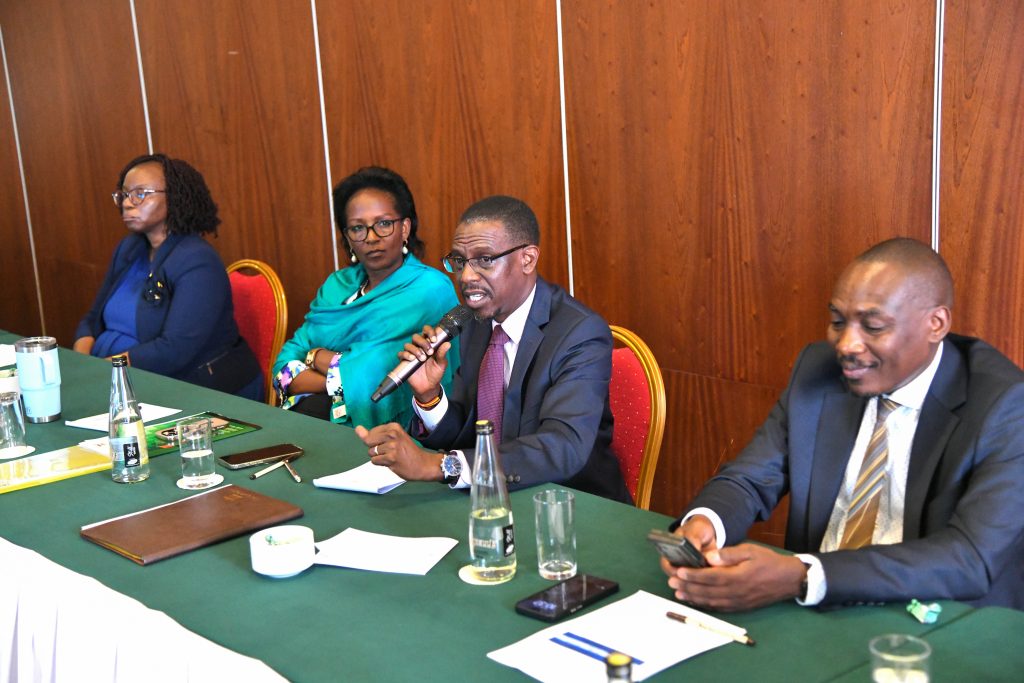
In his address, Mr. Yusuf Kiranda, University Secretary at Makerere University, emphasized the urgent need for robust legal oversight and more effective case management mechanisms within public universities.
The training featured a keynote address by the Attorney General of Uganda, Hon. Kiryowa Kiwanuka, who provided critical insights into legal expectations for public institutions. He warned that failure to heed legal advice could result in personal liability for accounting officers, citing a precedent involving the Uganda Cancer Institute. “Universities must consult the Attorney General’s chambers before entering into major contractual obligations,” he advised, urging legal officers to document decisions meticulously as proper record-keeping forms the first line of defense in legal disputes.
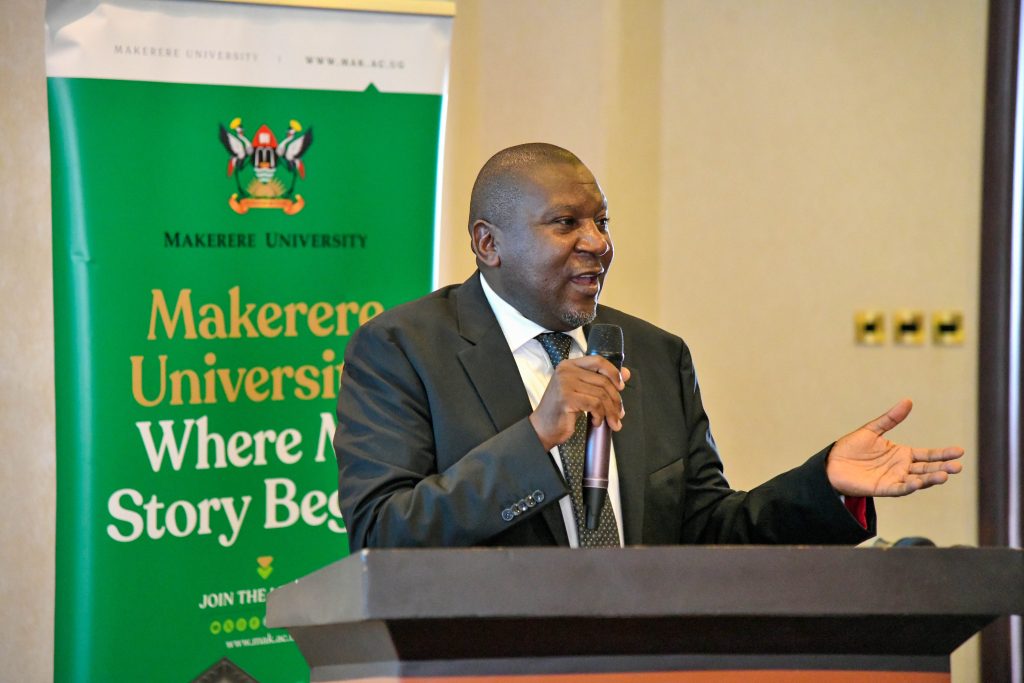
Hon. Kiwanuka further discussed the government’s ongoing efforts to recentralize legal services to ensure alignment with the Attorney General’s office. He cautioned in-house counsel against becoming overly entangled in decision-making processes, stressing the need for objectivity. Other key issues he addressed included contract approvals, misuse of Memoranda of Understanding (MoUs), and lapses in procurement processes, particularly at the close of financial years.
Participants also benefited from insights by Hon. Justice Musa Ssekaana of the Court of Appeal, who offered an in-depth analysis of judicial review and its significance in promoting lawful, transparent university governance. He called on university legal officers to act with clarity, timeliness, and accountability.
Lady Justice Joyce Kavuma, Judge of the High Court, delivered a comprehensive presentation on dispute and claim management involving public universities. She addressed emerging trends in civil litigation, emphasizing the importance of due process, transparency, and clear communication in resolving employment, student, and contractual disputes. Drawing on real case examples, she urged institutions to strengthen internal systems, embrace participatory governance, and adopt regional best practices to minimize litigation and protect institutional reputation.
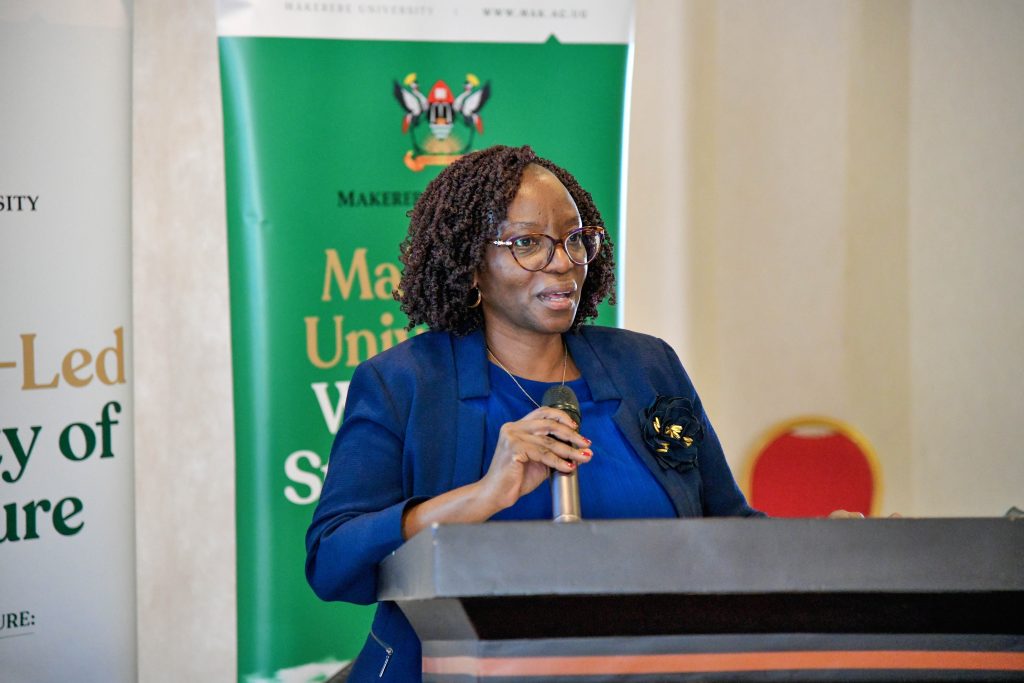
The training reflects a shared commitment among public universities to build a more accountable, legally sound, and strategically aligned higher education system in Uganda. Through peer learning and collaboration, participating institutions aim to reduce litigation, enhance institutional autonomy, and uphold the rule of law.
Participating universities include Makerere University, Kyambogo University, Mbarara University of Science and Technology, Busitema University, Mountains of the Moon University, and Lira University.
The training concludes on July 18th 2025, with sessions focusing on employment dispute management in public universities and the implications of recent PPDA Appeals Tribunal decisions on procurement and disposal practices within public entities.

-
 General2 weeks ago
Re-advert: Admission to Undergraduate Programmes 2025/2026
-
 General1 week ago
Re-Advert for Applications for Diploma and Certificate Training
-
 General5 days ago
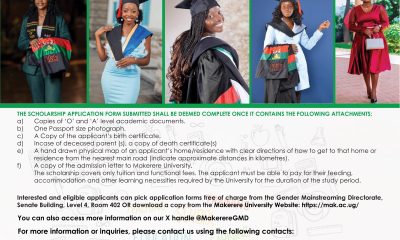
Makerere University Fees Waiver for 40 First Year Female Students 2025/2026
-
 General2 weeks ago
Press Statement on Ranking
-
 Health1 week ago
Call for Applications: Responsible Conduct of Research (RCR) Training Course