
General
Makerere celebrates the late Bernard Onyango

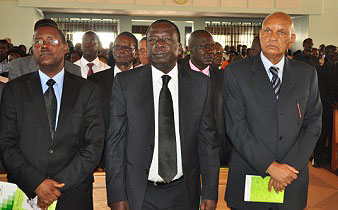
On Thursday 17th October 2013, The Makerere University community paid their last respects to the longest-serving Academic Registrar, a man full of honour and integrity, the Late Mr. Bernard Onyango. Born on 11th January 1930 into a family of ten brothers and one sister to parents Reverand Andereya Ochwo and Lakeri Ajwang Abbo, Mr. Bernard Onyango joined the University of East Africa in 1958 and in 1970 when Makerere University became an independent National University of the Republic of Uganda, he became its first Academic Registrar. The late Bernard Onyango held this position until his retirement from University service in 1992.
Throughout his career and life, Mr. Bernard Onyango was a mentor and a source of inspiration who had made a remarkable difference in people’s lives. Thus the Makerere University St. Augustine Chapel was filled to capacity as the congregation assembled to thank God for this valuable gift on earth in the name of Bernard Onyango.
In honour of the great life he lived, the Master of Ceremony, Mr. Charles Owor of the Judicial Service Commission together with Dr. Fred Tanga Odoi-the Minister of Tertiary and Higher Education in the Tieng-Adhola Cultural Institution introduced to the congregation the renowned academicians, professionals and politicians serving at the national and international levels who were trained and mentored by Mr. Bernard Onyango.
The Cardinal of Uganda, His Eminence Emmanuel Wamala presided over the Requiem Mass assisted by Msg. Rev. Fr. Lawrence Kanyike and Rev. Fr. Joseph Ddungu, St. Augustine Chapel, Makerere University.
Ms Sharon Onyango-Obbo read the First Reading, from the book of Wisdom 4, 7-15. Ms Charlenne Onyango-Obbo took the second reading, 2 Timothy 4:1-8. The congregation also listened to the Holy Gospel according to John 14:1-6.
During the sermon, His Eminence, Cardinal Emmanuel Wamala thanked the congregation for bidding farewell to their departed colleague in such a memorable way. “Your presence here is testimony that Bernard Onyango lived a fulfilling life. The Faith he professed is the faith that he has carried forward throughout his career and life.” praised Cardinal Wamala. “His faith guided him in his life and it is the faith which he passed on to his children. May the Soul of Bernard rest in eternal peace,” he concluded.
 The Vice Chancellor, Prof. John Ddumba-Ssentamu in his message read to the congregation by the University Secretary– Mr. David Kahundha-Muhwezi appreciated the late Bernard Onyango for having kept Makerere’s Academic reputation spotlessly clean and scandal-free especially during the turbulent 70s and early to mid-eighties. “We at Makerere University compare the Late Mr. Bernard Onyango to the biblical tree planted by the streams of water, which brings forth fruit both in and out of season,” read the condolence message. The Vice Chancellor’s message further paid tribute to Prof. J. Oloka-Onyango for preserving his Father’s legacy, “We are proud of Prof. Oloka-Onyango for keeping Mr. Onyango’s torch high and burning through his great work at the School of Law and the Human Rights and Peace Centre,” added Prof. Ddumba-Ssentamu’s message.
 The Chancellor, Prof. George Mondo Kagonyera in his remarks expressed his gratitude at being able to bear witness to the great life that Mr. Bernard Onyango had lived. In honour of the late he said, “You young people have nothing to lose when people stand up and say you did what you were expected to do properly. Make sure that the teaching service you provide and grading of certificates is done properly,” said Prof. Kagonyera.
Speaking about his departed friend and Colleague, the former two-time Vice Chancellor of Makerere University Prof. Asavia Wandira fondly reminisced, “Bernard Onyango and I first met in 1958 in Mbale as Teachers who were marking exams. Little did I know that I would later become his great friend,” he recalled. The two later returned to Uganda on the eve of Uganda’s Independence to face the Pan-Africanism era. Regarding Mr. Onyango’s service to Makerere, Prof. Wandira had this to share, “In 1963, Bernard Onyango was appointed Deputy Registrar and in 1964, Prof. Wandira was also invited to become Secretary  and Registrar of Makerere University. In 1965, Onyango became the Registrar of the University of East Africa and in 1969, Academic Registrar. Fare thee well Bernard Onyango,” concluded Prof. Asavia Wandira.
Other former colleagues like Prof. Raphael Owori, a Professor of Pathology and former Dean, Faculty of Medicine, Makerere University and Prof. Charles Olweny, Vice Chancellor, Uganda Martyrs University (UMU), Nkozi, also paid tribute to their great friend.
“Bernard Onyango was a great teacher. He taught me history at St. Peters College Tororo and I got a distinction. Bernard was also Best man at my wedding in 1967,” shared Prof. Olweny. He also shared that the late Bernard Onyango was a man of many firsts. In addition to being the first Academic Registrar of Makerere University, he was also the founding Academic Registrar of UMU, Nkozi in 1993. In concluding his remarks, Prof. Olweny then pointed out why they were all gathered at the Mass, “Firstly, we are here to celebrate the life of a great achiever and secondly, he was absolutely incorruptible,” summed up Prof. Olweny.
The Chairperson of Council, Eng. Dr. Chares Wana-Etyem then shared about his life at Makerere, “I joined Makerere University as a student in 1972, and I am happy that the quality of Bernard Onyango has been passed on to his offspring,” he remarked. “Two of my children have been taught by his son- Prof. Oloka Onyango and they have informed me that he is a great teacher,” added the Chairperson of Council. He further shared that the reforms in the education system had been made possible thanks to the late Bernard Onyango’s input.
 Prof. Tarsis Kabwegyere who represented the Government at the Mass appreciated the role played by Mr. Bernard Onyango at Makerere University saying, “I came to Makerere in 1965 and I am happy to be associated with quality. I appeal to the Staff at Makerere not to sign for a degree for which someone has not worked.” He informed the congregation that the late Mr. Bernard Onyango was awarded a medal in recognition of his service to the Nation in May 2012. “I appeal to the family to write a memoir of Bernard Onyango in remembrance of him so that the young generation reads about this quality high achiever and incorruptible person,” he challenged.
 The Kattikiro of Buganda, Charles Peter Mayiga who was at Makerere during the late Bernard Onyango’s tenure as Academic Registrar remarked, “We were truly fascinated by his humility and simplicity. He emphasized integrity, which nurtures truthfulness,” he remarked, “It is justice that nurtures unity, then patriotism will follow.” The Kattikiro also reiterated the need for the late Mr. Bernard Onyango’s biography to be written.
Speaking on behalf of his siblings Christine Awor, Simon Peter Owor Onyango, Patricia Onyango, and Bernard Paul Onyango, Prof. Joseph Andrew Oloka Onyango appreciated the great wealth left behind by their ten paternal uncles and aunt. “They were very wealthy, not in material things, but in things you cannot attach a value. They were rich in integrity, honour, humour and loved everyone,” he remarked. “I am extremely honoured to have been chosen to say something on behalf of the Bernard Onyango family,” he said. On a lighter note, Prof. Oloka Onyango shared that his father was an

aspiring musician whose favourite song had the Luganda lyrics “… mazima nkwagala era gwe numba emu…” meaning, “truth be told, I love you dearly and you are my number one”. He also once remarked that after striving for over seventy years to be famous, he was finally content after a US President with similar initials took over the presidency.
 With regard to his Mother, Mrs. Lucy Kahambo Onyango, Prof. Oloka Onyango fondly remarked, “Besides every great man is a great woman, a princess.” He thanked their mother for being, “a hands-on, pragmatic organizer behind the great academician throughout their fifty six years of marriage.” He also thanked her for her advice to the children to marry wisely, which advice they each took to heart.
The late Bernard Onyango was laid to rest on Saturday 19th October 2013 at Kiyeyi Village, Tororo district.
May his soul rest in eternal peace.
Story by: Ritah Namisango and Mark Wamai, Public Relations Office
Photos by: Elias Tuhereze, Public Relations Office


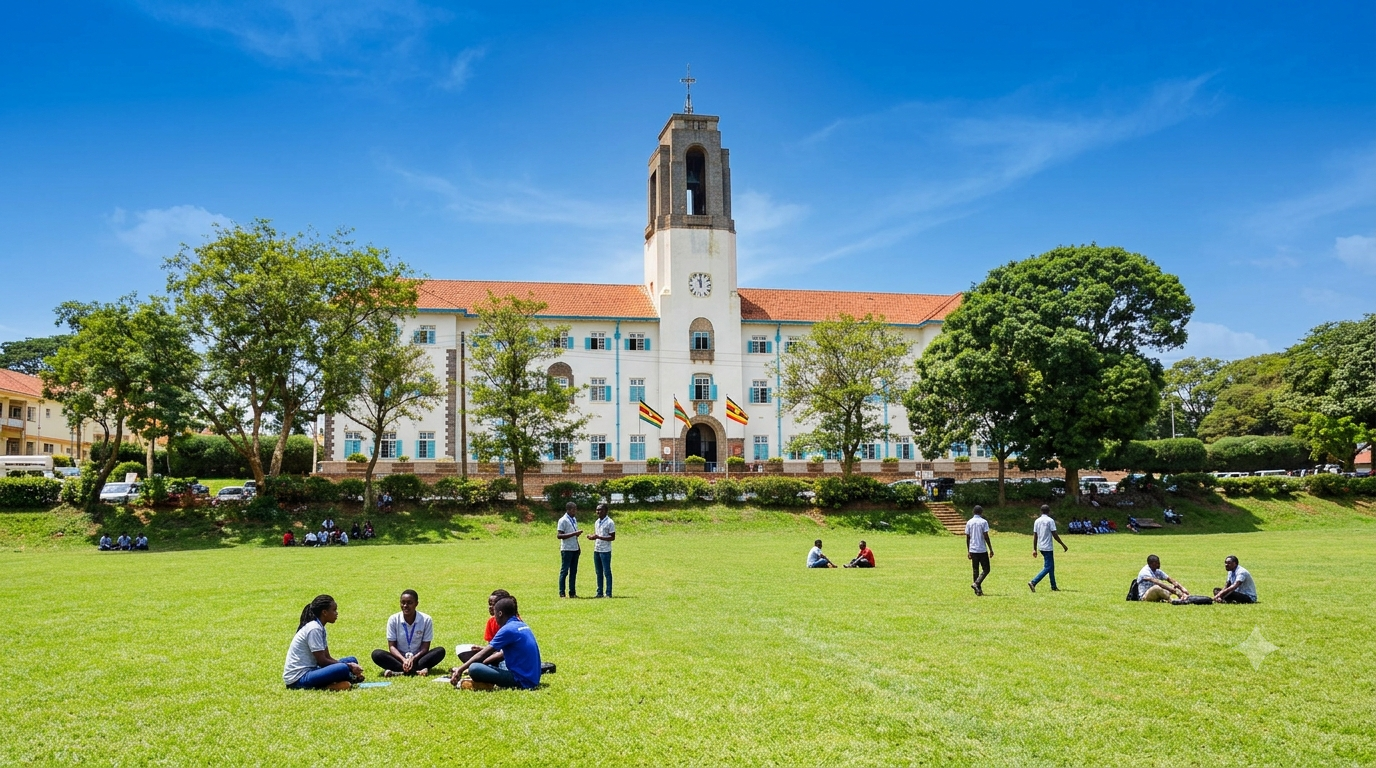

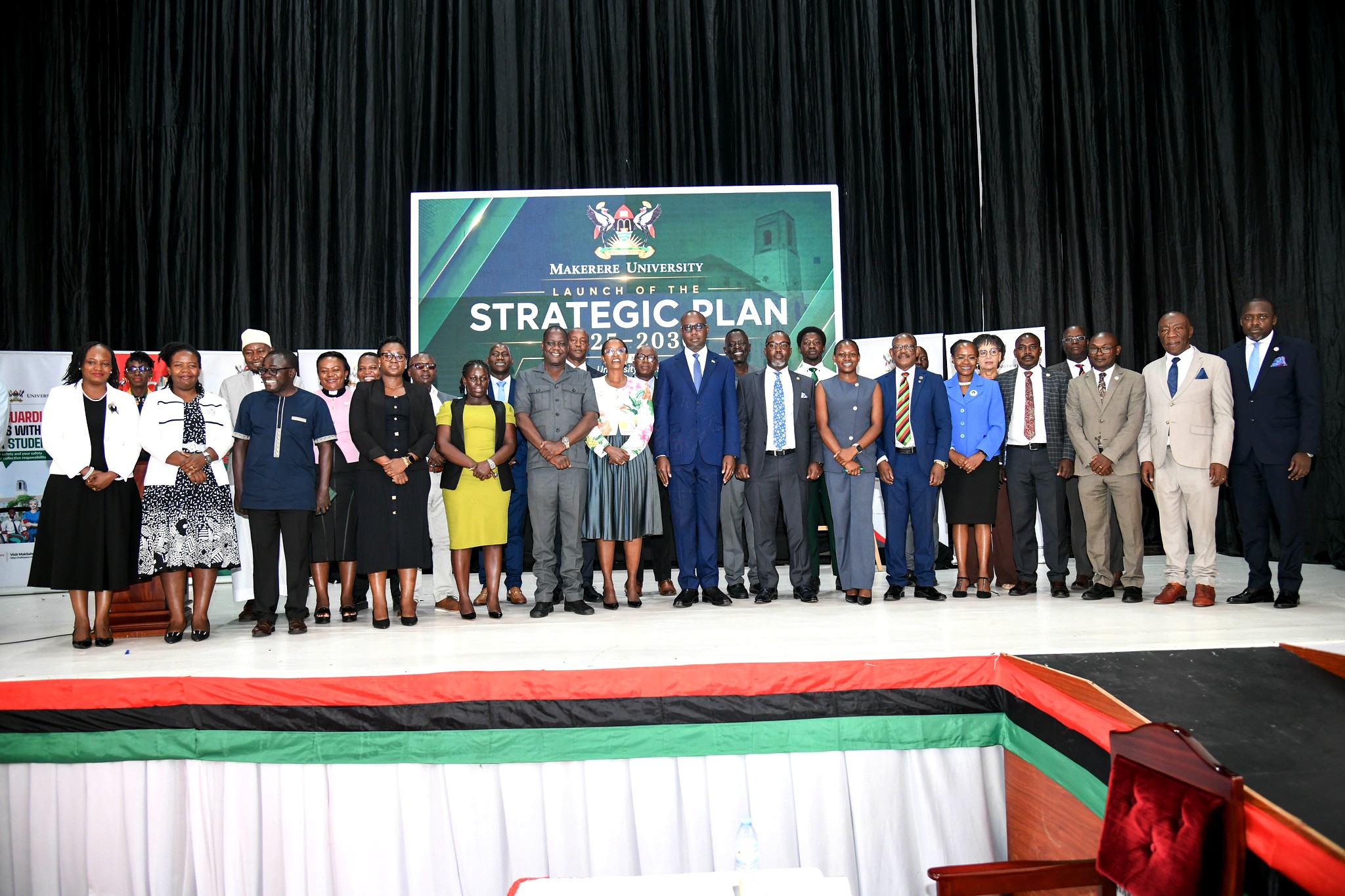
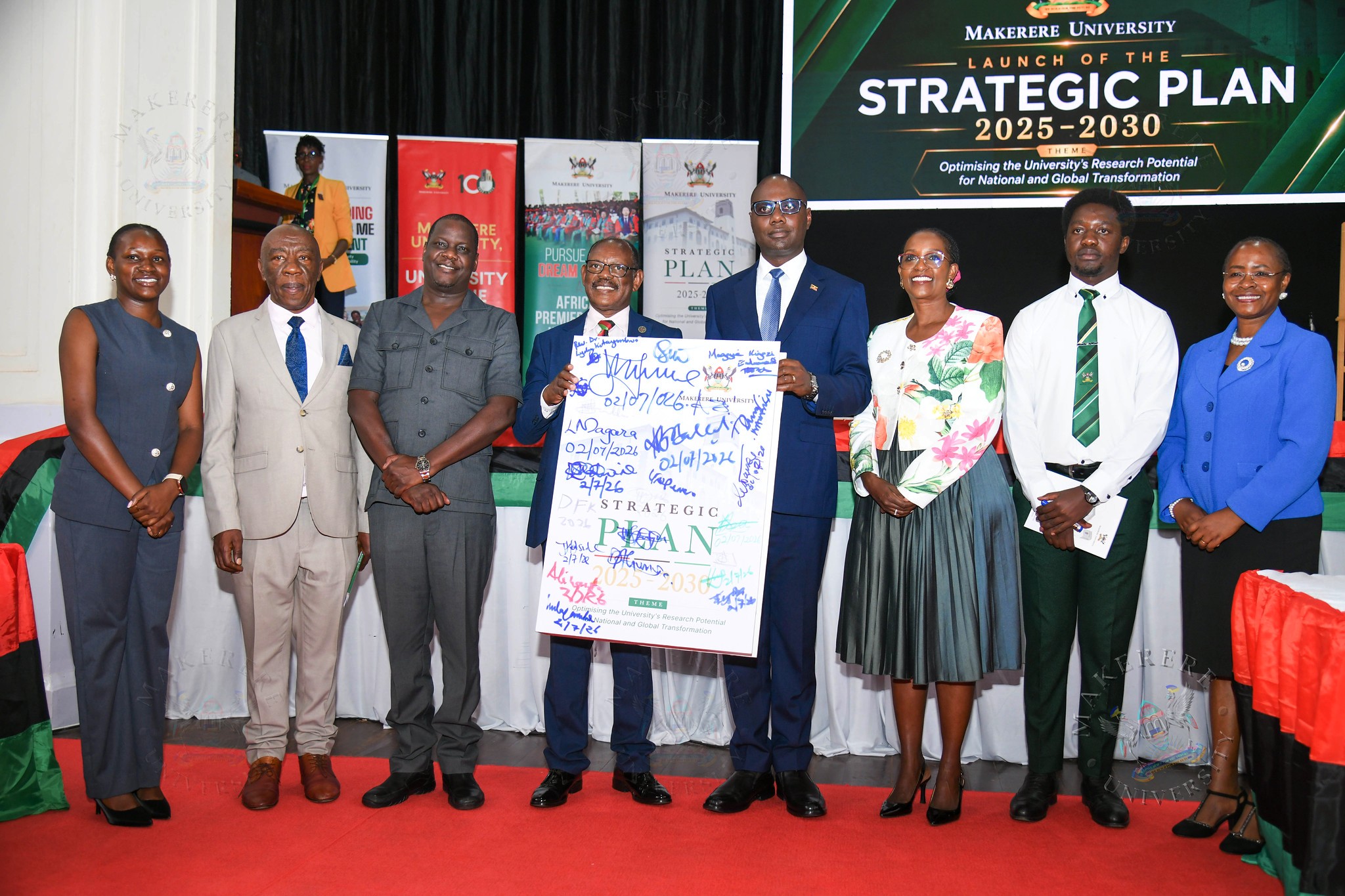
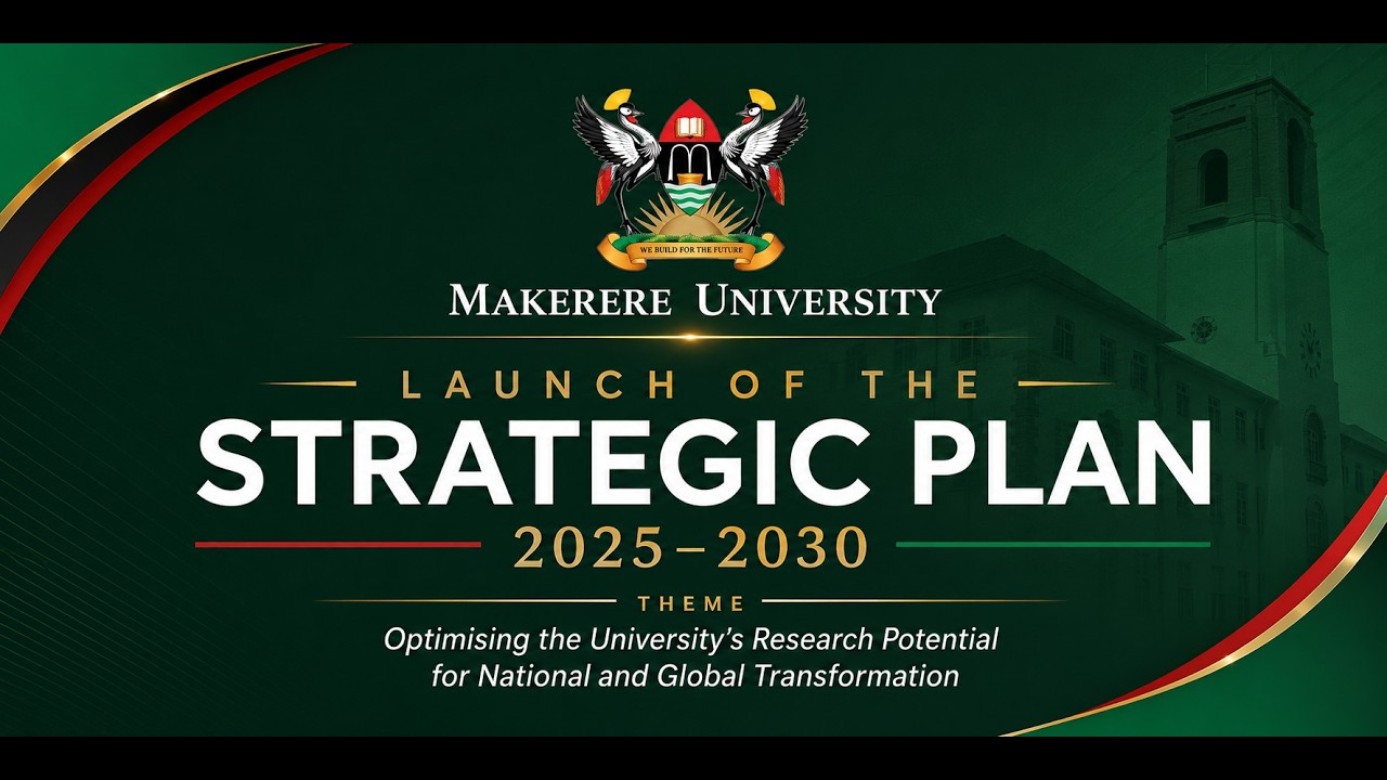
Makerere University has officially launched its Strategic Plan 2025-2030, marking a major milestone in its commitment to strengthening research, innovation, and human capital development in line with Uganda’s national development priorities.
The launch brought together senior government officials, university leadership, and development planners, including the Minister of Finance, Planning and Economic Development, Hon. Henry Musasizi, and a representative from the National Planning Authority (NPA), alongside the University Vice Chancellor.
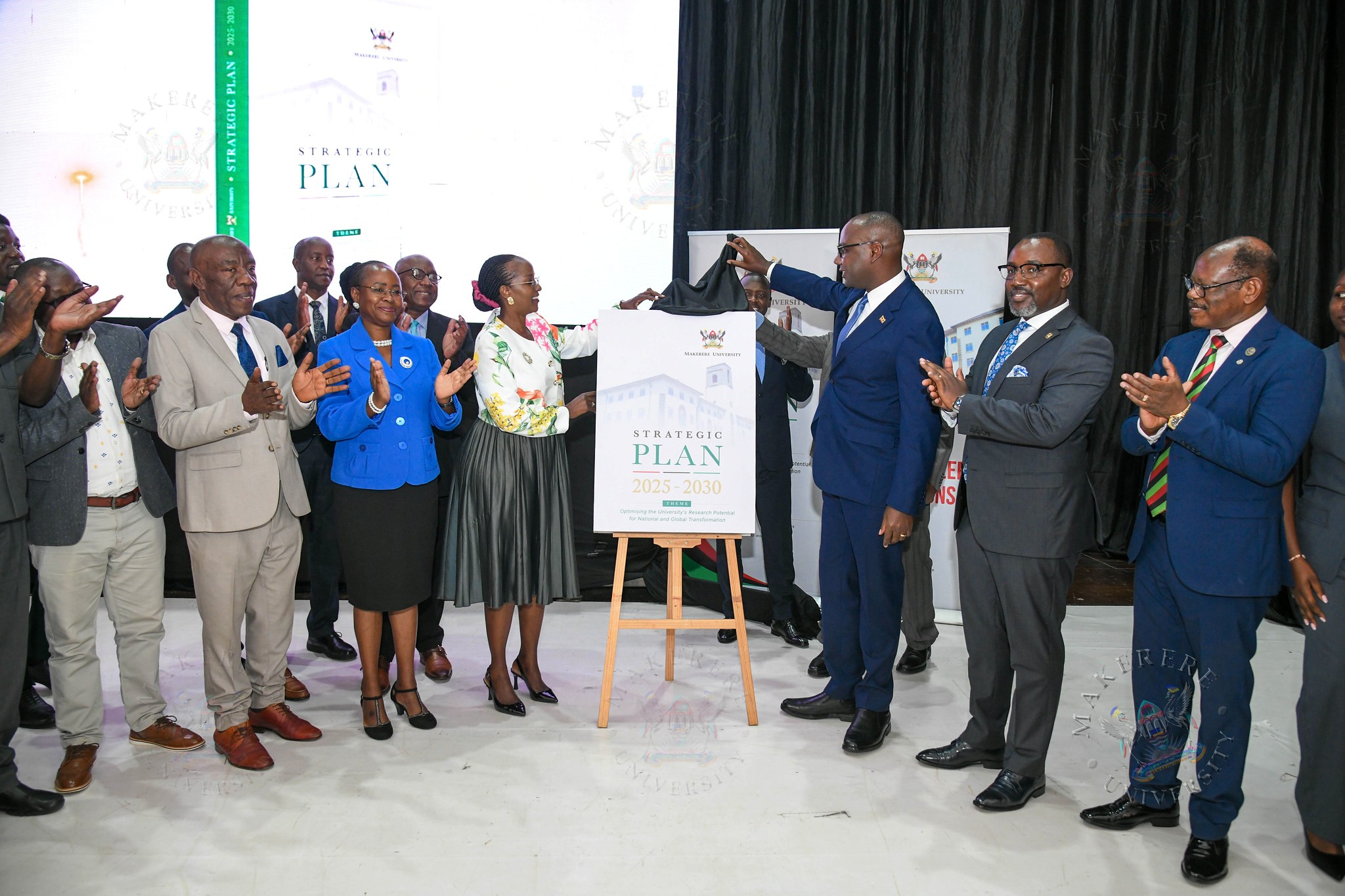
A Vision Anchored in National Transformation
Speaking at the launch, the Vice Chancellor underscored the University’s ambition to significantly expand graduate training and strengthen its contribution to national development. He noted that the institution is targeting a return to pre-COVID enrolment levels and a substantial increase in postgraduate numbers by 2030, with a focus on producing highly skilled graduates, innovators, and researchers.
He emphasized that the Strategic Plan positions the University as a key driver of Uganda’s transformation through knowledge generation, innovation, and entrepreneurship, aligned with national priorities.
“The staffing distribution is shown here. Under the approved establishment, we intended to have 419 Professors, but we currently have only 75. We planned for 473 Associate Professors, but currently have only 144. This clearly demonstrates that we still have considerable room for growth in strengthening our academic staff profile,” the VC said.
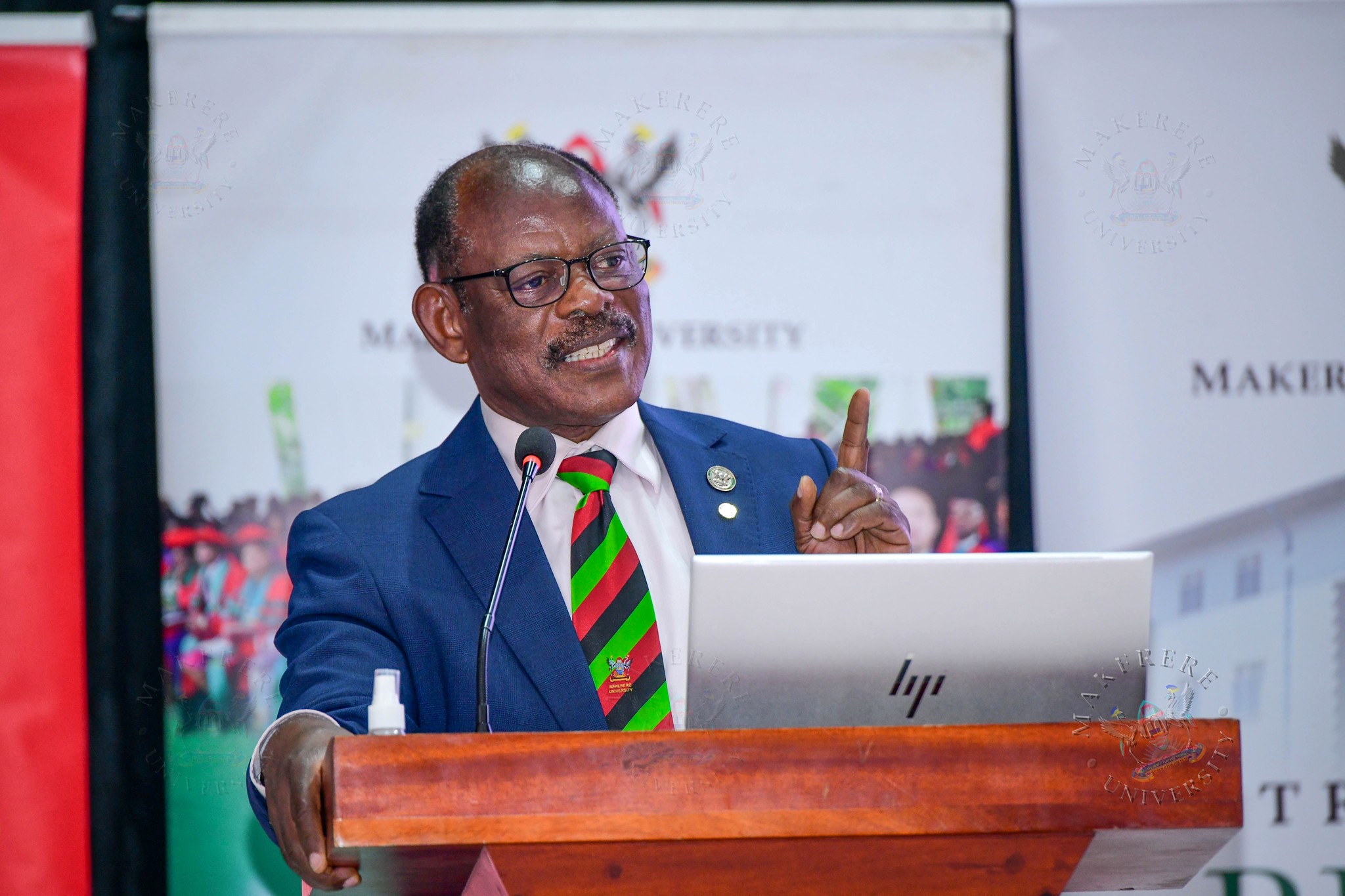
The VC appreciated researchers and research centres, that continue to attract substantial research funding. He highlighted the Infectious Diseases Institute (IDI) and the Makerere University Walter Reed Project which attracted approximately US$70 million in international research funding into Uganda.
“When you combine the grants won by all our researchers through competitive international funding, the total exceeds US$200 million,” he said.
In her remarks, the Chairperson of the University Council, Dr. Lorna Magara, described the Strategic Plan as more than an institutional roadmap, calling it “a public covenant with the people of Uganda.”
She noted that the Plan marks “the launch of Makerere University’s next chapter,” adding that decisions taken over the next five years will shape not only the future of the institution, but also Uganda’s development trajectory through graduates, research, innovations, and leadership.
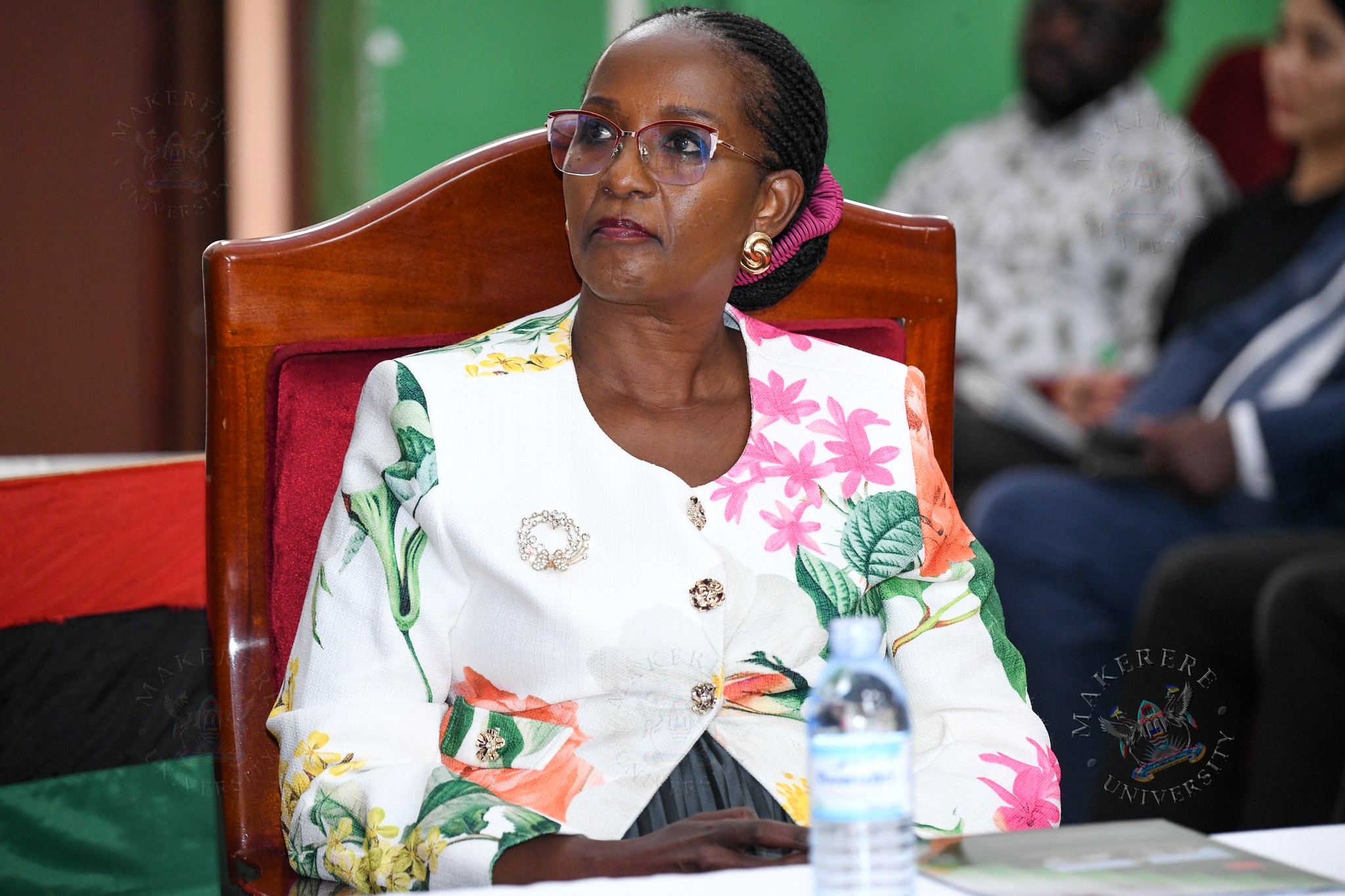
Dr. Magara emphasized Makerere’s unique national role as Uganda’s premier public university, entrusted with public resources and public confidence.
“Every investment made in Makerere must produce measurable value for the people of Uganda,” she said, underscoring the need for accountability, integrity, and impact.
Ambitious Targets for Transformation
The Council Chairperson and the Vice chancellor outlined bold performance targets under the Strategic Plan, including doubling postgraduate enrolment, increasing STEM enrolment from 30% to 55%, improving PhD completion rates from 10% to 35%, and more than doubling peer-reviewed research output, alongside a significant rise in patents and innovations.
Dr. Magara stressed that these targets are not aspirations alone but binding commitments against which institutional performance will be measured.
“Ambition is precisely what this moment demands. A strategic plan is not measured by the elegance of its language, but by the lives it transforms,” she said.
Call for Stronger Governance and Legal Reform
Dr. Magara also highlighted the need for reform of the Universities and Other Tertiary Institutions Act, Cap. 262, noting that the current legal framework has not kept pace with the evolving realities of university governance and innovation.
She called on Government and Parliament to support a timely review of the Act to enable universities to better optimise knowledge systems, productive assets, and innovation capacity in support of national development.
Government Endorsement and Strategic Alignment
Hon. Henry Musasizi commended the University for developing a forward-looking Strategic Plan aligned with Uganda’s Vision 2040 and the Fourth National Development Plan (NDP IV), which serves as the foundation for the country’s Tenfold Growth Strategy.
He explained that Uganda’s ambition to grow its economy from about USD 50 billion to USD 500 billion requires accelerated growth driven by productivity gains, innovation, and strong human capital development.
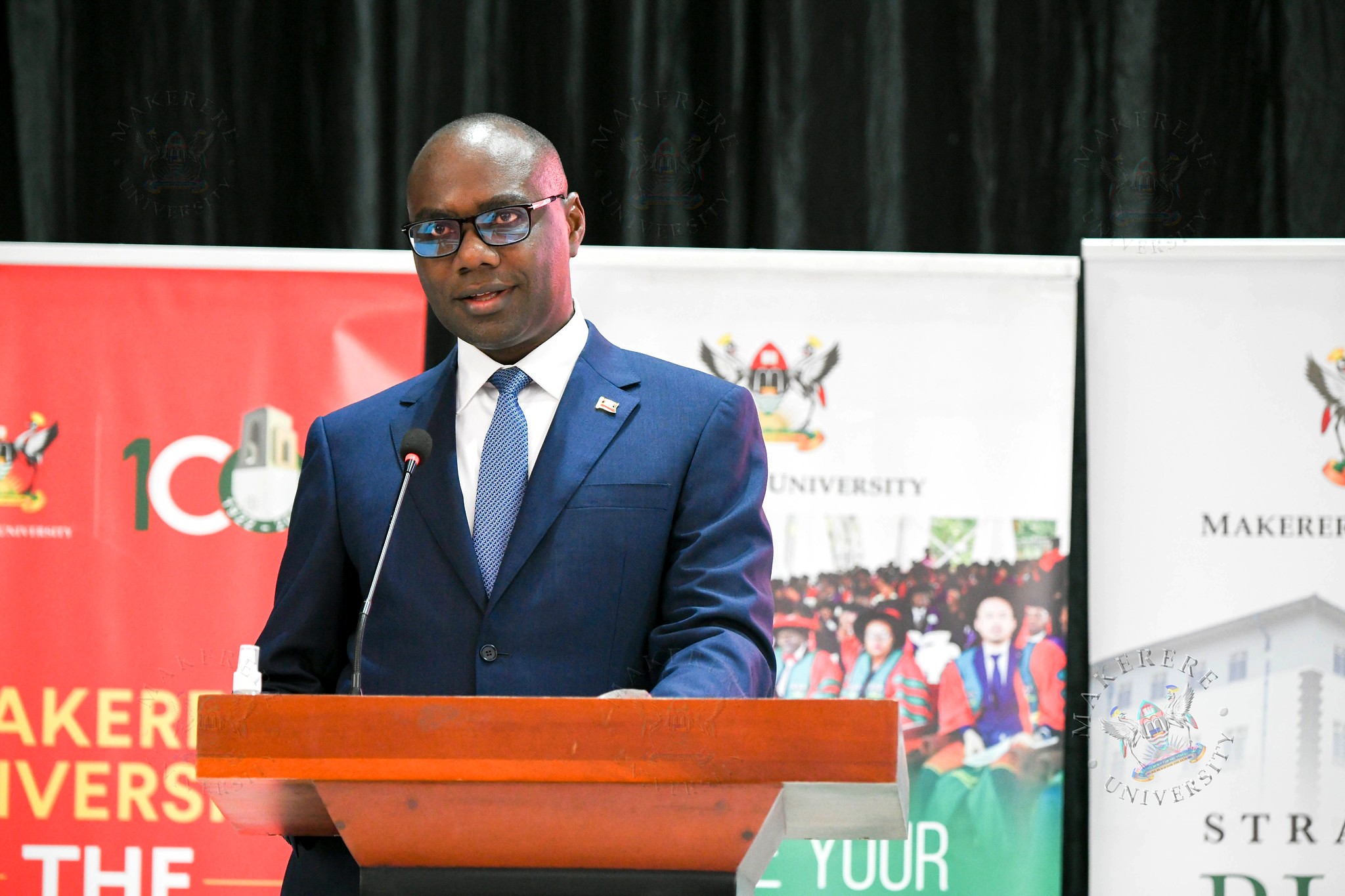
“Universities are central actors in national transformation. They are engines of knowledge creation, innovation, and human capital development,” he said.
The Minister stressed that government priorities include strengthening research, promoting industrialization, and ensuring that knowledge generated in universities is translated into practical solutions that support economic growth. He further highlighted the importance of accountability, efficiency, and value for money in public investments in higher education.
Universities as Drivers of the Tenfold Growth Strategy
In his presentation, the Senior Planner at the National Planning Authority, Samuel Kasule, emphasized that the Strategic Plan is firmly anchored in Uganda’s comprehensive development framework under Vision 2040 and NDP IV.
He noted that the Tenfold Growth Strategy seeks to accelerate Uganda’s economic growth into double-digit territory, enabling the country to achieve structural transformation and reach upper middle-income status.
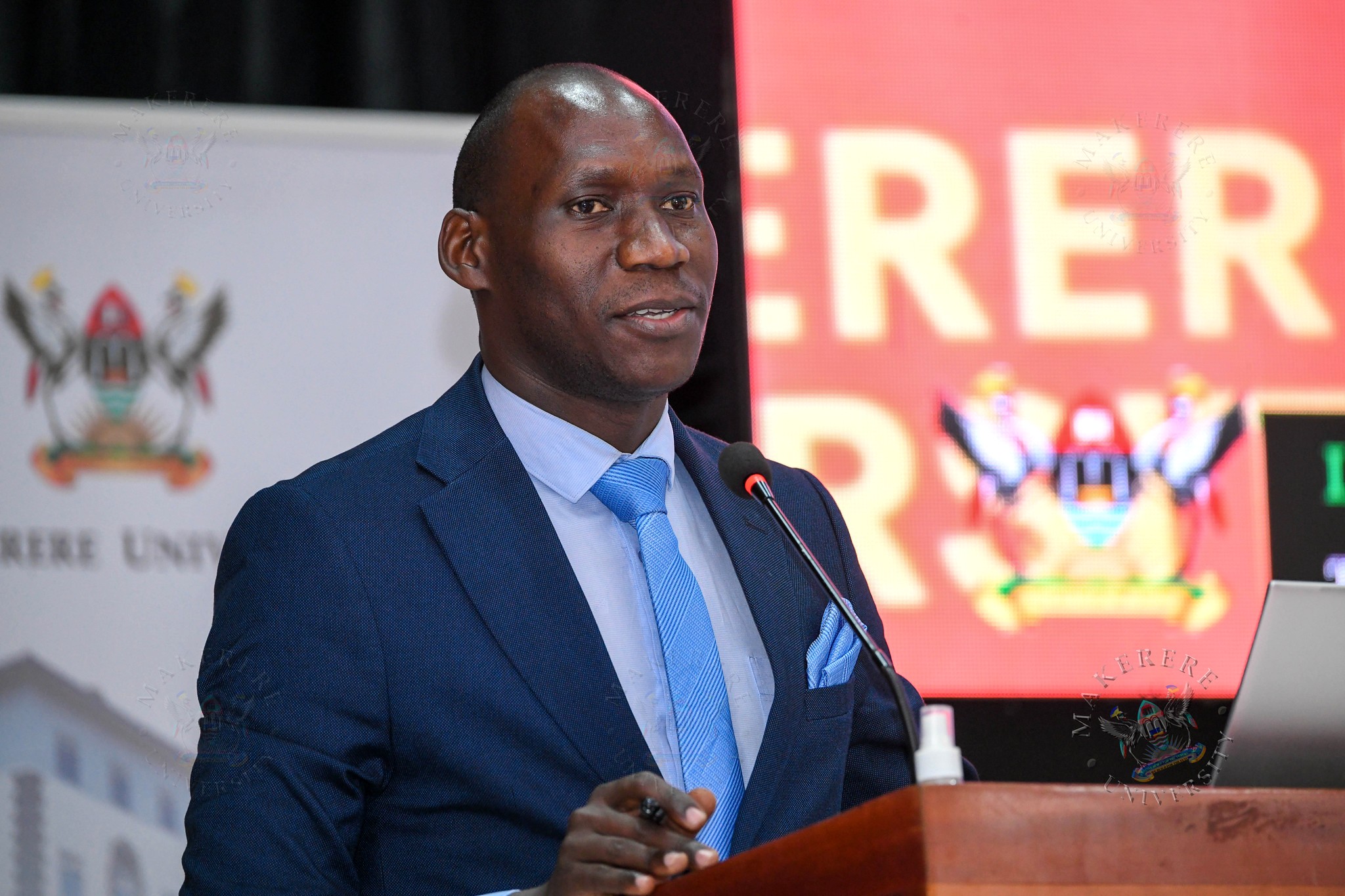
Kasule underscored that universities play a critical role in this transformation through labour productivity, research, and innovation. He pointed out that priority sectors such as agriculture, tourism, minerals, oil and gas, and ICT depend heavily on skilled graduates and strong research ecosystems.
He also highlighted the importance of competency-based education, alignment of academic programmes with national human resource needs, and strengthening postgraduate training and research outputs.
A Shared Commitment to Transformation
Across all speeches, a strong message emerged: universities are central to Uganda’s development agenda and must evolve into research-intensive institutions that directly contribute to economic transformation.
The Strategic Plan 2025-2030 was widely commended for its focus on innovation, industry collaboration, digital transformation, and the commercialization of research outputs.
Government leaders reaffirmed continued support for higher education institutions through research funding, innovation ecosystems, and strengthened university–industry partnerships.
Conclusion
The launch of the Strategic Plan 2030 signals a renewed commitment to positioning the University as a key partner in Uganda’s development journey. With strong alignment to national priorities, the Plan is expected to accelerate research, innovation, and skills development necessary for achieving Uganda’s long-term economic ambitions. The Strategic Plan may be accessed at: https://mak.ac.ug/about/strategic-plan
-
 General5 hours ago
Undergraduate Admission Lists 2026/2027
-
 General7 days ago
Makerere Hands Over CCE Hall to NEC for Renovation
-
 General1 week ago
Fees Waiver Female Scholarship 2026/2027
-
 General2 weeks ago
Makerere University Set to Develop Curriculum to Transform Graduate Supervision and Mentorship
-
 Education2 weeks ago
Makerere University Signs MoU with Fukui University to enhance Research, Teacher Development and STEM Education