Business & Management
Makerere University hosts CSAE Economic Development workshop 2023
Published
2 years agoon

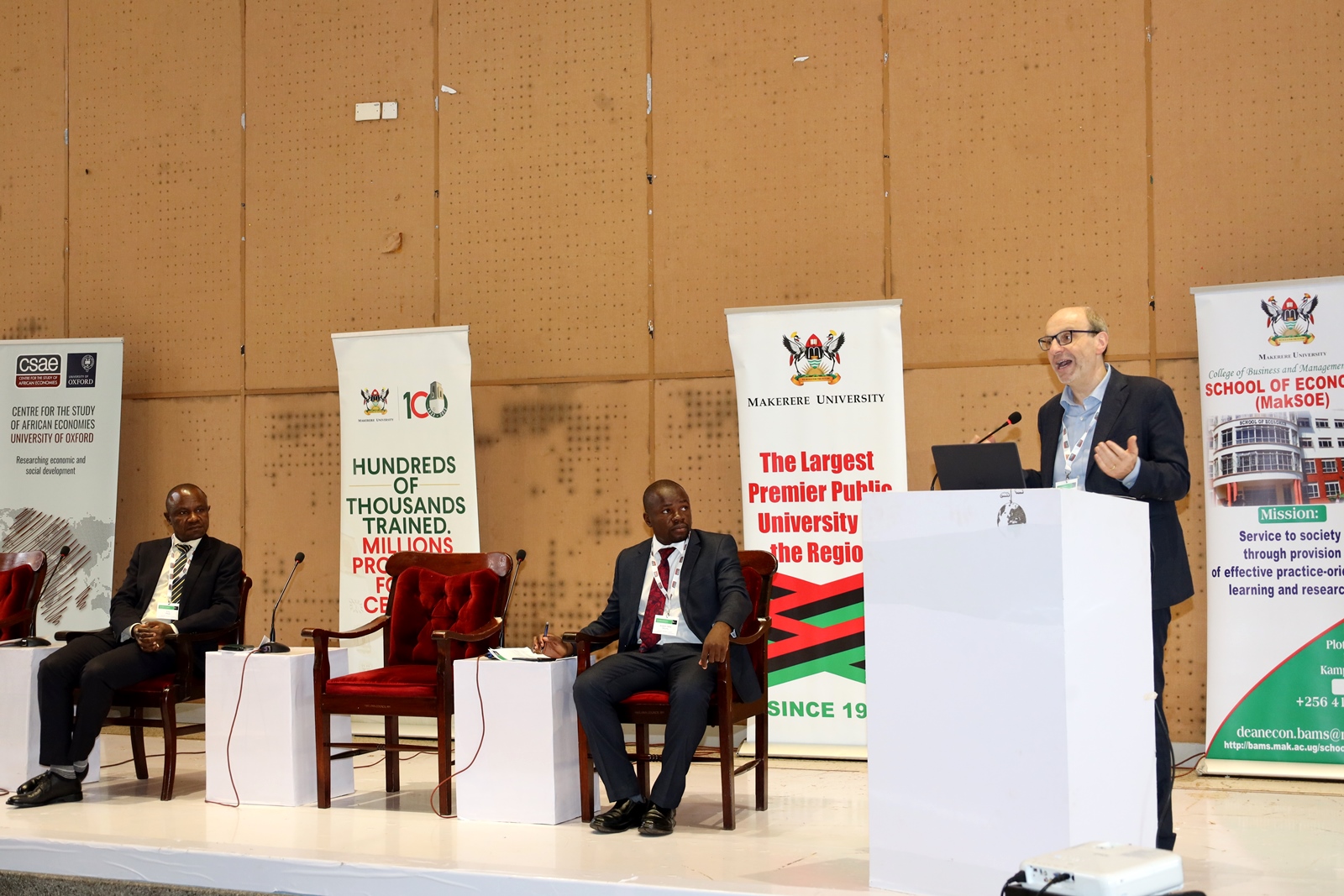
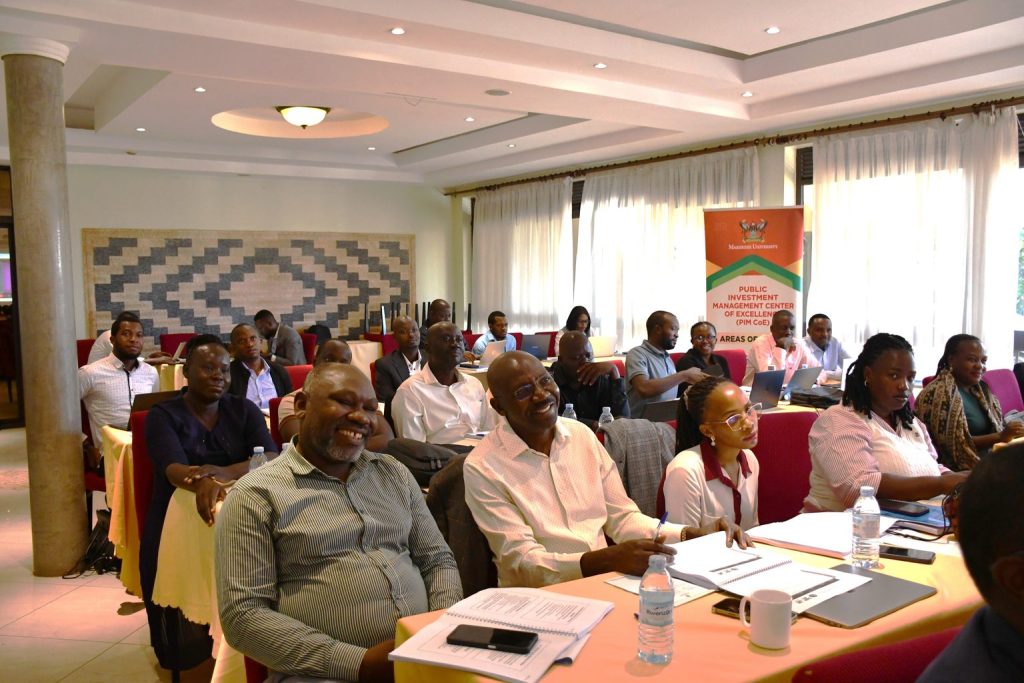
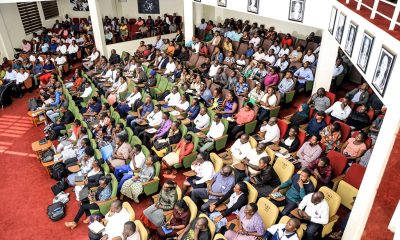
Makerere University has hosted this year’s Center for the Study of African Economies (CSAE) workshop that brings together scholars across the world.
The workshop started on November 27and is expected to run up to November 30 at Makerere University Yusuf Lule Central Teaching Facility II (CTF).
The Center has brought together economic scholars from Africa, Europe, North America, and Asia among others to discuss how the economy of Africa can be developed through conducting research.
According to Prof Eria Hisali, the Principal of the College of Business and Management Sciences (CoBAMS), they are looking at scholars doing research to the extent that it can help them to understand the problems hindering development, understanding the obstacles and finding the correct solutions to the development of the African countries.
“Researchers are presenting their research to get advice, get room for improvement and pave a way of translating the research finding into policies,” he said.
He noted that it is a great opportunity for researchers from different universities both on the African continent and outside the continent to present the work that they are doing and to understand the economies of the different countries.
This years’ conference is attended by about 40 speakers on the continent and around 10 speakers from Europe, Asia, and North America, Canada among others discussing different areas that are relevant to understanding the economies.
These include the Natural resources and environmental misuse, fiscal policies and monetary policies, agriculture, inequality and poverty and trade and structural transformation among others.
Prof Hisali said Uganda’s problems arise from her structural formation but there is need to look beyond just the physical problems like poverty and unemployment and establish the root cause of that.
“It is true we have unemployment in Uganda and we still need to grapple with issues of poverty but we need to appreciate that unemployment, poverty among others are not the primary problems, they are actually effects of certain underlying problems. So, we want researchers to understand what explains unemployment as we see it,” he explained.
Prof Stefan Dercon, the Professor of Economic Policy at the University of Oxford who doubles as the Director of CSAE revealed that African researchers need to improve the quality of their work and create avenues for associating with policy makers to appreciate their work for the development of their economies.
“Scholars are presenting their research and we give them feedback, share knowledge and learn from each other. A lot of research is still academic because we don’t create space for advisors. Very many economists are not good translators of research not only in Uganda but throughout the world,” he noted.
Prof Ibrahim Mike Okumu, the Dean of the School of Economics said this forum brings together scholars to discuss issues of the African economy among their colleagues who appreciate the African context saying, “They are here for quality checks. We have an opportunity to improve the quality of research papers that scholars across the African continent have developed. By improving the quality, we are trying to get authenticity, proof that the methodologies, the quality of analysis that we have is of standard and consequently we can have credibility regarding policy recommendation that will come from research papers.”
African scholars have come from Cameroon, Morocco, Ethiopia, Kenya, South Africa, Nigeria, and Botswana among others…
He re-echoed the message from the Principal concerning the problems affecting Uganda noting that they are not unique to Uganda, she (Uganda) is just struggling with sluggish structural transformation and that is the transition from agriculture to industry which he says is the same story across Africa.
“For as long as industries are not able to create sufficient jobs, the economy cannot pick up because the industry is what moves agriculture forward and is what gives business to the service sector. For as long as industry is not robust enough then you tend to have weak service and agricultural sectors,” he emphasized.
Dr Oluwabunmi Adejumo, a senior lecturer at Obafeemi Awolowo University in Nigeria who is conducting research on the clashes between herders and farmers from different states of the country from which over 10,000 fatalities were registered in 2020, advocates for a law of migrating herders to a separate place and stay away from farmers.
She noted that herders in Nigeria graze their cattle on the crops of farmers when the green space is exploited as a result of climate change like drying out of Lake Chad.
“I am suggesting a policy that I think will bring back sanity in Nigeria especially among herders and farmers,” she said.
This is the second time that this workshop is being held on the African continent, the first one was held in Ghana. The rest of other conferences have been held at Oxford University in the United Kingdom.
You may like
-
EfD Uganda Marks 2025 Milestones, Sets Strategic Path for 2025–2029
-
Makerere University Launches Knowledge-Sharing Platform to Drive Innovation and Economic Growth
-
Makerere University and Tsinghua University Launch Landmark China–Uganda Joint Laboratory on Natural Disaster Monitoring and Early Warning
-
Makerere University Leaders Call for Excellence in Research and Supervision as Academic Staff and PhD Students Receive Certificates
-
VC Flags off 220 Strong Contingent to 20th AUUS Games
-
US$ 162m KEXIM Loan Approval Timely for Makerere University
Business & Management
EfD Uganda Marks 2025 Milestones, Sets Strategic Path for 2025–2029
Published
2 days agoon
December 20, 2025By
Jane Anyango
Kampala, Uganda – December 19, 2025 — The Environment for Development (EfD) Uganda Centre at Makerere University has taken stock of its 2025 achievements and outlined its strategic direction for 2025–2029, with a strong focus on energy transition, climate change, and sustainable natural resource management.
The reflections were shared during the Centre’s annual end-of-year celebration, which brought together members of the EfD Steering Committee, deans from the School of Economics and the School of Agricultural Sciences, government officials, private sector actors, civil society organisations, researchers, and students.
Interdisciplinary Foundation Strengthens Impact
Addressing stakeholders, EfD Uganda Director, Professor Edward Bbaale, highlighted the Centre’s progress in institutional development, research, policy engagement, and capacity building. While acknowledging challenges encountered during the year, he noted that these provided valuable lessons as the Centre transitions into a new strategic phase under the EfD Strategic Plan (2025–2029).
Prof. Bbaale underscored the Centre’s unique positioning within Makerere University, noting that it is jointly anchored in the School of Economics and the School of Agricultural Sciences. This interdisciplinary foundation, he said, enables EfD Uganda to address complex development challenges such as energy transition, climate change, water resources, forestry, biodiversity, and agriculture from a holistic perspective.

“This approach aligns with Makerere University’s policy on research institutes and reflects global trends that increasingly demand cross-disciplinary collaboration,” he said.
He further highlighted existing academic synergies, with PhD students in Economics and Agricultural Economics sharing coursework, and announced the launch of a Master of Science in Environment and Natural Resource Economics, recently approved by the National Council for Higher Education. The programme, jointly developed by faculty from both schools, is expected to strengthen training in environmental economics and natural resource management.
Strategic Direction for 2025–2029
Prof. Bbaale unveiled the Centre’s strategic plan for 2025–2029, anchored on six thematic areas: energy transition; climate change adaptation and mitigation; climate-smart agriculture; water resources management; forestry and biodiversity; and environmental quality.

He noted that climate change remains a cross-cutting issue across all themes, adding that EfD Uganda will continue to work closely with stakeholders to ensure its research informs national policy and practical interventions.
Over the next five years, the Centre’s research will focus on land use and biodiversity conservation, climate-smart agriculture, climate change adaptation and mitigation, and energy transition-areas expected to generate evidence-based solutions for Uganda and the wider region.

Key stakeholders identified for collaboration include the National Planning Authority, the Ministry of Finance, Planning and Economic Development (Climate Finance Unit), the Ministry of Agriculture, Animal Industry and Fisheries, the Ministry of Water and Environment, the Ministry of Energy and Mineral Development, and district local governments.
Major Achievements in 2025
Prof. Bbaale reported that the Centre concentrated its efforts on the three pillars of Makerere University: research, policy engagement, and training.
Policy Engagement
The Centre organised two high-level dialogues on climate-smart agriculture and a policy dialogue on e-mobility under the Inclusive Green Economy (IGE) programme.
“We chose e-mobility because it is a green mode of transport,” Prof. Bbaale said. “Through the IGE programme, we worked with senior civil servants and policymakers to explore how Uganda can transition to a greener economy.”

The programme also facilitated cross-country peer learning among Ethiopia, Tanzania, Kenya, Rwanda, and Uganda. He cited Rwanda’s rapid electrification of motorcycles through taxation and subsidies, and Tanzania’s success in universal rural electrification, as key lessons.
Capacity Building
The Centre conducted more than ten training sessions for fellows, researchers, policymakers, and graduate students. It also recruited a funded postdoctoral fellow Dr. Gemeda Olani Akuma. from Ethiopia, to work on natural capital issues.
“Postdoctoral fellows are critical to knowledge generation,” Prof. Bbaale noted. “If Makerere strengthens its postdoctoral programme, our research output will more than triple.”
He referenced benchmarking visits to South African universities with strong postdoctoral systems, noting that Makerere is steadily moving toward becoming a research-led institution.
New Projects and Institutional Growth
EfD Uganda launched five new projects and expanded its institutional partnerships during the year. These included Sida-funded initiatives, a consultancy with GIZ, the Centre’s first MakRIF-funded project, and grants from the Gates Foundation and the Carnegie Corporation.

In institutional development, the Centre inaugurated 13 new advisory board members, strengthening governance and oversight. Prof. Bbaale also introduced the Centre’s core staff, praising their dedication and commitment to capacity building, including the mentorship of interns and teaching assistants some of whom have since joined institutions such as the Bank of Uganda.
Strengthening National and International Engagement
The Centre deepened collaboration with national institutions, including the National Planning Authority, the Ministry of Finance, Parliament, and the National Water and Sewerage Corporation. Among ongoing initiatives is a study aimed at improving bill payments at the utility to unlock new investments and service improvements.
EfD Uganda is also working with district local governments to build capacity in environmental valuation and natural capital accounting, supported by MakRIF funding from the Government of Uganda.. Trainings were conducted for districts in central Uganda and in Fort Portal.

At the international level, the Centre hosted visiting scholars, including Prof. Edwin Mchapondwa from the University of Cape Town, who trained government officials on community-based conservation, and Prof. Mark Purdon from the University of Montreal, who launched a book on carbon markets.
EfD’s Natural Capital Accounting Model Adopted by Government
A major highlight was the development of a natural capital accounting model, supported by GIZ and now adopted by the Ministry of Water and Environment. The Excel-based MoneyCap model, developed in collaboration with the Ministry of Finance, UBOS, and the National Planning Authority, supports policy assessment by comparing investment scenarios in natural capital.
“This places us at another level,” Prof. Bbaale said, noting that the model aligns with global climate finance discourse and Africa’s emerging coalition of finance ministers for climate action.

Prof. Bbaale warned that Uganda’s agriculture sector must urgently adapt to climate realities, citing erratic rainfall and rising temperatures. He stressed that climate-smart agriculture is critical to safeguarding livelihoods and food security.
The Centre also celebrated the graduation of a new cohort of Inclusive Green Economy Fellows, supported by Sida, and announced five new grants, including a Carnegie-funded project on household and SME energy efficiency and a grant for climate-sensitive macroeconomic modelling and the Makerere Research and Innovation Fund (MakRIF) from the Government of Uganda
Commitment to Policy-Relevant Research
In his concluding remarks, Prof. Bbaale reaffirmed EfD Uganda’s mission to generate research that delivers practical solutions for policymakers and communities.

“Our work asks a fundamental question: how much natural capital are we depleting in the pursuit of growth?” he said. “That is the frontier we are working on.”
He thanked the Centre’s team for their dedication and contributions throughout the year.
Centre Reaffirms Commitment to Collaboration
Dr. Peter Babyenda, Policy Engagement Specialist, reaffirmed EfD Uganda’s commitment to collaboration with policymakers, academia, civil society, and the media.

“Policy engagement includes working with the media,” Dr. Babyenda said. “We remain open to partnerships and invite stakeholders to engage with us.”
He thanked participants for attending the annual reflection event and encouraged continued networking.

Jane Anyango is the Communication Officer, EfD-Mak Centre
Business & Management
Makerere University Launches CoBAMS Working Paper Series, Marking a major Leap in Research Excellence
Published
2 weeks agoon
December 8, 2025
On 4th December 2025, the Deputy Vice Chancellor for Academic Affairs, Prof. Sarah Ssali launched the College of Business and Management Sciences (CoBAMS) Working Paper Series, a research product aligned with the UN Sustainable Development Goals (SDGs), Uganda’s 10-fold National Economic Growth Strategy (ATMS), and the Makerere University Strategic Plan.

The Series consists of over 60 research papers, many of which have already been accepted in internationally recognised peer-reviewed journals. The publications cover a broad spectrum of national priorities, including unemployment, climate change, population dynamics, taxation, entrepreneurship, public investment, corruption, refugee livelihoods, and the green economy.
A landmark moment for Makerere University

Addressing the participants comprising invited guests, staff, students and the media, who convened at the CoBAMS Conference Hall to witness the launch, Prof. Ssali commended the College leadership and staff for championing Makerere’s research vision. “Today is a landmark moment in the life of Makerere University,” she declared. She emphasized that Makerere’s move toward a research-intensive identity was deliberate. “A few years ago, we made a bold and historic decision to reorient the University toward research and innovation. Today’s launch is evidence that this decision has taken root—especially within CoBAMS.”
Prof. Ssali praised the College for providing a modest annual research grant to faculty members, an initiative that produced more than 60 working papers in the 2024/2025 financial year.
She urged the College to transition the Working Paper Series into homegrown journals, adding: “If you can produce 60 papers this year and 80 next year, you have enough content for at least three journals. Journals raise our visibility, raise our H-index, and ensure that anyone researching Uganda finds homegrown scholarship.”
The Deputy Vice Chancellor (Academic Affairs) highlighted pressing national issues requiring academic inquiry. “Uganda’s economy grows, but unemployment remains high. When we celebrate entrepreneurship, we are often celebrating survival. These are questions this Series must help confront.”
She also pointed to the importance of research in shaping national discourse: “If people are hungry and unemployed, they will go to the streets. We cannot sit here speaking English and pretend these issues will disappear.”
We are proud of this collective achievement
The Principal of CoBAMS, Prof. Edward Bbaale, described the Series as a major achievement rooted in collective effort and consistent commitment to research excellence. “What we are celebrating today is the result of your collective effort,” he told faculty. “This Working Paper Series is a nursery bed for journal articles, book chapters, and future scholarly outputs.”

He revealed that for the upcoming(2026) paper series, the College has funded over 90 research concepts and expects to produce more than 80 working papers in the 2025/2026 cycle.
Prof. Bbaale emphasised that the College’s four research centres—in Entrepreneurship and Innovation, Statistics and Demography, Public Investment Management, and the Environment for Development Initiative—form a strong foundation for sustained knowledge production. “These centres anchor high-level research, policy engagement, and interdisciplinary collaboration. They are the backbone of our research ecosystem.”
This journey started with a modest grant

Associate Professor James Wokadala, the Deputy Principal, traced the origins of the Series to a small but impactful College research grant introduced in November 2024. “This afternoon is a very important day for us. This Series is the product of our internal efforts and internal resources,” he said. “By May this year, the working papers had already been finalised by the various principal investigators.”
He noted that each paper went through school-level presentations, editorial checks, and harmonisation before being accepted into the Series. “Today, we are launching 60 of those papers, with many more to follow.”
CoBAMS is a powerhouse of knowledge production

Dr. William Tayeebwa, Chief Managing Editor of Makerere University Press, praised the College’s output and pledged the Press’s support in transforming the papers into high-quality books and journal articles. “The topics and issues contained in the Working Paper Series confirm that CoBAMS is truly a powerhouse of knowledge production.”
He committed to working closely with the College: “We can convert these working papers into journal articles, special issues, and thematic book volumes within six months. Makerere University Press stands ready to support you.”
Dr. Tayeebwa highlighted the broad range of topics covered—refugees, Myooga, malaria, tax compliance, corruption, and more—describing the Series as “a rich intellectual nursery bed.”
PhD Forum: Building the next generation of researchers

Speaking on behalf of postgraduate students, Ms. Sylvia Namujjuzi, Assistant Lecturer and Vice President of the CoBAMS PhD Students Forum, emphasised the importance of peer support in research training. “The PhD journey can be lonely,” she said. “This Forum brings students from the three Schools together to network, share knowledge, organise seminars, and hold mock defences.”
A milestone for Makerere’s research future
Prof. Ssali reaffirmed the University’s commitment: “As Makerere University positions itself among leading research institutions globally, initiatives such as the CoBAMS Working Paper Series give concrete meaning to our strategic vision.”
She officially launched the Series with a call for sustained excellence: “May it grow, mature, and inspire a new generation of researchers. May it elevate Makerere University’s intellectual footprint.”
Business & Management
EfD, MDAs & Private Sector Strategize on Scaling up the Adoption of Climate Smart Agriculture in Uganda
Published
2 weeks agoon
December 5, 2025By
Jane Anyango
Researchers, government officials and private sector actors convened in Kampala to draw a roadmap for accelerating the adoption of Climate Smart Agriculture (CSA) as Uganda struggles with rising climate shocks, stagnating agricultural productivity and worsening poverty levels.
The high-level annual workshop, held on December 4, 2025 at the Sheraton Kampala Hotel, was organised by the Environment for Development (EfD) Mak Centre through its regional Inclusive Green Economy (IGE) Programme. The initiative seeks to strengthen links between research and policy, improve knowledge uptake, and identify long-standing barriers limiting CSA adoption in Uganda.
The annual IGE transformation initiative requires public servants to demonstrate how they can translate training into practical solutions. This year’s focus is on advancing CSA as a vehicle for sustainable production, poverty reduction, gender inclusion and resilience across agricultural value chains.
The meeting brought together stakeholders from key ministries including Agriculture, Finance, and Water, Tourism along with researchers, academia, private sector suppliers of solar-powered irrigation technologies, civil society, farmers’ representatives and the media., with discussions focused on strategies to improve farmer uptake of CSA practices and to ensure the country’s agricultural sector remains a backbone for economic growth.
Uganda’s Agriculture at crossroads
Delivering the keynote address on behalf of the Commissioner, Ministry of Agriculture, Animal Industry and Fisheries (MAAIF), Emmanuel Odeng warned that Uganda’s agricultural sector, long considered the backbone of the economy, is now facing severe setbacks driven largely by climate change and weak investment in resilient food systems.
Odeng noted that agriculture still contributes significantly to Uganda’s development, accounting for 24% of GDP as of 2022/23, 35% of export earnings and employing over 80% of the population. “This sector remains the main pathway to poverty reduction; Uganda cannot develop without agriculture,” he said.
However, he observed that agricultural contribution to the economy has stagnated and, in some cases, declined sharply. GDP contribution has dropped from 34.1% in 2009 to 24% in 2022, a trend he said should alarm policymakers and CSA implementers.
“Yields are decreasing, water sources are reducing, heat waves are rising. Communities are becoming more vulnerable, and many households are slipping back into poverty,” Odeng said.

He cited recent statistics showing that while 8.4% of households moved out of poverty, 10.2% slipped back in, resulting in an additional 1.4 million Ugandans falling into poverty between 2019 and 2021.
Climate shocks worsening vulnerability
The keynote highlighted the increasing frequency of climate-related disasters including droughts, floods, landslides and the siltation of major water bodies such as Lake Kyoga as major threats to productivity and food security.
Uganda’s forest cover, wetlands and grazing lands are shrinking rapidly, with more than 6,000 gazetted wetlands facing severe encroachment. Odeng revealed that modelling conducted by the Ministry shows a consistent decline in natural resource size and quality over the last decade.
“There is a strong relationship between natural resource degradation, economic loss and poverty. This vicious cycle must be broken through science-based approaches,” he said.
The Ministry, he added, is working with development partners to deploy dredgers in key water bodies to restore aquatic ecosystems and fisheries, which have been heavily affected by sedimentation.
CSA Seen as the path to recovery
Odeng called for the urgent scaling-up of CSA approaches across crop, livestock and fisheries value chains, emphasising innovations in agroecology and soil rehabilitation, irrigation and water harvesting, mechanisation, climate-resilient seed systems, afforestation and agroforestry and post-harvest management and value addition.
MAAIF aims to increase production across value chains by 40%, anchored on resilient value chains and updated CSA compendiums being developed by the National Agricultural Research Organisation (NARO).

He urged researchers to identify priority areas that can help farmers withstand climate shocks, boost household incomes and support Uganda’s agro-industrialisation agenda under the National Development Plan (NDP).
Odeng tasks stakeholders with three critical questions on boosting CSA adoption
Odeng left participants with three pressing questions that he said must guide Uganda’s CSA agenda. First, he challenged researchers to identify which research areas can practically help farmers build resilience and escape poverty, noting that many households continue to slide back into vulnerability due to climate shocks.
Odeng’s second question focused on productivity, calling on stakeholders to determine which Climate Smart Agriculture approaches are most relevant for raising farmers’ yieldsacrossthe country’s struggling value chains.

His third assignment centred on food security and market losses, urging experts to outline which CSA-related strategies can best improve post-harvest handling, an area he said continues to undermine farmers’ incomes despite increased production efforts.
The three questions, he emphasized, should frame the day’s discussions and guide future policy, research and investment priorities.
“We must ask ourselves: Which resilience-building approaches will help farmers move out of poverty? Which CSA options will sustainably increase productivity? These are the questions we must answer today,” he said.
EfD warns of rising climate risks, calls for stronger research–policy linkage
The Environment for Development (EfD) Mak Centre called for urgent, coordinated action to strengthen CSA as Uganda faces intensifying climate impacts and deteriorating natural resources. Delivering remarks on behalf of the EfD Director, Dr. John Sseruyange urged closer collaboration between researchers and policymakers to address the country’s growing vulnerabilities.

Sseruyange described the workshop’s focus on CSA as “very timely,” noting that climate change has moved from an abstract debate to a lived reality affecting farmers, households and entire ecosystems. “Climate change is no longer something distant. It is happening today, and as a country that depends heavily on agriculture, we must direct our knowledge and skills to climate smart solutions,” he said.
Sseruyange explained that EfD’s annual workshops are purposely designed to reduce the long-standing disconnect between academic research and policy implementation. When researchers work in isolation, he warned, their findings risk remaining unused.
“When you do research without involving stakeholders, your work may remain on the shelves,” he cautioned. “But when policymakers tell you what they want, they own the final product and it informs real decisions.”

He urged government ministries, district officials, academic institutions and other actors present to actively guide researchers on emerging CSA priorities.
Climate change already deepening Uganda’s vulnerabilities
According to Dr. Sseruyange, climate change is already manifesting through declining agricultural productivity, degraded soil and water resources, and weakened resilience across farming communities. These impacts, he said, continue to slow Uganda’s development and threaten progress in poverty reduction.

Sseruyange noted that despite agriculture being the backbone of the economy and the largest employer, its performance remains unstable and highly sensitive to weather variability. He warned that shrinking water bodies, degraded wetlands and reduced forest cover are undermining rural livelihoods and stressing agricultural systems.
“Ecosystems are degrading fast. Many of our gazetted wetlands and forest reserves are shrinking, and water sources are getting more strained,” he said. “These challenges directly affect agricultural output and household income.”
Need for targeted research and CSA interventions
Sseruyange emphasized that Uganda cannot advance CSA without research that responds to actual field challenges, especially in the context of increasing droughts, erratic rainfall and soil depletion. He urged researchers to prioritize practical, scalable innovations that strengthen resilience and sustain production.

He also highlighted the importance of improving post-harvest handling, mechanization, soil health and climate-resilient farming techniques, saying these areas should guide future research and policy support.
Concluding his remarks, Sseruyange tasked participants with three questions that he said should shape Uganda’s future CSA agenda and guide the work of researchers and policymakers alike:
- Which research areas can help farmers become more resilient and overcome poverty?
- Which CSA approaches are most relevant for boosting farmers’ productivity?
- Which climate-smart strategies can improve post-harvest handling and reduce losses?

He said these questions will help determine the direction of upcoming EfD research and strengthen the evidence base needed for effective climate-resilient agriculture.
Sseruyange thanked participants for their engagement and reaffirmed EfD’s commitment to supporting Uganda’s transition to sustainable, climate-smart farming systems.
Low CSA uptake threatens Uganda’s food security, livelihoods and long-term growth – Dr. Peter Babyenda
Policy Engagement Specialist Dr. Peter Babyenda sounded the alarm over Uganda’s slow adoption of Climate Smart Agriculture (CSA), warning that the country risks missing its food security and development targets unless farmers, policymakers and extension workers urgently scale up climate-responsive farming practices.

Babyenda said Uganda cannot afford to delay implementing CSA strategies, given the rising threats of drought, floods, erratic rainfall and pest outbreaks that continue to devastate farms across the country.
“CSA offers triple wins – increased productivity, greater climate resilience and potential climate mitigation,” Babyenda said. “But despite these clear benefits, adoption among farmers remains very low.”
Babyenda cited EfD studies and stakeholder interviews showing that farmers face major constraints, including logistical barriers, limited affordability of CSA technologies, inadequate extension services, and low awareness or motivation to adopt climate-resilient practices.

“We need to invest in CSA-focused extension services, support farmer training, raise awareness, and design policies that deliberately include women and youth,” he emphasized.
According to Babyenda, agriculture remains the backbone of Uganda’s economy contributing 23.8% of GDP and employing 68% of the working population. It is also central to the country’s value-addition agenda under the Fourth National Development Plan.
But the sector is undergoing strain from climate change.

“Over 96 percent of farming households rely on rain-fed agriculture, making farmers extremely vulnerable to climate variability,” he said, citing rising temperatures, shifting rainfall patterns, droughts, floods, landslides and increasing pest and disease outbreaks.
He warned that these climatic pressures threaten food security and Uganda’s long-term economic ambitions, including the country’s “tenfold growth” aspiration by 2040.
Rising population adds pressure
Uganda’s rapidly growing population projected by the UN to potentially double in coming decades has intensified demand for food even as climate impacts reduce agricultural productivity.

“Farmers face a dual challenge: feeding a growing population while adapting to worsening climate shocks,” Babyenda noted.
He added that agriculture itself contributes to climate change through unsustainable farming practices, creating a “complex cycle” that demands urgent policy and behavioural reforms.
Government moving, but gaps remain
Dr. Babyenda acknowledged that government ministries particularly Agriculture, Water and Environment, Energy, and Finance are already promoting CSA to improve productivity, resilience and emissions reduction.

CSA practices such as conservation agriculture, improved seed varieties, water-conserving irrigation, agroforestry and integrated pest management offer Uganda a path to more resilient food systems.
However, he stressed that these interventions must be scaled up and better aligned with local realities.
“We need localized, context-specific partnerships that make CSA accessible and practical for farmers, especially smallholders,” he said.

Dr. Babyenda said the workshop was crucial for ensuring that Uganda’s agriculture sector can withstand climate shocks while supporting economic transformation.
“Scaling up CSA is not just desirable—it is essential for Uganda’s economic and environmental stability,” he concluded.
Transformation Initiative to tackle adoption barriers for smallholder farmers– IGE Fellow
In a bid to enhance agricultural productivity and resilience to climate change, Opeet Thomas, an IGE fellow presented the Transformation Initiative (TI) aimed at accelerating CSA adoption among smallholder farmers in Uganda.
Opeet highlighted that agriculture, which employs over 70% of Uganda’s population, remains highly vulnerable to climate shocks, including erratic rainfall, prolonged dry spells, livestock heat stress, floods, and droughts.

“The challenges are not hypothetical; they are very real for our farmers,” Opeet said, citing a 2019-2020 survey indicating drought as a major contributor to agricultural shocks. “Even this year, planting seasons have been disrupted by unpredictable rains and extreme heat, making it very difficult for farmers to sustain production.”
The Transformation Initiative, a research-based activity developed by IGE fellows, aims to identify solutions to critical issues affecting CSA adoption. Opeet explained that limited uptake of CSA is partly due to low farmer awareness, inadequate extension services, high input costs, and the incapacity of extension workers themselves to disseminate knowledge effectively.
“Extension workers play a pivotal role in bridging the knowledge gap, yet many lack the skills, transport, and institutional support to reach farmers,” he noted, adding that policy and institutional frameworks often fail to prioritize CSA innovations, leaving essential initiatives underfunded or poorly implemented.

Opeet outlined a framework for technology adoption, emphasizing the interaction between technology providers, supportive policies, extension workers, and farmers. He stressed that even when technologies such as irrigation systems, composting, and the use of beneficial insects like the black soldier fly exist, adoption remains limited due to resource constraints, lack of awareness, and low capacity among implementers.
Highlighting the benefits of CSA, Opeet emphasized the “triple win” it offers: higher production and productivity, increased resilience to climate shocks, and reduced greenhouse gas emissions. He cited examples such as small-scale irrigation and innovative insect-based feed for livestock and fish as practices with high potential, provided they are scaled up effectively.
Despite these opportunities, Opeet warned that challenges persist, including the high cost of inputs, limited water access, land constraints, and a general disinterest in farming among youth. He called for increased research, policy support, and education to bridge these gaps and make CSA accessible to all farmers.

“The goal of the Transformation Initiative is to generate evidence that informs policy and practical interventions so farmers can adopt CSA effectively,” he said. “If implemented, CSA can improve yields, strengthen resilience against climate shocks, and contribute to environmental sustainability.”
Workshop Takeaways: Strengthening Climate-Smart Agriculture (CSA) for National Impact
The workshop brought together key stakeholders to identify practical solutions for scaling CSA across Uganda. Participants emphasized the need for stronger policy engagement, improved extension support, and enhanced cross-sector collaboration to accelerate nationwide adoption of CSA practices.
Experts highlighted the importance of innovation, policy alignment, and farmer engagement as essential drivers of productivity and climate resilience. They noted that meaningful partnerships between researchers and practitioners are critical for translating technical knowledge into actionable interventions on the ground.

Discussions underscored the urgency of integrating CSA into existing national policies to safeguard food security and strengthen rural livelihoods. Stakeholders also pointed to the value of innovative practices such as irrigation technologies and the use of beneficial insects like the black soldier flies in boosting both productivity and resilience.
Participants identified three priority areas for advancing CSA: Research to enhance farmer resilience and reduce poverty; CSA approaches that sustainably improve agricultural productivity and Strategies to strengthen post-harvest handling and reduce losses.

The workshop further highlighted the need to invest in farmer-to-farmer extension models, community-based facilitators, and improved profiling of extension workers to ensure knowledge reaches even remote communities. Participants stressed that CSA solutions must remain affordable and practical, avoiding undue burdens on farmers or the national treasury.
The meeting closed with a strong spirit of collaboration, as stakeholders committed to refining CSA strategies and ensuring that research, policy, and practice continue to move in tandem to transform Uganda’s agricultural sector.
Jane Anyango is the Communication Officer, EfD-Mak Centre
Trending
-
General5 days agoMakerere University Leaders Call for Excellence in Research and Supervision as Academic Staff and PhD Students Receive Certificates
-
Humanities & Social Sciences1 week agoCollege of Humanities and Social Sciences Launches Five Groundbreaking Publications
-
Research3 days agoMakerere University Launches Knowledge-Sharing Platform to Drive Innovation and Economic Growth
-
Natural Sciences2 weeks agoJinja Fish Festival: Mak Recognized for its outstanding contribution to the Development of the Fisheries Sector
-
Health2 weeks agoProceedings of the National Annual Communicable and Non-Communicable Diseases and 19th Joint Scientific Health Conference 2025