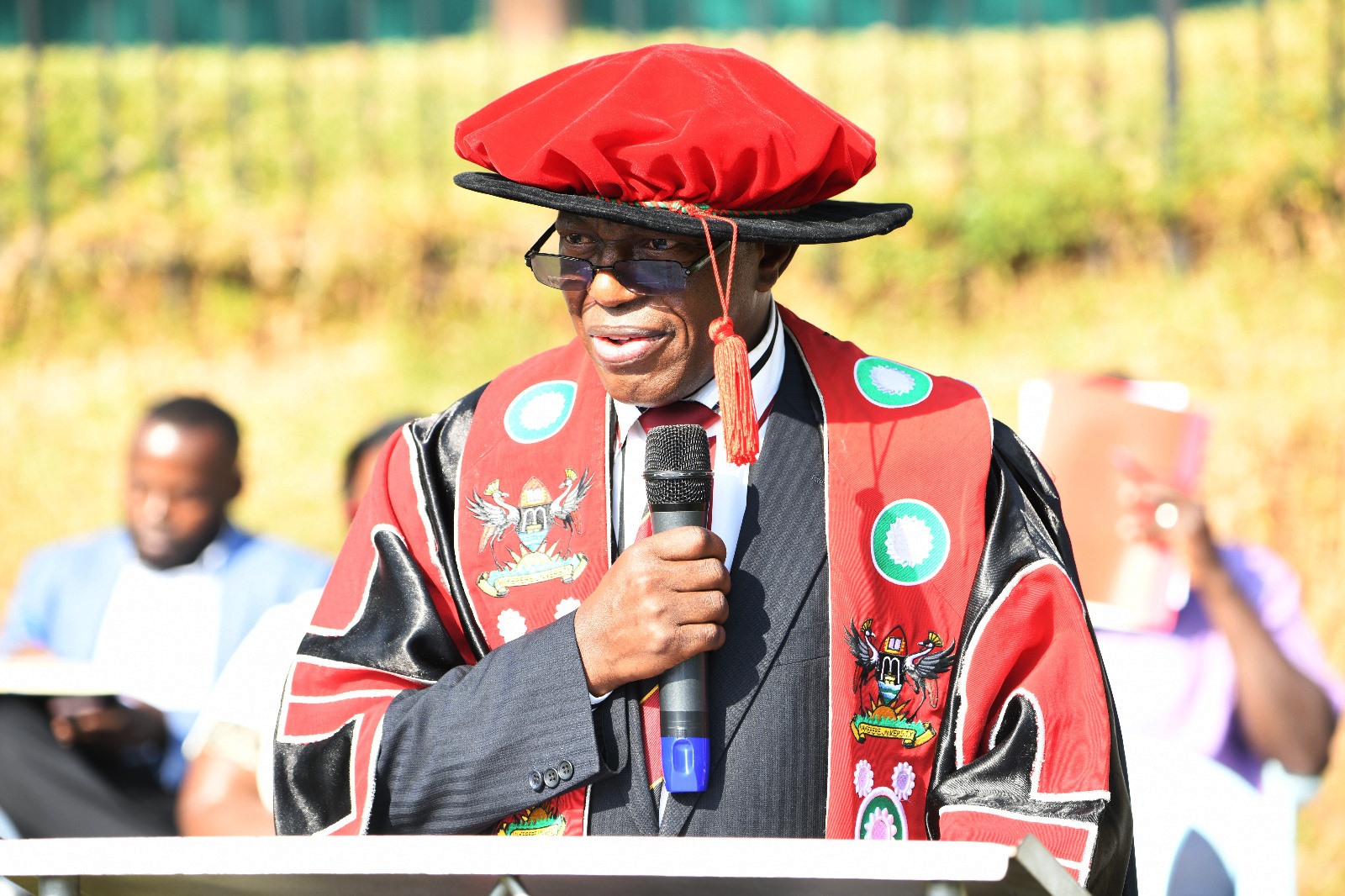
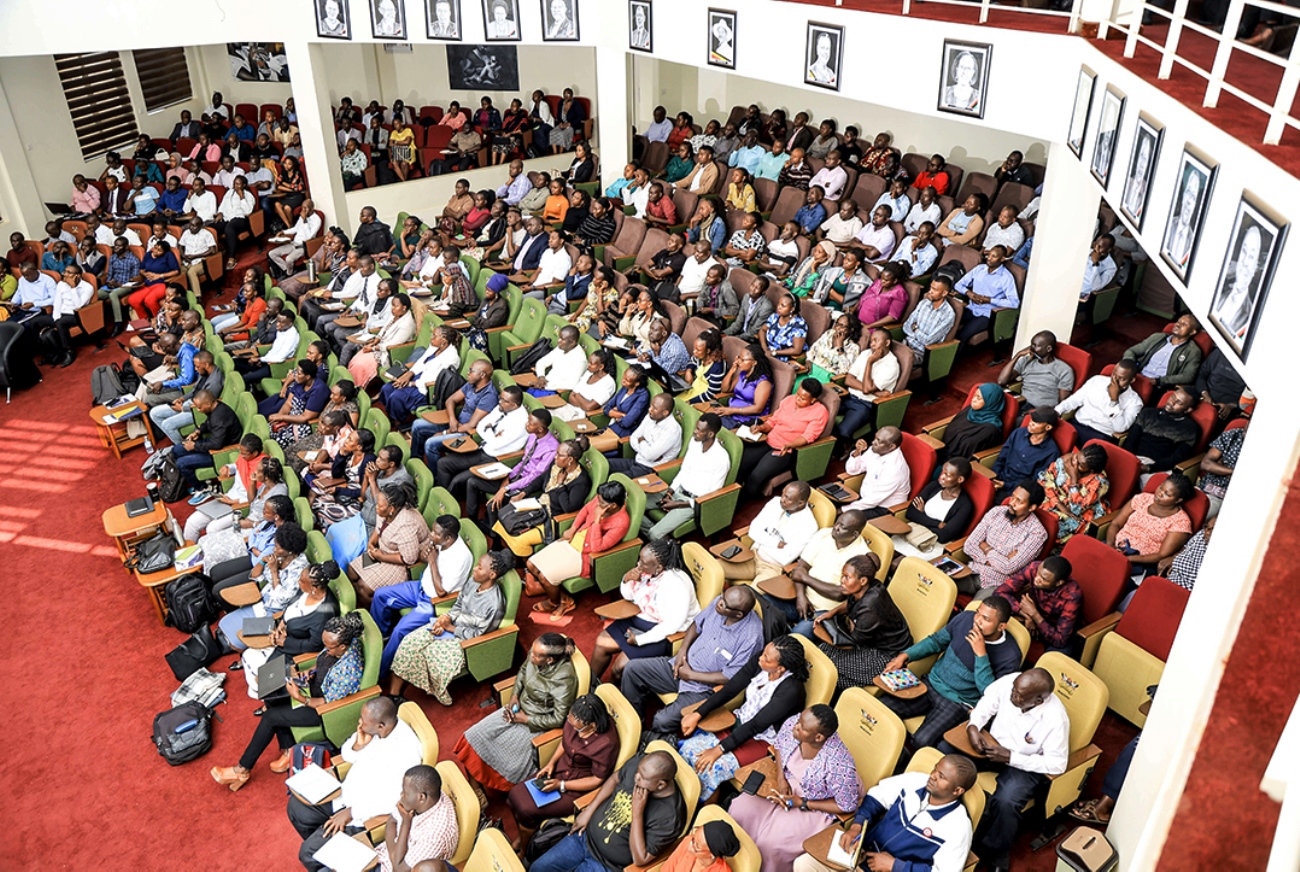
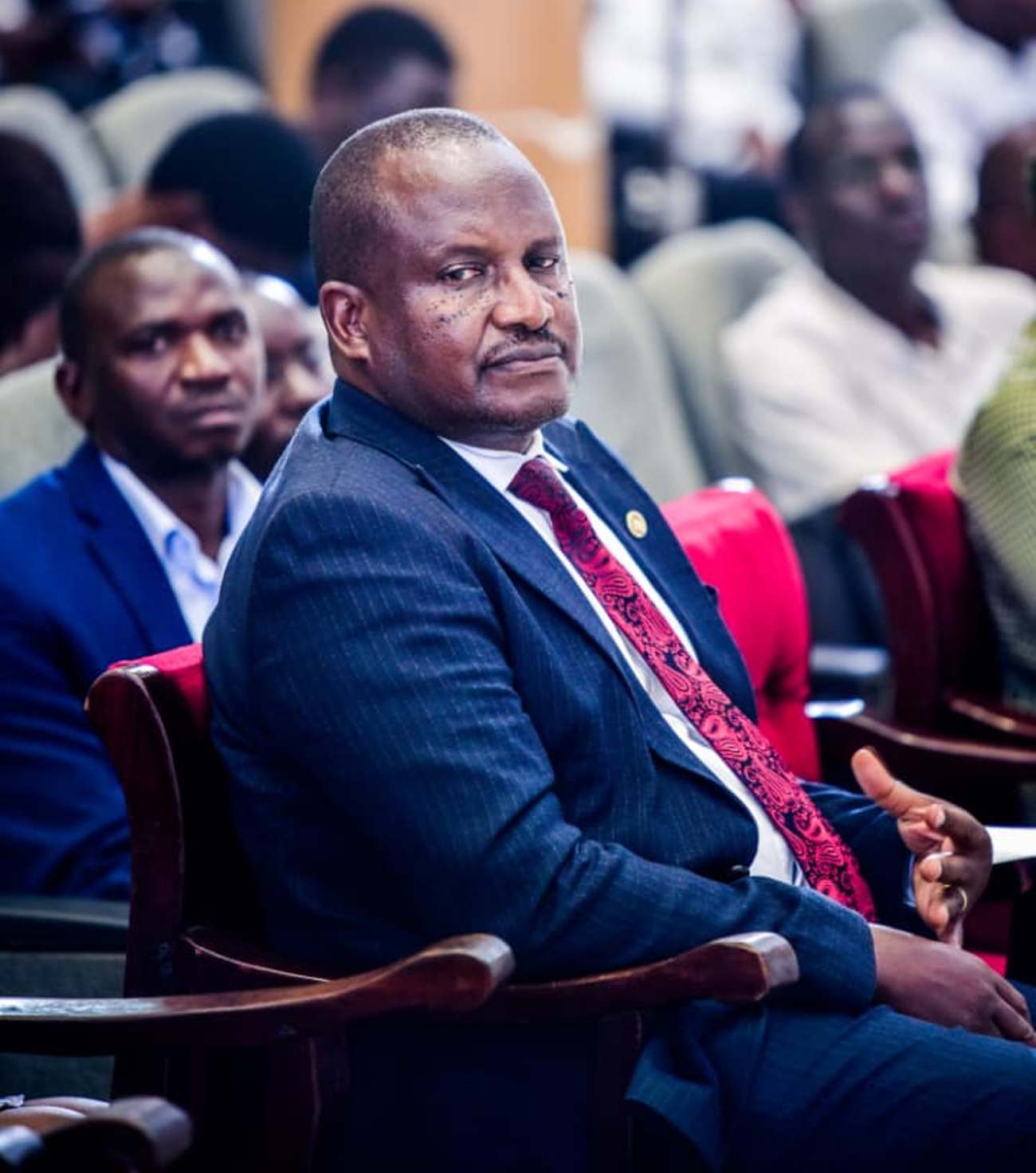
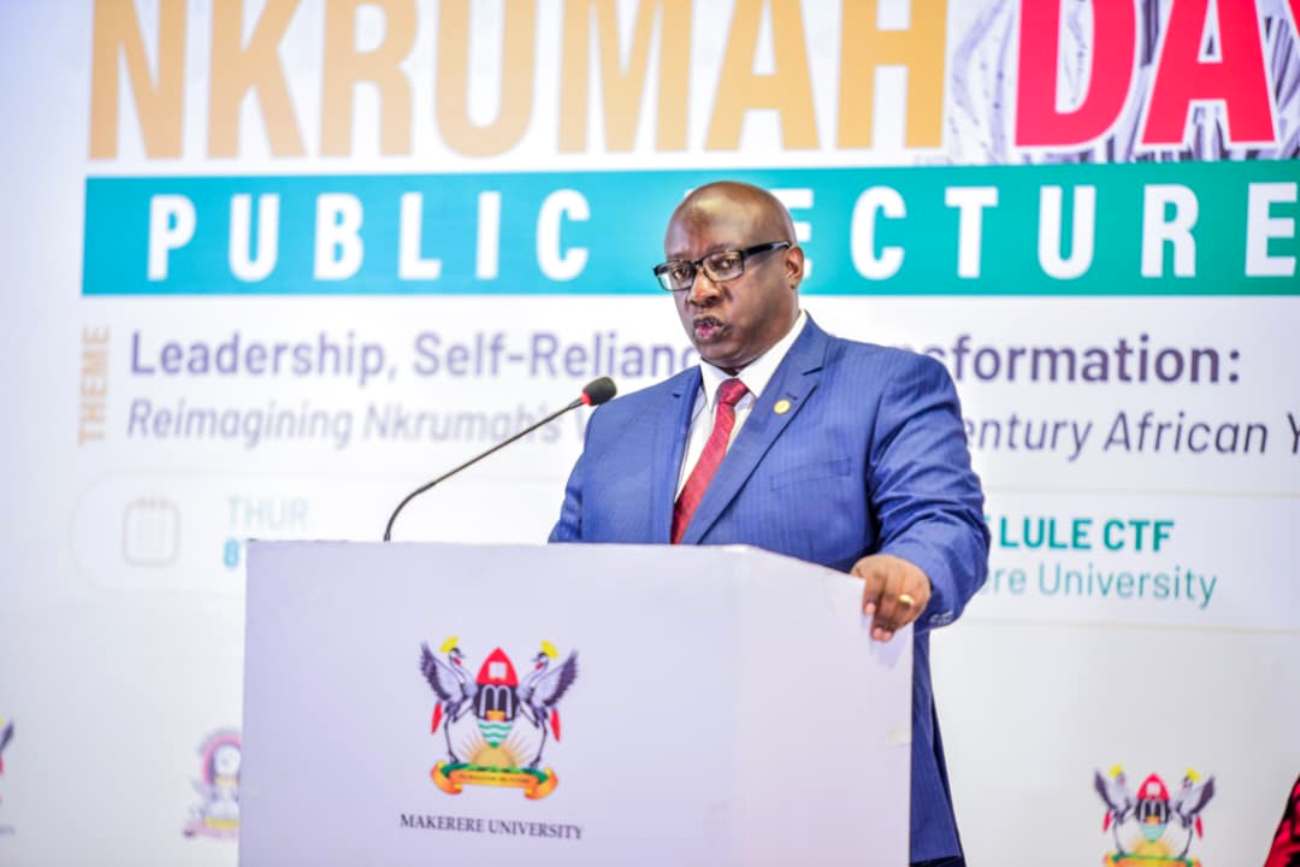
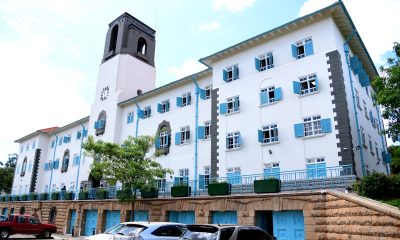
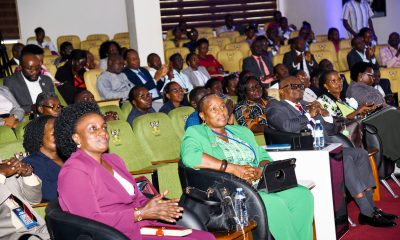
Prof. Buyinza Mukadasi, The Academic Registrar, Makerere University addresses Freshers during the Orientation Ceremony on 21st August 2023, Freedom Square, Makerere University.
REMARKS BY PROFESSOR BUYINZA MUKADASI ACADEMIC REGISTRAR AT THE ORIENTATION CEREMONY OF FRESHER STUDENTS, ACADEMIC YEAR 2023/2024 AT THE FREEDOM SQUARE, MAKERERE UNIVERSITY, KAMPALA ON MONDAY 21ST AUGUST, 2023
Members of University Council Members of University Management Principals, Deans and Directors Academic, Administrative and Support Staff of the University Students Ladies and Gentlemen
Dear Students; Class of 2023/2024
We are delighted that you have chosen Makerere University as you enter the next phase of your journey of intellectual growth, self-discovery and personal development. You have chosen very well! Your energy and excitement will enrich our vibrant campus life for the next years.
I wish to take this enviable moment and singular privilege to welcome you to Makerere University. It is an occasion that deserves celebration. What else can an Academic Registrar do after receiving 20,000 Undergraduate and Graduate students who excelled and were approved for admission by the University Senate of Makerere; famed to be one of the strictest in the world.
You are joining a 100-year old University with a long history and well-entrenched culture and tradition of academic excellence and of nurturing exceptional intellectual talent of young people like you. You are joining us at a time when higher education is undergoing rapid and dramatic transformation. We live in an era when knowledge is growing in importance in addressing the world’s most pressing problems, when technology promises both wondrous possibilities and profound dislocations, when global forces increasingly shape our lives and work, when traditional intellectual fields are shifting and converging, and when public expectations and demands of higher education are intensifying.
So, today you are making your first step in a journey of several years. The time and place where this transformative journey begins is known. It is today and at Makerere University. The end however will only be determined by you.
To set out on a journey, you must know the destination, the means of getting there and the resources you need to get there. In the case of an academic journey the destination is graduation while time, commitment and attitude form the other requirements.
I know most of you are not at ease. You are preoccupied with the idea of being in an unfamiliar environment. For most of you, this might be the first time you are away from your family. You must be wondering about what it is like to be away from the familiar and predictable life or comfort zone at home. However you are not the only ones who have left familiar territory to join university.
We want you to achieve your academic and personal potential, to develop networks of friends, new interests and life skills. In order to achieve this we recommend that you work hard; find time to relax; and make use of the support services that are available to you. It is therefore critically important that you take time to familiarize yourself with the materials in this manual.
We pledge to create an intellectually and socially vibrant environment, provide the resources, focused leadership for you to achieve your dreams. In you, I see vibrant young people with a lot of energy and enthusiasm. I hope that you will use the energy you have to your best for the benefit of yourselves and humanity. We want you to thrive and succeed here, academically, socially and personally.
As you can see, there are numerous opportunities at the university. These come in many forms; They may come in the form of sports and games, areas that develop talent like music and drama, professional circles where you interact with your future employers, social networks with the potential of providing a future spouse, spiritual growth and even honing your acumen in student politics. This however is easier said than accomplished. Like mines in a war zone, university life is littered with challenges that will make your dream difficult to realise.
University life has excess freedom which opens doors to sweet life. For the first time you have the opportunity to date and go out without the watchful eyes of your wife/husband or older siblings. But let me caution that this takes time and money. So strike a balance between social and academic life.
Life is more materialistic today than during our time. The products are also varied and more tempting. They range from sophisticated electrical appliances, drinks with strange colours catchy names, to fancy clothes and even gambling activities. The temptations will push your financial demands to the limit and sometimes even tempt you to divert your fees. Careful and prudent utilization of finances is your only way out.
Modern lifestyle if not handled carefully, could easily open doors to promiscuity whose outcome could be disastrous. The individual freedom coupled with the absence of someone to watch over you as well as unfamiliarity with the new environment may lead to confusion normally manifested in the form of failure to register for the right courses, missing classes, inability to keep timelines and so forth.
Then there is the issue of peer pressure, bad influence. Seek counsel, choose good company.
When one gets overwhelmed by all the challenges narrated above they become easy prey for drug abuse, sexual misconduct, radicalization and recruitment into devious groups. At the moment this is the biggest threat to the completion of your journey at Makerere University.
Finally, I wish you an exciting, rewarding, challenging and stimulating time at this University, which will be the start of what I hope will be a lifelong experience as members of Makerere University. However, just like in any other urban city take great care of your personal security while in Kampala; we shall play our part.
We offer you our very best wishes for every success during your time at Makerere University and we look forward to seeing your smiling faces during our daily walks on our beautiful campus! “We Build For the Future”.
Professor Buyinza Mukadasi (PhD) ACADEMIC REGISTRAR
After an engaging opening day that explored the growing role of artificial intelligence in shaping the future of work, the second day of Makerere University Careers Fair – 2026 focused on scholarship and fellowship opportunities for students and graduates.
Day one of the Careers Fair highlighted how emerging technologies, particularly AI, are transforming industries and the skills that young professionals need to remain competitive in the evolving global job market. Building on these conversations, Day Two of the Careers Fair, held on Thursday, 12th March 2026, provided participants with practical guidance on accessing funding opportunities for further study, research, and professional development, both locally and internationally.
The day featured a series of presentations, information sessions, and interactive engagements delivered through a panel discussion. This approach was designed to help participants better understand the wide range of scholarship and fellowship opportunities available to support their academic and professional journeys. Participants interacted directly with program representatives and alumni who have previously benefited from international scholarships and fellowships.
Throughout the discussions, speakers encouraged students to prioritize early preparations for such opportunities by identifying programs that align with their academic interests, leadership aspirations, and long-term career goals. They emphasized that while academic excellence is important, most of the scholarship and fellowship programs also look out for individuals who demonstrate leadership potential, community engagement, and a clear commitment to addressing societal challenges.
Speaking during the session, Prof. Justine Namaalwa Jjumba, Program Director, Mastercard Foundation Scholars Program at Makerere University, highlighted the scholarship opportunities available for both undergraduate and graduate students. Prof. Namaalwa stated that the Mastercard Foundation extends scholarships across the entire University, and this year, the Program would soon advertise 260 scholarships, with 70 per cent reserved for female students and 30 per cent for male students.
Prof. Namaalwa highlighted the Program’s dedication to inclusion, referencing the Mastercard Foundation initiatives that aim to serve all categories of prospective applicants in the quest to promote gender equity in higher education. “Beyond the gender percentages, we are very keen on inclusion,” she stated, noting that 25 per cent of the scholarships are allocated to refugees and internally displaced persons, while 10 per cent are reserved for young people with disabilities.
Prof. Justine Namaalwa Jjumba (R).
She explained that the Mastercard Foundation initiatives prioritize students from economically dis-advantaged and hard-to-reach regions such as Karamoja, Teso, Busoga, and West Nile, with 20 per cent of the scholarships designated for applicants from such areas. An additional 20 per cent are for students from refugee-hosting communities, 10 per cent allocated to international students, and the remaining opportunities remain open to other Ugandan applicants.
In addition, Prof. Namaalwa announced graduate scholarships under the Africa Climate Collaborative, which will provide 50 scholarships for master’s students and 12 scholarships for PhD students across the university. She revealed that the scholarships offer comprehensive support, including full tuition and functional fees, and urged prospective applicants to demonstrate academic excellence, leadership potential, and a commitment to community service.
She encouraged participants to carry on the mantle of sharing the information widely within their communities, particularly with bright learners who may lack the financial means to pursue university education. “So, I call upon every one of you present today to extend a hand of charity by sharing this information,” she urged.
Representatives from the United States Exchange Program shared a wide range of scholarship, fellowship, and leadership opportunities available to students and young professionals who aspire to study or undertake any programme in the United States.
Ms. Blessing Owomugisha Immaculate, President of the U.S. Exchange Program Alumni Network in Uganda, explained that Uganda currently has a vibrant Alumni Network of more than 6,000 members comprising individuals who have previously participated in Exchange Programs in the United States and returned to contribute to community development and mentorship.
She stated that there are several United States-sponsored exchange programs available for students, graduates, and professionals, primarily focusing on leadership, academic research, and professional development. The key programs include the Fulbright Foreign Student Program (master’s/research), Mandela Washington Fellowship (young leaders), Study of the U.S. Institutes (SUSI), Pan-Africa Youth Leadership Program, Academy for Women Entrepreneur Program, Young African Leaders Initiative (YALI), Hubert H. Humphrey Fellowship,EducationUSA Scholars Program, and many more tailored to meet the diverse needs and aspirations of Ugandan youth.
The Makerere Careers Fair was inclusive: Ms. Blessing Owomugisha Immaculate flanked by a sign language interpreter.
EducationUSA Scholars Program
In the same session, participants received valuable guidance on pursuing higher education in the United States during a presentation by Mr. Ezra On’rel Nuwenyine, an EducationUSA Adviser in Kampala. Mr. Nuwenyine mentioned that EducationUSA is a global network of over 430 advising centres in more than 175 countries, including Uganda, providing accurate and comprehensive information for international students aspiring to study in the U.S.
He presented the benefits of studying in the United States and guided the participants through the five key steps to consider for their studies abroad. The steps included researching suitable academic institutions that match one’s interests, financial support for their studies, completing application forms with the necessary supporting documents, applying for a student visa, and preparing for their departure to the U.S for their academic journey. He highlighted important resources such as educationusa.state.gov, collegeboard.org, and finaid.org, which can be visited for accurate and credible information.
“Make sure to always check the eligibility criteria before applying to any university and focus on finding institutions that match your academic, financial and personal goals,” he advised, while encouraging participants to carefully plan their academic journey.
Mr. Ezra On’rel Nuwenyine.
Young African Leaders Initiative (YALI)
Sharing his personal experience, Mr. Joseph Luswabi, a veterinary medicine student at Makerere University, shared about his remarkable participation in the Young Africa Leaders Initiative (YALI). He explained that the program provides leadership and professional development opportunities to young people across Africa.
Mr. Luswabi informed students that his selection to participate in the YALI program required persistence, revealing that he applied four times before being selected in 2024. He shared that his experience, which included intensive training on leadership and networking with fellows across the continent, has broadened his perspective beyond his academic discipline.
“Before you leave the University, make sure you apply and gain an opportunity to participate in any fellowship program,” he said. He encouraged students to take advantage of fellowship opportunities while still at the university, emphasizing that such experiences provide exposure, leadership training, and access to influential professional networks that can significantly shape their career path.
Mr. Joseph Luswabi (2nd L) shares his experience.
Hubert H. Humphrey Fellowship
Another speaker, Mr. James Katumba, President – Hubert Humphrey Fellowship alumni association in Uganda, shared insights about the prestigious fellowship designed for mid-career professionals. The program, named after former U.S. Vice President Hubert Humphrey, focuses on leadership, public service, and professional development.
Mr. Katumba elaborated that the fellowship takes professionals to the United States for a 10-month non-degree academic study, during which fellows are placed at different universities where they can attend courses, engage with faculty members, and undertake professional placements aligned with their career goals.
Reflecting on his journey, Mr. Katumba encouraged students not to be discouraged by rejection during competitive applications, and emphasized that persistence often pays off, sharing that many successful fellows apply multiple times before being selected.
Mr. James Katumba (R) contributes to the panel discussion.
The second day of the Fair also featured presentations from several partner universities – Ashesi University, Association of Chartered Certified Accountants (ACCA), and industry players – Tamani Solutions and AniScholar, who presented study and employment opportunities available to students and graduates. These equipped participants with the knowledge and resources needed to take the next step in their academic and professional journeys. Ms. Ritah Namisango, a Public Relations and Communication Specialist at Makerere University moderated the proceedings of the Career Fair.
Writer: Christopher Kaahwa is an alumnus of the Mastercard Foundation Scholars’ Program at Makerere University
Makerere University in collaboration with University of Liverpool received funding from the UK Medical Research Council to build research capacity in Drug Safety Science in Uganda. The goal of this project is to equip and nurture emerging research leaders and professional scholars in Uganda to generate high-quality, contemporary evidence in Drug Safety Science that is translatable into policy and practice.
Research modalities span Biomedical Sciences, Clinical Medicine, Epidemiology and Biostatistics, Social Sciences, Implementation Science, and other policy-related disciplines. The project prioritises the fields of pharmacovigilance, pharmacoepidemiology, clinical pharmacology and therapeutics, pharmacogenomics, and clinical disciplines focused on medication use and medication safety.
Applications are invited from ambitious Masters candidates to join our high-impact research project focused on understanding the adverse drug reactions of dolutegravir and isoniazid in people living with HIV in Uganda. We will support graduate students of:
In a landmark event symbolizing Uganda’s stride towards sustainable transportation, Hon. Dr. Monica Musenero Masanza, Minister of Science, Technology, and Innovation, commissioned the first Electric Fast-Charging Station at Makerere University on Friday 13th March 2026. The ceremony, held at the Senate Building Parking Lot, marks a pivotal moment in the nation’s e-mobility journey, blending academic innovation with industrial application and governmental support.
The station, a DC Fast Charger C6-180 installed in collaboration with Kiira Motors Corporation (KMC), is designed to power electric vehicles efficiently, supporting Uganda’s shift from fossil fuels to renewable energy sources. This setup ensures high-power DC charging ideal for fleet operations.
Hon. Dr. Musenero, in her keynote remarks, highlighted the profound significance of the occasion, tracing its roots back to 2011 when Makerere unveiled the Kiira EV – Uganda’s first electric vehicle prototype. “This infrastructure is the physical manifestation of a journey that began on this very hill nearly two decades ago,” she stated, emphasizing how the university’s initial proof-of-concept challenged skepticism about Africa’s role in automotive technology.
Participants who included differently-abled students pose for a group photo in front of the Kayoola Diesel Coaches.
The event, she noted, completes a narrative full circle, with the birthplace of the Kiira EV now hosting the infrastructure to sustain a modern electric fleet. The commissioning aligns seamlessly with Uganda’s National E-Mobility Strategy, which aims to localize 65% of the e-mobility value chain by 2040 and create over 500,000 high-quality green jobs.
Hon. Dr. Musenero underscored the strategy’s focus on reducing dependence on imported fossil fuels while enhancing environmental well-being. “We are transforming Uganda into a net source of e-mobility solutions,” she declared, pointing to the potential for Ugandan intellect to produce vehicle parts and charging systems domestically.
In his remarks at the event, the Vice Chancellor Prof. Barnabas Nawangwe described the launch as a “multi-faceted achievement,” not only advancing the institution’s inclusive agenda but also setting an example for public institutions in adopting e-mobility. In so doing, Makerere University has positioned itself at the forefront of this transition.
On September 26, 2025, President Yoweri Museveni commissioned the Kiira Vehicle Plant in Jinja and handed over three Kiira Motors Corporation (KMC) buses to Makerere University to enhance staff and student mobility. The fleet included two diesel-powered Kayoola Coaches and one electric Kayoola EVS 8.5m bus donated by KMC specifically to aid the movement of differently-abled staff and students. This move demonstrates academia’s capacity to integrate home-grown solutions into daily operations, impacting the economy through practical science.
Hon. Dr. Musenero hands over the keys to the KMC buses to Prof. Barnabas Nawangwe.
The commissioning of the fast-charging station is rooted in a long history of collaboration. The Kiira Electric Vehicle Project, hatched in the former Faculty of Technology, has evolved into a national movement for automotive manufacturing. Hon. Dr. Musenero praised this progression: “We have moved beyond proving that an electric vehicle can be built in Uganda. We are now ensuring our electric vehicles are deployed across the continent, solving Africa’s mobility problems.”
Academia’s role remains central, as Hon. Dr. Musenero elaborated. While government provides policy frameworks and the private sector offers capital, universities supply the essential knowledge. The E-Mobility Skilling Programme at Makerere University‘s Innovation Pod (Mak-UniPod) is training the next generation of electric vehicle engineers, who are tackling “moonshot projects” to redefine urban transport. Research into optimizing local resources, such as Uganda’s lithium and cobalt deposits for battery production, is also underway.
A key environmental highlight of this development is Uganda’s renewable energy advantage. With over 95% of the national grid powered by hydroelectric dams, every charge at this station utilizes clean energy. “We are using our own water to power our own vehicles, keeping our wealth within our economy rather than exporting it to purchase foreign oil,” Hon. Dr. Musenero remarked, framing the launch as Uganda plugging into the global renewable shift. She pledged the Science, Technology, and Innovation (STI) Secretariat’s continued collaboration with Makerere University, KMC, and partners to proliferate such stations across Kampala and beyond.
Addressing Makerere students, Hon. Dr. Musenero issued a challenge: “See this charging station as a symbol of your own potential. The engineers who built the first Kiira EV were once sitting exactly where you are. They did not wait for permission to be great.” She urged them to leverage available resources to innovate, building on a legacy that has shifted national conversations.
Hon. Dr. Musenero (3rd R) with R-L: Eng. Paul Isaac Musasizi, Prof. Barnabas Nawangwe, Dr. Winifred Kabumbuli, Rev. Dr. Lydia Nsaale Kitayimbwa and Prof. Moses Musinguzi.
The event drew distinguished guests, including Members of Management, Eng. Paul Isaac Musasizi, KMC’s CEO and his management team, private sector partners, development agencies, and university faculty.
Looking ahead, this launch propels Uganda towards a “Qualitative Leap” in its economy, as Hon. Dr. Musenero described. By fostering innovation and investing in young minds, the nation aims to lead in technological advancement. The station not only powers vehicles but ignites progress, ensuring Uganda remains at the forefront of Africa’s e-mobility revolution.
As the ceremony which was intermittently “blessed” by drizzles drew to a close, the feeling of hope for a cleaner, self-reliant future – one charged by Ugandan ingenuity, was unmistakable.