Connect with us

General

Empower the Youth to take advantage of AfCFTA-H.E. Jallow-Tambajang

Published

on

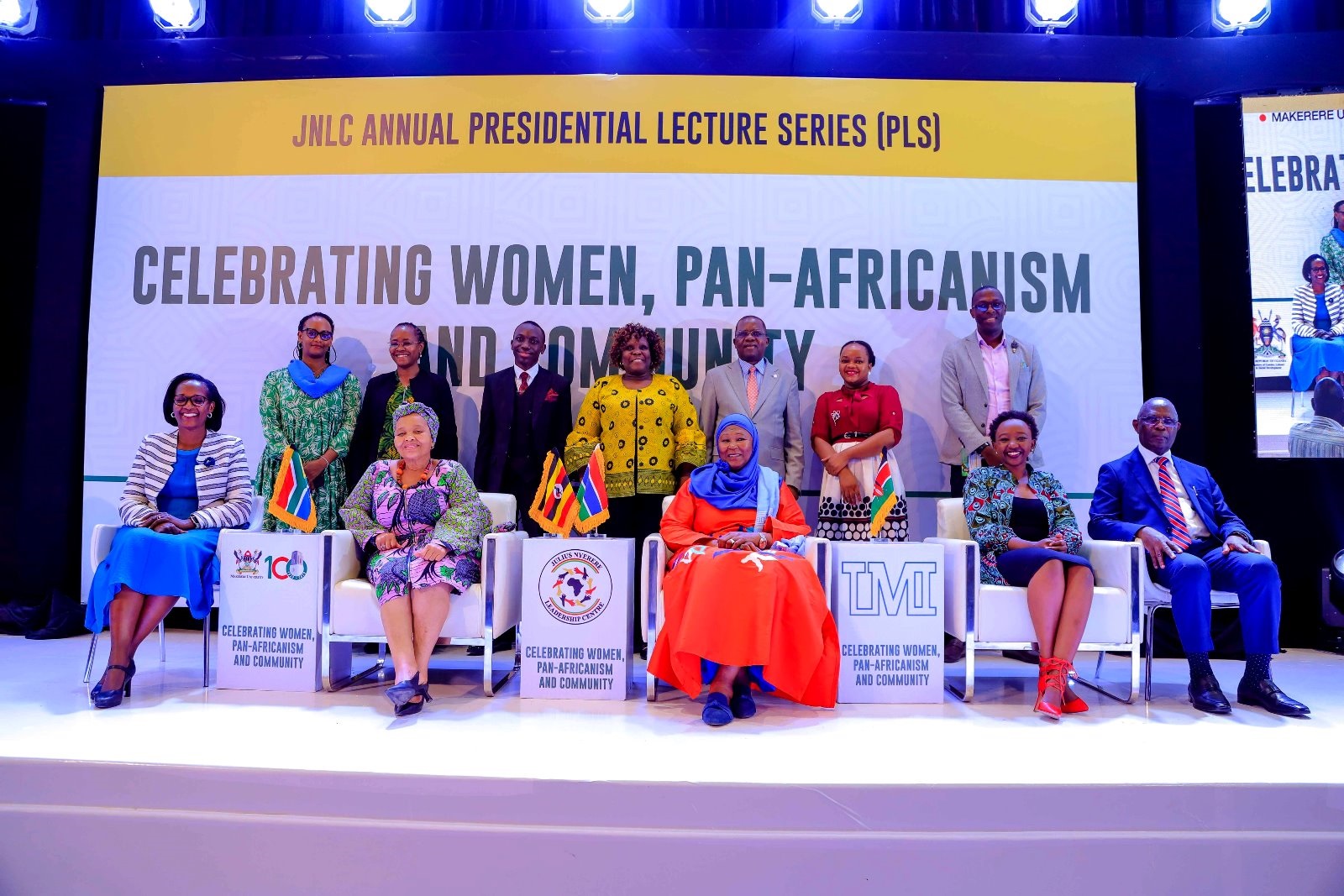
The Julius Nyerere Leadership Centre (JNLC) Presidential Lecture Series (PLS) is an annual event that brings together prominent speakers, great leaders and thinkers to Makerere University to engage in thought-provoking conversations with stakeholders particularly students and the youth. Held from 6th to 8th June, the 2023 edition of the PLS was graced by Her Excellency Fatoumata Jallow-Tambajang, former Vice President of The Gambia. As such, Her Excellency held one-on-one discussions with Young Female Leaders at a Media Blitz Roundtable on 6th, steered a Cross-generational Fireside (Ekyooto) Conversation with Female University Student Leaders on 7th and crowned it all with a Keynote Address on 8th June on the theme “Celebrating Women, Pan-Africanism and Community”.

“Coming back to Uganda, Kampala, Entebbe makes me feel very proud and honoured and happy to see that Uganda is growing both in terms of economic and social development but also the friendliness, the fraternity that I have always known” H.E. Jallow-Tambajang cheerfully remarked as she commenced her address. Her joy was indeed tangible as she recalled with nostalgia the time she spent in Uganda as a newly-married sixteen (16) year old housewife, later returning as a UN Expert for Missions around 1993.

In the same breath, she paid tribute to her Ugandan “Father” Ambassador Matiya Lubega, with whom she worked for close to five years in The Gambia. Amb. Lubega served as Resident Representative and Co-coordinator of United Nations activities in The Gambia in the late 1980s and was commended by Her Excellency for being truly Pan-African in ensuring that UNDP programs were responsive to needs and realities of the Gambian people. In so doing, she noted, Amb. Lubega transcended the elitist attitude often exuded by international experts and used the opportunity to connect with and empower the people.
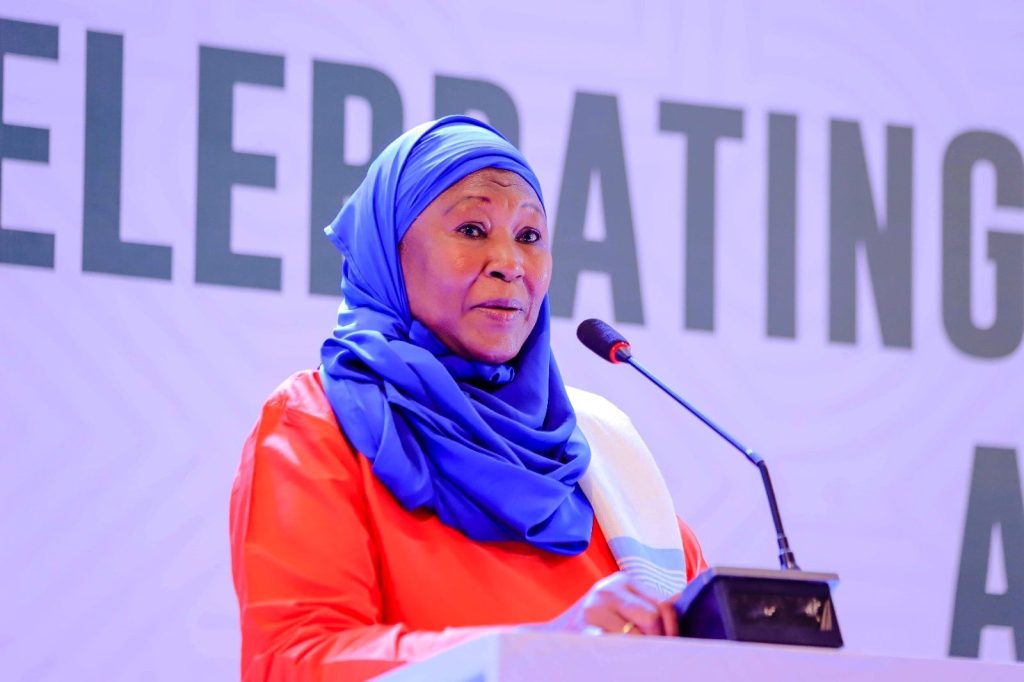
Her Excellency Fatoumata Jallow-Tambajang delivers her keynote address. 8th June 2023, Yusuf Lule Central Teaching Facility Auditorium, Makerere University, Kampala Uganda.
Her Excellency Fatoumata Jallow-Tambajang delivers her keynote address.

Empowerment, particularly of the youth, is important in the African context where only 5-10% of national resources are invested in their programmes. “What we need to do is knock at every door and see what opportunities are available” remarked H.E. Jallow-Tambajang. “The AfCFTA (African Continental Free Trade Area) provides billions of dollars for entrepreneurship; the African Development Bank also has a programme (The Youth Entrepreneurship and Innovation Multi-Donor Trust Fund) which is giving so much money to the African Youth” she added, addressing political and other leaders.

Her Excellency’s remark was premised on the need for Africa to invest in her youth in order to sustain the continent’s aspirations to put people at the centre of development programmes, as envisioned by the “unify and uplift” principle of Pan-Africanism. She explained that the Pan-African spirit is rooted in the African culture of solidarity, sharing, leaving the comfort zone, and opting to serve mankind, aspects that she said have slowly been erased.

“The talent Africa has is a talent that has been underutilized, when we have everything. What we need is a sense of justice, really including the Pan-African spirit; rather than sitting in our corners and saying ‘I’m Gambian, I’m Ugandan,’ we say we are Pan-Africans” she remarked.
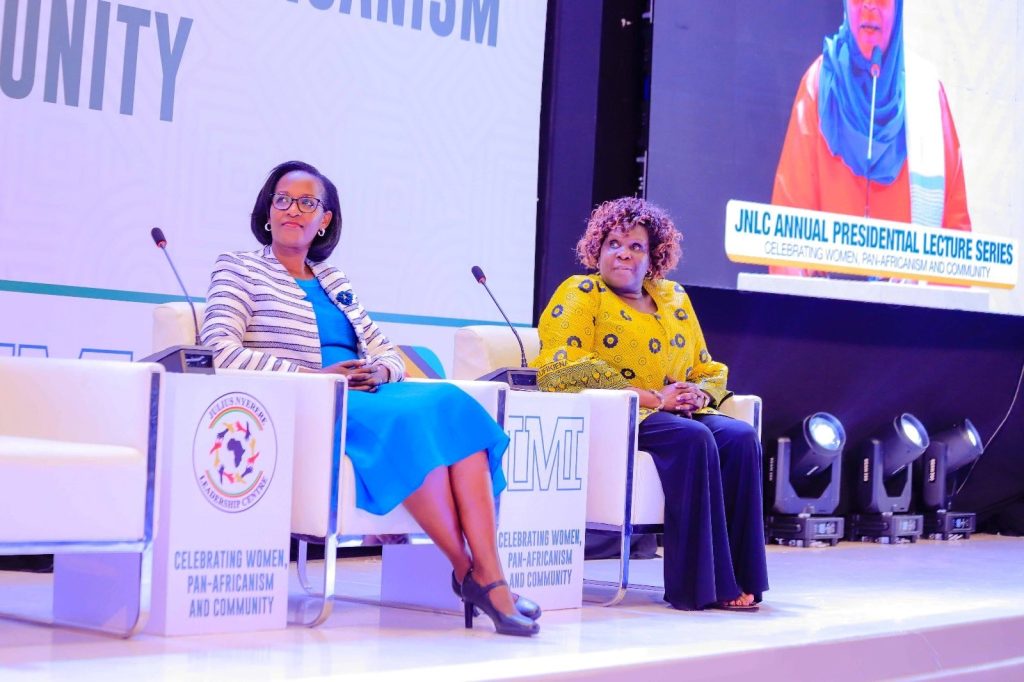
The Chairperson of Council, Mrs. Lorna Magara (Left) and Executive Director, JNLC, Dr. Suzie Nansozi Muwanga (Right) listen keenly to the keynote address. 8th June 2023, Yusuf Lule Central Teaching Facility Auditorium, Makerere University, Kampala Uganda.
The Chairperson of Council, Mrs. Lorna Magara (Left) and Executive Director, JNLC, Dr. Suzie Nansozi Muwanga (Right) listen keenly to the keynote address.

Turning to the area of Women, H.E. Jallow-Tambajang outlined misconceptions about Islam and the older more experienced women not communicating enough as some of challenges experienced in the quest to economically and politically empower women.

“People who do not understand religion will say that Islam suppresses women whereas when you look at the Holy Quran, God has confined two verses to women… the other challenge we have had is the fact that the elderly women have not been communicating enough with the young people to impart knowledge and pass the baton to prepare them for leadership” she noted.

To address the latter, Her Excellency demonstrated her commitment to pass the baton of leadership to the younger generation by introducing her granddaughter, Ms. Ejatou Barry, a personal assistant in her philanthropic work. In the same breath, she recognized Ms. Charlene Ruto, a Youth Champion and Advocate for Climate Change Action for her work, despite sections of the public linking it to State funding by virtue of her being a daughter to Kenyan President H.E. William Ruto.
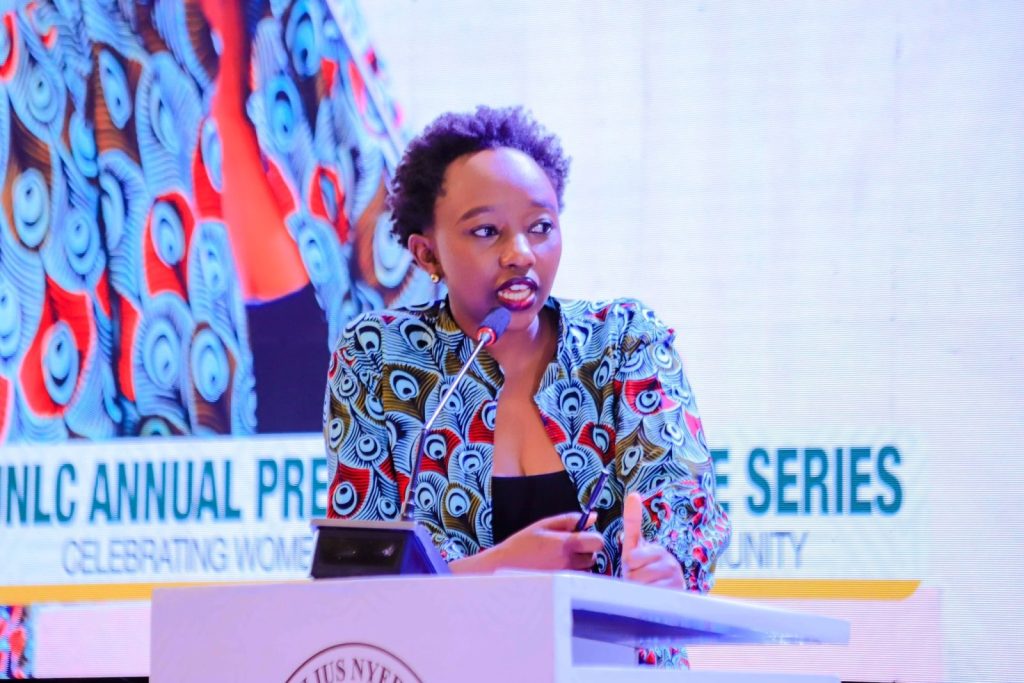
Ms. Charlene Ruto moderates the Panel Discussion. 8th June 2023, Yusuf Lule Central Teaching Facility Auditorium, Makerere University, Kampala Uganda.
Ms. Charlene Ruto moderates the Panel Discussion.

H.E. Jallow-Tambajang saluted President Yoweri Kaguta Museveni for embodying the Pan-African spirit by waiving her requirement for a visa in order to attend the Lecture Series. She equally recognized Dr. Nansozi K. Muwanga, Executive Director, JNLC for her role in ensuring that she made the trip to attend the PLS and pledged as a Senior Citizen, to establish twinning relationships between JNLC and institutions in The Gambia.

“When I go back, I will look at how I can influence to have more students come to Makerere University and vice-versa, I can try as much as possible to influence how Makerere University students can also go to other parts of Africa that I have visited, because that is the way we can develop the culture of Pan-Africanism, the culture of solidarity, and the culture of sharing knowledge” she added.
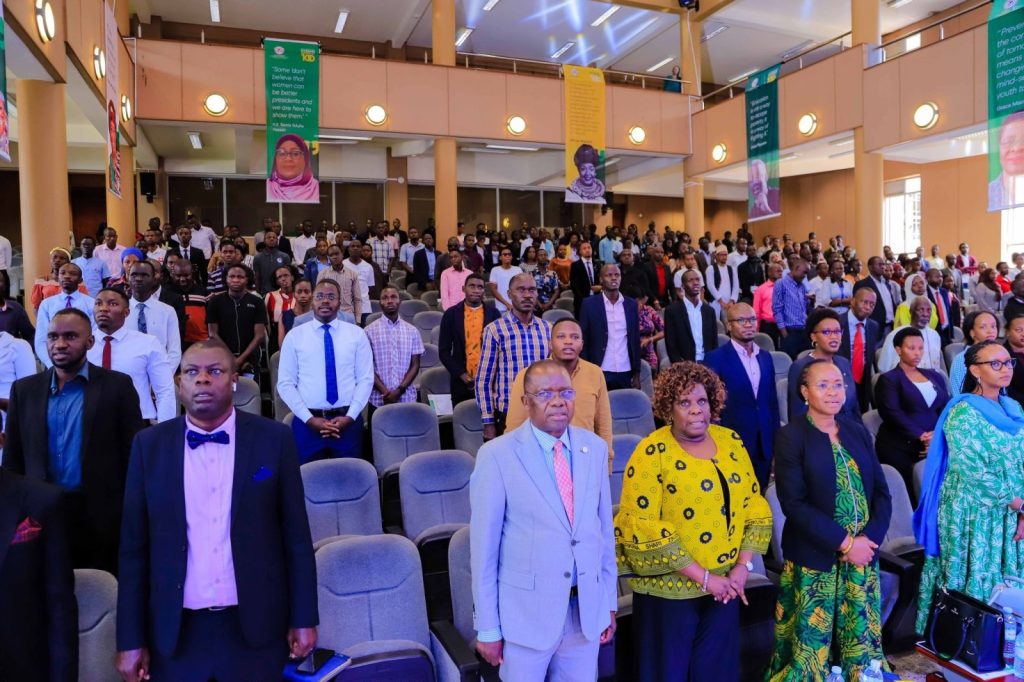
Part of the audience that graced the JNLC Presidential Lecture Series. 8th June 2023, Yusuf Lule Central Teaching Facility Auditorium, Makerere University, Kampala Uganda.
Part of the audience that graced the JNLC Presidential Lecture Series.

Her Excellency had some nuggets of wisdom to share with the youth too. “Young men usually think when they are educated and have their PhDs, they no longer need the elders” she observed, before emphasizing “this is the time you need elders. What the elders are going to give you in terms of wisdom, you cannot read from books… the elders have the experience; they have journeyed through life with little resources and are able to help you.”

She equally urged the youth to use social media as a tool to empower each other, reach out to peers in the Pan-African setting and learn from their good experiences. And whereas the Former Vice President respected the youth’s right to protest, she urged them to choose the path of dialogue instead. “Every time you go onto the streets, you are losing something. If you break infrastructure and want to become leaders, where will you find the resources to rebuild your countries?” she reasoned.

H.E. Jallow-Tambajang concluded by urging African political leaders, thinkers and policy makers to make the dream of a borderless Africa a reality so as to eliminate the barriers to free trade imposed on us by colonial boundaries. “Africa’s vision is shared prosperity and this can no longer hold without empowering the youth through entrepreneurship and different leadership fora they want.”
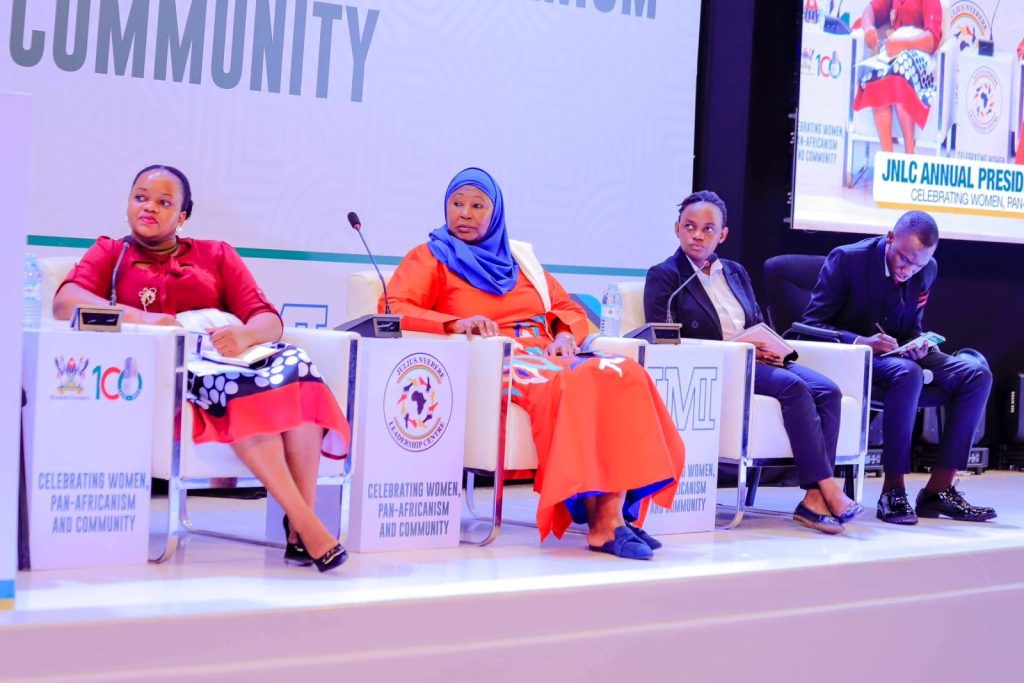
H.E. Fatoumata Jallow-Tambajang (2nd Left) with Panelists (Left to Right): Ms. Akatukunda Maureen, Ms. Kirabo Marion and H.E. Maseruka Robert. 8th June 2023, Yusuf Lule Central Teaching Facility Auditorium, Makerere University, Kampala Uganda.
H.E. Fatoumata Jallow-Tambajang (2nd Left) with Panelists (Left to Right): Ms. Akatukunda Maureen, Ms. Kirabo Marion and H.E. Maseruka Robert.

The Chairperson of Council, Mrs. Lorna Magara who graced the PLS thanked H.E. Jallow-Tambajang for making the trip to Makerere to deliver her keynote address. Quoting from Mwalimu Julius Nyerere’s famous book “Women’s Freedom: Women are Eagles, Not Chickens” she reiterated the University leadership’s commitment to ensuring that the youth, particularly women that go through the gates of Makerere University will be empowered to straighten their wings and fly like the eagles that they truly are.

She noted that Makerere has consistently been an advocate of women’s emancipation, right from the 1945 admission of the first six females and the 1990 enactment of 1.5 extra points for all female students to the 2019 policy providing for a 40 percent enrollment quota for female students in STEM (Science, Technology, Engineering and Mathematics) and the 2021 policy doubling the number of awards under the Female Scholarship Initiative (FSI) from 20 to 40.
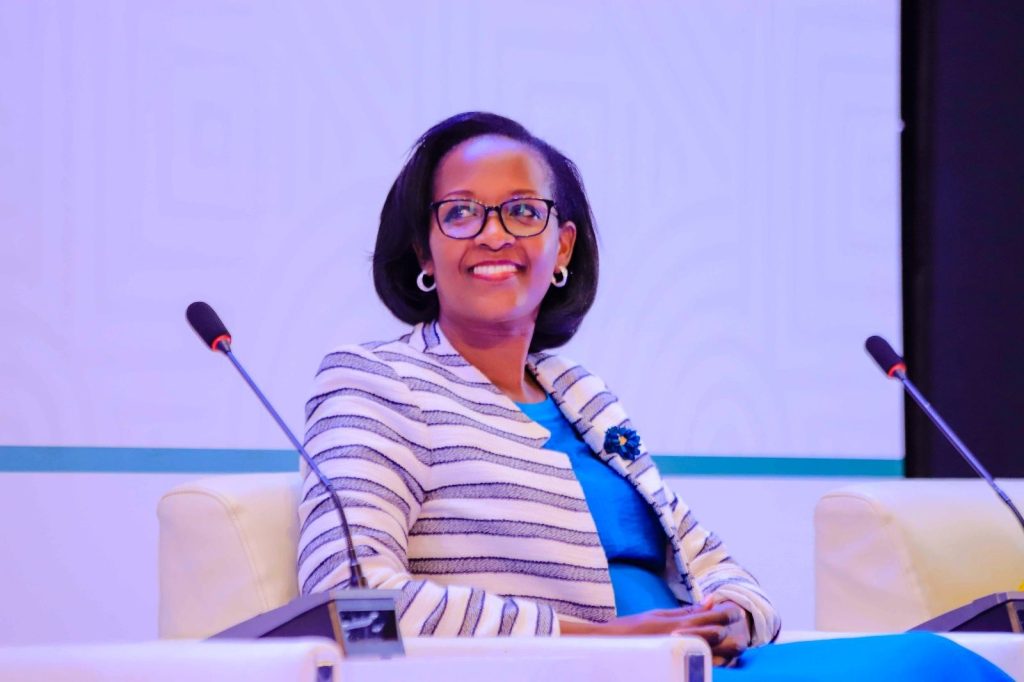
The Chairperson of Council, Mrs. Lorna Magara at the JNLC Presidential Lecture Series. 8th June 2023, Yusuf Lule Central Teaching Facility Auditorium, Makerere University, Kampala Uganda.
The Chairperson of Council, Mrs. Lorna Magara at the JNLC Presidential Lecture Series.

“All these milestones notwithstanding, it is of utmost importance that our students enjoy an environment that is conducive to academic excellence and free of any form of abuse… with support of our partners, we have revised our Policy and Regulations Against Sexual Harassment and empowered our Gender Mainstreaming Directorate to receive and investigate any allegations of sexual harassment levelled against our staff and students” she added.

Mrs. Magara congratulated the Julius Nyerere Leadership Centre on their efforts to groom and equip our young leaders with the moral campus for leadership and a willingness to serve through various courses, which have even been used to induct Student Leaders of the 88th Guild.

Elaborating further on the JNLC’s role in empowering students, Executive Director Dr. Suzie Nansozi Muwanga said that Centre’s youth leadership training programme is aimed at addressing skills gaps among young leaders through short courses in Financial Literacy, self-awareness as well as mental health and wellbeing. “One of the products we are particularly proud of; a tailored leadership course, will be made available on the Makerere University E-Learning Environment (MUELE) platform and accessible to all students starting this academic year.”
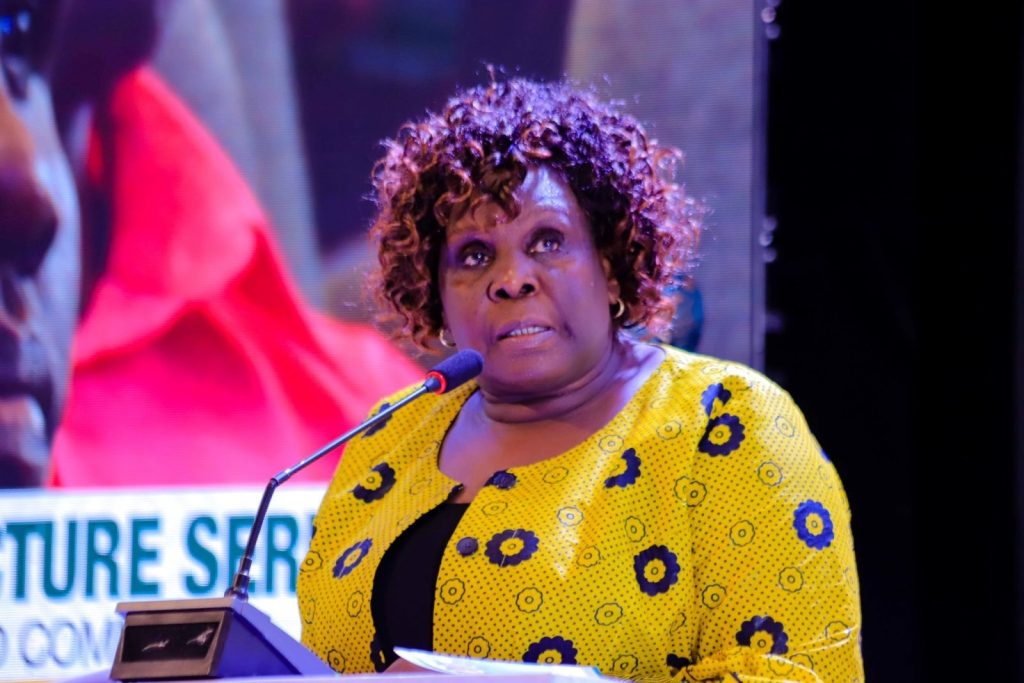
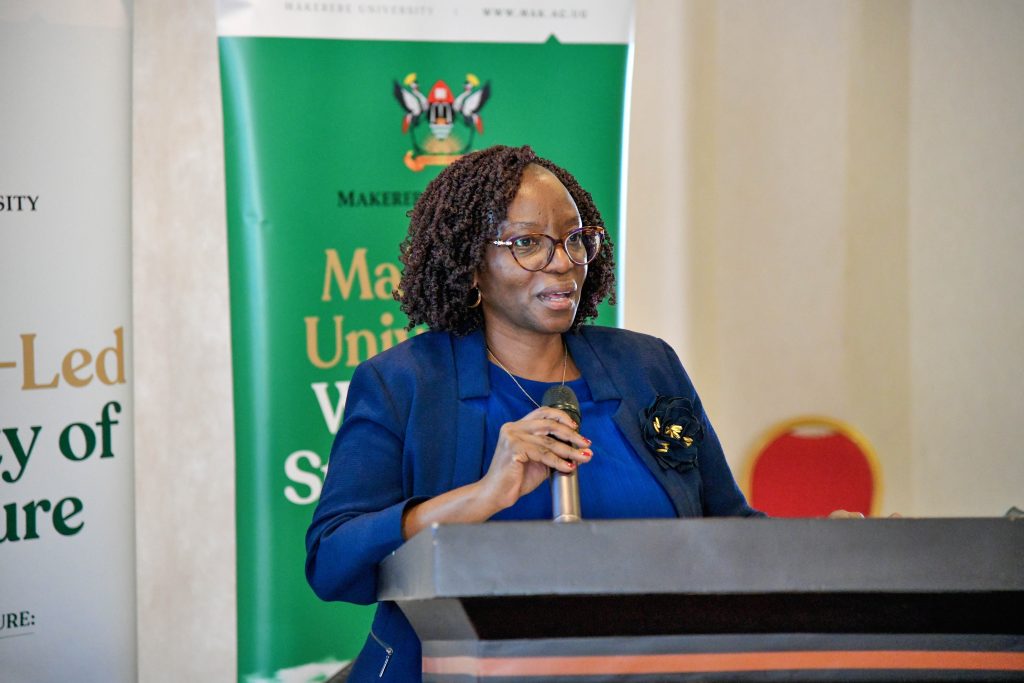
The Executive Director JNLC, Dr. Suzie Nansozi Muwanga. 8th June 2023, Yusuf Lule Central Teaching Facility Auditorium, Makerere University, Kampala Uganda.
The Executive Director JNLC, Dr. Suzie Nansozi Muwanga.

She added that in H.E. Jallow-Tambajang, the JNLC had found the perfect candidate to deliver the 2023 PLS. “Her Excellency’s track record as a mediator, human rights defender, political activist, and effective advocate for women’s rights, in addition to being a champion of basic education, maternal care, healthcare and women in entrepreneurship is nothing short of remarkable. Furthermore, her ability to do all this while fulfilling her obligations as a mother paints an amazing picture for our young women and aspiring female university student leaders to emulate.”

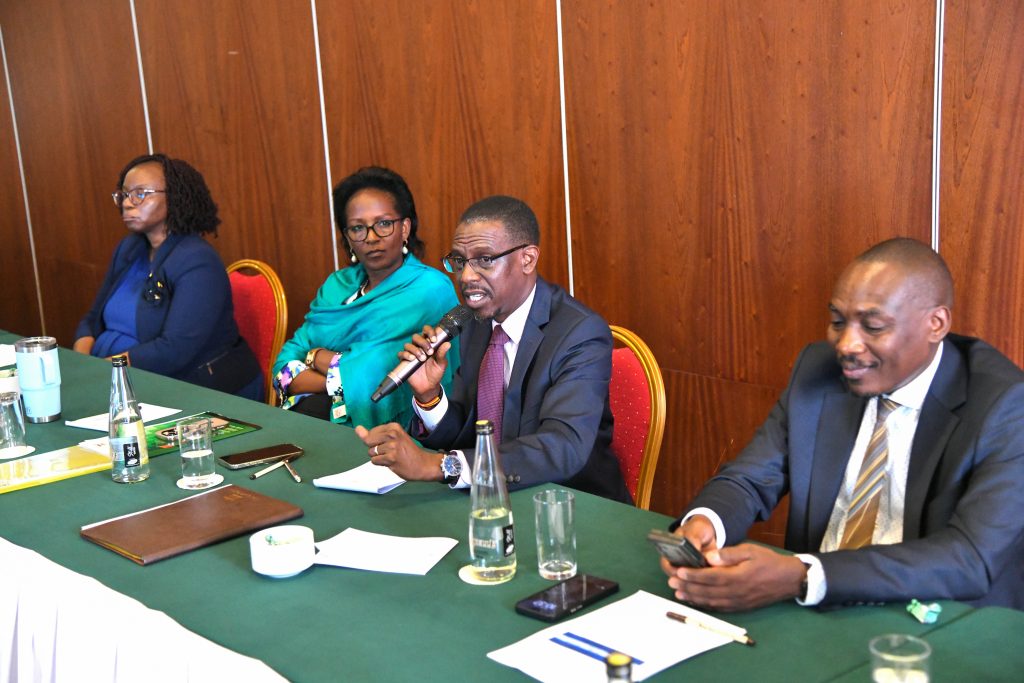
PLS 2023 also featured a panel discussion moderated by Ms. Charlene Ruto, with the 89th Guild President H.E. Maseruka Robert, Vice President Uganda Management Institute (UMI) Guild Union, Ms. Akatukunda Maureen, and former Makerere Guild Minister and Lawyer, Ms. Kirabo Marion as panelists.

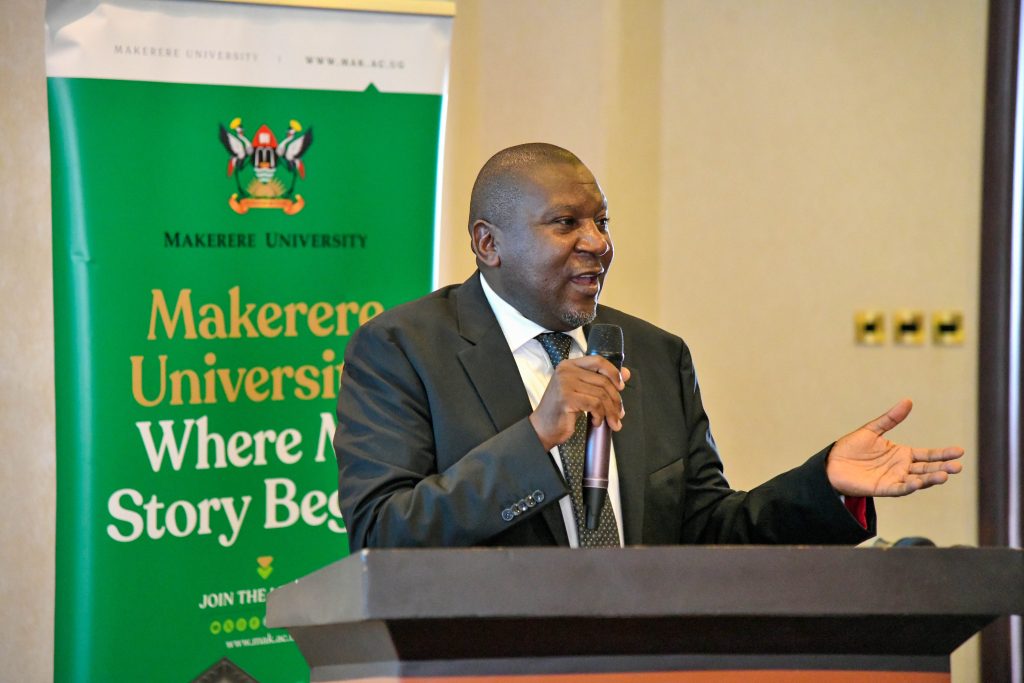
Delivering the closing remarks, Director General UMI, Dr. James Nkata clarified that Pan-Africanism is neither an agenda, nor an event, nor a political slogan but rather a supra philosophy that all other philosophies on the continent are supposed to fit within. He added that leaders are not made but grown through the process of socialization. “The social structures that bring up the human beings that live in those communities are the ones that grow the leaders.”
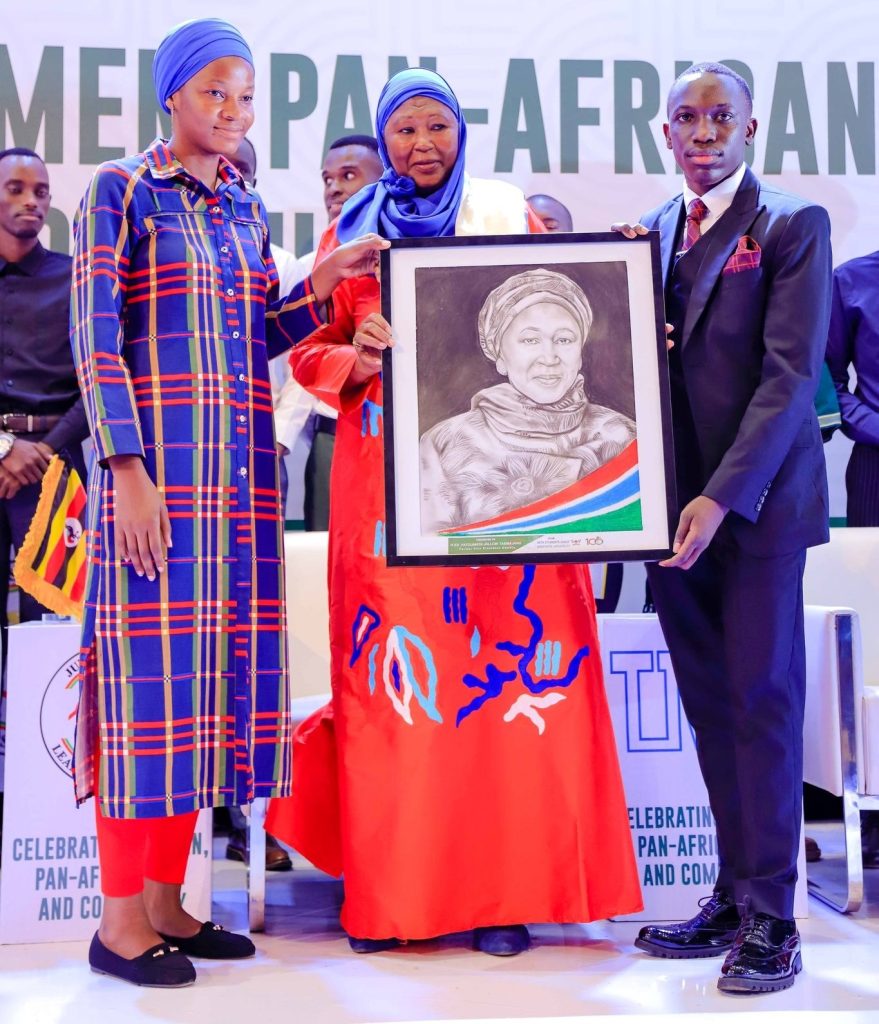
H.E. Fatoumata Jallow-Tambajang (Centre) receives a portrait from 89th Guild President, H.E. Maseruka Robert (Right) and Finance Minister, Ms. Kiranda Sharifah (Right). 8th June 2023, Yusuf Lule Central Teaching Facility Auditorium, Makerere University, Kampala Uganda.
H.E. Fatoumata Jallow-Tambajang (Centre) receives a portrait from 89th Guild President, H.E. Maseruka Robert (Right) and Finance Minister, Ms. Kiranda Sharifah (Right).

Consequently, Dr. Nkata clarified that Pan-Africanism cannot be promoted through legislative announcements but through societal socializations. He therefore urged JNLC to initiate research on how we can 1) re-socialize our societies to develop a new conscience of Pan-Africanism where everybody is accorded equal opportunity and 2) de-construct human constructs in Africa that demean women, “because it is through academia that knowledge is generated and value is created.”

The day would have been incomplete without a display of culture and creativity, and the Department of Performing Arts and Film was on hand to deliver a thrilling display of dance as well as an original composition by Dr. Milton Wabyona. To crown it all, the 89th Guild represented by President H.E. Maseruka Robert  and Finance Minister Ms. Kiranda Sharifah presented a portrait by the School of Liberal and Performing Arts GRC, Mr. Ainamaani Brian to H.E. Jallow-Tambajang. PLS 2023 was moderated by the Acting Deputy Principal, School of Law, Dr. Zahara Nampewo and Principal Public Relations Officer, Ms. Ritah Namisango.

Mark Wamai

General

From Knowledge to Impact: Empowering Youth Leaders and Young Women with Transformative Leadership Skills

Published

on

Dr. Nansozi K. Muwanga, Executive Director of JNLC makes her remarks. Makerere University, Julius Nyerere Leadership Centre (JNLC) in partnership with the United Nations Development Programme (UNDP), three-day comprehensive leadership training targeting youth, young women, and local council leaders for more than 70 participants starting 4th December 2025 at Mountains of the Moon University (MMU) in Fort Portal City Uganda, East Africa.

By JNLC Team

On 4th December 2025, more than 70 participants gathered at Mountains of the Moon University (MMU) in Fort Portal for a three-day comprehensive leadership training targeting youth, young women, and local council leaders.

Organised by the Julius Nyerere Leadership Centre (JNLC) in partnership with the United Nations Development Programme (UNDP), the training aimed to strengthen practical leadership skills and nurture a new generation of community-centered, ethical, and solution-oriented leaders.

The first day introduced participants to foundational themes such as servant leadership, the meaning of power in leadership, self-leadership, emotional intelligence, mental well-being, and effective communication. Through these sessions, participants gained practical tools to engage and influence communities responsibly, mobilize resources, and contribute effectively to sustainable development.

Honouring Nyerere’s Legacy of Transformative Leadership

In her remarks, Dr. Nansozi K. Muwanga, Executive Director of JNLC, urged young leaders from higher education institutions across Uganda to embrace their central role in shaping the country’s future. She stressed that Uganda’s developmental trajectory—and that of the wider East African region—will be determined by empowered, ethical, and visionary youth.

Dr. Muwanga reminded participants that the Julius Nyerere Leadership Centre draws inspiration from the leadership values of Mwalimu Julius Kambarage Nyerere, who championed youth as drivers of Africa’s development. Established in 2018 by H.E. President Yoweri Kaguta Museveni as a Presidential Initiative hosted by Makerere University and the Uganda Management Institute, JNLC continues this legacy by equipping young Africans with the intellectual, moral, and practical leadership skills required in a fast-changing world.

Expanding Impact Through the JNLC–UNDP Youth Leadership Programme

Dr. Muwanga highlighted that since 2021, the JNLC–UNDP Leadership Training Programme has empowered more than 700 youth leaders from Uganda and beyond. The programme cultivates a growing network of community-centered changemakers capable of influencing governance and driving sustainable development.

To address challenges faced by alumni—such as limited visibility, resource constraints, and weak mentorship—JNLC launched the Alumni Impact Activation Strategy. The initiative supports alumni-led projects aligned with UNDP’s G4D priorities through mentorship, empowerment, and visibility. This approach amplifies our investment in Uganda’s youth and ensures that leadership development translates into sustainable solutions in climate resilience, women’s economic empowerment, and digital innovation,” she noted.

Youth at the Heart of Africa’s Development

Reflecting on Africa’s demographic landscape, Dr. Muwanga noted that a youthful population presents both immense opportunity and profound responsibility. Realising this potential requires intentional nurturing of leaders who value justice, unity, ethical conduct, and collaborative governance.

“This is the aspiration that guides our work at JNLC,” she affirmed. “We aim to equip young people with the skills to think critically, lead responsibly, and contribute meaningfully to Uganda’s development and Africa’s broader ambitions.”

Ms. Roselyne Ssali, Dean of Students, representing Vice Chancellor Prof. Pius Coxwell Achanga of @MMU_Uganda, expressed gratitude to @TheJNLCand @UNDPUgandafor choosing @MMU_Ugandato host the Comprehensive Youth, Young Women and Local Councillor’s Leadership Training. Makerere University, Julius Nyerere Leadership Centre (JNLC) in partnership with the United Nations Development Programme (UNDP), three-day comprehensive leadership training targeting youth, young women, and local council leaders for more than 70 participants starting 4th December 2025 at Mountains of the Moon University (MMU) in Fort Portal City Uganda, East Africa.
Ms. Roselyne Ssali, Dean of Students, representing Vice Chancellor Prof. Pius Coxwell Achanga of @MMU_Uganda, expressed gratitude to @TheJNLCand @UNDPUgandafor choosing @MMU_Ugandato host the Comprehensive Youth, Young Women and Local Councillor’s Leadership Training.

“You Are Today’s Leaders” — Message from Mountains of the Moon University

Representing the Vice Chancellor, Prof. Pius Coxwell Achanga, Mrs. Roselyne Ssali—the Dean of Students—affirmed the university’s strong commitment to cultivating ethical, capable, and community-oriented leaders.

She emphasized the value of inter-institutional collaboration, noting that leadership thrives on shared learning and collective growth. She encouraged participants to engage actively, exchange ideas, and learn from one another.

Addressing the youth directly, Mrs. Ssali underscored that leadership is not a distant possibility but a present responsibility.

“You are not here by mistake,” she said. “The saying that you are ‘tomorrow’s leaders’ does not apply. You are today’s leaders, and that is something we cannot take for granted.”

She commended the JNLC–UNDP collaboration for expanding leadership opportunities and equipping young people with practical, real-world skills.

Ms. Asuman Nasike, Resident City Commissioner (RCC) Fort Portal City, officially opened the UNDP/JNLC Comprehensive Youth, Young Women and Local Councillor’s Leadership Training. Makerere University, Julius Nyerere Leadership Centre (JNLC) in partnership with the United Nations Development Programme (UNDP), three-day comprehensive leadership training targeting youth, young women, and local council leaders for more than 70 participants starting 4th December 2025 at Mountains of the Moon University (MMU) in Fort Portal City Uganda, East Africa.
Ms. Asuman Nasike, Resident City Commissioner (RCC) Fort Portal City, officially opened the UNDP/JNLC Comprehensive Youth, Young Women and Local Councillor’s Leadership Training.

Leadership, Intellect, Capacity, Health, and Safety — Insights from the RCC

Officially opening the training, Ms. Asuman Nasike, Resident City Commissioner of Fort Portal City, shared her inspiring journey from Youth Councillor to RCC. She encouraged participants to treat every leadership role as a “nursery bed” for growth and reminded them that leadership is driven by intellect and capacity—not age or physical size.

“In your roles as local, youth, and women leaders, remember that leadership is defined by capacity, not size. It is about the mind, not the stature. I may be small in size, yet I lead this city. Let my example prove to you that young people can lead and make a difference,” she said.

Participants listen to Ms. Asuman Nasike, Resident City Commissioner (RCC) Fort Portal City. Makerere University, Julius Nyerere Leadership Centre (JNLC) in partnership with the United Nations Development Programme (UNDP), three-day comprehensive leadership training targeting youth, young women, and local council leaders for more than 70 participants starting 4th December 2025 at Mountains of the Moon University (MMU) in Fort Portal City Uganda, East Africa.

She highlighted essential leadership qualities: integrity to earn trust, effective communication through feedback, leading by example, decisiveness in difficult moments, and resilience in the face of setbacks. She also emphasized personal well-being, responsible health practices, and surrounding oneself with mentors and peers who inspire growth.

Mr. Ivan Ssegawa Sebastian, former EAC Youth Ambassador to Uganda. Makerere University, Julius Nyerere Leadership Centre (JNLC) in partnership with the United Nations Development Programme (UNDP), three-day comprehensive leadership training targeting youth, young women, and local council leaders for more than 70 participants starting 4th December 2025 at Mountains of the Moon University (MMU) in Fort Portal City Uganda, East Africa.
Mr. Ivan Ssegawa Sebastian, former EAC Youth Ambassador to Uganda.

Learning from Nyerere’s Leadership Ideals

Drawing from the life and leadership of Mwalimu Julius Nyerere, Mr. Ivan Ssegawa Sebastian, former EAC Youth Ambassador to Uganda, outlined enduring values that shaped Nyerere’s leadership: human dignity, collective responsibility, unity and cultural identity, and service above self.

These ideals, he noted, remain essential foundations for ethical and people-centered leadership today.

Leadership trainer and clinical psychologist Mr. Ronald Ssaazi. Makerere University, Julius Nyerere Leadership Centre (JNLC) in partnership with the United Nations Development Programme (UNDP), three-day comprehensive leadership training targeting youth, young women, and local council leaders for more than 70 participants starting 4th December 2025 at Mountains of the Moon University (MMU) in Fort Portal City Uganda, East Africa.
Leadership trainer and clinical psychologist Mr. Ronald Ssaazi.

Principles of Servant Leadership

Leadership trainer and clinical psychologist Mr. Ronald Ssaazi guided participants through the principles of servant leadership, drawing insights from leaders like Nyerere, Nelson Mandela, Martin Luther King Jr., and Gamal Abdel Nasser.

He emphasized that leadership begins with self-leadership—self-reflection, self-regulation, and deliberate goal-setting. Quoting John Maxwell’s famous line, “Leadership is influence—nothing more, nothing less,” he reminded participants that they must influence themselves before they can influence others. “You cannot claim to be a leader if no one wants to follow you. Leadership begins when you influence people through your direction, ideas, and example—and that influence must start with self-leadership,” he stressed.

Mr. Ssaazi highlighted that servant leadership is rooted in service—lifting others, meeting them where they are, and helping them grow. He underscored the importance of character, emotional intelligence, meaningful relationships, and consistent action.

He also shared the “Three R’s” framework—Requirements, Returns, and Rewards—encouraging participants to focus on high-impact actions and remain motivated as they pursue purposeful leadership.

Emotional Intelligence & Mental Wellness for Effective Leadership

Dr. Gardner Herbert Rwakiseta, Programme Coordinator at JNLC. Makerere University, Julius Nyerere Leadership Centre (JNLC) in partnership with the United Nations Development Programme (UNDP), three-day comprehensive leadership training targeting youth, young women, and local council leaders for more than 70 participants starting 4th December 2025 at Mountains of the Moon University (MMU) in Fort Portal City Uganda, East Africa.

Dr. Gardner Herbert Rwakiseta, Programme Coordinator at JNLC, underscored that effective leadership is impossible without mental and emotional balance. He explained that clarity, creativity, and inner peace form the foundation of impactful leadership.

Using a powerful analogy, he noted:

“A smartphone may look perfect on the outside, but without a functioning battery, it cannot operate.” He likened mental health to a leader’s battery—indispensable to performance. Dr. Gardner explained that mental wellness is more than the absence of illness; it determines how leaders think, relate, and make decisions. He outlined common mental health challenges and their symptoms and provided practical tools for maintaining emotional balance, including exercise, sleep hygiene, healthy relationships, journaling, and setting digital boundaries.

On digital discipline he advised:

“The small screens were not designed to control you. Manage distractions by limiting unnecessary notifications and practicing intentional use of technology.”

Mr. Henry Kasacca, Director of Dialogue and Democracy. Makerere University, Julius Nyerere Leadership Centre (JNLC) in partnership with the United Nations Development Programme (UNDP), three-day comprehensive leadership training targeting youth, young women, and local council leaders for more than 70 participants starting 4th December 2025 at Mountains of the Moon University (MMU) in Fort Portal City Uganda, East Africa.

The Power of Effective Communication

Mr. Henry Kasacca, Director of Dialogue and Democracy, emphasized that communication is at the heart of leadership. His session equipped participants with public-speaking skills, active listening, strategies for giving and receiving feedback, and tips for crafting impactful elevator pitches.

He reminded participants that public speaking is not merely addressing a crowd—it is connecting with people, informing them, and motivating them to act. “Preparation, positive non-verbal communication, and confidence are key. Knowing your audience, understanding the purpose of your speech, and structuring your message ensure that it resonates,” he explained.

He noted that leaders often have only a minute to capture attention, stressing the importance of clarity, relatability, and confidence. He also emphasized constructive feedback as an essential tool for growth.

The Meaning of Power in Leadership

Mr. David Nyaribi, Leadership and Governance Specialist at ActionAid International. Makerere University, Julius Nyerere Leadership Centre (JNLC) in partnership with the United Nations Development Programme (UNDP), three-day comprehensive leadership training targeting youth, young women, and local council leaders for more than 70 participants starting 4th December 2025 at Mountains of the Moon University (MMU) in Fort Portal City Uganda, East Africa.

Mr. David Nyaribi, Leadership and Governance Specialist at ActionAid International, emphasized that leadership is not defined by position but by the ability to influence, mobilize, and transform communities.

He distinguished authority from power, noting that while authority is granted, power—knowledge, confidence, action—is accessible to everyone.

He outlined four essential types of power:

  • Power Over – traditional authority
  • Power To – capacity to act and implement
  • Power Within – inner confidence and resilience
  • Power With – collective strength through collaboration

Mr. Nyaribi urged participants to use power responsibly and be mindful of who they grant influence over them. He also explained the different spaces, levels, and sources of power, from households to global diplomacy, and highlighted the difference between mobilizing (short-term energy) and organizing (long-term structure). “Mobilizing gets people to the table; organizing makes the table productive,” he noted.

Youth Voices: Picking Up the Droplets of Leadership

Mr. Ivan Hurira, Speaker of the Regional Youth Parliament. Makerere University, Julius Nyerere Leadership Centre (JNLC) in partnership with the United Nations Development Programme (UNDP), three-day comprehensive leadership training targeting youth, young women, and local council leaders for more than 70 participants starting 4th December 2025 at Mountains of the Moon University (MMU) in Fort Portal City Uganda, East Africa.

Bringing a youth perspective, Mr. Ivan Hurira, Speaker of the Regional Youth Parliament, shared the story of a brave hummingbird dropping water on a burning forest, insisting, “I am doing the little I can.” He likened this to the role of young Ugandans—small but consistent actions can spark meaningful change.


“When the forest of Uganda is burning, we, the young people, can do the little we can,” he said.

He encouraged participants to treat the knowledge and skills gained during the training as droplets of leadership—resources they should carry back to their communities to contribute to transformation.

Mak Editor

Continue Reading

General

Mak Staff equipped in Disability-Inclusion

Published

on

Dr. Winifred Kabumbuli (2nd Left) with Left to Right: Dr. Rodney Rugyema, Mr. Ambrose Murangira, and Ms. Donna Keirungi at the event on 12th December 2025. Capacity building session on inclusion for Students and Staff with Disabilities organized by the Office of the Dean of Students on Friday December 12, 2025, Makerere University School of Public Health Auditorium, Kampala Uganda, East Africa.

In a move to promote a safe, supportive and inclusive environment at Makerere University, the Office of the Dean of Students has empowered staff members from various colleges, departments and administrative units to champion disability-inclusive education.

Speaking during the capacity building session on inclusion for Students and Staff with Disabilities held at the School of Public Health Auditorium on Friday December 12, 2025, Dr Winfred Kabumbuli, the Dean of Students, noted that her office has decided to train staff to be able to have a campus where every student and staff member feels safe, respected, valued and empowered to thrive.

“Inclusion is not achieved by policy documents alone, it is achieved through everyday actions when a lecturer adapts teaching materials, when departments provide accessible formats, when buildings are designed with universal access in mind and when we intentionally create belonging for students and staff with disabilities,” Dr Kabumbuli, said.

Dr. Winifred Kabumbuli. Capacity building session on inclusion for Students and Staff with Disabilities organized by the Office of the Dean of Students on Friday December 12, 2025, Makerere University School of Public Health Auditorium, Kampala Uganda, East Africa.
Dr. Winifred Kabumbuli.

The University has made significant strides in promoting disability inclusion. There is a policy on Persons with Disabilities and also a Disability support center, enabling students with disabilities to acquire assistive devices to enable them integrate in the learning and social environment.

While addressing participants, Prof. Winston Tumps Ireeta, the Acting Deputy Vice Chancellor (Finance and Administration) who represented the Vice Chancellor Prof. Barnabas Nawangwe, urged all university leaders to ensure that lecture rooms, offices and shared spaces fully reflect the principles of accessibility and universal design.

“My office is committed to improving physical access and ensuring that our infrastructure developments embrace inclusive standards. During the session, let us identify gaps, share insights, and commit to concrete actions. Makerere University’s pursuit of excellence rests on the foundation of safety, dignity, equality, and inclusion,” Prof, Ireeta, said.

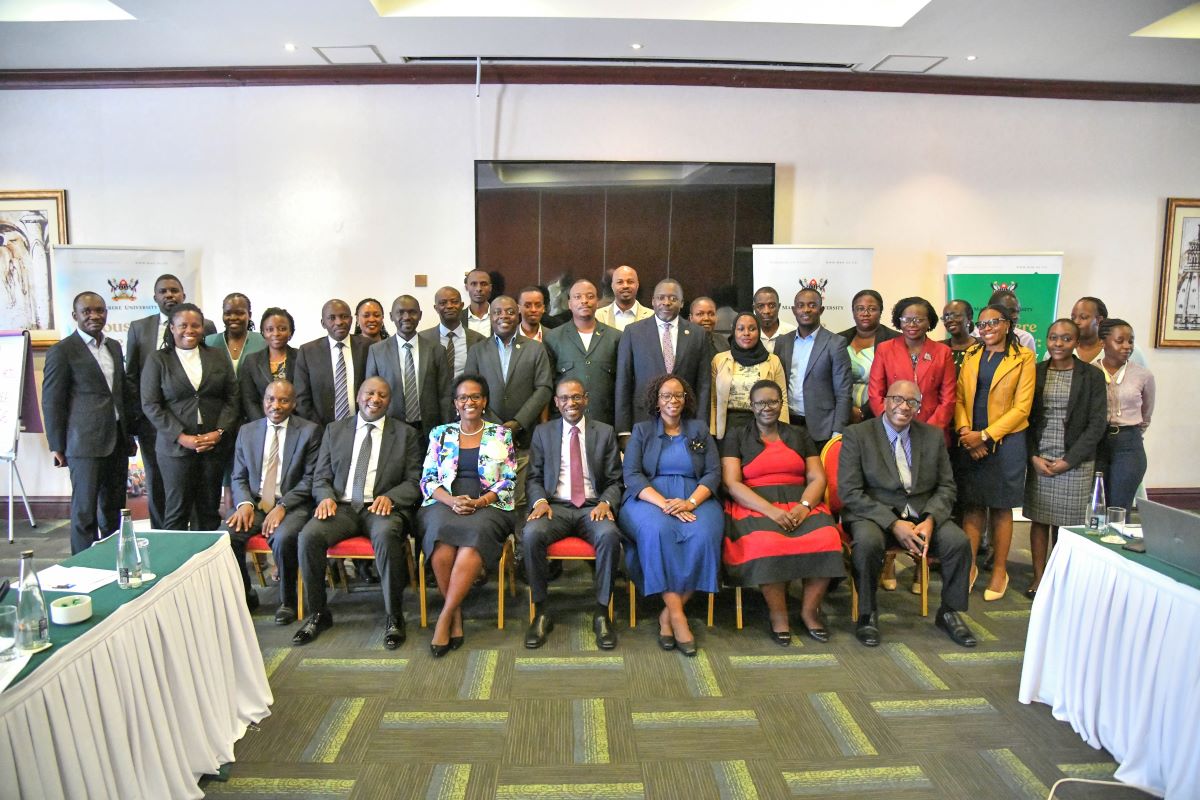
Participants in the training pose for a group photo. Capacity building session on inclusion for Students and Staff with Disabilities organized by the Office of the Dean of Students on Friday December 12, 2025, Makerere University School of Public Health Auditorium, Kampala Uganda, East Africa.
Participants in the training pose for a group photo.

The University is a place of learning but also has policies on safeguarding and policy on Persons with Disabilities to ensure that safety, dignity and inclusion form the foundation upon which teaching, learning and research occur.

Prof Ireeta extended appreciation to the Dean of Students and the Mastercard Foundation Scholars Program at Makerere University for the consistent leadership provided in driving safeguarding and inclusion agenda.

Speaking at the event, Prof. Justine Namaalwa Jjumba, Director of the Mastercard Foundation Scholars Program, highlighted the transformative partnership between Makerere University and the Mastercard Foundation, which began in 2013.

Prof. Justine Namaalwa. Makerere University student and staff Safeguarding Champions celebration of Semester One achievements, 28th November 2025, Makerere Institute of Social Research (MISR) Gardens, Kampala Uganda, East Africa.
Prof. Justine Namaalwa.

“Through this collaboration, the University has rolled out three key Educational initiatives: the Mastercard Foundation Scholars Program, offering 1,000 undergraduate scholarships (10% reserved for students with disabilities); the Africa Climate Collaborative, providing 250 MSc, 40 PhD, and 30 postdoctoral scholarships, with 10% dedicated to learners with disabilities; and e-Learning Initiatives, which allow students to pursue courses of their choice online, enhancing access and flexibility in education,” Prof Namaalwa, said.

During the session, different staff members highlighted that although the University, has made efforts to improve physical accessibility and strengthen the academic and non-academic environment, challenges including inadequate support and inaccessible facilities still exist.

Representing staff living with disabilities on the University Council, Mr. Amon Muteganda appealed to the Government to increase the number of students with disabilities admitted on government sponsorship and also stop choosing academic courses for them.

Mr. Amon Muteganda. Capacity building session on inclusion for Students and Staff with Disabilities organized by the Office of the Dean of Students on Friday December 12, 2025, Makerere University School of Public Health Auditorium, Kampala Uganda, East Africa.
Mr. Amon Muteganda.

“I want to thank the Mastercard Foundation Scholars Program at Makerere University for ensuring that 10% of their scholarship slots are reserved for students with disabilities. As a University, we need to increase our enrolment of students with disabilities beyond the current 2%. We should also develop a policy that supports students across all academic programs. If a student without hands wants to study architecture, we must support them rather than discourage them, it is the mind that matters, not the physical,” he emphasized.

Mr. Mutenganda also called upon the University to revise its disability policy, with a particular focus on strengthening accommodation and support for persons with disabilities when they are employed.

Speaking at the event, Mr. Marvin Galiwango, a lecturer at the College of Computing and Information Sciences (CoCIS), emphasized that instead of continually relying on imported wheelchairs and technologies, engineers at the College of Engineering, Design, Art and Technology (CEDAT) should take the initiative to develop technologies and wheelchairs for persons with Disabilities.

“Most persons with disabilities rely on imported technology, which they often cannot afford, leaving them with no choice but to beg. We have engineers at CEDAT who can design and produce these technologies locally, making them accessible and affordable for our people,” he noted,”

Mr. Ambrose Murangira. Capacity building session on inclusion for Students and Staff with Disabilities organized by the Office of the Dean of Students on Friday December 12, 2025, Makerere University School of Public Health Auditorium, Kampala Uganda, East Africa.
Mr. Ambrose Murangira.

In his keynote address, Mr. Ambrose Murangira, a senior expert in disability inclusion at Light for the World, outlined the basic principles of accessible lecture rooms, including a preference for ground-floor rooms or those reachable via a functioning elevator, wide doors, corridors and clear passable pathways between tables and rows.

Students with disabilities should be provided with accessible seats at the front that offer clear sight-lines, tables with extra legroom, and adequate lighting around the presenter and board. Regarding facilities, signposts should indicate the nearest accessible washrooms and emergency exits, which must be both physically and visually accessible.” Mr Murangira, said.

On 1st December, the University joined the world to celebrate the International Day of Persons Disabilities. Students, staff and Members of Parliament with visual, hearing and physical disabilities filled the Main Hall with the aim to promote inclusion, raise awareness on disability rights, and encourage a supportive learning environment for everyone to thrive.

Carol Kasujja
Carol Kasujja Adii

Continue Reading

General

Makerere University commemorates International Day of Persons with Disabilities: Emphasizes Disability-Inclusive Programmes

Published

on

Hon. Asamo and officials at the official launch of the bus donated by Kiira Motors Corporation to ease mobility of students and staff with disabilities. Makerere University International Day of Persons with Disabilities Celebration, a moment dedicated to reflection on inclusion and shared responsibility organised by the Dean of Students and 91st Guild Ministry of Students with Disabilities, 1st December 2025, Main Hall, Kampala Uganda, East Africa.

In the first week of December 2025, Makerere University in solidarity, with the rest of the world, celebrated the International Day of Persons with Disabilities.

The colourful event held in the University Main Hall on 1st December 2025 brought onboard Ministers and government officials, Makerere University Council and Management, National Union for Persons with Disabilities (NUDIPU), representatives of persons with disabilities at different levels, members of parliament, disability rights advocates, private sector partners, civil society actors, university staff, student leaders, and the wider community of persons with disabilities.

The celebrations graced by the Minister of State for Disability Affairs, Hon. Hellen Grace Asamo and the Deputy Vice Chancellor (Academic Affairs)-Prof. Sarah Ssali was attended by key stakeholders including Hon. Safia Nalule Juuko-Chairperson of the Equal Opportunities Commission, Prof. Frank Mwiine-Acting Deputy Vice Chancellor (Finance and Administration), the Dean of Students-Dr. Winfred Kabumbuli, Guild President-Hon. Ssentamu Churchill James, Guild Minister for Persons with Disabilities-Hon. Donita Akakunda, and among other personalities.

The commemoration featured a panel discussion moderated by Dr. Diana Ateenyi Ahumuza, offering a blend of academic, experiential, and advocacy-based perspectives on disability inclusion. The panel consisted of Dr. Naboth Rwakazwaire, founder of Hope for People with Disabilities; Prof. Anthony Muwagga Mugagga, Principal of the College of Education and External Studies (CEES); Lord Councillor Peace Sserunkuma; and Ms. Catherine Nakibuuka, a second-year law student. Their conversation explored practical solutions, policy gaps, personal experiences, and the role of institutions such as Makerere University in shaping a more inclusive society.

Reflecting on the times and in line with the theme, Fostering Disability-Inclusive Societies for Advancing Social Progress, the different speakers, persons with disabilities, and participants in general, lauded Makerere University for positive steps being undertaken with respect to inclusion of persons with disabilities. The participants commended the University for inclusive teaching, library services that are sensitive and inclusive, acquisition of a university bus for students with disabilities, sports activities for persons with disabilities, and establishment of the Makerere University Disability Support Unit. The institution has been called upon to remodel the old buildings so that people with disabilities are able to access the required spaces.

Highlighting strides in Disability Inclusion at Makerere

Welcoming the guests, Prof. Sarah Ssali, the Acting Vice Chancellor, celebrated Makerere University’s commitment to recognizing the resilience, contributions, and potential of persons with disabilities. She emphasized that building truly inclusive societies requires a dual approach: empowering marginalized individuals to realize their potential and creating institutions that are receptive and accommodating of diverse needs. Prof. Ssali underscored that disability inclusion is not an act of charity but a matter of human rights, social justice, and a collective responsibility shared by the entire university community.

Prof. Sarah Ssali. Makerere University International Day of Persons with Disabilities Celebration, a moment dedicated to reflection on inclusion and shared responsibility organised by the Dean of Students and 91st Guild Ministry of Students with Disabilities, 1st December 2025, Main Hall, Kampala Uganda, East Africa.
Prof. Sarah Ssali.

Prof. Ssali highlighted Makerere University’s strong commitment to inclusivity, noting the Disability Support Centre’s support, campus accessibility improvements, flexible teaching approaches, and digital inclusion efforts. She also recognized investments in sign language interpretation and staff training to better support students with disabilities.

Prof. Ssali called upon stakeholders to make inclusion a lived reality—one that celebrates diversity and recognizes disability as an integral part of the human experience. She explained that genuine inclusion is built on partnership, shared responsibility, and intentional accommodations, noting that these principles underpin the university’s safeguarding policy inspired by the Ubuntu philosophy. She observed that inclusion goes beyond creating comfort. “It requires those without disabilities to actively adjust, accommodate, and treat everyone as equal participants in the university community,” she said.

Dr. Winifred Namuwonge Kabumbuli, Dean of Students at Makerere University, reaffirmed the university’s long-standing commitment to implementing inclusive policies and practices. She emphasized that Makerere values diversity and creativity, fosters mutual support, and provides an inclusive academic and social environment that enables all members to grow, thrive, and contribute as changemakers.

Dr. Winifred Kabumbuli. Makerere University International Day of Persons with Disabilities Celebration, a moment dedicated to reflection on inclusion and shared responsibility organised by the Dean of Students and 91st Guild Ministry of Students with Disabilities, 1st December 2025, Main Hall, Kampala Uganda, East Africa.
Dr. Winifred Kabumbuli.

The Dean of Students highlighted Makerere University’s provision of essential assistive devices such as wheelchairs, Braille materials, and white canes to support full integration of students into academic and social life. She noted the university’s commitment to equitable academic participation through measures such as extra exam time, access to readers, and provision of carers who receive accommodation, feeding, and remuneration.

“Let us unite in promoting disability awareness, understanding, and inclusion. Together, we can build a more inclusive and supportive community. One of Makerere University’s core aims is to ensure that everyone at this esteemed institution has the opportunity to participate in every aspect of life to the best of their abilities and dreams as we build for the future,” she said.

Minister appeals for true inclusion through shared spaces and equal access

The Guest of Honour, Hon. Hellen Grace Asamo, Minister of State for Disability Affairs, stated that disability is shaped more by societal attitudes than by personal limitations. She called for true inclusion through shared spaces, equal access, and collective participation. She urged parents to take equal responsibility for their children with disabilities and reminded the public that anyone can experience disability, making proactive inclusion a collective responsibility.

“Disability is an idea shaped by society, and the attitudes often start at home. When a child is born with a disability, many see it as a burden. And while women often bear the brunt, fathers must also support their children. Remember: anyone can become disabled at any point—through accident, illness, or age. So planning for inclusion is not optional; it is necessary,” Hon. Asamo said.

She added that breaking barriers is essential, as persons with disabilities continue to excel across various fields. According to her, inclusive progress depends on creating opportunities rather than imposing limitations, and on recognizing that persons with disabilities are not homogeneous, but a diverse group with unique abilities, needs, and potential.

Prof. Sarah Ssali (Left) and Dr. Winifred Kabumbuli (Right) present Mak Souvenirs to Hon. Hellen Grace Asamo (Centre). Makerere University International Day of Persons with Disabilities Celebration, a moment dedicated to reflection on inclusion and shared responsibility organised by the Dean of Students and 91st Guild Ministry of Students with Disabilities, 1st December 2025, Main Hall, Kampala Uganda, East Africa.
Prof. Sarah Ssali (Left) and Dr. Winifred Kabumbuli (Right) present Mak Souvenirs to Hon. Hellen Grace Asamo (Centre).

Hon. Asamo urged academic leaders to leverage their influence beyond the Makerere University main campus, to promote inclusive communities, calling for accessible education pathways, employability-focused training, and stronger advocacy against stigma. She emphasized that leadership is defined by capability, not physical condition, and noted the importance of mentorship, counselling, and job preparation for graduates with disabilities.

The Minister highlighted the everyday challenges faced by persons with disabilities, stressing that both public and private sectors must take action. She praised emerging inclusion in beauty, fashion, and entertainment, noting pageants and showcases as affirmations that talent and dignity transcend disability. She encouraged persons with disabilities to always claim their space and be visible.

 “To people living with disabilities: nobody will hand over to you, your space—you must claim it. Be visible and be heard. Inclusion is a right, not a debate. Persons with disabilities contribute to society and the economy just like anyone else,” she said.

Keynote Speaker advocates for an enabling environment for disability-inclusion

Delivering the keynote address, Hon. Safia Nalule Juuko, Chairperson of the Equal Opportunities Commission and former National Woman MP representing Persons with Disabilities in the 10th Parliament, affirmed that disability is not a single condition, but a diverse experience shaped by the interaction between health conditions and environmental barriers.

Hon. Safia Nalule was emphatic that families, teachers, and communities must create enabling environments, and praised the role of supportive parents and educators in her own life while calling attention to the many children who lack similar support.

Hon. Safia Nalule Jjuuko (Right) presents a copy of "The Guide to Integrating Equal Opportunities Affirmative Action, Gender and Equity in the Implementation of the Parish Development Model (PDM)" to Prof. Sarah Ssali (Left) during her keynote address. Makerere University International Day of Persons with Disabilities Celebration, a moment dedicated to reflection on inclusion and shared responsibility organised by the Dean of Students and 91st Guild Ministry of Students with Disabilities, 1st December 2025, Main Hall, Kampala Uganda, East Africa.
Hon. Safia Nalule Jjuuko (Right) presents a copy of “The Guide to Integrating Equal Opportunities Affirmative Action, Gender and Equity in the Implementation of the Parish Development Model (PDM)” to Prof. Sarah Ssali (Left) during her keynote address.

“Families must accept their children, support them, understand their needs, and avoid treating disability as a curse or omen. Children with disabilities are entitled to healthcare, nutrition, education, and decision-making space. Sadly, many do not receive these rights,” Hon. Safia Nalule said.

She recommended that disability inclusion requires practical, measurable action: education and awareness led by persons with disabilities, meaningful consultation, and active participation in planning, budgeting, and implementation. She stressed that institutions must budget for both physical and financial access since the cost of exclusion far outweighs that of inclusion.

Inclusivity must span humanities and science disciplines

Prof. Frank Mwiine, Acting Deputy Vice-Chancellor (Finance & Administration) and Principal of the College of Veterinary Medicine, Animal Resources & Bio-Security, asserted that in addition to the humanities and social sciences, inclusivity must span all disciplines, including STEM (Science, Technology, Engineering, and Mathematics). He articulated that inclusion is a continuous responsibility, not a one-off event or favour.  “It is a responsibility that Makerere University must consistently and intentionally uphold, and we are committed to doing exactly that,” he affirmed.

Prof. Frank Norbert Mwiine (2nd Right), with Assoc. Prof. Ruth Nalumaga (2nd Left) and other officials at the event. Makerere University International Day of Persons with Disabilities Celebration, a moment dedicated to reflection on inclusion and shared responsibility organised by the Dean of Students and 91st Guild Ministry of Students with Disabilities, 1st December 2025, Main Hall, Kampala Uganda, East Africa.
Prof. Frank Norbert Mwiine (2nd Right), with Assoc. Prof. Ruth Nalumaga (2nd Left) and other officials at the event.

Mak Council lauded for promoting disability-inclusion

Mr. Amon Muteganda, representative of administrative staff with disabilities on the Makerere University Council, reaffirmed that the university is indeed an inclusive institution. He noted that disability-related concerns consistently receive respect and thoughtful consideration during council deliberations, with members listening attentively and responding constructively. He praised management for its timely action on the issues raised, highlighting the new transport initiative as a key example.

Mr. Amon Muteganda. Makerere University International Day of Persons with Disabilities Celebration, a moment dedicated to reflection on inclusion and shared responsibility organised by the Dean of Students and 91st Guild Ministry of Students with Disabilities, 1st December 2025, Main Hall, Kampala Uganda, East Africa.
Mr. Amon Muteganda.

“Many people have spoken about inclusivity at the management level, and we have seen it in action. I want to sincerely thank the university management for their responsiveness. Whenever we raise concerns about disability-related issues, they are addressed promptly. One notable example is our transport initiative,” Mr. Muteganda said.

Student leader asserts disability is not inability

The Guild Minister for Persons with Disabilities, Hon. Donita Akankunda reflected on her experiences as a student with low vision and representative of visually impaired learners. She acknowledged improvements in accessible infrastructure, such as buildings and transport. She applauded the determination of fellow students with disabilities to create awareness, challenge stereotypes, and demonstrate that disability is not inability.

Hon. Donita Akankunda. Makerere University International Day of Persons with Disabilities Celebration, a moment dedicated to reflection on inclusion and shared responsibility organised by the Dean of Students and 91st Guild Ministry of Students with Disabilities, 1st December 2025, Main Hall, Kampala Uganda, East Africa.
Hon. Donita Akankunda.

“My fellow students and persons with disabilities, I thank you for your resilience and dedication to raising awareness. Despite the many challenges we face, you have stepped forward, embraced leadership roles, and engaged in meaningful activities, demonstrating that disability is not inability. Together, we will continue to prove this  every day,” she said.

Student with Disability shares his experience on adaptation

Sharing his personal journey as a student with a disability, Mr. Safiri Mungofeni, a first-year Bachelor of Architecture student at Makerere University, reflected on his initial concerns about managing practical work, navigating equipment, and moving around campus. “Over time, with the support of accessible resources and encouragement from staff, I gradually adapted,” he said. He added that witnessing fellow students with disabilities confidently navigating campus life inspired him to believe in his own potential and persevere.

Mr. Safiri Mungofeni. Makerere University International Day of Persons with Disabilities Celebration, a moment dedicated to reflection on inclusion and shared responsibility organised by the Dean of Students and 91st Guild Ministry of Students with Disabilities, 1st December 2025, Main Hall, Kampala Uganda, East Africa.
Mr. Safiri Mungofeni.

Drawing inspiration from global examples, such as Chris Downey, a visually impaired architect, Safiri declared that with proper support, encouragement, and mindset, students with disabilities can excel in fields where society least expects them.

Parents called upon to love and support children living with disabilities

Illuminating both the challenges and transformative possibilities of parenting children with disabilities in Uganda, Mr. and Mrs. Kizito Bbosa, parents of Hon. Catherine Nakibuuka, a second-year law student and Speaker of the Makerere University Students with Disabilities Association shared their journey that began when their daughter was born with visual impairment. In their quest for solutions, they initially invested all their resources in medical interventions, holding onto hope that she might one day regain her sight. When these options were exhausted, they redirected their focus entirely to education, embracing it as the next frontier of opportunity and empowerment for their daughter.

Mr. and Mrs. Kizito Bbosa. Makerere University International Day of Persons with Disabilities Celebration, a moment dedicated to reflection on inclusion and shared responsibility organised by the Dean of Students and 91st Guild Ministry of Students with Disabilities, 1st December 2025, Main Hall, Kampala Uganda, East Africa.
Mr. and Mrs. Kizito Bbosa.

“When our daughter was born in 2003 with a visual impairment, I invested every resource I had, believing she might regain her sight, until I realized that even money has its limits. We then shifted our focus to her education. Truly, the most challenging experience I have ever faced has been trying to educate her,” Mr. Bbosa recounted.

Recognizing that Catherine and other visually impaired children deserved more than sympathy, the Bbosas transformed their personal struggle into a broader mission for change. This led to the founding of the Centre for Visually Impaired Children (CEVIC) and later CEVIC School for the Blind, institutions created not out of charity but from a belief in the potential of children with visual impairments, providing them with opportunities to learn, belong, and thrive.

Ritah Namisango
Ritah Namisango

Continue Reading

Trending