Connect with us

General

Mak-KCL-ARUA PhD Scholarships in Engineering 2022/2023

Published

on

The Academic Registrar, Makerere University invites applications from suitable candidates FROM UGANDA for fully funded PhD scholarships in Engineering for the 2022/2023 Academic Year tenable in the College of Engineering, Design, Art and Technology (CEDAT).

The scholarships are part of a partnership between Makerere University and King’s College London under the Association of Research Universities in Africa (ARUA) PluS Alliance. The scholarships complement ARUA’s existing and in-development programmes to enhance the research and development capacity in Africa. With a particular focus on Engineering, the scholarships also seek to facilitate close working relations with industry in order to build research and innovation ecosystems within universities – including training in commercialization and knowledge transfer. It is expected that upon graduation, the students would contribute towards frameworks for technological innovation and sustainable development in Africa.

Key Priority Research Areas

The scholarships are to support research in the following key priority areas:

  1. Affordable and clean energy encompassing renewable energy production, energy storage, energy distribution, monitoring and evaluation systems.
  2. Sustainable production and consumption covering material development (including nano-material design), manufacturing and supply chain systems, as well as waste management and valorisation.
  3. Food security focusing on food production, food processing and quality control as well as food waste remediation and valorisation.

All these areas are broadly conceived, and students should be able to identify and articulate a research issue within them. Students are also encouraged (but not required) to identify 1-3 company(ies)/industry(ies) they would consider appropriate for the industry-stay component of the scholarship.

How to apply

  1. Visit the Makerere University’s Admissions URL https://apply.mak.ac.ug
  2. Sign up using full name, e-mail and Mobile No. Please note that your name must be similar to the one on your supporting academic documents for your application to be considered valid.
  3. A password will be sent to both your e-mail and mobile number.
  4. The system will prompt you to change the password to the one you can easily remember.
  5. To fill a form (all form sections must be filled) the applicant clicks on the APPLY NOW button (for first time applicants) or MY PORTAL button (for renewal of application) displayed on the appropriate scheme i.e. Taught PhDs, Masters & Postgrad Diplomas, and OR PhD by Research.
  6. All academic transcripts/certificates and passport photos should be scanned and uploaded on the system.
  7. You can access the referees’ letter by following the following link: https://rgt.mak.ac.ug/sites/default/files/file-attachments/Referee-Letter-of-Recommendation-for-Admission-to-Graduate-Programme.pdf These should be filled, scanned and uploaded.
  8. Obtain a payment ref no. by clicking on “Pay for Form” button
  9. Make payments at any of the banks used by Uganda Revenue Authority. Application fee = UGX 50,000

NB: 2 sets of the system generated application forms, certified copies of academic documents and 4 copies of the concept note should be submitted to office no. 410, Level 4, Senate Building, and email scanned copies of the documents as a single PDF document to cedat.soe@mak.ac.ug.

In addition to the application for admission, for the scholarship application, applicants must also submit a six-page (in single space, font size 11) research synopsis covering the Title of the Study; Study Background, Problem Statement; Key research question, Study objectives, Significance/rationale for the study; Conceptual Framework, Methodology and a Literature review of not more than three pages of six-page synopsis.

The research synopsis should come from any one of the priority research areas identified for this call.

Please see Downloads for the detailed call and additional requirements.

For any further information about the scholarship, contact the Dean, School of Engineering, College of Engineering, Design, Art and Technology (CEDAT) via email at cedat.soe@mak.ac.ug

Closing date for Applications: Friday 31 March 2023

Mak Editor

General

The silent teachers: why body donation matters

Published

on

By Assoc. Prof. Erisa Mwaka and Joyce Nabukalu-Kiwanuka

In every hospital, there is a moment when knowledge becomes a matter of life and death. A doctor must know where to place an incision, how to avoid damaging major organs, how to identify a nerve, how to deliver a baby safely, how to interpret a scan, or how to explain disease to a worried family. That knowledge does not begin in the operating theatre, it begins much earlier, in the anatomy laboratory.

For generations, the study of the human body has been the foundation of medical education. The regular use of human bodies for medical training purposes began in the late Middle Ages and spread during the 18th and 19th centuries. Initially, anatomists depended on gallows, poor houses, mental asylums, or jails as sources of bodies. However, the 1960s and 1970s saw the emergence of wilful body donation. Before students become doctors, surgeons, dentists, nurses, physiotherapists, radiographers, and other health professionals, they must first understand the human body in its real form. They must learn not only from books and diagrams, but from the body itself. This is why cadavers, though silent, remain the most important teachers in medical education. In simple terms, a cadaver is a dead human body used by health professions students to study anatomy; and Anatomy is the study of the physical structure and organization of the human body, both at macroscopic and microscopic levels.

As the Department of Anatomy at Makerere University College of Health Sciences  prepares to commemorate the “silent teachers” whose bodies are used for medical education on June 11, 2026,  Uganda is invited to reflect on a subject that is rarely discussed in the public domain, willed body donation. Body donation simply means a person willfully donates their body for educational purposes after death, and consent to it in life. This is a sensitive topic, but it is also a deeply human one. It touches our beliefs, families, culture, understanding of death, and responsibility to future generations.This commemoration ceremony is not symbolic but, it is a public statement that the contribution of silent teachers is sacred, educational, and deeply appreciated.

To donate one’s body after death is not an ordinary decision; it is an altruistic act of extraordinary generosity. It is a final gift to society. It allows health professions students to learn and appreciate the human body before they treat living patients. Cadavers are therefore not “specimens”, they are silent teachers and partners in medical education who continue to serve humanity even after death. Learning anatomy using a cadaver helps students to understand and appreciate the complexity of the human body, appreciate its natural variations, and develop the confidence and competence needed to serve the public. Students are also taught laboratory etiquette that emphasises dignity, empathy, and utmost respect for the cadavers, which attributes they carry into the clinical years when they interface with hospital patients.

In Uganda, where the demand for health workers continues to grow, medical education must be strengthened at every level. Our country needs well-trained doctors and health professionals who can serve in hospitals, health centres, universities, research institutions, and communities. But good training requires good teaching resources. One of these resources are the silent teachers who never complain, but impart immeasurable knowledge to future health professionals. Modern technology has introduced many useful tools into medical education. Students can now learn from videos, computer applications, digital images, plastic models, three-dimensional models, and virtual platforms. These tools are important and should be embraced, however, they cannot completely replace learning from the real human body. A cadaver teaches what a diagram cannot fully show; the true position of organs, the texture of tissues, the relationship between structures, and the natural differences that exist from one person to another. More importantly, cadaver-based learning teaches respect. It reminds students that medicine is not simply a technical profession, it is a calling rooted in human dignity. The first lesson students learn in the anatomy laboratory is that the body before them belonged to a person who had a name, a family, a story, and a life. That lesson shapes how they later treat patients.

Currently, most, if not all universities in Uganda, and similar settings in Africa use unclaimed bodies for learning Anatomy. The use of cadavers in Uganda is governed by the Penal Code (Anatomy Rules) of 1957 that permits public hospitals to transfer bodies unclaimed for at least 14 days to a medical training institution like Makerere University. Unfortunately, these cadavers are used without the consent of the deceased because most of them are unknown and with no known relatives to claim them. Many opponents to the use of unclaimed bodies opine that the practice is unethical. There is a global push toward ethical use of cadavers in medical education, where a person consents and bequeathes his/her body for medical education when still alive. For this practice to be sustainable, there is a need for a well regulated body donation program. Unfortunately, the concept of willful body donation is still not well understood by many people, and neither has it been a topic of public debate. Further, there are lots of myths surrounding death and dying in Africa, including Uganda that have hindered the establishment of successful body donation programs. Willingness to donate bodies for medical education is however, influenced by several factors including cultural and religious beliefs, respect for the dead and the need to fulfil burial rites, fear for mutilation and disrespect, to mention a few. These concerns are real and should not be dismissed. But they should be addressed with accurate information, openness, and utmost respect.

It is important to understand that body donation does not mean that a person is forgotten. On the contrary, it creates a legacy. A body donor may teach hundreds of future health professionals, in that way, one person’s final act of generosity can touch and save countless lives.  This is kind of patriotism is largely unkown in Uganda and we do not speak about enough. We often talk about serving our country through leadership, business, farming, teaching, parenting, or community service. But there is also service beyond life. Body donation is one way of saying: “Even when I am gone, let me contribute to the health of my people.”

Currently, Uganda now has more than 15 universities training medical students and the demand for cadavers for learning anatomy is on the rise. Actually, the supply of cadavers cannot fulfil the demand, and medical educationists need to find alternative source of cadavers. Wilful body donation is the answer. 

Uganda needs a national conversation on body donation. There is a need for deliberative public engagement involving various stakeholder including the public, religious and cultural leaders, civic leaders, the media, educationists, health professionals, medical training institutions, etc. 

This commemoration ceremony will involve inter-denominational prayers for the silent teachers, and a reflection of their contribution to healthcare in Uganda. We hope this ceremony will provoke public debate on a subject that is hitherto considered a taboo by many. We talked about some of these issues last year, in the first ever such ceremony in Uganda, and have received several requests for more information on the procedure for donating one’s body for teaching purposes upon death. Like President Obama’s said, “yes we can”, an the dialogue starts from you and me. You are all invited for the commemoration ceremony at 9.00 am on June 11, 2026, at the Makerere University School of Public Health auditorium on main campus. 

To donate one’s body is to give a final lesson, a final service, and a lasting gift to the nation.

View on CHS

Mak Editor

Continue Reading

General

Freshers’ Joining Instructions 2026/2027

Published

on

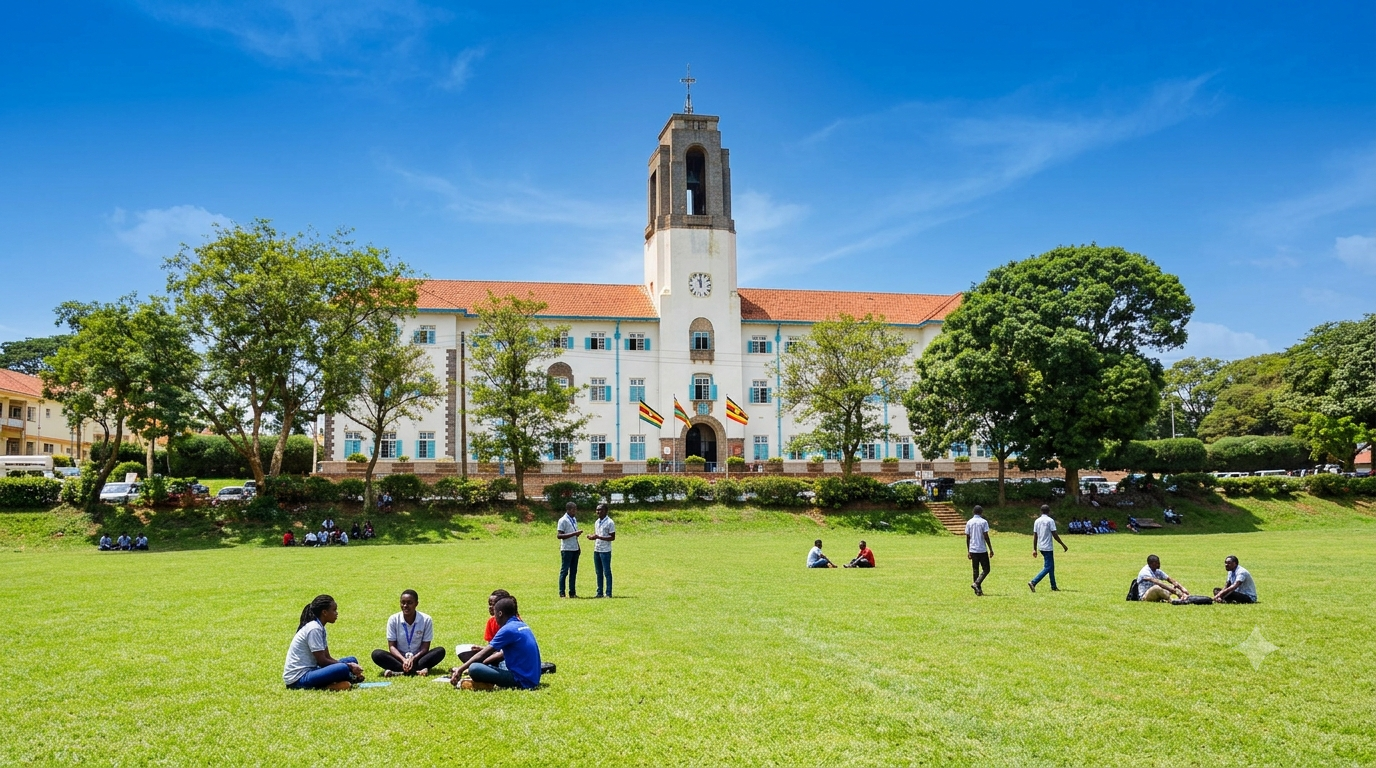
Main Building in the background. Photo taken on 1st April 2026

It brings me great joy to welcome you to Makerere University.

First Year students (Freshers) are by tradition given an “acclimatization” period of
one week which is referred to as the “Orientation Week”. The Freshers report on
Campus one week earlier than the Continuing students and during this week they
are introduced to the key facilities as well as other important aspects of life at the
University.
Schedule of Semesters for 2026/2027 Academic Year
Semester One
Saturday 8th August, 2026 to Saturday 5th December, 2026 (17 Weeks)
Semester Two
Saturday 16th January, 2027 to Saturday 15th May, 2027 (17 Weeks)
Orientation Week
Saturday 1st August, 2026 – Friday 7th August, 2026
During the Orientation week, arrangements are made to enable the Freshers meet
and be addressed by Key Officers, Wardens and Student Leaders who welcome the
students.

Arrangements are also made to enable the Freshers acquaint themselves with such
key facilities at the University like the Library, University Hospital, Games and
Recreation Facilities.etc.

Freshers are expected to take advantage of the week to survey and acquaint
themselves with the general Campus lay out. Another major activity during the
Orientation Week is Registration.

All Freshers must ensure that they are registered with their respective Colleges/Schools/ Departments/Halls/University Hospital.

Saturday 1st August, 2026
Resident Freshers report to their respective halls of residence or private hostels by
5.00 p.m. It is the responsibility of each student to make his/her own travel
arrangements to the University or private hostel.

Monday 3rd August, 2026
All freshers shall report to the Freedom Square for a meeting (Central orientation
program) with the University officials at 9:00am.

College Orientation
Tuesday 4th – Friday 7th August, 2026 College orientation programs will follow
during the orientation week. College Principals and Registrars will issue the
orientation programs for their colleges.
Lectures will begin on Monday 10th August, 2026.

Registration
For a candidate to be considered a bonafide student of the University, he/she must
be registered. Registration is a mandatory requirement of the University which
must be done within the first two (2) weeks from the beginning of the semester by
every student. Privately sponsored students will pick their original admission
letters after payment of 60% tuition and all functional fees from their respective
colleges.
Registration will commence on Monday 10th August, 2026 starting at 9.00 a.m.
each day at the respective Schools.
Ensure that you complete all the required registration formalities within the
prescribed time in order to avoid disappointments later. College/School Registrars
will provide registration programs.

Registration Requirements
Admission to Makerere University is a provisional offer made on the basis of the
statement of your qualifications as presented on your application form. The offer is
subject to verification of your academic documents and payment of university fees.
For registration purposes, all first-year students MUST produce their original
documents for verification.

Government sponsored students shall pay shs.155,404/= functional fees to
Makerere University.

Privately sponsored students shall pay 834,505/= and 1,489,785/= for Ugandans
and International candidates respectively for semester one and 132,250/= for
semester two of year 1.

Full admission letters for Government sponsored students should be picked from
the respective Colleges/Schools beginning Monday 6th July 2026.
The fees structure for privately sponsored students is attached to their provisional
admission letters that should be down loaded from their ACMIS portal.
Students in the affiliated Institutions should pay fees indicated by their respective
Institutions.
Fresher’s joining instructions concerning reporting, fees payment, academic
policies and any important information from the different university units can be
viewed from the Academic Registrar’s Department notice boards and University
websites www.mak.ac.ug
All freshers MUST have laptop computers as one of the essential tools for study
purposes for their programmes.

Other Fees
a) National Council for Higher Education fee (Per Year)-Shs.20,000/=
(Payable to the National Council for Higher Education Account in Stanbic Bank).

b) UNSA Subscription fee (per year) – Shs. 2,000/= (payable to Stanbic Bank,
City Branch, A/C 0140007248501).

Change of Programmes/Subjects
(a) Change of Programmes
Since selection for specific programmes was made according to each candidate’s
performance and order of programme choices, taking into account the available
subject combinations and time-table limitations, there is normally little need to
change the programme or subjects. However, some places become vacant when
some of the students admitted do not take up the offers. Such places are filled
through the change of programmes/subjects.

Students who wish to change programmes first of all register according to the
registration time-table for the programmes and subjects (where applicable) to
which originally have been admitted. Each student who may wish to change
his/her programme/ subject combination is required to pay an application fee of
Shs.6,000/= plus the service fee and bank charges to banks used by Uganda
Revenue Authority.

(b) Change of Subjects
Students in the College of Humanities and Social Sciences, College of Natural
Sciences or the College of Education and Extemal Studies may wish to change their
subjects.

Students should be aware that changing one subject may result in a change of
College. Before students apply to change their programmes, Colleges and Subjects,
they are encouraged to seek advice on the cut-off point(s) for programmes,
requirements for specific subjects and possible subject combinations.

Change of programme/Subjects will be done online on payment of an application
fee of Shs. Six thousand (6000/=) plus the service fee and bank charges to banks
used by Uganda Revenue Authority (URA).

Students are notified and warned that change of programme or transferring to
another subject combination or College without proper authority will be liable to
discontinuation from the University.

A student who has been permitted to change his/her programme or subject(s) will
be issued with a letter stating so, and on receipt of such a letter that student should
complete the ACCEPTANCE part and return a copy of each to the Undergraduate
Admissions and Records Office, the former College j School and the new
College/School.

The change of programme /subjects will be done online from Monday 3rd August,
2026 to Friday 14th August, 2026.

N.B: It is advisable that only those students who meet the cut-off points for the
desired programme/subjects may apply.

Buyinza Mukadasi
Academic Registrar

Mak Editor

Continue Reading

General

Hundreds attend Sylas Ruhweza’s Requiem Mass

Published

on

Sylas Ruhweza's casket lies in the chapel. Requiem Mass in respect of Mr. Sylas Ruhweza, the first President of the Mastercard Foundation Scholars Alumni Community at Makerere University, 30th May 2026, St. Augustine Chapel, Kampala Uganda, East Africa.

Hundreds of mourners gathered at St. Augustine Chapel, Makerere University on May 30, 2026 to pray for the soul of Mr. Sylas Ruhweza, the first President of the Mastercard Foundation Scholars Alumni Community at Makerere University.

The requiem mass was filled with emotional tributes celebrating Ruhweza’s life of service, leadership and dedication to community causes. Ruhweza passed away on Friday, May 29, 2026, at Mildmay Uganda Hospital.

Speaker after speaker described him as a humble and visionary leader who was passionate about uplifting others and deeply committed to excellence.

Rt. Hon. Calvin Armstrong Rwomiire Akiiki addresses mourners. Requiem Mass in respect of Mr. Sylas Ruhweza, the first President of the Mastercard Foundation Scholars Alumni Community at Makerere University, 30th May 2026, St. Augustine Chapel, Kampala Uganda, East Africa.
Rt. Hon. Calvin Armstrong Rwomiire Akiiki addresses mourners.

“We thank God for the life of Sylas, for the years he granted him among us, and for the impact he made on countless lives. He carried himself with humility and grace, and wherever he went, he built friendships, inspired confidence, and left people better than he found them,” Tooro Kingdom Prime Minister, Calvin Armstrong Rwomiire Akiiki, said during the Mass.

Mr. Rwomiire urged mourners to honour Ruhweza’s legacy by embracing the values he stood for, including integrity, compassion, hard work, service to community, and his unwavering love for Tooro Kingdom.

The main celebrant, Rev. Fr. Charles Lwanga Makoboza, echoed the message in his homily, reminding Christians to remain rooted in Jesus Christ throughout their lives.

Rev. Fr. Charles Lwanga Makoboza. Requiem Mass in respect of Mr. Sylas Ruhweza, the first President of the Mastercard Foundation Scholars Alumni Community at Makerere University, 30th May 2026, St. Augustine Chapel, Kampala Uganda, East Africa.
Rev. Fr. Charles Lwanga Makoboza.

 “Sylas has gone to be with God, in a place where there is no pain, missed calls, struggle, corruption, betrayal, jealousy and tears. He is in a place with absolute peace. So, in life, never be the cause of someone’s tears, and if you do, seek reconciliation,” Fr. Lwanga, said.

Fr. Lwanga also reminded mourners that what Ruhweza needs most are prayers, not wreaths.

Speaking on behalf of the family, Ms. Grace Kabasita, Ruhweza’s maternal aunt, described him as a loving and dedicated young man whose life touched many people.

Ms. Grace Kabasita. Requiem Mass in respect of Mr. Sylas Ruhweza, the first President of the Mastercard Foundation Scholars Alumni Community at Makerere University, 30th May 2026, St. Augustine Chapel, Kampala Uganda, East Africa.
Ms. Grace Kabasita.

“Sylas was a counsellor, teacher, and a brilliant, loveable young man who fitted into every society. His life was marked by service, friendship, dedication, and commitment to the wellbeing of others and his culture,” she said.

Addressing mourners, Prof Justine Namaalwa, the Coordinator of the Mastercard Foundation Initiatives at Makerere University, noted that though Sylas’s life was cut short, he leaves behind a lasting legacy of service, leadership and impact on the communities he served.

 “Sylas, you have gone too soon. But it is well with our souls. May your legacy of Transformative Leadership live on,” Prof. Namaalwa, said.

R-L: Prof. Prof. Justine Namaalwa, a mourner, Prof. Gorettie Nabanoga and Ms. Jolly Okumu. Requiem Mass in respect of Mr. Sylas Ruhweza, the first President of the Mastercard Foundation Scholars Alumni Community at Makerere University, 30th May 2026, St. Augustine Chapel, Kampala Uganda, East Africa.
R-L: Prof. Prof. Justine Namaalwa, a mourner, Prof. Gorettie Nabanoga and Ms. Jolly Okumu.

She thanked the Mastercard Foundation for supporting his education through BRAC Uganda, supporting his university education through the Mastercard Foundation Scholars Program at Makerere University, and nurturing his leadership journey through the Youth Advisory Board.

Ruhweeza at glance

Born on 19th July 1994 to the late Mr. Paul Tinkasimire Paul Adyeeri and Ms. Ategeka Margret Abwooli of Bunyangabu District.

The ninth born of eleven children attended Kaboyo Primary School for his Primary Education, and later joined Fort Portal Secondary School where he sat for his O-Level. He then proceeded to A-Level at Hannah International School.

Sylas Ruhweza, then Team Lead, AlumNet Foundation addressing his fellow alumni on 5th April 2025. Requiem Mass in respect of Mr. Sylas Ruhweza, the first President of the Mastercard Foundation Scholars Alumni Community at Makerere University, 30th May 2026, St. Augustine Chapel, Kampala Uganda, East Africa.
Sylas Ruhweza, then Team Lead, AlumNet Foundation addressing his fellow alumni on 5th April 2025.

He joined Makerere University and graduated with a Bachelor of Science in Petroleum Geoscience and Production in 2022, supported by the Mastercard Foundation Scholars Programme at Makerere University.

At the time of his passing, he was pursuing a Master’s degree at Victoria University.

Leadership, Service and Professional Contributions

Mr. Ruhweza served as Chairperson of the Mastercard Foundation Alumni Network at BRAC from 2020 to 2022, demonstrating transformative leadership and commitment to social change.

Prof. Gorettie Nabanoga with scholars that attended the Mass. Requiem Mass in respect of Mr. Sylas Ruhweza, the first President of the Mastercard Foundation Scholars Alumni Community at Makerere University, 30th May 2026, St. Augustine Chapel, Kampala Uganda, East Africa.
Prof. Gorettie Nabanoga with scholars that attended the Mass.

He later became the President of the Makerere AlumNet Foundation, an umbrella organization that brings together the Scholars Makerere Alumni chapter.

He worked as an eLearning Support Officer at the College of Natural Sciences (CoNAS) under the e-learning initiative at Makerere University.

He was a member of the Steering Committee of the Mastercard Foundation Scholars Program at Makerere University, representing the Scholars Makerere Alumni chapter.

Scholars mourning Sylas. Requiem Mass in respect of Mr. Sylas Ruhweza, the first President of the Mastercard Foundation Scholars Alumni Community at Makerere University, 30th May 2026, St. Augustine Chapel, Kampala Uganda, East Africa.
Scholars mourning Sylas.

At the time of his passing, he was serving as the Minister of Information in the Tooro Kingdom, Strategy and Engagement Lead for the Mastercard Foundation Alumni Network-Uganda Chapter, and Programme Associate at the Africa Climate Collaborative, one of the Mastercard Foundation initiatives at Makerere University.

Legacy

Ruhweza is remembered for his dedication to education, leadership, mentorship, and community service. He passionately championed youth empowerment, collaboration, and social responsibility.

The Requiem Mass in progress. Requiem Mass in respect of Mr. Sylas Ruhweza, the first President of the Mastercard Foundation Scholars Alumni Community at Makerere University, 30th May 2026, St. Augustine Chapel, Kampala Uganda, East Africa.
The Requiem Mass in progress.

His life reflected the transformative power of education, servant leadership, and a commitment to uplifting others.

May Sylas’s soul rest in eternal peace.

Rt. Hon. Calvin Armstrong Rwomiire Akiiki with mourners that included Deputy Lord Mayor Emeritus Nyanjura Doreen. Requiem Mass in respect of Mr. Sylas Ruhweza, the first President of the Mastercard Foundation Scholars Alumni Community at Makerere University, 30th May 2026, St. Augustine Chapel, Kampala Uganda, East Africa.
Rt. Hon. Calvin Armstrong Rwomiire Akiiki with mourners that included Deputy Lord Mayor Emeritus Nyanjura Doreen.

Carol Kasujja
Carol Kasujja Adii

Continue Reading

Trending