
General
East African Court of Justice celebrates 21st Anniversary: Delegation visits Makerere University to engage academia on promoting Justice in the East African integration agenda

By Ritah Namisango
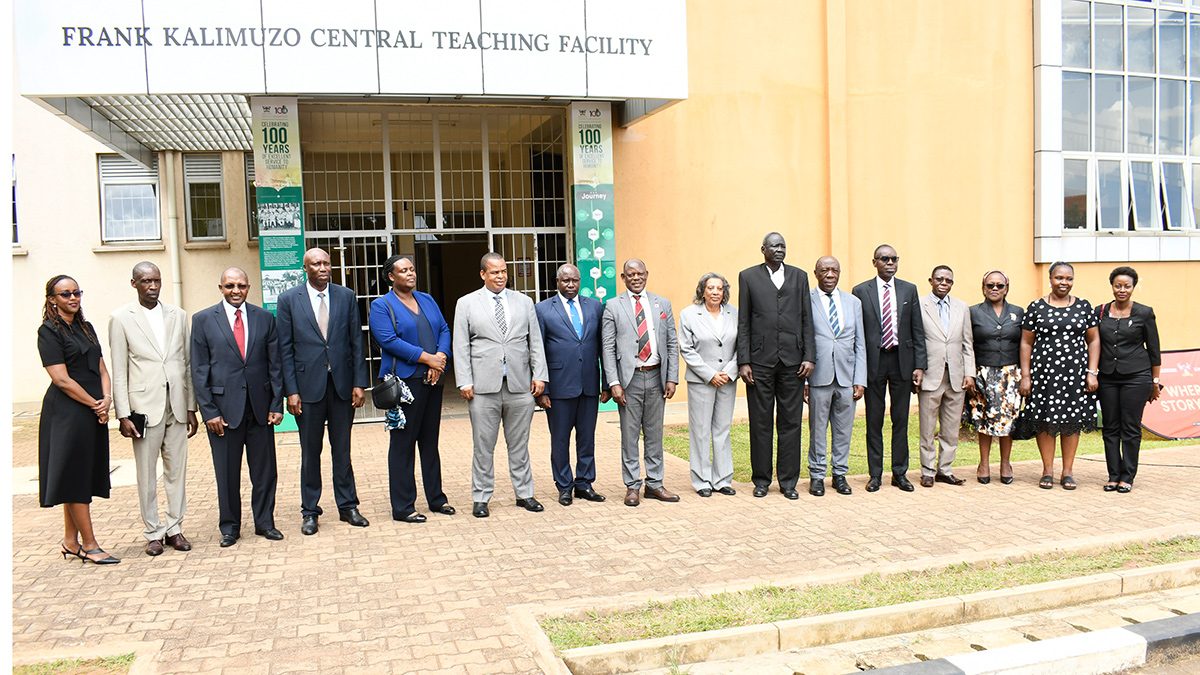
On 30th November 2022, the Vice Chancellor hosted a high powered delegation from the East African Court of Justice to celebrate the 21st Anniversary of the Court focusing on engaging the academia in promoting Justice in the East African community integration agenda.
The President of the East African Court of Justice, Hon. Justice Nestor Kayobera led the delegation consisting of Hon. Lady Justice Sauda Mjasiri- Vice President East African Court of Justice, Hon. Justice Yohane Masara- Principal Judge East African Court of Justice, Hon. Justice Dr. Charles Nyawello- Deputy Principal Judge East African Court of Justice, several other officials from the East African Court of Justice and members of Uganda’s judiciary.
The Vice Chancellor, Prof. Barnabas Nawangwe received the high powered delegation amidst lively performances and entertainment by Makerere University students from the Department of Performing Arts and Film (PAF).
Welcoming the Justices, the Vice Chancellor commended the delegation for ensuring that this historic visit and interaction with the academia happens during Makerere University’s centennial year (1922-2022).
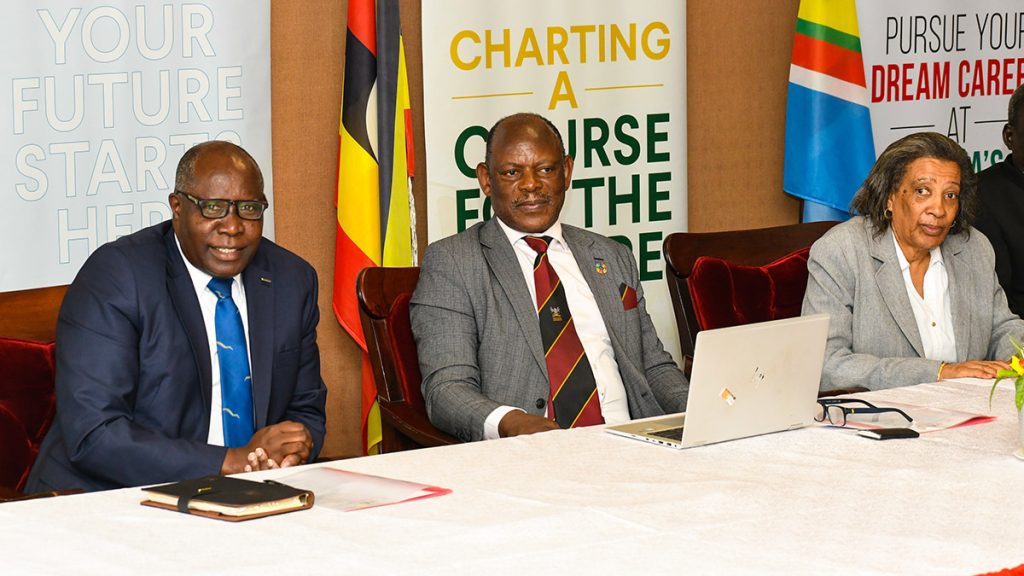
Starting his presentation, Prof. Nawangwe highlighted the evolution of the institution from a technical school with only 14 day students. In 1949, it became a University College affiliated to the University College of London, offering courses leading to the general degrees of its then mother institution. With the establishment of the University of East Africa in June 29, 1963, the special relationship with the University of London came to a close and degrees of the University of East Africa were instituted. On July 1, 1970, Makerere became an independent national university of the Republic of Uganda, offering undergraduate and postgraduate courses leading to its own awards. In 2011, the University transformed from a Faculty based institution to a Collegiate University with ten (10) colleges.
The gist of the Vice Chancellor’s presentation centered on Makerere University’s community based approach. He pointed out that in addition to training students, Makerere University is focused on solving development challenges facing the communities, the country, East Africa and the world in general.

The Vice Chancellor underscored that the University exists to transform communities through identification of development challenges and coming up with tangible solutions. In line with national and global challenges, Makerere University will continue to work with partners to provide solutions to the following challenges: Rapid population growth, Youth unemployment, Climate Change, Food Insecurity, Emerging Diseases, and Conflict.
As Makerere University continues to celebrate 100 years of existence, Prof. Nawangwe emphasized that engagement of the academia to find solutions to the problems affecting communities is one of the best approaches that has enabled Makerere University to remain relevant. To qualify this statement, Prof. Nawangwe mentioned that Makerere University is one of the leading research institutions on HIV/AIDS in Uganda. Makerere University is credited for its role in the development of the Nevirapine drug that prevents mother to child transmission of HIV/AIDS as well as breakthroughs in research in Tuberculosis and Malaria. To address the transportation challenge, the staff and students of Makerere University working with other partners came up with the electric vehicle innovation (Kiira EV) that provided a vision for the development of the Kayoola Electric Vehicle under the Kiira Motors Corporation. Working with the local sector, Makerere University staff and students developed the first indigenous diesel engine made fully from local materials. He also mentioned the strides in crop improvement namely sweet potatoes, tomatoes, soybean, sorghum, millet, and among others that are drought resistant and high yielding. He revealed that during the Covid-19 pandemic, the Government of Uganda funded Makerere University staff and researchers who came up with research outputs and innovations to curb the spread of Covid-19.
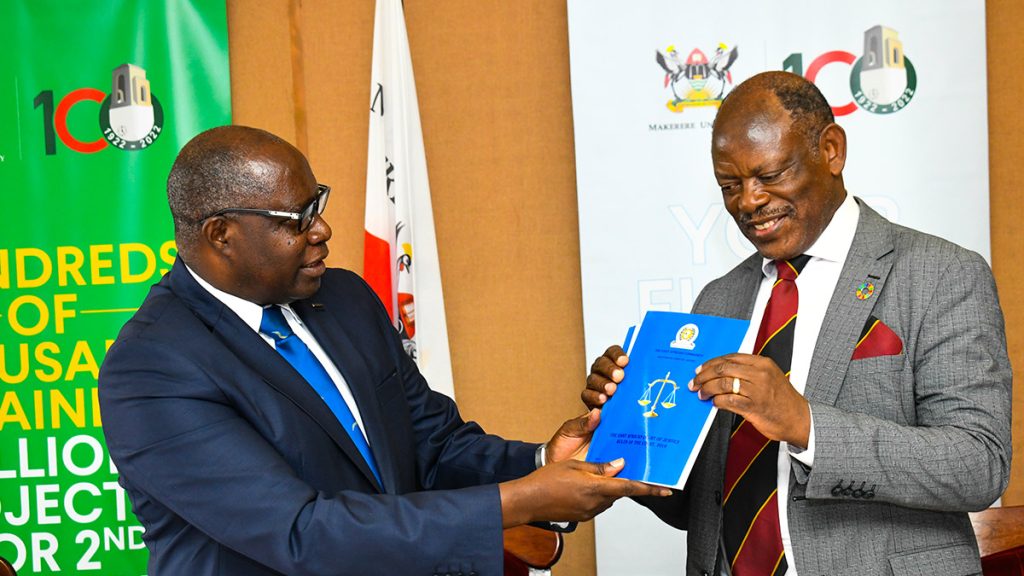
Responding to the Vice Chancellor’s presentation, Hon. Justice Nestor Kayobera applauded Makerere University for not only offering education, but also solving problems affecting society through conducting research and innovations. Hon. Justice Kayobera congratulated Makerere University upon its centennial celebrations. He was pleased to note that the East African Court of Justice was celebrating its 21st anniversary at Makerere University-a renowned alma mater for notable alumni across the globe.
“Today, 30th November 2022 is an extraordinary day. Today is the 21st anniversary of the East African Court of Justice (EACJ) and the East African Community (EAC). We are honoured to celebrate our anniversary at Makerere University as this great institution continues to celebrate 100 years of existence. As we celebrate 21 years, we have dedicated 40 days of practicing Justice in Uganda, hosting joint conferences, delivering judgements, visiting partners and celebrating with Makerere University,” he remarked.
Noting that most of the members of the delegation were proud alumni of Makerere University, the President Judge Hon. Kayobera saluted the institution for its great contribution in legal training, capacity building and practice.
“We thank the University for giving unto us great Judges in the Court of Justice of the East Africa, because almost all of the judges in today’s delegation are alumni of the Makerere University School of Law,” he said.
The Judge President disclosed to the University Management that their visit to Uganda, is among the objectives of the EAC treaty, of implementing the principle of social justice and community engagement.
“We are demystifying the practice of Judges sitting in their chambers. So, apart from issuing judgements, do the judges interact with the communities? This will not remove your independence,” he stated.
“The EACJ delegation has been in Uganda 26th October 2022. We are integrating the community. We are using facilities of our colleagues in Uganda, their boardrooms and chambers. The staff from EACJ are here, we have visited places and we are dealing with cases. We are focused on ensuring human dignity in the chambers,” he said.
Giving a vote of thanks, Prof. Anthony Mugagga Muwagga, Principal of Makerere University College of Education and External Studies (Mak CEES) appreciated the delegation coming up with the idea of engaging the academia in promoting justice and the rule of law.
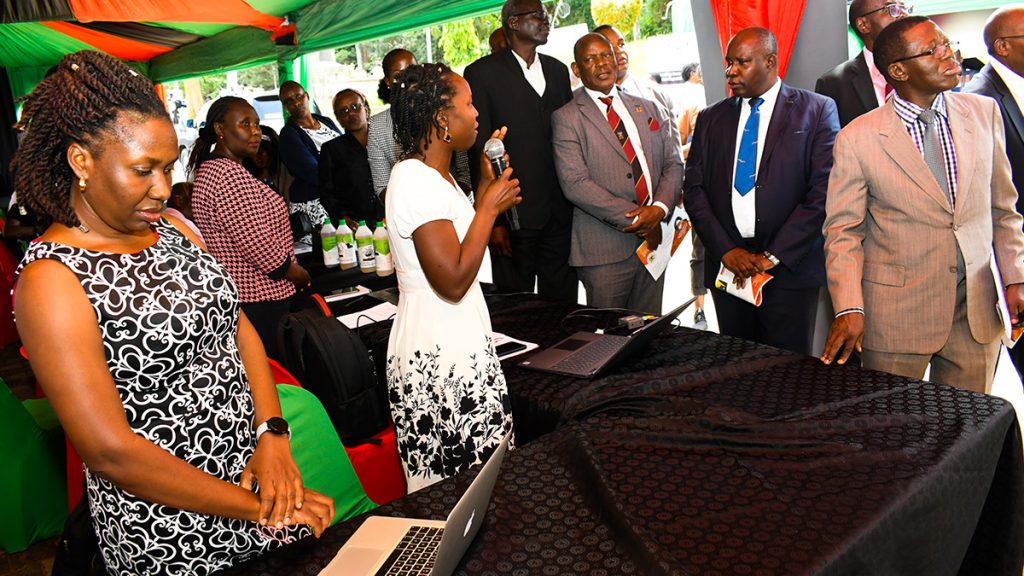
After an informative engagement with the University Management, the Vice Chancellor led the delegation to exhibition stalls where university staff and students showcased research outputs and innovations under the Makerere University Research and Innovations Fund (MakRIF).
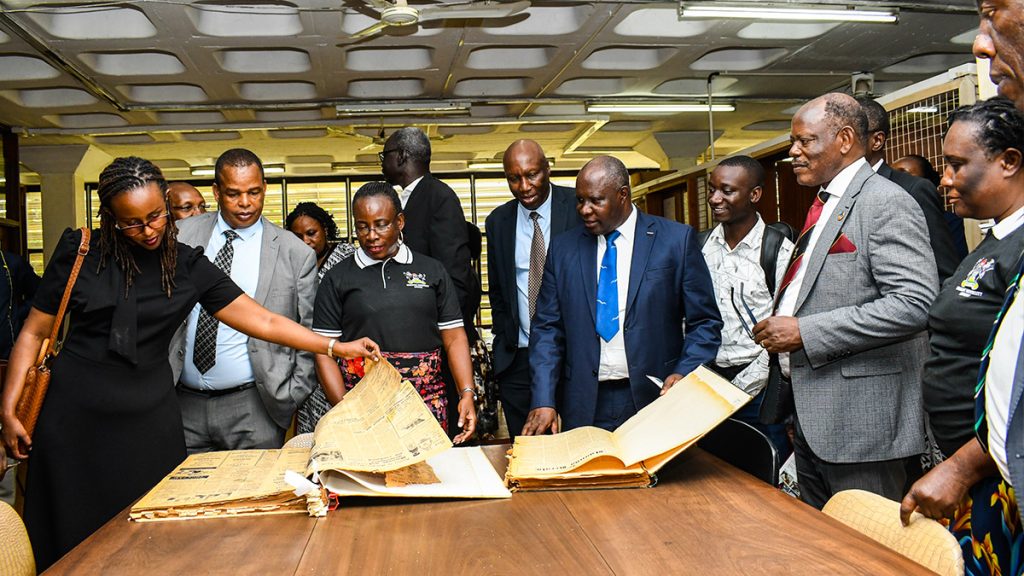
The delegation toured Makerere University Library with particular interest in the Law Section. The University Librarian, Dr. Helen Byamugisha highlighted the central role of the University Library in teaching, learning and research.
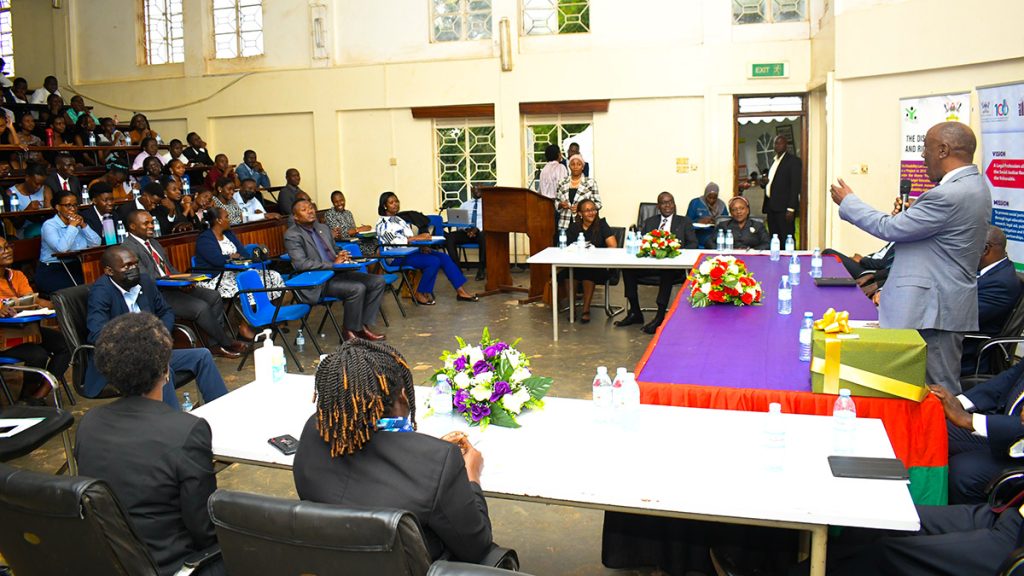
The delegation then moved to Makerere University School of Law to interact with the leadership, staff and students. The Ag. Principal-School of Law, Dr. Ronald Naluwairo received the delegation accompanied by the Ag. Deputy Vice Chancellor (Finance and Administration), Prof. Henry Alinaitwe.
Commenting on the visit of the delegation from the East African Court of Justice to Makerere University, Dr. Zahara Nampewo, the Ag. Deputy Principal of the School of Law who moderated the proceedings at the several places that the delegation visited said: “The interaction with the different stakeholders at Makerere University reminds us that we all have a cardinal duty to promote the rule of law.”
List of research and innovations showcased by Makerere University Research and Innovations Fund (Mak-RIF) at the exhibition:
Further Reporting by the School of Law: High Level Delegation from East African Court of Justice visit Mak School of Law


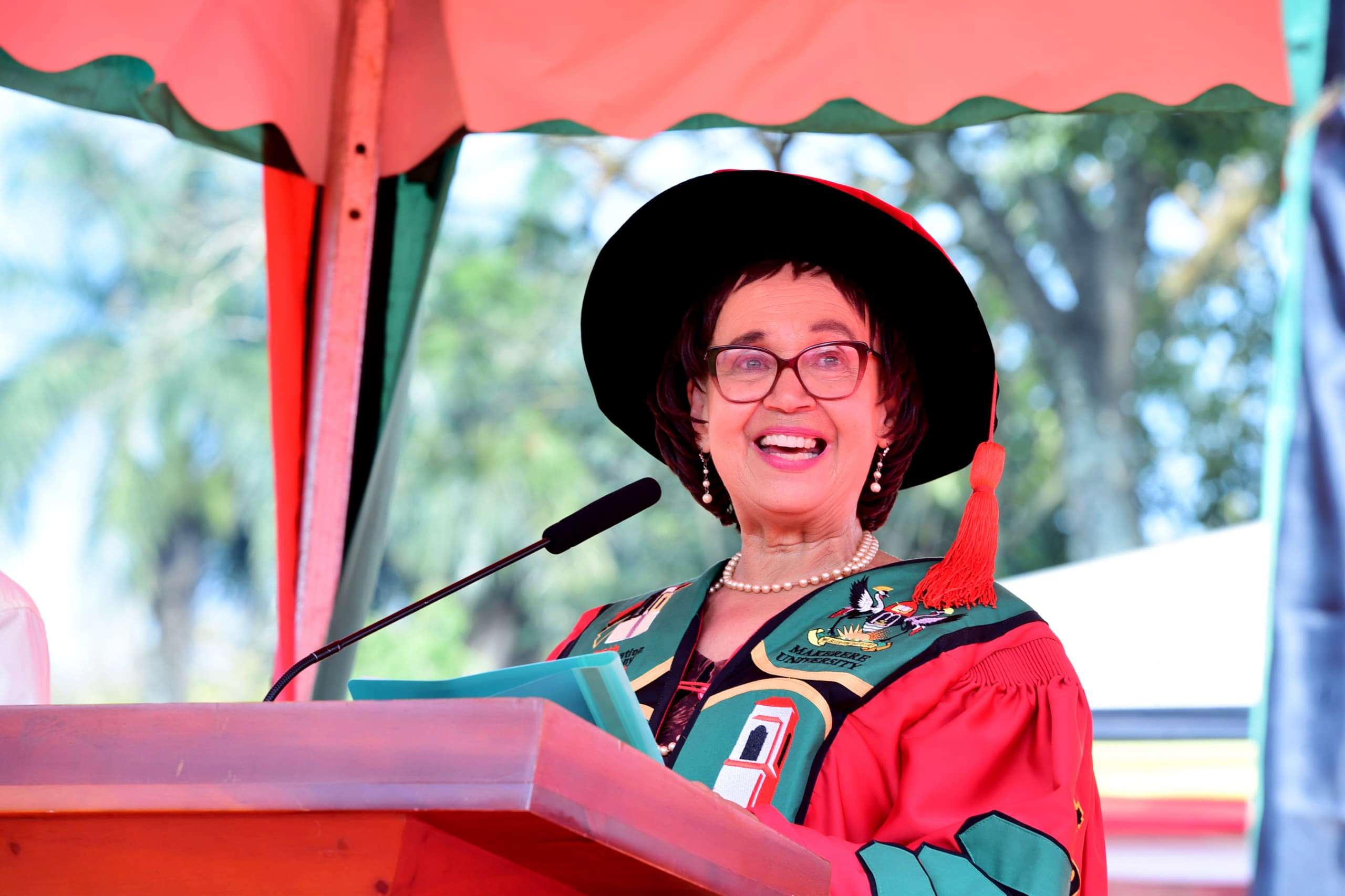
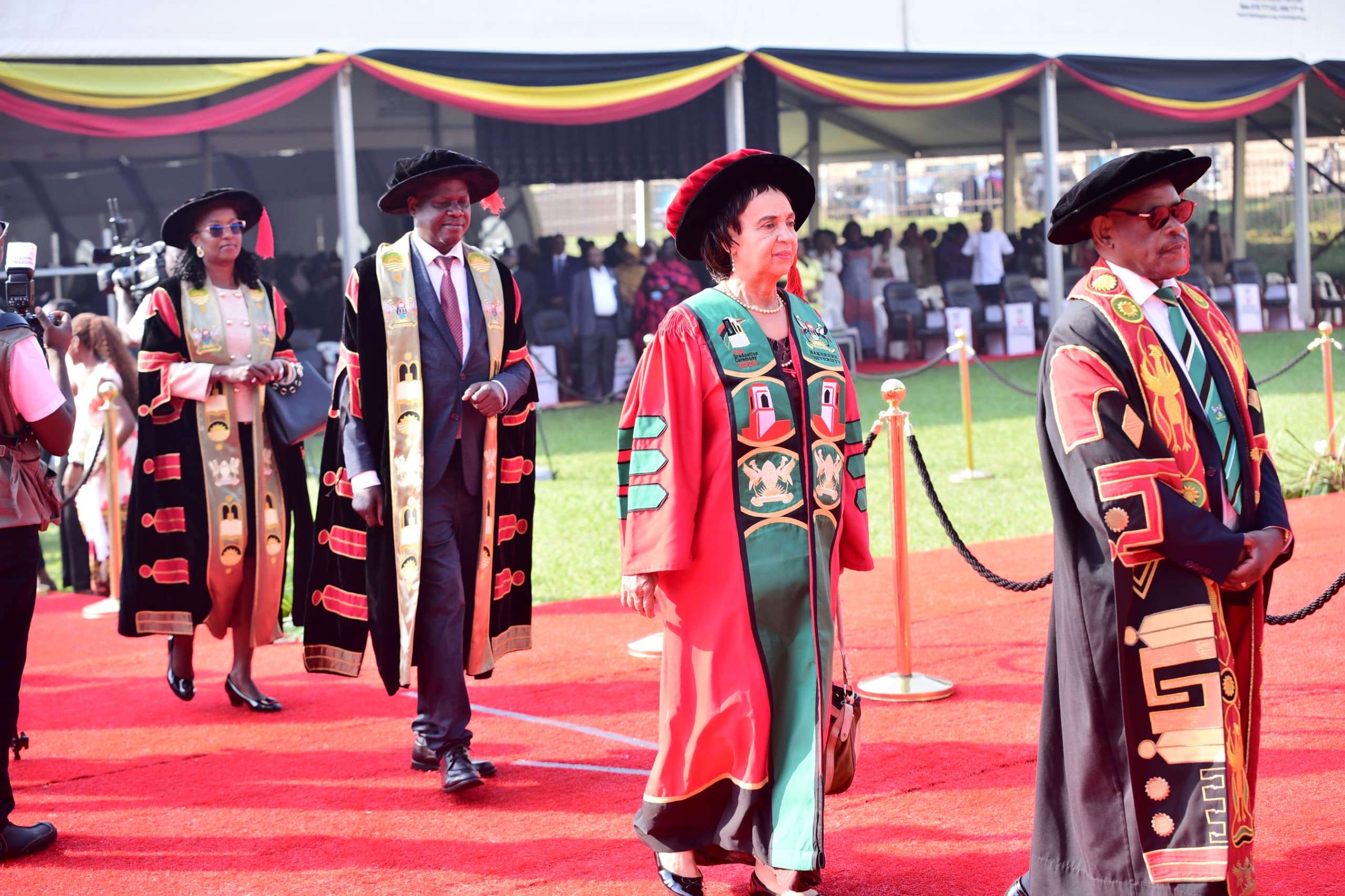
The Board Chairperson of the Makerere University Endowment Fund (MakEF), Dr. Margaret Blick Kigozi, has urged graduands in Health and Life Sciences to uphold professional ethics and serve humanity with diligence and compassion.
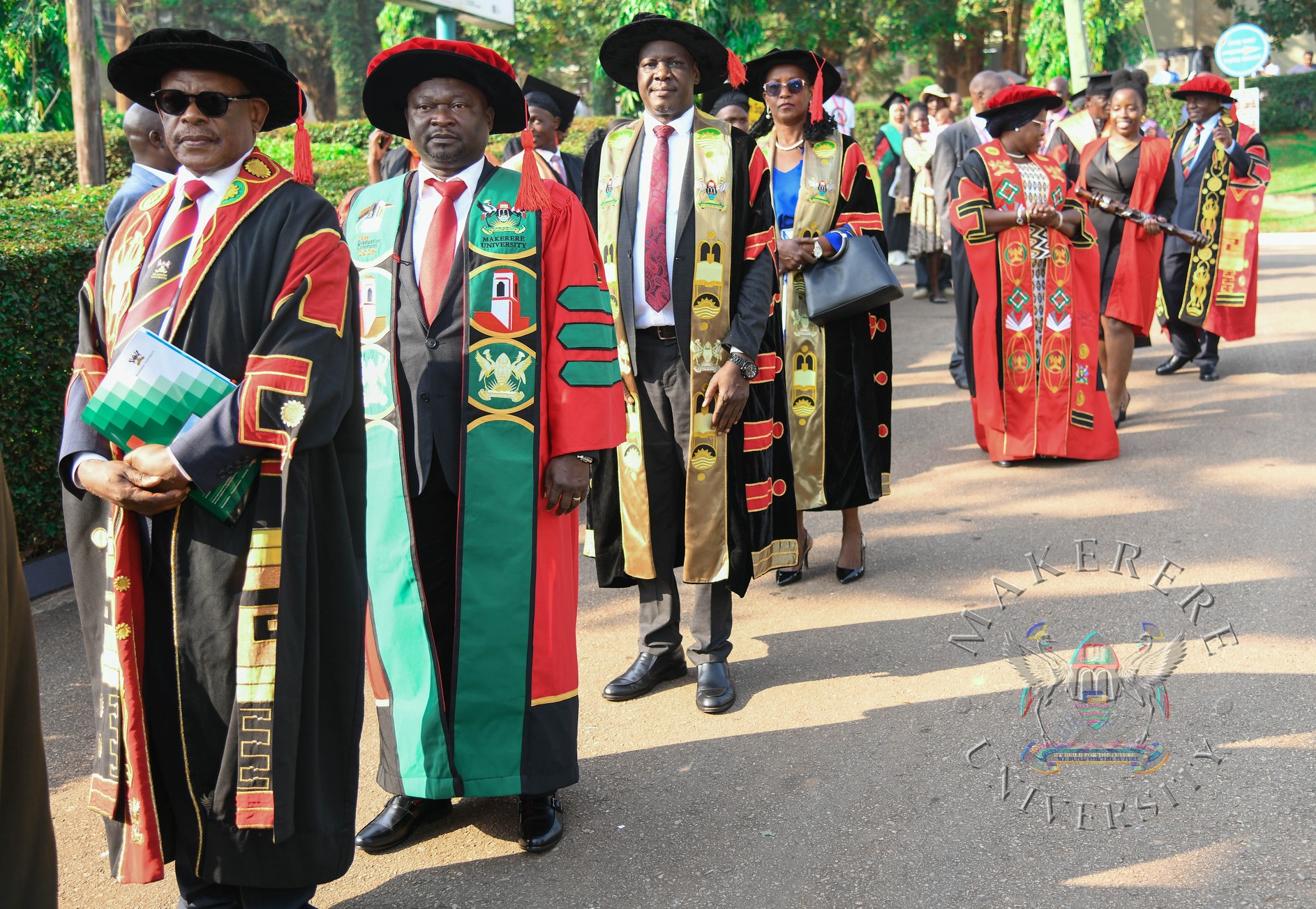
Her appeal came during the passing out of graduates from the College of Natural Sciences (CoNAS), the College of Veterinary Medicine, Animal Resources and Bio-Security (CoVAB), the College of Health Sciences (CHS) and the School of Public Health (SPH) on Day Two of the 76th Graduation Ceremony of Makerere University.
“Class of 2026, you are now part of the Makerere legacy. Wherever you go clinics, laboratories, farms, boardrooms, or classrooms, you carry this institution with you. Serve your patients with skill and compassion. Care for animals and communities responsibly. Question boldly and keep learning,” Dr Kigozi, said.
Delivering the commencement address, Dr. Kigozi lauded the graduates for their dedication to careers that directly impact lives and communities. She encouraged them to use their knowledge generously and exercise their power gently.
“Your education has trained you to ask better questions. Your humanity must guide the answers. Never forget that behind every chart, every case, every animal, every experiment, there is life. And life deserves care, patience, and dignity. Give every person you come in contact with care, patience and dignity,” Dr Kigozi, noted.
As the graduates embark on their professional journeys, Dr. Kigozi emphasized the importance of cultivating basic business acumen and financial literacy to ensure sustainability in their work.
“You do not need to become accountants but you must be able to read the essentials: understand simple financial statements, budgets and key metrics so you can judge whether a clinic, lab, or program is sustainable. You are encouraged to start your business. There are numerous investment opportunities in your areas of training. You can provide services to our people and create jobs,” Dr Kigozi, said.
She shared candidly how, when she first stepped into leadership, she realised she did not understand balance sheets or budgets well enough. So, she returned to Makerere for short courses to strengthen herself.
“A well-run Hospital, clinic or lab delivers better outcomes, attracts staff, and secures funding. Business savvy is not only about profit, it’s about sustainability and the freedom to serve ethically and effectively. Carry clinical skill with business sense so your work endures and grows,” Dr. Kigozi, noted.
Quoting renowned writer and producer Shonda Rhimes, creator of Grey’s Anatomy, who once reflected that succeeding in one area of life can sometimes mean falling short in another, Dr. Kigozi encouraged women graduates to intentionally balance professional ambition with family responsibilities.
“When one area thrives, another is often under strain. When Navio was graduating from school I had to manage the Presidential Investor Round Table on the same day as Executive Director Uganda Investment Authority. I chose my job and delegated his siblings to attend Navios graduation. I learnt from this. I choose family always after that thing you achieve once and keep forever,” Dr Kigozi, said.
In his speech, the Prof Barnabas Nawangwe, the Vice Chancellor, informed the congregation that Makerere’s ranking on all university ranking platforms has remained stable, placing Makerere among the top 10 African universities and within the top 4.5% globally.
“In the Times Higher Education global ranking, Makerere University made a formidable jump from the 1200-1500 bracket to the 800-1000 bracket. This was no mean achievement and I congratulate all members of the Makerere Community on this stellar performance,” Prof Nawangwe, said.
-
 Humanities & Social Sciences5 days ago
Meet Najjuka Whitney, The Girl Who Missed Law and Found Her Voice
-
 Health1 week ago
Uganda has until 2030 to end Open Defecation as Ntaro’s PhD Examines Kabale’s Progress
-
 General4 days ago
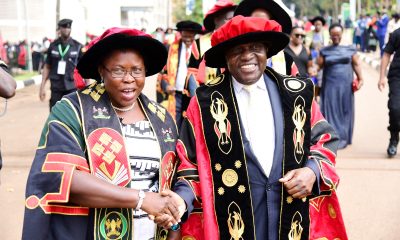
76th Graduation Highlights
-
 Agriculture & Environment1 week ago
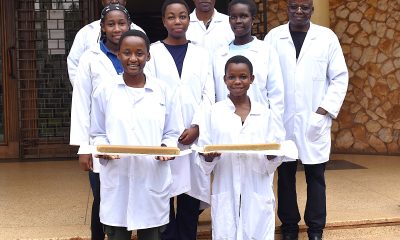
Uganda Martyrs Namugongo Students Turn Organic Waste into Soap in an Innovative School Project on Sustainable Waste Management
-
 General1 week ago
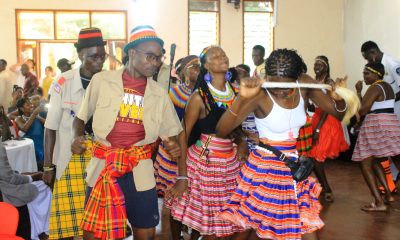
Mastercard Foundation Scholars embrace and honour their rich cultural diversity