
General
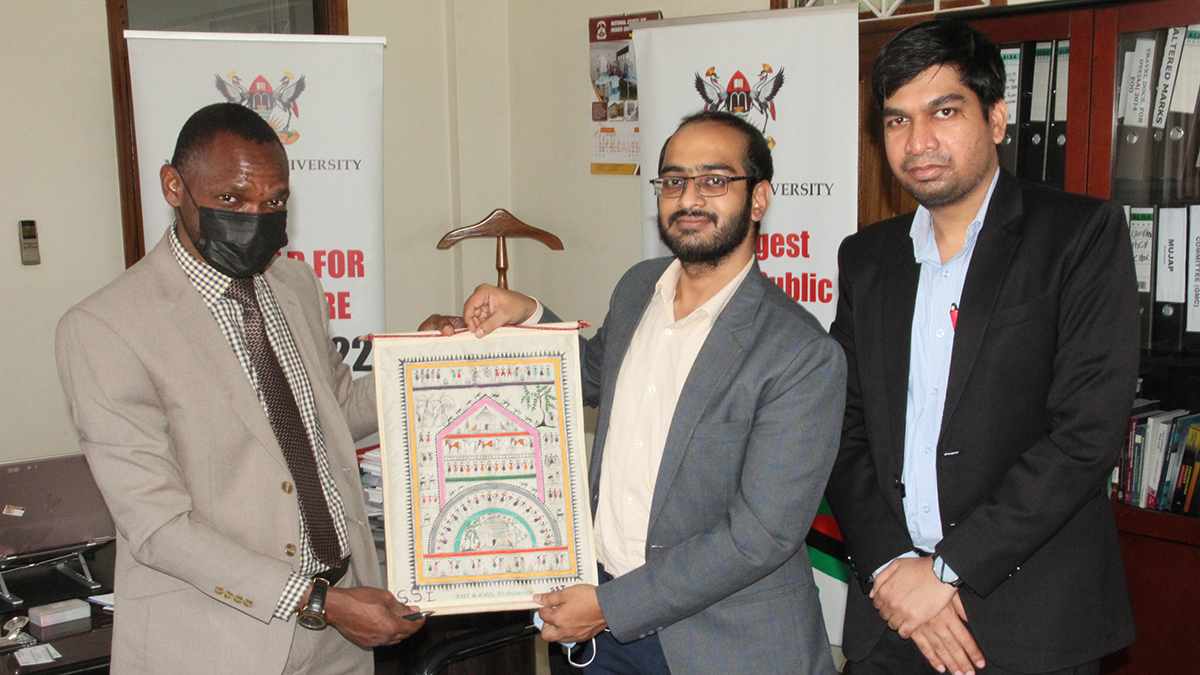
Mak-Kalinga Institute of Industrial Technology (KIIT), India discuss collaboration




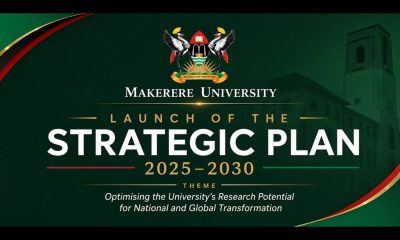










Makerere University has officially launched its Strategic Plan 2025-2030, marking a major milestone in its commitment to strengthening research, innovation, and human capital development in line with Uganda’s national development priorities.
The launch brought together senior government officials, university leadership, and development planners, including the Minister of Finance, Planning and Economic Development, Hon. Henry Musasizi, and a representative from the National Planning Authority (NPA), alongside the University Vice Chancellor.

A Vision Anchored in National Transformation
Speaking at the launch, the Vice Chancellor underscored the University’s ambition to significantly expand graduate training and strengthen its contribution to national development. He noted that the institution is targeting a return to pre-COVID enrolment levels and a substantial increase in postgraduate numbers by 2030, with a focus on producing highly skilled graduates, innovators, and researchers.
He emphasized that the Strategic Plan positions the University as a key driver of Uganda’s transformation through knowledge generation, innovation, and entrepreneurship, aligned with national priorities.
“The staffing distribution is shown here. Under the approved establishment, we intended to have 419 Professors, but we currently have only 75. We planned for 473 Associate Professors, but currently have only 144. This clearly demonstrates that we still have considerable room for growth in strengthening our academic staff profile,” the VC said.
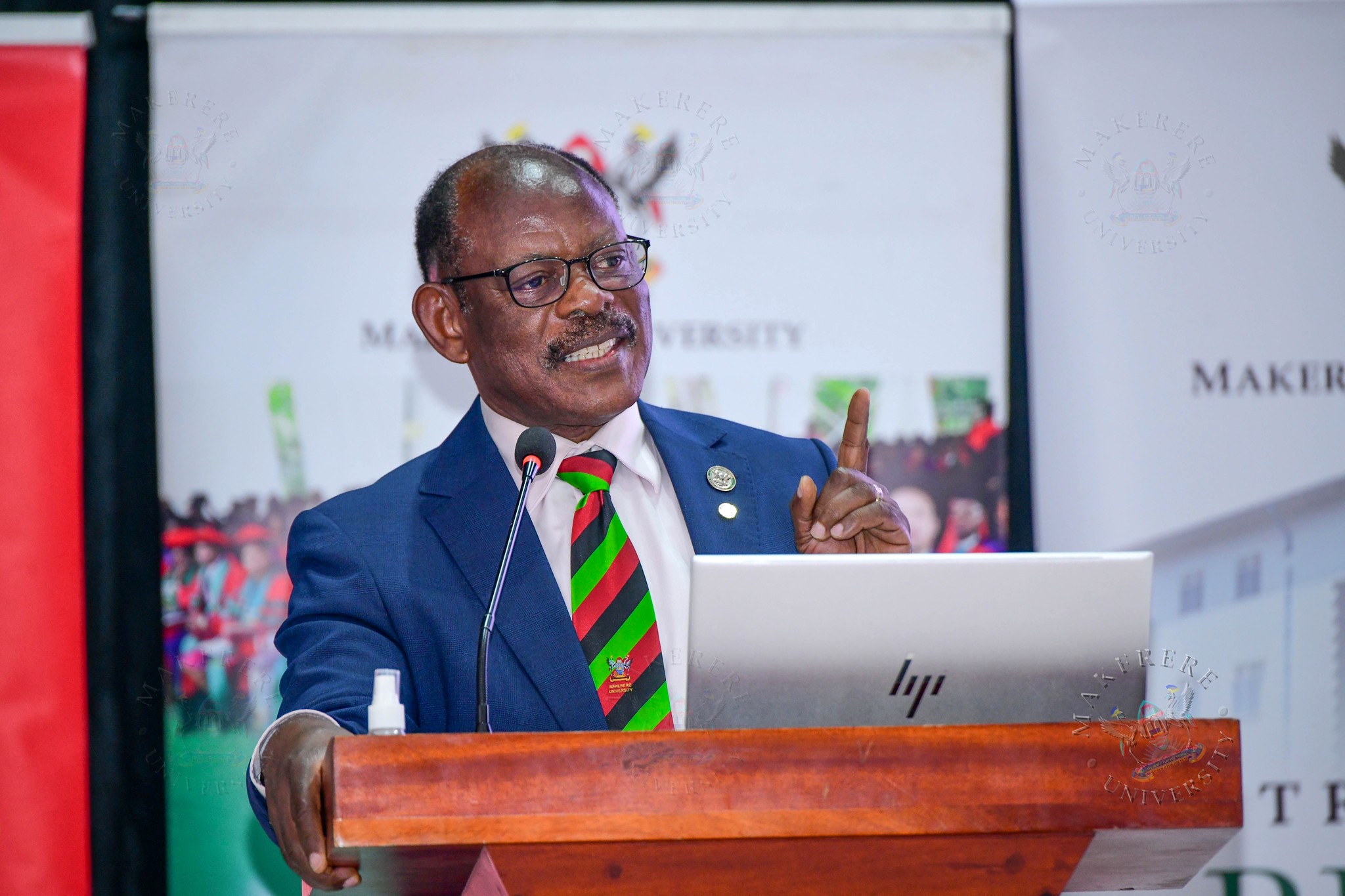
The VC appreciated researchers and research centres, that continue to attract substantial research funding. He highlighted the Infectious Diseases Institute (IDI) and the Makerere University Walter Reed Project which attracted approximately US$70 million in international research funding into Uganda.
“When you combine the grants won by all our researchers through competitive international funding, the total exceeds US$200 million,” he said.
In her remarks, the Chairperson of the University Council, Dr. Lorna Magara, described the Strategic Plan as more than an institutional roadmap, calling it “a public covenant with the people of Uganda.”
She noted that the Plan marks “the launch of Makerere University’s next chapter,” adding that decisions taken over the next five years will shape not only the future of the institution, but also Uganda’s development trajectory through graduates, research, innovations, and leadership.

Dr. Magara emphasized Makerere’s unique national role as Uganda’s premier public university, entrusted with public resources and public confidence.
“Every investment made in Makerere must produce measurable value for the people of Uganda,” she said, underscoring the need for accountability, integrity, and impact.
Ambitious Targets for Transformation
The Council Chairperson and the Vice chancellor outlined bold performance targets under the Strategic Plan, including doubling postgraduate enrolment, increasing STEM enrolment from 30% to 55%, improving PhD completion rates from 10% to 35%, and more than doubling peer-reviewed research output, alongside a significant rise in patents and innovations.
Dr. Magara stressed that these targets are not aspirations alone but binding commitments against which institutional performance will be measured.

“Ambition is precisely what this moment demands. A strategic plan is not measured by the elegance of its language, but by the lives it transforms,” she said.
Call for Stronger Governance and Legal Reform
Dr. Magara also highlighted the need for reform of the Universities and Other Tertiary Institutions Act, Cap. 262, noting that the current legal framework has not kept pace with the evolving realities of university governance and innovation.
She called on Government and Parliament to support a timely review of the Act to enable universities to better optimise knowledge systems, productive assets, and innovation capacity in support of national development.
Government Endorsement and Strategic Alignment
Hon. Henry Musasizi commended the University for developing a forward-looking Strategic Plan aligned with Uganda’s Vision 2040 and the Fourth National Development Plan (NDP IV), which serves as the foundation for the country’s Tenfold Growth Strategy.
He explained that Uganda’s ambition to grow its economy from about USD 50 billion to USD 500 billion requires accelerated growth driven by productivity gains, innovation, and strong human capital development.
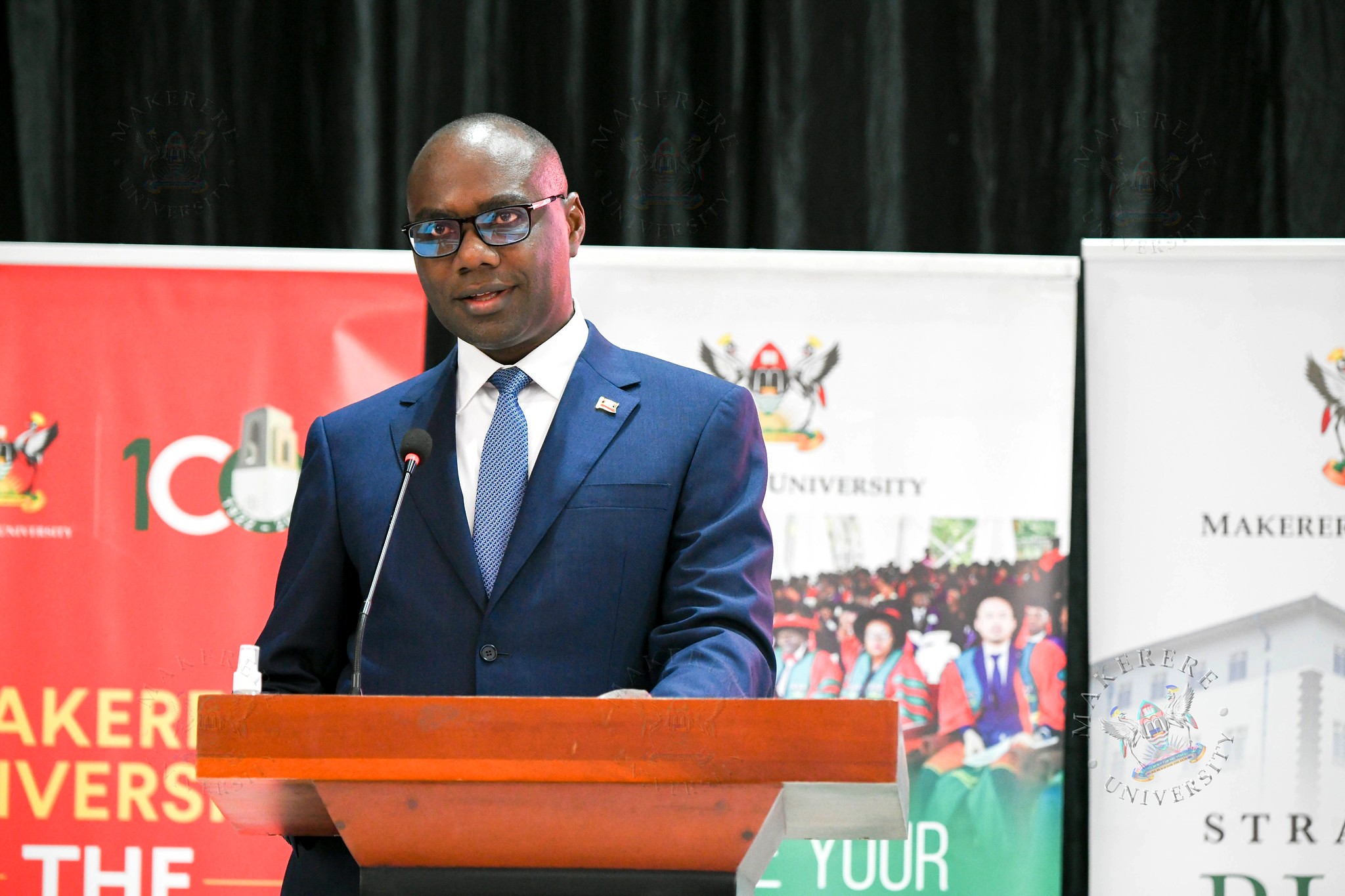
“Universities are central actors in national transformation. They are engines of knowledge creation, innovation, and human capital development,” he said.
The Minister stressed that government priorities include strengthening research, promoting industrialization, and ensuring that knowledge generated in universities is translated into practical solutions that support economic growth. He further highlighted the importance of accountability, efficiency, and value for money in public investments in higher education.
Universities as Drivers of the Tenfold Growth Strategy
In his presentation, the Senior Planner at the National Planning Authority, Samuel Kasule, emphasized that the Strategic Plan is firmly anchored in Uganda’s comprehensive development framework under Vision 2040 and NDP IV.
He noted that the Tenfold Growth Strategy seeks to accelerate Uganda’s economic growth into double-digit territory, enabling the country to achieve structural transformation and reach upper middle-income status.

Kasule underscored that universities play a critical role in this transformation through labour productivity, research, and innovation. He pointed out that priority sectors such as agriculture, tourism, minerals, oil and gas, and ICT depend heavily on skilled graduates and strong research ecosystems.
He also highlighted the importance of competency-based education, alignment of academic programmes with national human resource needs, and strengthening postgraduate training and research outputs.
A Shared Commitment to Transformation
Across all speeches, a strong message emerged: universities are central to Uganda’s development agenda and must evolve into research-intensive institutions that directly contribute to economic transformation.
The Strategic Plan 2025-2030 was widely commended for its focus on innovation, industry collaboration, digital transformation, and the commercialization of research outputs.
Government leaders reaffirmed continued support for higher education institutions through research funding, innovation ecosystems, and strengthened university–industry partnerships.
Conclusion
The launch of the Strategic Plan 2030 signals a renewed commitment to positioning the University as a key partner in Uganda’s development journey. With strong alignment to national priorities, the Plan is expected to accelerate research, innovation, and skills development necessary for achieving Uganda’s long-term economic ambitions. The Strategic Plan may be accessed at: https://mak.ac.ug/about/strategic-plan
-

 General1 day ago
Undergraduate Admission Lists 2026/2027
-

 General1 week ago
Makerere Hands Over CCE Hall to NEC for Renovation
-

 General1 week ago
Fees Waiver Female Scholarship 2026/2027
-

 General2 weeks ago
Makerere University Set to Develop Curriculum to Transform Graduate Supervision and Mentorship
-
 Education2 weeks ago
Makerere University Signs MoU with Fukui University to enhance Research, Teacher Development and STEM Education