
General
Chancellor Calls for Appreciation of Global Interconnectedness at 4th Kampala Geopolitics Launch

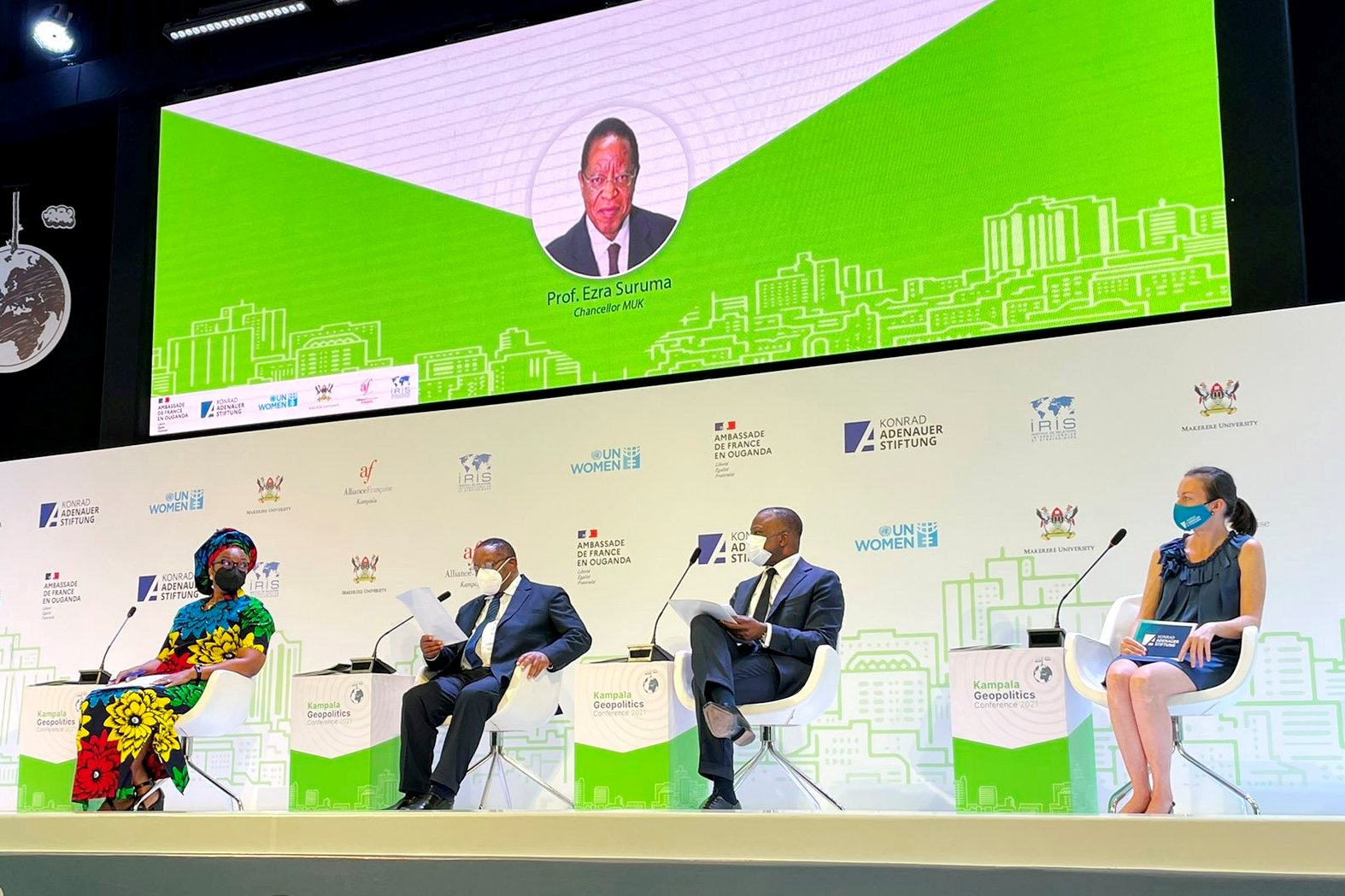
The Chancellor, Prof. Ezra Suruma while delivering his remarks at the opening ceremony of the Fourth Edition of the Kampala Geopolitics Conference has called for reflection on how COVID-19 demonstrated our interconnectedness as a human race, hence the need to work more closely together. The ceremony held in the Central Teaching Facility 2 (CTF 2) Auditorium on 10th November 2021 marked the beginning of the three-day conference on the theme; Crisis and Opportunity: Mapping the Geopolitical Importance of Africa.
“I am delighted to note that we indeed have people from many continents and as I was reflecting on this topic, it became clearer to me that indeed we live in one world. We may have lines drawn on the map and say this is Uganda, this is DRC and this is Egypt but these are lines on paper. In reality, we live in one global world” remarked Prof. Suruma.
He observed that the devastating impact of COVID-19 on the globe and the struggle to combat it through vaccination had led to a rise in vaccine nationalism. Prof. Suruma was therefore happy to learn that this topic would be discussed in depth at the conference.
The Chancellor further said that Uganda, given its location as a landlocked nation and the political developments in surrounding countries has a keen interest in geopolitics.
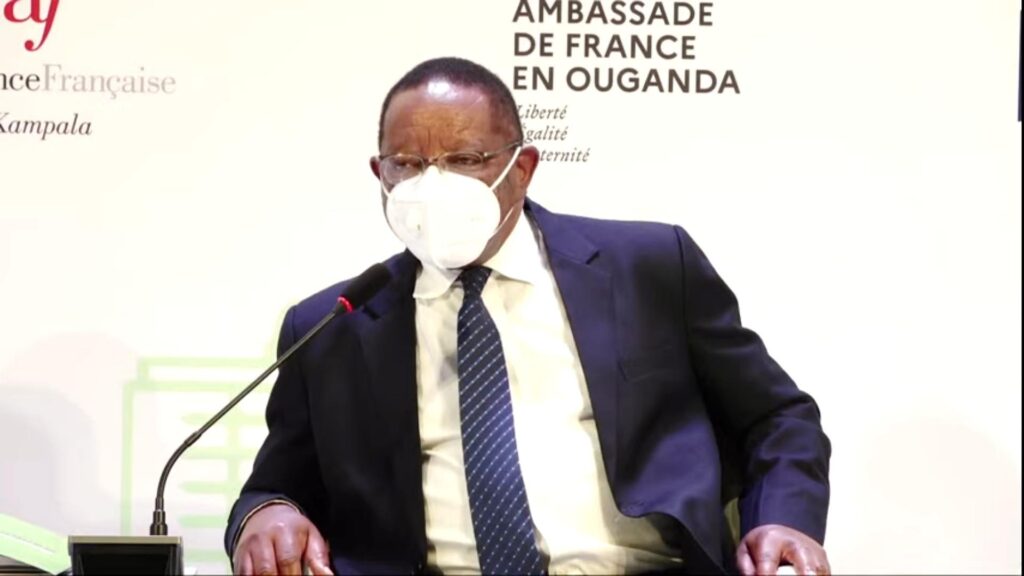
“Our hosting of large numbers of refugees, for example, is clear evidence of this fact. Geopolitics therefore is not a matter of indifference for Uganda. As seen historically and in contemporary history, Uganda has a great deal to ponder” said Prof. Suruma.
He thanked the partners Konrad-Adenauer-Stiftung, the French Embassy in Uganda, French Institute for International and Strategic Affairs, UN Women Uganda and Alliance Française for their commitment to ensuring that this important conference is held annually.
“And thank you especially for choosing Makerere University. We appreciate this vote of confidence at this time that Makerere is celebrating 100 years of service to Uganda and to the world. This year-long celebration through a series of events will be an occasion to reflect on our achievements, our successes and our failures in the past century. It will also an opportunity to lay strategies for the future” shared the Chancellor.
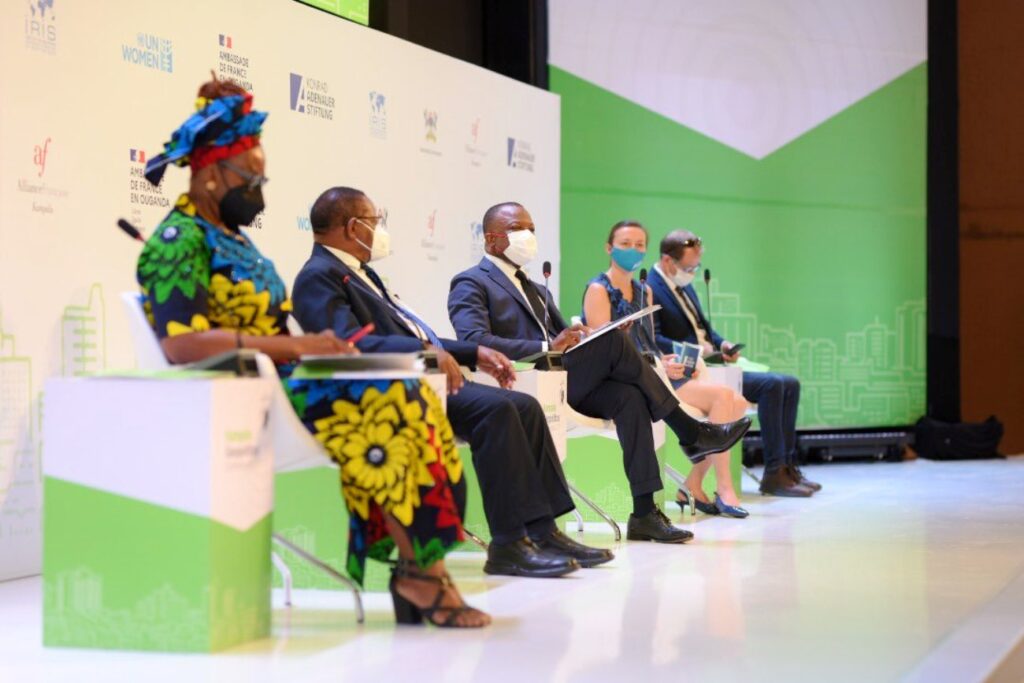
In his address, the Ambasssador of France to Uganda, H.E. Jules-Armand Aniambossou noted that as Makerere University commemorates 100 years of existence, the topic on Re-imagining Higher Education for the Post-COVID-19 Era would be of special interest to the institution and conference.
“This specific panel will open up an opportunity to re-imagine the future of Education for Africa in the context of the global family especially through the lens of digitalisation” added the Ambassador.
H.E. Aniambossou reminded the audience that one of the main ideas behind the Kampala Geopolitics Conference was to promote freedom of speech. “And I believe that as every challenge brings an opportunity, this year’s hybrid edition will enable us to give the chance to more people to enjoy this freedom of speech by interacting both physically and virtually with our guest panelists.”
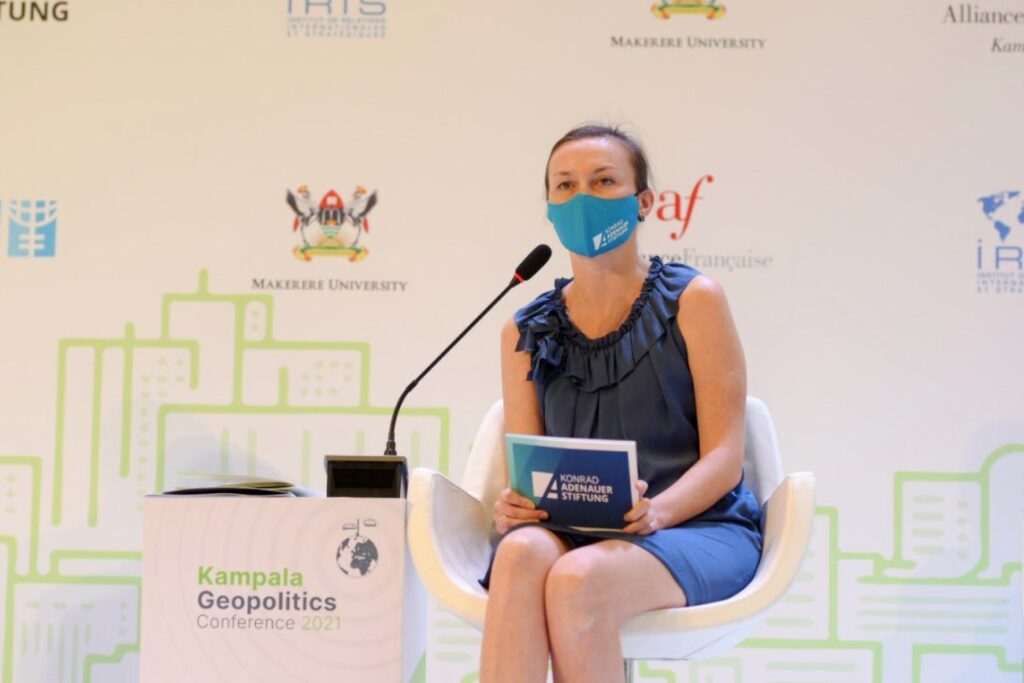
The opening ceremony was also addressed by the Konrad-Adenauer-Stiftung Country Representative, Ms. Anna Reismann who noted that a university does not exist in a vacuum but is embedded into society and has impact on its development, just as society has an impact on the institution’s life.
“Therefore, also my congratulations on successful 100 years of navigating Makerere University through different political challenges, social developments and surely, some administrative constraints. Looking into the future of the university, one is certain the challenges might change but they will also always remain” said Ms. Reismann.
Turning to the Conference theme, she noted that the crises caused by the COVID-19 pandemic and the opportunities that are arising from it have placed Africa as an important region on the global map. She added that Africa is an important player in the peace and security dialogue, as an investment destination and trading partner, as a contender in addressing global challenges as well as an arena where different powers compete for influence.
Still on the topic of influence, Ms. Sylvie Matelly, Deputy Director of the French Institute for International and Strategic Affairs (IRIS) who addressed the conference virtually admitted that it was a source of great pride for her institution, that their annual conference on contemporary international relations held in Nantes, France had birthed the idea of an annual Kampala Geopolitics Conference.
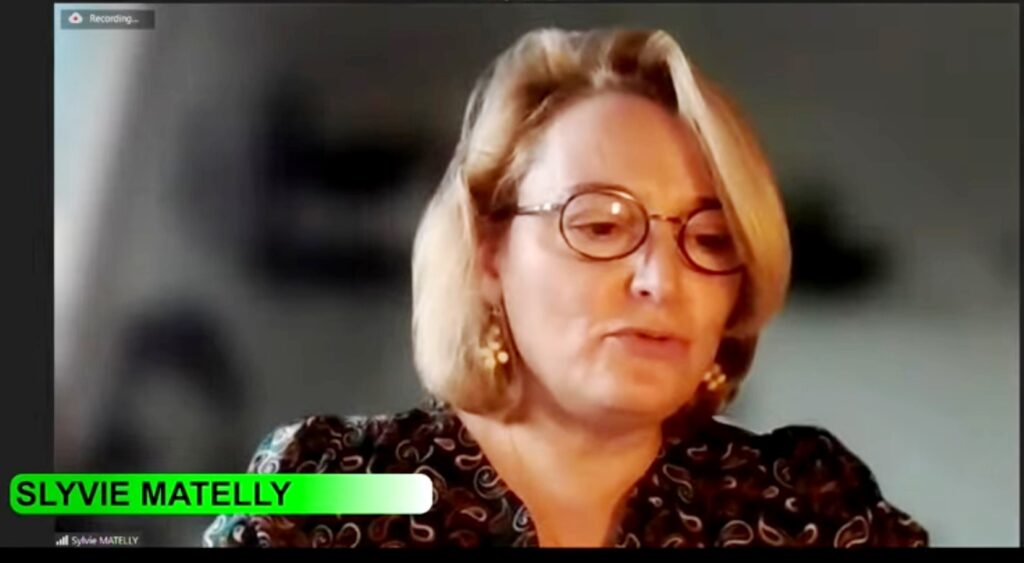
“Moreover, people used to think that because of the complexity of such topics the debate is just a private one but we are privileged that this is a public one and that is exactly why the Geopolitics of Kampala is a success year after year and I hope it will continue for a long time” remarked Ms. Matelly.
“After a very difficult period, we are pleased that we can again hold this event in person at Makerere University as we approach the 100 year celebration of the University as well as the 30th year since the foundation of Makerere University School of Women and Gender Studies” said Ms. Adekemi Ndieli, Deputy Country Representative UN Women, Uganda as she commenced her remarks.
Quoting the former US Secretary of State Madeleine Albright, Ms. Ndieli said “The world is wasting a precious resource as the dramatic underrepresentation of women which results in exclusion of talents and skills in the economy.”
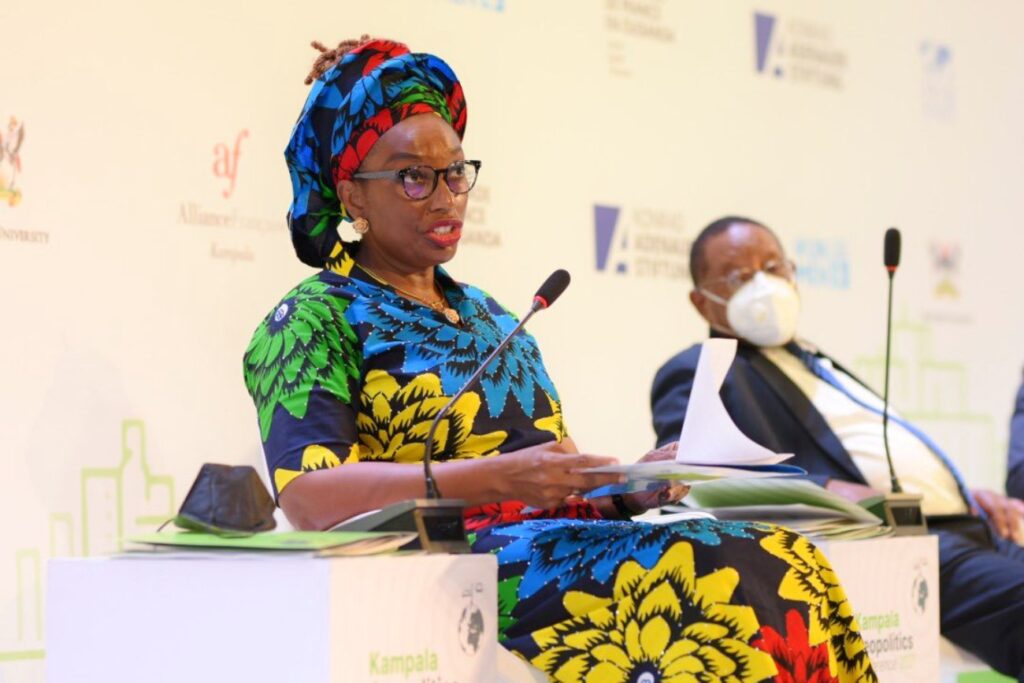
She therefore said that the Kampala Geopolitics Conference is an important opportunity for UN Women to elevate women’s voices and hear their input and solutions across a broad range of topics. The topics range from climate action to feminist movements building to transitional justice and to engagement in outer space. The elevation, she noted, should be viewed in the light that gender equality is not only a pressing moral or social imperative but is a critical economic challenge.
“Ladies and gentlemen, we are living in unprecedented times as we all know and the COVID-19 pandemic has presented us one of the greatest challenges of our generation. Beyond the virus itself the response to COVID-19 has exposed deep inequalities in our societies and in global partnerships across the world” she added.
Ms. Ndieli continued to say that whereas COVID-19 had had disproportionate and devastating effects on social and economic life, these effects were more pronounced among the most vulnerable and as such, had tested the ability of states to come together to address the global challenges. “However, it has also presented us with unprecedented opportunities to build back better.”
The opening ceremony was followed by a panel discussion on Re-imagining Higher Education for the Post-COVID-19 Era, where the Vice Chancellor, Prof. Barnabas Nawangwe was joined by Ms. Sylvie Matelly, Mr. Benjamin Rukwengye, Founder and CEO – Boundless Minds Uganda and Moderator Mr. James Kassaga , ED and Co-Founder – Teach for Uganda.
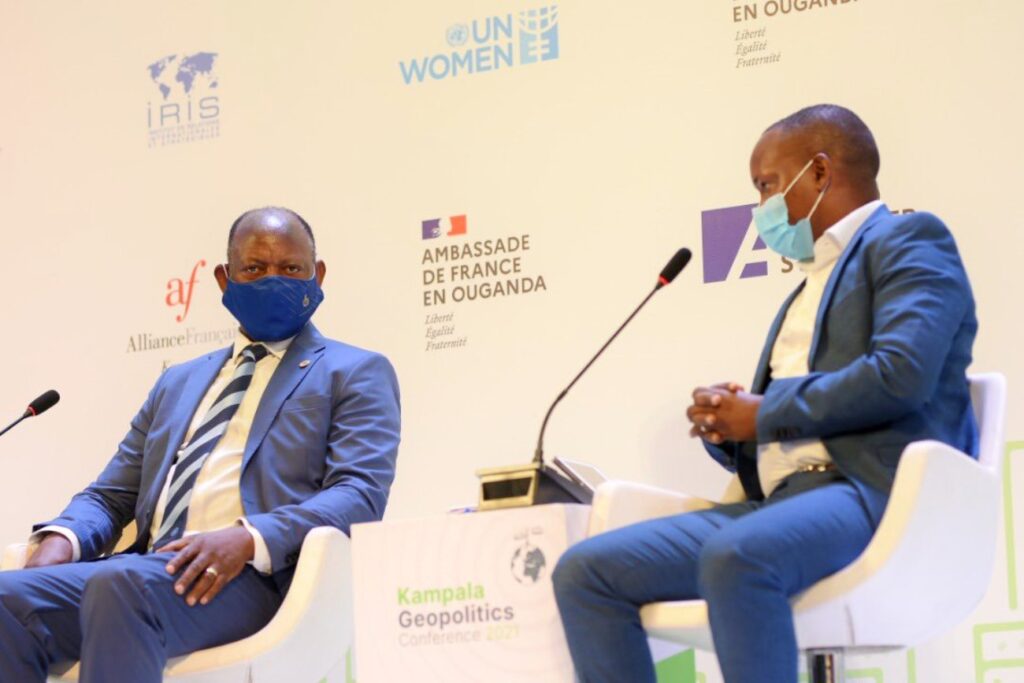
The Vice Chancellor shared that through partnerships with international collaborators, Makerere University had built a formidable force of academics that do research in all areas, and in the case of COVID-19, were very much aware of issues to do with online education.
“Online education is the future, even without the pandemic” said Prof. Nawangwe. “If Uganda’s population doubles, with the infrastructure we have now, we cannot take in all those children who will be seeking higher education” he added.
Prof. Nawangwe said the university had taken advantage of the resources it had to train all staff in online education as well as alternative methods of education. This, he said, had ensured that Makerere had not suffered as much as the rest of the Ugandan education sector during COVID-19.
“We as the leading university have got the responsibility and obligation to support the other universities and other institutions to come out of this. And we are currently working with organizations around the world to train our colleagues at other universities on online education” said Prof. Nawangwe.
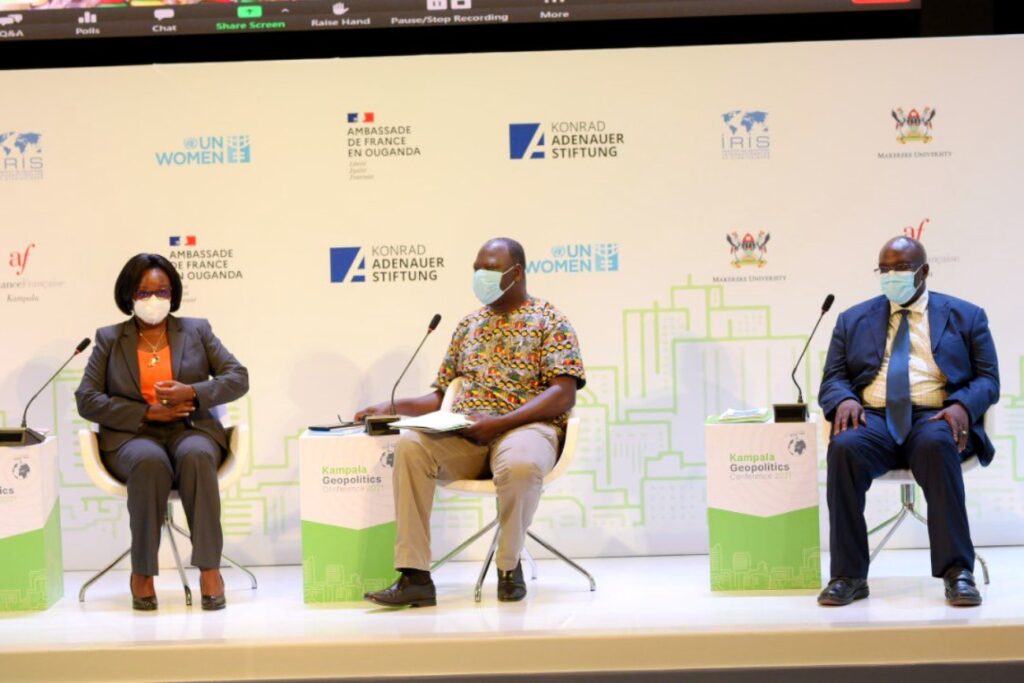
This panel was followed by another on Vaccine Nationalism and Diplomacy in the Times of the Pandemic, moderated by Dr. Milton Mutto, a Global Health Research Scientist. Panelists included Ms. Anne Senequier (IRIS), Dr. Alfred Driwale (MoH), Prof. Rhoda Wanyenze, Dean, Makerere University School of Public Health, Dr. Olaf Wientzek (KAS Geneva) and Mr. Andrew Bakainanga (WHO).
Prof. Wanyenze in her submission had noted that the struggle of who wins the vaccine war had given rise to a vaccine infodemic characterized by misinformation about the efficacy of some vaccines, resulting in their rejection by some sections of the public.
Touching on vaccine equity, she noted that up to 90% of the world vaccine market is controlled by a few companies, resulting in scarcity of vaccines such as the Covid-19 one, even for nations that had the money to purchase them.
“We talked about test kits for COVID-19. At the beginning you could hardly get them and buy them even when you had the money on the table. It was just the same dynamics as what you see for the COVID-19 vaccines. The same is true for the new COVID-19 drugs” she shared.
The Fourth Edition of the Kampala Geopolitics Conference that runs until Friday 12th November 2021 has adopted the format of Twitter Spaces at 12:30 PM on Day 1 and Day 2 as well as at 7:00 PM on all three days.
Join the Conversation using the #KampalaGeopolitics hashtag.







General
Makerere University and Xiangtan University Advance Strategic Partnership in Chemical Engineering

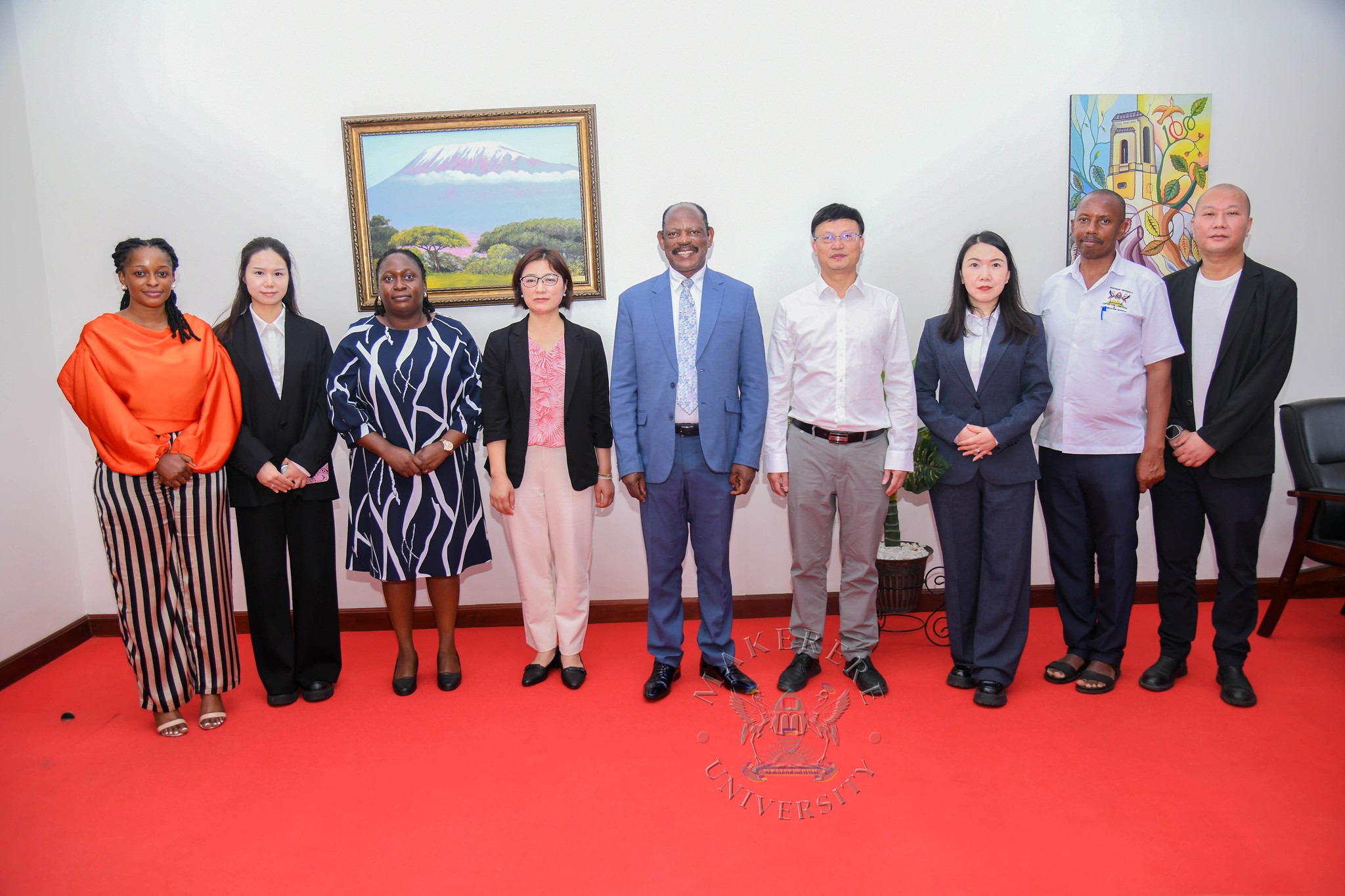
Makerere University and Xiangtan University are set to update their close to 20-year academic partnership, with a new focus on launching a joint Master’s degree program in Chemical Engineering and expanding student and staff exchange initiatives.
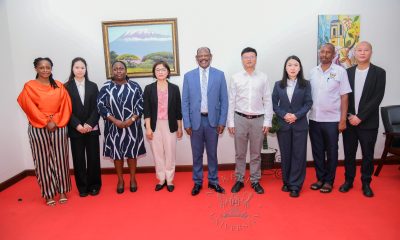
The commitment was reaffirmed during a recent visit by a delegation from Xiangtan University to Makerere University headed by Professor Dingyu Ou, in the company of Mr. Tang Fei and Professor Gilbert Gumshabe, the Chinese and Ugandan Directors of the Confucius Institute at Makerere University respectively.
While addressing the delegation, Professor Nawangwe highlighted that this initiative is part of a broader strategy to diversify academic offerings and contribute to national development through training in Chemical Engineering. Through this new initiative, the University will better prepare graduates for the petrochemical industry and support the country’s industrial growth.
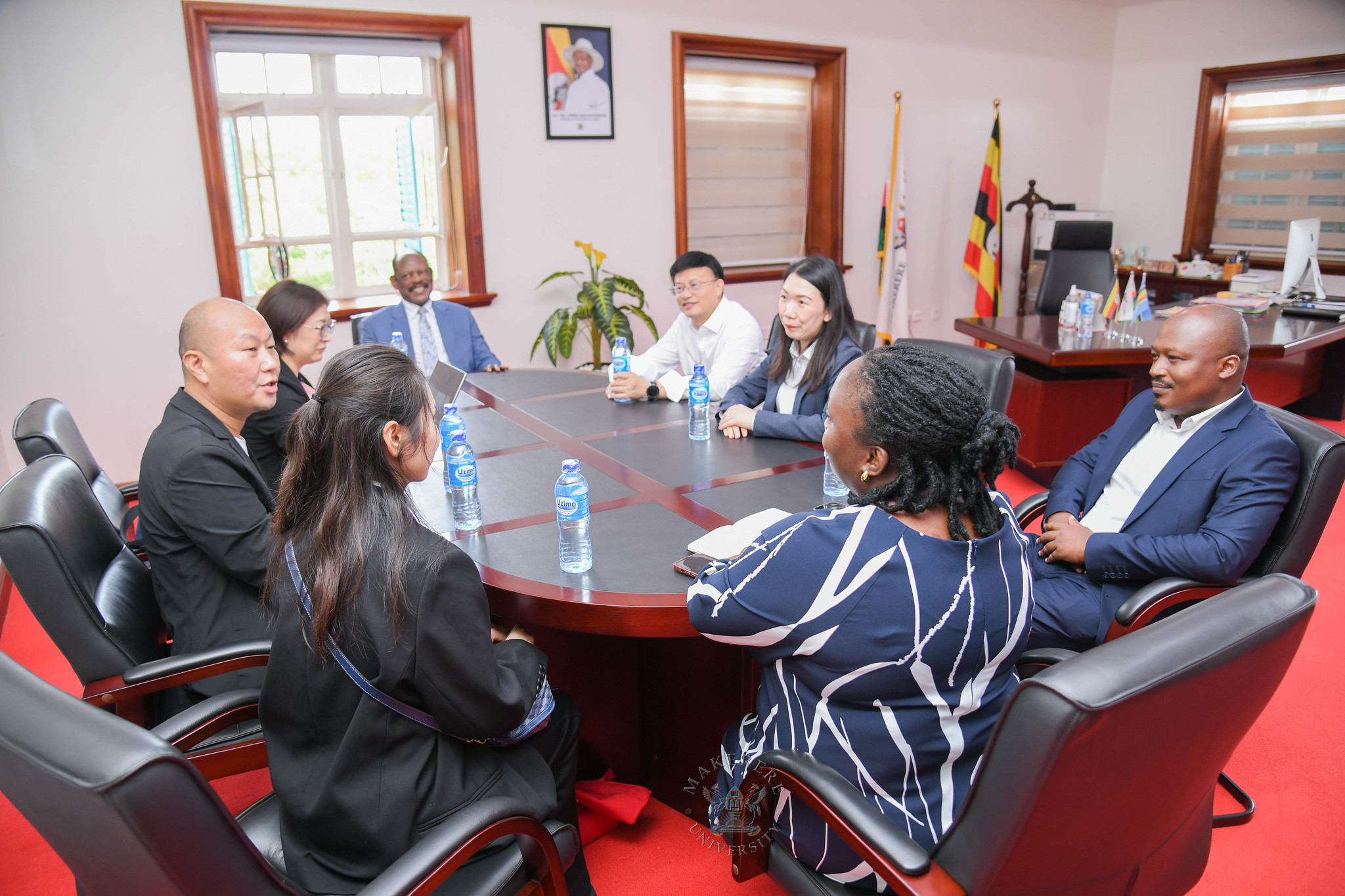
The Vice Chancellor appreciated that the proposed collaboration aims to address Uganda’s growing need for industrial expertise, particularly as the country develops its petroleum sector. The two universities here are working toward a 1+2 training model, which will enable Makerere students to gain practical experience and access advanced laboratory facilities at Xiangtan University.
Professor Nawangwe further reiterated that “our relationship with the people of China, not just for Makerere but also for a big part of Uganda, has been opened wider by the establishment of the Confucius Institute, considering that many other collaborations like one being discussed now have come through this collaboration.”
The head of the Xiangtan delegation, Professor Dingyu Ou, expressed appreciation for the meeting, and acknowledged the history between the institutions. “As mentioned, we have a very long relationship and a very stable friendship between our two universities.”
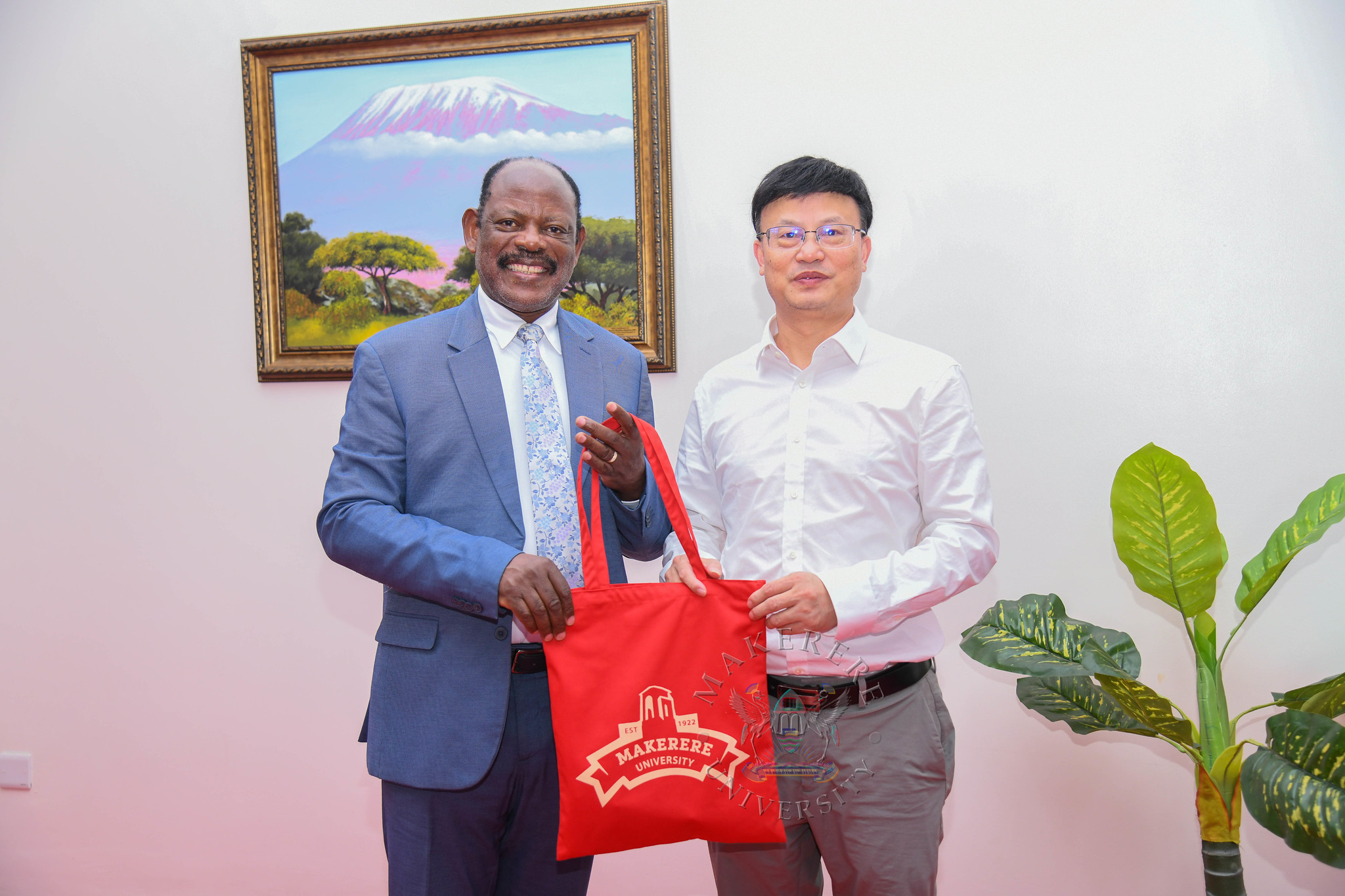
Professor Ou extended appreciation for the support provided to the Confucius Institute at Makerere, the care shown to his colleagues, and looked forward to the successful start of the Chemical Engineering collaboration.
Assuring the delegation of Makerere’s readiness for the collaboration, Ms. Hawa Ndagire Kajumba the Lead, Partnerships and Stakeholder Engagement, Makerere University Advancement Office, aligned with the Vice Chancellor’s emphasis of University goal to have both theory and practice imparted to the students.
She said “the curriculum of the university and Uganda as a whole is moving towards competence-based education training to ensure students are equipped to demonstrate those skills in the actual field, particularly regarding petroleum exploration.”
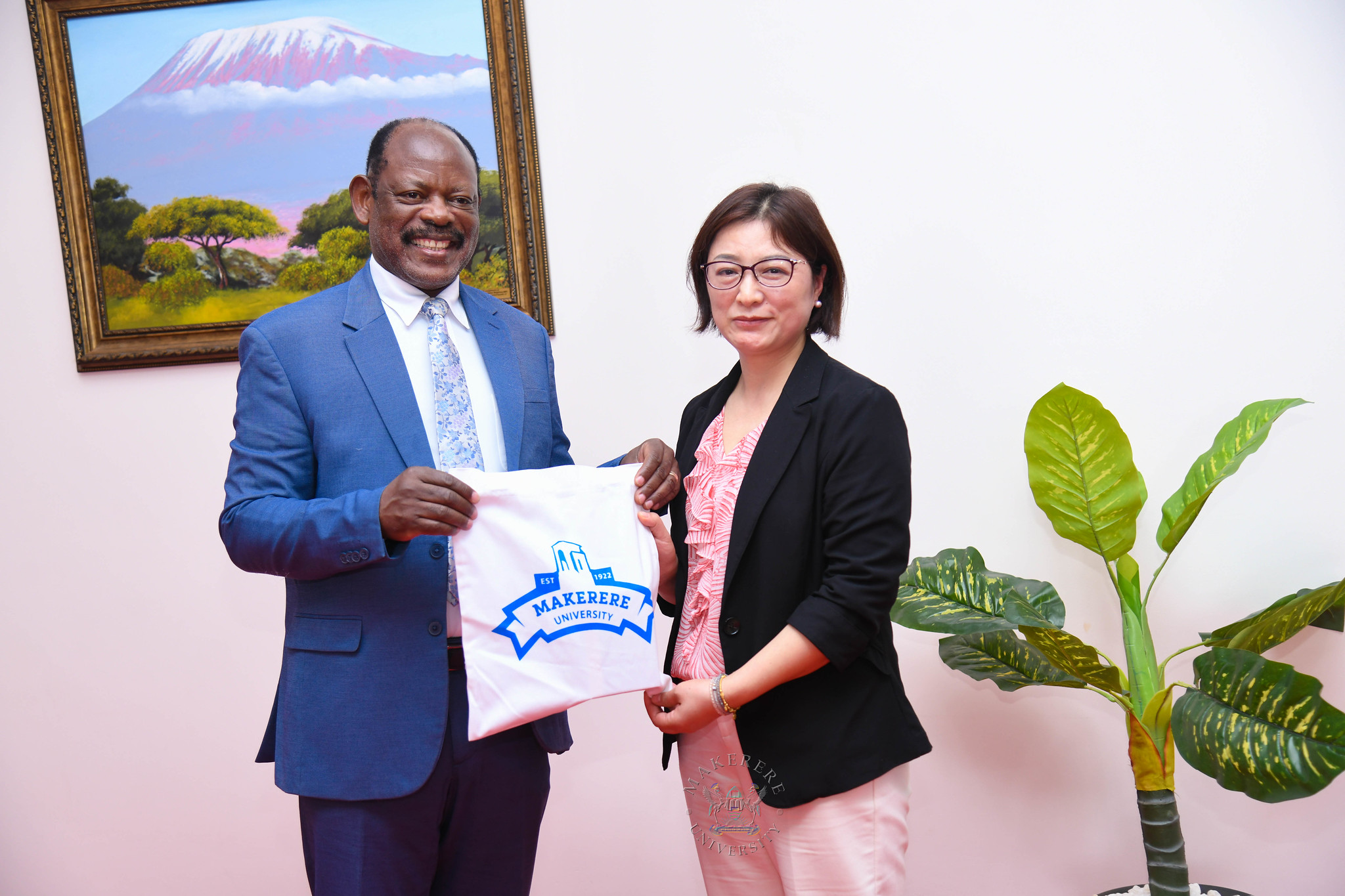
Ms. Ndagire Kajumba also emphasised a shift in strategy for the partnership office, saying, “we are moving away from just signing MOUs that collect dust, and moving towards those that are more collaborative to benefit our faculty and students, just like this one.”
Professor Gilbert Kumushabe aligned his remarks with those of the Vice Chancellor and Ms. Ndagire Kajumba, and described the method used at Xiangtan University as “actually competence-based teaching.”
Based on his recent visit, Prof. Gumoshabe shared that students in China are divided into groups with dedicated teachers to perform practical, hands-on work beyond the theoretical lecturers. He expressed gladness that the same was being adopted for the Ugandan context.
Both institutions are now working to finalise the specific agreements for the joint degree and exchange programs. Beyond academic training, the collaboration will advance cultural and professional exchange.

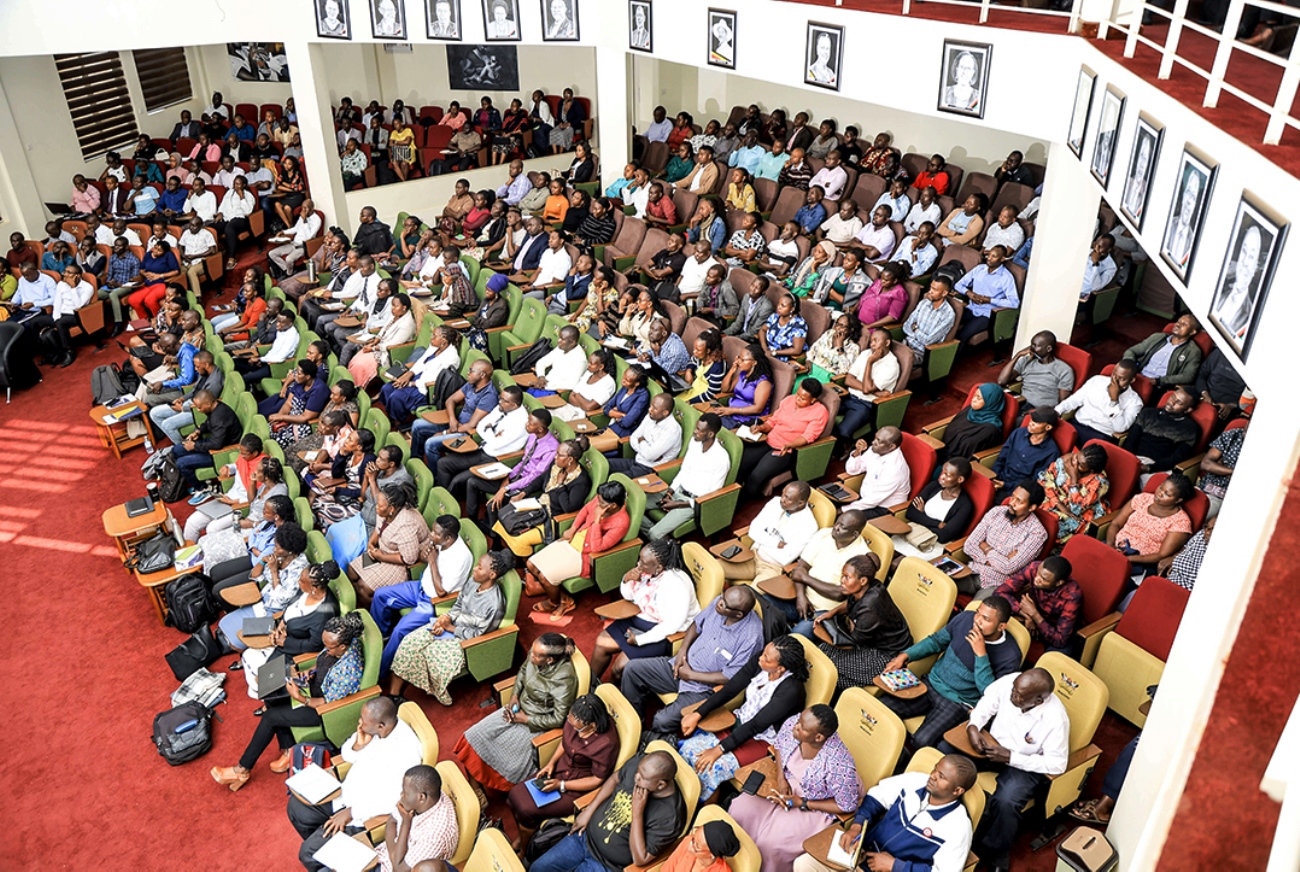
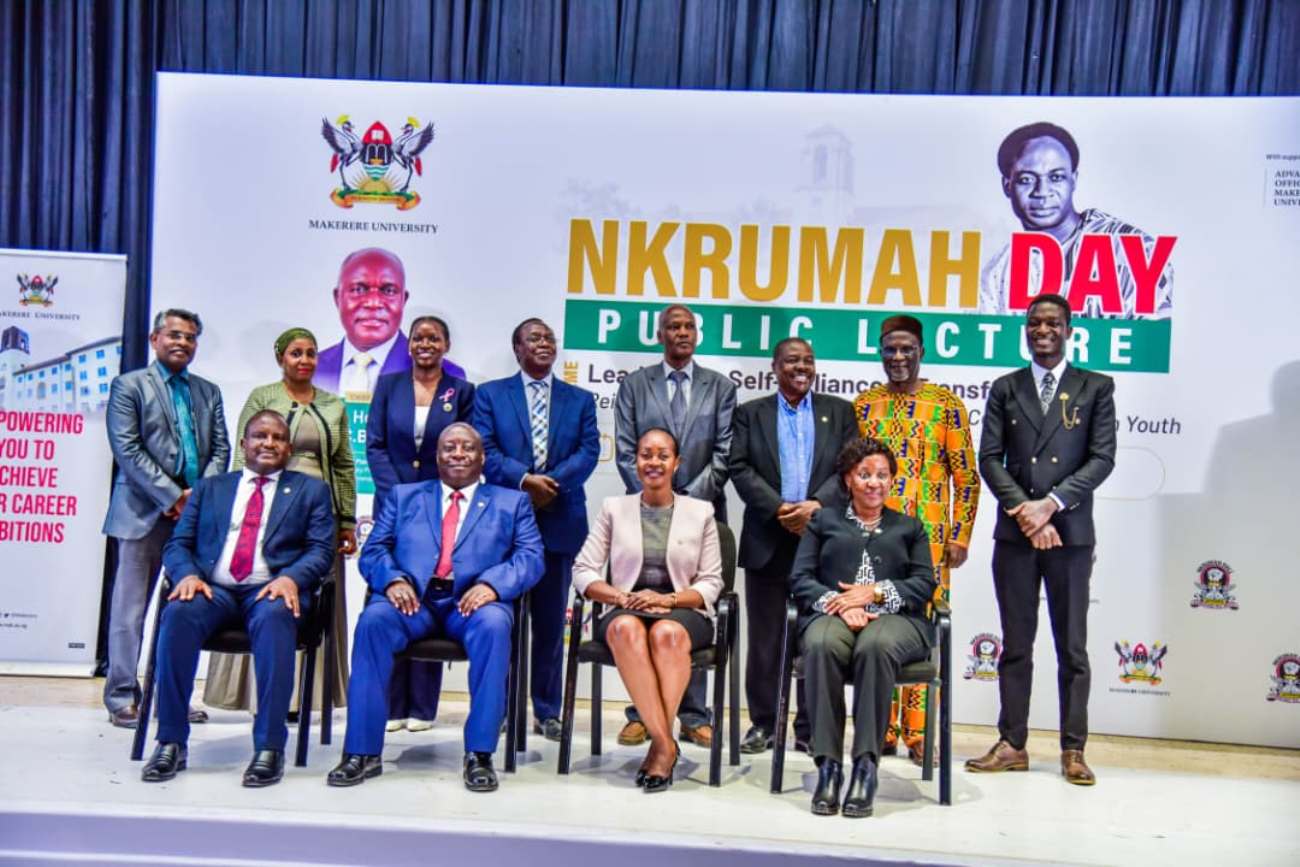
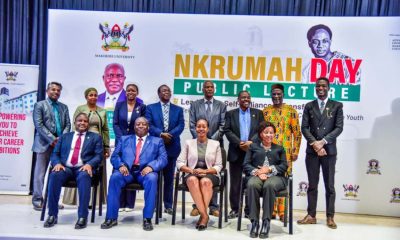
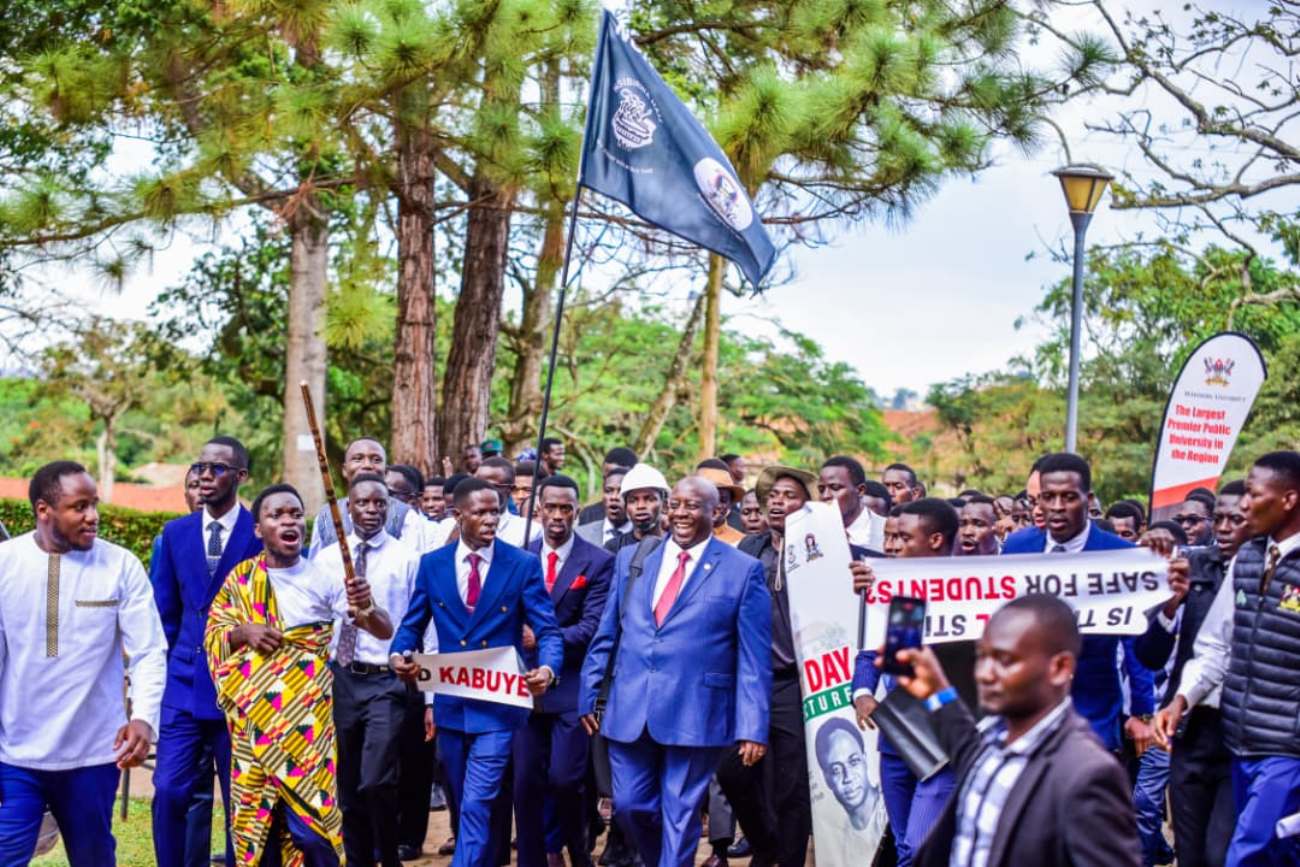
Makerere University on October 8, 2026 commemorated Nkrumah Day with a Public Lecture at the Yusuf Lule Central Teaching Facility Auditorium. The Lecture gathered students, academics, historians and distinguished guests to discuss Kwame Nkrumah’s contribution and its relevance to Africa.
Organised by Nkrumah Hall under the theme “Leadership, Self-Reliance and Transformation: Reimagining Nkrumah’s Vision for the 21st Century African Youth,” the lecture explored how Nkrumah’s ideals of Pan-Africanism, self-reliance and African unity can guide the continent beyond political independence.
Endorsing Nkrumah’s Vision of Investing in Africa
The First Deputy Prime Minister and Chancellor of Makerere University, Rt. Hon. Dr. Crispus Walter Kiyonga, was the chief guest.
In remarks delivered on his behalf by Dr. Charles Kahigiriza, Dr. Kiyonga said the day was a moment to reflect on Nkrumah’s views on Pan-Africanism and the lessons on self-reliance still held for Africa today and emphasised the importance of keeping Africa’s young talent at home (in Africa).
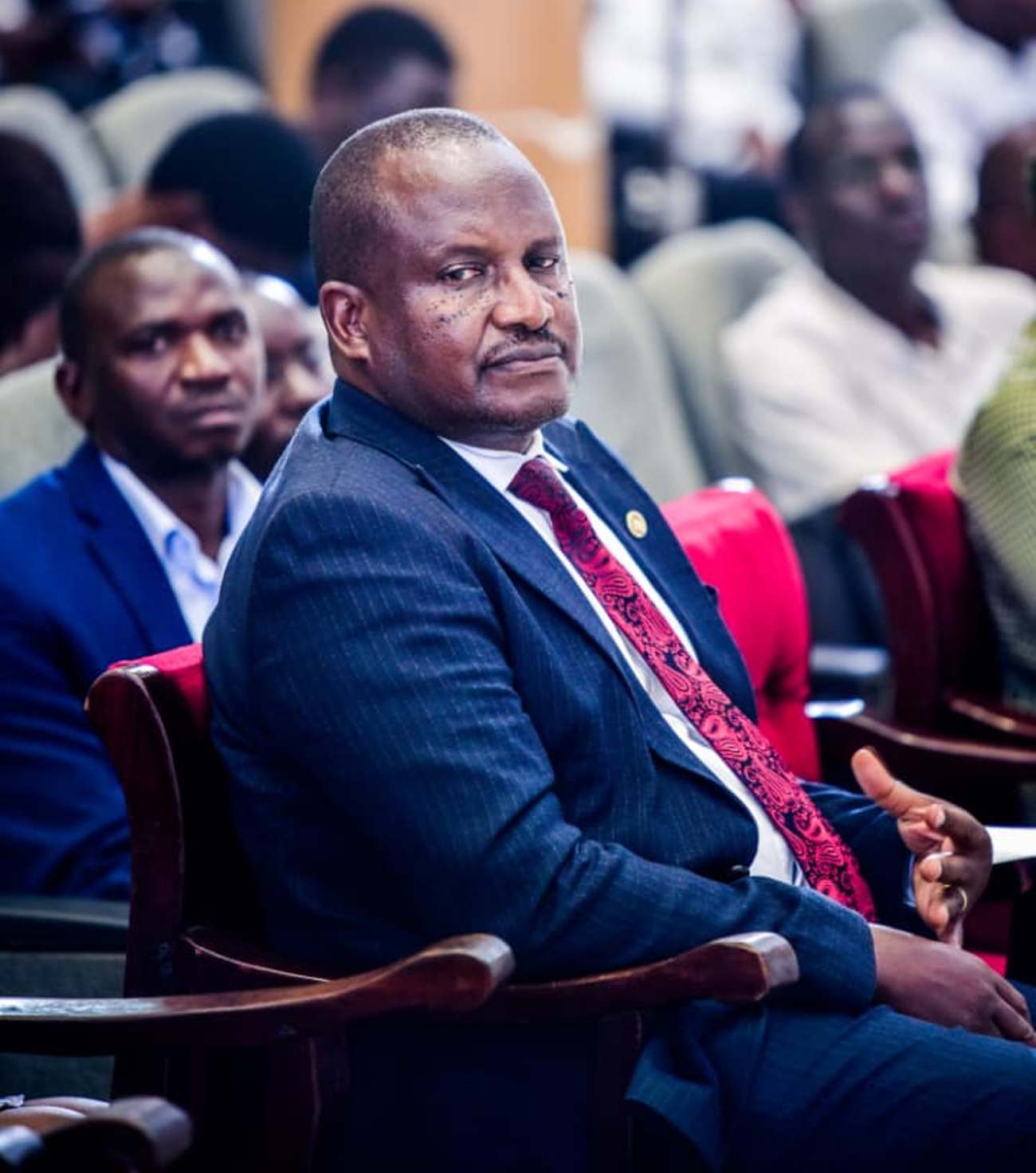
He then discussed ways of encouraging young people to achieve Nkrumah’s vision, pointing out that Africa is losing skilled people to brain drain as many go abroad to work.
He encouraged young Africans to stay and contribute to the continent’s growth, describing Africa’s potential as a promising asset.
Transformation Requires Discipline
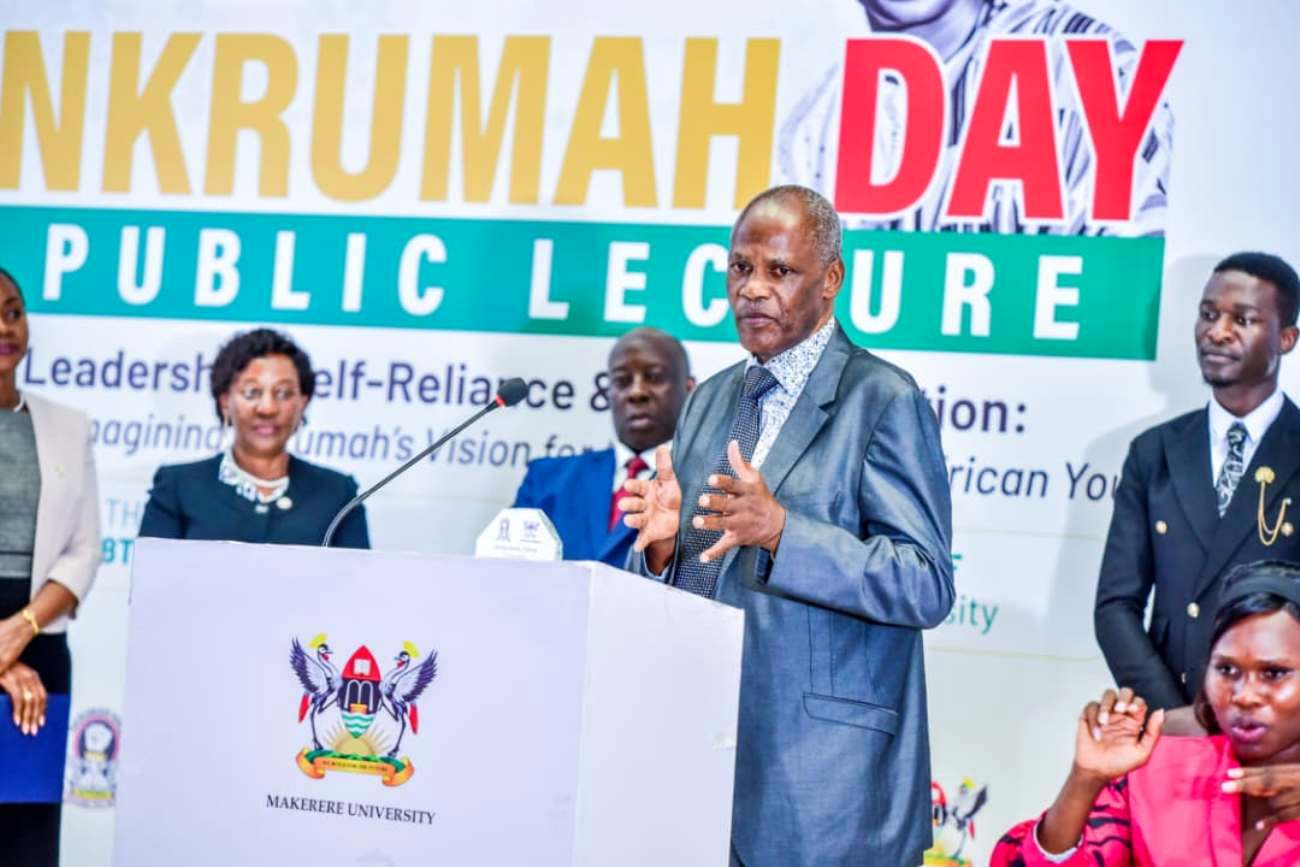
The keynote address was delivered by Prof. Gerald Karyeija, a political analyst and Head of Quality Assurance at the Uganda Management Institute (UMI).
He discussed Nkrumah’s role in championing Pan-Africanism and the formation of the African Union. He acknowledged that “his legacy was also very complex” due to a number of challenges.
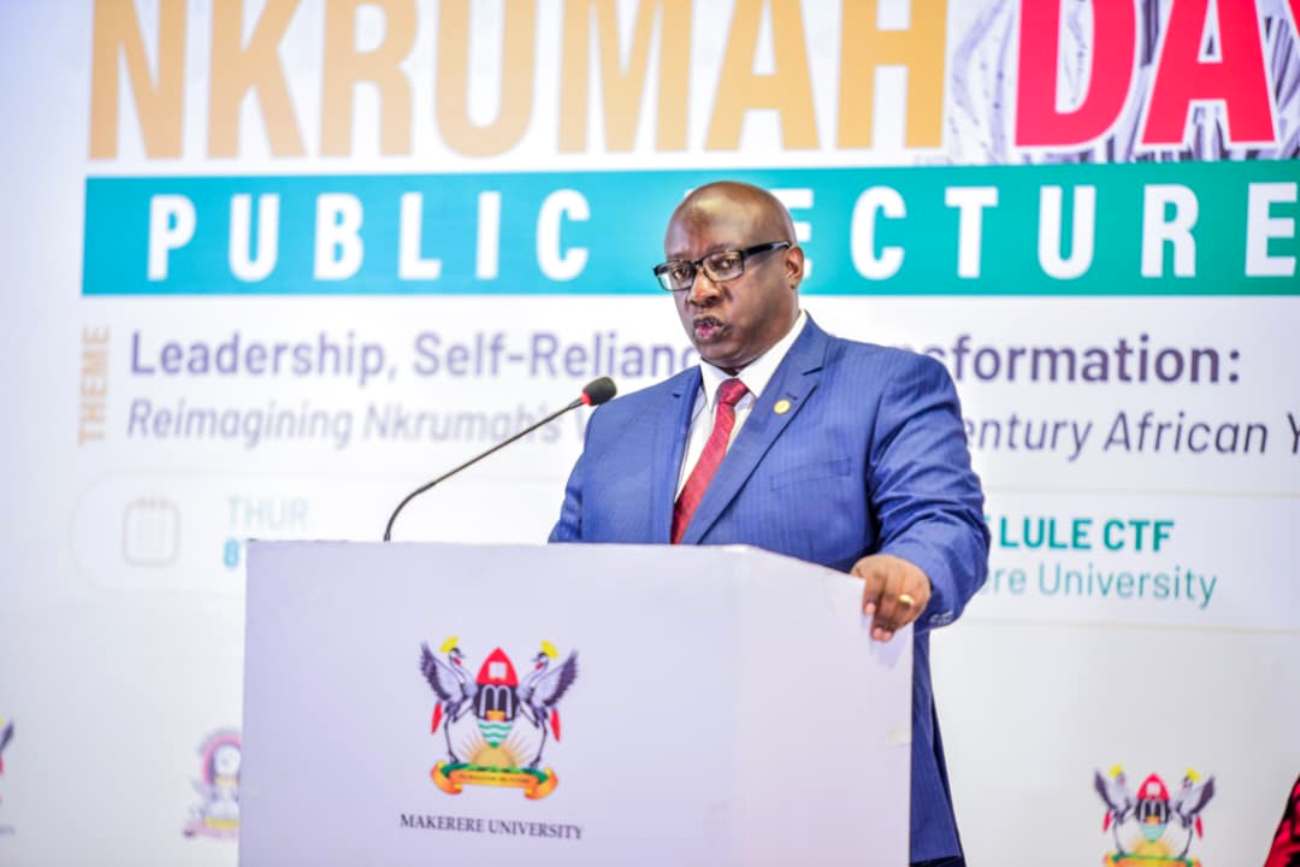
Regarding leadership, the professor argued, “leadership does not begin with the title. It begins with responsibility,” adding that “leadership is not only about power, privilege, entitlement, or status. It’s about service. It’s about stewardship.”
He encouraged attendees to emulate Nkrumah by using their knowledge and power for good.
“Don’t get the intellectual power from Makerere to become evil,” he cautioned, stressing that transformation requires discipline.
Universities Turn Knowledge into Action
Associate Professor Gorettie Nabanoga, the Acting Deputy Vice Chancellor for Finance and Administration, represented Professor Barnabas Nawangwe, the Vice Chancellor of Makerere University.
She aligned herself with the previous speakers and urged participants to move beyond simply celebrating Kwame Nkrumah’s memory and begin implementing his vision.
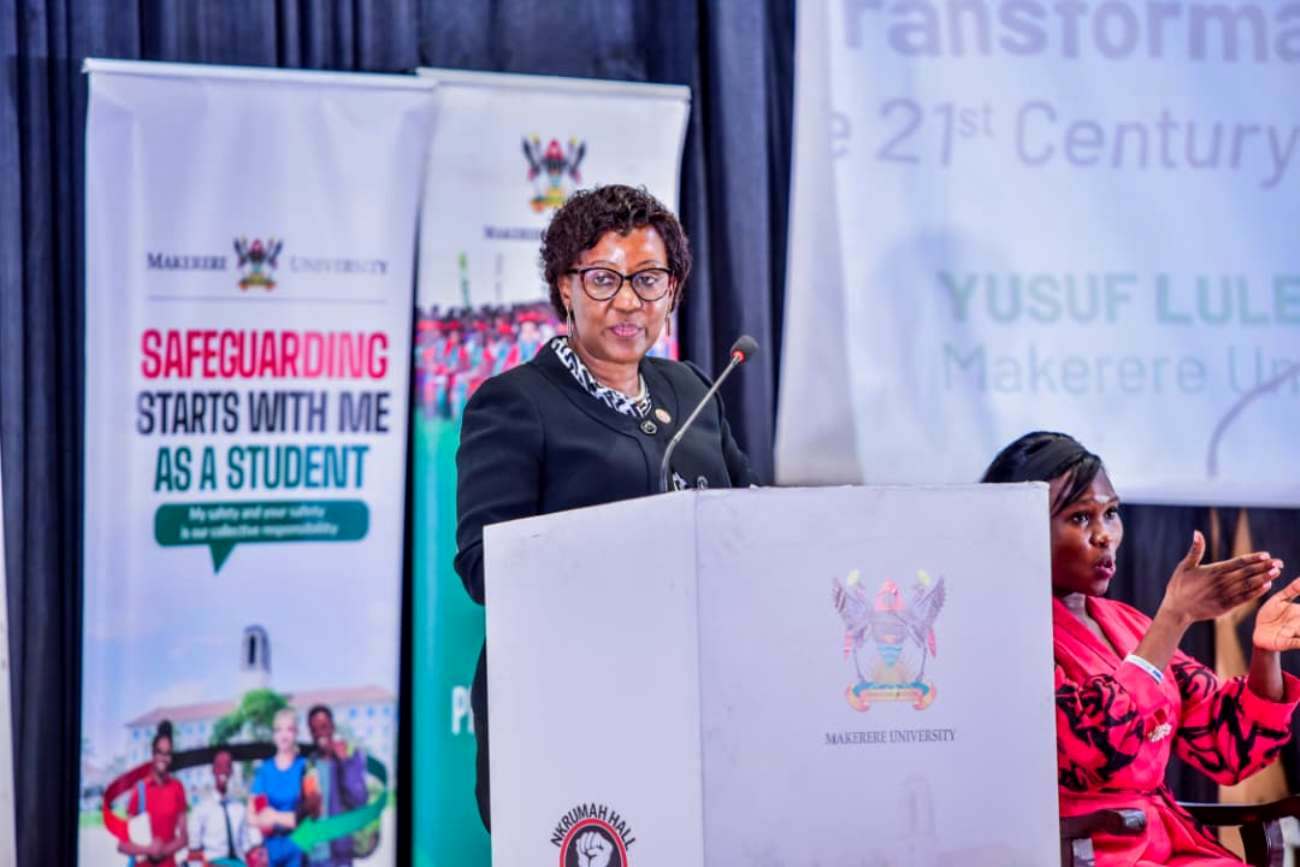
She called for practical action, urging the mobilisation of Pan-Africanism beyond slogans. “Perhaps the Pan-Africanism of this generation must therefore move from solidarity to capacity, from rhetoric to institutions, from potential to production, and from aspirations to implementation,” she said.
On the role of universities, she reiterated that Makerere University is a hub for innovation rather than just a degree-granting institution.
“We are building for the future when we develop people who can think critically, when we generate knowledge, when we challenge perceived knowledge and wisdom, and when we innovate,” she said.
Addressing the students present, she said, “You are not simply the leaders of tomorrow; you are citizens of Africa today. The opportunity you enjoy at Makerere University comes with responsibility.”
Dr. Winifred Kabumbuli, the Dean of Students at Makerere University, set the tone at the 2026 Nkrumah Day Public Lecture.
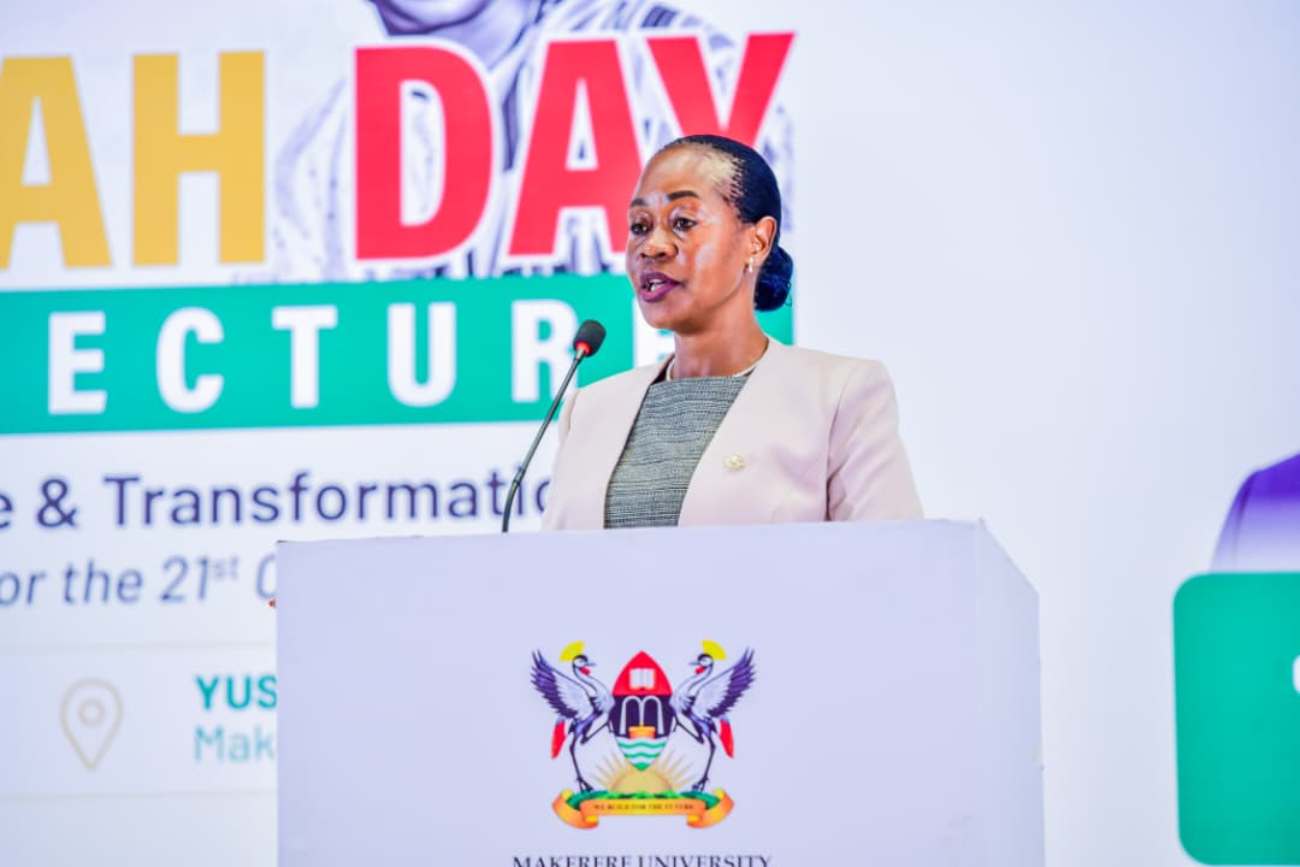
She revealed that this lecture organised under Nkrumah Hall highlights its significance as a symbol of Makerere University‘s commitment to Pan-Africanism. “The name Nkrumah Hall has stood the test of time and sounds like a horn beautifully over the African continent and beyond,” she said.
She elaborated on the lecture’s theme of leadership, self-reliance and transformation, noting its alignment with the university’s mission to nurture future leaders.
Direction of Pan-Africanism
During a panel discussion, speakers questioned how far Africa has come. Associate Professor Zahara Napeewo, Deputy Dean of the School of Law at Makerere University, stated that the continent was still lagging behind the progress Nkrumah would have wanted.
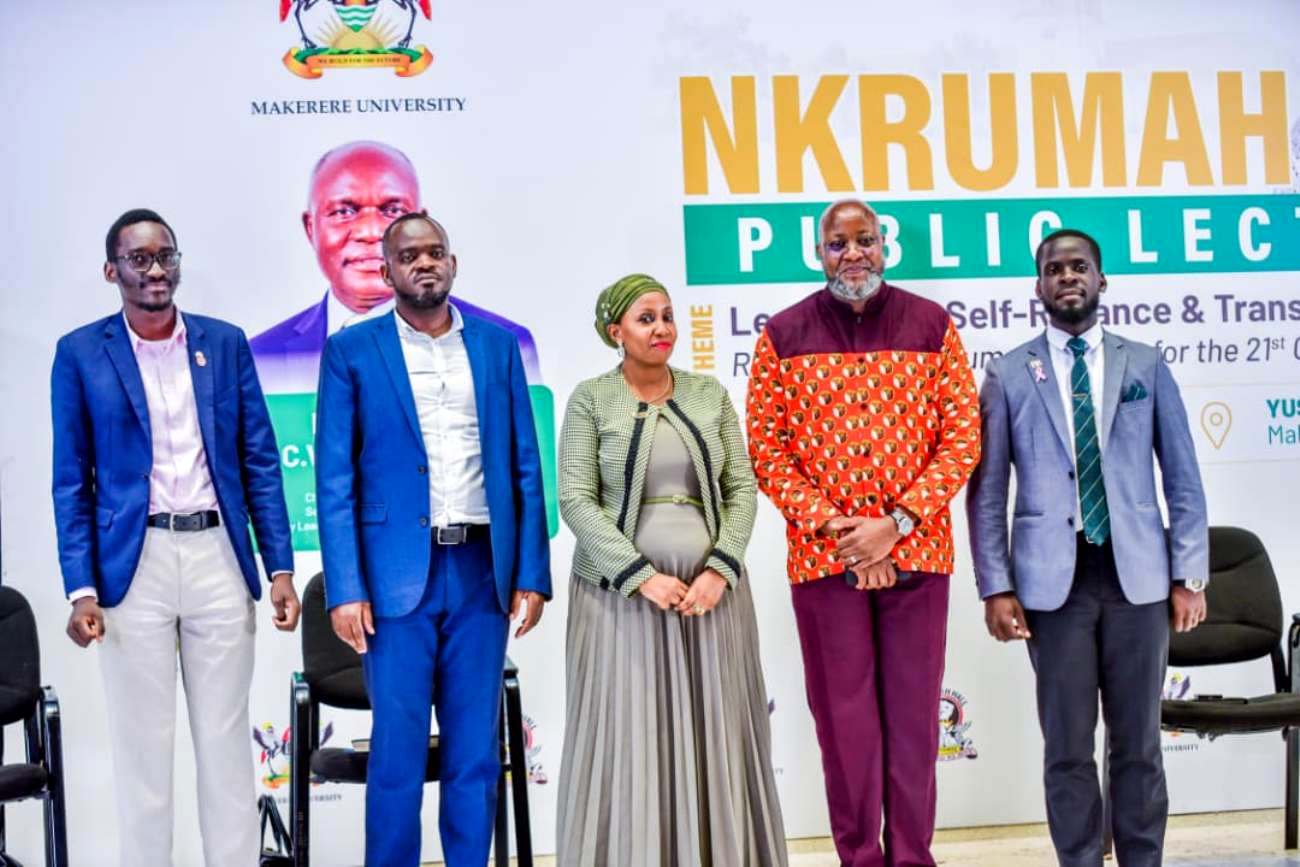
She shared that while educational institutions provide knowledge, they must go further and encourage graduates to become problem-solvers who can create employment for themselves rather than wait to be employed.
Dr. Zaid Sekitto, a Lecturer in the Department of History, Archaeology and Heritage Studies at Makerere, added that the structures of colonialism that Nkrumah fought against were still in place. “They must be addressed”, he said, or Africa would remain trapped in colonialism and lose sight of Nkrumah’s vision.
The Youth and the Unfinished Struggle
The students also had an opportunity to share their perspectives on the unfinished struggle for Pan-Africanism.
Nkrumah Hall Chairperson Joseph Sekabira noted that the Africa Nkrumah fought for was not the Africa that exists today.
He urged young people to take up leadership now rather than wait until they were older.
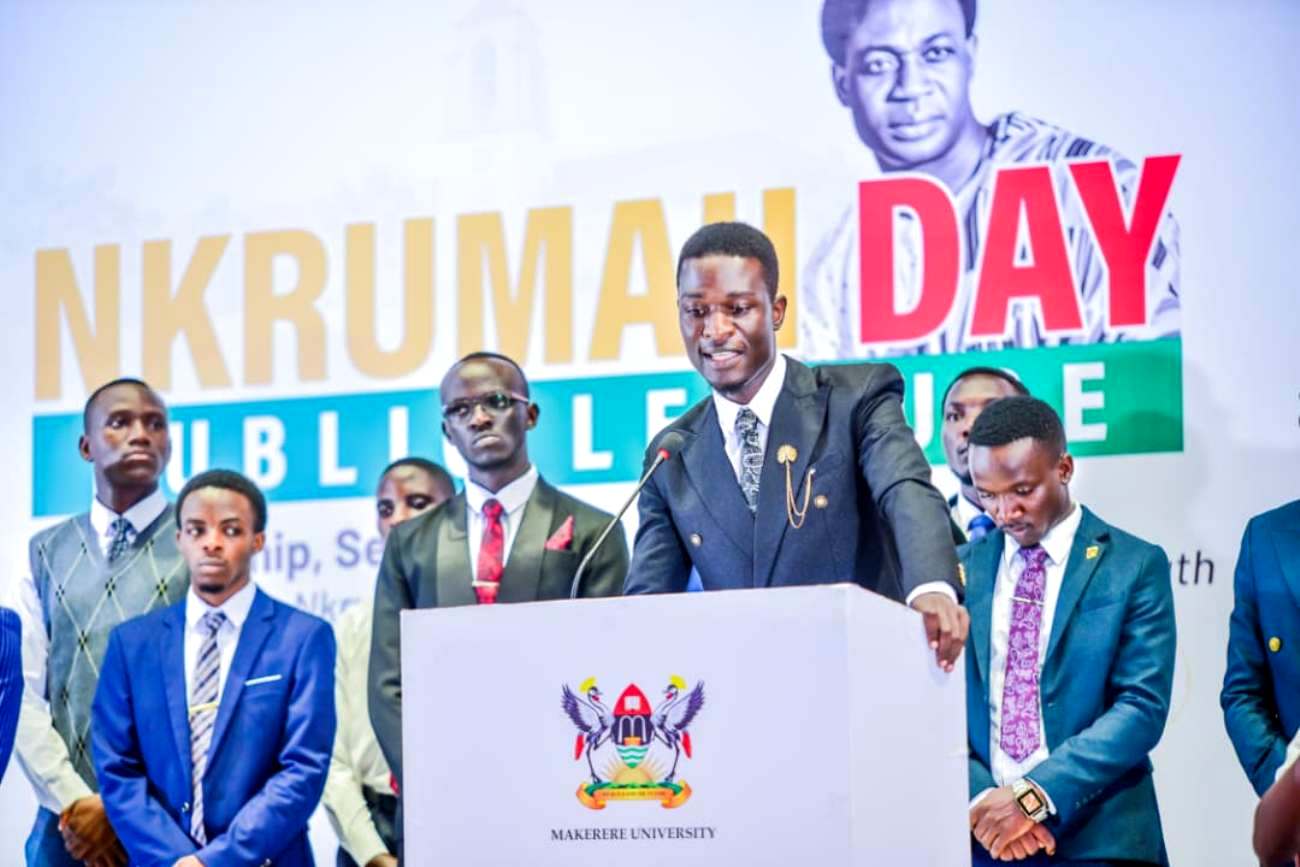
Mark Kwikiriza, a final-year Bachelor of Arts in Music student and resident of Nkrumah Hall, said Nkrumah’s legacy remained relevant because the problems he faced in Ghana were similar to those society faces today.
He recommended that society could rejuvenate the spirit of “Osagyefo,” the title meaning “redeemer” by which Nkrumah was known.
Honouring 13 Years of Service
The event also recognised Mr. John Kamya for his 13 years of outstanding service as Warden of Nkrumah Hall, a position he held from 2007 to 2020.
He received an appreciation award presented by the Chief Guest’s representative in the presence of the Hall Chairperson and other dignitaries.
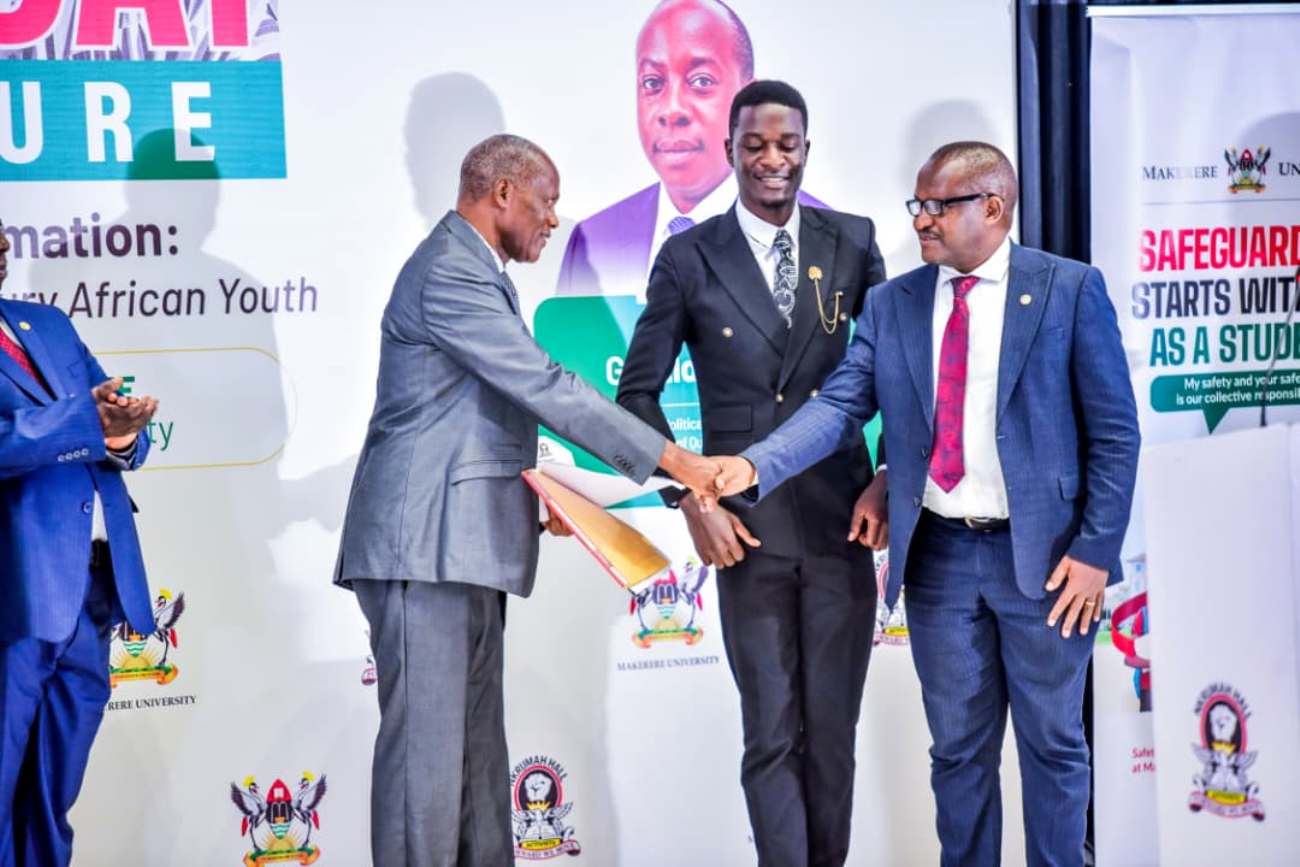
In his acceptance remarks, Mr. Kamya noted that the 2018 visit to the Hall by Kwame Nkrumah’s daughter, Ms. Samia Yaba Nkrumah, was one of the fondest memories of his time in office. He thanked Makerere for the opportunity to serve the University community and its stakeholders.
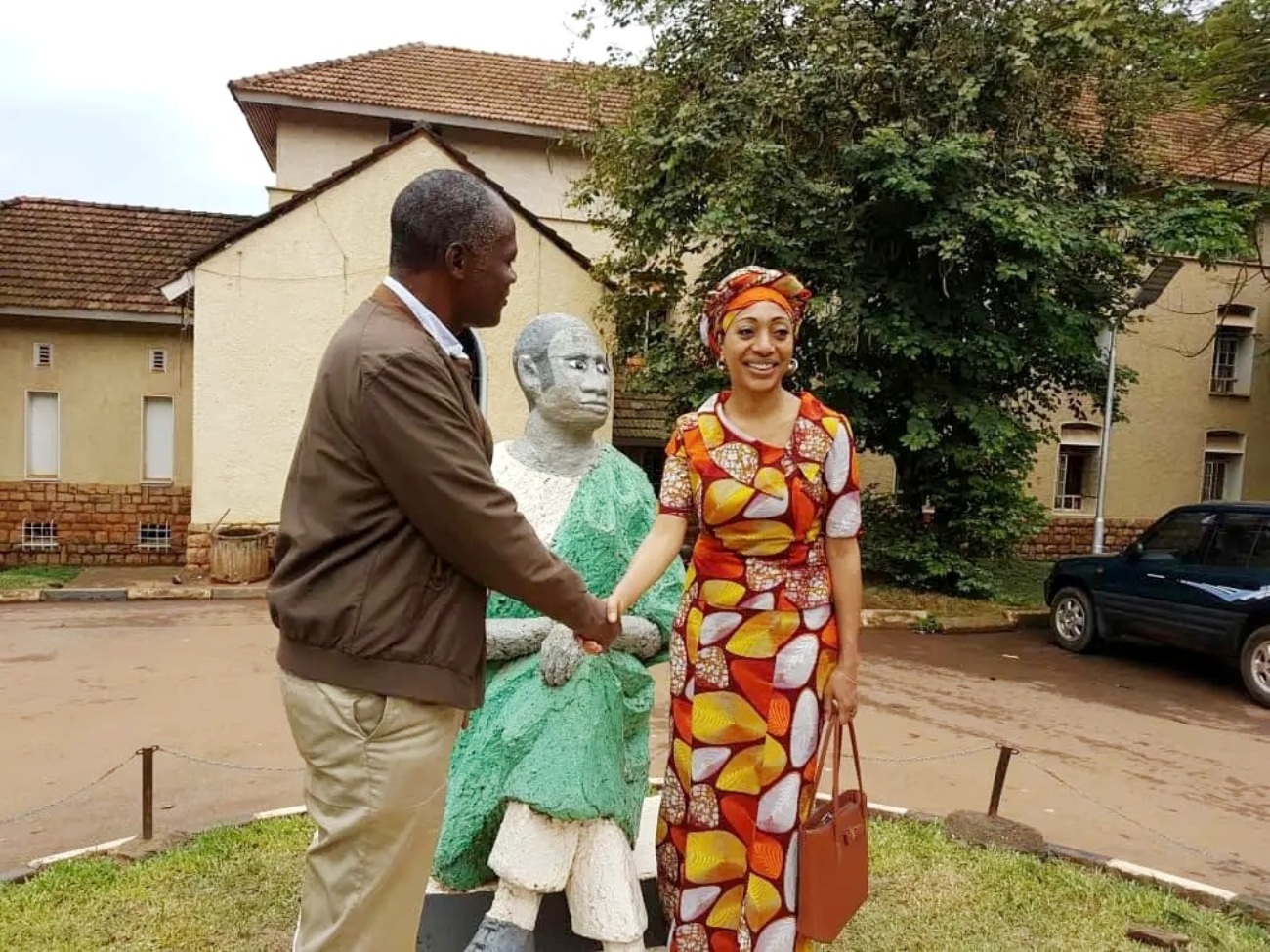
At the peak, the event concluded with tree planting and cake-cutting activity in front of Nkrumah Hall. The audience was left contemplating one message of Kwame Nkrumah’s vision of a united, self-reliant Africa, freed first in the mind, that remains unfinished and in the words of some speakers, has been handed to the current generation as a task to accomplish.

-
 General2 weeks ago
Statement on Concerns Circulating Regarding a Member of Academic Staff
-
 General2 weeks ago
Beyond Map Size: Africa’s Agency Should Not Be Funded by Other People
-
 General6 days ago
Timothy Khabusi: From Barefoot Walks to shaping Uganda’s Eye health Future
-
 General2 weeks ago
Press Statement: Incident Involving Death of a Student at Makerere University
-
 Health1 week ago
Uganda’s HIV Treatment Gains Bring the Youth Gap into Focus