Main texts: Exo. 20:1-3; Matt. 4:8-11; and James 1:2-12
(1) WHAT MUST BE DONE?
Worship God and Him only.
(2) WHY MUST IT BE DONE?
Because God is taking us out of bondage to set us free from slavery.
(3) HOW CAN IT BE DONE?
It takes transformation.
CONCLUSION:
Our God is a mighty God; worthy of our praise and worship because He has broken our bondage to the slavery and fear of death. Go from fear to praise and worship. Worship God only; no other God.
“Our God reigns.” Full message can be found here:
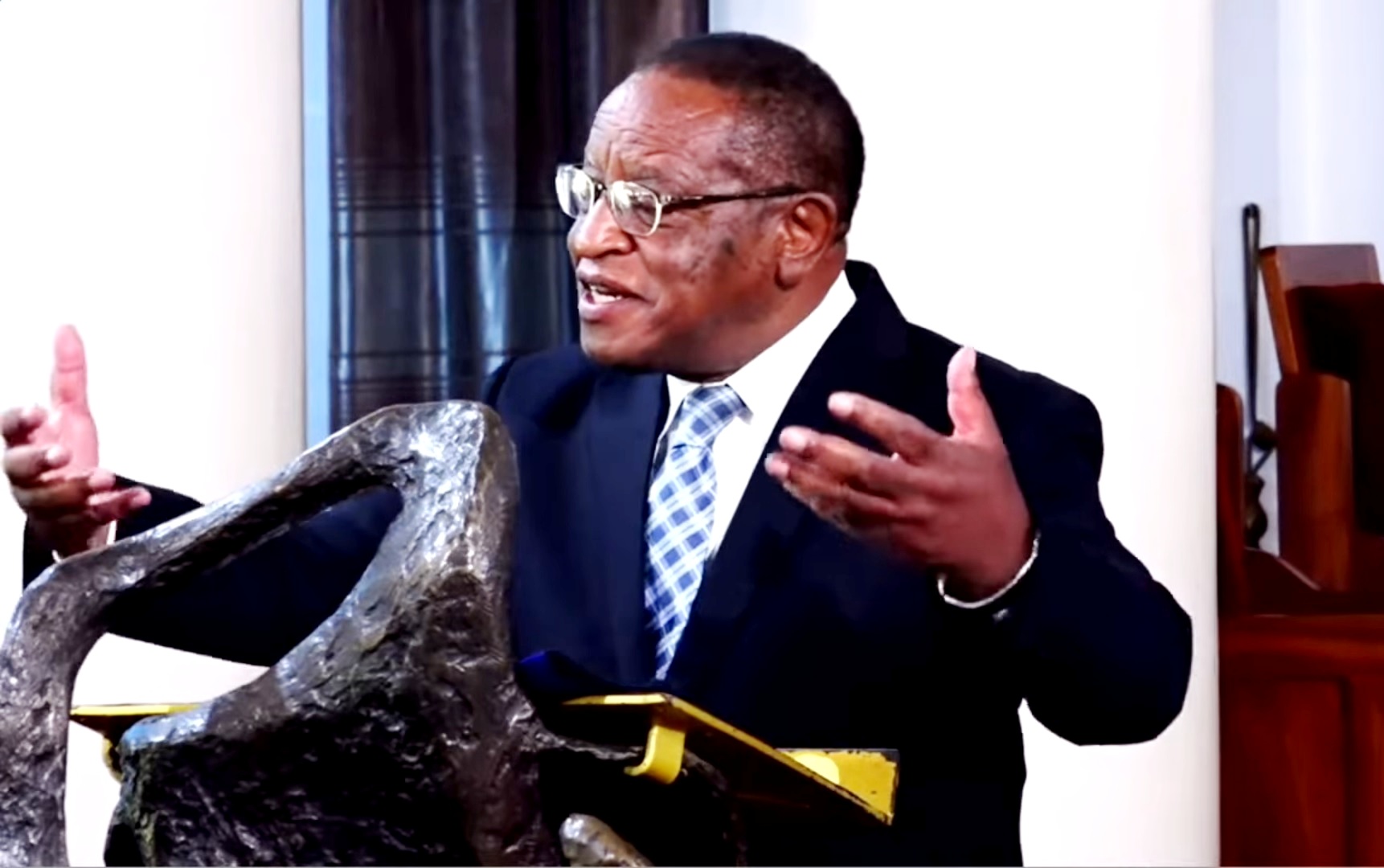
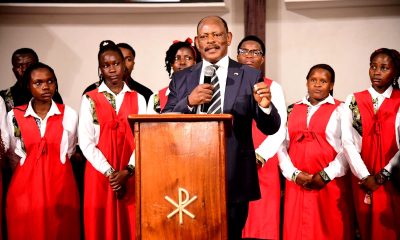
NO OTHER GOD, A message by Prof. Ezra Suruma, Shared 1st August 2021 with the Congregation, St. Francis Chapel, Makerere University
Makerere University has challenged its newly admitted PhD students to go beyond pursuing academic qualifications and become independent scholars capable of generating knowledge, solving societal problems and contributing to Africa’s transformation.
The call was made by the Deputy Vice Chancellor for Academic Affairs,Prof. Sarah Ssali, during the orientation of the 2026/2027 PhD cohort at Makerere University’s Main Hall in the Main Building on 10th August 2026.
Prof. Ssali told the new scholars that a PhD marks a fundamental shift from previous levels of education, requiring students to take greater responsibility for their academic progress rather than depending entirely on lecturers and supervisors.
“You will have to push yourself and also push your supervisor to move with you,” Prof. Ssali said, urging the students to take ownership of their doctoral journey.
Prof. Sarah Ssali.
She acknowledged that many PhD students have to balance their studies with employment, family responsibilities and community leadership, making doctoral training demanding. However, she urged them to remain focused on completing their programmes within the prescribed three, four or five years.
Prof. Ssali said Makerere expects its doctoral training to produce scholars who can create knowledge, challenge existing ideas and develop solutions to societal problems.
She encouraged the students to embrace ambiguity and become comfortable questioning what they already know, noting that doctoral education requires scholars to identify important questions, investigate them and generate answers that advance knowledge.
The Deputy Vice Chancellor also urged the students to develop interdisciplinary collaborations and scholarly networks rather than confining their research to their individual disciplines.
She said the success of doctoral education should not be measured merely by the number of dissertations completed or papers published, but by the extent to which research contributes to society.
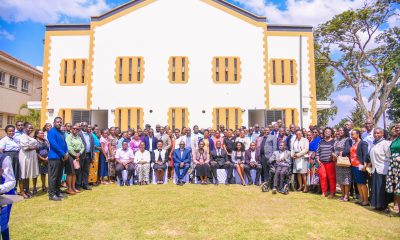
Officials pose for a group photo with the 2026/2027 PhD cohort.
With Africa facing complex challenges, including climate change, disease, population growth and development pressures, Prof. Ssali said PhD scholars have a responsibility to generate evidence that can influence policy, strengthen institutions and advance innovation.
She challenged each scholar to continually ask what problem their research addresses, what solution it advances and whether that solution can create sustainable value.
The Director of Graduate Training,Prof. Julius Kikooma, said the new cohort was joining Makerere at a time when the University is implementing reforms aimed at strengthening graduate education and improving completion rates.
Prof. Kikooma revealed that Makerere received close to 12,000 applications across its master’s, postgraduate and PhD programmes but admitted about 6,000 students.
He said graduate education has been placed at the centre of the University’s efforts to strengthen research capacity and prepare scholars to contribute to knowledge production and innovation.
Under the reforms, PhD students will undertake compulsory cross-cutting courses designed to provide foundational knowledge and skills for doctoral research. They will also be required to undertake teaching in either their second or third year under the guidance of their supervisors.
Prof. Julius Kikooma.
In addition to completing their theses, students will be required to produce at least two publications before graduation, a requirement intended to prepare them to become the next generation of researchers, innovators, inventors and creators.
Makerere has also introduced a digital system to monitor the progress of every PhD student each semester. The system is intended to enable students, supervisors and university officials to identify challenges early and intervene in real time.
Prof. Kikooma urged the scholars to write regularly, think critically, maintain open and constructive relationships with their supervisors and protect their academic integrity and professional reputation.
He also encouraged them to build scholarly networks and remain resilient, noting that rejected papers, disappointing data and unexpected challenges are normal aspects of doctoral training.
The Director of Research, Innovations and Partnerships, Prof. Robert Wamala, challenged the scholars to ensure that the knowledge they produce is trustworthy, responsible and ethically sound.
Prof. Wamala emphasized the importance of respecting the dignity, rights, safety and autonomy of research participants, particularly where studies involve individuals, communities and personal information.
Prof. Robert Wamala.
He highlighted informed consent, privacy, confidentiality, justice and accountability as critical principles of ethical research and urged students to maintain transparency throughout the research process, from developing research questions and collecting data to analyzing and reporting findings.
Prof. Wamala also cautioned the students on the responsible use of artificial intelligence in research.
He said although AI can assist researchers with activities such as language improvement, it does not remove the researcher’s responsibility for the final product.
Researchers, he said, must verify AI-generated information and remain accountable for inaccurate statements, misleading interpretations and incorrect references.
He further urged students involved in international and other research collaborations to establish clear agreements on roles, authorship, data ownership, access and intellectual property before commencing their research.
The Deputy University Librarian, Dr. Kizito Ongaya, meanwhile, urged the new scholars to make full use of Makerere’s library and information resources throughout their doctoral journey.
Dr. Kizito Ongaya.
Dr. Ongaya said the University operates a hybrid library system combining physical and electronic resources, with more than 200,000 books, 45 e-journal databases and over 16,000 archival materials available to researchers.
He encouraged the students to participate in library training to learn how to access and effectively use electronic resources and to explore specialized libraries and information centers across the University’s colleges.
These include resources covering natural sciences, agriculture, veterinary medicine, health sciences, education and humanities, as well as museums, botanical gardens, specialized collections and other research facilities.
Mr. Henry Nsubuga.
The newly admitted doctoral students were also addressed by Mr. Henry Nsubuga, the Manager Makerere University Counselling and Guidance Centre, Mr. George Mugabi Turyamureeba, the Deputy University Bursar and members of Makerere University Convocation.
The Office of Academic Registrar, Makerere University has released admission lists of candidates admitted under the Talented Sports Men & Women, Disability and District Quota Schemes with Government sponsorship 2026/27 Academic Year including appeals and remarked cases.
Other admission lists released include A-Level Applicants with Ugandan and those with Foreign Qualifications, Diploma in Performing Arts, Mature-Age Entry and Bachelor of Education (EXTERNAL Batch 2) for the Academic Year 2026/2027 under self sponsorship.
Makerere University has once again cemented its place as a regional leader in academic excellence after successfully hosting the East African Universities Debate Championships (EAUDC) 2026, welcoming the continent’s brightest young minds for a week of intellectual competition, cultural exchange, and leadership development.
Held from 26th July to 1st August 2026, the championship brought together more than 200 student debaters, adjudicators and delegates from 25 universities across Uganda, Kenya, Tanzania, Rwanda, South Sudan and other invited institutions, transforming the Ivory Tower into East Africa’s premier arena for ideas, innovation and public discourse.
Impeccable! A participant from South Sudan takes to the podium.
The week-long tournament featured rigorous British Parliamentary debate rounds, public speaking competitions, adjudication workshops and networking sessions designed to sharpen critical thinking, leadership and persuasive communication. Participants debated contemporary issues ranging from governance and economic transformation to technology, public health, climate change and Africa’s future.
Speaking at the opening ceremony, the Deputy Vice Chancellor welcomed delegates to Makerere University, emphasizing the institution’s enduring commitment to nurturing graduates who are not only academically accomplished but also capable of leading meaningful conversations that shape society. The championship reflected Makerere’s vision of producing graduates who are innovative, analytical and prepared to address regional and global challenges.
Prof. Sarah Ssali.
Beyond competition, EAUDC 2026 became a celebration of East African unity. Delegates experienced Uganda’s rich cultural heritage through social events, campus tours and cultural showcases that fostered friendships beyond national borders. The interactions reinforced the championship’s belief that dialogue remains one of the strongest foundations for regional integration and peaceful cooperation.
The tournament concluded with an electrifying Grand Finale witnessed by students, alumni, university leaders, invited guests and debate enthusiasts. The Chairperson of the Parliamentary Committee on Education and Sports Hon. Eng. Cuthbert Abigaba represented the Speaker of Parliament as the Guest of Honour. In his remarks he congratulated Makerere University on the successful event and encouraged debate among students.
The Guest of Honour, Hon. Eng. Cuthbert Abigaba.
Prof Sarah Ssali the Deputy Vice Chancellor in charge of Academic Affairs at Makerere University pledged continuous support from the administration towards Makerere Debate Union. Teams demonstrated exceptional research, analytical reasoning and eloquence before a distinguished panel of international adjudicators, bringing to a close one of the most competitive editions of the championship.
The successful hosting of EAUDC 2026 marks another milestone in Makerere University‘s growing reputation as a centre of excellence for debating and public speaking. The event builds on the university’s long-standing tradition of producing outstanding debaters while providing students with opportunities to engage with peers from across the region in meaningful intellectual exchange.
Hon. Eng. Cuthbert Abigaba (Left) receives Makerere Souvenirs from Prof. Sarah Ssali (Right).
As the championship drew to a close, participants departed Kampala with new friendships, stronger networks and renewed inspiration to continue using debate as a tool for leadership, democratic participation and social transformation.
Hon. Eng. Cuthbert Abigaba and Prof. Sarah Ssali (Centre) enjoy a photo moment with a section of participants.
With the East African chapter successfully concluded, attention now turns to the Pan-African Universities Debating Championship (PAUDC) 2026, where Makerere University will once again represent East Africa on the continental stage.