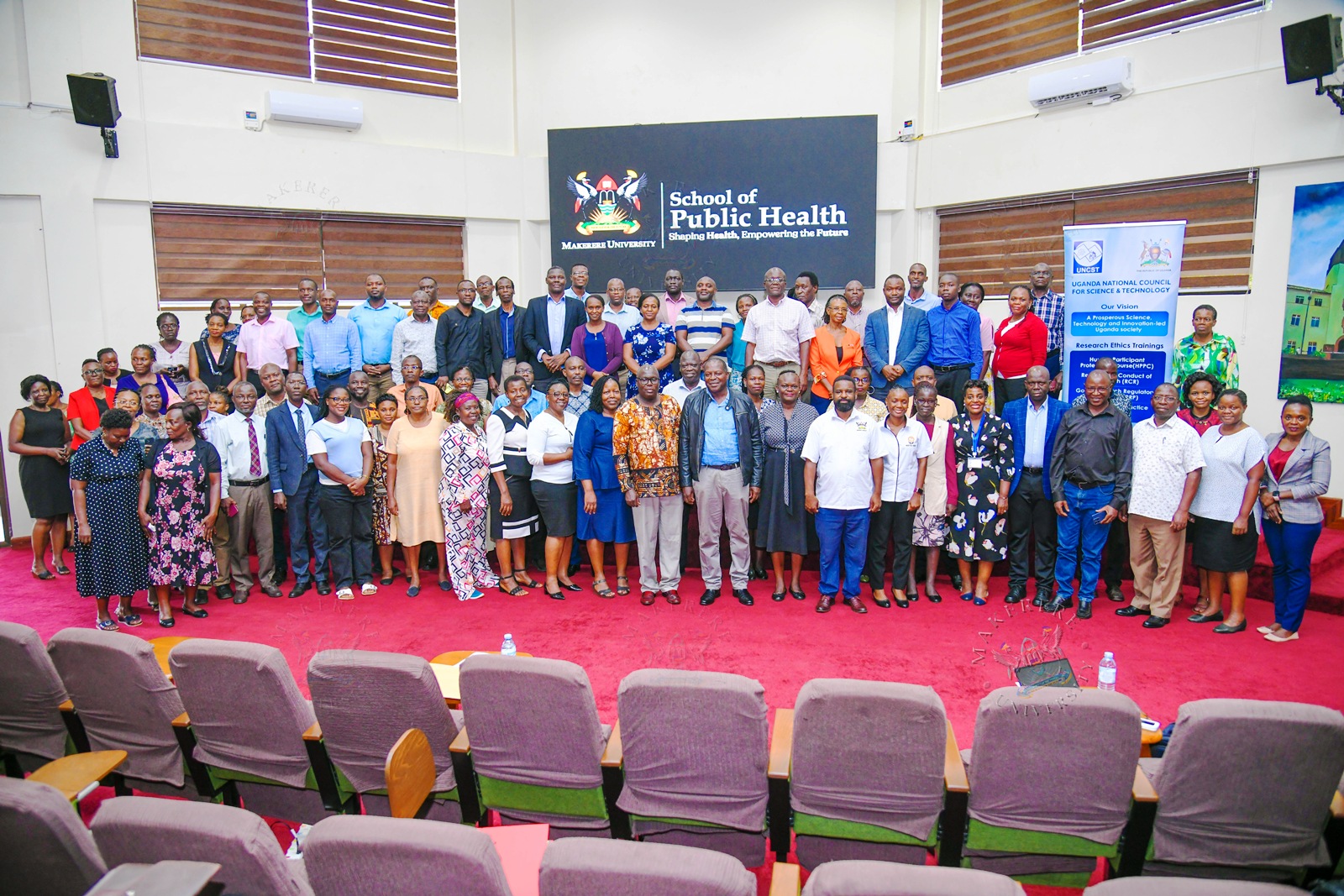
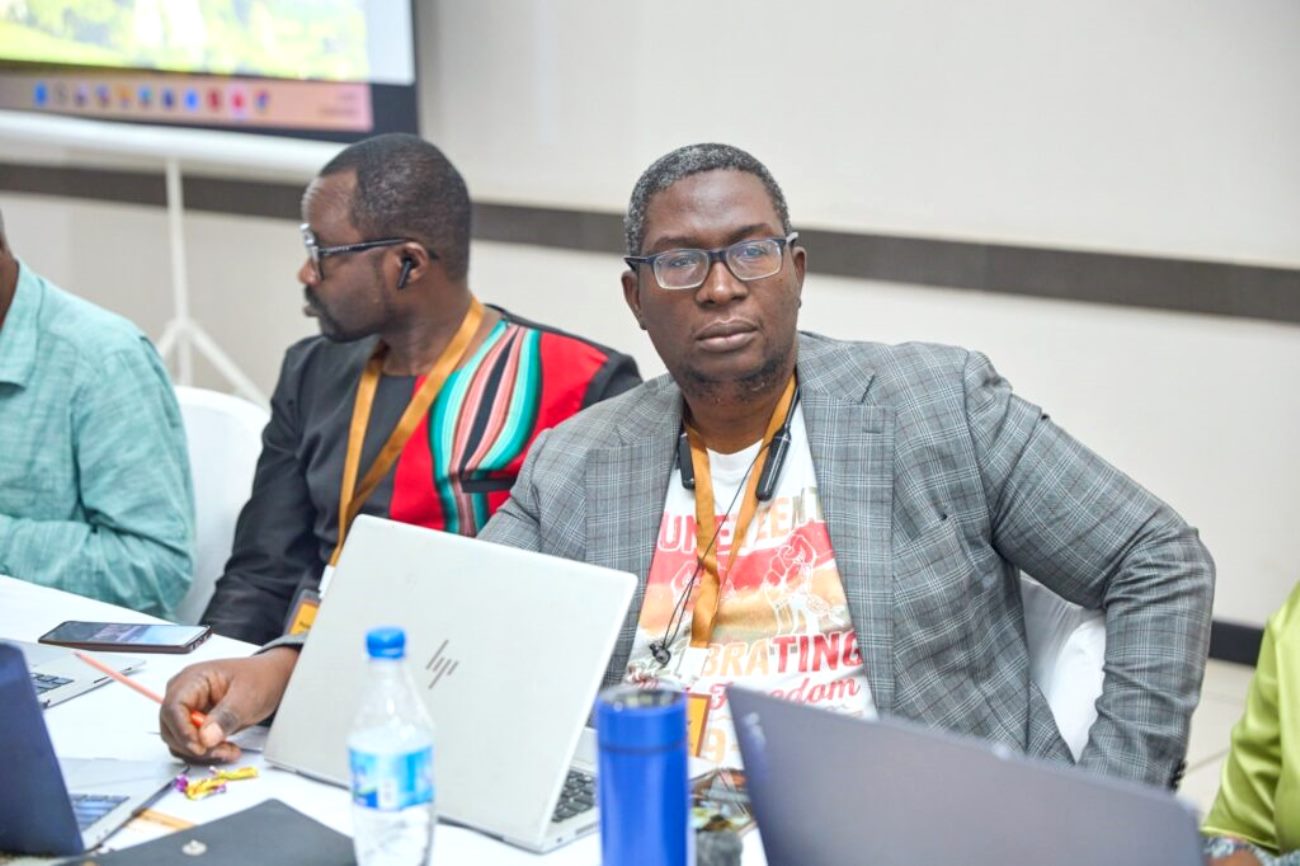
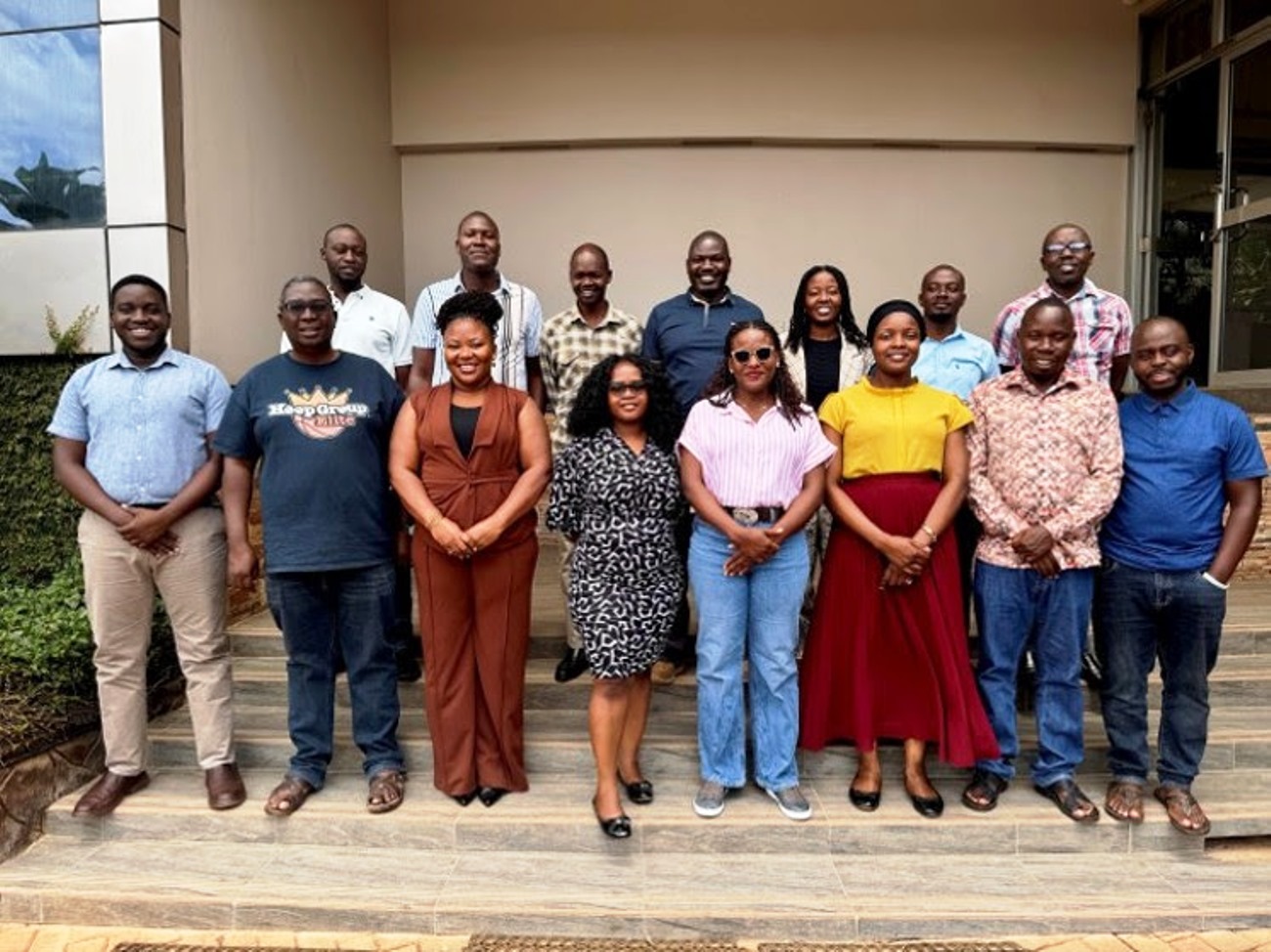
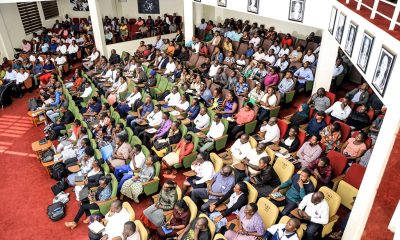
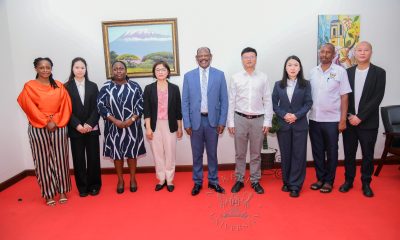
The Uganda National Council for Science and Technology (UNCST) on 24th July 2026 accredited over 90 Senior Academic Members of staff that form Makerere University‘s Research Ethics Committees (RECs) in Good Research Review Practice (GRRP) after an intensive three-day Training. The closing ceremony was presided over by the Deputy Vice Chancellor (Academic Affairs)-DVCAA Prof. Sarah Ssali who was represented by the Principal, College of Computing and Information Sciences (CoCIS), Prof. Tonny Oyana.
UNCST’s Role Appreciated
In his remarks, Prof. Oyana reiterated the core function that research plays in Makerere University‘s mission and noted that excellence in research must always be underpinned by excellence in research ethics. “Research Ethics Committees play a vital role in fulfilling this responsibility,” he stated.
“Your decisions influence not only the quality and credibility of research conducted at the University but also the trust that research participants, communities, funding agencies, policymakers, and the public place in our institution,” remarked the DVCAA, who underscored the pivotal role of RECs in upholding Makerere University‘s reputation as a centre of research excellence.
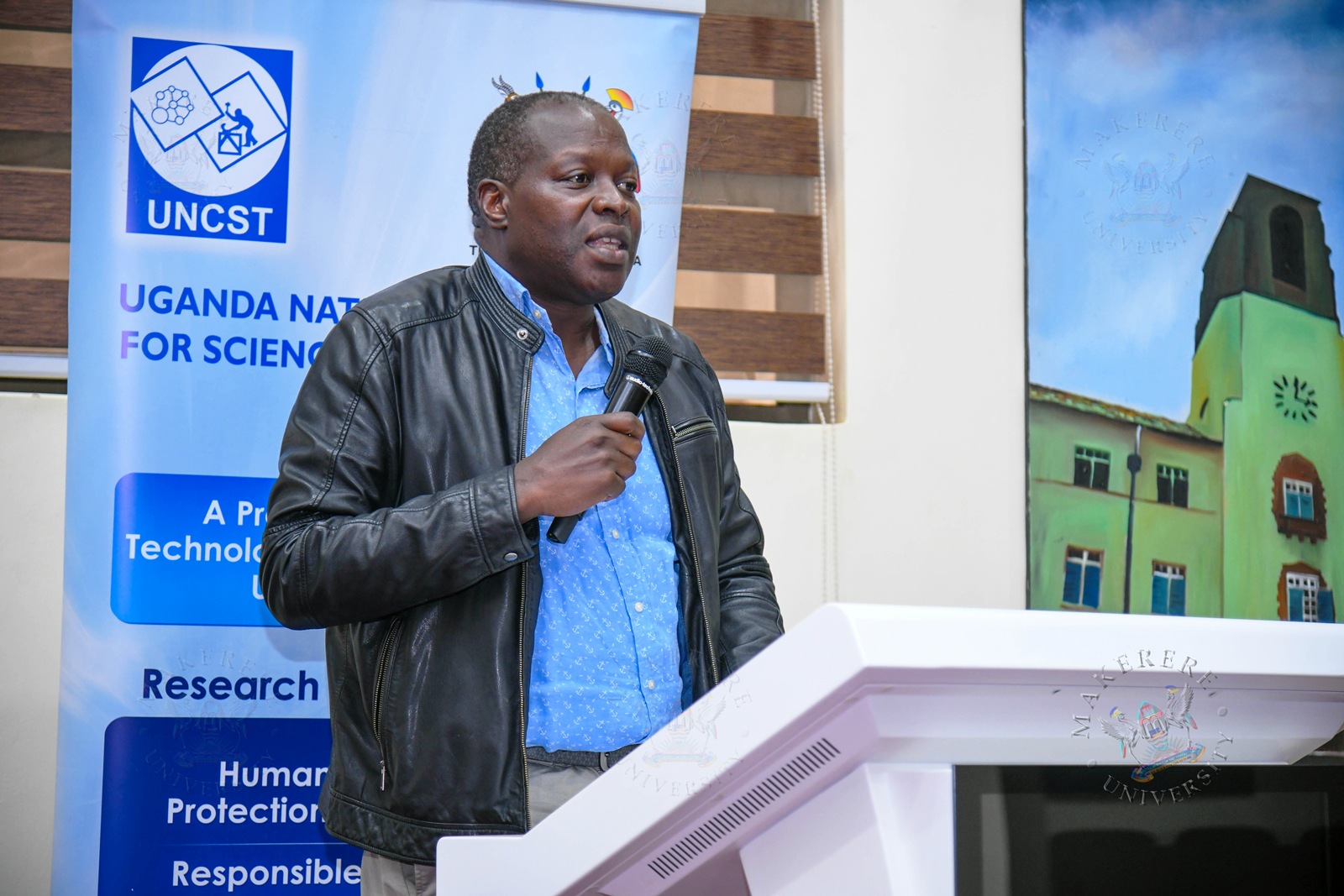
Prof. Tonny Oyana.
He therefore thanked UNCST for promoting responsible conduct of research and strengthening ethical review systems in Uganda through facilitating trainings for RECs in GRRP and other critical areas such as Good Clinical Practice (GCP). He equally commended the Directorate of Research, Innovation and Partnerships (DRIP) led by Prof. Robert Wamala for organising the training, which continues to strengthen research governance structures across the University.
Incorporate RECs in Governance Structures
Presiding over the certificate award ceremony, the Deputy Executive Secretary UNCST, Dr. Martin Patrick Ongol congratulated all participants upon braving the three days of training despite their busy academic and research schedules. He equally commended Prof. Robert Wamala for ensuring that RECs at Makerere receive regular training and accreditation as mandated by governing procedures.
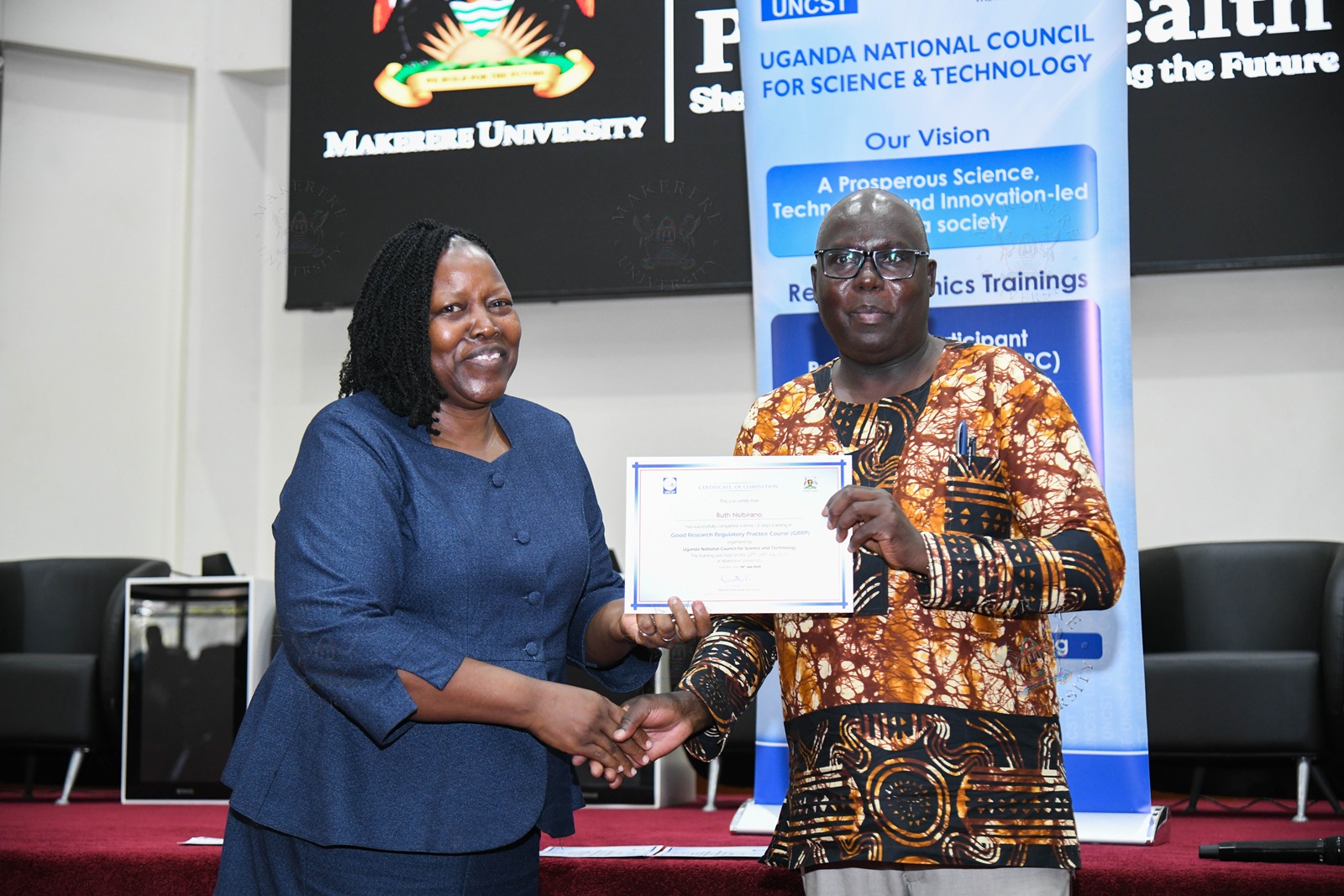
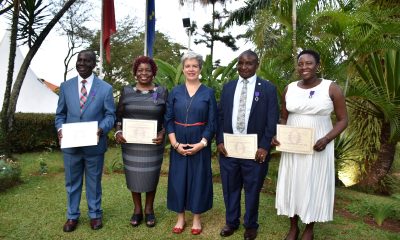
Dr. Martin Patrick Ongol (R) presents a certificate to Prof. Ruth Nsibirano (L).
In the same breath he noted that RECs are key to ensuring that institutions conduct credible research and therefore ought not to be kept at the periphery of governance. “We would like to see that Research Ethics Committees get incorporated into governance and management structures of Makerere University – not like ad-hoc or adjunct entities within the ecosystem.”
Dr. Ongol equally called upon researchers and proposal writers in the room to ensure that issues of ethics are adequately budgeted for in the studies. “When it comes to participant compensation, we sometimes hit a snag,” he cited. He equally called upon members of RECs to ensure that issues of documentation are adequately addressed. “80% of noncompliance issues observed by UNCST are due to improper, missing or poorly handled documentation, and one of the ways of improving is through continuous engagement and we hope that we shall get there” he added.
DRIP and National Accreditation Committee Laud RECs
Prof. Robert Wamala whose Directorate of Research, Innovation and Partnerships is at the heart of coordinating training with UNCST commended members of RECs, many of whom hold the ranks of Professors, Associate Professors and Senior Lecturers for sacrificing time to complete the GRRP Training. He reiterated that RECs are at the heart of ensuring that Makerere‘s research, particularly that involving human participants, meets national and international standards through harmonised ethical review approaches.
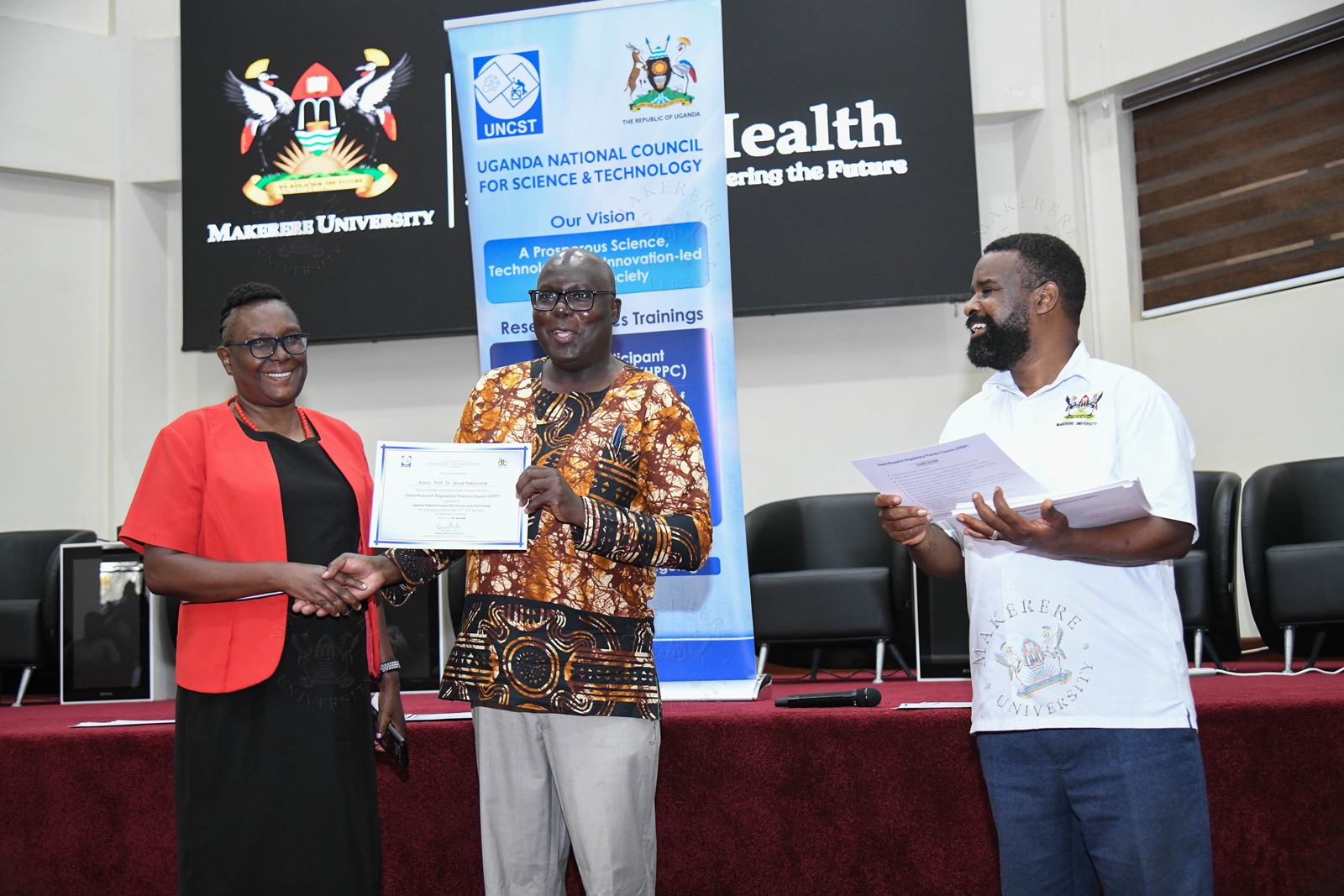
Dr. Martin Patrick Ongol (C) presents a certificate to Prof. Jesca Nakavuma (L) as Prof. Robert Wamala (R) witnesses.
Adding her voice, Prof. Sylvia Angubua Baluka, a member of the UNCST National Accreditation Committee noted that in addition to RECs, Institutional Animal Care and Use Committees play an important role in safeguarding the lives of animals that we depend on for food.
“I would therefore like to appreciate all Chairpersons and Members of Committees that are here; you are doing a good job and based on our site monitoring visits, we can address gaps in monitoring the research protocols you approve so as to have more impactful work and outputs that are more compliant with the ethical approval given” she added.
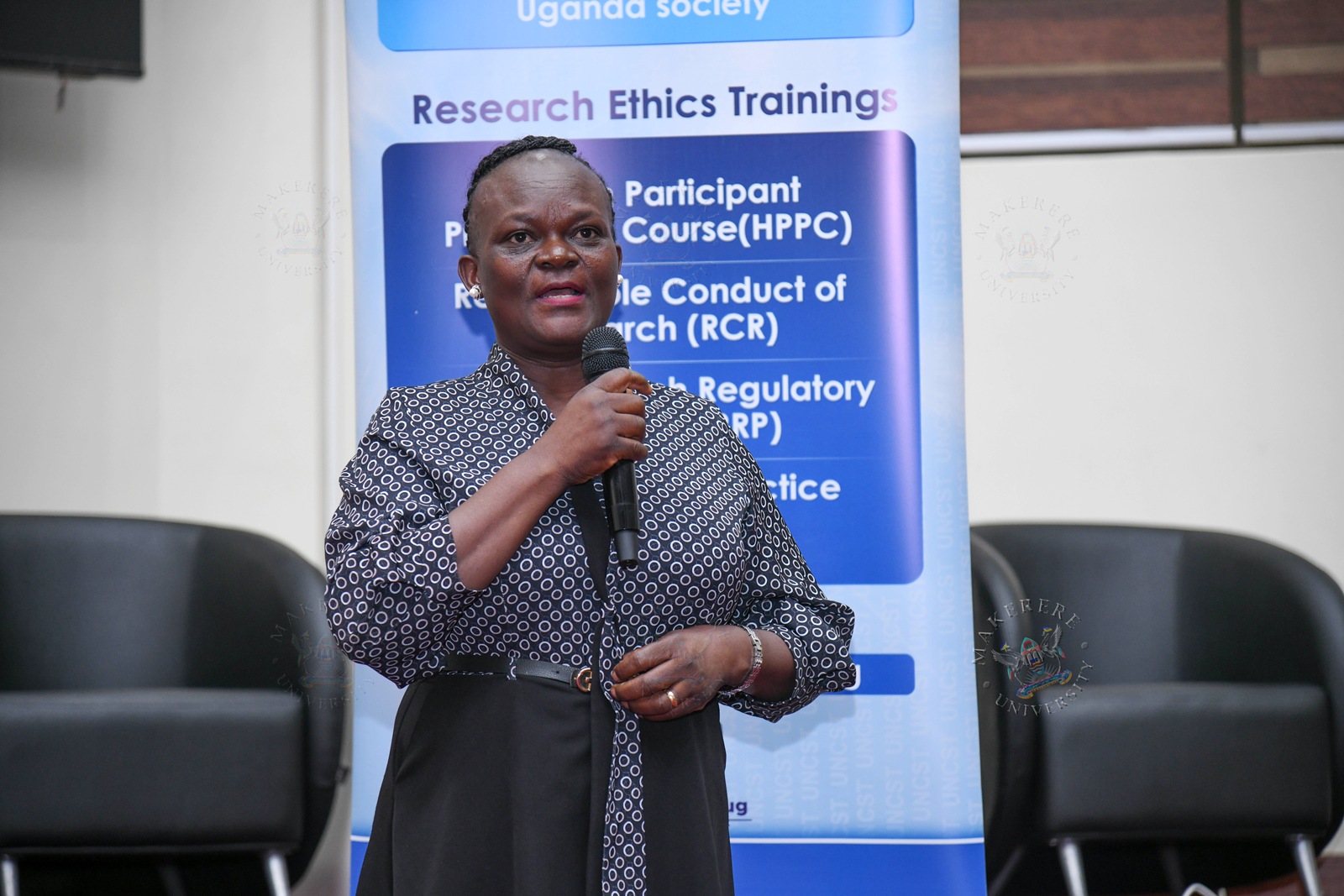
Prof. Sylvia Angubua Baluka.
RECs at a glance
A total of 95 members of RECs took part in the GRRP Training as broken down below.
Makerere University School of Medicine Research Ethics Committee (SOM–REC) – 19
Makerere University School of Biomedical Sciences Research Ethics Committee (SBS–REC) – 17
Research has the greatest value when it moves beyond publication to improve lives.
At Makerere University’s Centre of Excellence for Maternal, Newborn and Child Health (MNCH Centre) housed at Makerere University School of Public Health, research, partnerships and innovation are being translated into action to strengthen reproductive, maternal, newborn, child and adolescent health (RMNCAH) in Uganda and beyond.
Welcome to the September MNCH Centre e-Post 135.
This month, we spotlight how evidence is informing action across reproductive, maternal, newborn, child and adolescent health (RMNCAH) at the centre.
Explore how Centre researchers and partners are advancing innovations to reduce early perinatal mortality, how Makerere University through the Centre and WHO are strengthening capacity to monitor health inequalities, and how the Centre and its partners are leveraging AI to strengthen health systems and improve malaria surveillance.
Discover what these innovations could mean for scale, stronger health systems and greater impact.
As part of the Lake Victoria Improved Water Level Management through Advanced Modelling (LIVWA) Project, newly developed tools were unveiled during a dissemination workshop hosted by the College of Engineering, Design, Art and Technology (CEDAT) on August 26th, 2026. The project seeks to develop advanced hydrological and climate models to enhance water level management in Lake Victoria, East Africa’s largest freshwater resource.
The tools were designed to integrate remote sensing and reanalysis climate datasets with advanced hydrological modeling, enabling researchers and policymakers to better predict fluctuations in water levels in the lake. By combining historical data with AI and Machine Learning forecasting, the models aim to provide actionable insights for sustainable water resource management. Click here for details
Makerere University School of Public Health (MakSPH), through the Africa-Europe Cluster of Research Excellence (CoRE) for Preparedness and Response to Pandemics and Shocks, has shared findings from its study of Uganda’s Mpox response with stakeholders in Kasese, Amuru, Nakasongola and Mayuge districts to strengthen district preparedness for future outbreaks.
The Africa-Europe CoRE is a partnership co-led by MakSPH and the Centre for Research on the Epidemiology of Disasters at UCLouvain, Belgium. It brings together universities in Africa and Europe to strengthen research, training and preparedness for pandemics and other public health shocks.
The district-level dissemination meetings, held from 10 to 14 August 2026, brought together more than 100 local government, health and security officials, Village Health Teams, implementing partners and community representatives. The meetings enabled stakeholders to validate the district-level findings, identify practical actions and provide feedback for the study’s final analysis and national dissemination.
Mr. Philliam Jabim shares the Mpox response study findings with participants during the dissemination meeting in Nakasongola District on 12 August 2026.
Uganda confirmed its first two Mpox cases on 24 July 2024 at Bwera Hospital in Kasese District. The Ministry of Health declared an outbreak on 2 August 2024. As documented in the study, the response involved health workers, communities, local governments, security agencies, political leaders, and implementing partners.
In response to the outbreak, a MakSPH research team led by Prof. Rhoda Wanyenze, Dr. Rawlance Ndejjo, Dr. Steven Kabwama and Mr. Douglas Bulafu conducted a study in May 2025 to assess Uganda’s Mpox response, including its policies, interventions, strategies and challenges, and generate lessons to inform recovery and strengthen preparedness for future public health emergencies.
Using purposive sampling, the research team conducted 20 key informant interviews and five focus group discussions in each of the four districts, drawing perspectives from western Uganda in Kasese, northern Uganda in Amuru, central Uganda in Nakasongola and eastern Uganda in Mayuge.
Participants and the MakSPH research team at the Mpox response study dissemination meeting in Nakasongola District on 12 August 2026.
The study, titled Assessment of the Mpox Response in Uganda: Documenting Challenges, Lessons and Innovations to Strengthen Emergency Preparedness and Response Capacities, was funded by the Government of Uganda through the Makerere UniversityResearch and Innovation Fund (Mak-RIF).
“This study is helping us move beyond recounting the Mpox response to identifying the actions that districts and national partners can take before the next outbreak. By validating the findings with stakeholders who led and experienced the response, we are ensuring that the evidence reflects local realities and can inform stronger surveillance, risk communication, coordination and community engagement,” said Mr. Bulafu, who led the MakSPH team during the dissemination meeting in Amuru.
Mr. Douglas Bulafu engages participants during the Mpox response study dissemination meeting in Amuru District on 10 August 2026.
In Amuru, the 10 August meeting brought together over 25 stakeholders from the district health team, political leadership, security agencies, Village Health Teams, implementing partners and the community. On the same day, a second MakSPH team, led by Mr. Keneth Sebukeera and Mr. Filimin Niyongabo, convened stakeholders in Kasese for a parallel validation meeting. The consultations then continued in Nakasongola on 12 August and concluded in Mayuge on 14 August, extending the study’s engagement across all four districts.
Across the districts, stakeholders said the results reflected their experience during the outbreak. They pointed to strengths in leadership, coordination, community engagement and partner support, while also describing gaps in documentation, logistics, diagnostic access, staffing, risk communication, public trust and continuity of essential health services.
They also noted inconsistent implementation of the World Health Organization (WHO) 7-1-7 target, which calls for detecting a suspected outbreak within seven days, notifying public health authorities within one day and completing early response actions within seven days.
The MakSPH research team, led by Mr. Keneth Sebukeera and Mr. Filimin Niyongabo, with participants during the Mpox response study dissemination meeting in Kasese District on 10 August 2026.
In Kasese, stakeholders highlighted gaps in documentation, financial and logistical resources, and human resources. They identified Village Health Teams and grassroots, religious and cultural leaders as important resources for community surveillance and risk communication. They called for stronger collaboration between technical and non-technical leaders, engagement with traditional healers, greater use of local radio for public sensitisation, and better facilitation of district epidemic response teams to reach distant communities.
Amuru participants called for proactive preparedness in the border district, citing misinformation and rumours as barriers to risk communication. They urged timely, accurate information from health workers and other authorities; training in disease surveillance and grant writing to strengthen capacity and resource mobilisation; and compassionate care, psychosocial support and community awareness to reduce stigma and support survivor reintegration.
During the meeting in Nakasongola, stakeholders identified Community Health Workers and Community Health Extension Workers as potential resources for strengthening community surveillance and addressing workforce shortages. Given the district’s position around Lake Kyoga and along the Kampala-South Sudan transit corridor, they also called for stronger documentation, note-taking and reporting, accurate real-time information, closer communication with the Ministry of Health, and collaboration among technical, political, religious and community leaders.
Ms. Eunice Vivian Asingo, Senior Nursing Officer at Nakasongola Health Centre IV, contributes to the discussion during the Mpox response study dissemination meeting in Nakasongola District on 12 August 2026.
Ms. Eunice Vivian Asingo, Senior Nursing Officer at Nakasongola Health Centre IV, called for a permanent, adequately resourced outbreak-management centre to help protect routine services during future epidemics. “We appeal for better facilities to manage epidemics and outbreaks. At Nakasongola Health Centre IV, spaces previously used for outbreak management have been repurposed for other services, and we have limited staff. During the Mpox response, colleagues assigned to manage patients later returned to the general team, creating fear among staff already under pressure,” she said.
In Mayuge, Dr. Basembeza highlighted leadership, coordination and surveillance structures operating from district to community level as important factors in the response. He said the structures enabled the district to receive and respond quickly to community alerts. “Whenever there is a rumour or an alert, we are able to respond. Within 20 minutes, we had a response because of the structure we have,” Dr. Basembeza said.
Based on the findings, the research team recommends increased preparedness financing, stronger community engagement, decentralised diagnostic services through stronger district laboratory capacity, and improved health information and research systems.
Across the four districts, stakeholders reaffirmed that trusted community structures and coordinated action across sectors are essential to strengthening outbreak preparedness.