
General
Tribute to Late Prof. Noble Banadda

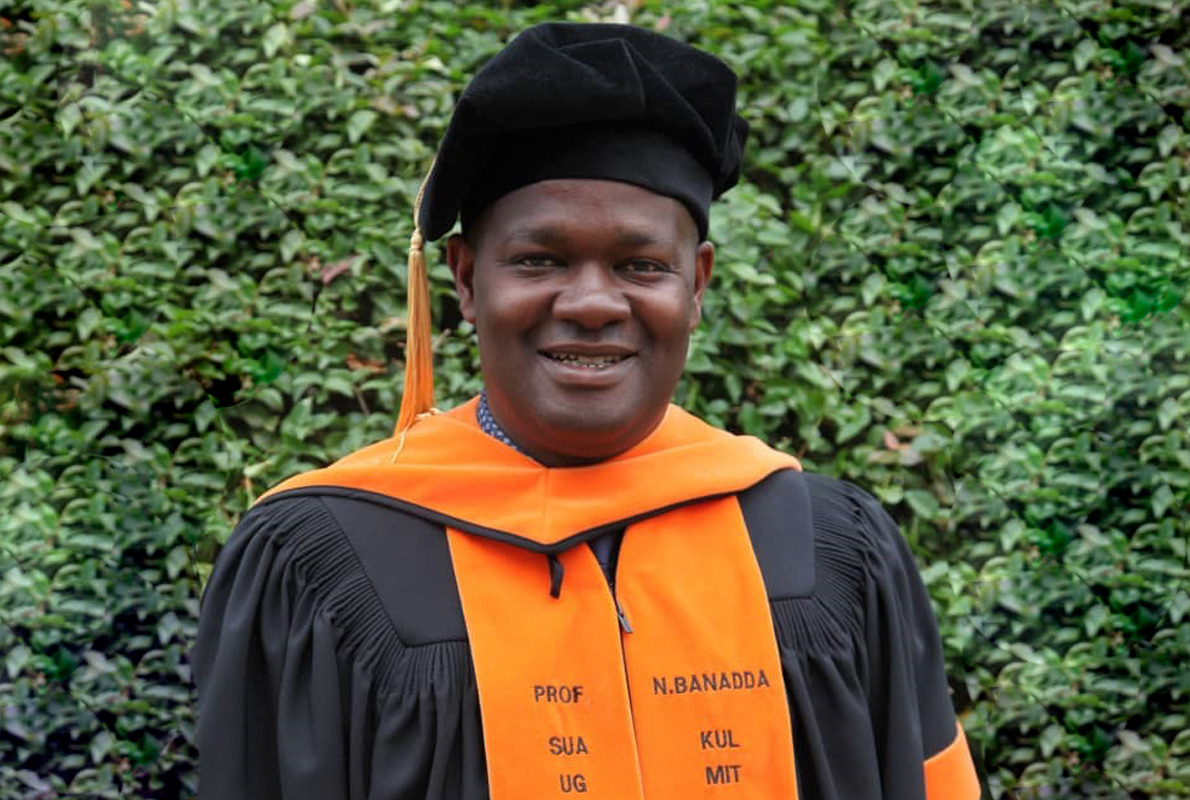
Death has robbed Makerere and Uganda an extraordinary Professor.
Banadda was the first Sub-Saharan African to graduate with a PhD in Chemical engineering from the Katholiek University Leuven in Belgium opening many doors for Africans. He was appointed as full professor in 2012 at the age of 37, one of the youngest persons in the history of Makerere University. He was the first African recipient of the Pius XI Golden Medal 2018, the first African under the age of 45 to be recognized by a sitting pope. And many other medals for his outstanding performance.
Makerere and the entire globe has lost a prolific researcher. Noble Banadda held a n MSc in processing engineering (2006) and a post graduate diploma in processing engineering (2000) of the Katholeik
University Belgium, Bachelors of Science in Food Science and Technology (1998) of Sokoine University of Tanzania. Through his expertise and experience, Banadda won several projects, Fellows and was ranked high by Google Scholar. Noble has supervised several PhD and MSc students with over 100 scientific publications.
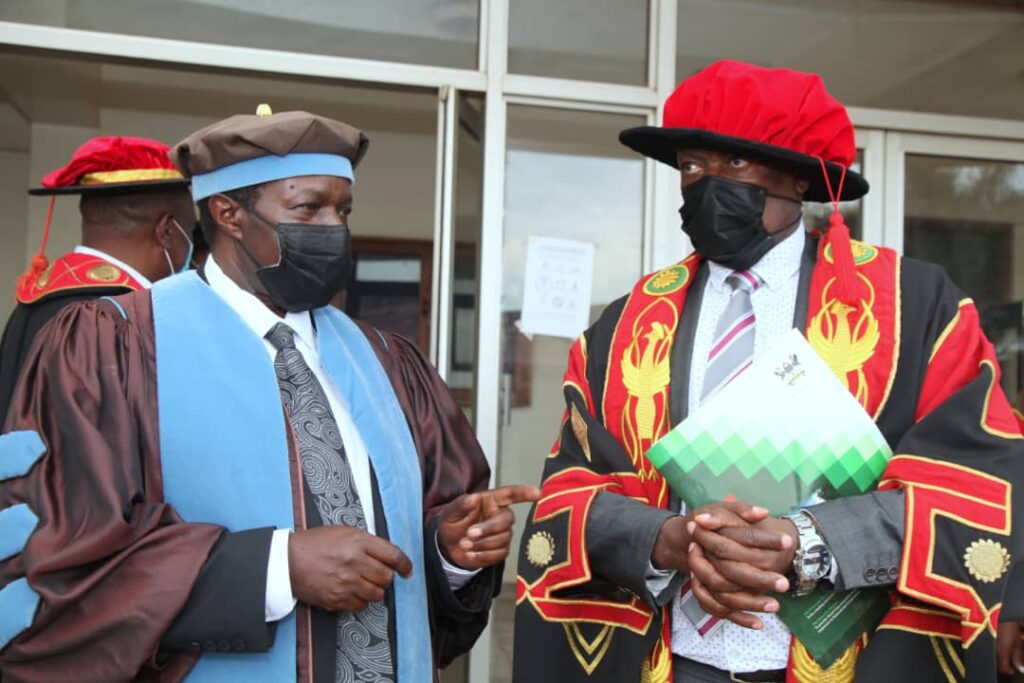
By the time of his death, Prof. Banadda had in October 2020 been inaugurated as one of the 10 Oliver Thambo (ORTARChi) Chairs attracting USD 250, 000 annually and an additional £ 100,000 Euros for the next 15 years for graduate research in Agricultural waste management on farms with a target of training 15 PhDs, 9 Post-doctorals and 27 MSc.
Makerere has lost an academic giant and innovator. Banadda was the brain behind the development of the parts of the Bulamu Ventilator and the Biodegradable face shields in the efforts to combat COVID -19.
He developed the solar powered irrigation pump, the Multipurpose Farmers’ Tractor called MV Mulimi, and started the extraction of fuel from hard plastics and making insecticides from the eucalyptus and otheragricultural waste to name but a few.
As CAES, we mourn our fallen top cream Professor with very heavy hearts. He has left over 10 PhD and MSc. under his supervision and was aspiring candidate for the post of Principal CAES.
It is, indeed a very trying moment as CAES looses one staff after the other and their loved ones to COVID-19.
Jane Anyango
Principal Communication Officer

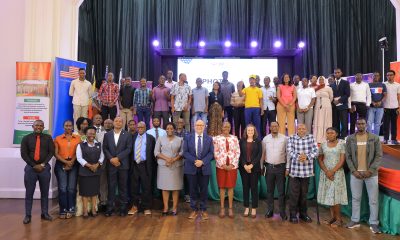


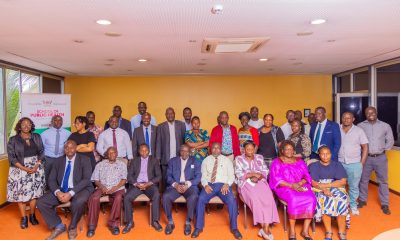



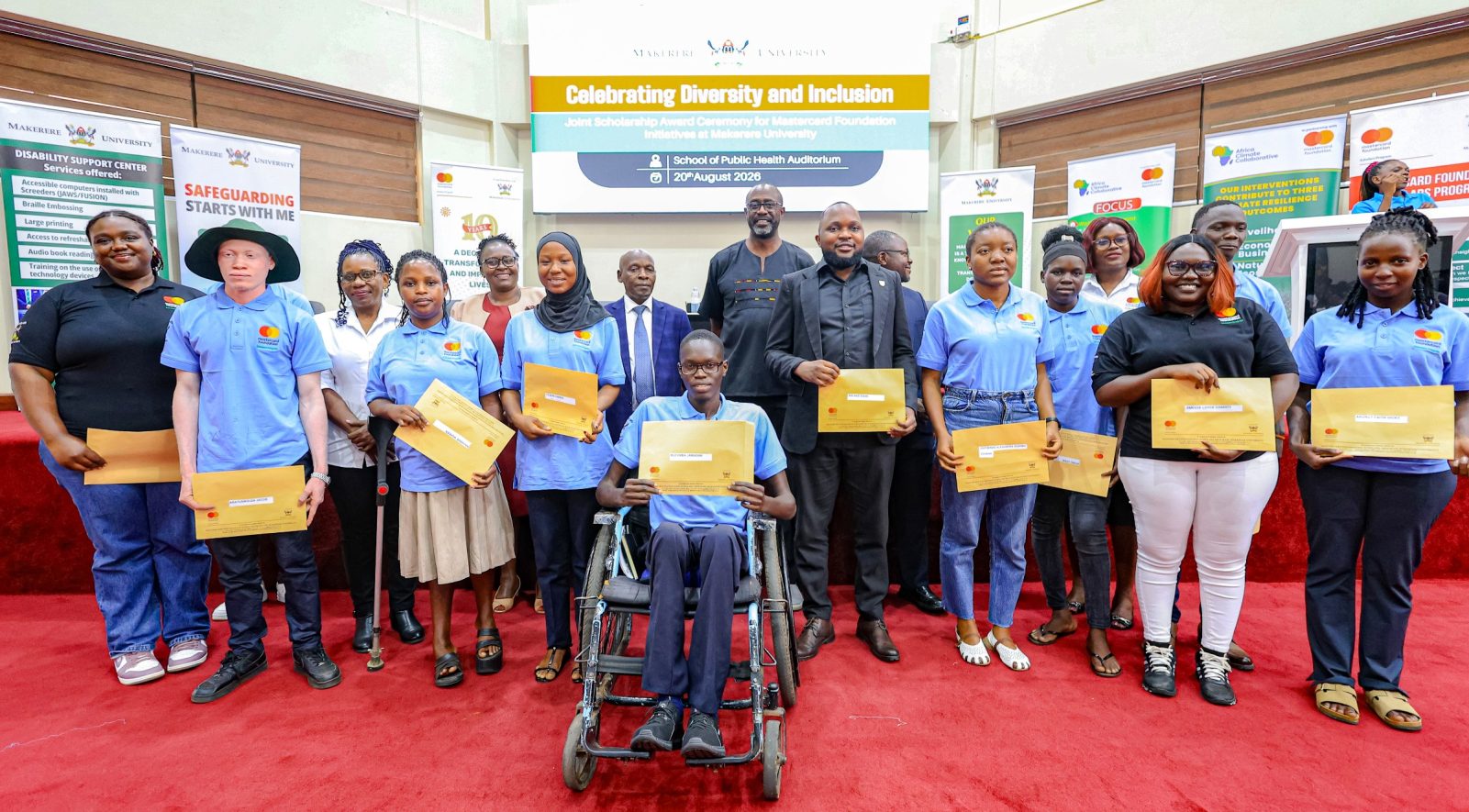
On 20th August 2026, Makerere University welcomed another cohort of 258 recipients of the prestigious Mastercard Foundation scholarship for the 2026/2027 academic year with pomp and fanfare. The colourful Scholarship Award Ceremony was presided over by the Vice Chancellor, Prof. Barnabas Nawangwe, who was represented by Prof. Ibrahim Mike Okumu, the Dean of the School of Economics and the Chairperson of the Scholars Selection sub-committee of the Mastercard Foundation Scholars Program at Makerere University.
While addressing the gathering, Prof. Nawangwe reminded the Scholars that the scholarship was both an honour and a responsibility, and that they ought to make the most of it to improve their lives and communities.
“Now that you have stepped through the gates of Makerere University, remember that a scholarship is both an award and a responsibility. You have been chosen because we believe in your potential to lead, innovate, and serve. Makerere University offers you world-class academic resources, mentorship, and networks—but the impact you make with these resources will depend on your discipline, integrity, and vision,” Prof. Nawangwe remarked.
A Call for Responsible Living
The Vice Chancellor further urged the new recruits to embrace university life responsibly and form lasting bonds that will support future networks.
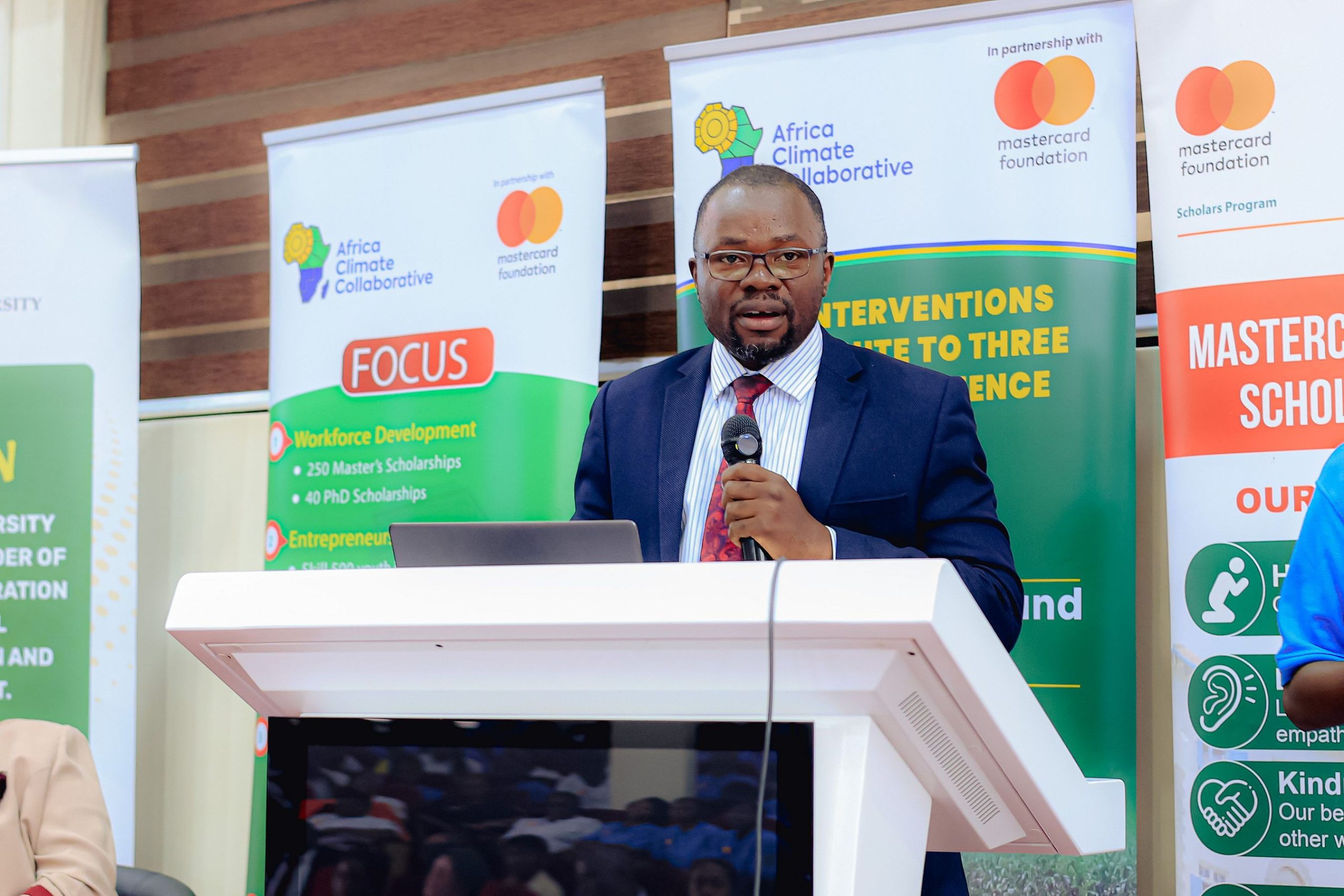
“I encourage you to engage fully and responsibly in University life, build lasting bonds with your peers, and, equally important, keep your home communities close to your heart. Let the knowledge and skills you gain here become the seed for innovative solutions to the challenges facing your communities, our country, Uganda, and the African continent.” Prof Nawangwe emphasised.
Prof. Nawangwe further expressed his gratitude to the Mastercard Foundation for recognising Makerere University as a worthy partner and pledged to continue supporting all the Mastercard Foundation’s initiatives at Makerere University.
Leadership starts with self
Mr. Adrian Bukenya, the Senior Director of the Mastercard Foundation Scholars Program globally and the Country Director for Uganda, urged Scholars to embrace leadership, particularly through self-leadership. He emphasised that the Scholars Program is fundamentally a leadership development program.
“The Scholars Program offers more than just a scholarship; it is a leadership development Program. I encourage you, Scholars, to embrace leadership, and leadership starts with leading yourself, then your community, your country and the continent,” Mr. Bukenya emphasised.
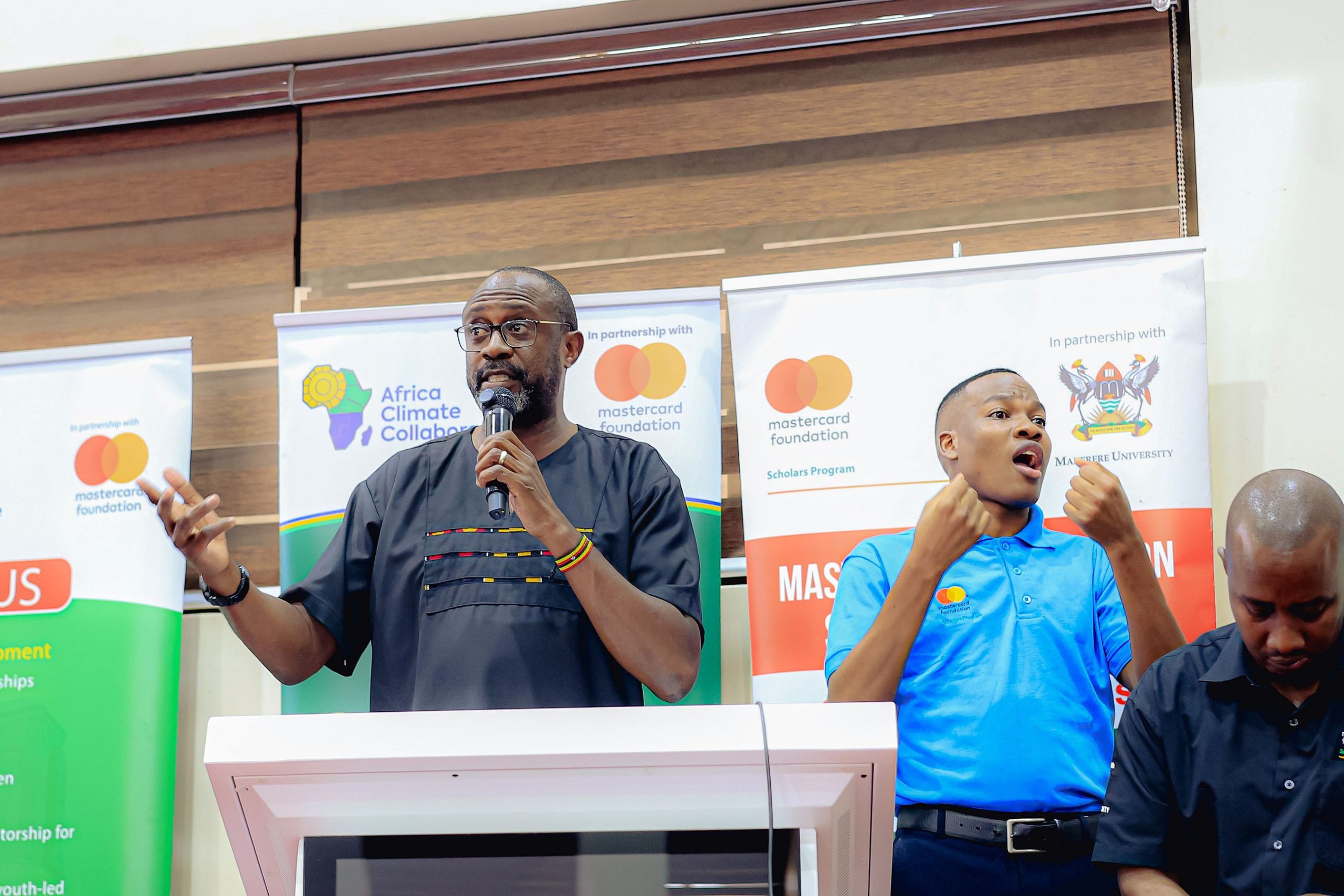
Mr. Bukenya expressed his gratitude to the Management of Makerere University for partnering with the Mastercard Foundation on various initiatives. He emphasised that the Foundation is committed to continuing this partnership to educate young people and nurture the next generation of leaders on the African continent.
Selection Process Highlights
On his part, the Chairperson of the Scholars Selection Committee, represented by Mr Charles Ssentongo, the Deputy Academic Registrar responsible for Undergraduate admissions, congratulated all the Scholars who had made it through a very competitive and watertight selection process. To illustrate how tight the selection process had been, he shared compelling statistics that clearly demonstrated its competitiveness.
“We received 3,664 Applications for the Scholarship; 2,904 Undergraduates and 760 master’s students. Of these scholarship applicants, 1,440 Undergraduates and 280 Master’s students were admitted to Makerere University on private sponsorship, and they were all eligible for the Scholarship,” Mr Ssentongo pointed out.
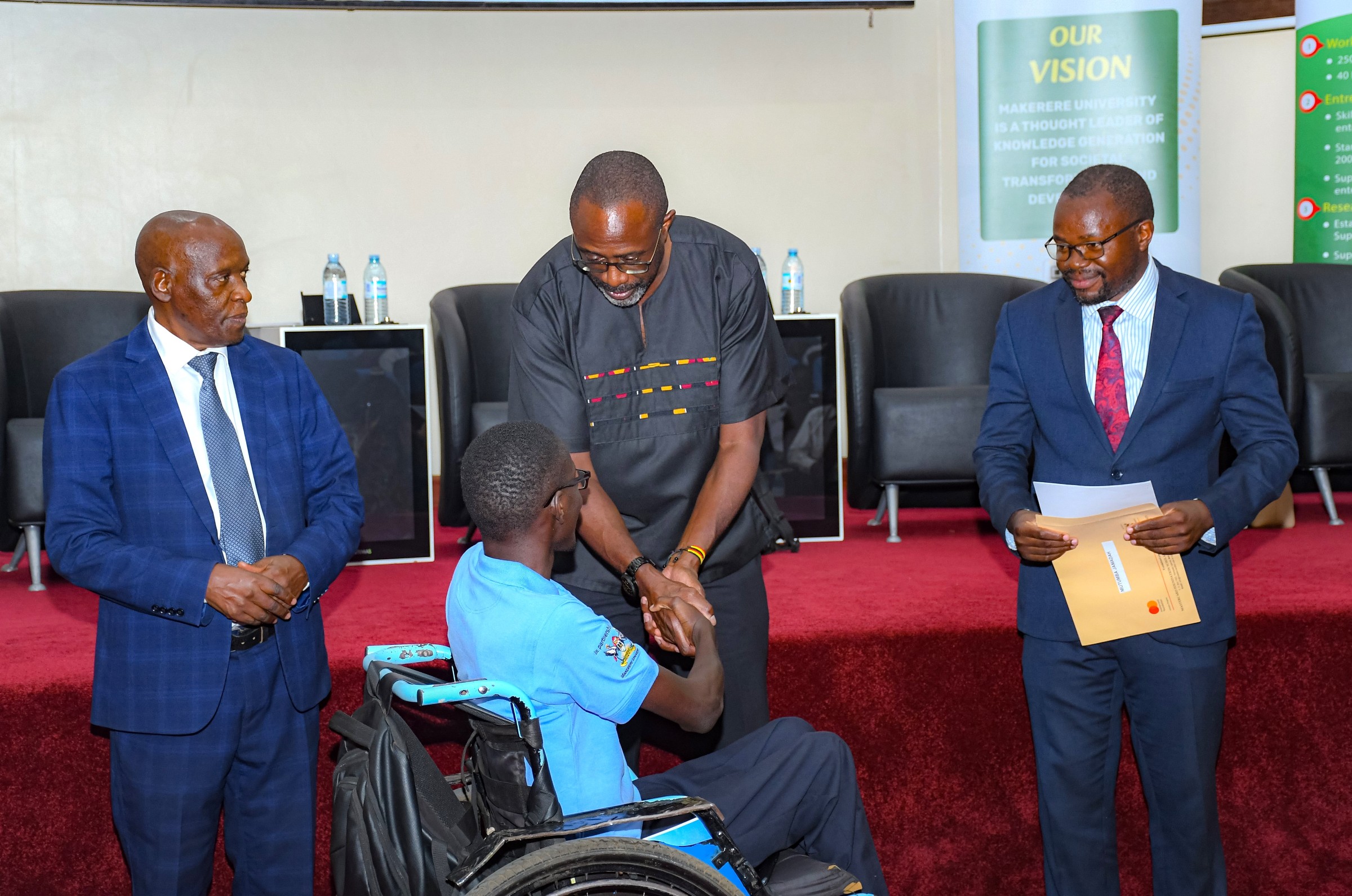
Mr Ssentongo informed the attentive audience that one of the biggest challenges the Committee faced was the very high number of applicants, while the number of scholarships available was always very small. Mr Ssentongo then highlighted further statistics that characterised the tedious selection process.
“For the Undergraduates, 650 applicants were shortlisted for interviews, while 58 Master’s applicants were also shortlisted. Of these, 245 undergraduates and 13 Master’s students were selected for the final award,” Mr Ssentongo highlighted.
Celebrating A Diverse Cohort
The Program Director of the Mastercard Foundation Scholars Program at Makerere, Prof. Justine Namaalwa, used the occasion to highlight achievements made in the years gone by.
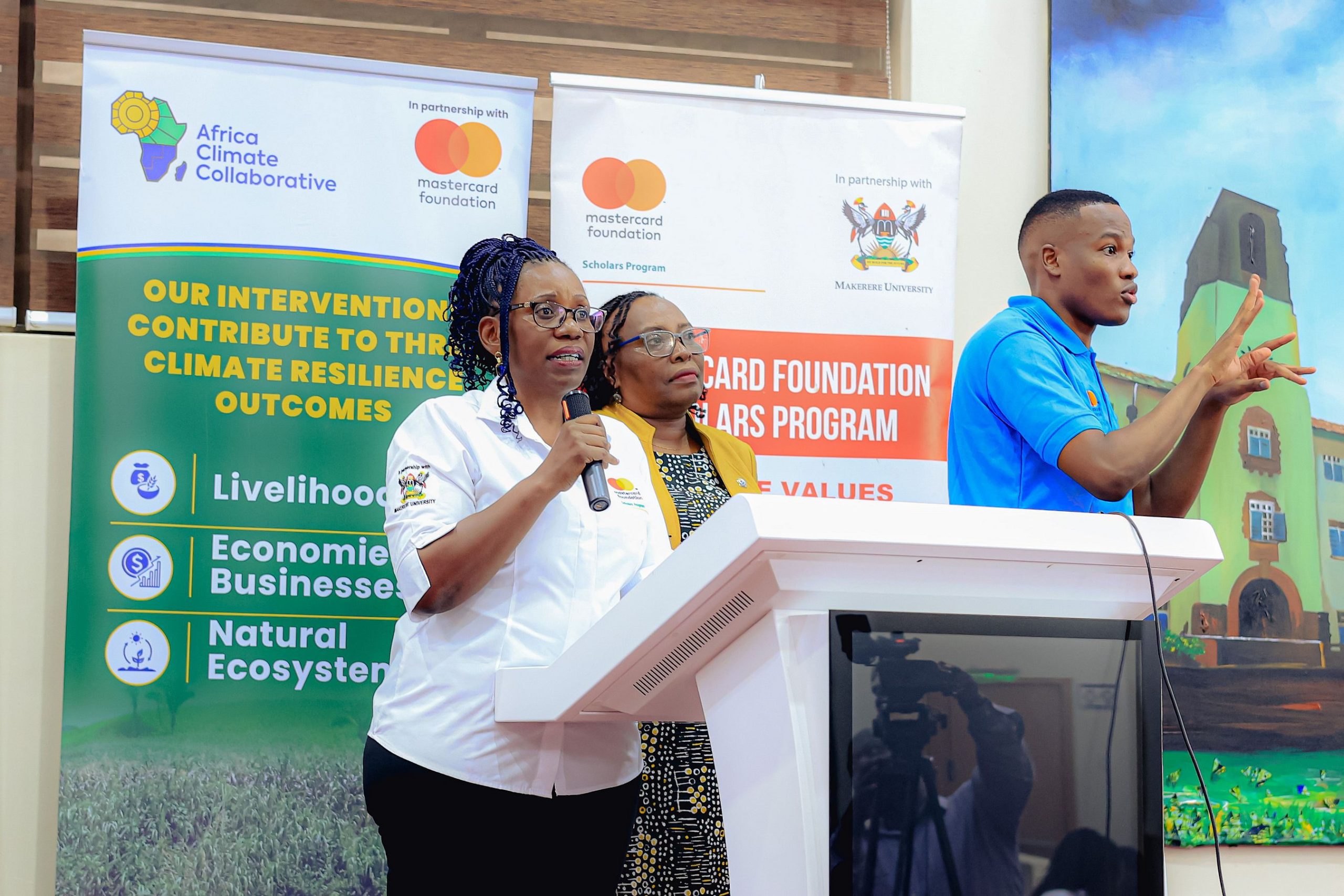
“Today, we are overjoyed to have successfully recruited 258 Cohort 9 Scholars—bringing us to the mark of 546 Scholars, 54.6% of the target recruitment of 1,000 Scholars under Phase II of the Program. To date, a total of 1,596 Scholars have been recruited since 2013, when the Scholars Program started at Makerere University,” Prof. Namaalwa announced.
Prof. Namaalwa showcased the diversity created by the Scholars Program, highlighting the arrival of international students from across the African continent at Makerere University through the Mastercard Foundation Scholars Program.
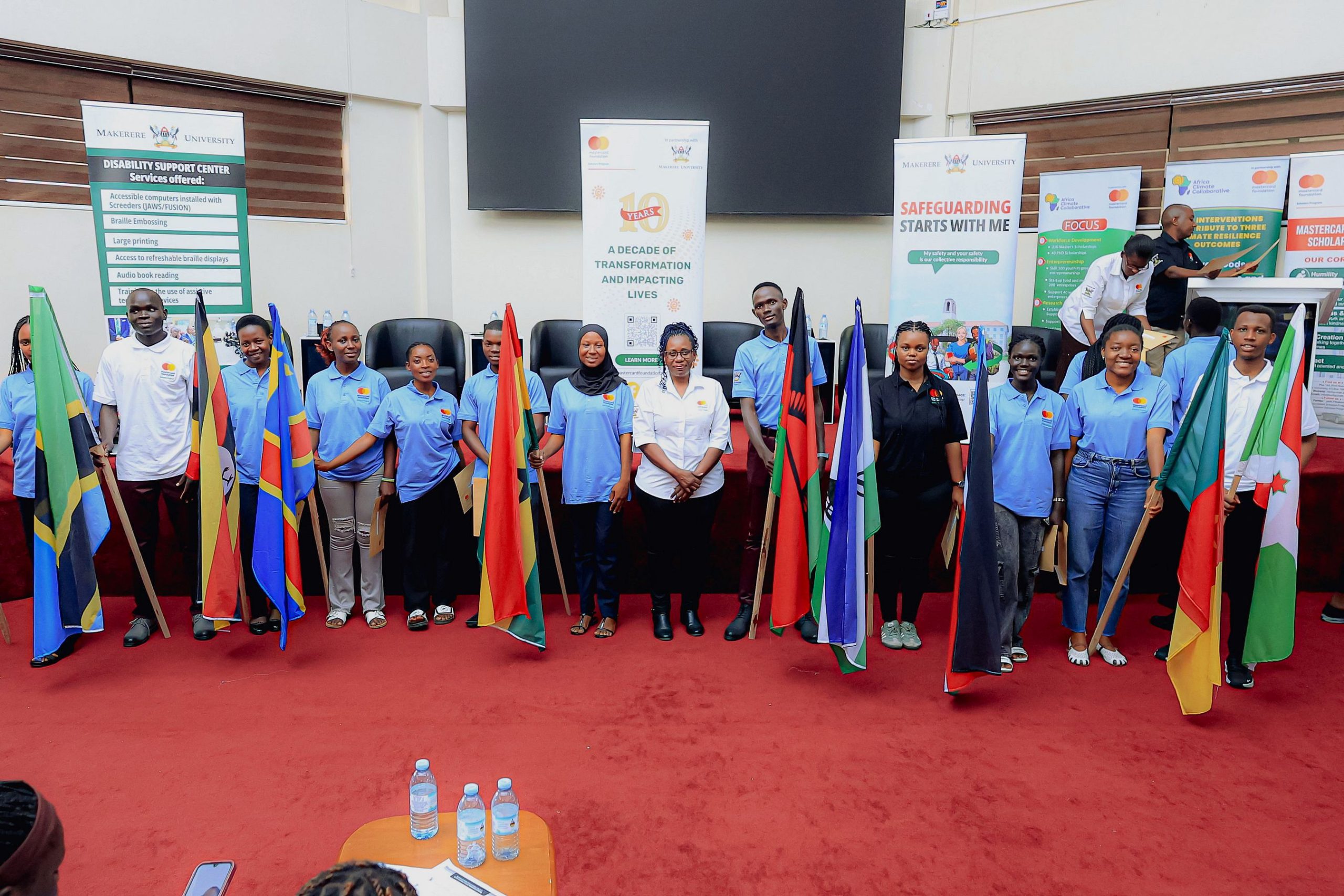
“For Cohort 9 Scholars, it’s time to celebrate our diversity in the Program. Let me call out the nationalities represented in the room: Lesotho (1 Scholar), Malawi (1 Scholar), Ghana (1 Scholar), D.R. Congo (13 Scholars), Cameroon (7 Scholars), Burundi (3 Scholars), Rwanda (10 Scholars), South Sudan (40 Scholars) and Tanzania (1 Scholar).” Prof. Namaalwa revealed.
Scholars Speak Out
Nathan Tamba, an international student from Cameroon, conveyed his enthusiasm regarding the opportunities afforded by the scholarship, particularly the prospect of pursuing his studies at Makerere University, recognised as one of the leading institutions on the continent.
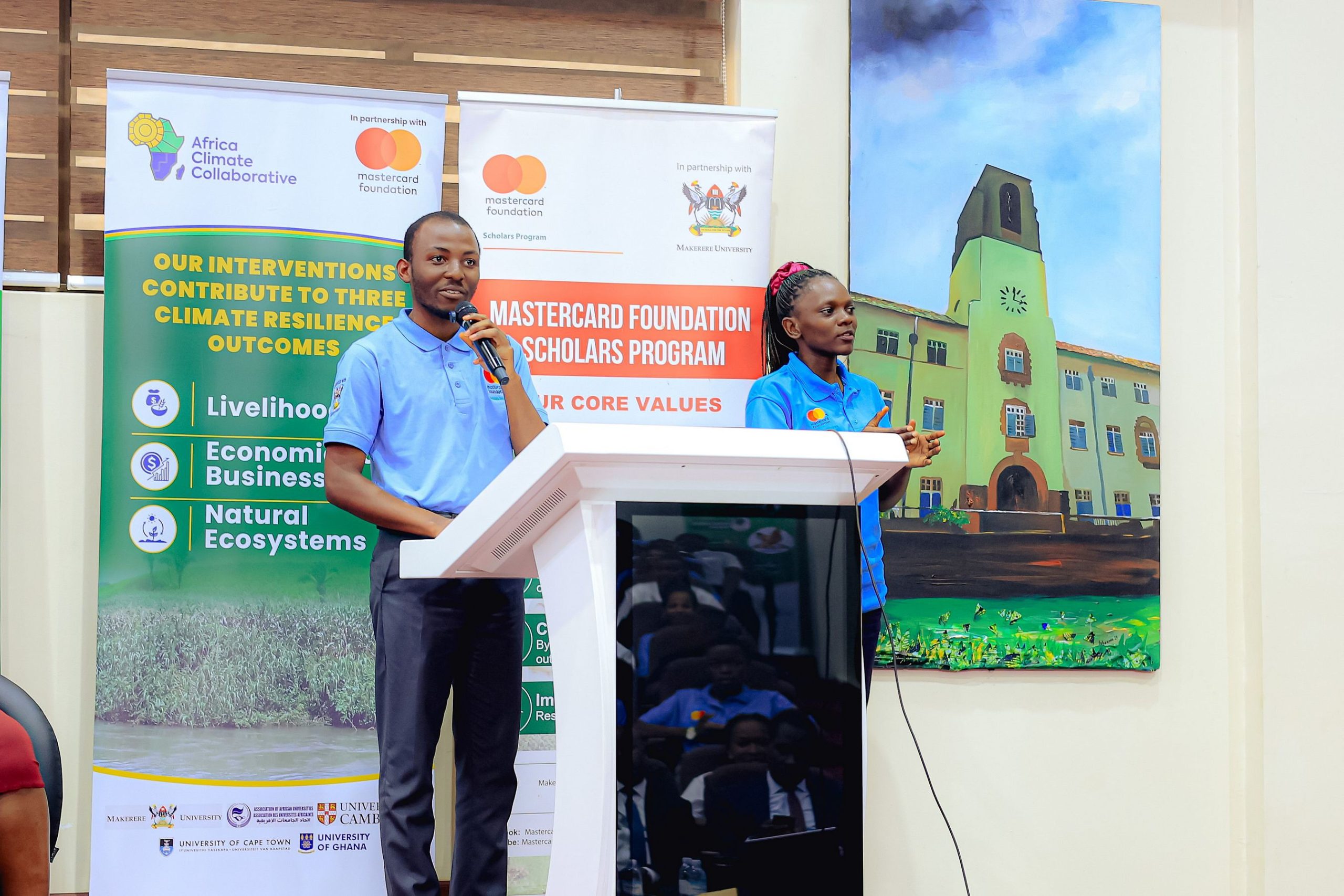
“On behalf of my fellow scholars, I would like to express our gratitude to Makerere University and the Mastercard Foundation for awarding us this scholarship. It has given me the opportunity to study at this prestigious university and to experience Uganda for the first time.” Tamba remarked.
Tamba, clearly delighted like his fellow scholars, committed to using the scholarship opportunity to gain knowledge and skills he will use to benefit himself and his community.
The function was punctuated by entertainment from the Makerere University Choir, networking, and plenty of joyous celebration.
Bernard Buteera is Principal Communications Officer for the Scholars Program at Makerere University.

-
 General5 days ago
Undergraduate Admission Lists 2026/2027
-
 General2 weeks ago
Call For Applications: ACT-PREP 15 PhD and 10 Postdoctoral Research Fellowships
-

 General7 days ago
72 Makerere University Students Admitted to 2026 Millennium Fellowship
-
 General1 week ago
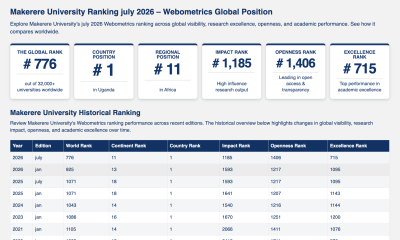
Makerere jumps 200 positions in latest global rankings
-
 Computing & IS1 week ago
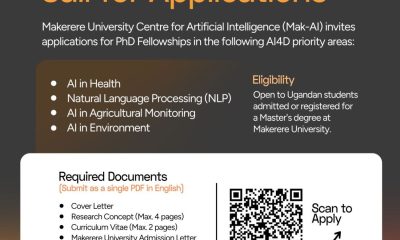
Call For Applications: Mak-AI PhD Fellowship