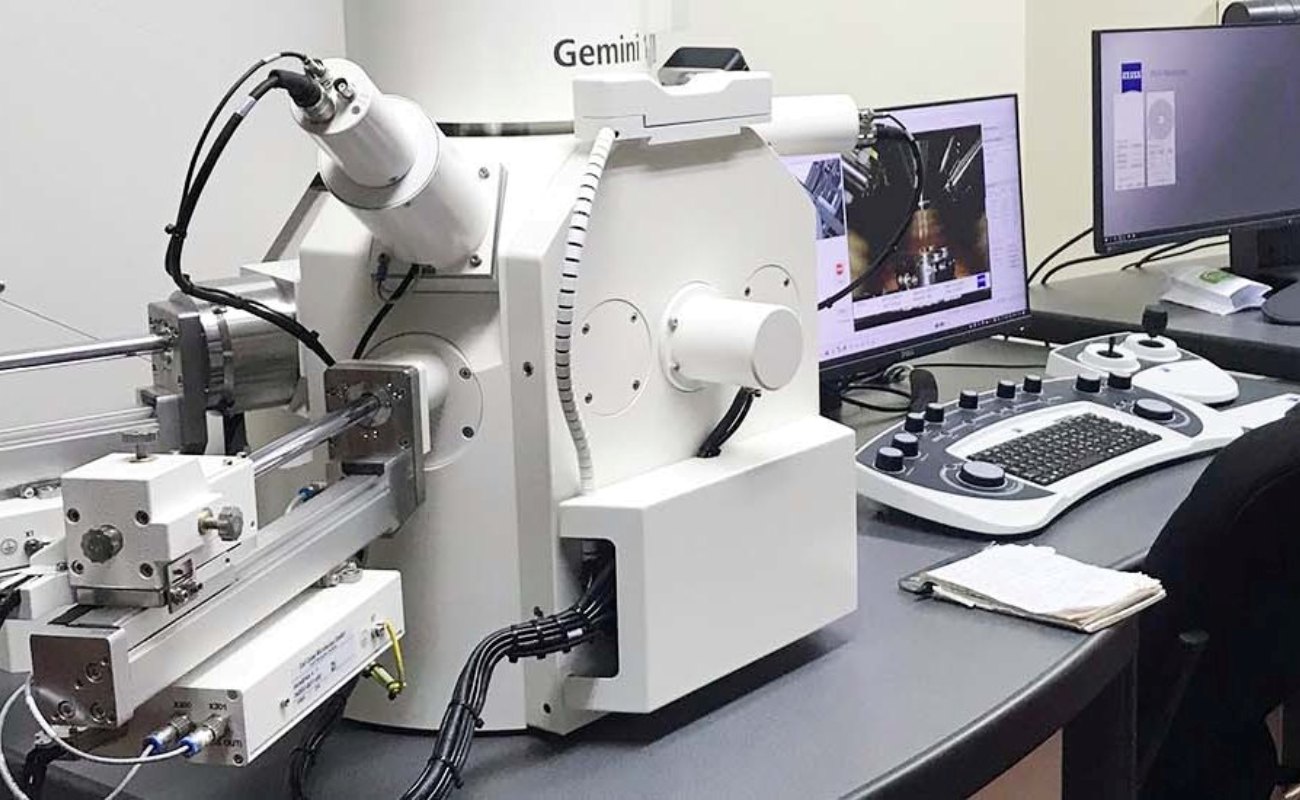
Africa Center of Excellence in Materials Product Development and Nanotechnology (MAPRONANO ACE), College of Engineering, Design, Art and Technology (CEDAT), Makerere University has acquired a state of the art Vapour Pressure (VP) Sigma 300 High resolution Scanning Electron Microscope for nanomaterial’s characterization, Materials sciences research and all Nano scale related fields. This is the first of its kind equipment in Sub-Saharan Africa for nanotechnology research. The VP Sigma 300 Scanning Electron Microscope will be used by the faculty at the Department of Mechanical Engineering, CEDAT, College of Health Sciences (CHS) and other University colleges for the applications below:
Minerals identification, size measurements of micron and nanosized materials
Determining the morphology of biological specimens (structural biology), nanoparticle analysis and detection, drug research (testing new vaccines and medicines)
Drug discovery and identification of new pathogens (Viruses, bacteria & fungi)
Tissue imaging such as Cancer Imaging, device testing and characterization, pharmaceutical quality control, forensic science, toxins identification.
Determining the crystallographic structure of specimens (topology, morphology and composition),
Materials science research, detection/ elemental analysis and cathodoluminescence microscopy (CL)
Quality control and failure analysis, reliable performance of semiconductors
Effectiveness of new production and fabrication methods
The equipment will also be accessible to industry and regional partners. Training opportunities in advanced microscopy techniques, nano-materials characterization will also be offered to graduate, industry professionals and regional students.
Makerere University’s College of Engineering, Design, Art and Technology (CEDAT) hosted a Validation Workshop on August 28, 2026, to review and validate the revised MSc. Renewable Energy curriculum. The event brought together engineers, researchers, policymakers, students, and industry representatives at the CEDAT Conference Hall. The workshop’s objectives included validating whether the revised curriculum responds to sector needs, incorporates practical training, mainstreams gender equality, and aligns with national development priorities.
Prof. J.B. Kirabira, the Co- PI of the Austrian Government supported project, ‘ Promotion of Hybrid Renewable Energy Systems towards Electricity Access in Uganda’ moderated the session, and emphasized the need for curricula that reflect rapid changes in the energy sector, citing climate change, energy security, and technological innovation. He noted that the revised program equips graduates with competencies in hybrid renewable energy systems, energy storage, system modelling, and energy policy, while integrating gender and social inclusion. Follow this link to access the details
As part of the Lake Victoria Improved Water Level Management through Advanced Modelling (LIVWA) Project, newly developed tools were unveiled during a dissemination workshop hosted by the College of Engineering, Design, Art and Technology (CEDAT) on August 26th, 2026. The project seeks to develop advanced hydrological and climate models to enhance water level management in Lake Victoria, East Africa’s largest freshwater resource.
The tools were designed to integrate remote sensing and reanalysis climate datasets with advanced hydrological modeling, enabling researchers and policymakers to better predict fluctuations in water levels in the lake. By combining historical data with AI and Machine Learning forecasting, the models aim to provide actionable insights for sustainable water resource management. Click here for details
Makerere University has embarked on a transformative journey in higher education with the official launch of its Open, Distance and E‑Learning (ODeL) Strategic Plan and the laying of the foundation stone for a new ODeL facility at the College of Engineering, Design, Art and Technology (CEDAT). The event, attended by dignitaries, university leaders, and international partners, marked a milestone in Uganda’s quest to harness digital technology for accessible, innovative, and inclusive education.
Presiding over the ceremony, Ms. Jihee Ahn, Country Director of the Korea International Cooperation Agency (KOICA), underscored the spirit of collaboration that has defined the project. She praised the collective efforts of Korean partners, Makerere’s project management team, and the construction and consulting teams.
Quoting an African proverb, she reminded the audience that “a single stick cannot make fire”, emphasizing that the success of the initiative lies in shared purpose and unity. Drawing from Korean wisdom, she added, “a journey of a thousand miles begins with a single step,” noting that this launch is the first step toward positioning Makerere as a leader in open and distance education across Africa.
“This new building will not be just a physical structure but a driving force that advances our shared vision,” Ms. Ahn said. “KOICA looks forward to continued cooperation with Makerere University and all partners as we move forward together.” she added.
Representing the University Council Chairperson Dr. Lorna Magara, Dr. Silas Ngabirano highlighted the broader significance of the ODeL project. He described it as a turning point in bridging the gap between traditional teaching methods and modern learning needs. “This project is more than just providing technology,” he said. “It’s about enhancing capacity for our students, faculty, and staff. It’s about making education more accessible and affordable, fostering innovation, creativity, and lifelong learning.” He urged staff and students to embrace the opportunities offered by online distance learning, reaffirming the Council’s commitment to supporting initiatives that expand access to higher education.
Prof. Sarah Ssali, (DVC F&A) representing Vice Chancellor Prof. Barnabas Nawangwe, highlights e-learning as a central pillar in Makerere University’s Strategic Plan (2026–2030).
The Vice Chancellor, Prof. Barnabas Nawangwe, represented by Deputy Vice Chancellor for Academic Affairs Prof. Sarah Ssali, emphasized that e‑learning is a central pillar in Makerere’s Strategic Plan (2026–2030). She noted that the initiative aligns with Uganda’s National Development Plan IV, which prioritizes digital transformation by 2030.
“ODeL provides opportunities for students inside and outside Uganda to engage in learning, access cutting-edge research, and participate in innovation and entrepreneurship,” he said. “Now that ODeL is getting a home, there is no excuse for not delivering.”
Dignitaries and stakeholders at Makerere University witness the unveiling of the ODeL Strategic Plan, marking a new chapter in institutional growth and innovation.
Prof. Nawangwe expressed gratitude to KOICA and the people of Korea for the US$12.2 milliongrant, describing it as a testament to Makerere’s reputation as a center of academic excellence and innovation. He also acknowledged the support of Uganda’s Ministry of Education and Sports and the Ministry of Finance, Planning and Economic Development.
Principal Investigator Prof. Henry Alinaitwe makes his remarks alongside members of the project steering committee; Dr. Venny Nakazibwe (Co-PI), Prof. Paul Muyinda, Dr. Godfrey Mayende, Mr. Samuel Mugabi, Mr. Alex Mwebaze, Dr. Kenneth Ssemwogerere, and Dr. Lydia Mazzi Ndandiko
The Principal Investigator, Prof. Henry Alinaitwe, outlined three core components of the project: the development of the ODeL Masterplan, the enhancement of e‑learning infrastructure through a state‑of‑the‑art facility and modern equipment, and capacity building to equip staff with the skills needed to create high‑quality digital content. He explained that the construction, valued at USD 3.7 million, is being undertaken by SMS Construction Ltd, with designs developed by ArchForum Consultants Ltd, and is scheduled for completion by September 29, 2027.
Prof. Henry Alinaitwe explained that the ODeL Masterplan was developed through a highly consultative process, engaging numerous Makerere University staff and working closely with project consultants to ensure inclusivity and relevance. He expressed deep appreciation to the implementing partners, the Korea National Open University (KNOU) and the Korea Institute ofDevelopment Strategy (KDS) for their invaluable support in making the initiative a success.
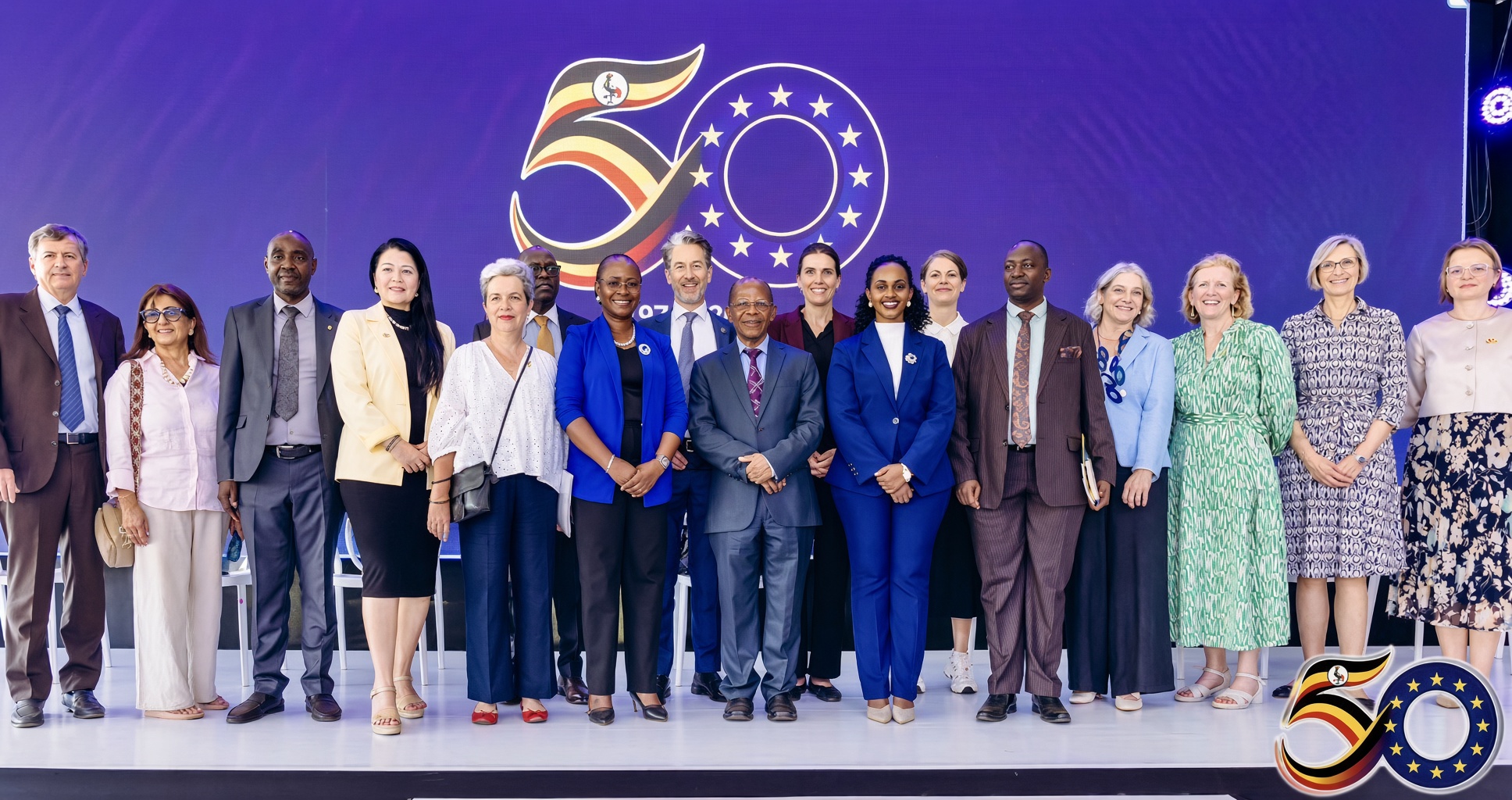
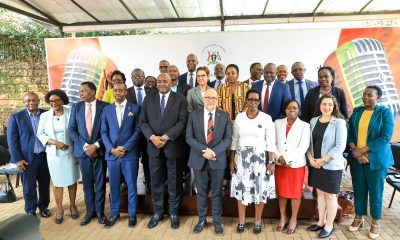
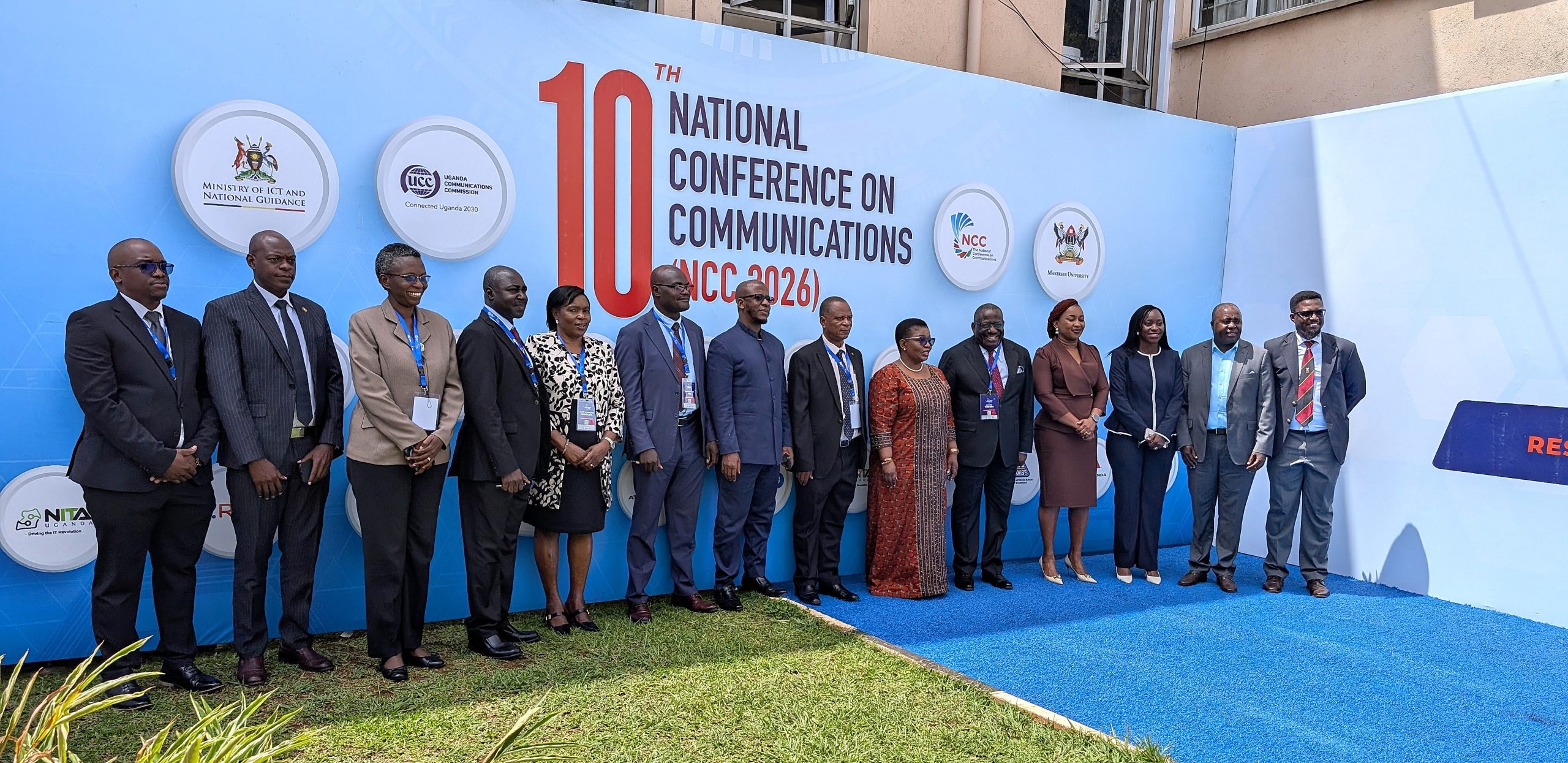
Guests and stakeholders who witnessed the launch of Makerere University’s ODeL Strategic Plan and the commissioning of the ODeL building pose for a commemorative photo, March 24th, 2025 at CEDAT.
Prof. Alinaitwe also commended the Makerere University Council for approving the allocation of space and committing to maintain the building and systems once operational. He recognized the dedication of the project implementation team, which includes Dr. Venny Nakazibwe(Co‑PI), Prof. Paul Muyinda, Dr. Godfrey Mayende, Mr. Samuel Mugabi, Mr. Alex Mwebaze, Dr. Kenneth Ssemwogerere, and Dr. Lydia Mazzi Ndandiko, for their tireless efforts in managing the project. He further acknowledged KOICA Country Director Ms. Jihee Ahn for expanding the scope of the project beyond the College of Engineering, Design, Art and Technology (CEDAT) to encompass
Written by Musinguzi Harriet, Principal Communication Officer, College of Engineering, Design, Art and Technology.