Connect with us

General

Call for Applications: Government Sponsorship -Diploma Holders 2021/2022 Academic Year

Published

on

The Academic Registrar, Makerere University invites applications from Diploma Holders only for admission under the Government Sponsorship Scheme (not exceeding 5% of the intake capacity) to the University Degree Programmes for the 2021/2022 Academic year listed below.  

Each applicant should possess at least a Credit or Second Class or equivalent Diploma in a relevant field from a recognised Institution plus a Uganda Certificate of Education (UCE) with at least 5 Passes (or its equivalent) and a Uganda Advanced Certificate of Education (UACE) with at least One Principal Pass and Two Subsidiary Passes obtained at the same sitting (or its equivalent) . 

A non refundable application fee of Shs.50,000/= (Fifty thousand shillings only) plus the Bank Charge using a Zee pay reference number should be paid to any  bank used by URA before submitting a system generated application form to the Admissions Office, Room 315 Level 3, in the Senate Building, Makerere University.

Certified copies of Diploma Transcripts (not photocopies of certified copies) from the awarding Institutions must be attached to the application forms.   Incomplete application forms shall not be processed.   Details of the Diplomas required for each programme can be viewed on Undergraduate Admissions Notice Board on Level 3, Senate Building, Makerere University and the University website – www.mak.ac.ug

NB:     Candidates will be responsible for verification of their academic documents from the awarding Institutions after admission.

Each applicant should also attach a copy of the Birth Certificate to the application form.

The closing date for returning the system generated application forms to the University is Friday 31st May 2021.

Candidates are warned against submitting forged academic documents as this will lead to automatic cancellation of admission, revocation of award where applicable and prosecution in the Courts of Law.

Note that:     (i)       Candidates whose Ordinary and Advanced level results are of Grades “Y”, “ Z” “7” and “9” need not apply because they are not eligible for admission, and;

(ii)      Candidates who possess 3rd Class or Pass Diplomas need not apply.

COLLEGE OF HEALTH SCIENCES (CHS)

CODE             PROGRAMME

MAM              Bachelor of Medicine and Bachelor of Surgery

BDS               Bachelor of Dental Surgery

PHA               Bachelor of Pharmacy

BMR               Bachelor of Science in Medical Radiography

BEH               Bachelor of Environmental Health Science

BSB                Bachelor of Biomedical Sciences

BBI                Bachelor of Science in Biomedical Engineering

BYT                Bachelor of Cytotechnology

NUR               Bachelor of Nursing Science

BSL                Bachelor of Science in Speech and Language Therapy

BPT                Bachelor of Optometry

COLLEGE OF AGRICULTURAL AND ENVIRONMENTAL SCIENCES (CAES)

AGR               Bachelor of Science in Agriculture

FST                Bachelor of Science in Food Science and Technology

AGE               Bachelor of Science in Agricultural Engineering

AGM               Bachelor of Agribusiness Management

BAR               Bachelor of Agricultural and Rural Innovation

HUN               Bachelor of Science in Human Nutrition

BOF                Bachelor of Science in Forestry

BTH               Bachelor of Science in Tourism and Hospitality Management

BBP                Bachelor of Science in Bio-Processing Engineering

BWE               Bachelor of Science in Water and Irrigation Engineering

COLLEGE OF ENGINEERING, DESIGN, ART AND TECHNOLOGY (CEDAT)

ARC               Bachelor of Architecture

LSG                Bachelor of Science in Land Surveying and Geomatics

ELE                Bachelor of Science in Electrical Engineering

CIV                Bachelor of Science in Civil Engineering

MEC               Bachelor of Science Mechanical Engineering

SQS               Bachelor of Science in Quantity Surveying

SLE                Bachelor of Science in Land Economics        

FIN                Bachelor of Industrial and Fine Arts

COLLEGE OF BUSINESS AND MANAGEMENT SCIENCES (COBAMS)

STA                Bachelor of Statistics

ECO               Bachelor of Arts in Economics

COE               Bachelor of Commerce

ADM               Bachelor of Business Administration

COLLEGE OF HUMANITIES AND SOCIAL SCIENCES (CHUSS)

MUS               Bachelor of Arts in Music

BDF                Bachelor of Arts in Drama and Film

SOW              Bachelor of Social Work

COLLEGE OF NATURAL SCIENCES (CONAS)

SCP                Bachelor of Science (Physical)

SCB                Bachelor of Science (Biological)

SEC                Bachelor of Science (Economics)

BIC                Bachelor of Science in Industrial Chemistry

BFS                Bachelor of Science in Fisheries and Aquaculture

BSP                Bachelor of Sports Science

BCB                Bachelor of Science in Conservation Biology

BPG               Bachelor of Science in Petroleum Geo-science and Production

BBT                Bachelor of Science in Biotechnology

COLLEGE OF COMPUTING AND INFORMATION SCIENCES (COCIS)

CSC               Bachelor of Science in Computer Science

BSW               Bachelor of Science in Software Engineering

IST                Bachelor of Information Systems and Technology

COLLEGE OF VETERINARY MEDICINE, ANIMAL RESOURCES & BIOSECURITY (COVAB)

VET                Bachelor of Veterinary Medicine

MLT               Bachelor of Biomedical Laboratory Technology

BAP                Bachelor of Animal Production Technology and Management

SCHOOL OF LAW (SOL)

LAW               Bachelor of Laws

NB:     All applicants for Bachelor of Laws will be required to sit and pass the Pre-entry examinations set by Makerere University.  The advert for Pre-Entry exams will come out in July 2021.

MAKERERE UNIVERSITY BUSINESS SCHOOL (MUBS)

COM               Bachelor of Commerce

BBD               Bachelor of Business Administration

BIB                Bachelor of International Business

BLH                Bachelor of Leisure and Hospitality Management

BES                Bachelor of Entrepreneurship & Small Business Management

BBC                Bachelor of Business Computing

BIM                Bachelor of Office and Information Management

PSM               Bachelor of Procurement and Supply Chain Management

Further details including requirements for each course can be accessed from the documents below:

1.        MAKERERE UNIVERSITY ONLINE APPLICATION PORTAL USER GUIDE

  1. Applicants should access the Institution’s Admissions URL https://admissions.mak.ac.ug
  2. Signup using full name, e-mail and Mobile No.  Please note that your name must be similar to the one on your supporting academic documents for your application to be considered valid.  If you changed your names please go to Senate Building Office 611 with an affidavit and gazette supporting the name change.
  3. A password will be sent to both your e-mail and mobile number.
  4. The system will prompt you to change the password to the one you can easily remember.
  5. To fill a form, the applicant clicks on the “APPLY NOW” button displayed on the running scheme.
  6. Obtain a payment advice slip by clicking on “Pay for Form” button
  7. Make a payment of a mandatory and non-refundable application fees of Ugx.50,000= (fifty thousand shillings only) at any of the Banks used by Uganda Revenue Authority (URA).
  8. Print the filled form (system generated) and attach certified copies of your Diploma transcripts, certificates, a passport size photograph and bank slips and submit to Office 315  level 3 Senate Building after payment of application fees.
  9. The application is only complete after paying a the application fees.

 2. WARNING

  •      Applicants are strongly warned against presenting forged or other people’s academic documents to support their applications for admission.  The consequences, if discovered, are very grave indeed.
  •      Do not buy any other documents not originating from the Academic Registrar’s Office.  Those who buy them do so at their own risk.
  •      The Academic Registrar has not appointed any agents to act on his behalf to solicit for additional funds other than the application fee stated above.

Elias Tuhereze

General

Makerere University and World Bank Sign Partnership to Strengthen Environmental and Social Sustainability Capacity

Published

on

A group photo of representatives from various partners at the MOU signing. Signing MoU with International Development Association (IDA), World Bank Group, establishing a strategic partnership aimed at strengthening environmental and social sustainability systems in Uganda and the wider East African region, 5th March 2026, Main Building, Makerere University, Kampala Uganda, East Africa.

On 5th March 2026, Makerere University signed a Memorandum of Understanding (MoU) with the International Development Association (IDA), the financing arm of the World Bank Group, establishing a strategic partnership aimed at strengthening environmental and social sustainability systems in Uganda and the wider East African region.

The collaboration brings together Makerere University through the College of Agricultural and Environmental Sciences (CAES) and the College of Humanities and Social Sciences (CHUSS) and the World Bank to jointly advance training, research, and policy advisory in environmental and social sustainability.

The three-year agreement provides a framework for cooperation focused on building national capacity to manage environmental and social risks associated with large-scale development investments.

Advancing Sustainable Development through Knowledge Partnerships

The partnership will be anchored in the Environment and Social Sustainability Centre (ESSC) at Makerere University, a national hub established to promote applied research, policy engagement, and professional training in environmental and social governance.

Through the Centre, the two institutions will collaborate to strengthen Uganda’s ability to plan and implement development projects in ways that safeguard communities and the environment.

Speaking during the signing ceremony, Ms. Francisca Ayodeji (Ayo) Akala, the World Bank Country Manager emphasised that the collaboration reflects a shared commitment to strengthening systems that support sustainable growth.

Ms. Francisca Ayodeji (Ayo) Akala giving her remarks during the MOU signing. Signing MoU with International Development Association (IDA), World Bank Group, establishing a strategic partnership aimed at strengthening environmental and social sustainability systems in Uganda and the wider East African region, 5th March 2026, Main Building, Makerere University, Kampala Uganda, East Africa.
Ms. Francisca Ayodeji (Ayo) Akala giving her remarks during the MOU signing.

“This partnership with Makerere University is an important step in strengthening Uganda’s systems for environmental and social sustainability. By working through the Environment and Social Sustainability Centre, we aim to build the capacity of professionals across government, the private sector, and development institutions to better manage environmental and social risks and deliver investments that promote sustainable growth while protecting people and the environment.” Ms. Francisca Ayodeji (Ayo) Akala, World Bank Country Manager, Uganda, noted.

The partnership will support training, research, and policy advisory activities through the ESSC, helping Uganda pursue a development trajectory that promotes economic growth while protecting people and the environment.

Building National Capacity for Environmental and Social Risk Management

Uganda’s development agenda under the Fourth National Development Plan prioritises large-scale investments in infrastructure, agro-industrialisation, energy, and science and technology. However, such investments require strong environmental and social risk management systems to ensure sustainable outcomes.

The new partnership, therefore, focuses on building a skilled workforce capable of applying international best practices in environmental and social governance.

Under the MoU, Makerere University will design and deliver demand-driven short-course training programs targeting public sector officials, development practitioners, financial institutions, civil society organisations, and private sector actors implementing major projects.

Seven certificate-level short courses have already been developed and approved across multiple colleges at the University. These courses cover areas such as environmental and social risk management, climate risk assessment, construction health and safety, and integrating environmental and social considerations into investment cycles.

Prof. Barnabas Nawangwe and Ms. Francisca Ayodeji (Ayo) Akala after signing the MOU. Signing MoU with International Development Association (IDA), World Bank Group, establishing a strategic partnership aimed at strengthening environmental and social sustainability systems in Uganda and the wider East African region, 5th March 2026, Main Building, Makerere University, Kampala Uganda, East Africa.
Prof. Barnabas Nawangwe and Ms. Francisca Ayodeji (Ayo) Akala after signing the MOU.

Makerere Universityis proud to partner with the World Bank in strengthening Uganda’s capacity to manage environmental and social risks in development investments. Through the Environment and Social Sustainability Centre, we have already developed and approved seven certificate-level short courses across multiple colleges, designed to equip professionals in government, the private sector, and development institutions with practical skills to plan and implement sustainable projects. This collaboration reflects Makerere’s commitment to providing knowledge-driven solutions that support Uganda’s development while safeguarding communities and the environment.” Prof. Barnabas Nawangwe noted.

Strengthening Collaboration between Academia and Development Partners

As part of the agreement, the World Bank will support the development and delivery of the training programs, including conducting Training of Trainers (ToT) on the Bank’s Environment and Social Standards and international best practices.

The Bank will also leverage its convening power to encourage participation from development partners, government institutions, and project implementers, while supporting impact monitoring of trained professionals to document improvements in project performance and job creation.

The collaboration will further promote professional networking, policy dialogue, knowledge exchange, and the development of knowledge hubs containing environmental and social tools, databases, and resources for practitioners.

Positioning Makerere as a Regional Knowledge Hub

Through this partnership, Makerere University seeks to position the Environment and Social Sustainability Centre as a leading knowledge hub for environmental and social governance in Africa.

By combining academic expertise with the World Bank’s global experience in development financing and technical assistance, the initiative is expected to strengthen the institutional capacity required to deliver sustainable and climate-resilient investments in Uganda.

The partnership also aligns with the World Bank’s broader commitment to supporting Uganda’s development agenda and strengthening country systems for environmental and social sustainability.

Together, the two institutions aim to equip professionals across government, the private sector, and development organizations with the skills required to ensure that Uganda’s development pathway remains inclusive, responsible, and environmentally sustainable.

Caroline Kainomugisha is the Communications Officer, Advancement Office, Makerere University

Caroline Kainomugisha

Continue Reading

General

Makerere University Explores Expanded Partnership with Stanbic Bank to Advance Innovation and Investment

Published

on

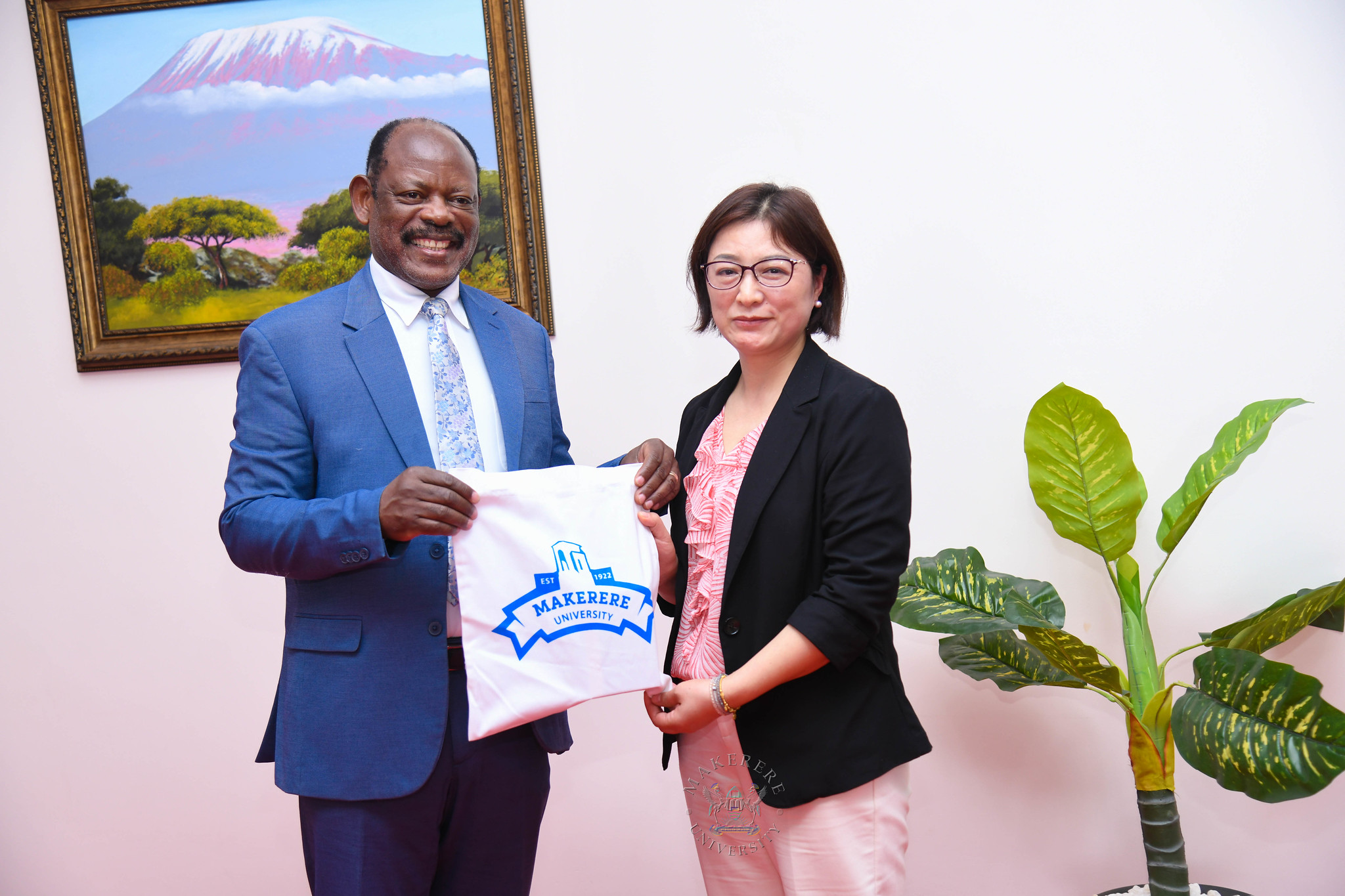
A photo showing the meeting delegation from Stanbic Bank Uganda and Makerere University. Vice Chancellor, Makerere University, Prof. Barnabas Nawangwe courtesy visit to Stanbic Bank Uganda’s Chief Executive Officer, Mr Mumba Kalifungwa, 5th March 2026, Kampala Uganda, East Africa.

On 5th March 2025, the Vice Chancellor, Makerere University, Prof. Barnabas Nawangwe, paid a courtesy visit to Stanbic Bank Uganda’s Chief Executive Officer, Mr Mumba Kalifungwa. The purpose of the visit was to explore areas for further collaboration with Stanbic Bank Uganda to strengthen innovation, entrepreneurship, and strategic investment.

The engagement reaffirmed the long-standing relationship between the two institutions and provided an opportunity to explore how academia and the financial sector can work together to unlock opportunities for students, staff, alumni, and the broader Ugandan community.

Discussions during the meeting focused on innovation and entrepreneurship support, student development programs, infrastructure partnerships, and investment opportunities linked to the University’s strategic development agenda.

Driving Innovation and Youth Entrepreneurship

During the engagement, the Vice Chancellor highlighted Makerere’s continued efforts to position itself as a research-led and innovation-driven university, emphasising the importance of partnerships with industry in translating academic research and ideas into practical solutions.

He underscored the need to empower young people with the skills and support required to create enterprises and generate employment opportunities, given Uganda’s fast-growing population, particularly the mushrooming young population. According to UBOS, by 2024, the young population was approximately 22.8 million persons out of a total population of 45.9 million people. 

Prof. Barnabas Nawangwe giving his remark during the meeting. Vice Chancellor, Makerere University, Prof. Barnabas Nawangwe courtesy visit to Stanbic Bank Uganda’s Chief Executive Officer, Mr Mumba Kalifungwa, 5th March 2026, Kampala Uganda, East Africa.
Prof. Barnabas Nawangwe giving his remark during the meeting.

“If we do not support young people to innovate and create enterprises, we risk facing serious economic and social challenges. The employment of the future will increasingly be created by young people themselves,” he noted.

Among the proposals discussed was the possibility of establishing a Stanbic-supported innovation competition, aimed at stimulating entrepreneurship and providing a platform for students and young innovators to transform ideas into viable businesses.

Such an initiative could build on existing innovation and incubation programs run at Makerere and Stanbic Bank while strengthening collaboration between academia and the private sector in supporting enterprise development.

Expanding Strategic Collaboration

Speaking during the meeting, Mr Mumba Kalifungwa, the Chief Executive Officer of Stanbic Bank Uganda reaffirmed the bank’s commitment to strengthening its partnership with Makerere University.

He noted that while the bank has long provided financial services to the university and its staff, there is a significant opportunity to deepen collaboration in areas that generate broader societal impact.

Mr. Mumba Kalifungwa addressing the meeting. Vice Chancellor, Makerere University, Prof. Barnabas Nawangwe courtesy visit to Stanbic Bank Uganda’s Chief Executive Officer, Mr Mumba Kalifungwa, 5th March 2026, Kampala Uganda, East Africa.
Mr. Mumba Kalifungwa addressing the meeting.

“As an institution, we are interested in partnerships that go beyond financial services to create meaningful impact in society through the Stanbic Bank positive impact agenda. Education is one of the most important sectors through which we can drive that impact,” he noted.

The CEO also highlighted Stanbic Bank’s National Schools Championship program, which promotes innovation among secondary school students across Uganda, noting that a similar approach could potentially inspire initiatives at the university level.

Exploring Investment and Infrastructure Opportunities

The meeting also explored opportunities for collaboration in investment and commercialisation initiatives linked to university infrastructure and land assets.

University representatives shared insights into ongoing efforts to explore public–private partnership (PPP) models for strategic investments aimed at improving infrastructure and unlocking value from underutilised university assets.

Potential development opportunities discussed include projects related to hospitality facilities, commercial spaces, and other revenue-generating infrastructure within and around the university. Such initiatives could provide sustainable revenue streams for the university while creating opportunities for private sector participation in campus development.

Supporting Students, Staff, and Alumni

Additional discussions focused on expanding programs that benefit the wider Makerere community. These include financial literacy initiatives for students, expanded internship and graduate training opportunities, and collaborative programs to support student entrepreneurship and enterprise development.

The meeting also explored opportunities for collaboration in alumni engagement, leveraging Makerere’s extensive global alumni network to strengthen partnerships between the university and industry.

Programs aimed at improving financial preparedness and retirement planning for staff were also discussed, alongside potential housing and asset financing solutions tailored to the needs of university employees.

From the Left: Mr Awel Uwihanganye, Ms Hawa Kajumba and Ms Caroline Kainomugisha. Vice Chancellor, Makerere University, Prof. Barnabas Nawangwe courtesy visit to Stanbic Bank Uganda’s Chief Executive Officer, Mr Mumba Kalifungwa, 5th March 2026, Kampala Uganda, East Africa.
From the Left: Mr Awel Uwihanganye, Ms Hawa Kajumba and Ms Caroline Kainomugisha.

“Through this partnership, we are exploring opportunities that support the entire Makerere community, from financial literacy and entrepreneurship programs for students to internship pathways, alumni engagement, and financial preparedness initiatives for staff. These efforts will be anchored within the renewed collaboration framework between Makerere University and Stanbic Bank Uganda,” said Mr Awel Uwihanganye, Chief Advancement Officer.

The Chief Advancement Officer further noted that these initiatives are expected to be anchored within a renewed Memorandum of Understanding (MoU) between Makerere University and Stanbic Bank.

A Shared Vision for Impact

Prof. Barnabas Nawangwe gifting, Mr. Mumba Kalifungwa the University Centennial Coffee table booklet. Vice Chancellor, Makerere University, Prof. Barnabas Nawangwe courtesy visit to Stanbic Bank Uganda’s Chief Executive Officer, Mr Mumba Kalifungwa, 5th March 2026, Kampala Uganda, East Africa.
Prof. Barnabas Nawangwe gifting, Mr. Mumba Kalifungwa the University Centennial Coffee table booklet.

Both institutions expressed optimism about the potential of the partnership to contribute to national development by supporting innovation, enterprise creation, and the development of future leaders.

As Makerere University continues to strengthen its role as a leading research and innovation institution in Africa, partnerships with forward-looking institutions such as Stanbic Bank Uganda remain critical in advancing the university’s mission of generating knowledge, nurturing talent, and driving solutions that address national and global challenges.

Caroline Kainomugisha is the Communications Officer, Advancement Office, Makerere University

Caroline Kainomugisha

Continue Reading

General

Extension of Application Deadline for Diploma/Degree Holders 2026/2027

Published

on

A mid-morning shot of the Senate Building as seen from the Frank Kalimuzo Central Teaching Facility. Date taken: 18th May 2023. Makerere University, Kampala Uganda, East Africa.

The Academic Registrar, Makerere University informs all intending applicants for Private and Government Sponsorship for the 2026/2027 Academic Year that the deadline has been extended from 27th February, 2026 to Friday 13th March, 2026.

Applicants who have already applied need not apply.

For any additional information, refer to Announcements and requirements for Diploma/Degree holders Entry Scheme for Undergraduate programmes for 2026/2027 Academic Year, click the links below.

Privately Sponsored: https://news.mak.ac.ug/2026/03/advert-admissions-for-diploma-degree-holders-under-private-sponsorship-2026-27/

Government Sponsored: https://news.mak.ac.ug/2026/03/call-for-applications-diploma-holders-under-government-sponsorship-2026-2027/

Prof. Buyinza Mukadasi
ACADEMIC REGISTRAR

Mak Editor

Continue Reading

Trending