
General
Mak to partner with Belgium in agricultural production and vocation skills training

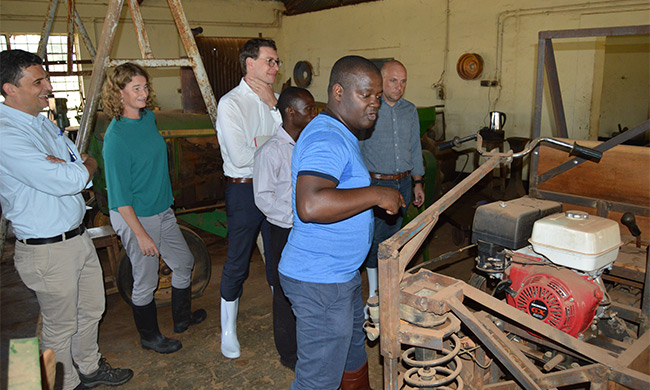
“In Uganda, agriculture is for livelihoods, but we would like to focus on Agriculture for production and agribusiness. I am glad that young people are developing an interest in agriculture. The young people are willing to train and acquire relevant skills in modern Agriculture,” said the First Secretary and Deputy Head of Cooperation at the Embassy of Belgium in Uganda, Mr. Alexandre Brecx.
Mr. Alexandre Brecx who was accompanied by two guests from the Embassy made the remarks during a visit to Makerere University Agricultural Research Institute (MUARIK) on Monday 13th May 2019.
The historic visit aimed at strengthening the relationship between Makerere University and Belgium, understanding the operations of MUARIK and exploring possible opportunities for partnership in the field of agriculture as well as vocational skills training.
During the interaction with Staff from Makerere University’s Department of Agricultural and Biosystems Engineering, MUARIK and Mak Public Relations Office, Mr. Alexandre Brecx revealed that the Government of Belgium will focus on agriculture and vocational skills training as the next 5-year country programme.
“In the next country programme, we would like to focus on agriculture. Uganda has a huge potential for agriculture. We would like to partner with Makerere University to provide an important platform for students, youths and farmers to embrace the latest technologies in agricultural production,” he said.
Mr. Alexandre commended Makerere University for championing vocational skills training in Uganda. “I recognize Makerere University for its unmeasured effort to provide hands-on skill to the youth and farmers prioritizing agriculture. We acknowledge the important research undertaken by the Institution to solve farmers’ problems and the great innovations done from Makerere University geared towards improving Uganda’s agricultural sector,” he said.
The Belgium Government has immensely invested in building capacity of Makerere University staff especially in the area of Food and Agricultural Engineering and other related science subjects. According to Mr. Alexandre Brecx, every year the Government of Belgium sponsors students and staff from Makerere University to pursue their studies (graduate, postgraduate and research programmes) in Universities in Belgium.
On behalf of Makerere University, Prof. Noble Banadda, the Head, Department of Agricultural and Biosystems Engineering and an alumnus of Katholieke Universiteit Leuven, Belgium acknowledged support from the Government of Belgium that has enabled staff from Ugandan Institutions of Higher Learning to upgrade academically. He recognized the tremendous support the Government of Belgium is extending to Uganda through ENABEL to improve the agricultural sector of Uganda. He looked forward to a fruitful partnership between Makerere University and the Embassy of Belgium to Uganda that will lead to knowledge transfer in Agricultural Engineering and technological Incubation.
“We have the leading agricultural college in the region. It is also well known in capacity building and hands-on skills however, we need more knowledge and skills on mechanization, irrigation, equipment maintenance, agricultural and food processing equipment fabrication and welding. I am aware that Belgium mastered the art of these skills and we hope that when a partnership is sealed, we shall learn from them,” said Prof. Banadda.
Led by Mr. Tweyambe Chrysestom- the Farm Manager at MUARIK, the delegation visited the Engineering workshop where machinery and other agricultural tools are fabricated. They also visited the feed processing unit, the soil mixing and sterilization unit, the dairy chain, the banana plantation and the goats breeding unit. Throughout the tour, visitors interacted with students from Ssese Farmers Institute; who are undertaking their internship training at MUARIK.
Makerere University Agricultural Institute Kabanyolo (MUARIK) is an arm of Makerere University that interfaces with the National Agricultural research system (NARS). Seated on 650 hectares of land, the institute is being managed as a multi-disciplinary facility for training, research, outreach, and production under the College of Agriculture and Environmental Sciences.
The Institute is located 19 kilometers North-West of Kampala off Gayaza Township on the Kampala-Zirobwe Road. It houses;
- The Center for Continuing Agricultural Education Centre (CAEC),
- A Biotechnology Lab renowned globally for undertaking continental plant breeding programmes
- The Makerere University Regional Centre for Crop Improvement (MaRCCI) focused on an African continent free from hunger and malnutrition through the provision of improved varieties of food crops in Africa
- The Graduate Training and Research Laboratory, with state-of-the-art facilities aimed at enhancing the quality of analysis of practical field work for graduate students
- The Modern Poultry Unit (KOICA) comprising three (3) sub-units with a capacity of five thousand (5000) birds each, a brooder house, a drying shed for dehydrating chicken manure and a microbial facility to grow microorganisms to be used in the fermentation of chicken manure
- The Coffee Value Addition Centre (CURAD) focused on agri-business incubation to create employment opportunities for students.
- The Dairy Value Chain Unit and the Feed Mill
Article by Mak Public Relations Office



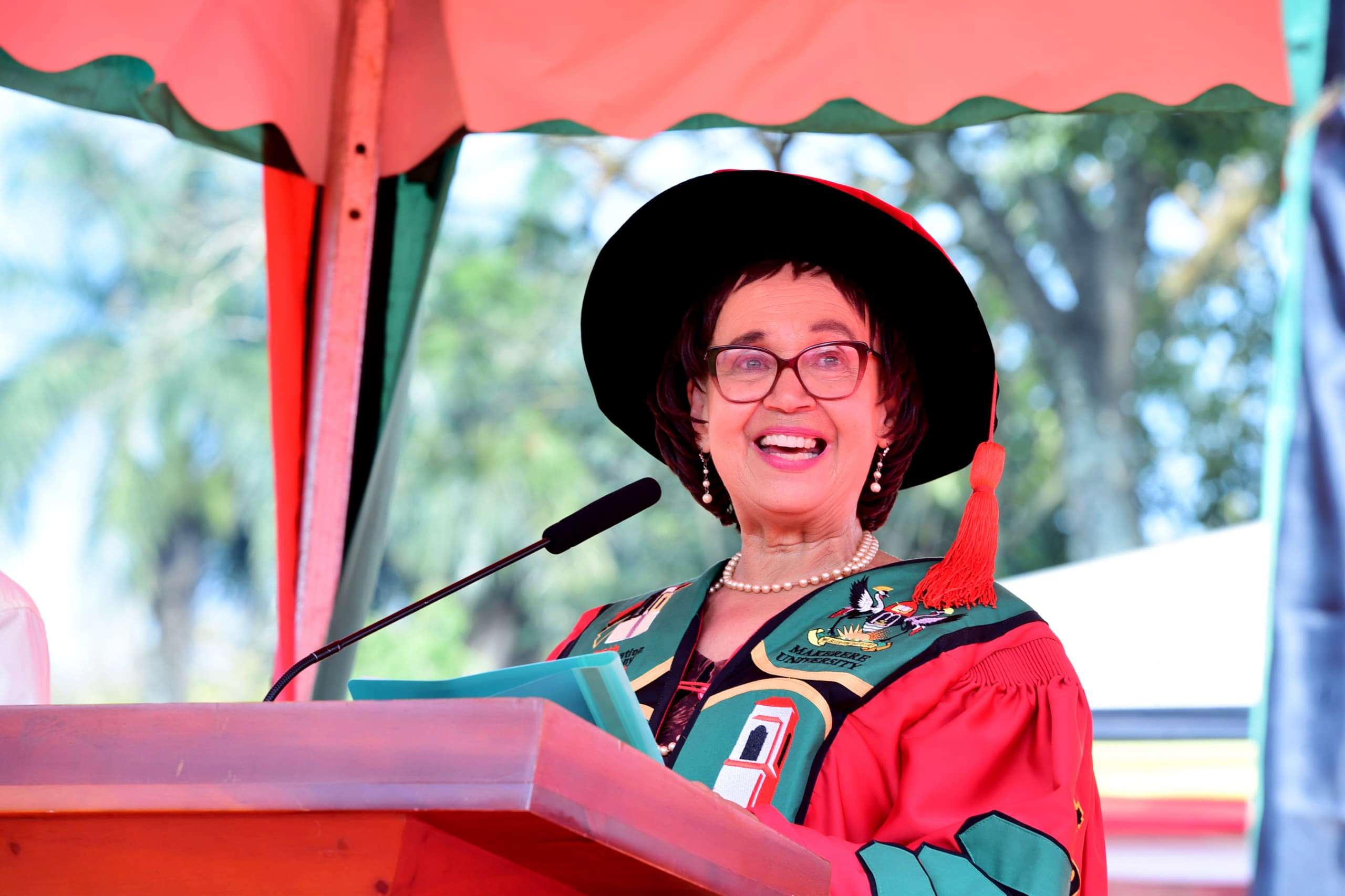
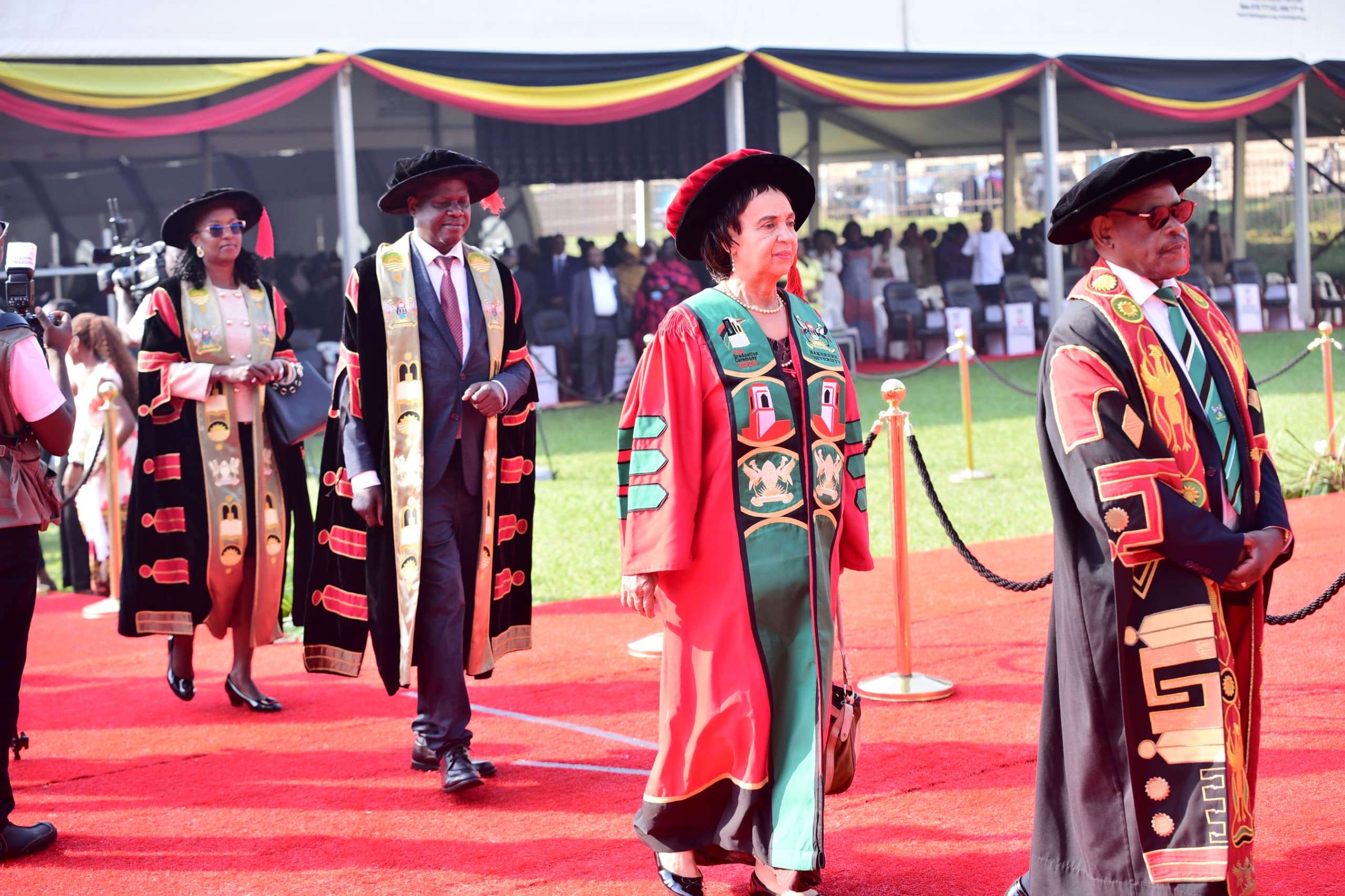
The Board Chairperson of the Makerere University Endowment Fund (MakEF), Dr. Margaret Blick Kigozi, has urged graduands in Health and Life Sciences to uphold professional ethics and serve humanity with diligence and compassion.
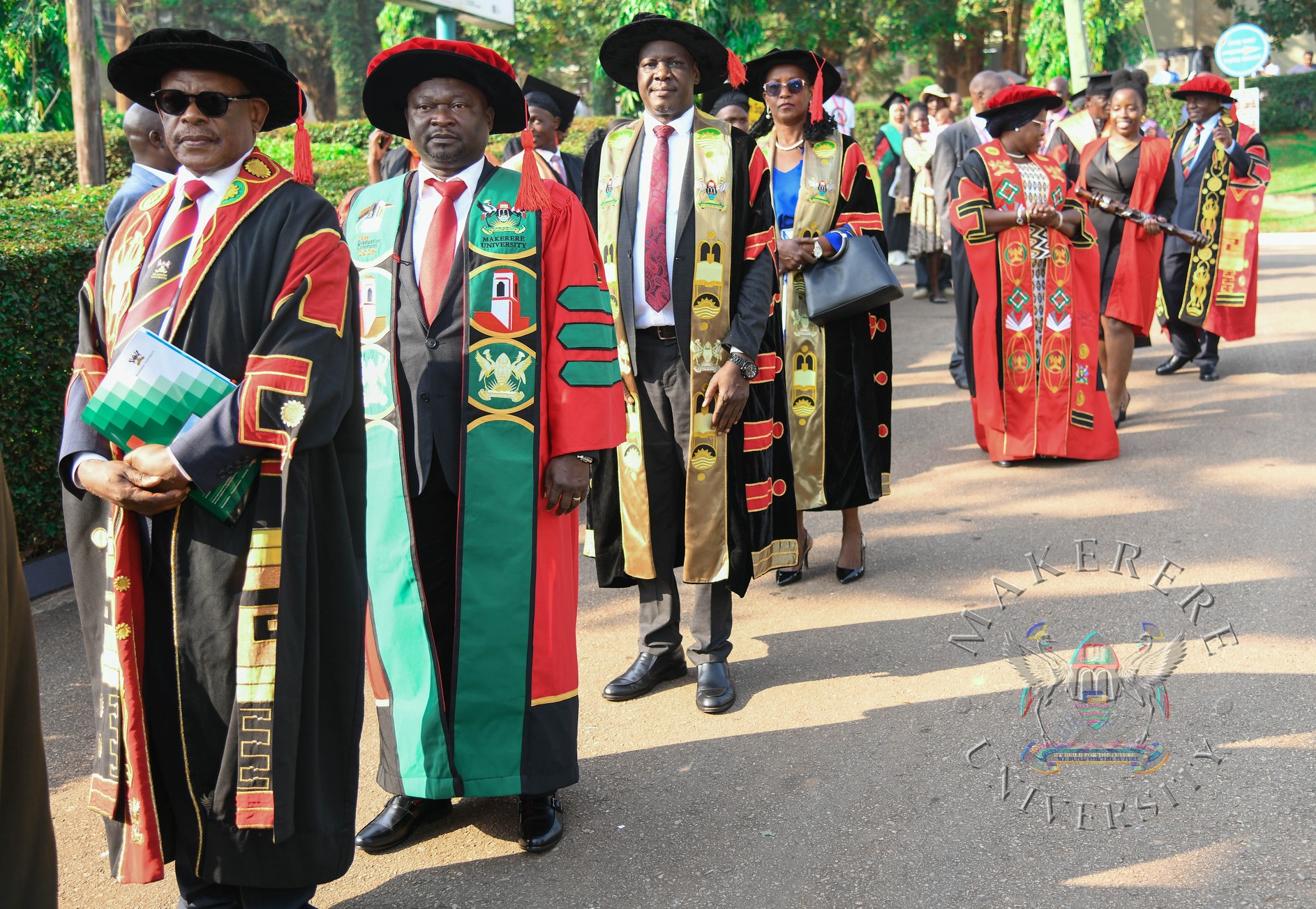
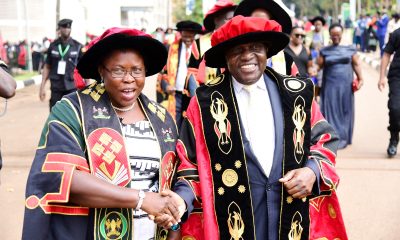
Her appeal came during the passing out of graduates from the College of Natural Sciences (CoNAS), the College of Veterinary Medicine, Animal Resources and Bio-Security (CoVAB), the College of Health Sciences (CHS) and the School of Public Health (SPH) on Day Two of the 76th Graduation Ceremony of Makerere University.
“Class of 2026, you are now part of the Makerere legacy. Wherever you go clinics, laboratories, farms, boardrooms, or classrooms, you carry this institution with you. Serve your patients with skill and compassion. Care for animals and communities responsibly. Question boldly and keep learning,” Dr Kigozi, said.
Delivering the commencement address, Dr. Kigozi lauded the graduates for their dedication to careers that directly impact lives and communities. She encouraged them to use their knowledge generously and exercise their power gently.
“Your education has trained you to ask better questions. Your humanity must guide the answers. Never forget that behind every chart, every case, every animal, every experiment, there is life. And life deserves care, patience, and dignity. Give every person you come in contact with care, patience and dignity,” Dr Kigozi, noted.
As the graduates embark on their professional journeys, Dr. Kigozi emphasized the importance of cultivating basic business acumen and financial literacy to ensure sustainability in their work.
“You do not need to become accountants but you must be able to read the essentials: understand simple financial statements, budgets and key metrics so you can judge whether a clinic, lab, or program is sustainable. You are encouraged to start your business. There are numerous investment opportunities in your areas of training. You can provide services to our people and create jobs,” Dr Kigozi, said.
She shared candidly how, when she first stepped into leadership, she realised she did not understand balance sheets or budgets well enough. So, she returned to Makerere for short courses to strengthen herself.
“A well-run Hospital, clinic or lab delivers better outcomes, attracts staff, and secures funding. Business savvy is not only about profit, it’s about sustainability and the freedom to serve ethically and effectively. Carry clinical skill with business sense so your work endures and grows,” Dr. Kigozi, noted.
Quoting renowned writer and producer Shonda Rhimes, creator of Grey’s Anatomy, who once reflected that succeeding in one area of life can sometimes mean falling short in another, Dr. Kigozi encouraged women graduates to intentionally balance professional ambition with family responsibilities.
“When one area thrives, another is often under strain. When Navio was graduating from school I had to manage the Presidential Investor Round Table on the same day as Executive Director Uganda Investment Authority. I chose my job and delegated his siblings to attend Navios graduation. I learnt from this. I choose family always after that thing you achieve once and keep forever,” Dr Kigozi, said.
In his speech, the Prof Barnabas Nawangwe, the Vice Chancellor, informed the congregation that Makerere’s ranking on all university ranking platforms has remained stable, placing Makerere among the top 10 African universities and within the top 4.5% globally.
“In the Times Higher Education global ranking, Makerere University made a formidable jump from the 1200-1500 bracket to the 800-1000 bracket. This was no mean achievement and I congratulate all members of the Makerere Community on this stellar performance,” Prof Nawangwe, said.
-
 Humanities & Social Sciences5 days ago
Meet Najjuka Whitney, The Girl Who Missed Law and Found Her Voice
-
 Health1 week ago
Uganda has until 2030 to end Open Defecation as Ntaro’s PhD Examines Kabale’s Progress
-
 Agriculture & Environment1 week ago
Uganda Martyrs Namugongo Students Turn Organic Waste into Soap in an Innovative School Project on Sustainable Waste Management
-
 General4 days ago
76th Graduation Highlights
-
 General1 week ago
Mastercard Foundation Scholars embrace and honour their rich cultural diversity