
General
MURBS Declares 34% Fund Value Growth at 7th AGM

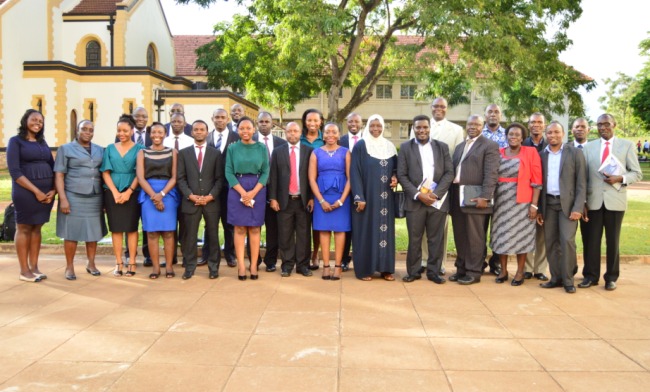
Financial forecasts at the 6th Makerere University Retirement Benefits Scheme (MURBS) Annual General Meeting (AGM) held in October 2016 were noncommittal especially in the wake of the February 2016 presidential election in Uganda and the then upcoming Kenyan General Election in August 2017. Trustees in their remarks then braced attendees for the worst performance, especially since the East African equity markets, which hold a substantial amount of the Scheme’s investments, are dominated by foreign players. These closely monitor the regional political climate and are known to withdraw their investments whenever any political event that will likely affect the markets looms. The situation was not helped by failing commercial banks in the region and conflict in South Sudan.
Fortunately, whereas the markets behaved as predicted, MURBS’ fund value grew by 34% from UGX 78.2billion as at 30th June 2016 to UGX 104.5billion as at 30th June 2017, thanks largely to retiree contributions and recovery of UGX 10billion as partial settlement of outstanding retirement benefits both from Makerere University. Addressing Members at the 7th AGM, held on Thursday 26th October 2017, the Chairperson-elect, Board of Trustees Mr. Wilber Grace Naigambi also noted that the Scheme made net returns on investments worth UGX 12.5billion compared to UGX 3.5billion the previous year. “This performance was driven mainly by a positive performance in fixed income owing to high interest rates prevailing on government securities” explained the Chairperson. Government securities in the form of treasury bonds and bills account for approximately 72% of the Scheme’s total investments.

The Scheme’s membership also grew from 3,301 members the previous financial year to 3,763 members. The Chairperson in his remarks introduced the MURBS Departmental Ambassadors Programme, aimed at enhancing the Scheme’s governance by directly involving members who are trained and exposed to the operations of MURBS. “These volunteers will assist with clarifying informal queries from members at departmental level and they will form a team from which potential trustees can be identified and mentored” said Mr. Naigambi.
MURBS emerged winner of the Retirement Benefits Schemes category of the Financial Reporting (FiRe) Award 2016. At the 7th AGM, the Chairperson Mr. Naigambi presented the FiRe Award 2016 to members present. MURBS remains the top institution in this category thanks largely to the work by the Audit Committee headed by Mr. David Ssenoga. Mr. Ssenoga informed the AGM that a new format of the Auditor’s report has since been adopted and the Scheme reasonably complied with new financial reporting guidelines as issued by the Uganda Retirement Benefits Regulatory Authority (URBRA). He further noted that the Scheme duly complies with all Income Tax Requirements and reassured the AGM that MURBS maintains a meticulous track record of all owed to it by the sponsor Makerere University.

The 7th MURBS AGM held in the main hall was a well-attended affair with representation from both University Leadership and staff associations. The days emcee, Mr. Louis Kakinda often used the breaks in between sessions to introduce key members of the University leadership and staff associations. In attendance were; Mr. Bruce Kabaasa-The Chairperson Appointments Board, who represented Eng. Dr. Charles Wana-Etyem, the Chairperson University Council, Ag. Director of Human Resources-Mrs. Dorothy Senoga Zake, Deputy Dean of Students-Mr. Stephen Kateega, members of Council and staff.
Earlier, the Secretary to the Board of Trustees-Dr. John Kitayimbwa had introduced the new Trustees as appointed on 1st April 2017. These are; The Chairperson-Mr. Wilber Grace Naigambi, Mr. John Peter Okello and Mrs. Dorothy Nannozi Kabanda. In addition to Dr. Kitayimbwa who was reappointed as Secretary to the Board, Mr. William Ndoleriire also returned as one of five Trustees of the Board. Mr. David Ssenoga and Dr. Saul Hannington Nsubuga by virtue of their being Chairperson and Member of the Audit Committee respectively are in addition co-opted Members of the Board.

In his address to the AGM and in response to some of the questions raised by members especially regarding the safety of their investments in seemingly unpredictable equity markets, Dr. Kitayimbwa reassured the gathering that the Scheme’s fund managers; Sanlam Investments East Africa and GenAfrica Asset Managers, are some of the best in the region and keenly follow market trends to return the best value on investment.
“All investments made by the fund managers on behalf of MURBS are informed by an actuary’s inventory” said Dr. Kitayimbwa. “Our investments are also guided by an investment horizon; which in our case, based on the average age of our membership, is 15years. We have to ensure that whereas we seeking the best investments to grow the fund value, we maintain a certain level of liquidity to pay members who are eligible to leave the scheme” he further explained.

Responding to members who also felt that it was unfair to struggle with constantly rising interest rates on loans taken from commercial banks and yet they could borrow against their benefits portfolio, Dr. Kitayimbwa shared that MURBS is regulated by URBRA which has strict conditions under which a member may access their benefits, the key being upon retirement. He however reassured the AGM that URBRA is fronting the Retirement Benefits Sector Liberalisation Bill, which will hopefully provide for more flexible ways of accessing benefits to support mortgages, foot treatment costs and other needs. He further restored confidence in the members that there benefits are protected by law and in the unforeseeable event that the Scheme’s bankers were to go under, the regulator would first and foremost ensure that retirement benefits are secured before any other depositors are considered for compensation.
To reiterate Dr. Kitayimbwa’s point, Prof. Jean Barya-MURBS’ Senior Legal Counsel advised Scheme members to take keen interest and actively participate in the debates around the Retirement Benefits Sector Liberalisation Bill and the National Health Insurance Scheme bill. “Education and Health are two of the largest expenditures that we incur in life. You therefore need to be interested in these bills because we shall all benefit if they are passed in a proper manner.”

In closing the 7th AGM, the Chairperson Mr. Naigambi thanked all members for sparing time to attend the event in large numbers and urged them to further study the report they had received as well as all information on the MURBS website. “I encourage you to embrace the idea of additional voluntary contributions (AVC) in addition to the 5% by Makerere to further boost your benefits at the time of retirement” he concluded.
Article by Public Relations Office



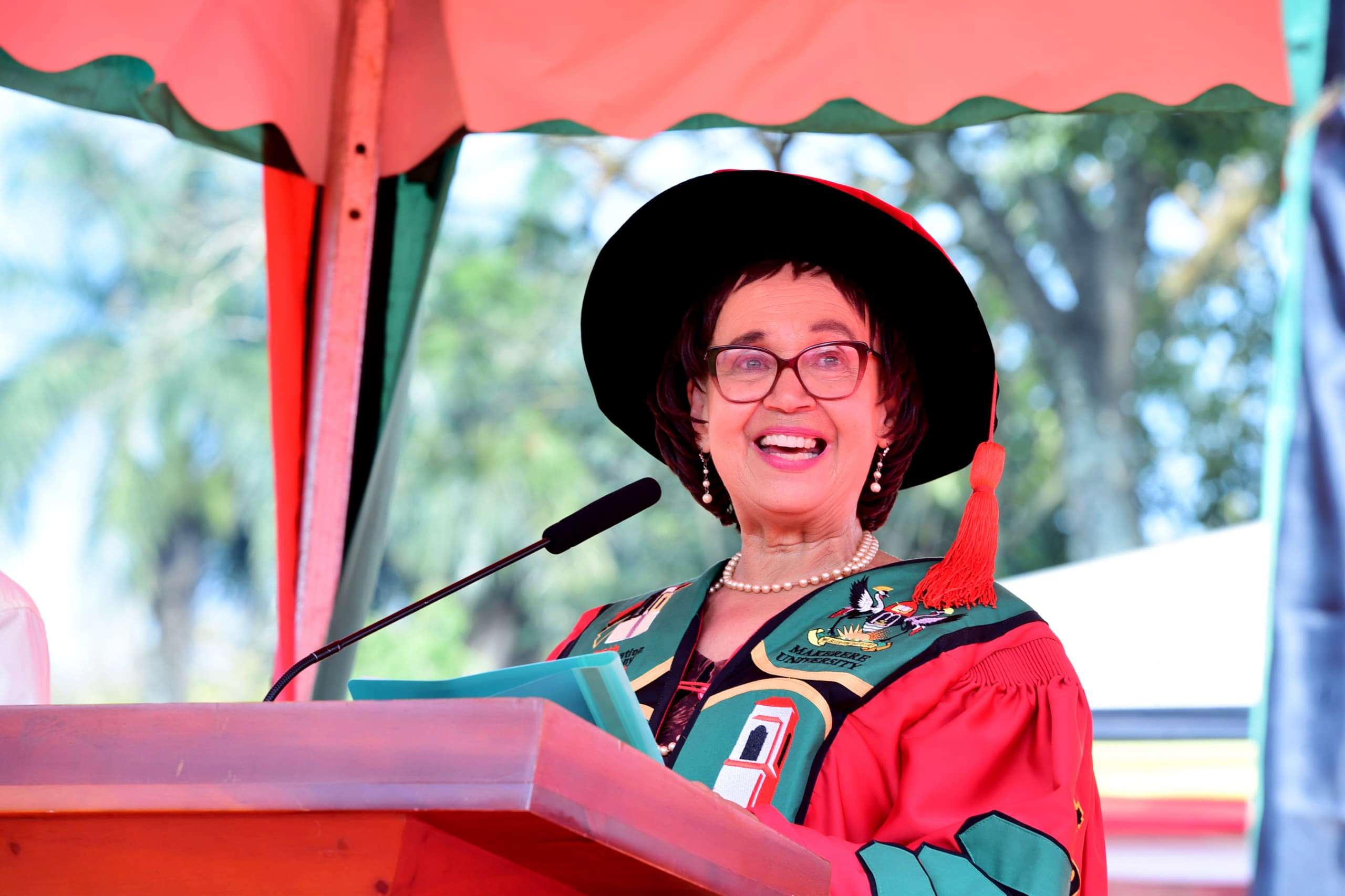
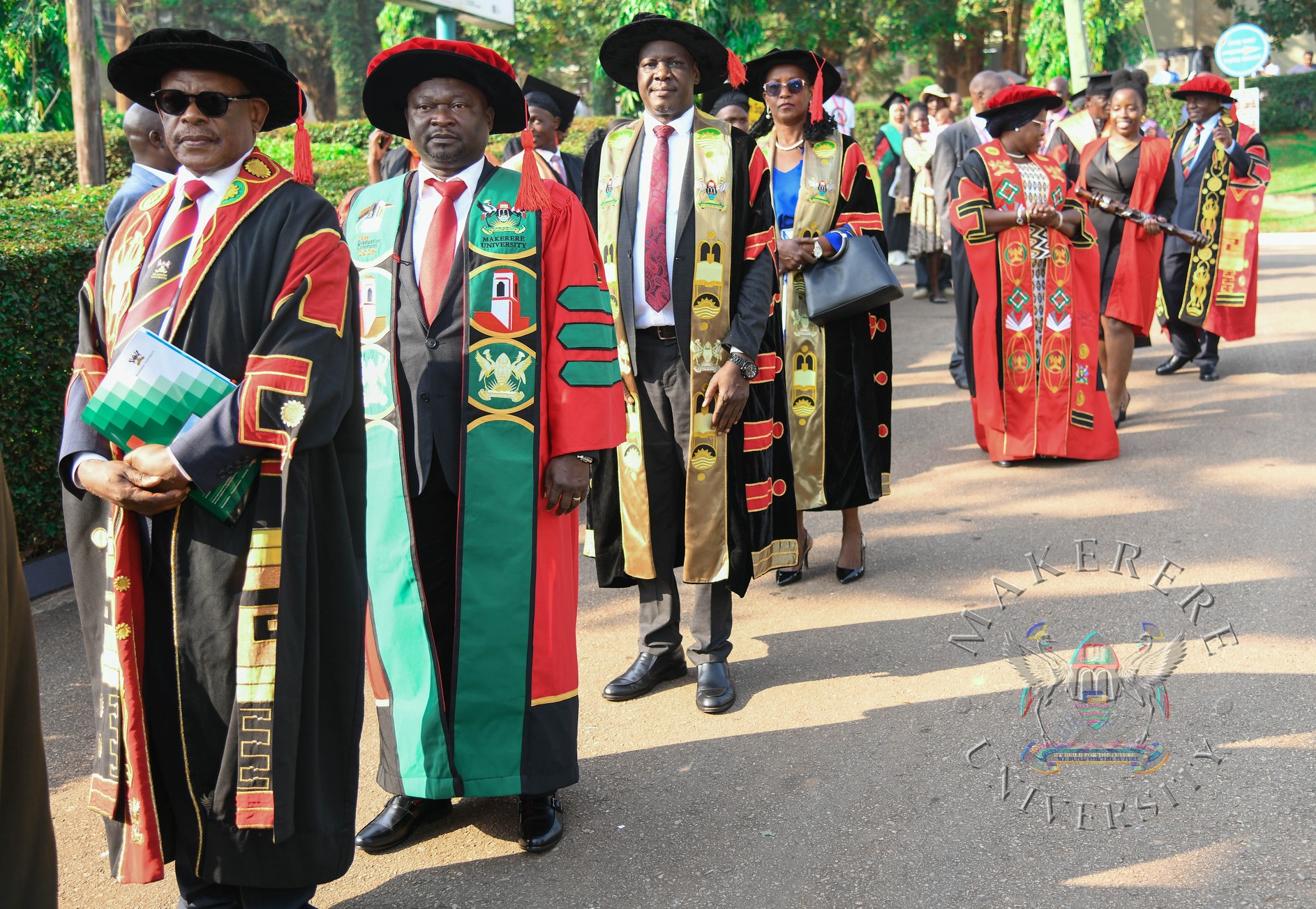
The Board Chairperson of the Makerere University Endowment Fund (MakEF), Dr. Margaret Blick Kigozi, has urged graduands in Health and Life Sciences to uphold professional ethics and serve humanity with diligence and compassion.
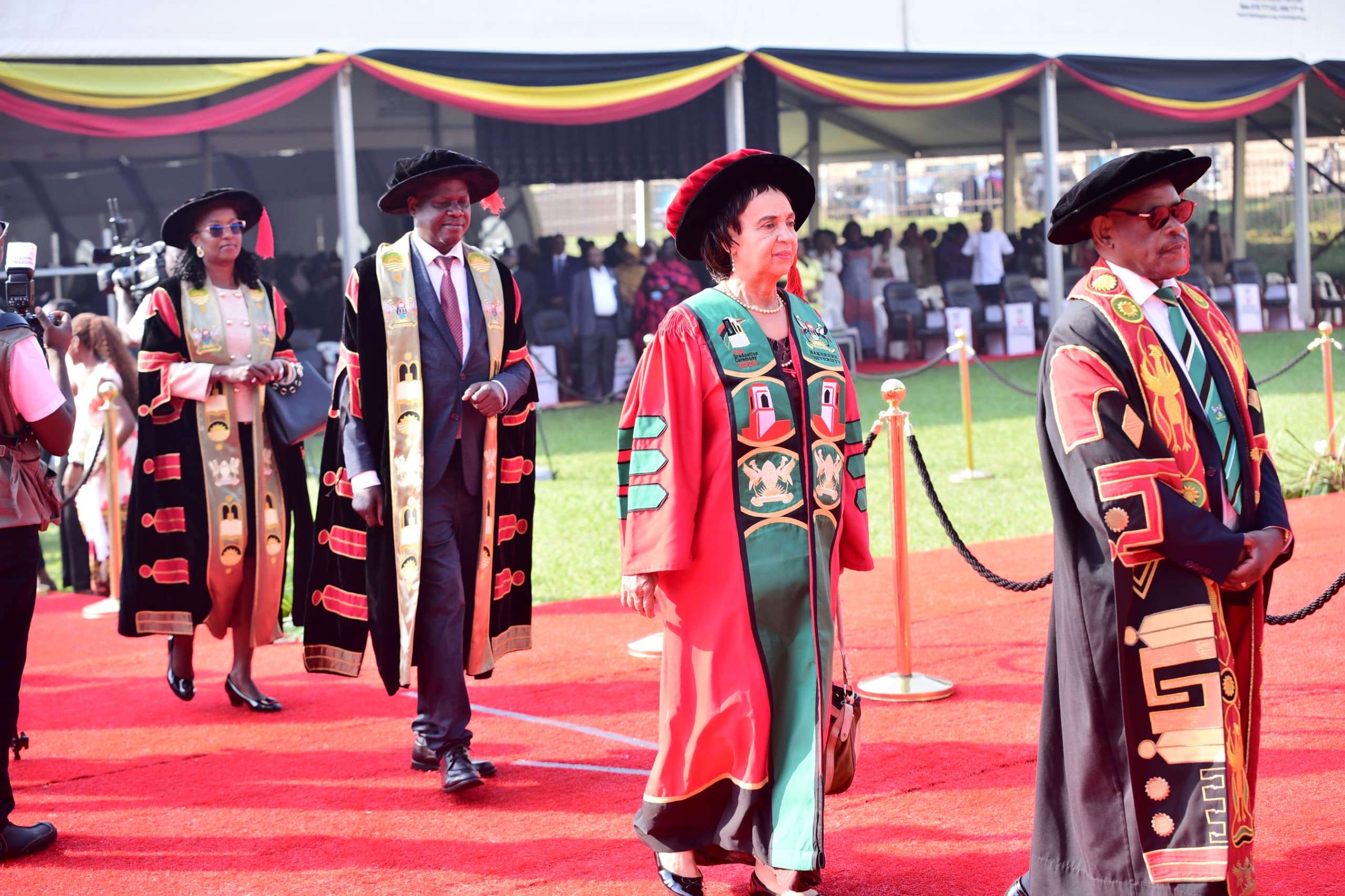
Her appeal came during the passing out of graduates from the College of Natural Sciences (CoNAS), the College of Veterinary Medicine, Animal Resources and Bio-Security (CoVAB), the College of Health Sciences (CHS) and the School of Public Health (SPH) on Day Two of the 76th Graduation Ceremony of Makerere University.
“Class of 2026, you are now part of the Makerere legacy. Wherever you go clinics, laboratories, farms, boardrooms, or classrooms, you carry this institution with you. Serve your patients with skill and compassion. Care for animals and communities responsibly. Question boldly and keep learning,” Dr Kigozi, said.
Delivering the commencement address, Dr. Kigozi lauded the graduates for their dedication to careers that directly impact lives and communities. She encouraged them to use their knowledge generously and exercise their power gently.
“Your education has trained you to ask better questions. Your humanity must guide the answers. Never forget that behind every chart, every case, every animal, every experiment, there is life. And life deserves care, patience, and dignity. Give every person you come in contact with care, patience and dignity,” Dr Kigozi, noted.
As the graduates embark on their professional journeys, Dr. Kigozi emphasized the importance of cultivating basic business acumen and financial literacy to ensure sustainability in their work.
“You do not need to become accountants but you must be able to read the essentials: understand simple financial statements, budgets and key metrics so you can judge whether a clinic, lab, or program is sustainable. You are encouraged to start your business. There are numerous investment opportunities in your areas of training. You can provide services to our people and create jobs,” Dr Kigozi, said.
She shared candidly how, when she first stepped into leadership, she realised she did not understand balance sheets or budgets well enough. So, she returned to Makerere for short courses to strengthen herself.
“A well-run Hospital, clinic or lab delivers better outcomes, attracts staff, and secures funding. Business savvy is not only about profit, it’s about sustainability and the freedom to serve ethically and effectively. Carry clinical skill with business sense so your work endures and grows,” Dr. Kigozi, noted.
Quoting renowned writer and producer Shonda Rhimes, creator of Grey’s Anatomy, who once reflected that succeeding in one area of life can sometimes mean falling short in another, Dr. Kigozi encouraged women graduates to intentionally balance professional ambition with family responsibilities.
“When one area thrives, another is often under strain. When Navio was graduating from school I had to manage the Presidential Investor Round Table on the same day as Executive Director Uganda Investment Authority. I chose my job and delegated his siblings to attend Navios graduation. I learnt from this. I choose family always after that thing you achieve once and keep forever,” Dr Kigozi, said.
In his speech, the Prof Barnabas Nawangwe, the Vice Chancellor, informed the congregation that Makerere’s ranking on all university ranking platforms has remained stable, placing Makerere among the top 10 African universities and within the top 4.5% globally.
“In the Times Higher Education global ranking, Makerere University made a formidable jump from the 1200-1500 bracket to the 800-1000 bracket. This was no mean achievement and I congratulate all members of the Makerere Community on this stellar performance,” Prof Nawangwe, said.
-

 Humanities & Social Sciences5 days ago
Meet Najjuka Whitney, The Girl Who Missed Law and Found Her Voice
-
 Health1 week ago
Uganda has until 2030 to end Open Defecation as Ntaro’s PhD Examines Kabale’s Progress
-

 Agriculture & Environment1 week ago
Uganda Martyrs Namugongo Students Turn Organic Waste into Soap in an Innovative School Project on Sustainable Waste Management
-
 General4 days ago
76th Graduation Highlights
-
 General1 week ago
Mastercard Foundation Scholars embrace and honour their rich cultural diversity