
General
Thousands Run for Mak Students’ Centre

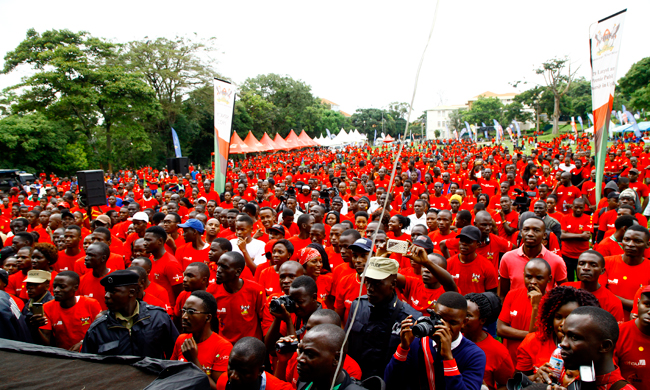
On Sunday 14th May 2017, thousands of participants comprising staff, students, alumni, friends and well-wishers assembled in the Freedom Square for the Makerere University Endowment Fund Run, aimed at mobilizing funds for the construction of the Students’ Centre.
The Mak Students’ Centre that will enhance the quality of students’ life and experience is estimated to cost UGX.15 billion. The Chief Runner, Rt. Hon. Rebecca Alitwala Kadaga-the Speaker of the Parliament of the Republic of Uganda, who is an alumnus of Makerere University flagged off the 10km route runners while the Chancellor of Makerere University, Prof. Ezra Suruma flagged off the 5km route runners.
“Makerere University Endowment Fund selected the Students’ Centre as its premier project. The Centre reflects our unwavering commitment to improving the students’ academic experience and the quality of life generated by the conducive environment while at the University. The Students Centre will serve as the collective place that reflects dynamism of the 21st century student in the digital age. It will correct the imbalance in access to socio-cultural amenities that was created by the increase in student numbers,” remarked Dr. Martin Jerome Aliker, Chairperson-Makerere University Endowment Fund (MakEF).
The Students’ Centre will entail a one stop student information centre, state of the Art Auditorium worth 2000 seating capacity and Wall of Fame, Conference facilities, Internet Kiosks, Memorabilia Shop/Bookshop, Recreational/Sports Arena, commercial and shopping centres, as well as entertainment and social areas.
The Vice Chancellor, Prof. John Ddumba-Ssentamu applauded the Board of Trustees of the Makerere University Endowment Fund (MakEF) for initiating the MakRun fundraising drive. He saluted 10km and 5km route runners for participating in the Makerere University Endowment Fund Run (MakRun 2017), a starting point of engagement with the stakeholders to mobilize resources for the Students’ Centre project.
“I am confident that together, we can set up a multipurpose facility for our students. We can demonstrate that what seems impossible to us as individuals can be achieved if we choose to set our hearts and minds to it. No contribution is too small or insignificant,” said the Vice Chancellor.
Fully aware that more financial contributions in form of donations, sponsorships and sale of tickets were still flowing in, Prof. Ddumba-Ssentamu revealed that on the eve of the Makerere University Endowment Fund Run (MakRun 2017), the University had raised UGX.200million from volunteers and well-wishers across the country towards the Students’ Centre Project. The Students’ Centre will be constructed on the Makerere University Main Campus in the open space between the Senate Building and the Lincoln Flats.
The Makerere University Endowment Fund (MakEF) is an entity of Makerere University established in 2014. The Board is tasked with mobilising, receiving and growing the financial resources for the benefit of the University’s current and future generations; enhancing the learning environment in the University; and offering scholarships, research support and innovations.
Chaired by Dr. Martin Jerome Aliker, the Board comprises the following personalities: Ambassador Edith Grace Ssempala, Mr. Barnabas Tumusingize, Mr. Grace Isabirye, Mr. Martin Owiny, Hon. Gerald Karuhanga and Prof. John Ddumba-Ssentamu.
Rt. Hon Rebecca Alitwala Kadaga, who pledged UGX.40million towards the Makerere University Endowment Fund (MakEF) and Students’ Centre Project on behalf of the Parliament of Uganda said the Run was a great milestone for the University and her alumni.
“I learnt that the Run will always be an annual event, so I would like to call upon all Ugandans to be part and contribute towards the University Endowment Fund. When we come together, we can improve the Fund for the good of Makerere University. This will continue to keep Makerere University in the lead not only academically, but through visibility and outreach,” Rt. Hon. Rebecca Kadaga said.
She advocated for transparency and accountability for the funds mobilized, and urged the Makerere University Endowment Fund (MakEF) and the Makerere University Planning and Development Department (PDD) to involve university alumni such as former Kenyan President Mwai Kibaki, and former President of Tanzania, Benjamin Mkapa.
Eng. Dr. Charles Wana-Etyem, the Chairperson of Makerere University Council, also an alumnus of Makerere University commended runners/participants, champions, sponsors, partners for their contribution towards the success of the inaugural Makerere University Endowment Run (MakRun 2017).
“You are all contributors towards this noble cause in various ways. I believe you will come forward to raise money to help in achieving the good causes of the University like the construction of the Students’ Centre. I thank you all for your contribution,” Dr. Wana-Etyem said.
The Chief Runner presented MakRun 2017 medals and certificates to the winners amidst applause from thousands of participants in the Freedom Square. For the 10km race, the winning team comprised Mr. Dick Muhiirwe (Overall), Mr. Mwesigwa David (1st Runner Up) and Mr. Oketch Lazarous (2nd Runner Up). For the 5km race, the winning team comprised Mr. Muhanguzi Oscar (Overall), Mr. Ndibanoha John (1st Runner up) and Mr. Amanya Gilbert (2nd Runner Up).
On behalf of the University Management, the Vice Chancellor applauded the MakRun 2017 Organising Committee chaired by Dr. Florence Nakayiwa-the Director, Planning and Development Department for organising a successful run.

General
Makerere University Set to Develop Curriculum to Transform Graduate Supervision and Mentorship

By Moses Lutaaya
KAMPALA – Makerere University is set to develop a curriculum for a specialized Certificate Course in Supervision and Mentoring for Graduate Training and Higher Education Management, in a move aimed at professionalizing graduate supervision and strengthening the capacity of academic staff to deliver quality postgraduate education.
The proposed programme will equip academic staff with advanced competencies in graduate-level teaching, research supervision, mentorship, and higher education management, while supporting the University’s agenda of improving the quality and relevance of graduate training.
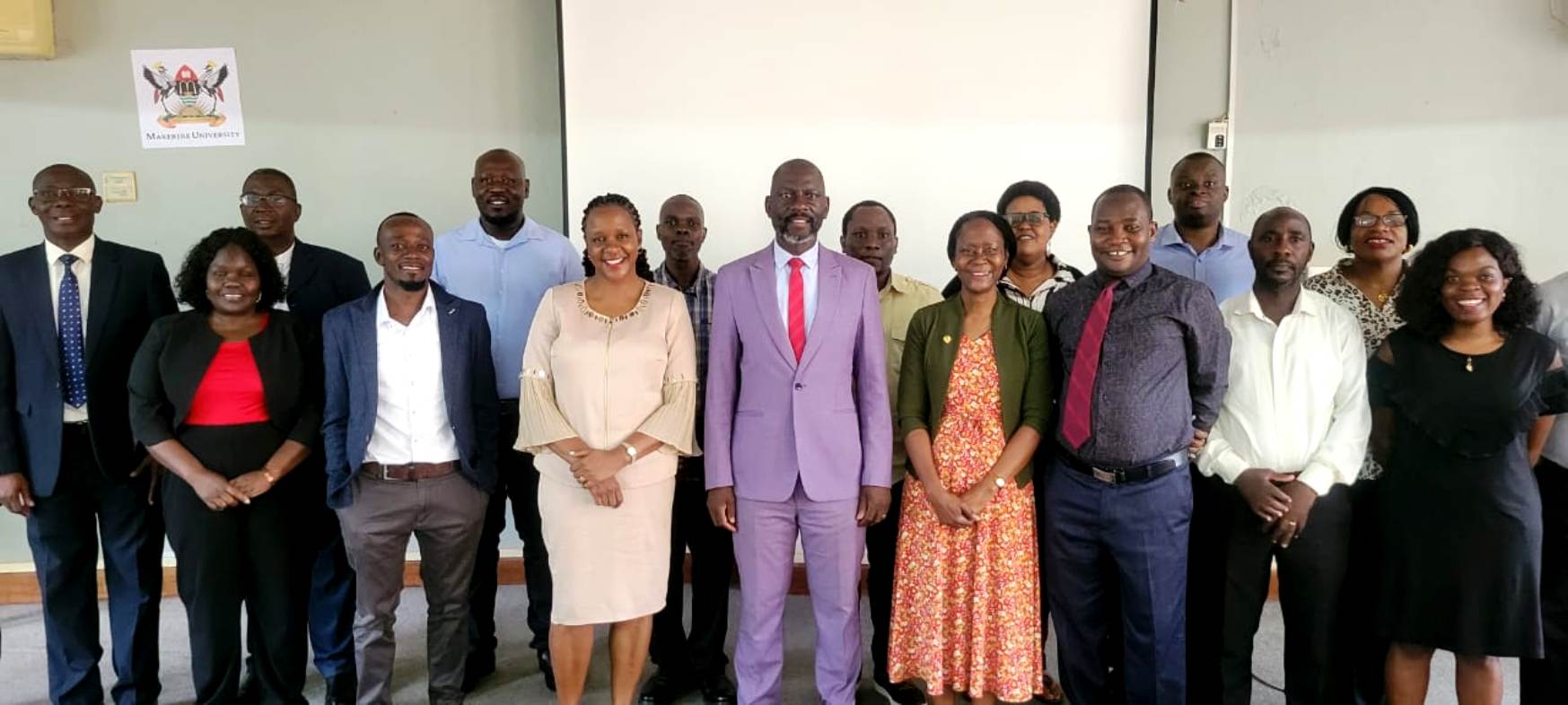
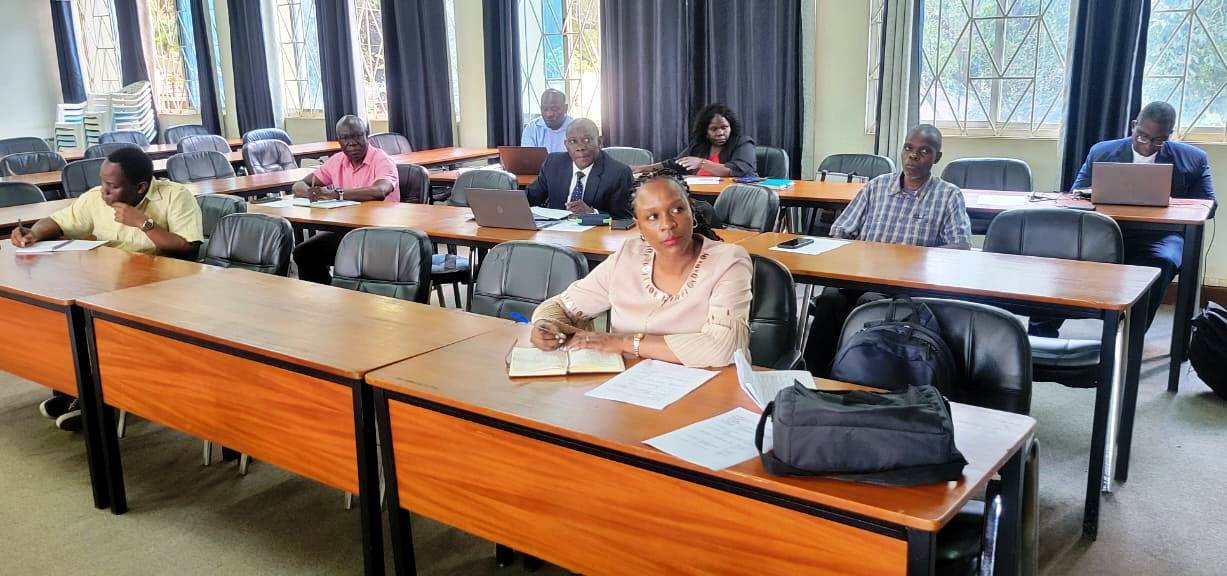
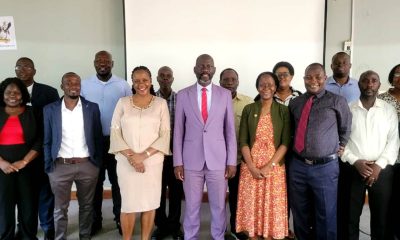
The curriculum development process was discussed during a Stakeholders’ Curriculum Development Consultation Workshop held on Thursday, 18th June 2026 at the Senate Building Telepresence Hall, Makerere University.
The workshop, organized by the Directorate of Graduate Training in collaboration with the Centre for Teaching and Learning Support (CTLS), brought together curriculum specialists, academic staff, and higher education stakeholders to review and enrich the proposed curriculum before it proceeds through the University approval processes.
Participants included 11 lecturers from the College of Engineering, Design, Art and Technology (CEDAT), 3 from the College of Agricultural and Environmental Sciences (CAES), 2 from the College of Veterinary Medicine, Animal Resources and Bio-security (CoVAB), 1 from the College of Humanities and Social Sciences (CHUSS), 4 from the College of Education and External Studies (CEES), among others.
The National Curriculum Development Centre (NCDC) was represented by Dr. Patrice Ssembirige, Deputy Executive Director in charge of Curriculum Review and Instructional Materials Development. The Centre for Teaching and Learning team was led by Dr. Dorothy Ssebowa, while Dr. Stephen Wandera coordinated the workshop.
Addressing participants, Prof. Julius Kikooma, Director Graduate Training at Makerere University, said the curriculum development initiative is central to strengthening graduate education and ensuring that academic staff are adequately prepared to support postgraduate learners.
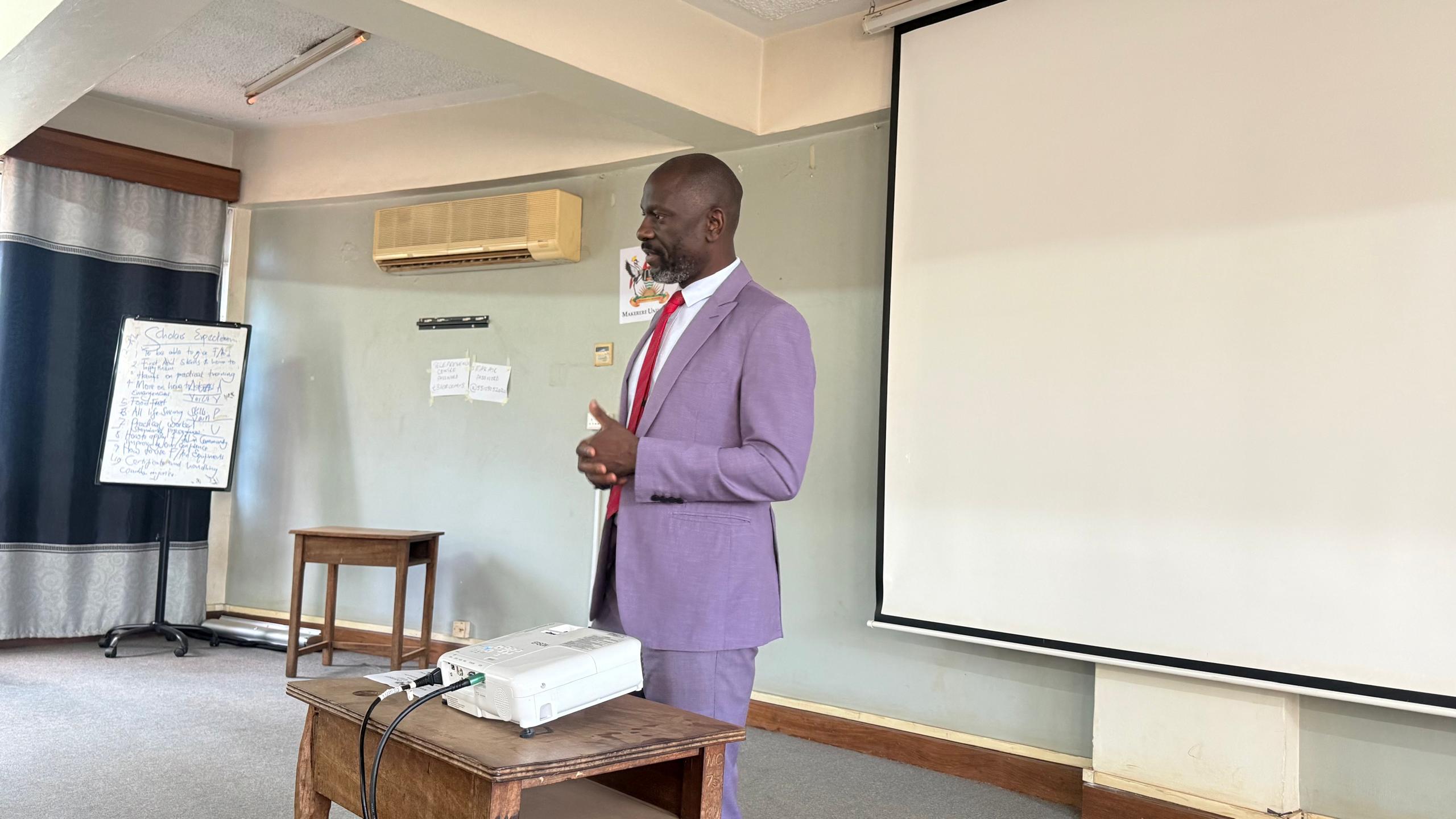
Prof. Kikooma noted that Makerere University is targeting an increase in graduate student enrolment to 50 percent of the total student population, but emphasized that this ambition must be matched with investment in the capacity of academic staff who supervise and mentor students.
“We can get many graduate students, but if the people supporting them do not have the right tools and preparation, we will still have challenges,” Prof. Kikooma said.
He explained that the initiative responds to University policies requiring academic staff teaching graduate students to undergo pedagogical training, while those supervising graduate research must undergo specialized preparation in supervision and mentoring.
Prof. Kikooma said graduate supervision requires deliberate preparation because supervisors play a central role in shaping research quality, student success, and the overall effectiveness of postgraduate programmes.
He further emphasized Makerere University’s responsibility as a leading institution in the region.
“We have a double expectation. We must support the country to achieve its aspirations in national development, but we also have an expectation from other institutions to support them in building graduate training capacity. In that sense, we are a trainer of trainers,” he said.
Speaking on behalf of the National Curriculum Development Centre (NCDC), Dr. Patrice Ssembirige commended Makerere University for adopting a consultative and inclusive approach to curriculum development.
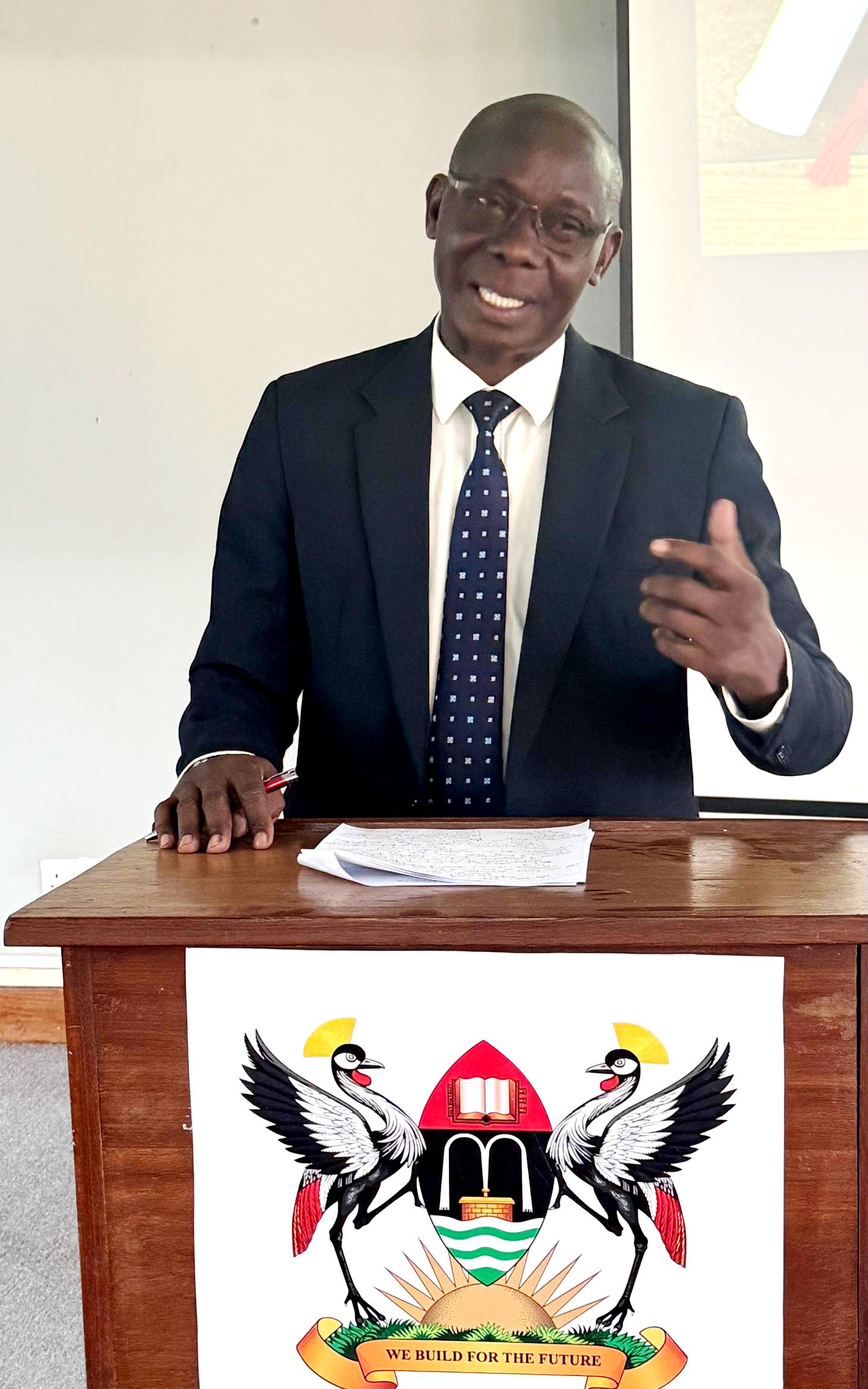
He noted that education systems globally are undergoing significant transformation, requiring continuous curriculum review and alignment with emerging needs.
“Education systems globally are undergoing significant transformation, and in Uganda, NCDC has been leading and spearheading the implementation of the competency-based curriculum,” Dr. Ssembirige said.
He explained that NCDC has developed competency-based curriculum frameworks at primary and lower secondary levels and is currently advancing reforms at upper secondary level, which feeds into higher education institutions.
Dr. Ssembirige said the new curriculum presents an opportunity to align graduate training with global trends, Sustainable Development Goals (SDGs), international best practices, and national development priorities.
“As we develop this curriculum, we need to align with global trends, SDGs and international best practices. We also need to undertake comparative analysis because curriculum reforms are taking place across East African Community states,” he noted.
He encouraged developers to ensure that the programme follows competency-based principles and equips participants with relevant 21st-century skills.
“Since we are talking about competency-based curriculum, we must be cognizant of the principles of competency-based education and ensure that we develop skills that fit the demands of the 21st century,” he added.
Dr. Dorothy Ssebowa, Director of the Centre for Teaching and Learning Support at Makerere University, said the initiative marks an important step in strengthening professional development for academic staff involved in graduate education.
She noted that effective supervision requires more than disciplinary expertise, but also skills in mentorship, communication, research guidance, ethics, assessment, and student support.
“The quality of graduate education depends on the quality of mentorship and supervision we provide. This curriculum will strengthen the capacity of academic staff to guide graduate students effectively, improve research outcomes, and uphold the standards expected of a leading university,” Dr. Ssebowa said.
She added that the Centre for Teaching and Learning will continue working with the Directorate of Graduate Training, academic colleges, curriculum specialists, and regulators to ensure the programme remains relevant and impactful.
During the workshop, stakeholders reviewed the proposed curriculum structure, course content, competency areas, assessment strategies, quality assurance mechanisms, and alignment with national and international standards.
Once finalized, the programme is expected to strengthen graduate supervision at Makerere University and serve as a model for professional development across higher education institutions in Uganda and beyond.
General
Revised Advertisement for Positions of Principal and Deputy Principal at Makerere University
-
 Law1 week ago
Makerere hosts Chief Justices of Zambia and Uganda
-
 Agriculture & Environment2 weeks ago
Master’s Scholars Engage Lwengo and Rakai Communities to Inform Research Conceptualisation
-
 Health2 weeks ago
Makerere Medical Students Honour Their ‘Silent Teachers’
-
 General3 days ago
Makerere University Set to Develop Curriculum to Transform Graduate Supervision and Mentorship
-
 Business & Management1 week ago
Makerere Vice Chancellor tasks CoBAMS to Change Africa’s research trajectory through graduate training