Dear Students; Class of 2026/2027
It is both an honour and a privilege to welcome you to Makerere University, Uganda’s oldest and premier institution of higher learning, and one of Africa’s most respected centres of scholarship, research and innovation. On behalf of the University Senate and the Office of the Academic Registrar, I extend my heartfelt congratulations to each one of you upon your admission to Makerere University for the 2026/2027 Academic Year.
Today marks the beginning of one of the most important chapters of your lives. It is a day that signifies not only your admission to a great university, but also your acceptance into a community of scholars committed to the pursuit of knowledge, the advancement of society, and the service of humanity. You have earned your place here through determination, sacrifice and hard work. Behind every student seated here is a story of perseverance, encouragement from parents and guardians, dedication from teachers, and personal commitment to excellence. To all who have contributed to this achievement, we express our sincere appreciation.
As you join Makerere University, you become part of a remarkable legacy that spans more than a century. For generations, Makerere has stood as a beacon of academic excellence on the African continent. It has nurtured leaders in government, business, academia, science, education, the arts and many other professions. Its graduates have shaped public policy, advanced scientific discovery, built thriving enterprises and transformed communities across Uganda, Africa and the world. Today, you inherit that proud tradition. More importantly, you are called upon to enrich it through your own achievements and contributions.
The world you are entering is changing rapidly. Advances in artificial intelligence, biotechnology, digital innovation and data science are transforming every profession. Nations are grappling with climate change, public health challenges, food insecurity, unemployment, governance concerns and widening inequalities. These realities demand graduates who are not only knowledgeable, but also innovative, adaptable, ethical and committed to finding practical solutions to society’s most pressing challenges. Makerere University is committed to preparing you for that responsibility. Our vision is not simply to produce graduates, but to develop critical thinkers, responsible citizens, innovators and leaders who will make meaningful contributions to national development and global progress.
Dear Fresh Students,
University education is fundamentally different from the education you have previously experienced. At Makerere, learning is not confined to the lecture room. It requires curiosity, discipline and personal responsibility. Your lecturers will guide you, challenge your thinking and provide opportunities for intellectual growth, but the responsibility for learning rests with you. Attend your lectures consistently, participate actively in discussions, read widely beyond the prescribed materials, complete your assignments diligently and prepare adequately for your examinations. Success at university is rarely the result of extraordinary intelligence alone; more often, it is the product of consistent effort, effective time management and unwavering commitment.
As Academic Registrar, allow me to emphasise the importance of understanding and complying with the University’s academic regulations. These regulations exist to ensure fairness, transparency and the integrity of our academic processes. Complete your registration within the stipulated timelines, familiarise yourselves with the Academic Calendar and the Students’ Regulations, and regularly access your academic information through the Academic Management Information System (ACMIS). Always seek guidance whenever you encounter academic or administrative challenges. Our offices are here to support your success.
One value that must remain central throughout your academic journey is integrity. Your degree will derive its true worth not only from the knowledge you acquire, but also from the honesty with which you earn it. Academic dishonesty, including plagiarism, examination malpractice, falsification of documents and any other form of misconduct, undermines the very purpose of higher education. Protect your reputation and uphold the good name of Makerere University by conducting yourselves with honesty, responsibility and professionalism in all that you do.
While academic excellence remains our primary focus, I encourage you to embrace the broader university experience. Makerere University offers countless opportunities to develop your talents beyond the classroom. Participate in research, innovation, entrepreneurship, leadership, sports, cultural activities, volunteer programmes and community engagement initiatives. These experiences will enrich your education, strengthen your confidence and prepare you for leadership in an increasingly interconnected world. Some of the most valuable lessons you will learn at Makerere will come through collaboration, service and engagement with people from different backgrounds and cultures.
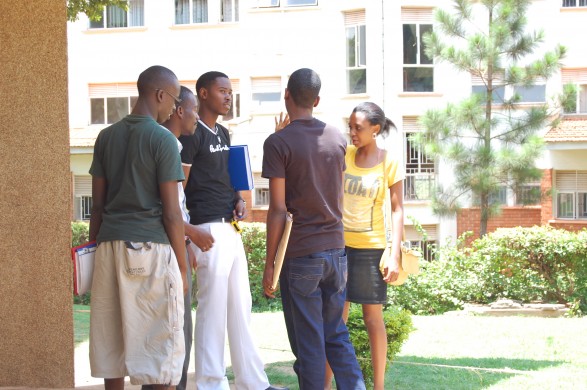
You have joined one of the most diverse academic communities in the region. Within this University you will meet colleagues from every region of Uganda and from many countries across Africa and beyond. Embrace this diversity with respect, openness and humility. Learn from one another. Build lasting friendships. Listen to different perspectives and appreciate that diversity is one of our greatest strengths. The networks you establish during your years at Makerere may become lifelong friendships, professional partnerships and opportunities that shape your future.
As you pursue your studies, remember that the University community is built on mutual respect and shared responsibility. Conduct yourselves with dignity both on and off campus. Respect your lecturers, fellow students and members of staff. Use social media responsibly and appreciate that your actions, whether online or offline, contribute to your personal reputation and that of the University. Leadership begins with character, and character is demonstrated through the choices we make every day.
There will undoubtedly be moments when university life becomes challenging. You may encounter difficult coursework, financial constraints, personal struggles or moments of uncertainty. Such experiences are not unusual, nor do they define your future. What matters is how you respond to them. Do not hesitate to seek assistance from your lecturers, academic advisers, counsellors or fellow students. Makerere University is committed to supporting your academic, personal and professional development, but you must also be willing to seek help whenever you need it. Resilience, perseverance and a positive attitude often distinguish those who succeed from those who give up too soon.
Dear Students,
Leadership is not reserved for those who hold positions of authority. Leadership begins with taking responsibility for your own actions, influencing others positively and serving your community with integrity. Throughout your time at Makerere, I encourage you to cultivate the qualities of ethical leadership, critical thinking, innovation and service. Challenge yourselves to become solution providers rather than problem identifiers. Ask yourselves not only how you will build successful careers, but also how your knowledge and skills will improve the lives of others and contribute to the development of Uganda, Africa and the wider world.
Among you are future scientists who will develop life-changing innovations, future entrepreneurs who will create employment opportunities, future judges who will uphold justice, future medical professionals who will save lives, future teachers who will inspire generations and future public servants who will shape national policy. The opportunities before you are immense, but they must be matched by discipline, humility and a commitment to lifelong learning.
As you begin this journey, remember that every lecture attended, every book read, every assignment completed and every meaningful friendship formed contributes to the person you will become. Make each day count. Pursue excellence not for recognition alone, but because excellence is a habit that shapes character and transforms lives.
As I conclude, I leave you with a simple but profound challenge. During your years at Makerere University, do not merely strive to obtain a degree. Strive to become a person of knowledge, integrity, compassion and purpose. Let your education inspire you to think boldly, act ethically and serve selflessly. Let your years at Makerere prepare you not simply for employment, but for leadership; not merely for personal success, but for meaningful impact.
On behalf of the University Senate and the Office of the Academic Registrar, I warmly welcome you to Makerere University. We are proud to receive you at this great institution, and we look forward to witnessing your growth into graduates who will uphold the values, traditions and reputation of Makerere University wherever life may lead you.
I wish you every success in your academic journey.
Welcome to Makerere University, and may God bless you all.
I thank you for your kind attention.
We Build For the Future.
Professor Buyinza Mukadasi (PhD)
Academic Registrar








 General1 week ago

 General1 week ago
 General6 days ago