
General
PEER Grants: Call for Proposals 2011



General
Celebrating a 26-year Legacy at Makerere: Deputy AR Mr. Charles Ssentongo hands over to Mr. Justus Karegyeya


Hot on the heels of completing 26 years of exemplary service and unwavering dedication to Makerere University, Mr. Charles Ssentongo has today 10th September 2026 officially handed over the office of Deputy Academic Registrar – Undergraduate Admissions and Records to Mr. Justus Karegyeya. Mr. Ssentongo held this position for 16 years in both acting and substantive capacity.
The transition was completed during an official handover ceremony held at the Senate building, Level 3, in the presence of the Academic Registrar Prof. Buyinza Mukadasi, staff, and colleagues who gathered to celebrate Mr. Ssentongo’s monumental contribution to the University and also witness the handover as he retires from University service.
Appreciation for Mr. Ssentongo’s Contribution to the Academic Registry at Mak
Prof. Buyinza commended Ssentongo for inviting staff and collegaues to what he called an important and symbolic moment.
He acknowledged this as a moment of transition from one life cycle to another, and assured Mr. Ssentongo that Makerere University will always value his service, and he will remain an important part of its story and enduring legacy.
Considering that the two portfolios Ssentongo has been in charge of for the past 16 years; admissions and records, are the central pillars in any university, Prof. Buyinza commended him for having manned them with a distinction.

He further reiterated that these two pillars, admission and records, are where control over who is admitted, and protection of the academic awards of the university is exercised. Mr. Ssentongo, Prof. Buyinza noted, has executed this dual task very well through a strong commitment to safeguarding the university systems and processes. His was a tenure defined by diligence, integrity, professionalism, and devotion.
Prof. Buyinza further thanked him for having helped strengthen the records management system in the university by ensuring personal academic documents are secured from unauthorised access.
“We do not see these documents flying all over. So, we thank you for having contributed to the advancement of our systems and to greater efficiency” Prof. Buyinda expressed.
Beyond technical contribution, Ssentongo’s integrity, humble disposition, demeanor, credibility, and willingness to support others was commended, for he has used this to mentor as many staff as possible. As Mr. Ssentongo, steps out of office, he leaves behind a very strong, formidable team that will carry forward his legacy.
Prof. Buyinza extended the University Management’s sincere gratitude to Mr. Ssentongo for the many years of dedicated service to Makerere, and renewed its commitment to continue strengthening the processes that have been built.
Mr. Charles Ssentogo’s Handover message and ceremony
While delivering his handover speech, Mr. Charles Ssentogo thanked God and Makerere University Council for the opportunity given to him to work here since January 2000.
He shared that since he joined as an Assistant Registrar, he has been deployed in the Undergraduate Admissions and Records division where he has grown through the ranks. And whereas Ssentongo was appointed as the Head of the division and Acting Deputy Academic Registrar in 2010, it was not until 2018 when he was confirmed in substantive capacity.

He extended heartfelt appreciation to all supervisors that he was privileged to work under and thanked them for the support and guidance rendered to him.
Key Achievements highlighted during his tenure:
- Mentoring and training of staff.
- Advertising accredited programmes.
- Managing government-sponsored student admissions for all public universities.
- Digitalising the admissions process via the ACMIS system.
- Successfully managing special admission schemes (such as mature age, district quota, disability, and sports) and amicably resolving admission disputes.
- Coordinating division activities with external bodies, including UNEB.
- Reorganising records through the Digitalization of Academic Records and Processes (DARP) project for efficient electronic access.
- Conducting successful career guidance sessions in schools.
Counsel offered to the incoming Deputy Academic Registrar:
- Read and internalise policy for effective management of duties and informed dispensation of advice when called upon.
- Serve diligently by executing your duties timely and avoiding unnecessary arguments.
- Verify the handover report before signing it off.
Professional growth of Mr. Sentongo while at Makerere
Mr. Ssentongo joined Makerere University in 2000 as Assistant Registrar and was confirmed in the university service January 2002, and in 2006, was promoted to the position of Senior Assistant Registrar.
In 2009 he was posted to the Examinations and Transcripts Division as Head of Transcripts section, where he served for one year. In 2010 he was transferred back to Undergraduate Admissions and Records Division as its Head and designated as Acting Deputy Academic Registrar.

In 2018 he was confirmed as substantive Deputy Academic Registrar and Head of the Undergraduate Admissions and Records Division, a position he held until his official retirement on 9th September 2026.
Mr. Justus Karegyeya accepts to take on the position in acting capacity
In his remarks, Mr. Karegyeya formally accepted the interim appointment, admitting that he was experiencing a sense of both being overwhelmed and gratitude for the opportunity.
He highlighted his extensive history within the Division, admitting that this gives him a deep familiarity with the unit’s internal processes.
Therefore, in this new capacity, Karegyeya appreciated the mentorship the team has received from Mr. Ssentongo, which he emphasised has prepared them to execute their duties effectively.
He pledged to maintain operational continuity by picking up exactly from where his former supervisor left off, and continuing the specific tasks that were previously recorded. Karegyeya equally expressed his readiness to hold the position until the Human Resources Directorate completes the process of recruiting a substantive replacement.
By Moses Lutaaya
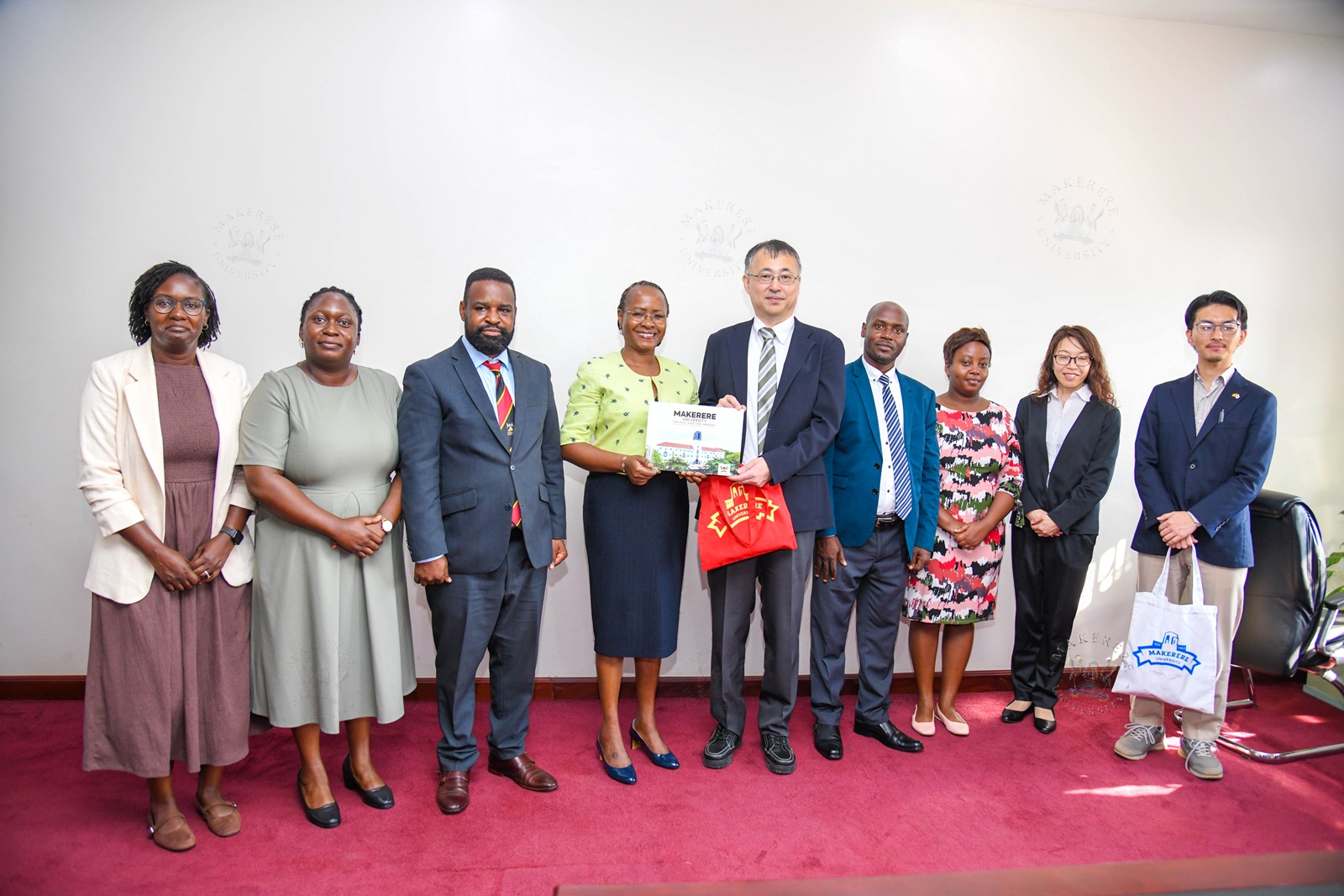
Kampala, September 4, 2026 — Makerere University and the Japan International Cooperation Agency (JICA) have explored new opportunities for strengthening academic, research and innovation collaboration between Uganda, Japan and other African countries, with a particular focus on artificial intelligence (AI), aerospace engineering, materials and remote sensing, food value chains, energy, water and climate change.
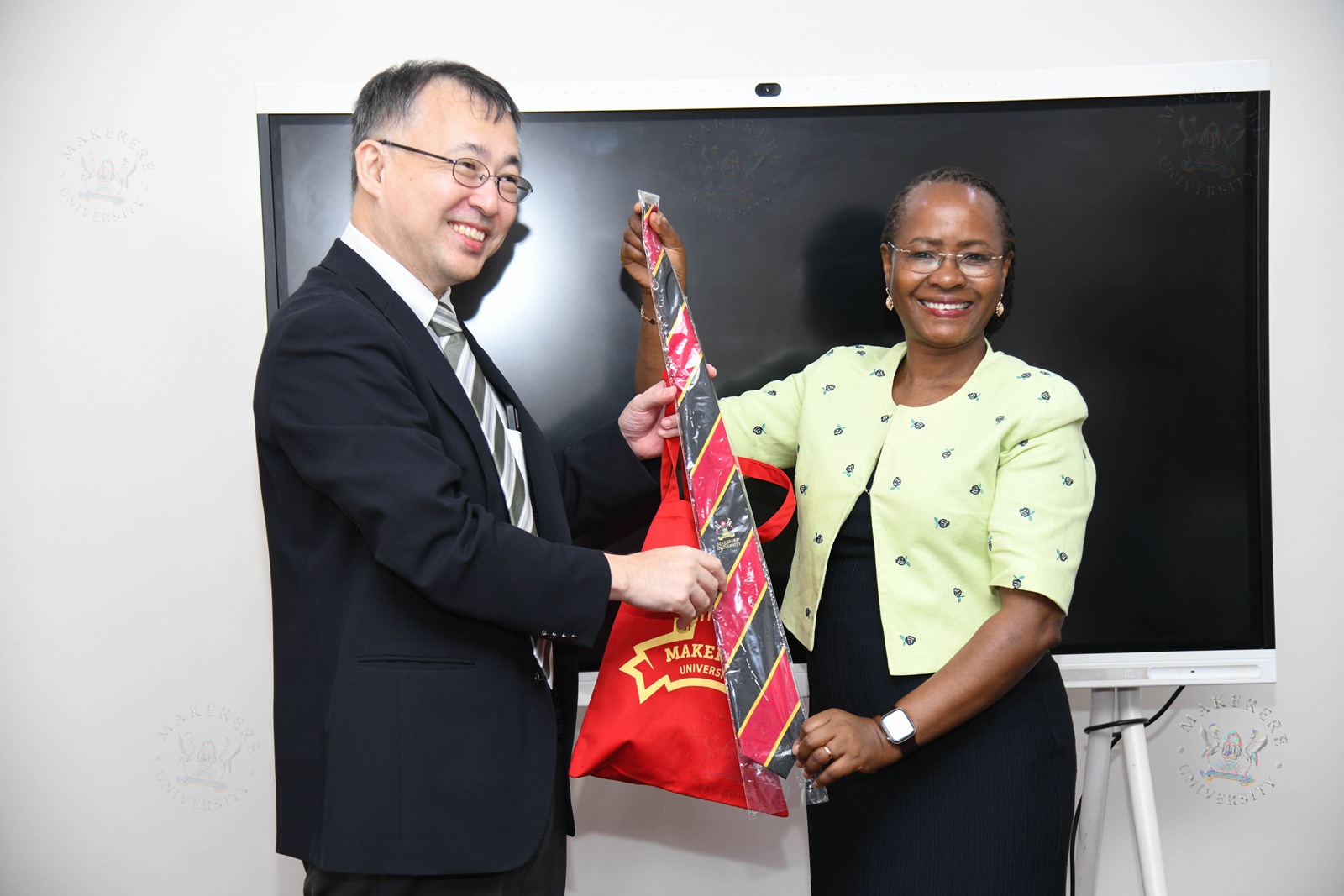
The discussions took place on Friday, September 4, 2026, at the Makerere University Main Building in the Vice Chancellor’s Board Room, during a visit by a JICA delegation led by Dr. Okano Takasei, Senior Advisor, Human Development Department of JICA.
Makerere keen to deepen collaboration with JICA
Welcoming the delegation, the Deputy Vice Chancellor (Academic Affairs), Prof. Sarah Ssali, highlighted Makerere University’s long-standing tradition of research, international collaboration and contribution to knowledge generation in Uganda and beyond.
Prof. Ssali noted that Makerere has built a strong global research footprint through partnerships with institutions around the world, observing that the University is well positioned to deepen international collaboration as emerging technologies, particularly artificial intelligence, continue to transform research and higher education.
“Uganda has a very long history of doing research, and particularly it has informed research findings in the areas global health research,” Prof. Ssali said, pointing to Uganda’s historical contribution to global scientific knowledge.
She cited the country’s contribution to medical and biological research, including early research on sleeping sickness, noting that Uganda’s unique research environment continues to offer opportunities for scientific discovery.
Prof. Ssali said Makerere’s history of collaboration with Japan is particularly significant, noting that Japanese cooperation has contributed not only to academic and research activities but also to infrastructure development and other sectors in Uganda.
She cited the establishment of the JICA building at Makerere, describing it as one of the visible symbols of Japan’s long-standing partnership with Makerere University.
According to Prof. Ssali, the building, which houses College of Natural Sciences (CoNAS) disciplines of geology, petroleum studies and administrative offices, was constructed during her undergraduate years and completed within a remarkably short period.
Prof. Ssali said the long-standing relationship between Uganda, Makerere University and Japan provides a strong foundation upon which new areas of collaboration can be built. She encouraged the visiting JICA delegation to explore the University and identify areas where existing partnerships could be strengthened or new areas of cooperation developed.
“Please take time and explore and see where either you already have a footprint, where you’ve ever had a footprint, or where you could explore new areas,” she said.
Prof. Ssali added that Makerere was privileged to host the JICA delegation and expressed optimism that the visit would lead to meaningful and sustainable partnerships.
Strengthening Joint Collaboration through AJ-ASPIRE
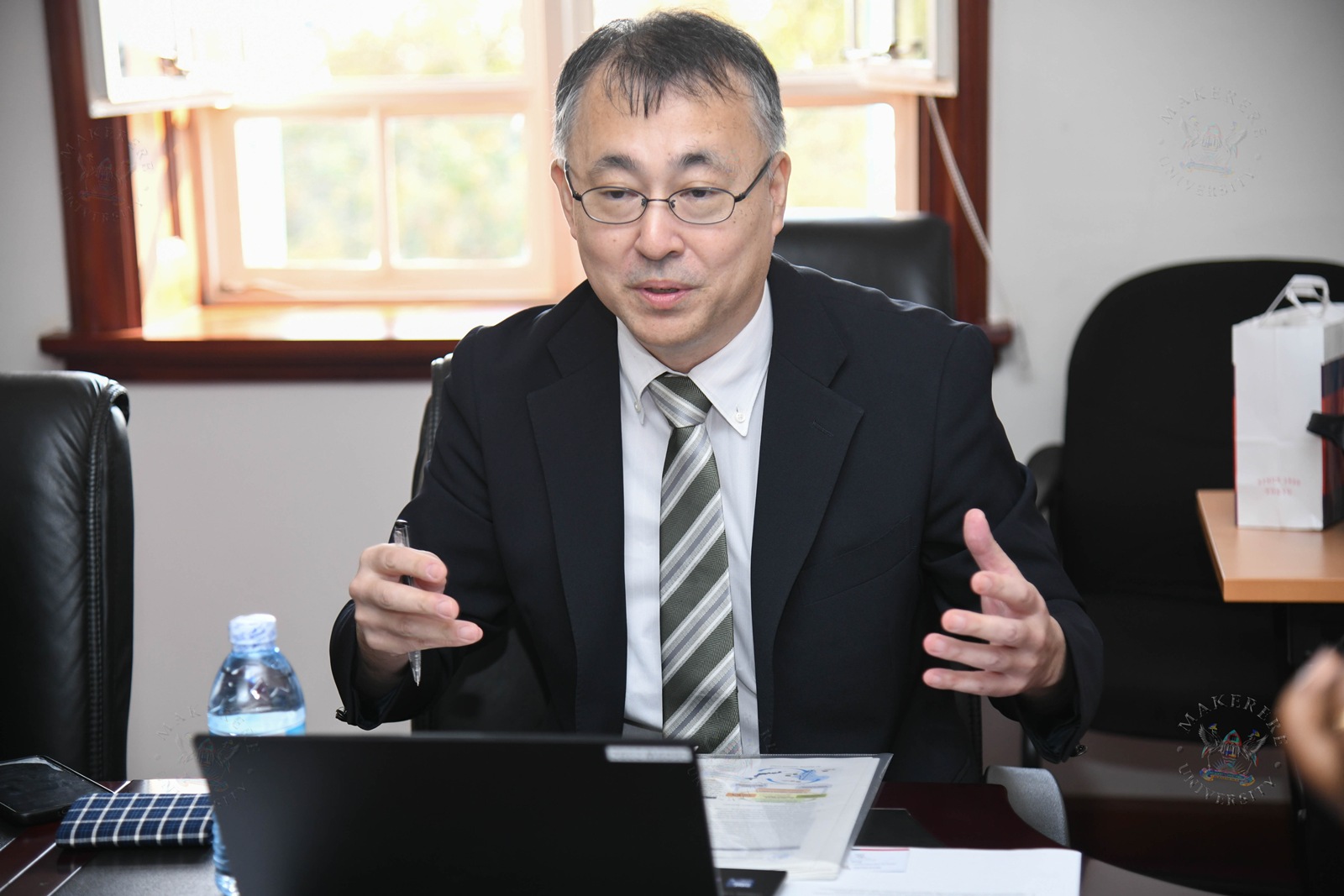
Dr. Okano, in his remarks as leader of the delegation said the visit formed part of a broader JICA initiative aimed at promoting academic and research collaboration between Japanese and African universities.
He explained that the initiative was launched on the occasion of the ninth Tokyo International Conference on African Development (TICAD 9), held in Yokohama in September 2025, with the objective of strengthening academic and research partnerships between Japan and Africa.
According to Dr. Okano, the initiative is intended to benefit both African and Japanese universities by providing platforms for internationalisation, collaborative research and the exchange of knowledge, researchers and students. “We would like to play a role of facilitator between universities in Japan and Africa and Uganda as well,” he said.
He explained that JICA is currently promoting the initiative through three African hub universities where JICA already has ongoing projects and experts on the ground.
The three institutions are Egypt-Japan University of Science and Technology (E-JUST) in Egypt, Jomo Kenyatta University of Agriculture and Technology (JKUAT) in Kenya, and Stellenbosch University in South Africa.
Dr. Okano said the selection of the three institutions was informed by the presence of ongoing JICA-supported projects and experts who can facilitate collaboration between the hub universities and institutions across Africa and Japan.
The hub universities are currently coordinating research with Japanese universities in strategic areas, with E-JUST focusing on energy, JKUAT leading work on food value chains, and Stellenbosch University focusing on water and climate change.
Dr. Okano said JICA was particularly pleased to explore collaboration with Makerere University under the African-Japan Initiative for Research and Education Partnerships, known as AJ-ASPIRE.
He outlined three major avenues through which Makerere could participate in the initiative.
The first is participation in existing research programmes hosted by the three hub universities. He added that Makerere researchers could join ongoing research on energy, food value chains, water and climate change, thereby creating opportunities to work with Japanese and other African researchers.
“We would like to explore opportunity for researchers from Makerere University to participate in these ongoing research activities and expand collaboration with Japanese and African partner institutions,” Dr. Okano said.
The second area is the development of new research networks in artificial intelligence and aerospace engineering. Dr. Okano said JICA was planning to establish new research groups focusing on the two areas and would be interested in having Makerere researchers participate in the emerging networks. “We would like to also invite researchers from Makerere University to join these networks and implementation of future collaboration in these two research topics, aerospace engineering and AI,” he said.
The third proposed avenue is increased collaboration between Makerere University and E-JUST, which Dr. Okano said offers fully funded scholarship opportunities for African students through a programme jointly supported by the governments of Egypt and Japan.
He noted that a number of Makerere graduates have already benefited from the programme, including researchers who have pursued doctoral studies and research opportunities in Egypt and Japan.
Dr. Okano cited the example of Mr. Abdonoor Kalibala, a Makerere alumnus whom he recently met in Hiroshima, Japan, following completion of PhD in Mechatronics and Robotics engineering at E-JUST. Mr. Kalibala conducted research in Japan for up to six months under the supervision of a Japanese professor as part of his doctoral programme.
Dr. Okano said such programmes could help strengthen the movement of researchers between Uganda, Egypt and Japan and create lasting institutional partnerships.
He added that JICA is also providing small research grants to alumni of the programmes to help them maintain and expand research collaboration involving Japan, E-JUST and African institutions.
He said Makerere could leverage such opportunities to increase the participation of its students and researchers in international research networks.
AI, Materials and Remote Sensing and International Relations Set the Pace
Prof. Robert Wamala, Director of Research, Innovations and Partnerships at Makerere University, said the visit followed an online engagement held a few weeks earlier between Makerere University and JICA, during which several areas and units within the University were identified as potential points of collaboration.
Prof. Wamala said these included the Makerere University AI Lab, the University’s International Office and researchers working in space engineering, particularly in materials and remote sensing.
He welcomed the transition from online discussions to physical engagement, saying the visit would allow JICA representatives to interact directly with researchers, academic units and University authorities. “This interest is being followed up through an in-person visit, which provides us an opportunity for JICA to engage directly with the relevant units and researchers at Makerere University,” Prof. Wamala said.
For Makerere, he added, the initiative provides an opportunity to connect the University’s research strengths with Japanese universities, research institutions and development partners to address shared development challenges.
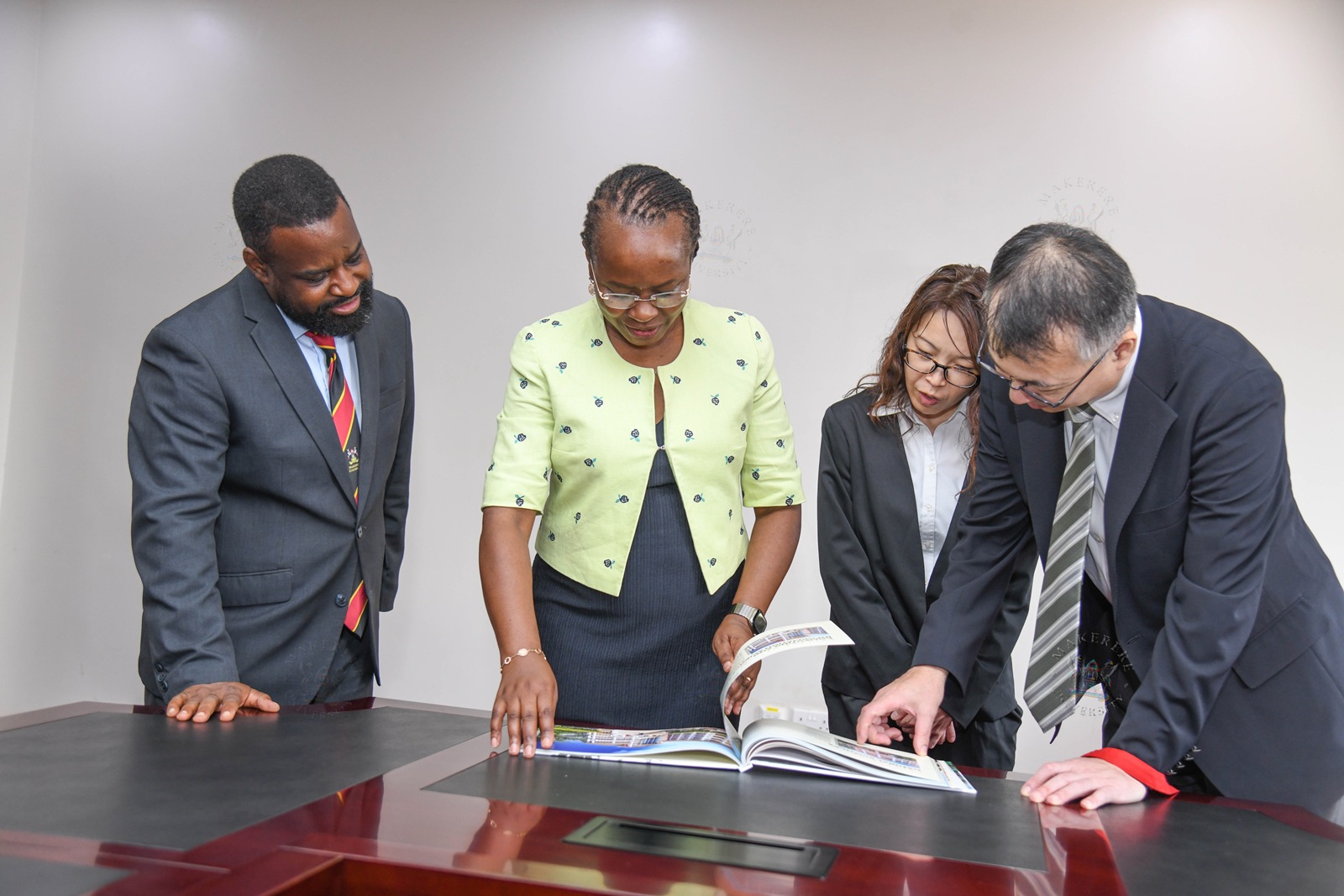
Prof. Wamala said the University was particularly interested in identifying practical areas of collaboration that could move beyond general discussions to concrete research partnerships, joint projects and opportunities for students and researchers.
He noted that the JICA delegation’s on-campus interactions scheduled to take place throughout the day would enable the two sides to identify specific areas of mutual interest. “We hope these engagements will help us identify specific areas of future interest and provide a basis for developing concrete areas of collaboration under the AJ-ASPIRE,” Prof. Wamala said.
He reiterated Makerere’s commitment to strengthening international research partnerships and thanked JICA for its continued interest in the University.
Dr. Okano, was accompanied by Mr. Ito Idomu, Research and Advisor at the Embassy of Japan, Mr. Osaki Mistuhiro from JICA headquarters, Ms. Eric Maeda from JICA Headquarters, and Ms. Ruth Mbabazi from JICA Uganda.
JICA follow-up meetings with Makerere research units
Following the high-level meeting in the Vice Chancellor’s Board Room, the JICA team, together with the Directorate of Research, Innovations and Partnerships, proceeded to engage with key research and administrative units at Makerere University identified as strategic to the proposed areas of collaboration.
The delegation held meetings with the Makerere University AI Lab, led by Dr. Joyce Nabende of the College of Computing and Information Sciences (COCIS), to explore opportunities for cooperation in artificial intelligence and related emerging technologies.
The team also met officials from the Makerere University International Office, led by Mr. Mathias Ssemanda, where discussions focused on opportunities for strengthening international academic linkages, mobility and institutional partnerships.
A further engagement was held with the Department of Geomatics and Land Management, focusing on materials and remote sensing, led by Prof. Lydia Kayondo from the College of Engineering, Design, Art and Technology (CEDAT).
The engagements provided an opportunity for the JICA team and Makerere researchers to move from broad discussions on collaboration to more specific conversations around research interests, expertise, existing projects and potential areas for joint work.
The visit marks an important step towards strengthening Makerere University’s engagement with Japanese and African research institutions under AJ-ASPIRE, while opening opportunities for researchers and students to participate in emerging international networks in artificial intelligence, aerospace engineering, remote sensing and other strategic areas of science, technology and innovation.
-
 General1 day ago
Undergraduate Admissions: Students allowed to Change Programs/Subjects 2026/27
-

 Computing & IS2 days ago
Prof. Engineer Bainomugisha Takes Over as Principal of CoCIS, Pledges Focus on Excellence, Research and Innovation
-
 General1 week ago
JICA, Makerere University Explore New Frontiers in AI and Research Collaboration
-
 Engineering, Art & Tech2 weeks ago
Makerere’s CEDAT Hosts Groundbreaking LIVWA Workshop on Advanced Climate Modelling for Lake Victoria Water Level Management
-
 Law1 week ago
University Symposium at MakSoL Calls for Action to Advance Transitional Justice in Uganda