
Law
School of Law Building officially opened by Hon. Minister

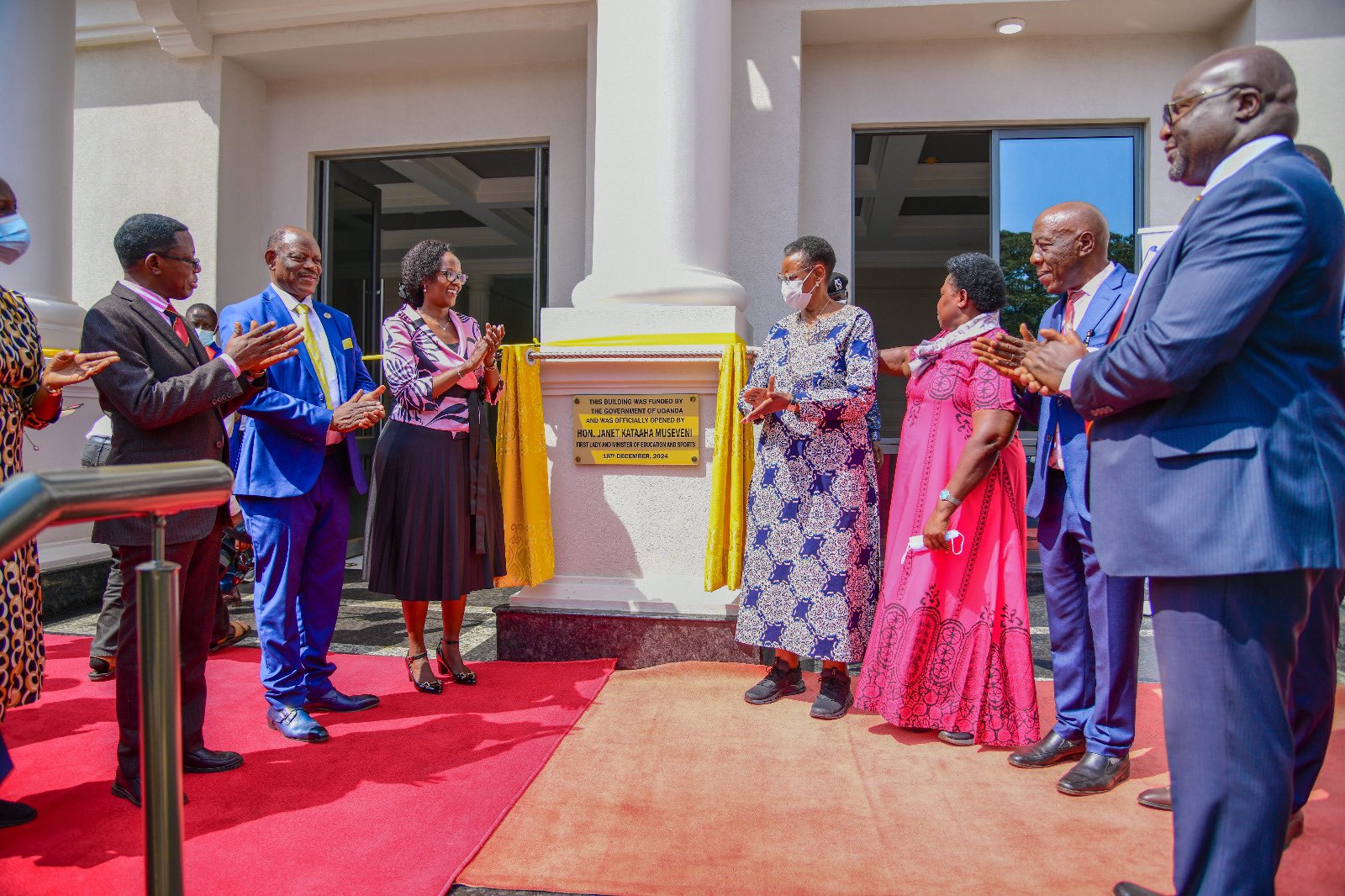
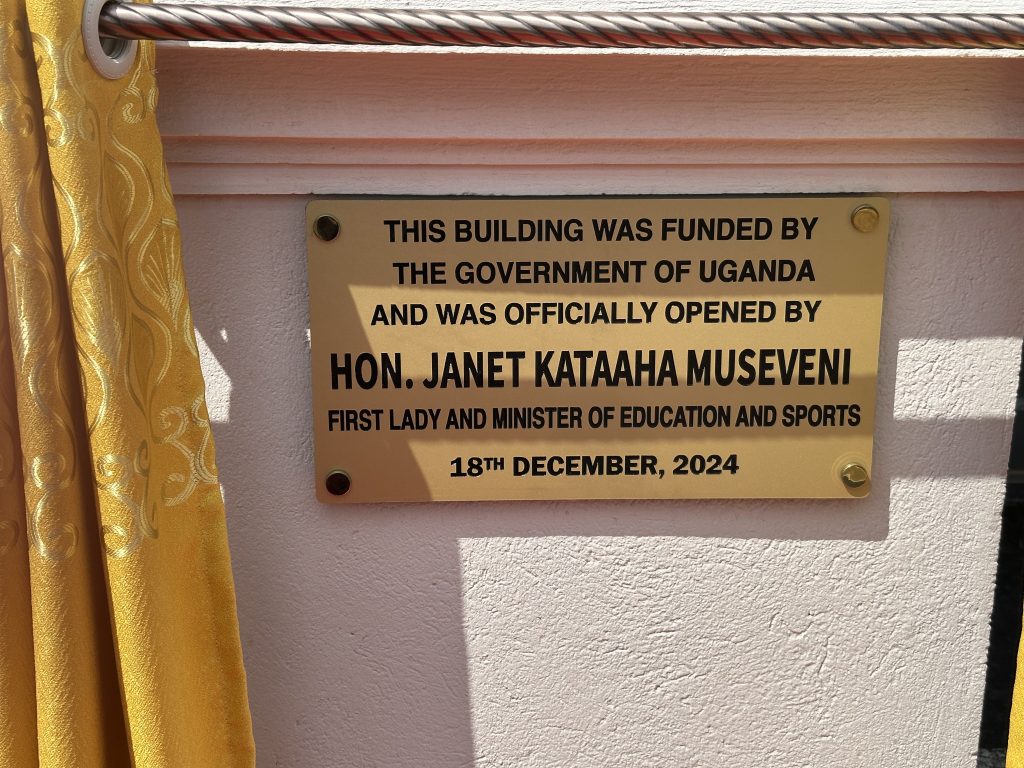
The new Makerere University School of Law Building was officially opened on 18th December, 2024 by the First Lady and Minister for Education and Sports, Hon. Janet Kataaha Museveni. She laid the foundation stone for this building on 17th May 2022.
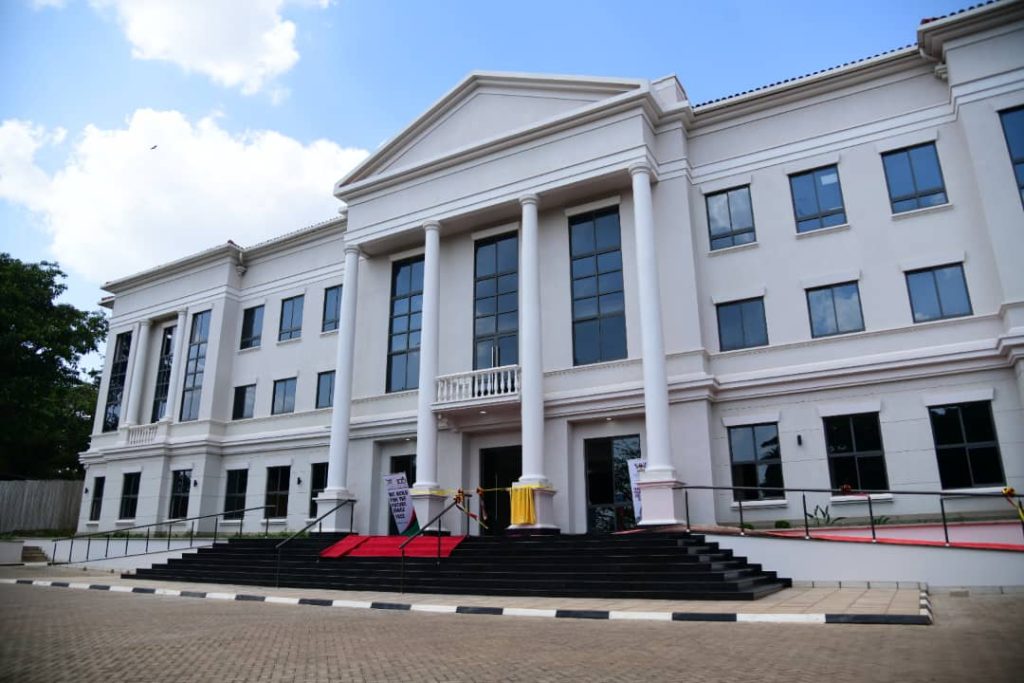
The building, fully funded by the Government of Uganda to a tune UGX7.3bn, is a three-storied structure with several state-of-the-art facilities including lecture theatres, tutorial and seminar rooms, a library, state-of-the-art Moot Court room, a cafeteria, lactation room and staff offices. This modern infrastructure is going to greatly enhance and provide a conducive teaching and learning environment for both staff and students. The construction works were undertaken by M/S CK Associates as Contractors and Symbion as the Consultants.
On arrival, the Minister was welcomed by the Chairperson Council, Mrs. Lorna Magara accompanied by the University management team including the Vice Chancellor, Professor Barnabas Nawangwe; the Deputy Vice Chancellor/F&A, Professor Henry Alinaitwe; the University Secretary, Mr. Yusuf Kiranda; the Academic Registrar, Professor Mukadasi Buyinza; Ag. Principal, School of Law, Assoc. Professor Ronald Naluwairo among others.
In her remarks, Mrs. Lorna Magara extended a warm welcome to Hon. Janet Kataaha Museveni, First Lady and Minister for Education and Sports. Mrs. Magara said, ‘your presence here today Maama, is a testament of your unwavering and steadfast support for Makerere University and highlights the tangible impact of your leadership in advancing Uganda’s education sector, particularly at Makerere University’. She noted that the building will provide critical support for practical legal education.
Professor Barnabas Nawangwe also welcomed the Minister to Makerere University noting that, ‘this is a joyful day when we are witnessing a bumper harvest in infrastructure development at this great institution’.
Thanking the Minister for her unwavering support to Makerere University, the Vice Chancellor said, ‘from the time you took over the Office of Minister of Education and Sports, the Higher Education Sector and Makerere University in particular has transformed tremendously. Most notable is the infrastructure revolution at Makerere. On several occasions, you have come to Makerere to lay the foundations for new buildings and to open completed buildings, including our iconic Main Administration Building.
He noted that before the new School of Law building, it was appalling that a place that had trained the entire judiciary of Uganda was in such a dilapidated state.
Prof. Nawangwe pledged the total commitment of the University to work with the Government of Uganda in the struggle to emancipate the people from poverty through research and production of highly skilled and patriotic graduates, innovators and entrepreneurs.
In her remarks, Hon. Janet Kataaha Museveni expressed her joy in coming to Makerere University, more especially on a day to mark another effort to provide quality education through provision of infrastructure at Uganda’s oldest University.
She said, ‘It is one thing to break ground for new infrastructure and another thing to complete. I vividly remember the ground breaking ceremony at the School of Law. I am therefore very pleased to be here today to commission the same’.
Quoting the bible, Hon. Kataaha Museveni reminded the congregation about the great rebuilder, Nehemiah, who had mobilised his countrymen to rebuild Jerusalem. She noted that with rebuilding, there is restoration of dignity that comes to an institution both physically and spiritually.
The minister saluted the Council and Management for the dedication to the rebuilding of the University expressing confidence that as they rebuild physically, the character of our young people shouldn’t be forgotten.
After commissioning the School of Law Building, Hon. Kataaha Museveni also opened the newly renovated student residence, Lumumba Hall and laid a foundation stone for the School of Graduate Studies Building, gifted to Makerere by Tororo Cement.







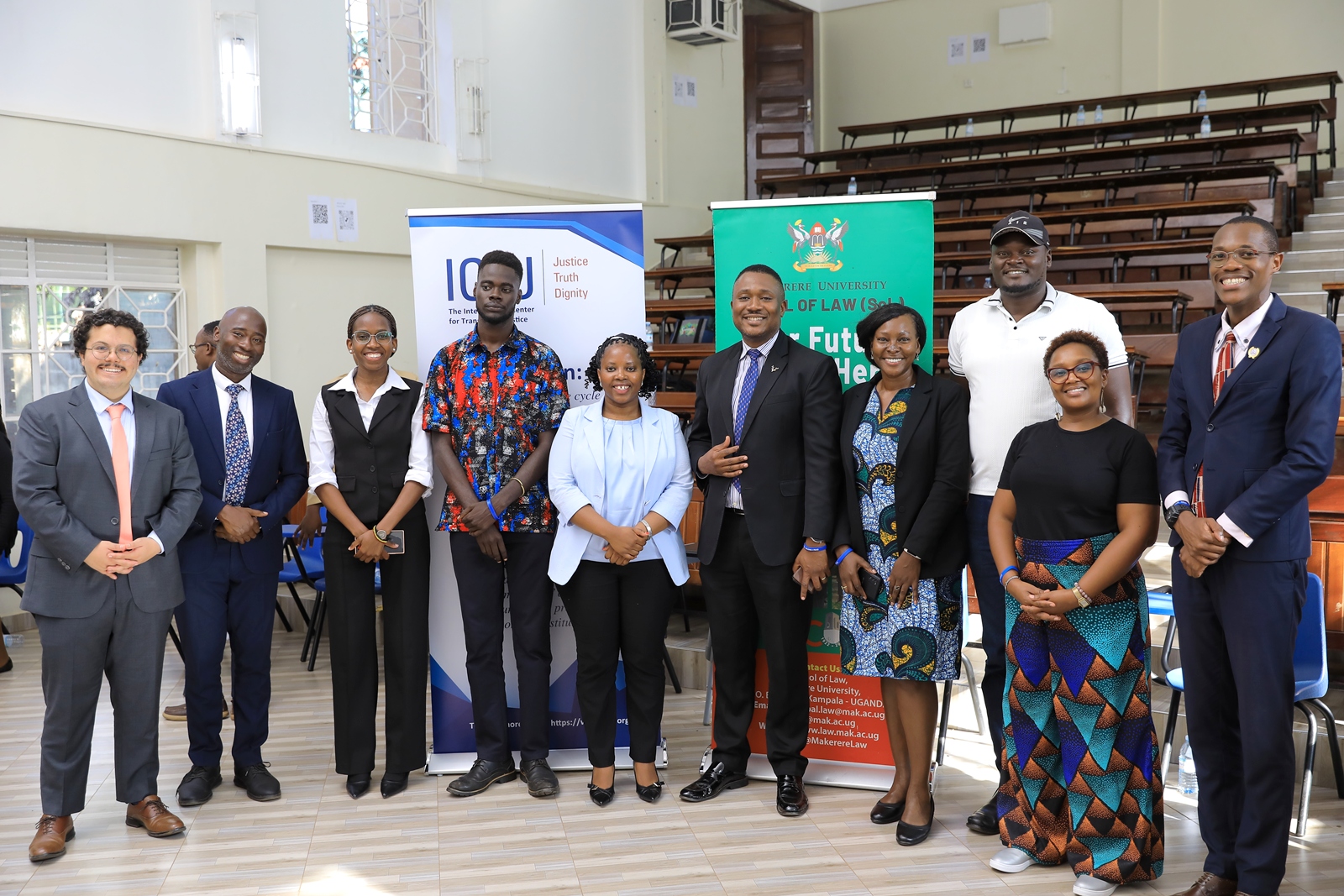
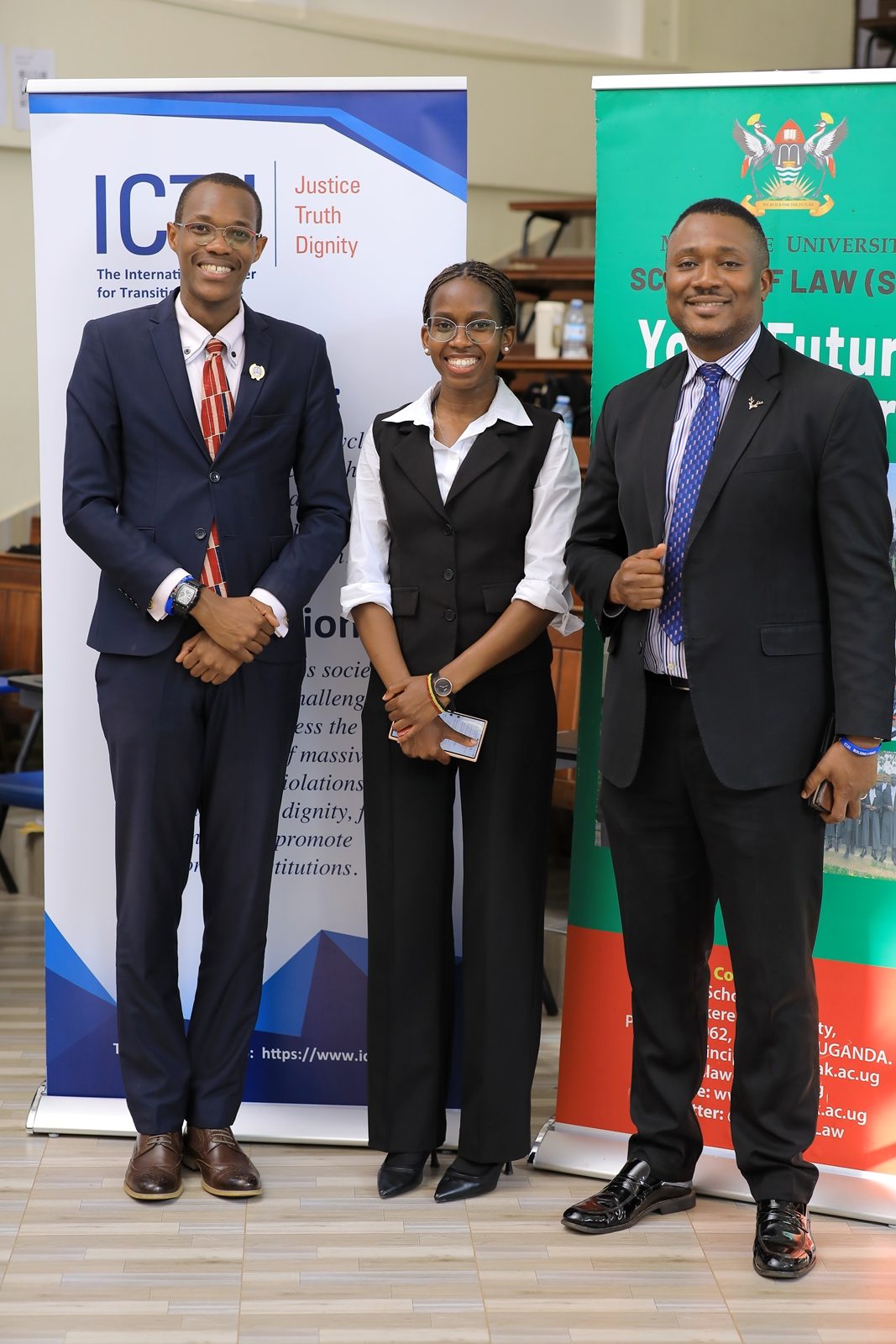
On 27th August 2026, Makerere University School of Law (MakSoL) in partnership with the International Center for Transitional Justice (ICTJ) supported by the Ministry of Foreign Affairs of the Kingdom of the Netherlands, held a university symposium calling for renewed efforts to translate Uganda’s transitional justice commitments into tangible justice for communities affected by conflict and human rights violations.
Themed “Confronting the Past and Building for the Future,” the symposium brought together students, academics, policymakers, practitioners, survivors, advocates and other stakeholders to reflect on Uganda’s transitional justice journey and explore pathways towards sustainable peace, justice and accountability.
Discussions focused on Uganda’s transitional justice experience, accountability for international crimes, survivor-centred justice, the role of cultural and religious leaders in peacebuilding, and lessons from transitional justice processes in other countries. The symposium also provided a platform for young people to examine their role in shaping a more peaceful, inclusive and accountable future.
Addressing participants, Ms. Violet Atukunda, Vice President of the Makerere Law Society (MLS), described transitional justice as a deeply human issue that challenges societies to consider how victims can be heard and supported, accountability achieved, and justice contribute to healing, reconciliation and lasting peace.
She welcomed practitioners, policymakers, academics, survivors, advocates and young people to share experiences, challenge conventional thinking and reflect on their responsibility to shape a more just and peaceful future.
Representing Professor Ronald Naluwairo, Dean of MakSoL, Dr. Ivan Engoru, Head of Commercial Law and Acting Deputy Dean, highlighted the importance of partnerships in advancing legal education, research and community engagement.
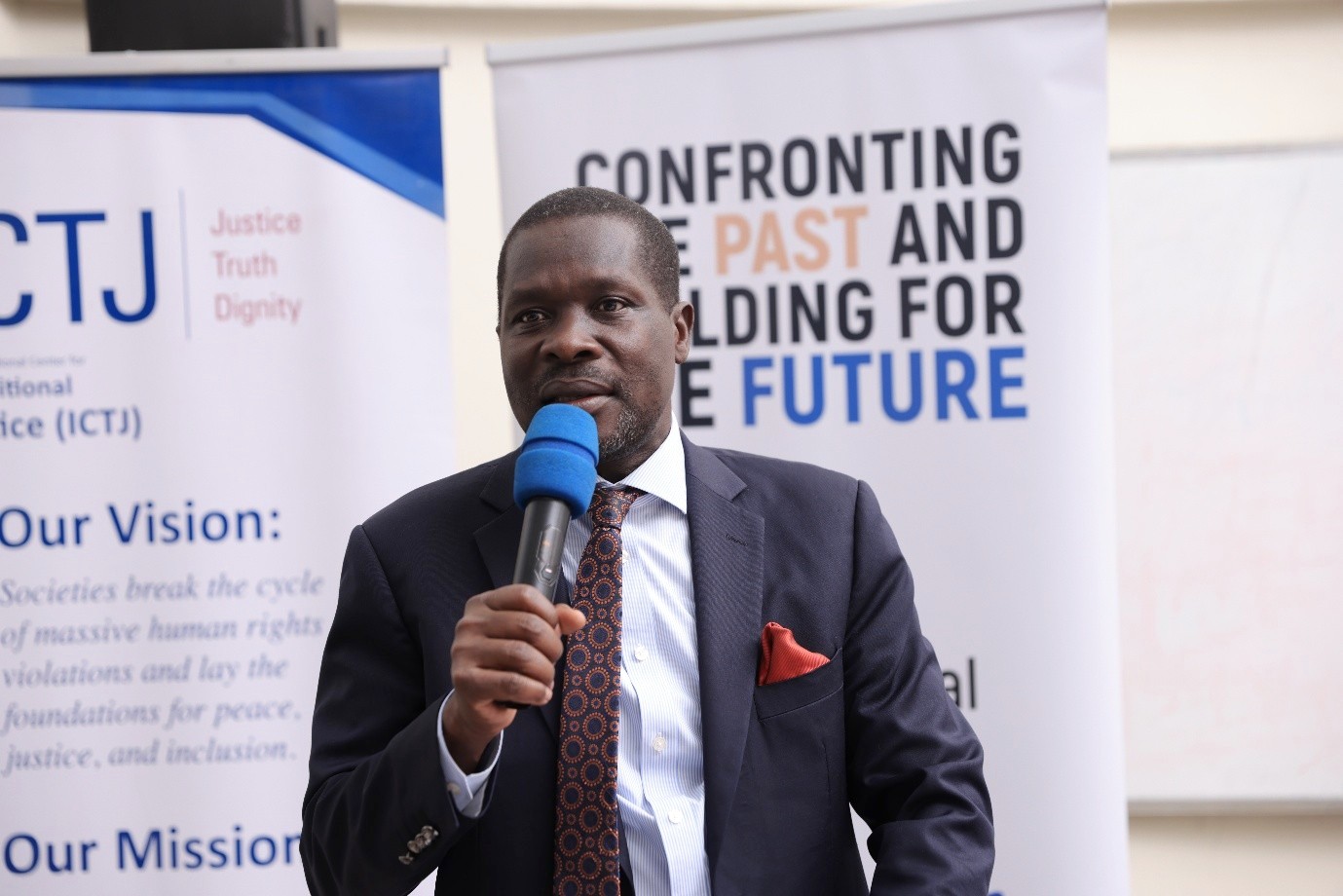
He said collaboration with external partners provides valuable opportunities to connect students with practitioners and institutions, bridging the gap between classroom learning and professional practice. He also emphasised that transitional justice requires collaboration among academia, government, civil society, the private sector and international partners.
Dr. Engoru reaffirmed the School’s commitment to strengthening existing partnerships and expanding collaboration in teaching, research, student engagement and professional development.
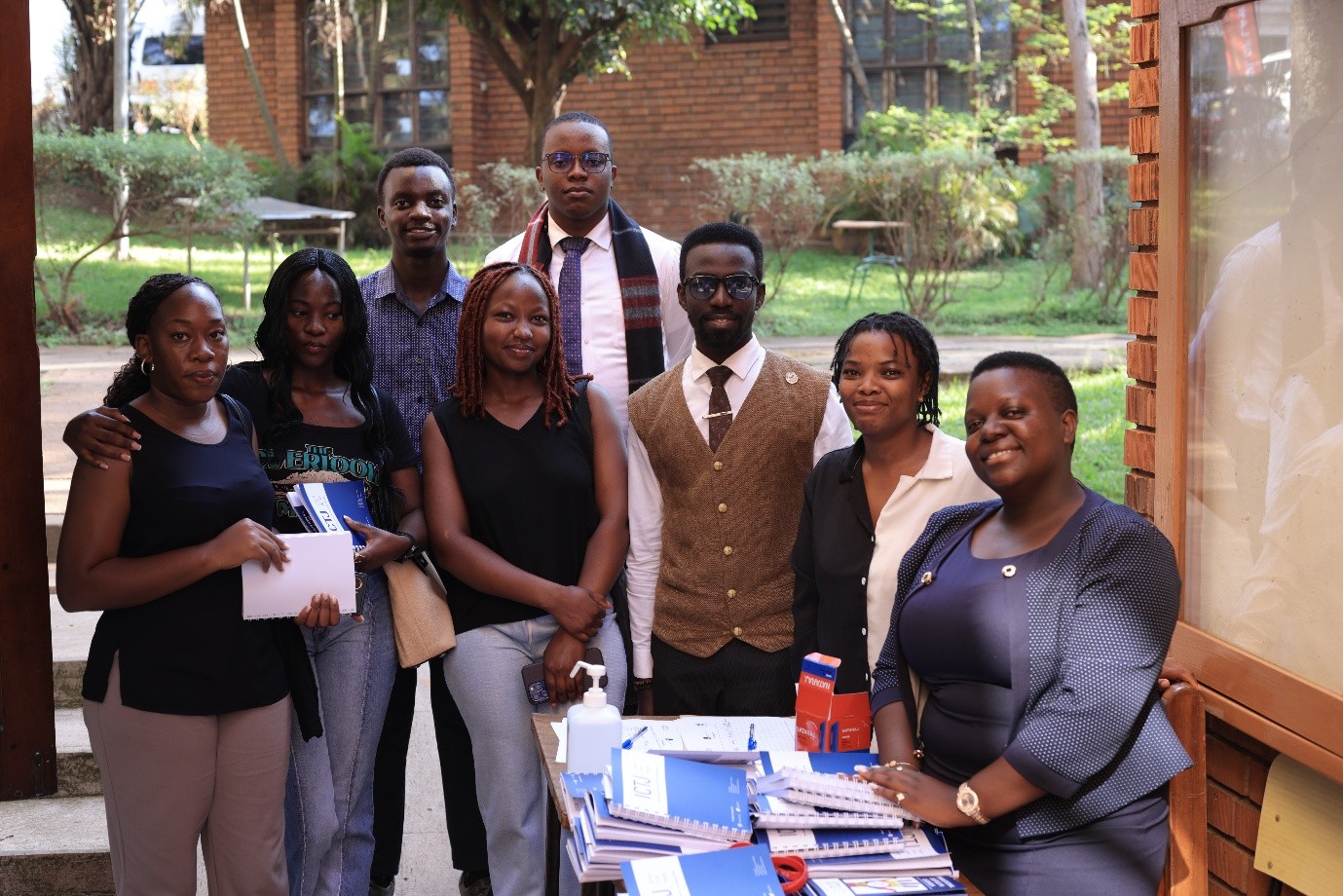
Moving from policy to lived reality
Ms. Marianne Akumu, Head of Office at ICTJ Kampala, called for renewed efforts to move Uganda’s transitional justice agenda from policy and legal frameworks to tangible outcomes for affected communities.
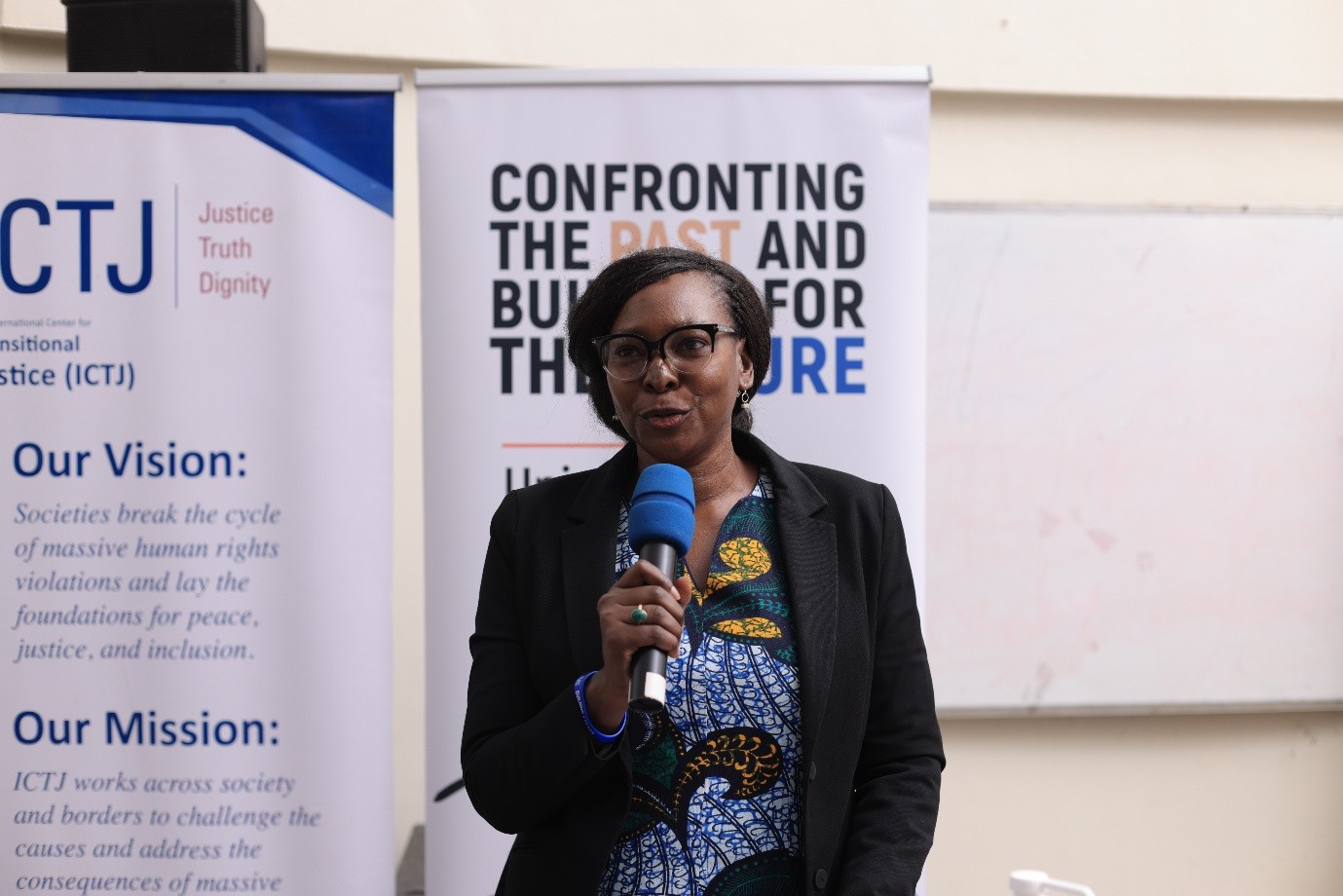
She urged participants to reflect on key questions of truth, accountability and reparations, including who determines the truth, how victims can access meaningful justice, and how processes can reflect communities’ lived experiences.
Ms. Akumu noted that Uganda’s history of conflict, including the conflict between the Government and the Lord’s Resistance Army, has left lasting impacts such as displacement, human rights violations, gender-based violence and disrupted education.
While commending Uganda for being among the first African countries to adopt a national transitional justice policy, she noted that implementation remains slow. She called for practical action to ensure affected communities experience justice in meaningful ways.
She also emphasized meaningful youth participation, noting that young people are eager to help shape Uganda’s future. Ms. Akumu encouraged participants to carry the discussion beyond the symposium and apply transitional justice principles in their studies, professions and communities, while drawing lessons from international experiences such as Colombia.
Calls for stronger collaboration
Speaking at the symposium, Mr. Odde De Jong, First Secretary at the Embassy of the Kingdom of the Netherlands in Kampala, called for stronger collaboration among government, universities, civil society, development partners and survivor communities to advance transitional justice in Uganda.
He said transitional justice must address the harm suffered by victims and survivors while strengthening institutions and relationships needed for a more equitable and peaceful future.
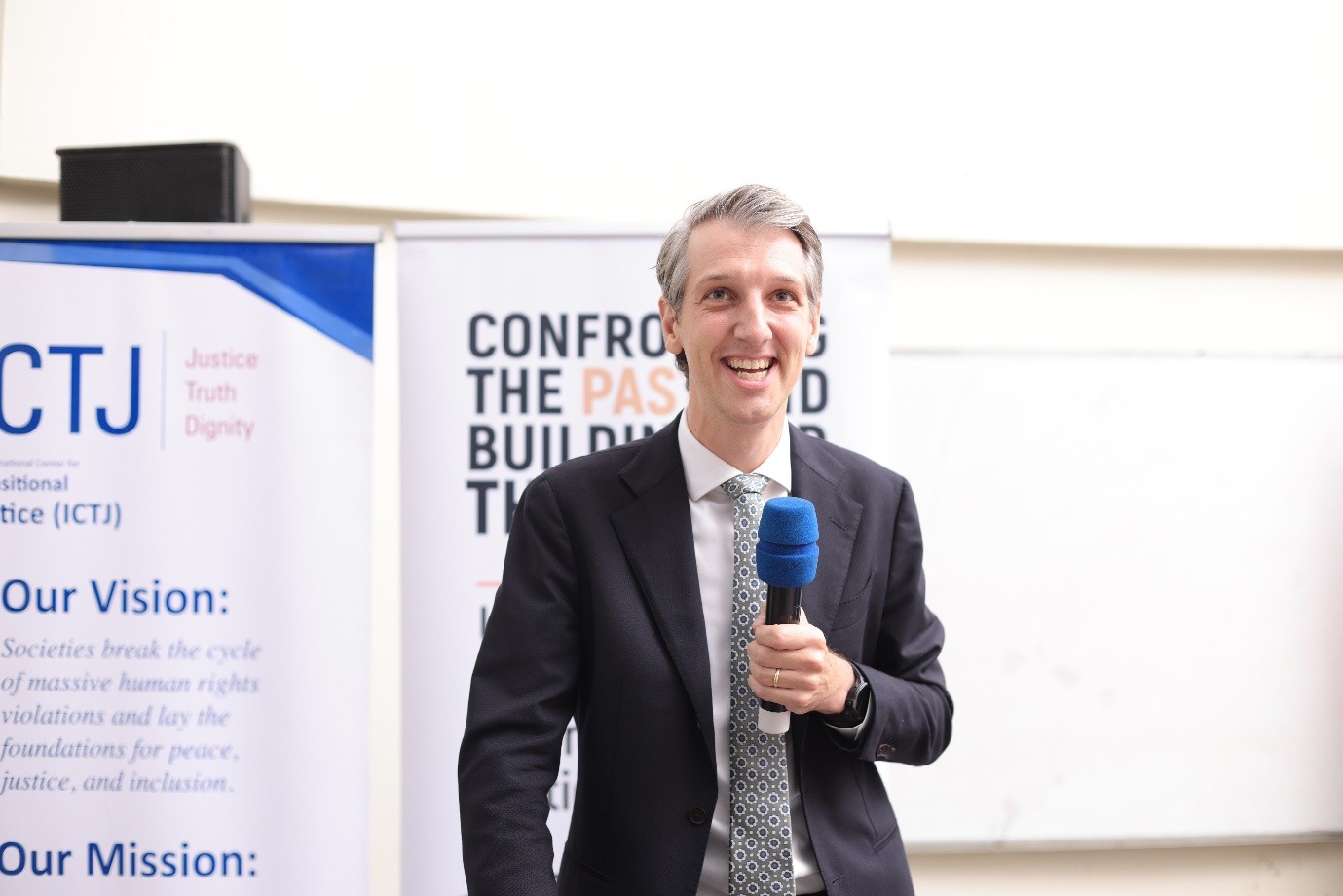
De Jong noted that Uganda’s history of conflict has left lasting impacts, including killings, abductions, sexual violence, child recruitment and displacement. Recalling his first visit to Uganda in 2024, he cited the phrase “the war is not over” to emphasise that the effects of conflict can persist long after violence ends.
He urged Uganda to strengthen efforts in formal and traditional justice, reconciliation, reparations and amnesty, while keeping survivors at the centre. He also called for greater investment in education and partnerships, noting the role of universities in preparing future professionals to advance justice and accountability.
“Confronting the past requires listening to those of different experiences, recognising the realities and ensuring that the future does not reproduce the injustices of the past,” he said.
De Jong challenged young people to continue questioning and innovating around issues such as reparations, accountability and the relationship between traditional and formal justice systems.
“Building a more just and peaceful future is not the responsibility of someone else. It is a responsibility we share,” he said.
A people-centred approach
Delivering the keynote address, Hon. Lyandro Komakech, former MP for Gulu Municipality urged participants to view transitional justice as a pathway from the difficult experiences of Uganda’s past towards a more peaceful and inclusive future.
He called for a comprehensive, people-centred approach that goes beyond legal and technical processes to address the needs of victims, survivors and affected communities through truth-telling, accountability, reparations, reconciliation and memorialisation.
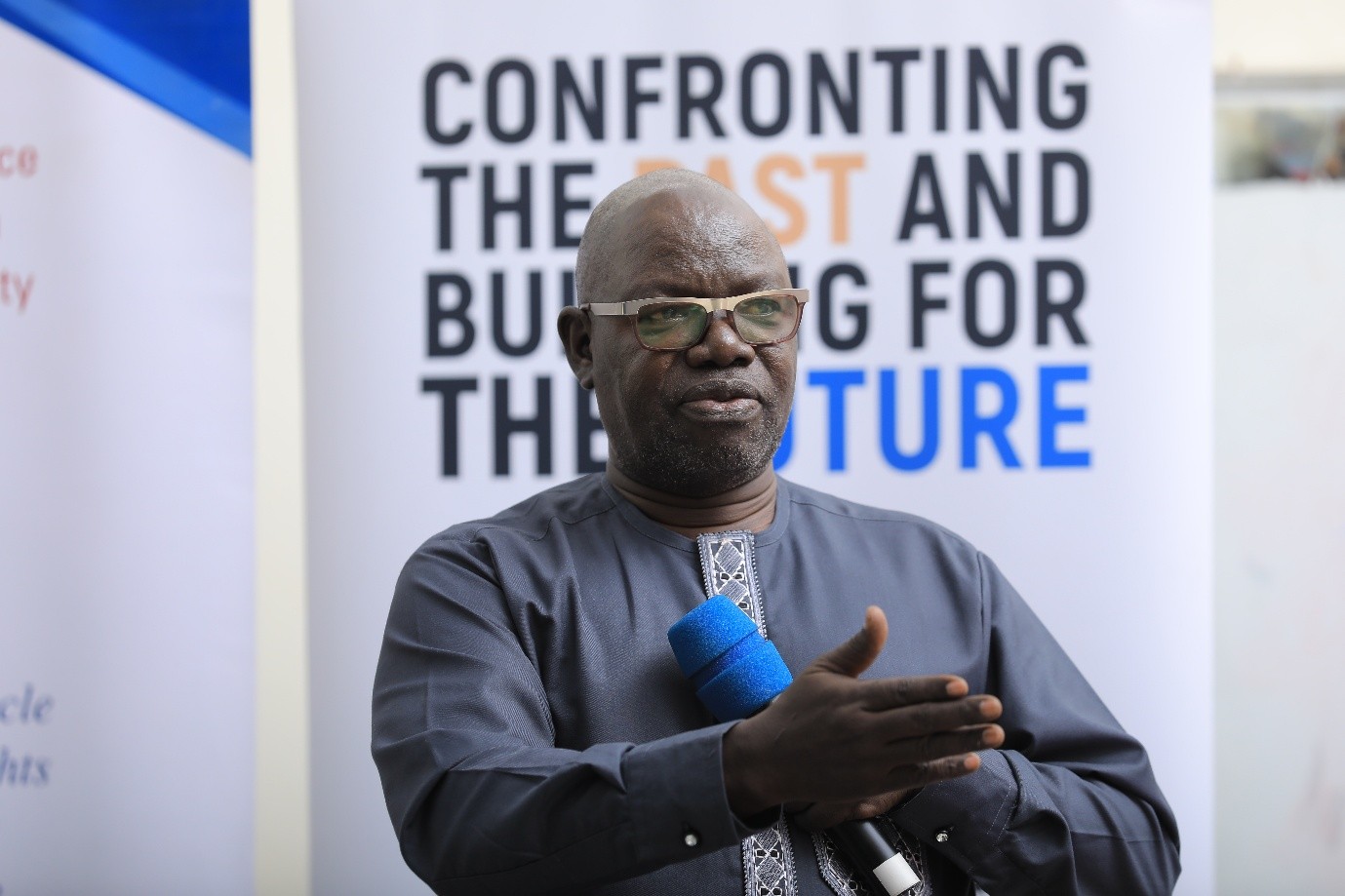
Drawing on his experiences in conflict-affected communities, Hon. Komakech emphasised the importance of Uganda’s traditional and indigenous justice mechanisms and called for stronger collaboration among government, the judiciary, civil society, traditional institutions and communities.
He stressed that unresolved experiences of conflict can continue to affect generations, making it essential to address the past while strengthening institutions and relationships capable of sustaining peace.
Concluding his keynote, Hon. Komakech said remembering and addressing past wrongs should not leave communities trapped in history, but should help create conditions in which present and future generations can live together with greater trust, dignity and security.
From dialogue to action
The symposium concluded with reflections and key takeaways from participants, alongside responses to the Peace Wall and closing remarks from MakSoL and ICTJ.
The discussions underscored the importance of confronting the legacies of conflict while strengthening accountability, inclusion and healing.
By bringing together voices from academia, government, civil society, survivor communities and young people, the symposium sought to strengthen continued dialogue and collective action towards sustainable peace and justice in Uganda.
The event ultimately placed a shared responsibility at the centre of Uganda’s transitional justice journey: confronting the past, addressing continuing harms and ensuring that the lessons of history help build a more peaceful, inclusive and just future.
Some of the proposals raised included:
- Introduction of a remembrance day for Uganda, to appreciate where we are coming from and where the nation is headed.
- Reflect on the issue of conflict in Uganda, it isn’t closed but continues to mutate. Unresolved conflict is used by political actors to further their agendas.
- Create a victim-centred matrix as opposed to an institutional-centred one.
- Decolonisation of systems
- Message to students to build an understanding from real experiences, they were encourages to visit places affect.
Law
Makerere University School of Law Finishes Second at 35th Christof Heyns All Africa Human Rights Moot Competition
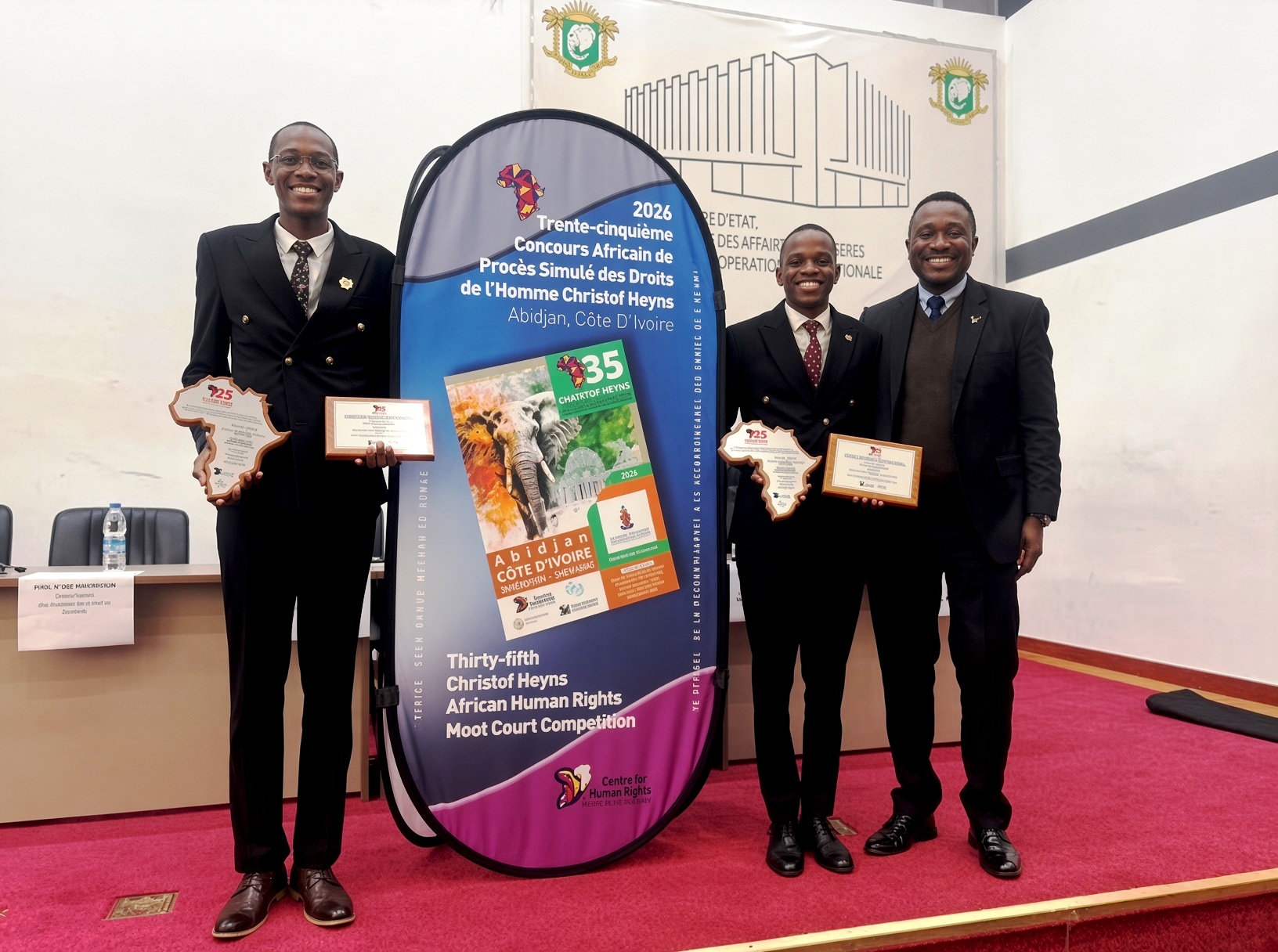
Makerere University School of Law (SoL) recorded an outstanding performance at the 35th Christof Heyns All Africa Human Rights Moot Court Competition, finishing as 1st Runners-Up in the week-long competition held at the Institut Universitaire d’Abidjan in Abidjan, Côte d’Ivoire, from 26 July to 2 August 2026.
Hosted by the University of Pretoria Centre for Human Rights, the competition brought together more than 86 universities from across Africa, making it one of the continent’s largest and most prestigious human rights moot court competitions.
Makerere University was represented by Owen Mayanja, LLB III student, and Conrad Akesigaruhanga, LLB I student. The team delivered an exceptional performance throughout the competition, advancing through a highly competitive field and ultimately reaching the final. Dr. Daniel Ruhweza, Head – Law and Jurisprudence who also serves as Coordinator Mooting at SoL travelled with the team to Abidjan.
The team’s performance was recognised with several major awards. Makerere was named Best Team in the Preliminary Rounds and received the Best Memorial award for the quality of its written submissions. In the individual oral advocacy rankings, Owen and Conrad were ranked 5th and 7th Best Oralist respectively in the competition.
Reaching the finals placed the Makerere team before an eminent bench comprising distinguished African Justices of the African Court and members of the African Commission on Human and Peoples’ Rights, providing the students with invaluable exposure to human rights advocacy and litigation at the continental level. The competition also offered an opportunity to engage with law students, academics, legal practitioners, and members of regional human rights institutions from across Africa.
The achievement is a significant milestone for the SoL and reflects the strength of its students in legal research, writing, oral skills, and critical thinking. It also underscores the School’s commitment to equipping students with the skills required to engage confidently with complex legal questions.
A Journey of Preparation, Resilience and Growth
For the Makerere team, the competition was the culmination of months of intensive preparation involving research, drafting and redrafting written submissions, and rigorous oral advocacy practice.
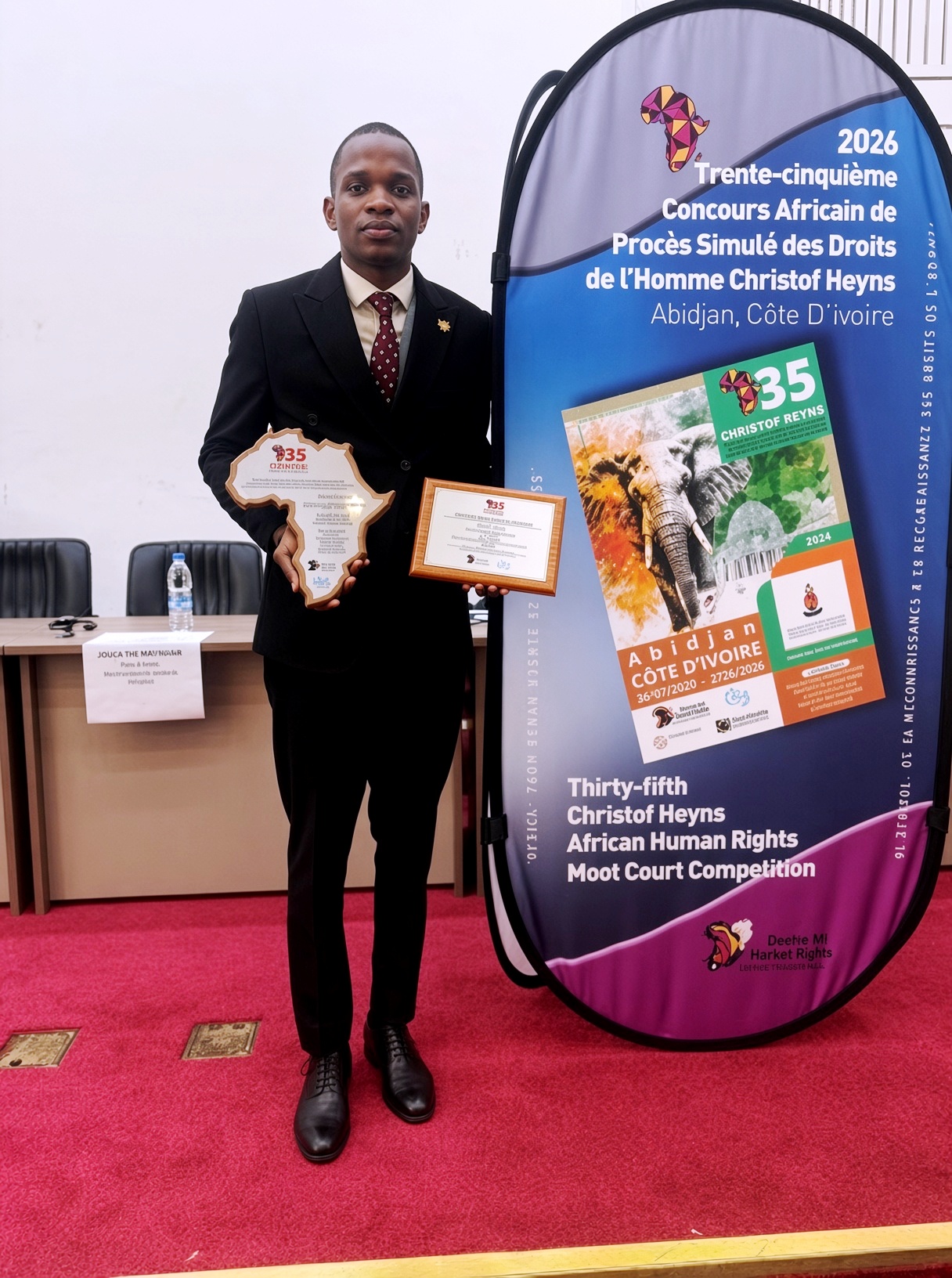
Reflecting on the experience, Owen Mayanja described the competition as an opportunity to test himself against some of the strongest law students on the continent.
“Participating in the Christof Heyns African Human Rights Moot was an opportunity to test myself against some of the best law students on the continent. From qualifying through our internal moot to months of researching, drafting, and rigorous oral practice, the preparation was intense.”
He noted, “My biggest challenge was learning to distil complex human rights arguments into concise and compelling submissions without losing legal rigour, and relentless practice helped us overcome that.”
Owen added “Standing before such a distinguished bench of African Judges in the final was a defining moment. Finishing as 1st Runners-Up, winning Best Memorial and Best Team in the Preliminary Rounds, and being recognised among the top oralists among over 86 teams was deeply affirming, not just for us, but for Makerere.”
He said the experience reinforced two important lessons: perseverance and the ability to embrace pressure. “The experience taught me two things: never give up, and embrace pressure. The pressure pushed me beyond my limits and helped me grow. My advice to students is simple: know that it will be hard, but do not let that stop you—the difficulty is what makes the experience worthwhile.”
Mayanja also expressed gratitude to his teammate, coaches, the SoL Mooting Society, SoL administration and other individuals who supported his mooting journey. “I am grateful beyond measure to Conrad, the steadiest counsel I could have stood beside; to our coaches, Kalinda Jamada, Ruth Muhawe and Sabiti Edwin, for the constant feedback during our preparations; to our Patron, Dr. Daniel Ruhweza, to John Baptist Katende, Chairperson Makerere Mooting Society and the entire Makerere University School of Law community for the honour of carrying its name.”
He made special mention of Calvin David Mukiibi, whom he described as having played a longstanding role in his development as a mooter. “He has been part of my mooting journey from my very first competition to this one. He gave up his time again and again, kept believing even when things didn’t come our way in many of the competitions. A lot of what I am proud of in this journey was built in those moments, the ones that never made it here. Thank you for being consistently there through it all. This win is yours as much as anybody else’.”
Learning beyond the Classroom
For Conrad Akesigaruhanga, participating in the Christof Heynes All Africa Moot Competition provided an opportunity to extend his learning beyond the classroom and engage with human rights questions from a broader African perspective. He said, “Participating in the All-Africa Moot challenged me to grow beyond the classroom, sharpen my oral skills, and engage with human rights issues from a broader African perspective.”
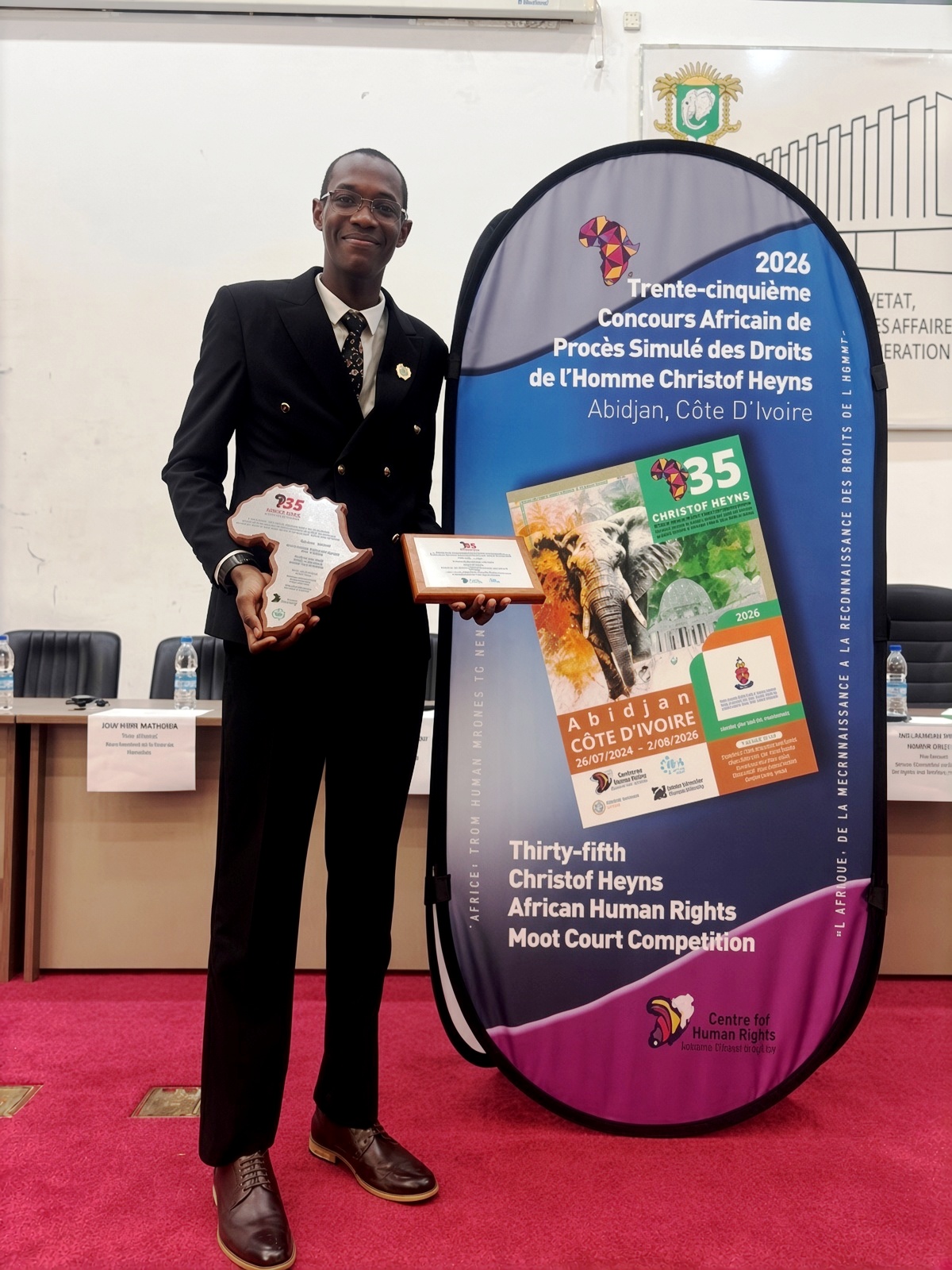
As a first-year law student, Akesigaruhanga said the experience demonstrated the importance of preparation, teamwork and resilience. “The journey demanded extensive research, preparation, teamwork, and resilience, but it taught me that thorough preparation builds confidence and enables you to think on your feet under pressure.”
One of his most memorable experiences was making submissions before members of Africa’s regional human rights institutions. He noted that, “one of the most memorable moments was making submissions before Justices of the African Court and members of the African Commission on Human and Peoples’ Rights. It was a full-circle moment that reminded me that human rights are not merely abstract legal concepts—they are lived realities.”
Akesigaruhanga described receiving the award as both fulfilling and humbling, noting that the experience represented not only the team’s achievement but also his personal growth in confidence and advocacy. He thanked those who supported his journey, “I am deeply grateful to my teammate Owen, our coaches, the Mooting Society, Dr. Ruhweza, and the SoL Administration for their support.”
Conrad’s advice to fellow students is to begin early, understand rather than memorise the law, and remain open to challenging questions. He said, “Start early, understand the law rather than memorising it, embrace difficult questions, and trust the process. Mooting is not only about winning; it is about becoming a better advocate and learning to believe in your preparation.”
SoL Commends the Team
The success of the team can be attributed to the support and guidance of the SoL Administration led by the Dean – Professor Ronald Naluwairo, the Mooting Society, the coaches, and the Mooting Coordinator/Patron, Dr. Daniel Ruhweza.
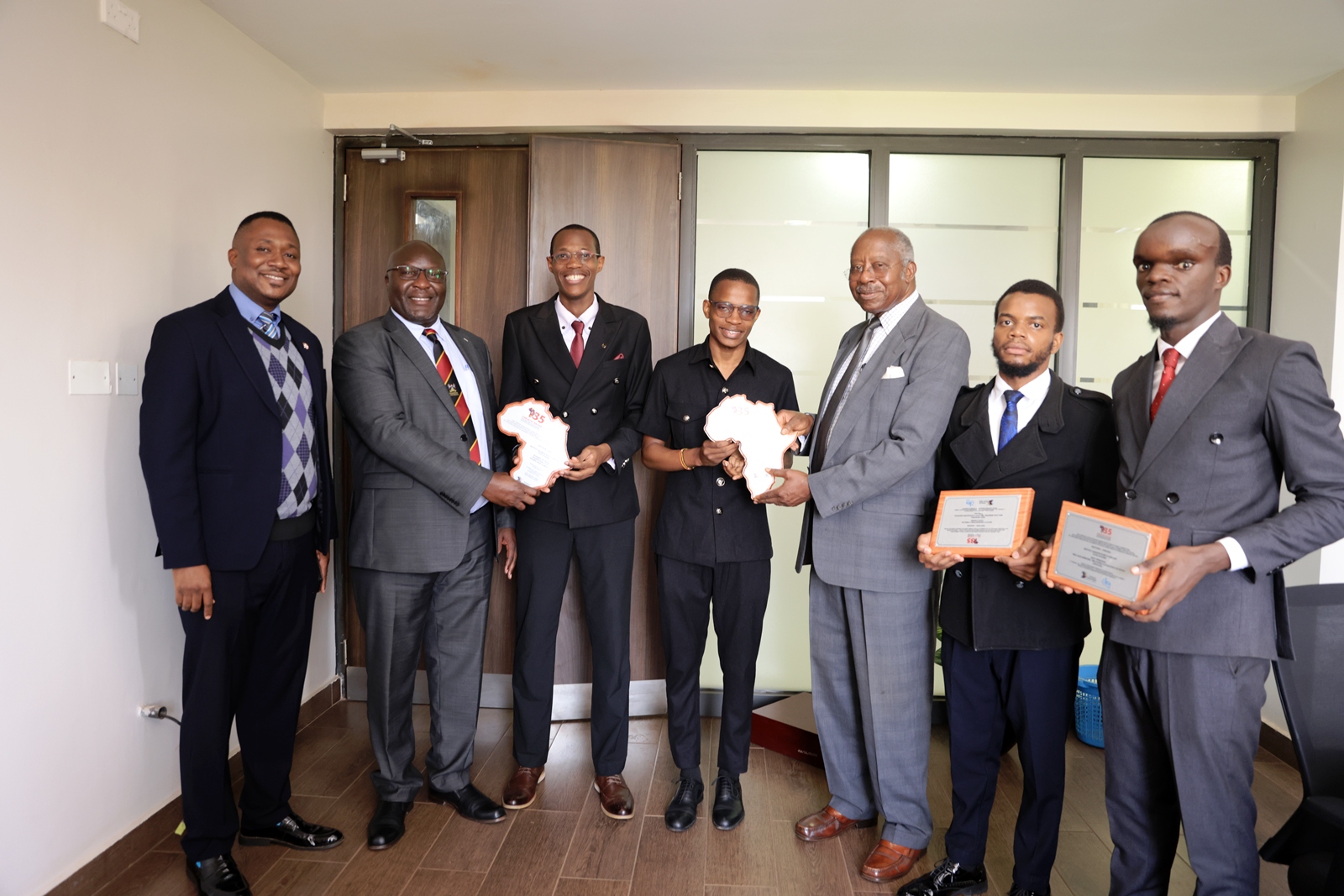
Dr. Ruhweza, who travelled with the team to Abidjan, commended the students for their achievement, particularly Akesigaruhanga’s performance as a first-year student. “I am proud of them. Conrad is just in his first year of study. Beating over 80 other teams in Abidjan, Ivory Coast, is impressive.”
The strong showing in Abidjan underscores SoL’ place among the leading law schools on the African continent. More importantly, the achievement demonstrates the value of practical legal education in developing students who can conduct rigorous research, construct persuasive legal arguments, advocate effectively, and engage confidently with complex legal issues.
The Dean, staff and students of the SoL congratulate Owen Mayanja and Conrad Akesigaruhanga on their remarkable achievement and commends Dr. Ruhweza, the coaches, the Mooting Society for the support during preparations. They also thank the University Management for contributing to the team’s success through provision of finances and an enabling environment.
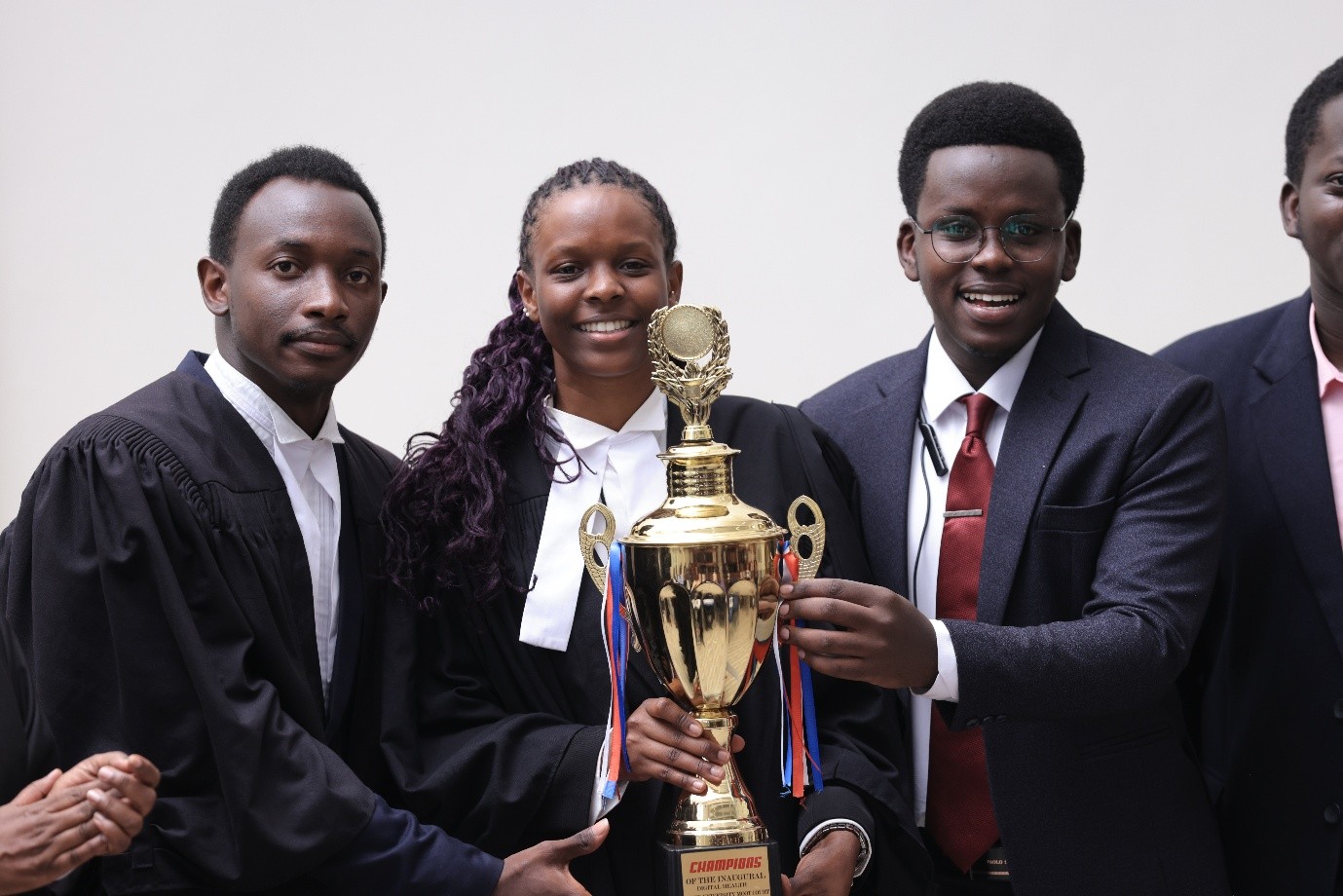
Makerere University School of Law (SoL) hosted the inaugural Digital Health Inter-University Moot Court Competition on 12–13 August 2026, bringing together law students from six Ugandan universities to examine emerging legal and ethical questions arising from the digitisation of healthcare.
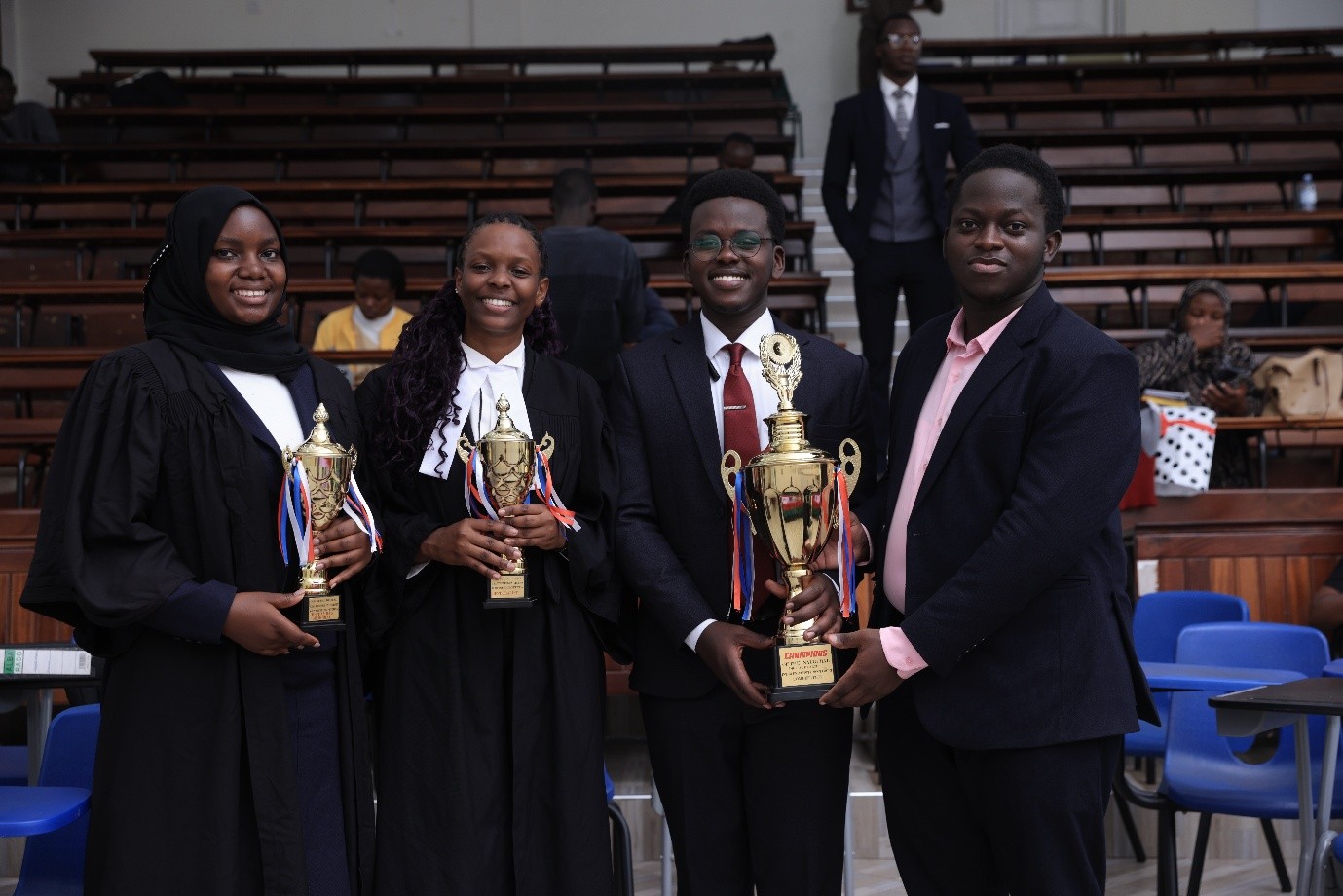
Makerere University emerged as the overall winner, with IUIU School of Law, Kampala Campus, taking the runners-up position. The competition recognised outstanding performances, with Blessing Olga Asianut taking home the award for Best Oralist. IUIU was named Best Memorial, while Makerere Law received the award for Best Amicus Memorial.
Held in partnership with the University of Warwick, School of Law and supported by the Wellcome Trust, the competition brought together teams from Makerere University, Islamic University in Uganda (IUIU)–Kampala Campus, Kampala International University, King Caesar University, Gulu University and Metropolitan University. The preliminary rounds were held on 12 August, followed by the finals on 13 August before Hon. Lady Justice Patricia Mutesi and Hon. Justice Anthony Wabwire.
Moot Examines Legal Challenges in Digital Healthcare
At the centre of the competition was a hypothetical case before the High Court of Ngalamba, Gracious Asiimwe v. Winner Insurance Company and the Attorney General of Ngalamba. The case examined the legal implications of introducing a nationwide digital health system and required students to grapple with issues of privacy, data protection, informed consent and access to healthcare.
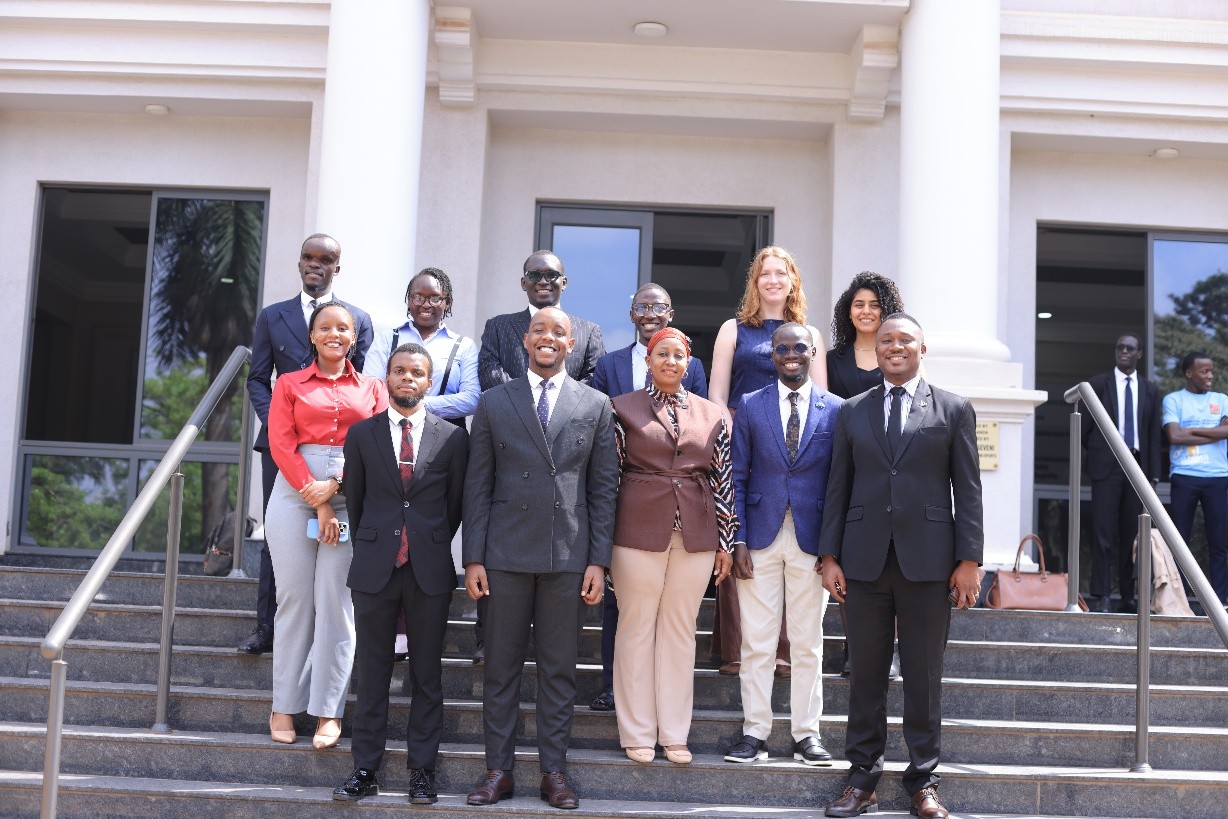
In the fictional dispute, Asiimwe challenged the government and Winner Insurance Company over the alleged failure to protect her sensitive medical information, obtain consent for the collection and use of her health data, and ensure that the digital health system did not undermine access to healthcare.
The case also raised concerns about the transfer of patients’ health data across borders and its use by private entities without consent. It examined interoperability challenges that allegedly forced patients to repeat costly medical tests because different health facilities’ digital systems could not communicate.
Beyond data protection, the moot considered the wider implications of investment in digital health, including claims that public funds had been diverted from hospitals and schools to finance the new system, potentially affecting the delivery of basic services.
Through the hypothetical case, students were challenged to examine how digital health intersects with fundamental rights, government obligations and the ethical use of health technologies.
Professor Sekalala Tasks Students to Question Who Owns Health Data
Speaking during the moot, Professor Sharifah Sekalala, Deputy Head of University of Warwick School of Law and Director of the Centre for Global Health Law highlighted the difficulty of defining health data and determining who owns and controls it. She noted that devices such as smartwatches and fitness trackers collect information including blood pressure and other health indicators, raising questions about who should have the right to use such information.
She questioned whether technology companies should profit from users’ health information without sharing the benefits, particularly where such data contributes to the development of new medicines and treatments.
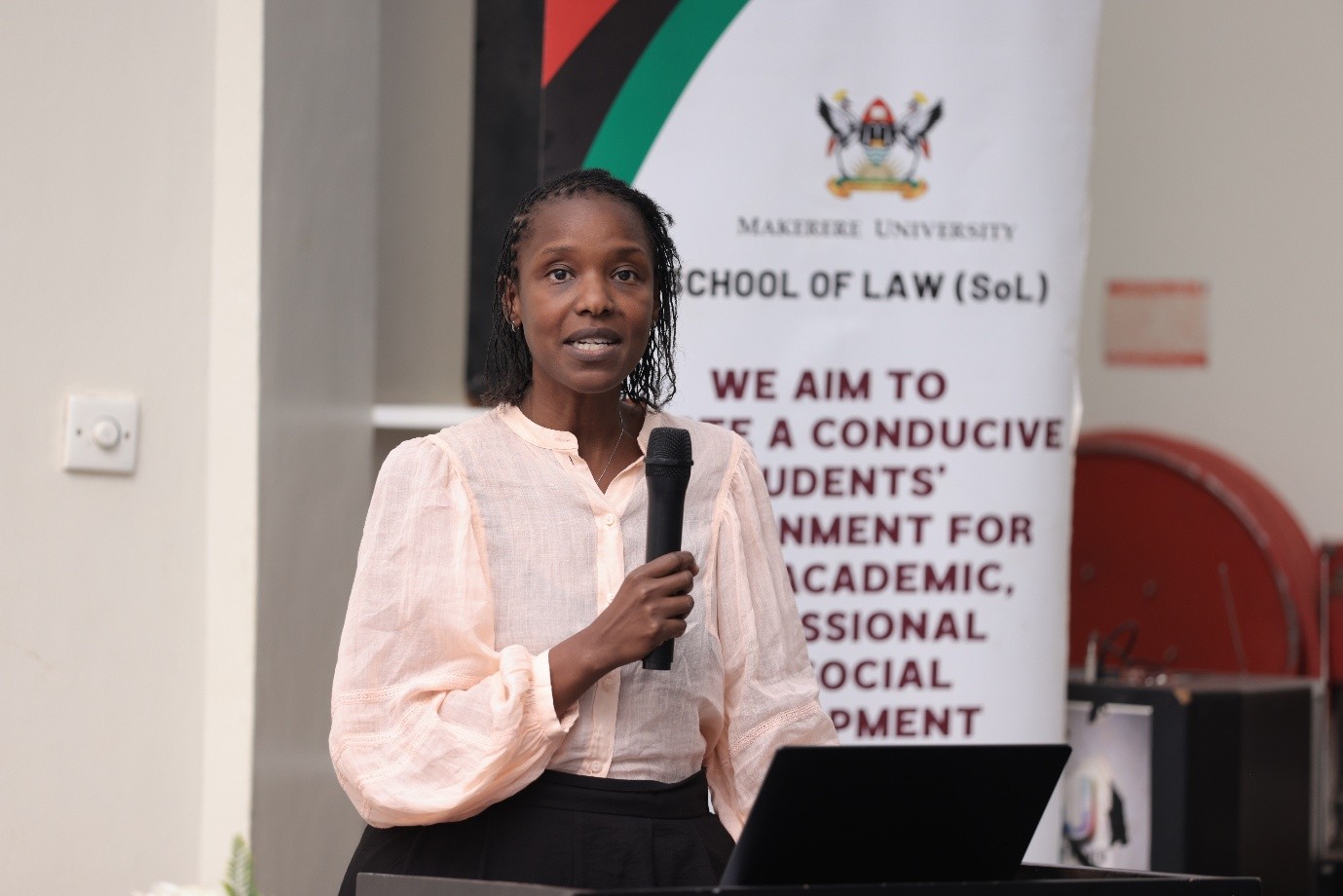
Professor Sekalala also cautioned that unclear ownership and commercial use of health information could undermine trust in health systems and threaten individual and community privacy.
Drawing on her experience at Makerere University, she encouraged students to value their academic foundation, remain curious and think beyond the classroom. She urged them to remain committed to justice, fairness and equity.
Judges Emphasise Depth, Confidence and Persuasion
Hon. Lady Justice Patricia Mutesi and Hon. Justice Anthony Wabwire who moderated the finals commended all participating teams for their hard work, legal knowledge and advocacy skills. They noted that the main differences among the teams emerged in the depth of legal analysis, clarity of presentation, articulation of arguments and responsiveness to questions.
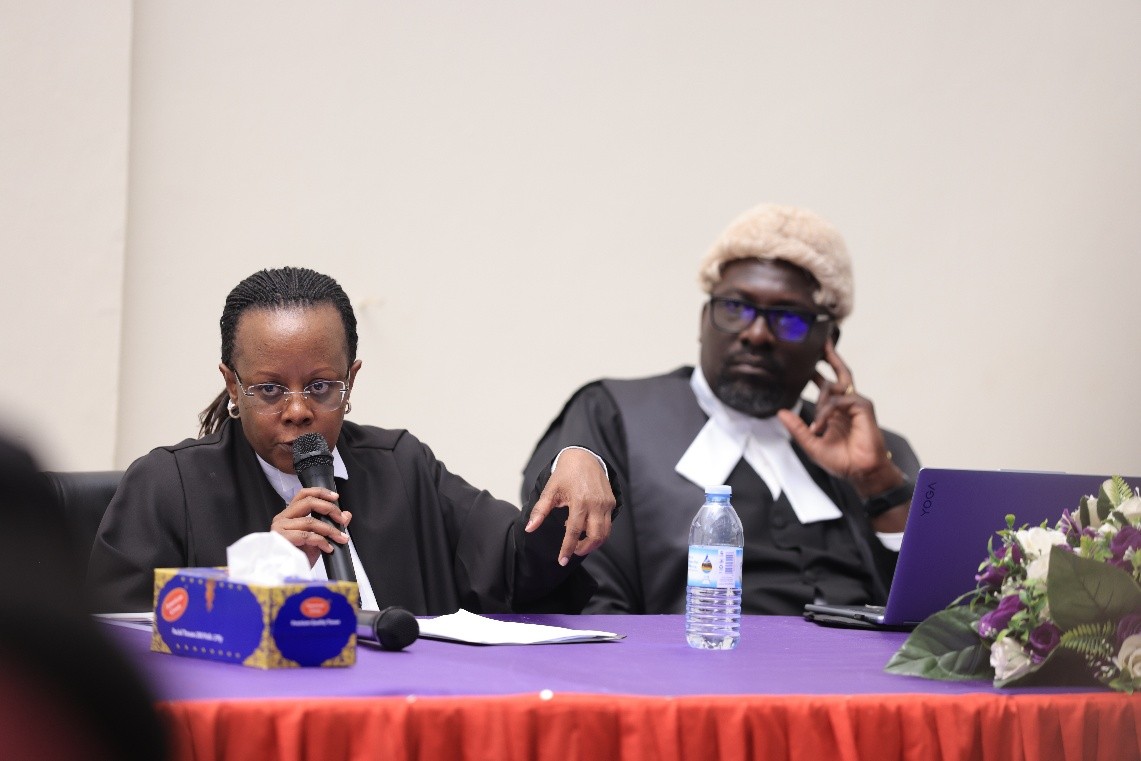
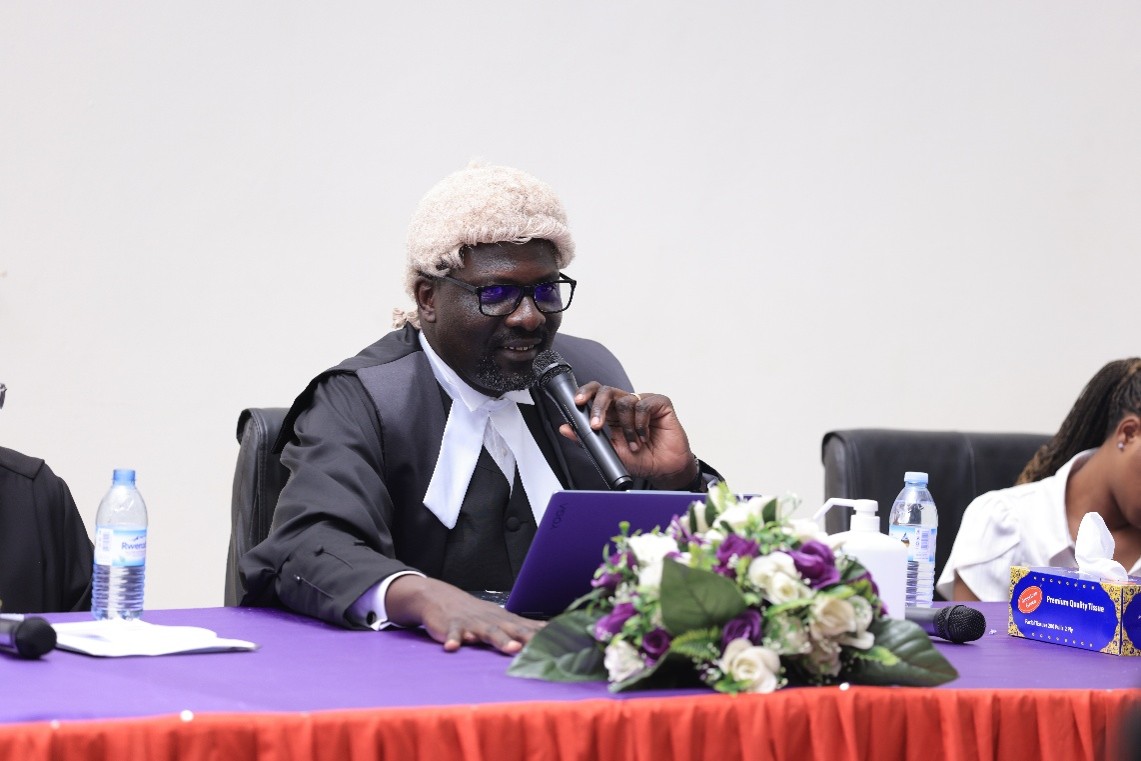
They emphasised that legal knowledge is the foundation of effective advocacy but must be accompanied by deeper engagement with legal principles and relevant interpretations. Confidence was also identified as essential, particularly because advocates in real court proceedings must respond effectively to unexpected questions rather than rely solely on prepared submissions.
The judges observed that the respondent team made strong use of the facts in the case, while the applicant team missed some opportunities despite having favourable facts. Students were also urged to pay close attention to the reliefs sought from court by clearly specifying the damages claimed and the precise orders they want the court to issue.
The panel further emphasised that advocacy is fundamentally about persuasion. Lawyers must communicate effectively through both written and oral submissions while making the best use of limited court time. Students were encouraged to understand and summarise their facts clearly, identify the issues before court and state precisely what they want the court to do.
They were also encouraged to attend proceedings at the Industrial Court, where observing live cases can help them learn how arguments and objections are presented and addressed.
The judges advised students to remain composed when faced with difficult questions, including questions of jurisdiction, and to continue engaging with the court under pressure. They also cautioned students to verify legal authorities and citations carefully, particularly in an era of artificial intelligence where inaccurate or fabricated legal authorities can easily be generated.
In their concluding remarks, Hon. Lady Justice Patricia Mutesi and Hon. Justice Anthony Wabwire commended the students for the skills demonstrated during the competition. They reminded them that advocacy is an art requiring depth of knowledge, confidence, clear articulation of facts and responsiveness to questions.
They encouraged the students to continue strengthening their legal knowledge, research and advocacy skills, noting that a strong grasp of the law enables lawyers to persuade the court with greater clarity and confidence.
Moot Provides a Platform for Learning and Collaboration
In her closing remarks, Dr. Zahara Nampewo, Deputy Dean at SoL thanked the organisers, participants and university community for making the moot a valuable learning experience. She noted that the feedback session was intended to help students learn from the process rather than simply focus on the results.
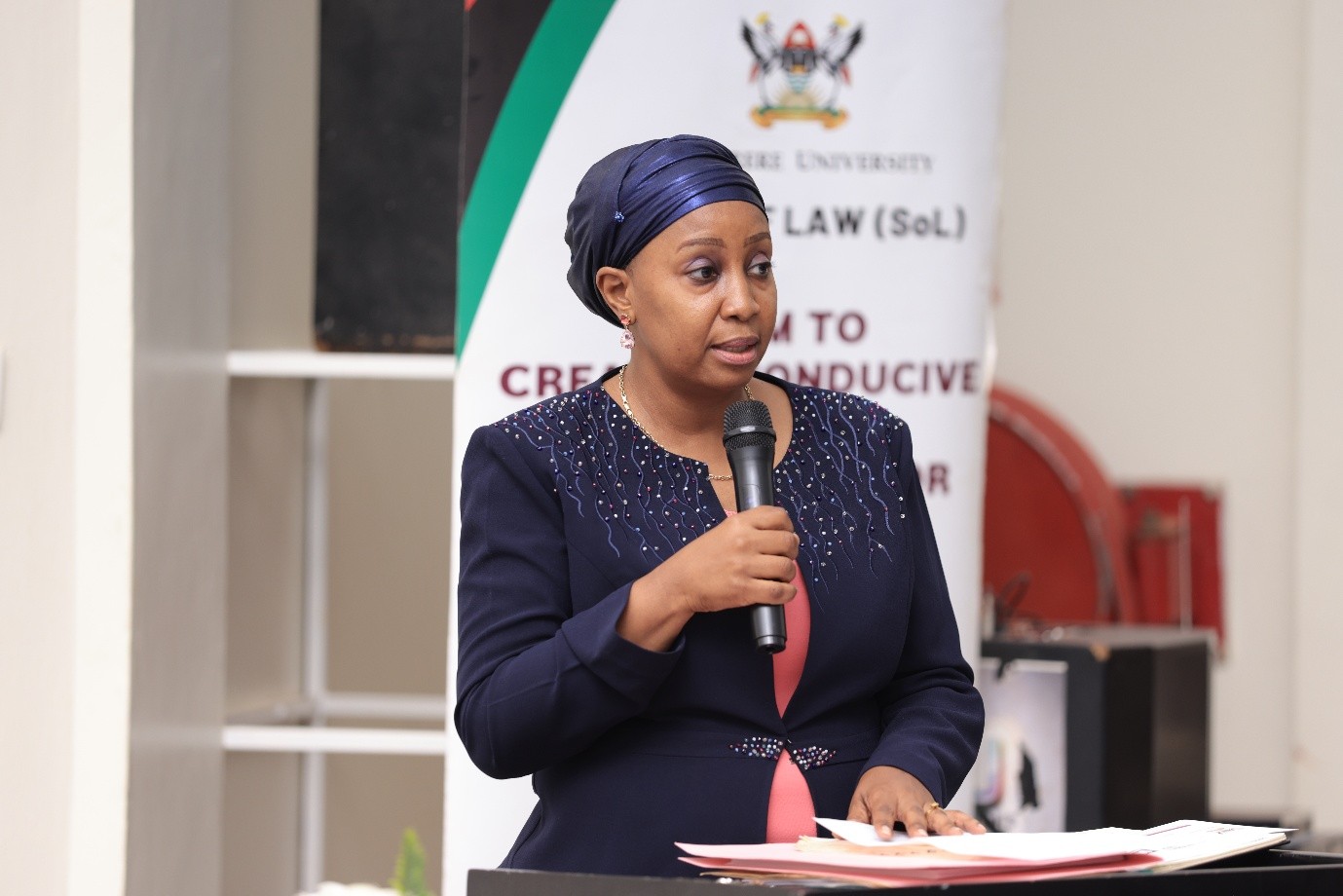
She also reflected on the long-standing relationships among some participants, who had studied together from primary school through secondary school, law school and the Law Development Centre.
Dr. Nampewo expressed confidence in the deliberations and thanked the university community, the participating teams and Dr. Daniel Ruhweza, Coordinator of Mooting at SoL for their contributions. The event concluded with the presentation of tokens of appreciation to the participating team and Dr. Ruhweza.
In his address to the congregation, Dr. Daniel Ruhweza, Head-Department of Law and Jurisprudence and Mooting Coordinator at SoL thanked all partners for their invaluable support, the SoL management for providing an enabling environment, and the participating universities for their commitment to the competition.
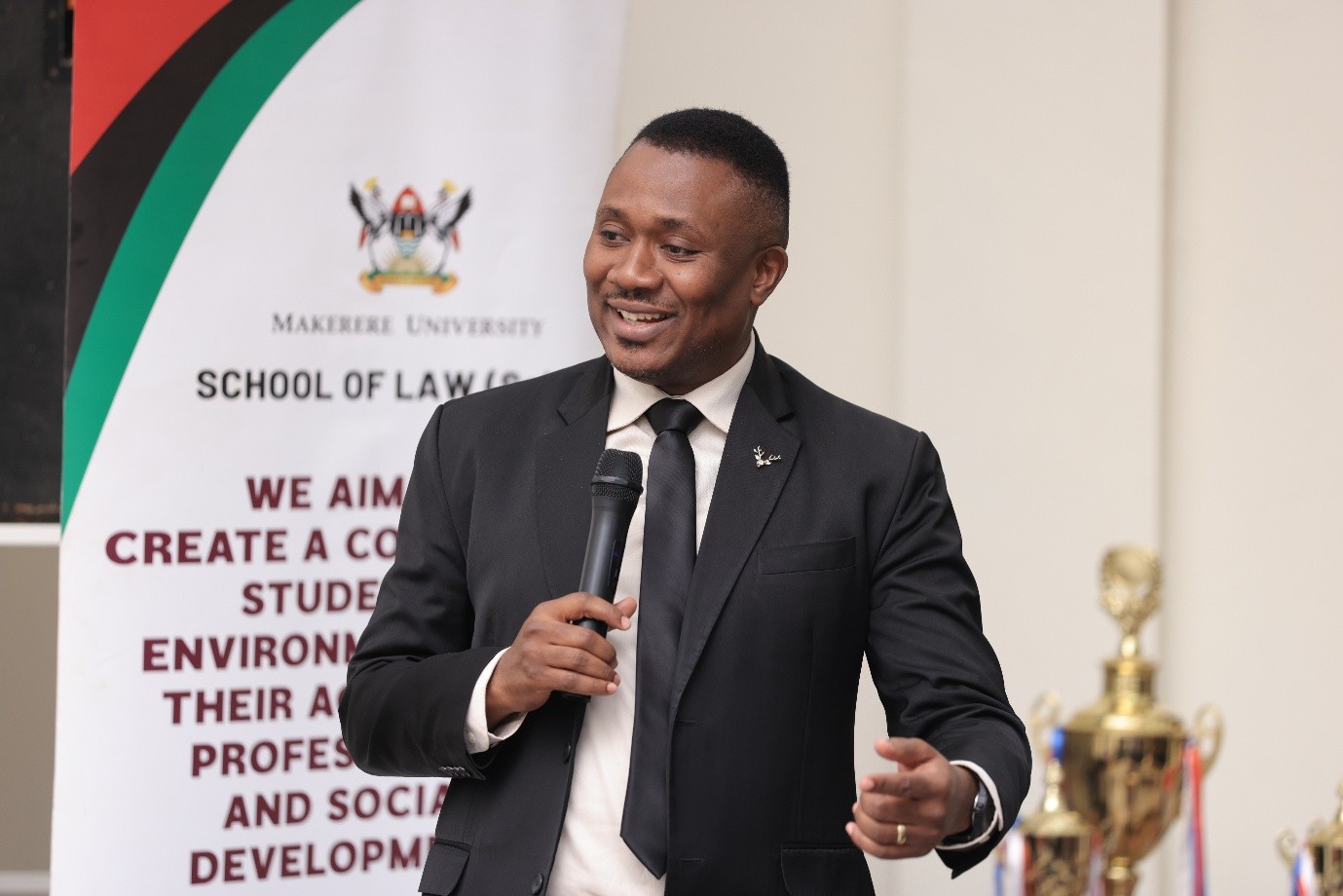
He expressed his appreciation to the University of Warwick and the Wellcome Trust for their invaluable support in making the event possible. He also recognised Ms. Hadijah Namyalo, a faculty member in his department who is currently pursuing her PhD at the University of Warwick, for initiating the collaboration.
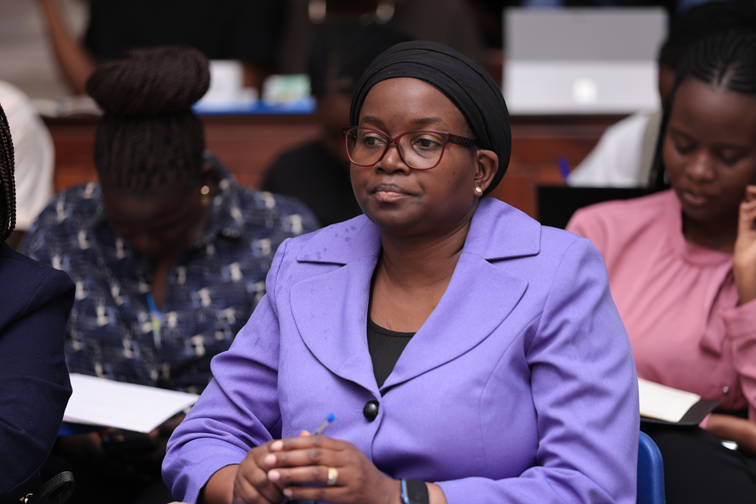
Dr. Ruhweza also commended the students for their hard work, dedication and thoughtful engagement throughout the moot, noting that their participation demonstrates the growing role of legal expertise in addressing emerging issues in digital health.
The inaugural moot provided a platform for students to test their advocacy skills while engaging with emerging questions at the intersection of law, technology and healthcare. It also underscored the need for future lawyers to understand not only the law governing digital health, but also the ethical, social and human rights implications of increasingly digital healthcare systems.
-

 General1 week ago
Statement on Concerns Circulating Regarding a Member of Academic Staff
-

 General1 week ago
Press Statement: Incident Involving Death of a Student at Makerere University
-
 General2 weeks ago
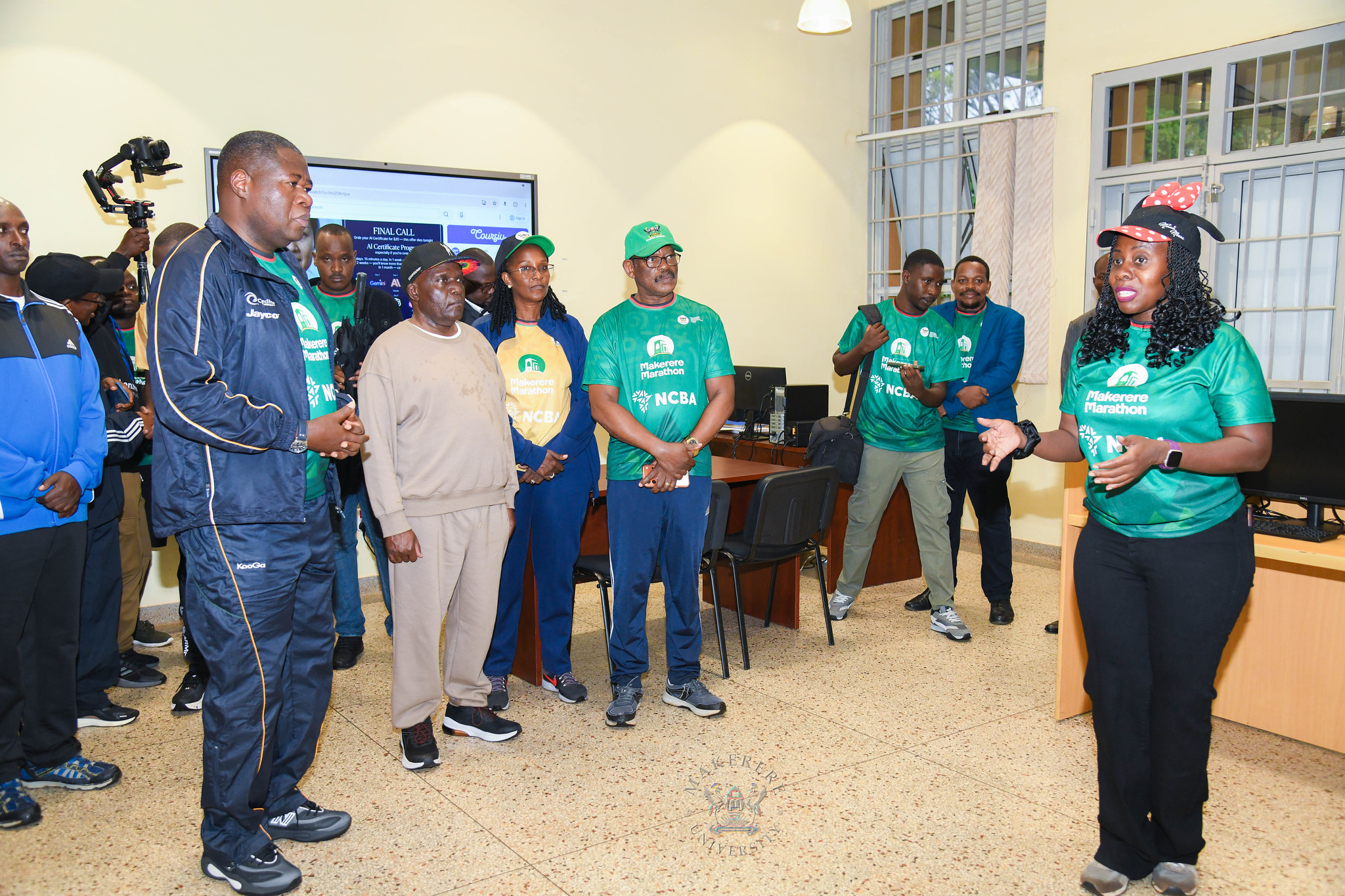
Makerere Marathon 2026 – Running to Equip the Disability Support Center
-
 General1 week ago
Beyond Map Size: Africa’s Agency Should Not Be Funded by Other People
-
 General1 week ago
JNLC Leadership Symposium Equips Young Leaders for Responsible and Transformative Leadership