Connect with us

Health

CHS Annual Report 2022

Published

on

It is with great pleasure that I present to you the Makerere University College of Health Sciences (MakCHS) annual report for the year 2022. This report provides only a snapshot of activities at MakCHS, as we went about executing our mandates of teaching and learning, research, and service delivery throughout 2022.

The MakCHS continues to lead in its mission to provide transformational education and research to improve service delivery and wellbeing of the communities we serve through our five constituent schools; School of Medicine, School of Biomedical Sciences, School of Public Health, School of Health Sciences and School of Dentistry. I wish to congratulate our gallant staff upon completion of a very productive 2022, as we swiftly catch up with the teaching periods that were lost during the COVID-19 pandemic and maximize the learning we received from the pandemic period.

Our major challenge is the unending drive to keep learning and innovate solutions that are fit-for-purpose to serve our 21st century learners and clients, in an everchanging environment. We are spurred on by the demands of our customers including patients, students, staff and collaborators; as well as our commitment and social responsibility to provide transformative education to health professionals that will transform health care in Uganda, Africa and globally.

We continue to pioneer innovations to develop solutions to provide the most relevant solutions global health challenges within our context. This pioneering spirit is part of our DNA and we intend to uphold and even surpass our reputation; and most importantly pass on this culture to the next generation of health scientists who must be prepared to address, manage and prevent emerging and re-emerging global health challenges.

I extend my sincere gratitude to all our stakeholders including but not limited to all MakCHS staff, students, alumni, partners, funders, patients and health care providers for your unwavering commitment to serve humanity through your mission at MakCHS. Without you MakCHS would not be what it is. I pray that you all find MakCHS a productive garden for you sow and multiply yourselves into the lives of many.

On behalf MakCHS leadership we pledge our unwavering efforts to facilitate you to maximize your potential, achieve and outperform your goals for the year 2023.

Prof. Damalie Nakanjako
PRINCIPAL

Mak Editor

Health

Holding the System Together During COVID-19: Steven Kabwama’s Research on Care Continuity

Published

on

An emergency response team extracts a suspected case from the community during the pandemic.

In March 2020, Uganda slowed to a near standstill. Roads emptied. Clinics fell quiet. Fear moved faster than information. Many perceived COVID-19 as a virus to avoid. Others saw it as a barrier that stood between a mother and antenatal care, a child and routine immunization, and a patient and life-saving HIV medication. What followed was not only a public health emergency but also a test of whether health systems could keep doing the ordinary work of care while responding to the extraordinary.

In early December 2025, a question first asked with urgency during a global crisis resurfaced in a quieter, more reflective moment. On December 2, a single bound copy of Steven Kabwama’s doctoral thesis was fastened to a wooden board dubbed ‘The Wall of Fame‘ at Karolinska Institutet. The ritual, known as spikning, is modest in appearance but weighty in meaning: a thesis is made public, opened to scrutiny, and years of private intellectual labour are released into the world. For Kabwama, it marked the moment when research forged in the pressure of a global emergency became part of the public record, no longer his alone but open to collective examination.

Kabwama nails his thesis on the wall at KI.

The tradition stretches back centuries, often traced to Martin Luther’s public posting of his theses in the 15th century. But in Stockholm, on a winter afternoon, history gave way to something more immediate. Kabwama stood briefly by the wooden board with a hammer and fixed his work in place. The moment was less about ceremony than readiness. The research was complete. The questions were now open.

Kabwama’s Principal Supervisor, Professor Tobias Alfvén of the Department of Global Public Health, Karolinska Institutet, congratulates him on the milestone.

Three days later, on Friday, December 5, 2025, Kabwama publicly defended the thesis in a hybrid ceremony at Wretlindsalen in Solna, joined, both in person and online, by colleagues from Uganda, Sweden, and beyond. By then, the work, which examines how health systems sustain essential services during crises, had already begun to circulate, quietly shaping conversations about preparedness, continuity, and care.

Some of the members of the audience during Kabwama’s PhD Defense at Wretlindsalen in Solna.

What that bound document contained, however, had been forged years earlier, inside outbreaks, lockdowns, data sets, and long nights spent asking how health systems hold together when everything else is falling apart.

Steven Ndugwa Kabwama remembers the beginning not as a single crisis, but as a series of decisions, some made urgently, others too late. As an epidemiologist by training, Kabwama, who had spent years responding to outbreaks through Uganda’s Field Epidemiology Fellowship Program, clearly understood that outbreaks had patterns; they arrived, demanded attention, and eventually receded.

COVID-19 was different.

“It became clear very early on,” he recalls, “that the urgency of the response was going to affect everything else: malaria, immunization, maternal health, HIV. And yet, very little had been written about how systems are supposed to hold both at the same time.”

That realization would shape the next chapter of his life and, eventually, his PhD.

From Outbreak Response to System Questions

Kabwama’s academic journey did not begin in epidemiology. In 2006, he enrolled for a Bachelor’s degree in Food Science and Technology at Makerere University, a programme traditionally geared toward food processing, quality assurance, and industrial production. It is a discipline that prepares graduates for careers in manufacturing plants, laboratories, and supply chains, work that often unfolds far from clinics, outbreaks, and emergency response rooms.

Yet even then, his interests leaned beyond production lines and quality controls. He was drawn to how systems affect people’s health long before illness appears and how nutrition, safety, access, and policy intersect. That early grounding in systems thinking would later resurface in unexpected ways.

He went on to earn a Master of Science in Public Health from the University of Southern Denmark in 2013, supported by a Danish State Scholarship. It was there that population-level analysis sharpened his interest in data, surveillance, and health equity. But it was the Advanced Field Epidemiology Fellowship, jointly run by Makerere University School of Public Health (MakSPH), Uganda’s Ministry of Health, and the U.S. Centers for Disease Control and Prevention, that placed him directly inside emergencies, where evidence, decisions, and lives converge.

As a Fellow, his work stood out. He later received the Outstanding Fellow Award from the Uganda Public Health Fellowship Program (Field Epidemiology Track, Cohort 2015), recognition of his contributions to outbreak response, national non-communicable disease analyses, and policy work, including Uganda’s Alcohol Control Policy. “You respond, you stabilize, you move on,” he says. “But I kept asking myself—what happens to everything else while we’re responding?”

Malac awards exceptional fellow Steven Ndugwa Kabwama on February 2, 2017, at Kampala Serena Hotel; l-r: FETP Resident Advisor Bao Ping Zhu, Steven Wiersma, WHO Representative Mazila, and his host mentor Sheila Ndyanabangyi.

The arrival of COVID-19 made it impossible to delay these questions.

A Crisis Within the Crisis

As countries rushed to contain the virus, restrictions came swiftly: lockdowns, curfews, and travel bans. From a disease-control perspective, the logic was familiar and defensible. In outbreak management, 21 days is a standard epidemiological window, often used to break chains of transmission in infectious diseases. But during COVID-19 in Uganda, the phrase “thereforeanother 21 days of lockdown” took on a different meaning altogether: The repeated phrase in presidential addresses stretched from a technical containment tool into a lived reality that reshaped access to care, livelihoods, and movement. From a health-system perspective, the consequences were profound.

Kabwama joined a multi-country research effort spanning Uganda, Nigeria, the Democratic Republic of Congo, Senegal, and Ghana, examining how countries attempted to maintain essential health services while responding to COVID-19. This work was spearheaded by Dr. Rhoda Wanyenze, a Professor of Disease Control, Researcher, Public Health Expert, and Dean of the School of Public Health at Makerere University. She was then a member of the COVID-19 Scientific Advisory Committee to the Ministry of Health.

Kabwama volunteered to lead the objective of documenting these experiences, an area he quickly realized was underexplored.

“Criticism is always easier in hindsight,” he reflects. “But generally, the considerations about how restrictions would affect access to essential health services were made after the fact.”

His doctoral research, later defended at Karolinska Institutet, set out to answer a deceptively simple question: How can health systems minimize disruptions to essential services during public health emergencies while emerging stronger afterward?

Front-line workers on COVID-19 getting a debrief in Kampala.

What the Data Revealed

Kabwama examined how health service use changed before and during the pandemic by using a mix of interrupted time-series analysis, document reviews, key informant interviews, and focus group discussions.

The findings were sobering.

Facility deliveries and outpatient visits dropped sharply during lockdown periods. Routine childhood immunizations declined, and DPT3 doses fell by more than 4 percent, with similar reductions across polio vaccines. Movement restrictions, fear of infection, and overwhelmed facilities combined to keep patients away.

But the story did not end there.

Where systems were adapted by integrating services, leveraging community health workers, removing user fees, modifying logistics, and establishing coordination mechanisms for continuity of care, the declines softened. In some cases, the adaptations strengthened systems beyond their pre-pandemic state.

“These were not perfect solutions,” Kabwama notes. “But they showed us what flexibility, leadership, and trust can do under pressure.”

Kabwama presents his findings during his PhD thesis Defense.

The Human Cost—and the Human Shield

Behind every data point were health workers navigating impossible conditions. Many worked without adequate protective gear. Others faced delayed allowances, long hours, and constant risk.

Kabwama asserts that health workers risk their lives in their work. “If we expect services to continue, then protecting their physical and mental well-being is not optional.”

His research consistently returned to one conclusion: that service continuity depends on people. Policies can guide. Infrastructure can support. But without motivated, protected health workers and trusted community intermediaries, systems falter.

Uganda’s community health workers, he observed, became a backbone of resilience. They traced contacts, delivered information, encouraged women to attend antenatal care, and helped sustain immunization demand when facilities felt distant or dangerous.

“In our context,” he says, “they were critical. That’s a lesson worth holding onto.”

Learning Across Borders

Conducting his PhD through a collaborative programme between Karolinska Institutet and Makerere University School of Public Health exposed Kabwama to how different systems responded under pressure.

At Karolinska’s Department of Global Public Health, students from around the world shared experiences shaped by culture, trust, and governance. One story stayed with him: Sri Lanka’s military, highly trusted by the public, played a key role in vaccine rollout.

“It taught me that resilience looks different everywhere,” he says. “What matters is understanding what each system already has and how trust operates within it.”

His supervision team, spanning Sweden and Uganda, including Prof. Tobias Alfvén, Prof. Rhoda K. Wanyenze, Dr. John Ssenkusu, Prof. Helena Lindgren, and Dr. Neda Razaz, reflected that same cross-system thinking.

Wanyenze describes Kabwama as “focused, committed, and remarkably productive.” She notes that he led two major workstreams across the five participating countries, helping generate critical evidence on health systems resilience and trust during infectious disease emergencies. “He made an enormous contribution to the research,” she says, “and he continues to do excellent work in this area.”

The Quiet Challenge of Doing Research in a Pandemic

Methodologically, the pandemic forced adaptation. Interviews moved to phones and Zoom. Access was negotiated carefully. Yet Kabwama sees the technology not as a limitation but as a strength.

“We captured experiences while they were still fresh,” he explains. “Before details were forgotten, before narratives were smoothed over.”

That immediacy gave his work an unusual clarity, documenting decisions as they unfolded, not as they were later remembered.

But beyond COVID-19, Kabwama’s thesis does not treat it as an anomaly. Rather, it presents COVID-19 as a stress test, exposing pre-existing weaknesses and potential strengths.

His central argument is that the ability to maintain essential health services during emergencies depends on baseline capacity.

“Now is the time,” he says, “to invest in health workers, in infrastructure, in guidelines for service continuity. This should be done now, not when the next crisis arises.

That conviction extends to learning itself. After-Action Reviews are conducted, lessons are noted, but too often, they fade.

“We need to be deliberate about learning,” he insists. “About documenting what worked and making sure those gains are not lost once the emergency ends.”

Work That Continues

Today, Kabwama is a Research Associate at Makerere University School of Public Health, a Monitoring, Evaluation and Learning Specialist with the Uganda Public Health Fellowship Program, and a member of WHO initiatives on trust and pandemic preparedness. He leads mortality surveillance in Uganda’s island districts, supports national NCD analyses, and continues to advise on emergency preparedness across Africa.

Kabwama admires his portrait on the Wall of Fame, which showcases a collection of portraits of doctoral students, a practice held since the 1950s.

He remains, by his description, an optimist.

“There are people who think we are worse off now than before COVID-19,” he says. “In some ways, that’s true. But there are also many ways in which we are better prepared.”

Vaccines, data systems, community engagement, and global awareness have all shifted. The challenge is ensuring that momentum does not fade.

Dr. Steven Ndugwa Kabwama joins fellows in the MakSPH PhD forum who concluded their doctoral journeys in 2025. And the work of his research and scholarship does not promise certainty but offers something more useful: evidence that systems can bend without breaking—if they are prepared to learn, invest, and protect the people who hold them together.

View on MakSPH

Davidson Ndyabahika

Continue Reading

Health

EU Earmarks Shs19.8bn for 15 Joint PhD Scholarships in Health, Environment Research

Published

on

(L-R) Prof. Stella Neema, Dr Herbert Muyinda, Vice Chancellor, Prof. Barnabas Nawangwe, Prof. Lotte Meinert, Prof. Julius Kikooma, and Dr. Godfrey Siu take a photo moment at Makerere Univerity. HEALENAE (Health and Environment in Africa and Europe) project support to doctoral research examining the complex links between environmental change, climate crises and health outcomes, with a strong focus on Africa Europe comparative perspectives, 27th January 2026 Child Health and Development Centre (CHDC), College of Health Sciences (CHS), and Aarhus University meeting with the Vice Chancellor, Main Building, Kampala Uganda, East Africa.

By Violet Nabatanzi & Zaam Ssali

The European Union has earmarked Euros 4,658,684 approximately (Shs19.8 billion) to fully fund 15 PhD scholarships under a new international collaborative research programme that brings together seven universities across Africa and Europe, including Makerere University.

The project, dubbed HEALENAE (Health and Environment in Africa and Europe), will support doctoral research examining the complex links between environmental change, climate crises and health outcomes, with a strong focus on Africa Europe comparative perspectives.

The scholarships are open to anthropologists, social scientists and related humanities scholars who hold an internationally recognised Master’s degree and are interested in pursuing a joint PhD (dual degree).

Dual degrees across continents

Successful candidates will be enrolled at two universities one in Africa and one in Europe and will graduate with a joint or dual PhD degree. The consortium brings together Makerere University, University of Oslo, University of Cape Town, KU Leuven, University of Edinburgh, University of Nairobi, and Aarhus University.

The PhD research areas include:

  • Metabolic impact: agricultural intensification and health transformations
  • Climate change migration and care for the elderly. 
  • Toxic layering in a precarious world: environmental harms and well-being.
  • Livestock and natural resource management: biodiversity and zoonotic diseases.
  • Epidemics, disease and state formation in Africa.
  • Climate crisis, youth migration, adaption and associated health outcomes.
  • Toxicity: urban living in landscapes of extraction.
  • Gendered cancer epidemics and questions about environments
  • Infrastructures of toxic evidence and civic protection
  • Biosecurity: food, health risks and animal disease.
  • Non Communicable Diseases, environments and questions of repair.
  • Urban commons: environments, infrastructures, and health.
  • Youth mental health and gambling epidemics in times of environmental crisis.
  • Epidemics and natural disasters as ‘business’.
  • The Frontiers of Vector Borne Disease: Expertise and Response in Africa and Europe.

Dr. Godfrey Siu, the University’s Senior Lecturer and Director of the Child Health and Development Centre (CHDC); Dr. Herbert Muyinda, Senior Lecturer; Prof. Stella Neema from the Department of Sociology and Anthropology; alongside Prof. Lotte Meinert of Aarhus University will jointly supervise the students, together with other PhD supervisors from other collaborating Universities.

On Tuesday, January 27, Prof. Julius Kikooma, Director of the Directorate of Graduate Training at Makerere University, Dr Siu, Dr Muyinda, and Prof.  Neema alongside Prof. Lotte paid a courtesy visit to the University’s Vice Chancellor, Prof. Barnabas Nawangwe.

Prof. Nawangwe welcomed the funding and commended the EU for its support, noting that the generous contribution reflects the confidence the EU has in Makerere University. He added that the University is working hard to address the loophole previously raised by the EU regarding the implementation of EU-funded grants. The Vice Chancellor congratulated the team and pledged the University’s full support to ensure the project’s successful implementation.

Who should apply

Speaking in an interview, Prof. Lotte said the program is particularly suited for candidates with strong grounding in anthropology, sociology and related social sciences.

Eligible candidates must have an internationally recognised Master’s degree in anthropology or related social sciences and humanities disciplines.

Lotte added that the positions are fully funded for three years, with generous support for fieldwork, coursework, conferences, writing retreats and research training.

Candidates are expected to conduct up to 12 months of fieldwork. They will be enrolled at both universities and are required to spend at least one semester at the partner institution.

A first for Uganda

According to Dr Siu, the HEALENAE model where fifteen joint PhDs are funded under one programme is the first of its kind in Uganda.

Addressing concerns about differing academic expectations across universities, Dr Siu said these are anticipated and manageable.

“While there are some differences, PhD training globally follows a similar structure. For instance, Makerere requires all PhD students to complete mandatory cross-cutting courses, including philosophy of methods, advanced research methods, and scholarly writing and communication skills,” he said.

In addition, students will attend writing retreats and specialised training schools, some of which will be hosted at Makerere University and the University of Nairobi, aimed at sharpening their research and analytical skills.

Prof. Kikooma briefed the team on the structure of the PhD program at Makerere University and provided guidance on how to align the dual program with the University’s framework.

He also pledged his support and expressed optimism that the program offers new opportunities for Makerere University to learn from and strengthen dual programs. The initiative aligns with Makerere’s vision of becoming a research-led university through intensified PhD training.

Application deadline

Interested candidates are encouraged to visit the HEALENAE website for detailed calls and application guidelines.  The deadline for applications is March 1, 2026.

The application link is provided below.

https://phd.arts.au.dk/applicants/open-and-specific-calls/healenae-project-2

For further information contact: godfrey.siu@mak.ac.ug

Zaam Ssali
Zaam Ssali

Continue Reading

Health

Call For Applications: MakNCD Masters and PhD Training Opportunities

Published

on

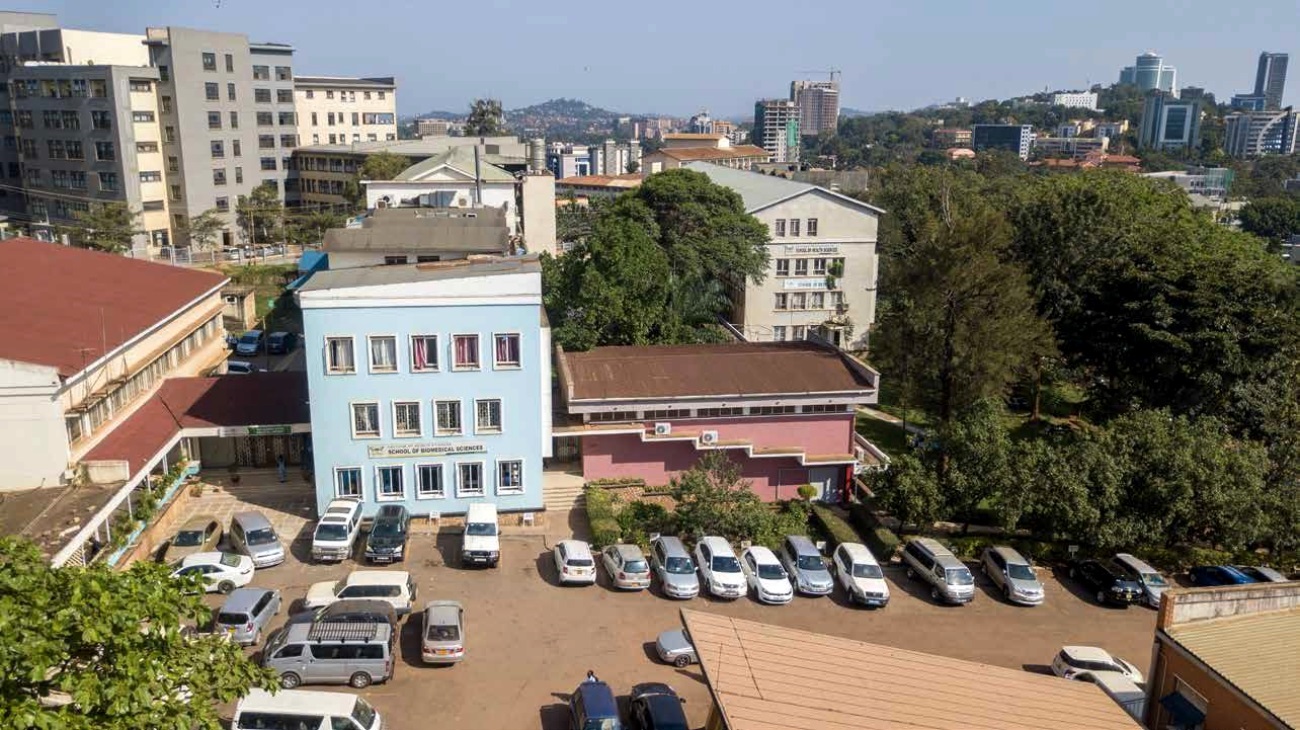
An aerial photo of the College of Health Sciences (CHS), Makerere University showing Left to Right: The Sir Albert Cook Memorial Library, School of Biomedical Sciences, Davies Lecture Theatre, School of Public Health, Mulago Specialised Women and Neonatal Hospital (MSWNH)-Background Left and Nakasero Hill-Background Right, Kampala Uganda, East Africa.

The Makerere University Non-Communicable Disease (MAK-NCD) Research Training Program is a research capacity building program based at Makerere University College of Health Sciences with collaboration at John Hopkins University and funded by the United States National Institute of Health-Fogarty International Centre (D43TW011401). The overall goal of this training program is to develop a comprehensive mentored research-training program in Uganda that will build local capacity to address the challenges of NCD control and management and promote the use of research findings to inform decision-making and policy.

PhD Fellowship

The PhD fellowship support is for up to three (3) years (full-time), subject to annual performance reviews and progress milestones. Successful scholars will be registered at Makerere University and may undertake sponsored didactic research methods training at the Johns Hopkins University (JHU), USA, to receive additional skills development and mentorship in NCD research. This call is targeting mainly junior researchers with interest in building an independent research career in noncommunicable diseases research with focus on Epidemiology, Data Science and Implementation Science research to strengthen evidence-based interventions, policy and control in Uganda.

Masters Fellowship

MakNCD is pleased to invite applications for Master’s level training in the following disciplines: Master of Public Health (MPH), Master of Business Administration (MBA), Master of Public Health monitoring and Evaluation. These training opportunities are intended to build a critical mass of professionals equipped with research, leadership, health systems, and management skills relevant to addressing the growing burden of NCDs in low- and middle-income countries.

Application Deadline: 23rd February 2025; Only shortlisted candidates will be contacted.

See below for detailed adverts

Zaam Ssali
Zaam Ssali

Continue Reading

Trending