Connect with us

Research

First-Ever Mak-UiB Research School Comes to a Lively End

Published

on

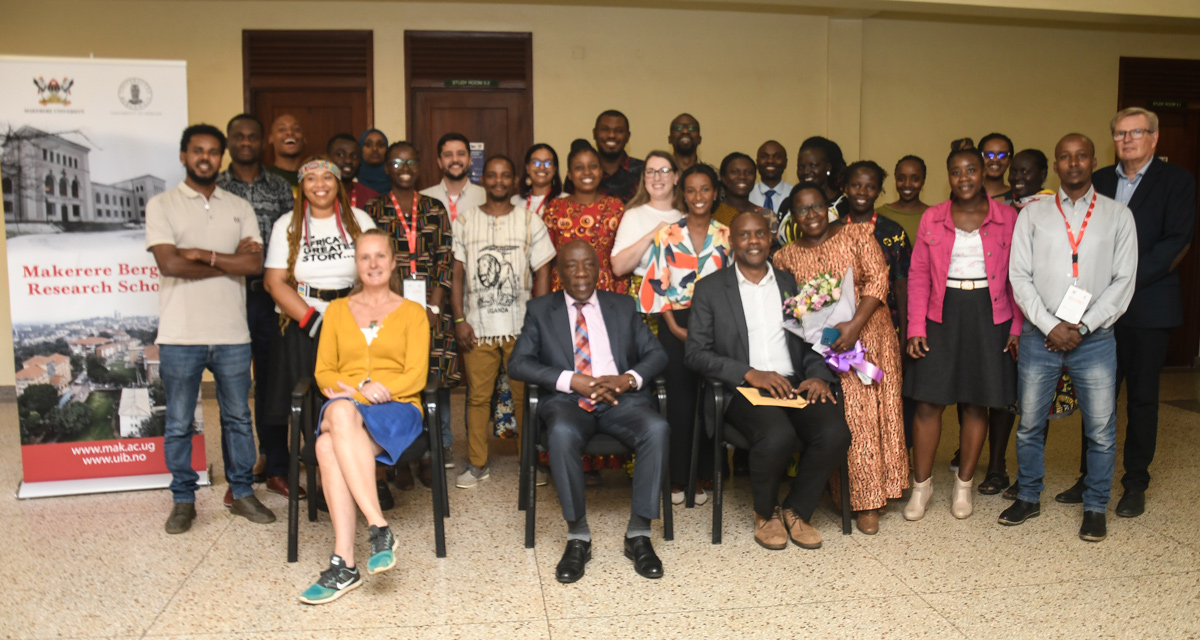
Officially opened on Monday 28th November 2022, the first ever Makerere-University of Bergen Research School (MBRS) came to a lively end as student participants cheered each other on at a certificate award ceremony presided over by the Deputy Vice Chancellor (Finance and Administration), Prof. Henry Alinaitwe. Held on Thursday 8th December, 2022 in the Multimedia/e-Learning room of the Frank Kalimuzo Central Teaching Facility, the ceremony was moderated by the Mak-UiB Collaboration Coordinator for Makerere University Dr. Ronald Semyalo. Also present at the award ceremony were UiB’s Prof. Tore Sætersdal, Prof. Inger Måren, Nils Gunnar Songstad, Anja Christine Rørnes Tucker as well as other officials from Makerere and UiB.
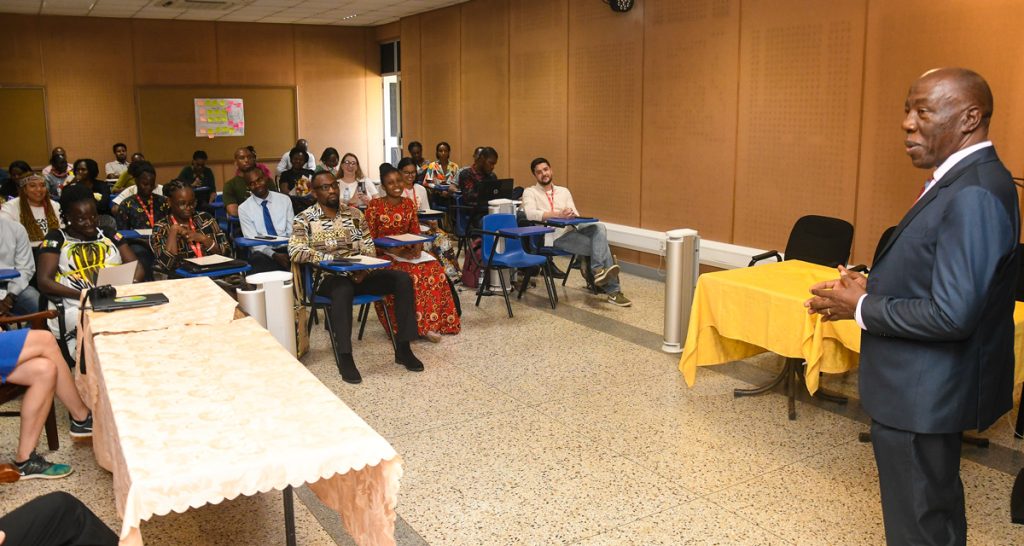
Prof. Henry Alinaitwe addresses participants at the close of the MBRS.

In his remarks, Prof. Alinaitwe, who represented the Vice Chancellor Prof. Barnabas Nawangwe, congratulated the facilitators from Makerere and UiB as well as the student participants upon successfully completing the two-week course. “Makerere takes great pride in collaborations and as our Vice Chancellor often says, we are the University that collaborates most in the whole world; we literally collaborate with institutions on all continents without discrimination.”

Turning to the University’s aspirations to become research-led, Prof. Alinaitwe, Prof. Alinaitwe appreciated UiB for choosing to host the PhD School at Makerere, noting that it augurs well with the institution’s research strategies. The MBRS was held as part of activities to celebrate Makerere’s 100 years of excellent service to humanity and 35 years of close collaboration with UiB.
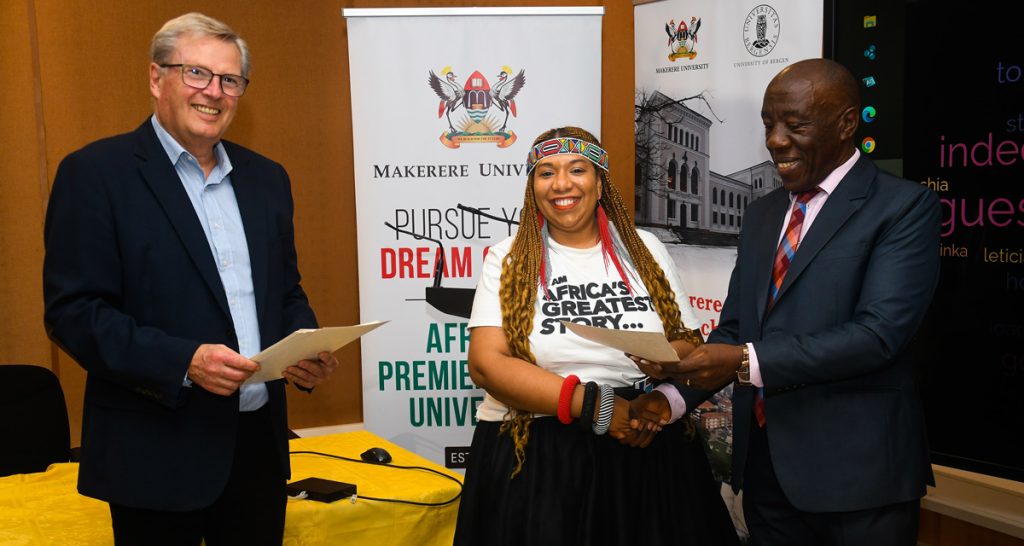
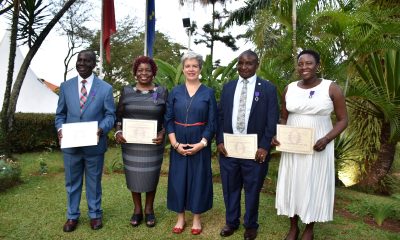
Prof. Henry Alinaitwe (R) and Prof. Tore Sætersdal (L) present a certificate to one of the participants (C) during the award ceremony.

Prof. Alinaitwe added that activities such as the MBRS help make the PhD journey more engaging and will be remembered by participants long after they complete their respective programmes. He noted that the COVID-19 pandemic had put physical conventions such as the MBRS on hold and it is good for institutions to be able to resume them. He therefore urged participants to take full advantage of the networks they forge during such engagements.

“Makerere is a very progressive institution and we are looking forward to continue collaborating with various individuals and universities,” he said. Turning to the MBRS topic; Food and Water Security in a changing World, Prof. Alinaitwe noted that although Uganda is well endowed with a variety of naturally occurring food and water resources, it would greatly benefit from technology-transfer partnerships. These partnerships, he said, would help promote technologies that enable communities to become food and water sufficient, despite varying onsets and amounts of rainfall received in the different regions of the country.
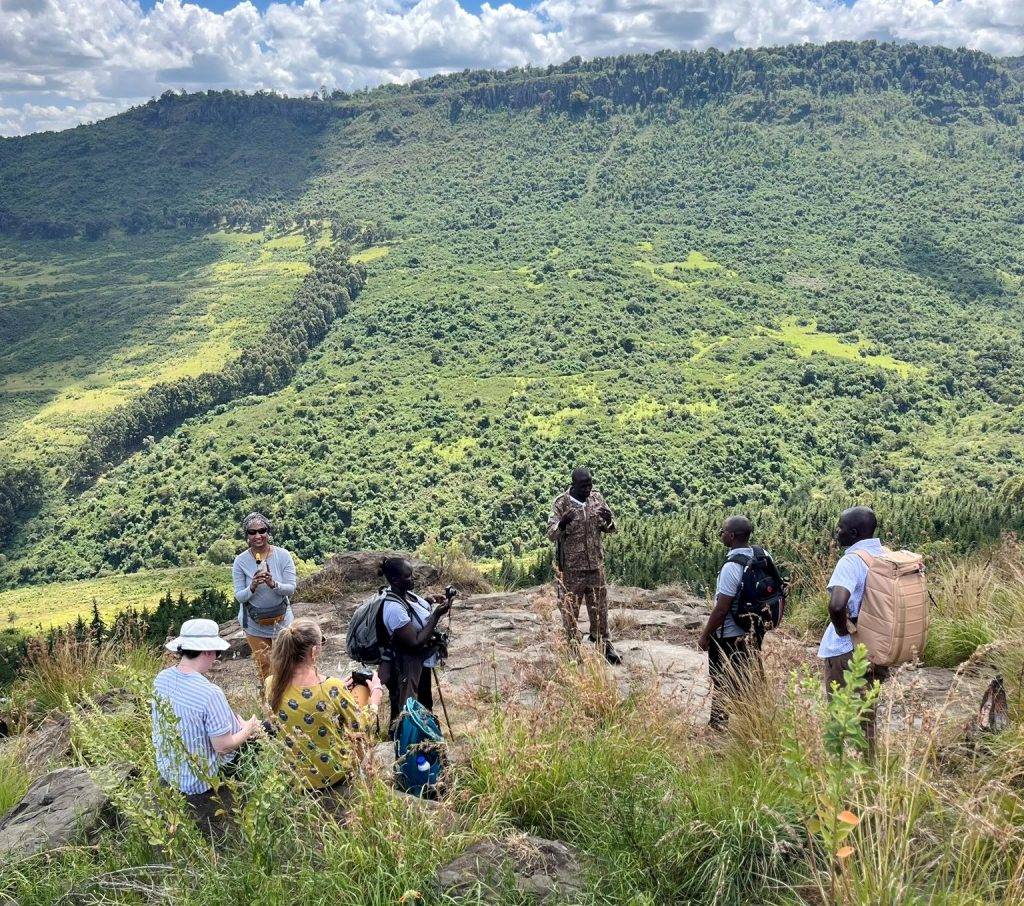

MBRS participants during a field visit to the Mt Elgon Biosphere reserve over the weekend of 3rd to 4th December 2022. Photo: Twitter/@RSemyalo

Mark Wamai

Research

Call for PhD Student Fellowships under H-DATA

Published

on

Call for PhD Student Fellowships under Harnessing Health Data Science capacity to strengthen evidence-based interventions, policy and response to the HIV/AIDS Epidemic in Uganda (H-DATA) training grant, funded by the NIH through Fogarty International Center (Grant Number D43TW013056). A collaborative effort of multiple principal investigators from Makerere University, Kampala Uganda, East Africa and University of California, San Francisco, USA.

Program overview

The Harnessing Health Data Science capacity to strengthen evidence-based interventions, policy and response to the HIV/AIDS Epidemic in Uganda (H-DATA) is a training grant funded by the NIH through Fogarty International Center (Grant Number D43TW013056). This grant is a collaborative effort of multiple principal investigators from Makerere University, Uganda and University of California, San Francisco, USA.

Grant period: 2026/2030 | Principal Investigators: David Patrick Kateete; Charles Batte;   Joyce Nakatumba, Nabende;  Efstathios Gennatas Dimitrios

H-DATA seeks to recruit qualified Ugandans for full-time PhD training in Health Data Science registered at Makerere University.

Thematic areas

Candidates should propose research studies or concepts that apply health data science approaches (AI and Machine learning) to the following thematic themes:

  • HIV risk stratification
  • Non-communicable Diseases (NCD) comorbidities in HIV [Specifically Chronic respiratory and cardiovascular diseases / hypertension]
  • HIV treatment outcomes, adherence, and long-term ART trajectories
  • Non-Canonical HIV resistance mutations
  • Digital medicine and real-world HIV data
  • Health systems and policy analytics for HIV programs

Fellowship package

The PhD fellowship support is for up to three (3) years (full-time), subject to annual performance reviews and progress milestones. Successful scholars will be registered at Makerere University and may undertake sponsored didactic health data science methods training at the University of California, San Francisco (UCSF), USA, to receive additional skills development and mentorship in health data science research.

Application Information

ELIGIBILITY

Applicants should meet the following minimum requirements:

– Master’s degree in Computer Science, Statistics/Biostatistics, Mathematics, Electrical Engineering, Bioinformatics, Epidemiology, Public Health, or another data-intensive discipline.
– Demonstrated interest and/or experience applying data science methods/technologies to health research or health systems.
– Strong quantitative or computational skills (e.g., programming, statistical analysis, machine learning, data management).
– Ugandan citizenship and commitment to advancing health data science in Africa.
– Ability to enroll in and complete full-time PhD training at Makerere University.

Note: Additional program- or department-specific admission requirements may apply.

Note: Proof of admission is not required at the time of application. However, preference will be given to applicants who have already secured admission to, or are currently registered in, a relevant PhD programme.
APPLICATION PACKAGE & SUBMISSION

Submit the following documents by email as a single application package:

– NIH Biosketch (maximum 4 pages) including relevant publications (if any).
– Cover letter (maximum 1 page).
– 2-page research concept note highlighting: research problem, specific aims, research design, and analysis plan.
– Academic transcripts and certificates for the relevant Master of Science (MSc) degree.
– Statement of purpose / motivational letter (maximum 800 words) for undertaking doctoral training in Health Data Science.
– Two letters of recommendation with up-to-date contact details from academic referees.

Email subject line (recommended): APPLICATION – Doctoral Scholarship – H-DATA PhD

File naming convention (recommended): LastName_FirstName_DocumentName (e.g., Batte_Charles_CV.pdf)

Application deadline: [February 28th 2026 by 5pm EAT]  

Program contact: [Dr Charles Batte at the address: hdatatraining@gmail.com]

Mak Editor

Continue Reading

Research

International Fellows Recruitment – Wellcome Sanger Institute

Published

on

International Fellows Recruitment - Wellcome Sanger Institute. Photo: ImageFX

The Wellcome Sanger Institute is seeking exceptional early career stage scientists to join the Institute as an International Fellow, contributing to the Institute’s scientific portfolio. Up to six fellowships available. 

The Institute is an internationally outstanding genomic research centre with over 30 core faculty teams and 1,300 employees based south of Cambridge, UK.

Fellowship Eligibility:

  • You are typically an early-mid career group leader/faculty usually up to nine years post PhD, based at a research organisation in a low- or middle-income country (LMIC). You may hold a faculty or equivalent position and are seeking to establish or strengthen your research team to develop an internationally recognised research portfolio. We also welcome applicants with equivalent experience, including those who have taken career breaks or followed non-traditional paths
  • Your main research aims should be focused on your local country and research priorities which contributes to or complements the Institute’s scientific strategy through their expertise.

Closing date: 13th February 2026

See details

Mak Editor

Continue Reading

Research

Makerere University Launches Knowledge-Sharing Platform to Drive Innovation and Economic Growth

Published

on

Left to Right: Prof. Sarah Ssali, Prof. Ibrahim Mike Okumu, Mr. David Kisitu and Dr. Peter Babyenda at the launch of the Platform. Makerere University launch of Government of Uganda through the Makerere University Research and Innovations Fund (Mak-RIF)-funded knowledge-sharing platform designed to bridge research, education, and community outreach, with the aim of accelerating innovation and economic development in Uganda, December 2025, Kampala Sheraton Hotel, East Africa.

Makerere University has launched a knowledge-sharing platform designed to bridge research, education, and community outreach, with the aim of accelerating innovation and economic development in Uganda.

The platform is the outcome of a project led by Prof. Edward Bbaale, which examined how universities can translate research, innovations, and institutional capabilities into tangible impact for communities, businesses, and national economic growth, in line with the government’s tenfold growth agenda. The project was funded by the Government of Uganda through the Makerere University Research and Innovations Fund (Mak-RIF).

The study also explored how university-based research and innovation can be better aligned with Uganda’s development priorities in agriculture, tourism, mineral-based industrialization, and science and technology, as outlined in the Fourth National Development Plan (NDP IV).

Speaking at the launch, the First Deputy Vice-Chancellor for Academic Affairs, Prof. Sarah Ssali, said the platform would strengthen the link between academic research and societal transformation. She also noted that knowledge production and utilization is a political matter and urged researchers to meaningfully engage and participate in such converstaions.

Dr. Stephen Wandera, representing the Chairperson of the Mak-RIF Grants Management Committee, described the platform as timely and relevant, noting that it comes at a period when Makerere University is positioning itself as a research-led institution with measurable impact on communities and systems.

“The knowledge-sharing platform will enable researchers to disseminate their work to relevant audiences,” Dr. Wandera said. He added that dissemination workshops are among several avenues available for sharing research findings and urged the project team to explore additional channels, including policy briefs, academic publications, and online dialogue platforms.

Stakeholders from Makerere and other Universities pose for a group photo at the event. Makerere University launch of Government of Uganda through the Makerere University Research and Innovations Fund (Mak-RIF)-funded knowledge-sharing platform designed to bridge research, education, and community outreach, with the aim of accelerating innovation and economic development in Uganda, December 2025, Kampala Sheraton Hotel, East Africa.
Stakeholders from Makerere and other Universities pose for a group photo at the event.

The Director of Research, Innovation, and Partnerships, Prof. Robert Wamala, said the dissemination workshop reflects Makerere University’s long-standing commitment to generating knowledge that responds to national priorities, advances innovation, and contributes to Uganda’s socio-economic transformation.

He added that the Directorate supports initiatives that move research beyond academic boundaries into practical application, policy influence, enterprise development, and community impact.

Dr. Peter Babyenda, the project’s Co-Principal Investigator, said the initiative combined research, outreach, and capacity-building activities, drawing lessons from global models where universities play a direct role in community development by supporting agriculture, industry, and the growth of Small and Medium Enterprises (SMEs) and Micro, Small, and Medium Enterprises (MSMEs).

Dean of the School of Economics, Prof. Ibrahim Michael Okumu, observed that while Uganda’s universities have produced substantial research, its translation into practical outcomes has remained slow. He cautioned that Makerere University’s relevance will ultimately be measured by the extent to which its work contributes to national development.

Dr. Babyenda noted that the platform will support the development of sustainable research, education, and outreach systems, helping to bridge the gap between university research and real-world application.

“As we launch this platform, I encourage academics, students, industry players, policymakers, and communities to actively engage with it,” Prof. Wamala said. “Let it serve as a living space for dialogue, learning, co-creation, and innovation.”

The knowledge-sharing platform is accessible to the public at www.dissemination.ug. Its launch took place at Sheraton Hotel in Kampala and was attended by officials from Makerere University, Kyambogo University, Gulu University, Mbarara University of Science and Technology (MUST), Busitema University, and Soroti University.

Winnie Kyamulabi
Winnie Kyamulabi

Continue Reading

Trending