Research
Makerere University and Ministry of Public Service Study Reveals Impact of Salary Enhancement on Teacher Performance in Uganda
Published
7 months agoon

Mak-RIF funded research highlights disparities between science and arts teachers and their implications for Uganda’s education system.
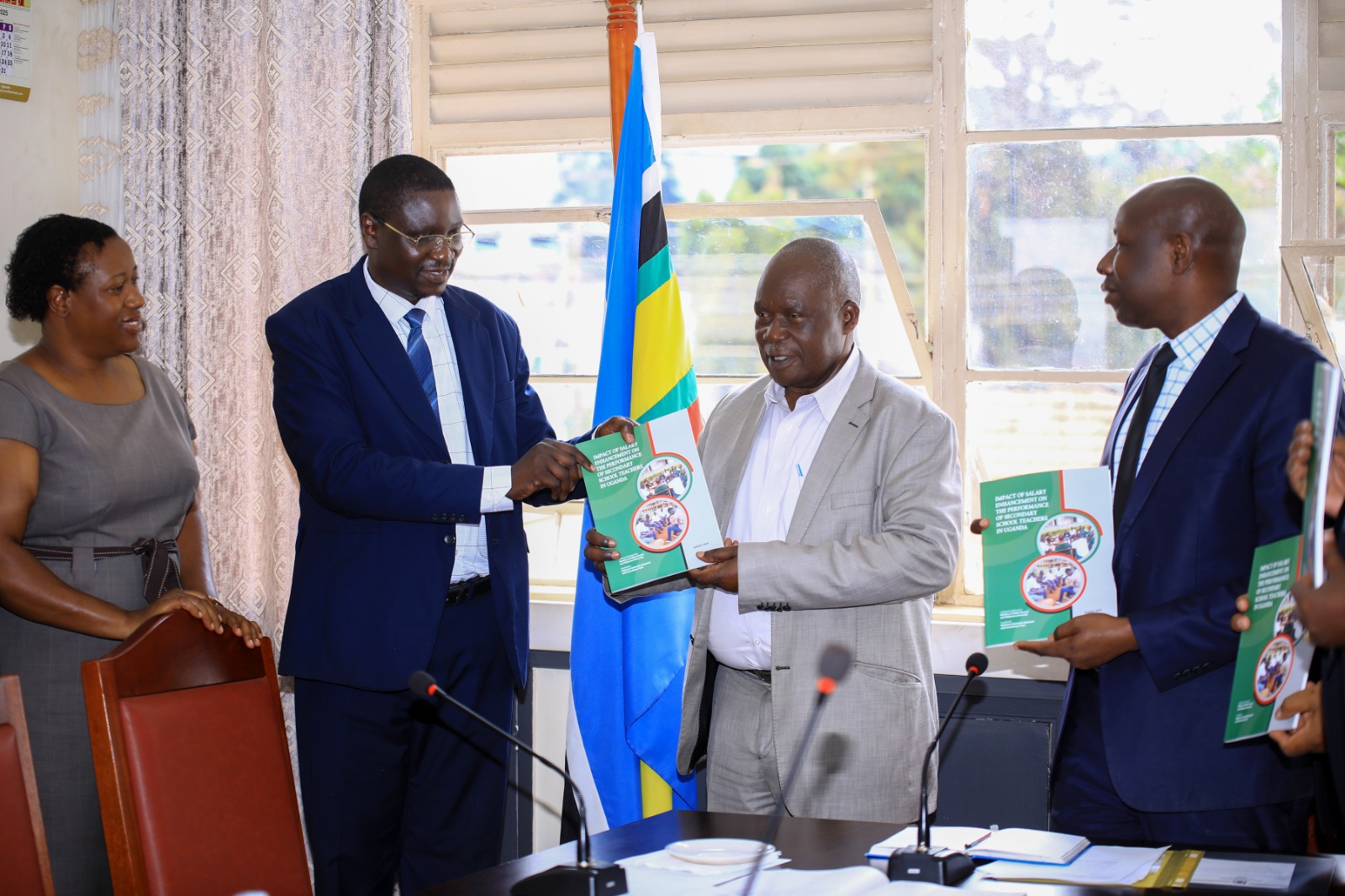
A collaborative study by Makerere University and the Ministry of Public Service has shed new light on how salary enhancement affects the performance of secondary school teachers in Uganda. The study, titled “Impact of Salary Enhancement on the Performance of Secondary School Teachers in Uganda,” was funded by the Government of Uganda through the Makerere University Research and Innovations Fund (Mak-RIF).
The research was prompted by the Government’s 2018 pay policy that significantly increased salaries for science teachers, while arts teachers remained at a lower rate. By 2022, science teachers had achieved 77% of the approved pay target, while that of arts teachers remained at 12%.
Researchers, led by Makerere University’s Dr. Cyprian Misinde, have noted that these disparities have far-reaching implications on the quality of education, the National Development Plan (NDP III Goal 5: Human Capital Development), the emerging NDP IV framework, and the Sustainable Development Goals (SDGs), particularly SDG 4 (Quality Education) and SDG 10 (Reduced Inequalities).
Assessing the Effects of Pay Enhancement
The study set out to assess the impact of salary enhancement on teacher performance, focusing on motivation, retention, student outcomes, and perceptions of both science and arts teachers.
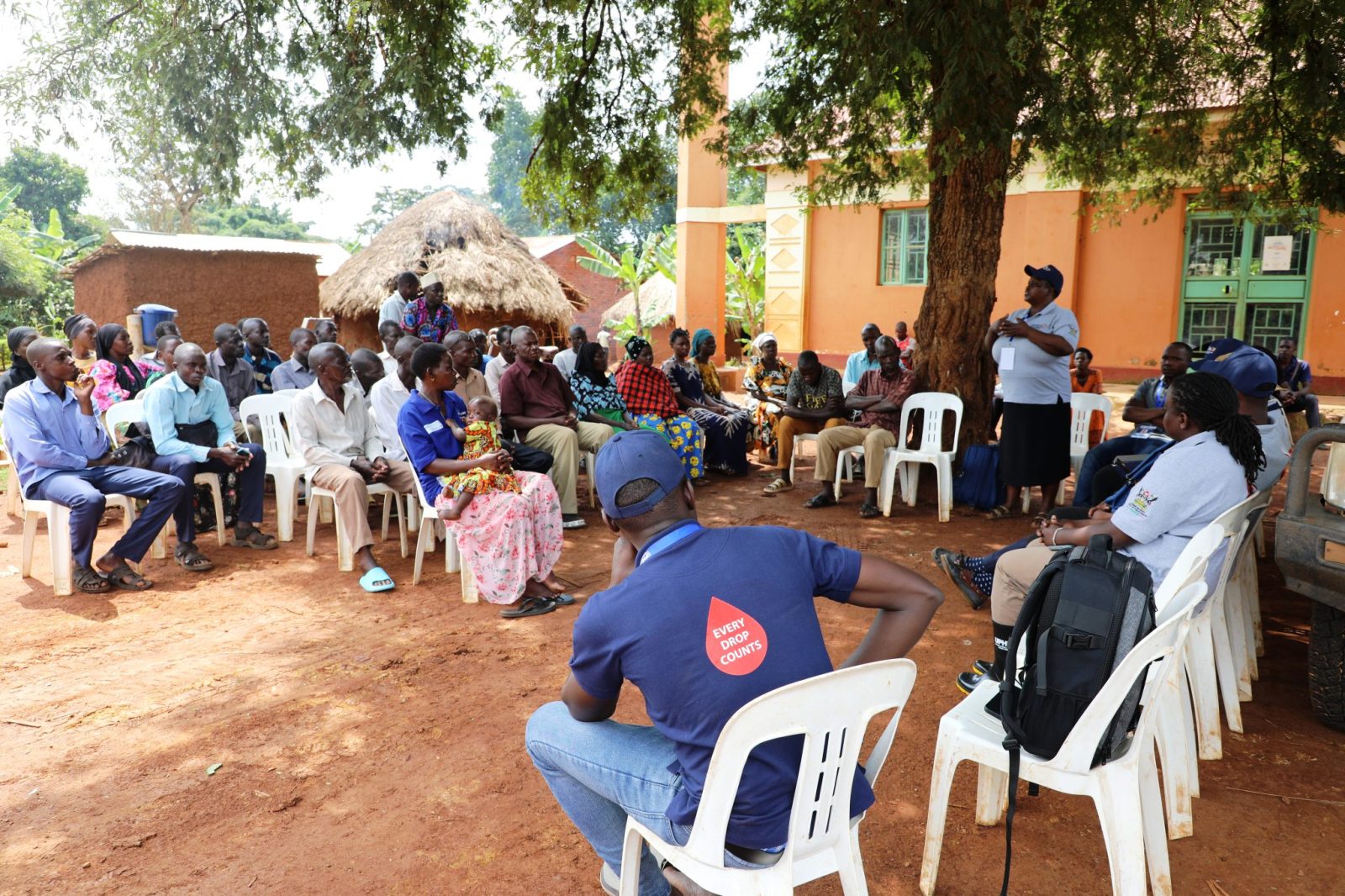
Using a mixed methods approach, researchers collected data from 1,352 secondary school teachers (617 science and 735 arts teachers) across 14 sub-regions. Additionally, 28 key informant interviews were conducted with head teachers, alongside 28 focus group discussions (FGDs) with students.
Key Findings: A Divided Teaching Workforce
The findings paint a stark contrast between science and arts teachers:
Science teachers reported high motivation (80.5%), strong perceived performance (76.5%), greater retention intent (39.1% planning to stay until retirement), improved student outcomes (64.5%), and enhanced morale (80.5%). Arts teachers, however, experienced lower motivation (25.5%), reduced performance (17.8%), lower retention (27.5%), weaker student outcomes (15.2%), and diminished morale (26.6%).
Across the board, 85.3% of all teachers agreed that higher salaries improve retention, reaffirming that pay remains a critical driver of teacher performance and commitment.
“While the pay policy has strengthened science education, it has unintentionally widened disparities that could undermine equity and holistic quality education in Uganda,” the report reads in part.
The study also found that salary enhancement alone was not accompanied by proportional investments in other key performance enablers such as school infrastructure, teaching materials, and instructional resources which are equally vital for improved educational outcomes.
Policy Implications and Recommendations
The report cautions that prolonged disparities could lead to growing division between science and arts teachers, teacher demotivation, workforce instability, and uneven student performance, potentially hindering NDP IV’s goal of sustainable human capital growth.
The researchers called for a review of the implementation modalities of the pay policy to minimize salary disparities between science and arts teachers, thereby promoting balance, morale, and fairness across disciplines.
While the emphasis on science aligns with NDP III’s focus on STEM and human capital development, neglecting the arts undermines the holistic learning. Researchers called for an urgent need for balanced reforms to align with NDP IV and SDGs 4&10.
Leaders Weigh In
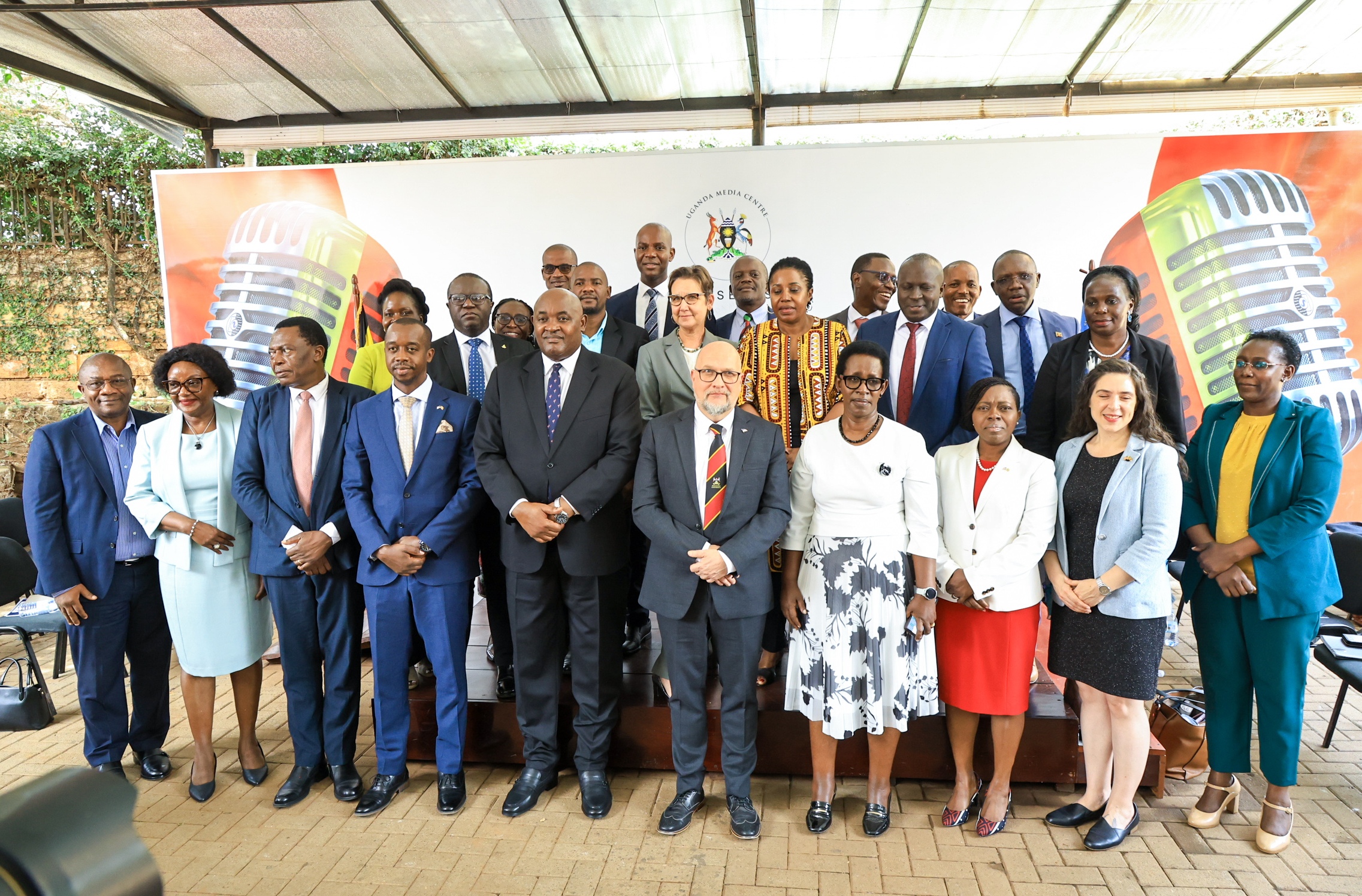
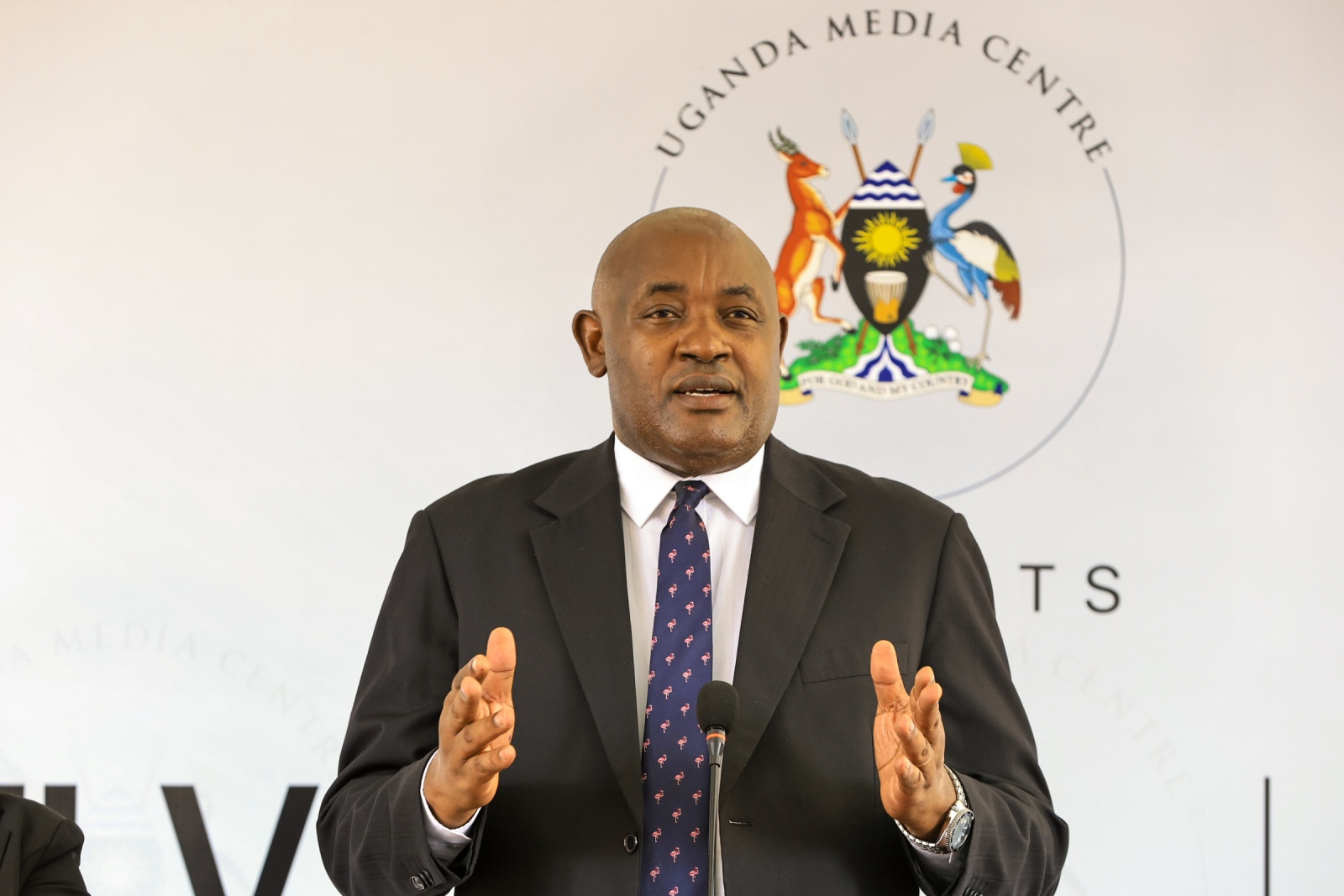
Speaking at the dissemination of the study, the Minister for Public Service, Hon. Wilson Muruli Mukasa, reaffirmed Government’s commitment to improving teachers’ welfare.
“The Government approved a public pay policy which includes progressive salary enhancement for secondary school teachers, particularly those teaching science subjects,” said Hon. Mukasa. “By FY2025/26, UGX 2.5 trillion has been committed to salary enhancements. However, even among teachers whose salaries were enhanced, some are applying for early retirement and their motivation to teach has declined. This study was hence commissioned to understand the immediate and future impact of this pay reform,” he added.
Hon. Mukasa further noted that the Ministry of Public Service sought technical support from a Mak-RIF–funded project to better appreciate the impact of salary enhancement and to guide future pay reforms.
The State Minister for Gender and Cultural Affairs, Hon. Peace Mutuuzo, echoed similar concerns, urging stakeholders to reflect on the challenges within the education sector and prioritize strategies that ensure equity and sustainability.
Strengthening Collaboration Between Makerere University and Government
The study is one of the first results of the Memorandum of Understanding (MoU) signed in January 2024 between Makerere University and the Ministry of Public Service.
According to Prof. Robert Wamala, a member of the Mak-RIF Grants Management Committee, the partnership is a strategy to strengthen evidence-based policy and governance.
“The MoU between Makerere University and the Ministry of Public Service is collaborative journey which forges a stronger bond between academia and Government for the greater good of society,” said Prof. Wamala.
Through the MoU, Makerere University and the Ministry of Public Service have committed to joint research projects, policy-oriented studies, data management and dissemination, capacity building, curriculum development, and monitoring and evaluation of collaborative initiatives.
Author: Winnie Kyamulabi is the Communications Officer, Makerere University Research and Innovations Fund (Mak-RIF)
You may like
-
CHS Quality Assurance Guide Book
-
Are We Giving Enough Attention to the People Around Us Who Quietly Influence Lives Every Day?
-
The silent teachers: why body donation matters
-
Prof. Isa Kabenge Officially Hands Over Leadership of DABE to Prof. Joshua Wanyama
-
Government Strengthens Public Investment Management Capacity Through Intensive Training at Makerere University
-
Freshers’ Joining Instructions 2026/2027
Research
Makerere Challenges PhD Students to Turn Research Into Solutions as Advanced Research Methods Training Ends
Published
2 weeks agoon
May 25, 2026By
Mak Editor
By Moses Lutaaya
The Director of Graduate Training at Makerere University, Prof. Julius Kikooma, has challenged PhD students to ensure that their research directly contributes to solving Uganda’s pressing societal challenges, saying postgraduate research must move beyond academic theory to real-world transformation.
Prof. Kikooma made the remarks on Monday, May 25, 2026, during the closure of a 10-day PhD cross-cutting training in Advanced Research Methods held at the Main Library Room 24/7 at Makerere University. The blended training, which started on May 11, attracted more than 250 PhD students physically and online from different colleges and schools across the university.
The training was organized by the Directorate of Graduate Training and supported by iCARTA as part of Makerere’s efforts to strengthen doctoral education and research capacity.
In his closing remarks, Prof. Kikooma praised the team of facilitators led by Prof. Stella Neema and Prof. Christopher Mugimu, among others for not only teaching technical research content but also mentoring students into becoming the next generation of impactful researchers.
“I think they are also mentors. They have been mentoring you into the role of the next generation of researchers,” Prof. Kikooma said, noting that the facilitators had given students a framework for thinking critically about research and understanding what the university expects from doctoral scholars.
He emphasized that Makerere University is intentional about producing graduates whose research contributes solutions rather than adding to society’s challenges.

“What we do here should reassure the nation that the products from Makerere University are contributing to solutions. They are not adding to problems but adding to solutions,” he said.
According to Prof. Kikooma, the knowledge and tools acquired during the intensive training should not merely help students earn degrees, but should prepare them to generate insights, innovations and evidence-based solutions for communities and policymakers.
“At this point there are many things happening which still don’t have proper answers and do not have people spending sufficient time to study them. We expect your studies to become part of what the country will use to solve some of the problems,” he added.
Prof. Kikooma revealed that the Directorate of Graduate Training has adopted the theme “Postgraduate Research for Transformation,” aimed at ensuring that all doctoral research connects to broader societal needs.
“Gone are the days where you engage in research and knowledge creation for the sake of knowledge. Your work must translate into innovative solutions and insights that help policy makers make better decisions,” he said.
He further explained that the Directorate’s role goes beyond coordinating academic programmes to intentionally exposing students to cross-cutting competencies such as critical thinking, interdisciplinary, communication skills and problem-solving.
The Advanced Research Methods course is one of the mandatory PhD cross-cutting courses at Makerere University alongside Philosophy of Methods and Scholarly Writing. The courses are undertaken during the first year of the PhD journey, either in semester one or semester two.
Prof. Kikooma said the cross-cutting nature of the course is designed to help students appreciate that modern societal challenges cannot be solved through isolated disciplines.
“The issues that will lead to solutions do not come in compartments. That is why these courses are called cross-cutting,” he said.

He commended the interdisciplinary approach used by facilitators drawn from different academic backgrounds, saying it equips researchers with broader perspectives needed to address complex societal issues.
He also urged students to ensure their research becomes meaningful beyond the thesis by producing outputs capable of engaging policymakers, communities and other stakeholders.
“We have redefined the outputs that need to come out of your research beyond the thesis,” he explained. “Your research should count in different ways.”
In a message that resonated strongly with the participants, Prof. Kikooma encouraged the PhD students to become creators of opportunities instead of job seekers.
“You create problems when you leave the university with the mentality of looking for a job. All these things should translate into defining opportunities for yourselves and for others,” he said.
He acknowledged that the blended and learner-centered approach may have been challenging for some students, but said it was intentionally designed to build resilience required during the demanding PhD journey.
“As you go forward, make sure your research counts and that you become part of the solution,” he concluded.
Speaking after the training, Prof. Stella Neema, an Associate Professor of Medical Anthropology in the Department of Sociology and Anthropology at Makerere University’s College of Humanities and Social Sciences, described the course as highly transformative for participants from different academic traditions.

“This course was blended. We had people online and others physically present in this big classroom. Initially, participants from different paradigms were not talking much to each other,” Prof. Neema said.
She explained that by the end of the training, students who were quantitatively oriented had developed appreciation for qualitative approaches and vice versa.
“The positivists and interpretive scholars have learned from each other. They learned designing research tools, citations, and also how to protect human research participants through ethics training,” she said.
Prof. Neema added that the course exposed students to practical ethical challenges in research and strengthened their commitment to complete their doctoral studies successfully.
“They admitted to us that they are going to use what they have learned to further their research processes. Many told us they are determined to complete their PhDs on time,” she noted.
She further said the training aligns well with Makerere University’s strategic agenda as a research-led institution and supports Uganda’s national development agenda through innovation, industrialization and scientific problem-solving.
“This research training is like a springboard for Uganda’s areas of investigation and national development,” Prof. Neema said.
The Advanced Research Methods training is part of Makerere University’s broader strategy to strengthen doctoral research excellence, interdisciplinary scholarship and transformative innovation aimed at addressing national and global challenges.
Research
Why Education System Resilience Matters: Insights from GPE Partner Countries in Africa
Published
1 month agoon
April 29, 2026
By: Roy William Mayega, Julius Ssentongo, Anthony Ssebagereka, Harriet Adong
In many parts of sub-Saharan Africa, schools do not operate in stable environments; they operate in uncertainty. A school year might begin with optimism and structure, only to be interrupted by floods, conflict, or a public health emergency. Yet across Global Partnership for Education (GPE) partner countries in Africa, something more complex is unfolding than repeated disruption. Education systems are not just reacting, they are adapting, improvising, and, in some cases, transforming.
In this blog, we share key insights from a desk review report that examined how GPE partner countries in Africa understand and operationalize education system resilience, the types of disruptions they face, and the strategies they use to sustain learning. Drawing on education policy documents and a wide range of academic and grey literature, the report offers a unique cross-country perspective on what it takes to keep education systems functioning amid constant change.
This is where education system resilience (ESR) becomes more than a technical concept. It becomes a lens for understanding how learning continues against the odds and why it sometimes does not.
Resilience looks different depending on where you stand
One of the most striking insights from the study is that there is no single, shared definition of resilience. Instead, countries interpret it through their lived realities.
In countries frequently hit by climate disasters, resilience often looks like preparedness—building safer schools, integrating disaster risk reduction into curricula, and training teachers to respond to emergencies. In places recovering from epidemics, it shows up as the ability to switch quickly to radio, print, or digital learning when classrooms close.
In conflict-affected settings, resilience takes on a different meaning altogether. It becomes deeply local. Communities step in where formal systems falter, organizing learning spaces, mobilizing volunteer teachers, and keeping education going even when the state cannot. In these contexts, resilience is less about systems “bouncing back” and more about communities holding things together.
This diversity of perspectives challenges any one-size-fits-all approach. It also raises an important question: if resilience looks different everywhere, how do we design policies that truly respond to context?
Disruption is rarely singular – it’s layered
Another key insight is that education systems are not dealing with isolated shocks, but overlapping crises.
A drought does not just damage school infrastructure; it affects livelihoods, pushes children into labour, and increases dropout rates. Conflict not only closes schools; it displaces families, strains host communities, and disrupts entire education systems across borders. Public health crises like COVID-19 expose digital divides and deepen existing inequalities.
For example, countries like Somalia, Ethiopia, Eritrea, and Djibouti face droughts and erratic rainfall, causing school closures, food insecurity, displacement, and psychosocial stress, particularly among rural and pastoral communities.
What emerges is a picture of a “polycrisis” in which climate, conflict, poverty, and health emergencies interact and reinforce one another. The result is not just a temporary interruption, but a cumulative erosion of learning outcomes, system capacity, and equity. Moreover, it is the most vulnerable learners, such as girls, children with disabilities, and those in rural or conflict-affected areas who bear the greatest burden.
If disruption is inevitable, then the real question becomes: can learning continue?
Across GPE partner countries, some of the most promising practices focus on this very challenge. During COVID-19, countries rapidly expanded distance learning through radio, television, and online platforms. While access was uneven, these efforts marked a shift toward more flexible education systems. Countries like Madagascar and the Gambia also use distance learning tools to support learning continuity in the face of adverse climatic events. But resilience is not just about technology. It is also about teachers: how prepared they are to adapt, support learners through uncertainty, and shift between teaching modalities. It is about curricula that reflect real-world risks, from climate change to conflict, and it is about planning, having contingency systems in place before a crisis hits.
In this sense, resilience is less about responding to emergencies and more about embedding flexibility into the system itself.
Communities and equity are at the heart of resilience
One of the quieter but still powerful themes emerging from the study is the role of communities.
In fragile and conflict-affected contexts, community actors, including parents, local leaders, and civil society, are often the backbone of education continuity. They manage schools, mobilize resources, and create informal systems of support when formal structures break down. In Liberia, community participation and local leadership both played a key role in restoring educational services following conflict, the Ebola outbreak, and repeated infrastructural shocks.
Even in more stable settings, community engagement strengthens accountability, supports vulnerable learners, and anchors education systems in local realities. Yet, this role is not always formally recognized or supported in policy. Bridging this gap could be key to building more grounded and sustainable resilience strategies. At the same time, it is precisely where policy recognition matters most. When communities are formally supported, as seen in Sierra Leone’s re-entry programs for pregnant girls, targeted policies can transform informal resilience into lasting systems change.
Resilience is often framed in terms of systems, policies, infrastructure, and planning. However, the study makes it clear that resilience is also about considering who gets left behind.
Gender inequality, poverty, and marginalization consistently shape who can continue learning during disruptions. Girls face increased risks of early marriage and dropout. Children from poorer households struggle with access to remote learning, while learners with disabilities are often excluded.
Sierra Leone’s approach illustrates this broader challenge, beyond re-entry programs for pregnant girls, the country has pursued targeted policies for social protection measures and inclusive education initiatives.
So why does it matter?
Without resilience, progress in education remains fragile. Years of investment in access and quality can be undone by a single crisis. In regions where disruptions are frequent, the cost of not building resilience is simply too high.
The study also offers a more hopeful perspective. Across GPE partner countries in Africa, there is clear momentum and meaningful efforts to integrate resilience into planning, invest in adaptive systems, and learn from past crises.
What is emerging is not a perfect model, but a growing body of practice. One that shows resilience is possible when it is context-driven, inclusive, and embedded across the system.
Looking ahead: from coping to transformation
If there is one takeaway from this study, it is that resilience cannot remain a reactive agenda. Too often, systems are designed to cope with the last crisis rather than prepare for the next.
Looking ahead, the challenge—and opportunity—is to shift from short-term responses to long-term transformation. This means embedding resilience into the core of education planning, not as an add-on, but as a guiding principle. It means investing not only in infrastructure and technology, but also in people, teachers, communities, and learners, who ultimately carry systems through disruption. It means prioritizing equity so that resilience efforts do not reinforce existing gaps but instead close them.
There is no single pathway to building resilient education systems. However, the experiences across GPE partner countries in Africa show that progress is possible when solutions are grounded in context, informed by evidence, and driven by collaboration.
This blog was originally published on the GPE KIX website on April 16, 2026.
Access the full report here
Research
Makerere Revives Scholarly Publishing through Journal Editors’ Workshop to Boost Global Rankings
Published
2 months agoon
April 24, 2026By
Mak Editor
By Moses Lutaaya
Makerere University has stepped up efforts to strengthen its scholarly publishing ecosystem following a Journal Editors’ Workshop held on April 23, 2026, in the Smart Room, College of Humanities and Social Sciences (CHUSS), aimed at improving journal quality, increasing research visibility, and enhancing the university’s global rankings.
The workshop, organized by Makerere University Press (Mak Press), brought together journal editors from colleges, schools, and institutes across the university to discuss publication standards, consistency in journal production, international indexing requirements, governance, and sustainability of academic journals.
Speaking at the event on behalf of the Deputy Vice Chancellor for Academic Affairs, Prof. Julius Kikooma, Director of Graduate Training (DGT) and Chairperson of the Technical and Quality Assurance Committee of Mak Press, said the workshop forms part of the university’s deliberate strategy to restore Makerere’s historic place as a continental hub of intellectual production.
He said Makerere had long been recognized as Africa’s leading center for scholarship, especially in the post-independence period when renowned academics and political intellectuals across the continent sought to publish their work through the university.

“Makerere was once the place where Africa’s leading scholars wanted to publish. We are now working to revive that tradition by ensuring our home-based journals meet international standards and become the first choice for our researchers,” Prof. Kikooma said.
He noted that although the university continues to produce world-class researchers, much of their best work is published outside Makerere, benefiting external institutions in rankings and global visibility.
“Management has realized that there has been a missed opportunity. The research is done here, the scholars are nurtured here, but the visibility and ranking benefits have often gone elsewhere because we lacked strong publishing outlets of our own,” he said.
Prof. Kikooma emphasized that global university rankings heavily depend on publications in indexed journals, making the strengthening of Makerere’s home-based journals critical to its ambition of becoming a truly research-led institution.

He also pointed to mindset as one of the biggest barriers. “Many academics have been inducted into believing that their best ideas are not for home consumption. We must change that mindset and build confidence in our own journals because strong societies use their own research outputs to solve real problems,” he added.
He further encouraged journal editors to make publications more responsive to society by introducing special issues that address pressing national and regional challenges.
Prof. William Tayeebwa, the Chief Managing Editor of Makerere University Press, said the workshop was intended to assess the progress of journals across colleges while equipping editors with the tools needed to meet international publishing standards.
“Our main goal was to engage editors on whether they are producing journals consistently. If they say they are biannual, are they really publishing twice a year? If not, they need to make realistic decisions and strengthen their workflow,” he said.

He explained that the workshop brought together editors from established journals, newly formed journals, and colleges that are yet to establish journals.
Prof. Tayeebwa revealed that one of the major gaps identified was that some colleges still do not have academic journals.
“Why would an entire college not have a journal? That was one of the major concerns. We are engaging prolific scholars in those colleges to understand what is holding them back,” he said.
He also noted that many journal editors were depending on Mak Press for support that should ordinarily come from their colleges, prompting the need for stronger institutional buy-in and sustainability mechanisms.
Mak Press, he said, is helping journals secure International Standard Serial Numbers (ISSN), assign Digital Object Identifiers (DOIs), and prepare for international indexing.

He described ISSN as a critical identifier for journals. “If a journal does not have an ISSN, it cannot be discovered online and may not even be recognized by quality assurance systems. It is like a vehicle without a registration number plate,” he explained.
Prof. Tayeebwa said while research quality at Makerere is already strong, the university must significantly improve publication output.
“For a university of this size, publishing only a few dozen articles annually is not enough. With over 600 PhD students, master’s students, and staff, Makerere should be producing more than 1,000 journal articles every year,” he said.
He also called for stronger support for graduate students to co-publish with supervisors, noting that publication is already a graduation requirement for PhD students.
The Director, Institute of Gender and Development Studies Prof. Ruth Nsibirano, said the workshop demonstrates the university’s commitment to ensuring that knowledge generated at Makerere reaches the global academic community.
Her institute is currently developing the Makerere Gender and Development Journal, with its inaugural issue expected in early 2027.

“We do not believe the Global South should remain only consumers of knowledge. We have a lot of knowledge to generate and share with the world,” Prof. Nsibirano said.
She explained that the journal will focus on gender, social transformation, and development while providing a platform for research that reflects African realities and perspectives.
According to Prof. Nsibirano, the workshop also promotes collaboration among scholars across disciplines.
“It improves the way we interact as scholars. We can co-publish, co-author, and also know what is being published in other journals under Makerere Press. That strengthens research and institutional visibility,” she said.
She added that the main challenge affecting many journals had not necessarily been structural gaps, but reduced motivation, which caused some long-established journals to become dormant.
With renewed management support, stronger editorial coordination, and a push for international standards, Makerere University leaders believe the institution’s journals can once again become leading platforms for African scholarship and significantly contribute to the university’s competitiveness on the global stage.
Trending
-
Agriculture & Environment1 week agoTribute To Professor Abwoli Yabezi Banana (1951–2026)
-
General6 days agoFreshers’ Joining Instructions 2026/2027
-
General1 week agoSylas Ruhweza: A Brief Life Marked by Meaningful Accomplishments
-
General1 week agoHundreds attend Sylas Ruhweza’s Requiem Mass
-
General1 week agoMakerere University Pushes for Stronger Support for Research Ethics Committees amid Growing Research Demands