Connect with us

Business & Management

Makerere University Launches CoBAMS Working Paper Series, Marking a major Leap in Research Excellence

Published

on

On 4th December 2025, the Deputy Vice Chancellor for Academic Affairs, Prof. Sarah Ssali launched the College of Business and Management Sciences (CoBAMS) Working Paper Series, a research product aligned with the UN Sustainable Development Goals (SDGs), Uganda’s 10-fold National Economic Growth Strategy (ATMS), and the Makerere University Strategic Plan.
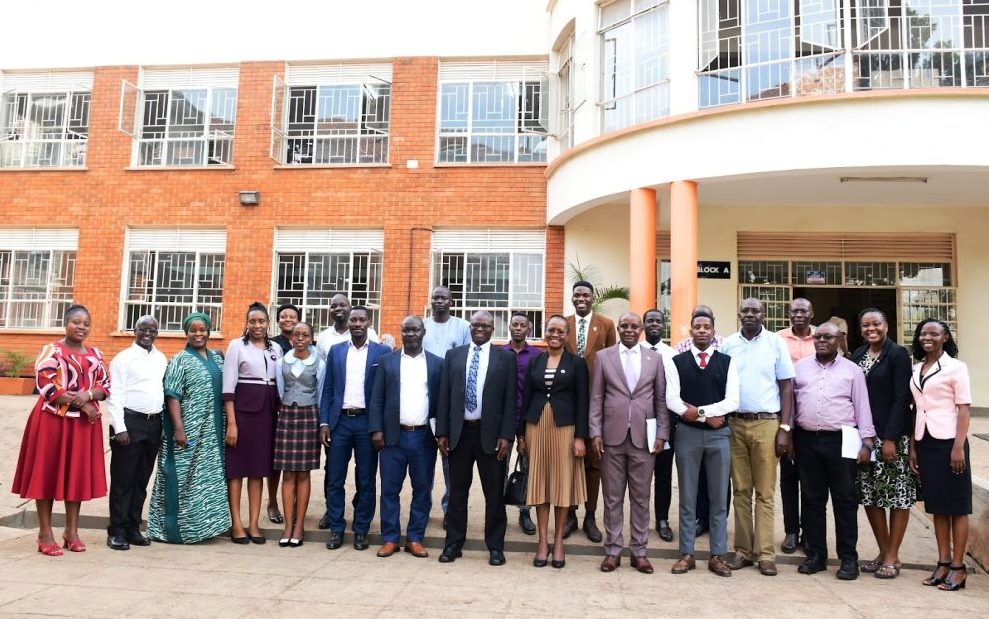
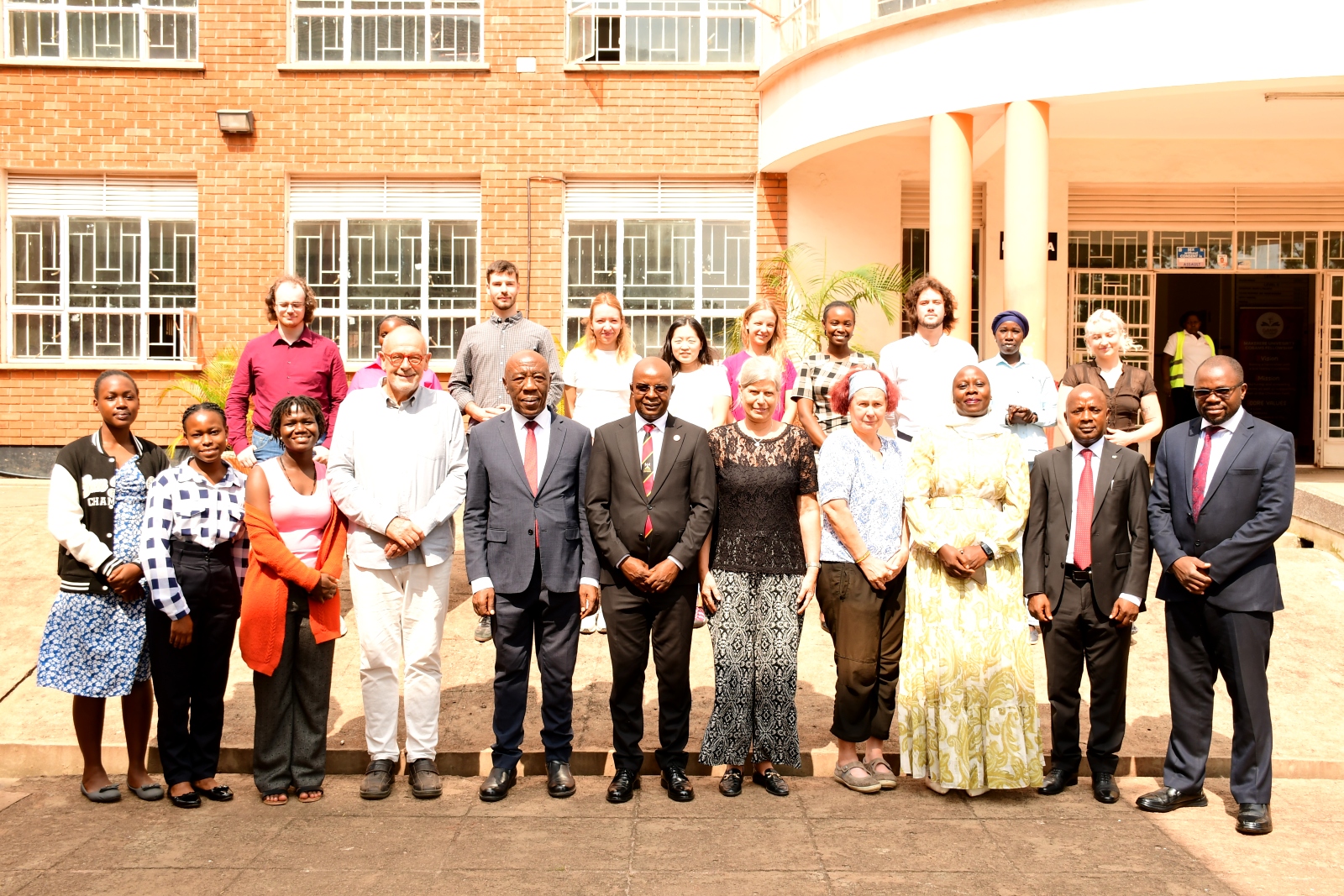
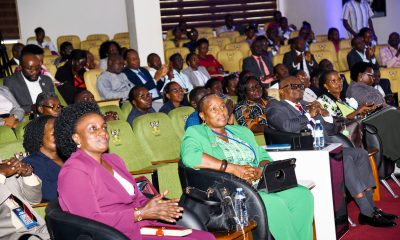
Invited guests, staff, students, and members of the media gather at the CoBAMS to witness the official launch ceremony. College of Business and Management Sciences (CoBAMS) Working Paper Series 2025 launch by Prof. Sarah Ssali. It consists of over 60 working papers with research set to transform society, inform policy formulation, decision making, governance, development. 4th December 2025, CoBAMS Conference Room, Block B, School of Business, Makerere University, Kampala Uganda, East Africa.
Invited guests, staff, students, and members of the media gather at the CoBAMS to witness the official launch ceremony.

The Series consists of over 60 research papers, many of which have already been accepted in internationally recognised peer-reviewed journals. The publications cover a broad spectrum of national priorities, including unemployment, climate change, population dynamics, taxation, entrepreneurship, public investment, corruption, refugee livelihoods, and the green economy.

A landmark moment for Makerere University
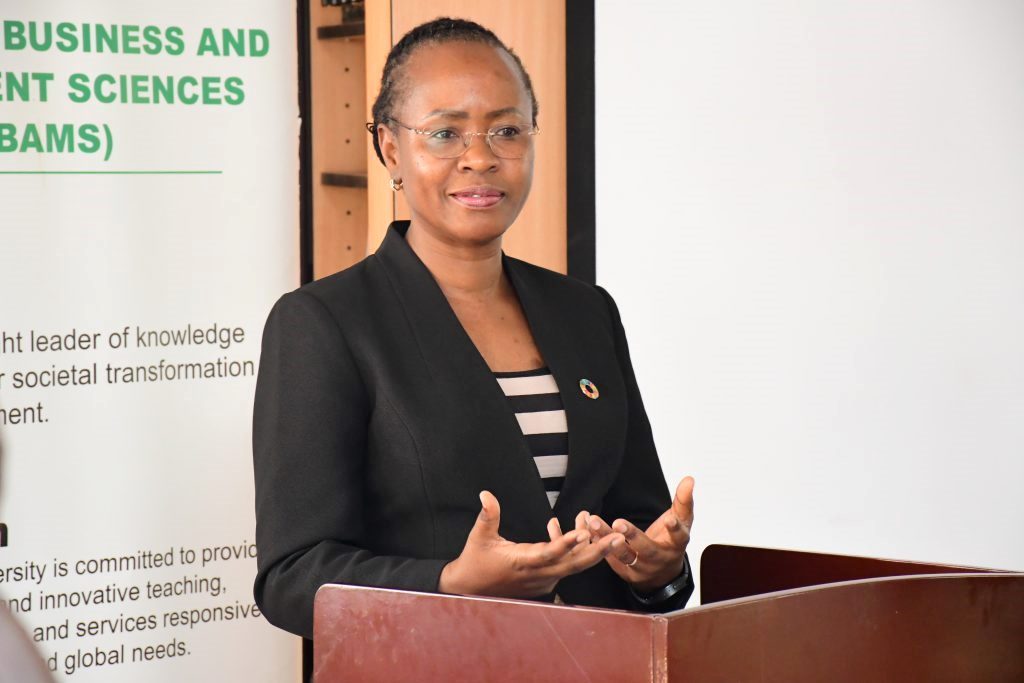
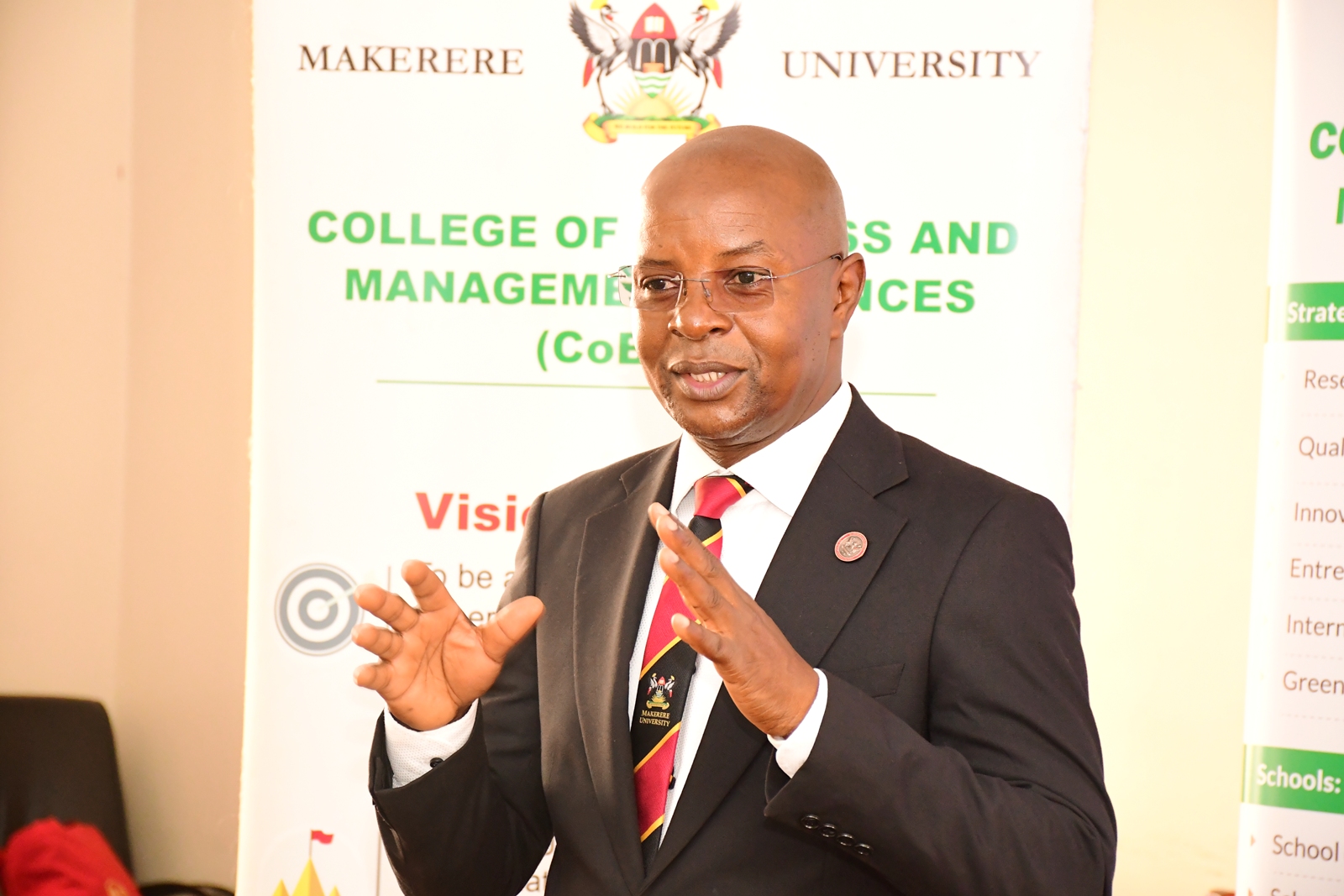
The Makerere University Deputy Vice Chancellor for Academic Affairs, Prof. Sarah Ssali addressing the participants who convened at the CoBAMS Conference Hall to witness the launch of the CoBAMS Working Paper Series. College of Business and Management Sciences (CoBAMS) Working Paper Series 2025 launch by Prof. Sarah Ssali. It consists of over 60 working papers with research set to transform society, inform policy formulation, decision making, governance, development. 4th December 2025, CoBAMS Conference Room, Block B, School of Business, Makerere University, Kampala Uganda, East Africa.
The Makerere University Deputy Vice Chancellor for Academic Affairs, Prof. Sarah Ssali addressing the participants who convened at the CoBAMS Conference Hall to witness the launch of the CoBAMS Working Paper Series.

Addressing the participants comprising invited guests, staff, students and the media, who convened at the CoBAMS Conference Hall to witness the launch, Prof. Ssali commended the College leadership and staff for championing Makerere’s research vision. “Today is a landmark moment in the life of Makerere University,” she declared. She emphasized that Makerere’s move toward a research-intensive identity was deliberate. “A few years ago, we made a bold and historic decision to reorient the University toward research and innovation. Today’s launch is evidence that this decision has taken root—especially within CoBAMS.”

Prof. Ssali praised the College for providing a modest annual research grant to faculty members, an initiative that produced more than 60 working papers in the 2024/2025 financial year.

She urged the College to transition the Working Paper Series into homegrown journals, adding: “If you can produce 60 papers this year and 80 next year, you have enough content for at least three journals. Journals raise our visibility, raise our H-index, and ensure that anyone researching Uganda finds homegrown scholarship.”

The Deputy Vice Chancellor (Academic Affairs) highlighted pressing national issues requiring academic inquiry. “Uganda’s economy grows, but unemployment remains high. When we celebrate entrepreneurship, we are often celebrating survival. These are questions this Series must help confront.”

She also pointed to the importance of research in shaping national discourse: “If people are hungry and unemployed, they will go to the streets. We cannot sit here speaking English and pretend these issues will disappear.”

We are proud of this collective achievement

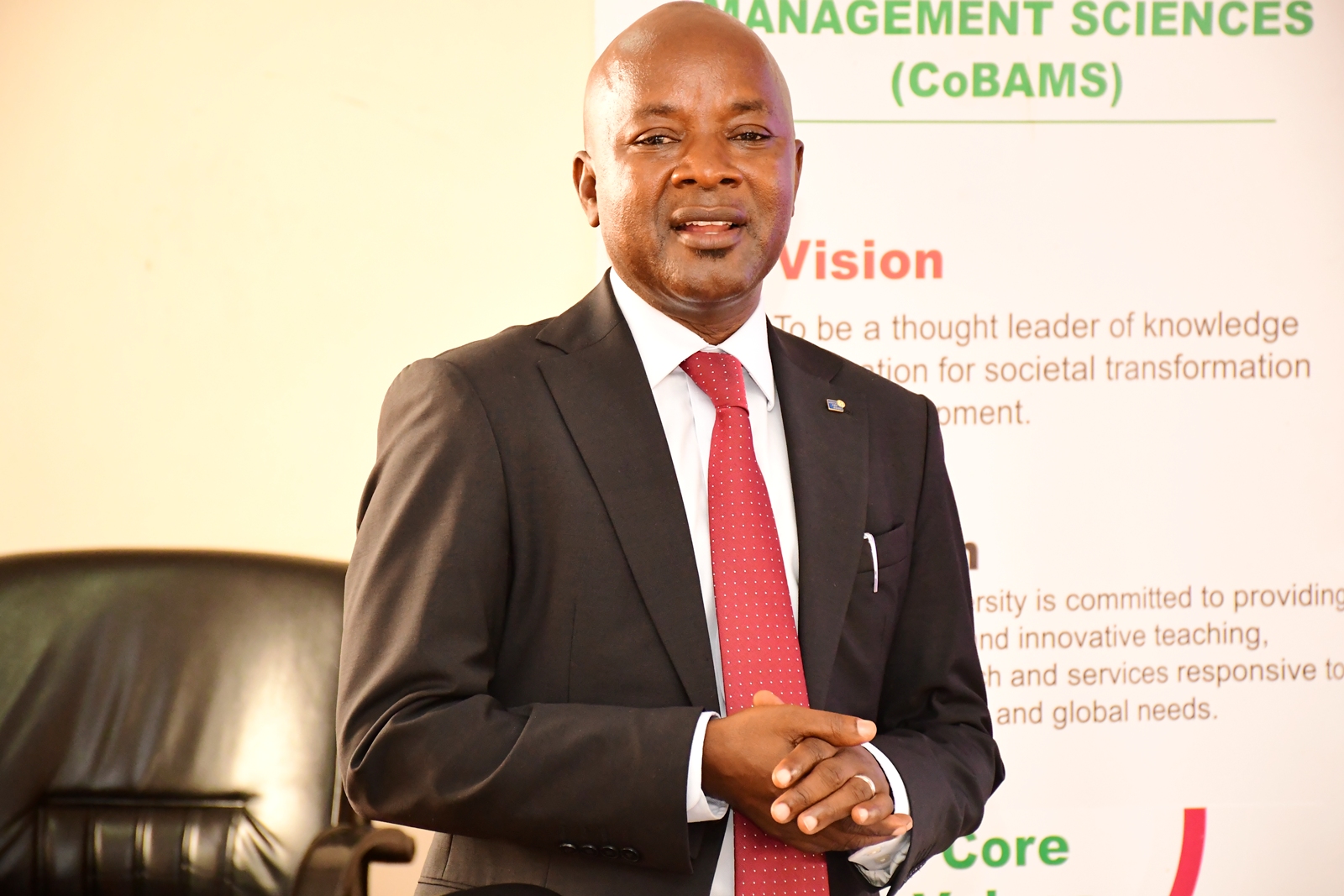
The Principal of CoBAMS, Prof. Edward Bbaale, described the Series as a major achievement rooted in collective effort and consistent commitment to research excellence. “What we are celebrating today is the result of your collective effort,” he told faculty. “This Working Paper Series is a nursery bed for journal articles, book chapters, and future scholarly outputs.”
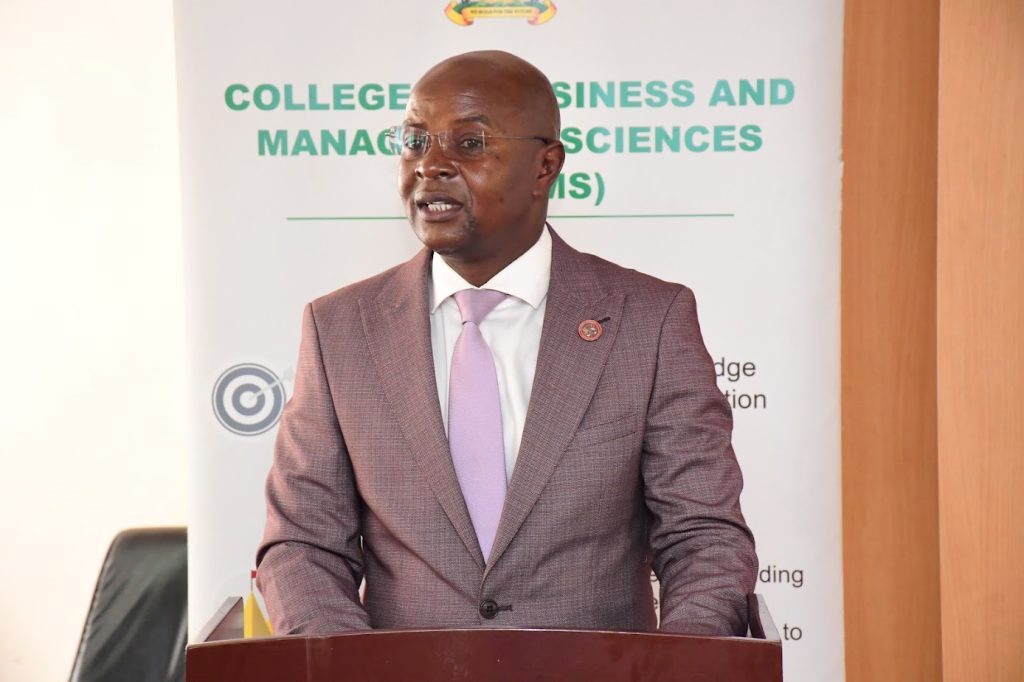
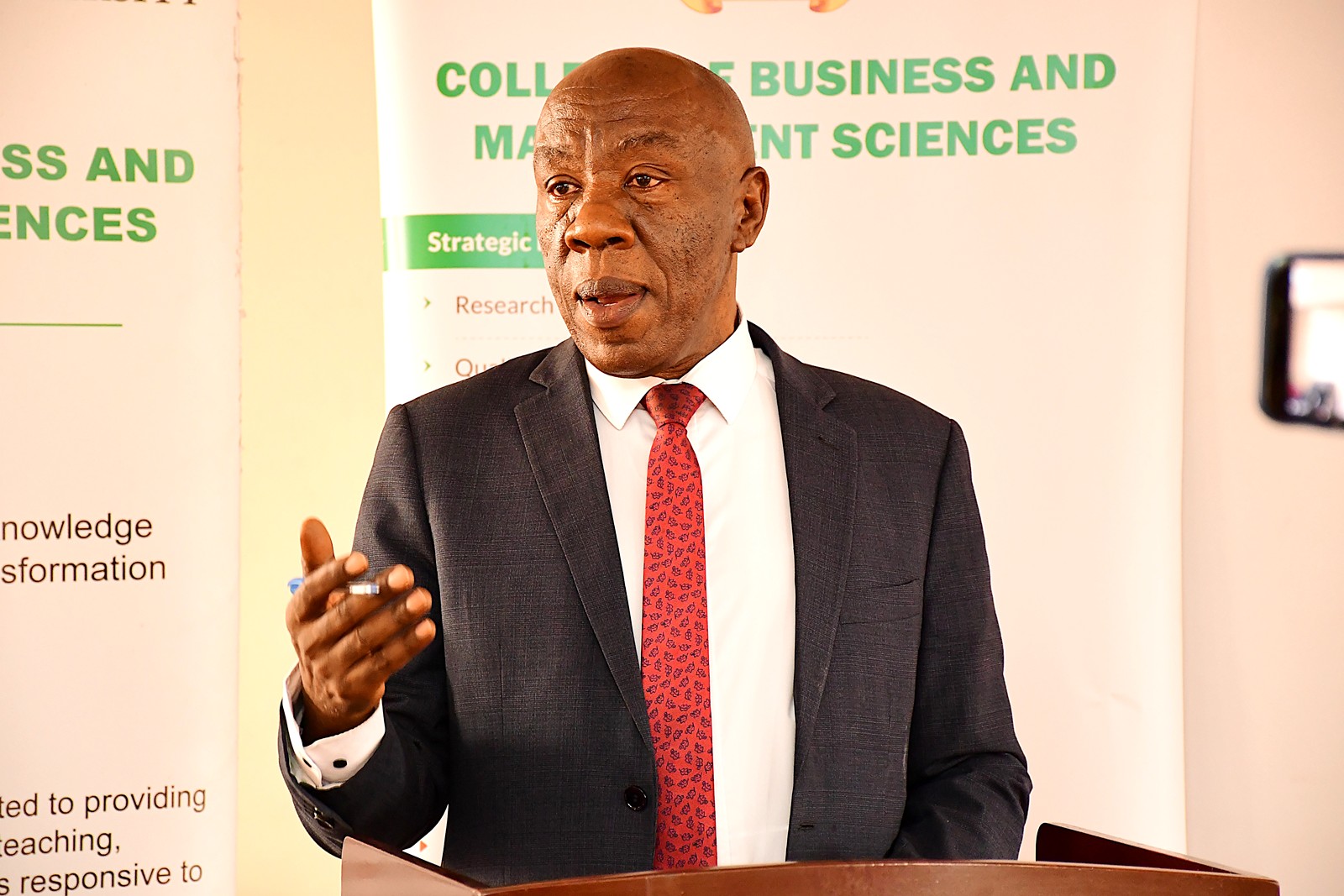
The Principal of CoBAMS, Prof. Edward Bbaale giving his remarks at the launch of the working paper series. College of Business and Management Sciences (CoBAMS) Working Paper Series 2025 launch by Prof. Sarah Ssali. It consists of over 60 working papers with research set to transform society, inform policy formulation, decision making, governance, development. 4th December 2025, CoBAMS Conference Room, Block B, School of Business, Makerere University, Kampala Uganda, East Africa.
The Principal of CoBAMS, Prof. Edward Bbaale giving his remarks at the launch of the working paper series.

He revealed that for the upcoming(2026) paper series, the College has funded over 90 research concepts and expects to produce more than 80 working papers in the 2025/2026 cycle.

Prof. Bbaale emphasised that the College’s four research centres—in Entrepreneurship and Innovation, Statistics and Demography, Public Investment Management, and the Environment for Development Initiative—form a strong foundation for sustained knowledge production. “These centres anchor high-level research, policy engagement, and interdisciplinary collaboration. They are the backbone of our research ecosystem.”

This journey started with a modest grant
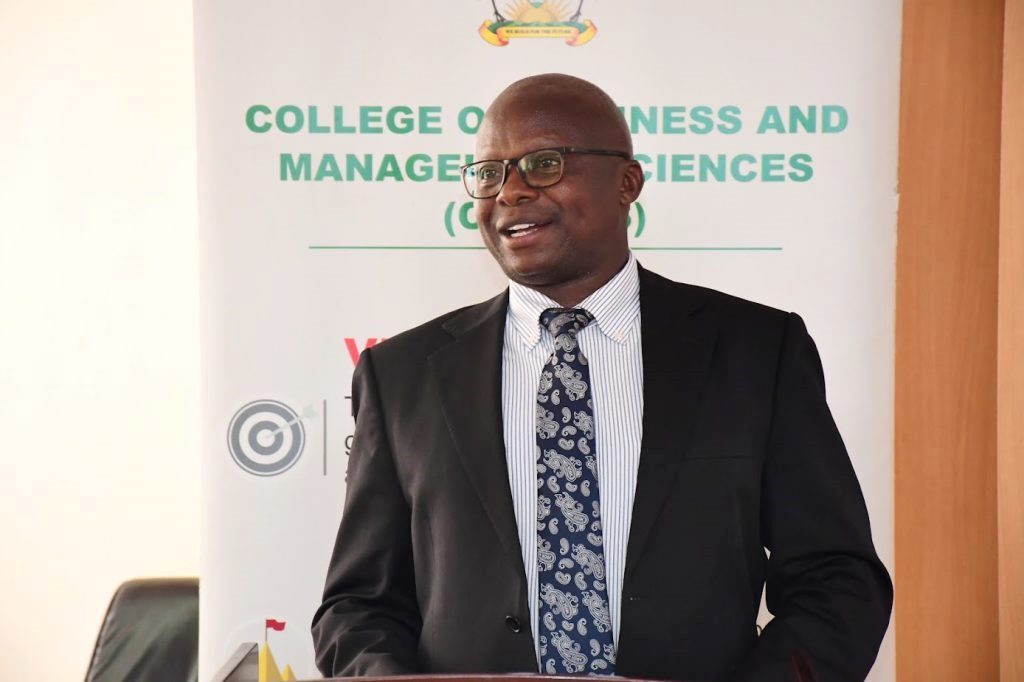
The Deputy Principal of CoBAMS, Associate Professor James Wokadala, giving his remarks about the working paper series by tracing the Origins and its impact on Research. College of Business and Management Sciences (CoBAMS) Working Paper Series 2025 launch by Prof. Sarah Ssali. It consists of over 60 working papers with research set to transform society, inform policy formulation, decision making, governance, development. 4th December 2025, CoBAMS Conference Room, Block B, School of Business, Makerere University, Kampala Uganda, East Africa.
The Deputy Principal of CoBAMS, Associate Professor James Wokadala, giving his remarks about the working paper series by tracing the Origins and its impact on Research.

Associate Professor James Wokadala, the Deputy Principal, traced the origins of the Series to a small but impactful College research grant introduced in November 2024. “This afternoon is a very important day for us. This Series is the product of our internal efforts and internal resources,” he said. “By May this year, the working papers had already been finalised by the various principal investigators.”

He noted that each paper went through school-level presentations, editorial checks, and harmonisation before being accepted into the Series. “Today, we are launching 60 of those papers, with many more to follow.”

CoBAMS is a powerhouse of knowledge production

Dr. William Tayeebwa, Chief Managing Editor of Makerere University Press. College of Business and Management Sciences (CoBAMS) Working Paper Series 2025 launch by Prof. Sarah Ssali. It consists of over 60 working papers with research set to transform society, inform policy formulation, decision making, governance, development. 4th December 2025, CoBAMS Conference Room, Block B, School of Business, Makerere University, Kampala Uganda, East Africa.
Dr. William Tayeebwa, Chief Managing Editor of Makerere University Press.

Dr. William Tayeebwa, Chief Managing Editor of Makerere University Press, praised the College’s output and pledged the Press’s support in transforming the papers into high-quality books and journal articles. “The topics and issues contained in the Working Paper Series confirm that CoBAMS is truly a powerhouse of knowledge production.”

He committed to working closely with the College: “We can convert these working papers into journal articles, special issues, and thematic book volumes within six months. Makerere University Press stands ready to support you.”

Dr. Tayeebwa highlighted the broad range of topics covered—refugees, Myooga, malaria, tax compliance, corruption, and more—describing the Series as “a rich intellectual nursery bed.”

PhD Forum: Building the next generation of researchers

Ms. Sylvia Namujjuzi, Assistant Lecturer and Vice President of the CoBAMS PhD Students Forum. College of Business and Management Sciences (CoBAMS) Working Paper Series 2025 launch by Prof. Sarah Ssali. It consists of over 60 working papers with research set to transform society, inform policy formulation, decision making, governance, development. 4th December 2025, CoBAMS Conference Room, Block B, School of Business, Makerere University, Kampala Uganda, East Africa.
Ms. Sylvia Namujjuzi, Assistant Lecturer and Vice President of the CoBAMS PhD Students Forum.

Speaking on behalf of postgraduate students, Ms. Sylvia Namujjuzi, Assistant Lecturer and Vice President of the CoBAMS PhD Students Forum, emphasised the importance of peer support in research training. “The PhD journey can be lonely,” she said. “This Forum brings students from the three Schools together to network, share knowledge, organise seminars, and hold mock defences.”

A milestone for Makerere’s research future

Prof. Ssali reaffirmed the University’s commitment: “As Makerere University positions itself among leading research institutions globally, initiatives such as the CoBAMS Working Paper Series give concrete meaning to our strategic vision.”

She officially launched the Series with a call for sustained excellence: “May it grow, mature, and inspire a new generation of researchers. May it elevate Makerere University’s intellectual footprint.”

Ritah Namisango
Ritah Namisango

Business & Management

Uganda Launches Policy Briefs on Natural Capital Accounts to position Nature at the Centre of Economic Planning

Published

on

Hon. Beatrice Atim Anywar (Left), Uganda's Minister of State for Environment, unveils the CEACM policy briefs at Makerere University as Prof. Edward Bbaale, CEACM Director, looks on. Launch of Policy Briefs developed by the Centre of Excellence for Africa Climate-Sensitive Macroeconomic Modelling (CEACM), College of Business and Management Sciences (CoBAMS), 15th July 2026, Senior Common Room, Main Building, Makerere University, Kampala Uganda, East Africa.

Uganda has launched five policy briefs on Natural Capital Accounts aimed at integrating the value of the country’s forests, wetlands, water resources, land, energy systems and ecosystems into national economic planning and decision making.

The Policy Briefs, developed by the Centre of Excellence for Africa Climate-Sensitive Macroeconomic Modelling (CEACM) under the College of Business and Management Sciences, were launched on Wednesday 15th July 2026 at Makerere University.

The initiative brings together government, academia and development partners to promote climate-informed economic policies as Uganda pursues sustainable development and its economic transformation targets.

The five policy briefs address Uganda’s energy transition, declining wood stocks, natural capital integration into development planning, sustainable land use, and national water accounting amid climate change.

The five policy briefs include:

  • Uganda’s Wood Stock on a Declining Pathway to Extinction: A Call for Policy Review and Action
  • Uganda’s Energy System at a Crossroads: The Unsustainable Reliance on Biomass and the Need for Energy Transition
  • Integrating Natural Capital into Development Planning in Uganda: Insights from the Ecosystem Service and Asset Accounts (1990-2015)
  • Leveraging Land Natural Capital to Drive Uganda’s Sustainable and Inclusive Growth
  • National Water Accounts Development: Tracking Uganda’s Progress amidst Climate Change.

Link to the Policy Briefs: https://bams.mak.ac.ug/policy-briefs/

Hon. Beatrice Atim Anywar, Minister of State for Environment, addressing participants at the launch. Launch of Policy Briefs developed by the Centre of Excellence for Africa Climate-Sensitive Macroeconomic Modelling (CEACM), College of Business and Management Sciences (CoBAMS), 15th July 2026, Senior Common Room, Main Building, Makerere University, Kampala Uganda, East Africa.
Hon. Beatrice Atim Anywar, Minister of State for Environment, addressing participants at the launch.

Speaking at the Launch of the policy briefs, the Minister of State for Environment, Hon. Beatrice Atim Anywar who represented the Minister of Water and Environment, said natural capital accounting provides Uganda with a new approach to valuing its environmental resources.

“Today, we are launching a new way of seeing, planning and managing Uganda’s development,” Hon. Anywar said.

She noted that for years, Uganda’s economic progress has largely been measured through indicators such as Gross Domestic Product (GDP), which do not capture the decline or improvement of natural resources.

“But GDP does not tell us if our forests, water sources and wetlands are shrinking. It does not tell us if our forests can still hold our waters or whether our soils will still feed the next generation,” she said.

Hon. Anywar said Uganda’s natural capital, including forests, wetlands, water resources, biodiversity, minerals and fertile soils, supports livelihoods, tourism, energy generation and climate resilience. “This natural capital supports over 70 percent of our population and powers our hydropower. It feeds into tourism and buffers us against droughts and threatening floods,” she said.

She warned that degradation of these resources represents a loss of national wealth. “When natural capital is degraded, we are not just losing trees, wetlands, water or soils. We are losing wealth. We are losing jobs for our children and future generations,” she said.

The Minister said natural capital accounting allows Uganda to place nature on its economic balance sheet. “This is what natural capital accounting does. It puts nature on the balance sheet. I studied basic accounting, but I never imagined that natural resources could also be reflected on a balance sheet. Today, that is becoming a reality,” she said.

She challenged all stakeholders to ensure that every future development decision considers its impact on Uganda’s natural capital, stressing that informed choices today will secure sustainable prosperity for generations to come.

Hon. Anywar also called for recognition of the role communities play in protecting natural resources, saying traditional knowledge must complement modern science.

“Our ancestors protected the environment without maps, technology or scientific reports. They knew which areas were sacred, where water sources were protected and where forests should not be disturbed,” she said. “When communities understand that protecting a wetland or forest protects their own livelihoods, we will not need constant enforcement. People themselves will become protectors of nature,” she added.

Research Must Drive Policy Decisions

Makerere University Vice Chancellor, Prof. Barnabas Nawangwe, delivers the opening remarks during the event. Launch of Policy Briefs developed by the Centre of Excellence for Africa Climate-Sensitive Macroeconomic Modelling (CEACM), College of Business and Management Sciences (CoBAMS), 15th July 2026, Senior Common Room, Main Building, Makerere University, Kampala Uganda, East Africa.
Makerere University Vice Chancellor, Prof. Barnabas Nawangwe, delivers the opening remarks during the event.

Delivering the opening remarks, the Vice Chancellor of Makerere University, Prof. Barnabas Nawangwe highlighted the event as a significant milestone in strengthening climate-sensitive economic planning.

He noted that the theme of the launch and dissemination workshop, “Advancing Climate-Informed Economic Policy for Sustainable Development in Africa,” aligns with the research-led agenda of Makerere University.

Prof. Nawangwe said the launch demonstrates the role of universities in generating evidence to support national development.  “Today’s event demonstrates the power of collaboration between academia, government and development partners in generating knowledge that informs public policy and advances Uganda’s sustainable development agenda,” he said.

Prof. Nawangwe said the policy briefs provide evidence needed for integrating natural capital into national planning, budgeting and investment decisions. He said the University will continue strengthening research capacity to support Uganda and Africa.

Emphasizing the urgency of informed decision-making, he observed that Africa remains one of the regions most affected by climate change while experiencing rapid population growth, placing increasing pressure on natural resources. He stressed that research-driven policies are essential for achieving climate resilience and sustainable economic growth.

The Vice Chancellor commended the Government of Uganda, particularly the Ministry of Finance, Planning and Economic Development, on the country’s historic appointment as the first Co-Chair of the Coalition of Finance Ministers for Climate Action.

He recognised the Centre of Excellence for Africa Climate-Sensitive Macroeconomic Modelling (CEACM) for advancing interdisciplinary research and strengthening Uganda’s position as a regional leader in climate-sensitive macroeconomic modelling and evidence-informed policymaking.

“The Centre continues to build the capacity of African researchers and policymakers while fostering partnerships with government institutions, development partners, regional organisations, and the private sector,” he said.

Strengthening Africa’s Climate Policy Research Agenda

Prof. Edward Bbaale, Director of CEACM and Principal CoBAMS, delivering his keynote remarks. Launch of Policy Briefs developed by the Centre of Excellence for Africa Climate-Sensitive Macroeconomic Modelling (CEACM), College of Business and Management Sciences (CoBAMS), 15th July 2026, Senior Common Room, Main Building, Makerere University, Kampala Uganda, East Africa.
Prof. Edward Bbaale, Director of CEACM and Principal CoBAMS, delivering his keynote remarks.

Prof. Edward Bbaale, the Director of CEACM and the Principal, College of Business and Management Sciences (CoBAMS), reported on Makerere University’s investment in establishing specialised centres that address critical policy challenges facing Uganda and the African continent.

He stated that CEACM was established to respond to growing global demands for climate considerations to become part of national planning, budgeting and macroeconomic decision-making.

“The Centre is committed to producing high-quality policy-oriented research while strengthening the capacity of policymakers and practitioners to respond effectively to climate and economic challenges,” he said.

He explained that CEACM was established because climate change can no longer be separated from economic planning. “It is very important that national planning, budgeting, macroeconomic frameworks and fiscal policies are not oblivious to climate change, but instead fully integrate climate-related considerations,” he said.

He stated that CEACM’s work aligns with emerging global and continental initiatives, including the Coalition of Finance Ministers for Climate Action and the Pan-African Forum of Finance Ministers on Climate Action, underscoring the increasing role of finance ministries in integrating climate priorities into economic planning and fiscal decision-making.

Prof. Bbaale added that Makerere University had positioned itself as a partner to government through research, evidence generation and capacity building. “We could not stand aside. We have to be part of this global effort and contribute the much-needed evidence, research and capacity building to support the Ministry of Finance in executing this important responsibility,” he said.

He noted that Uganda’s role as the first African country to co-chair the Coalition of Finance Ministers for Climate Action had created an opportunity for local institutions to strengthen climate-sensitive economic modelling.

Uganda’s Progress in Integrating Natural Capital into Economic Planning

Mr. Arthur Ssebbugga-Kimeze, Climate Finance Manager, representing the GGGI Country Representative, addresses participants. Launch of Policy Briefs developed by the Centre of Excellence for Africa Climate-Sensitive Macroeconomic Modelling (CEACM), College of Business and Management Sciences (CoBAMS), 15th July 2026, Senior Common Room, Main Building, Makerere University, Kampala Uganda, East Africa.
Mr. Arthur Ssebbugga-Kimeze, Climate Finance Manager, representing the GGGI Country Representative, addresses participants.

Representing the GGGI Country Representative, the Manager of Climate Finance, Mr. Arthur Ssebbugga-Kimeze commended Uganda’s efforts to integrate natural capital accounting into national economic planning. “This is a critical step towards climate-resilient and sustainable development,” he acknowledged.

The Manager of Climate Finance applauded the collaboration between Makerere University, the Ministry of Finance, Planning and Economic Development, and development partners in generating evidence that supports informed policymaking.

He also recognised the Government of Denmark for its continued support in advancing climate-smart economic policies through the Denmark-EGP partnership.

Emphasizing the significance of natural capital as a key pillar of economic prosperity, Mr. Ssebbugga-Kimeze called for sustained investment in protecting these assets. “Uganda’s experience is increasingly informing climate finance and policy discussions across Africa through the Pan-African Finance Ministers’ Forum on Climate Action,” he added.

He called for strong partnerships among government, academia, and development partners to ensure that research continues to drive evidence-based policymaking and sustainable economic growth, reaffirming GGGI’s commitment to supporting Uganda’s green growth agenda.

Policy Briefs Must Move from Shelves to Decisions

Ms. Nina Guldbæk van Leeuwen, representing the Embassy of Denmark in Uganda, sharing his remarks. Launch of Policy Briefs developed by the Centre of Excellence for Africa Climate-Sensitive Macroeconomic Modelling (CEACM), College of Business and Management Sciences (CoBAMS), 15th July 2026, Senior Common Room, Main Building, Makerere University, Kampala Uganda, East Africa.
Ms. Nina Guldbæk van Leeuwen, representing the Embassy of Denmark in Uganda, sharing his remarks.

Representing the Embassy of Denmark in Uganda, Ms. Nina Guldbæk van Leeuwen, Counsellor and Team Leader for Politics, Regional Affairs and Refugee Support, said natural capital accounting is critical for building climate-resilient economies.

She commended Uganda’s leadership as co-chair of the Coalition of Finance Ministers for Climate Action. “These policy briefs are crucial in enhancing the role of economic, fiscal and financial policies in addressing climate change in Uganda and Africa as a whole,” she said.

Ms. Van Leeuwen said reliable natural capital accounts enable finance ministries to integrate climate considerations into economic planning. “Ministries of Finance require these accounts to support macroeconomic modelling, which can only be developed through a strengthened and collaborative national statistical system,” she said.

She urged stakeholders to ensure the research informs actual decisions. “Let us ensure that these policy briefs do not remain on institutional shelves but are actively used to inform decisions and policies going forward,” she said.

Natural Capital Data will improve Economic Decision

Mr. Davis Vuningoma, Acting Commissioner for Macroeconomic Policy at Uganda’s Ministry of Finance, Planning and Economic Development, addressing participants. Launch of Policy Briefs developed by the Centre of Excellence for Africa Climate-Sensitive Macroeconomic Modelling (CEACM), College of Business and Management Sciences (CoBAMS), 15th July 2026, Senior Common Room, Main Building, Makerere University, Kampala Uganda, East Africa.
Mr. Davis Vuningoma, Acting Commissioner for Macroeconomic Policy at Uganda’s Ministry of Finance, Planning and Economic Development, addressing participants.

The Acting Commissioner for Macroeconomic Policy at Uganda’s Ministry of Finance, Planning and Economic Development, Mr. Davis Vuningoma, called for climate change to be treated as a macroeconomic and fiscal challenge rather than solely an environmental issue.

“Climate risks pose significant threats to agricultural productivity, energy generation, infrastructure, government revenues, and fiscal stability,” he noted.

Mr. Vuningoma said natural capital accounting will strengthen Uganda’s ability to make informed economic decisions.

He warned that climate change poses economic risks that could affect Uganda’s fiscal space. “If we do not address these challenges, our fiscal space could shrink, and our ability to provide public services could be affected,” Mr. Vuningoma said.

He said Uganda’s natural resources have historically not been fully reflected in traditional economic measurements. “Uganda is richly endowed with natural capital, including forests, wetlands and water resources. However, traditional measures of economic performance have often failed to fully capture the value of these assets,” he said.

Mr. Vuningoma said the policy briefs provide practical options for government as Uganda seeks to expand its economy. “This is particularly important at a time when Uganda is pursuing ambitious economic transformation targets, including the goal of growing the economy tenfold and achieving a USD 500 billion economy,” he said.

Key Findings Highlight Pressure on Uganda’s Natural Resources

Dr. Peter Babyenda, Coordinator of CEACM, presenting the key findings of the policy briefs during the dissemination event. Launch of Policy Briefs developed by the Centre of Excellence for Africa Climate-Sensitive Macroeconomic Modelling (CEACM), College of Business and Management Sciences (CoBAMS), 15th July 2026, Senior Common Room, Main Building, Makerere University, Kampala Uganda, East Africa.
Dr. Peter Babyenda, Coordinator of CEACM, presenting the key findings of the policy briefs during the dissemination event.

Presenting the highlights, Dr. Peter Babyenda, the Coordinator of CEACM, disclosed that the policy briefs highlight growing pressure on Uganda’s natural resources.

The Energy System at Crossroads brief found that traditional biomass accounts for about 87 percent of Uganda’s final energy consumption, highlighting continued dependence on firewood and charcoal.

The Wood Stock Declining Pathway brief found that Uganda’s national wood resources declined by 45 percent between 1990 and 2015, with projections warning of possible exhaustion of available wood supply between 2032 and 2040 under current trends.

The Land Natural Capital brief identified unsustainable agricultural expansion, deforestation and urbanisation as major drivers of land degradation.

The Ecosystem Services and Asset Accounts brief noted that although the monetary value of ecosystem assets increased between 1990 and 2015, natural capital value per person declined by 17.7 percent due to population growth.

The National Water Accounts brief highlighted agriculture as the largest water user, accounting for 55.4 percent of total water abstraction in 2024, while warning of increasing climate risks.

Panel Discussion: Advancing Climate-Informed Economic Policy for Sustainable Development in Africa

L-R: Prof. Edward Bbaale-Moderator, Dr. Ronald Kaggwa-National Planning Authority, Mr. Nathan Mununuzi-Ministry of Water and Environment, Mr. Wilson Asiimwe-Ministry of Finance Planning and Economic Development, Mr. Godwin Kamugisha-National Environment Management Authority, Dr. Peter Babyenda, Coordinator of CEACM. Launch of Policy Briefs developed by the Centre of Excellence for Africa Climate-Sensitive Macroeconomic Modelling (CEACM), College of Business and Management Sciences (CoBAMS), 15th July 2026, Senior Common Room, Main Building, Makerere University, Kampala Uganda, East Africa.
L-R: Prof. Edward Bbaale-Moderator, Dr. Ronald Kaggwa-National Planning Authority, Mr. Nathan Mununuzi-Ministry of Water and Environment, Mr. Wilson Asiimwe-Ministry of Finance Planning and Economic Development, Mr. Godwin Kamugisha-National Environment Management Authority, and Dr. Peter Babyenda, Coordinator of CEACM.

Moderated by Prof. Edward Bbaale, the session featured the following panellists: Dr. Ronald Kaggwa-National Planning Authority, Mr. Wilson Asiimwe-Ministry of Finance, Planning and Economic Development, Mr. Nathan Mununuzi-Ministry of Water and Environment, Mr. Godwin Kamugisha-National Environment Management Authority, and Dr. Peter Babyenda-CEACM Coordinator and member of faculty at Makerere University College of Business and Management Sciences (MakCoBAMS).

The Panelists argued that assigning monetary value to forests, wetlands, water resources, and other ecosystems would enable evidence-based budgeting, investment decisions, and environmental protection while capturing costs ignored by traditional GDP measures.

They stressed the need for stronger institutions, increased funding, enhanced research and capacity building, and closer collaboration between government, academia, and development partners.

The event, organized by CEACM, brought on board distinguished stakeholders including the Minister of State for Environment, Hon. Beatrice Atim Anywar who represented the Minister of Water and Environment, Hon. Maj. Gen. (Rtd.) Kahinda Otafiire, Makerere University Vice Chancellor, Prof. Barnabas Nawangwe, the Principal, College of Business and Management Sciences (CoBAMS), and Director CEACM, Prof. Edward Bbaale and  representatives from different Ministries and Agencies such as, the Embassy of Denmark in Uganda, the Global Green Growth Institute (GGGI),  Ministry of Finance, Planning and Economic Development, the Ministry of Water and Environment, the National Environment Management Authority (NEMA), the Ministry of Lands, Housing and Urban Development, Ministry of Energy and Mineral Development, and among others.

CEACM is a research and policy centre that supports African countries in integrating climate change and natural capital into economic planning through research, capacity building, and evidence-based policymaking. CEACM is one of the centres within the School of Economics at the College of Business and Management Sciences (CoBAMS) at Makerere University.

View on CoBAMS

Ritah Namisango
Ritah Namisango

Continue Reading

Business & Management

PIM Centre to Benefit from PIM-Plus Grant

Published

on

PIM CoE Leadership poses for a group photo with the PIM-Plus delegation on 9th July 2026. Public Investment Management Centre of Excellence (PIM CoE) at Makerere University hosts PIM-Plus Project delegation from Ministry of Finance, Planning and Economic Development (MoFPED) who assessed readiness to receive approximately USD 8 million to support the construction of a modern teaching and residential facility, 9th July 2026, Yusuf Lule Central Teaching Facility, Kampala Uganda, East Africa.

The Public Investment Management Centre of Excellence (PIM CoE) at Makerere University is set to benefit from a grant under the World Bank-supported PIM-Plus Project, an initiative aimed at strengthening Public Investment Management Systems and enhancing the capacity for effective project planning, appraisal, implementation, and monitoring in Uganda.

Through the project, the Centre is expected to receive funding of approximately USD 8 million to support the construction of a modern teaching and residential facility. The proposed infrastructure is intended to enhance the Centre’s capacity to deliver high-quality training, research and technical advisory services in Public Investment Management (PIM) to government institutions and other stakeholders across the region and beyond.

The meeting in session. Public Investment Management Centre of Excellence (PIM CoE) at Makerere University hosts PIM-Plus Project delegation from Ministry of Finance, Planning and Economic Development (MoFPED) who assessed readiness to receive approximately USD 8 million to support the construction of a modern teaching and residential facility, 9th July 2026, Yusuf Lule Central Teaching Facility, Kampala Uganda, East Africa.
The meeting in session.

The project’s construction activities are anticipated to commence in the next financial year following the completion of the necessary preparatory processes, including feasibility studies and project design.

As part of the ongoing project preparation activities, the PIM CoE today hosted a delegation of officials from the Ministry of Finance, Planning and Economic Development (MoFPED), who visited the Centre to assess progress made towards the implementation of the PIM-Plus Project. The visit provided an opportunity for the Ministry team to review the Centre’s readiness, discuss key project milestones, and identify areas requiring further attention to ensure timely project execution.

The Ministry delegation was led by Ms. Esther Ayebare, Ag. Assistant Commissioner, Public Investments and Project Analysis Department who commended the Centre for the progress registered thus far. She emphasized the importance of adhering to the project preparation timelines and urged the PIM CoE team to expedite the completion of the feasibility studies and other prerequisite activities necessary for project approval and commencement.

Ms. Esther Ayebare (2nd R) addresses the meeting. Ms. Esther Ayebare. Public Investment Management Centre of Excellence (PIM CoE) at Makerere University hosts PIM-Plus Project delegation from Ministry of Finance, Planning and Economic Development (MoFPED) who assessed readiness to receive approximately USD 8 million to support the construction of a modern teaching and residential facility, 9th July 2026, Yusuf Lule Central Teaching Facility, Kampala Uganda, East Africa.
Ms. Esther Ayebare (2nd R) addresses the meeting.

Ms. Ayebare noted that the successful implementation of the project will significantly strengthen the Centre’s role as a national and regional hub for capacity building, research and knowledge dissemination in Public Investment Management. She further underscored the Government’s commitment to supporting initiatives that enhance the quality of public investments and contribute to improved service delivery and sustainable economic development.

The Director of the PIM Centre, Prof. Edward Bbaale reaffirmed the Centre’s commitment to ensuring that all project preparation requirements are completed within the stipulated timelines. He noted that the planned facility will provide a conducive environment for training, accommodation and collaborative learning thereby strengthening the Centre’s ability to support the Country in developing and managing high-quality investment projects.

Prof. Edward Bbaale. Public Investment Management Centre of Excellence (PIM CoE) at Makerere University hosts PIM-Plus Project delegation from Ministry of Finance, Planning and Economic Development (MoFPED) who assessed readiness to receive approximately USD 8 million to support the construction of a modern teaching and residential facility, 9th July 2026, Yusuf Lule Central Teaching Facility, Kampala Uganda, East Africa.
Prof. Edward Bbaale.

Dr. John Sseruyange, the Manager of the PIM Centre of Excellence emphasized that the Centre remains committed to delivering high-quality, demand-driven training courses that respond to the evolving needs of Public Investment Management practitioners and contribute to the successful implementation of Uganda’s Public Investment Management reform agenda. He further noted that the project will enable the Centre to effectively fulfil its mandate and contribute more meaningfully to addressing PIM capacity constraints in the region. The PIM-Plus Project forms part of broader efforts by the Government of Uganda and its development partners to improve the efficiency, effectiveness and impact of public investments, ensuring that public resources are directed towards projects that deliver maximum socio-economic benefits for citizens.

Betty Kyakuwa
Betty Kyakuwa

Continue Reading

Business & Management

PIM Centre, MoFPED Award Certificates to 4th Cohort of CFI Trainees

Published

on

Mr. Henry Mwanja and Prof. Edward Bbaale pose for a group photo with participants on 3rd July 2026. Public Investment Management Centre of Excellence (PIM CoE), Makerere University, Kampala in partnership with the Ministry of Finance, Planning and Economic Development (MoFPED) graduation of two-week training of the fourth cohort of the Capacity Enhancement and Hands-on Training on the Guidelines for Financial Clearance and the Certificate of Financial Implications (CFI) – Integrated Regulatory Cost-Benefit Analysis. 3rd July 2026, Pearl on the Nile Hotel, Jinja, Uganda, East Africa.

Jinja | July 3, 2026

The Public Investment Management (PIM) Centre of Excellence at Makerere University, in partnership with the Ministry of Finance, Planning and Economic Development (MoFPED), has graduated the fourth cohort of officers trained in Integrated Regulatory Cost-Benefit Analysis (IRCBA) and the preparation of Certificates of Financial Implications (CFIs), marking another milestone in strengthening evidence-based policymaking and fiscal governance in Uganda.

A total of 40 officers from various Ministries, Departments and Agencies (MDAs) successfully completed the intensive two-week Capacity Building Training on the Guidelines for Financial Clearance, culminating in the award of certificates during a closing ceremony held in Jinja.

The programme, jointly implemented by the PIM Centre of Excellence and the Ministry’s Infrastructure and Social Services Department (ISSD), equips public officers with practical skills to prepare robust Statements of Financial Implications that support the issuance of Certificates of Financial Implication (CFIs) in accordance with the revised Guidelines that came into effect on 1 July 2025.

Building a critical mass of public sector analysts

Representing the Ministry of Finance, Commissioner Henry Mwanja, Commissioner for the Infrastructure and Social Services Department, congratulated the participants for successfully completing the demanding programme despite their responsibilities related to implementation of the Fourth National Development Plan, the Tenfold Growth Strategy and the FY2026/27 Budget.

Mr. Henry Mwanja and Prof. Edward Bbaale present a certificate to Ms. Nalweera Alice (C). Public Investment Management Centre of Excellence (PIM CoE), Makerere University, Kampala in partnership with the Ministry of Finance, Planning and Economic Development (MoFPED) graduation of two-week training of the fourth cohort of the Capacity Enhancement and Hands-on Training on the Guidelines for Financial Clearance and the Certificate of Financial Implications (CFI) – Integrated Regulatory Cost-Benefit Analysis. 3rd July 2026, Pearl on the Nile Hotel, Jinja, Uganda, East Africa.
Mr. Henry Mwanja and Prof. Edward Bbaale present a certificate to Ms. Nalweera Alice (C).

He described the revised Guidelines for the Issuance of Certificates of Financial Implication as a major reform aimed at making public policy development more transparent, consultative and analytically rigorous.

According to the Commissioner, participants are now better equipped to assess fiscal implications, evaluate broader economic impacts, identify distributional effects, manage uncertainty and undertake Integrated Regulatory Cost-Benefit Analysis in a structured and consistent manner.

However, he reminded participants that the value of the training would only be realised through practical application.

“The knowledge, tools and skills you have acquired must now be consistently applied in your day-to-day work. Analytical rigour must become routine practice, not an occasional exercise,” he emphasized.

He added that the Ministry would continue expanding the programme to train more officers across Government as part of efforts to institutionalize evidence-based policymaking and strengthen fiscal sustainability.

Participants urged to champion evidence-based policymaking

Prof. Edward Bbaale, Director of the PIM Centre of Excellence, commended participants for their dedication, discipline and active engagement throughout the programme.

He noted that the training had equipped participants with analytical tools to assess the financial, socio-economic, distributive and risk implications of proposed Bills, policies and legislation, enabling them to prepare stronger and more credible Statements of Financial Implications.

Public Investment Management Centre of Excellence (PIM CoE), Makerere University, Kampala in partnership with the Ministry of Finance, Planning and Economic Development (MoFPED) graduation of two-week training of the fourth cohort of the Capacity Enhancement and Hands-on Training on the Guidelines for Financial Clearance and the Certificate of Financial Implications (CFI) – Integrated Regulatory Cost-Benefit Analysis. 3rd July 2026, Pearl on the Nile Hotel, Jinja, Uganda, East Africa.
Mr. Henry Mwanja and Prof. Edward Bbaale present a certificate to Mr. Mazima Titus (C).

“The true success of this training will not be measured by the discussions held here, but by how effectively you apply this knowledge within your respective Ministries, Departments and Agencies,” Prof. Bbaale said.

He challenged participants to become ambassadors of Integrated Regulatory Cost-Benefit Analysis by promoting analytical rigour, mentoring colleagues and strengthening evidence-based decision-making across government institutions.

Prof. Bbaale also applauded the long-standing collaboration between Makerere University and the Ministry of Finance, describing it as a model partnership that successfully bridges academia and public service to strengthen public financial management in Uganda.

Beyond capacity building, he highlighted the Centre’s growing contribution to public investment reforms through research, policy advisory and technical support, including its role in revising Development Committee Guidelines and assessing Uganda’s public investment performance.

Highest-performing cohort celebrated

Speaking on behalf of the PIM Centre of Excellence, Dr. John Sseruyange, Manager of the Centre, thanked the Ministry of Finance, particularly the Infrastructure and Social Services Department, for its continued partnership in implementing the programme.

He observed that each successive cohort had benefited from continuous improvements in the curriculum and delivery of the training.

Dr. Sseruyange also applauded the PIM Centre faculty, facilitators from the Ministry of Finance, Uganda Development Bank (UDB) and the Office of the Prime Minister, as well as the communications, administrative and logistical teams whose efforts contributed to the success of the programme.

Mr. Henry Mwanja, Prof. Edward Bbaale and Dr. John Sseruyange present a certificate to Mr. Namboga Timothy Ronald (2nd L). Public Investment Management Centre of Excellence (PIM CoE), Makerere University, Kampala in partnership with the Ministry of Finance, Planning and Economic Development (MoFPED) graduation of two-week training of the fourth cohort of the Capacity Enhancement and Hands-on Training on the Guidelines for Financial Clearance and the Certificate of Financial Implications (CFI) – Integrated Regulatory Cost-Benefit Analysis. 3rd July 2026, Pearl on the Nile Hotel, Jinja, Uganda, East Africa.
Mr. Henry Mwanja, Prof. Edward Bbaale and Dr. John Sseruyange present a certificate to Mr. Namboga Timothy Ronald (2nd L).

He reserved special praise for the participants, describing them as one of the most engaged groups the Centre has trained.

“They asked thoughtful questions, managed time exceptionally well and demonstrated remarkable commitment throughout the two weeks,” he said.

Dr. Sseruyange revealed that the fourth cohort had achieved the highest average assessment score among all the cohorts trained so far, attributing the performance to participants’ attentiveness and dedication.

He encouraged the graduates to continue practising the analytical skills acquired during the training, assuring them that the PIM Centre of Excellence would remain available to provide technical support whenever needed.

“Keep improving yourselves. When you improve your skills, your institutions benefit from your expertise,” he advised.

Participants applaud facilitators

Delivering remarks on behalf of the trainees, Baguma Asuman expressed gratitude to the Government, sponsors and facilitators for delivering what he described as an enriching and transformative learning experience.

He noted that despite the intensive nature of the programme, participants had gained practical knowledge that would significantly improve the preparation of Statements of Financial Implications.

A section of participants during the graduation ceremony. Public Investment Management Centre of Excellence (PIM CoE), Makerere University, Kampala in partnership with the Ministry of Finance, Planning and Economic Development (MoFPED) graduation of two-week training of the fourth cohort of the Capacity Enhancement and Hands-on Training on the Guidelines for Financial Clearance and the Certificate of Financial Implications (CFI) – Integrated Regulatory Cost-Benefit Analysis. 3rd July 2026, Pearl on the Nile Hotel, Jinja, Uganda, East Africa.
A section of participants during the graduation ceremony.

Baguma commended the facilitators for patiently responding to every question raised during the sessions and ensuring that every participant fully understood the concepts taught.

He also thanked fellow participants for their active contributions and encouraged them to apply the knowledge gained in their respective institutions to improve public policy analysis and financial planning.

The participants further appreciated the organizers and hotel management for the excellent coordination and hospitality throughout the two-week residential programme.

The ceremony concluded with the award of certificates to the 29 participants, marking the successful completion of the fourth cohort and reaffirming the commitment of Makerere University and the Ministry of Finance to building a cadre of public officers capable of strengthening evidence-based policymaking, improving fiscal discipline and enhancing the quality of public investment decisions in Uganda.

Betty Kyakuwa
Betty Kyakuwa

Continue Reading

Trending