
General
Tackling unemployment: Archdiocese of Kampala partners with Mak to train female entrepreneurs

By Ritah Namisango
The escalating levels of unemployment among the youth and graduates in Uganda are of great concern to the Government, civil society and other institutions such as religious organizations. In order to contribute to efforts aimed at addressing the challenge, the Archdiocese of Kampala and Makerere University are jointly implementing a youth employability collaborative programme to equip youth, students and graduates with entrepreneurship skills.
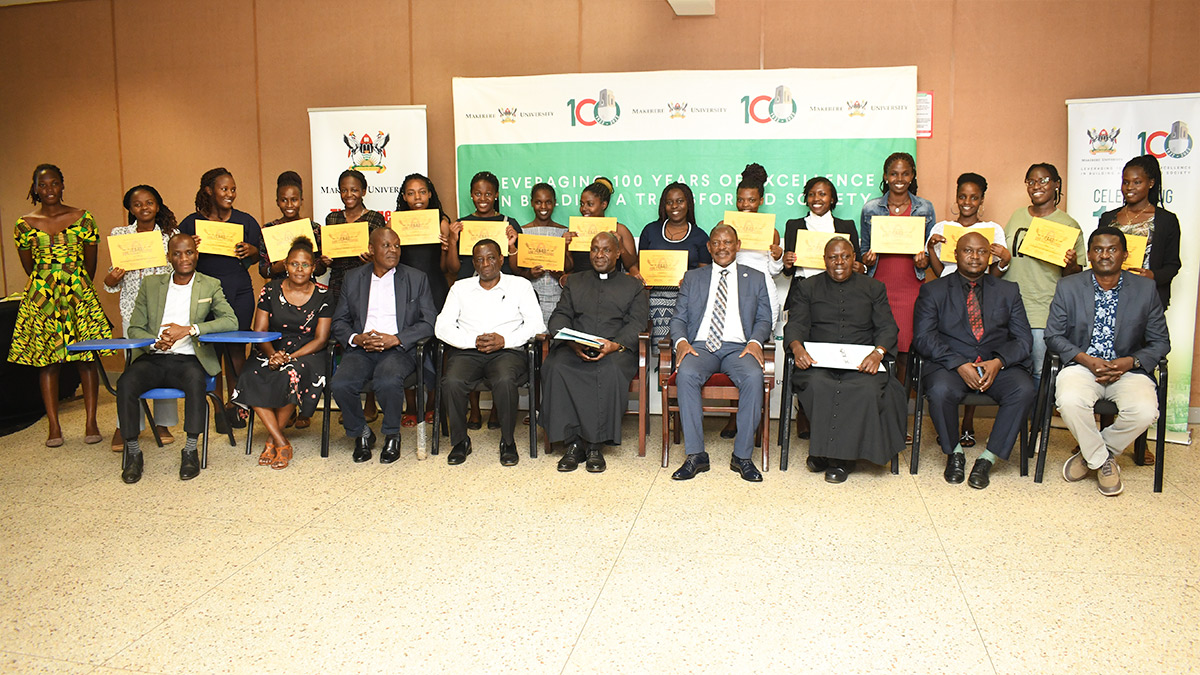
The programme that kicked off with 97 female students was conducted from 29 th July 2022 to 2nd October 2022 based on the theme: “From COVID-Socio-Economic Anxiety to STEP-Youth Training Entrepreneurship in Post COVID times.” The students who were selected from the ten (10) colleges at Makerere University were trained by experts in STEP (Student, Training for Entrepreneurial Promotion) from the Department of Philosophy under the College of Humanities and Social Sciences; and the College of Education and External Studies.
The joint partnership trained and equipped participants with knowledge and skills that have unlocked their entrepreneurial potential and abilities. The students are members of the St. Augustine Catholic Community at Makerere University.
Addressing the audience that convened on 18th October 2022 to witness the award of certificates to the budding entrepreneurs, the Vice Chancellor – Prof. Barnabas Nawangwe congratulated the female students upon acquiring 21st century skills relevant to both their career and life journey.
“I applaud Dr. Ferdinand Kasozi, Senior Lecturer in the Department of Philosophy at Makerere University for championing the cause of turning students into entrepreneurs. I am happy that the trainers and partners started with female students. I appeal to the female students to look up to the greatest women who have succeeded in life, for example, Marie Curie, the greatest woman who conquered the world of chemistry. It is pleasing to note that most of you have created jobs, while others are ready to start their own companies. Beyond academic qualifications, entrepreneurship skills are the best gift that the youth could ever secure, which makes us proud of this partnership between Makerere University and the Archdiocese of Kampala,” he said.
Marie Curie was the first woman to be awarded a place in the Pantheon for her own achievements. Marie Curie’s life as a scientist was one which flourished because of her ability to observe, deduce and predict. She is also arguably the first woman to make such a significant contribution to science.
Reflecting on the high levels of unemployment among youth and graduates in Uganda, Prof. Nawangwe noted that whereas universities continue to churn out graduates, the jobs have remained very few.
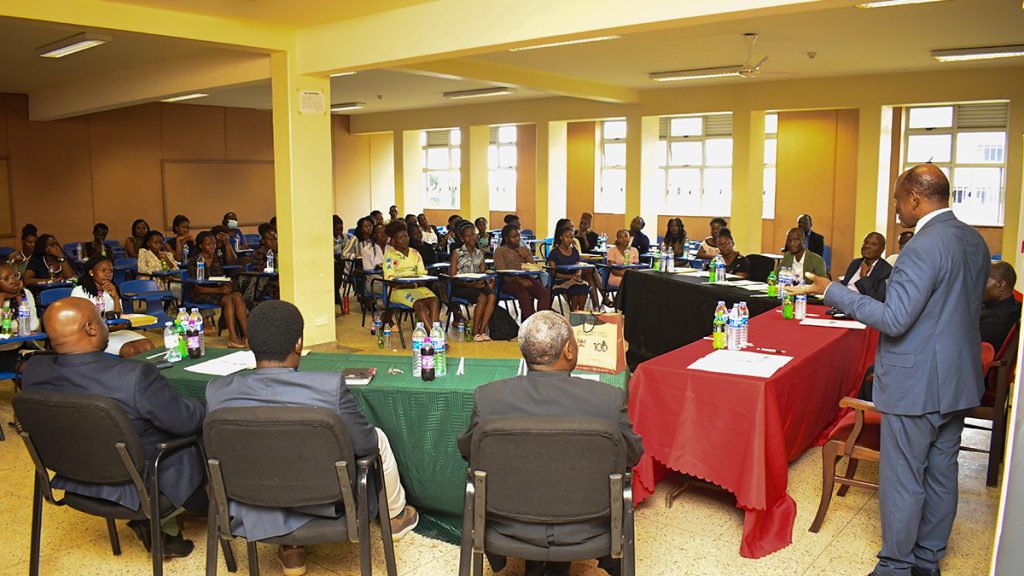
“Many of our youths and students who have graduated are unemployed due to lack of jobs. Guided by the Makerere University ten-year strategic plan, we are focusing on training entrepreneurs who will be job creators rather than job seekers. I am therefore pleased that Makerere University and the Archdiocese of Kampala are training young people so that by the time they leave the university, they are ready to create jobs or start companies,” he stated.
Impressed by the initiative to build a critical mass of student entrepreneurs, the Vice Chancellor committed to link both trainers and trainees under this programme to the Makerere University-United Nations Development Programme (UNDP) innovations hub. This linkage, he said, would serve as a platform to source additional funding, support as well as mentorship in creating jobs and start-ups.
“I told Dr. Ferdinand Kasozi, the member of staff leading the training team that we can connect this programme to the Innovation hub at Makerere University. I am glad that the Chaplain of St. Augustine Catholic Community, Rev. Fr. Josephat Ddungu and Centenary Bank are already on board. We can enhance these good efforts by reaching out to the innovations hub to support the student entrepreneurs.”
The Archbishop His Grace Paul Ssemogerere expressed his commitment to work with Makerere University to transform the lives of the youth, students and graduates. Rev. Fr. Dr. John Bosco Ssettumba, the Officer in-charge of Formal education at Kampala Archdiocese represented the Archbishop. The Archbishop rallied Ugandans and stakeholders to come up with solutions to address the challenge of unemployment that stifles livelihoods. “One of our biggest problems in Africa is the high levels of unemployment of young people including graduates. There are many problems arising from unemployment of young people. Some have become demoralised and restless, some end up on the streets, others resort to drugs, while some are forced to engage in criminal activities. Therefore, we should be concerned and work together to create a positive difference by skilling young people to become entrepreneurs.”
He commended the training team at Makerere University for partnering with the Archdiocese of Kampala and St. Augustine Catholic Community to come up with this initiative that is focused on training employable graduates. “I am happy that the student entrepreneurs have gone through a phase of self-discovery, understanding the environment, markets and opportunities in their communities, acquired experience and skills and are ready to lead the transformation.”
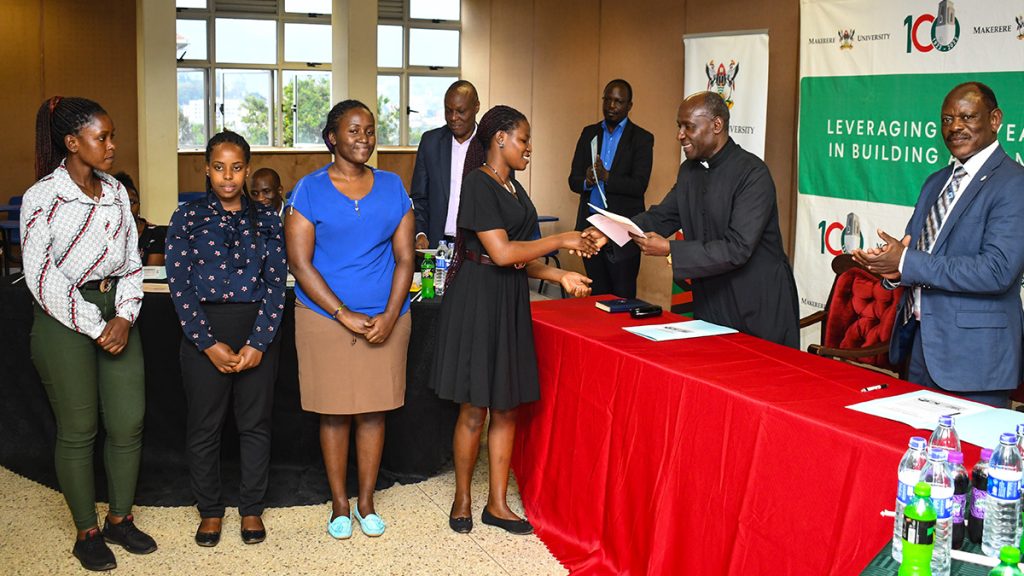
His Grace Ssemogerere called upon the student entrepreneurs to go forth and light a candle in the world of unemployment. “Go and take Makerere University to the community by being resourceful. I encourage you to add on other skills namely; communication, leadership and team work. May the good Lord bless you,” he said.
Congratulating the entrepreneurship trainees, the Deputy Principal of the College of Humanities and Social Sciences (CHUSS), Dr. Eric Awich Ochen advised the beneficiaries to take Makerere University to the people/communities. Dr. Awich Ochen informed the audience that he has been involved in initiatives that instill a culture of working with the communities in the youth and students. He pointed out community engagements in Luuka District – Eastern Uganda and Gulu – Northern Uganda where social labs were initiated for students to work in the local community settings. The students did not only encourage parents to take their children to school, but also participated in the cause of giving back to community. He appealed to Makerere University students to use every opportunity to share the knowledge acquired at the University with the communities in order to make a positive difference in the
lives of other people. “I am delighted that through this programme of skilling young people, Makerere University is giving back to the community.”
Dr Jimmy Spire Ssentongo, Head Department of Philosophy thanked Dr Kasozi for his devotion to uplifting the public face and self-worth of female students in and beyond the Philosophy Department.
Focusing on the continuity of the entrepreneurship programme, one of the trainers, Dr. Josephine Najjemba, a Lecturer in the College of Education and External Studies (CEES) appreciated the Archbishop of Kampala Archdiocese and the Vice Chancellor for their commitment towards the success of the partnership. She stated that the trainers’ interactions with the Archbishop and Vice Chancellor have energised them to double their efforts in order to groom, empower and motivate more youth and students.
The trainers included: Dr. Ferdinand Kasozi, Dr. Badru Musisi, Ms. Dorcas Nambi, Mr.Alex Byamukama, Dr. Rebecca and Dr. Josephine Najjemba. Dr Dickson Kanakulya Lecturer in the Philosophy Dept. was the Master of Ceremonies.



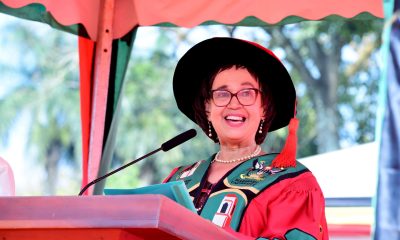

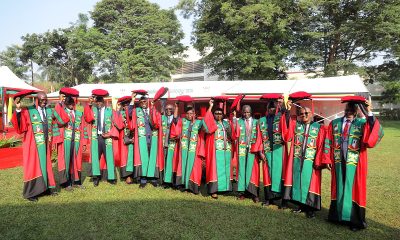




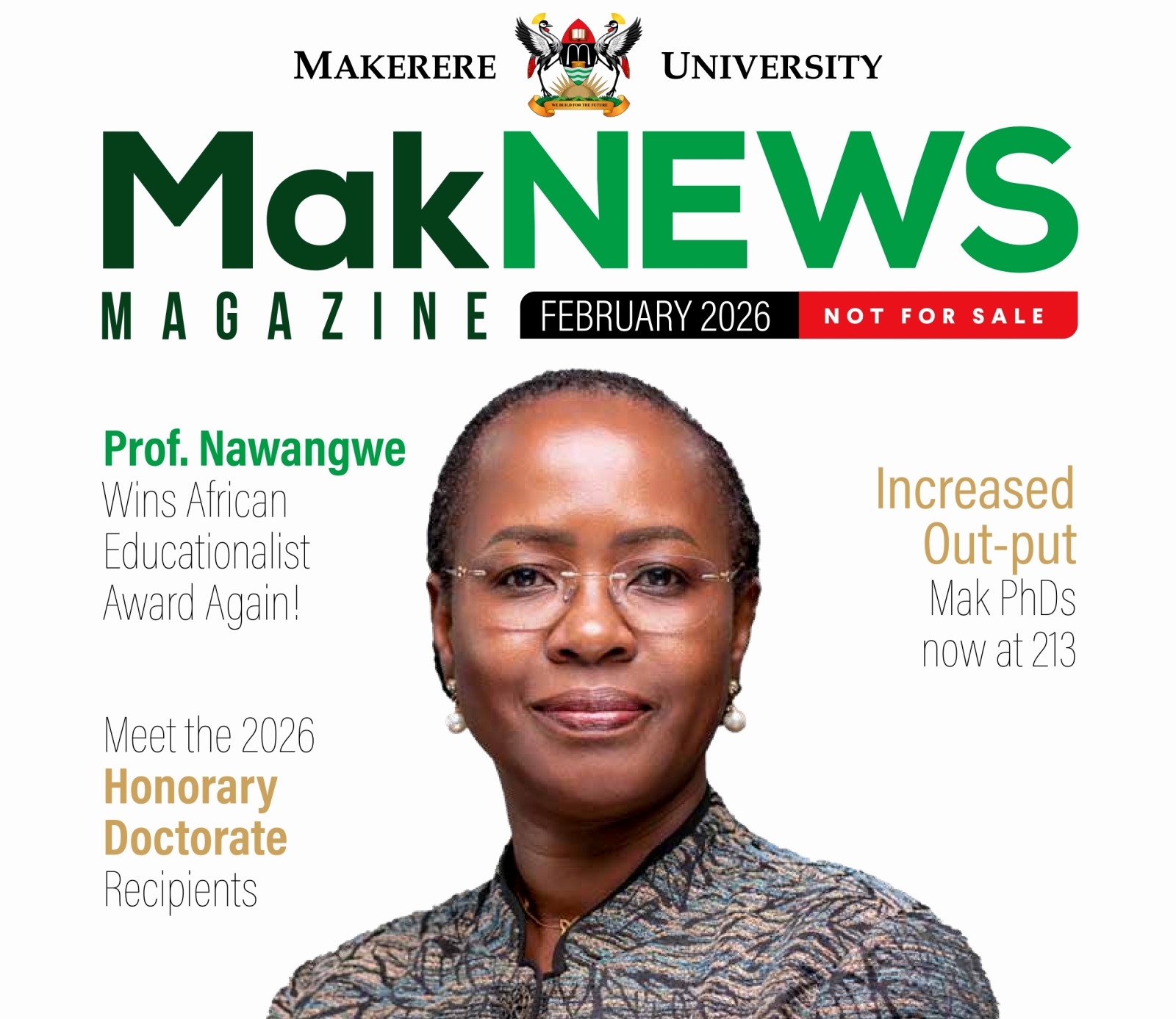

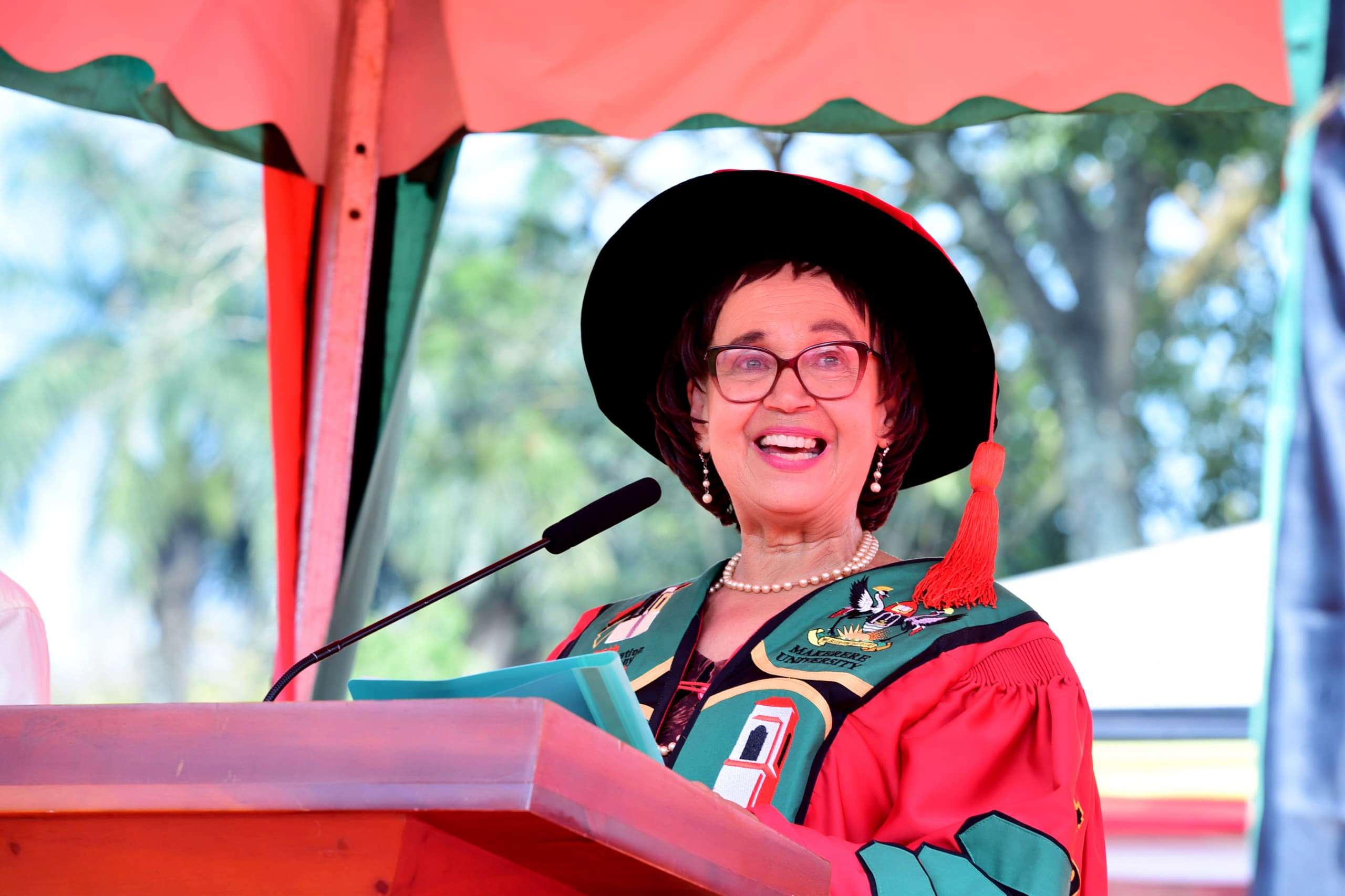
The Board Chairperson of the Makerere University Endowment Fund (MakEF), Dr. Margaret Blick Kigozi, has urged graduands in Health and Life Sciences to uphold professional ethics and serve humanity with diligence and compassion.
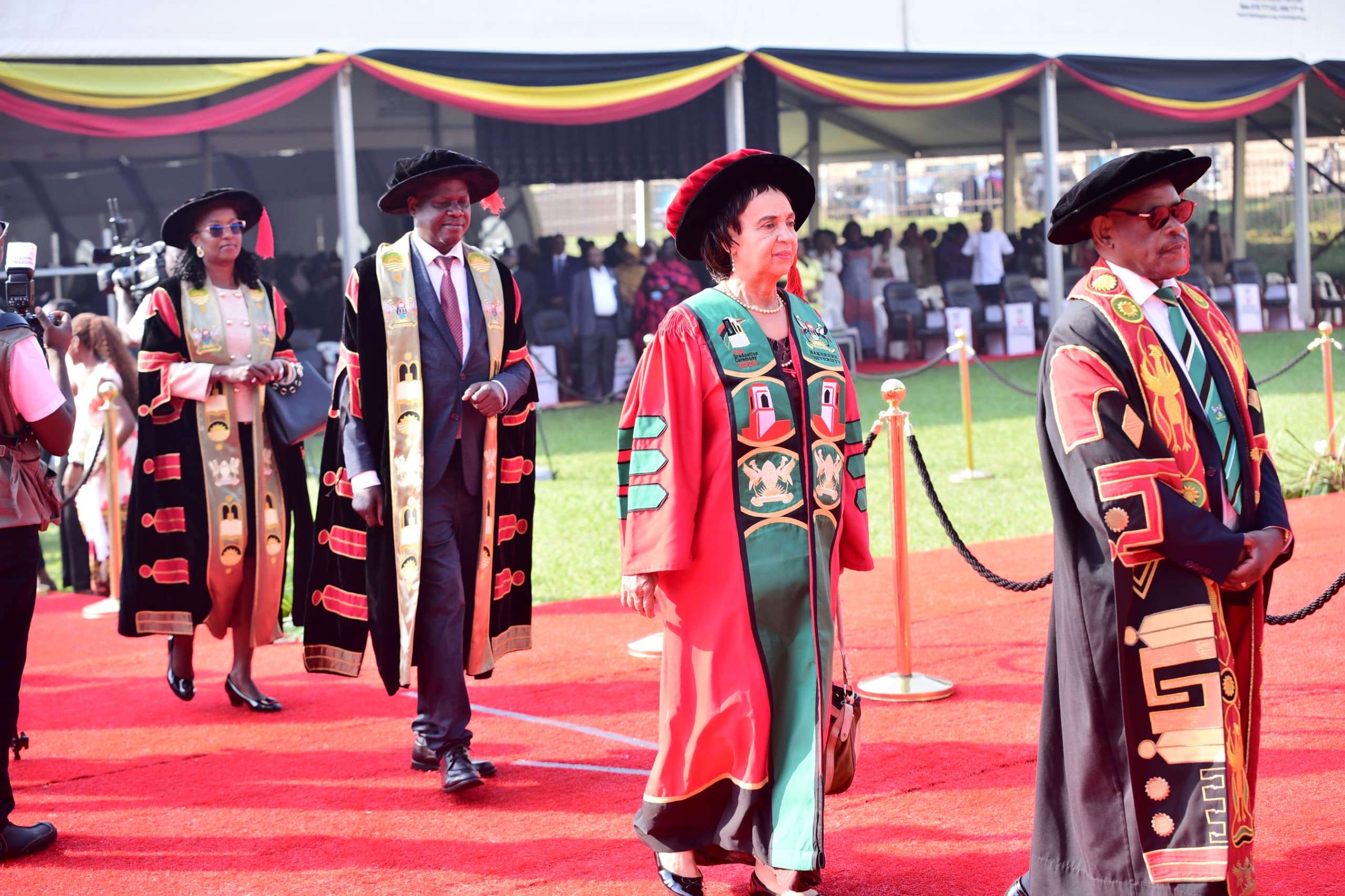
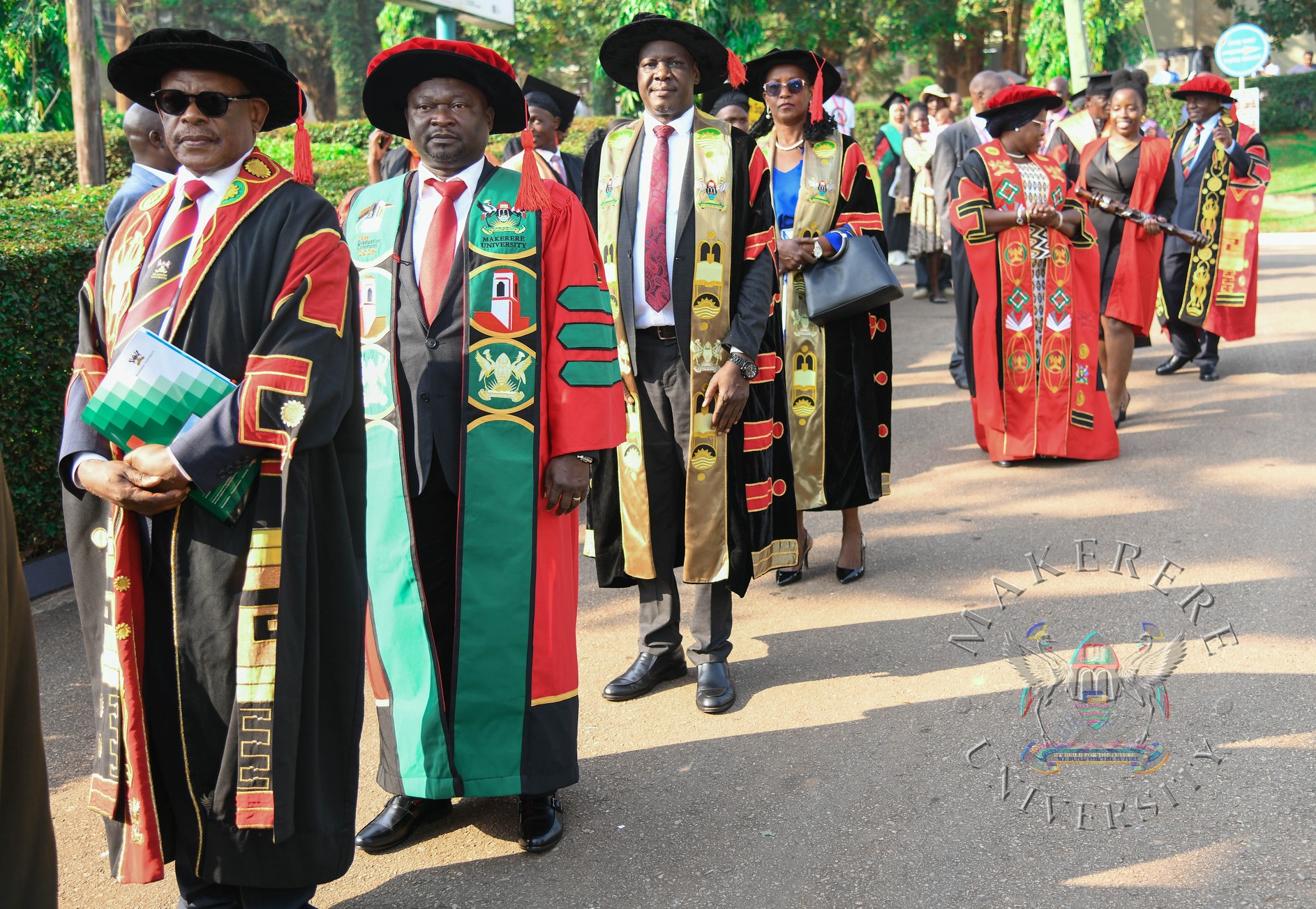
Her appeal came during the passing out of graduates from the College of Natural Sciences (CoNAS), the College of Veterinary Medicine, Animal Resources and Bio-Security (CoVAB), the College of Health Sciences (CHS) and the School of Public Health (SPH) on Day Two of the 76th Graduation Ceremony of Makerere University.
“Class of 2026, you are now part of the Makerere legacy. Wherever you go clinics, laboratories, farms, boardrooms, or classrooms, you carry this institution with you. Serve your patients with skill and compassion. Care for animals and communities responsibly. Question boldly and keep learning,” Dr Kigozi, said.
Delivering the commencement address, Dr. Kigozi lauded the graduates for their dedication to careers that directly impact lives and communities. She encouraged them to use their knowledge generously and exercise their power gently.
“Your education has trained you to ask better questions. Your humanity must guide the answers. Never forget that behind every chart, every case, every animal, every experiment, there is life. And life deserves care, patience, and dignity. Give every person you come in contact with care, patience and dignity,” Dr Kigozi, noted.
As the graduates embark on their professional journeys, Dr. Kigozi emphasized the importance of cultivating basic business acumen and financial literacy to ensure sustainability in their work.
“You do not need to become accountants but you must be able to read the essentials: understand simple financial statements, budgets and key metrics so you can judge whether a clinic, lab, or program is sustainable. You are encouraged to start your business. There are numerous investment opportunities in your areas of training. You can provide services to our people and create jobs,” Dr Kigozi, said.
She shared candidly how, when she first stepped into leadership, she realised she did not understand balance sheets or budgets well enough. So, she returned to Makerere for short courses to strengthen herself.
“A well-run Hospital, clinic or lab delivers better outcomes, attracts staff, and secures funding. Business savvy is not only about profit, it’s about sustainability and the freedom to serve ethically and effectively. Carry clinical skill with business sense so your work endures and grows,” Dr. Kigozi, noted.
Quoting renowned writer and producer Shonda Rhimes, creator of Grey’s Anatomy, who once reflected that succeeding in one area of life can sometimes mean falling short in another, Dr. Kigozi encouraged women graduates to intentionally balance professional ambition with family responsibilities.
“When one area thrives, another is often under strain. When Navio was graduating from school I had to manage the Presidential Investor Round Table on the same day as Executive Director Uganda Investment Authority. I chose my job and delegated his siblings to attend Navios graduation. I learnt from this. I choose family always after that thing you achieve once and keep forever,” Dr Kigozi, said.
In his speech, the Prof Barnabas Nawangwe, the Vice Chancellor, informed the congregation that Makerere’s ranking on all university ranking platforms has remained stable, placing Makerere among the top 10 African universities and within the top 4.5% globally.
“In the Times Higher Education global ranking, Makerere University made a formidable jump from the 1200-1500 bracket to the 800-1000 bracket. This was no mean achievement and I congratulate all members of the Makerere Community on this stellar performance,” Prof Nawangwe, said.
-
 Humanities & Social Sciences5 days ago
Meet Najjuka Whitney, The Girl Who Missed Law and Found Her Voice
-
 Health1 week ago
Uganda has until 2030 to end Open Defecation as Ntaro’s PhD Examines Kabale’s Progress
-
 Agriculture & Environment1 week ago
Uganda Martyrs Namugongo Students Turn Organic Waste into Soap in an Innovative School Project on Sustainable Waste Management
-
 General4 days ago
76th Graduation Highlights
-
 General1 week ago
Mastercard Foundation Scholars embrace and honour their rich cultural diversity