
Research
Ssemugabo Presents Abstract at Africa CDC Conference









General
Advancing Makerere university’s Research Visibility and Impact: DRIP Spearheads Institutional ORCID Adoption

The Directorate of Research, Innovations and Partnerships (DRIP) has conducted a series of training sessions aimed at equipping graduate students, researchers, and research administrators with the knowledge and practical skills needed to effectively use the Open Researcher and Contributor ID (ORCID). These trainings are designed to strengthen researchers’ professional identities, enhance publication tracking, and improve the visibility and recognition of their research outputs.
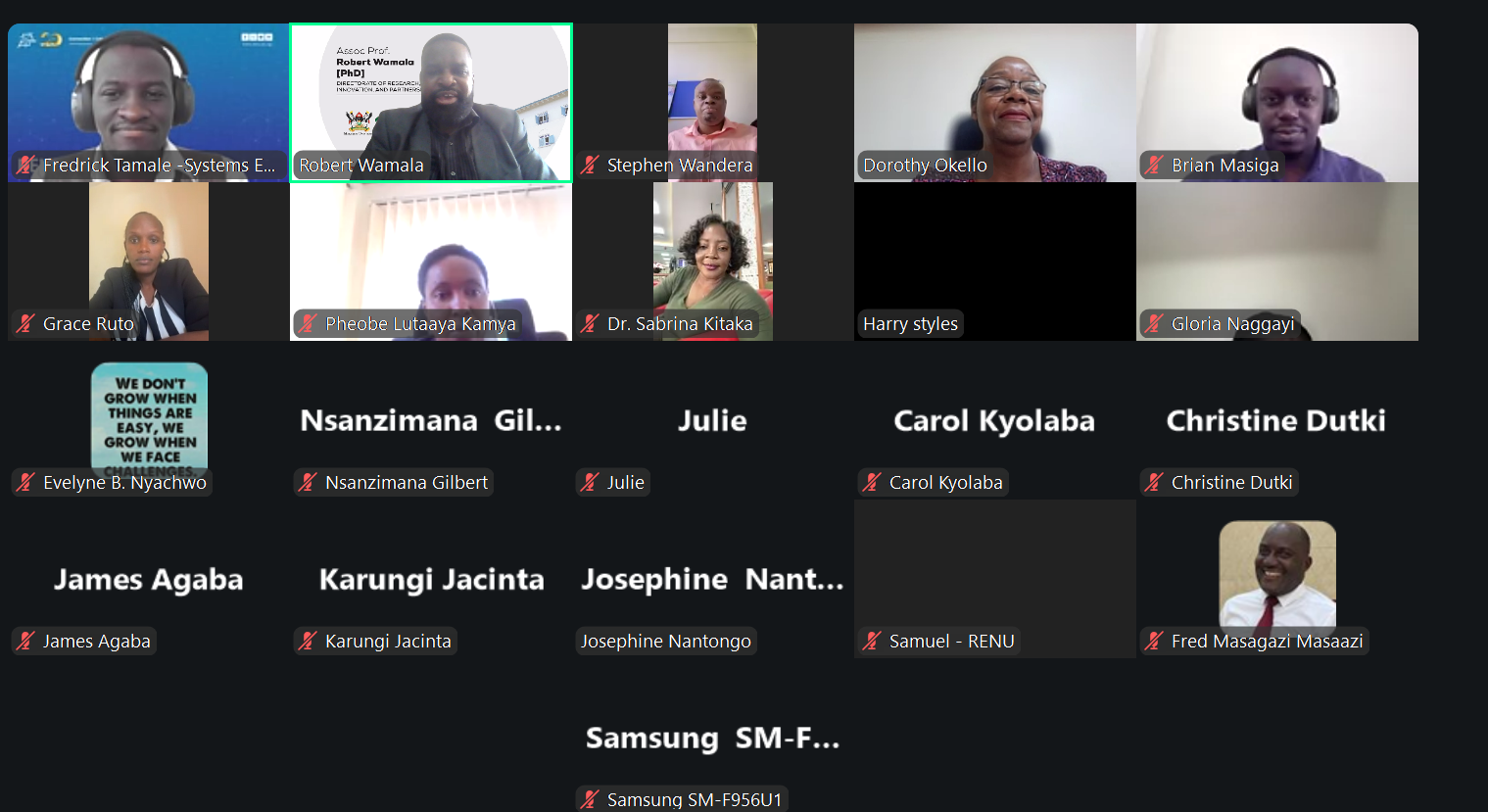
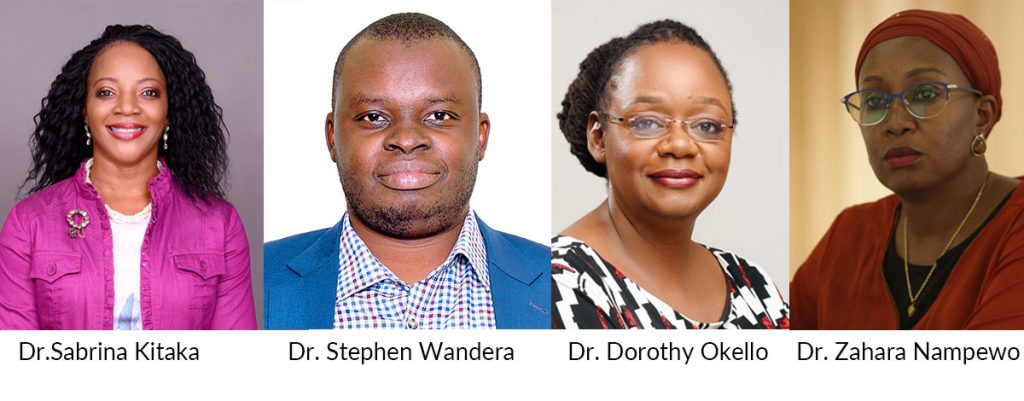
On 11th November 2026, DRIP held an online engagement with Makerere Research Innovations Fund (Mak-RIF). The engagement was attended by Grants Management Committee(GMC) and (Mak-RIF) Secretariat staff. The GMC members in attendance included Chairperson Prof. Fred Masagazi Masaazi, Vice Chairperson Dr. Sabrina Kitaka, Dr. Zahara Nampewo, Dr. Dorothy Okello, Dr. Stephen Wandera and Prof. Robert Wamala. The members were sensitized on individual and institutional registration, and benefits of ORCID adoption in research administration.
The successful drive towards strengthening ORCID adoption at Makerere University has greatly benefited from the strategic leadership and unwavering commitment of Prof. Sarah Sali, Deputy Vice Chancellor (Academic Affairs). Her leadership and institutional support have been instrumental in positioning ORCID adoption as a strategic University priority, recognising its importance in strengthening researcher identification, enhancing the global visibility of Makerere’s research outputs, improving publication tracking and reinforcing institutional research management. Her commitment to embedding ORCID within the University’s academic and research systems provides an important foundation for building a more visible, accountable and globally connected research community. DRIP sincerely appreciates her visionary leadership and continued support towards advancing Makerere University’s research excellence and impact.
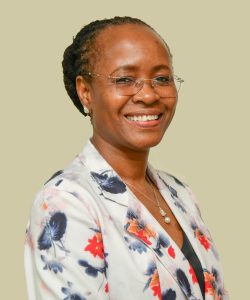
Prof. Sarah Sali, Deputy Vice Chancellor Academic Affairs
The Deputy Coordinator (Mak-RIF) Mrs. Phoebe Lutaaya Kamya speaking on behalf of Mak-RIF secretariat commended DRIP – the organisers of the online workshop and pledged support to the integration of ORCID in Mak-RIF’s processes. Mrs. Kamya looked forward to the training which was to help improve their operations in administering the research fund. Other members of MaKRIF secretariat included Evelyne Nyachwo, Grace Ruto, Gloria Nagayi, Karungi Jancita, Julie Nabirye, among others.
In his remarks, the Director Quality Assurance Officer, Dr. Cyprian Misinde acknowledged the importance of ORCID and called on all researchers to embrace the tool for their own benefit and to improve the evaluation of institutional research ranking.
“Being a research-led institution, we are ranked, and our ranking is partly based on research we do. So, if our research is not known, then we lose credit and it affects our position internationally”, Dr. Misinde noted.

Mr. Brian Masiga speaking on behalf of the Research and Education Network for Uganda (RENU), praised Prof. Robert Wamala and his team at DRIP for their efforts towards improving the research ranking of Makerere University most especially in research outputs.
“ORCID is one of those digital identifiers that is sort of like a CV that tracks the work that has been done by the researcher over a period of time”, Mr. Masiga said.
During the training, Prof. Robert Wamala presented a report which was previously discussed by the University Central Management on research outputs. The report showed that there were only 24% of academic staff who could be identified by ORCID. It is by this revelation that management resolved to sensitise staff and also to ensure that all systems at Makerere University are integrated with ORCID. Prof. Wamala assured the participants that the requirement for ORCID registration in research management was to ease Mak-RIF’s work in tracking research identities against outputs.
“The biggest importance towards the University is that Makerere University can actually validate and affiliate that a professor who claims to come from Makerere University is actually from Makerere University. Once these ORCIDs are generated and given through a hub and managed by Mak-RIF, Mak-RIF doesn’t have to ask people for their publications, these publications are automatically fetched into a hub”, Prof. Robert Wamala reported.
Mr. Tamale Fredrick from RENU delivered a presentation on the registration, use and benefits of ORCID to both the institution and the researcher. He explained that it was possible to integrate research done before a researcher obtained the ORCID other than creating a new identity profile.
Mr. Juma Katongole, Deputy Chief – Directorate of ICT Support(DICTS) reported that they had commenced the integration of ORCID in some of the institutional information systems like Research Information Management System (RIMS)- a systems that tracks postgraduate students’ research, and Makerere University Human Resource Management System (e-HRMS) which manages university staff records.
Mr. Katongole commended the partnership with RENU that working the Uganda OSHID Consortium they were able to integrate the systems and report appropriately.
“Because this information belongs to a staff or a researcher, they can always revoke permission. However, we follow data acquisition guidelines. Our role is to connect and synchronize. Since there is a bit of change management required, I’m happy that Prof. Wamala has gone around orienting stakeholders”, remarked Mr. Katongole.
Dr. Stephen Wandera contributing to the discussion, was glad for university’s resolve to leverage the ORCID platform for research identification and journaling.
“We could encourage staff members to make sure that they have created the profiles with the Web of Science, and many others. We need to make sure that as scientists, we are located and positioned properly in the global space”, Dr Steven Wandera reported.
Dr. Wandera said that through ORCID registration, the university will have better rankings and the contribution as individual researchers and institutions are properly allocated.
Dr. Sabrina Kitaka, supplementing on the engagement, commended the initiative and the benefits towards the university and the research ecosystem.
Dr. Zahara Nampewo and others confirmed having an ORCID but may require further assistance on how to tag their publications. Similar to the views of other GMC members, Dr. Zahara Nampewo and Dr. Dorothy Okello thanked DRIP for organizing the training.
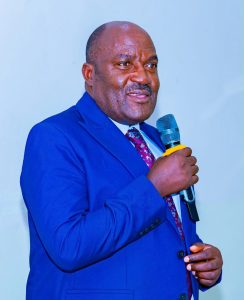
In his closing remarks, Chairperson MAKRIF, Professor Fred Massagazi Masaazi said that the topical conversation on the development was very important and the benefits of ORCID was evident and relevant to MAKRIF. He was delighted that Mak-RIF staff had joined the discussion. Prof. Masagazi Masaazi pledged support of MAKRIF in advancing Makerere University’s Research Visibility and Impact by championing ORCID adoption through MAKRIF.

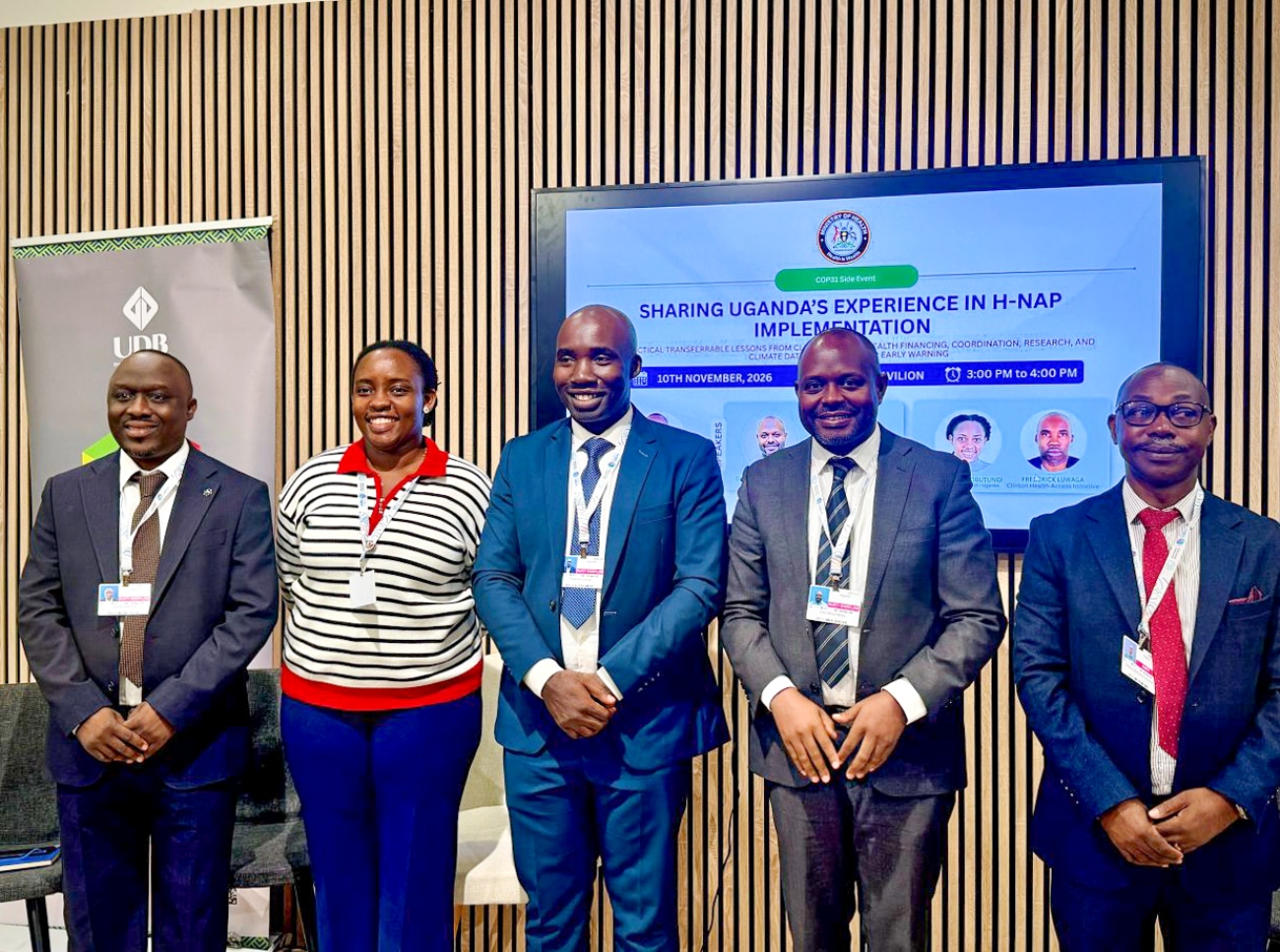
This week, world leaders, negotiators and researchers are gathered in Antalya, Türkiye, for COP31, the United Nations climate conference, seeking to turn years of climate commitments into action countries can finance and implement. Among them is Dr. John Bosco Isunju, a climate and health researcher at Makerere University School of Public Health, named among TIME’s 100 most influential climate leaders in 2024.
Dr. Isunju led the School’s technical support to the Ministry of Health for Uganda’s 2023 Climate Change Health Vulnerability and Adaptation Assessment (VAA) and the subsequent development of the Health National Adaptation Plan (H-NAP) 2025–2030. The assessment covered 716 health facilities across 43 districts, documenting vulnerabilities that helped shape the country’s priorities for protecting healthcare from climate hazards.
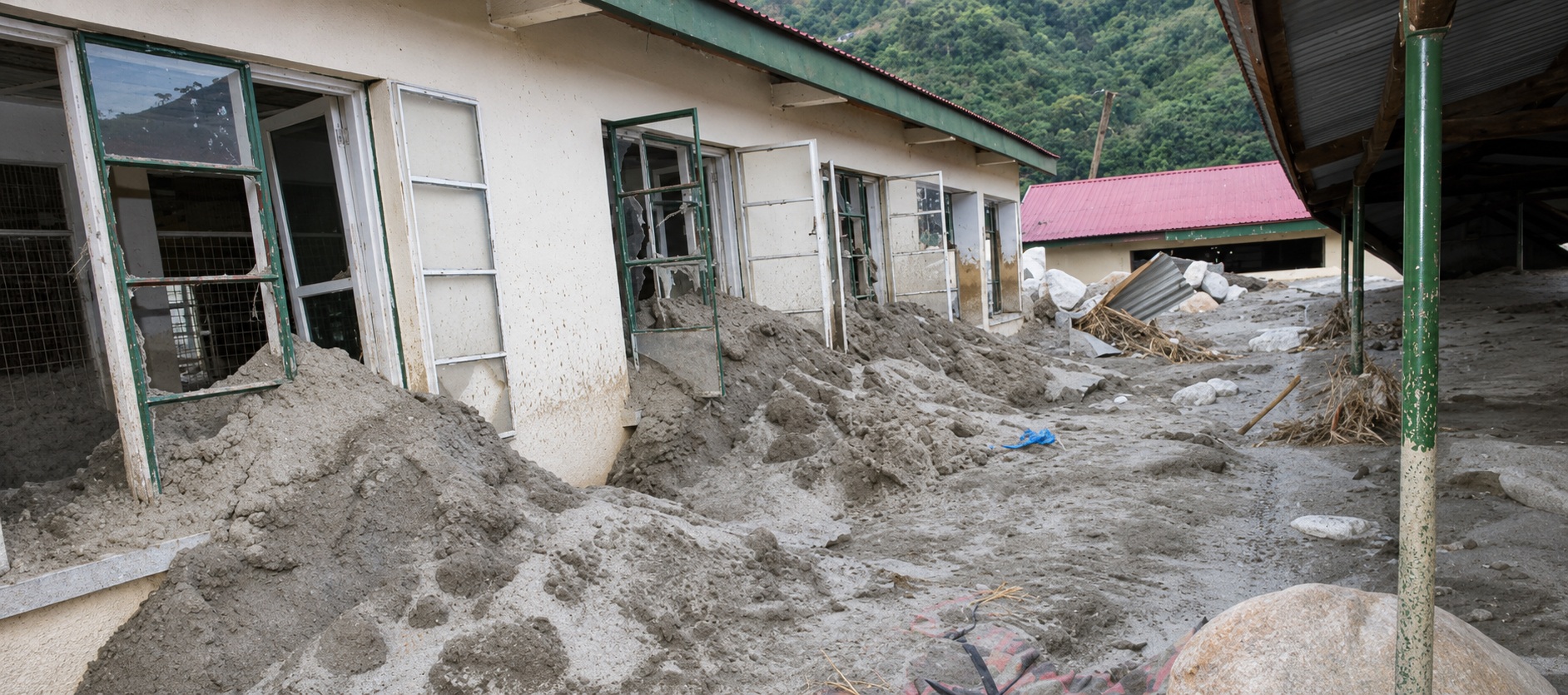
That experience speaks directly to the task before the 9–20 November summit. With “Dynamic and Resilient Health Systems” among the COP31 Presidency’s Action Agenda priorities, the conference is seeking practical solutions and financing to keep services functioning through climate shocks. Adaptation, the practical changes needed to cope with a changing climate, must ultimately reach the facilities where people seek care.
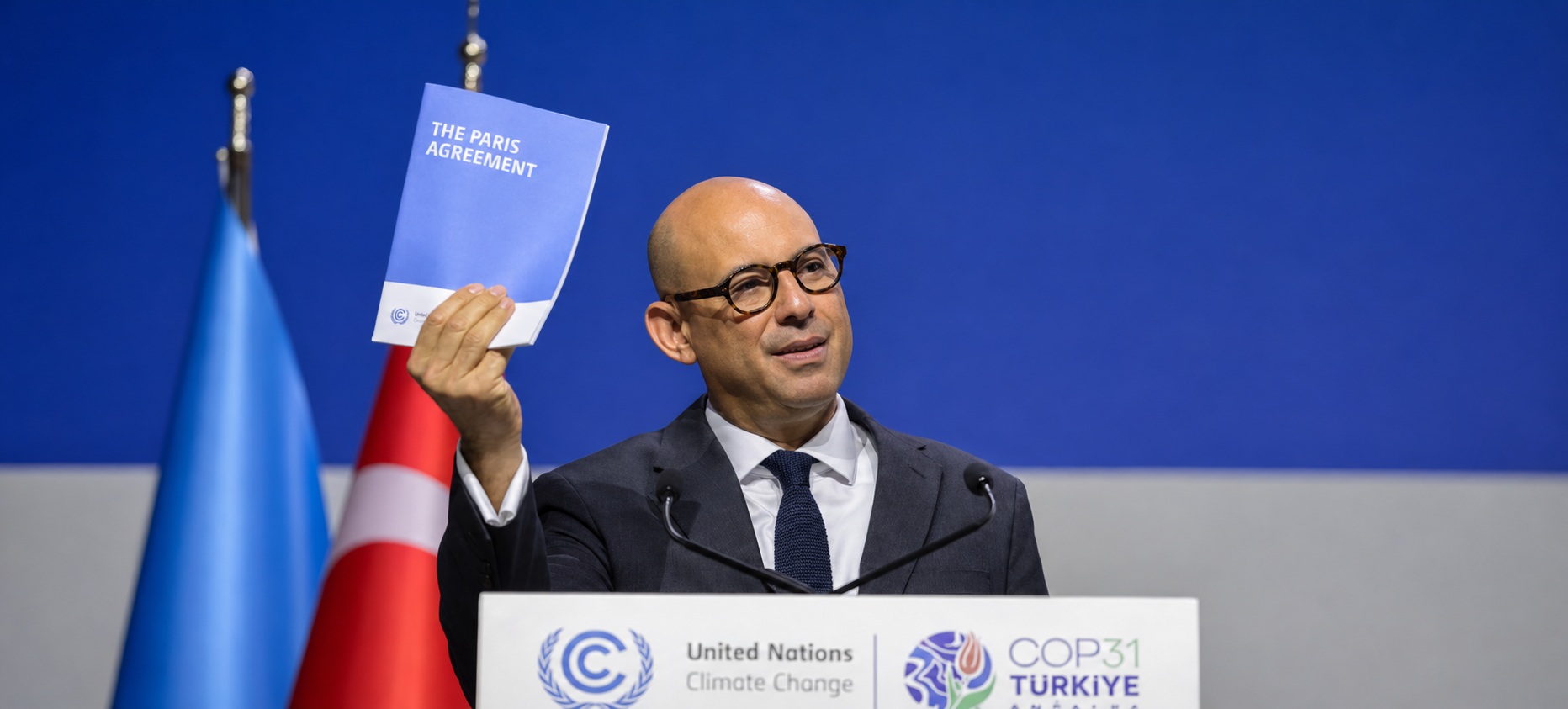
Protecting facilities from floods and drought also safeguards the public investment behind them, giving Uganda’s adaptation effort an economic significance alongside its importance to patients. In a 27 October 2026 statement ahead of COP31, UN Climate Change Executive Secretary Simon Stiell placed climate action within that wider calculation of public benefit.
“More governments are taking climate action right across their economies, to bank the vast benefits of clean energy and climate resilience,” he said. “Almost every major economy, and many medium-sized and smaller economies, now see climate action as a central driver of economic growth, jobs, and affordable and secure energy.”
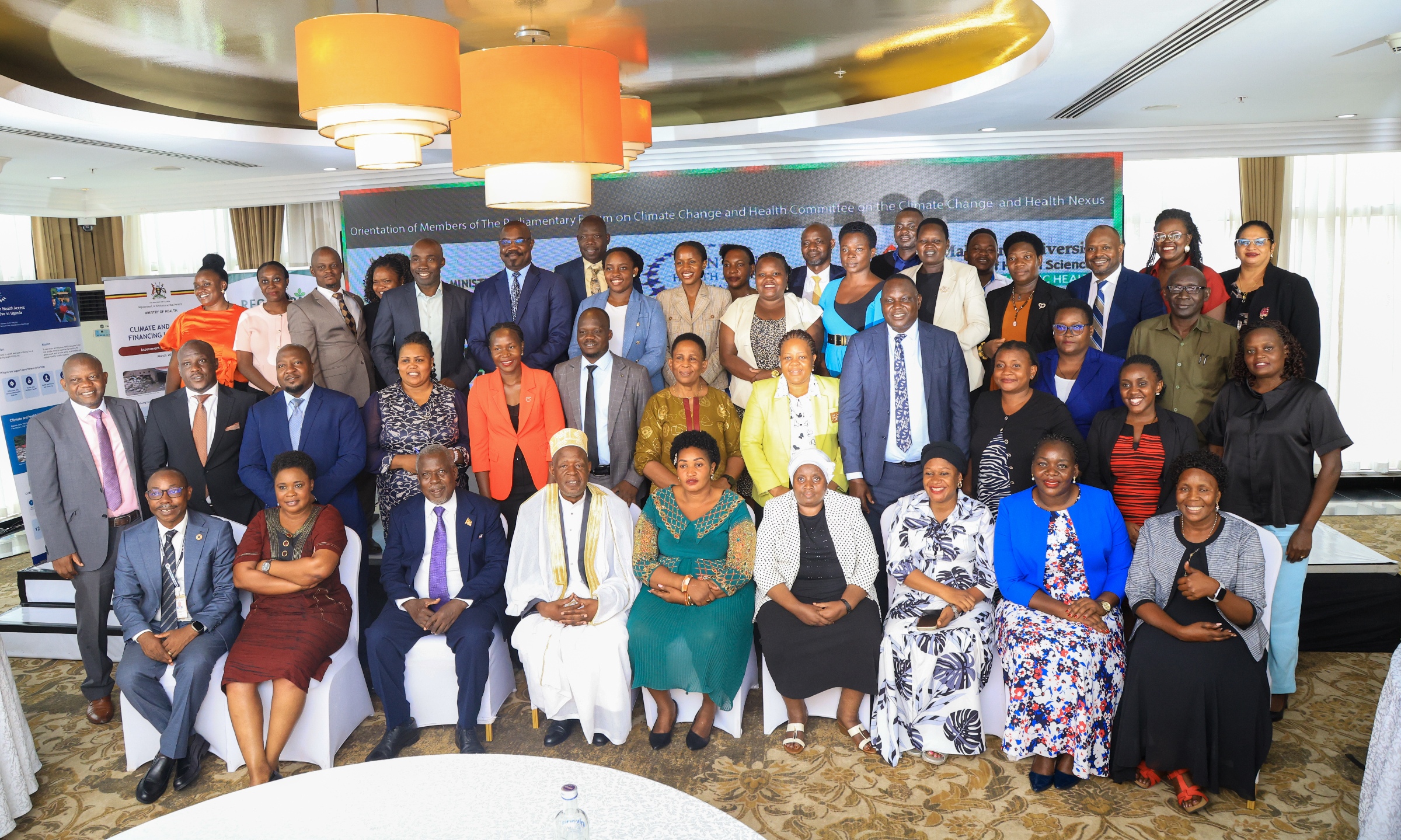
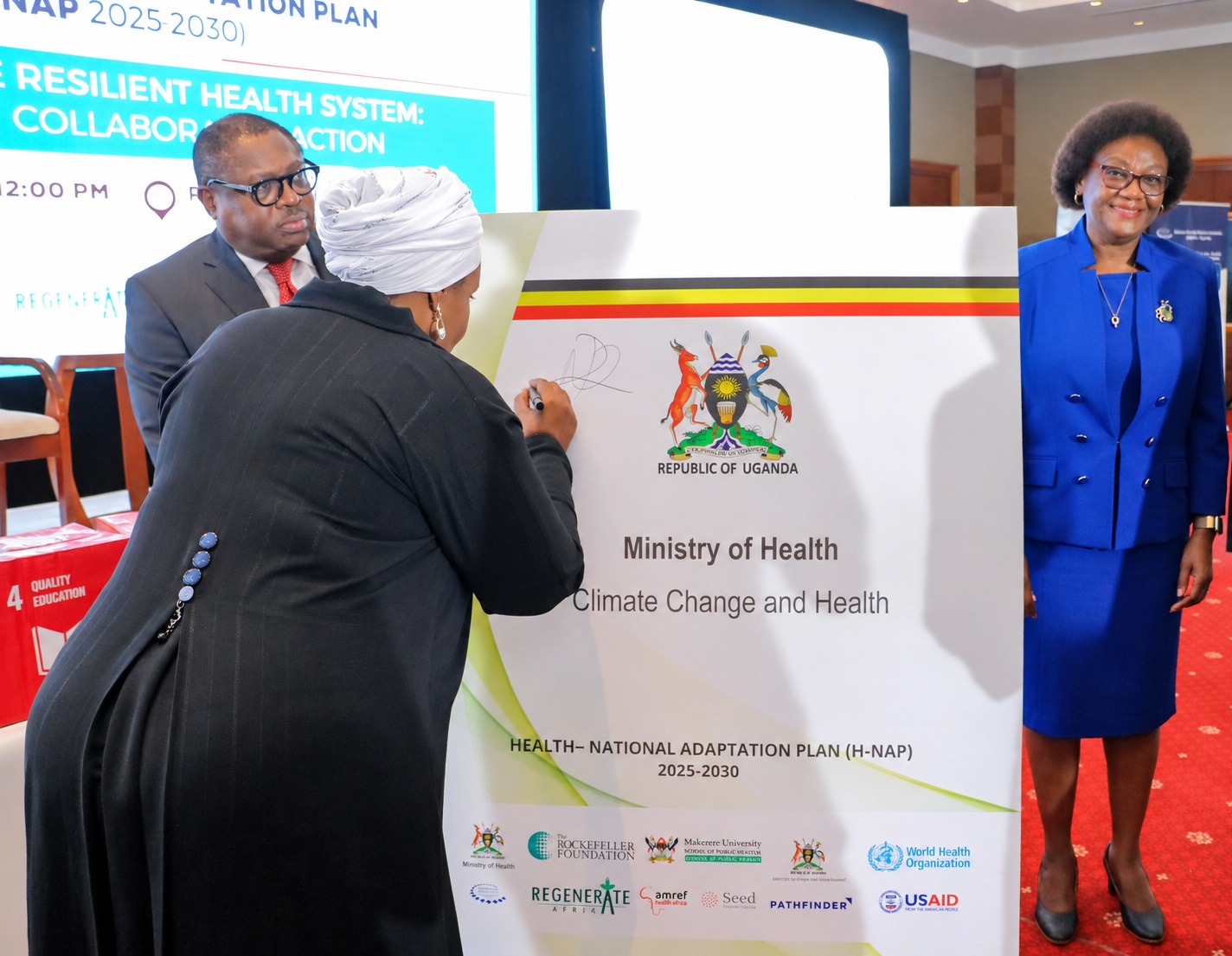
On 21 October, nearly three weeks before the Antalya talks, the H-NAP was before Ugandan parliamentarians in Kampala. Convened by the Ministry of Health and Parliamentary Forum on Climate Change Uganda, with support from Regenerate Africa and the Clinton Health Access Initiative, the engagement examined the plan and Parliament’s role in securing funding, scrutinising implementation and ensuring accountability.
Presenting the VAA, Dr. Isunju explained that the team examined the hazards facing each area, the extent of exposure and the weaknesses that made services vulnerable. They also considered the communities the facilities served. A flood could turn an already difficult journey to treatment into one that patients and staff could no longer make, as seen in many parts of Uganda, including Kasese.
“Either health workers will not work, or communities will not be able to access care, or outreaches will not be possible because roads are cut off,” he told legislators.
Uganda’s H-NAP grew out of commitments made at COP26 in Glasgow in 2021 to assess health vulnerabilities and develop an adaptation response. The Ministry of Health commissioned the School to undertake the VAA in 2023, with Rockefeller Foundation funding supporting both the assessment and the plan’s development. Developed through stakeholder consultation, with WHO technical support and contributions from other partners, the plan was launched on 22 August 2024.
What the assessment found
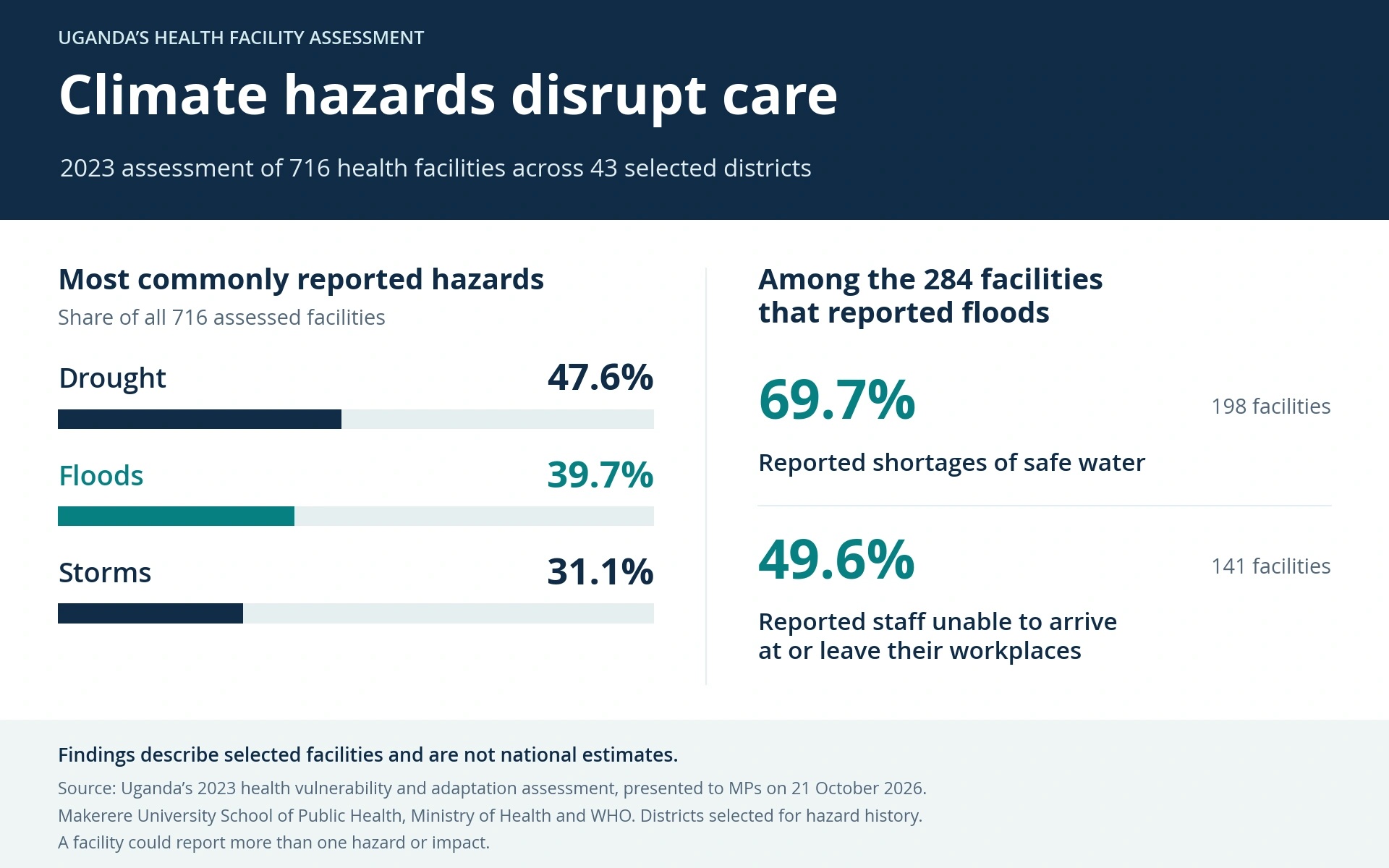
The VAA found that drought and floods were disrupting the conditions needed to deliver care. Nearly half of the assessed facilities reported drought exposure, while about two in five reported floods. Among the 284 facilities reporting flood exposure, 141 (about half) said health professionals had been unable to arrive at or leave their workplaces, and 198 (about seven in ten) reported shortages of safe water. Because districts were selected for their history of hazards, these findings describe the assessed facilities and cannot be treated as national estimates.
The H-NAP responds across ten components of the health system, including leadership, workforce training, risk monitoring and sustainable financing. Its proposed actions include revising infrastructure standards and using weather and disease information to warn of health risks earlier. Protecting care requires investment in buildings alongside the people and systems that make them function.
“A significant proportion of healthcare facilities lack water management and safety plans to address contamination risks,” the H-NAP states. “They lack water safety plans and contingency plans for monitoring and reducing contaminants as well as on-site water purification equipment.” Such gaps can leave facilities unable to maintain hygiene, clean equipment and provide treatment safely when water supplies fail or become contaminated.
The H-NAP already includes a budget, giving implementation a basis for resource mobilisation. The UN climate secretariat’s 2026 report on national adaptation plans across sectors identifies the difficulty of turning priorities into fundable projects. It recommends costing specific interventions and securing delivery partners, steps that can help advance Uganda’s health adaptation priorities.
At household level, climate pressures on livelihoods can leave families less able to get care or keep children in school, as community consultations showed.
“Their problems are interconnected. If climate, for example, affects their livelihoods, it directly impacts their health, because that means when they fall sick they can’t get care, and they can’t take their children to school, so things are all interconnected,” Dr. Isunju said.
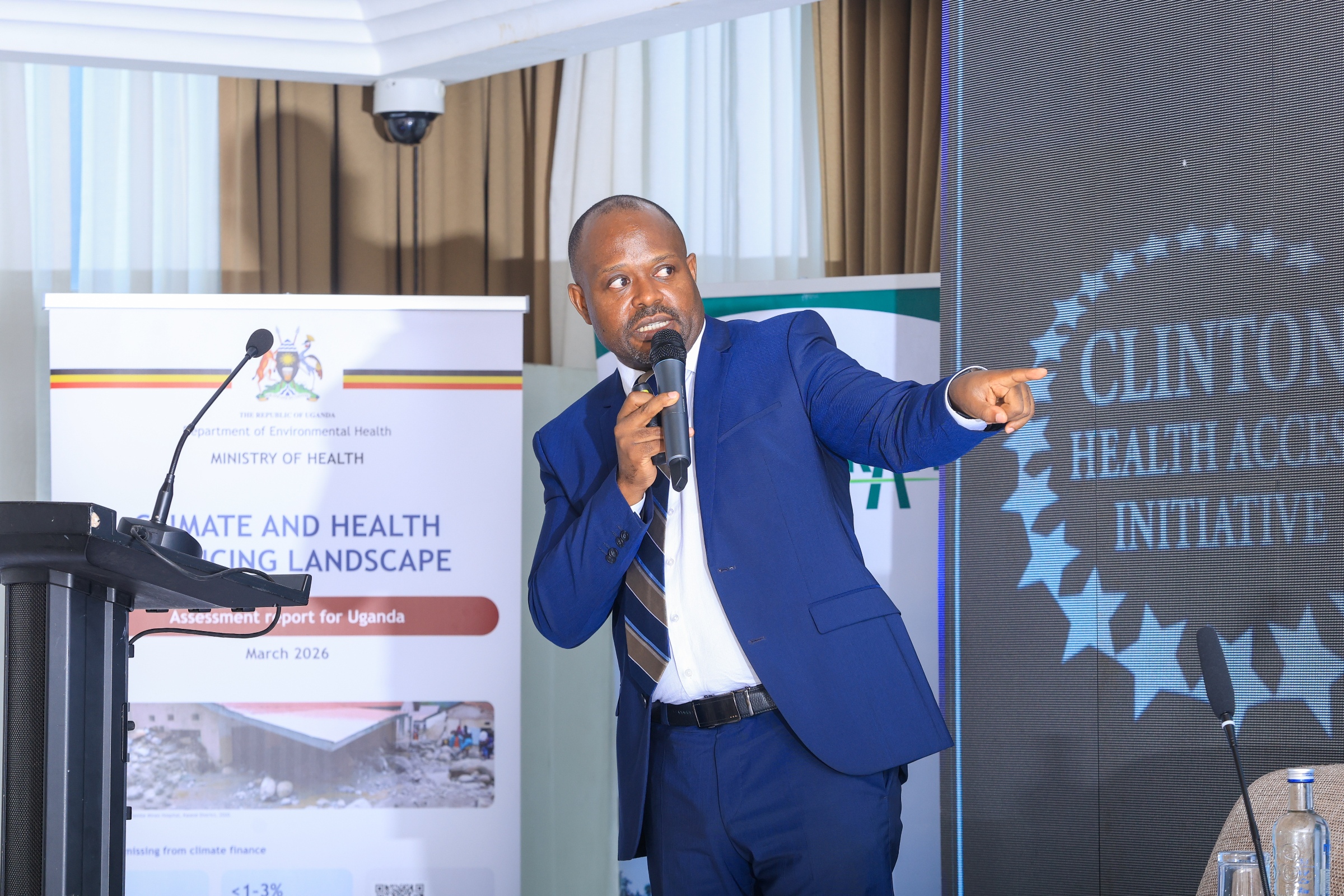
The Ministry’s Focal Point for Climate Change and Health, Dr. Didacus Namanya, told MPs that resilience, the ability to withstand disruption and keep providing care, must inform how services are built and managed.
“So, our vision in the H-NAP is to have a responsive, adaptive, and resilient health system. Adaptive, we are talking about adaptation. These impacts will not stop; they will continue coming, but we must develop our adaptive capacity. The way we build our health facilities, the way we tackle the disease burden, we must be highly adaptive,” he said.
Dr. Namanya called for district-specific assessments, noting the different conditions in Nakasongola and Bududa, and described an ongoing review of infrastructure design standards. Dr. Isunju reported that guidelines for coordinating climate and health action across institutions were undergoing approval.
A partnership announced in October 2025 by the Rockefeller Foundation and the International Development Research Centre is helping the School and the Clinton Health Access Initiative, working with the Ministry of Health, build an investment case for H-NAP implementation. A separate Ministry of Health and Global Green Growth Institute initiative, begun in June 2026, is advancing climate-resilient water, sanitation and hygiene standards, investment plans for health facilities and the government’s capacity to deliver improvements.
Questions for Antalya
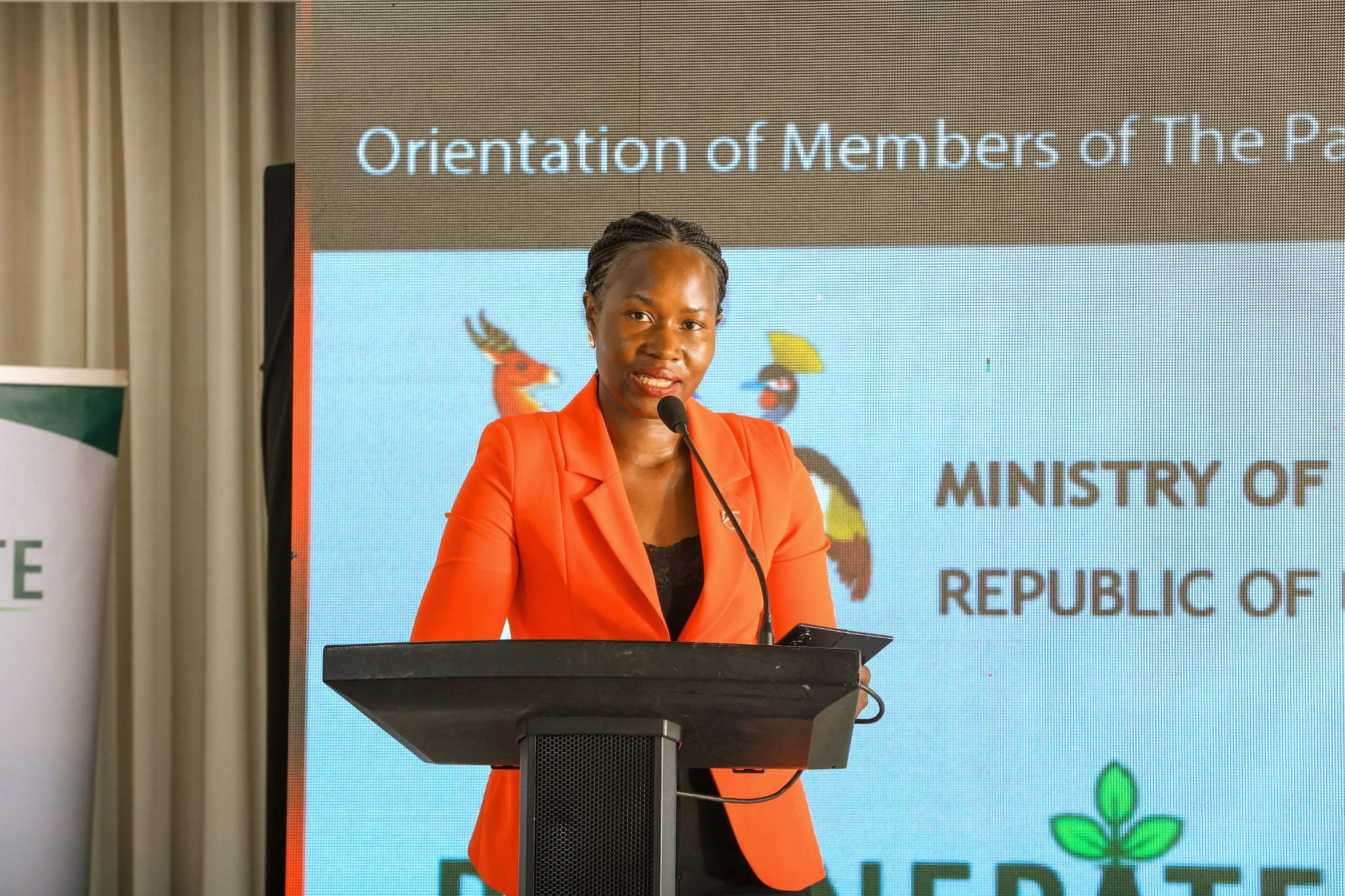
Legislators sought evidence of what implementation had delivered. Terego East MP Hon. Wilfred Babanga Erima asked how much of the plan had been implemented, how many facilities had been audited and refitted for climate resilience, and how funding was divided between domestic and donor sources. Hon. Shafiga Wanyenya, Vice Chairperson of Parliament’s Committee on Climate Change, proposed joint follow-up with the health committee and regular progress reviews.
“Our role is to ask the difficult questions and also identify implementation gaps, to advocate for the vulnerable communities and ensure that the national commitments translate into tangible improvements in the lives of our people,” Hon. Wanyenya said.
Those questions belong in Antalya too. The Yearbook of Global Climate Action 2026 identifies gaps in global data for assessing whether health systems are becoming more resilient, underlining the importance of tracking what adaptation efforts deliver for health.
The COP31 health programme links implementation of the Belém Health Action Plan with a financing framework intended to help turn health priorities into investable projects. Launched on 9 November, the Antalya Initiative for Health Resilience provides a platform for countries to share practical experience. The COP28 adaptation framework sets targets for climate-resilient health services by 2030 and progressively beyond, alongside national adaptation planning by 2030 and multi-hazard early-warning systems by 2027.
The H-NAP gives Uganda a practical agenda for that next stage. It calls for climate and health priorities to enter government budgets and for proposals capable of attracting finance. It also identifies academic partnerships as a route to research and capacity-building funds. Annual reviews would then assess progress and guide subsequent work.
As negotiations continue in Antalya, the next test is whether decisions there, and action at home, help keep care available, on the road to a health facility, and at the water point on which safe treatment depends.
Research
Your Research, Your Identity, Your Impact. Makerere Empowers Graduate Students to Go Global Through ORCID
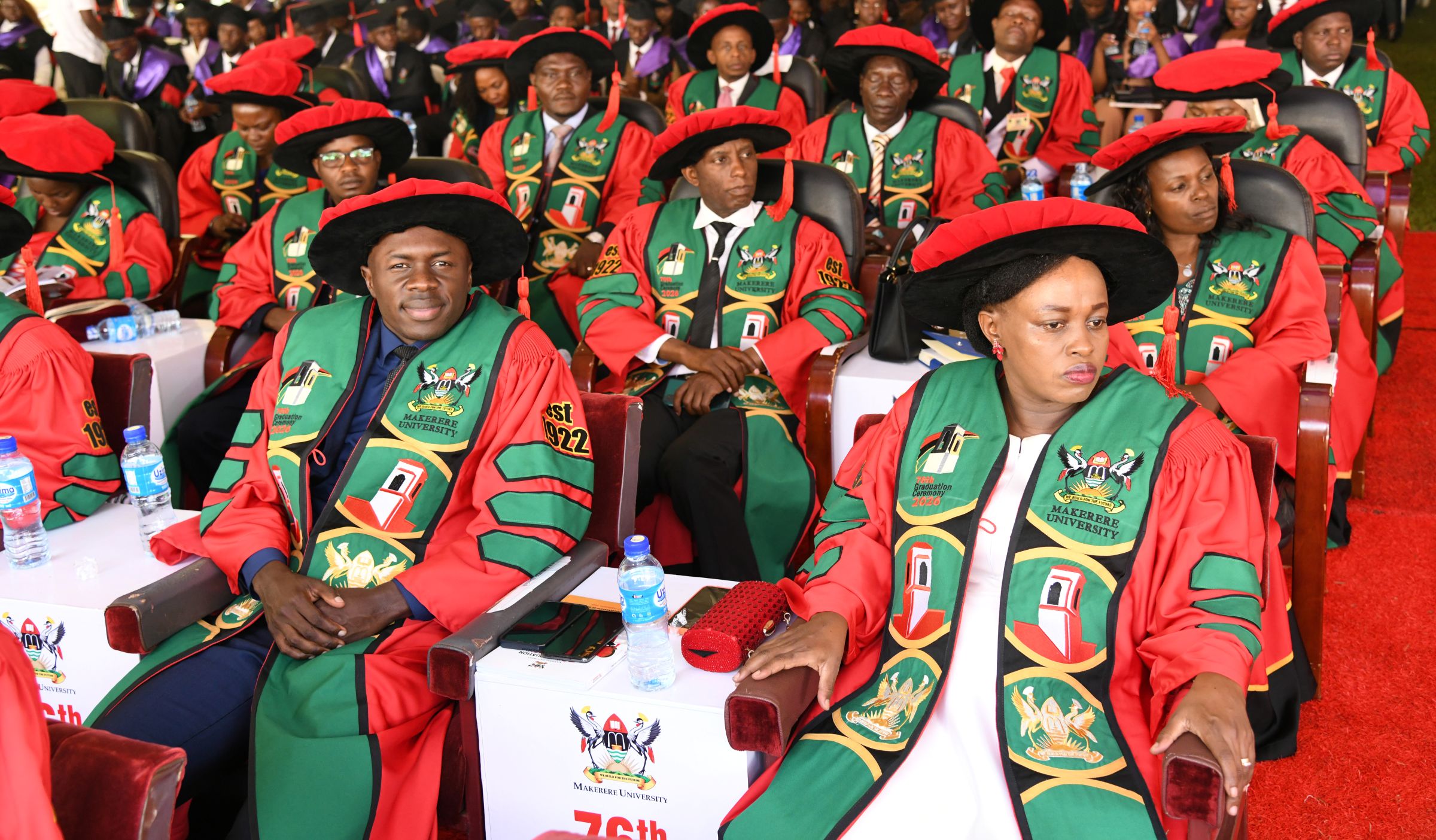
On 10th November 2026, the Directorate of Research, Innovations and Partnerships (DRIP) held a webinar to equip graduate students, Coordinators of Graduate Studies and College Librarians with knowledge and practical skills to leverage the Open Researcher and Contributor ID (ORCID) to strengthen their research identity, publication tracking and research visibility.
The training held under the theme “Making Your Research Visible: Leveraging ORCID for Research Identity, Publication Tracking and Graduate Student Compliance,” highlighted the importance of ORCID in providing researchers with a unique digital identifier that connects them to their scholarly publications, research outputs and institutional affiliations.
The webinar with over 200 participants in attendance, was officially opened by Prof. Sarah Ssali – the Deputy Vice Chancellor (Academic Affairs) represented by Prof. Robert Wamala – Director, DRIP.
Prof. Sarah Ssali in her introductory remarks emphasised the importance of establishing a strong research identity, enhancing the visibility of scholarly outputs and ensuring proper attribution of researchers’ contributions. Prof. Ssali reminded graduate students that establishing an ORCID identity early in their academic journey is an important investment in their research careers. It provides a foundation for building scholarly profiles, tracking publications, enhancing visibility and demonstrating research contributions. It also supports the University’s efforts to strengthen publication tracking and meet graduate training requirements.
“ORCID provides researchers with a unique and persistent digital identifier that distinguishes them from other researchers and connects them to their publications, research outputs, institutional affiliations. It helps address challenges which are associated with author identification, publication attribution, and the visibility of scholarly contributions”, Prof. Ssali remarked.

On behalf of the university library, Prof. Ruth Nalumaga the University Librarian said that the library is planning to archive primary data emanating from research.
“We would like primary information to also be archived in the library. Sometimes people may reuse it. Most of our graduate students are self-sponsored, the most expensive parts of graduate studies is the research. If we have these data sets that somebody can reuse, it may take off some weight on some students who are unable to fund their research’ Prof. Nalumaga said.
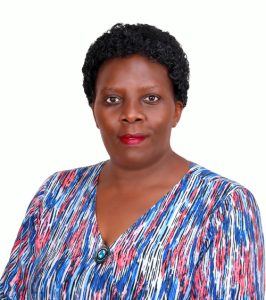
Prof. Julius Kikooma – Director, Directorate of Graduate Training (DGT) delivering his welcome remarks, noted that the training was part of the university’s efforts towards strengthening the management and administration of graduate training. He said that it the university’s effort to have a framework where graduate students are supported and are given the right set of skills and tools to be ready to be part of a fruitful journey and experience.
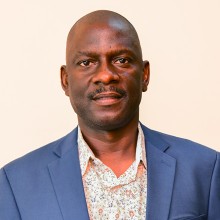
Prof. Kikooma said that university had created an environment where graduate students are able to achieve the key outputs of their efforts in their studies and that when they achieve those outputs, they are not left on the shelf like it has been.
“It has been long that we have been engaged in research that is for the sake of just ticking a box. Ticking a box meaning you just get a map from the dissertation and then that is the end of your relationship with what you have done in research”, Prof. Kikooma said.
On behalf of the Research and Education Network for Uganda (RENU), Mr. Brian Masiga appreciated DRIP for organising the engagement and the continued partnership in strengthening the research and scholarly ecosystem.
Mr. Brian Masiga underscored the importance of ORCID, which is the unique digital identifier for researchers.

“Behind this identifier is a much bigger conversation about how our research is recognized, attributed, discovered, connected to the institutions where it is undertaken. So for the graduate students joining us today, I would like to emphasize one important point. Your research journey does not begin with you when you publish your first journal article, and it certainly does not end when you graduate” Mr. Masiga remarked.
Mr. Fredrick Tamale from RENU discussed the topic: ‘Understanding ORCID and its importance in research – ORCID concept, purpose, benefits and global adoption.
Mr. Tamale emphasised the importance of graduate students establishing their ORCID identities early in their academic journeys and maintaining accurate, updated profiles to support research visibility, publication attribution and tracking. He warned on the dangers of having multiple ORCID by researchers/students which would impact negatively on their profiles.
“Researches published under different forms of their names and variations in some publications may not be connected to the right researcher. The institutional affiliation may be absent or inconsistent. And compiling A reliable publication list becomes a manual exercise” Mr. Tamale said.
Mr. Tamale said that some institutions require staff to produce their research outputs from time to time. At institutional level, there could be incomplete records of what the affiliated staff researchers were engaged in and ORCID was coming to solve this challenge.
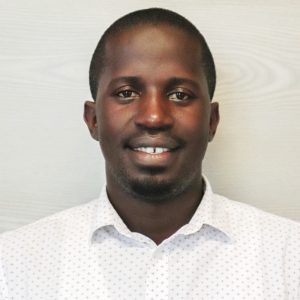
Mr. Juma Katongole, Deputy Chief, Directorate for ICT Support (DICTS), highlighted Makerere University’s progress in institutionalising ORCID through its integration with key university information management systems. In his presentation on “Institutional Adoption and Integration of ORCID,” he explored opportunities for embedding ORCID into University systems, researcher records and institutional research management. He confirmed that the ORCID field has already been integrated into the Research Information Management System (RIMS) and the Electronic Human Resource Management System (e-HRMS), among other University systems.
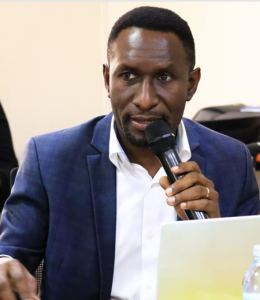
Mr. Andrew Mwesigwa delivered a presentation on “Leveraging ORCID for Research Identity and Publication Tracking,” highlighting the importance of ORCID in strengthening researchers’ professional identities and visibility within the global research community. The presentation focused on how researchers can use their ORCID IDs to establish a unique scholarly identity, connect their publications and other research outputs to their profiles, improve accurate attribution of scholarly contributions and make their research more discoverable
The initiative forms part of Makerere University’s broader efforts to strengthen research visibility, researcher identification to improve institutional research information management and enhance the global recognition of its researchers and scholarly contributions.
DRIP appreciates the collaboration of RENU, University Library, Directorate of Graduate Training, Directorate of ICT Support,and Directorate of Quality Assurance, in advancing ORCID adoption at the University.
Participants were guided on creating and managing ORCID profiles, linking publications, enhancing research visibility and understanding how ORCID supports Makerere University’s graduate training and publication tracking requirements as the university continues to strengthen and promote the visibility of its scholarly outputs locally and globally.
-

 General3 days ago
NOTICE: Online Applications for Government Sponsorship for Programmes Offered at Public Universities & Other Tertiary Institutions 2027/2028 AY
-

 General1 week ago
Update On Payment of Endowment Fund Fees
-
 General1 week ago
Institutionalizing ORCID at Makerere University: Strengthening Researcher Identification, Visibility and Research Output Tracking
-
 General2 weeks ago
CoNAS Staff & Students Sensitized on Gender Equality, Sexual Harassment Policies
-
 Natural Sciences2 weeks ago
Dr. Alice Nabatanzi Wins Charles Wambebe Innovation Award, Named Best Oral Presenter at APSS 2026 South Africa