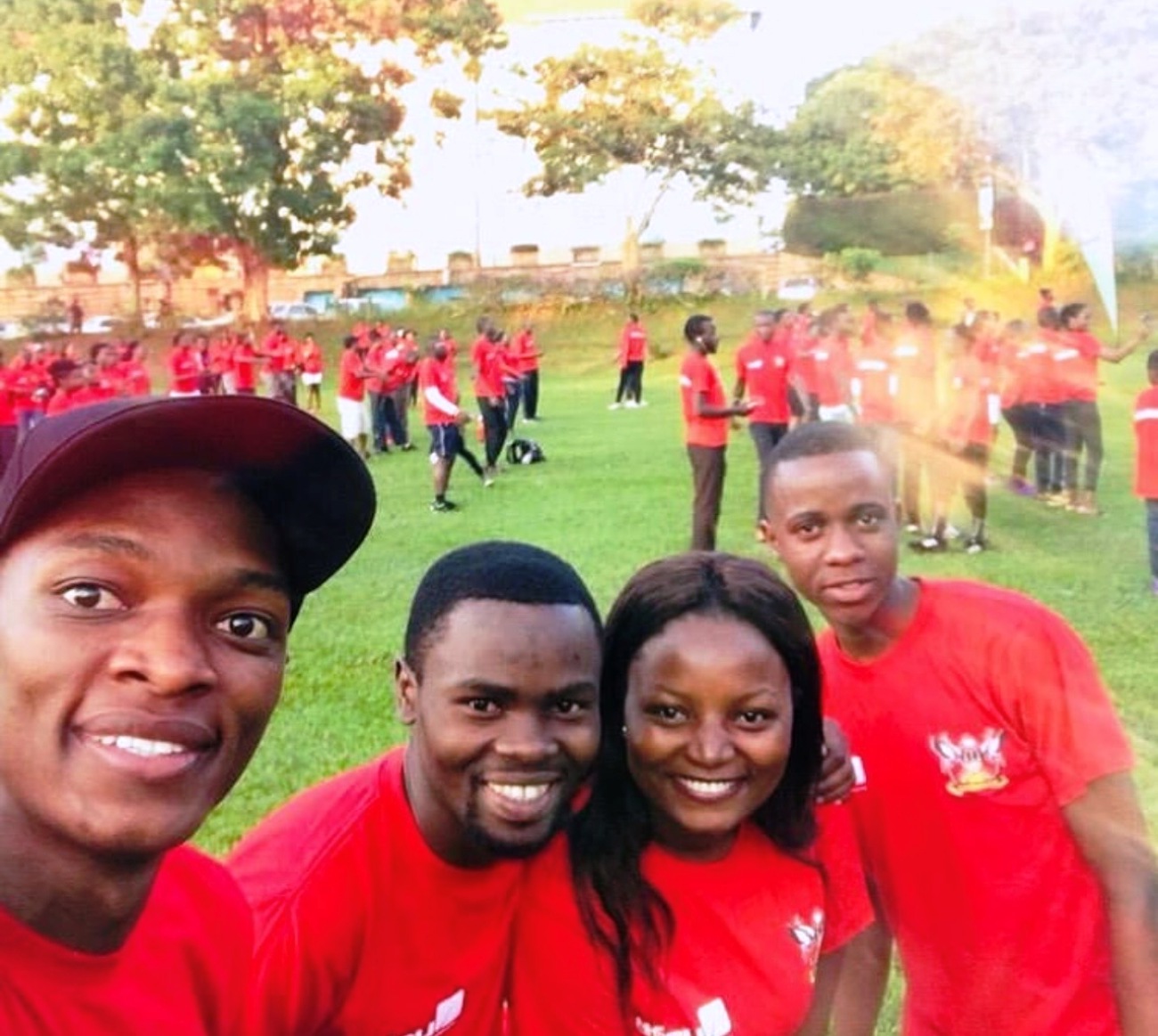
Some of the 43 Phd Graduands from the College of Education and External Studies and College of Agricultural and Environmental Sciences after receiving their awards at the second session of #Mak71stGrad held in the Freedom Square on 18th May 2021.
The second session of the 71st Graduation Ceremony of Makerere University held on Tuesday 18th May 2021 has produced a record 44 PhD graduates, the highest to ever be conferred upon their awards in a single session. The Chancellor Professor Ezra Suruma conferred 23 and 21 PhDs upon candidates from the College of Education and External Studies (CEES) and the College of Agricultural and Environmental Sciences (CAES) respectively.
In his congratulatory remarks, the Chancellor noted that although agriculture is indispensable to our survival as a nation, a lot remains to be done to improve agricultural productivity and marketing. He urged graduands to embrace the parish model which is currently being popularized by the Government so as to increase agricultural productivity and improve the overall management of the agricultural, infrastructural and financial sectors at the grass root level.
“I pray that the students and researchers in agriculture, education, financial services, agricultural processing, storage and infrastructure will come alive and take advantage of this opportunity to rescue our economy from poverty and stagnation. The challenge is to you and me to go to our parish, our roots and make a difference” urged Prof. Suruma.
Earlier, the Vice Chancellor Prof. Barnabas Nawangwe had thanked the Chancellor for coining the parish development model and urged graduands not to shy away from getting their hands dirty. “That is what has made the farmers of Israel, from where many of our students return with thousands of dollars after working on their farms, millionaires.”
The Vice Chancellor noted that graduands from CEES had embraced one of the noblest professions and urged them to serve with diligence if they were to succeed.
“Teaching is a calling and only those with the passion to enlighten society choose this noble profession. Our joy is in seeing the many successful people who go through our hands. Money has never been the motivating force behind our passion, but the desire to serve and improve society” said Prof. Nawangwe.
Recognized during the second session were three first class graduands of the Mastercard Foundation Scholars Program (MCFSP) and one beneficiary of the Female Scholarship Foundation (FSF) supported by the Chinese Embassy in Uganda.
MCFSP beneficiaries Mr. Oyo Timothy-B.A with Education, Ms. Agaba Viola-B.A with Education and Mr. Mukasa Arthur-BSc. with Education scored CGPAs of 4.59, 4.45 and 4.41 respectively. FSF beneficiary Mr. Opendo Thomas-BSc. in Agricultural and Rural Innovation scored a CGPA of 4.57.
The Makerere University School of Public Health (MakSPH) has honored Ms. Gladys Khamili for her 12 years of service as Registrar, as she transitions to a senior role in the Senate Division of Makerere University.
During the School’s 239th Management Meeting, colleagues recognized her contribution to academic administration and formally handed over the office.
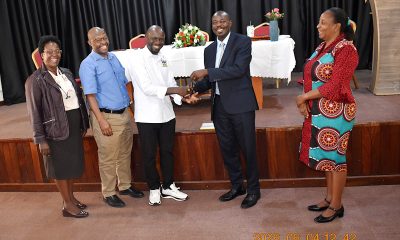
Ms. Gladys Khamili signs her handover report as Dr. Joan Mutyoba, Prof. Rhoda Wanyenze, Mr. Amos Dembe, and incoming Registrar Ms. Annet Khabuya look on.
Ms. Khamili assumes the role of Deputy Academic Registrar in charge of the Senate Division, where she will oversee academic standards, policy, and governance at the University. She replaces Mrs. Patience Rubabinda Mushengyezi, who officially retires after 26 years of dedicated service.
At the ceremony, Dr. Rhoda Wanyenze, Professor and Dean, together with members of MakSPH management, presented Ms. Khamili with a plaque in recognition of her service, noting that she “served the School of Public Health with distinction, demonstrating exceptional dedication, professionalism, and commitment to excellence,” and that her contribution strengthened academic administration at the School.
Dr. Rhoda Wanyenze presents a plaque to Ms. Gladys Khamili, joined by MakSPH management.
Dr. Wanyenze described Ms. Khamili as a steady and dependable presence. “She’s been with us and supported us in many ways. We thought we should meet here together to see her off. And I wish her the very best… we shall continue to work with her. She will continue to serve us in a different capacity,” she said.
Ms. Khamili joined the School of Public Health on March 15, 2012, from the College of Computing and Information Sciences, where she served as an Assistant Registrar.
Over the years, she has been central to the School’s academic operations—coordinating student admissions, managing records, overseeing examinations, and serving as secretariat to key governance structures, including the Academic Board, Examinations and Results Committee, and Appointments and Promotions Committee. Her role also involved handling student matters and ensuring compliance with University policies and Senate decisions.
Reflecting on her tenure, Ms. Khamili pointed to improvements in registration systems, records management, and examination processes. “In my tenure, I have had some achievements that have improved efficiency in the students’ registration processes and strengthened records management and data accuracy… and coordinated successful university graduation ceremonies,” she said.
She also highlighted areas for further strengthening, including improving documentation and follow-up of pending tasks, enhancing coordination across departments, and decentralising selected services, including transcript issuance.
The handover process was overseen by Internal Auditor Amos Dembe, who emphasized the importance of continuity in such a critical office. “The office of the registrar is very sensitive… It is at the core of what we do and what we stand for as a school. It calls for integrity and professionalism,” he said, adding that Ms. Khamili’s handover report provides “a strong body of knowledge for Ms. Annet Khabuya to build on and to hit the ground running.”
Internal Auditor Mr. Amos Dembe (C) oversaw the handover ceremony.
Mr. Dembe also commended Ms. Khamili’s professional and ethical record. “We have not had student issues of marks, money, or related concerns as a School… Thank you for making my work easier. That is not always the case. Some people make it hard for us, but this has not been the case here,” he noted.
Colleagues described her as thorough and dependable in a role that often operates behind the scenes. Dr. Joan Mutyoba, Head of the Department of Epidemiology and Biostatistics, said the incoming Registrar would be stepping into a demanding position. “The shoes you are stepping into are really big. I have seen her work… She is extremely professional, one of the most professional people I have worked with. She takes her work very seriously and goes beyond the line,” she said.
Dr. Joan Mutyoba (centre), Head of the Department of Epidemiology and Biostatistics, speaks at the handover meeting as Prof. Frederick Makumbi (left), Prof. Rhoda Wanyenze, and Mr. Amos Dembe look on.
In her farewell remarks, Ms. Khamili spoke candidly about her experience at the School. “My work has been with everybody… everything here is different—the people, the work culture—it has been very, very worthwhile,” she said, thanking colleagues for their support.
“If I had a choice, I would stay… but I don’t have that choice. Thank you so much for the support and for the love,” she added, acknowledging the demands of her role. “In my line of work, like in any space where you work with people, you certainly step on some toes… I ask that you find it in your heart to forgive and forget where necessary.”
The meeting also marked the official handover to Ms. Annet Khabuya, who takes over as Registrar. She commended the School’s approach to transition and organization.
“I have seen the systems, I have seen the organization, and I can confidently say there is continuity. I look forward to building on this work and working with all of you,” she said.
Ms. Annet Khabuya, who takes over as the new MakSPH Registrar.
Ms. Khabuya joins MakSPH from the Examinations and Transcripts Division of the Senate and brings experience from the College of Natural Sciences and the School of Statistics and Planning.
Ms. Khamili’s transition marks a shift from School-level administration to University-wide academic governance, extending her impact beyond MakSPH to the broader Makerere system.
KAMPALA, April 17, 2026 — The College of Humanities and Social Sciences (CHUSS) at Makerere University has taken a decisive step toward strengthening graduate training and accountability following a comprehensive hands-on Research Information Management System (RIMS) training by a team from the Directorate of Graduate Training (DGT) and Directorate for ICT Support (DICTS) held yesterday, April 16, in the CHUSS Smart Room.
Opening the session, the Director of Graduate Training, Prof. Julius Kikooma, underscored CHUSS’s central role in producing graduate students and contributing to Uganda’s development agenda. He cautioned that the college’s leading position could easily be overtaken if vigilance wanes.
“I’m glad we are back here to focus on something that can propel CHUSS to its rightful position,” Prof. Kikooma said. “Your contribution to graduate student production is highly envied across the university, but if you sleep even briefly, that position can be taken.”
Prof. Julius Kikooma.
He emphasized that beyond competition, the real goal is national transformation. According to Prof. Kikooma, increased graduate output directly supports Uganda’s Fourth National Development Plan (NDP IV), which prioritizes building relevant human capital.
“More than ever before, the country needs human resources from the humanities and social sciences,” he noted.
Prof. Kikooma explained that the RIMS platform builds on CHUSS’ pioneering cohort-based PhD model by introducing a digital solution to track student progress, enhance supervision, and improve completion rates. The system, developed in collaboration with the Directorate for ICT Support, allows both supervisors and students to log and monitor academic activities in real time.
“This is not optional,” he stressed. “By the end of this month, we must report on who is using the system. It is a strategic priority of the University Council.”
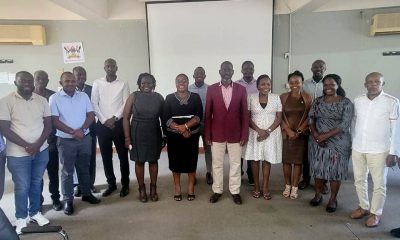
Some of the CHUSS Staff that attended the training with Prof. Julius Kikooma (L) during the training on 16th April 2026.
Welcoming participants, the Deputy Principal of CHUSS, Assoc. Prof. Eric Awich Ochen, described the training as timely and necessary in a rapidly digitizing academic environment.
“Makerere today is very different from the Makerere of 15 or 20 years ago,” he said. “We are moving from an analogue past to a digital future.”
He noted that while the college has improved its graduate output in recent years, gaps in tracking student progress remain a concern.
“We celebrate the numbers we graduate, but we may still have many students in the pipeline whom we cannot fully account for,” he said. “This system will help us track supervision and improve accountability.”
Prof. Eric Awich Ochen.
The training drew participation from the CHUSS Principal and Deputy Principal, senior lecturers, lecturers, and registrars from the School of Psychology, School of Social Sciences, School of Liberal and Performing Arts, and the School of Languages, Literature and Communication.
In an interview after the session, Dr. Jim Spire Ssentongo offered a more reflective perspective, welcoming RIMS as a timely innovation while highlighting key realities in graduate training.
“I think RIMS is a good idea with strong potential,” he said, noting that the system could help address long-standing supervision gaps by ensuring that interactions between students and supervisors are tracked and visible.
However, he pointed out that delays in graduate completion are not solely the fault of supervisors. According to him, student-related factors—particularly lack of consistency and self-discipline during the research phase—play a significant role.
“At the coursework level, students are guided by timetables and structured assessments, which keeps them active,” he explained. “But once they transition to research, much depends on their own discipline. Some students simply become unresponsive.”
Dr. Ssentongo observed that RIMS could help counter this by introducing a level of accountability on both sides. If properly used, the platform would enable students to track feedback from supervisors while also making it clear when they themselves have delayed progress.
Some of the CHUSS staff that attended the RIMS training.
He also noted that the system’s monitoring aspect could encourage improved completion rates, as both supervisors and students become more conscious of timelines and expectations.
At the same time, he cautioned that implementation would be key. He explained that while systems that enhance accountability are beneficial, they must be introduced in a way that supports rather than intimidates users.
“There is an element of monitoring, which is good,” he said, “but it should be balanced so that it does not create an environment where people feel over-policed.”
Dr. Ssentongo further emphasized that RIMS should be seen as part of a broader strategy to strengthen research culture at the university. Beyond improving completion rates, he said, there is need to encourage publication, collaboration between students and supervisors, and greater visibility of research outputs.
“If it is implemented well and supported by other initiatives, it can contribute not just to completion, but also to improving research productivity and impact,” he added.
The RIMS training marks a significant step in Makerere University’s efforts to modernize graduate education, improve accountability, and align academic output with national development priorities.
The Academic Registrar, Makerere University invites applications from Ugandan, East African, and international applicants for the undergraduate programmes under the private sponsorship scheme for the 2026/2027 Academic Year for ‘A’ Level Leavers Only.
Each applicant should:
Have the Uganda Certificate of Education (UCE) with at least five (5) passes, or its equivalent and at least two (2) principal passes at Uganda Advanced Certificate of Education (UACE) obtained at the same sitting. For day programmes only candidates who sat A’ Level in 2025, 2024 and 2023 are eligible to apply. For evening, afternoon, and external programmes, a candidate is not restricted on the year of sitting A’ Level. Detailed information on the weighting system can be accessed by following this link.
Other relevant information can be obtained from UNDERGRADUATE ADMISSIONS OFFICE, LEVEL 3, SENATE BUILDING OR CAN BE found on the University Website https://www.mak.ac.ug. Effective Monday 20th April 2026.
A non-refundable application fee of shs.50,000/= for Ugandans, East African and S. Sudan applicants or $75 or equivalent for internationals plus bank charges should be paid in any of the banks used by Uganda Revenue Authority.
Candidates who hold grades X, Y, Z, 7 and 9 of ‘O’Levelresults should not apply because they are not eligible for admission. Below are the availble courses including respective fees structure.
Sign up by clicking on the REGISTER NOW. Use your full name, e-mail and Mobile No. Please note that your name must be similar to the one on your supporting academic documents for your application to be considered valid.
A password will be sent to you on your mobile phone and email.
The system will prompt you to change the password to the one you can easily remember.
To fill an application form, click on the APPLY NOW button displayed on the appropriate running scheme.
Obtain a payment reference number by clicking on “Pay for Form” Button
Make a payment at any of the banks used by Uganda Revenue Authority
MOBILE MONEY PAYMENT STEPS:
Dial *272*6# on either MTN or Airtel
Select option 3-Admission
Select option 3-Pay Fees
Enter reference number obtained from Application portal
Details of Application form will be confirmed
Enter PIN to confirm payment
The closing date for receiving applications shall beFriday 22nd May 2026.
WARNING:
Applicants are strongly warned against presenting forged or other people’s academic documents to support their applications for admission. The consequences, if discovered, are very grave indeed.
Do not buy any other documents not originating from the Academic Registrar’s Office. Those who buy them do so at their own risk.
The Academic Registrar has not appointed any agent to act on his behalf to solicit for additional funds other than the application fee stated above.
Applicants are advised to use the right programme names and codes. the university will not be responsible for any wrong information entered in the system by applicants.