Connect with us

General

Position of Deputy Vice Chancellor (Finance and Administration)

Published

on

Makerere University is currently governed by the Universities and Other Tertiary Institutions Act, 2001 (as amended) of the Republic of Uganda. The University, with the main campus located on Makerere Hill, has another Campus in Jinja Town and several affiliated institutions. Its enrolment currently stands at over 35,000 students in 245 Undergraduate and Postgraduate academic programmes in the sciences and humanities disciplines.

Makerere University is seeking applications from suitably qualified Ugandans to take up the position of the Second Deputy Vice-Chancellor. As a member of the University Executive,
reporting to the Vice-Chancellor, the Second Deputy Vice-Chancellor is expected, through influence and example, to help develop, lead and promote the University's Strategic Vision and to position Makerere University for the challenges of the next decade. This is a senior leadership position in one of the reputable institutions of higher learning in Africa with responsibility for overseeing academic strategy, planning and resourcing.

POSITION: SECOND DEPUTY VICE-CHANCELLOR (FINANCE AND ADMINISTRATION)

Role:

The Deputy Vice-Chancellor (Finance and Administration), will report to and assist the Vice-Chancellor in the performance of his or her functions and in that regard shall oversee the
finances and administration of the University and be responsible for the Planning and Development of the University.

Duties and Responsibilities
He/She shall be responsible for:
a) Effective leadership and management of University;
b) Effective mobilization and management of funds of the University;
c) Proper planning, budgeting and development of the University;
d) Implementation of investment policies and programmes of the University;
e) Overseeing Human Resource Management functions;
f) Responsible for security matters and University Estate;
g) Procurement matters; and
h) Perform other functions as may be delegated to him/her by the Vice-Chancellor or assigned by the University Council.

PERSONAL SPECIFICATIONS

Qualifications:
He/She should:
a) Hold a PhD or other academic Doctorate;
b) Be at least at the level of Associate Professor in an institution whose academic ranking is comparable with Makerere University or the applicant should be at a position two levels
below the policy-making organ;
c) Be at least of the Age range of 40 to 65 years at the time of application;
d) Be a Ugandan Citizen.

Experience:
Should have a minimum senior managerial experience of at least 5 years in a reputable academic/financial/ corporate/private institution;

Attributes:
(a) High level of maturity;
(b) Experience of strategic leadership and management in a reputable university or equivalent in government or reputable organization;
(c) Evidence of management in a large reputable organization and mobilization of funds;
(d) Membership to reputable professional associations and clubs;
(e) Must have people skills;
(f) Global outlook in Higher Education policy and environment;
(g) Must have excellent interpersonal skills and competencies;
(h) Demonstrate evidence of negotiation skills:
(i) Excellent communication skills and public relations:
(j) Demonstrate evidence of team leadership;
(k) Demonstrate evidence of ability to handle students community:
(I) Ability to comprehend and implement the strategic plan of the University;
(m) Good financial track record;
(n) Evidence of capacity to mobilize resources;
(o) Evidence of resource mobilization in the last five years;
(p) Evidence of involvement in leadership of investment projects; and

(q) Evidence of experience in planning and budgeting.

REMUNERATION:
An attractive remuneration package that is in accordance with University terms of service.

TENURE OF APPOINTMENT:
Five-year contract.

METHOD OF APPLICATION:
Interested candidates are invited to submit their application letters together with the following:

(1) A statement of motivation;
(2) Detailed and updated curriculum vitae signed and dated by the candidate;
(3) A written statement of interest not exceeding 1000 words about the candidate's vision for a competitive University in the 21st Century;
(4) Names and addresses of three (3) referees who should forward their reports directly to the Academic Registrar, Makerere University under Confidential Cover by 1.00 p.m. Friday 17th July 2020. Referees should attest the candidate's high academic credentials, managerial and financial capacity and integrity;
(5) Certified copies of academic transcripts and certificates; and
(6) Certified copies of the applicant's birth certificate or relevant pages of their Passports or National Identity card.

Sealed applications should be forwarded under confidential cover and reach the Office of the Academic Registrar not later than Friday 17th July, 2020 1.00 p.m. East African Time.

The envelopes should be clearly marked "APPLICATION FOR POSITION OF THE DEPUTY VICE-CHANCELLOR, FINANCE AND ADMINISTRATION" on the top right corner.
Applications sent by electronic media (e-mail) to search@acadreg.mak.ac.ug will also be accepted by Friday 17th July, 2020 1.00 p.m., provided the application has been duly
signed and scanned. Incomplete applications or applications received after the closing time will not be considered.

All applications should be addressed to:
The Academic Registrar
Makerere University,

P. O. Box 7062, Kampala, Uganda
Or E-Mail: search@acadreg.mak.ac.ug (used for this job Applications Only)
Or hand-delivered: At the 6th Floor Room 602, Senate Building, Makerere University.
For inquiries: Contact Landline Telephone number: + 256-414-534343/530231-2 (during working hours only).

Alfred Masikye Namoah
ACADEMIC REGISTRAR

Follow the link below for the signed copy of the advert


Elias Tuhereze

Continue Reading

General

Mak News Magazine: February 2026

Published

on

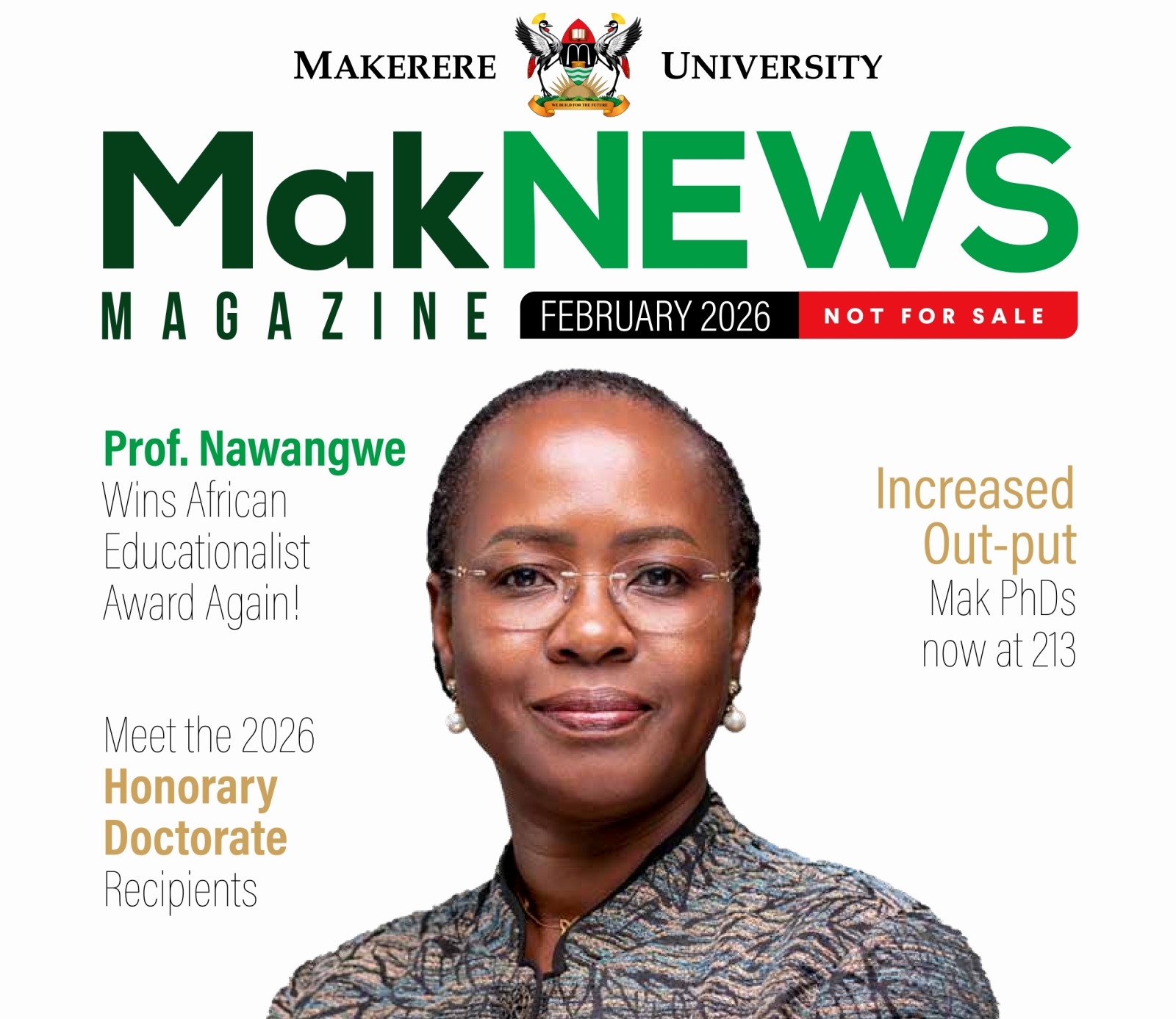
Cover page of the Mak News Magazine February 2026. Produced by the Public Relations Office, Makerere University, Kampala Uganda, East Africa.

It is with great pleasure that I welcome you to this edition of Mak News Magazine, a publication that continues to chronicle Makerere University’s journey as a centre of academic excellence, innovation, and societal transformation.

The stories featured in this issue vividly demonstrate Makerere’s unwavering commitment to addressing national, regional, and global challenges through research, partnerships, and people-centred solutions. They reflect a university that is deeply engaged with society, one that applies knowledge not only to advance scholarship, but also to improve lives.

A recurring theme in this edition is innovation for resilience and inclusion. From the College of Agricultural and Environmental Sciences’ Healthy Soy Initiative combating child malnutrition amid climate change, to the cutting-edge work of CEDAT’s Team Green Minds integrating IoT into agriculture, Makerere continues to harness science and technology to respond to pressing development needs. Equally inspiring is the College of Natural Sciences’ success in securing international funding to scale up fish processing technologies, with a deliberate focus on empowering women and strengthening livelihoods.

This issue also highlights Makerere’s growing role in advancing health and wellbeing. The launch of the Early Intervention Psychiatry Services Clinic at Makerere University Hospital marks an important step in strengthening mental health services, while the Hospital’s transformation from a modest sickbay into a centre of excellence stands as a testament to decades of strategic investment, dedication, and service to the nation.

Our commitment to education access and global engagement is equally evident. Strategic partnerships, such as that between the College of Education and External Studies and the Uganda Vocational and Technical Assessment Board, are expanding pathways to quality education. The establishment of the first-ever United States Studies Centre in the Great Lakes Region positions Makerere as a hub for dialogue, research, and policy engagement on global affairs. We also celebrate our vibrant international community, with graduates drawn from 67 nationalities—affirming Makerere’s status as a truly global university.

This edition further showcases initiatives that ensure long-term institutional sustainability, including the launch of the CoCIS Endowment Fund, infrastructure developments such as the modern hostel at Buyana Farm, and transformative programmes supported by the Mastercard Foundation that continue to empower young people across the continent.

As you read through these pages, I invite you to reflect on the collective effort of our students, staff, alumni, partners, and supporters whose contributions make these achievements possible. Together, we continue to shape Makerere University as a place where knowledge serves humanity.

I wish you an engaging and inspiring read.

Prof. Barnabas Nawangwe
VICE CHANCELLOR

Mak Editor

Continue Reading

General

Medical graduates urged to uphold Ethical values

Published

on

Dr. Maggie Kigozi delivers the Commencement Speech on Day 2 of the 76th Graduation Ceremony. 76th Graduation Ceremony, Day 2, College of Natural Sciences (CoNAS), the College of Veterinary Medicine, Animal Resources and Bio-Security (CoVAB), the College of Health Sciences (CHS) and the School of Public Health (SPH). Commencement Speaker-Dr. Margaret J. Kigozi, Makerere University Endowment Fund Chairperson. 25th February 2026, Freedom Square, Kampala Uganda, East Africa.

The Board Chairperson of the Makerere University Endowment Fund (MakEF), Dr. Margaret Blick Kigozi, has urged graduands in Health and Life Sciences to uphold professional ethics and serve humanity with diligence and compassion.

Her appeal came during the passing out of graduates from the College of Natural Sciences (CoNAS), the College of Veterinary Medicine, Animal Resources and Bio-Security (CoVAB), the College of Health Sciences (CHS) and the School of Public Health (SPH) on Day Two of the 76th Graduation Ceremony of Makerere University.

 “Class of 2026, you are now part of the Makerere legacy. Wherever you go clinics, laboratories, farms, boardrooms, or classrooms, you carry this institution with you. Serve your patients with skill and compassion. Care for animals and communities responsibly. Question boldly and keep learning,” Dr Kigozi, said.

Delivering the commencement address, Dr. Kigozi lauded the graduates for their dedication to careers that directly impact lives and communities. She encouraged them to use their knowledge generously and exercise their power gently.

 “Your education has trained you to ask better questions. Your humanity must guide the answers. Never forget that behind every chart, every case, every animal, every experiment, there is life. And life deserves care, patience, and dignity. Give every person you come in contact with care, patience and dignity,” Dr Kigozi, noted.

As the graduates embark on their professional journeys, Dr. Kigozi emphasized the importance of cultivating basic business acumen and financial literacy to ensure sustainability in their work.

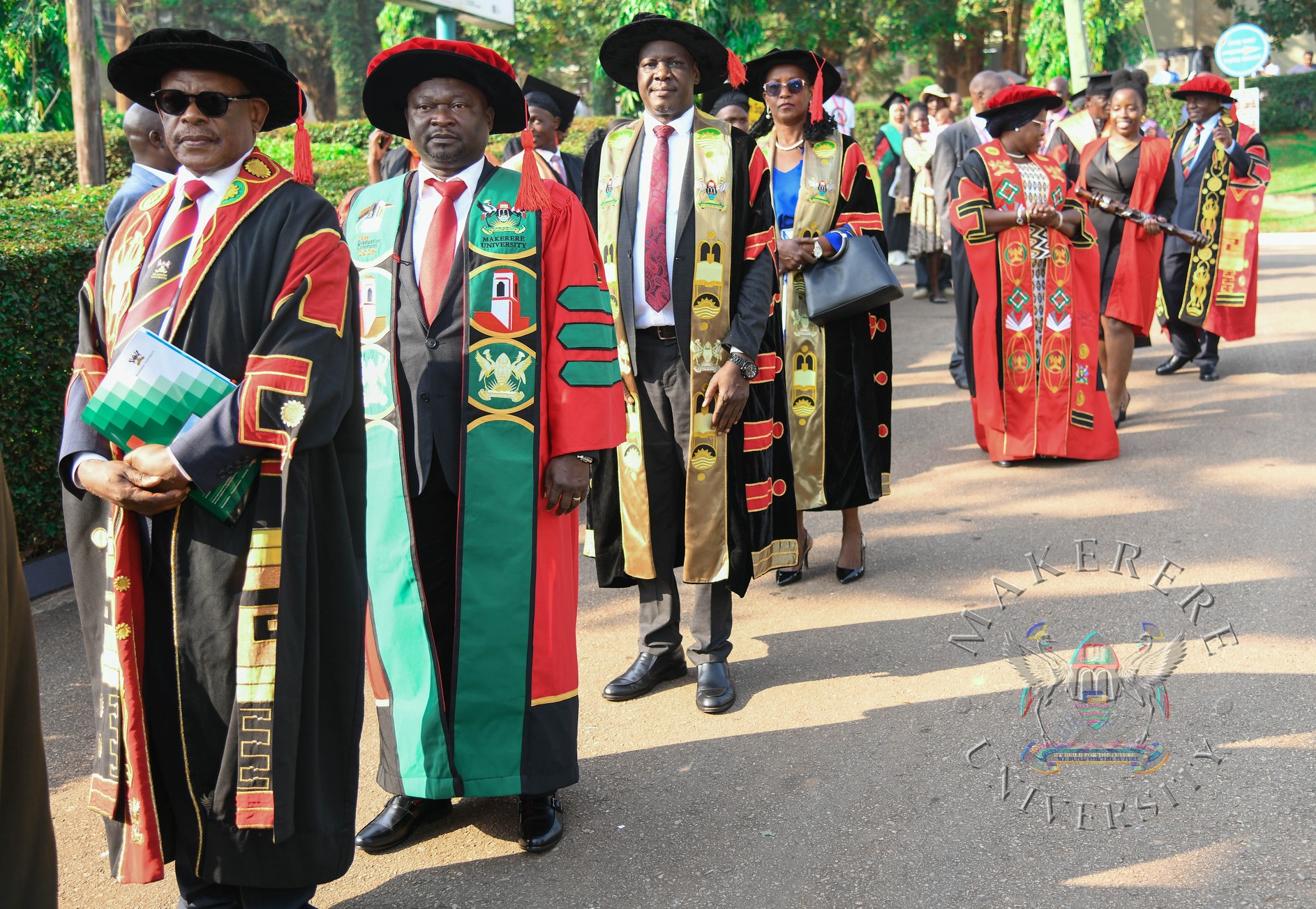
R-L: Vice Chancellor-Prof. Barnabas Nawangwe, Dr. Maggie Kigozi, Vice Chair Council-Rt. Hon. Daniel Kidega and Chair Council-Dr. Lorna Magara in the Academic Procession. 76th Graduation Ceremony, Day 2, College of Natural Sciences (CoNAS), the College of Veterinary Medicine, Animal Resources and Bio-Security (CoVAB), the College of Health Sciences (CHS) and the School of Public Health (SPH). Commencement Speaker-Dr. Margaret J. Kigozi, Makerere University Endowment Fund Chairperson. 25th February 2026, Freedom Square, Kampala Uganda, East Africa.
R-L: Vice Chancellor-Prof. Barnabas Nawangwe, Dr. Maggie Kigozi, Vice Chair Council-Rt. Hon. Daniel Kidega and Chair Council-Dr. Lorna Magara in the Academic Procession.

 “You do not need to become accountants but you must be able to read the essentials: understand simple financial statements, budgets and key metrics so you can judge whether a clinic, lab, or program is sustainable. You are encouraged to start your business. There are numerous investment opportunities in your areas of training. You can provide services to our people and create jobs,” Dr Kigozi, said.

She shared candidly how, when she first stepped into leadership, she realised she did not understand balance sheets or budgets well enough. So, she returned to Makerere for short courses to strengthen herself.

“A well-run Hospital, clinic or lab delivers better outcomes, attracts staff, and secures funding. Business savvy is not only about profit, it’s about sustainability and the freedom to serve ethically and effectively. Carry clinical skill with business sense so your work endures and grows,” Dr. Kigozi, noted.

Quoting renowned writer and producer Shonda Rhimes, creator of Grey’s Anatomy, who once reflected that succeeding in one area of life can sometimes mean falling short in another, Dr. Kigozi encouraged women graduates to intentionally balance professional ambition with family responsibilities.

 “When one area thrives, another is often under strain. When Navio was graduating from school I had to manage the Presidential Investor Round Table on the same day as Executive Director Uganda Investment Authority. I chose my job and delegated his siblings to attend Navios graduation. I learnt from this. I choose family always after that thing you achieve once and keep forever,” Dr Kigozi, said.

In his speech, the Prof Barnabas Nawangwe, the Vice Chancellor, informed the congregation that Makerere’s ranking on all university ranking platforms has remained stable, placing Makerere among the top 10 African universities and within the top 4.5% globally.

“In the Times Higher Education global ranking, Makerere University made a formidable jump from the 1200-1500 bracket to the 800-1000 bracket. This was no mean achievement and I congratulate all members of the Makerere Community on this stellar performance,” Prof Nawangwe, said.
Carol Kasujja
Carol Kasujja Adii

Continue Reading

General

Graduation marks the next phase of accountability, graduates told

Published

on

Left to Right: Prof. Barnabas Nawangwe,Prof. Nicholas Ozor, Rt. Hon. Daniel Kidega, Dr. Lorna Magara, Hon. Dr. Joyce Moriku Kaducu, Ms. Anthea Ampaire and Hon. Dr. Crispus Kiyonga in the academic procession. 76th Graduation Ceremony, Day 1, CAES, CoCIS, CEES and School of Law. Commencement Speaker-Prof. Nicholas Ozor, the Executive Director of the African Technology Policy Studies Network, Nairobi, Kenya. 24th February 202, Freedom Square, Makerere University, Kampala Uganda, East Africa.

“A degree is not a finish line. Graduation is not the end of learning, It is the beginning of accountability,” Prof. Nicholas Ozor, the Executive Director of the African Technology Policy Studies Network Nairobi, Kenya (ATPS), said.

Delivering a keynote address under the theme ‘Knowledge with purpose’, during Makerere University’s 76th graduation ceremony on Tuesday 24th February, Prof Ozor, challenged graduates to see their degrees not as status symbols, but as instruments of responsibility.

In his speech, he painted a candid picture of the world the graduates are stepping into, one marked by climate change, technological disruption, inequality, food insecurity and the rapid spread of misinformation. Yet rather than framing these challenges as obstacles, he described them as opportunities for purposeful leadership.

“Into this world, you step, armed with knowledge, credentials, and potential. Your degrees do not make you better than others. They make you responsible for others,” Prof Ozor, said.

Addressing graduands from College of Agricultural and Environmental Sciences (CAES)
College of Computing and Information Sciences (CoCIS), College of Education and External Studies (CEES) and School of Law (SoL), Prof. Ozor tailored his message to each field of study.

To graduates of the School of Law, he described the legal profession as a moral calling, urging them to use the law to protect the vulnerable and uphold justice with courage.

“Uganda, Africa, and the world do not need lawyers who only know how to argue. They need lawyers who know why they argue. Use the law to protect the weak, not intimidate them. Use your knowledge to defend justice, not delay it. Let integrity define your reputation not merely your résumé,” Prof Ozor, said.

For graduands who might feel that shortcuts will be tempting and silence will feel safer than truth, Prof. Ozor reminded them that justice does not need clever people, but courageous ones.

To the College of Education and External Studies, he underscored the transformative power of teachers, reminding them that classrooms shape nations long before policies do.

“Every nation rises and falls on the quality of its teachers. Never underestimate the power of a classroom. Teach not only for examinations, but for understanding. Teach not only content, but character. Teach learners how to think not what to think. Education is quiet work but its impact echoes across generations,” Prof Ozor, noted.

He called upon graduands from the College of Computing and Information Sciences, to use technology to solve African problems, not merely to imitate foreign solutions.

“Technology is powerful, but it is not neutral. Every line of code carries values. Every system you design affects real lives. Build for inclusion. Build for accessibility. Build for truth. Do not let innovation outrun ethics. The future will not belong to those who know the most technology, but to those who use it wisely,” He noted.

During the ceremony, Prof Ozor announced that the African Technology Policy Studies Network is offering PhD scholarships and postdoctoral fellowships in Artificial Intelligence, inviting deeper collaboration with Makerere.

For graduates of the College of Agricultural and Environmental Sciences, he highlighted their critical role at the intersection of sustainability and survival, calling on them to blend indigenous knowledge with scientific innovation to secure Africa’s food systems and protect its ecosystems.

In closing, he reminded graduands that their integrity will open doors their degrees cannot, their humility will teach them lessons success never will, and their resilience will matter more than their grades.

Five principles to be remembered:

  1. Embrace lifelong learning. The world changes too fast for static knowledge.
  2. Choose purpose over comfort. Impact matters more than income.
  3. Build character before career. Skills get you hired; character sustains you.
  4. Serve something larger than yourself. Give back to your communities and your country.
  5. Believe in Africa, and act. Do not wait for solutions from elsewhere. Be the solution.

Carol Kasujja
Carol Kasujja Adii

Continue Reading

Trending