
General
Mak Launches Online National Biodiversity Data Bank

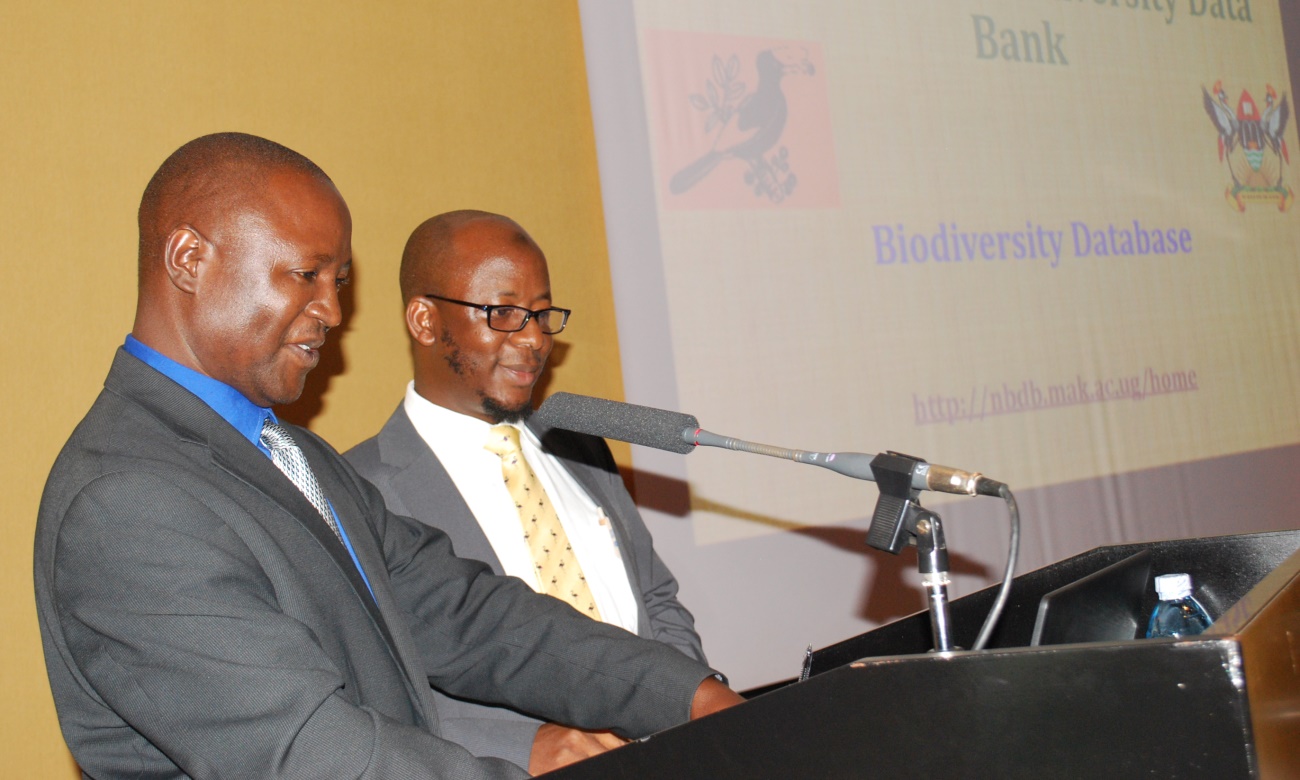
Makerere University with support from USAID and the Wildlife Conservation Society (WCS) has launched an Online National Biodiversity Data Bank (NBDB) software application to boost research in Uganda’s Biodiversity.
The Data Bank software application was launched by the Acting Commissioner Biodiversity in the Ministry of Tourism, Wildlife and Antiquities, Dr. Akankwasa Barirega at Speke Resort Munyonyo on Thursday, 5th September 2019.
The Coordinator of the Data Bank Dr. Daniel Waiswa from Makerere University’s School of Forestry, Environmental and Geographical Sciences (SFEGS) in his remarks highlighted that without data on Uganda’s biodiversity, the tourism sector will head into sleep mode.
“The Data Bank is a central repository for biodiversity data in Uganda to serve the public, private and civil society domain,“ he said.
He explained that biodiversity data for most of the work done at the University is scattered, requiring a central place which can help to make informed decisions on the status of biodiversity resources.
“Currently we collect data from the field and stakeholders, keep it and make it accessible to all those interested in conservation of biodiversity. For students we use the data for research to inform policy with regard to management of biodiversity resources” remarked Dr. Waiswa.
He said the Data Bank will move towards increasing access to data, considering the case of the online and offline database donated to the NBDB by WCS. He also reiterated that the online Data Bank is quite important in broadening the scope of the current databank to include aquatic biodiversity and environmental quality data.
According to Dr. Waiswa the NBDB was formulated with a vision of becoming the leading centre of excellence in quality biodiversity and environmental data collection, processing and management in Uganda.

Its mission is to inventory and monitor the national biological resources and provide biodiversity information to conservationists, government agencies, land managers and others interested in the conservation and sustainable utilisation of these resources.
The NBDB future outlook includes Capacity Building in biodiversity and related issues as well as generation of funds through proposal writing, fundraising. Others are consultancies and increased participation in university programs of teaching and research among increasing relevance of stakeholders through provision of demand driven products and services.
The Dean SFEGS, Assoc. Prof. Fred Babweteera who represented Prof. Bernard Bashaasha, the Principal College of Agricultural and Environmental Sciences (CAES) said the Data Bank software application was a great milestone for the college to make its resources more accessible in the public domain. He lauded USAID for providing resources and technical support for the conference.
Dr. Akankwasa Barirega who also heads the Department of Wildlife Conservation at the Ministry of Tourism applauded Makerere for launching the Online National Biodiversity Data Bank.
“For us as a Ministry responsible for Tourism and Wildlife, we have great excitement because we cannot develop tourism products without biodiversity data.
You must know where the animals, plants, birds, mammals, reptiles are so that we can promote them for Tourism, “he noted.
He observed the need to know what is available so that it can be managed better, saying unknown data cannot be managed.
“Government is responsible for management and conservation of wildlife, there is no way this work can be done without having information on where these things are. To us this is a great tool that will help in the day-to-day conservation management, decision making, tourism product development and conservation as well as tourism development policy formulation, “he emphasized.

He reported that lack of updated data has been one of the biggest challenges faced by the Tourism and Wildlife sector,
“There are many species of animals that we don’t know about, people only know about big mammals like the elephants, Gorillas, yet there are a lot of insects like beetles and butterflies which can contribute to tourism in addition to their ecological benefits like pollination which masterminds the agriculture sector in Uganda, “he said.
Taking into consideration the recent debate on the proposed construction of a dam on Murchison Falls, Dr. Waiswa said that such a resolution was not being guided by the available data on biodiversity, noting that the availability of resources like the National Biodiversity Data Bank will easily guide decision-making.
The Country Director Wildlife Conservation Society (WCS), Mr. Samuel Nampindo Takozekibi said that his organisation has worked closely with Makerere University particularly the College of Agricultural and Environmental Sciences (CAES) to ensure that the platform is accessible by the public through the internet.
“The Data Bank is as good as having the data which we have also contributed to collecting; we also support academic training so that the students can collect the data as they earn their degrees, “he revealed.
He said that WCS is working towards negotiating the international treaties like the post CDD 2020 to come up with the targets which will become key frameworks for governments, so as to contribute to slowing down species’ loss and extinction.
Mr. Nampindo observed the need for the data collected to be used in reporting on the natural capital contribution to the development of this country, so as to attract increased investment by government.
He advised other public universities to be part of the process since they have continuous recruitment of students who do research in an effort to earn their degrees which will provide key sustainability for the data bank.
“The data bank can also innovate products that can be sold mostly to international students, to earn money to enhance its sustainability.”
Article Compiled by; Jane Anyango and Agnes Nankebe Nantambi, Communication Office CAES




The Board Chairperson of the Makerere University Endowment Fund (MakEF), Dr. Margaret Blick Kigozi, has urged graduands in Health and Life Sciences to uphold professional ethics and serve humanity with diligence and compassion.
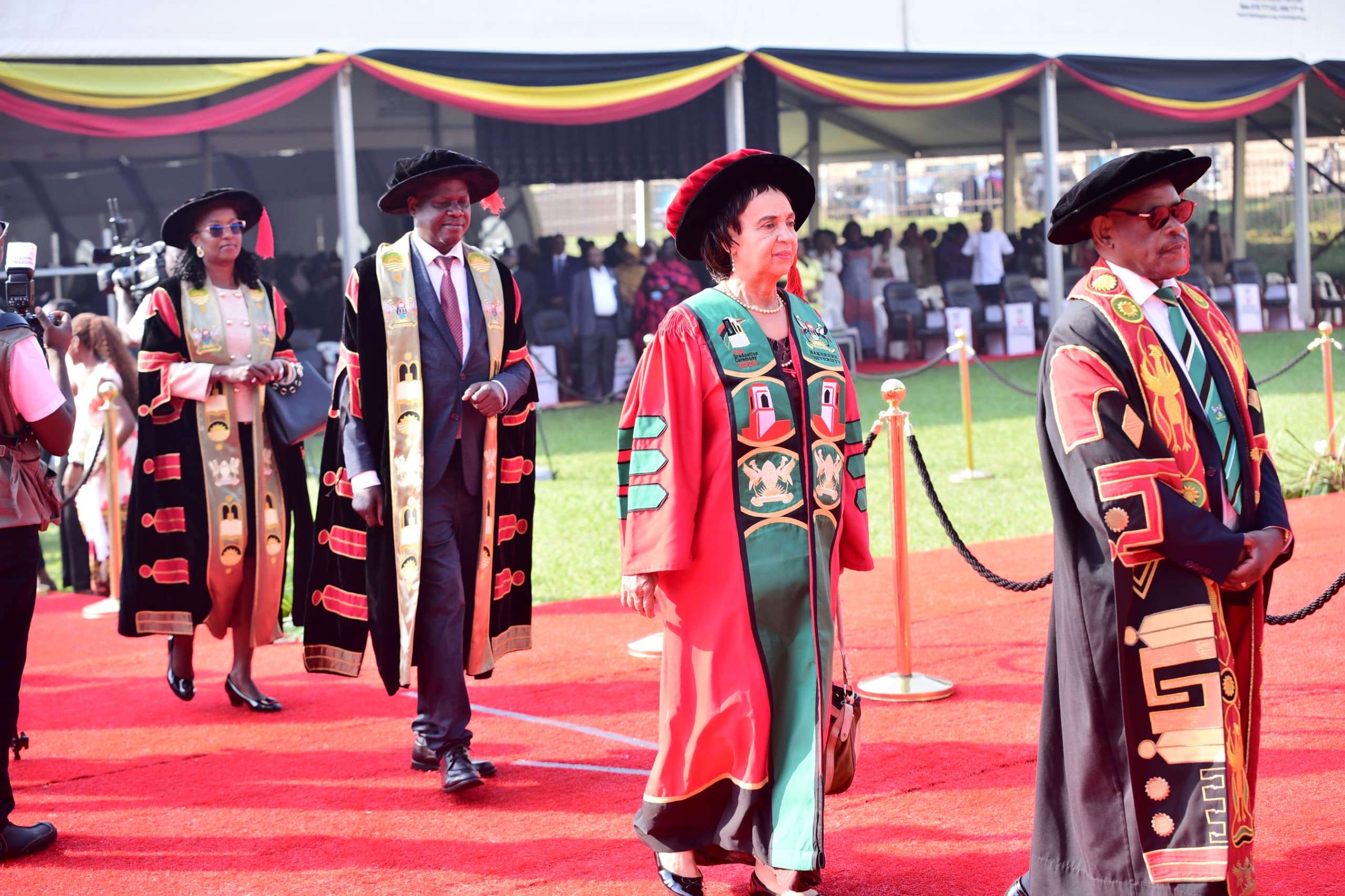
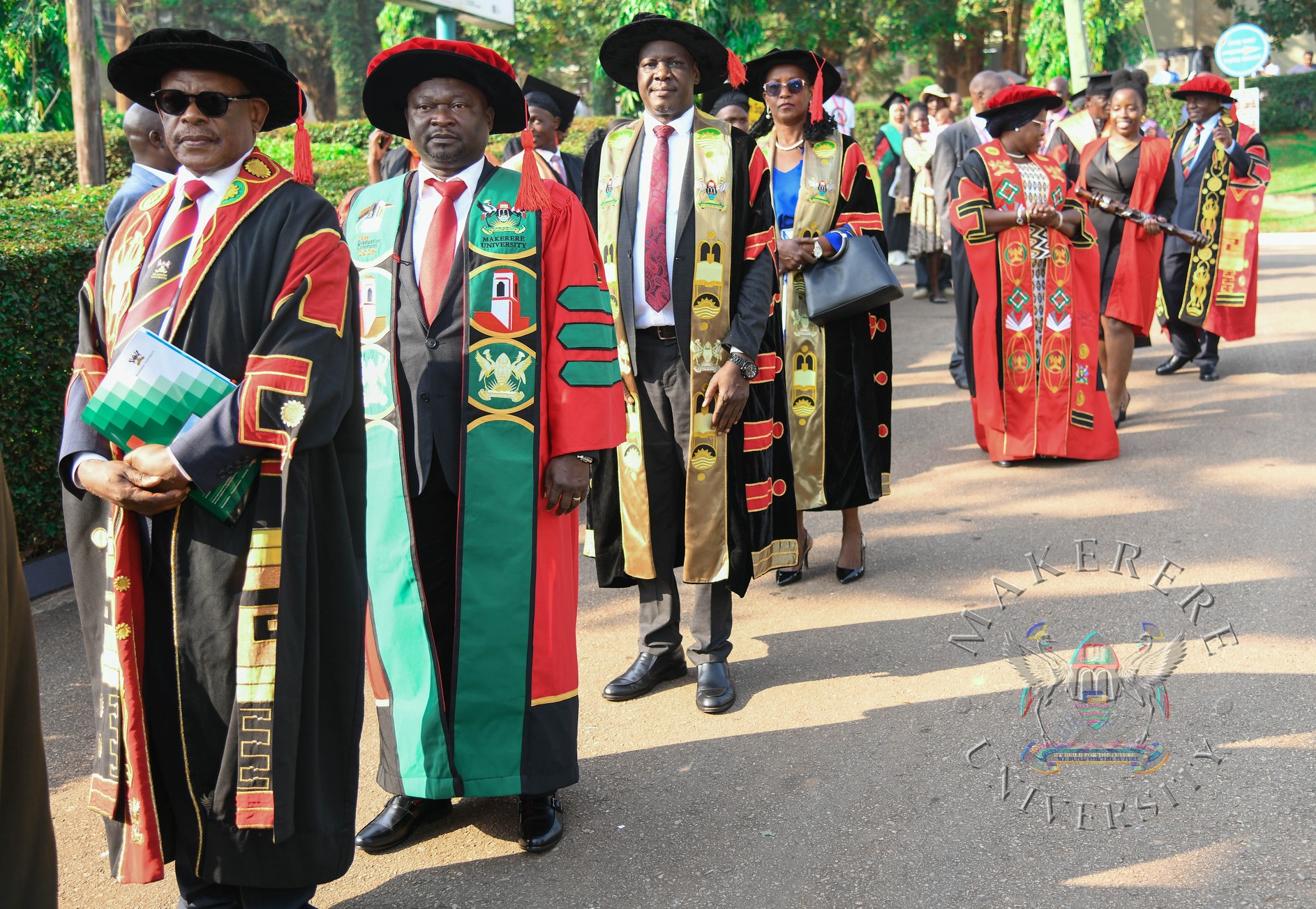
Her appeal came during the passing out of graduates from the College of Natural Sciences (CoNAS), the College of Veterinary Medicine, Animal Resources and Bio-Security (CoVAB), the College of Health Sciences (CHS) and the School of Public Health (SPH) on Day Two of the 76th Graduation Ceremony of Makerere University.
“Class of 2026, you are now part of the Makerere legacy. Wherever you go clinics, laboratories, farms, boardrooms, or classrooms, you carry this institution with you. Serve your patients with skill and compassion. Care for animals and communities responsibly. Question boldly and keep learning,” Dr Kigozi, said.
Delivering the commencement address, Dr. Kigozi lauded the graduates for their dedication to careers that directly impact lives and communities. She encouraged them to use their knowledge generously and exercise their power gently.
“Your education has trained you to ask better questions. Your humanity must guide the answers. Never forget that behind every chart, every case, every animal, every experiment, there is life. And life deserves care, patience, and dignity. Give every person you come in contact with care, patience and dignity,” Dr Kigozi, noted.
As the graduates embark on their professional journeys, Dr. Kigozi emphasized the importance of cultivating basic business acumen and financial literacy to ensure sustainability in their work.
“You do not need to become accountants but you must be able to read the essentials: understand simple financial statements, budgets and key metrics so you can judge whether a clinic, lab, or program is sustainable. You are encouraged to start your business. There are numerous investment opportunities in your areas of training. You can provide services to our people and create jobs,” Dr Kigozi, said.
She shared candidly how, when she first stepped into leadership, she realised she did not understand balance sheets or budgets well enough. So, she returned to Makerere for short courses to strengthen herself.
“A well-run Hospital, clinic or lab delivers better outcomes, attracts staff, and secures funding. Business savvy is not only about profit, it’s about sustainability and the freedom to serve ethically and effectively. Carry clinical skill with business sense so your work endures and grows,” Dr. Kigozi, noted.
Quoting renowned writer and producer Shonda Rhimes, creator of Grey’s Anatomy, who once reflected that succeeding in one area of life can sometimes mean falling short in another, Dr. Kigozi encouraged women graduates to intentionally balance professional ambition with family responsibilities.
“When one area thrives, another is often under strain. When Navio was graduating from school I had to manage the Presidential Investor Round Table on the same day as Executive Director Uganda Investment Authority. I chose my job and delegated his siblings to attend Navios graduation. I learnt from this. I choose family always after that thing you achieve once and keep forever,” Dr Kigozi, said.
In his speech, the Prof Barnabas Nawangwe, the Vice Chancellor, informed the congregation that Makerere’s ranking on all university ranking platforms has remained stable, placing Makerere among the top 10 African universities and within the top 4.5% globally.
“In the Times Higher Education global ranking, Makerere University made a formidable jump from the 1200-1500 bracket to the 800-1000 bracket. This was no mean achievement and I congratulate all members of the Makerere Community on this stellar performance,” Prof Nawangwe, said.
-
 Humanities & Social Sciences5 days ago
Meet Najjuka Whitney, The Girl Who Missed Law and Found Her Voice
-

 Health1 week ago
Uganda has until 2030 to end Open Defecation as Ntaro’s PhD Examines Kabale’s Progress
-
 Agriculture & Environment1 week ago
Uganda Martyrs Namugongo Students Turn Organic Waste into Soap in an Innovative School Project on Sustainable Waste Management
-
 General4 days ago
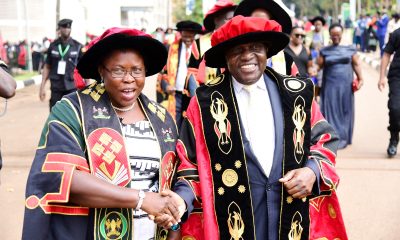
76th Graduation Highlights
-
 General1 week ago
Mastercard Foundation Scholars embrace and honour their rich cultural diversity