
General
Mak freshers orientation: students tipped on safety and health

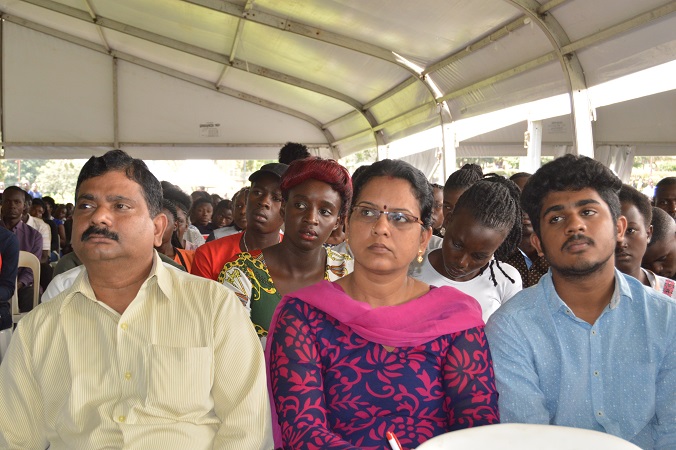
At the beginning of each academic year, Makerere University organizes the Students Orientation Meeting which presents an opportunity to the University Administration to interact with new students. According to the Deputy Registrar, Undergraduate Admissions and Records Mr. Charles Ssentongo, during this meeting, students are given a comprehensive package that appeals to their academic and social wellbeing.
“They also receive relevant information and knowledge crucial to their stay at the university,” he mentioned.

The Freshers Orientation Meeting of the academic year 2019/2020 that was held on 5th August 2019, provided a glance to students of the youth related health issues such as sexual reproductive health; HIV/AIDs testing and counseling, health education, Vaccination/immunization among others. According to Dr. Josephat Byamugisha-the Director of Makerere University Hospital; a healthy body leads to a healthy mind. He therefore, urged students to take their health seriously and avoid circumstances that can affect their performances.
“Always ensure that you are in a clean environment. Be mindful of the health status of the relationships you are engaging in, take protective and preventative health measures, carry out regular health checkups; and engage in regular sports activities to stay both physically and mentally healthy,” he said.
He encouraged students to register with the university hospital in order to access health services.

According to Gene Tunney, to enjoy the glow of good health, one must exercise. The Head of Sports and Recreation Department Ms. Peninah Kabenge; therefore, called upon all freshers to join university sports activities to create and maintain close-knit human bonds and a social support network that will keep their bodies fresh and active. She rallied students to participate in the MakRun 2019 on 15th September 2019 to contribute to the construction of the Mak Student’s Centre.
In the same spirit, the Principal Public Relations Officer Ms. Ritah Namisango urged students to visit the various worshiping places found within the University to seek spiritual healing. She also encouraged students to actively participate in university programmes such as debates, exhibitions, seminars, competitions, community outreach, career guidance fairs, public lectures and sports.
Mr. Henry Nsubuga who is the Manager-Counselling and Guidance Centre also encouraged students to fully utilize the counseling and guidance services provided at the center to get solutions to challenges that may affect their studies.
The Freshers Orientation 2019, held in the Makerere University Freedom square on Monday 5th August, was attended by both national and international students. The Academic Registrar Mr. Alfred Namoah-Masikye, congratulated the freshers upon joining Uganda’s oldest institution of Higher Learning. In a special way, he welcomed the international students to Makerere University, the epitome of knowledge and academic excellence in Africa.

“On behalf of Makerere University Community, it brings me great joy to welcome you to Makerere University. we are proud you chose to pursue your university education with us, and we are excited to help nurture your academic strengths, encourage your personal growth and inspire your creativity,” he said.
“You have passed through different stages of your education and entered into a new level where you will be held accountable for all your actions. Therefore, what you will learn here will be necessary tools needed throughout your life. Learning at Makerere University extends far beyond the classroom and I encourage you to be full participants in the free and open exchange of ideas and viewpoints that characterizes our university,” he added.
At the Orientation, the Dean of Students, Mr.Cyriaco Kabagambe briefed the students on the University rules and regulations. He urged the students to take their studies seriously and encouraged them to engage in other productive activities in order to maximally benefit from their stay.

“We have so many activities going on at this institution, which include; sports, research and innovations, and religious activities. So many students have greatly benefited from these activities and I therefore, implore you to fully utilize them,” he said.
Representing the University Bursar, Mr. Everist. Bainomugisha, the Manager Accounts and Reporting Mr. Lubowa Javiira Sebiina advised the new students to enroll on AIMS (Academic Integrated Management System), generate a Payment Registration Number (PRN) and pay tuition on time. He called upon them to be aware of conmen and desist from gambling.
“Fees payment is due on your arrival at the university. Approach your college bursars to help you generate a PRN. You cannot make any payments without a PRN and endeavor to personally bank your tuition,” he said.
Reiterating the importance of registering, Dr. Ruth Nalumaga the Deputy University Librarian called upon students to register with the Makerere University Library and the College Libraries to be able to access Library services. Furthermore, she urged them to attend the Library orientation.

The Acting Director of Makerere University Gender and Mainstreaming, Dr. Euzobia Mugisha Baine urged the incoming students to openly defy the sexual harassment vice and stand strong for their academic rights.
She encouraged students to acquaint themselves with the Makerere University Policy and Regulations against Sexual Harassment when she said, “the Policy clearly defines sexual harassment and provides its various forms. It provides details on whom you should contact and where to go in case you are harassed. Please let someone know right away in case a person is engaging you in actions that you don’t feel comfortable with. The University appointed the Sexual Harassment Committee, some of the members are placed at the respective colleges, don’t hesitate to contact them.”

On behalf of the 85th Makerere University Guild, H.E Kateregga Julius, the Guild President tasked students to be cautious of conmen and encouraged them to participate in the Guild activities. He also advised them to always contact the Guild Office for assistance and guidance on different aspects.
The Chief Security Officer, Assistant Commissioner of Police Achaye Phillip cautioned students to be mindful of the company they keep. “Avoid strangers in your residences, they could survey and steal your valuables,” he said. He further warned them to abstain from unlawful activities like practicing and mobilizing strikes, demonstrations and riots.
Article by Nakibombo Esther Joyce- Volunteer, Mak Public Relations Office


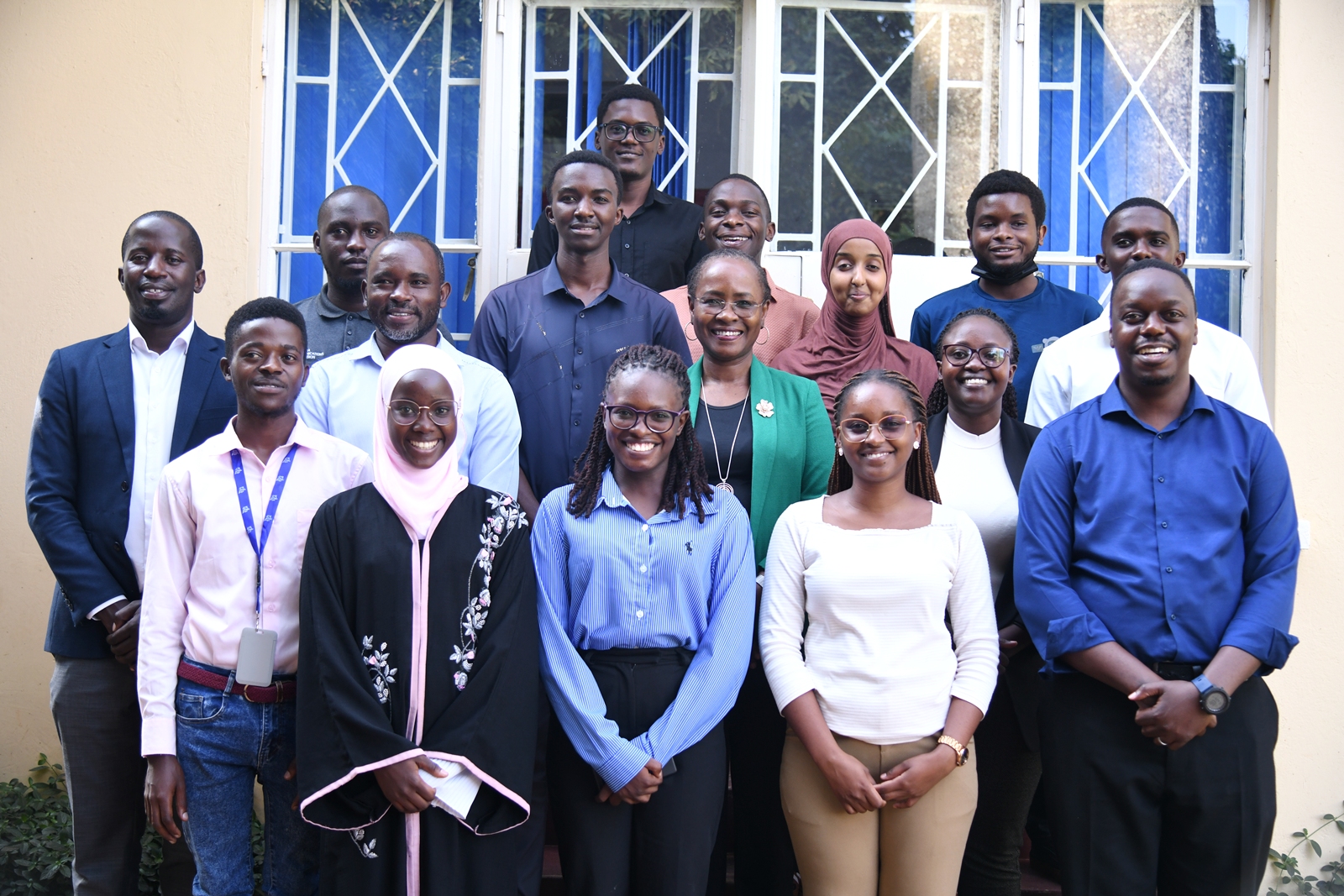
The Deputy Vice Chancellor in charge of Academic Affairs (DVCAA) Prof. Sarah Ssali on 15th July 2026 commended the Research and Education Network for Uganda (RENU)’s Industrial Trainee Program, describing it as the perfect hands-on intervention for the future workforce. She made the comments while on a guided tour of RENU’s on-campus Lab facility where ten undergraduate students from Makerere and other Universities are undergoing a two-month practical training.
Origin of tour
The tour was prompted by a 24th June 2026 meeting with a RENU delegation led by CEO, Mr. Nicholas Mbonimpa, aimed at broadening the existing partnership with Makerere University beyond internet service provision to supporting teaching, learning and research activities. During the said meeting, Prof. Ssali expressed Makerere‘s desire to produce graduates that are not only academically grounded but also cognizant of the needs of the job market.
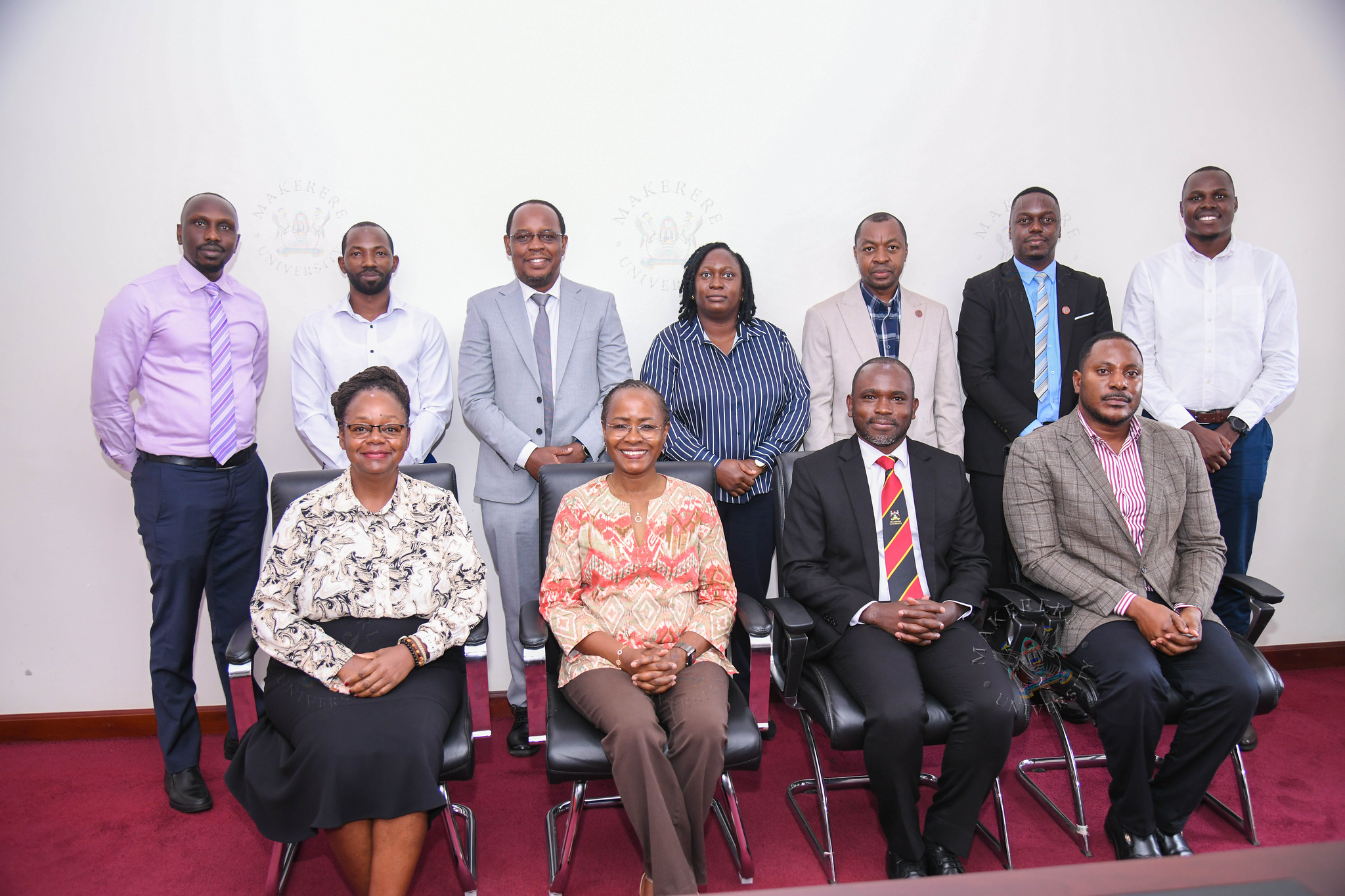
In his response then, Mr. Mbonimpa expressed RENU’s readiness to continue advancing digital transformation through advancing resilient connectivity, research infrastructure, and innovative initiatives that enhance teaching, learning, and research. He shared that the Senate Building’s computer network had been revamped in line with advancing resilient connectivity, and the initiative would be expanded to the College of Engineering, Design, Art and Technology (CEDAT) buildings and other premises subsequently.
The RENU CEO further highlighted that resilient connectivity forms a good basis for the proposed Open Radio Access Network (RAN) Architecture deployment set to be done within six months, so as to boost training of students in 5G and other technologies. Other initiatives discussed included training staff and students on acquisition of Open Researcher and Contributor ID (ORCID) to improve visibility of their publications and research output.
Training Program Lauded
Addressing student interns during the 15th July guided tour, the DVCAA who was accompanied by the 92nd Guild Speaker Rt. Hon. Trevis Mutatiina Muhwezi urged beneficiaries to harness all the technical and social opportunities accorded by the Program. “Not all students in your respective academic programmes had the benefit of being exposed to this kind of training so please make the most of it and utilize skills gained here beyond the classroom setting”.
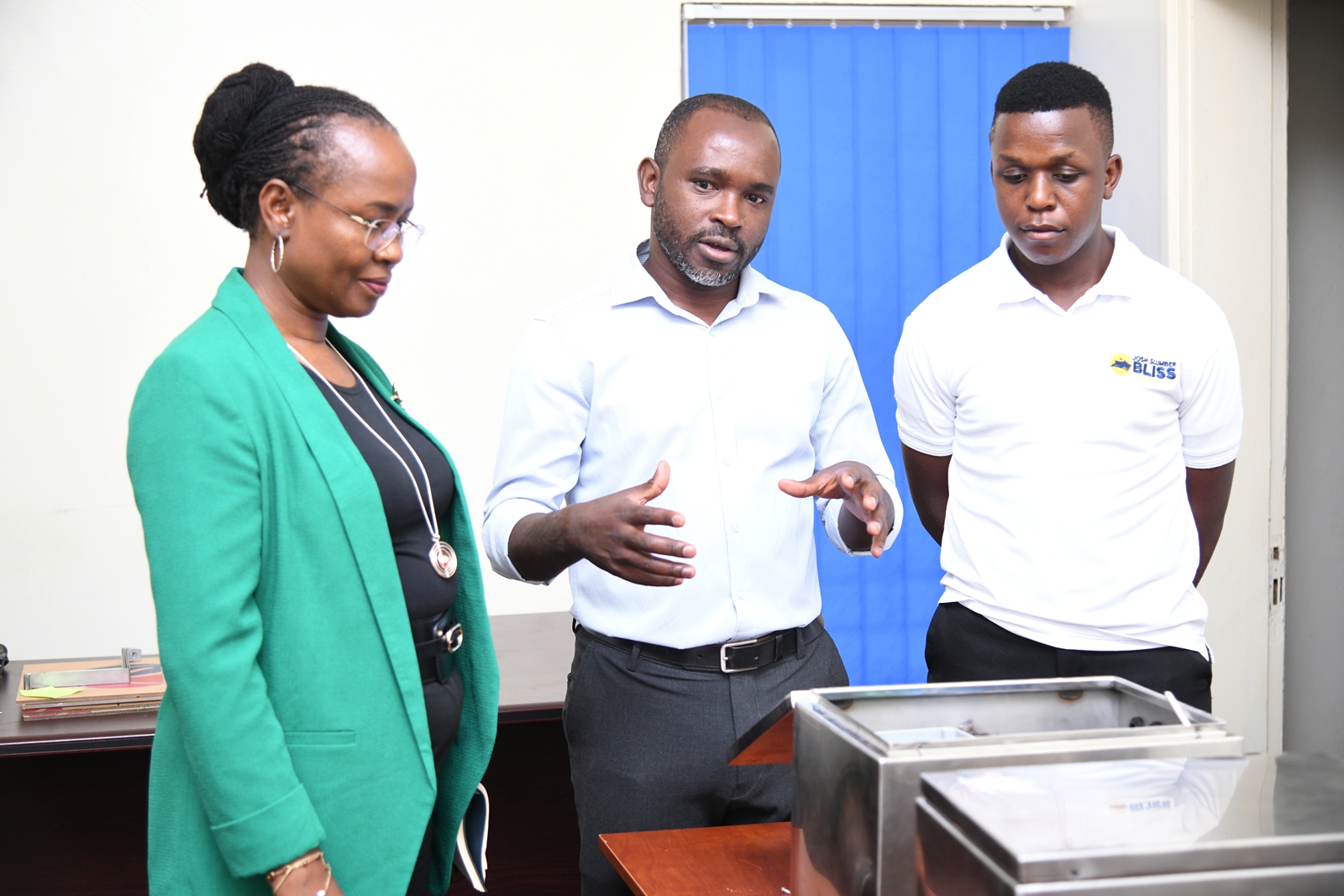
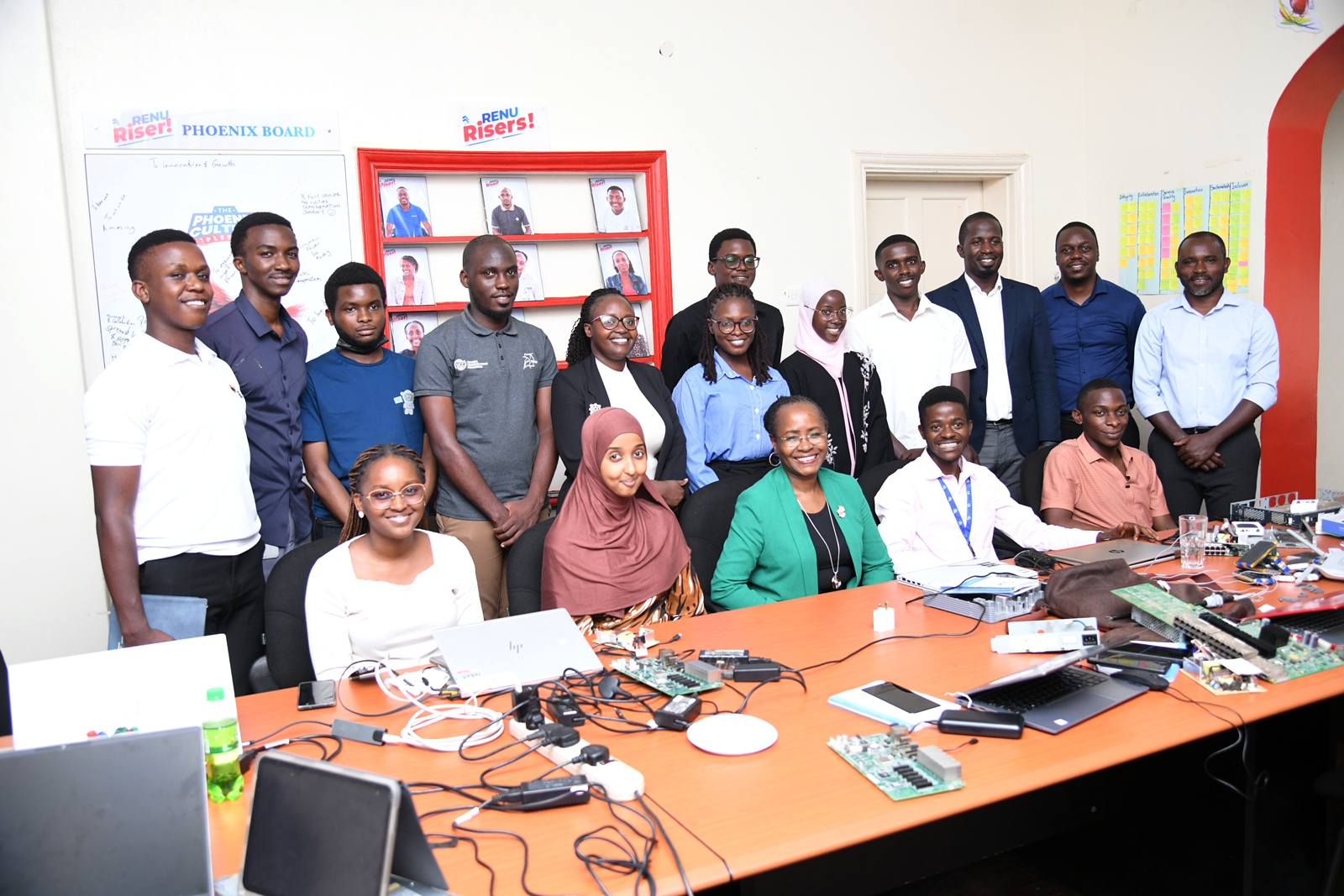
The 2026 Industrial Trainee Program is equipping students with skills on how to diagnose and repair ICT equipment based on old and disused stock.
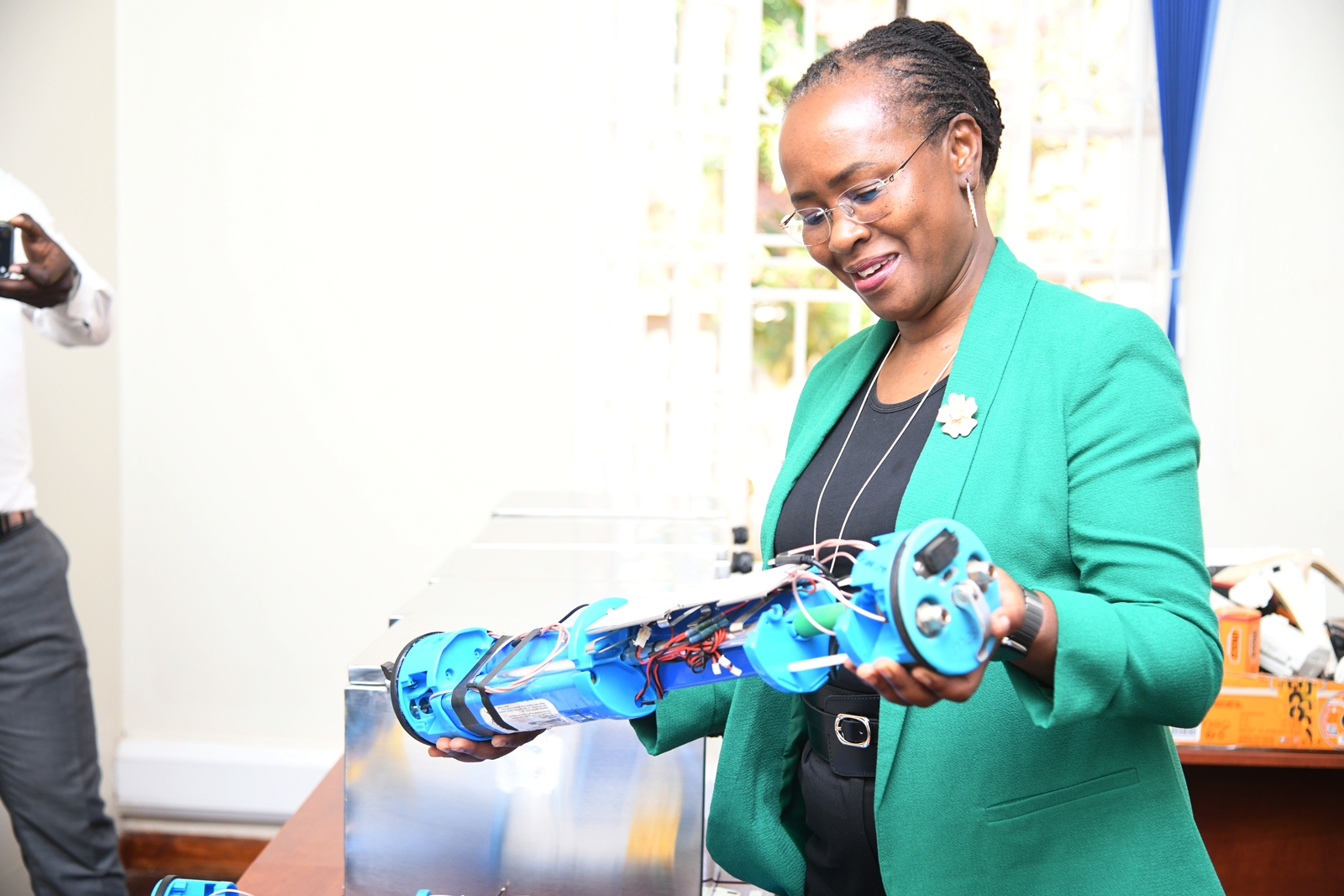
Prof Ssali was also toured the makerspace where solar-powered routers are manufactured and deployed to extend internet connectivity to both rural and urban locations. In 2023, RENU partnered with Mesh++, a Chicago-based connectivity solutions manufacturer, to manufacture solar-powered internet routers in Uganda. Since inception, over 200 units have been manufactured and deployed across various sites in Uganda, while over 80 units have been shipped to various African countries such as Malawi, Rwanda and South Sudan under the RENUMESH Technologies joint venture.
Partnerships Inspiring New Prototypes
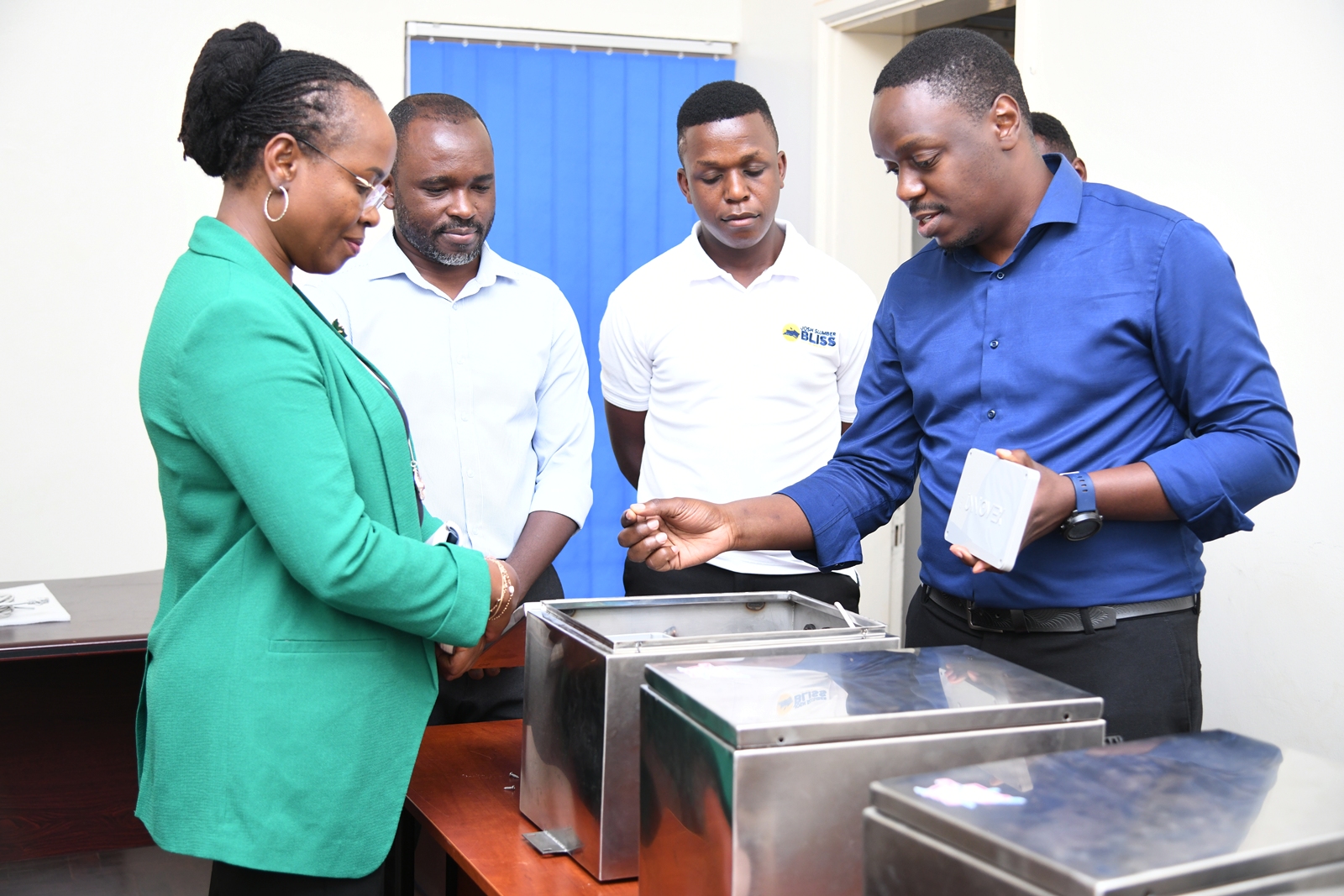
The RENU CEO nevertheless pointed to a long turnaround time for shipping parts from the U.S. as one of the drawbacks hindering the product’s rapid deployment. As a result, RENU, in response to the Ugandan Government’s call for import substitution and local capacity development is developing a solar-powered internet router with some of the components sourced from Ugandan companies Innovex and Chloride Excide.
“Innovex will supply the Internet of Things (IoT) component to help RENU remotely monitor and control the router while Chloride Excide will provide the batteries” Mr. Mbonimpa explained. He added that some of the current lot of trainees were already running simulations on the prototype and proposing how the device can be further refined so as to increase its portability and reduce its price.
A call for Expansion
At the conclusion of the tour, Prof. Ssali who commended the use of modular Ugandan components for the prototype thanked the RENU team to exposing students to real-world technological deployments. She nevertheless urged the CEO and his team to expand the program’s intake beyond ten trainees and duration beyond the current two months so as to give students a richer experience.
The CEO RENUMESH Technologies Mr. Brian Masiga thanked the DVCAA for following up their 24th June meeting with the visit, which demonstrates that the University Management values students’ development of practical skills. He equally thanked Prof. Ssali for Management’s support to RENU activities and pledged to further refine the prototype to produce a cheaper and more portable proudly Ugandan product.
General
Makerere University Launches First Writing Summer School to Strengthen Professional Writing Skills.

KAMPALA, UGANDA, EAST AFRICA| July 6, 2026.
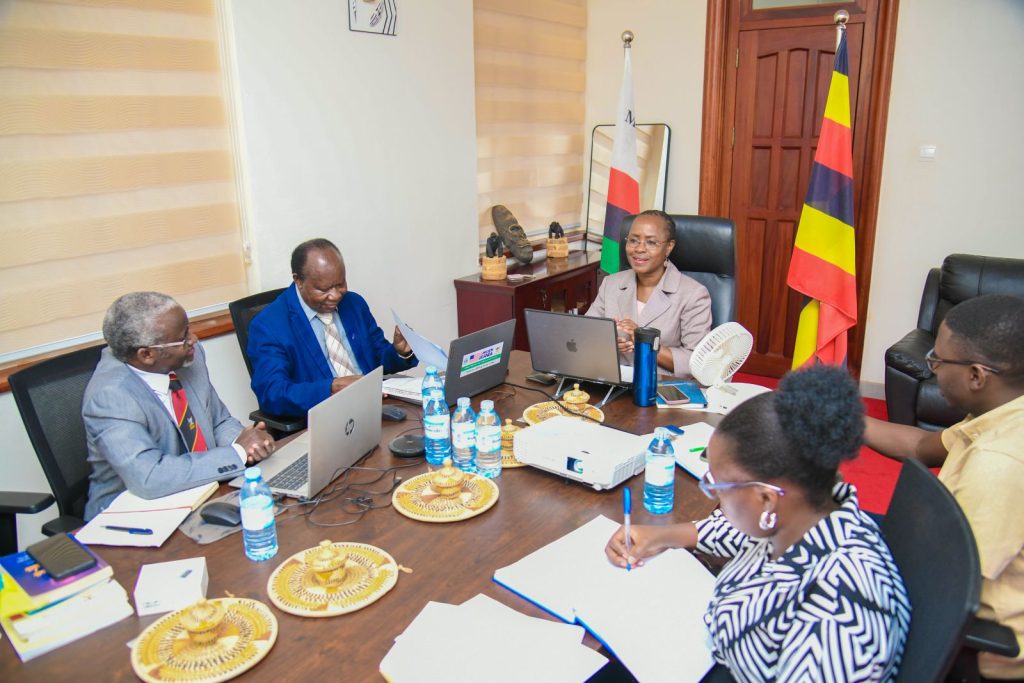
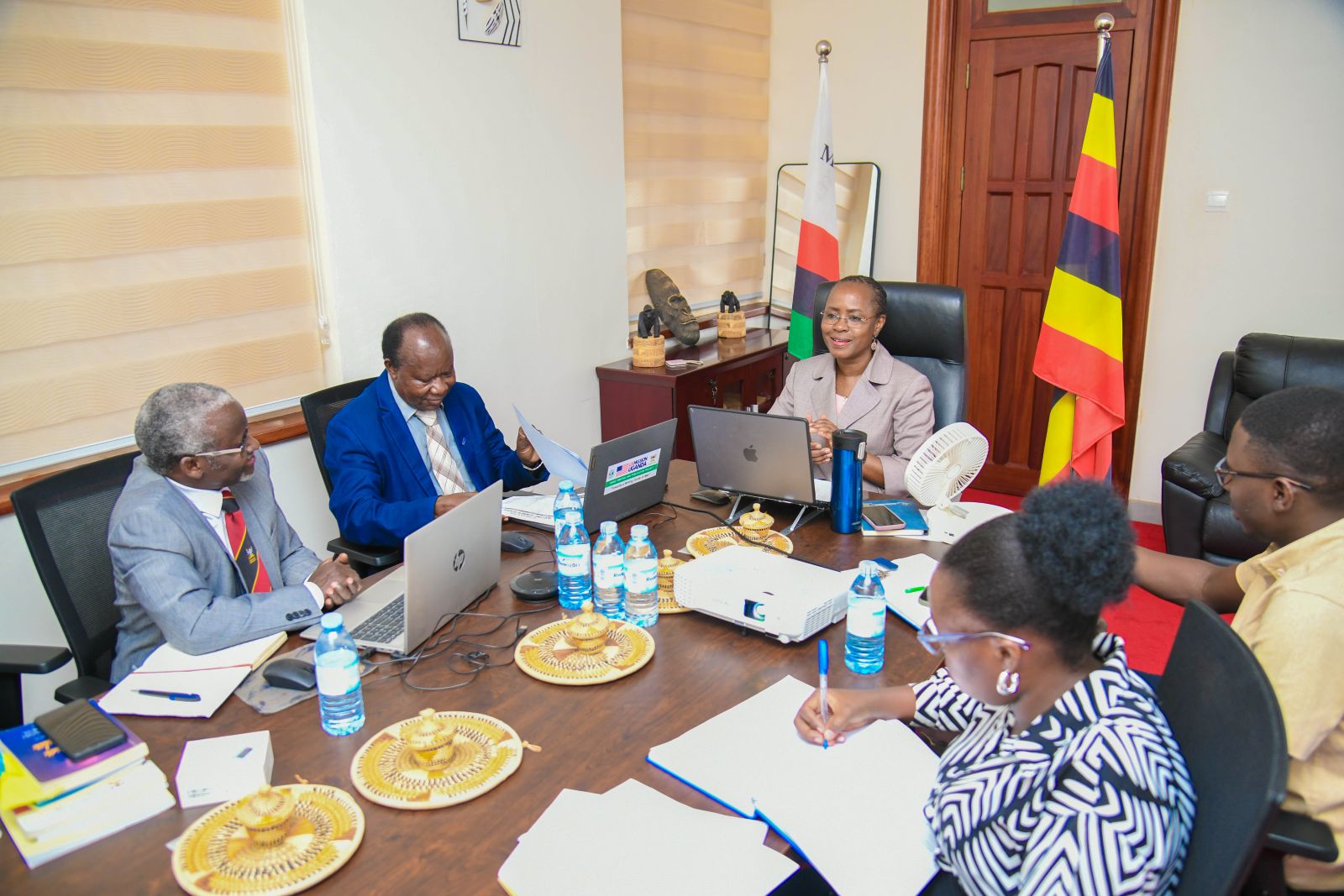
Makerere University has officially launched its inaugural writing summer school, a week long professional development program aimed at equipping students, graduates, researchers and staff with practical writing skills required for academic excellence and success in today’s competitive job market. The program jointly organized by the Makerere University Writing Centre and Makerere University Press (MakPress), reflects the University’s commitment to nurturing graduates with not only academic knowledge but also the communication skills needed to thrive professionally.
Held virtually, the launch attracted more than 280 participants from Makerere University and other higher education institutions, demonstrating the growing demand for structured writing support beyond the classroom.
Building the Next Generation of Writers.
Speaking at the launch, the Director of Makerere Writing Press, Prof. William Tayeebwa, said the summer school represents an important investment in developing writers before their work reaches publication.
“The press has traditionally focused on publishing books, journals and scholarly work. Today, we are expanding that mission by helping and develop the writers who will produce tomorrow’s publication.
He noted that MakPress continues to support the publication of books and scholarly works produced by members of the Makerere Community. Using recently published books authored by a member of staff and a student as examples, he encouraged participants to submit manuscripts for publishing support rather than relying solely on self publication.
Writing as a Foundation for Academic and Professional Success.
Chairperson of the Makerere University Writing Centre, Prof. Frederick Muyodi, said the center was established to strengthen the writing competences among students, researchers and university staff.
” The Writers Center is here to support every stage of the writing process from CVs and application letters to research manuscripts, grant proposals, reports and responsible use of Artificial Intelligence in writing.”
He explained that the Centre supports writing across multiple disciplines and professional contexts, adding that its long term vision is to extend writing support beyond Makerere University to institutions across Uganda and the East African region.
Equipping Graduates for the Labour Market.
Officially launching the summer school, the First Deputy Vice Chancellor for Academic Affairs, Prof. Sarah Ssali, described the initiative as a strategic investment in preparing graduates for an increasingly competitive labour market.
She observed that while universities successfully impart disciplinary knowledge, many graduates leave campus without the practical writing skills required to secure employment and other professional opportunities.
“We teach content very, but many students are never taught how to write an effective CV, application letter, motivation statement or scholarly essay. Yet these are the documents that often determine whether someone secures an opportunity.”
Prof. Ssali said the writing summer school would bridge the gap between classroom learning and professional practice by equipping participants with market ready communication skills.
Reaffirming her office’s commitment to the initiative, she added:
“My office is pleased to support this initiative as we institutionalize the Writing Summer School to ensure that Makerere graduates leave not only with degrees but also with practical competencies needed to thrive professionally,”
She officially declared the inaugural Writing Summer School open and expressed optimism that future editions would attract even more participants and resources.
Participants Gain Practical CV Writing Skills.
The first technical session was facilitated by Mr. Abdul Noor Luttamaguzi, a PhD student in the Department of Zoology, Entomology and Fisheries Sciences within the School of Bio sciences at Makerere University, a Senior Fisheries Officer with Luweero District Local Government, and the founder and director of the ANL Foundation, an organization that supports youth employment and capacity building.
During the session, he guided participants on developing competitive CVs tailored to specific professionals and employer expectations. He emphasized that applicants should customize their CVs to suit each opportunity instead of submitting the same document for every application. Participants also learned how effectively present their education, work experience, leadership roles technical competencies and professional achievements, while avoiding unnecessary personal information. Practical demonstrations using professional specific CVs provided participants with hands on examples of preparing competitive job application documents.
Looking Ahead.
The Writing Summer School continues throughout the week sessions on application letter writing, responsible use of artificial intelligence, professional communication and other essential writing skills aimed at improving academic productivity and employablity.
Through initiatives such as the Writing Summer School, Makerere University continues to strengthen its commitment to producing graduates who are not academically accomplished but also equipped with practical communication skills that enable them to compete and lead in today’s global workplace.
General
Makerere Launches Strategic Plan 2025-2030 to Drive Research, Innovation and National Development.

Kampala, Uganda East Africa.
Makerere University has officially launched its Strategic Plan 2025-2030, reaffirming its commitment to advancing research, innovation, academic excellence and human capital development in support of Uganda’s national transformation agenda.
The Strategic Plan, unveiled by the Minister of Finance, Planning and Economic Development, Hon. Henry Musasizi, provides a road map for strengthening the University’s contribution to Uganda’s Tenfold Growth Strategy through research, innovation, entrepreneurship and the production of highly skilled graduates.
The launch, held at the University’s Main Hall, brought together government officials, members of the University Council, management, development partners, staff and students to witness what leaders described as the beginning of Makerere University’s next phase of institutional transformation.
Positioning Makerere for National Transformation.
Delivering his remarks, Vice Chancellor Prof. Barnabas Nawangwe said the Strategic Plan reflects Makerere University’s ambition to become an even stronger research led institution that responds directly to Uganda’s development priorities.
He noted that the University intends to restore student enrollment to pre COVID levels while significantly increasing postgraduate training to produce more researchers, innovators and professionals capable of addressing national challenges.
Prof. Nawangwe also highlighted the University’s growing research portfolio, commending researchers and research centers that continue to attract substantial international funding.
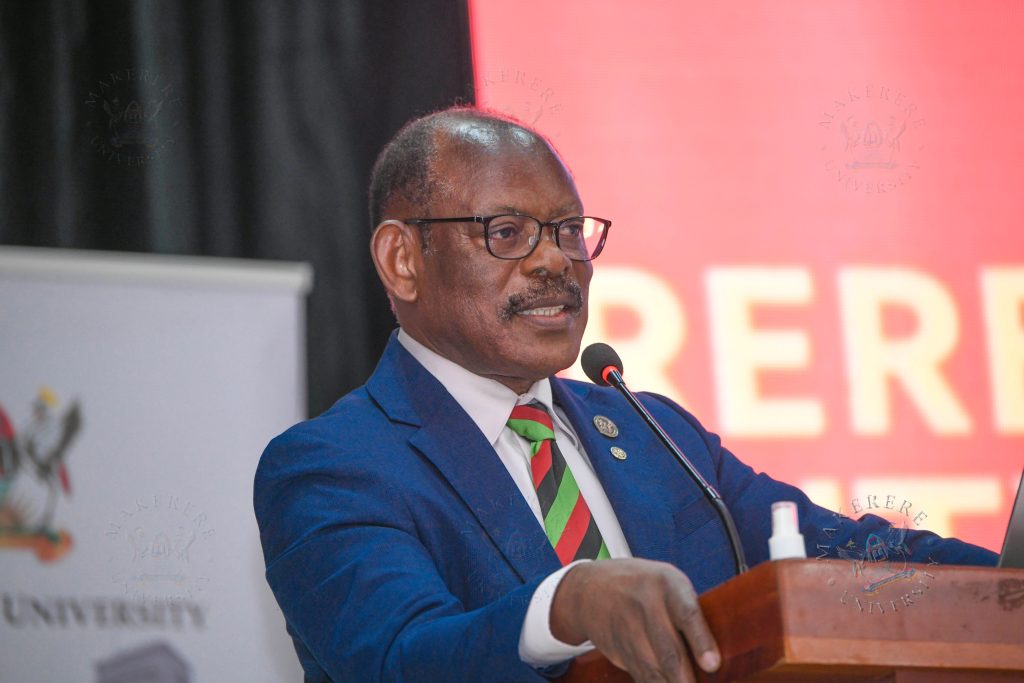
“when you combine the grants won by all our researchers through competitive international funding, the total exceeds US$200 million,” He said.
The Vice Chancellor also pointed to the need to strengthen the University’s academic workforce, noting that although progress has been made, more investment is required to fill approved academic positions, particularly at professor and associate professor levels.
Strategic Plan Sets Ambitious Institutional Targets.
Chairperson of the University Council, Dr. Lorna Magara, described the Strategic Plan as more than an institutional document, calling it “a public covenant with the people of Uganda.”
She said the Plan outlines measurable commitments that will guide the University’s performance over the next five years, including expanding postgraduate enrolment, increasing STEM participation, improving doctoral completion rates and strengthening research productivity.

“Ambition is precisely what this moment demands. A strategic plan is not measured by the elegance of its language, but by the lives it transforms,” she said.
Dr. Magara emphasized that every investment in Makerere University should translate into tangible benefits for society through research, innovation, leadership and skilled graduates.
She also called for reforms to Uganda’s Universities and Other Tertiary Institutions Act to strengthen university governance and create an enabling environment for innovation and knowledge production.
Government Reaffirms Support.
Launching the Strategic Plan, Hon. Henry Musasizi commended Makerere University for aligning its institutional priorities with Uganda’s Vision 2040, the Fourth National Development Plan (NDP IV) and the country’s Tenfold Growth Strategy.
He observed that universities remain central actors in national development because they produce the knowledge, innovation and skilled workforce required to transform Uganda’s economy.
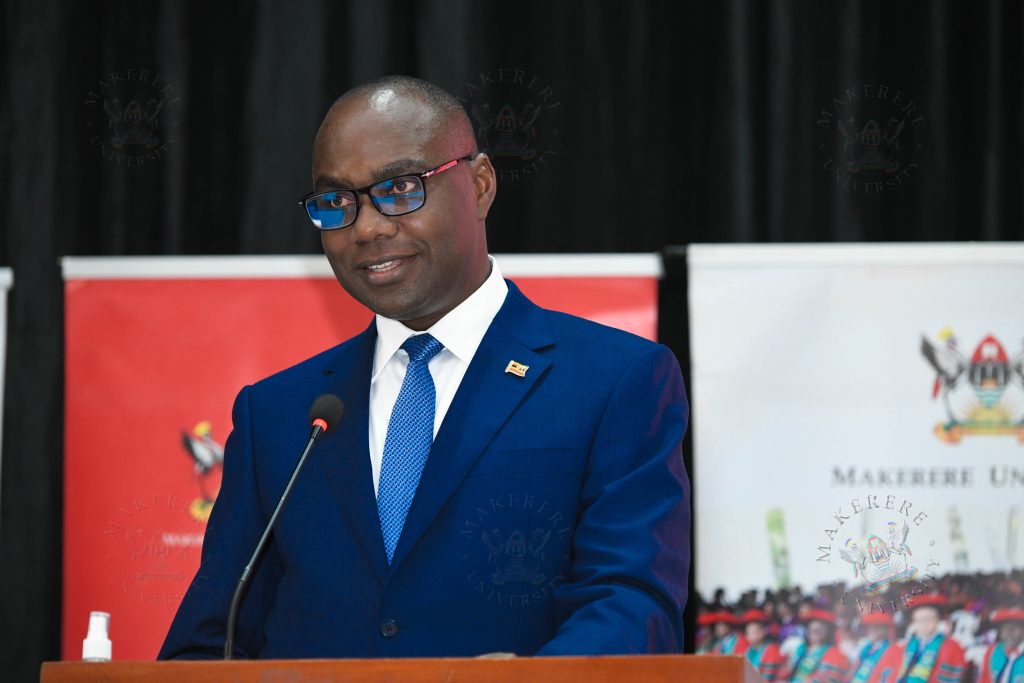
“Universities are central actors in national transformation. they are engines of knowledge creation, innovation and human capital development,” he said.
The Minister emphasized government’s commitment to supporting research, innovation and stronger collaboration between universities and industry to ensure that knowledge generated within higher education institutions contributes directly to economic growth.
Universities Critical to Uganda’s Tenfold Growth Strategy.
Presenting the national development perspective, Samuel Kasule, Senior Planner at the National Planning Authority, explained that the Strategic Plan aligns closely with the Uganda’s long term development framework.
He noted that achieving the country’s ambitious economic growth targets will depend heavily on universities producing competent graduates, expanding research and strengthening innovation ecosystems that support priority sectors including agriculture, tourism, ICT, minerals, manufacturing, and oil and gas.
Kasule further underscored the importance of competency based education and post graduate training in building the human capital required for sustainable national development.
A Shared Vision for the Future.
Throughout the launch, speakers emphasized that Makerere University’s future lies in becoming an increasingly research intensive, innovation driven institution that responds to national and global development challenges.
The Strategic Plan 2025-2030 outlines priorities that include strengthening research excellence, promoting innovation and commercialization, expanding digital transformation, enhancing partnerships with industry, and producing graduates equipped to drive socioeconomic transformation.
Its launch marks a renewed commitment by Makerere University to remain at the forefront of knowledge generation and to contribute meaningfully to Uganda’s long term development aspirations.
-
 General2 weeks ago
Makerere University Launches First Writing Summer School
-
 General1 week ago
RE-ADVERT: Admission to Undergraduate Programmes 2026/27
-

 General1 week ago
Stakeholders of Mastercard Foundation Initiatives at Makerere University Convene to Review Progress and Strengthen Collaboration
-
 General1 week ago
Makerere University Trains 250 Student Peer Trainers to Champion Gender Equality Leadership
-

 Agriculture & Environment1 week ago
CAES Annual Report 2025