
General
Mak-MKU Expand Joint Collaboration to Institutional Level

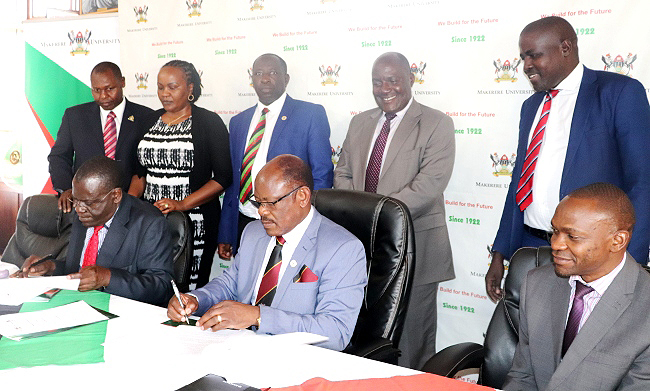
Makerere University and Mount Kenya University (MKU) on Monday, 14th January 2019 officially expanded their collaboration to institutional level following the signing of a Memorandum of Understanding (MoU). Signed on behalf of Mak by the Vice Chancellor, Prof. Barnabas Nawangwe and on behalf of MKU by the Vice Chancellor, Prof. Stanley Waudo, the MoU is a follow-up of an earlier one signed on 19th September 2017 between the two institutions’ Colleges of Health Sciences. Mak’s College of Education and External Studies (CEES) has also been collaborating with MKU’s School of Education since 2017.
Welcoming the delegation to Makerere University, Prof. Barnabas Nawangwe commended MKU and colleagues in Makerere for all the progress made since the initial agreement was signed at college level.
“Collaboration is the way to go. We should emulate Universities in the US and Europe which are reaping a lot from grants through joint applications. I therefore encourage all colleagues engaged in partnerships with Mount Kenya University to jointly apply for grants. This way, we shall be able to attract bigger funding for our research activities” remarked Prof. Nawangwe.
Accompanied by his Deputy Vice Chancellor, Academic and Research Affairs, Dr. Bibianne Waiganjo and Director of Quality Assurance, Linkages and Partnerships, Prof. Mwangi Peter Wanderi, Prof. Waudo further emphasised the need for both institutions to focus on graduate students if they are to improve their research output.
“As Professors, we are training these students to take over from us. We should teach them how to write research grants” said Prof. Waudo in reference to his own training at Iowa State University where he earned his Masters and PhD in plant pathology. “At Masters level, first year students are paired with colleagues in second year for mentorship and review of theses so that professors receive a refined document. The is the same case at PhD level” he added.

Contributing to the day’s discussion, the Acting Director, Gender Mainstreaming Directorate (GMD), Dr. Euzobia Mugisha Baine reiterated Makerere’s regional leadership in institutionalising gender in University functions. In 2001, the Gender Mainstreaming Programme was initiated under the Department of the Academic Registrar and has in the last ten years transitioned from the Gender Mainstreaming Division to the Gender Mainstreaming Directorate.
“It is good to learn that Mount Kenya University has adopted a Gender policy. However, from our experience, you need to develop and implementation framework in order to effectively implement the policy” advised Dr. Mugisha.
In his remarks, the Director, Directorate Research and Graduate Training (DRGT), Prof. Buyinza Mukadasi shared with the visiting delegation Makerere’s current drive to be a research-intensive university.
“The Directorate of Research and Graduate Training coordinates the institution research efforts at college and project levels. We are reaping big from international collaborations with each of the ten colleges and Principal Investigators (PIs) attracting research grants for the various projects” remarked Prof. Buyinza.
He further shared the University’s drive to improve graduate training as a way of boosting research output. “Our biggest pillar in research is graduate students. We are implementing the Doctoral Committee system to improve our throughput and hold annual Doctoral Conventions for accountability and to share progress on various research findings.”
The Principal, College of Education and External Studies (CEES), Prof. Fred Masagazi Masaazi was all praises for the Mak-MKU collaboration which has played witness to joint supervision of education students on school practice by staff from both institutions.

“At the end of the visits, we generate reports which have been very good in informing us on the way forward. We are now jointly developing multidisciplinary research projects” added the Principal.
The College of Health Sciences (CHS) has since signing the MoU in September 2017 made several strides in joint research projects. The Principal CHS, Prof. Charles Ibingira shared that the two institutions were utilising the US$100,000 joint research grant forge South-South research partnerships.
“We have a model where applicants from the two institutions must pair up in order to apply for grants and Prof. Harriet Mayanja-Kizza is in charge of this. So far, we have over five teams working together that have already embarked on research. We shall soon produce joint publications” remarked Prof. Ibingira.
“Collaboration is a great endeavour that all contemporary universities should look forward to” remarked the Deputy Vice Chancellor (Academic Affairs), Dr. Umar Kakumba as he gave the concluding remarks.
“Makerere has invested heavily in staff development and I can assure you that collaboration with this University in terms of staff exchange cannot lack in any discipline. We have approximately 800 staff with PhDs in various disciplines” said Dr. Kakumba.
He however pointed out that whereas staff exchange was thriving, student exchange was still lacking and needed to be promoted. “Our proximity to each other will grant new learning experiences to our students and give them good exposure to our different learning environments” added the DVCAA.
Earlier, Prof. Mwangi had made a presentation on MKU during which he shared his institution’s intention to benchmark Mak’s College of Veterinary Medicine, Animal Resources and Bio-security (CoVAB). He also highlighted cost-cutting measures undertaken by MKU and CEES that involved teams meeting at the border town of Busia for one week in order to undertake joint activities, instead of travelling all the way to either institution’s campuses.
The two parties thereafter signed the MoU and exchanged institutional souvenir items. The MKU will during their visit to Makerere University tour the Main Library, visit the CHS Campus in Mulago and attend the 69th Graduation Ceremony.
Article by Public Relations Office


General
Makerere University and Xiangtan University Advance Strategic Partnership in Chemical Engineering

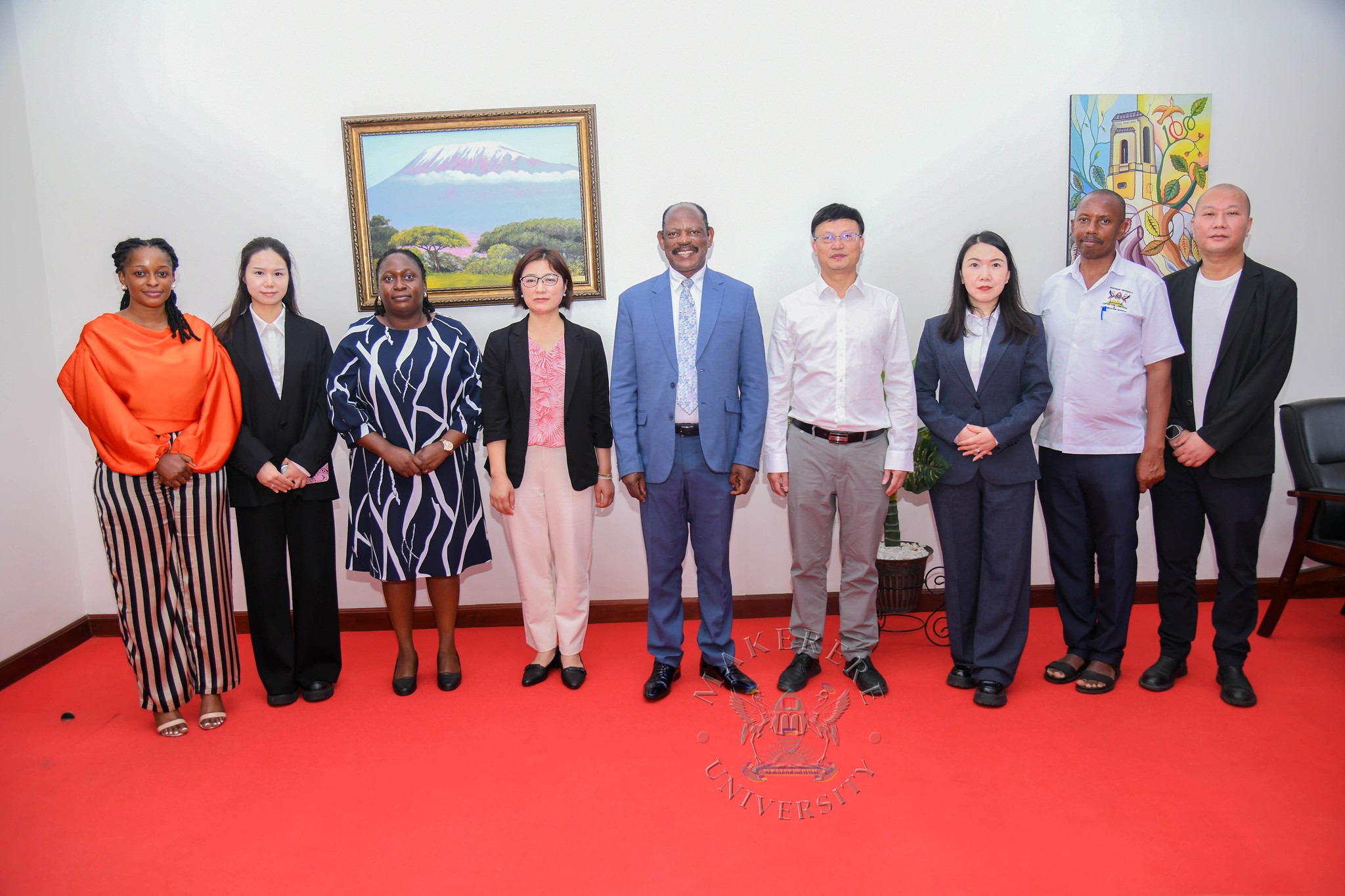
Makerere University and Xiangtan University are set to update their close to 20-year academic partnership, with a new focus on launching a joint Master’s degree program in Chemical Engineering and expanding student and staff exchange initiatives.
The commitment was reaffirmed during a recent visit by a delegation from Xiangtan University to Makerere University headed by Professor Dingyu Ou, in the company of Mr. Tang Fei and Professor Gilbert Gumshabe, the Chinese and Ugandan Directors of the Confucius Institute at Makerere University respectively.
While addressing the delegation, Professor Nawangwe highlighted that this initiative is part of a broader strategy to diversify academic offerings and contribute to national development through training in Chemical Engineering. Through this new initiative, the University will better prepare graduates for the petrochemical industry and support the country’s industrial growth.
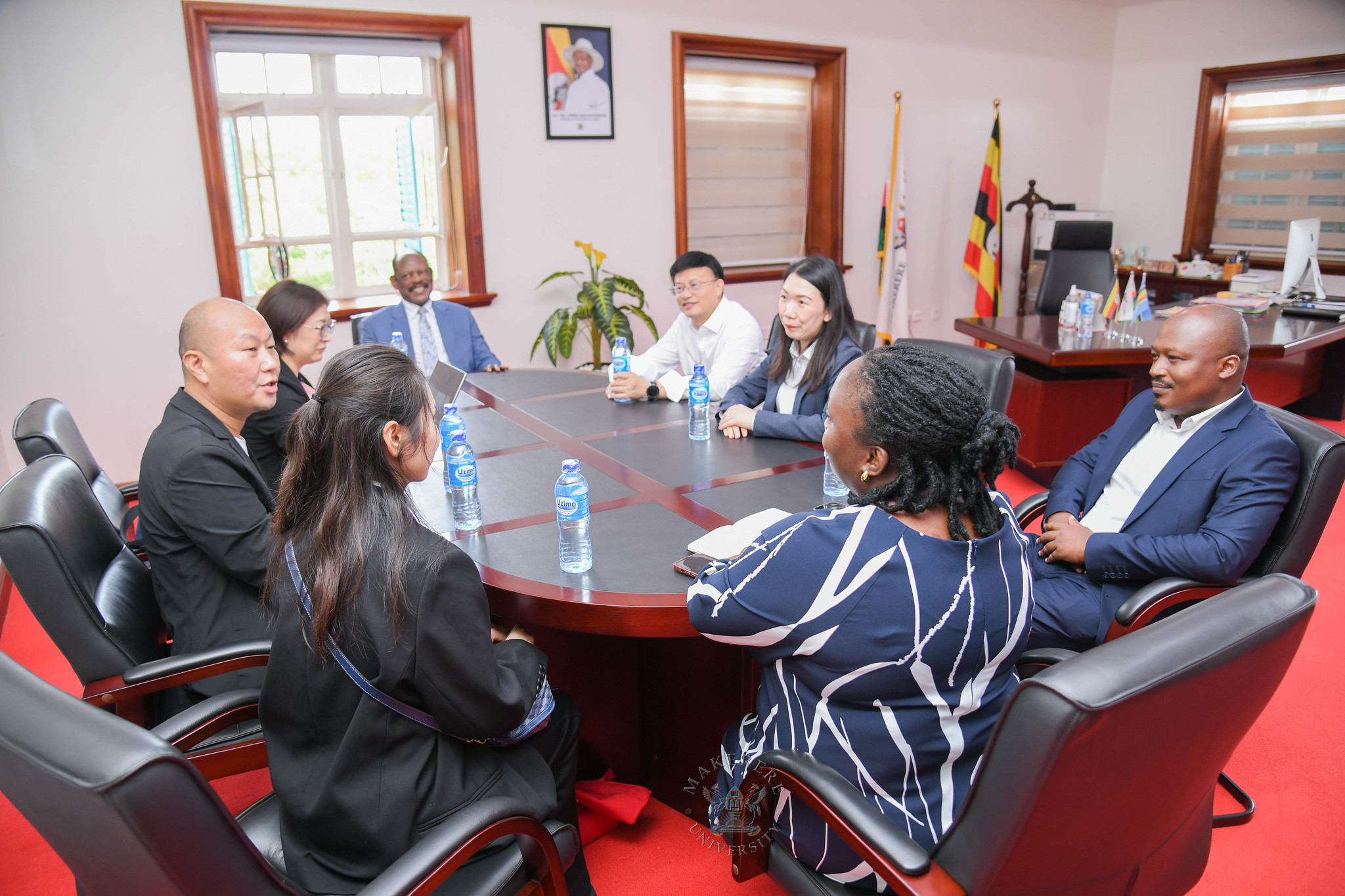
The Vice Chancellor appreciated that the proposed collaboration aims to address Uganda’s growing need for industrial expertise, particularly as the country develops its petroleum sector. The two universities here are working toward a 1+2 training model, which will enable Makerere students to gain practical experience and access advanced laboratory facilities at Xiangtan University.
Professor Nawangwe further reiterated that “our relationship with the people of China, not just for Makerere but also for a big part of Uganda, has been opened wider by the establishment of the Confucius Institute, considering that many other collaborations like one being discussed now have come through this collaboration.”
The head of the Xiangtan delegation, Professor Dingyu Ou, expressed appreciation for the meeting, and acknowledged the history between the institutions. “As mentioned, we have a very long relationship and a very stable friendship between our two universities.”
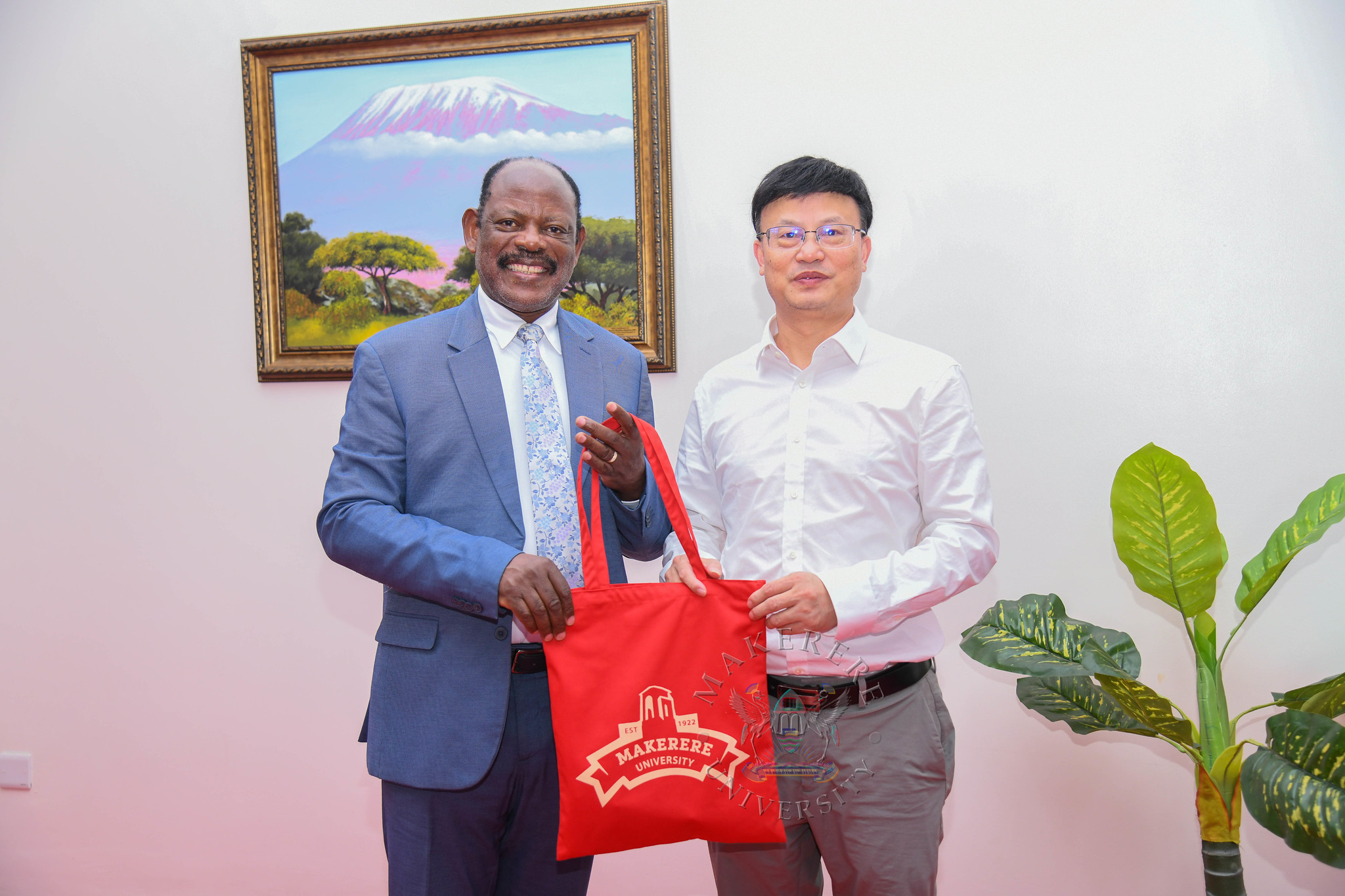
Professor Ou extended appreciation for the support provided to the Confucius Institute at Makerere, the care shown to his colleagues, and looked forward to the successful start of the Chemical Engineering collaboration.
Assuring the delegation of Makerere’s readiness for the collaboration, Ms. Hawa Ndagire Kajumba the Lead, Partnerships and Stakeholder Engagement, Makerere University Advancement Office, aligned with the Vice Chancellor’s emphasis of University goal to have both theory and practice imparted to the students.
She said “the curriculum of the university and Uganda as a whole is moving towards competence-based education training to ensure students are equipped to demonstrate those skills in the actual field, particularly regarding petroleum exploration.”
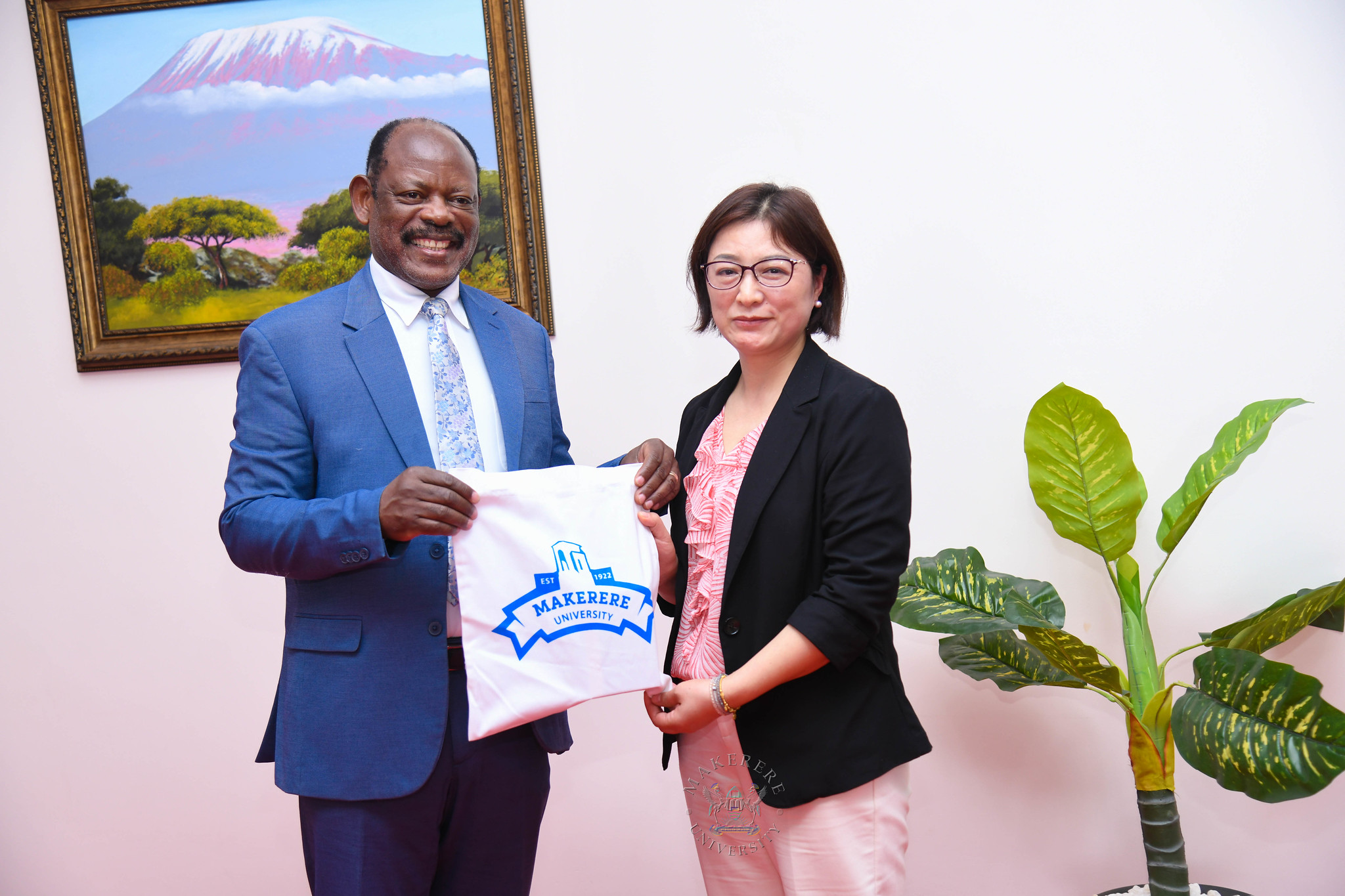
Ms. Ndagire Kajumba also emphasised a shift in strategy for the partnership office, saying, “we are moving away from just signing MOUs that collect dust, and moving towards those that are more collaborative to benefit our faculty and students, just like this one.”
Professor Gilbert Kumushabe aligned his remarks with those of the Vice Chancellor and Ms. Ndagire Kajumba, and described the method used at Xiangtan University as “actually competence-based teaching.”
Based on his recent visit, Prof. Gumoshabe shared that students in China are divided into groups with dedicated teachers to perform practical, hands-on work beyond the theoretical lecturers. He expressed gladness that the same was being adopted for the Ugandan context.
Both institutions are now working to finalise the specific agreements for the joint degree and exchange programs. Beyond academic training, the collaboration will advance cultural and professional exchange.

-
 General2 weeks ago
Statement on Concerns Circulating Regarding a Member of Academic Staff
-
 General1 week ago
Timothy Khabusi: From Barefoot Walks to shaping Uganda’s Eye health Future
-
 Health1 week ago
Uganda’s HIV Treatment Gains Bring the Youth Gap into Focus
-
 Agriculture & Environment1 week ago
Makerere University Welcomes 50 Youth Skilling Program trainees under the Africa Climate Collaborative, Supported by Mastercard Foundation
-

 Health2 weeks ago
MakSPH reseachers calls for health data to be used in decisions