
General
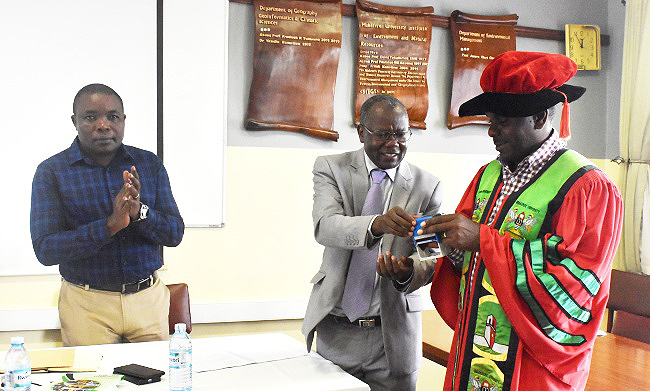
Prof. Mnason Tweheyo Hands Over Office to New Dean, School of Forestry

• Don’s biggest success in two 4-year terms was improving students’ morals and curbing strikes
• Tweheyo pledges to uphold good stewardship of students and university property and to oppose anyone who puts personal interests before the university’s
• Staff hail Prof. Tweheyo for integrity, generosity and sacrificial service to the university
Prof. Mnason Tweheyo has officially handed over duties of the Deanship, School of Forestry, Environmental and Geographical Sciences (SFEGS) to Assoc. Prof. Fred Babweteera after serving for two terms (2011 -2018). Babweteera was appointed un-opposed.
The handover ceremony was presided over by the Principal College of Agricultural and Environmental Sciences (CAES) Prof. Bernard Bashaasha who declared the end of term and appointment of the new Dean on 11th January 2019 at the School’s Conference hall.
The ceremony was witnessed by the College Auditor on behalf of the university, and staff from the school and the college.
Citing the Bible in Ecclesiastes 3:1, the outgoing Dean said, there is time for everything, and a season for every activity under heavens, and thus, this was the time to hand over the Dean’s office after eight years of service.
“To me, it is a day of joy and to some extent a new beginning and I greatly welcome it. There is no doubt that the last eight years as Dean have had their highs and lows ranging from hard labour to times of joy.
“To the new Dean, Assoc. Prof. Fred Babweteera, I wholeheartedly congratulate you and wish you the best in office. May the Lord give you wisdom and that you also yield to His wisdom as you manage the office of Dean,” Prof. Tweheyo stated.

Prof. Tweheyo appreciated the three Heads of Department and the entire School staff for their support and for giving him an opportunity to serve as Dean. Tweheyo also thanked the CAES Principal and management for the support and cooperation and the Makerere University leadership for employing and nurturing him into all that he is today, in terms career and administrative growth.
The outgoing Dean pledged his allegiance to the university saying, he will always be on the side of everyone who wants Makerere to grow even as an ordinary classroom Professor.
“I will continue to do what is in my means to ensure that Makerere University produces quality graduates. Further still, I will oppose anyone who puts self-interest over this university. Handing over Deanship does not mean losing interest in this university.
Therefore, I will uphold good stewardship of students and university property and whatever will be in my care. For this noble cause, I call upon all like-minded staff to do likewise”, Tweheyo said.
Prof. Tweheyo described his tenure as successful. Notably, he did not lose any staff due to conflict and the School experienced increased harmony and unification despite the mergers during the formation of colleges. Other achievements include successful review of the curriculum, improvement in the school structures and successes in sharing the little financial resources allocated to the School’s operations.
“To me the greatest success of all is improvement in student’s morals. We did all we could to put students in right order. In 2011 we inherited a literary wild student community especially. We used to experience three to four strikes including breaking windows and doors every semester from 2011-2015 but from 2016 the school has not experienced any loss of property due to strikes”, Prof. Tweheyo said.
The outgoing Dean however reported that the school has not registered full progress in getting senior staff to be active in school activities.
“The current administration should work hard to make sure that senior staff become good examples to junior ones. By senior staff, I mean, Senior lecturers, Associate Professors and Professors. It is my opinion that this category needs to sacrifice more of their time to the university. The university needs them.” Tweheyo advised.

Prof. Tweheyo urged the new administration to continue with the good achieved and even do better to leave good memories. He assured staff that whatever success registered during his tenure was not his own but for all.
“Whatever failure, I take responsibility and ask for forgiveness. Overall I am really very grateful to have served you as a school Dean for the last eight years. I am deeply grateful to Makerere University and I pray to my Lord that this institution will grow to greater heights and progress in every aspect to support the nation, region and that its fruits will have greater global impact”. The professor prayed.
Prof. Tweheyo handed over the instruments of authority and briefed the incoming dean on the duties of the dean, the school property, financial status, and the upcoming/pending tasks and responsibilities, work for urgent attention and summary of the proposed budget.
Incoming Dean Assoc. Prof. Fred Babweteera thanked staff for entrusting him with the responsibility and pledged to work to the best of his ability to honor the responsibility given.
Dr. Babweteera thanked the outgoing dean for demonstrating selflessness and exemplary leadership while executing his duties adding that, he is leaving a challenge to emulate what he has done.
Babweteera thanked the Principal and management of CAES for the support accorded to the school during the tenure of Prof. Tweheyo and urged them to step up the support.
“I am proud to be part of the SFEGS because the school stands for integrity. I thank the outgoing Dean for his character in terms of integrity and saying no to wrong practice. I hope together we can achieve greater heights”. Assoc. Prof. Babweteera noted.
Babweteera enumerated some of the key priority areas for the school including rallying behind the University Chancellor’s call for making Makerere a research-led university through utilization of the diversity and professionalism, creating research teams, mentoring junior staff to improve the quality of research and supporting graduate students.
He also proposed sharing of groundbreaking research and innovations through monthly seminars, full participation of senior staff in school activities and meetings to improve teaching, build confidence and love in the school programs among the students.

Prof. Babweteera commended the outgoing Dean for improving the students’ morals, something he was personally proud of. He expressed the need to build strong alumni association, update the websites and have a section to link up and track the alumni so as to engage them in fundraising for school activities.
The other, he said, was the need to strengthen the staff-student relationship noting there was a big gap to bridge and more need to mentor students. The other key area the incoming dean noted was the need to improve School infrastructure.
He reasoned that the school has excellent faculty with diverse opportunities to tap into like offering consultancy, engaging and guiding the tourism and hotel sectors to be more relevant to the nation and region.
The professor also noted the school had good quality and outstanding staff and expressed the need for simple recognition ceremonies to award outstanding performers as a means of motivation.
Babweteera also tabled the need to develop partnerships in terms research and internship placements, adding that some institutions were willing to take up students for six months after graduation.
He called on staff to uphold integrity, saying he was looking forward to working with them.
“As I conclude, in the bible verse Joshua 1:5, while leading Israelites to the promised land, God promised Joshua that as I was with Moses, I will be with you’, that is what I believe that the same God who was with Prof. Tweheyo will be with me. Joshua 7; followed the law and my law is the core values of the university –integrity, professionalism and commitment.”
Speaker after speaker hailed the outgoing dean for his generosity and exemplary service characterized by humility, selflessness, finance and image sacrifice, parental love and guidance.
“Thank you for serving us and treating us well. I remember when you picked UGX600,000 from your pocket for internship when I was stuck with limited funds. Thank you for supporting the office and thanks for being generous” Prof. Agea Jacob said.

“A new broom sweeps well but an old broom knows all the corners. To the old dean, thank you for the good service and still you are going to be the old broom. You Fred, you are going to sweep cleaner but both of you are all parts of the broom, Prof. Obua said.
Obua advised staff to think of improving publicity of the programs, invite visiting professors and explore the possibility of having refresher courses for staff as well as strengthen partnerships in the forestry sector.
“The school is stable and there is no worry. We have done our things openly and that has happened because Prof. Tweheyo has brought us together. I have been recognized as a former head because here, we nurture smooth transition and others should learn”, Prof. Fredrick Tumwine said.
Console Nakiyemba an Administrative Secretary had this to say;
“I am grateful to the outgoing Dean. I have worked in many units of this university but I only got rest when I came here. You have been a very good person, thank you for the moral, spiritual and financial support. The support staff are very grateful.”
“You have been a parent, a mentor with an open door policy. Personally, we have talked as colleagues and as friends. I welcome the new dean. Apart from research, we need to mentor others and encourage them to take up our areas of specialty because we will have to leave these offices at one point” Dr. Susan Balaba spoke on behalf of the lady lecturers.
“I want you know that we extremely appreciate your contribution to the school. I emphasize the issue of sacrifice. If you are dean and head, you can’t run a unit without sacrificing. He has gone, but he has been sacrificing resources, time, money and his image. The office has privileges but success comes with how you sacrifice your image for the good of the school” Assoc. Prof. Yazidhi Bamutaze commended.
Prof. Philip Nyeko said, “You have been a good dancer but time is powerful. Even a good dancer has to leave the stage. As you leave as a good dancer, you should continue to dance in the school, university but also outside the university community.

To Fred, your predecessor emerged from my department; FBT (Forestry, Biodiversity and Tourism) and the department seems to have consolidated some human beings to be heads. This statement can only be validated by your performance. You are starting on a very good note but that is very dangerous. Prof. Tweheyo started on a rough one but now everything is calm. Staff should ensure there is no any turbulence. Thank you for accepting to work we shall support you.”
“Mentorship sometimes comes through observation. As an individual there are things I learnt that have changed me. I got my PhD during Prof. Tweheyo’s term, I learnt to plant trees from the eucalyptus he planted around campus and this motivated me and I now have 25 acres of trees.
You gave me a word in your office that sometimes it is better to keep silent when there is turbulence and one time you spoke in church and something happened to me on 15th September 2018”, remarked a male junior staff.
Prof. James Okot –Okumu described the outgoing dean as having been accessible to all staff anytime, be it at short notice.
“The atmosphere Prof. Tweheyo created for staff within the school made everyone feel as a member of the family and this is one thing a leader can achieve. When I was seconded to be Head, I did not know him, but we worked together. You also gave me an opportunity to act as Dean and this has built my CV. I am also handing over in March 2019 and this experience is an example for all to hand over”.
In his concluding remarks, the Principal CAES Prof. Bernard Bashaasha commended the school for a well-organized, rich and elaborate hand over saying, it has set a pace with lessons to take.
He described the staff congratulatory messages as humbling, noting that it is unusual for leaders to touch people’s hearts. He told staff that Prof. Tweheyo was just out of office but not out of the system and will continue providing his support.
The Principal congratulated Assoc. Prof. Fred Babweteera upon his new position, noting that the college was looking forward to learning from him.
“I found your vision well aligned to the core mandate of the university. We shall support you in areas of teaching, research and outreach and making Makerere a research-led university. You are inheriting a politically calm unit and therefore, you will not spend energy on uniting people”, said Prof. Bashaasha
Report compiled by;
Jane Anyango;
Principal Communication Officer CAES


General
Makerere University and Xiangtan University Advance Strategic Partnership in Chemical Engineering

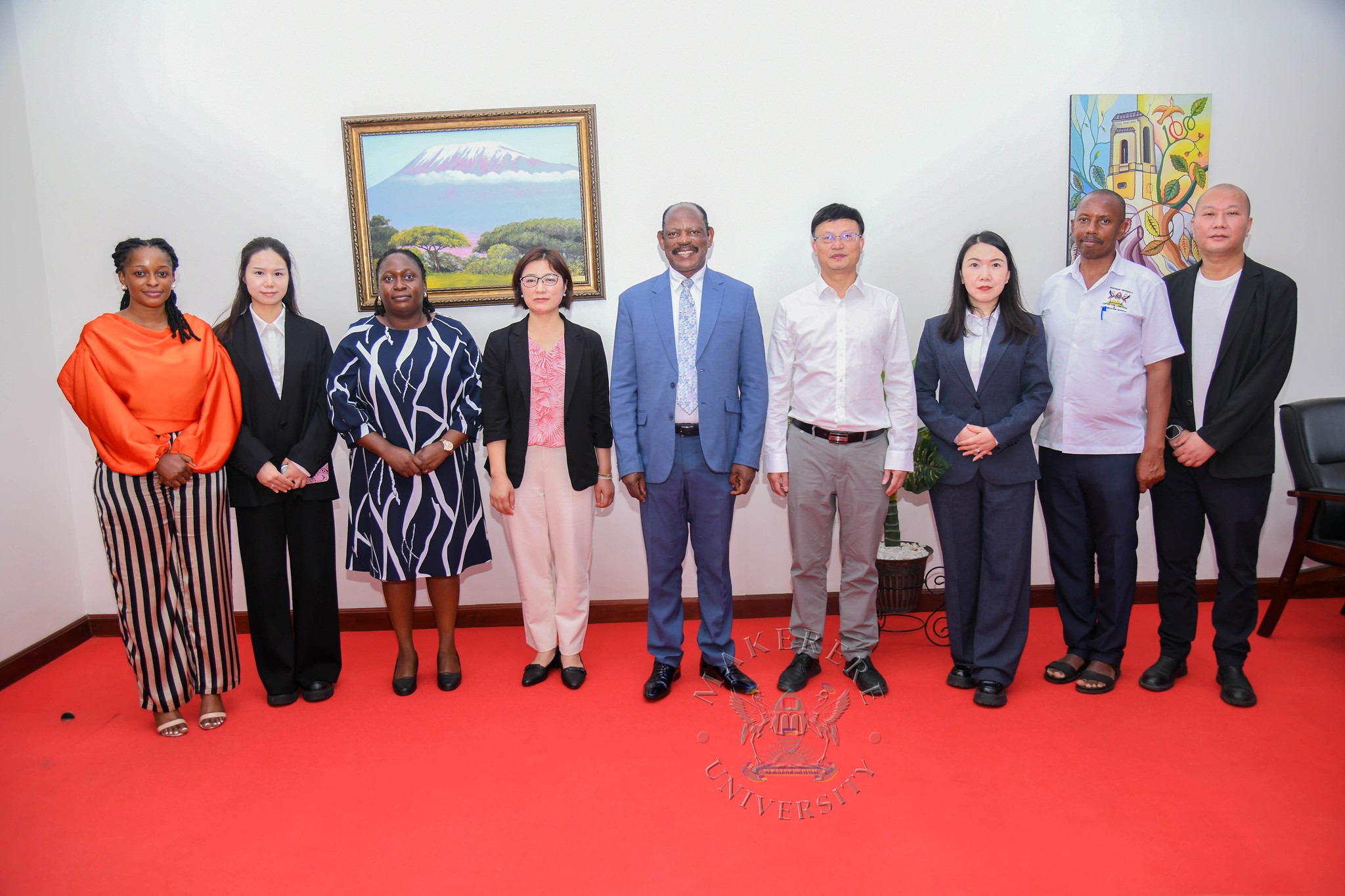
Makerere University and Xiangtan University are set to update their close to 20-year academic partnership, with a new focus on launching a joint Master’s degree program in Chemical Engineering and expanding student and staff exchange initiatives.
The commitment was reaffirmed during a recent visit by a delegation from Xiangtan University to Makerere University headed by Professor Dingyu Ou, in the company of Mr. Tang Fei and Professor Gilbert Gumshabe, the Chinese and Ugandan Directors of the Confucius Institute at Makerere University respectively.
While addressing the delegation, Professor Nawangwe highlighted that this initiative is part of a broader strategy to diversify academic offerings and contribute to national development through training in Chemical Engineering. Through this new initiative, the University will better prepare graduates for the petrochemical industry and support the country’s industrial growth.
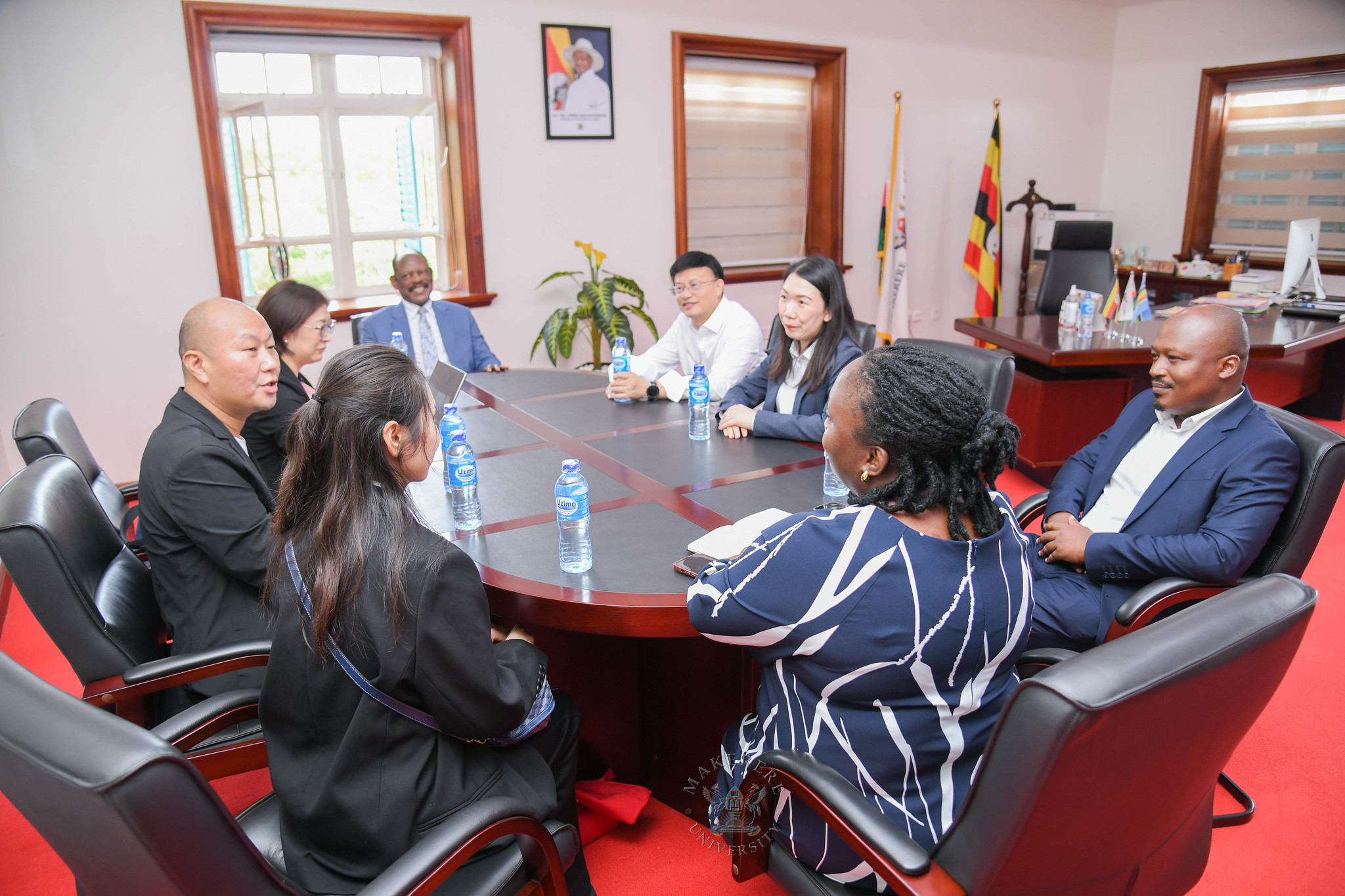
The Vice Chancellor appreciated that the proposed collaboration aims to address Uganda’s growing need for industrial expertise, particularly as the country develops its petroleum sector. The two universities here are working toward a 1+2 training model, which will enable Makerere students to gain practical experience and access advanced laboratory facilities at Xiangtan University.
Professor Nawangwe further reiterated that “our relationship with the people of China, not just for Makerere but also for a big part of Uganda, has been opened wider by the establishment of the Confucius Institute, considering that many other collaborations like one being discussed now have come through this collaboration.”
The head of the Xiangtan delegation, Professor Dingyu Ou, expressed appreciation for the meeting, and acknowledged the history between the institutions. “As mentioned, we have a very long relationship and a very stable friendship between our two universities.”
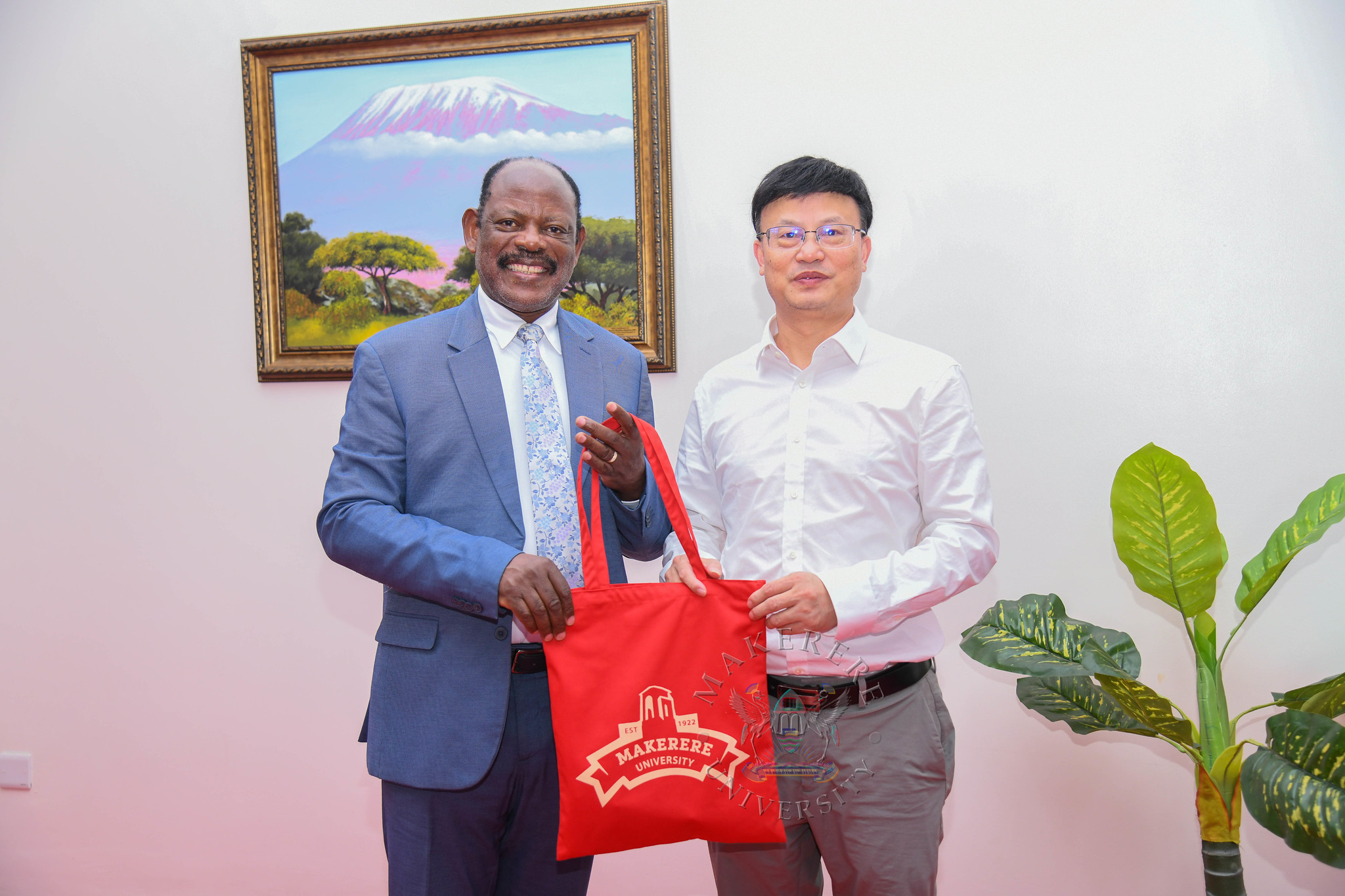
Professor Ou extended appreciation for the support provided to the Confucius Institute at Makerere, the care shown to his colleagues, and looked forward to the successful start of the Chemical Engineering collaboration.
Assuring the delegation of Makerere’s readiness for the collaboration, Ms. Hawa Ndagire Kajumba the Lead, Partnerships and Stakeholder Engagement, Makerere University Advancement Office, aligned with the Vice Chancellor’s emphasis of University goal to have both theory and practice imparted to the students.
She said “the curriculum of the university and Uganda as a whole is moving towards competence-based education training to ensure students are equipped to demonstrate those skills in the actual field, particularly regarding petroleum exploration.”
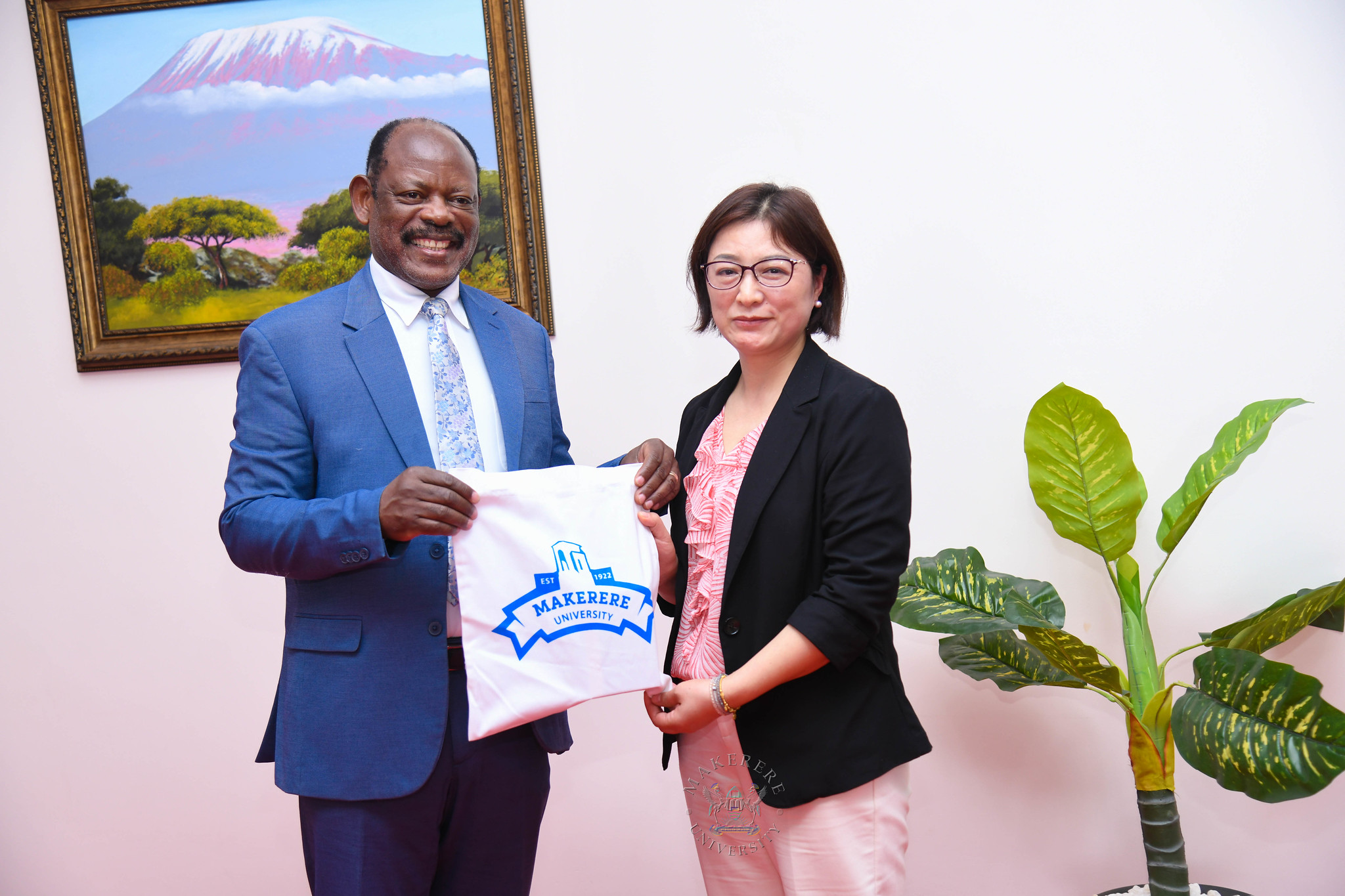
Ms. Ndagire Kajumba also emphasised a shift in strategy for the partnership office, saying, “we are moving away from just signing MOUs that collect dust, and moving towards those that are more collaborative to benefit our faculty and students, just like this one.”
Professor Gilbert Kumushabe aligned his remarks with those of the Vice Chancellor and Ms. Ndagire Kajumba, and described the method used at Xiangtan University as “actually competence-based teaching.”
Based on his recent visit, Prof. Gumoshabe shared that students in China are divided into groups with dedicated teachers to perform practical, hands-on work beyond the theoretical lecturers. He expressed gladness that the same was being adopted for the Ugandan context.
Both institutions are now working to finalise the specific agreements for the joint degree and exchange programs. Beyond academic training, the collaboration will advance cultural and professional exchange.

-
 General2 weeks ago
Statement on Concerns Circulating Regarding a Member of Academic Staff
-
 General1 week ago
Timothy Khabusi: From Barefoot Walks to shaping Uganda’s Eye health Future
-

 Health1 week ago
Uganda’s HIV Treatment Gains Bring the Youth Gap into Focus
-
 Agriculture & Environment1 week ago
Makerere University Welcomes 50 Youth Skilling Program trainees under the Africa Climate Collaborative, Supported by Mastercard Foundation
-

 Health2 weeks ago
MakSPH reseachers calls for health data to be used in decisions