This paper presents a conceptual underpinning for African Digital Agriculture Programme (AfriDAP), a proposed initiative to accelerate transformation of agriculture in Africa using digital technologies. It outlines a perspective of the Regional Universities Forum for Capacity Building in Agriculture (RUFORUM) for transformation of agriculture in Africa using digital technologies. RUFORUM brings together higher agricultural institutions in Africa, development partners in and outside Africa to address a continental challenge of transforming African agricultural higher education, science, technology, and innovation (AHESTI). The proposed AfriDAP will seek to achieve, within this strategic framework, the goal of digitalization of agriculture ecosystem in Africa whilst addressing three programmatic areas: Digital learning and sharing technologies for agriculture, data science development (research, big data management and capacity building for agriculture), and incubation and innovations for digital agriculture entrepreneurship and startups.
The Harnessing Health Data Science capacity to strengthen evidence-based interventions, policy and response to the HIV/AIDS Epidemic in Uganda (H-DATA) is a training grant funded by the NIH through Fogarty International Center (Grant Number D43TW013056). This grant is a collaborative effort of multiple principal investigators from Makerere University, Uganda and University of California, San Francisco, USA.
Grant period: 2026/2030 | Principal Investigators: David Patrick Kateete; Charles Batte; Joyce Nakatumba, Nabende; Efstathios Gennatas Dimitrios
H-DATA seeks to recruit qualified Ugandans for full-time PhD training in Health Data Science registered at Makerere University.
Thematic areas
Candidates should propose research studies or concepts that apply health data science approaches (AI and Machine learning) to the following thematic themes:
HIV risk stratification
Non-communicable Diseases (NCD) comorbidities in HIV [Specifically Chronic respiratory and cardiovascular diseases / hypertension]
HIV treatment outcomes, adherence, and long-term ART trajectories
Non-Canonical HIV resistance mutations
Digital medicine and real-world HIV data
Health systems and policy analytics for HIV programs
Fellowship package
The PhD fellowship support is for up to three (3) years (full-time), subject to annual performance reviews and progress milestones. Successful scholars will be registered at Makerere University and may undertake sponsored didactic health data science methods training at the University of California, San Francisco (UCSF), USA, to receive additional skills development and mentorship in health data science research.
Application Information
ELIGIBILITY
Applicants should meet the following minimum requirements:
– Master’s degree in Computer Science, Statistics/Biostatistics, Mathematics, Electrical Engineering, Bioinformatics, Epidemiology, Public Health, or another data-intensive discipline. – Demonstrated interest and/or experience applying data science methods/technologies to health research or health systems. – Strong quantitative or computational skills (e.g., programming, statistical analysis, machine learning, data management). – Ugandan citizenship and commitment to advancing health data science in Africa. – Ability to enroll in and complete full-time PhD training at Makerere University.
Note: Additional program- or department-specific admission requirements may apply.
Note: Proof of admission is not required at the time of application. However, preference will be given to applicants who have already secured admission to, or are currently registered in, a relevant PhD programme.
APPLICATION PACKAGE & SUBMISSION
Submit the following documents by email as a single application package:
– NIH Biosketch (maximum 4 pages) including relevant publications (if any). – Cover letter (maximum 1 page). – 2-page research concept note highlighting: research problem, specific aims, research design, and analysis plan. – Academic transcripts and certificates for the relevant Master of Science (MSc) degree. – Statement of purpose / motivational letter (maximum 800 words) for undertaking doctoral training in Health Data Science. – Two letters of recommendation with up-to-date contact details from academic referees.
The Wellcome Sanger Institute is seeking exceptional early career stage scientists to join the Institute as an International Fellow, contributing to the Institute’s scientific portfolio. Up to six fellowships available.
The Institute is an internationally outstanding genomic research centre with over 30 core faculty teams and 1,300 employees based south of Cambridge, UK.
Fellowship Eligibility:
You are typically an early-mid career group leader/faculty usually up to nine years post PhD, based at a research organisation in a low- or middle-income country (LMIC). You may hold a faculty or equivalent position and are seeking to establish or strengthen your research team to develop an internationally recognised research portfolio. We also welcome applicants with equivalent experience, including those who have taken career breaks or followed non-traditional paths
Your main research aims should be focused on your local country and research priorities which contributes to or complements the Institute’s scientific strategy through their expertise.
Makerere University has launched a knowledge-sharing platform designed to bridge research, education, and community outreach, with the aim of accelerating innovation and economic development in Uganda.
The platform is the outcome of a project led by Prof. Edward Bbaale, which examined how universities can translate research, innovations, and institutional capabilities into tangible impact for communities, businesses, and national economic growth, in line with the government’s tenfold growth agenda. The project was funded by the Government of Uganda through the Makerere UniversityResearch and Innovations Fund (Mak-RIF).
The study also explored how university-based research and innovation can be better aligned with Uganda’s development priorities in agriculture, tourism, mineral-based industrialization, and science and technology, as outlined in the Fourth National Development Plan (NDP IV).
Speaking at the launch, the First Deputy Vice-Chancellor for Academic Affairs, Prof. Sarah Ssali, said the platform would strengthen the link between academic research and societal transformation. She also noted that knowledge production and utilization is a political matter and urged researchers to meaningfully engage and participate in such converstaions.
Dr. Stephen Wandera, representing the Chairperson of the Mak-RIF Grants Management Committee, described the platform as timely and relevant, noting that it comes at a period when Makerere University is positioning itself as a research-led institution with measurable impact on communities and systems.
“The knowledge-sharing platform will enable researchers to disseminate their work to relevant audiences,” Dr. Wandera said. He added that dissemination workshops are among several avenues available for sharing research findings and urged the project team to explore additional channels, including policy briefs, academic publications, and online dialogue platforms.
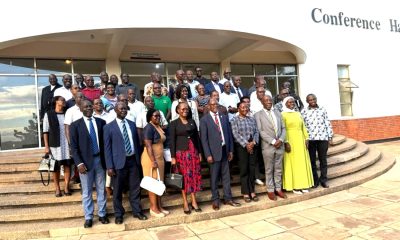
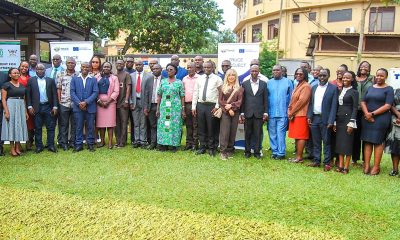
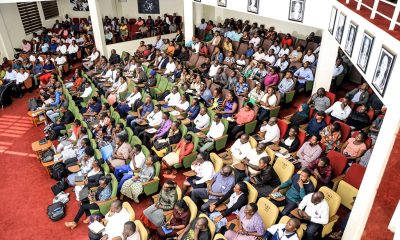
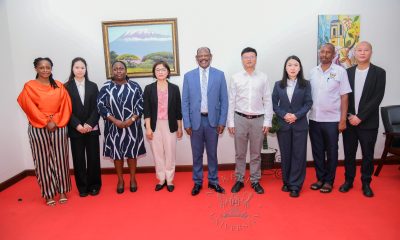
Stakeholders from Makerere and other Universities pose for a group photo at the event.
The Director of Research, Innovation, and Partnerships, Prof. Robert Wamala, said the dissemination workshop reflects Makerere University’s long-standing commitment to generating knowledge that responds to national priorities, advances innovation, and contributes to Uganda’s socio-economic transformation.
He added that the Directorate supports initiatives that move research beyond academic boundaries into practical application, policy influence, enterprise development, and community impact.
Dr. Peter Babyenda, the project’s Co-Principal Investigator, said the initiative combined research, outreach, and capacity-building activities, drawing lessons from global models where universities play a direct role in community development by supporting agriculture, industry, and the growth of Small and Medium Enterprises (SMEs) and Micro, Small, and Medium Enterprises (MSMEs).
Dean of the School of Economics, Prof. Ibrahim Michael Okumu, observed that while Uganda’s universities have produced substantial research, its translation into practical outcomes has remained slow. He cautioned that Makerere University’s relevance will ultimately be measured by the extent to which its work contributes to national development.
Dr. Babyenda noted that the platform will support the development of sustainable research, education, and outreach systems, helping to bridge the gap between university research and real-world application.
“As we launch this platform, I encourage academics, students, industry players, policymakers, and communities to actively engage with it,” Prof. Wamala said. “Let it serve as a living space for dialogue, learning, co-creation, and innovation.”
The knowledge-sharing platform is accessible to the public at www.dissemination.ug. Its launch took place at Sheraton Hotel in Kampala and was attended by officials from Makerere University, Kyambogo University, Gulu University, Mbarara University of Science and Technology (MUST), Busitema University, and Soroti University.